张峰, 南志标, 闫飞扬, 李芳, 段廷玉. AM真菌在草地生态系统碳汇中的重要作用. 草业学报, 24(4): 191-200 ZHANG Feng, NAN Zhi-Biao, YAN Fei-Yang, LI Fang, DUAN Ting-Yu. The important role of arbuscular mycorrhizal fungi in carbon storage in grassland ecosystems. Acta Prataculturae Sinica, 24(4): 191-200
The important role of arbuscular mycorrhizal fungi in carbon storage in grassland ecosystems
ZHANG Feng, NAN Zhi-Biao, YAN Fei-Yang, LI Fang, DUAN Ting-Yu*
State Key Laboratory of Grassland Agro-ecosystems, College of Pastoral Agriculture Science and Technology, Lanzhou University, Lanzhou 730020, China
Abstract
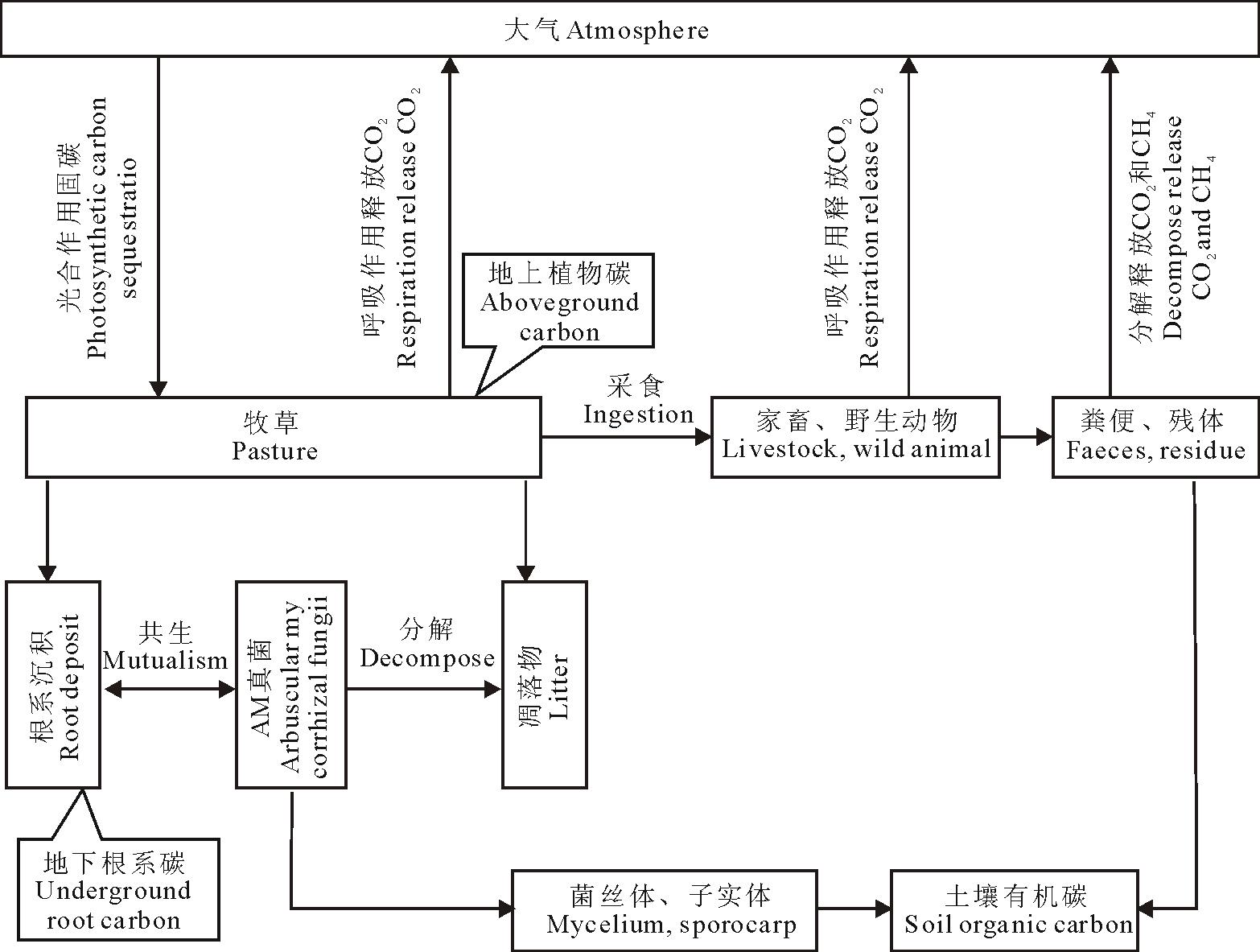
Grassland ecosystems occupy an important position in global carbon storage. Arbuscular mycorrhizal fungi (AMF) exist widely in these grasslands and play a significant role in the ecosystem’s ability to act as carbon sinks. This paper summarizes this role from the perspective of the fungi’s functional diversity. It reviews, 1) the impact of AMF on the net primary productivity of grassland ecosystems, 2) their impact on variation in the soil carbon pool, 3) the response of AMF to elevated atmospheric CO2 and increased anthropogenic nitrogen deposition, and 4) how grazing management practices could affect AMF and therefore the carbon cycle of grassland systems. This review is undertaken in order to provide references for evaluating carbon sinks, calculating carbon fixation rates, predicting carbon storage and coping with global climate change.
Yu GR, Li HT, Wang SQ. Terrestrial Ecosystem Carbon Cycle and Carbon Accumulation on Global Change[M]. Beijing: Meteorological Press, 2003. [本文引用:1]
[2]
Scurlock J MO, JohnsonK, Olson RJ. Estimating net primary productivity from grassland biomass dynamics measurements. Global Change Biology, 2002, 8(8): 736-753. [本文引用:1][JCR: 6.91]
[3]
Reeder JD, Schuman GE. Influence of livestock grazing on C sequestration in semi-arid mixed-grass and short-grass rangeland s. Environmental Pollution, 2002, 116(3): 457-463. [本文引用:1][JCR: 3.73]
[4]
Schuman GE, Janzen HH, Herrick JE. Soil carbon dynamics and potential carbon sequestration by rangeland s. Environmental Pollution, 2002, 116(3): 391-396. [本文引用:2][JCR: 3.73]
Fang JY, Yang YH, Ma WH, et al. Carbon sink and its transformation by grassland ecosystems in China. Scientia Sinica(Vitae), 2010, (7): 566-576. [本文引用:1]
[8]
Yang YH, Fang JY, Ma WH, et al. Soil carbon stock and its changes in northern China’s grassland s from 1980s to 2000s. Global Change Biology, 2010, 16(11): 3036-3047. [本文引用:1][JCR: 6.91]
[9]
Yang YH, Fang JY, Tang YH, et al. Storage, patterns and controls of soil organic carbon in the Tibetan grassland s. Global Change Biology, 2008, 14(7): 1592-1599. [本文引用:1][JCR: 6.91]
[10]
Ajtay GL, KetnerP, DuvigneaudP. Terrestrial primary production and phytomass. The Global Carbon Cycle, 1979, 13: 129-182. [本文引用:1]
[11]
Lützow MV, Kögel-KnabnerI, EkschmittK, et al. Stabilization of organic matter in temperate soils: mechanisms and their relevance under different soil conditions-a review. European Journal of Soil Science, 2006, 57(4): 426-445. [本文引用:1][JCR: 2.651]
[12]
SixJ, Frey SD, Thiet RK, et al. Bacterial and fungal contributions to carbon sequestration in agroecosystems. Soil Science Society of America Journal, 2006, 70(2): 555-569. [本文引用:1][JCR: 1.821]
[13]
Wendu RL, LiG, Zhang JN, et al. The study of soil microbial biomass and soil enzyme avtivity on different grassland in Hulunbeier, Inner Mongolia. Acta Prataculturae Sinica, 2010, 19(5): 94-102. [本文引用:1]
[14]
Zhu JJ, XuH, Xu ML, et al. Review on the ecological relationships between forest trees and ectomycorrhizal fungi. Chinese Journal of Ecology, 2003, 22(6): 70-76. [本文引用:1]
[15]
Clemmensen KE, BahrA, OvaskainenO, et al. Roots and associated fungi drive long-term carbon sequestration in boreal forest. Science, 2013, 339(6127): 1615-1618. [本文引用:5]
[16]
Smith SE, Read DJ. Mycorrhizal Symbiosis[M]. Amsterdam, the Netherland s & Boston, MA, USA: Academic Press, 2008. [本文引用:1]
[17]
WillisA, Rodrigues BF, Harris P J C. The ecology of arbuscular mycorrhizal fungi. Critical Reviews in Plant Sciences, 2013, 32(1): 1-20. [本文引用:1][JCR: 4.356]
[18]
O’Connor PJ, Smith SE, Smith FA. Arbuscular mycorrhizal associations in the southern Simpson Desert. Australian Journal of Botany, 2001, 49(4): 493-499. [本文引用:1][JCR: 1.204]
[19]
Bao YY, YanW. Arbuscular mycorrhizae and their structural types on common plants in grassland s of mid-western Inner Mongolia. Chinese Biodiversity, 2004, 12(5): 501-508. [本文引用:1]
[20]
BaoYY, YanW, Zhang MQ. Arbuscular mycorrhizal fungi associated with common plants in grassland of Inner Mongolia. Mycosystema, 2007, 26(1): 51-58. [本文引用:1]
[21]
He XL, Bai CM, Zhao LL. Spatial distribution of arbuscular mycorrhizal fungi in Astragalus adsurgens root-zone soil in Mu Us sand land . Chinese Journal of Applied Ecology, 2008, (12): 2711-2716. [本文引用:1]
[22]
FogelR, HuntG. Fungal and arboreal biomass in a western Oregon Douglas-fir ecosystem: distribution patterns and turnover. Canadian Journal of Forest Research, 1979, 9(2): 245-256. [本文引用:1][JCR: 1.559]
[23]
Nicolson TH, JohnstonC. Mycorrhiza in the Gramineae: III. Glomus fasciculatus as the endophyte of pioneer grasses in a maritime sand dune. Transactions of the British Mycological Society, 1979, 72(2): 261-268. [本文引用:1]
[24]
Stribley DP, Tinker PB, Rayner JH. Relation of internal phosphorus concentration and plant weight in plants infected by vesicular-arbuscular mycorrhizas. New Phytologist, 1980, 86(3): 261-266. [本文引用:1][JCR: 6.736]
[25]
Paul EA, Kucey R M N. Carbon flow in plant microbial associations. Science, 1981, 213(4506): 473-474. [本文引用:1]
[26]
Bevege DI, Bowen GD, Skinner MF. Comparative Carbohydrate Physiology of Ecto-and Endomycorrhizas[C]. Endomycorrhizas;Proceedings of a Symposium, 1975. [本文引用:1]
[27]
Zhang YJ, Yang GW, LiuN, et al. Review of grassland management practices for carbon sequestration. Acta Prataculturae Sinica, 2013, 22(2): 290-299. [本文引用:2]
[28]
TaoN, Zhang XY, ZengH, et al. Seasonal characteristics of soil CO2 efflux and carbon and nitrogen cycling induced by microorganisms in snow-covered and frozen soil system. Microbiology China, 2013, 40(1): 146-157. [本文引用:1]
[29]
Hoeksema JD, Chaudhary VB, Gehring CA, et al. A meta-analysis of context-dependency in plant response to inoculation with mycorrhizal fungi. Ecology Letters, 2010, 13(3): 394-407. [本文引用:2][JCR: 17.949]
JohnsonD, Leake JR, Read DJ. Transfer of recent photosynthate into mycorrhizal mycelium of an upland grassland : short-term respiratory losses and accumulation of 14C. Soil Biology and Biochemistry, 2002, 34(10): 1521-1524. [本文引用:1][JCR: 3.654]
[32]
DomanskiG, KuzyakovY, SiniakinaS, et al. Carbon flows in the rhizosphere of ryegrass (Lolium perenne). Journal of Plant Nutrition and Soil Science, 2001, 164(4): 381-387. [本文引用:1][JCR: 1.38]
[33]
Fan YJ, Hou XY, Shi HX, et al. Effect of carbon cycling in grassland ecosystems on climate warming. Acta Prataculturae Sinica, 2012, 21(3): 294-302. [本文引用:1]
[34]
Smith SE, Smith FA, JakobsenI. Mycorrhizal fungi can dominate phosphate supply to plants irrespective of growth responses. Plant Physiology, 2003, 133(1): 16-20. [本文引用:1][JCR: 6.555]
[35]
Yang HX, Liu RJ, Guo SX. Effects of arbuscular mycorrhizal fungus Glomus mossese on the growth characteristics of Festuca arundinacea under salt stress conditions. Acta Prataculturae Sinica, 2014, 23(4): 195-203. [本文引用:1]
[36]
Shi WQ, Ding XD, Zhang SR. Effects of arbuscular mycorrhizal fungi on Leymus chinensis growth and soil carbon. Acta Botanica Boreali-Occidentalia Sinica, 2011, 31(2): 357-362. [本文引用:1]
[37]
Hetrick B AD, Wilson G WT, Hartnett DC. Relationship between mycorrhizal dependence and competitive ability of two tallgrass prairie grasses. Canadian Journal of Botany, 1989, 67(9): 2608-2615. [本文引用:1][JCR: 1.397]
[38]
RouhierH, Read DJ. The role of mycorrhiza in determining the response of Plantago lanceolata to CO2 enrichment. New Phytologist, 1998, 139(2): 367-373. [本文引用:1][JCR: 6.736]
[39]
Ye SP, Zeng XH, Xin GR, et al. Effects of arbuscular mycorrhizal fungi (AMF) on growth and regrowth of bermudagrass under different P supply levels. Acta Prataculturae Sinica, 2013, 22(1): 46-52. [本文引用:1]
[40]
Hetrick BD, Kitt DG, Wilson GT. Mycorrhizal dependence and growth habit of warm-season and cool-season tallgrass prairie plants. Canadian Journal of Botany, 1988, 66(7): 1376-1380. [本文引用:1][JCR: 1.397]
[41]
Qin HB, He CX, Zhang ZB, et al. The effects of arbuscular mycorrhizal fungi on the growth of cucumber in greenhouse. Journal of Inner Mongolia Agricultural University (Natural Science Edition), 2007, 28(3): 69-72. [本文引用:1]
[42]
Wang RZ, He CX, Wang HS, et al. Effect of AM fungi on the yield and nutrient quality of different muskmelon varieties in greenhouse. Acta Horticulturae Sinica, 2010, 37(11): 1767-1774. [本文引用:1]
[43]
Zhang SB, Wang HJ, Wang YS, et al. Effects of the different substrates on the growth of cucumber and infection of arbuscular mycorrhizal fungi. Chinese Agricultural Science Bulletin, 2011, 27(10): 275-279. [本文引用:1]
[44]
McHugh JM, DightonJ. Influence of mycorrhizal inoculation, inundation period, salinity, and phosphorus availability on the growth of two salt marsh grasses, Spartina alterniflora Lois. and Spartina cynosuroides (L. ) Roth. , in nursery systems. Restoration Ecology, 2004, 12(4): 533-545. [本文引用:1][JCR: 1.764]
[45]
HuangD, Sang WG, ZhuL, et al. Effects of nitrogen and carbon addition and arbuscular mycorrhiza on alien invasive plant Ambrosia artemisiifolia. The Journal of Applied Ecology, 2010, 21(12): 3056-3062. [本文引用:1]
[46]
Zhang YF, FenG, Li XL. The effect of arbuscular mycorrhizal fungi on the components and concentrations of organic acids in the exudates of mycorrhizal red clover. Acta Ecologica Sinica, 2003, 23(1): 30-37. [本文引用:1]
[47]
Gavito ME, Curtis PS, Mikkelsen TN, et al. Atmospheric CO2 and mycorrhiza effects on biomass allocation and nutrient uptake of nodulated pea (Pisum sativum L. ) plants. Journal of Experimental Botany, 2000, 51(352): 1931-1938. [本文引用:1][JCR: 5.242]
[48]
SetäläH. Reciprocal interactions between Scots pine and soil food web structure in the presence and absence of ectomycorrhiza. Oecologia, 2000, 125(1): 109-118. [本文引用:1][JCR: 3.011]
GuoR, Wang XK, LuF, et al. Soil carbon sequestration and its potential by grassland ecosystems in China. Acta Ecologica Sinica, 2008, 28(2): 0862-0867. [本文引用:2]
[51]
Peng SL, ShenH, Zhang YT, et al. Compare different effect of arbuscular mycorrhizal colonization on soil structure. Acta Ecologica Sinica, 2012, 32(3): 863-870. [本文引用:2]
[52]
Van Der Heijden M G A, Streitwolf-EngelR, RiedlR, et al. The mycorrhizal contribution to plant productivity, plant nutrition and soil structure in experimental grassland . New Phytologist, 2006, 172(4): 739-752. [本文引用:1][JCR: 6.736]
[53]
Martin CA, Stutz JC. Interactive effects of temperature and arbuscular mycorrhizal fungi on growth, P uptake and root respiration of Capsicum annuum L. Mycorrhiza, 2004, 14(4): 241-244. [本文引用:1][JCR: 2.955]
[54]
TuC, Booker FL, Watson DM, et al. Mycorrhizal mediation of plant N acquisition and residue decomposition: impact of mineral N inputs. Global Change Biology, 2006, 12(5): 793-803. [本文引用:1][JCR: 6.91]
[55]
Bever JD, Schultz PA, PringleA, et al. Arbuscular mycorrhizal fungi: more diverse than meets the eye, and the ecological tale of why: The high diversity of ecologically distinct species of arbuscular mycorrhizal fungi within a single community has broad implications for plant ecology. Bioscience, 2001, 51(11): 923-932. [本文引用:1][JCR: 4.739]
[56]
Quintero-RamosM, Espinoza-VictoriaD, Ferrera-CerratoR, et al. Fitting plants to soil through mycorrhizal fungi: mycorrhiza effects on plant growth and soil organic matter. Biology and Fertility of Soils, 1993, 15(2): 103-106. [本文引用:1][JCR: 2.505]
[57]
Miller RM, Jastrow JD. Mycorrhizal Fungi Influence Soil Structure, in Arbuscular Mycorrhizas: Physiology and Function[M]. Berlin, Germany: Springer Netherland s, 2000: 3-18. [本文引用:1]
[58]
Peng XH, ZhangB, Zhao QG. A review on relationship between soil organic carbon pools and soil structure stability. Acta Pedologica Sinica, 2004, 41(4): 618-623. [本文引用:1]
[59]
Chen BY, Liu SR, Ge JP, et al. The relationship between soil respiration and the temperature at different soil depths in subalpine coniferous forest of western Sichuan Province. Chinese Journal of Applied Ecology, 2007, 18(6): 1219-1224. [本文引用:1]
[60]
YangY, Han GD, Li YH, et al. Response of soil respiration to grazing intensity, water contents, and temperature of soil in different grassland s of Inner Mongolia. Acta Prataculturae Sinica, 2012, 21(6): 8-14. [本文引用:1]
[61]
Raich JW, TufekciogulA. Vegetation and soil respiration: correlations and controls. Biogeochemistry, 2000, 48(1): 71-90. [本文引用:1][JCR: 3.531]
[62]
Kane ES, Valentine DW, Schuur E A G, et al. Soil carbon stabilization along climate and stand productivity gradients in black spruce forests of interior Alaska. Canadian Journal of Forest Research, 2005, 35(9): 2118-2129. [本文引用:1][JCR: 1.559]
[63]
Schlesinger WH, Andrews JA. Soil respiration and the global carbon cycle. Biogeochemistry, 2000, 48(1): 7-20. [本文引用:1][JCR: 3.531]
[64]
Chen WX. Soil and Environmental Microbiology[M]. Beijing: China Agricultural University Press, 1990: 18-43. [本文引用:1]
[65]
Zhou YM, Han SJ, Xin LH. Soil respiration of Pinus koraiensis and P. sylvestriformis trees growing at elevated CO2 concentration. Chinese Journal of Applied Ecology, 2006, 17(9): 1757-1760. [本文引用:1]
[66]
HuS, Chapin FS, FirestoneM, et al. Nitrogen limitation of microbial decomposition in a grassland under elevated CO2. Nature, 2001, 409(6817): 188-191. [本文引用:1][JCR: 38.597]
[67]
LiH, Li XL, XiangD. Role of arbuscular mycorrhzizal fungi in Leymus chinensis litter decomposition. Ecology and Environmental Sciences, 2010, 19(7): 1569-1573. [本文引用:1]
[68]
He YJ, Zhong ZC, DongM. Nutrients transfer for host plant and litter decompositon by AMF in Karst soil. Acta Ecologica Sinica, 2012, 32(8): 2525-2531. [本文引用:1]
[69]
Pregitzer KS, Zak DR, Loya WM, et al. The Contribution of Root-rhizosphere Interactions to Biogeochemical Cycles in a Changing World[M]. The Rhizosphere: An Ecological Perspective, 2007: 155-178. [本文引用:1]
[70]
Berntson GM, Wayne PM, Bazzaz FA. Below-ground architectural and mycorrhizal responses to elevated CO2 in Betula alleghaniensis populations. Functional Ecology, 1997, 11(6): 684-695. [本文引用:1][JCR: 4.861]
[71]
Rillig MC, Wright SF, Kimball BA, et al. Elevated carbon dioxide and irrigation effects on water stable aggregates in a Sorghum field: a possible role for arbuscular mycorrhizal fungi. Global Change Biology, 2001, 7(3): 333-337. [本文引用:1][JCR: 6.91]
[72]
Johnson NC, WolfJ, Koch GW. Interactions among mycorrhizae, atmospheric CO2 and soil N impact plant community composition. Ecology Letters, 2003, 6(6): 532-540. [本文引用:2][JCR: 17.949]
[73]
Smith SE, Read DG. Mycorrhizal Symbiosis[M]. Amsterdam, the Netherland s & Boston, MA, USA: Academic Press, 1996. [本文引用:1]
[74]
ChenJ, ChenX, Tang JJ. Influence of elevated atmospheric CO2 on rhizosphere microbes and arbuscular mycorrhizae. Chinese Journal of Applied Ecology, 2004, 15(12): 2388-2392. [本文引用:1]
[75]
Galloway JN, Townsend AR, Erisman JW, et al. Transformation of the nitrogen cycle: recent trends, questions, and potential solutions. Science, 2008, 320: 889-892. [本文引用:1]
[76]
ChenH, Mo JM, ZhangW, et al. The effects of nitrogen deposition on forest carbon sequestration. Acta Ecologica Sinica, 2012, 32(21): 6864-6879. [本文引用:1]
[77]
KårénO, Nylund JE. Effects of ammonium sulphate on the community structure and biomass of ectomycorrhizal fungi in a Norway spruce stand in southwestern Sweden. Canadian Journal of Botany, 1997, 75(10): 1628-1642. [本文引用:1][JCR: 1.397]
[78]
Gao TP. Response of mycorrhizal fungi to CO2 rising and N deposition. Journal of Desert Research, 2009, 29(1): 131-135. [本文引用:1]
[79]
Rillig MC, Allen MF, Klironomos JN, et al. Arbuscular mycorrhizal percent root infection and infection intensity of bromus hordeaceus grown in elevated atmospheric CO2. Mycologia, 1998, 90(2): 199-205. [本文引用:1][JCR: 2.11]
[80]
Sun LJ, Qi YC, Dong YS, et al. Research progresses on the effects of global change on microbial community diversity of grassland soils. Progress in Geography, 2012, 31(12): 1715-1723. [本文引用:1]
[81]
ChungH, Zak DR, Reich PB, et al. Plant species richness, elevated CO2, and atmospheric nitrogen deposition alter soil microbial community composition and function. Global Change Biology, 2007, 13(5): 980-989. [本文引用:1][JCR: 6.91]
[82]
PiñeiroG, Paruelo JM, OesterheldM, et al. Pathways of grazing effects on soil organic carbon and nitrogen. Rangeland Ecology & Management, 2010, 63(1): 109-119. [本文引用:1]
[83]
ZhangY, Cui XM, Fan MS. Atmospheric N deposition and its influences on the grassland biodiversity. Pratacultural Science, 2007, 24(7): 12-17. [本文引用:1]
[84]
Yoshida LC, Allen EB. Response to ammonium and nitrate by a mycorrhizal annual invasive grass and native shrub in southern California. American Journal of Botany, 2001, 88(8): 1430-1436. [本文引用:1][JCR: 2.586]
[85]
Heil GW, Werger M J A, De Mol W, et al. Capture of atmospheric ammonium by grassland canopies. Science, 1988, 239(4841): 764-765. [本文引用:1]
[86]
Fernand ez DP, Neff JC, Reynolds RL. Biogeochemical and ecological impacts of livestock grazing in semi-arid southeastern Utah, USA. Journal of Arid Environments, 2008, 72(5): 777-791. [本文引用:1][JCR: 1.772]
[87]
BagchiS, Ritchie ME. Introduced grazers can restrict potential soil carbon sequestration through impacts on plant community composition. Ecology Letters, 2010, 13(8): 959-968. [本文引用:1][JCR: 17.949]
[88]
Li LH, Liu XH, Chen ZZ. Study on the carbon cycle of Leymus chinensis steppe in the Xilin River basin. Acta Botanica Sinica, 1998, 40(10): 955-961. [本文引用:1][JCR: 0.599]
[89]
KareivaP. Diversity and sustainability on the prairie. Nature, 1996, 379: 673-674. [本文引用:1][JCR: 38.597]
[90]
Cao GM, Xu XL, Long RJ, et al. Methane emissions by alpine plant communities in the Qinghai-Tibet Plateau. Biology Letters, 2008, 4(6): 681-684. [本文引用:1][JCR: 3.348]
[91]
HirotaM, TangY, HuQ, et al. The potential importance of grazing to the fluxes of carbon dioxide and methane in an alpine wetland on the Qinghai-Tibetan Plateau. Atmospheric Environment, 2005, 39(29): 5255-5259. [本文引用:1][JCR: 3.11]
[92]
Su YY, Guo LD. Arbuscular mycorrhizal fungi in non-grazed, restored and over-grazed grassland in the Inner Mongolia steppe. Mycorrhiza, 2007, 17(8): 689-693. [本文引用:1]
[93]
Medina-RoldánE, Arredondo JT, Huber-SannwaldE, et al. Grazing effects on fungal root symbionts and carbon and nitrogen storage in a shortgrass steppe in Central Mexico. Journal of Arid Environments, 2008, 72(4): 546-556. [本文引用:1][JCR: 1.772]
[94]
Liebig MA, Gross JR, Kronberg SL, et al. Soil response to long-term grazing in the northern Great Plains of North America. Agriculture, Ecosystems & Environment, 2006, 115(1): 270-276. [本文引用:1]
[95]
Johnson NC. Can fertilization of soil select less mutualistic mycorrhizae. Ecological Applications, 1993, 3(4): 749-757. [本文引用:1]
[96]
Sikora LJ, McCoy J L. Attempts to determine available carbon in soils. Biology and Fertility of Soils, 1990, 9(1): 19-24. [本文引用:1][JCR: 2.505]
[97]
Hatch DJ, Lovell RD, Antil RS, et al. Nitrogen mineralization and microbial activity in permanent pastures amended with nitrogen fertilizer or dung. Biology and Fertility of Soils, 2000, 30(4): 288-293. [本文引用:1][JCR: 2.505]
[98]
Christensen NL. The effects of fire on physical and chemical properties of soils in Mediterranean-climate shrubland s. The Role of Fire in Mediterranean-typeEcosystems, 1994, 107: 79-95. [本文引用:1][JCR: 3.165]
[99]
Wang HQ, Guo AX, Di XY. Immediate changes in soil organic carbon and microbial biomass carbon after an experimental fire in great xing’an mountains. Journal of Northeast Forestry University, 2011, 39(5): 573-576. [本文引用:1]
[100]
Ren JZ, Liang TG, Lin HL, et al. Study on grassland ’s responses to global climate change and its carbon sequestration potentials. Acta Prataculturae Sinica, 2011, 20(2): 1-22. [本文引用:1]
[101]
Lin SS, Sun XW, Wang XJ, et al. Mycorrhizal studies and their application prospects in China. Acta Prataculturae Sinica, 2013, 22(5): 310-325. [本文引用:1]
[102]
LiH, Smith SE, Holloway RE, et al. Arbuscular mycorrhizal fungi contribute to phosphorus uptake by wheat grown in a phosphorus-fixing soil even in the absence of positive growth responses. New Phytologist, 2006, 172(3): 536-543. [本文引用:1][JCR: 6.736]
[103]
Jin HR, Jiang XY. Recent advances in the studies of nitrogen metabolism and translocation in arbuscular mycorrhizal fungi. Mycosystema, 2009, 28(3): 466-471. [本文引用:1]
[104]
Parton WJ, Cole CV, Stewart J W B, et al. Simulating regional patterns of soil C, N, and P dynamics in the US central grassland s region. Ecology of Arable Land —Perspectives and Challenges, 1989, 39: 99-108. [本文引用:1]
[105]
Chen PF, Wang JL, Wang XM, et al. Research progress in estimating carbon storage of forest ecosystem. Forest Inventory and Planning, 2009, 34(6): 39-45. [本文引用:1][CJCR: 0.4315]
USDA-ARS, Crops Research Laboratory, Fort Collins, CO 80526, USA. jdreeder@lamar.colostate.edu
We evaluated the effects of livestock grazing on C content of the plant-soil system (to 60 cm) of two semi-arid grasslands: a mixed-grass prairie (grazed 12 years), and a short-grass steppe (grazed 56 years). Grazing treatments included season-long grazing at heavy and light stocking rates, and non-grazed exclosures. Significantly higher soil C (0-30cm) was measured in grazed pastures compared to non-grazed exclosures, although for the short-grass steppe higher soil C was observed with the heavy grazing treatment only. Excluding grazing caused an immobilization of C in excessive aboveground plant litter, and an increase in annual forbs and grasses which lack dense fibrous rooting systems conducive to soil organic matter formation and accumulation. Our data indicate that higher soil C with grazing was in part the result of more rapid annual shoot turnover, and redistribution of C within the plant-soil system as a result of changes in plant species composition.
USDA, ARS, High Plains Grasslands Research Station, Cheyenne, WY 82009, USA. gschuman@lamar.colostate.edu
The USA has about 336 Mha of grazing lands of which rangelands account for 48%. Changes in rangeland soil C can occur in response to a wide range of management and environmental factors. Grazing, fire, and fertilization have been shown to affect soil C storage in rangelands, as has converting marginal croplands into grasslands. Carbon losses due to soil erosion can influence soil C storage on rangelands both by reducing soil productivity in source areas and potentially increasing it in depositional areas, and by redistributing the C to areas where soil organic matter mineralization rates are different. Proper grazing management has been estimated to increase soil C storage on US rangelands from 0.1 to 0.3 Mg C ha(-1)year(-1) and new grasslands have been shown to store as much as 0.6 Mg C ha(-1)year(-1). Grazing lands are estimated to contain 10-30% of the world's soil organic carbon. Given the size of the C pool in grazing lands we need to better understand the current and potential effects of management on soil C storage.
State Key Laboratory of Integrated Management of Pest Insects and Rodents, Institute of Zoology, Chinese Academy of Sciences, Beijing 100080, People's Republic of China. lkang@ioz.ac.cn
Grasslands are the dominant landscape in China, accounting for 40% of the national land area. Research concerning China's grassland ecosystems can be chronologically summarized into four periods: (i) pre-1950s, preliminary research and survey of grassland vegetation and plant species by Russians, Japanese and Western Europeans, (ii) 1950-1975, exploration and survey of vegetation, soils and topography as part of natural resource inventory programmes by regional and national institutions mainly led by the Chinese Academy of Sciences, (iii) 1976-1995, establishment of field stations for long-term ecological monitoring and studies of ecosystem processes, (iv) 1996-present, comprehensive studies of community dynamics and ecosystem function integrating multi-scale and multidisciplinary approaches and experimental manipulations. Major findings of scientific significance in China's grassland ecosystem research include: (i) improved knowledge on succession and biogeochemistry of the semi-arid and temperate grassland ecosystems, (ii) elucidation of life-history strategies and diapause characteristics of the native grasshopper species as one of the key grassland pests, and (iii) development of effective management strategies for controlling rodent pests in grassland ecosystems. Opportunities exist for using the natural grasslands in northern China as a model system to test ecosystem theories that so far have proven a challenge to ecologists worldwide.
Department of Forest Mycology and Plant Pathology, Uppsala BioCenter, Swedish University of Agricultural Sciences, Uppsala, Sweden. karina.clemmensen@slu.se
Boreal forest soils function as a terrestrial net sink in the global carbon cycle. The prevailing dogma has focused on aboveground plant litter as a principal source of soil organic matter. Using (14)C bomb-carbon modeling, we show that 50 to 70% of stored carbon in a chronosequence of boreal forested islands derives from roots and root-associated microorganisms. Fungal biomarkers indicate impaired degradation and preservation of fungal residues in late successional forests. Furthermore, 454 pyrosequencing of molecular barcodes, in conjunction with stable isotope analyses, highlights root-associated fungi as important regulators of ecosystem carbon dynamics. Our results suggest an alternative mechanism for the accumulation of organic matter in boreal forests during succession in the long-term absence of disturbance.
Center for Cancer Research, Massachusetts Institute of Technology, Cambridge 02139, USA.
Here we report the complete nucleotide sequence of a third chitinase gene (CHT1) from the dimorphic human pathogen Candida albicans. The deduced amino acid (aa) sequence of Cht1 consists of 416 aa and displays 36% protein sequence similarity to chitinases Cht2 and Cht3, from C. albicans. Interestingly the domain structure of Cht1 is truncated when compared to the other chitinases of C. albicans and lacks a Ser/Thr-rich region.
School of Biological Sciences, University of Manchester, Oxford Road, Manchester, UK M13 9PT. Richard.K.Grencis@man.ac.uk
Gastrointestinal nematode parasites are one of the most prevalent types of infection worldwide. Evidence from both laboratory and human systems indicates that when resistance is evident immunity is mediated by effector mechanisms controlled by T helper 2 type responses. Moreover, more recent evidence implicates a central role for interleukin 13. We raise the possibility that gut dwelling nematodes may have been an important driving force in the development of Th 2 responses involving IL-13. Moreover, that these parasites have evolved a variety of strategies to avoid destruction and to regulate any potential pathology associated with chronic infection.
Measurement of the distribution of the photosynthesis product in the symbiotic association of a legume, a mycorrhizal fungus, and nitrogen-fixing bacteria showed that the fungus incorporated 1 percent of the photosynthesis product and respired 3 percent. The nodules of a 5-week-old plant utilized 7 to 12 percent of the photosynthesis product. The legume compensated in partfor the needs of its microbial partners through increased rates of photosynthesis.
Department of Biology, University of Mississippi, University, MS 38677, USA. hoeksema@olemiss.edu
Ecology Letters (2010) 13: 394-407 Abstract Mycorrhizal fungi influence plant growth, local biodiversity and ecosystem function. Effects of the symbiosis on plants span the continuum from mutualism to parasitism. We sought to understand this variation in symbiotic function using meta-analysis with information theory-based model selection to assess the relative importance of factors in five categories: (1) identity of the host plant and its functional characteristics, (2) identity and type of mycorrhizal fungi (arbuscular mycorrhizal vs. ectomycorrhizal), (3) soil fertility, (4) biotic complexity of the soil and (5) experimental location (laboratory vs. field). Across most subsets of the data, host plant functional group and N-fertilization were surprisingly much more important in predicting plant responses to mycorrhizal inoculation ('plant response') than other factors. Non-N-fixing forbs and woody plants and C(4) grasses responded more positively to mycorrhizal inoculation than plants with N-fixing bacterial symbionts and C(3) grasses. In laboratory studies of the arbuscular mycorrhizal symbiosis, plant response was more positive when the soil community was more complex. Univariate analyses supported the hypothesis that plant response is most positive when plants are P-limited rather than N-limited. These results emphasize that mycorrhizal function depends on both abiotic and biotic context, and have implications for plant community theory and restoration ecology.
Institute of Plant Physiology & Ecology, Chinese Academy of Sciences, Shangai, China.
The RAR1 and SGT1 proteins function synergistically or antagonistically in plant innate immune responses. Here, we show that the rice orthologs OsRAR1 and OsSGT1 physically interact in vivo and in yeast. They displayed conserved roles in Arabidopsis disease resistance through ectopic expression in the Arabidopsis rar1 and sgt1 mutants. Overexpression of OsRar1 and OsSGT1 in rice significantly increased basal resistance to a virulent bacterial blight Xanthomonas oryzae pv. oryzae PXO99 but not to another virulent strain DY89031, suggesting race-specific-like basal resistance conferred by OsRar1 and OsSGT1. OsRar1-OE and OsSGT1-OE plants also enhanced resistance to all four virulent blast fungal Magnaporthe oryzae races. Overexpression of the OsSGT1-green fluorescent protein (GFP) fusion most likely caused a dominant negative phenotype which led to race-specific-like basal resistance. Transgenic plants overexpressing OsSGT1-GFP show enhanced resistance to DY89031 but decreased resistance to PXO99, implying that OsSGT1 might be the target of a component required for DY89031 virulence or OsSGT1-GFP might stabilize weak resistance proteins against DY89031. Consistent with the hypothesis of the dominant negative regulation, we observed the reduced sensitivity to auxin of OsSGT1-GFP plants compared with the wild-type ones, and the curling-root phenotype in OsSGT1-OE plants. These results collectively suggest that OsRar1 and OsSGT1 might be differentially required for rice basal disease resistance. Our current study also provides new insight into the roles of OsSGT1 in basal disease resistance.
Centre for Plant Root Symbioses, Soil and Land Systems, School of Earth and Environmental Sciences, Waite Campus, The University of Adelaide, PMB1, Glen Osmond, South Australia, Australia 5064. sally.smith@adelaide.edu.au
National Institute of Neuroscience, National Center of Neurology and Psychiatry, Tokyo, Japan.
In this study, we examined the effect of 5-HT depletion produced by the acute administration of para-chlorophenylalanine (PCPA) on the number of spontaneously active dopamine (DA) cells in the ventral tegmental area (VTA or A10) and substantia nigra pars compacta (SNC or A9) in the rat. We also determined the effect of PCPA administration on the spike discharge pattern of midbrain DA cells. This was accomplished using standard extracellular single cell recording techniques. The administration of PCPA (400 mg/kg, i.p., 24 h before the experiment) produced a significant decrease in the number of spontaneously active DA cells in both the A9 (52%) and A10 (63%) areas compared to controls. The burst firing analysis indicated that there was a significant increase in the mean interspike interval of A9 and A10 DA neurons in PCPA treated animals compared to controls. Furthermore, a decrease in the percentage of A10 DA neurons exhibiting a burst firing pattern and the number of bursts was observed in the PCPA treated animals compared to controls. The intravenous (i.v.) administration of 5-hydroxytryptophan (40 mg/kg) and the peripheral aromatic acid decarboxylase inhibitor benserazide (10 mg/kg) which restores 5-HT content, reversed the decrease in the number of spontaneously active A9 and A10 DA neurons, as well as the decrease in the percentage of A10 DA neurons exhibiting a bursting pattern. In contrast, the i.v. administration of benserazide (10 mg/kg) and L-DOPA (40 mg/kg) did not reverse the decrease in the number of spontaneously active midbrain DA neurons produced by PCPA treatment. The pretreatment of animals with PCPA did not alter the sensitivity of spontaneously active A9 or A10 DA cells to the intravenous administration of (+)-apomorphine (1-32 micrograms/kg) compared to controls. Overall, our results indicate that the depletion of brain 5-HT by PCPA produces a decrease in the activity of midbrain DA cells, suggesting that endogenous 5-HT is required to maintain DA tone.
Institute of Botany, Chinese Academy of Sciences, Beijing 100093, China. huangdong07@ibcas.ac.cn
A greenhouse control experiment was conducted to explore the effects of nitrogen and carbon addition and arbuscular mycorrhiza (AM) on the growth of alien invasive plant Ambrosia artemisiifolia (common ragweed). Nitrogen addition had no significant effects on the morphological indices, biomass and its allocation, and absolute growth rate of A. artemisiifolia, but increased the nitrogen content in the aboveground and underground parts of the plant significantly. Carbon addition increased the content of soil available nitrogen. In this case, the biomass allocation in root system for nutrient (nitrogen) absorption promoted, resulting in a remarkable decrease of branch number, total leaf area, specific leaf area (SLA), and leaf mass ratio. As a result, the total biomass decreased significantly. The symbiosis of A. artemisiifolia and AM fungi had great influence on the common ragweed's soil nitrogen acclimation, which enhanced its resource-capture by the increase of SLA, and this effect was more significant when the soil nitrogen content was low. AM fungi played an important role in the growth of A. artemisiifolia in low-nitrogen environment.
Plant Biology and Biogeochemistry Department, Riso National Laboratory, PO Box 49, DK-4000 Roskilde, Denmark. mayra.gavito@risoe.dk
The effect of ambient and elevated atmospheric CO(2) on biomass partitioning and nutrient uptake of mycorrhizal and non-mycorrhizal pea plants grown in pots in a controlled environment was studied. The hypothesis tested was that mycorrhizae would increase C assimilation by increasing photosynthetic rates and reduce below-ground biomass allocation by improving nutrient uptake. This effect was expected to be more pronounced at elevated CO(2) where plant C supply and nutrient demand would be increased. The results showed that mycorrhizae did not interact with atmospheric CO(2) concentration in the variables measured. Mycorrhizae did not affect photosynthetic rates, had no effect on root weight or root length density and almost no effect on nutrient uptake, but still significantly increased shoot weight and reduced root/shoot ratio at harvest. Elevated CO(2) increased photosynthetic rates with no evidence for down-regulation, increased shoot weight and nutrient uptake, had no effect on root weight, and actually reduced root/shoot ratio at harvest. Non-mycorrhizal plants growing at both CO(2) concentrations had lower shoot weight than mycorrhizal plants with similar nutritional status and photosynthetic rates. It is suggested that the positive effect of mycorrhizal inoculation was caused by an enhanced C supply and C use in mycorrhizal plants than in non-mycorrhizal plants. The results indicate that plant growth was not limited by mineral nutrients, but partially source and sink limited for carbon. Mycorrhizal inoculation and elevated CO(2) might have removed such limitations and their effects on above-ground biomass were independent, positive and additive.
Department of Animal Science, University of Minnesota, Saint Paul 55108.
In avian species, the granulosa cells produce progesterone (P), but not testosterone (T) or estradiol (E). The theca folliculi in avian species produces T and E and is anatomically comprised of the theca interna and the theca externa. It is not known, however, whether both T and E are produced by the same cell type. In the present study, preovulatory follicles of adult female turkeys were separated into their anatomical subdivisions, the granulosa, theca interna, and theca externa, and the relative steroidogenic contribution by each layer was investigated. Granulosa cells from the largest (F1) and fifth largest (F5) preovulatory follicles produced increasing levels of P in response to ovine LH (oLH; 0-10 micrograms/ml); however, T and E were not detectable. Theca interna and theca externa cells from F5 follicles were cultured alone or in combination. Theca interna cells produced P and T, but not E. Theca externa cells produced P, T, and E. E production was greatly enhanced by coincubation of cells from the two theca layers. oLH, (0-100 ng/ml) stimulated theca interna P and T production and E production by the coincubation of theca interna and theca externa cells. When theca interna and theca externa cells from the F1 and F5 follicles were tested, theca externa cells from F5, but not F1, converted androstenedione and T, but not P into E, indicating a loss of aromatase activity in the theca externa with follicular maturation. Neither F1 nor F5 theca interna cells converted P, A, or T into estradiol, providing additional evidence that aromatase activity is limited exclusively to the theca externa. Addition of oLH (0-100 ng/ml) did not increase conversion of T into E by the F5 theca externa cells, suggesting that production of E by the theca externa is substrate driven and not influenced by direct LH action. Avian ovarian steroidogenesis is described using a three-cell model, with the principle sources of P, T, and E being the granulosa, theca interna, and theca externa cells, respectively.
Institute of Ecological Science, Vrije Universiteit, De Boelelaan 1085; 1081 HV Amsterdam, the Netherlands. marcel.van.der.heijden@falw.vu.nl
Previous studies have shown that arbuscular mycorrhizal fungi (AMF) can influence plant diversity and ecosystem productivity. However, little is known about the effects of AMF and different AMF taxa on other important community properties such as nutrient acquisition, plant survival and soil structure. We established experimental grassland microcosms and tested the impact of AMF and of different AMF taxa on a number of grassland characteristics. We also tested whether plant species benefited from the same or different AMF taxa in subsequent growing seasons. AMF enhanced phosphorus acquisition, soil aggregation and survival of several plant species, but AMF did not increase total plant productivity. Moreover, AMF increased nitrogen acquisition by some plant species, but AMF had no effect on total N uptake by the plant community. Plant growth responses to AMF were temporally variable and some plant species obtained the highest biomass with different AMF in different years. Hence the results indicate that it may be beneficial for a plant to be colonized by different AMF taxa in different seasons. This study shows that AMF play a key role in grassland by improving plant nutrition and soil structure, and by regulating the make-up of the plant community.
Department of Applied Biological Sciences/East, Arizona State University, Wanner Hall, 7001 E Williams Field Road, Mesa 85212-0180, USA. chris.martin@asu.edu
Capsicum annuum (pepper) plants were inoculated with the arbuscular mycorrhizal (AM) fungi Glomus intraradices Smith and Schenck, an undescribed Glomus sp. (AZ 112) or a mixture of these isolates. Control plants were non-mycorrhizal. Plants were grown for 8 weeks at moderate (20.7-25.4 degrees C) or high (32.1-38 degrees C) temperatures. Colonization of pepper roots by G. intraradices or the Glomus isolate mixture was lower at high than at moderate temperatures, but colonization by Glomus AZ112 was somewhat increased at high temperatures. Pepper shoot and root dry weights and leaf P levels were affected by an interaction between temperature and AM fungal treatments. At moderate temperatures, shoot dry weights of plants colonized by the Glomus isolate mixture or non-AM plants were highest, while root dry weights were highest for non-AM plants. At high temperatures, plants colonized by Glomus AZ112 or the non-AM plants had the lowest shoot and root dry weights. AM plants had generally higher leaf P levels at moderate temperatures and lower P levels at high temperatures than non-AM plants. AM plants also had generally higher specific soil respiration than non-AM plants regardless of temperature treatment. At moderate temperatures, P uptake by all AM plants was enhanced relative to non-AM plants but there was no corresponding enhancement of growth, possibly because less carbon was invested in root growth or root respiratory costs increased. At high temperatures, pepper growth with the G. intraradices isolate and the Glomus isolate mixture was enhanced relative to non-AM controls, despite reduced levels of AM colonization and, therefore, apparently less fungal P transfer to the plant.
Department of Integrative Biology, University of California, Berkeley 94720, USA. shuijin_hu@ncsu.edu
Carbon accumulation in the terrestrial biosphere could partially offset the effects of anthropogenic CO2 emissions on atmospheric CO2. The net impact of increased CO2 on the carbon balance of terrestrial ecosystems is unclear, however, because elevated CO2 effects on carbon input to soils and plant use of water and nutrients often have contrasting effects on microbial processes. Here we show suppression of microbial decomposition in an annual grassland after continuous exposure to increased CO2 for five growing seasons. The increased CO2 enhanced plant nitrogen uptake, microbial biomass carbon, and available carbon for microbes. But it reduced available soil nitrogen, exacerbated nitrogen constraints on microbes, and reduced microbial respiration per unit biomass. These results indicate that increased CO2 can alter the interaction between plants and microbes in favour of plant utilization of nitrogen, thereby slowing microbial decomposition and increasing ecosystem carbon accumulation.
Horticulture Research International, ME19 6BJ, East Mailing, West Mailing Kent, UK.
Behavioral studies using an olfactometer demonstrated that spring migrants of the damson-hop aphid,Phorodon humuli, respond to semiochemicals released by spring migrants feeding on hop leaves. Samples of the total volatiles released on feeding were analyzed by coupled gas chromatographysingle cell recording techniques and showed the presence of several active components. Three compounds were identified, using coupled gas chromatography-mass spectrometry, as methyl salicylate, (E)-2-hexenal andβ-caryophyllene. These three compounds elicited responses from separate olfactory receptors on the antenna. In the olfactometer, both (E)-2-hexenal andβ-caryophyllene gave positive responses from spring migrants, and a mixture of the two compounds in the natural ratio was more attractive than (E)-2-hexenal alone. Addition of methyl salicylate eliminated the response to the active binary mixture.
College of Life Sciences, Zhejiang University, Hangzhou, China. chenjing710@163.com
The changes of microbial communities in rhizosphere and the formation of mycorrhizae play an important role in affecting the dynamics of plant communities and terrestrial ecosystems. This paper summarized and discussed the effects of elevated atmospheric CO2 on them. Under elevated atmospheric CO2, the carbohydrates accumulated in root systems increased, and the rhizospheric environment and its microbial communities as well as the formation of mycorrhizae changed. It is suggested that the researches in the future should be focused on the effects of rhizosphere microbes and arbuscular mycorrhizae on regulating the carbon dynamics of plant communities and terrestrial ecosystems under elevated atmospheric CO2.
Department of Botany and Plant Sciences, University of California, Riverside, California 92521-0124 USA.
The goal of this study was to determine the interaction of mycorrhizae and two N sources, ammonium (NH(4)(+)) and nitrate (NO(3)(-)), on the growth of a coastal sage scrub (CSS) species, Artemisia californica, and an exotic annual grass, Bromus madritensis ssp. rubens. Anthropogenic nitrogen deposition may be influencing the decline of CSS and replacement by exotic grasses, but the extent to which mycorrhizae are involved in shrubland decline is unknown. NO(3)(-) is the dominant form of deposition in southern California, although the native, uneutrophied soils have a greater concentration of NH(4)(+). Seeds of each species were germinated in pots of sterile soil, inoculated with native soil containing mycorrhizal spores and infective root fragments, and fertilized with 50 μg/g of either NO(3)(-) or NH(4)(+). NH(4)(+) enhanced the growth of both mycorrhizal species, while NO(3)(-) did not. Control plants of B. madritensis under low N had a significant response to mycorrhizae, but A. californica did not. Nitrate increased the growth of nonmycorrhizal A. californica as much as the mycorrhizal NH(4)(+)-treated plants. There is no evidence in this study to suggest that the decline of A. californica or increase in B. madritensis is due to a mycorrhizal response to NO(3)(-). Other life history traits of the two species must be used to explain the invasive behavior of the annual grass. Mycorrhizae may be more important in controlling plant growth in native uneutrophied soils dominated by NH(4)(+) rather than NO(3)(-).
Air pollution can cause a decline in species through acidification of the habitat. New data suggest that the decline may be due to eutrophication rather than acidification. In Western Europe, eutrophication largely results from atmospheric ammonium deposition. The amount deposited on vegetation is a function of its canopy structure. Deposition on grasslands has been underestimated, and a significant amount of the deposited ammonium appears to be assimilated by the plant canopy. These quantities are sufficient to initiate changes in the competitive relations among the plant species.
Department of Biology, Syracuse University, Life Sciences Complex, 107 College Place, Syracuse, NY 13244, USA. sumanta@ncf-india.org
Grazing occurs over a third of the earth's land surface and may potentially influence the storage of 10(9) Mg year(-1) of greenhouse gases as soil C. Displacement of native herbivores by high densities of livestock has often led to overgrazing and soil C loss. However, it remains unknown whether matching livestock densities to those of native herbivores can yield equivalent soil C sequestration. In the Trans-Himalayas we found that, despite comparable grazing intensities, watersheds converted to pastoralism had 49% lower soil C than watersheds which retain native herbivores. Experimental grazer-exclusion within each watershed type, show that this difference appears to be driven by indirect effects of livestock diet selection, leading to vegetation shifts that lower plant production and reduce likely soil C inputs from vegetation by c. 25 gC m(-2) year(-1). Our results suggest that while accounting for direct impacts (stocking density) is a major step, managing indirect impacts on vegetation composition are equally important in influencing soil C sequestration in grazing ecosystems.
Northwest Plateau Institute of Biology, CAS, 59 Xiguan Dajie, Xining, Qinghai 810001, People's Republic of China.
For the first time to our knowledge, we report here methane emissions by plant communities in alpine ecosystems in the Qinghai-Tibet Plateau. This has been achieved through long-term field observations from June 2003 to July 2006 using a closed chamber technique. Strong methane emission at the rate of 26.2+/-1.2 and 7.8+/-1.1microg CH4 m-2h-1 was observed for a grass community in a Kobresia humilis meadow and a Potentilla fruticosa meadow, respectively. A shrub community in the Potentilla meadow consumed atmospheric methane at the rate of 5.8+/-1.3microg CH4 m-2h-1 on a regional basis; plants from alpine meadows contribute at least 0.13Tg CH4 yr-1 in the Tibetan Plateau. This finding has important implications with regard to the regional methane budget and species-level difference should be considered when assessing methane emissions by plants.
Systematic Mycology and Lichenology Laboratory, Institute of Microbiology, Chinese Academy of Sciences, Beijing, 100101, People's Republic of China.
Arbuscular mycorrhizal (AM) fungal diversity was investigated in non-grazed, restored and over-grazed (fenced) plots of a grassland in the Inner Mongolia steppe. Plant cover and variety differ between the plots, being highest in the non-grazed to lowest in the over-grazed plots. A total of 19 AM fungal taxa belonging to six genera were found based on spores isolated from field samples and trap cultures. One belonged to Acaulospora, one to Archaeospora, one to Entrophospora, one to Gigaspora, 12 to Glomus and three to Scutellospora. Glomus was the dominant genus in all plots, and Glomus geosporum was the dominant species, whilst G. albidum and G. etunicatum were dominant in the restored plot. Scutellospora was the second dominant genus in the non-grazed plot with Scutellospora calospora being the dominant species. The mean spore density and mean species richness of AM fungi were significantly decreased by long-term over-grazing. The Sorenson's similarity coefficients of AM fungal community composition ranged from 0.5 to 0.64 among the three types of plot management. The results suggest that the AM fungal diversity is greatly affected by long-term over-grazing and that fencing of degraded areas partly restores plant cover and AM fungal diversity in grassland ecosystems.
Centre for Soil-Plant Interactions, Soil and Land Systems, School of Earth and Environmental Sciences, Waite Campus, DP636, The University of Adelaide, South Australia, 5005, Australia. h.li@adelaide.edu.au
We used 32P to quantify the contribution of an arbuscular mycorrhizal (AM) fungus (Glomus intraradices) to phosphorus (P) uptake by wheat (Triticum aestivum), grown in compartmented pots. The soil was from a major cereal-growing area, the Eyre Peninsula, South Australia; it was highly calcareous and P-fixing. Fertilizer P was added to soil at 20 mg kg(-1), as solid or liquid. Two extraction methods were used to estimate plant-available P. Fungal colonization was well established at harvest (36 d). Application of P decreased both colonization and hyphal length density in soil, with small differences between different P fertilizers. Plants showed large positive responses in terms of growth or total P uptake to all P additions, and showed no positive (or even negative) responses to AM colonization, regardless of P application. 32P was detected only in AM plants, and we calculated that over 50% of P uptake by plants was absorbed via AM fungi, even when P was added. The results add to the growing body of knowledge that 'nonresponsive' AM plants have a functional AM pathway for P transfer to the plant; it should not be ignored in breeding plants for root traits designed to improve P uptake.
Center for Cancer Research, Massachusetts Institute of Technology, Cambridge 02139, USA.
Here we report the complete nucleotide sequence of a third chitinase gene (CHT1) from the dimorphic human pathogen Candida albicans. The deduced amino acid (aa) sequence of Cht1 consists of 416 aa and displays 36% protein sequence similarity to chitinases Cht2 and Cht3, from C. albicans. Interestingly the domain structure of Cht1 is truncated when compared to the other chitinases of C. albicans and lacks a Ser/Thr-rich region.
School of Biological Sciences, University of Manchester, Oxford Road, Manchester, UK M13 9PT. Richard.K.Grencis@man.ac.uk
Gastrointestinal nematode parasites are one of the most prevalent types of infection worldwide. Evidence from both laboratory and human systems indicates that when resistance is evident immunity is mediated by effector mechanisms controlled by T helper 2 type responses. Moreover, more recent evidence implicates a central role for interleukin 13. We raise the possibility that gut dwelling nematodes may have been an important driving force in the development of Th 2 responses involving IL-13. Moreover, that these parasites have evolved a variety of strategies to avoid destruction and to regulate any potential pathology associated with chronic infection.
Institute of Plant Physiology & Ecology, Chinese Academy of Sciences, Shangai, China.
The RAR1 and SGT1 proteins function synergistically or antagonistically in plant innate immune responses. Here, we show that the rice orthologs OsRAR1 and OsSGT1 physically interact in vivo and in yeast. They displayed conserved roles in Arabidopsis disease resistance through ectopic expression in the Arabidopsis rar1 and sgt1 mutants. Overexpression of OsRar1 and OsSGT1 in rice significantly increased basal resistance to a virulent bacterial blight Xanthomonas oryzae pv. oryzae PXO99 but not to another virulent strain DY89031, suggesting race-specific-like basal resistance conferred by OsRar1 and OsSGT1. OsRar1-OE and OsSGT1-OE plants also enhanced resistance to all four virulent blast fungal Magnaporthe oryzae races. Overexpression of the OsSGT1-green fluorescent protein (GFP) fusion most likely caused a dominant negative phenotype which led to race-specific-like basal resistance. Transgenic plants overexpressing OsSGT1-GFP show enhanced resistance to DY89031 but decreased resistance to PXO99, implying that OsSGT1 might be the target of a component required for DY89031 virulence or OsSGT1-GFP might stabilize weak resistance proteins against DY89031. Consistent with the hypothesis of the dominant negative regulation, we observed the reduced sensitivity to auxin of OsSGT1-GFP plants compared with the wild-type ones, and the curling-root phenotype in OsSGT1-OE plants. These results collectively suggest that OsRar1 and OsSGT1 might be differentially required for rice basal disease resistance. Our current study also provides new insight into the roles of OsSGT1 in basal disease resistance.
National Institute of Neuroscience, National Center of Neurology and Psychiatry, Tokyo, Japan.
In this study, we examined the effect of 5-HT depletion produced by the acute administration of para-chlorophenylalanine (PCPA) on the number of spontaneously active dopamine (DA) cells in the ventral tegmental area (VTA or A10) and substantia nigra pars compacta (SNC or A9) in the rat. We also determined the effect of PCPA administration on the spike discharge pattern of midbrain DA cells. This was accomplished using standard extracellular single cell recording techniques. The administration of PCPA (400 mg/kg, i.p., 24 h before the experiment) produced a significant decrease in the number of spontaneously active DA cells in both the A9 (52%) and A10 (63%) areas compared to controls. The burst firing analysis indicated that there was a significant increase in the mean interspike interval of A9 and A10 DA neurons in PCPA treated animals compared to controls. Furthermore, a decrease in the percentage of A10 DA neurons exhibiting a burst firing pattern and the number of bursts was observed in the PCPA treated animals compared to controls. The intravenous (i.v.) administration of 5-hydroxytryptophan (40 mg/kg) and the peripheral aromatic acid decarboxylase inhibitor benserazide (10 mg/kg) which restores 5-HT content, reversed the decrease in the number of spontaneously active A9 and A10 DA neurons, as well as the decrease in the percentage of A10 DA neurons exhibiting a bursting pattern. In contrast, the i.v. administration of benserazide (10 mg/kg) and L-DOPA (40 mg/kg) did not reverse the decrease in the number of spontaneously active midbrain DA neurons produced by PCPA treatment. The pretreatment of animals with PCPA did not alter the sensitivity of spontaneously active A9 or A10 DA cells to the intravenous administration of (+)-apomorphine (1-32 micrograms/kg) compared to controls. Overall, our results indicate that the depletion of brain 5-HT by PCPA produces a decrease in the activity of midbrain DA cells, suggesting that endogenous 5-HT is required to maintain DA tone.
Horticulture Research International, ME19 6BJ, East Mailing, West Mailing Kent, UK.
Behavioral studies using an olfactometer demonstrated that spring migrants of the damson-hop aphid,Phorodon humuli, respond to semiochemicals released by spring migrants feeding on hop leaves. Samples of the total volatiles released on feeding were analyzed by coupled gas chromatographysingle cell recording techniques and showed the presence of several active components. Three compounds were identified, using coupled gas chromatography-mass spectrometry, as methyl salicylate, (E)-2-hexenal andβ-caryophyllene. These three compounds elicited responses from separate olfactory receptors on the antenna. In the olfactometer, both (E)-2-hexenal andβ-caryophyllene gave positive responses from spring migrants, and a mixture of the two compounds in the natural ratio was more attractive than (E)-2-hexenal alone. Addition of methyl salicylate eliminated the response to the active binary mixture.
College of Life Sciences, Zhejiang University, Hangzhou, China. chenjing710@163.com
The changes of microbial communities in rhizosphere and the formation of mycorrhizae play an important role in affecting the dynamics of plant communities and terrestrial ecosystems. This paper summarized and discussed the effects of elevated atmospheric CO2 on them. Under elevated atmospheric CO2, the carbohydrates accumulated in root systems increased, and the rhizospheric environment and its microbial communities as well as the formation of mycorrhizae changed. It is suggested that the researches in the future should be focused on the effects of rhizosphere microbes and arbuscular mycorrhizae on regulating the carbon dynamics of plant communities and terrestrial ecosystems under elevated atmospheric CO2.


 , 南志标, 闫飞扬, 李芳, 段廷玉