

ISSN 1004-5759 CN 62-1105/S
草业学报 ›› 2026, Vol. 35 ›› Issue (2): 120-130.DOI: 10.11686/cyxb2025082
安有萍1( ), 张蓉2, 赵久淇1, 陈蝶1, 杨素文1(), 王晓慧1, 苏比努尔·加帕尔null1, 王大伟3
收稿日期:2025-03-11
修回日期:2025-06-05
出版日期:2026-02-20
发布日期:2025-12-24
通讯作者:
杨素文
作者简介:Corresponding author. E-mail: yangsuwen2014@126.com基金资助:
You-ping AN1(), Rong ZHANG2, Jiu-qi ZHAO1, Die CHEN1, Su-wen YANG1(), Xiao-hui WANG1, SUBINUER·jiapaer1, Da-wei WANG3
Received:2025-03-11
Revised:2025-06-05
Online:2026-02-20
Published:2025-12-24
Contact:
Su-wen YANG
摘要:
为了探究准噶尔盆地南缘荒漠区同域分布的大沙鼠和红尾沙鼠头骨形态特征的差异及其与体重之间的关系,探究其是否存在对荒漠区高温干旱环境的趋同性适应。本研究使用夹日法对新疆维吾尔自治区准噶尔盆地南缘荒漠区啮齿动物群落进行调查,测量捕获标本的颅全长、基长、腭长、颧宽、眶间宽等13个头骨指标,并针对上述特征的种间差异及头骨指标与体重间的关系进行分析。结果表明:1)除鼻骨长外(P=0.276),其余12项指标在两种鼠种间均具有极显著差异(P<0.01);2)13项头骨指标中,仅红尾沙鼠的下齿列长在种内性别间存在极显著差异(P<0.05),而其他头骨指标在种内性别间无显著差异(P>0.05);3)头骨形态指标随体重的变化趋势显示,大沙鼠的颅全长与体重增长呈极显著正相关(R2=0.4808,P<0.01),红尾沙鼠的基长(R2=0.3214)、颧宽(R2 =0.6020)、下颌长(R2=0.5656)与体重增长呈极显著正相关关系(P<0.01)。综上所述,大沙鼠和红尾沙鼠在多个头骨指标中表现出种间差异,大沙鼠颅全长,红尾沙鼠基长、颧宽以及下颌长3项指标至成体时期仍保持生长状态,其余指标均未表现出明显规律。本研究结果可以补充大沙鼠与红尾沙鼠的分类学基础数据,并为两者的物种分类鉴定和形态学研究提供参考。
安有萍, 张蓉, 赵久淇, 陈蝶, 杨素文, 王晓慧, 苏比努尔·加帕尔null, 王大伟. 准噶尔盆地南缘荒漠区大沙鼠和红尾沙鼠头骨特征比较[J]. 草业学报, 2026, 35(2): 120-130.
You-ping AN, Rong ZHANG, Jiu-qi ZHAO, Die CHEN, Su-wen YANG, Xiao-hui WANG, SUBINUER·jiapaer, Da-wei WANG. Comparison of skull characteristics between Rhombomys opimus and Meriones libycus in the southern desert of the Junggar Basin[J]. Acta Prataculturae Sinica, 2026, 35(2): 120-130.
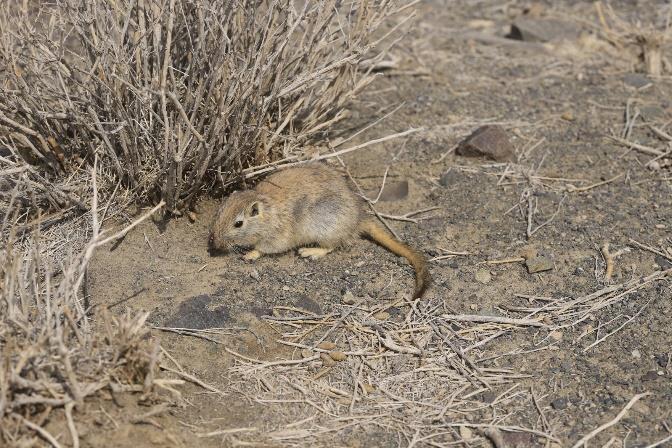
图1 大沙鼠野外实体
Fig.1 R. opimus field entities
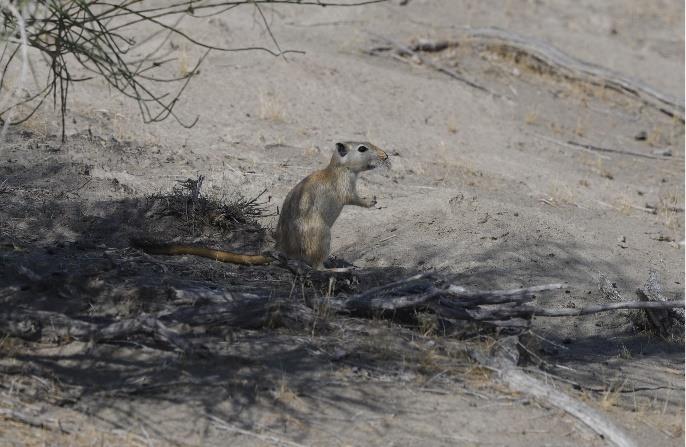
图2 红尾沙鼠野外实体
Fig.2 M. libycus field entities
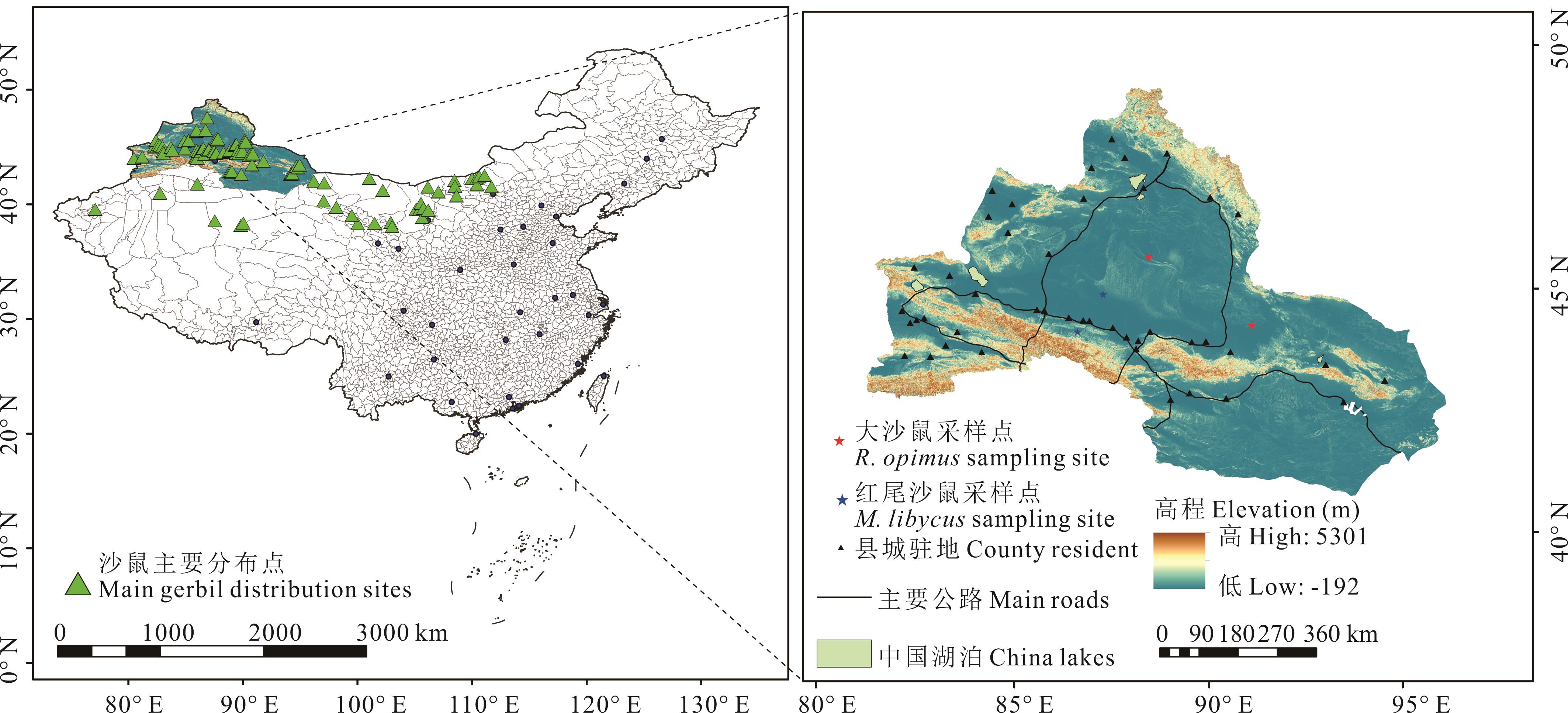
图3 研究区概况审图号:GS(2024)0650号 底图无修改。Review drawing No. GS(2024)0650 modification to the base drawing.
Fig.3 Overview of the study area
鼠种 Rodent species | 体重Weight (g) | 标本数量 The number of rodent (No.) | |||
|---|---|---|---|---|---|
| 最大值Max | 最小值Min | 平均值±标准差Mean±SE | 雌性Female | 雄性Male | |
| 大沙鼠R. opimus | 187.4 | 90.7 | 127.6±50.13 | 20 | 10 |
| 红尾沙鼠M. libycus | 118.7 | 71.9 | 89.0±18.00 | 12 | 11 |
表1 沙鼠标本采集信息
Table 1 Simplified information of gerbils sample
鼠种 Rodent species | 体重Weight (g) | 标本数量 The number of rodent (No.) | |||
|---|---|---|---|---|---|
| 最大值Max | 最小值Min | 平均值±标准差Mean±SE | 雌性Female | 雄性Male | |
| 大沙鼠R. opimus | 187.4 | 90.7 | 127.6±50.13 | 20 | 10 |
| 红尾沙鼠M. libycus | 118.7 | 71.9 | 89.0±18.00 | 12 | 11 |
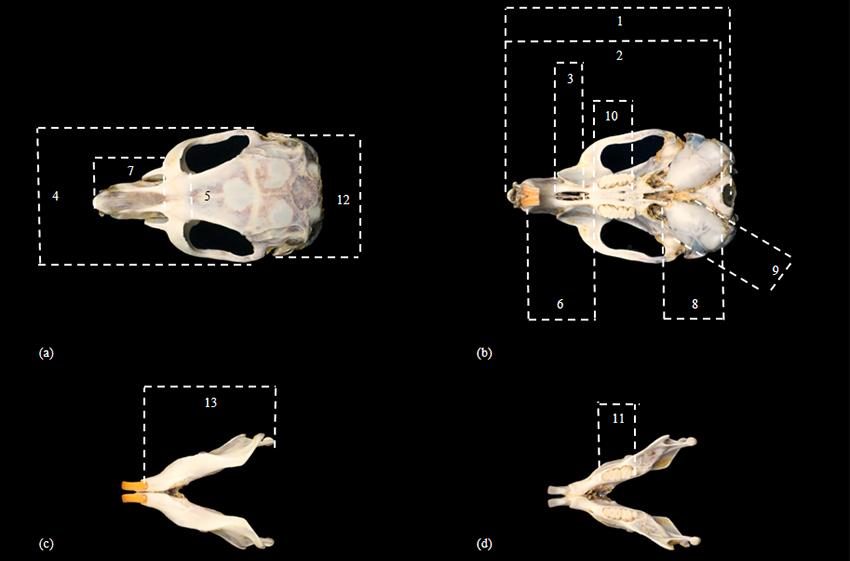
图4 大沙鼠头骨测量指标(a)大沙鼠颅骨背面观 Dorsal view of the skull of R. opimus;(b)大沙鼠颅骨腹面观 Ventral view of the skull of R. opimus;(c)大沙鼠下颌骨内侧面观 Internal view of R. opimus mandible; (d)大沙鼠下颌骨外侧面观 External view of R. opimus mandible. 1.颅全长 Profile length; 2.基长 Basal length; 3.腭长 Median palatal length; 4.颧宽 Zygomatic breadth; 5.眶间宽 Least breadth between the orbits; 6.齿隙长 Diastema length; 7.鼻骨长 Greatest length of the nasals; 8.听泡长 Length of tympanic bulla; 9.听泡宽 Width of tympanic bulla; 10.上齿列长 Length of the up tooth row; 11.下齿列长 Length of the down tooth row; 12.后头宽 Greatest mastoid breadth; 13.下颌长 Lower jaw length.
Fig.4 R. opimus skull measurement indicators
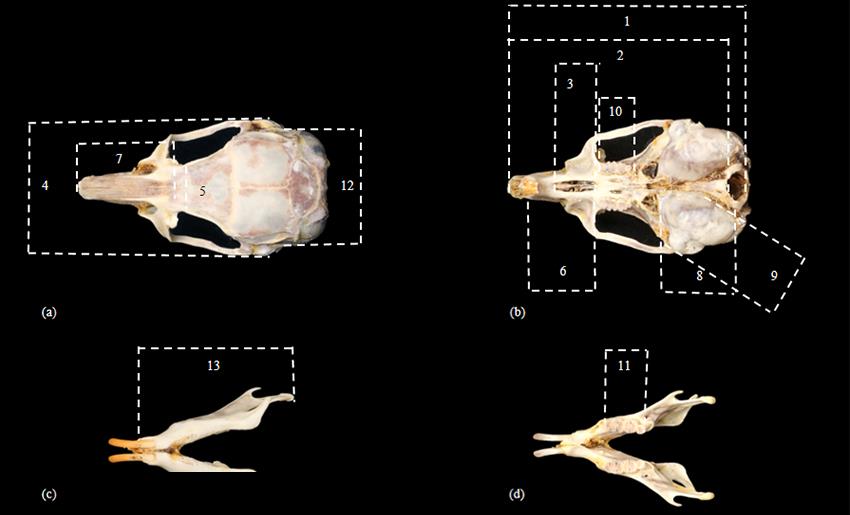
图5 红尾沙鼠头骨测量指标(a)红尾沙鼠颅骨背面观 Dorsal view of the skull of M. libycus;(b)红尾沙鼠颅骨腹面观 Ventral view of the skull of M. libycus;(c)红尾沙鼠下颌骨内侧面观 Internal view of M. libycus mandible; (d)红尾沙鼠下颌骨外侧面观 External view of M. libycus mandible.
Fig.5 M. libycus skull measurement indicators
头骨形态指标 Skull morphological parameter | 红尾沙鼠M. libycus | 大沙鼠R. opimus | ||
|---|---|---|---|---|
| 雌性Female ♀ (n=12) | 雄性Male ♂ (n=11) | 雌性Female ♀ (n=20) | 雄性Male ♂ (n=10) | |
| 颅全长Profile length | 35.77±0.39a | 36.74±0.45a | 37.62±0.41a | 38.47±0.84a |
| 基长Basal length | 29.59±0.44a | 30.71±1.18a | 32.40±0.75a | 32.54±1.07a |
| 腭长Median palatal length | 17.18±0.33a | 17.00±0.44a | 18.68±0.34a | 18.84±0.56a |
| 颧宽Zygomatic breadth | 21.12±0.23a | 21.14±0.27a | 22.86±0.30a | 23.80±0.67a |
| 眶间宽Least breadth between the orbits | 7.03±0.13a | 6.91±0.13a | 7.68±0.11a | 7.80±0.20a |
| 齿隙长Diastema length | 8.90±0.16a | 9.09±0.21a | 8.38±0.20a | 8.75±0.36a |
| 鼻骨长Greatest length of the nasals | 13.39±0.37a | 14.10±0.14a | 13.34±0.26a | 13.47±0.43a |
| 听泡长Length of tympanic bulla | 14.67±0.21a | 14.76±0.16a | 13.85±0.19a | 14.10±0.30a |
| 听泡宽Width of tympanic bulla | 10.67±0.10a | 10.61±0.07a | 10.04±0.16a | 10.36±0.16a |
| 上齿列长Length of the up tooth row | 16.64±0.29a | 16.93±0.25a | 19.74±0.28a | 20.07±0.56a |
| 下齿列长Length of the down tooth row | 12.02±0.29b | 13.19±0.23a | 13.56±0.20a | 13.71±0.37a |
| 后头宽Greatest mastoid breadth | 14.27±0.12a | 14.30±0.13a | 13.04±0.16a | 12.93±0.21a |
| 下颌长Lower jaw length | 18.35±0.43a | 18.77±0.50a | 21.86±0.45a | 23.42±0.69a |
表 2 红尾沙鼠与大沙鼠头骨形态指标性别间差异分析
Table 2 Sex-based differences in skull morphological parameters between R. opimus and M. libycus (mm)
头骨形态指标 Skull morphological parameter | 红尾沙鼠M. libycus | 大沙鼠R. opimus | ||
|---|---|---|---|---|
| 雌性Female ♀ (n=12) | 雄性Male ♂ (n=11) | 雌性Female ♀ (n=20) | 雄性Male ♂ (n=10) | |
| 颅全长Profile length | 35.77±0.39a | 36.74±0.45a | 37.62±0.41a | 38.47±0.84a |
| 基长Basal length | 29.59±0.44a | 30.71±1.18a | 32.40±0.75a | 32.54±1.07a |
| 腭长Median palatal length | 17.18±0.33a | 17.00±0.44a | 18.68±0.34a | 18.84±0.56a |
| 颧宽Zygomatic breadth | 21.12±0.23a | 21.14±0.27a | 22.86±0.30a | 23.80±0.67a |
| 眶间宽Least breadth between the orbits | 7.03±0.13a | 6.91±0.13a | 7.68±0.11a | 7.80±0.20a |
| 齿隙长Diastema length | 8.90±0.16a | 9.09±0.21a | 8.38±0.20a | 8.75±0.36a |
| 鼻骨长Greatest length of the nasals | 13.39±0.37a | 14.10±0.14a | 13.34±0.26a | 13.47±0.43a |
| 听泡长Length of tympanic bulla | 14.67±0.21a | 14.76±0.16a | 13.85±0.19a | 14.10±0.30a |
| 听泡宽Width of tympanic bulla | 10.67±0.10a | 10.61±0.07a | 10.04±0.16a | 10.36±0.16a |
| 上齿列长Length of the up tooth row | 16.64±0.29a | 16.93±0.25a | 19.74±0.28a | 20.07±0.56a |
| 下齿列长Length of the down tooth row | 12.02±0.29b | 13.19±0.23a | 13.56±0.20a | 13.71±0.37a |
| 后头宽Greatest mastoid breadth | 14.27±0.12a | 14.30±0.13a | 13.04±0.16a | 12.93±0.21a |
| 下颌长Lower jaw length | 18.35±0.43a | 18.77±0.50a | 21.86±0.45a | 23.42±0.69a |
头骨形态指标 Skull morphological parameter | 红尾沙鼠 M. libycus | 大沙鼠 R. opimus |
|---|---|---|
| 颅全长Profile length | 36.24±0.31b | 37.90±0.39a |
| 基长Basal length | 30.13±0.60b | 32.45±0.60a |
| 腭长Median palatal length | 17.09±0.27b | 18.74±0.29a |
| 颧宽 Zygomatic breadth | 21.13±0.17b | 23.17±0.30a |
| 眶间宽Least breadth between the orbits | 6.98±0.09b | 7.72±0.10a |
| 齿隙长 Diastema length | 9.00±0.13a | 8.50±0.18b |
| 鼻骨长Greatest length of the nasals | 13.73±0.21a | 13.38±0.22a |
| 听泡长 Length of tympanic bulla | 14.71±0.13a | 13.93±0.16b |
| 听泡宽Width of tympanic bulla | 10.64±0.06a | 10.15±0.12b |
| 上齿列长Length of the up tooth row | 16.78±0.19b | 19.85±0.26a |
| 下齿列长Length of the down tooth row | 12.58±0.22b | 13.61±0.18a |
| 后头宽 Greatest mastoid breadth | 14.28±0.09a | 13.00±0.12b |
| 下颌长Lower jaw length | 18.55±0.32b | 22.38±0.40a |
表 3 红尾沙鼠与大沙鼠两种沙鼠头骨形态指标的差异
Table 3 Differences in skull morphological parameters between two gerbils (mm)
头骨形态指标 Skull morphological parameter | 红尾沙鼠 M. libycus | 大沙鼠 R. opimus |
|---|---|---|
| 颅全长Profile length | 36.24±0.31b | 37.90±0.39a |
| 基长Basal length | 30.13±0.60b | 32.45±0.60a |
| 腭长Median palatal length | 17.09±0.27b | 18.74±0.29a |
| 颧宽 Zygomatic breadth | 21.13±0.17b | 23.17±0.30a |
| 眶间宽Least breadth between the orbits | 6.98±0.09b | 7.72±0.10a |
| 齿隙长 Diastema length | 9.00±0.13a | 8.50±0.18b |
| 鼻骨长Greatest length of the nasals | 13.73±0.21a | 13.38±0.22a |
| 听泡长 Length of tympanic bulla | 14.71±0.13a | 13.93±0.16b |
| 听泡宽Width of tympanic bulla | 10.64±0.06a | 10.15±0.12b |
| 上齿列长Length of the up tooth row | 16.78±0.19b | 19.85±0.26a |
| 下齿列长Length of the down tooth row | 12.58±0.22b | 13.61±0.18a |
| 后头宽 Greatest mastoid breadth | 14.28±0.09a | 13.00±0.12b |
| 下颌长Lower jaw length | 18.55±0.32b | 22.38±0.40a |

图6 两种沙鼠头骨形态指标与体重增长的关系
Fig.6 Relationship between skull morphology indicators and weight gain in two gerbils
| [1] | Wang S B, Yang Y Y. Xinjiang rodent fauna. Urumqi: Xinjiang People’s Publishing House, 1983: 136-146. |
| 王思博, 杨一源. 新疆啮齿动物志. 乌鲁木齐: 新疆人民出版社, 1983: 136-146. | |
| [2] | Cheng X T, Cao Q, Liao L F, et al. Research progress in ecology and control strategies of Rhombomys opimus. Gansu Animal Husbandry and Veterinary Medicine, 2023, 53(1): 140-143. |
| 程晓甜, 曹骞, 廖力夫, 等. 大沙鼠生态学及防治措施研究进展. 甘肃畜牧兽医, 2023, 53(1): 140-143. | |
| [3] | Qiao X L. Study on geographical distribution pattern of Rhombomys opimus in desert ecological forest. Urumqi: Xinjiang University, 2021. |
| 乔雪丽. 荒漠生态林区大沙鼠地理分布格局研究. 乌鲁木齐: 新疆大学, 2021. | |
| [4] | Nuerguli·Mahan, Zhao M, Zhang X P, et al. Regulation of harming agricultural crops of Merioness libycus lichtenstein and its control measures in Karamay district. Xinjiang Agricultural Sciences, 2007(1): 96-98. |
| 努尔古丽·马汉, 赵梅, 张新平, 等. 克拉玛依地区红尾沙鼠发生危害规律及防治措施. 新疆农业科学, 2007(1): 96-98. | |
| [5] | Cheng Y, Yue Y X, Wang T, et al. Screening the critical morphology and skull indices for identifying Rattus norvegicus and Rattus tanezumi. Acta Theriologica Sinica, 2023, 43(3): 322-332. |
| 程燕, 岳亚先, 王涛, 等. 褐家鼠和黄胸鼠体型和头骨物种鉴定特征值筛选. 兽类学报, 2023, 43(3): 322-332. | |
| [6] | Yao J. The status and prospect of collecting vertebrate specimen in Xinjiang. Arid Zone Research, 1998(2): 40-45. |
| 姚军. 新疆脊椎动物标本收藏现状与展望. 干旱区研究, 1998(2): 40-45. | |
| [7] | Zhang H J, Zhang H, Qin X X, et al. Geometric morphometric analysis of skull dimensions of Eothenomys miletus from five areas of the Hengduan Mountains. Chinese Journal of Wildlife, 2019, 40: 51-61. |
| 张海姬, 张浩, 秦雪雪, 等. 横断山五个地区大绒鼠头骨的几何形态学研究. 野生动物学报, 2019, 40: 51-61. | |
| [8] | Alhajeri B H. A morphometric comparison of the cranial shapes of Asian dwarf hamsters (Phodopus, Cricetinae, Rodentia). Zoologischer Anzeiger, 2021, 292: 184-196. |
| [9] | Alhajeri B H. Cranial variation in geographically widespread dwarf gerbil Gerbillus nanus (Gerbillinae, Rodentia) populations: Isolation by distance versus adaptation to local environments. Journal of Zoological Systematics and Evolutionary Research, 2019, 57(1): 191-203. |
| [10] | Yang H F. A brief comment on age methods for small mammals. Chinese Journal of Ecology, 1990, 9(2): 56-57. |
| 杨荷芳. 小型兽类年龄鉴定方法简评. 生态学杂志, 1990, 9(2): 56-57. | |
| [11] | Bao Y X, Zhuge Y. Age determination and population age structure of Niviventer confucianus. Acta Theriologica Sinica, 1984, 4(2): 127-137. |
| 鲍毅新, 诸葛阳. 社鼠的年龄鉴定与种群年龄组成. 兽类学报, 1984, 4(2): 127-137. | |
| [12] | Xiong M T, Zhao H, Yang G R, et al. Study on population age of three rodent species in Western Yunnan. Chinese Journal of Zoology, 1998(2): 26-28. |
| 熊孟韬, 赵侯, 杨光荣, 等. 云南西部三种鼠类种群年龄研究. 动物学杂志, 1998(2): 26-28. | |
| [13] | Ma L X, Wang X F, Hou L X, et al. Investigation and classification of rodent damage in eastern Xinjiang grasslands. Journal of Northwest University for Nationalities, 1996(1): 47-50. |
| 马良贤, 王学锋, 侯兰新, 等. 新疆东部草原鼠害的调查及危害类型的划分. 西北民族学院学报, 1996(1): 47-50. | |
| [14] | Zhang M C, Zhang Z J, Mu H Q, et al. Geographical differentiation in skull morphology of isolated Apodemus chevrieri populations in western Sichuan. Acta Theriologica Sinica, 2008, 28(4): 395-401. |
| 张明春, 张泽钧, 母华强, 等. 川西四大山系间高山姬鼠头骨特征的地理分化. 兽类学报, 2008, 28(4): 395-401. | |
| [15] | Su J H, Nan Z B, Ji W H, et al. Morphological analysis of the skull of plateau zokors (Eospalax baileyi) from different geographical populations. Acta Ecologica Sinica, 2018, 38(1): 325-332. |
| 苏军虎, 南志标, 纪维红, 等. 高原鼢鼠(Eospalax baileyi)头骨形态的地理分化. 生态学报, 2018, 38(1): 325-332. | |
| [16] | Li S, Yang J X, Jiang X L, et al. Geographic variation in giant squirrels Ratufa bicolor (Sciuridae: Ratufinae) from China based on cranial measurable variables. Acta Theriologica Sinica, 2008, 28(2): 201-206. |
| 李松, 杨君兴, 蒋学龙, 等. 中国巨松鼠(Ratufa bicolor)(Sciuridae: Ratufinae)头骨形态的地理学变异. 兽类学报, 2008, 28(2): 201-206. | |
| [17] | Yang H, Zhang Z H. The geometric morphometric research on the skull of Apodemus draco and Apodemus peninsulae. Sichuan Journal of Zoology, 2011, 30(5): 691-695. |
| 杨红, 张子慧. 中华姬鼠与大林姬鼠头骨的几何形态学研究. 四川动物, 2011, 30(5): 691-695. | |
| [18] | Zhu W L, Fu J H, Yang X M, et al. Skull traits of the tree shrews (Tupaia belangeri). Journal of Biology, 2015, 32(5): 40-42. |
| 朱万龙, 付家豪, 杨晓蜜, 等. 中缅树鼩(Tupaia belangeri)头骨特征的研究. 生物学杂志, 2015, 32(5): 40-42. | |
| [19] | Zhu W L, Jia T, Huang C M, et al. Morphometrics investigation of the skulls, mandibles and molar in Tupaia belangeri from Yunnan, Guizhou, Guangxi. Acta Ecologica Sinica, 2013, 33(6): 1721-1730. |
| 朱万龙, 贾婷, 黄春梅, 等. 中缅树鼩(Tupaia belangeri)头骨及下臼齿几何形态与环境的关系. 生态学报, 2013, 33(6): 1721-1730. | |
| [20] | Shang Z H N, Manduhu, Yuan S, et al. Characteristics and differences between skulls of Myospalax psilurus and Myospalax aspalax. Pratacultural Science, 2022, 39(8): 1643-1652. |
| 商正昊妮, 满都呼, 袁帅, 等. 东北鼢鼠与草原鼢鼠头骨特征及差异. 草业科学, 2022, 39(8): 1643-1652. | |
| [21] | Dai H Y, Shan W J. Age identification of Xinjiang hare based on skull morphology indexes. Heilongjiang Animal Science and Veterinary Medicine, 2021(1): 138-141. |
| 代慧英, 单文娟. 基于头骨形态指标的新疆野兔年龄鉴定. 黑龙江畜牧兽医, 2021(1): 138-141. | |
| [22] | Wu S Y, Zhang F C, Edwards S V, et al. The evolution of bipedalism in jerboas (Rodentia: Dipodoidea): Origin in humid and forested environments. Evolution, 2014, 68(7): 2108-2118. |
| [23] | Moore T Y, Organ C L, Edwards S V, et al. Multiple phylogenetically distinct events shaped the evolution of limb skeletal morphologies associated with bipedalism in the jerboas. Current Biology, 2015, 25(21): 2785-2794. |
| [24] | Zhao T B, Li X M, Duan Q H, et al. Cluster analysis of skeletal structures in jerboas. Endemic Diseases Bulletin of Inner Mongolia, 1994(2): 82-84. |
| 赵天飙, 李新民, 段全红, 等. 几种跳鼠骨骼结构的聚类分析. 内蒙古地方病防治研究, 1994(2): 82-84. | |
| [25] | Xia L, Yang Q S, Ma Y, et al. Standard measurements for mammalian skulls Ⅲ: Rodentia and Lagomorpha. Chinese Journal of Zoology, 2006(5): 68-71. |
| 夏霖, 杨奇森, 马勇, 等. 兽类头骨测量标准Ⅲ: 啮齿目、兔形目. 动物学杂志, 2006(5): 68-71. | |
| [26] | Yu H. Sexual dimorphism in skull morphology of Myospalax epsilanus. Journal of Northwest A & F University (Natural Science Edition), 1958(2): 41-61. |
| 禹瀚. 陕北鼢鼠(Myospalax epsilanus)两性头骨形态及差异的研究. 西北农林科技大学学报(自然科学版), 1958(2): 41-61. | |
| [27] | Yang X G, Zhang Z J, Liu X Y, et al. Comparison of white-bellied rat skull variables between Qinling and Qionglai Mountains and their relationship with body size. Journal of China West Normal University (Natural Sciences), 2011, 32(1): 16-22. |
| 杨学贵, 张泽钧, 刘新玉, 等. 秦岭、邛崃山系社鼠(Niviventer confucianus)头骨形态指标比较及与体型大小之间的关系. 西华师范大学学报(自然科学版), 2011, 32(1): 16-22. | |
| [28] | Li X C, Xue X X. Comparison of structure and function on masticatory apparatus between Chinese bamboo rat and common Chinese zokors. Journal of Northwest University (Natural Science Edition), 1999(6): 585-589. |
| 李晓晨, 薛祥煦. 中华竹鼠与甘肃鼢鼠咀嚼肌结构和功能的比较. 西北大学学报(自然科学版), 1999(6): 585-589. | |
| [29] | Bai X C. Geographic variation in the skull of the Siberian weasel (Mustela sibirica manchurica) among different ecotypes. Harbin: Northeast Forestry University, 2015. |
| 白晓晨. 黄鼬东北亚种(Mustela sibirica manchurica)不同生态型头骨形态特征的比较. 哈尔滨: 东北林业大学, 2015. | |
| [30] | Kang Y K. Adaptive evolution of Myospalacinae based on morphological and molecular characteristics. Lanzhou: Gansu Agricultural University, 2023. |
| 康宇坤. 基于形态和分子特征的鼢鼠亚科(Myospalacinae)动物适应性进化研究. 兰州: 甘肃农业大学, 2023. | |
| [31] | Morrison E E, Costanzo R M. Morphology of the human olfactory epithelium. Journal of Comparative Neurology, 1990, 297(1): 1-13. |
| [32] | Zhao L M. Morphogeographic variation and subspecies classification of Meriones meridianus in China. Lanzhou: Lanzhou University, 2013. |
| 赵黎明. 中国子午沙鼠(Meriones meridianus)形态地理变异及亚种分类研究. 兰州: 兰州大学, 2013. | |
| [33] | Kang Y K, Pu Q S, Wang Z C, et al. Geographical differentiation of geometric morphology in Eospalax cansus skull and influencing factors. Grassland and Turf, 2024, 44(5): 1-13. |
| 康宇坤, 蒲强胜, 王志成, 等. 甘肃鼢鼠头骨几何形态地理分异及其影响因素分析. 草原与草坪, 2024, 44(5): 1-13. | |
| [34] | Liu W, Guo C, Yang W K. Feeding habits of Rhombomys opimus and their impacts on desert soil properties and plant communities//Abstracts of the Chinese western zoology symposium. Chengdu: Sichuan University, 2012: 39. |
| 刘伟, 郭聪, 杨维康. 大沙鼠(Rhombomys opimus)食性研究及其对荒漠土壤性质和植物群落结构的影响. 中国西部动物学学术研讨会论文摘要汇编. 成都: 四川大学, 2012: 39. | |
| [35] | Zhang Y M, Liu J K. Biological characteristics and ecological roles of subterranean rodents. Acta Theriologica Sinica, 2002, 22(2): 144-154. |
| 张堰铭, 刘季科. 地下鼠生物学特征及其在生态系统中的作用. 兽类学报, 2002, 22(2): 144-154. | |
| [36] | Ma Y, Wang F G, Jin S K, et al. Classification and distribution of rodents in the Northern region. Beijing: Science Press, 1987: 195-200. |
| 马勇, 王逢桂, 金善科, 等. 北部地区啮齿动物的分类和分布. 北京: 科学出版社, 1987: 195-200. | |
| [37] | Webster D B, Webster M. Auditory systems of heteromyidae: Functional morphology and evolution of the middle ear. Journal of Morphology, 1975, 146(3): 343-376. |
| [38] | Zhu H Y. On functional morphology in skulls of mandarin vole and brandt’s vole. Zhengzhou: Zhengzhou University, 2014. |
| 朱晗羽. 棕色田鼠和布氏田鼠头骨的功能形态学研究. 郑州: 郑州大学, 2014. |
| No related articles found! |
| 阅读次数 | ||||||
|
全文 |
|
|||||
|
摘要 |
|
|||||
