

ISSN 1004-5759 CN 62-1105/S
草业学报 ›› 2026, Vol. 35 ›› Issue (8): 207-220.DOI: 10.11686/cyxb2025337
• 综合评述 • 上一篇
刘昊臻( ), 赵士钦, 冯树蓉, 王成, 张景鈜, 孙守江()
收稿日期:2025-08-18
修回日期:2025-10-20
出版日期:2026-08-20
发布日期:2026-06-22
通讯作者:
孙守江
作者简介:Corresponding author. E-mail: shoujiangsun@nxu.edu.cn基金资助:
Hao-zhen LIU(), Shi-qin ZHAO, Shu-rong FENG, Cheng WANG, Jing-hong ZHANG, Shou-jiang SUN()
Received:2025-08-18
Revised:2025-10-20
Online:2026-08-20
Published:2026-06-22
Contact:
Shou-jiang SUN
摘要:
种子休眠是植物在长期进化过程中形成的一种适应性特征,使植物能够在逆境条件下存活。豆科植物作为全球农业生产的核心作物类群(涵盖粮食、饲料、绿肥等),其种子休眠特性直接影响播种质量、田间出苗率及产量稳定性。豆科植物种子休眠的分子调控主要以脱落酸(ABA)和赤霉素(GA)含量平衡为核心,通过种皮发育基因、转录因子网络、表观修饰及环境信号整合的复杂系统,该机制既保证种子在不利环境中存活,又能在适宜条件下精准萌发。生理休眠是种子休眠的主要因素,ABA与GA并非直接相互作用,而是通过其拮抗效应分别促进“休眠维持”和“萌发启动”,ABA下游发芽抑制因子ABI3有许多靶基因在拟南芥中已被报道,包括ABI5、DELLA和bHLH转录因子,但在豆科植物中相应的调控网络尚不明确,ABI3在ABA信号传导通路与其他因子的相互作用仍待研究。因此,基于近年来的相关研究成果,系统梳理了豆科植物种子休眠的类型、种子休眠破除技术及休眠的分子调控网络,重点总结豆科植物种子特有的休眠特征。此外,基于模式植物种子休眠的分子调控研究进展,提出豆科植物种子休眠的潜在分子调控假设模型,为豆科植物种子休眠分子调控机制的进一步研究提供理论指导,也为豆科植物栽培实践和后续品种改良提供理论支撑。
刘昊臻, 赵士钦, 冯树蓉, 王成, 张景鈜, 孙守江. 豆科植物种子休眠的生理及分子机制研究进展[J]. 草业学报, 2026, 35(8): 207-220.
Hao-zhen LIU, Shi-qin ZHAO, Shu-rong FENG, Cheng WANG, Jing-hong ZHANG, Shou-jiang SUN. Progress in research on the physiological and molecular mechanisms of seed dormancy in legumes[J]. Acta Prataculturae Sinica, 2026, 35(8): 207-220.
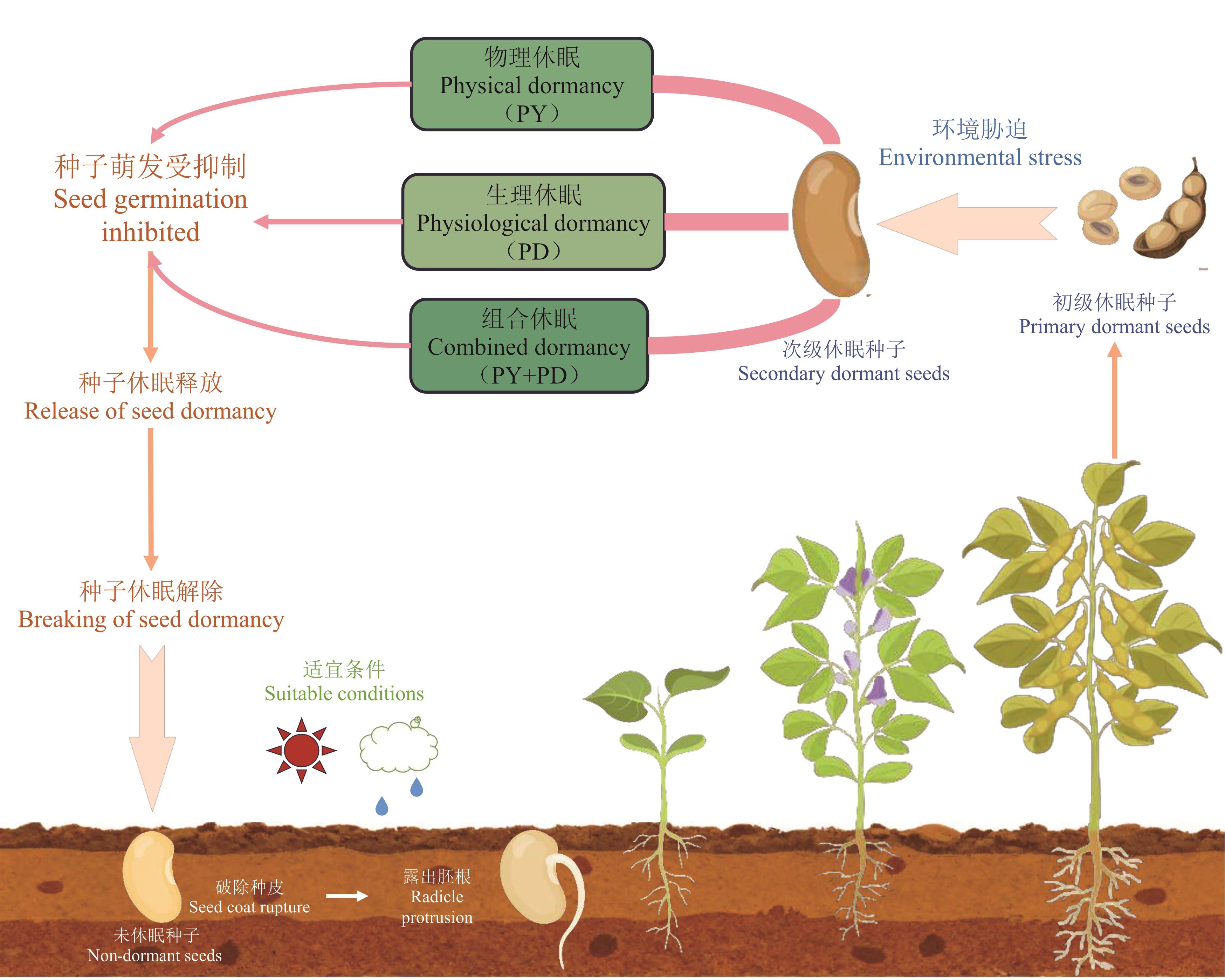
图1 豆科植物种子休眠形成过程
Fig.1 The process of seed dormancy formation in leguminous plants
| 类型Type | 种子休眠原因Reasons for seed dormancy | 文献References |
|---|---|---|
| PD | 生理休眠一般由激素平衡来解释,其中脱落酸作为抑制剂,赤霉素作为促进剂。Physiological dormancy is typically elucidated through the lens of hormonal equilibrium, wherein abscisic acid (ABA) functions as an inhibitory regulator, while gibberellins (GA) serve as promotive agents. | [ |
| PY | 种子的不透水性导致种子不能吸收水分,因此不能发芽。The impermeability of the seed coat prevents water absorption, thereby inhibiting germination. | [ |
| PY+PD | 种子同时存在两种或多种休眠类型,既具有生理休眠的特点,内部含有抑制萌发的物质,又有物理休眠,种皮阻碍了种子与外界环境的物质交换。Seeds may exhibit multiple types of dormancy concurrently, characterized by both physiological dormancy, involving internal substances that inhibit germination, and physical dormancy, where the seed coat impedes material exchange with the external environment. | [ |
表1 豆科种子休眠类型
Table 1 Dormancy types of legume seeds
| 类型Type | 种子休眠原因Reasons for seed dormancy | 文献References |
|---|---|---|
| PD | 生理休眠一般由激素平衡来解释,其中脱落酸作为抑制剂,赤霉素作为促进剂。Physiological dormancy is typically elucidated through the lens of hormonal equilibrium, wherein abscisic acid (ABA) functions as an inhibitory regulator, while gibberellins (GA) serve as promotive agents. | [ |
| PY | 种子的不透水性导致种子不能吸收水分,因此不能发芽。The impermeability of the seed coat prevents water absorption, thereby inhibiting germination. | [ |
| PY+PD | 种子同时存在两种或多种休眠类型,既具有生理休眠的特点,内部含有抑制萌发的物质,又有物理休眠,种皮阻碍了种子与外界环境的物质交换。Seeds may exhibit multiple types of dormancy concurrently, characterized by both physiological dormancy, involving internal substances that inhibit germination, and physical dormancy, where the seed coat impedes material exchange with the external environment. | [ |
解除技术 Release technology | 种子休眠解除原理 Seed dormancy release mechanisms | 解除类型 Categories of dormancy release |
|---|---|---|
| 层积处理Stratification treatment | 软化或分解种皮、促使种子内部发生复杂的生理生化变化。此外,完成胚的发育。Softening or decomposing the seed coat, promoting complex physiological and biochemical changes within the seed, and in addition, completing the development of the embryo. | PD, PY+PD |
| 机械处理Mechanical treatment | 物理外力破坏种子坚硬或致密的外皮以解除其对水分、气体渗透或胚生长的阻碍,从而打破休眠。Physical external forces destroy the hard or dense outer coat of seeds to remove their obstruction to water and gas penetration or embryo growth, thereby breaking dormancy. | PY |
| 热水处理Hot water treatment | 高温使种皮蜡质层破裂或产生微裂纹,增强透水性,热激改变种子内源激素平衡。High temperature causes the waxy layer of the seed coat to crack or form microcracks, enhances water permeability, and heat shock alters the balance of endogenous hormones in seeds. | PY, PD |
| 激素处理Hormonal treatment | 抑制脱落酸作用,促进赤霉素合成、刺激胚发育。Inhibit the action of abscisic acid(ABA), promote the synthesis of gibberellin(GA), and stimulate embryo development. | PD |
| 硫酸处理Sulfuric acid treatment | 降低种壳机械强度,破坏种皮的一些局部结构、改善种皮的渗透性、急剧降温导致种皮开裂,进而提升种皮通透性。Reduce the mechanical strength of the seed coat, destroy some local structures of the seed coat, improve the permeability of the seed coat, and cause the seed coat to crack due to rapid cooling, thereby enhancing the permeability of the seed coat. | PY |
| 液氮处理Liquid nitrogen treatment | 使种皮产生微裂纹,或改变细胞膜透性及酶活性。Cause the seed coat to form microcracks, or alter the permeability of cell membranes and enzyme activity. | PD, PY |
| 超声波处理Ultrasonic wave treatment | 利用超声波在液体中产生空化气泡,气泡破裂时释放冲击波,使种皮产生微孔或剥离外层屏障。Ultrasonic waves are used to generate cavitation bubbles in liquids; when the bubbles collapse, they release shock waves, causing the seed coat to form micropores or peel off the outer barrier. | PY |
表2 豆科种子休眠解除方法
Table 2 Methods for breaking dormancy of legume seeds
解除技术 Release technology | 种子休眠解除原理 Seed dormancy release mechanisms | 解除类型 Categories of dormancy release |
|---|---|---|
| 层积处理Stratification treatment | 软化或分解种皮、促使种子内部发生复杂的生理生化变化。此外,完成胚的发育。Softening or decomposing the seed coat, promoting complex physiological and biochemical changes within the seed, and in addition, completing the development of the embryo. | PD, PY+PD |
| 机械处理Mechanical treatment | 物理外力破坏种子坚硬或致密的外皮以解除其对水分、气体渗透或胚生长的阻碍,从而打破休眠。Physical external forces destroy the hard or dense outer coat of seeds to remove their obstruction to water and gas penetration or embryo growth, thereby breaking dormancy. | PY |
| 热水处理Hot water treatment | 高温使种皮蜡质层破裂或产生微裂纹,增强透水性,热激改变种子内源激素平衡。High temperature causes the waxy layer of the seed coat to crack or form microcracks, enhances water permeability, and heat shock alters the balance of endogenous hormones in seeds. | PY, PD |
| 激素处理Hormonal treatment | 抑制脱落酸作用,促进赤霉素合成、刺激胚发育。Inhibit the action of abscisic acid(ABA), promote the synthesis of gibberellin(GA), and stimulate embryo development. | PD |
| 硫酸处理Sulfuric acid treatment | 降低种壳机械强度,破坏种皮的一些局部结构、改善种皮的渗透性、急剧降温导致种皮开裂,进而提升种皮通透性。Reduce the mechanical strength of the seed coat, destroy some local structures of the seed coat, improve the permeability of the seed coat, and cause the seed coat to crack due to rapid cooling, thereby enhancing the permeability of the seed coat. | PY |
| 液氮处理Liquid nitrogen treatment | 使种皮产生微裂纹,或改变细胞膜透性及酶活性。Cause the seed coat to form microcracks, or alter the permeability of cell membranes and enzyme activity. | PD, PY |
| 超声波处理Ultrasonic wave treatment | 利用超声波在液体中产生空化气泡,气泡破裂时释放冲击波,使种皮产生微孔或剥离外层屏障。Ultrasonic waves are used to generate cavitation bubbles in liquids; when the bubbles collapse, they release shock waves, causing the seed coat to form micropores or peel off the outer barrier. | PY |
物种 species | 基因 Gene | 基因功能 Gene function | 休眠原因 Causative reason | 鉴定方法 Identification methods | 文献 References |
|---|---|---|---|---|---|
菜豆 Phaseolus vulgaris | PAE8 | 果胶乙酰酯酶 8 Pectin acetylesterase 8 | 导致种子休眠性丧失的主要致病突变Major causative mutation underlying the loss of seed dormancy | 基因定位 Gene mapping | [ |
大豆 G.max | GmHs1-1 | 金属磷脂酶 Metallophospholipase | 钙离子(Ca2?)的积累Accumulation of Ca2+ | 基因定位 Gene mapping | [ |
| GmqHS1 | 内切-1,4-β-葡聚糖酶 Endo-1,4-β-glucanase | β-1,4-葡聚糖的积累Accumulation β-1,4-glucan | 基因定位 Gene mapping | [ | |
蒺藜苜蓿 M.truncatula | KCS12 | β-酮脂酰辅酶A合成酶 β-ketoyl CoA synthase | 改变栅栏组织角质层Change palisade cuticle layer | 热不对称交错 PCR Thermal asymmetric interlaced PCR (TAIL-PCR) | [ |
| KNOX4 | Ⅱ类KNOX基因 A class Ⅱ KNOX gene | 调控种皮中超长链脂肪酸的合成Control the production of very long-chain fatty acids in seed coat | 微阵列技术 Microarray | [ |
表3 豆科植物种子物理休眠相关基因
Table 3 The genes related to physical dormancy in legume seeds
物种 species | 基因 Gene | 基因功能 Gene function | 休眠原因 Causative reason | 鉴定方法 Identification methods | 文献 References |
|---|---|---|---|---|---|
菜豆 Phaseolus vulgaris | PAE8 | 果胶乙酰酯酶 8 Pectin acetylesterase 8 | 导致种子休眠性丧失的主要致病突变Major causative mutation underlying the loss of seed dormancy | 基因定位 Gene mapping | [ |
大豆 G.max | GmHs1-1 | 金属磷脂酶 Metallophospholipase | 钙离子(Ca2?)的积累Accumulation of Ca2+ | 基因定位 Gene mapping | [ |
| GmqHS1 | 内切-1,4-β-葡聚糖酶 Endo-1,4-β-glucanase | β-1,4-葡聚糖的积累Accumulation β-1,4-glucan | 基因定位 Gene mapping | [ | |
蒺藜苜蓿 M.truncatula | KCS12 | β-酮脂酰辅酶A合成酶 β-ketoyl CoA synthase | 改变栅栏组织角质层Change palisade cuticle layer | 热不对称交错 PCR Thermal asymmetric interlaced PCR (TAIL-PCR) | [ |
| KNOX4 | Ⅱ类KNOX基因 A class Ⅱ KNOX gene | 调控种皮中超长链脂肪酸的合成Control the production of very long-chain fatty acids in seed coat | 微阵列技术 Microarray | [ |
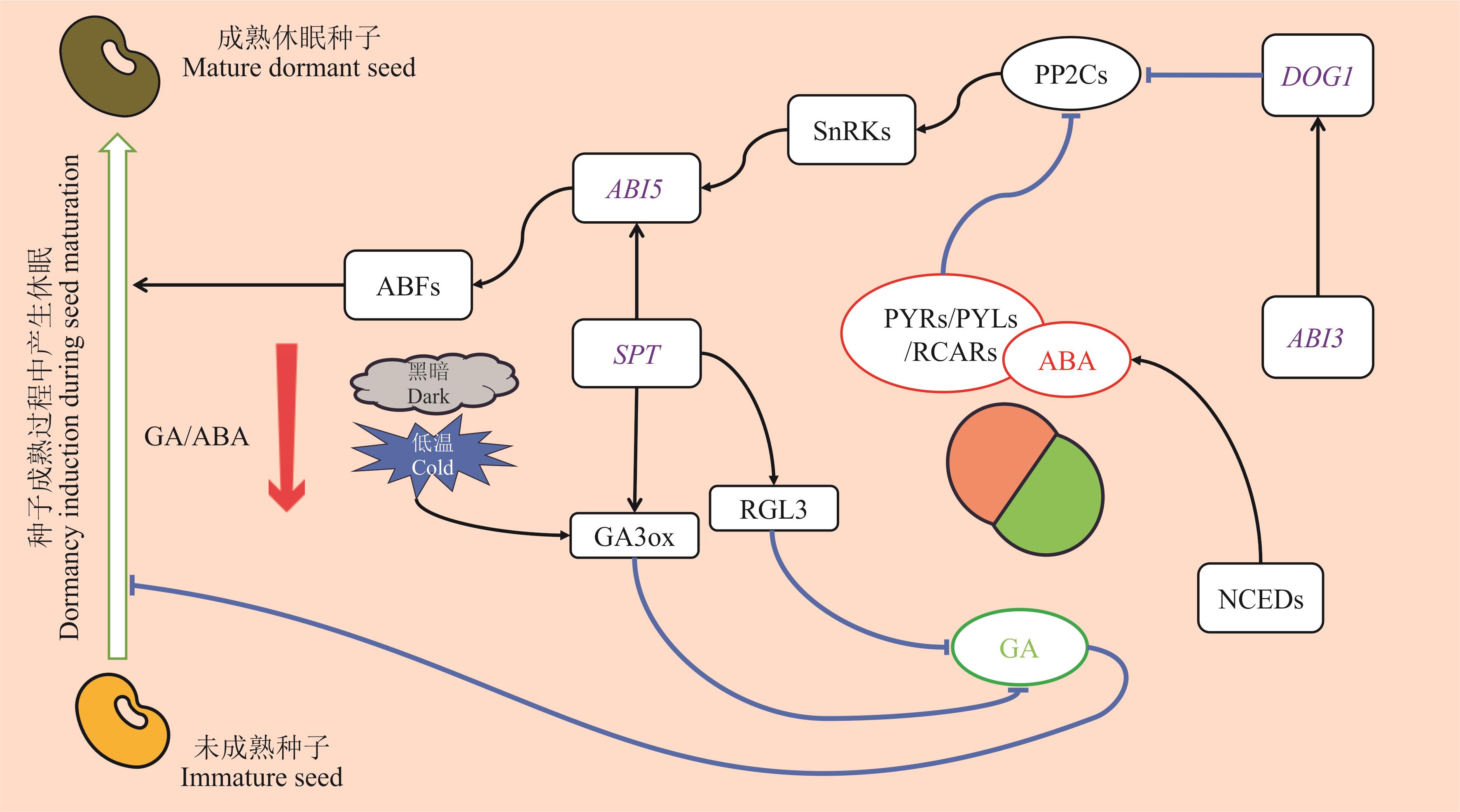
图2 豆科植物种子生理休眠分子调控过程箭头表示促进作用,横线表示抑制作用Arrows indicate promotion, while horizontal lines indicate inhibition; GA/ABA: 赤霉素与脱落酸含量之比The ratio of gibberellin content to abscisic acid content; PYRs/PYLs/RCARs: 吡咯菌素抗性蛋白/吡咯菌素抗性类似蛋白/脱落酸受体调控元件,植物激素ABA的受体蛋白,调控种子休眠Pyrabactin resistance/pyrabactin resistance-like/regulatory components of ABA receptor,the receptor protein of the plant hormone ABA regulates seed dormancy; ABI3: 脱落酸不敏感因子3,控制种子成熟和休眠的转录因子Abscisic acid insensitive 3, transcription factors controlling seed maturation and dormancy; DOG1: 延迟发芽的调控因子1 Delay of germination-1; PP2Cs: 2C型蛋白磷酸酶,抑制ABA信号传导的蛋白磷酸酶Protein phosphatase 2Cs, protein phosphatase inhibiting ABA signaling; SnRKs: 蔗糖非酵解型蛋白激酶,与ABA信号传导相关的激酶SNF1-related protein kinases, kinase associated with ABA signaling; ABI5: 脱落酸不敏感因子5,调控种子休眠和抗逆的转录因子Abscisic acid insensitive 5, transcription factor regulating seed dormancy and stress resistance; ABFs:脱落酸响应元件结合因子ABA-responsive element binding factors; SPT: 参与种子发育和休眠的转录因子Spatula, transcription factors involved in seed development and dormancy; GA3ox: 赤霉素3-β-双加氧酶,合成GA的关键酶Gibberellin 3-oxidase, key enzyme in gibberellin (GA) synthesis; RGL3: DELLA家族成员,是赤霉素(GA)信号传导路径中的负调控因子A member of the DELLA family, functions as a negative regulator of GA signaling; NCEDs: 顺式环氧类胡萝卜素双加氧酶,合成ABA的关键酶9-cis-epoxycarotenoid dioxygenases-9, key enzyme in abscisic acid (ABA) synthesis.
Fig.2 The process of molecular regulation in seed physiological dormancy of leguminous plants
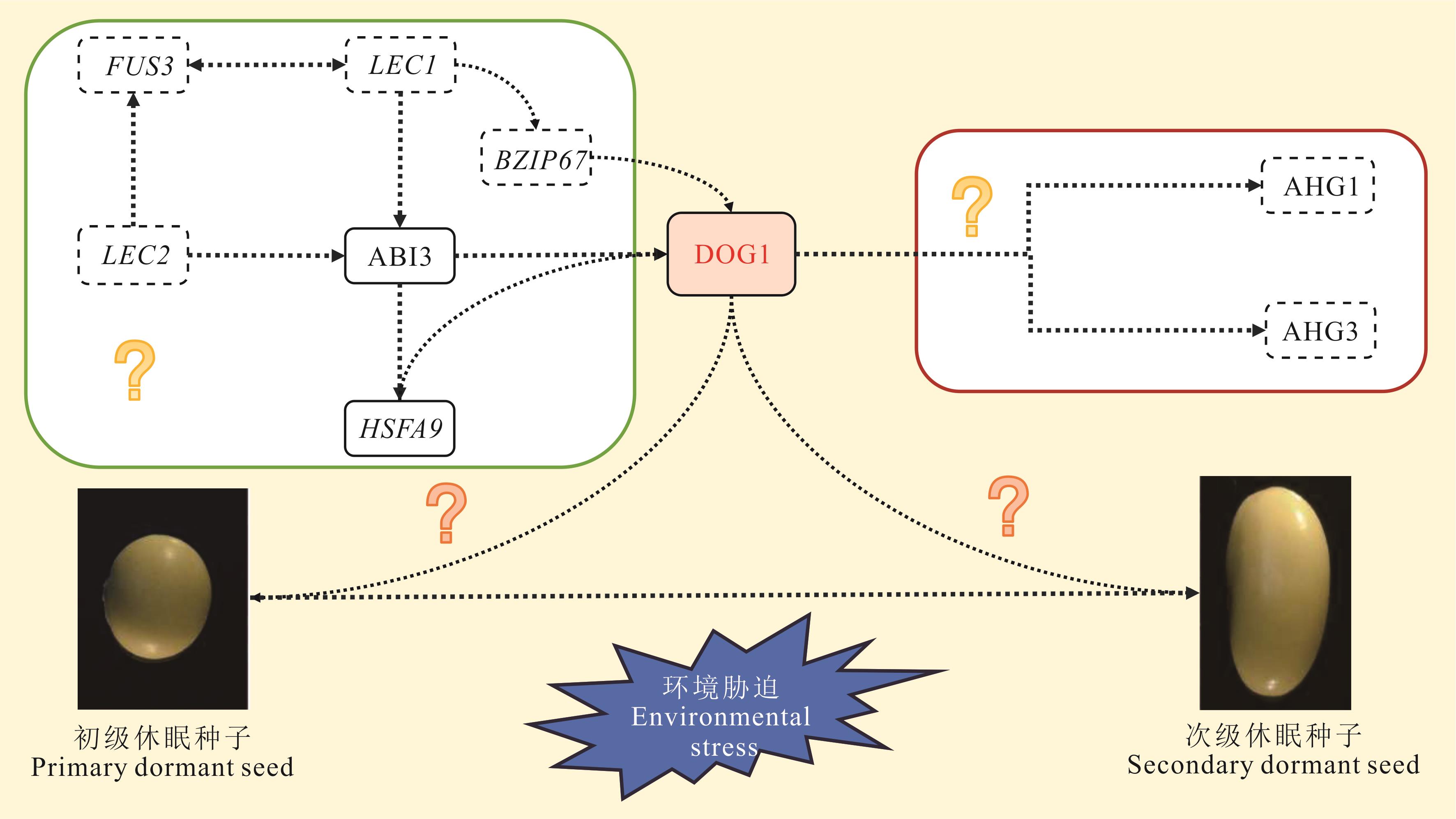
图3 DOG1调控豆科植物种子休眠假设模型图中黑色箭头表示两者关联Black arrows denote the association between the two elements; FUS3: 调控种子发育的转录因子 Transcription factors regulating seed development; LEC1:叶状子叶1转录因子,控制种子成熟的转录因子Leafy cotyledon 1, transcription factors controlling seed maturation; LEC2:叶状子叶2转录因子,参与种子发育和休眠的转录因子Leafy cotyledon 2, transcription factors controlling seed maturation and seed dormancy; BZIP67:碱性亮氨酸拉链67转录因子,种子发育相关转录因子Basic Leucine zipper 67, transcription factor associated with seed development; HSFA9: 热休克因子A9转录因子,响应热应激的转录因子Heat shock factor A9, transcription factor responding to heat stress; AHG1/3:脱落酸高敏感发芽1/3蛋白,调控种子萌发的蛋白ABA-Hypersensitive Germination 1/3, proteins regulating seed germination.
Fig.3 Hypothetical model of DOG1-mediated regulation of seed dormancy in leguminous plants
| [1] | Hilhorst H W M. A critical update on seed dormancy. I. Primary dormancy. Seed Science Research, 1995, 5(2): 61-73. |
| [2] | Smykal P, Vernoud V, Blair M W, et al. The role of the testa during development and in establishment of dormancy of the legume seed. Frontiers in Plant Science, 2014, 5: 351. |
| [3] | Savage W E F, Metzger G L. Seed dormancy and the control of germination. New Phytologist, 2006, 171(3): 501-523. |
| [4] | Yang L W, Liu S R, Lin R C. The role of light in regulating seed dormancy and germination. Journal of Integrative Plant Biology, 2020, 62(9): 1310-1326. |
| [5] | Huang X Q, Schmitt J, Dorn L, et al. The earliest stages of adaptation in an experimental plant population: Strong selection on QTLS for seed dormancy. Molecular Ecology, 2010, 19(7): 1335-1351. |
| [6] | Donohue K, de Casas R R, Burghardt L, et al. Germination, postgermination adaptation, and species ecological ranges. Annual Review of Ecology, Evolution, and Systematics, 2010, 41(1): 293-319. |
| [7] | Gary J M, Catherine F. Genetics and Genomics of the Triticeae. New York: Springer US, 2009: 31-79. |
| [8] | Gubler F, Millar A A, Jacobsen J V. Dormancy release, ABA and pre-harvest sprouting. Current Opinion in Plant Biology, 2005, 8(2): 183-187. |
| [9] | Bewley J D. Breaking down the walls-a role for endo-β-mannanase in release from seed dormancy? Trends in Plant Science, 1997, 2(12): 464-469. |
| [10] | Nonogaki H, Barrero J M, Li C. Editorial: Seed dormancy, germination, and pre-harvest sprouting. Frontiers in Plant Science, 2018, 9: 1783. |
| [11] | Malloch A J C, Bewley J D, Black M. Seeds: Physiology of development and germination. The Journal of Ecology, 1986, 74(3): 905. |
| [12] | Vleeshouwers L M, Bouwmeester H J, Karssen C M. Redefining seed dormancy: An attempt to integrate physiology and ecology. The Journal of Ecology, 1995, 83(6): 1031. |
| [13] | Batlla D, Benech-Arnold R L. Predicting changes in dormancy level in weed seed soil banks: Implications for weed management. Crop Protection, 2007, 26(3): 189-197. |
| [14] | Nonogaki H. Seed dormancy and germination-emerging mechanisms and new hypotheses. Frontiers in Plant Science, 2014, 5: 233. |
| [15] | Smith S M, Weller J L. Seasonal control of seed germination. New Phytologist, 2019, 225(5): 1821-1823. |
| [16] | Baskin J M, Baskin C C. A classification system for seed dormancy. Seed Science Research, 2004, 14(1): 1-16. |
| [17] | Nautiyal P C, Sivasubramaniam K, Dadlani M. Seed dormancy and regulation of germination. Seed Science and Technology, 2023, 52: 39-66. |
| [18] | Baskin J M, Baskin C C. The great diversity in kinds of seed dormancy: A revision of the nikolaeva-baskin classification system for primary seed dormancy. Seed Science Research, 2021, 31(4): 249-277. |
| [19] | Schellenberg M P. Seeds: Ecology, biogeography, and evolution of dormancy and germination. The Canadian Field-Naturalist, 1999, 113(4): 702-703. |
| [20] | Amen R D. A model of seed dormancy. The Botanical Review, 1968, 34(1): 1-31. |
| [21] | Wareing P F, Saunders P F. Hormones and dormancy. Annual Review of Plant Physiology, 1971, 22(1): 261-288. |
| [22] | Hilhorst H W M, Finch-Savage W E, Buitink J, et al. Dormancy in plant seeds//Dormancy and resistance in harsh environments. Berilin: Springer, 2010: 43-67. |
| [23] | Cheng X J, Zhang S, E Z G, et al. Maternally expressed FERTILIZATION-INDEPENDENT ENDOSPERM1 regulates seed dormancy and aleurone development in rice. The Plant Cell, 2024, 37(1): koae304. |
| [24] | Nautiyal P C, Bandyopadhyay A, Zala P V. In situ sprouting and regulation of fresh-seed dormancy in Spanish type groundnut (Arachis hypogaea L.). Field Crops Research, 2001, 70(3): 233-241. |
| [25] | Fennimore S. Genetic and physiological evidence for the role of gibberellic acid in the germination of dormant Avena fatua seeds. Journal of Experimental Botany, 1998, 49(318): 89-94. |
| [26] | Kepczynski J, Kepczynska E. Ethylene in seed dormancy and germination. Physiologia Plantarum, 1997, 101(4): 720-726. |
| [27] | Matilla A J. Ethylene in seed formation and germination. Seed Science Research, 2000, 10(2): 111-126. |
| [28] | Li B, Foley M E. Differential polypeptide patterns in imbibed dormant and after-ripened Avena fatua embryos. Journal of Experimental Botany, 1994, 45(2): 275-279. |
| [29] | Holdsworth M, Kurup S, Mkibbin R. Molecular and genetic mechanisms regulating the transition from embryo development to germination. Trends in Plant Science, 1999, 4(7): 275-280. |
| [30] | Jayasuriya K M G G, Baskin J M, Geneve R L, et al. Sensitivity cycling and mechanism of physical dormancy break in seeds of Ipomoea hederacea (Convolvulaceae). International Journal of Plant Sciences, 2009, 170(4): 429-443. |
| [31] | Baskin J M, Baskin C C, Li X. Taxonomy, anatomy and evolution of physical dormancy in seeds. Plant Species Biology, 2000, 15(2): 139-152. |
| [32] | Xue T T, Shen Y B, Liu J, et al. Advances in research of seed physical dormancy. Chinese Bulletin of Botany, 2016, 51(6): 863-871. |
| 薛婷婷, 沈永宝, 刘嘉, 等. 种子物理休眠研究进展. 植物学报, 2016, 51(6): 863-871. | |
| [33] | Zhang Y M, Ding X P, Zhang P, et al. Study on breaking dormancy in Astragalus sinicus L. Horticulture & Seed, 2011(5): 19-20. |
| 张玉梅, 丁显萍, 张萍, 等. 紫云英种子休眠破除方法的研究. 园艺与种苗, 2011(5): 19-20. | |
| [34] | Hu X W. Study on the mechanism of seed dormancy formation and breaking in leguminous plants.Lanzhou: Lanzhou University, 2008. |
| 胡小文. 豆科植物种子休眠形成与破除机制研究. 兰州: 兰州大学, 2008. | |
| [35] | Sedláková V, Hanáček P, Grulichová M, et al. Evaluation of seed dormancy, one of the key domestication traits in chickpea. Agronomy, 2021, 11(11): 2292. |
| [36] | Kondo T, Sato C, Baskin J M, et al. Post-dispersal embryo development, germination phenology, and seed dormancy in Cardiocrinum cordatum var. glehnii (liliaceae s. str.), a perennial herb of the broadleaved deciduous forest in Japan. American Journal of Botany, 2006, 93(6): 849-859. |
| [37] | Sohindji F S, Sogbohossou D E O, Zohoungbogbo H P F, et al. Understanding molecular mechanisms of seed dormancy for improved germination in traditional leafy vegetables: An overview. Agronomy, 2020, 10(1): 57. |
| [38] | Wang X M, Zhang H, Song R, et al. Multiple omics datasets reveal significant physical and physiological dormancy in alfalfa hard seeds identified by multispectral imaging analysis. The Crop Journal, 2023, 11(5): 1458-1468. |
| [39] | Zhang X Y, Zou H, Zhang X X. Overview of research on causes of seed dormancy and methods of breaking. Biology Teaching, 2024, 49(9): 2-5. |
| 张西园, 邹慧, 张欣欣. 种子休眠原因与破除研究概述. 生物学教学, 2024, 49(9): 2-5. | |
| [40] | Guo L P. Study on dormancy and dormancy breaking of tree peony seeds. Yangling: Northwest A&F University, 2016. |
| 郭丽萍. 种子休眠原因及休眠解除方法研究. 杨凌: 西北农林科技大学, 2016. | |
| [41] | Cui L L, Liu J Y, Wang Z L, et al. Study on the effects of different treatments on breaking the hard-seededness of new Medicago falcata variety. Seed, 2020, 39(6): 24-30. |
| 崔乐乐, 刘佳月, 王照兰, 等. 不同方法破除黄花苜蓿新品系种子硬实的效果研究.种子, 2020, 39(6): 24-30. | |
| [42] | Feng Y. Seed physical dormancy release in different populations of Sophora alopecuroides L. Lanzhou: Lanzhou University, 2011. |
| 冯燕. 苦豆子(Sophora alopecuroides L.)不同种群种子物理休眠释放的研究. 兰州: 兰州大学, 2011. | |
| [43] | Thanos C A, Georghiou K, Kadis C, et al. Cistaceae: A plant family with hard seeds. Israel Journal of Plant Sciences, 1992,41(4/5/6): 251-263. |
| [44] | Zhang Y, Ma Y M, Qin J Y, et al. The study on seed dormancy and germination characteristics of Iris scariosa. Acta Agrestia Sinica, 2016, 24(5): 1062-1067. |
| 张云, 马玉梅, 秦景逸, 等. 膜苞鸢尾种子休眠及萌发特性研究. 草地学报, 2016, 24(5): 1062-1067. | |
| [45] | Fan P H. Research for seed dormancy breaking and allelopathy of Oxytropis ochrocephala Bunge. Xi’an: Northwest University,2014. |
| 樊鹏辉. 黄花棘豆的种子休眠破除及化感作用研究. 西安: 西北大学, 2014. | |
| [46] | Wang Y R, Hanson J. An improved method for breaking dormancy in seeds of Sesbania sesban. Experimental Agriculture, 2008, 44(2): 185-195. |
| [47] | Auld T D, O'connell M A. Predicting patterns of post-fire germination in 35 eastern Australian Fabaceae. Australian Journal of Ecology, 1991, 16(1): 53-70. |
| [48] | Yu L, Wang Y R, Song J H. Effects of temperatures and pre-treatments on germination of Sorghum sudanense. Pratacultural Science, 1991(5): 65-68. |
| 余玲, 王彦荣, 孙建华. 温度及预处理对苏丹草种子萌发的影响. 草业科学, 1991(5): 65-68. | |
| [49] | Li X, Baskin J M, Baskin C C. Anatomy of two mechanisms of breaking physical dormancy by experimental treatments in seeds of two north American Rhus species (Anacardiaceae). American Journal of Botany, 1999, 86(11): 1505-1511. |
| [50] | Hu X W, Wu Y P, Wang Y R, et al. Primary study of release method for legume seed dormancy. Acta Botanica Boreali-Occidentalia Sinica, 2009, 29(3): 568-573. |
| 胡小文, 武艳培, 王彦荣, 等. 豆科种子休眠破除方法初探. 西北植物学报, 2009, 29(3): 568-573. | |
| [51] | Wang J, Wang Z J, Chen Y, et al. The study on seed germination characteristic of Sophora alopecuroides. Agricultural Research in the Arid Areas, 2007, 25(4): 202-206. |
| 王进, 王泽基, 陈叶, 等. 苦豆子种子发芽特性研究. 干旱地区农业研究, 2007, 25(4): 202-206. | |
| [52] | Ghaghelestany A B, Alebrahim M T, MacGregor D R, et al. Evaluation of ultrasound technology to break seed dormancy of common lambsquarters (Chenopodium album). Food Science & Nutrition, 2020, 8(6): 2662-2669. |
| [53] | Peng C Y, Wu Y, Shi F H, et al. Review of the current research progress of seed germination inhibitors. Horticulturae, 2023, 9(4): 462. |
| [54] | Wang S S, Shi F L, Shi R R, et al. Seed dormancy and germination in alfalfa (Medicago falcata L.). Legume Research, 2024, 47(2): 234-241. |
| [55] | Finch-Savage W E, Footitt S. Seed dormancy cycling and the regulation of dormancy mechanisms to time germination in variable field environments. Journal of Experimental Botany, 2017, 68(4): 843-856. |
| [56] | Finkelstein R, Reeves W, Ariizumi T, et al. Molecular aspects of seed dormancy. Annual Review of Plant Biology, 2008, 59(1): 387-415. |
| [57] | Soltani A, Walter K A, Wiersma A T, et al. The genetics and physiology of seed dormancy, a crucial trait in common bean domestication. BMC Plant Biology, 2021, 21(1): 58. |
| [58] | García A G, Balarynová J, Smykal P, et al. Genetic and transcriptomic analysis of lentil seed imbibition and dormancy in relation to its domestication. The Plant Genome, 2025, 18(2): e70021. |
| [59] | Forbes I, Wells H D. Hard and soft seededness in blue lupine, Lupinus angustifolius L.: Inheritance and phenotype classification. Crop Science, 1968, 8(2): 195-197. |
| [60] | Kongjaimun A, Kaga A, Tomooka N, et al. The genetics of domestication of yardlong bean, Vigna unguiculata (L.) Walp. ssp. unguiculata cv.gr. sesquipedalis. Annals of Botany, 2012, 109(6): 1185-1200. |
| [61] | Weeden N F. Genetic changes accompanying the domestication of Pisum sativum: Is there a common genetic basis to the ‘domestication syndrome’ for legumes? Annals of Botany, 2007, 100(5): 1017-1025. |
| [62] | Jang S J, Sato M, Sato K, et al. A single-nucleotide polymorphism in an endo-1,4-β-glucanase gene controls seed coat permeability in soybean. PLoS One, 2015, 10(6): e0128527. |
| [63] | Liu B, Fujita T, Yan Z H, et al. QTL mapping of domestication-related traits in soybean (Glycine max). Annals of Botany, 2007, 100(5): 1027-1038. |
| [64] | Chai M F, Zhou C E, Molina I, et al. A class Ⅱ KNOX gene, KNOX4, controls seed physical dormancy. Proceedings of the National Academy of Sciences, 2016, 113(25): 6997-7002. |
| [65] | Chai M F, Castillo I Q, Sonntag A, et al. A seed coat-specific β-ketoacyl-CoA synthase, KCS12, is critical for preserving seed physical dormancy. Plant Physiology, 2021, 186(3): 1606-1615. |
| [66] | Matilla A J. Seed dormancy: Molecular control of its induction and alleviation. Plants, 2020, 9(10): 1402. |
| [67] | Koornneef M, Bentsink L, Hilhorst H. Seed dormancy and germination. Current Opinion in Plant Biology, 2002, 5(1): 33-36. |
| [68] | Bassel G W. To grow or not to grow? Trends in Plant Science, 2016, 21(6): 498-505. |
| [69] | Shu K, Liu X, Xie Q, et al. Two faces of one seed: Hormonal regulation of dormancy and germination. Molecular Plant, 2016, 9(1): 34-45. |
| [70] | Arc E, Sechet J, Corbineau F, et al. ABA crosstalk with ethylene and nitric oxide in seed dormancy and germination. Frontiers in Plant Science, 2013, 4: 63. |
| [71] | Hubbard K E, Nishimura N, Hitomi K, et al. Early abscisic acid signal transduction mechanisms: Newly discovered components and newly emerging questions. Genes & Development, 2010, 24(16): 1695-1708. |
| [72] | Finkelstein R. Abscisic acid synthesis and response. The Arabidopsis Book, 2013, 11: e0166. |
| [73] | Cutler S R, Rodriguez P L, Finkelstein R R, et al. Abscisic acid: Emergence of a core signaling network. Annual Review of Plant Biology, 2010, 61(1): 651-679. |
| [74] | Raghavendra A S, Gonugunta V K, Christmann A, et al. ABA perception and signalling. Trends in Plant Science, 2010, 15(7): 395-401. |
| [75] | Ma Y, Szostkiewicz I, Korte A, et al. Regulators of PP2C phosphatase activity function as abscisic acid sensors. Science, 2009, 324(5930): 1064-1068. |
| [76] | Park S Y, Fung P, Nishimura N, et al. Abscisic acid inhibits type 2C protein phosphatases via the PYR/PYL family of START proteins. Science, 2009, 324(5930): 1068-1071. |
| [77] | Antoni R, Gonzalez-Guzman M, Rodriguez L, et al. Selective inhibition of clade a phosphatases type 2C by PYR/PYL/RCAR abscisic acid receptors. Plant Physiology, 2012, 158(2): 970-980. |
| [78] | Umezawa T, Sugiyama N, Mizoguchi M, et al. Type 2C protein phosphatases directly regulate abscisic acid-activated protein kinases in Arabidopsis. Proceedings of the National Academy of Sciences of the United States of America, 2009, 106(41): 17588-17593. |
| [79] | Gao Y L, Liu F,Xu F, et al. Saturated ceramide is required for seed germination in soybean. Seed Biology, 2025, 4(1): e006. |
| [80] | Nakashima K, Fujita Y, Kanamori N, et al. Three Arabidopsis SnRK2 protein kinases, SRK2d/SnRK2.2, SRK2e/SnRK2.6/OST1 and SRK2i/SnRK2.3, involved in ABA signaling are essential for the control of seed development and dormancy. Plant and Cell Physiology, 2009, 50(7): 1345-1363. |
| [81] | Piskurewicz U, Jikumaru Y, Kinoshita N, et al. The gibberellic acid signaling repressor RGL2 inhibits Arabidopsis seed germination by stimulating abscisic acid synthesis and ABI5 activity. The Plant Cell, 2008, 20(10): 2729-2745. |
| [82] | Fujii H, Zhu J K. Arabidopsis mutant deficient in 3 abscisic acid-activated protein kinases reveals critical roles in growth, reproduction, and stress. Proceedings of the National Academy of Sciences of the United States of America, 2009, 106(20): 8380-8385. |
| [83] | van der Schaar W, Alonso-Blanco C, Léon-Kloosterziel K M, et al. QTL analysis of seed dormancy in Arabidopsis using recombinant inbred lines and MQM mapping. Heredity, 1997, 79(2): 190-200. |
| [84] | Bentsink L, Jowett J, Hanhart C J, et al. Cloning of DOG1, a quantitative trait locus controlling seed dormancy in Arabidopsis. Proceedings of the National Academy of Sciences of the United States of America, 2006, 103(45): 17042-17047. |
| [85] | Carrillo-Barral N, Rodríguez-Gacio M D C, Matilla A J. Delay of germination-1 (DOG1): A key to understanding seed dormancy. Plants, 2020, 9(4): 480. |
| [86] | Graeber K, Voegele A, Buttner-Mainik A, et al. Spatiotemporal seed development analysis provides insight into primary dormancy induction and evolution of the Lepidium delay of germination-1 genes. Plant Physiology, 2013, 161(4): 1903-1917. |
| [87] | Tognacca R S, Botto J F. Post-transcriptional regulation of seed dormancy and germination: Current understanding and future directions. Plant Communications, 2021, 2(4): 100169. |
| [88] | Chiang G C K, Bartsch M, Barua D, et al. DOG1 expression is predicted by the seed-maturation environment and contributes to geographical variation in germination in Arabidopsis thaliana. Molecular Ecology, 2011, 20(16): 3336-3349. |
| [89] | Yatusevich R, Fedak H, Ciesielski A, et al. Antisense transcription represses Arabidopsis seed dormancy QTL DOG1 to regulate drought tolerance. EMBO Reports, 2017, 18(12): 2186-2196. |
| [90] | Buijs G, Kodde J, Groot S P C, et al. Seed dormancy release accelerated by elevated partial pressure of oxygen is associated with DOG loci. Journal of Experimental Botany, 2018, 69(15): 3601-3608. |
| [91] | Yang Y Z, Zheng C, Chandrasekaran U, et al. Identification and bioinformatic analysis of the GmDOG1-like family in soybean and investigation of their expression in response to gibberellic acid and abscisic acid. Plants, 2020, 9(8): 937. |
| [92] | Dekkers B J W, He H Z, Hanson J, et al. The Arabidopsis DELAY of GERMINATION 1 gene affects ABSCISIC ACID INSENSITIVE 5 (ABI5) expression and genetically interacts with ABI3 during Arabidopsis seed development. The Plant Journal, 2016, 85(4): 451-465. |
| [93] | Zinsmeister J, Lalanne D, Terrasson E, et al. ABI5 is a regulator of seed maturation and longevity in legumes. The Plant Cell, 2016, 28(11): 2735-2754. |
| [94] | Carles C, Etheve N B, Aspart L, et al. Regulation of Arabidopsis thaliana Em genes: Role of ABI5. The Plant Journal, 2002, 30(3): 373-383. |
| [95] | Molina L L, Mongrand S, McLachlin D T, et al. ABI5 acts downstream of ABI3 to execute an ABA-dependent growth arrest during germination. The Plant Journal, 2002, 32(3): 317-328. |
| [96] | Zinsmeister J, Berriri S, Basso D P, et al. The seed-specific heat shock factor A9 regulates the depth of dormancy in Medicago truncatula seeds via ABA signalling. Plant, Cell & Environment, 2020, 43(10): 2508-2522. |
| [97] | Kotak S, Vierling E, Umlein H B, et al. A novel transcriptional cascade regulating expression of heat stress proteins during seed development of Arabidopsis. The Plant Cell, 2007, 19(1): 182-195. |
| [98] | Lalanne D, Malabarba J, Vu J L, et al. Medicago ABI3 splicing isoforms regulate the expression of different gene clusters to orchestrate seed maturation. Plants, 2021, 10(8): 1710. |
| [99] | Li P, Ni H H, Ying S B, et al. Teaching an old dog a new trick: Multifaceted strategies to control primary seed germination by DELAY of GERMINATION 1 (DOG1). Phyton, 2020, 89(1): 1-12. |
| [100] | Iwasaki M, Penfield S, Lopez-Molina L. Parental and environmental control of seed dormancy in Arabidopsis thaliana. Annual Review of Plant Biology, 2022, 73(1): 355-378. |
| [101] | Sajeev N, Koornneef M, Bentsink L. A commitment for life: Decades of unraveling the molecular mechanisms behind seed dormancy and germination. The Plant Cell, 2024, 36(5): 1358-1376. |
| [102] | Penfield S, Josse E, Kannangara R, et al. Cold and light control seed germination through the bHLH transcription factor SPATULA. Current Biology, 2005, 15(22): 1998-2006. |
| [103] | Rieu I, Eriksson S, Powers S J, et al. Genetic analysis reveals that c19-GA 2-oxidation is a major gibberellin inactivation pathway in Arabidopsis? The Plant Cell, 2008, 20(9): 2420-2436. |
| [104] | Rehmani M S, Aziz U, Xian B, et al. Seed dormancy and longevity: A mutual dependence or a trade-off? Plant and Cell Physiology, 2022, 63(8): 1029-1037. |
| [105] | Holdsworth M J, Bentsink L, Soppe W J J. Molecular networks regulating Arabidopsis seed maturation, after-ripening, dormancy and germination. New Phytologist, 2008, 179(1): 33-54. |
| [106] | Tian R, Wang F F, Zheng Q L, et al. Direct and indirect targets of the Arabidopsis seed transcription factor ABSCISIC ACID INSENSITIVE3. The Plant Journal, 2020, 103(5): 1679-1694. |
| [107] | Carbonero P, Iglesias-Fernández R, Vicente-Carbajosa J. The AFL subfamily of B3 transcription factors: Evolution and function in angiosperm seeds. Journal of Experimental Botany, 2017, 68(4): 871-880. |
| [108] | Nishimura N, Tsuchiya W, Moresco J J, et al. Control of seed dormancy and germination by DOG1-AHG1 PP2C phosphatase complex via binding to heme. Nature Communications, 2018, 9(1): 1-14 |
| [109] | Bryant F M, Hughes D, Hassani-Pak K, et al. Basic LEUCINE ZIPPER TRANSCRIPTION FACTOR67 transactivates DELAY of GERMINATION1 to establish primary seed dormancy in Arabidopsis. The Plant Cell, 2019, 31(6): 1276-1288. |
| No related articles found! |
| 阅读次数 | ||||||
|
全文 |
|
|||||
|
摘要 |
|
|||||
