

ISSN 1004-5759 CN 62-1105/S
草业学报 ›› 2026, Vol. 35 ›› Issue (7): 201-216.DOI: 10.11686/cyxb2025291
• 研究论文 • 上一篇
李武1( ), 李佳静1(), 李洁冰1, 李振舟4, 郭明1,2,3, 牛岩5, 孙浩1,2,3, 李德锋1,2,3, 史莹华1,2,3, 李振田1,2,3, 刘伯帅1,2,3, 崔亚垒1,2,3, 王志昌1,2,3, 李永涛4, 朱晓艳1,2,3()
收稿日期:2025-07-14
修回日期:2025-10-09
出版日期:2026-07-20
发布日期:2026-05-21
通讯作者:
朱晓艳
作者简介:Corresponding author. E-mail: zxy_0512@163.com基金资助:
Wu LI1(), Jia-jing LI1(), Jie-bing LI1, Zhen-zhou LI4, Ming GUO1,2,3, Yan NIU5, Hao SUN1,2,3, De-feng LI1,2,3, Ying-hua SHI1,2,3, Zhen-tian LI1,2,3, Bo-shuai LIU1,2,3, Ya-lei CUI1,2,3, Zhi-chang WANG1,2,3, Yong-tao LI4, Xiao-yan ZHU1,2,3()
Received:2025-07-14
Revised:2025-10-09
Online:2026-07-20
Published:2026-05-21
Contact:
Xiao-yan ZHU
摘要:
旨在优化苜蓿皂苷的发酵和超声提取工艺。选用酿酒酵母、枯草芽孢杆菌和干酪乳杆菌为发酵菌株,在单因素试验中比较3种单菌及1∶1∶1复合菌的发酵效果,系统分析发酵时间(24、48、72、96 h)、葡萄糖添加量(0.05、0.10、0.15、0.20 g)、发酵料液比[1∶0.8、1∶1.2、1∶1.6、1∶2.0 (g∶mL)]和菌液添加量(0.04、0.06、0.08、0.10 mL)对皂苷得率的影响,并评估菌型与发酵参数的交互作用,每个处理设3个独立重复。基于结果筛选出最优菌型及关键发酵参数,采用Box-Behnken响应面法优化发酵工艺,并通过3次独立验证试验评估模型的拟合度与可重复性。进一步以最优发酵产物为原料,考察超声时间(45、60、75、90 min)、超声料液比(1∶10、1∶20、1∶30、1∶40)和超声温度(25、37、49、61 ℃)对皂苷得率的影响,分析超声参数与菌型的交互效应,建立响应面模型并优化提取工艺。结果表明:3种菌1∶1∶1组合发酵效果优于单菌发酵(P<0.05),最优发酵条件为料液比1∶1.27、发酵时间50.3 h、菌添加量0.062 mL,皂苷得率为11.68%;在发酵联合超声条件(料液比1∶23.1、超声时间72.7 min、超声温度47.3 ℃)下,皂苷得率提升至13.87%,较对照组提高98.4%(P<0.05)。本研究构建了高效、绿色的发酵-超声协同提取工艺,为苜蓿皂苷的高效提取与后续高值化开发提供了技术支持。
李武, 李佳静, 李洁冰, 李振舟, 郭明, 牛岩, 孙浩, 李德锋, 史莹华, 李振田, 刘伯帅, 崔亚垒, 王志昌, 李永涛, 朱晓艳. 苜蓿皂苷发酵和超声提取工艺条件优化研究[J]. 草业学报, 2026, 35(7): 201-216.
Wu LI, Jia-jing LI, Jie-bing LI, Zhen-zhou LI, Ming GUO, Yan NIU, Hao SUN, De-feng LI, Ying-hua SHI, Zhen-tian LI, Bo-shuai LIU, Ya-lei CUI, Zhi-chang WANG, Yong-tao LI, Xiao-yan ZHU. Optimization of fermentation and ultrasound-assisted extraction parameters for alfalfa saponins[J]. Acta Prataculturae Sinica, 2026, 35(7): 201-216.
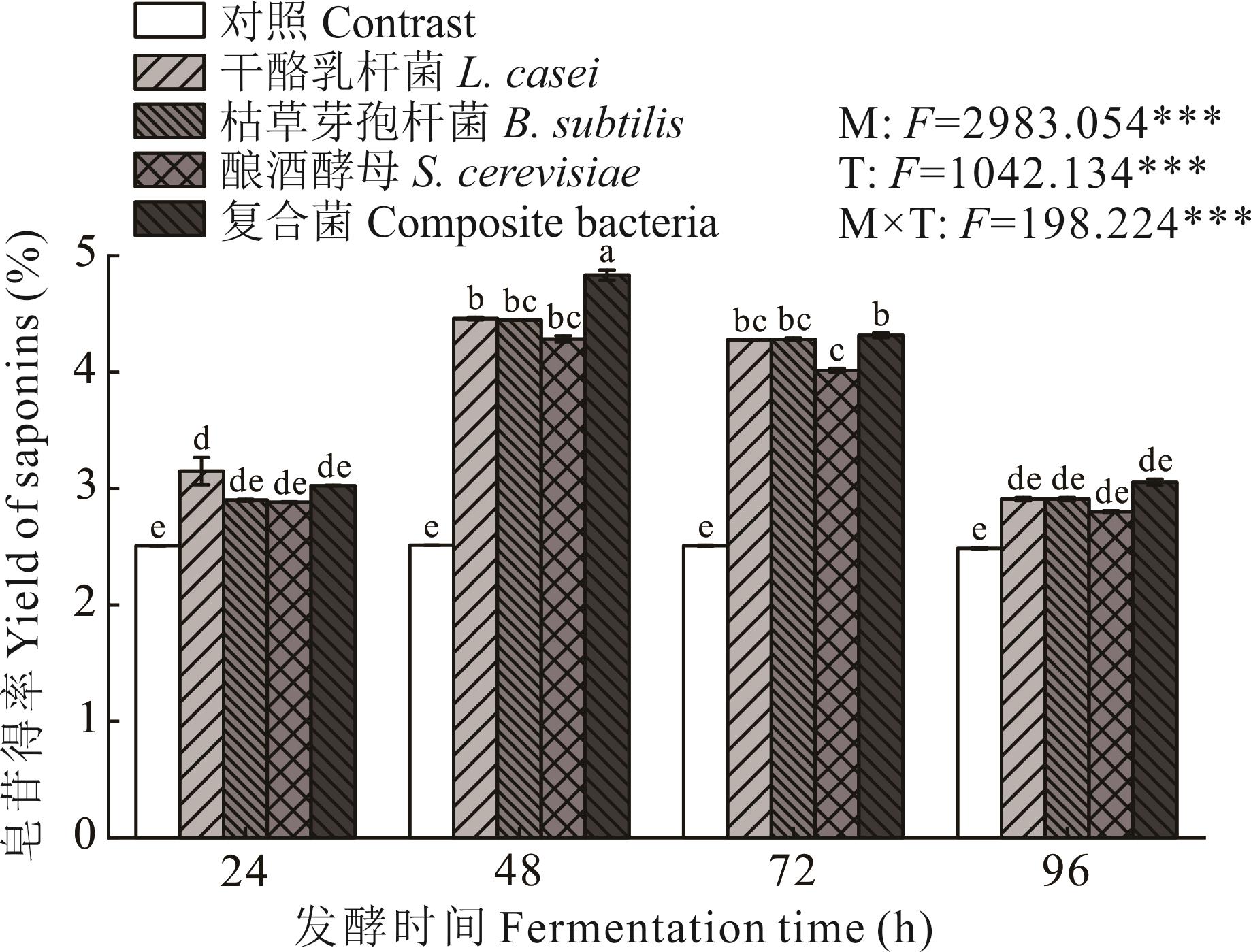
图1 菌种类型和发酵时间对苜蓿皂苷得率的影响M: 菌种类型Strain type; T: 发酵时间Fermentation time. ***: P<0.001. 相同处理下,小写字母不同表示不同菌种类型间差异显著(P<0.05)。下同。Within the same treatment, different lowercase letters indicate significant differences among strain types (P<0.05). The same below.
Fig.1 Effects of strain type and fermentation time on alfalfa saponin yield
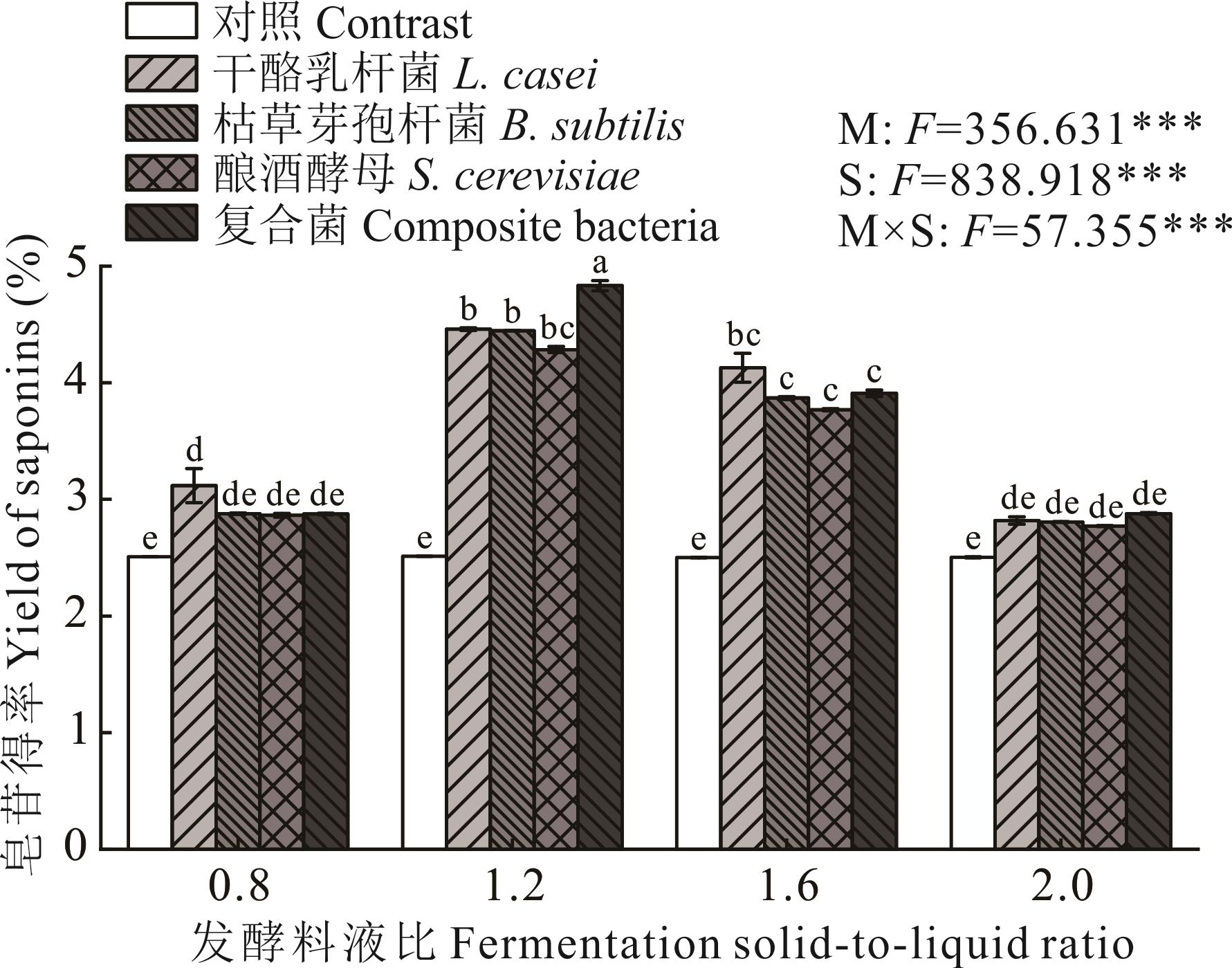
图2 菌种类型和发酵料液比对苜蓿皂苷得率的影响S: 发酵料液比Fermentation solid-to-liquid ratio.
Fig.2 Effects of strain type and fermentation solid-to-liquid ratio on alfalfa saponin yield
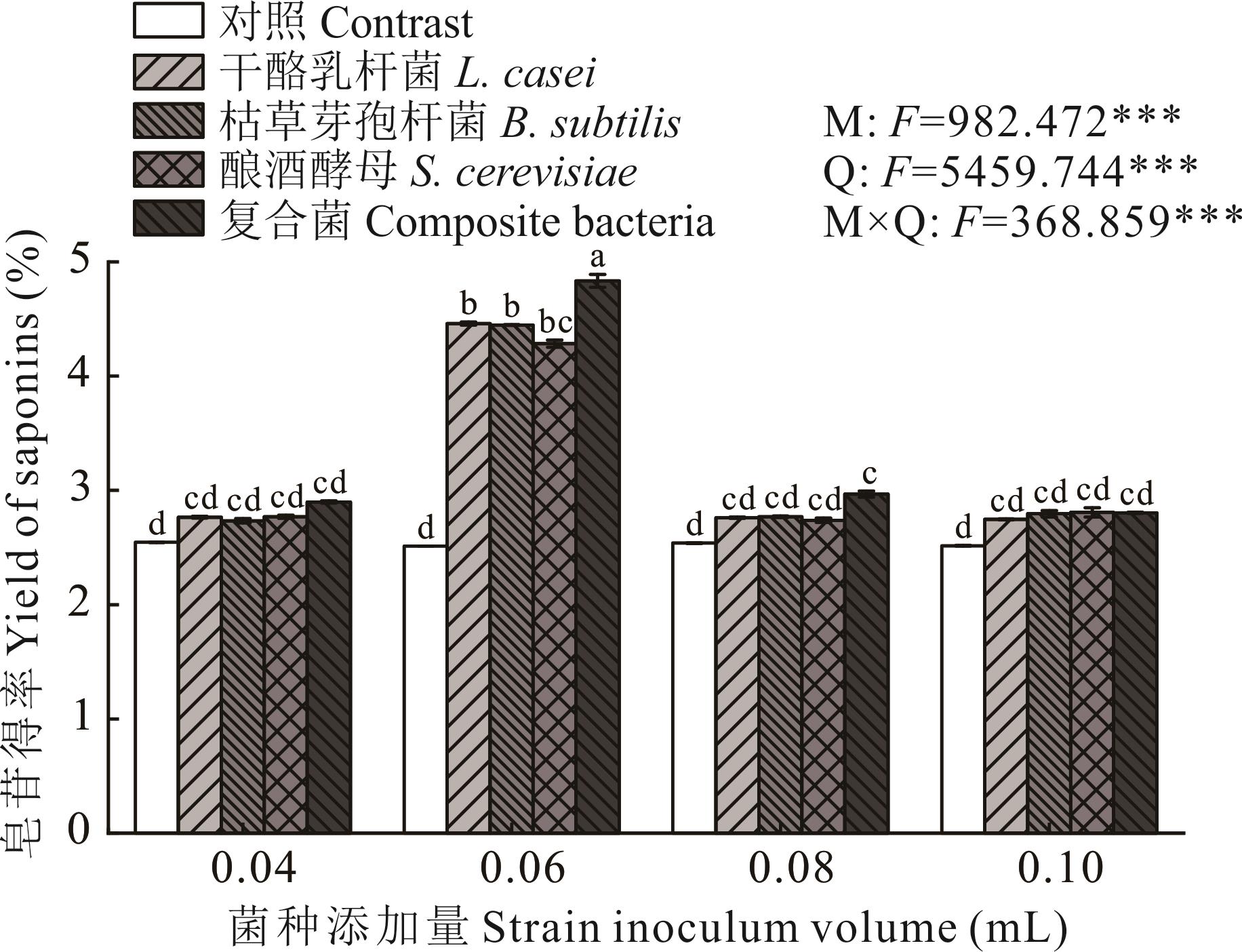
图3 菌种类型和菌添加量对苜蓿皂苷得率的影响Q: 菌种添加量Strain inoculum volume.
Fig.3 Effects of strain type and inoculum volume on alfalfa saponin yield
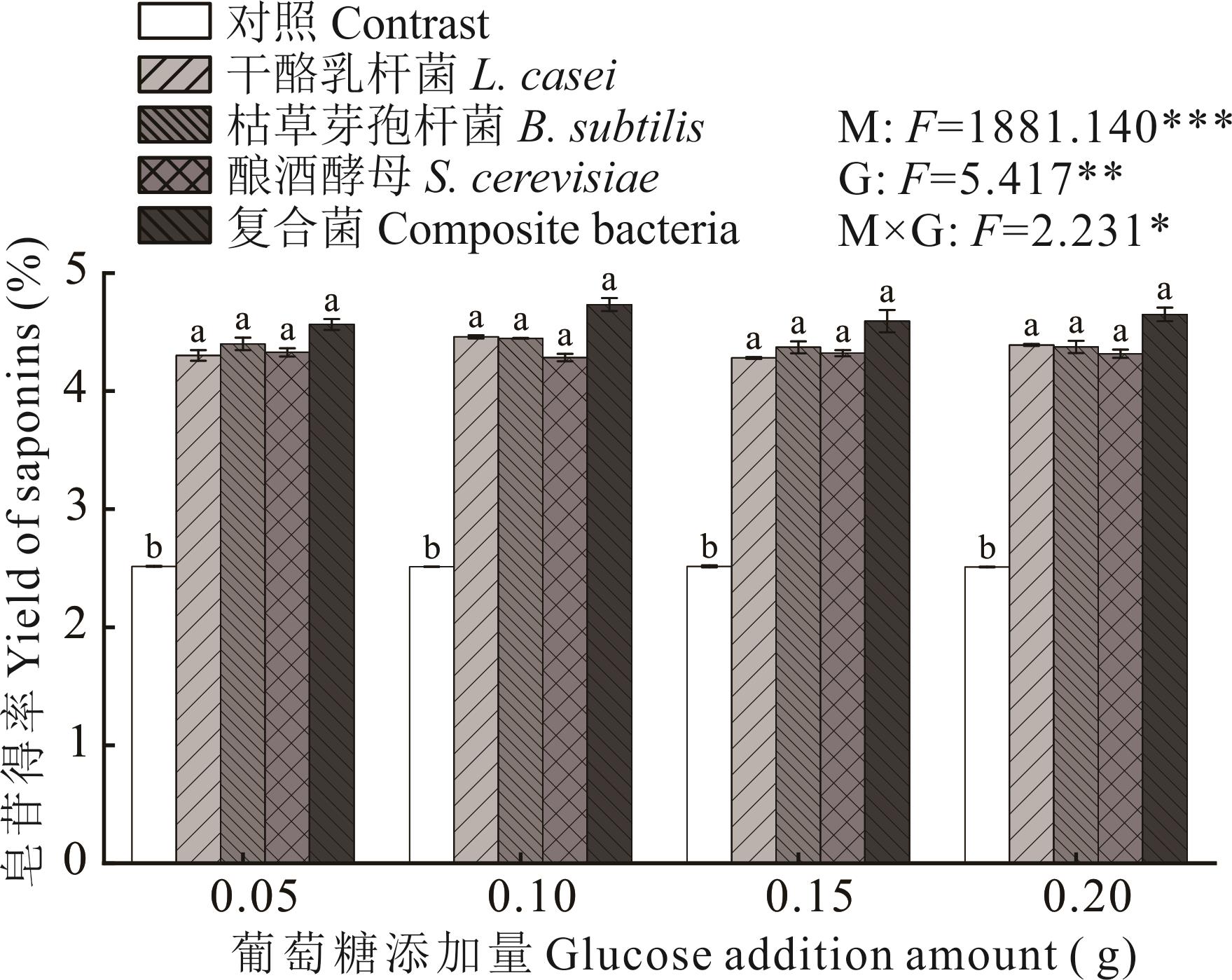
图4 菌种类型和葡萄糖添加量对苜蓿皂苷得率的影响G: 葡萄糖添加量Glucose addition amount. *: P<0.05; **: P<0.01.
Fig.4 Effects of strain type and glucose addition amount on alfalfa saponin yield
水平 Level | 发酵料液比 Fermentation solid-to-liquid ratio (A) | 发酵时间 Fermentation time (B, h) | 菌添加量 Strain inoculum volume (C, mL) |
|---|---|---|---|
| -1 | 0.8 | 24 | 0.04 |
| 0 | 1.2 | 48 | 0.06 |
| 1 | 1.6 | 72 | 0.08 |
表1 发酵工艺Box-Behnken设计因素与水平
Table 1 Factors and levels of Box-Behnken design for fermentation process
水平 Level | 发酵料液比 Fermentation solid-to-liquid ratio (A) | 发酵时间 Fermentation time (B, h) | 菌添加量 Strain inoculum volume (C, mL) |
|---|---|---|---|
| -1 | 0.8 | 24 | 0.04 |
| 0 | 1.2 | 48 | 0.06 |
| 1 | 1.6 | 72 | 0.08 |
| 编号Number | 发酵料液比 Fermentation solid-to-liquid ratio (A) | 发酵时间 Fermentation time (B) | 菌添加量 Strain inoculum volume (C) | 皂苷得率 Yield of saponins (%) | 编号Number | 发酵料液比 Fermentation solid-to-liquid ratio (A) | 发酵时间 Fermentation time (B) | 菌添加量 Strain inoculum volume (C) | 皂苷得率 Yield of saponins (%) |
|---|---|---|---|---|---|---|---|---|---|
| 1 | -1 | 0 | 1 | 9.79 | 10 | 1 | 0 | 1 | 11.81 |
| 2 | -1 | 0 | -1 | 10.23 | 11 | -1 | -1 | 0 | 8.28 |
| 3 | 0 | 0 | 0 | 11.50 | 12 | 0 | 0 | 0 | 11.70 |
| 4 | 1 | 0 | -1 | 10.70 | 13 | 0 | -1 | 1 | 9.11 |
| 5 | 0 | 0 | 0 | 11.62 | 14 | 0 | 0 | 0 | 11.61 |
| 6 | 0 | -1 | -1 | 8.50 | 15 | 1 | 1 | 0 | 9.50 |
| 7 | 1 | -1 | 0 | 9.04 | 16 | 0 | 0 | 0 | 11.90 |
| 8 | -1 | 1 | 0 | 9.30 | 17 | 0 | 1 | 1 | 9.41 |
| 9 | 0 | 1 | -1 | 9.70 |
表2 发酵工艺Box-Behnken设计方案及结果
Table 2 Box-Behnken design scheme and results for fermentation process
| 编号Number | 发酵料液比 Fermentation solid-to-liquid ratio (A) | 发酵时间 Fermentation time (B) | 菌添加量 Strain inoculum volume (C) | 皂苷得率 Yield of saponins (%) | 编号Number | 发酵料液比 Fermentation solid-to-liquid ratio (A) | 发酵时间 Fermentation time (B) | 菌添加量 Strain inoculum volume (C) | 皂苷得率 Yield of saponins (%) |
|---|---|---|---|---|---|---|---|---|---|
| 1 | -1 | 0 | 1 | 9.79 | 10 | 1 | 0 | 1 | 11.81 |
| 2 | -1 | 0 | -1 | 10.23 | 11 | -1 | -1 | 0 | 8.28 |
| 3 | 0 | 0 | 0 | 11.50 | 12 | 0 | 0 | 0 | 11.70 |
| 4 | 1 | 0 | -1 | 10.70 | 13 | 0 | -1 | 1 | 9.11 |
| 5 | 0 | 0 | 0 | 11.62 | 14 | 0 | 0 | 0 | 11.61 |
| 6 | 0 | -1 | -1 | 8.50 | 15 | 1 | 1 | 0 | 9.50 |
| 7 | 1 | -1 | 0 | 9.04 | 16 | 0 | 0 | 0 | 11.90 |
| 8 | -1 | 1 | 0 | 9.30 | 17 | 0 | 1 | 1 | 9.41 |
| 9 | 0 | 1 | -1 | 9.70 |
方差来源 Source of variance | 平方和 Sum of squares | 自由度 Degree of freedom (df) | 均方 Mean square | F值 F-value | P值 P-value | 显著性 Significance |
|---|---|---|---|---|---|---|
| 模型Model | 24.72 | 9 | 2.75 | 48.67 | <0.0001 | ** |
| 发酵料液比Fermentation solid-to-liquid ratio (A) | 1.48 | 1 | 1.48 | 26.25 | 0.0014 | ** |
| 发酵时间Fermentation time (B) | 1.11 | 1 | 1.11 | 19.62 | 0.0030 | ** |
| 菌种添加量Strain inoculum volume (C) | 0.12 | 1 | 0.12 | 2.07 | 0.1929 | NS |
| AB | 0.08 | 1 | 0.08 | 1.42 | 0.2716 | NS |
| AC | 0.60 | 1 | 0.60 | 10.58 | 0.0140 | * |
| BC | 0.20 | 1 | 0.20 | 3.62 | 0.0990 | NS |
| A2 | 1.48 | 1 | 1.48 | 26.17 | 0.0014 | ** |
| B2 | 17.59 | 1 | 17.59 | 311.65 | <0.0001 | ** |
| C2 | 0.83 | 1 | 0.83 | 14.68 | 0.0064 | ** |
| 残差Residual | 0.40 | 7 | 0.06 | |||
| 失拟项Lack of fit | 0.31 | 3 | 0.10 | 4.64 | 0.0862 | NS |
| 纯误差Pure error | 0.09 | 4 | 0.02 | |||
| 总离差Total deviation | 25.12 | 16 | ||||
| R2 | 0.9843 | |||||
| R2Adj | 0.9640 |
表3 发酵工艺皂苷得率回归模型的方差分析
Table 3 Analysis of variance for the regression model of saponin yield in fermentation process
方差来源 Source of variance | 平方和 Sum of squares | 自由度 Degree of freedom (df) | 均方 Mean square | F值 F-value | P值 P-value | 显著性 Significance |
|---|---|---|---|---|---|---|
| 模型Model | 24.72 | 9 | 2.75 | 48.67 | <0.0001 | ** |
| 发酵料液比Fermentation solid-to-liquid ratio (A) | 1.48 | 1 | 1.48 | 26.25 | 0.0014 | ** |
| 发酵时间Fermentation time (B) | 1.11 | 1 | 1.11 | 19.62 | 0.0030 | ** |
| 菌种添加量Strain inoculum volume (C) | 0.12 | 1 | 0.12 | 2.07 | 0.1929 | NS |
| AB | 0.08 | 1 | 0.08 | 1.42 | 0.2716 | NS |
| AC | 0.60 | 1 | 0.60 | 10.58 | 0.0140 | * |
| BC | 0.20 | 1 | 0.20 | 3.62 | 0.0990 | NS |
| A2 | 1.48 | 1 | 1.48 | 26.17 | 0.0014 | ** |
| B2 | 17.59 | 1 | 17.59 | 311.65 | <0.0001 | ** |
| C2 | 0.83 | 1 | 0.83 | 14.68 | 0.0064 | ** |
| 残差Residual | 0.40 | 7 | 0.06 | |||
| 失拟项Lack of fit | 0.31 | 3 | 0.10 | 4.64 | 0.0862 | NS |
| 纯误差Pure error | 0.09 | 4 | 0.02 | |||
| 总离差Total deviation | 25.12 | 16 | ||||
| R2 | 0.9843 | |||||
| R2Adj | 0.9640 |
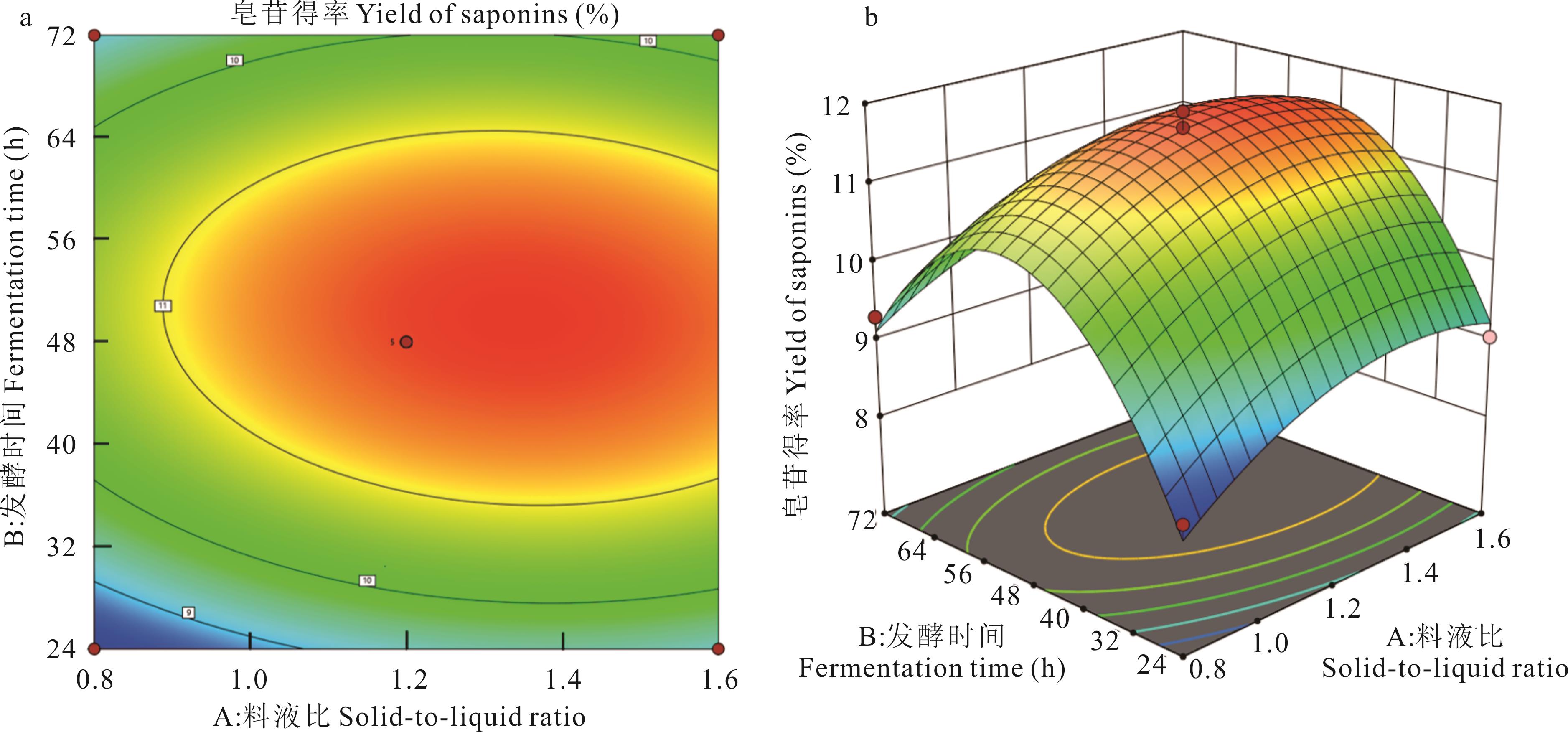
图5 发酵料液比(A)与发酵时间(B)交互作用的等高线图(a)和响应面图(b)
Fig.5 Contour plot (a) and response surface plot (b) of the interaction between fermentation solid-to-liquid ratio (A) and fermentation time (B)
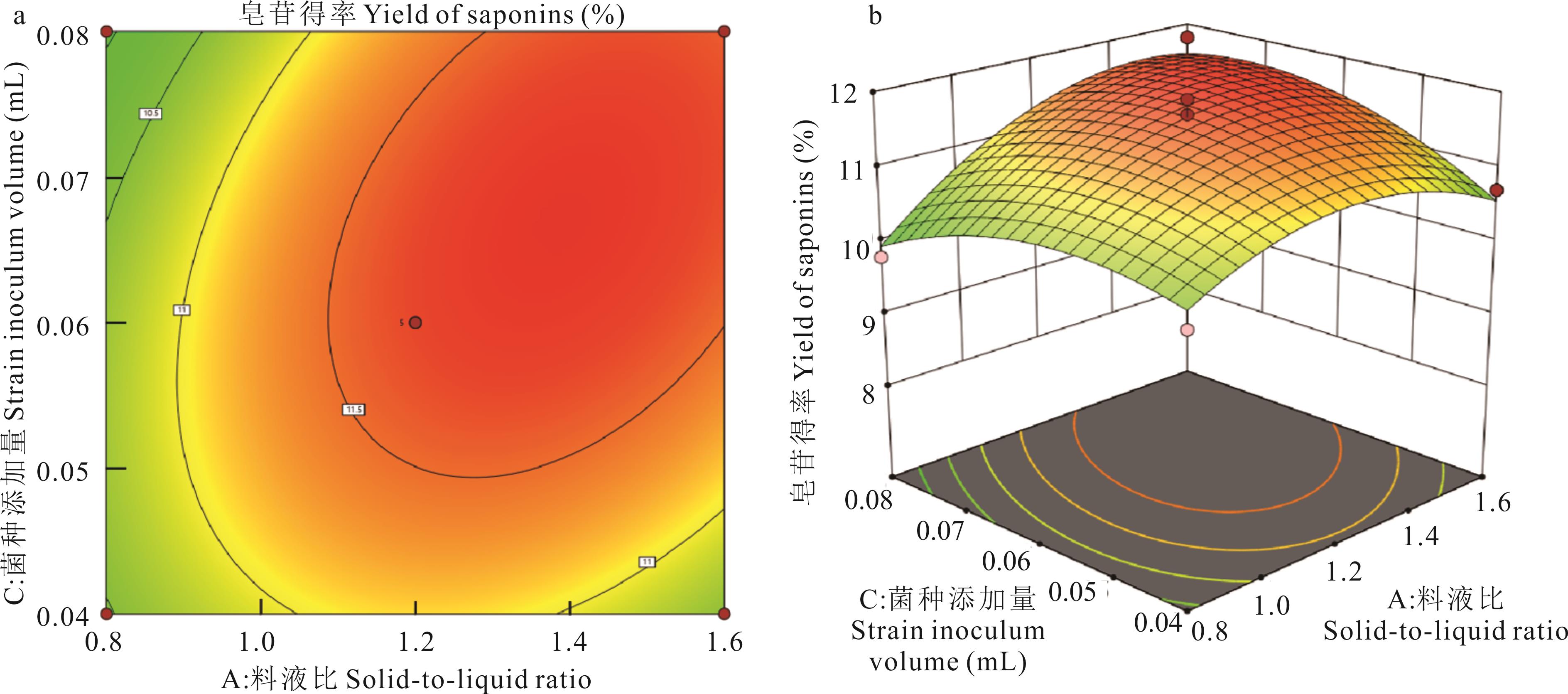
图6 发酵料液比(A)与菌添加量(C)交互作用的等高线图(a)和响应面图(b)
Fig.6 Contour plot (a) and response surface plot (b) of the interaction between fermentation solid-to-liquid ratio (A) and strain inoculum volume (C)
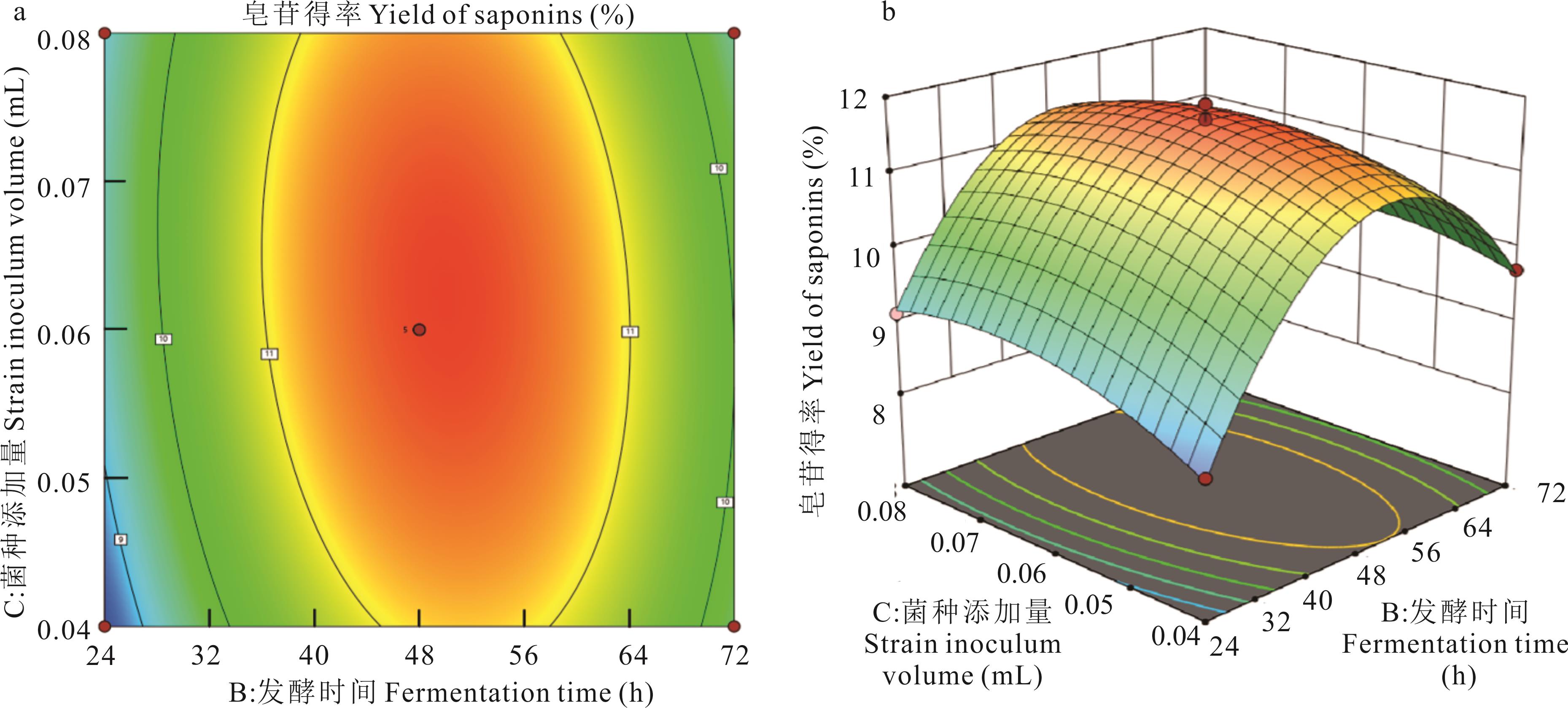
图7 发酵时间(B)与菌添加量(C)交互作用的等高线图(a)和响应面图(b)
Fig.7 Contour plot (a) and response surface plot (b) of the interaction between fermentation time (B) and strain inoculum volume (C)
项目 Items | 评价标准 Evaluation criteria | 变量下限 Variable lower limit | 变量上限 Variable upper limit | 权重下限 Weight lower limit | 权重上限 Weight upper limit | 影响程度 Degree of influence |
|---|---|---|---|---|---|---|
| 发酵料液比Fermentation solid-to-liquid ratio (A) | 区间内Within the range | 0.8 | 1.6 | 1 | 1 | 3 |
| 发酵时间Fermentation time (B, h) | 区间内Within the range | 24 | 72 | 1 | 1 | 3 |
| 菌添加量Strain inoculum volume (C, mL) | 区间内Within the range | 0.04 | 0.08 | 1 | 1 | 3 |
| 皂苷得率Yield of saponins (%) | 最大值Maximum | 8.28 | 11.90 | 1 | 1 | 3 |
表4 不同发酵因素取值范围与预测区间
Table 4 Value ranges and prediction intervals of different fermentation factors
项目 Items | 评价标准 Evaluation criteria | 变量下限 Variable lower limit | 变量上限 Variable upper limit | 权重下限 Weight lower limit | 权重上限 Weight upper limit | 影响程度 Degree of influence |
|---|---|---|---|---|---|---|
| 发酵料液比Fermentation solid-to-liquid ratio (A) | 区间内Within the range | 0.8 | 1.6 | 1 | 1 | 3 |
| 发酵时间Fermentation time (B, h) | 区间内Within the range | 24 | 72 | 1 | 1 | 3 |
| 菌添加量Strain inoculum volume (C, mL) | 区间内Within the range | 0.04 | 0.08 | 1 | 1 | 3 |
| 皂苷得率Yield of saponins (%) | 最大值Maximum | 8.28 | 11.90 | 1 | 1 | 3 |
发酵工艺 Fermentation process | 模型预测皂苷得率 Model prediction of saponin yield (%) | 模型验证皂苷得率 Model validation of saponin yield (%) | 理想程度 Desirability | |||||
|---|---|---|---|---|---|---|---|---|
发酵料液比 Fermentation solid-to-liquid ratio | 发酵时间 Fermentation time (h) | 菌添加量 Strain inoculum volume (mL) | 复合菌组 Composite bacteria group | 未加菌组 No bacteria group | 复合菌组 Composite bacteria group | 未加菌组 No bacteria group | P值 P-value | |
| 1∶1.27 | 50.3 | 0.062 | 11.75 | 7.21 | 11.68±0.15a | 6.99±0.39b | 0.0177 | 0.95 |
表5 苜蓿皂苷最优发酵工艺与提取得率
Table 5 Optimal fermentation technology and extraction yield of alfalfa saponins
发酵工艺 Fermentation process | 模型预测皂苷得率 Model prediction of saponin yield (%) | 模型验证皂苷得率 Model validation of saponin yield (%) | 理想程度 Desirability | |||||
|---|---|---|---|---|---|---|---|---|
发酵料液比 Fermentation solid-to-liquid ratio | 发酵时间 Fermentation time (h) | 菌添加量 Strain inoculum volume (mL) | 复合菌组 Composite bacteria group | 未加菌组 No bacteria group | 复合菌组 Composite bacteria group | 未加菌组 No bacteria group | P值 P-value | |
| 1∶1.27 | 50.3 | 0.062 | 11.75 | 7.21 | 11.68±0.15a | 6.99±0.39b | 0.0177 | 0.95 |
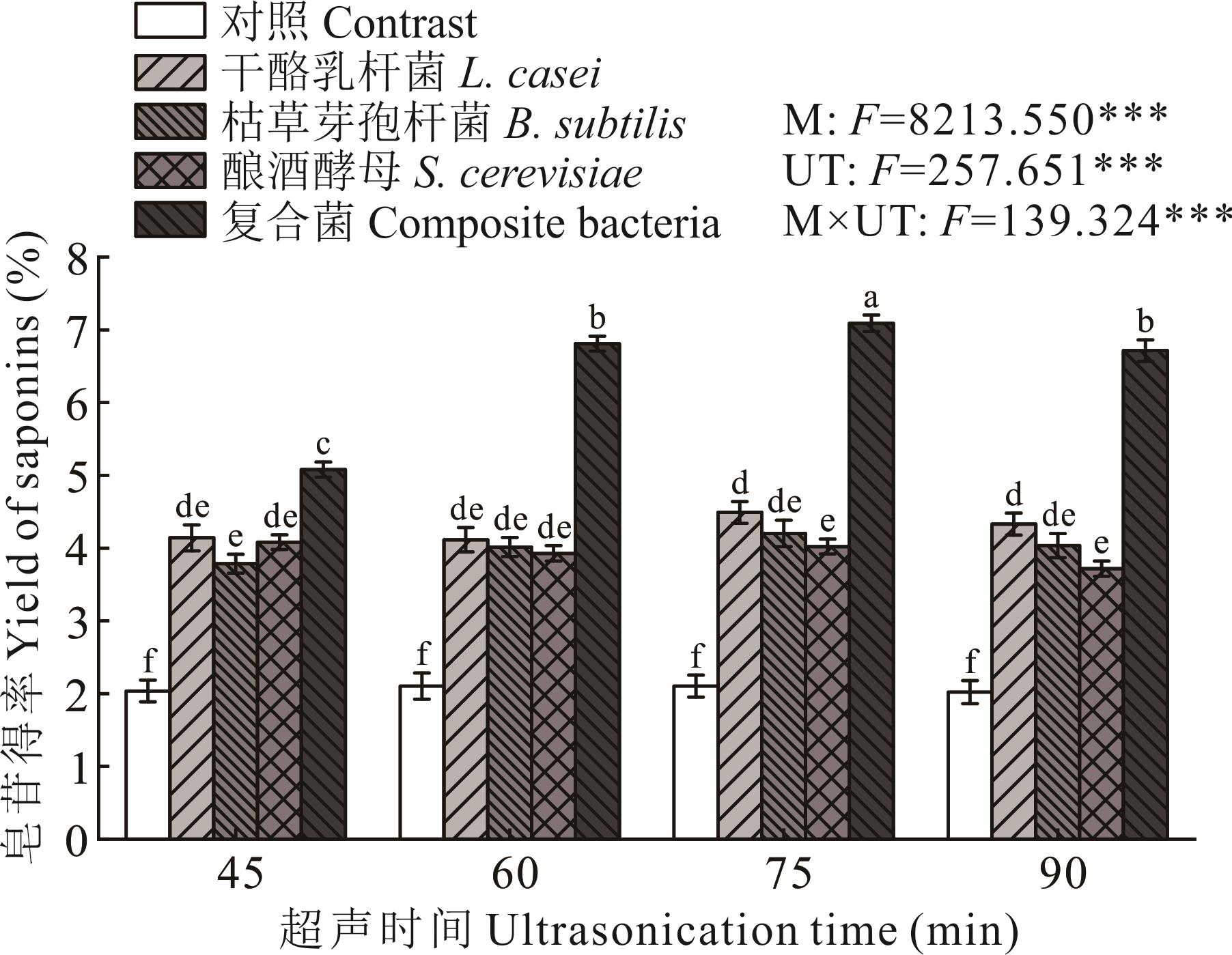
图8 菌种类型和超声时间对苜蓿皂苷得率的影响UT: 超声时间Ultrasonication time.
Fig.8 Effects of strain type and ultrasonication time on alfalfa saponin yield
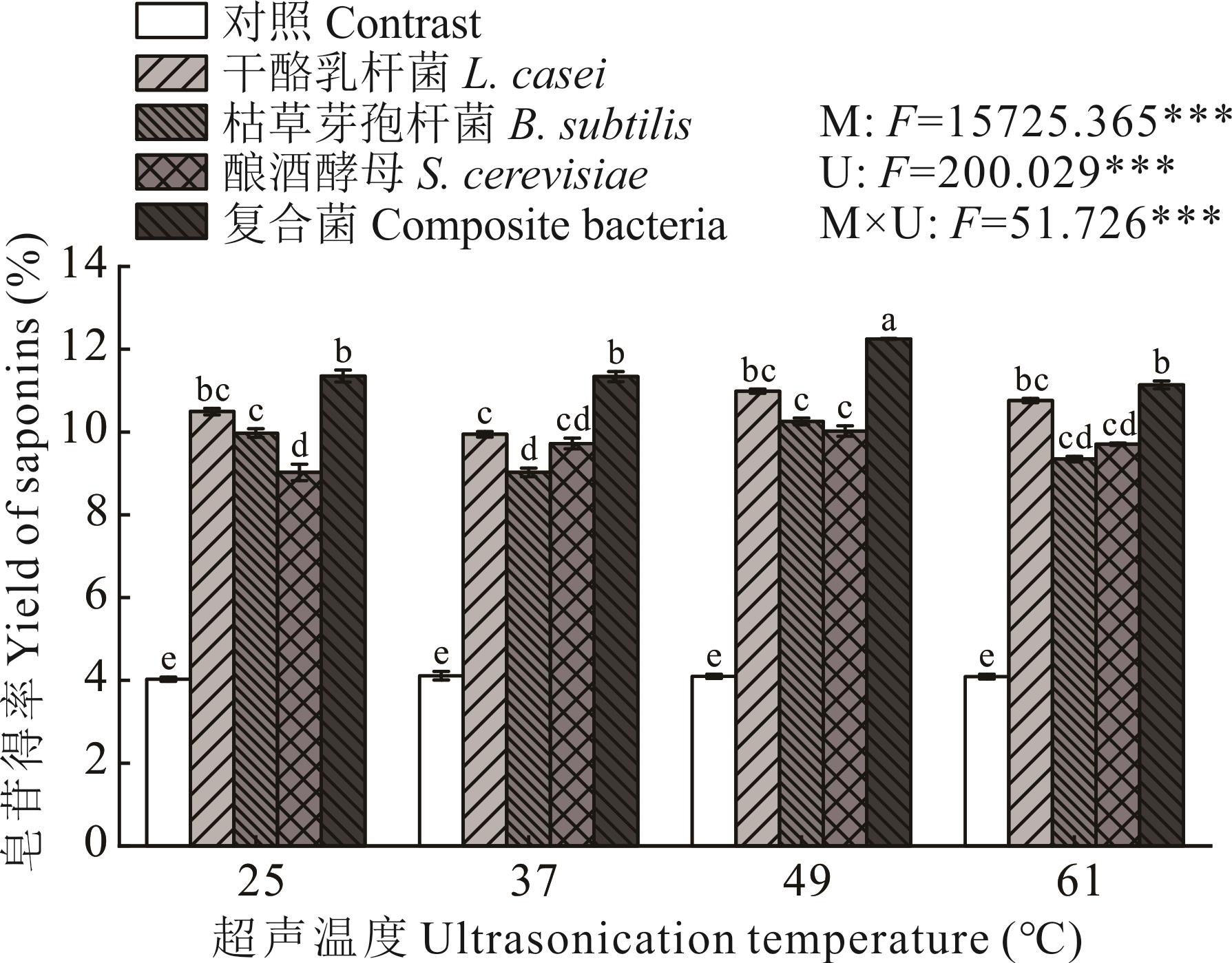
图9 菌种类型和超声温度对苜蓿皂苷得率的影响U: 超声温度Ultrasonication temperature.
Fig.9 Effects of strain type and ultrasonication temperature on alfalfa saponin yield
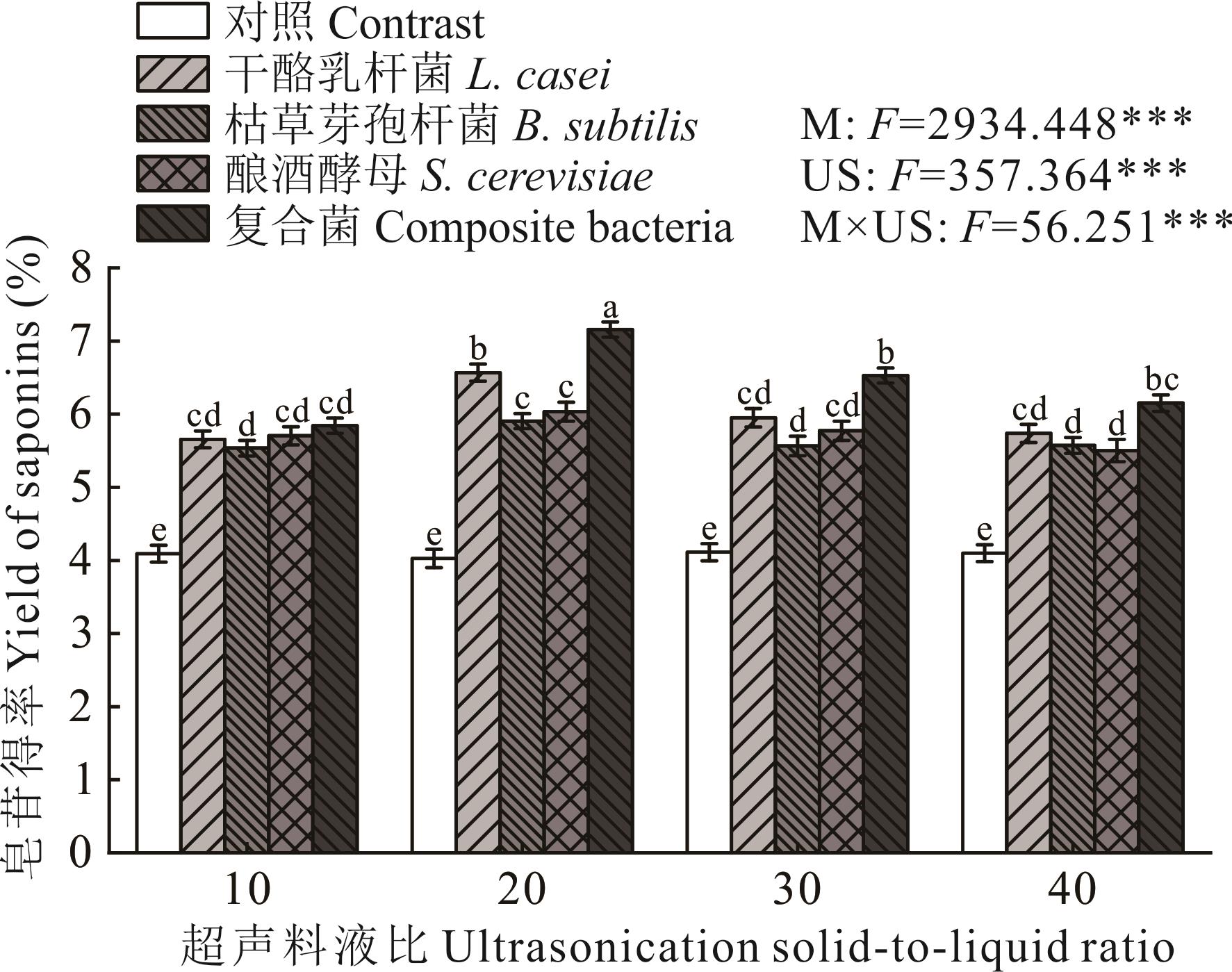
图10 菌种类型和超声料液比对苜蓿皂苷得率的影响US: 超声料液比Ultrasonication solid-to-liquid ratio.
Fig.10 Effects of strain type and ultrasonication solid-to-liquid ratio on alfalfa saponin yield
水平 Level | 超声料液比 Ultrasonication solid-to-liquid ratio (A) | 超声时间 Ultrasonication time (B, min) | 超声温度 Ultrasonication temperature (C, ℃) |
|---|---|---|---|
| -1 | 10 | 60 | 37 |
| 0 | 20 | 75 | 49 |
| 1 | 30 | 90 | 61 |
表6 超声工艺Box-Behnken设计因素与水平
Table 6 Factors and levels of Box-Behnken design for ultrasonic process
水平 Level | 超声料液比 Ultrasonication solid-to-liquid ratio (A) | 超声时间 Ultrasonication time (B, min) | 超声温度 Ultrasonication temperature (C, ℃) |
|---|---|---|---|
| -1 | 10 | 60 | 37 |
| 0 | 20 | 75 | 49 |
| 1 | 30 | 90 | 61 |
| 编号Number | 超声料液比 Ultrasonication solid-to-liquid ratio (A) | 超声时间 Ultrasonication time (B) | 超声温度 Ultrasonication temperature (C) | 皂苷得率 Yield of saponins (%) | 编号Number | 超声料液比 Ultrasonication solid-to-liquid ratio (A) | 超声时间 Ultrasonication time (B) | 超声温度 Ultrasonication temperature (C) | 皂苷得率 Yield of saponins (%) |
|---|---|---|---|---|---|---|---|---|---|
| 1 | 0 | -1 | -1 | 13.14 | 10 | 0 | 0 | 0 | 13.73 |
| 2 | 1 | 0 | 1 | 12.37 | 11 | 0 | 0 | 0 | 13.99 |
| 3 | 0 | 0 | 0 | 13.75 | 12 | 1 | -1 | 0 | 12.99 |
| 4 | 0 | 1 | 1 | 12.04 | 13 | -1 | -1 | 0 | 12.62 |
| 5 | 1 | 1 | 0 | 12.76 | 14 | 0 | 0 | 0 | 13.64 |
| 6 | 0 | 0 | 0 | 14.06 | 15 | 0 | -1 | 1 | 11.94 |
| 7 | -1 | 1 | 0 | 12.06 | 16 | -1 | 0 | 1 | 12.01 |
| 8 | 1 | 0 | -1 | 13.39 | 17 | -1 | 0 | -1 | 11.35 |
| 9 | 0 | 1 | -1 | 11.06 |
表7 超声工艺Box-Behnken设计方案及结果
Table 7 Box-Behnken design scheme and results for ultrasonic process
| 编号Number | 超声料液比 Ultrasonication solid-to-liquid ratio (A) | 超声时间 Ultrasonication time (B) | 超声温度 Ultrasonication temperature (C) | 皂苷得率 Yield of saponins (%) | 编号Number | 超声料液比 Ultrasonication solid-to-liquid ratio (A) | 超声时间 Ultrasonication time (B) | 超声温度 Ultrasonication temperature (C) | 皂苷得率 Yield of saponins (%) |
|---|---|---|---|---|---|---|---|---|---|
| 1 | 0 | -1 | -1 | 13.14 | 10 | 0 | 0 | 0 | 13.73 |
| 2 | 1 | 0 | 1 | 12.37 | 11 | 0 | 0 | 0 | 13.99 |
| 3 | 0 | 0 | 0 | 13.75 | 12 | 1 | -1 | 0 | 12.99 |
| 4 | 0 | 1 | 1 | 12.04 | 13 | -1 | -1 | 0 | 12.62 |
| 5 | 1 | 1 | 0 | 12.76 | 14 | 0 | 0 | 0 | 13.64 |
| 6 | 0 | 0 | 0 | 14.06 | 15 | 0 | -1 | 1 | 11.94 |
| 7 | -1 | 1 | 0 | 12.06 | 16 | -1 | 0 | 1 | 12.01 |
| 8 | 1 | 0 | -1 | 13.39 | 17 | -1 | 0 | -1 | 11.35 |
| 9 | 0 | 1 | -1 | 11.06 |
方差来源 Source of variance | 平方和 Sum of squares | df | 均方 Mean square | F值 F-value | P值 P-value | 显著性 Significance |
|---|---|---|---|---|---|---|
| 模型Model | 13.23 | 9 | 1.47 | 19.44 | 0.0004 | ** |
| 超声料液比Ultrasonication solid-to-liquid ratio (A) | 1.49 | 1 | 1.49 | 19.74 | 0.0030 | ** |
| 超声时间Ultrasonication time (B) | 0.96 | 1 | 0.96 | 12.66 | 0.0092 | ** |
| 超声温度Ultrasonication temperature (C) | 0.04 | 1 | 0.04 | 0.56 | 0.4793 | NS |
| AB | 0.03 | 1 | 0.03 | 0.37 | 0.5624 | NS |
| AC | 0.71 | 1 | 0.71 | 9.43 | 0.0180 | * |
| BC | 1.20 | 1 | 1.20 | 15.83 | 0.0053 | ** |
| A2 | 1.03 | 1 | 1.03 | 13.61 | 0.0078 | ** |
| B2 | 2.25 | 1 | 2.25 | 29.73 | 0.0010 | ** |
| C2 | 4.70 | 1 | 4.70 | 62.09 | 0.0001 | ** |
| 残差Residual | 0.53 | 7 | 0.08 | |||
| 失拟项Lack of fit | 0.40 | 3 | 0.13 | 4.05 | 0.1051 | NS |
| 纯误差Pure error | 0.13 | 4 | 0.03 | |||
| 总离差Total deviation | 13.76 | 16 | ||||
| R2 | 0.9615 | |||||
| R2Adj | 0.9121 |
表8 超声工艺皂苷得率回归模型的方差分析
Table 8 Analysis of variance for the regression model of saponin yield in ultrasonic process
方差来源 Source of variance | 平方和 Sum of squares | df | 均方 Mean square | F值 F-value | P值 P-value | 显著性 Significance |
|---|---|---|---|---|---|---|
| 模型Model | 13.23 | 9 | 1.47 | 19.44 | 0.0004 | ** |
| 超声料液比Ultrasonication solid-to-liquid ratio (A) | 1.49 | 1 | 1.49 | 19.74 | 0.0030 | ** |
| 超声时间Ultrasonication time (B) | 0.96 | 1 | 0.96 | 12.66 | 0.0092 | ** |
| 超声温度Ultrasonication temperature (C) | 0.04 | 1 | 0.04 | 0.56 | 0.4793 | NS |
| AB | 0.03 | 1 | 0.03 | 0.37 | 0.5624 | NS |
| AC | 0.71 | 1 | 0.71 | 9.43 | 0.0180 | * |
| BC | 1.20 | 1 | 1.20 | 15.83 | 0.0053 | ** |
| A2 | 1.03 | 1 | 1.03 | 13.61 | 0.0078 | ** |
| B2 | 2.25 | 1 | 2.25 | 29.73 | 0.0010 | ** |
| C2 | 4.70 | 1 | 4.70 | 62.09 | 0.0001 | ** |
| 残差Residual | 0.53 | 7 | 0.08 | |||
| 失拟项Lack of fit | 0.40 | 3 | 0.13 | 4.05 | 0.1051 | NS |
| 纯误差Pure error | 0.13 | 4 | 0.03 | |||
| 总离差Total deviation | 13.76 | 16 | ||||
| R2 | 0.9615 | |||||
| R2Adj | 0.9121 |
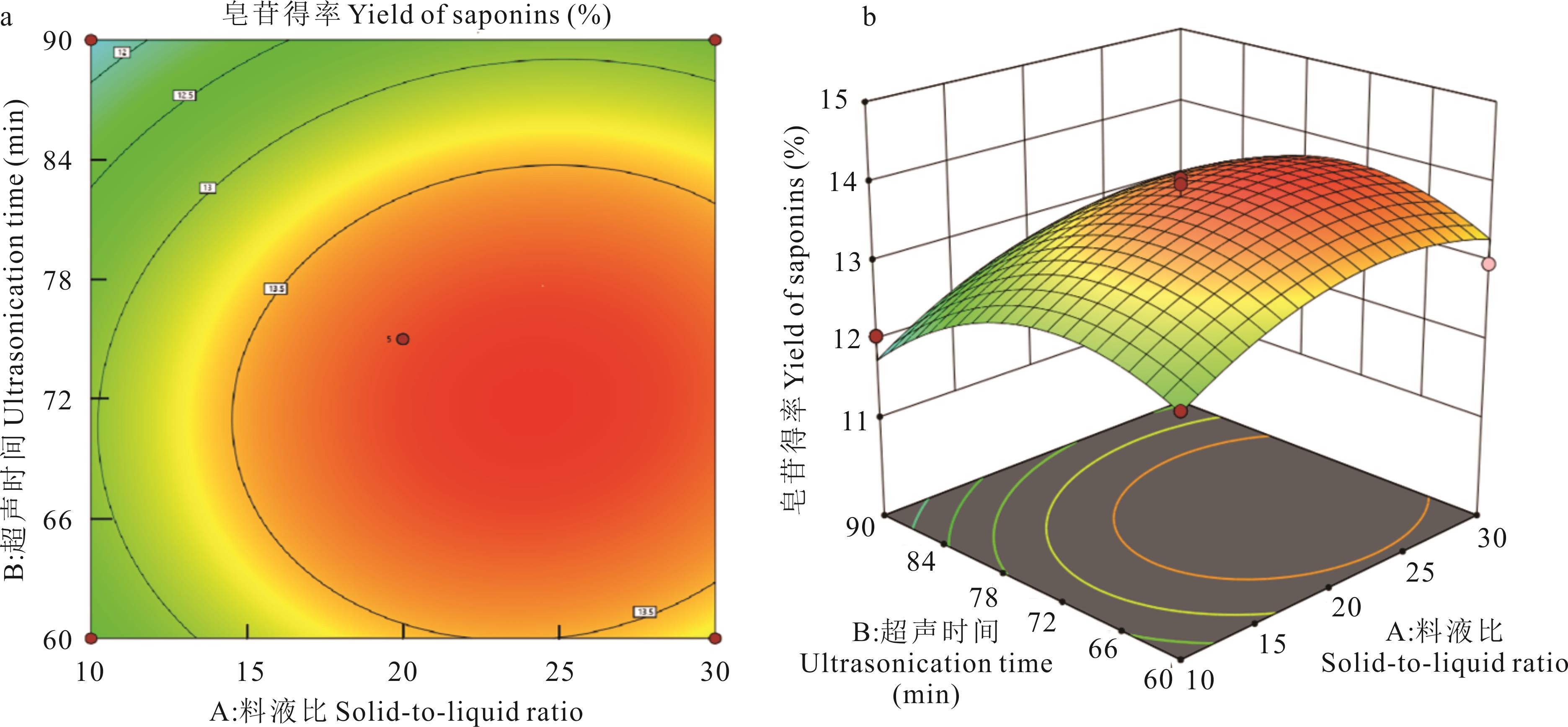
图11 超声料液比(A)与超声时间(B)交互作用的等高线图(a)和响应面图(b)
Fig.11 Contour plot (a) and response surface plot (b) of the interaction between ultrasonication solid-to-liquid ratio (A) and ultrasonication time (B)
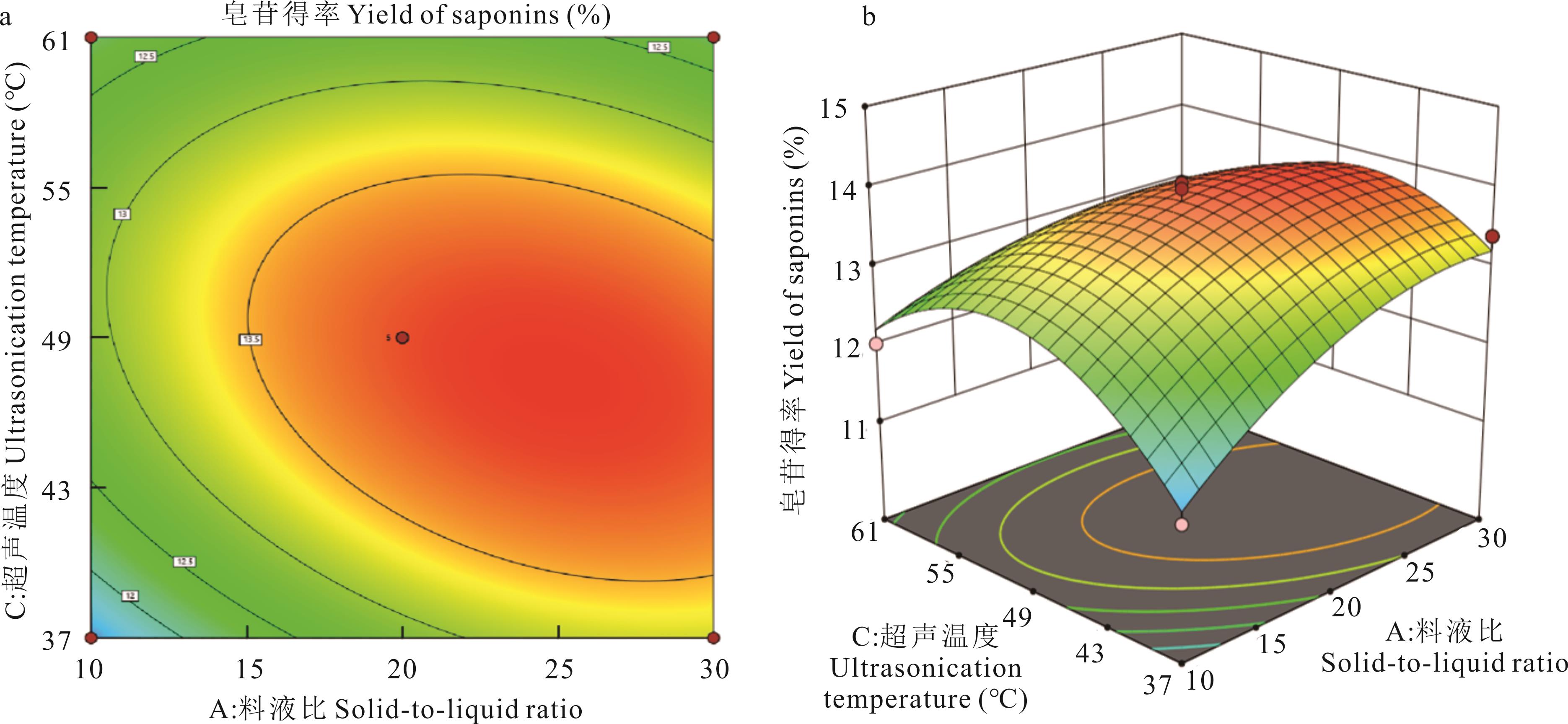
图12 超声料液比(A)与超声温度(C)交互作用的等高线图(a)和响应面图(b)
Fig.12 Contour plot (a) and response surface plot (b) of the interaction of ultrasonication solid-to-liquid ratio (A) and ultrasonication temperature (C)
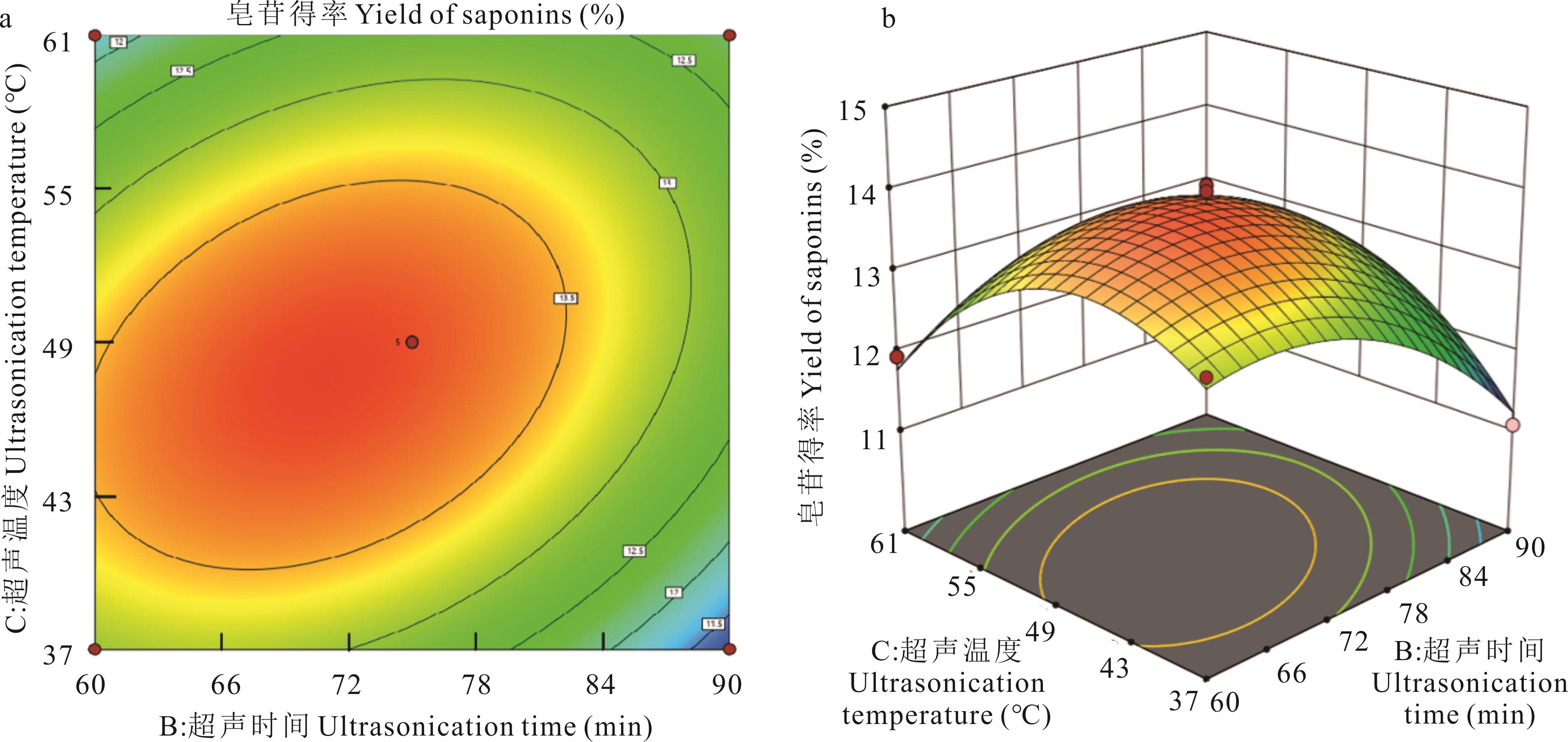
图13 超声时间(B)与超声温度(C)交互作用的等高线图(a)和响应面图(b)
Fig.13 Contour plot (a) and response surface plot (b) of the interaction of ultrasonication time (B) and ultrasonication temperature (C)
项目 Items | 评价标准 Evaluation criteria | 变量下限 Variable lower limit | 变量上限 Variable upper limit | 权重下限 Weight lower limit | 权重上限 Weight upper limit | 影响程度 Degree of influence |
|---|---|---|---|---|---|---|
| 超声料液比Ultrasonication solid-to-liquid ratio (A) | 区间内Within the range | 10 | 30 | 1 | 1 | 3 |
| 超声时间Ultrasonication time (B, min) | 区间内Within the range | 60 | 90 | 1 | 1 | 3 |
| 超声温度Ultrasonication temperature (C, ℃) | 区间内Within the range | 37 | 61 | 1 | 1 | 3 |
| 皂苷得率Yield of saponins (%) | 最大值Maximum | 11.06 | 14.06 | 1 | 1 | 3 |
表9 不同超声因素取值范围与预测区间
Table 9 Value ranges and prediction intervals of different ultrasonication factors
项目 Items | 评价标准 Evaluation criteria | 变量下限 Variable lower limit | 变量上限 Variable upper limit | 权重下限 Weight lower limit | 权重上限 Weight upper limit | 影响程度 Degree of influence |
|---|---|---|---|---|---|---|
| 超声料液比Ultrasonication solid-to-liquid ratio (A) | 区间内Within the range | 10 | 30 | 1 | 1 | 3 |
| 超声时间Ultrasonication time (B, min) | 区间内Within the range | 60 | 90 | 1 | 1 | 3 |
| 超声温度Ultrasonication temperature (C, ℃) | 区间内Within the range | 37 | 61 | 1 | 1 | 3 |
| 皂苷得率Yield of saponins (%) | 最大值Maximum | 11.06 | 14.06 | 1 | 1 | 3 |
超声工艺 Ultrasonication process | 模型预测皂苷得率 Model prediction of saponin yield (%) | 模型验证皂苷得率 Model validation of saponin yield (%) | P值 P-value | 理想 程度 Desirability | ||||
|---|---|---|---|---|---|---|---|---|
超声料液比 Ultrasonication solid-to-liquid ratio | 超声时间 Ultrasonication time (min) | 超声温度 Ultrasonication temperature (℃) | 复合菌组 Composite bacteria group | 未加菌组 No bacteria group | 复合菌组 Composite bacteria group | 未加菌组 No bacteria group | ||
| 1∶23.1 | 72.7 | 47.3 | 13.97 | 7.21 | 13.87±0.34a | 6.99±0.39b | 0.0042 | 0.96 |
表10 苜蓿皂苷最优超声工艺与提取得率
Table 10 Optimal ultrasonication technology and extraction yield of alfalfa saponins
超声工艺 Ultrasonication process | 模型预测皂苷得率 Model prediction of saponin yield (%) | 模型验证皂苷得率 Model validation of saponin yield (%) | P值 P-value | 理想 程度 Desirability | ||||
|---|---|---|---|---|---|---|---|---|
超声料液比 Ultrasonication solid-to-liquid ratio | 超声时间 Ultrasonication time (min) | 超声温度 Ultrasonication temperature (℃) | 复合菌组 Composite bacteria group | 未加菌组 No bacteria group | 复合菌组 Composite bacteria group | 未加菌组 No bacteria group | ||
| 1∶23.1 | 72.7 | 47.3 | 13.97 | 7.21 | 13.87±0.34a | 6.99±0.39b | 0.0042 | 0.96 |
| [1] | Zhu X Y, Chen W X, Li M Y, et al. Comprehensive evaluation of the nutritional value and contaminants of alfalfa (Medicago sativa L.) in China. Frontiers in Nutrition, 2025, 12: 1539462. |
| [2] | Ma J X, Huangfu W, Yang X, et al. “King of the forage”-alfalfa supplementation improves growth, reproductive performance, health condition and meat quality of pigs. Frontiers in Veterinary Science, 2022, 9: 1025942. |
| [3] | Zhang L. Study on the extraction, separation and purification of saponins from Xinjiang Medicago sativa L. Urumqi: Xinjiang University, 2009. |
| 张亮. 新疆紫花苜蓿皂苷的提取、分离及纯化工艺研究. 乌鲁木齐: 新疆大学, 2009. | |
| [4] | Cui Y L, Li F, Zhu X Y, et al. Alfalfa saponins inhibit oxidative stress-induced cell apoptosis through the MAPK signaling pathway. Redox Report: Communications in Free Radical Research, 2022, 27(1): 1-8. |
| [5] | Zhang Y, Ma S, Li S R, et al. Effects of alfalfa saponin extract on immunity, antioxidant capacity and rumen micro flora of weaned Hu sheep. China Animal Husbandry & Veterinary Medicine, 2024, 51(7): 2799-2809. |
| 张艳, 马森, 栗守仁, 等. 苜蓿皂苷提取物对断奶湖羊免疫、抗氧化能力和瘤胃微生物区系的影响. 中国畜牧兽医, 2024, 51(7): 2799-2809. | |
| [6] | Wang C Z, Wang Y H, Shi Y H, et al. Effects of alfalfa saponins on the lipid metabolism, antioxidation and immunity of weaned piglets. Acta Prataculturae Sinica, 2011, 20(4): 210-218. |
| 王成章, 王彦华, 史莹华, 等. 苜蓿皂苷对断奶仔猪脂质代谢、抗氧化和免疫的影响. 草业学报, 2011, 20(4): 210-218. | |
| [7] | Yang F, Yang F, Zhai Z H, et al. Effects of alfalfa saponins on the production performance, serum biochemical factors, and immune factors in Small-Tailed Han sheep. Frontiers in Veterinary Science, 2022, 9: 924373. |
| [8] | Li W Y, Liu X L, Hu M Y, et al. Effects of alfalfa saponins added to diet on production performance, antioxidant and immune performance of broiler chickens. Chinese Journal of Animal Science, 2024, 60(11): 320-325. |
| 李文远, 刘旭乐, 胡明扬, 等. 日粮中添加苜蓿皂苷对肉仔鸡生产性能、抗氧化及免疫性能的影响. 中国畜牧杂志, 2024, 60(11): 320-325. | |
| [9] | Fan W N, Zhang X L, Shi P F, et al. Effects of dietary alfalfa saponins on laying performance, egg cholesterol concentration, and ATP-binding cassette transporters G5 and G8 expression in laying hens. Journal of Applied Animal Research, 2018, 46(1): 1051-1058. |
| [10] | Fan W N, Yang Y X, Shi Y Q, et al. Effects of dietary alfalfa saponin on digestive physiology in weaned piglets. Indian Journal of Animal Research, 2024, 58(3): 388-394. |
| [11] | Krakowska-sieprawska A, Rafińska K, Walczak-skierska J, et al. Comparison of various extraction techniques of Medicago sativa: yield, antioxidant activity, and content of phytochemical constituents. Journal of AOAC International, 2017, 100(6): 1681-1693. |
| [12] | Li B, Wei G P. Extraction process of alfalfa saponins with ultrasound. Food Science and Technology, 2012, 37(4): 187-189. |
| 李波, 魏广培. 超声波提取苜蓿总皂苷优化工艺的研究. 食品科技, 2012, 37(4): 187-189. | |
| [13] | Hadidi M, Ibarz A, Pagan J. Optimisation and kinetic study of the ultrasonic-assisted extraction of total saponins from alfalfa (Medicago sativa) and its bioaccessibility using the response surface methodology. Food Chemistry, 2020, 309: 125786. |
| [14] | Wu Y P, Cui Y H, Zhu Y P, et al. Fermentation of Chinese herbal drugs by microorganism and its application to replacing antibiotics in breeding industry. Animal Husbandry & Veterinary Medicine, 2024, 56(5): 146-151. |
| 吴玉苹, 崔艳红, 朱艳平, 等. 微生物发酵中草药及其在养殖业中替抗应用. 畜牧与兽医, 2024, 56(5): 146-151. | |
| [15] | Ma X W, Xiao H B, Yang X, et al. Effects of fermented compound Chinese herbs on serum biochemical, antioxidant and reproductive hormone indices of dairy cows in late pregnancy. Chinese Journal of Animal Nutrition, 2024, 36(4): 2434-2444. |
| 马晓婉, 肖红波, 杨晓, 等. 益生菌发酵复方中草药对妊娠后期奶牛血清生化、抗氧化和生殖激素指标的影响. 动物营养学报, 2024, 36(4): 2434-2444. | |
| [16] | Wang C X, Wang Y X, Teng Y D, et al. Win-win cooperation between plant substrates and probiotics: Revealing biotransformation and bioactive metabolites in Elaeagnus moorcroftii Wall. ex Schlecht fermented by Lacticaseibacillus paracasei YL-29. Food Science and Technology, 2024, 204: 116442. |
| [17] | You X Y, Li Y C, Bu Q Y, et al. Biotransformation of ginsenoside Rd by fermentation of ginseng rhizome by Bacillus subtilis LM 4-2. Food and Fermentation Industries, 2024, 50(11): 38-47. |
| 尤晓颜, 李亚春, 布青云, 等. 枯草芽孢杆菌LM 4-2发酵人参芦头生物转化人参皂苷Rd的研究. 食品与发酵工业, 2024, 50(11): 38-47. | |
| [18] | Tang W T, Tang T, Shen X M, et al. Research progress in fermentation technology of Bacillus subtilis. Contemporary Chemical Industry, 2024, 53(8): 1952-1958. |
| 汤维涛, 唐堂, 沈雪梅, 等. 枯草芽孢杆菌发酵工艺研究进展. 当代化工, 2024, 53(8): 1952-1958. | |
| [19] | Li W Y, Zhu Q, Chen B, et al. Effects of different enzyme-microbe combinations on silage quality of Pennisetum giganteum. Feed Research, 2025, 48(14): 125-130. |
| 李文优, 朱芹, 陈斌, 等. 添加不同复合菌酶对巨菌草青贮品质的影响. 饲料研究, 2025, 48(14): 125-130. | |
| [20] | Luo J Y, Lu J, Gao B, et al. Comprehensive in silico analysis of the probiotics, and preparation of compound probiotics-Polygonatum sibiricum saponin with hypoglycemic properties. Food Chemistry, 2023, 404: 134569. |
| [21] | Su M, Piao C H, Liang D C, et al. Screening and identification of β-glucosidase-producing yeast and its application in the bioconversion of ginsenoside Rg3. Food Science, 2018, 39(14): 172-178. |
| 苏敏, 朴春红, 梁德春, 等. 产β-葡萄糖苷酶酵母菌的分离鉴定及其在人参皂苷Rg3转化中的应用. 食品科学, 2018, 39(14): 172-178. | |
| [22] | Chen Z Y. Study on optimization of rare ginsenoside CK produced by Saccharomyces cerevisiae. Kunming: Yunnan University, 2021. |
| 陈志毅. 酿酒酵母产稀有人参皂苷CK的优化研究.昆明: 云南大学, 2021. | |
| [23] | Wang J D T, Xu X, Zou X Q, et al. Effect of ultrasound assisted H2O2 degradation on longan polysaccharide: degradation kinetics, physicochemical properties and prebiotic activity. International Journal of Biological Macromolecules, 2024, 282(3): 136902. |
| [24] | Fu Z F, Wang H B, Deng Z Y, et al. Optimization of ultrasoud-assisted extraction of polyphenols from Pleurotus tuber-regium (Fr.) Sing by response surface methodology and analysis of its antioxidant activity. Cereals & Oils, 2025, 38(4): 120-125. |
| 傅志丰, 王慧宾, 邓朝阳, 等. 响应面法优化超声波辅助提取虎奶菇多酚工艺及其抗氧化活性分析. 粮食与油脂, 2025, 38(4): 120-125. | |
| [25] | Zhang L, Deng N N, Yagoub A E A, et al. Ultrasound-assisted probiotics fermentation suspension treatment under mild heat to improve the storage quality of freshly cut lotus root. Food Chemistry, 2022, 397: 133823. |
| [26] | Mamy D, Boateng I D, Chen X. Metabolomic changes in Citrus reticulata peel after conventional and ultrasound-assisted solid-state fermentation with Aspergillus niger: A focus on flavonoid metabolism. Food Chemistry, 2025, 467: 142224. |
| [27] | Li W, He W L, Ding K, et al. Effects of different treatment methods on antigenic protein and acid soluble protein in soybean meal. Journal of Northwest A & F University (Natural Science Edition), 2020, 48(1): 25-32. |
| 李旺, 何万领, 丁轲, 等. 不同处理方法对豆粕中抗原蛋白和酸溶蛋白的影响. 西北农林科技大学学报(自然科学版), 2020, 48(1): 25-32. | |
| [28] | Wang C, Tang N C, Liu C Y. Extraction of total saponins from Clinacanthus nutans and its antioxidant activity. Journal of Food Science and Biotechnology, 2023, 42(5): 63-70. |
| 王超, 唐年初, 刘诚毅. 忧遁草总皂苷的提取工艺及其抗氧化活性研究. 食品与生物技术学报, 2023, 42(5): 63-70. | |
| [29] | Wang G Q, Yang Z D, Wu Q, et al. Research advance of probiotics in the fermentation of Chinese herbal medicine. Journal of University of Shanghai for Science and Technology, 2024, 46(4): 357-363. |
| 王光强, 杨忠达, 吴倩, 等. 益生菌发酵中草药的研究进展. 上海理工大学学报, 2024, 46(4): 357-363. | |
| [30] | Xie X X, Tang Z N, Liang S Z, et al. Preparation and safety evaluation of probiotic fermented compound dandelion powder. China Animal Husbandry & Veterinary Medicine, 2025, 52(7): 3420-3428. |
| 谢欣欣, 唐梓宁, 梁孙圳, 等. 益生菌发酵复方蒲公英散的制备及安全性评价. 中国畜牧兽医, 2025, 52(7): 3420-3428. | |
| [31] | Cui Y P, Xu R, Chen Z Y, et al. Effects of mixed fermentation of Saccharomyces cerevisiae and Lactobacillus plantarum on the polyphenol of honeysuckle extract. Food and Fermentation Industries, 2022, 48(5): 95-99. |
| 崔亚鹏, 许锐, 陈泽元, 等. 酿酒酵母和植物乳杆菌混合发酵对金银花浸提液多酚物质的影响. 食品与发酵工业, 2022, 48(5): 95-99. | |
| [32] | Bai Y, Fang X Y, Jiang Y P, et al. Sequential fermentation of Ginkgo biloba seeds by Bacillus subtilis natto and Lactobacillus plantarum enhanced nutrition, flavor and lipid-lowering activity. Journal of the Science of Food and Agriculture, 2025, 105(4): 2607-2620. |
| [33] | Luo Y Q, Hu Q, Lu Y, et al. Studies on nutrient composition of cotton meal fermented by Bacillus subtilis-1, Saccharomyces cerevisiae and their compound bacteria. China Animal Husbandry & Veterinary Medicine, 2020, 47(2): 452-459. |
| 罗远琴, 胡倩, 芦岩, 等. 枯草芽孢杆菌、酿酒酵母及其复合菌发酵棉粕营养成分变化的研究. 中国畜牧兽医, 2020, 47(2): 452-459. | |
| [34] | Huang Y P, Yue Y Y, Wang Y Y, et al. Effects of synergistic of Lactobacillus plantarum R3 and Saccharomyces cerevisiae JY2 on the fermentation of wolfberry wine and its process optimization. Journal of Anhui Agricultural University, 2025, 52(1): 143-154. |
| 黄远鹏, 岳洋洋, 王燕燕, 等. 植物乳杆菌R3与酿酒酵母菌JY2协同发酵对枸杞酒的影响及工艺优化. 安徽农业大学学报, 2025, 52(1): 143-154. | |
| [35] | Zhang Q, Guo L D, Du X W. Research progress on probiotic fermentation of ginseng and its products. Food and Fermentation Industries, 2022, 48(13): 311-319. |
| 张倩, 国立东, 都晓伟. 人参的益生菌发酵及其发酵产品研究进展. 食品与发酵工业, 2022, 48(13): 311-319. | |
| [36] | Ebenezer O F, Kouadio J E K, Zheng Y Y, et al. RSM-based process intensification for arabinoxylan and β-glucan extraction from Brewer’s spent grain using ultrasound and microwave-assisted technologies. Chemical Engineering and Processing-Process Intensification, 2025, 209: 110178. |
| [37] | Lin B B, Wang S S, Zhou A Q, et al. Ultrasound-assisted enzyme extraction and properties of Shatian pomelo peel polysaccharide. Ultrasonics Sonochemistry, 2023, 98: 106507. |
| [38] | Xu B, Feng M, Tiliwa E S, et al. Multi-frequency power ultrasound green extraction of polyphenols from Pingyin rose: optimization using the response surface methodology and exploration of the underlying mechanism. Food Science and Technology, 2022, 156: 113037. |
| [39] | Jing B N, Wei L, Zhou Y, et al. Optimization of ultrasonic-assisted extraction process for total triterpenoids from Lonicera confusa and its antibacterial and antioxidant activity. Science and Technology of Food Industry, 2021, 42(1): 174-181. |
| 景炳年, 魏磊, 周雍, 等. 山银花总三萜超声辅助提取工艺优化及其抗菌抗氧化活性研究. 食品工业科技, 2021, 42(1): 174-181. | |
| [40] | Li H, Zhai B T, Sun J, et al. Ultrasound-assisted extraction of total saponins from Aralia taibaiensis: process optimization, phytochemical characterization, and mechanism of α-glucosidase inhibition. Drug Design, Development and Therapy, 2022, 16: 83-105. |
| [41] | Wang Y, Guo S, Liu H F, et al. Optimization of composite probiotics fermentation process for Notoginseng Radix et Rhizoma residues by Box-Behnken response surface method and evaluation of their in vitro antioxidant activities. Journal of Nanjing University of Traditional Chinese Medicine, 2024, 40(6): 555-568. |
| 王昱, 郭盛, 刘海峰, 等. Box-Behnken响应面法优化复合益生菌发酵三七药渣工艺及体外抗氧化活性研究. 南京中医药大学学报, 2024, 40(6): 555-568. | |
| [42] | Liu L P, Wang Y Z, Yang L, et al. Research progress of application and mechanism of ultrasonic technology in microbial fermentation. Science and Technology of Food Industry, 2021, 42(6): 357-362. |
| 刘利平, 王亚珍, 杨蕾, 等. 超声技术在微生物发酵中的应用及其机理研究进展. 食品工业科技, 2021, 42(6): 357-362. | |
| [43] | Nemes S A, Mitrea L, Teleky B E, et al. Integration of ultrasound and microwave pretreatments with solid-state fermentation enhances the release of sugars, organic acids, and phenolic compounds in wheat bran. Food Chemistry, 2025, 463(3): 141237. |
| [1] | 祁兆奔, 任晓艳, 李怡彤, 马金云, 刘权. 红三叶多糖的酶提取方法及抗氧化活性研究[J]. 草业学报, 2024, 33(6): 105-115. |
| [2] | 刘建宇, 余莹, 张明, 郭玉霞, 严学兵. 苜蓿皂苷对小白鼠体内溶血的研究[J]. 草业学报, 2020, 29(10): 200-205. |
| [3] | 袁德地,史莹华,王成章,郭瑞,王洁. 苜蓿皂苷对SD大鼠胆固醇代谢的影响及其分子机理的初步探讨[J]. 草业学报, 2013, 22(5): 294-301. |
| [4] | 王成章,王彦华,史莹华,严学兵,何云,樊文娜. 苜蓿皂苷对断奶仔猪脂质代谢、抗氧化和免疫的影响[J]. 草业学报, 2011, 20(4): 210-218. |
| [5] | 王彦华,王成章,高永革,严学兵,史莹华,何云. 苜蓿皂苷对断奶仔猪生产性能、消化率及血液生化指标的影响[J]. 草业学报, 2009, 18(5): 115-122. |
| 阅读次数 | ||||||
|
全文 |
|
|||||
|
摘要 |
|
|||||
