

ISSN 1004-5759 CN 62-1105/S
草业学报 ›› 2026, Vol. 35 ›› Issue (1): 192-205.DOI: 10.11686/cyxb2025061
• 研究论文 • 上一篇
孙朗1,2( ), 任燕萍1,2, 娜菲莎·木则帕尔1,2, 谌能双1,2, 马丽1,2, 程聪1,2, 李俐1,2, 张桦1,2()
收稿日期:2025-03-04
修回日期:2025-04-21
出版日期:2026-01-20
发布日期:2025-11-13
通讯作者:
张桦
作者简介:E-mail: hazelzhang@163.com基金资助:
Lang SUN1,2(), Yan-ping REN1,2, Muzepar NAFISA1,2, Neng-shuang SHEN1,2, Li MA1,2, Cong CHENG1,2, Li LI1,2, Hua ZHANG1,2()
Received:2025-03-04
Revised:2025-04-21
Online:2026-01-20
Published:2025-11-13
Contact:
Hua ZHANG
摘要:
荒漠植物梭梭具有发达的根系,其侧根可寄生中药肉苁蓉,使得梭梭在荒漠治理和荒漠区社会发展中具有重要的生态和经济价值。WOX转录因子参与植物根的生长发育,本研究从梭梭全基因组数据中鉴定出64个WOX转录因子家族成员,根据前期转录组分析结果,筛选克隆了在根中表达量高的HaWOX29和HaWOX54;qPCR分析表明,HaWOX29和HaWOX54在根中的表达量明显高于其他组织,干旱、盐及高温胁迫下下调表达,低温和吲哚乙酸(IAA)、脱落酸(ABA)、水杨酸(SA)处理下上调表达;利用农杆菌介导法侵染梭梭种胚,获得过表达HaWOX29和HaWOX54的植株,表型和根系扫描分析发现过表达HaWOX29的梭梭平均主根根长是转空载体对照组的2.49倍;过表达HaWOX54植株主根根长是空载体的2.08倍,平均分支数是4.34倍。因此初步推测HaWOX29基因可能参与梭梭主根的伸长,HaWOX54基因可能参与梭梭侧根的发育和主根的伸长。本研究筛选鉴定参与梭梭根生长发育的WOX转录因子,为研究梭梭根发育的分子机制和筛选优异的梭梭种质资源提供了理论和技术指导。
孙朗, 任燕萍, 娜菲莎·木则帕尔, 谌能双, 马丽, 程聪, 李俐, 张桦. 梭梭WOX转录因子家族鉴定及HaWOX29和HaWOX54在根生长中的功能研究[J]. 草业学报, 2026, 35(1): 192-205.
Lang SUN, Yan-ping REN, Muzepar NAFISA, Neng-shuang SHEN, Li MA, Cong CHENG, Li LI, Hua ZHANG. Identification of the WOX transcription factor family in Haloxylon ammodendron and functional analyses of the roles of HaWOX29 and HaWOX54 in root growth[J]. Acta Prataculturae Sinica, 2026, 35(1): 192-205.
基因 Gene | 正向引物 Forward primer (5′→3′) | 反向引物 Reverse primer (5′→3′) | 用途 Usage |
|---|---|---|---|
| HaWOX29 | ATGATGATGAACAAACGAAGGTTCAC | TCAGGACCAAAAGTCCCACCA | 克隆Cloning |
| HaWOX54 | ATGCAAGGTGGTGAAGATAATACAGTG | TTACATTTGATAAAAGTCAGCCCAATCCA | 克隆Cloning |
| Ha18SrRNA | CTCTGCCCGTTGCTCTGATGAT | CCTTGGATGTGGTAGCCGTTTC | qRT-PCR |
| HaWOX29 | AGCTCGTTACAAGTCTAAGCAAC | AGATCCTCGAATCGTTTAGCAAG | qRT-PCR |
| HaWOX54 | CCCAACAAATGCCTCCACAACA | TACTGCCCTCACTCTTGCTCT | qRT-PCR |
| pCAMBIA3301-HaWOX29 | TGACCATGGTAGATCTATGATGATGAACAAACGAAGGTTCACTG | ATTCGAGCTGGTCACCTCAGGACCAAAAGTCCCACCATTG | 同源重组Homologous recombination |
| pCAMBIA3301-HaWOX54 | TGACCATGGTAGATCTATGCAAGGTGGTGAAGATAATACAGTGG | ATTCGAGCTGGTCACCTTACATTTGATAAAAGTCAGCCCAATCCATACT | 同源重组Homologous recombination |
| PGBKT7-HaWOX29 | CATGGAGGCCGAATTCATGATGATGAACAAACGAAGGTTCACTG | GCAGGTCGACGGATCCTCAGGACCAAAAGTCCCACCATTG | 同源重组Homologous recombination |
| PGBKT7-HaWOX54 | CATGGAGGCCGAATTCATGCAAGGTGGTGAAGATAATACAGT | GCAGGTCGACGGATCCTTACATTTGATAAAAGTCAGCCCAATCCATACT | 同源重组Homologous recombination |
表1 本研究所用引物
Table 1 Primers used in this study
基因 Gene | 正向引物 Forward primer (5′→3′) | 反向引物 Reverse primer (5′→3′) | 用途 Usage |
|---|---|---|---|
| HaWOX29 | ATGATGATGAACAAACGAAGGTTCAC | TCAGGACCAAAAGTCCCACCA | 克隆Cloning |
| HaWOX54 | ATGCAAGGTGGTGAAGATAATACAGTG | TTACATTTGATAAAAGTCAGCCCAATCCA | 克隆Cloning |
| Ha18SrRNA | CTCTGCCCGTTGCTCTGATGAT | CCTTGGATGTGGTAGCCGTTTC | qRT-PCR |
| HaWOX29 | AGCTCGTTACAAGTCTAAGCAAC | AGATCCTCGAATCGTTTAGCAAG | qRT-PCR |
| HaWOX54 | CCCAACAAATGCCTCCACAACA | TACTGCCCTCACTCTTGCTCT | qRT-PCR |
| pCAMBIA3301-HaWOX29 | TGACCATGGTAGATCTATGATGATGAACAAACGAAGGTTCACTG | ATTCGAGCTGGTCACCTCAGGACCAAAAGTCCCACCATTG | 同源重组Homologous recombination |
| pCAMBIA3301-HaWOX54 | TGACCATGGTAGATCTATGCAAGGTGGTGAAGATAATACAGTGG | ATTCGAGCTGGTCACCTTACATTTGATAAAAGTCAGCCCAATCCATACT | 同源重组Homologous recombination |
| PGBKT7-HaWOX29 | CATGGAGGCCGAATTCATGATGATGAACAAACGAAGGTTCACTG | GCAGGTCGACGGATCCTCAGGACCAAAAGTCCCACCATTG | 同源重组Homologous recombination |
| PGBKT7-HaWOX54 | CATGGAGGCCGAATTCATGCAAGGTGGTGAAGATAATACAGT | GCAGGTCGACGGATCCTTACATTTGATAAAAGTCAGCCCAATCCATACT | 同源重组Homologous recombination |

图1 植物过表达载体构建A: pCAMBIA3301载体图谱Map of the pCAMBIA3301 vector; B: pCAMBIA3301-35s-HaWOX29/54植物过表达载体图谱Map of the pCAMBIA3301-35s-HaWOX29/54 plant overexpression vector.
Fig.1 Construction of plant overexpression vector
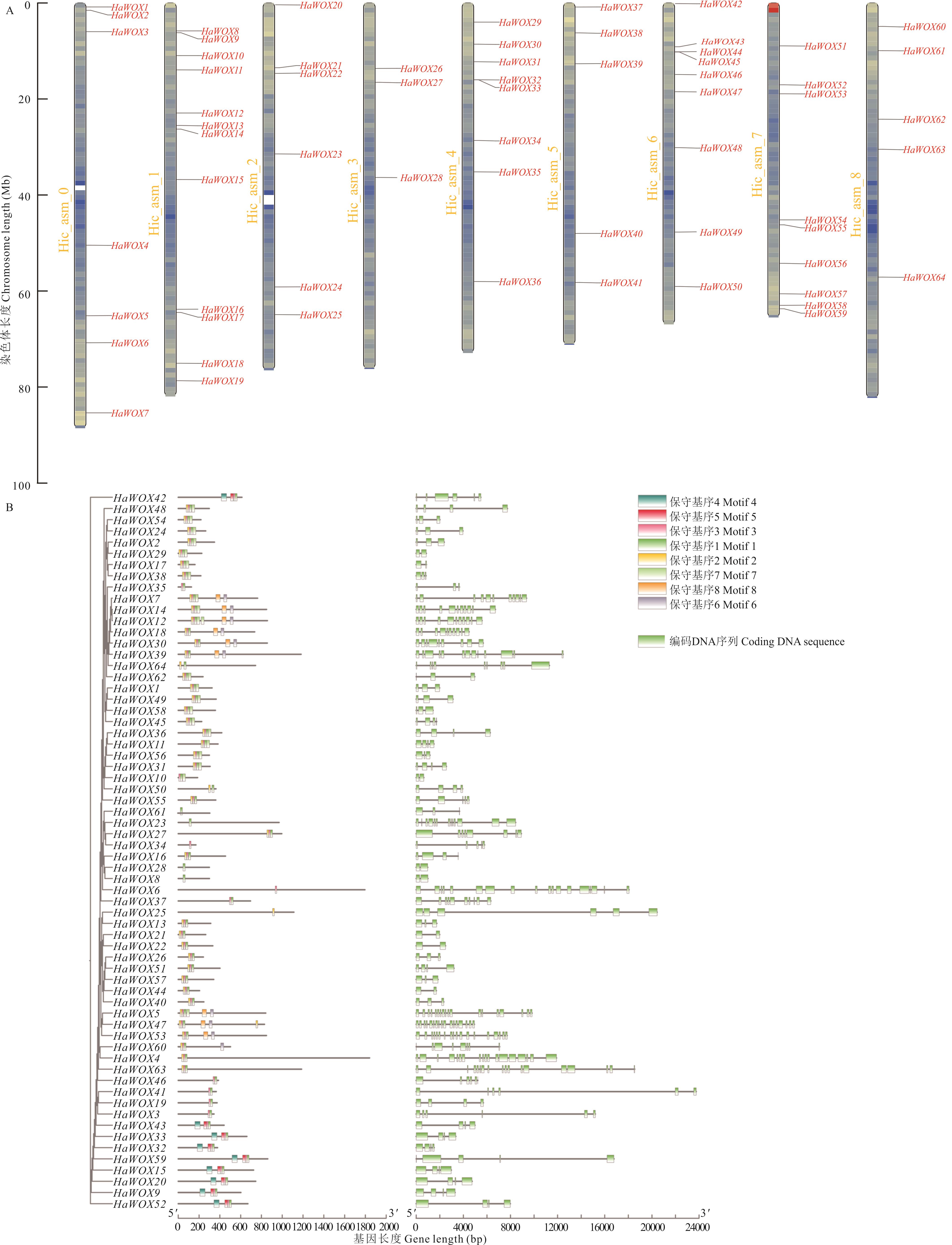
图2 梭梭WOX家族成员生物信息学分析A:梭梭WOX家族染色体定位Chromosomal localization of the H. ammodendron WOX family;B:基因结构和保守基序分析 Gene structure and conserved motif analysis.
Fig.2 Bioinformatics analysis of the WOX family members in H. ammodendron
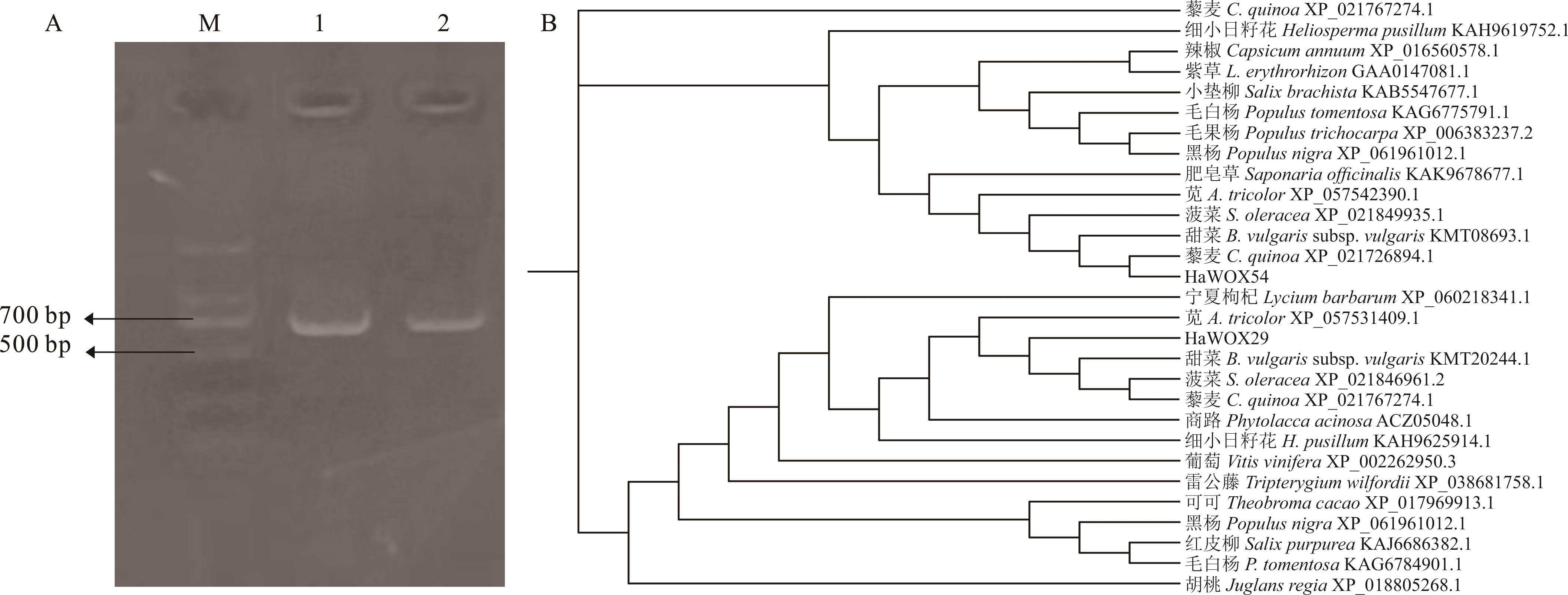
图3 梭梭HaWOX29和HaWOX54基因克隆及与其他物种蛋白构建的发育树M: 2K DNA标记 2K DNA Marker; 1: HaWOX29, 678 bp; 2: HaWOX54, 654 bp; B: HaWOXs蛋白系统发育树Phylogenetic tree of HaWOXs proteins.
Fig.3 Cloning of the HaWOX29 and HaWOX54 genes in H. ammodendron and constructon of phylogenetic tree with proteins from other species
基因名称 Gene name | 元件名称 Component name | 核心序列 Core sequence | 元件位置 Component location | 参考物种 Reference species | 元件功能 Component function |
|---|---|---|---|---|---|
| HaWOX29 | GATA基序GATA-motif | AAGGATAAGG | 451(-) | 马铃薯Solanum tuberosum | 参与部分光响应元件Part of a light responsive element |
| CAT框CAT-box | GCCACT | 98(-) | 拟南芥A. thaliana | 调控分生组织元件Element related to meristem expression | |
| MYB结合位点MYB binding site | CAACTG | 282(+) | 拟南芥A. thaliana | 参与干旱响应元件Participate in drought response elements | |
| HaWOX54 | TGACG基序TGACG-motif | TGACG | 466(-) | 大麦H. vulgare | 参与茉莉酸甲酯响应元件Element involved in the MeJA-responsiveness |
| CGTCA基序CGTCA-motif | CGTCA | 466(+) | 大麦H. vulgare | 参与茉莉酸甲酯响应元件Element involved in the MeJA-responsiveness | |
| ABA反应元件ABA responsive element | ACGTG | 613(+) | 拟南芥A. thaliana | 参与脱落酸反应Involved in the abscisic acid responsiveness |
表2 启动子顺式作用元件预测
Table 2 Prediction of cis-acting elements in promoters
基因名称 Gene name | 元件名称 Component name | 核心序列 Core sequence | 元件位置 Component location | 参考物种 Reference species | 元件功能 Component function |
|---|---|---|---|---|---|
| HaWOX29 | GATA基序GATA-motif | AAGGATAAGG | 451(-) | 马铃薯Solanum tuberosum | 参与部分光响应元件Part of a light responsive element |
| CAT框CAT-box | GCCACT | 98(-) | 拟南芥A. thaliana | 调控分生组织元件Element related to meristem expression | |
| MYB结合位点MYB binding site | CAACTG | 282(+) | 拟南芥A. thaliana | 参与干旱响应元件Participate in drought response elements | |
| HaWOX54 | TGACG基序TGACG-motif | TGACG | 466(-) | 大麦H. vulgare | 参与茉莉酸甲酯响应元件Element involved in the MeJA-responsiveness |
| CGTCA基序CGTCA-motif | CGTCA | 466(+) | 大麦H. vulgare | 参与茉莉酸甲酯响应元件Element involved in the MeJA-responsiveness | |
| ABA反应元件ABA responsive element | ACGTG | 613(+) | 拟南芥A. thaliana | 参与脱落酸反应Involved in the abscisic acid responsiveness |

图4 HaWOX29和HaWOX54基因表达模式分析A:HaWOX29和HaWOX54在梭梭不同组织中的表达量Expression levels of HaWOX29 and HaWOX54 in different tissues of the H. ammodendron;B:HaWOX29和HaWOX54在逆境胁迫和激素处理下的表达Expression of HaWOX29 and HaWOX54 under stress and hormone treatment;PEG: 聚乙二醇Polyethylene glycol; IAA: 吲哚乙酸Indole-3-acetic acid; ABA: 脱落酸Abscisic acid; SA: 水杨酸Salicylic acid; MeJA: 茉莉酸甲酯Methyl jasmonate.
Fig.4 Analysis of the expression patterns of HaWOX29 and HaWOX54 genes
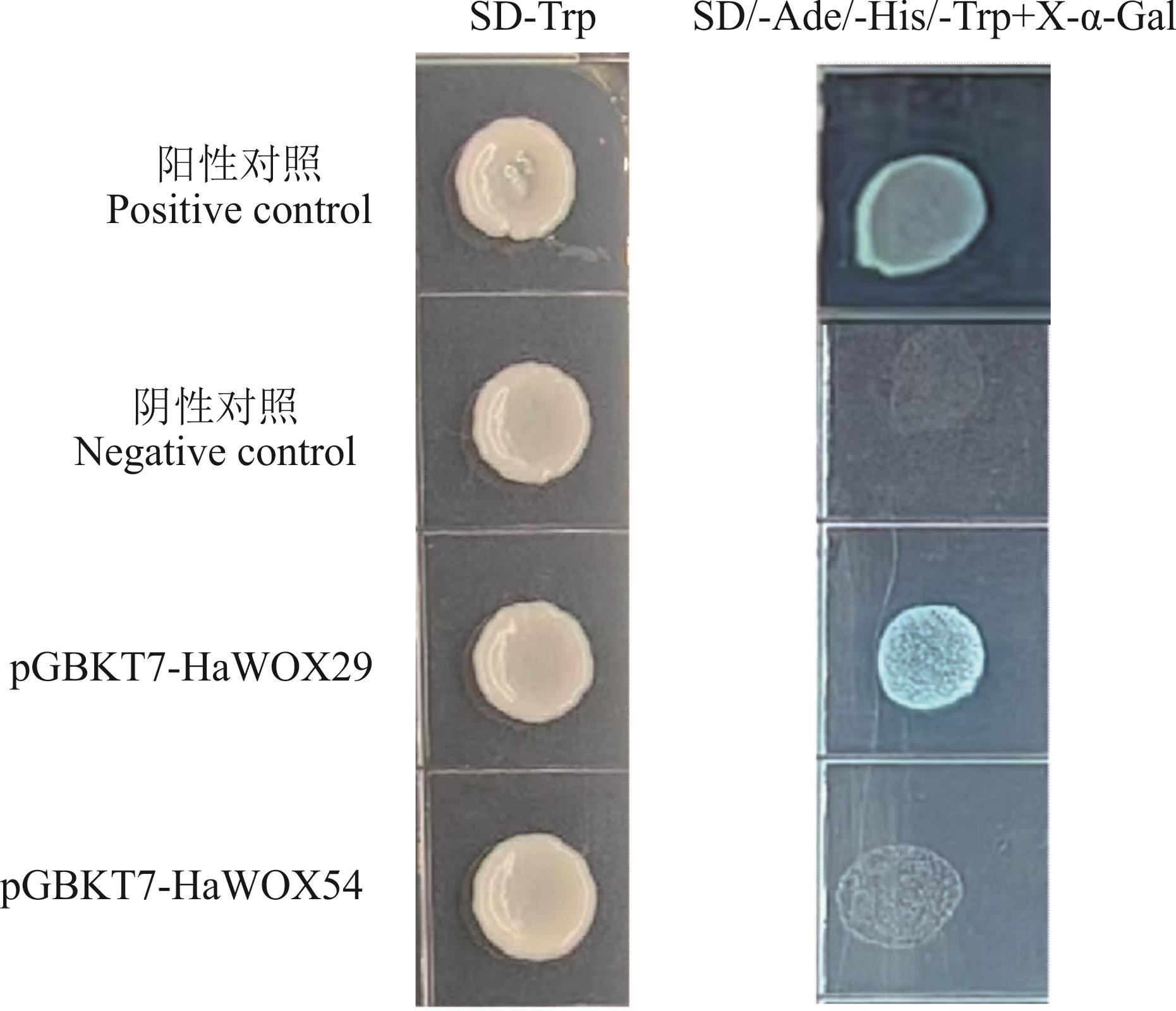
图5 HaWOX29和HaWOX54蛋白转录自激活活性验证
Fig.5 Verification of the transcriptional self-activation activity of HaWOX29 and HaWOX54 proteins
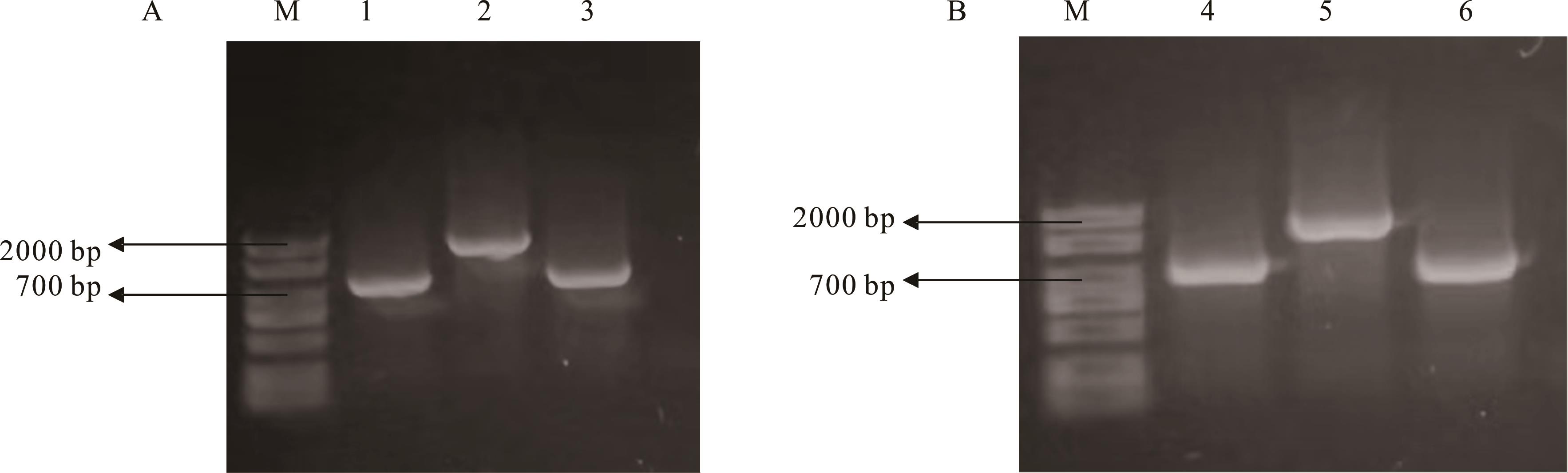
图6 菌液PCR验证A: pCAMBIA3301-HaWOX29菌液验证Verification of the pCAMBIA3301-HaWOX29 bacterial liquid; B: pCAMBIA3301-HaWOX54菌液验证Verification of the pCAMBIA3301-HaWOX54 bacterial liquid; 1: HaWOX29-F, PolyA-R; 2, 5: 35s-F, 35s-R; 3, 6: 草丁膦PPT-F, 草丁膦PPT-R; 4: HaWOX54-F, PolyA-R.
Fig.6 Verification by PCR of the fungal liquid
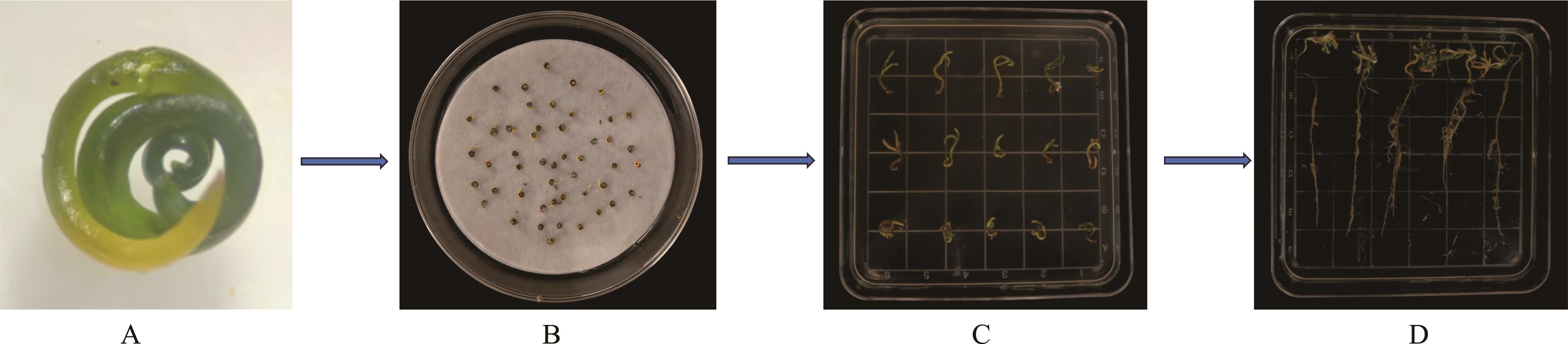
图7 农杆菌介导梭梭种胚侵染过程A: 梭梭种胚划伤处理Treatment of injuries to the seeds of the H. ammodendron embryo; B: 共培养阶段Co-culture stage; C: 头孢霉素延迟筛选阶段Delay screening phase for cephalosporin; D: 除草剂抗性筛选阶段Herbicide resistance screening phase.
Fig.7 The process of Agrobacterium-mediated transformation in H. ammodendron embryos
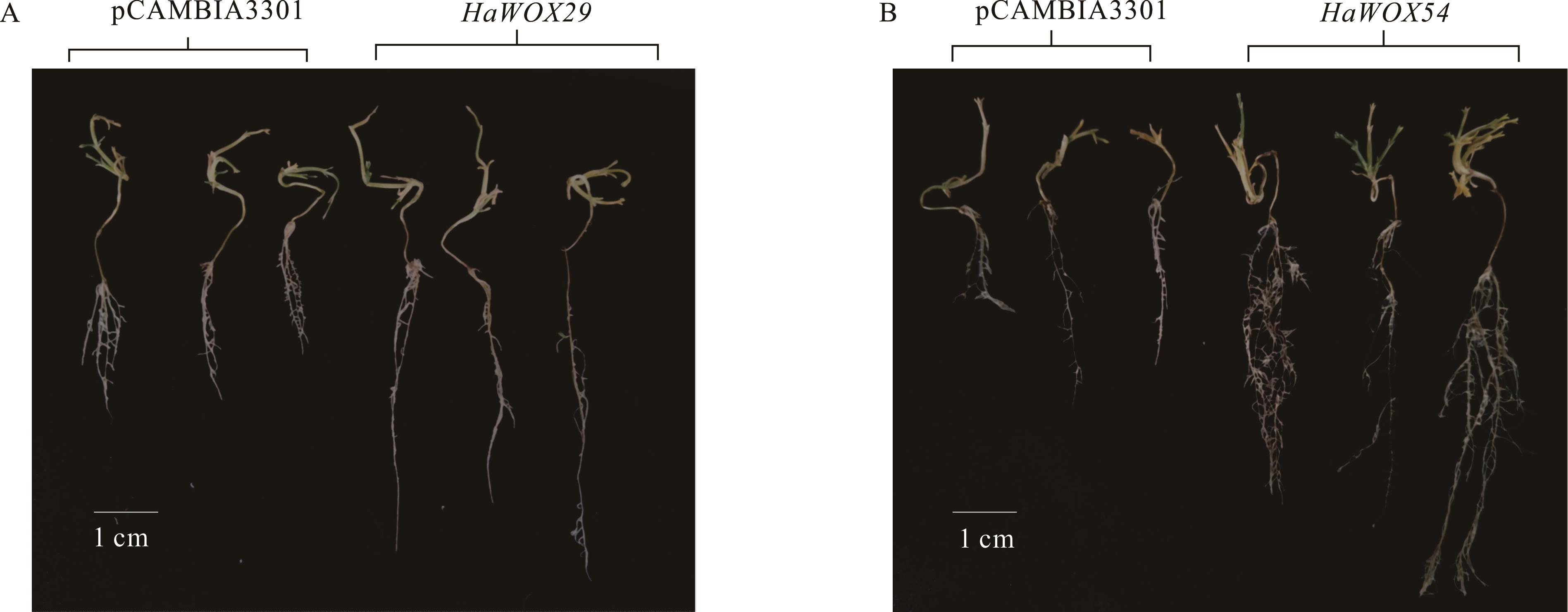
图8 梭梭OE_HaWOXs基因植株表型
Fig.8 Phenotypes of OE_HaWOXs transgenic H. ammodendron plants
株系 Plants | 总根长 Total root length (cm) | 表面积 Surface area (cm2) | 根直径 Root diameter (mm) | 根体积 Root volume (mm2) | 根尖数 Number of root tips | 分支数 Number of branches |
|---|---|---|---|---|---|---|
| pCAMBIA3301 | 4.90±0.96c | 1.99±0.68c | 0.95±0.21b | 0.47±0.12c | 31.00±11.79c | 59.33±11.37c |
| OE-HaWOX29 | 12.19±1.56a | 2.74±0.68b | 1.00±0.19a | 1.18±0.30a | 44.33±12.86b | 75.33±46.36b |
| OE-HaWOX54 | 10.17±1.26b | 7.63±1.84a | 0.88±0.18c | 0.90±0.12b | 162.00±68.43a | 257.33±48.60a |
表3 梭梭根系指标
Table 3 Root system indicators of H. ammodendron
株系 Plants | 总根长 Total root length (cm) | 表面积 Surface area (cm2) | 根直径 Root diameter (mm) | 根体积 Root volume (mm2) | 根尖数 Number of root tips | 分支数 Number of branches |
|---|---|---|---|---|---|---|
| pCAMBIA3301 | 4.90±0.96c | 1.99±0.68c | 0.95±0.21b | 0.47±0.12c | 31.00±11.79c | 59.33±11.37c |
| OE-HaWOX29 | 12.19±1.56a | 2.74±0.68b | 1.00±0.19a | 1.18±0.30a | 44.33±12.86b | 75.33±46.36b |
| OE-HaWOX54 | 10.17±1.26b | 7.63±1.84a | 0.88±0.18c | 0.90±0.12b | 162.00±68.43a | 257.33±48.60a |
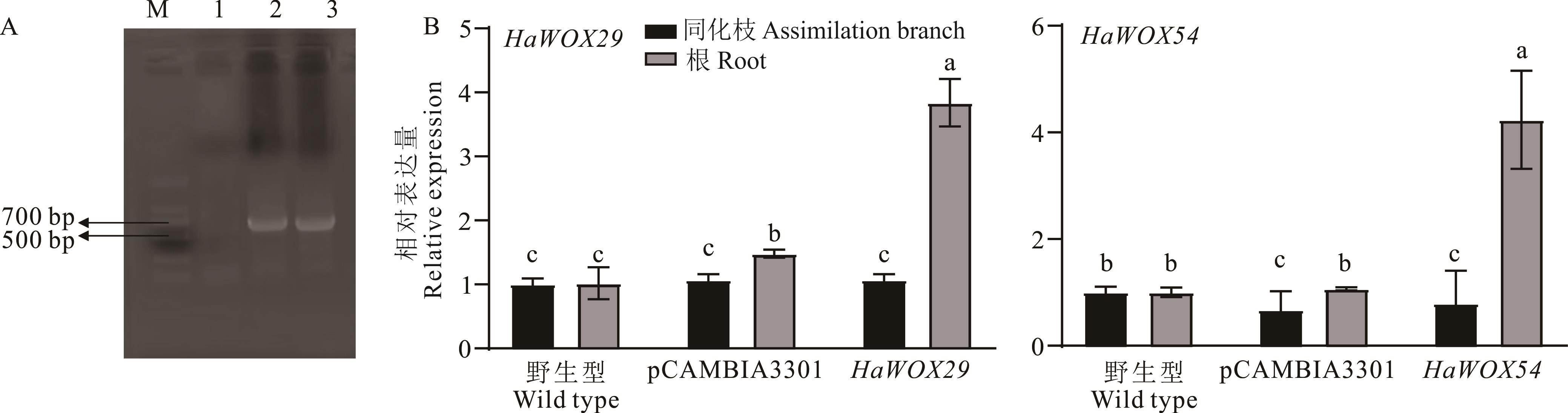
图9 转基因梭梭苗分子鉴定和qRT-PCR验证A: OE_HaWOXs基因分子鉴定Molecular identification of the OE_HaWOXs gene; 1: 水water; 2: OE_HaWOX29; 3: OE_HaWOX54; B: qRT-PCR验证HaWOX29和HaWOX54的基因表达量qRT-PCR validation of the expression levels of HaWOX29 and HaWOX54 genes. 不同小写字母表示差异显著(P<0.05)。Different lowercase letters indicate significant differences (P<0.05).
Fig.9 Molecular identification of transgenic H. ammodendron seedlings and qRT-PCR validation
| [1] | Song J, Feng G, Tian C Y, et al. Osmotic adjustment traits of Suaeda physophora, Haloxylon ammodendron and Haloxylon persicum in field or controlled conditions. Plant Science, 2006, 170(1): 113-119. |
| [2] | Zhao X J, Liu Y. The ecological value and economic value of honeycomb juniper. Inner Mongolia Forestry, 2003(3): 39. |
| 赵小军, 刘宇. 梭梭的生态价值与经济价值. 内蒙古林业, 2003(3): 39. | |
| [3] | Li Y, Xu H. Water and carbon balances of Haloxylon ammodendron: intergated study at physiological, plant abd community level. Arid Land Geography, 2008, 31(3): 313-323. |
| 李彦, 许皓. 梭梭对降水的响应与适应机制——生理、个体与群落水平碳水平衡的整合研究. 干旱区地理, 2008, 31(3): 313-323. | |
| [4] | Huang Y, Guo Y H. Root distribution characteristics of Haloxylon ammodendron (Mey.) Bunge plantation. Acta Agrestia Sinica, 2009, 17(1): 84-87. |
| 黄勇, 郭玉海. 人工梭梭林根系的分布特征. 草地学报, 2009, 17(1): 84-87. | |
| [5] | Sheng J H, Qiao Y X, Liu H Y, et al. A study on the root system of Haloxylon ammodendron (C.A.Mey.) Bunge. Acta Agrestia Sinica, 2004, 12(2): 91-94. |
| 盛晋华, 乔永祥, 刘宏义, 等. 梭梭根系的研究. 草地学报, 2004, 12(2): 91-94. | |
| [6] | Chen Y C, Li M, Wu M C, et al. Structure and composition of roots in two species of Haloxylon Bunge. Plant Physiology Journal, 2013, 49(11): 1273-1276. |
| 陈虞超, 李苗, 吴明朝, 等. 梭梭属两种植物的根结构和成分. 植物生理学报, 2013, 49(11): 1273-1276. | |
| [7] | Zhang H, Sha R T Y, Xing Y K, et al. Research and application prospects of artificial control techniques for Cistanche deserticola parasitism. Inner Mongolia Forestry, 2024(9): 43-46. |
| 张慧, 莎仁图雅, 邢钰坤, 等. 肉苁蓉人工控制寄生技术研究及应用展望. 内蒙古林业, 2024(9): 43-46. | |
| [8] | Zhang Z, Meng J P, Song Z Y. Research on cutting propagation techniques for five desert plants. Journal of Green Science and Technology, 2015(7): 85-86. |
| 张祯, 孟军萍, 宋志云. 5种沙生植物扦插育苗技术研究. 绿色科技, 2015(7): 85-86. | |
| [9] | Wang P, Man L J, Ma L, et al. In vitro regeneration of Haloxylon ammodendron. Notulae Scientia Biologicae, 2023, 15(2): 11585. |
| [10] | Zhang T, Ge Y C, Cai G, et al. WOX-ARF modules initiate different types of roots. Cell Reports, 2023, 42(8): 112966. |
| [11] | Chen X, Hou Y, Cao Y, et al. A comprehensive identification and expression analysis of the WUSCHEL homeobox-containing protein family reveals their special role in development and abiotic stress response in Zea mays L. International Journal of Molecular Sciences, 2024, 25(1): 441. |
| [12] | Chen R R, Xu N, Yu B, et al. The WUSCHEL-related homeobox transcription factor OsWOX4 controls the primary root elongation by activating OsAUX1 in rice. Plant Science, 2020, 298: 110575. |
| [13] | Li Z L. Study on regulation of adventitious root formation by BpWOX11 gene in Betula platyphylla. Harbin: Northeast Forestry University, 2023. |
| 李政纶. 白桦BpWOX11基因调控不定根发生的研究. 哈尔滨: 东北林业大学, 2023. | |
| [14] | Wang L Q, Li Z, Wen S S, et al. WUSCHEL-related homeobox gene PagWOX11/12a responds to drought stress by enhancing root elongation and biomass growth in poplar. Journal of Experimental Botany, 2020, 71(4): 1503-1513. |
| [15] | Ren C. Study of fruit development morphology, drought transcriptome and functional analysis of HaHSFA1, HaNAC2 genes on Haloxylon ammodendron. Nanjing: Nanjing Agricultural University, 2016. |
| 任财. 梭梭果实发育形态、幼苗干旱胁迫转录组及HaHSFA1和HaNAC2基因功能研究. 南京: 南京农业大学, 2016. | |
| [16] | Wang P. A preliminary study on the mechanism related to the in vitro regeneration and genetic transformation of Haloxylon ammodendron. Urumqi: Xinjiang Agricultural University, 2023. |
| 王萍. 梭梭离体再生机理研究及遗传转化的初探. 乌鲁木齐: 新疆农业大学, 2023. | |
| [17] | Zhang H, Nafisa M Z P E, Ren Y P, et al. A method for the construction of Agrobacterium-mediated genetic transformation system of Haloxylon ammodendron seeds: CN202410756609.5. 2024-09-10. https://www.patent9.com/patent/202410756609.5.html. |
| 张桦, 娜菲莎·木则帕尔, 任燕萍, 等. 农杆菌介导的梭梭种子遗传转化体系构建的方法: 202410756609.5. 2024-09-10.https://www.patent9.com/patent/202410756609.5.html. | |
| [18] | Li J L, Qiu L Z, Xie H, et al. Teaching experiment design for analyzing root growth of wheat seedling under heavy metal stress by Win-RHIZO system. Experimental Technology and Management, 2022, 39(7): 191-195. |
| 李俊丽, 邱凌之, 谢浩, 等. 利用Win-RHIZO系统分析重金属胁迫下小麦幼苗根系生长状况教学实验设计. 实验技术与管理, 2022, 39(7): 191-195. | |
| [19] | Riccucci E, Vanni C, Vangelisti A, et al. Genome-wide analysis of WOX multigene family in sunflower (Helianthus annuus L.). International Journal of Molecular Sciences, 2023, 24(4): 3352. |
| [20] | Chen K, Wang H, Chen Y T, et al. Functional analysis of WOX family genes in Dendrobium catenatum during growth and development. Hereditas, 2023, 45(8): 700-714. |
| [21] | Kong X P, Lu S C, Tian H Y, et al. WOX5 is shining in the root stem cell niche. Trends in Plant Science, 2015, 20(10): 601-603. |
| [22] | Li J L, Chen Y, Wang Z W, et al. Genome-wide identification and expression of WOX gene family in Brassica rapa. Molecular Plant Breeding, (2024-11-21)[2025-05-12]. http://kns.cnki.net/kcms/detail/46.1068.S.20241121.1007.002.html. |
| 李嘉利, 陈雨, 王紫雯, 等. 白菜WOX基因家族的鉴定与表达. 分子植物育种, (2024-11-21)[2025-05-12]. http://kns.cnki.net/kcms/detail/46.1068.S.20241121.1007.002.html. | |
| [23] | Kang J Y, Chi X F, Shen P, et al. Identification of WOX family genes in Lagerstroemia indica and their effects on callus induction. Journal of Agricultural Biotechnology, 2024, 32(10): 2255-2264. |
| 康佳音, 池秀凤, 申萍, 等. 紫薇WOX家族基因鉴定及其对愈伤诱导的影响. 农业生物技术学报, 2024, 32(10): 2255-2264. | |
| [24] | Chen L, Wang W T, Pu Y Y, et al. Identification and expression analysis of WOX gene family in Brassica napus. Acta Agriculturae Boreali-Occidentalis Sinica, 2023, 32(8): 1173-1186. |
| 陈玲, 王旺田, 蒲媛媛, 等. 甘蓝型油菜WOX基因家族的鉴定与表达分析. 西北农业学报, 2023, 32(8): 1173-1186. | |
| [25] | Feng S S, Wang L, Zhou Y, et al. Research progresses on WOX family genes in regulating plant development and abiotic stress responses. Biotechnology Bulletin, 2023, 39(5): 1-13. |
| 冯珊珊, 王璐, 周益, 等. WOX家族基因调控植物生长发育和非生物胁迫响应的研究进展. 生物技术通报, 2023, 39(5): 1-13. | |
| [26] | Yang X, Xu Y H, Wei J H, et al. Advances on the biosynthesis pathways and molecular regulation mechanism of several important defensive substances in plant secondary metabolism. Letters in Biotechnology, 2013, 24(2): 285-289. |
| 杨欣, 徐艳红, 魏建和, 等. 几种重要植物次生代谢防御反应物质的生物合成途径及分子调控机制研究进展. 生物技术通讯, 2013, 24(2): 285-289. | |
| [27] | Chen C H, Chuan X J, Wang H, et al. Factors affecting genetic transformation efficiency for stylo (Stylosanthes guianensis) with Agrobacterium tumefaciens. Acta Prataculturae Sinica, 2016, 25(6): 102-108. |
| 陈彩虹, 钏秀娟, 王荟, 等. 农杆菌侵染条件对柱花草遗传转化效率的影响. 草业学报, 2016, 25(6): 102-108. | |
| [28] | Liu J C, Sheng L H, Xu Y Q, et al. WOX11 and 12 are involved in the first-step cell fate transition during de novo root organogenesis in Arabidopsis. Plant Cell, 2014, 26(3): 1081-1093. |
| [29] | Meng J H, Liu H C, Wu Z, et al. Effects of PsWOX11 on lateral root growth and development of Populus simonii. Forest Research, 2024, 37(6): 54-61. |
| 孟佳慧, 刘宏超, 武志, 等. 小叶杨PsWOX11基因对侧根生长发育的影响. 林业科学研究, 2024, 37(6): 54-61. | |
| [30] | Kawai T, Shibata K, Akahoshi R, et al. WUSCHEL-related homeobox family genes in rice control lateral root primordium size. Proceedings of the National Academy of Sciences of the United States of America, 2022, 119(1): e2101846119. |
| [1] | 刘媛媛, 王旭, 魏琪, 车丽娟, 袁梦, 王波. 梭梭14-3-3蛋白HaFT-9在高温-干旱胁迫信号交叉调控中的功能研究[J]. 草业学报, 2025, 34(9): 134-146. |
| [2] | 李永龙, 周生辉, 薛梦瑶, 高远, 巨乐, 陈奕冰, 付松林, 郝建昊, 李恒, 张昆, 左志芳. 结缕草ZjWRKY63基因的克隆及转基因拟南芥的耐盐性分析[J]. 草业学报, 2025, 34(12): 157-169. |
| [3] | 谭真真, 张夏香, 杨志民. 冷季型草坪草耐热性研究进展[J]. 草业学报, 2021, 30(9): 193-202. |
| [4] | 吴路遥, 张建国, 常闻谦, 张少磊, 常青. 三种荒漠植物叶绿素荧光参数日变化特征[J]. 草业学报, 2021, 30(9): 203-213. |
| [5] | 谢文刚, 万依阳, 张宗瑜, 张俊超. 禾本科植物落粒机理研究进展[J]. 草业学报, 2021, 30(8): 186-198. |
| [6] | 别尔达吾列提·希哈依, 董乙强, 安沙舟, 魏鹏. 短期封育对白梭梭荒漠和盐生假木贼荒漠土壤营养成分的影响[J]. 草业学报, 2020, 29(9): 56-62. |
| [7] | 刘江, 徐先英, 张荣娟, 崔文天, 赵鹏, 丁爱强, 付贵全. 不同退化程度人工梭梭林对土壤理化性质与生物学特性的影响[J]. 草业学报, 2017, 26(12): 1-12. |
| [8] | 席军强, 杨自辉, 郭树江, 王强强, 张剑挥, 王多泽. 人工梭梭林对沙地土壤理化性质和微生物的影响[J]. 草业学报, 2015, 24(5): 44-52. |
| [9] | 丁效东, 张士荣, 刘阳超, 冯固. 真盐生植物梭梭和囊果碱蓬幼苗耐干旱能力的研究[J]. 草业学报, 2015, 24(11): 240-246. |
| [10] | 鲁艳,雷加强,曾凡江,徐立帅,彭守兰,刘国军. NaCl处理对梭梭生长及生理生态特征的影响[J]. 草业学报, 2014, 23(3): 152-159. |
| [11] | 陶冶,张元明. 荒漠灌木生物量多尺度估测——以梭梭为例[J]. 草业学报, 2013, 22(6): 1-10. |
| [12] | 李兴,蒋进,宋春武,闵首军,张恒,姜有为. 保水剂对梭梭幼苗生长及根系形态的影响[J]. 草业学报, 2012, 21(6): 51-56. |
| [13] | 康建军,王锁民,赵明,杨自辉. 苗期施用钠复合肥增强梭梭抗逆性的初步研究[J]. 草业学报, 2011, 20(2): 127-133. |
| 阅读次数 | ||||||
|
全文 |
|
|||||
|
摘要 |
|
|||||
