
ISSN 1004-5759 CN 62-1105/S
Acta Prataculturae Sinica ›› 2027, Vol. 36 ›› Issue (1): 112-124.DOI: 10.11686/cyxb2026006
Qing XIN1( ), Tuo YAO1(), Xing XIANG1,2, Jia-qi WU1
Received:2026-01-06
Revised:2026-03-09
Online:2027-01-20
Published:2026-11-25
Contact:
Tuo YAO
Qing XIN, Tuo YAO, Xing XIANG, Jia-qi WU. Polyphasic taxonomic identification and stress adaptability of plant growth-promoting strain Gnyt1 isolated from alpine grassland[J]. Acta Prataculturae Sinica, 2027, 36(1): 112-124.
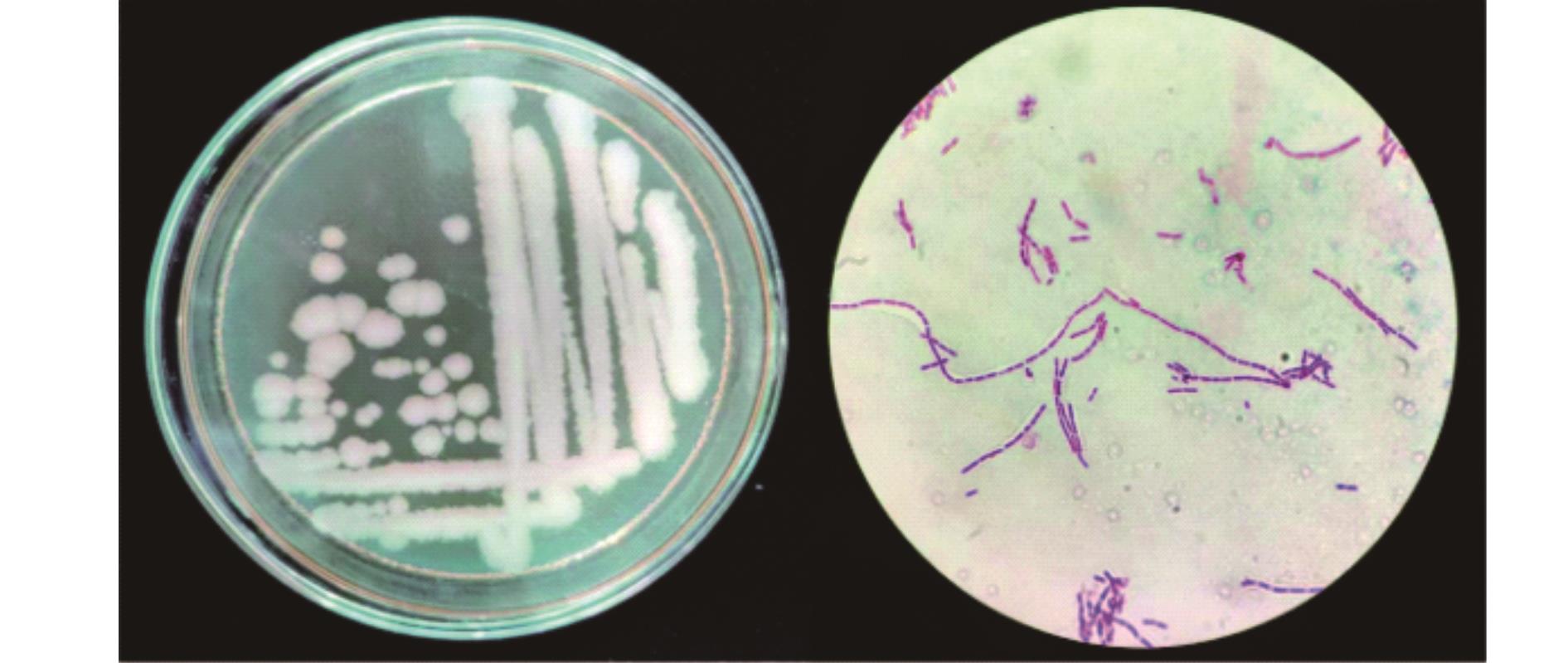
Fig.1 Colony and cell morphological characteristics of strain Gnyt1
试验名称 Test item | Gnyt1 | 蜡样芽孢杆菌 B.cereus | 蕈状芽孢杆菌 B. mycoides | 试验名称 Test item | Gnyt1 | 蜡样芽孢杆菌 B.cereus | 蕈状芽孢杆菌 B. mycoides |
|---|---|---|---|---|---|---|---|
| 过氧化氢酶Catalase test | + | + | + | 葡萄糖利用Glucose utilization | + | + | + |
| 动力测试Motility test | - | +/- | - | V-P测定Voges-Proskauer test | + | + | + |
| 硝酸盐还原Nitrate reduction | + | + | + | 甘露醇产酸Mannitol acid production | - | - | - |
| 酪蛋白分解Casein hydrolysis | + | + | +/- | 溶血反应Hemolysis test | + | + | + |
| 溶菌酶耐性Lysozyme tolerance | + | + | + | 根状生长Rhizoid growth | + | - | + |
| 卵黄反应Egg yolk reaction | + | + | + | 毒素晶体Toxin crystal | - | - | - |
Table 1 Comparison of physiological and biochemical characteristics between strain Gnyt1 and related Bacillus strains
试验名称 Test item | Gnyt1 | 蜡样芽孢杆菌 B.cereus | 蕈状芽孢杆菌 B. mycoides | 试验名称 Test item | Gnyt1 | 蜡样芽孢杆菌 B.cereus | 蕈状芽孢杆菌 B. mycoides |
|---|---|---|---|---|---|---|---|
| 过氧化氢酶Catalase test | + | + | + | 葡萄糖利用Glucose utilization | + | + | + |
| 动力测试Motility test | - | +/- | - | V-P测定Voges-Proskauer test | + | + | + |
| 硝酸盐还原Nitrate reduction | + | + | + | 甘露醇产酸Mannitol acid production | - | - | - |
| 酪蛋白分解Casein hydrolysis | + | + | +/- | 溶血反应Hemolysis test | + | + | + |
| 溶菌酶耐性Lysozyme tolerance | + | + | + | 根状生长Rhizoid growth | + | - | + |
| 卵黄反应Egg yolk reaction | + | + | + | 毒素晶体Toxin crystal | - | - | - |

Fig.2 The system evolution tree of the Gnyt1 strain
物种名 Species | 菌株凭证号 Strain voucher number | 16S rDNA序列GenBank登录号 16S rDNA sequence GenBank accession number |
|---|---|---|
| 蕈状芽孢杆菌B. mycoides | LBUM203 | MG461449 |
| 人源芽孢杆菌B. hominis | BML-BC059 | NR_175557 |
| 炭疽芽孢杆菌B. anthracis | ATCC 14578 | AB190217 |
| 解蛋白芽孢杆菌B. proteolyticus | MCCC 1A00365 | NR_157735 |
| 魏登施泰因芽孢杆菌B. weihenstephanensis | KAR78 | KR055038 |
| 真菌源芽孢杆菌B. fungorum | 17-SMS-01 | NR_170494 |
| 蜡样芽孢杆菌B. cereus | ATCC 14579 | NR_074540 |
| 近活动芽孢杆菌B. paramobilis | BML-BC017 | NR_175556 |
| 图永芽孢杆菌B. toyonensis | BCT-7112 | NR_121761 |
| 苏云金芽孢杆菌B. thuringiensis | NBRC 101235 | NR_112780 |
| 太平洋芽孢杆菌B. pacificus | MCCC 1A06182 | NR_157733 |
| 活动芽孢杆菌B. mobilis | MCCC 1A05942 | NR_157731 |
| 白色芽孢杆菌B. albus | MCCC 1A02146 | NR_157729 |
| 单核细胞增生李斯特氏菌L. monocytogenes | lis114 | MT071644 |
Table 2 Information of reference strains used for 16S rDNA sequence analysis
物种名 Species | 菌株凭证号 Strain voucher number | 16S rDNA序列GenBank登录号 16S rDNA sequence GenBank accession number |
|---|---|---|
| 蕈状芽孢杆菌B. mycoides | LBUM203 | MG461449 |
| 人源芽孢杆菌B. hominis | BML-BC059 | NR_175557 |
| 炭疽芽孢杆菌B. anthracis | ATCC 14578 | AB190217 |
| 解蛋白芽孢杆菌B. proteolyticus | MCCC 1A00365 | NR_157735 |
| 魏登施泰因芽孢杆菌B. weihenstephanensis | KAR78 | KR055038 |
| 真菌源芽孢杆菌B. fungorum | 17-SMS-01 | NR_170494 |
| 蜡样芽孢杆菌B. cereus | ATCC 14579 | NR_074540 |
| 近活动芽孢杆菌B. paramobilis | BML-BC017 | NR_175556 |
| 图永芽孢杆菌B. toyonensis | BCT-7112 | NR_121761 |
| 苏云金芽孢杆菌B. thuringiensis | NBRC 101235 | NR_112780 |
| 太平洋芽孢杆菌B. pacificus | MCCC 1A06182 | NR_157733 |
| 活动芽孢杆菌B. mobilis | MCCC 1A05942 | NR_157731 |
| 白色芽孢杆菌B. albus | MCCC 1A02146 | NR_157729 |
| 单核细胞增生李斯特氏菌L. monocytogenes | lis114 | MT071644 |

Fig.3 ANI heatmap of strain Gnyt1 and reference strains
目标菌株 Target strain | 参考菌株 Reference strain | dDDH估计值 dDDH estimated value (%) | 置信区间 Confidence interval | 距离 Distance | 相同物种概率Probability of same species (%) | G+C百分比差异G+C percentage difference (%) |
|---|---|---|---|---|---|---|
| Gnyt1 | BPN36 3 | 74.30 | [71.30%~77.10%] | 0.0304 | 84.86 | 0.16 |
Table 3 dDDH analysis results between strain Gnyt1 and B. mycoides BPN36 3
目标菌株 Target strain | 参考菌株 Reference strain | dDDH估计值 dDDH estimated value (%) | 置信区间 Confidence interval | 距离 Distance | 相同物种概率Probability of same species (%) | G+C百分比差异G+C percentage difference (%) |
|---|---|---|---|---|---|---|
| Gnyt1 | BPN36 3 | 74.30 | [71.30%~77.10%] | 0.0304 | 84.86 | 0.16 |

Fig.4 Parallel collinearity plot of the whole genome between Gnyt1 strain and its related B. mycoides
菌株组合 Strain combination | 共线位置 Collinear position | 非生物胁迫的功能基因Functional genes related to abiotic stress | ||||
|---|---|---|---|---|---|---|
DNA修复与损伤响应 DNA repair and damage response | 热激、氧化胁迫与蛋白质稳态 Heat shock, oxidative stress and protein homeostasis | 渗透与离子胁迫 Osmotic and ionic stress | 低温胁迫 Low temperature stress | 其他胁迫 Other stresses | ||
BPN36 3 VS Gnyt1 | NZ_CP035997.1 NZ_CP035998.1 | recA,recF,recG,mutS,mutL,ligA,pcrA,priA,lexA,uvrA,uvrB,mfd | groL,groES,clpC,ftsH,hslU,hslV | glmS,glmM,murF,proC,acpS,pgsA,asd,dapA,dapG | cspB | glnA,glnR,phnC,phnEsucC,sucD,acnA,pfkB,gmk,coaBC |
| LX30 VS Gnyt1 | NZ_CP092833.1 NZ_CP092834.1 NZ_CP092835.1 | recF,recR,gyrA,gyrB,mutY,radA | ahpC,ahpF,katB,perR,hemE,hemH | kdpFABC,nhaC,modA,modB | cspA | sigB,hppD,pdxS,pdxT,secA2,secY |
| Gnyt1 | - | recA,recF | groES,groL,clpC,clpB,ftsH,ahpF,ahpC,perR | glmS,glmM,nhaC,kdpF,kdpA,kdpB,kdpC | cspA | clpC,clpB,recA |
Table 4 Comparison of abiotic stress-related functional genes between strain Gnyt1 and closely related strains
菌株组合 Strain combination | 共线位置 Collinear position | 非生物胁迫的功能基因Functional genes related to abiotic stress | ||||
|---|---|---|---|---|---|---|
DNA修复与损伤响应 DNA repair and damage response | 热激、氧化胁迫与蛋白质稳态 Heat shock, oxidative stress and protein homeostasis | 渗透与离子胁迫 Osmotic and ionic stress | 低温胁迫 Low temperature stress | 其他胁迫 Other stresses | ||
BPN36 3 VS Gnyt1 | NZ_CP035997.1 NZ_CP035998.1 | recA,recF,recG,mutS,mutL,ligA,pcrA,priA,lexA,uvrA,uvrB,mfd | groL,groES,clpC,ftsH,hslU,hslV | glmS,glmM,murF,proC,acpS,pgsA,asd,dapA,dapG | cspB | glnA,glnR,phnC,phnEsucC,sucD,acnA,pfkB,gmk,coaBC |
| LX30 VS Gnyt1 | NZ_CP092833.1 NZ_CP092834.1 NZ_CP092835.1 | recF,recR,gyrA,gyrB,mutY,radA | ahpC,ahpF,katB,perR,hemE,hemH | kdpFABC,nhaC,modA,modB | cspA | sigB,hppD,pdxS,pdxT,secA2,secY |
| Gnyt1 | - | recA,recF | groES,groL,clpC,clpB,ftsH,ahpF,ahpC,perR | glmS,glmM,nhaC,kdpF,kdpA,kdpB,kdpC | cspA | clpC,clpB,recA |
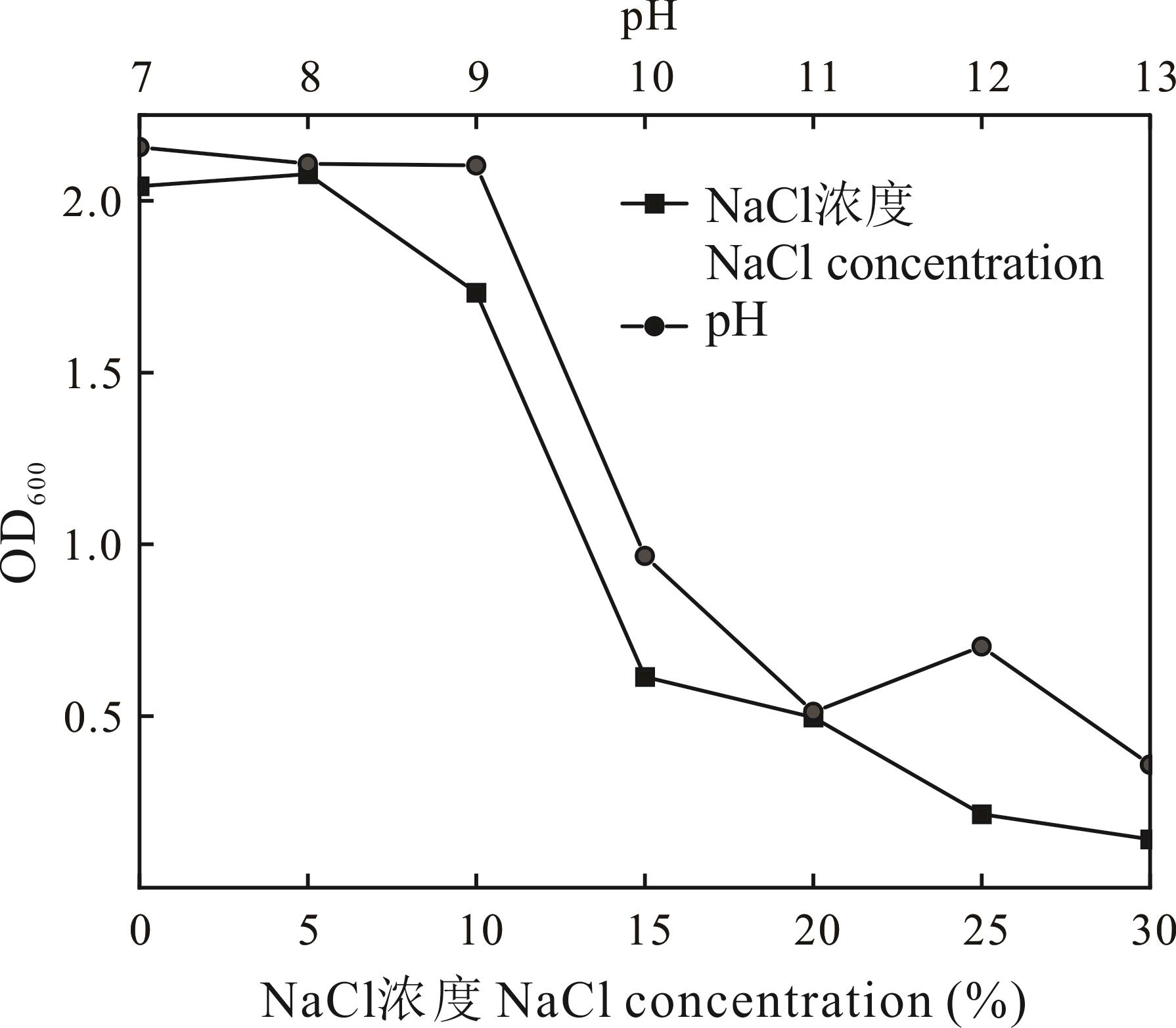
Fig.5 The tolerance of the Gnyt1 strain to different NaCl concentrations and alkalinity levels (pH)
NaCl浓度 NaCl concentration (%) | 解磷、溶磷能力 Phosphate dissolving and solubilizing capacity (μg·mL-1) | 固氮酶活性 Nitrogenase activity (nmol·h-1·mL-1) | 吲哚乙酸 IAA (μg·mL-1) | |
|---|---|---|---|---|
| 有机磷 Organic P | 无机磷 Inorganic P | |||
| 0 | 32.70±0.88a | 246.63±4.82a | 123.85±2.15a | 39.98±1.05a |
| 5 | 33.25±0.82a | 250.37±4.65a | 125.62±2.08a | 40.56±0.98a |
| 10 | 26.18±0.75b | 195.78±4.21b | 98.47±1.92b | 32.15±0.91b |
| 15 | 10.15±0.62c | 76.45±3.56c | 38.26±1.57c | 12.37±0.78c |
| 20 | 7.86±0.55d | 59.28±3.12d | 29.83±1.32d | 9.64±0.65d |
| 25 | 4.22±0.48e | 31.85±2.67e | 13.57±1.08e | 4.32±0.52e |
| 30 | 2.15±0.36f | 18.56±2.15f | 7.42±0.85f | 2.26±0.41f |
Table 5 Determination results of the growth characteristics of Gnyt1 strain at different NaCl concentrations
NaCl浓度 NaCl concentration (%) | 解磷、溶磷能力 Phosphate dissolving and solubilizing capacity (μg·mL-1) | 固氮酶活性 Nitrogenase activity (nmol·h-1·mL-1) | 吲哚乙酸 IAA (μg·mL-1) | |
|---|---|---|---|---|
| 有机磷 Organic P | 无机磷 Inorganic P | |||
| 0 | 32.70±0.88a | 246.63±4.82a | 123.85±2.15a | 39.98±1.05a |
| 5 | 33.25±0.82a | 250.37±4.65a | 125.62±2.08a | 40.56±0.98a |
| 10 | 26.18±0.75b | 195.78±4.21b | 98.47±1.92b | 32.15±0.91b |
| 15 | 10.15±0.62c | 76.45±3.56c | 38.26±1.57c | 12.37±0.78c |
| 20 | 7.86±0.55d | 59.28±3.12d | 29.83±1.32d | 9.64±0.65d |
| 25 | 4.22±0.48e | 31.85±2.67e | 13.57±1.08e | 4.32±0.52e |
| 30 | 2.15±0.36f | 18.56±2.15f | 7.42±0.85f | 2.26±0.41f |
| pH | 解磷、溶磷能力 Phosphate dissolving and solubilizing capacity (μg·mL-1) | 固氮酶活性 Nitrogenase activity (nmol·h-1·mL-1) | 吲哚乙酸 IAA (μg·mL-1) | |
|---|---|---|---|---|
| 有机磷 Organic P | 无机磷 Inorganic P | |||
| 7 | 32.70±0.88a | 285.63±5.36a | 123.85±2.12a | 40.18±1.02a |
| 8 | 31.25±0.78ab | 276.89±4.98a | 118.67±2.05a | 38.56±0.95ab |
| 9 | 28.64±0.72b | 252.47±4.52b | 105.32±1.89b | 34.27±0.88b |
| 10 | 18.42±0.56c | 156.39±3.87c | 62.58±1.56c | 21.35±0.76c |
| 11 | 10.26±0.52d | 98.76±3.21d | 38.45±1.23d | 12.68±0.63d |
| 12 | 12.83±0.58d | 112.58±3.45d | 45.79±1.31d | 15.42±0.69d |
| 13 | 6.57±0.45e | 65.42±2.76e | 22.63±1.05e | 8.79±0.55e |
Table 6 Determination results of the growth-promoting characteristics of Gnyt1 strain in different pH values
| pH | 解磷、溶磷能力 Phosphate dissolving and solubilizing capacity (μg·mL-1) | 固氮酶活性 Nitrogenase activity (nmol·h-1·mL-1) | 吲哚乙酸 IAA (μg·mL-1) | |
|---|---|---|---|---|
| 有机磷 Organic P | 无机磷 Inorganic P | |||
| 7 | 32.70±0.88a | 285.63±5.36a | 123.85±2.12a | 40.18±1.02a |
| 8 | 31.25±0.78ab | 276.89±4.98a | 118.67±2.05a | 38.56±0.95ab |
| 9 | 28.64±0.72b | 252.47±4.52b | 105.32±1.89b | 34.27±0.88b |
| 10 | 18.42±0.56c | 156.39±3.87c | 62.58±1.56c | 21.35±0.76c |
| 11 | 10.26±0.52d | 98.76±3.21d | 38.45±1.23d | 12.68±0.63d |
| 12 | 12.83±0.58d | 112.58±3.45d | 45.79±1.31d | 15.42±0.69d |
| 13 | 6.57±0.45e | 65.42±2.76e | 22.63±1.05e | 8.79±0.55e |
| [1] | Wang Z L, Yao T, Li M Y, et al. Isolation, screening, and characterization of dominant plant growth-promoting rhizobacterial species in Zoige alpine grassland. Pratacultural Science, 2023, 40(2): 319-328. |
| 王振龙, 姚拓, 李明源, 等. 若尔盖高寒草地优势牧草植物根际促生菌的筛选及特性. 草业科学, 2023, 40(2): 319-328. | |
| [2] | Ma Y, Oliveira R S, Freitas H, et al. Biochemical and molecular mechanisms of plant-microbe-metal interactions: Relevance for phytoremediation. Frontiers in Plant Science, 2016, 7: 918. |
| [3] | Zhou Y L. Development and fertilizer efficiency evaluation of growth promoting and disease resistant microbial agents in Camellia oleifera rhizosphere soil. Changsha: Central South University, 2025. |
| 周易龙. 油茶根际土壤促生抗病微生物菌剂研制及其肥效评价. 长沙: 中南林业科技大学, 2025. | |
| [4] | Li J, Peng Q C, Zhang Z P, et al. Isolation and identification of a strain of Bacillus tropicus and study of its probiotic effect. Soil and Fertilizer Sciences in China, 2024(2): 193-200. |
| 李俊, 彭启超, 张志鹏, 等. 一株热带芽孢杆菌的分离鉴定及促生作用研究. 中国土壤与肥料, 2024(2): 193-200. | |
| [5] | Song Z H, Tian P. A review of soil microorganism functions in soil improvement and remediation. Pratacultural Science, 2024, 41(11): 2622-2636. |
| 宋泽海, 田沛. 土壤微生物在土壤改良与修复中的作用概述. 草业科学, 2024, 41(11): 2622-2636. | |
| [6] | Wen Y X, Zhao B, Luo Q Y, et al. Distribution and ecological role in close-to-nature restoration of arbuscular mycorrhizal fungi in Tibetan Plateau alpine grassland. Mycosystema, 2021, 40(10): 2562-2578. |
| 温杨雪, 赵博, 罗巧玉, 等. 青藏高原高寒草地AM真菌分布及其对近自然恢复的生态作用. 菌物学报, 2021, 40(10): 2562-2578. | |
| [7] | Li S X, Yao T, Chai J L, et al. Effects of the addition of compound microbial agent on the physicochemical properties of soil in degraded alpine meadow. Grassland and Turf, 2025, 46(1): 1-13. |
| 李双雄, 姚拓, 柴加丽, 等. 复合微生物菌剂添加对退化高寒草甸土壤理化特性影响. 草原与草坪, 2025, 46 (1): 1-13. | |
| [8] | Ma K, An Y H, Wu H J, et al. Isolation and identification of a dominant lactic acid bacteria strain CGMCC 10624 from a traditional steamed buns Jiaozi. Journal of Food Safety and Quality, 2016, 7(9): 3720-3725. |
| 马凯, 安云鹤, 武会娟, 等. 传统馒头发酵酵子中一株优势乳酸菌CGMCC 10624的分离与鉴定. 食品安全质量检测学报, 2016, 7(9): 3720-3725. | |
| [9] | Tie X L, Zhang Y, Ma L X, et al. Study on the functional diversity of PGPR strains in oat rhizosphere in Sanjiangyuan Region. Acta Agrestia Sinica, 2024, 32(3): 693-702. |
| 铁晓龙, 张英, 马林雄, 等. 三江源区燕麦根际PGPR菌株功能多样性研究. 草地学报, 2024, 32(3): 693-702. | |
| [10] | Gan Y N. Screening of PGPR strains of typical legumes on alpine grassland and construction of synthetic bacteria. Lanzhou: Lanzhou University, 2023. |
| 甘雅楠. 高寒草地典型豆科植物PGPR菌株筛选及合成菌群的构建. 兰州: 兰州大学, 2023. | |
| [11] | Xie X Y, Liao K M, Hua X J, et al. The antagonistic effect of Bacillus velezensis Y-2-3 on Colletotrichum musae and its efficacy in preventing banana anthracnose disease. Journal of Agricultural Biotechnology, 2025, 33(11): 2460-2471. |
| 谢晓莹, 廖克妙, 花晓婕, 等. 贝莱斯芽胞杆菌Y-2-3对芭蕉炭疽菌的拮抗作用及其对香蕉炭疽病的防效. 农业生物技术学报, 2025, 33(11): 2460-2471. | |
| [12] | Li J H. The characteristics of a fine plant growth-promoting rhizobacteria Bacillus mycoides Gnytl and its whole genome sequencing analysis. Lanzhou: Gansu Agricultural University, 2017. |
| 李建宏. 优良植物根际促生菌Bacillus mycoides Gnyt1特性研究及全基因组测序分析. 兰州: 甘肃农业大学, 2017. | |
| [13] | Li J H, Li X P, Li C N, et al. Characterization of a plant-growth-promoting rhizosphere bacterium, Gnytl, and determination of its taxonomic status. Acta Prataculturae Sinica, 2019, 28(5): 55-67. |
| 李建宏, 李雪萍, 李昌宁, 等. 一株植物根际促生菌Gnyt1的特性研究及分类地位的确定. 草业学报, 2019, 28(5): 55-67. | |
| [14] | Yang X M. Comparative genome and functional gene of plant growth promoting rhizobacteria (Bacillus mycoides Gnytl) isolated from Polygonum viviparum. Lanzhou: Gansu Agricultural University, 2020. |
| 杨晓玫. 珠芽蓼根际促生菌Bacillus mycoides Gnyt1比较基因组及其功能基因研究. 兰州: 甘肃农业大学, 2020. | |
| [15] | Liu T. Evaluating and identifying of plant growth promoting rhizobacteria of dominant alpine meadows. Lanzhou: Gansu Agricultural University, 2016. |
| 刘婷. 高寒草甸优势植物根际促生菌资源评价及菌种鉴定. 兰州: 甘肃农业大学, 2016. | |
| [16] | Wang L F, Lou Y, Gu J P, et al. High-throughput sequencing was used to study the effect of metolimidazole on the intestinal microbiota of chimpanzees. Heilongjiang Animal Science and Veterinary Medicine, 2020(4): 129-132, 53-54. |
| 汪丽芬, 楼毅, 顾江萍, 等. 高通量测序研究甲苯咪唑对黑猩猩肠道菌群的影响. 黑龙江畜牧兽医, 2020(4): 129-132, 53-54. | |
| [17] | Bat-amgalan B. Analysis of microbial diversity and study on probiotics of cheege in Mongolia. Hohhot: Inner Mongolia Agricultural University, 2024. |
| Bat-amgalan B. 蒙古国策格微生物多样性分析及其益生菌研究. 呼和浩特: 内蒙古农业大学, 2024. | |
| [18] | Bai Y B, Xu M C, Jiao Y F, et al. Exploration of methods for identification of Enterococcus. Disease Surveillance, 2021, 36(5): 462-467. |
| 白一波, 徐明超, 焦一帆, 等. 肠球菌菌种鉴定方法的探索. 疾病监测, 2021, 36(5): 462-467. | |
| [19] | Daniela T, Santiago R, Melissa O, et al. Genome sequence of Bradyrhizobium japonicum E109, One of the most agronomically used nitrogen-fixing rhizobacteria in Argentina. Genome Announcements, 2015, 3(1): e01566-14. |
| [20] | Cortimiglia C, Real J A D, Daza M V B, et al. Evaluating the genome-based average nucleotide identity calculation for identification of twelve yeast species. Journal of Fungi, 2024, 10(9): 646. |
| [21] | Li S, Wang X R, Zhang W, et al. Genome-based reassessment of Sphingobacterium reveals the limitation of the fixed dDDH threshold for prokaryotic species delineation. Current Research in Microbial Sciences, 2026, 10: 100524. |
| [22] | Ma M C, Jiang X, Wang P H, et al. Rapid identification for Bradyrhizobium japonicum 5873 by PCR and its evaluation in application. Scientia Agricultura Sinica, 2023, 56(14): 2751-2760. |
| 马鸣超, 姜昕, 王鹏辉, 等. 大豆根瘤菌菌株5873 PCR快速检测方法的建立及应用效果评价. 中国农业科学, 2023, 56(14): 2751-2760. | |
| [23] | Rodriguez L L, Lopez M G, Alejo D H, et al. Rapid identification of enteric bacteria from whole genome sequences using average nucleotide identity metrics. Frontiers in Microbiology, 2023, 14: 1225207. |
| [24] | Zhu B, Wu J Q, Chen L, et al. Isolation, characterization, genomic analysis, and food application of virulent bacteriophage vB_VpaP_FR4 infecting Vibrio parahaemolyticus. Food Science, 2025, 46(21): 115-125. |
| 朱斌, 伍君权, 陈玲, 等. 副溶血性弧菌烈性噬菌体vB_VpaP_FR4的分离表征、基因组分析及在食品中的应用. 食品科学, 2025, 46(21): 115-125. | |
| [25] | Zhao X Y. The diversity of bacteria in Karst Caves in Libo and the identification and a preliminary study of two new bacteria species, Guiyang: Guizhou Normal University, 2021. |
| 赵小永. 荔波喀斯特洞穴细菌多样性及两株细菌的新种鉴定和性质初探. 贵阳: 贵州师范大学, 2021. | |
| [26] | Han F. Isolation and identification of lactic acid bacteria from breast milk and polyphasic taxonomy of new species of Streptococcus. Hohhot: Inner Mongolia Agricultural University, 2022. |
| 韩菲. 母乳中乳酸菌的分离鉴定及链球菌属新种的多相分类学研究. 呼和浩特: 内蒙古农业大学, 2022. | |
| [27] | Li Y Q. Polyphasic identification of 7 novel species of lactic acid bacteria and reclassification of Enterococcus xinjiangensis. Harbin: Northeast Agricultural University, 2021. |
| 李玉琴. 7个乳酸菌新种的多相鉴定和新疆肠球菌(Enterococcus xinjiangensis)的重新分类. 哈尔滨: 东北农业大学, 2021. | |
| [28] | Cao Y L, Tang S M, Zhang T, et al. De novo sequencing and genomics analysis of a rare marine fungus Stachybotrys longispora FG216. Microbiology China, 2021, 48(10): 3457-3471. |
| 曹玉陵, 唐思敏, 张添, 等. 一株稀有海洋真菌Stachybotrys longispora FG216的De Novo测序及基因组学分析. 微生物学通报, 2021, 48(10): 3457-3471. | |
| [29] | Xiang X, Yin H X, Fan J K, et al. Polyphasic identificationand genome mining of secondary metabolites of anovel species Streptomyces haixigobicum sp. nov.Qhu-G9 isolated from the Gobi habitat of the Qinghai-Tibetan Plateau. Microbiology China, 2023, 50(5): 1872-1886. |
| 向信, 殷恒霞, 樊嘉凯, 等. 青藏高原戈壁生境中一株链霉菌新种Streptomyces haixigobicum sp.nov.Qhu-G9的多相分类学鉴定及其次级代谢产物的基因组挖掘. 微生物学通报, 2023, 50(5): 1872-1886. | |
| [30] | Sun J Y, Xu Z R. Study on isolation and identification of Bacillus strain BC-lO and its application. Acta Agriculturae Zhejiangensis, 1999(1): 48-51. |
| 孙建义, 许梓荣. 芽孢杆菌的分离、鉴定及应用研究. 浙江农业学报, 1999(1): 48-51. | |
| [31] | Li X P, Li J H, Li M Q, et al. Screening and functional properties of cholesterol-degrading lactic acid bacteria from Jiangshui. Acta Microbiologica Sinica, 2015, 55(8): 1001-1009. |
| [32] | Bai J, Yao T, Wang Z J, et al. Isolation and identification as well as growth enhancement and saline-alkali tolerance properties of Cerasus humilis plant growth-promoting endophytes. Agricultural Research in the Arid Areas, 2022, 40(1): 132-138. |
| 白洁, 姚拓, 王占军, 等. 欧李内生促生菌分离、鉴定及促生、耐盐碱特性. 干旱地区农业研究, 2022, 40(1): 132-138. | |
| [33] | Yao T, Long R J, Wang G, et al. Isolation and characteristics of associative symbiotic nitrogen bacteria from rhizosphere of wheat in saline soil in Lanzhou area. Acta Pedologica Sinica, 2004(3): 444-448. |
| 姚拓, 龙瑞军, 王刚, 等. 兰州地区盐碱地小麦根际联合固氮菌分离及部分特性研究. 土壤学报, 2004(3): 444-448. | |
| [34] | Zhang Y C, Yao T. Study on the abilities of phosphorus solubilizing and indoleacetic acid secretion of phosphorus solubilizing bacteria. Grassland and Turf, 2020, 40(2): 17-22. |
| 张银翠, 姚拓. 溶磷细菌的溶磷及分泌吲哚乙酸能力研究. 草原与草坪, 2020, 40(2): 17-22. | |
| [35] | Zi Z D. Isolation of bacteria from tea garden soil, synthetic flora effects on tea seedling growth and polyphasic taxonomy of one novel Microvirga species. Beijing: Beijing University of Chemical Technology, 2022. |
| 资志达. 茶园土壤细菌分离与合成菌群对茶苗生长影响及一株Microvirga属新种细菌多相分类学研究. 北京: 北京化工大学, 2022. | |
| [36] | Li C N, Li Z X, Cao Q X, et al. Effects of 5 plant growth-promoting rhizobacteria on the growth and quality of Medicago sativa. Grassland and Turf, 2018, 38(3): 29-34. |
| 李昌宁, 李政璇, 曹全熙, 等. 5株植物根际促生菌对紫花苜蓿生长和品质的影响. 草原与草坪, 2018, 38(3): 29-34. |
| [1] | Xin-yu CHENG, Ji-lian WANG, Mairiyangu·Yasheng, Ming-yuan LI. Isolation and growth-promoting characteristics of rhizobacteria producing indole-3-acetic acid from the rhizosphere soil of Kalidium foliatum [J]. Acta Prataculturae Sinica, 2024, 33(4): 110-121. |
| [2] | LIU Jia-li, FANG Fang, SHI Xu-han, CHEN Hong-yan, YAO Lin, GUO Chang-hong. Isolation and characterization of PGPR from the rhizosphere of the Avena sativa in saline-alkali soil [J]. Acta Prataculturae Sinica, 2013, 22(2): 132-139. |
| Viewed | ||||||
|
Full text |
|
|||||
|
Abstract |
|
|||||
