
ISSN 1004-5759 CN 62-1105/S
Acta Prataculturae Sinica ›› 2026, Vol. 35 ›› Issue (10): 106-116.DOI: 10.11686/cyxb2025415
Juan SONG1( ), Gen ZHAO2, Jing-han WANG1, Wei GU1, Jin-kai LIN1, Dong-rui HONG1, Li-qin ZHANG1, Li-jing MIN1()
Received:2025-10-17
Revised:2025-11-28
Online:2026-10-20
Published:2026-09-09
Contact:
Li-jing MIN
Juan SONG, Gen ZHAO, Jing-han WANG, Wei GU, Jin-kai LIN, Dong-rui HONG, Li-qin ZHANG, Li-jing MIN. Screening of cadmium-resistant bacteria and its effect on the growth and cadmium accumulation of Pharbitis nil seedlings[J]. Acta Prataculturae Sinica, 2026, 35(10): 106-116.
基因名 Gene name | 基因功能注释 Gene function annotation | 引物序列(正向引物F/反向引物R) Primer sequence (forward primer F/reverse primer R) |
|---|---|---|
| IpZIP2 | 金属离子吸收和运输功能基因Metal ion absorption and transport functional genes | GATTTGACGGAGAAGGAGTA GTTTGAAGCGTTGCCTGATG |
| IpPAP1 | 花青素生物合成Anthocyanin biosynthesis | TCTTCCATTGTGCTTTCCCTG GTTGCTGGAGTGTAGTCAGTAG |
| IpPOD | 过氧化物酶Peroxidase | CGCCAACACTCTTTGACAACAAG ACTCATCCTTATCATTGCCTTCGC |
| IpYUC1 | 生长素生物合成Auxin biosynthesis | CAAAGAAAGGAGCAAAGTTTATGG CTGAAGCCAAGTAGGCACGTT |
| GAPDH | 牵牛花的内参基因The endogenous reference gene for P. nil | AGCGGAAAGCCTCGCAGT TGTCGTTACCATCTCGACCCA |
Table 1 Primer sequences used in this test
基因名 Gene name | 基因功能注释 Gene function annotation | 引物序列(正向引物F/反向引物R) Primer sequence (forward primer F/reverse primer R) |
|---|---|---|
| IpZIP2 | 金属离子吸收和运输功能基因Metal ion absorption and transport functional genes | GATTTGACGGAGAAGGAGTA GTTTGAAGCGTTGCCTGATG |
| IpPAP1 | 花青素生物合成Anthocyanin biosynthesis | TCTTCCATTGTGCTTTCCCTG GTTGCTGGAGTGTAGTCAGTAG |
| IpPOD | 过氧化物酶Peroxidase | CGCCAACACTCTTTGACAACAAG ACTCATCCTTATCATTGCCTTCGC |
| IpYUC1 | 生长素生物合成Auxin biosynthesis | CAAAGAAAGGAGCAAAGTTTATGG CTGAAGCCAAGTAGGCACGTT |
| GAPDH | 牵牛花的内参基因The endogenous reference gene for P. nil | AGCGGAAAGCCTCGCAGT TGTCGTTACCATCTCGACCCA |
| 指标Indices | 测定数值Measured values | 指标Indices | 测定数值Measured values |
|---|---|---|---|
| 镉Cadmium (mg·kg-1) | 1.20±0.04 | 铅Lead (mg·kg-1) | 117.43±0.97 |
| 汞Mercury (mg·kg-1) | 8.58±0.10 | 有机质Soil organic matter (g·kg-1) | 23.85±0.16 |
| 砷Arsenic (mg·kg-1) | 7.27±0.12 | 全磷Total phosphorus (g·kg-1) | 0.57±0.00 |
| 锌Zinc (mg·kg-1) | 403.95±3.62 | 全钾Total potassium (g·kg-1) | 17.01±0.28 |
| 钙Calcium (mg·kg-1) | 204.44±2.93 | 速效氮Available nitrogen (g·kg-1) | 0.59±0.06 |
| 铜Copper (mg·kg-1) | 196.46±2.21 |
Table 2 Soil physicochemical properties
| 指标Indices | 测定数值Measured values | 指标Indices | 测定数值Measured values |
|---|---|---|---|
| 镉Cadmium (mg·kg-1) | 1.20±0.04 | 铅Lead (mg·kg-1) | 117.43±0.97 |
| 汞Mercury (mg·kg-1) | 8.58±0.10 | 有机质Soil organic matter (g·kg-1) | 23.85±0.16 |
| 砷Arsenic (mg·kg-1) | 7.27±0.12 | 全磷Total phosphorus (g·kg-1) | 0.57±0.00 |
| 锌Zinc (mg·kg-1) | 403.95±3.62 | 全钾Total potassium (g·kg-1) | 17.01±0.28 |
| 钙Calcium (mg·kg-1) | 204.44±2.93 | 速效氮Available nitrogen (g·kg-1) | 0.59±0.06 |
| 铜Copper (mg·kg-1) | 196.46±2.21 |
序号 Serial number | 污染物项目 Pollutant items a, b | 风险筛选值Risk screening value | ||||
|---|---|---|---|---|---|---|
| pH≤5.5 | 5.5<pH≤6.5 | 6.5<pH≤7.5 | pH>7.5 | |||
| 1 | 镉Cadmium | 水田Paddy field | 0.3 | 0.4 | 0.6 | 0.8 |
| 其他Others | 0.3 | 0.3 | 0.3 | 0.6 | ||
| 2 | 汞Mercury | 水田Paddy field | 0.5 | 0.5 | 0.6 | 1.0 |
| 其他Others | 1.3 | 1.8 | 2.4 | 3.4 | ||
| 3 | 砷Arsenic | 水田Paddy field | 30 | 30 | 25 | 20 |
| 其他Others | 40 | 40 | 30 | 25 | ||
| 4 | 铅Lead | 水田Paddy field | 80 | 100 | 140 | 240 |
| 其他Others | 70 | 90 | 120 | 170 | ||
| 5 | 铬Chromium | 水田Paddy field | 250 | 250 | 300 | 350 |
| 其他Others | 150 | 150 | 200 | 250 | ||
| 6 | 铜Copper | 果园Orchard | 150 | 150 | 200 | 200 |
| 其他Others | 50 | 50 | 100 | 100 | ||
| 7 | 镍Nickel | 60 | 70 | 100 | 190 | |
| 8 | 锌 Zinc | 200 | 200 | 250 | 300 | |
Table 3 Background values of heavy metals in soil in China (mg·kg-1)
序号 Serial number | 污染物项目 Pollutant items a, b | 风险筛选值Risk screening value | ||||
|---|---|---|---|---|---|---|
| pH≤5.5 | 5.5<pH≤6.5 | 6.5<pH≤7.5 | pH>7.5 | |||
| 1 | 镉Cadmium | 水田Paddy field | 0.3 | 0.4 | 0.6 | 0.8 |
| 其他Others | 0.3 | 0.3 | 0.3 | 0.6 | ||
| 2 | 汞Mercury | 水田Paddy field | 0.5 | 0.5 | 0.6 | 1.0 |
| 其他Others | 1.3 | 1.8 | 2.4 | 3.4 | ||
| 3 | 砷Arsenic | 水田Paddy field | 30 | 30 | 25 | 20 |
| 其他Others | 40 | 40 | 30 | 25 | ||
| 4 | 铅Lead | 水田Paddy field | 80 | 100 | 140 | 240 |
| 其他Others | 70 | 90 | 120 | 170 | ||
| 5 | 铬Chromium | 水田Paddy field | 250 | 250 | 300 | 350 |
| 其他Others | 150 | 150 | 200 | 250 | ||
| 6 | 铜Copper | 果园Orchard | 150 | 150 | 200 | 200 |
| 其他Others | 50 | 50 | 100 | 100 | ||
| 7 | 镍Nickel | 60 | 70 | 100 | 190 | |
| 8 | 锌 Zinc | 200 | 200 | 250 | 300 | |

Fig.1 Study on the characteristics of Hz_Cp strain
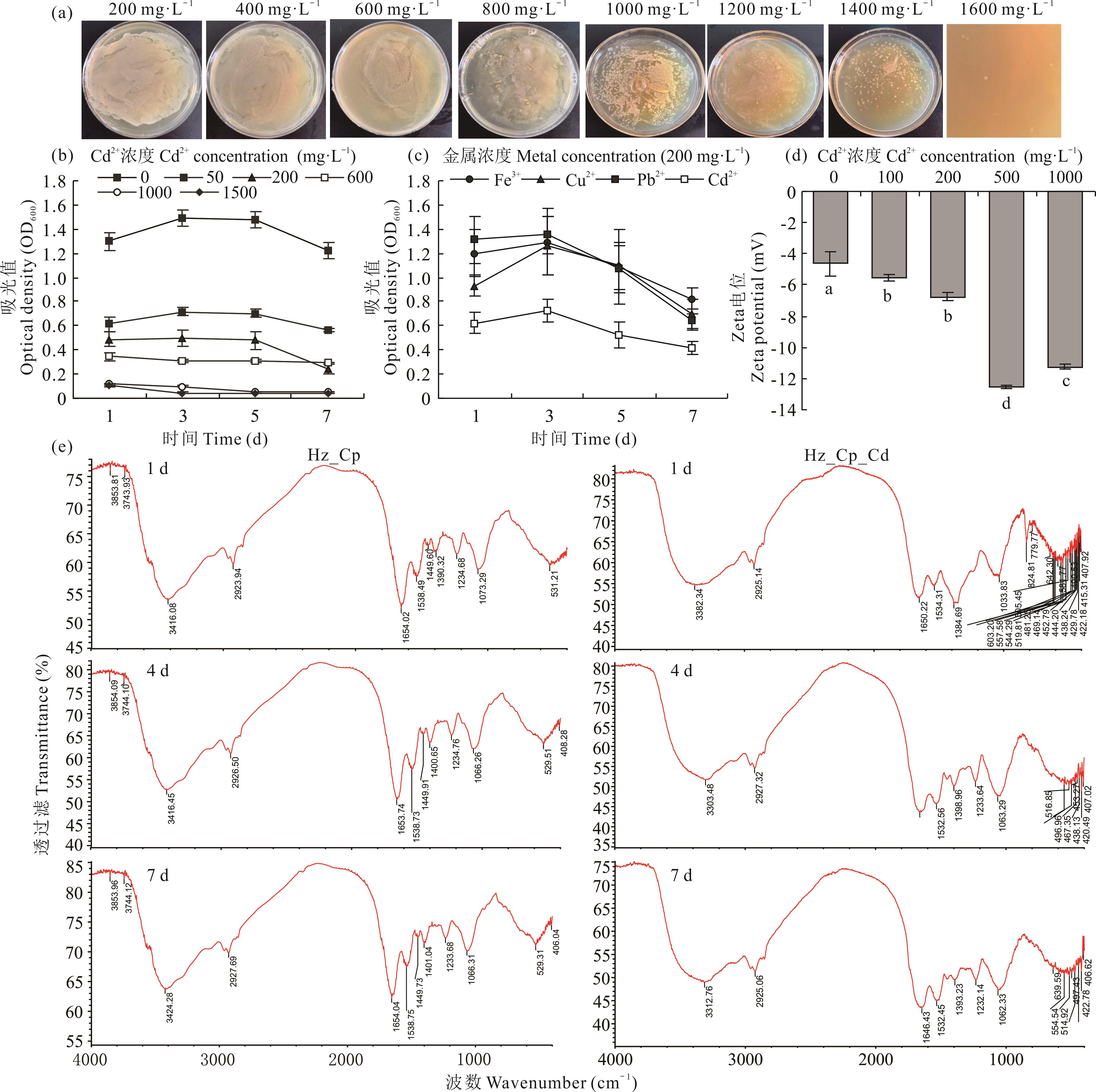
Fig.2 Hz_Cp’s heavy metal resistance and attenuated total reflectance-Fourier transform infrared spectroscopy (ATR-FTIR) analysis

Fig. 3 Effects of different treatments on the growth of P. nil
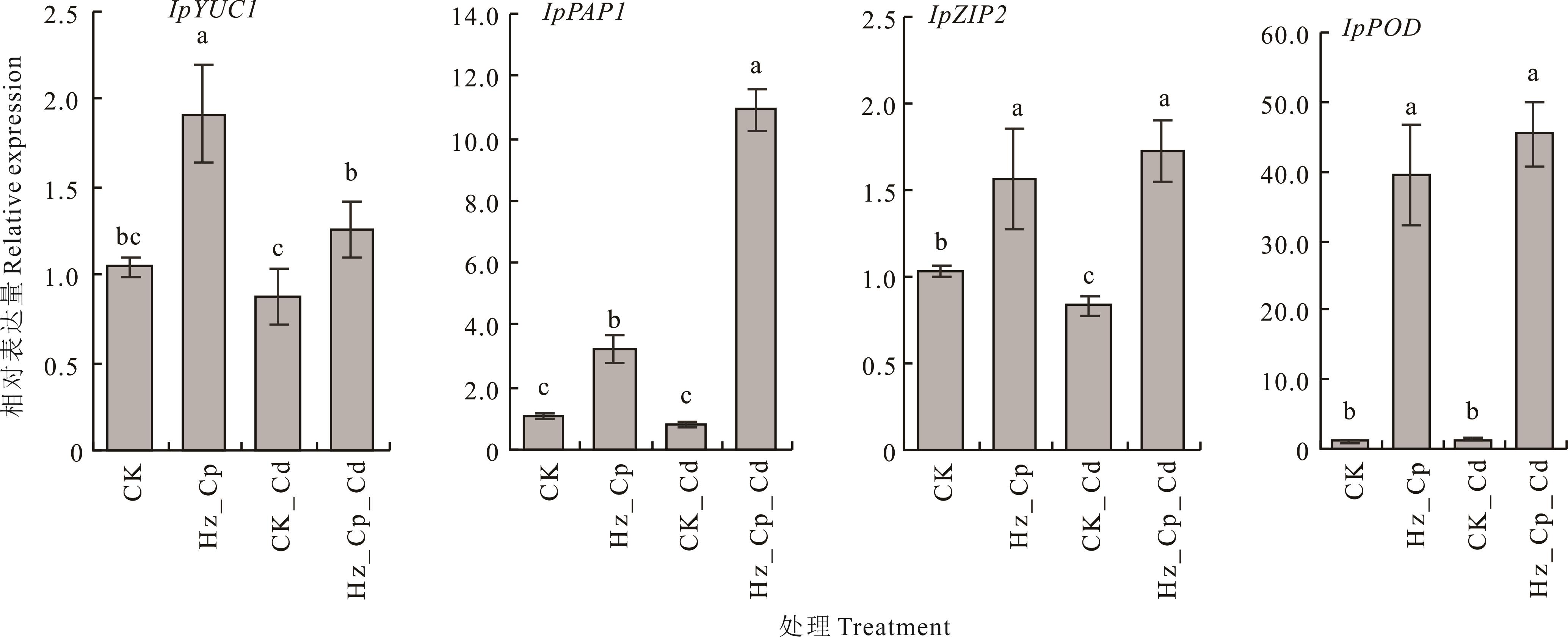
Fig. 4 Analysis of related gene expression in P. nil
| [1] | Zhao J X, Yin P C, Yue R, et al. Research progress of status, source, restoration technique of heavy metals pollution in cropland of China. Journal of Anhui Agricultural Sciences, 2018, 46(4): 19-21, 6. |
| 赵纪新, 尹鹏程, 岳荣, 等. 我国农田土壤重金属污染现状·来源及修复技术研究综述. 安徽农业科学, 2018, 46(4): 19-21, 6. | |
| [2] | Shan X Y, Dou F, Li D W, et al. Cadmium accumulation and translocation in maize cultivars on contaminated soils in southern China. BMC Plant Biology, 2025, 25(1): 589. |
| [3] | Priya A K, Muruganandam M, Ali S S, et al. Clean-up of heavy metals from contaminated soil by phytoremediation: A multidisciplinary and eco-friendly approach. Toxics, 2023, 11(5): 422. |
| [4] | Razzak S A, Faruque M O, Alsheikh Z, et al. A comprehensive review on conventional and biological-driven heavy metals removal from industrial wastewater. Environmental Advances, 2022, 7(10): 100168. |
| [5] | Sharma P, Bano A, Singh S P, et al. Recent advancements in microbial-assisted remediation strategies for toxic contaminants. Cleaner Chemical Engineering, 2022, 2(11): 100020. |
| [6] | Yan M, Qin S J, Cui Y L, et al. Isolation of cadmium-adsorbing bacteria for soil cadmium fixation. Acta Microbiologica Sinica, 2020, 60(11): 2423-2433. |
| 闫敏, 秦诗洁, 崔永亮, 等. 镉吸附细菌的分离及其对土壤镉的固定. 微生物学报, 2020, 60(11): 2423-2433. | |
| [7] | Luo Y T, Pang J L, Li C H, et al. Long-term and high-bioavailable potentially toxic elements (PTEs) strongly influence the microbiota in electroplating sites. Science of the Total Environment, 2022, 814: 151933. |
| [8] | Han F, Shan X Q, Zhang S Z, et al. Enhanced cadmium accumulation in maize roots-the impact of organic acids. Plant and Soil, 2006, 289(6): 355-368. |
| [9] | Xu J, Sun J H, Du L G, et al. Comparative transcriptome analysis of cadmium responses in Solanum nigrum and Solanum torvum. New Phytologist, 2012, 196(1): 110-124. |
| [10] | Jiao H H, Liu Y, Jin D C, et al. Effect of Pharbitis nil (Linn.) Choisy growth on the microbial community and petroleum hydrocarbon degradation in petroleum-contaminated saline-alkali soil. Acta Scientiae Circumstantiae, 2013, 33(12): 3350-3358. |
| 焦海华, 刘颖, 金德才, 等. 牵牛花对石油污染盐碱土壤微生物群落与石油烃降解的影响.环境科学学报, 2013, 33(12): 3350-3358. | |
| [11] | Cao Y Q, Nie Q K, Gao Y, et al. The studies on cadmium and its chelaterelated transporters in plants. Crops, 2018, 34(3): 15-24. |
| 曹玉巧, 聂庆凯, 高云, 等. 植物中镉及其螯合物相关转运蛋白研究进展. 作物杂志, 2018, 34(3): 15-24. | |
| [12] | Yang L, Li H P. Effects of testing conditions on simultaneous determination of 33 elements in soil. Henan Journal of Preventive Medicine, 2018, 29(11): 4. |
| 杨丽, 李和平. 测试条件对土壤中33种元素同时测定的影响. 河南预防医学杂志, 2018, 29(11): 4. | |
| [13] | Bao S D. Soil agro-chemical analysis (3rd ed.). Beijing: China Agriculture Press, 2000. |
| 鲍士旦. 土壤农化分析(3版). 北京: 中国农业出版社, 2000. | |
| [14] | Wu H J, Feng X, Guo H G, et al. Screening of Cd-resistant bacteria and study on their enrichment effects. Acta Agriculturae Jiangxi, 2011, 23(11): 175-177. |
| 吴海江, 冯侠, 郭红光, 等. 耐Cd细菌的筛选及富集作用研究. 江西农业学报, 2011, 23(11): 175-177. | |
| [15] | Xie G H, Cai M Y, Tao G C, et al. Cultivable heterotrophic N2-fixing bacterial diversity in rice fields in the Yangtze River Plain. Biology and Fertility of Soils, 2003, 37(1): 29-38. |
| [16] | Srivastava P, Sahgal M, Sharma K, et al. Optimization and identification of siderophores produced by Pseudomonas monteilii strain MN759447 and its antagonism toward fungi associated with mortality in Dalbergia sissoo plantation forests. Frontiers in Plant Science, 2022, 13: 984522. |
| [17] | Xu J Y, Han Y H, Chen Y, et al. Arsenic transformation and plant growth promotion characteristics of As-resistant endophytic bacteria from As-hyperaccumulator Pteris vittata. Chemosphere, 2016, 144(12): 1233-1240. |
| [18] | Yan D, Zeng X C, Song J E, et al. Determination of 65 soluble elements in water by inductively coupled plasma mass spectrometry. Environmental Chemistry, 2014, 33(8): 1418-1421. |
| 严冬, 曾祥程, 宋娟娥, 等. 电感耦合等离子体质谱测定水体中可溶性65种元素. 环境化学, 2014, 33(8): 1418-1421. | |
| [19] | Porra R J, Thompson W, Kriedemann P. Determination of accurate extinction coefficients and simultaneous equations for assaying chlorophylls a and b extracted with four different solvents: verification of the concentration of chlorophyll standards by atomic absorption spectroscopy. Biochimica et Biophysica Acta (BBA)-Bioenergetics, 1989, 975(3): 384-394. |
| [20] | Zhang Z L, Qu W J. Experimental guidance for plant physiology. Beijing: Higher Education Press, 2003. |
| 张志良, 瞿伟菁. 植物生理学实验指导. 北京: 高等教育出版社, 2003. | |
| [21] | Ors S, Suarez D L. Spinach biomass yield and physiological response to interactive salinity and water stress. Agricultural Water Management, 2017, 190(3): 31-41. |
| [22] | Ors S, Ekinci M, Yildirim E, et al. Interactive effects of salinity and drought stress on photosynthetic characteristics and physiology of tomato (Lycopersicon esculentum L.) seedlings. South African Journal of Botany, 2021, 137: 335-339. |
| [23] | Zhang J B, Wang H L. Composition and characteristics analysis of food additive standard system in China. Chinese Journal of Food Hygiene, 2016, 28(3): 279-286. |
| 张俭波, 王华丽. 食品添加剂食品安全国家标准体系的构成及特点分析. 中国食品卫生杂志, 2016, 28(3): 279-286. | |
| [24] | Hu L J, Wu X Q, Ding X L, et al. Comparative transcriptomic analysis of candidate effectors to explore the infection and survival strategy of Bursaphelenchus xylophilus during different interaction stages with pine trees. BMC Plant Biology, 2021, 21(1): 224. |
| [25] | Ma B, Song W L, Zhang X X, et al. Potential application of novel cadmium-tolerant bacteria in bioremediation of Cd-contaminated soil. Ecotoxicology and Environmental Safety, 2023, 255(15): 114766. |
| [26] | Zhang S D, Chen W B, Lei Y, et al. Effects of temperature and pH on two cadmium resistant fungi. Journal of Liupanshui Normal University, 2023, 35(3): 105-111. |
| 张书东, 陈文波, 雷艳, 等. 温度和pH对两种耐镉真菌生长的影响. 六盘水师范学院学报, 2023, 35(3): 105-111. | |
| [27] | Song L, Zhou J H, Xu X, et al. Inoculation of cadmium-tolerant bacteria to regulate microbial activity and key bacterial population in cadmium-contaminated soils during bioremediation. Ecotoxicology and Environmental Safety, 2024, 271: 115957. |
| [28] | Li P H, Chen J L, Ying S M, et al. Different responses of Sinorhizobium sp. upon Pb and Zn exposure: Mineralization versus complexation. Environmental Pollution, 2024, 343: 123260. |
| [29] | Jeong S W, Kim H K, Yang J E, et al. Removal of Pb (II) by pellicle-like biofilm-producing Methylobacterium hispanicum EM2 strain from aqueous media. Water, 2019, 11(10): 2081. |
| [30] | Zhang J, Song H, Chen Z, et al. Biomineralization mechanism of U(Ⅵ) induced by Bacillus cereus 12-2: The role of functional groups and enzymes. Chemosphere, 2018, 206: 682-692. |
| [31] | Dai S J, Wang Y J, Wei D Z, et al. Biosorption of cadmium from cadmium-containing electroplating wastewater by Bacillus subtilis. Nonferrous Metals Engineering, 2010, 62(3): 156-159. |
| 代淑娟, 王玉娟, 魏德洲, 等. 枯草芽孢杆菌对电镀废水中镉的吸附. 有色金属, 2010, 62(3): 156-159. | |
| [32] | Liu A M, Huang W Y. Research on high accumulating Cd2+ mechanism of a toletant-Cd2+ strain by infrared spectroscopy analysis. Acta Scientiae Circumstantiae, 2005, 25(11): 74-78. |
| 刘爱民, 黄为一. 应用红外方法探讨耐镉菌株高积累Cd2+的机理. 环境科学学报, 2005, 25(11): 74-78. | |
| [33] | Liu S, Liu H M, Chen R, et al. Role of two plant growth-promoting bacteria in remediating cadmium-contaminated soil combined with Miscanthus floridulus (Lab.). Plants, 2021, 10(5): 912. |
| [34] | Mitra S, Pramanik K, Ghosh P K, et al. Characterization of Cd-resistant Klebsiella michiganensis MCC3089 and its potential for rice seedling growth promotion under Cd stress. Microbiological Research, 2018, 210: 12-25. |
| [35] | Halim M A, Rahman M M, Megharaj M, et al. Cadmium immobilization in the rhizosphere and plant cellular detoxification: role of plant-growth-promoting rhizobacteria as a sustainable solution. Journal of Agricultural and Food Chemistry, 2020, 68(47): 13497-13529. |
| [36] | Edbeib M F, Wahab R A, Huyop F. Halophiles: biology, adaptation, and their role in decontamination of hypersaline environments. World Journal of Microbiology & Biotechnology, 2016, 32(8): 135. |
| [1] | Xu-qin BAI, Chun-yun JIA, Wen-shuan LI, Ya-min LI, Chang-feng LIU, Xiu-yun HAN, Mei-han CHU, Zong-qiang GONG, Xiao-jun LI. An investigation of foliar spraying of selenium fertilizer for selenium enrichment and cadmium reduction in alfalfa [J]. Acta Prataculturae Sinica, 2024, 33(1): 50-60. |
| Viewed | ||||||
|
Full text |
|
|||||
|
Abstract |
|
|||||
