
ISSN 1004-5759 CN 62-1105/S
Acta Prataculturae Sinica ›› 2026, Vol. 35 ›› Issue (4): 147-157.DOI: 10.11686/cyxb2025199
Yu-lan HAN1,2( ), Yi-xin LI1,2, Yi-shan CHENG1,2, Ming CAI3, Lan MU1,2()
Received:2025-05-19
Revised:2025-07-04
Online:2026-04-20
Published:2026-02-07
Contact:
Lan MU
Yu-lan HAN, Yi-xin LI, Yi-shan CHENG, Ming CAI, Lan MU. Analysis of leaf color pattern composition and cell structure of Miscanthus sinensis ‘Zebrinus’[J]. Acta Prataculturae Sinica, 2026, 35(4): 147-157.
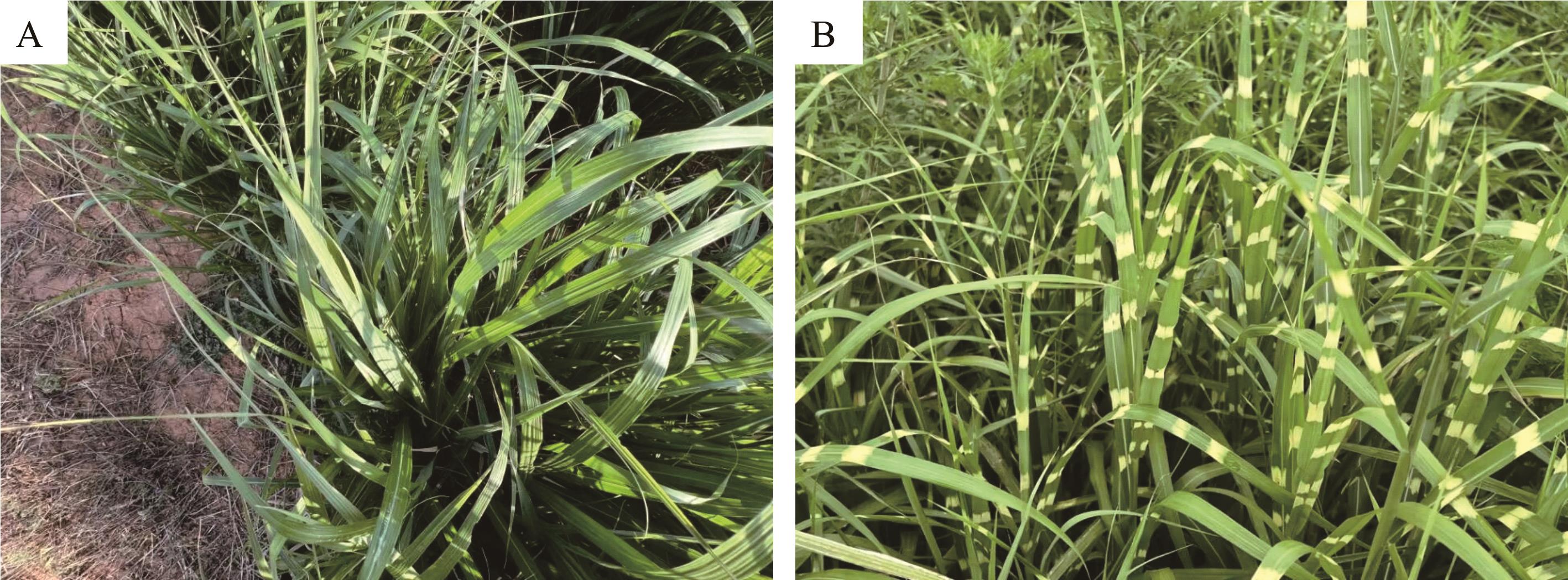
Fig. 1 Appearance and morphology of M. sinensis ‘Zebrinus’
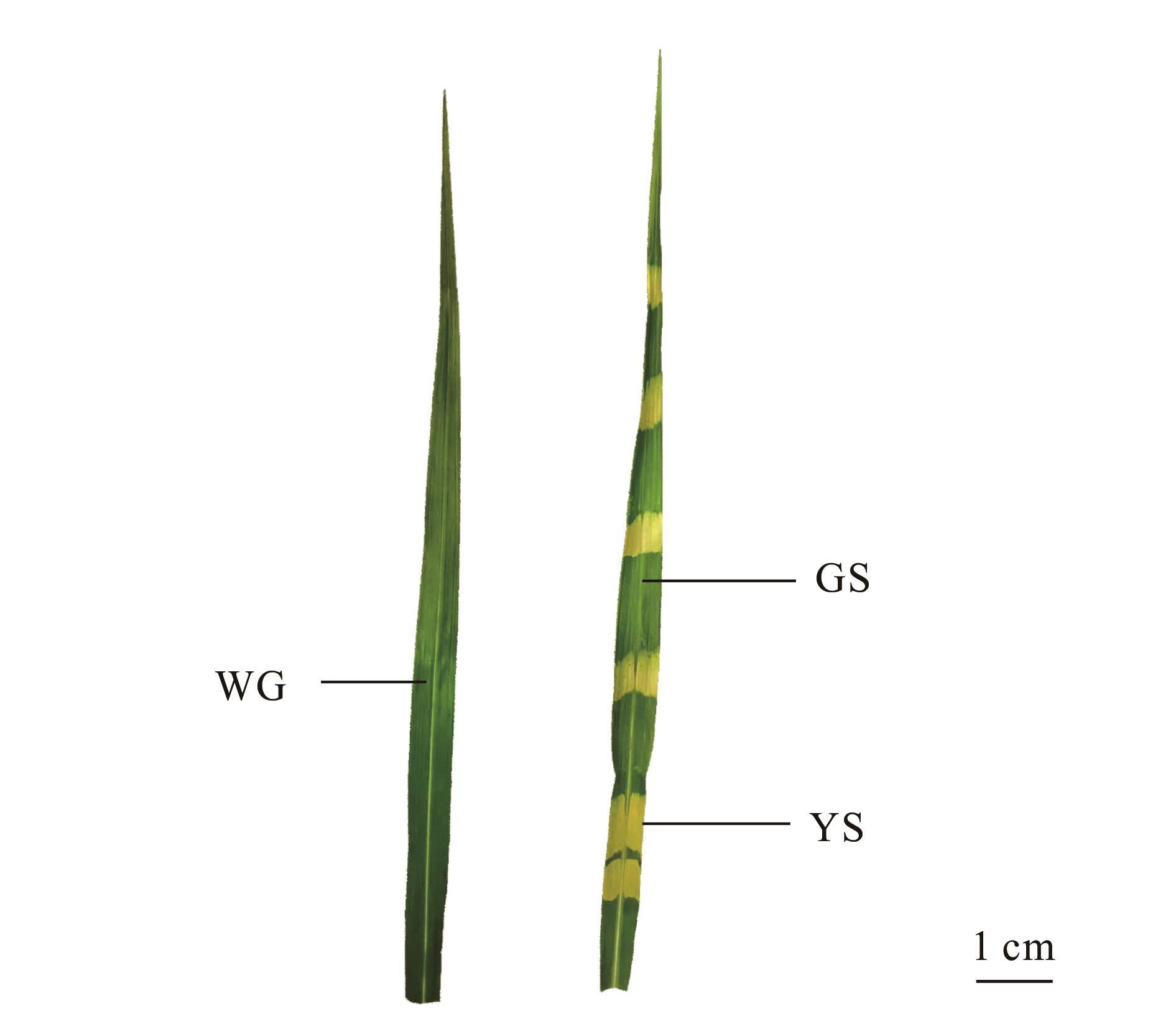
Fig.2 M. sinensis ‘Zebrinus’ leaves
| 表型Phenotype | L* | a* | b* | c* |
|---|---|---|---|---|
| WG | 35.93±0.21Cc | -6.12±1.01Ab | 8.97±0.90Cc | 11.11±0.34Cc |
| GS | 44.41±0.63Bb | -5.88±0.59Ab | 17.91±0.33Bb | 18.57±0.48Bb |
| YS | 59.99±0.68Aa | -3.41±0.45Aa | 23.08±1.26Aa | 23.34±1.27Aa |
Table 1 Leaf color parameters values of different phenotypes of M. sinensis ‘Zebrinus’
| 表型Phenotype | L* | a* | b* | c* |
|---|---|---|---|---|
| WG | 35.93±0.21Cc | -6.12±1.01Ab | 8.97±0.90Cc | 11.11±0.34Cc |
| GS | 44.41±0.63Bb | -5.88±0.59Ab | 17.91±0.33Bb | 18.57±0.48Bb |
| YS | 59.99±0.68Aa | -3.41±0.45Aa | 23.08±1.26Aa | 23.34±1.27Aa |
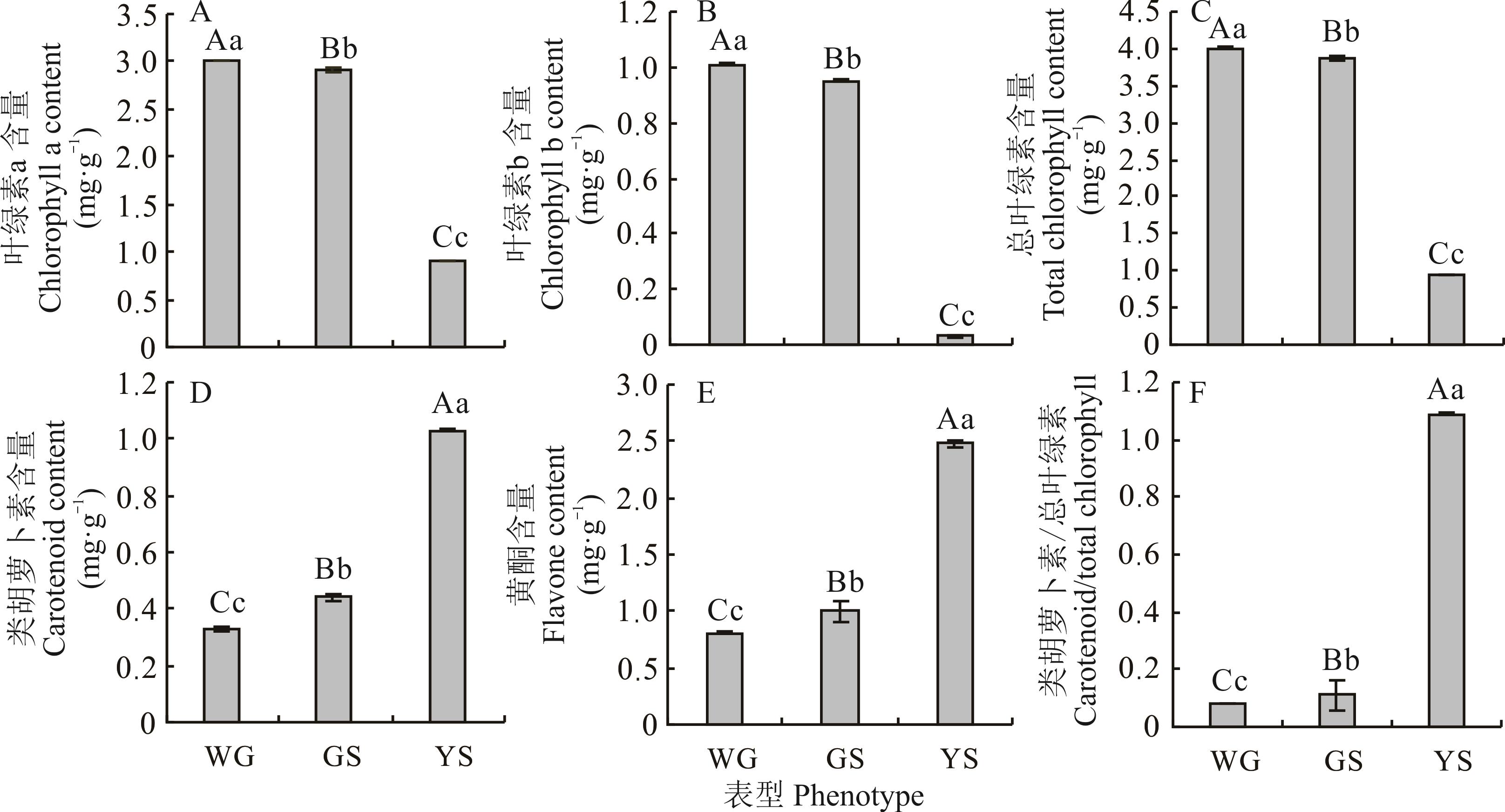
Fig.3 Analysis of pigment content in leaves of different phenotypes of M. sinensis ‘Zebrinus’
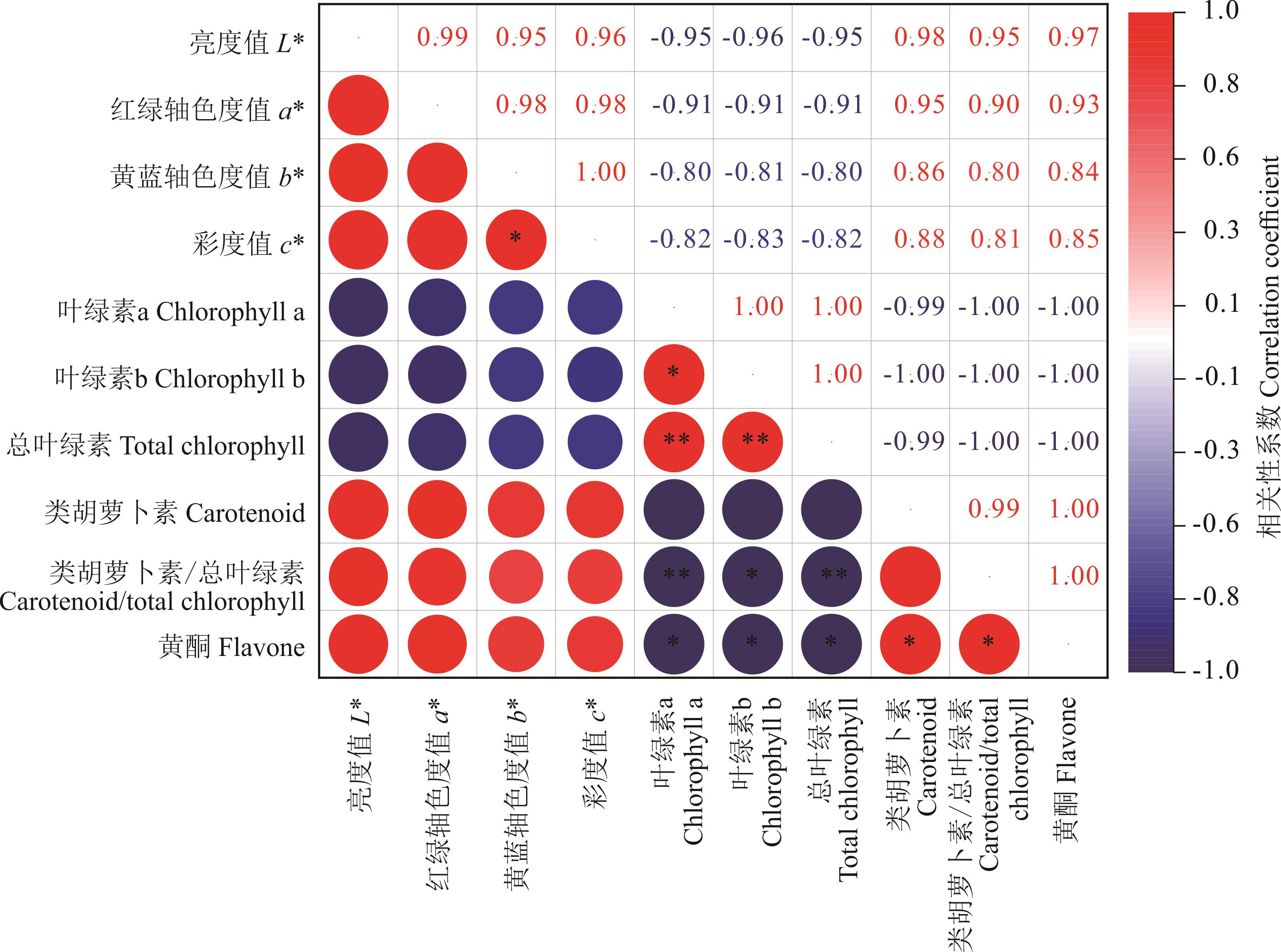
Fig.4 Correlation analysis between leaf color parameters and pigment composition of M. sinensis ‘Zebrinus’

Fig.5 Comparison of tissue structures of leaves with different phenotypes of M. sinensis ‘Zebrinus’
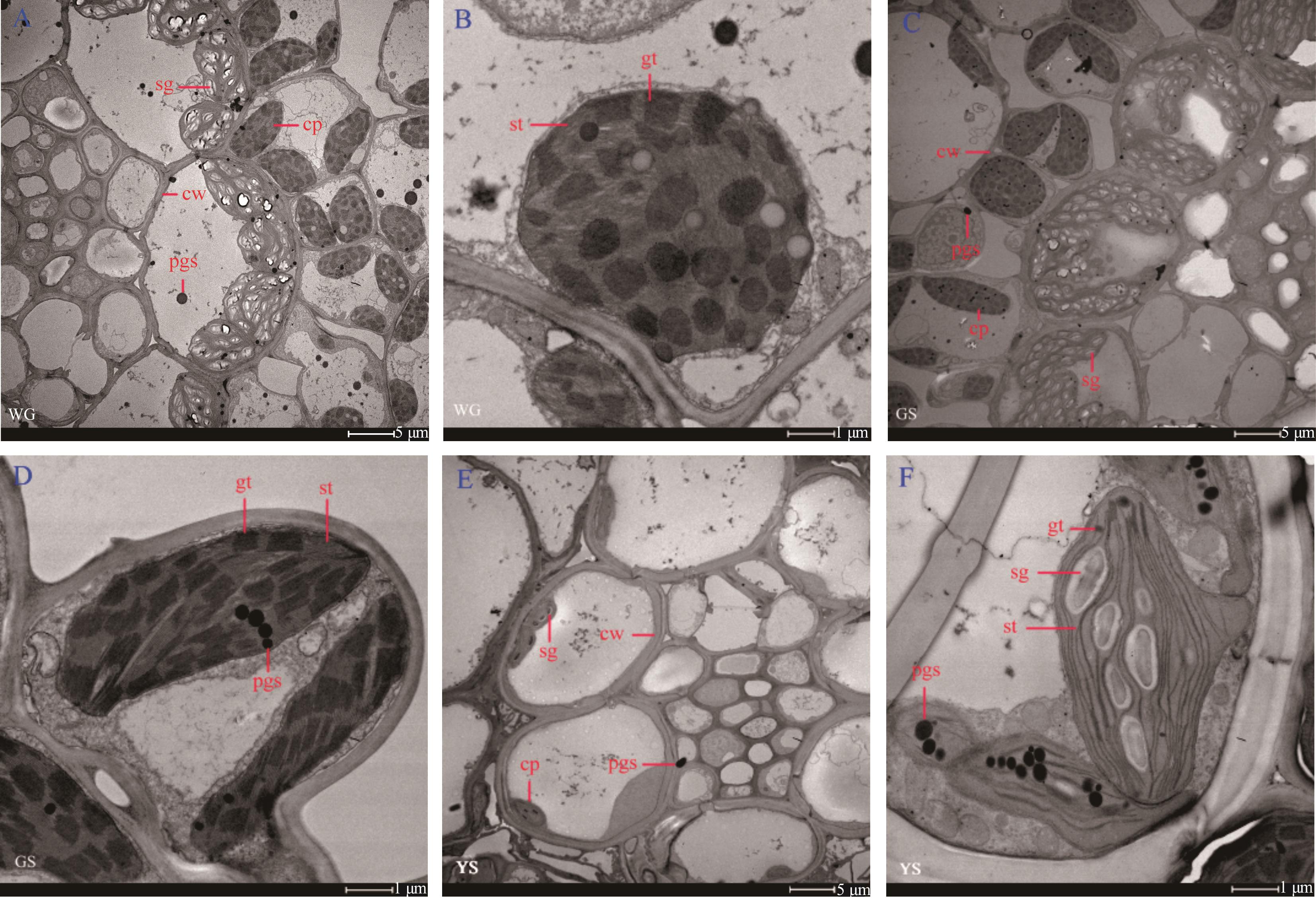
Fig.6 Ultrastructure of leaves with different phenotypes of M. sinensis ‘Zebrinus’
| [1] | Jiang X R, Peng J G, Guo L, et al. Relationship between winter leaf reddening and carotenoids, reactive oxygen species in Buxus microphylla L. Journal of Beijing Forestry University, 2015, 37(6): 93-99. |
| 姜雪茹, 彭金根, 郭翎, 等. 小叶黄杨冬季叶片呈色与其类胡萝卜素及活性氧关系研究. 北京林业大学学报, 2015, 37(6): 93-99. | |
| [2] | Xue F T, Liu X L, Liu Y H, et al. Photosynthetic and chlorophyll fluorescence characteristics of gold-coloured mutant leaves of Ginkgo biloba. Journal of West China Forestry Science, 2023, 52(4): 129-136. |
| 薛芳婷, 刘新亮, 刘玉华, 等. 芽变黄叶银杏光合和叶绿素荧光特性. 西部林业科学, 2023, 52(4): 129-136. | |
| [3] | Zhang L, Wang G P, Ding Y P, et al. Hybrid sowing and leaf color differentiation of golden-leaf Ginkgo biloba. Journal of Northeast Forestry University, 2021, 49(11): 8-12, 22. |
| 章雷, 王改萍, 丁延朋, 等. 金叶银杏杂交播种及其叶色分化. 东北林业大学学报, 2021, 49(11): 8-12, 22. | |
| [4] | Lev-Yadun S, Niemelä P. Leaf pseudo-variegation: definition, common types, and probably the defended models for real defensive leaf variegation mimicking them. Flora, 2017, 226: 82-88. |
| [5] | Tian Y C, Zhu Y, Cao W X. Monitoring leaf carbon and nitrogen status in wheat with color characteristics. Acta Phytoecologica Sinica, 2005, 51(3): 357-360. |
| 田永超, 朱艳, 曹卫星. 利用叶色特征监测小麦叶片的碳氮状况. 植物生态学报, 2005, 51(3): 357-360. | |
| [6] | Chen F, Tang X G, Dong Q, et al. Study on the seasonal change rules of pigment content and leaf color parameters of Fraxinus. Journal of Agricultural University of Hebei, 2012, 35(5): 20-24. |
| 陈芳, 唐秀光, 董倩, 等. 金叶白蜡色素含量与叶色参数的年变化规律研究. 河北农业大学学报, 2012, 35(5): 20-24. | |
| [7] | Ran H R, Zhang Y, Chen J C, et al. Research progress of leaf variegation in ornamental plants. Journal of Plant Genetic Resources, 2024, 25(5): 704-717. |
| 冉浩然, 张毓, 陈简村, 等. 观赏植物叶斑的研究进展. 植物遗传资源学报, 2024, 25(5): 704-717. | |
| [8] | Zhong S F, Yang H, Chen C, et al. Phenotypic characterization of the wheat temperature-sensitive leaf color mutant and physical mapping of mutant gene by reduced-representation sequencing. Plant Science, 2023, 330: 111657. |
| [9] | Liu Y L, Zhang J Z, Li X D, et al. Effects of nitrogen fertilizer rate on leaf color of chimera Hosta ‘Gold standard’. Acta Prataculturae Sinica, 2011, 20(2): 93-100. |
| 刘岳路, 张金政, 李晓东, 等. 氮肥施用量对嵌合体‘金旗’玉簪叶色的影响. 草业学报, 2011, 20(2): 93-100. | |
| [10] | Chen B, Li H Y, Liu X W, et al. Effects of different light intensities on morphogenesis and ultrastructure of Gibasis pellucida leaf. Acta Prataculturae Sinica, 2019, 28(7): 175-185. |
| 陈斌, 李洪瑶, 刘筱玮, 等. 不同光照强度对新娘草叶片形态建成及超微结构的影响. 草业学报, 2019, 28(7): 175-185. | |
| [11] | Xu F, Fu C B, Yang Y F. Water affects morphogenesis of growing aquatic plant leaves. Physical review letters, 2020, 124(3): 038003. |
| [12] | Ma Y Y, Shi J C, Wang D J, et al. A point mutation in the gene encoding magnesium chelatase Ⅰ subunit influences strawberry leaf color and metabolism. Plant Physiology, 2023, 192(4): 2737-2755. |
| [13] | Wang X C, Zhang L, Yue X H, et al. A preliminary study of relationship of leaf pigments content and structure with leaf color of Sasa auricoma. World Bamboo and Rattan, 2012, 10(6): 5-9. |
| 王啸晨, 张磊, 岳祥华, 等. 菲黄竹叶片色素含量、结构与颜色之间关系初探. 世界竹藤通讯, 2012, 10(6): 5-9. | |
| [14] | Cheng M Z, Meng F Y, Mo F L, et al. Insights into the molecular basis of a yellow leaf color mutant (ym) in tomato (Solanum lycopersicum). Scientia Horticulturae, 2022, 293: 110743. |
| [15] | Wang F F, Chen N Z, Shen S H. iTRAQ-Based quantitative proteomics analysis reveals the mechanism of golden-yellow leaf mutant in hybrid paper mulberry. International Journal of Molecular Sciences, 2021, 23(1): 127. |
| [16] | Zhang Z M. Morphological and physiological characteristics of Lilium davidii var. unicolor yellowing plant. Xining: Qinghai University, 2023. |
| 张芷蔓. 兰州百合黄化植株形态及生理特性研究. 西宁: 青海大学, 2023. | |
| [17] | Wang Z X, Yu Y F, Chen L, et al. Advances in leaf pigment composition, structure and photosynthetic characteristics of colored-leaf plants. Plant Physiology Journal, 2016, 52(1): 1-7. |
| 王振兴, 于云飞, 陈丽, 等. 彩叶植物叶片色素组成、结构以及光合特性的研究进展. 植物生理学报, 2016, 52(1): 1-7. | |
| [18] | Li Y Y, He D, Chen J C, et al. Identification and analysis of the type of leaf variegation of Primulina pungentisepala. Acta Horticulturae Sinica, 2022, 49(11): 2388-2394. |
| 李悦雅, 何栋, 陈简村, 等. 尖萼报春苣苔叶斑的观察与分析. 园艺学报, 2022, 49(11): 2388-2394. | |
| [19] | Li J, Wen J, Wu K, et al. Integrating physiology, cytology, and transcriptome to reveal the leaf variegation mechanism in Phalaenopsis ‘Chia E Yenlin Variegata’ leaves. Biomolecules, 2024, 14(8): 963. |
| [20] | Chalenko E, Lysenko V, Kosolapov A, et al. Light green leaf sectors of variegated Dracaena fragrans plants show similar rates of oxygenic photosynthesis tо that of normal, dark green leaf sectors. Plant Physiology and Biochemistry, 2024, 215: 109040. |
| [21] | Zhang Q, Zhang M, Ding Y, et al. Composition of photosynthetic pigments and photosynthetic characteristics in green and yellow sectors of the variegated Aucuba japonica ‘variegata’ leaves. Flora, 2018, 240: 25-33. |
| [22] | Zhang Q, Huang J, Zhou P, et al. Cytological and transcriptomic analysis provide insights into the formation of variegated leaves in Ilex×altaclerensis ‘belgica aurea’. Plants, 2021, 10(3): 552. |
| [23] | Huang J F. Identification and application of landscape plants. Nanjing: Southeast University Press, 2015: 249. |
| 黄金凤. 园林植物识别与应用. 南京: 东南大学出版社, 2015: 249. | |
| [24] | Zhang Y M, Bai X M, Tian Y F, et al. Description of anatomical traits of leaves and adaptability of eight ornamentai grasses. Acta Agrestia Sinica, 2019, 27(5): 1370-1376. |
| 张咏梅, 白小明, 田彦锋, 等. 8种禾本科观赏草叶片解剖学特征的描述及其适应性分析. 草地学报, 2019, 27(5): 1370-1376. | |
| [25] | Li X L, Liu K Q, Yang Z M, et al. Effect of drought stress on withered leaf rate and physiological indices of four ornamental grasses. Acta Agrestia Sinica, 2012, 20(1): 76-82. |
| 李秀玲, 刘开强, 杨志民, 等. 干旱胁迫对4种观赏草枯叶率及生理指标的影响. 草地学报, 2012, 20(1): 76-82. | |
| [26] | Xu Z M, Ding G C. Effects of copper and zinc compound stress on physiological, enrichment and transport characteristics of Miscanthus sinensis ‘Zebrinus’. Journal of Northeast Forestry University, 2023, 51(11): 109-114, 124. |
| 许志敏, 丁国昌. 铜锌复合胁迫对斑叶芒生理及富集转运特征的影响. 东北林业大学学报, 2023, 51(11): 109-114, 124. | |
| [27] | Li X Q, Yin Z, Yang J C, et al. Study on adaptability of twenty-three ornamental grasses in Nanjing. Acta Agriculturae Jiangxi, 2022, 34(4): 192-198. |
| 李晓芹, 银征, 杨金财, 等. 23种观赏草在南京地区的适应性分析. 江西农业学报, 2022, 34(4): 192-198. | |
| [28] | Cui Q, Wu Y, Li D Z, et al. Changes of coloration and pigment compositions during leaf development of Osmanthus fragrans colour group cultivar. Journal of Nanjing Forestry University (Natural Sciences Edition), 2023, 47(2): 79-86. |
| 崔祺, 吴昀, 李东泽, 等. 彩叶桂叶片发育过程中叶色表型与色素成分变化. 南京林业大学学报(自然科学版), 2023, 47(2): 79-86. | |
| [29] | He W, Wang L, Huang J F, et al. Determination method of total falvonoids in Apocynum venetum tea. The Food Industry, 2021, 42(8): 180-184. |
| 何伟, 王莉, 黄景凤, 等. 罗布麻茶中总黄酮测定方法. 食品工业, 2021, 42(8): 180-184. | |
| [30] | Yuan J, Huang Y L. Determination of flavonoid content in the leaves of Nadina domestica. Journal of Kaili University, 2023, 41(3): 22-28. |
| 苑静, 黄亚琳. 南天竹叶中黄酮含量的测定. 凯里学院学报, 2023, 41(3): 22-28. | |
| [31] | Kang Y, Pan J J, Chen J H, et al. Contents of pigments and anatomical structure of leaves in Acer negundo ‘Aurea’. Bulletin of Botanical Research, 2023, 43(4): 591-600. |
| 康莹, 潘晶晶, 陈建华, 等. 金叶复叶槭叶片色素与解剖结构. 植物研究, 2023, 43(4): 591-600. | |
| [32] | Yuan Y H, Fan J L, Yang W Z, et al. Photosynthetic characteristics studies of three maizeyellow leaf mutants. Current Biotechnology, 2022, 12(1): 75-82. |
| 袁钰涵, 樊佳丽, 杨文竹, 等. 3个玉米黄叶突变体的光合特性研究. 生物技术进展, 2022, 12(1): 75-82. | |
| [33] | Sun W W, Meng X M, Xu X Y, et al. Contents of pigments and anatomical structure in the leaves of Forsythia koreana ‘Sun Gold’. Bulletin of Botanical Research, 2020, 40(3): 321-329. |
| 孙旺旺, 孟宪敏, 徐秀源, 等. 金叶连翘叶片色素含量和解剖结构研究. 植物研究, 2020, 40(3): 321-329. | |
| [34] | Chen C, Li Y X, Zhu G C. Study on physio-biochemcal traits and ultrastructure in ‘Golden Wax’ leaves with different colors. Journal of Qingdao Agricultural University (Natural Science), 2024, 41(1): 9-16, 38. |
| 陈聪, 李逸心, 朱桂才. ‘黄金水蜡’不同叶色叶片的生理生化与超微结构研究. 青岛农业大学学报(自然科学版), 2024, 41(1): 9-16, 38. | |
| [35] | Wang Y F, Jiang Z D, Zhang A, et al. Changes of photosynthetic pigment content and chlorophyll fluorescence parameters during leaf etiolation of Ginkgo biloba L. Southwest China Journal of Agricultural Sciences, 2020, 33(10): 2220-2224. |
| 王艺斐, 姜泽东, 张敖, 等. 银杏叶片黄化过程中光合色素含量和叶绿素荧光参数的变化特征研究. 西南农业学报, 2020, 33(10): 2220-2224. | |
| [36] | Hu Y M, Xu B X, Jing Y N, et al. The coloring and physiological index during the regreening of Ulmus pumila ‘Jinye’. Journal of Hebei Normal University of Science & Technology, 2024, 38(3): 16-21. |
| 胡亚梅, 徐蓓萱, 荆亚楠, 等. 中华金叶榆复绿过程中叶片呈色变化及其相关生理指标分析. 河北科技师范学院学报, 2024, 38(3): 16-21. | |
| [37] | Pan J Q, Tong X R, Guo B L. Progress of effects of light on plant flavonoids. China Journal of Chinese Materia Medica, 2016, 41(21): 3897-3903. |
| 潘俊倩, 佟曦然, 郭宝林. 光对植物黄酮类化合物的影响研究进展. 中国中药杂志, 2016, 41(21): 3897-3903. | |
| [38] | Wang Z X, Cao J R, Qin H Y, et al. Common effect of pigment content and leaf structure on leaf color in Actinidia kolomikta. Plant Physiology Journal, 2016, 52(12): 1921-1926. |
| 王振兴, 曹建冉, 秦红艳, 等. 狗枣猕猴桃彩叶色素含量和结构共同影响叶色. 植物生理学报, 2016, 52(12): 1921-1926. | |
| [39] | Yang W, Luo X Y, Wang W Q, et al. The role of plant cell wall in resistance to salt stress. Plant Physiology Journal, 2022, 58(3): 501-510. |
| 杨蔚, 罗小燕, 王文强, 等. 细胞壁在植物抗盐胁迫中的作用. 植物生理学报, 2022, 58(3): 501-510. | |
| [40] | Zhang X N, Xiong L G, Wen B B, et al. Advances in leaf color variation of tea plant (Camellia sinensis). Plant Physiology Journal, 2020, 56(4): 643-653. |
| 张向娜, 熊立瑰, 温贝贝, 等. 茶树叶色变异研究进展. 植物生理学报, 2020, 56(4): 643-653. | |
| [41] | Mickky B M, Abbas M A, El-Shhaby O A. Alterations in photosynthetic capacity and morpho-histological features of leaf in alfalfa plants subjected to water deficit-stress in different soil types. Indian Journal of Plant Physiology, 2018, 23(3): 426-443. |
| [42] | Das R. Interactive effect of elevated CO2 and drought stress on leaf anatomy in brassica species. International Journal of Environment and Climate Change, 2021, 11(2): 97-108. |
| [43] | Liu Y, Ye J L, Zhu M, et al. Multi-omics analyses reveal the importance of chromoplast plastoglobules in carotenoid accumulation in citrus fruit. The Plant Journal, 2024, 117(3): 924-943. |
| [44] | Du L F. Study on physiological characteristics and genetic mapping of a spotted-leaf wheat mutant LF2010. Yangling: Northwest A & F University, 2014. |
| 杜丽芬. 小麦斑点叶突变体LF2010的生理与遗传定位研究. 杨凌: 西北农林科技大学, 2014. | |
| [45] | Lin T Z, Sun L T, Gong H B, et al. Identification and gene mapping of a premature leaf senescence 5 mutant with starch accumulation in rice leaves. Journal of Nanjing Agricultural University, 2020, 43(3): 414-422. |
| 林添资, 孙立亭, 龚红兵, 等. 水稻叶片淀粉累积早衰突变体pls5的鉴定及基因定位. 南京农业大学学报, 2020, 43(3): 414-422. | |
| [46] | Hu W S, Lu Z F, Meng F J, et al. The reduction in leaf area precedes that in photosynthesis under potassium deficiency: the importance of leaf anatomy. New Phytologist, 2020, 227(6): 1749-1763. |
| [1] | FENG Peng, SUN Li, SHEN Xiao-hui, LI Ru-lai, LI Zeng-jie, LI Zhi-min, ZHENG Hai-yan, JIANG Cheng, YNAG He, LIU Jun-gang, GUO Wei, ZHANG Ying-jun. Effect of different mutagenesis methods on microstructure and ultrastructure of alfalfa [J]. Acta Prataculturae Sinica, 2018, 27(6): 72-80. |
| [2] | HAN Bao-he,ZHU Hong. Effects of cadmium stress on accumulation ability, microstructure and physiological property in leaves of Trifolium repens [J]. Acta Prataculturae Sinica, 2014, 23(6): 167-175. |
| [3] |
LI Ya-bo, AN Li-zhe, ZHANG Feng .
Changes of pigment contents and photosynthetic electron transport activities of thylakoid membranes of Polygonum viviparum grown at different altitudes [J]. Acta Prataculturae Sinica, 2011, 20(1): 75-81. |
| Viewed | ||||||
|
Full text |
|
|||||
|
Abstract |
|
|||||
