
ISSN 1004-5759 CN 62-1105/S
Acta Prataculturae Sinica ›› 2025, Vol. 34 ›› Issue (4): 164-174.DOI: 10.11686/cyxb2024241
Xin-zhu CHEN1( ), Ping-dong LIN1(), Wen YUE1, Ya-ni YANG1,2, Shui-ling QIU1,2, Xiang-li ZHENG3
Received:2024-04-30
Revised:2024-07-29
Online:2025-04-20
Published:2025-02-19
Xin-zhu CHEN, Ping-dong LIN, Wen YUE, Ya-ni YANG, Shui-ling QIU, Xiang-li ZHENG. Effects of various additives on the quality and microbial diversity of broad bean straw silage[J]. Acta Prataculturae Sinica, 2025, 34(4): 164-174.
组别 Group | 色泽Color | 气味Smell | 结构Texture | 综合评价Comprehensive evaluation | ||||
|---|---|---|---|---|---|---|---|---|
描述 Description | 得分 Score | 描述 Description | 得分 Score | 描述 Description | 得分 Score | 总分 Total score | 等级 Grade | |
| CK | 黄绿色Yellow-green | 1 | 酸味稍刺鼻SHAS | 10 | 叶子结构保持较差PMLS | 2 | 13 | 2 |
| T1 | 黄绿色Yellow-green | 1 | 酸香味CAS | 14 | 茎叶结构保持良好GSLS | 4 | 19 | 1 |
| T2 | 绿色Green | 2 | 酸香味CAS | 14 | 茎叶结构保持良好GSLS | 4 | 20 | 1 |
| T3 | 绿色Green | 2 | 酸香味CAS | 14 | 茎叶结构保持良好GSLS | 4 | 20 | 1 |
| T4 | 绿色Green | 2 | 酸香味CAS | 14 | 茎叶结构保持良好GSLS | 4 | 20 | 1 |
| T5 | 绿色Green | 2 | 酸香味CAS | 14 | 茎叶结构保持良好GSLS | 4 | 20 | 1 |
| T6 | 黄绿色Yellow-green | 1 | 酸香味CAS | 14 | 茎叶结构保持良好GSLS | 4 | 19 | 1 |
| T7 | 绿色Green | 2 | 酸香味CAS | 14 | 叶子结构保持较差PMLS | 2 | 18 | 1 |
Table 1 Sensory quality evaluation of silage in various groups
组别 Group | 色泽Color | 气味Smell | 结构Texture | 综合评价Comprehensive evaluation | ||||
|---|---|---|---|---|---|---|---|---|
描述 Description | 得分 Score | 描述 Description | 得分 Score | 描述 Description | 得分 Score | 总分 Total score | 等级 Grade | |
| CK | 黄绿色Yellow-green | 1 | 酸味稍刺鼻SHAS | 10 | 叶子结构保持较差PMLS | 2 | 13 | 2 |
| T1 | 黄绿色Yellow-green | 1 | 酸香味CAS | 14 | 茎叶结构保持良好GSLS | 4 | 19 | 1 |
| T2 | 绿色Green | 2 | 酸香味CAS | 14 | 茎叶结构保持良好GSLS | 4 | 20 | 1 |
| T3 | 绿色Green | 2 | 酸香味CAS | 14 | 茎叶结构保持良好GSLS | 4 | 20 | 1 |
| T4 | 绿色Green | 2 | 酸香味CAS | 14 | 茎叶结构保持良好GSLS | 4 | 20 | 1 |
| T5 | 绿色Green | 2 | 酸香味CAS | 14 | 茎叶结构保持良好GSLS | 4 | 20 | 1 |
| T6 | 黄绿色Yellow-green | 1 | 酸香味CAS | 14 | 茎叶结构保持良好GSLS | 4 | 19 | 1 |
| T7 | 绿色Green | 2 | 酸香味CAS | 14 | 叶子结构保持较差PMLS | 2 | 18 | 1 |
组别 Group | 干物质 DM (%FM) | 粗蛋白 CP (%DM) | 中性洗涤纤维 NDF (%DM) | 酸性洗涤纤维 ADF (%DM) | 半纤维素 HC (%DM) | 可溶性碳水化合物 WSC (g·kg-1DM) |
|---|---|---|---|---|---|---|
| CK | 29.85±0.79a | 9.70±0.15a | 36.23±1.48a | 12.83±0.81a | 23.40±0.85a | 6.49±0.28cd |
| T1 | 30.66±0.53a | 9.08±0.35abc | 34.42±0.84a | 12.44±0.33a | 21.98±0.68a | 6.46±0.19cd |
| T2 | 29.30±5.48a | 9.53±0.32ab | 35.64±0.94a | 12.67±0.20a | 22.97±0.96a | 7.13±0.38bc |
| T3 | 31.80±1.16a | 9.34±0.42abc | 34.55±1.09a | 9.74±2.99b | 24.82±4.07a | 7.99±0.46a |
| T4 | 30.71±0.35a | 9.55±0.18ab | 34.70±2.92a | 11.78±1.34ab | 22.92±1.70a | 7.26±0.69b |
| T5 | 27.90±0.59a | 9.03±0.45bc | 35.17±1.29a | 12.81±0.46a | 22.37±0.82a | 6.31±0.23d |
| T6 | 30.31±0.98a | 8.75±0.04c | 35.84±0.69a | 13.05±0.10a | 22.79±0.63a | 7.39±0.22ab |
| T7 | 29.50±0.55a | 8.81±0.47c | 36.60±0.69a | 13.17±0.24a | 23.42±0.54a | 6.26±0.42d |
Table 2 Nutrient composition of silage in various groups
组别 Group | 干物质 DM (%FM) | 粗蛋白 CP (%DM) | 中性洗涤纤维 NDF (%DM) | 酸性洗涤纤维 ADF (%DM) | 半纤维素 HC (%DM) | 可溶性碳水化合物 WSC (g·kg-1DM) |
|---|---|---|---|---|---|---|
| CK | 29.85±0.79a | 9.70±0.15a | 36.23±1.48a | 12.83±0.81a | 23.40±0.85a | 6.49±0.28cd |
| T1 | 30.66±0.53a | 9.08±0.35abc | 34.42±0.84a | 12.44±0.33a | 21.98±0.68a | 6.46±0.19cd |
| T2 | 29.30±5.48a | 9.53±0.32ab | 35.64±0.94a | 12.67±0.20a | 22.97±0.96a | 7.13±0.38bc |
| T3 | 31.80±1.16a | 9.34±0.42abc | 34.55±1.09a | 9.74±2.99b | 24.82±4.07a | 7.99±0.46a |
| T4 | 30.71±0.35a | 9.55±0.18ab | 34.70±2.92a | 11.78±1.34ab | 22.92±1.70a | 7.26±0.69b |
| T5 | 27.90±0.59a | 9.03±0.45bc | 35.17±1.29a | 12.81±0.46a | 22.37±0.82a | 6.31±0.23d |
| T6 | 30.31±0.98a | 8.75±0.04c | 35.84±0.69a | 13.05±0.10a | 22.79±0.63a | 7.39±0.22ab |
| T7 | 29.50±0.55a | 8.81±0.47c | 36.60±0.69a | 13.17±0.24a | 23.42±0.54a | 6.26±0.42d |
| 组别Group | pH | 乳酸LA (g·kg-1DM) | 乙酸AA (g·kg-1DM) | 丙酸PA (%DM) | 丁酸BA (%DM) | 氨态氮NH3-N (g·kg-1DM) |
|---|---|---|---|---|---|---|
| CK | 4.57±0.06a | 34.65±6.46d | 0.17±0.05e | 0.31±0.11a | 0.12±0.00b | 0.17±0.01a |
| T1 | 4.57±0.06a | 37.99±6.26cd | 0.41±0.09a | 0.31±0.08a | 0.16±0.06ab | 0.15±0.01a |
| T2 | 4.43±0.06bc | 52.15±0.54ab | 0.18±0.03de | 0.34±0.07a | 0.16±0.06ab | 0.15±0.03a |
| T3 | 4.37±0.06c | 55.71±5.89a | 0.25±0.03cd | 0.37±0.04a | 0.09±0.02b | 0.13±0.01ab |
| T4 | 4.40±0.00c | 45.46±5.86bc | 0.20±0.03cde | 0.32±0.05a | 0.09±0.01b | 0.08±0.03b |
| T5 | 4.50±0.00ab | 48.26±3.69ab | 0.34±0.02ab | 0.33±0.10a | 0.18±0.04ab | 0.15±0.03a |
| T6 | 4.53±0.06a | 49.61±0.62ab | 0.25±0.03cd | 0.41±0.01a | 0.18±0.04ab | 0.16±0.07a |
| T7 | 4.50±0.00ab | 47.04±0.94b | 0.27±0.01bc | 0.27±0.11a | 0.18±0.03a | 0.17±0.00a |
Table 3 Fermentation quality of silage in various groups
| 组别Group | pH | 乳酸LA (g·kg-1DM) | 乙酸AA (g·kg-1DM) | 丙酸PA (%DM) | 丁酸BA (%DM) | 氨态氮NH3-N (g·kg-1DM) |
|---|---|---|---|---|---|---|
| CK | 4.57±0.06a | 34.65±6.46d | 0.17±0.05e | 0.31±0.11a | 0.12±0.00b | 0.17±0.01a |
| T1 | 4.57±0.06a | 37.99±6.26cd | 0.41±0.09a | 0.31±0.08a | 0.16±0.06ab | 0.15±0.01a |
| T2 | 4.43±0.06bc | 52.15±0.54ab | 0.18±0.03de | 0.34±0.07a | 0.16±0.06ab | 0.15±0.03a |
| T3 | 4.37±0.06c | 55.71±5.89a | 0.25±0.03cd | 0.37±0.04a | 0.09±0.02b | 0.13±0.01ab |
| T4 | 4.40±0.00c | 45.46±5.86bc | 0.20±0.03cde | 0.32±0.05a | 0.09±0.01b | 0.08±0.03b |
| T5 | 4.50±0.00ab | 48.26±3.69ab | 0.34±0.02ab | 0.33±0.10a | 0.18±0.04ab | 0.15±0.03a |
| T6 | 4.53±0.06a | 49.61±0.62ab | 0.25±0.03cd | 0.41±0.01a | 0.18±0.04ab | 0.16±0.07a |
| T7 | 4.50±0.00ab | 47.04±0.94b | 0.27±0.01bc | 0.27±0.11a | 0.18±0.03a | 0.17±0.00a |

Fig.1 Species relative abundance of microbial communities at genus level (A) and species level (B) in broad bean straw silage (top 10)

Fig.2 Comparative analysis of microbial community at genus level in broad bean straw silage
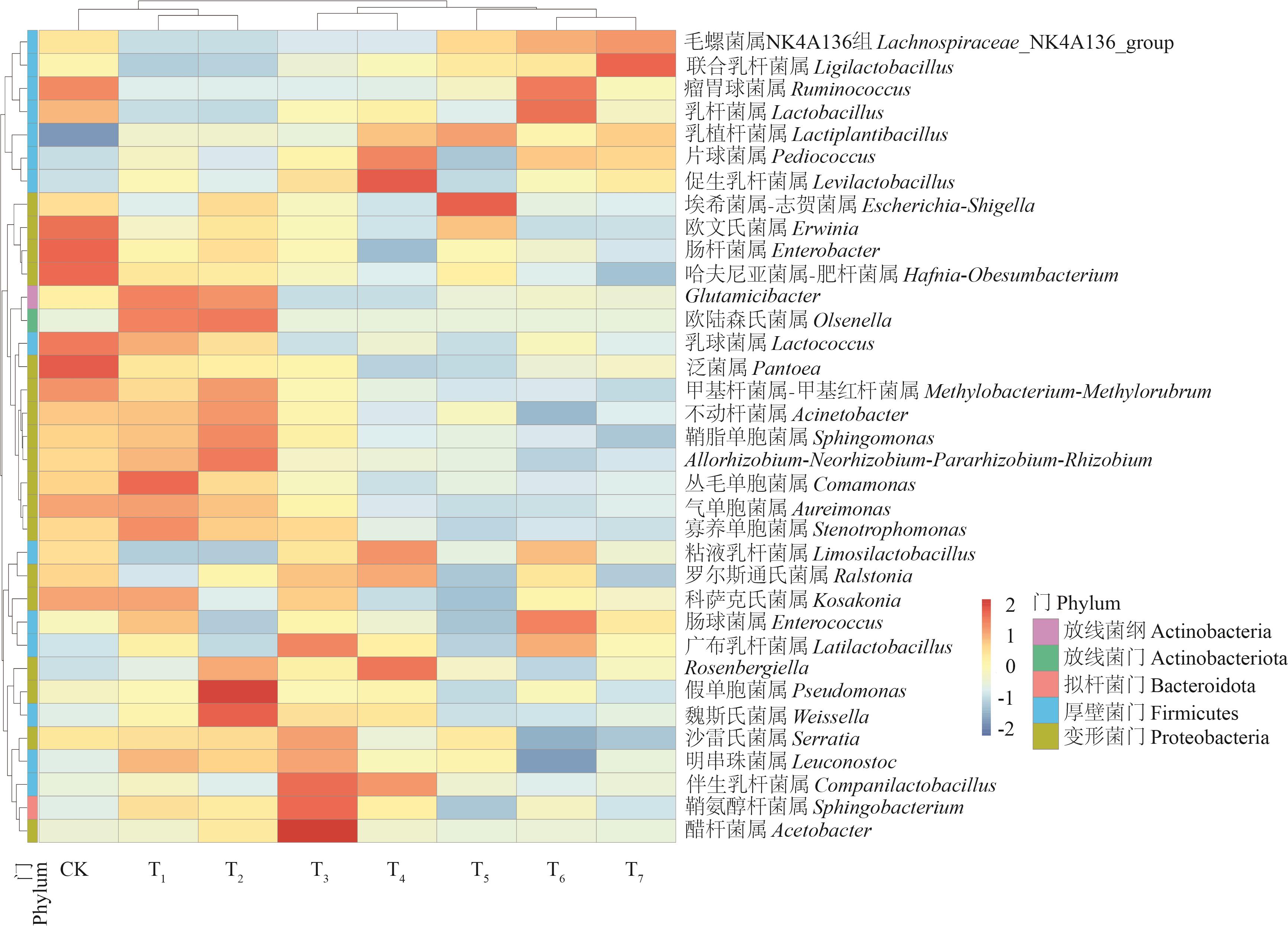
Fig.3 Species clustering heat map of microbial communities at genus level in broad bean straw silage

Fig.4 Alpha diversity index difference of microbial communities in broad bean straw silage

Fig.5 PCoA plot of microbial communities in broad bean straw silage
| 1 | Xu X Y, Li A P, Wu L Y, et al. Advances on the utilization of straws fromVicia faba. Fujian Journal of Agricultural Sciences, 2015, 30(2): 204-207. |
| 徐晓俞, 李爱萍, 吴凌云, 等. 蚕豆秸秆综合利用研究进展. 福建农业学报, 2015, 30(2): 204-207. | |
| 2 | Qu L L, Liu F, Wang C, et al. Research progress on effect of silage additives on natural forage silage. Feed Research, 2024, 47(4): 158-161. |
| 屈璐璐, 刘芳, 王超, 等. 青贮添加剂对天然牧草青贮影响的研究进展. 饲料研究, 2024, 47(4): 158-161. | |
| 3 | Bao W H, Bu D P, Zhou L Y, et al. Research progress on application of silage additives. China Animal Husbandry & Veterinary Medicine, 2012, 39(8): 124-128. |
| 包万华, 卜登攀, 周凌云, 等. 青贮饲料添加剂应用的研究进展. 中国畜牧兽医, 2012, 39(8): 124-128. | |
| 4 | Xu H W, Sun L, Na N, et al. Dynamics of bacterial community and fermentation quality in Leymus chinensis silage treated with lactic acid bacteria and/or water. Frontiers Microbiology, 2021, 12: 717120. |
| 5 | Zhang J W, Liu Y C, Wang Z J, et al. Effects of different types of LAB on dynamic fermentation quality and microbial community of native grass silage during anaerobic fermentation and aerobic exposure. Microorganisms, 2023, 11(2): 513. |
| 6 | Wu B Y, Hu Z F, Wei M L, et al. Effects of inoculation of Lactiplantibacillus plantarum and Lentilactobacillus buchneri on fermentation quality, aerobic stability, and microbial community dynamics of wilted Leymus chinensis silage. Frontiers Microbiology, 2022, 13: 928731. |
| 7 | Hu Z F, Ma D Y, Niu H X, et al. Enzyme additives influence bacterial communities of Medicago sativa silage as determined by Illumina sequencing. AMB Express, 2021, 11(1): 5. |
| 8 | Wang W, Zhou T R, Xiao Y Z, et al. Effects of additives on quality of natural grass silage. Chinese Journal of Grassland, 2023, 45(6): 143-148. |
| 王伟, 周天荣, 肖燕子, 等. 添加剂对天然牧草青贮品质的影响. 中国草地学报, 2023, 45(6): 143-148. | |
| 9 | Xue Z L, Song L M, Huang B Z. Effects of adding urea or salt on silage quality of Sorghum vulgare×S. sudanense. Chinese Journal of Grassland, 2014, 36(1): 75-78. |
| 薛祝林, 宋丽梅, 黄必志. 添加尿素或食盐对高丹草青贮品质的影响. 中国草地学报, 2014, 36(1): 75-78. | |
| 10 | Guo H M, Xia T C, Zhu W, et al. Effect of additives on the quality and aerobic stability of rice straw silage. Acta Prataculturae Sinica, 2017, 26(2): 190-196. |
| 郭海明, 夏天婵, 朱雯, 等. 青贮添加剂对稻草青贮品质和有氧稳定性的影响. 草业学报, 2017, 26(2): 190-196. | |
| 11 | Jiang Y, Shen W R, Han L P, et al. Application research of organic acids and salts in vegetable and fruit color fixativing and avoid the browning. Applied Chemical Industry, 2007(6): 534-536. |
| 江莹, 沈卫荣, 韩丽萍, 等. 有机酸及相关盐类在果蔬护色、防褐变中的应用研究. 应用化工, 2007(6): 534-536. | |
| 12 | Han X L, Shi W J, Zhang J, et al. Effects of citric acid addition on nutritional quality and fermentation characteristics of Chamaecrista rotundifolia silage. Pratacultural Science, 2021, 38(9): 1762-1770. |
| 韩雪林, 史文娇, 张娟, 等. 柠檬酸添加剂对圆叶决明青贮饲料营养品质与发酵特性的影响. 草业科学, 2021, 38(9): 1762-1770. | |
| 13 | Yan W M, Chen Y K, Yang P B, et al. Research progress on quality assessment methods of silage. China Animal Husbandry & Veterinary Medicine, 2024, 51(1): 135-144. |
| 闫威明, 陈雅坤, 杨鹏标, 等. 青贮饲料质量评定方法研究进展. 中国畜牧兽医, 2024, 51(1): 135-144. | |
| 14 | Van Soest P J, Robertson J B, Lewis B A. Methods for dietary fiber, neutral detergent fiber, and nonstarch polysaccharides in relation to animal nutrition. Journal of Dairy Science, 1991, 74(10): 3583-3597. |
| 15 | Chen X Z, Dong Z X, Zhang J G. Silage carbon sources preferred by epiphytic lactic acid bacteria. Fujian Journal of Agricultural Sciences, 2024, 39(5): 512-521. |
| 陈鑫珠, 董朝霞, 张建国. 饲草附生乳酸菌对碳源的选择性. 福建农业学报, 2024, 39(5): 512-521. | |
| 16 | Broderick G A, Kang J H. Automated simultaneous determination of ammonia and total amino acids in ruminal fluid and in vitro media. Journal of Dairy Science, 1980, 63(1): 64-75. |
| 17 | Han K, Collins M, Vanzant E S, et al. Bale density and moisture effects on alfalfa round bale silage. Crop Science, 2004, 44(3): 914-919. |
| 18 | Liao J R, Liu S N, Huo J L, et al. Isolation, identification of a lactic acid bacteria strain and its effect on fermentation of broad bean straw silage. Journal of Yunnan Agricultural University (Natural Science), 2023, 38(6): 966-972. |
| 廖隽锐, 刘韶娜, 霍金龙, 等. 青贮巨菌草乳酸菌的分离鉴定及其对蚕豆秸秆青贮发酵的效果. 云南农业大学学报(自然科学版), 2023, 38(6): 966-972. | |
| 19 | Yang F H, Liu S N, Liao J R, et al. Screening and identification of Bacillus YF-15 and its effect on nutritional quality of faba bean straw. Feed Research, 2023, 46(9): 121-125. |
| 杨福华, 刘韶娜, 廖隽锐, 等. 芽孢杆菌YF-15的筛选、鉴定及对蚕豆秸秆青贮营养品质的影响. 饲料研究, 2023, 46(9): 121-125. | |
| 20 | Oladosu Y, Rafii M Y, Abdullah N, et al. Fermentation quality and additives: a case of rice straw silage. Biomed Research International, 2016, 7985167. |
| 21 | Jin H Z, Zhao Y P, Chen A H. Effects of different microbial agents on the fermentation quality and nutrient contents of corn straw silage. China Feed, 2018(6): 16-20. |
| 靳会珍, 赵月萍, 陈爱华. 不同微生物菌剂对青贮玉米秸秆发酵品质和营养成分的影响. 中国饲料, 2018(6): 16-20. | |
| 22 | Kang J H, Tang S X, Zhong R Z, et al. Alfalfa silage treated with sucrose has an improved feed quality and more beneficial bacterial communities. Frontiers in Microbiology, 2021, 12: 670165. |
| 23 | Huisden C M, Adesogan A T, Kim S C, et al. Effect of applying molasses or inoculants containing homofermentative or heterofermentative bacteria at two rates on the fermentation and aerobic stability of corn silage. Journal of Dairy Science, 2009, 92(2): 690-697. |
| 24 | Li M, Zi X J, Zhou H L, et al. Effect of lactic acid bacteria, molasses, and their combination on the fermentation quality and bacterial community of cassava foliage silage. Animal Science Journal, 2021, 92(1): e13635. |
| 25 | Li Y, Du S, Sun L, et al. Effects of lactic acid bacteria and molasses additives on dynamic fermentation quality and microbial community of native grass silage. Frontiers Microbiology, 2022, 13: 830121. |
| 26 | Huang X W, Fan X, Tang M H, et al. Research progress of effects of additives on the quality of forage grass silage. Feed Industry, 2023, 44(17): 81-85. |
| 黄秀文, 范雪, 唐明欢, 等. 青贮添加剂对牧草青贮品质影响的研究进展. 饲料工业, 2023, 44(17): 81-85. | |
| 27 | Liu Y, Zi X J, Chen T, et al. Research progress and countermeasure on microbial diversity of forage silage. Chinese Journal of Animal Nutrition, 2021, 33(11): 6084-6092. |
| 刘悦, 字学娟, 陈婷, 等. 饲草青贮微生物多样性研究进展及对策. 动物营养学报, 2021, 33(11): 6084-6092. | |
| 28 | Nazar M, Ullah M W, Wang S, et al. Exploring the epiphytic microbial community structure of forage crops: their adaptation and contribution to the fermentation quality of forage sorghum during ensiling. Bioengineering, 2022, 9(9): 428. |
| 29 | Zhou Y, Drouin P, Lafreniere C. Effect of temperature (5-25 ℃) on epiphytic lactic acid bacteria populations and fermentation of whole-plant corn silage. Journal of Applied Microbiology, 2016, 121(3): 657-671. |
| 30 | Chen M Y, Bai J, Ke W C, et al. Research advances in silage microbial communities and functions. Biotechnology Bulletin, 2021, 37(9): 11-23. |
| 陈梦言, 白洁, 柯文灿, 等. 青贮饲料微生物群落组成与功能研究进展. 生物技术通报, 2021, 37(9): 11-23. | |
| 31 | Li X Y, Dong Y, You H Y, et al. Effects of different types of additives on quality of corn straw silage. Feed Research, 2024, 47(5): 99-103. |
| 李旭业, 董扬, 尤海洋, 等. 不同类型添加剂对玉米秸秆青贮品质的影响. 饲料研究, 2024, 47(5): 99-103. | |
| 32 | Mu L C, Zhan X, Hu L X, et al. Lactobacillus plantarum and molasses alter dynamic chemical composition, microbial community, and aerobic stability of mixed (amaranth and rice straw) silage. The Journal of the Science of Food and Agriculture, 2021, 101(12): 5225-5235. |
| [1] | Di SHEN, Zi-ming ZENG, Kai-yue PANG, Sha-tuo CHAI, Hong-xin NIE, Yu-min LI, Yang LIAO, Xun WANG, Wei-hua HUANG, Shu-jie LIU, Ying-kui YANG, Shu-xiang WANG. Effects of low-concentrate and high-concentrate diets on yak growth performance and rumen microbiota structure [J]. Acta Prataculturae Sinica, 2024, 33(5): 155-165. |
| [2] | Pei-shan HUANG, Mei-qi ZANG, Wei-ling ZHANG, Jun-jian CHEN, Li-xuan LIU, Qing ZHANG. Optimization of extraction process of Neolamarckia cadamba leaf polyphenols and its effect on Stylosanthes guianensis silage [J]. Acta Prataculturae Sinica, 2024, 33(10): 159-170. |
| [3] | Meng-qi LIANG, Qi-feng WU, Tao SHAO, Ai-li WU, Qin-hua LIU. Effects of additives on the fermentation quality and α-tocopherol and β-carotene contents in Italian ryegrass silage [J]. Acta Prataculturae Sinica, 2023, 32(5): 180-189. |
| [4] | Jian-zhen GE, Wen-hui FU, Lu ZHANG, Bao-jun LIN, Shuai ZHAO, Ma-ga-weng BAI, Jian-cun KOU. Degradation of carbendazim in orchard white clover silage and its effect on the microbial fermentative community [J]. Acta Prataculturae Sinica, 2022, 31(7): 64-75. |
| [5] | Di ZHOU, Shuai YANG, Xin-xin ZHANG, Jing YUAN, Yan-xia GAO, Jian-guo LI, Bo WANG, Guang-sheng ZHOU, Ting-dong FU, Jun YE, Li-guo YANG, Guo-hua HUA. Effects of additive types and combinations on silage quality of whole-plant rape after harvesting and air-drying [J]. Acta Prataculturae Sinica, 2022, 31(4): 124-135. |
| [6] | Huan ZHANG, Yi-xiao MU, Gui-jie ZHANG. Effects of Lycium barbarum by-products on fermentation quality and microbial diversity of alfalfa silage [J]. Acta Prataculturae Sinica, 2022, 31(4): 136-144. |
| [7] | Juan-shan ZHENG, KAO Ren-qing DING, Xin-pu LI, Ze-yi LIANG, Jian-bo ZHANG, Mei DU, Xue-zhi DING. Research progress on rumen microorganisms in the utilization of lignocellulose as an energy resource [J]. Acta Prataculturae Sinica, 2021, 30(9): 182-192. |
| [8] | Shi-yu ZOU, Si-kui CHEN, Qi-yuan TANG, Dong CHEN, Yuan-wei CHEN, Pan DENG, Xu-lai HUANG, Fu-qiang LI. Effects of silage additives on quality and in vitro rumen fermentation characteristics of first season ratoon rice whole silage [J]. Acta Prataculturae Sinica, 2021, 30(7): 122-132. |
| [9] | Jie YUAN, Ran-ran MA, Wen-jie ZHANG, Neng-xiang XU, Ran-ran ZHAO, Hong-ru GU, Cheng-long DING. Screening of superior lactic acid bacteria from natural Lolium multiflorum silage and their effects on silage quality [J]. Acta Prataculturae Sinica, 2021, 30(11): 132-143. |
| [10] | Chang-rong WU, Sheng DAI, Long-fei LIANG, Wen-tao SUN, Chao PENG, Chao CHEN, Jun HAO. Effects of different additives on fermentation quality and protein degradation of Broussonetia papyrifera silage [J]. Acta Prataculturae Sinica, 2021, 30(10): 169-179. |
| [11] | YU Hao-ran, GE Gen-tu, WANG Zhi-jun, JIA Yu-shan, LIAN Zhi, JIA Peng-fei. Effects of formic acid additives and ensiling time on the quality of alfalfa silage [J]. Acta Prataculturae Sinica, 2020, 29(3): 89-95. |
| [12] | REN Yu-xin, DAI Han-ling, TIAN Xin-hui, DU Wen-hua. Effects of different additives and cutting dates on nutritional and silage fermentation quality of Triticale silage in an alpine pastoral area of Gansu Province [J]. Acta Prataculturae Sinica, 2020, 29(3): 197-206. |
| [13] | ZHAO Na, YANG Xue-Hai, CHEN Fang, GUO Wan-zheng, LI Xiao-feng, WEI Jin-tao, CHEN Ming-xin, ZHOU Guang-sheng, FU Ting-dong, TAN Zhi-ping. Effect of silage feeding rape on the rumen fermentation parameters and microbial diversity of goats [J]. Acta Prataculturae Sinica, 2019, 28(9): 146-154. |
| [14] | LI Ying-zheng, YAN Xu, WU Zi-zhou, YANG Chun-yan, LI Xiao-feng, HE Ru-yu, ZHANG Ping, EBENEZER Kofi Sam, ZHOU Yang, ZHANG Lei, RONG Ting-zhao, HE Jian-mei, TANG Qi-lin. Forage maize type and growth stage effects on biomass yield and silage quality [J]. Acta Prataculturae Sinica, 2019, 28(7): 82-91. |
| [15] | SHANG Zhen-da, TAN Zhan-kun, LI Jia-kui, ZHUO Ga, WANG Hong-hui, BA Sang, XIE Guo-ping, LIU Suo-zhu. Effects of variation in proportion of maize on the fermentation quality and microbial diversity of mixed buckwheat and maize silage in Tibet [J]. Acta Prataculturae Sinica, 2019, 28(4): 95-105. |
| Viewed | ||||||
|
Full text |
|
|||||
|
Abstract |
|
|||||
