
ISSN 1004-5759 CN 62-1105/S
Acta Prataculturae Sinica ›› 2026, Vol. 35 ›› Issue (2): 120-130.DOI: 10.11686/cyxb2025082
Previous Articles Next Articles
You-ping AN1( ), Rong ZHANG2, Jiu-qi ZHAO1, Die CHEN1, Su-wen YANG1(), Xiao-hui WANG1, SUBINUER·jiapaer1, Da-wei WANG3
Received:2025-03-11
Revised:2025-06-05
Online:2026-02-20
Published:2025-12-24
Contact:
Su-wen YANG
You-ping AN, Rong ZHANG, Jiu-qi ZHAO, Die CHEN, Su-wen YANG, Xiao-hui WANG, SUBINUER·jiapaer, Da-wei WANG. Comparison of skull characteristics between Rhombomys opimus and Meriones libycus in the southern desert of the Junggar Basin[J]. Acta Prataculturae Sinica, 2026, 35(2): 120-130.
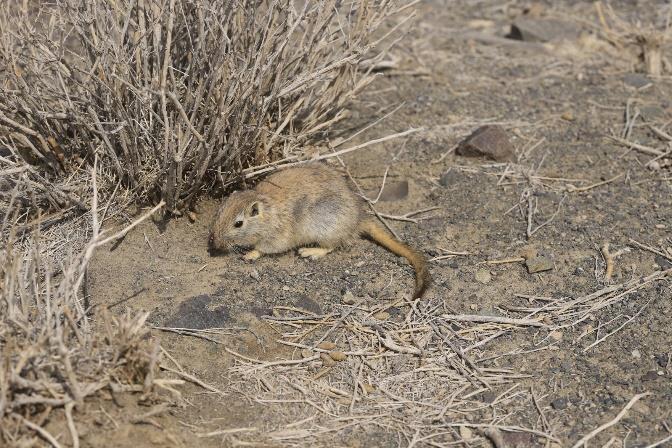
Fig.1 R. opimus field entities
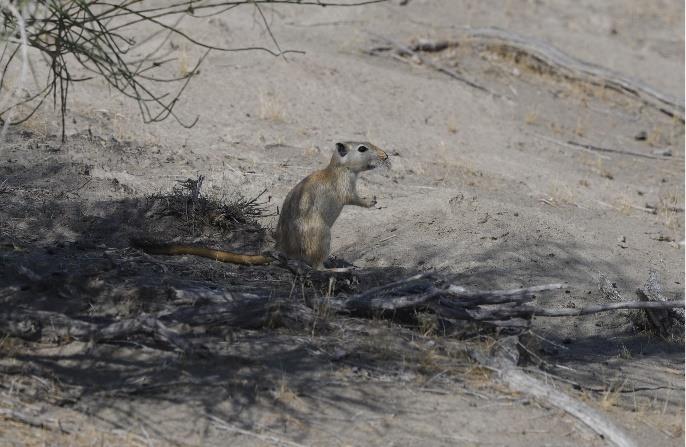
Fig.2 M. libycus field entities
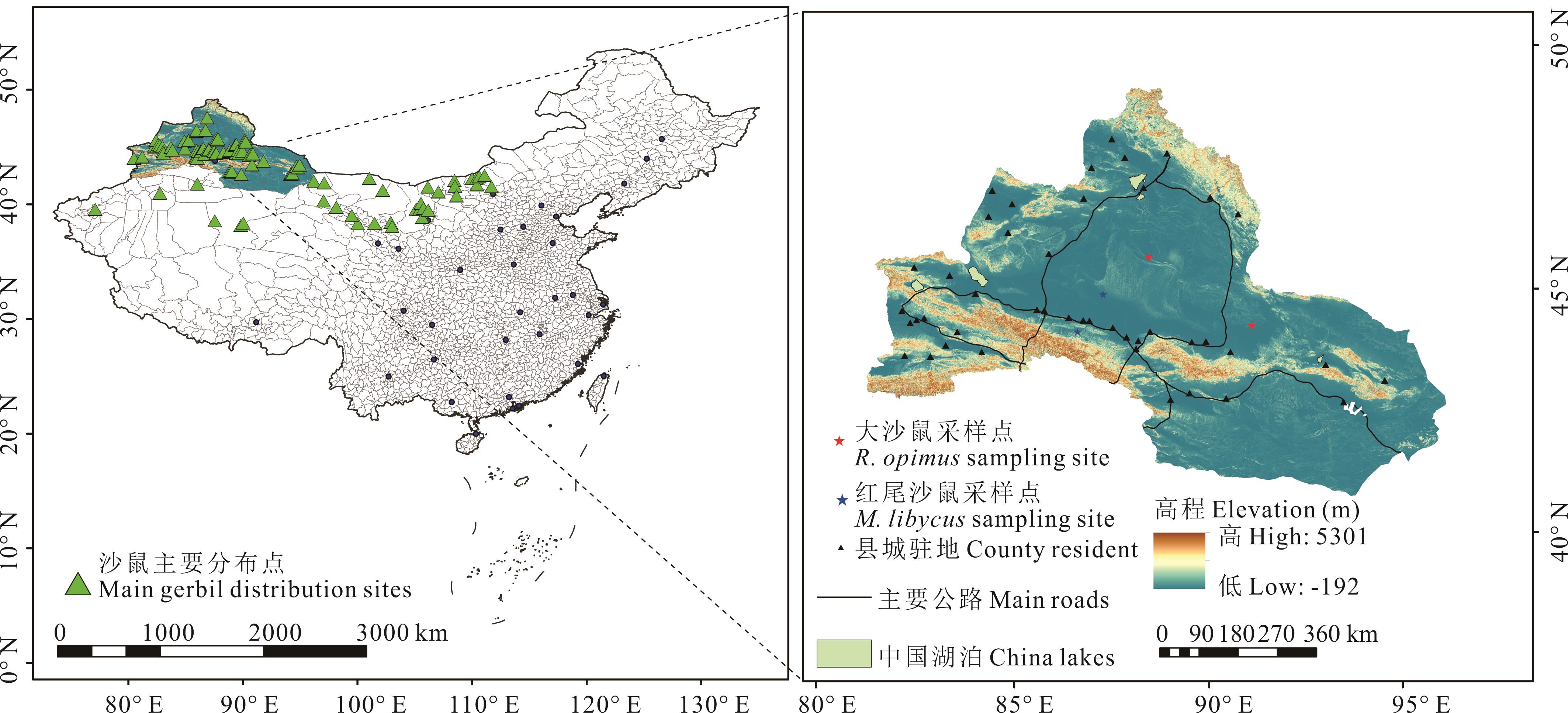
Fig.3 Overview of the study area
鼠种 Rodent species | 体重Weight (g) | 标本数量 The number of rodent (No.) | |||
|---|---|---|---|---|---|
| 最大值Max | 最小值Min | 平均值±标准差Mean±SE | 雌性Female | 雄性Male | |
| 大沙鼠R. opimus | 187.4 | 90.7 | 127.6±50.13 | 20 | 10 |
| 红尾沙鼠M. libycus | 118.7 | 71.9 | 89.0±18.00 | 12 | 11 |
Table 1 Simplified information of gerbils sample
鼠种 Rodent species | 体重Weight (g) | 标本数量 The number of rodent (No.) | |||
|---|---|---|---|---|---|
| 最大值Max | 最小值Min | 平均值±标准差Mean±SE | 雌性Female | 雄性Male | |
| 大沙鼠R. opimus | 187.4 | 90.7 | 127.6±50.13 | 20 | 10 |
| 红尾沙鼠M. libycus | 118.7 | 71.9 | 89.0±18.00 | 12 | 11 |
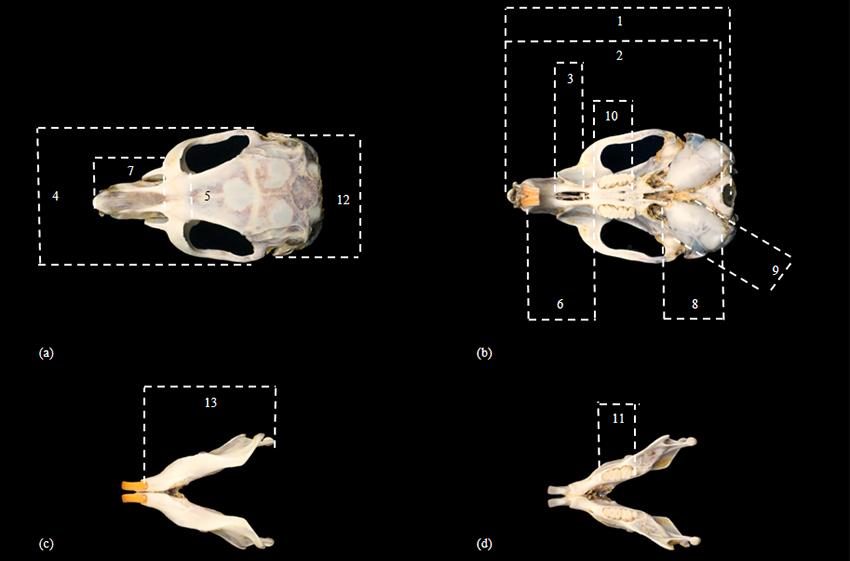
Fig.4 R. opimus skull measurement indicators
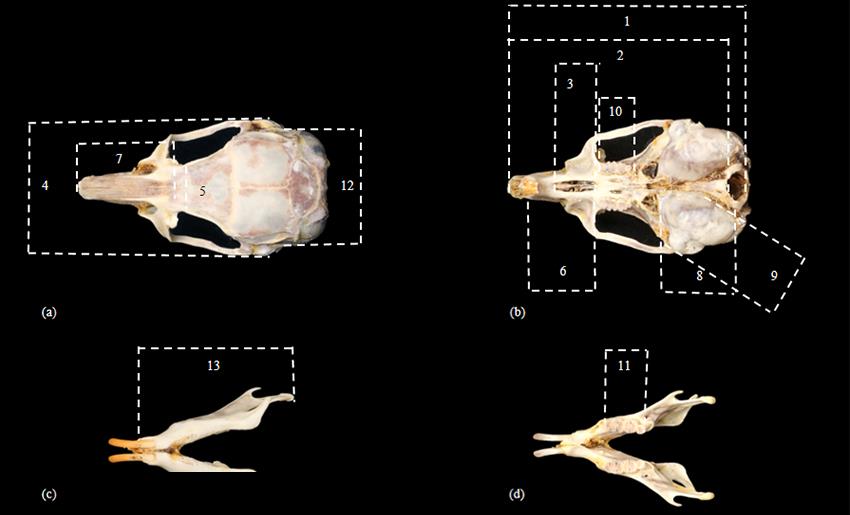
Fig.5 M. libycus skull measurement indicators
头骨形态指标 Skull morphological parameter | 红尾沙鼠M. libycus | 大沙鼠R. opimus | ||
|---|---|---|---|---|
| 雌性Female ♀ (n=12) | 雄性Male ♂ (n=11) | 雌性Female ♀ (n=20) | 雄性Male ♂ (n=10) | |
| 颅全长Profile length | 35.77±0.39a | 36.74±0.45a | 37.62±0.41a | 38.47±0.84a |
| 基长Basal length | 29.59±0.44a | 30.71±1.18a | 32.40±0.75a | 32.54±1.07a |
| 腭长Median palatal length | 17.18±0.33a | 17.00±0.44a | 18.68±0.34a | 18.84±0.56a |
| 颧宽Zygomatic breadth | 21.12±0.23a | 21.14±0.27a | 22.86±0.30a | 23.80±0.67a |
| 眶间宽Least breadth between the orbits | 7.03±0.13a | 6.91±0.13a | 7.68±0.11a | 7.80±0.20a |
| 齿隙长Diastema length | 8.90±0.16a | 9.09±0.21a | 8.38±0.20a | 8.75±0.36a |
| 鼻骨长Greatest length of the nasals | 13.39±0.37a | 14.10±0.14a | 13.34±0.26a | 13.47±0.43a |
| 听泡长Length of tympanic bulla | 14.67±0.21a | 14.76±0.16a | 13.85±0.19a | 14.10±0.30a |
| 听泡宽Width of tympanic bulla | 10.67±0.10a | 10.61±0.07a | 10.04±0.16a | 10.36±0.16a |
| 上齿列长Length of the up tooth row | 16.64±0.29a | 16.93±0.25a | 19.74±0.28a | 20.07±0.56a |
| 下齿列长Length of the down tooth row | 12.02±0.29b | 13.19±0.23a | 13.56±0.20a | 13.71±0.37a |
| 后头宽Greatest mastoid breadth | 14.27±0.12a | 14.30±0.13a | 13.04±0.16a | 12.93±0.21a |
| 下颌长Lower jaw length | 18.35±0.43a | 18.77±0.50a | 21.86±0.45a | 23.42±0.69a |
Table 2 Sex-based differences in skull morphological parameters between R. opimus and M. libycus (mm)
头骨形态指标 Skull morphological parameter | 红尾沙鼠M. libycus | 大沙鼠R. opimus | ||
|---|---|---|---|---|
| 雌性Female ♀ (n=12) | 雄性Male ♂ (n=11) | 雌性Female ♀ (n=20) | 雄性Male ♂ (n=10) | |
| 颅全长Profile length | 35.77±0.39a | 36.74±0.45a | 37.62±0.41a | 38.47±0.84a |
| 基长Basal length | 29.59±0.44a | 30.71±1.18a | 32.40±0.75a | 32.54±1.07a |
| 腭长Median palatal length | 17.18±0.33a | 17.00±0.44a | 18.68±0.34a | 18.84±0.56a |
| 颧宽Zygomatic breadth | 21.12±0.23a | 21.14±0.27a | 22.86±0.30a | 23.80±0.67a |
| 眶间宽Least breadth between the orbits | 7.03±0.13a | 6.91±0.13a | 7.68±0.11a | 7.80±0.20a |
| 齿隙长Diastema length | 8.90±0.16a | 9.09±0.21a | 8.38±0.20a | 8.75±0.36a |
| 鼻骨长Greatest length of the nasals | 13.39±0.37a | 14.10±0.14a | 13.34±0.26a | 13.47±0.43a |
| 听泡长Length of tympanic bulla | 14.67±0.21a | 14.76±0.16a | 13.85±0.19a | 14.10±0.30a |
| 听泡宽Width of tympanic bulla | 10.67±0.10a | 10.61±0.07a | 10.04±0.16a | 10.36±0.16a |
| 上齿列长Length of the up tooth row | 16.64±0.29a | 16.93±0.25a | 19.74±0.28a | 20.07±0.56a |
| 下齿列长Length of the down tooth row | 12.02±0.29b | 13.19±0.23a | 13.56±0.20a | 13.71±0.37a |
| 后头宽Greatest mastoid breadth | 14.27±0.12a | 14.30±0.13a | 13.04±0.16a | 12.93±0.21a |
| 下颌长Lower jaw length | 18.35±0.43a | 18.77±0.50a | 21.86±0.45a | 23.42±0.69a |
头骨形态指标 Skull morphological parameter | 红尾沙鼠 M. libycus | 大沙鼠 R. opimus |
|---|---|---|
| 颅全长Profile length | 36.24±0.31b | 37.90±0.39a |
| 基长Basal length | 30.13±0.60b | 32.45±0.60a |
| 腭长Median palatal length | 17.09±0.27b | 18.74±0.29a |
| 颧宽 Zygomatic breadth | 21.13±0.17b | 23.17±0.30a |
| 眶间宽Least breadth between the orbits | 6.98±0.09b | 7.72±0.10a |
| 齿隙长 Diastema length | 9.00±0.13a | 8.50±0.18b |
| 鼻骨长Greatest length of the nasals | 13.73±0.21a | 13.38±0.22a |
| 听泡长 Length of tympanic bulla | 14.71±0.13a | 13.93±0.16b |
| 听泡宽Width of tympanic bulla | 10.64±0.06a | 10.15±0.12b |
| 上齿列长Length of the up tooth row | 16.78±0.19b | 19.85±0.26a |
| 下齿列长Length of the down tooth row | 12.58±0.22b | 13.61±0.18a |
| 后头宽 Greatest mastoid breadth | 14.28±0.09a | 13.00±0.12b |
| 下颌长Lower jaw length | 18.55±0.32b | 22.38±0.40a |
Table 3 Differences in skull morphological parameters between two gerbils (mm)
头骨形态指标 Skull morphological parameter | 红尾沙鼠 M. libycus | 大沙鼠 R. opimus |
|---|---|---|
| 颅全长Profile length | 36.24±0.31b | 37.90±0.39a |
| 基长Basal length | 30.13±0.60b | 32.45±0.60a |
| 腭长Median palatal length | 17.09±0.27b | 18.74±0.29a |
| 颧宽 Zygomatic breadth | 21.13±0.17b | 23.17±0.30a |
| 眶间宽Least breadth between the orbits | 6.98±0.09b | 7.72±0.10a |
| 齿隙长 Diastema length | 9.00±0.13a | 8.50±0.18b |
| 鼻骨长Greatest length of the nasals | 13.73±0.21a | 13.38±0.22a |
| 听泡长 Length of tympanic bulla | 14.71±0.13a | 13.93±0.16b |
| 听泡宽Width of tympanic bulla | 10.64±0.06a | 10.15±0.12b |
| 上齿列长Length of the up tooth row | 16.78±0.19b | 19.85±0.26a |
| 下齿列长Length of the down tooth row | 12.58±0.22b | 13.61±0.18a |
| 后头宽 Greatest mastoid breadth | 14.28±0.09a | 13.00±0.12b |
| 下颌长Lower jaw length | 18.55±0.32b | 22.38±0.40a |

Fig.6 Relationship between skull morphology indicators and weight gain in two gerbils
| [1] | Wang S B, Yang Y Y. Xinjiang rodent fauna. Urumqi: Xinjiang People’s Publishing House, 1983: 136-146. |
| 王思博, 杨一源. 新疆啮齿动物志. 乌鲁木齐: 新疆人民出版社, 1983: 136-146. | |
| [2] | Cheng X T, Cao Q, Liao L F, et al. Research progress in ecology and control strategies of Rhombomys opimus. Gansu Animal Husbandry and Veterinary Medicine, 2023, 53(1): 140-143. |
| 程晓甜, 曹骞, 廖力夫, 等. 大沙鼠生态学及防治措施研究进展. 甘肃畜牧兽医, 2023, 53(1): 140-143. | |
| [3] | Qiao X L. Study on geographical distribution pattern of Rhombomys opimus in desert ecological forest. Urumqi: Xinjiang University, 2021. |
| 乔雪丽. 荒漠生态林区大沙鼠地理分布格局研究. 乌鲁木齐: 新疆大学, 2021. | |
| [4] | Nuerguli·Mahan, Zhao M, Zhang X P, et al. Regulation of harming agricultural crops of Merioness libycus lichtenstein and its control measures in Karamay district. Xinjiang Agricultural Sciences, 2007(1): 96-98. |
| 努尔古丽·马汉, 赵梅, 张新平, 等. 克拉玛依地区红尾沙鼠发生危害规律及防治措施. 新疆农业科学, 2007(1): 96-98. | |
| [5] | Cheng Y, Yue Y X, Wang T, et al. Screening the critical morphology and skull indices for identifying Rattus norvegicus and Rattus tanezumi. Acta Theriologica Sinica, 2023, 43(3): 322-332. |
| 程燕, 岳亚先, 王涛, 等. 褐家鼠和黄胸鼠体型和头骨物种鉴定特征值筛选. 兽类学报, 2023, 43(3): 322-332. | |
| [6] | Yao J. The status and prospect of collecting vertebrate specimen in Xinjiang. Arid Zone Research, 1998(2): 40-45. |
| 姚军. 新疆脊椎动物标本收藏现状与展望. 干旱区研究, 1998(2): 40-45. | |
| [7] | Zhang H J, Zhang H, Qin X X, et al. Geometric morphometric analysis of skull dimensions of Eothenomys miletus from five areas of the Hengduan Mountains. Chinese Journal of Wildlife, 2019, 40: 51-61. |
| 张海姬, 张浩, 秦雪雪, 等. 横断山五个地区大绒鼠头骨的几何形态学研究. 野生动物学报, 2019, 40: 51-61. | |
| [8] | Alhajeri B H. A morphometric comparison of the cranial shapes of Asian dwarf hamsters (Phodopus, Cricetinae, Rodentia). Zoologischer Anzeiger, 2021, 292: 184-196. |
| [9] | Alhajeri B H. Cranial variation in geographically widespread dwarf gerbil Gerbillus nanus (Gerbillinae, Rodentia) populations: Isolation by distance versus adaptation to local environments. Journal of Zoological Systematics and Evolutionary Research, 2019, 57(1): 191-203. |
| [10] | Yang H F. A brief comment on age methods for small mammals. Chinese Journal of Ecology, 1990, 9(2): 56-57. |
| 杨荷芳. 小型兽类年龄鉴定方法简评. 生态学杂志, 1990, 9(2): 56-57. | |
| [11] | Bao Y X, Zhuge Y. Age determination and population age structure of Niviventer confucianus. Acta Theriologica Sinica, 1984, 4(2): 127-137. |
| 鲍毅新, 诸葛阳. 社鼠的年龄鉴定与种群年龄组成. 兽类学报, 1984, 4(2): 127-137. | |
| [12] | Xiong M T, Zhao H, Yang G R, et al. Study on population age of three rodent species in Western Yunnan. Chinese Journal of Zoology, 1998(2): 26-28. |
| 熊孟韬, 赵侯, 杨光荣, 等. 云南西部三种鼠类种群年龄研究. 动物学杂志, 1998(2): 26-28. | |
| [13] | Ma L X, Wang X F, Hou L X, et al. Investigation and classification of rodent damage in eastern Xinjiang grasslands. Journal of Northwest University for Nationalities, 1996(1): 47-50. |
| 马良贤, 王学锋, 侯兰新, 等. 新疆东部草原鼠害的调查及危害类型的划分. 西北民族学院学报, 1996(1): 47-50. | |
| [14] | Zhang M C, Zhang Z J, Mu H Q, et al. Geographical differentiation in skull morphology of isolated Apodemus chevrieri populations in western Sichuan. Acta Theriologica Sinica, 2008, 28(4): 395-401. |
| 张明春, 张泽钧, 母华强, 等. 川西四大山系间高山姬鼠头骨特征的地理分化. 兽类学报, 2008, 28(4): 395-401. | |
| [15] | Su J H, Nan Z B, Ji W H, et al. Morphological analysis of the skull of plateau zokors (Eospalax baileyi) from different geographical populations. Acta Ecologica Sinica, 2018, 38(1): 325-332. |
| 苏军虎, 南志标, 纪维红, 等. 高原鼢鼠(Eospalax baileyi)头骨形态的地理分化. 生态学报, 2018, 38(1): 325-332. | |
| [16] | Li S, Yang J X, Jiang X L, et al. Geographic variation in giant squirrels Ratufa bicolor (Sciuridae: Ratufinae) from China based on cranial measurable variables. Acta Theriologica Sinica, 2008, 28(2): 201-206. |
| 李松, 杨君兴, 蒋学龙, 等. 中国巨松鼠(Ratufa bicolor)(Sciuridae: Ratufinae)头骨形态的地理学变异. 兽类学报, 2008, 28(2): 201-206. | |
| [17] | Yang H, Zhang Z H. The geometric morphometric research on the skull of Apodemus draco and Apodemus peninsulae. Sichuan Journal of Zoology, 2011, 30(5): 691-695. |
| 杨红, 张子慧. 中华姬鼠与大林姬鼠头骨的几何形态学研究. 四川动物, 2011, 30(5): 691-695. | |
| [18] | Zhu W L, Fu J H, Yang X M, et al. Skull traits of the tree shrews (Tupaia belangeri). Journal of Biology, 2015, 32(5): 40-42. |
| 朱万龙, 付家豪, 杨晓蜜, 等. 中缅树鼩(Tupaia belangeri)头骨特征的研究. 生物学杂志, 2015, 32(5): 40-42. | |
| [19] | Zhu W L, Jia T, Huang C M, et al. Morphometrics investigation of the skulls, mandibles and molar in Tupaia belangeri from Yunnan, Guizhou, Guangxi. Acta Ecologica Sinica, 2013, 33(6): 1721-1730. |
| 朱万龙, 贾婷, 黄春梅, 等. 中缅树鼩(Tupaia belangeri)头骨及下臼齿几何形态与环境的关系. 生态学报, 2013, 33(6): 1721-1730. | |
| [20] | Shang Z H N, Manduhu, Yuan S, et al. Characteristics and differences between skulls of Myospalax psilurus and Myospalax aspalax. Pratacultural Science, 2022, 39(8): 1643-1652. |
| 商正昊妮, 满都呼, 袁帅, 等. 东北鼢鼠与草原鼢鼠头骨特征及差异. 草业科学, 2022, 39(8): 1643-1652. | |
| [21] | Dai H Y, Shan W J. Age identification of Xinjiang hare based on skull morphology indexes. Heilongjiang Animal Science and Veterinary Medicine, 2021(1): 138-141. |
| 代慧英, 单文娟. 基于头骨形态指标的新疆野兔年龄鉴定. 黑龙江畜牧兽医, 2021(1): 138-141. | |
| [22] | Wu S Y, Zhang F C, Edwards S V, et al. The evolution of bipedalism in jerboas (Rodentia: Dipodoidea): Origin in humid and forested environments. Evolution, 2014, 68(7): 2108-2118. |
| [23] | Moore T Y, Organ C L, Edwards S V, et al. Multiple phylogenetically distinct events shaped the evolution of limb skeletal morphologies associated with bipedalism in the jerboas. Current Biology, 2015, 25(21): 2785-2794. |
| [24] | Zhao T B, Li X M, Duan Q H, et al. Cluster analysis of skeletal structures in jerboas. Endemic Diseases Bulletin of Inner Mongolia, 1994(2): 82-84. |
| 赵天飙, 李新民, 段全红, 等. 几种跳鼠骨骼结构的聚类分析. 内蒙古地方病防治研究, 1994(2): 82-84. | |
| [25] | Xia L, Yang Q S, Ma Y, et al. Standard measurements for mammalian skulls Ⅲ: Rodentia and Lagomorpha. Chinese Journal of Zoology, 2006(5): 68-71. |
| 夏霖, 杨奇森, 马勇, 等. 兽类头骨测量标准Ⅲ: 啮齿目、兔形目. 动物学杂志, 2006(5): 68-71. | |
| [26] | Yu H. Sexual dimorphism in skull morphology of Myospalax epsilanus. Journal of Northwest A & F University (Natural Science Edition), 1958(2): 41-61. |
| 禹瀚. 陕北鼢鼠(Myospalax epsilanus)两性头骨形态及差异的研究. 西北农林科技大学学报(自然科学版), 1958(2): 41-61. | |
| [27] | Yang X G, Zhang Z J, Liu X Y, et al. Comparison of white-bellied rat skull variables between Qinling and Qionglai Mountains and their relationship with body size. Journal of China West Normal University (Natural Sciences), 2011, 32(1): 16-22. |
| 杨学贵, 张泽钧, 刘新玉, 等. 秦岭、邛崃山系社鼠(Niviventer confucianus)头骨形态指标比较及与体型大小之间的关系. 西华师范大学学报(自然科学版), 2011, 32(1): 16-22. | |
| [28] | Li X C, Xue X X. Comparison of structure and function on masticatory apparatus between Chinese bamboo rat and common Chinese zokors. Journal of Northwest University (Natural Science Edition), 1999(6): 585-589. |
| 李晓晨, 薛祥煦. 中华竹鼠与甘肃鼢鼠咀嚼肌结构和功能的比较. 西北大学学报(自然科学版), 1999(6): 585-589. | |
| [29] | Bai X C. Geographic variation in the skull of the Siberian weasel (Mustela sibirica manchurica) among different ecotypes. Harbin: Northeast Forestry University, 2015. |
| 白晓晨. 黄鼬东北亚种(Mustela sibirica manchurica)不同生态型头骨形态特征的比较. 哈尔滨: 东北林业大学, 2015. | |
| [30] | Kang Y K. Adaptive evolution of Myospalacinae based on morphological and molecular characteristics. Lanzhou: Gansu Agricultural University, 2023. |
| 康宇坤. 基于形态和分子特征的鼢鼠亚科(Myospalacinae)动物适应性进化研究. 兰州: 甘肃农业大学, 2023. | |
| [31] | Morrison E E, Costanzo R M. Morphology of the human olfactory epithelium. Journal of Comparative Neurology, 1990, 297(1): 1-13. |
| [32] | Zhao L M. Morphogeographic variation and subspecies classification of Meriones meridianus in China. Lanzhou: Lanzhou University, 2013. |
| 赵黎明. 中国子午沙鼠(Meriones meridianus)形态地理变异及亚种分类研究. 兰州: 兰州大学, 2013. | |
| [33] | Kang Y K, Pu Q S, Wang Z C, et al. Geographical differentiation of geometric morphology in Eospalax cansus skull and influencing factors. Grassland and Turf, 2024, 44(5): 1-13. |
| 康宇坤, 蒲强胜, 王志成, 等. 甘肃鼢鼠头骨几何形态地理分异及其影响因素分析. 草原与草坪, 2024, 44(5): 1-13. | |
| [34] | Liu W, Guo C, Yang W K. Feeding habits of Rhombomys opimus and their impacts on desert soil properties and plant communities//Abstracts of the Chinese western zoology symposium. Chengdu: Sichuan University, 2012: 39. |
| 刘伟, 郭聪, 杨维康. 大沙鼠(Rhombomys opimus)食性研究及其对荒漠土壤性质和植物群落结构的影响. 中国西部动物学学术研讨会论文摘要汇编. 成都: 四川大学, 2012: 39. | |
| [35] | Zhang Y M, Liu J K. Biological characteristics and ecological roles of subterranean rodents. Acta Theriologica Sinica, 2002, 22(2): 144-154. |
| 张堰铭, 刘季科. 地下鼠生物学特征及其在生态系统中的作用. 兽类学报, 2002, 22(2): 144-154. | |
| [36] | Ma Y, Wang F G, Jin S K, et al. Classification and distribution of rodents in the Northern region. Beijing: Science Press, 1987: 195-200. |
| 马勇, 王逢桂, 金善科, 等. 北部地区啮齿动物的分类和分布. 北京: 科学出版社, 1987: 195-200. | |
| [37] | Webster D B, Webster M. Auditory systems of heteromyidae: Functional morphology and evolution of the middle ear. Journal of Morphology, 1975, 146(3): 343-376. |
| [38] | Zhu H Y. On functional morphology in skulls of mandarin vole and brandt’s vole. Zhengzhou: Zhengzhou University, 2014. |
| 朱晗羽. 棕色田鼠和布氏田鼠头骨的功能形态学研究. 郑州: 郑州大学, 2014. |
| No related articles found! |
| Viewed | ||||||
|
Full text |
|
|||||
|
Abstract |
|
|||||
