

ISSN 1004-5759 CN 62-1105/S
草业学报 ›› 2026, Vol. 35 ›› Issue (10): 156-166.DOI: 10.11686/cyxb2025434
• 研究论文 • 上一篇
任慈1( ), 王艺华1, 马龙龙1, 刘翠玲1, 李洁仪1, 刘超1, 何亮亮1, 陈曙1,2,3()
收稿日期:2025-10-21
修回日期:2025-12-15
出版日期:2026-10-20
发布日期:2026-09-09
通讯作者:
陈曙
作者简介:E-mail: shuchen@scau.edu.cn基金资助:
Ci REN1(), Yi-hua WANG1, Long-long MA1, Cui-ling LIU1, Jie-yi LI1, Chao LIU1, Liang-liang HE1, Shu CHEN1,2,3()
Received:2025-10-21
Revised:2025-12-15
Online:2026-10-20
Published:2026-09-09
Contact:
Shu CHEN
摘要:
为解决日本结缕草组织培养中存在的胚性愈伤组织诱导率低及继代褐化严重等技术瓶颈,本研究以其种播品种‘Zenith’的成熟种子为外植体,旨在建立一套高效、稳定的植株再生体系。研究以Murashige & Skoog(MS)培养基辅以2 mg·L-1 2,4-二氯苯氧乙酸(2,4-D)和0.2 mg·L-1 6-苄氨基嘌呤(6-BA)作为基础诱导培养基(IM),通过3轮递进式的单因素试验筛选关键调控因子。第1轮初筛发现,5 mg·L-1 维生素B1(VB?)和25 mg·L-1 α-酮戊二酸具有促进效应,但胚性愈伤诱导率最高仅为6.74%。第2轮筛选明确了2 mg·L-1麦草畏(dicamba)是核心调控激素,可将胚性愈伤诱导率显著提升至19.65%。第3轮在“IM+2 mg·L-1麦草畏”的基础上进行优化,证实额外添加25mg·L-1的α-酮戊二酸可使胚性愈伤的诱导效率再提升62.38%。针对继代培养难题,在培养基中添加0.05 mg·L-1脱落酸(ABA)可有效抑制愈伤组织的早熟分化;抗褐化筛选则表明,4 g·L-1聚乙烯吡咯烷酮(PVP)、0.5~1.0 g·L-1活性炭(AC)以及0.001~0.005 g·L-1硝酸银(AgNO3)均能显著降低愈伤褐化率,其中PVP的效果最佳。本研究最终建立了一套完整的日本结缕草高效再生体系,为基因编辑、遗传转化等分子育种工作提供了稳定的受体系统,同时为其他暖季型草坪草的再生体系构建提供了重要的理论与技术参考。
任慈, 王艺华, 马龙龙, 刘翠玲, 李洁仪, 刘超, 何亮亮, 陈曙. 日本结缕草‘Zenith’胚性愈伤组织诱导与继代体系优化[J]. 草业学报, 2026, 35(10): 156-166.
Ci REN, Yi-hua WANG, Long-long MA, Cui-ling LIU, Jie-yi LI, Chao LIU, Liang-liang HE, Shu CHEN. Optimization of an embryonic callus induction and subculture system for Zoysia japonica cv. ‘Zenith’[J]. Acta Prataculturae Sinica, 2026, 35(10): 156-166.
| 项目Item | Murashige & Skoog (MS, g·L-1) | 蔗糖 Sucrose (g·L-1) | 脯氨酸 Proline (g·L-1) | 2,4-二氯苯氧乙酸 2,4-dichlorophenoxyacetic acid (2, 4-D, mg·L-1) | 6-苄氨基嘌呤 6-benzylaminopurine (6-BA, mg·L-1) | α-萘乙酸 α-naphthalene acetic acid (NAA, mg·L-1) | 琼脂 Agar (g·L-1) | pH |
|---|---|---|---|---|---|---|---|---|
| FH | 4.43 | 30 | 1.15 | 0 | 2 | 0.1 | 7 | 5.8 |
| SG | 4.43 | 30 | 1.15 | 0 | 0 | 1.0 | 7 | 5.8 |
表1 日本结缕草‘Zenith’愈伤分化与生根培养基配方
Table 1 Formulations of callus differentiation and rooting medium for Z. japonica cv. ‘Zenith’
| 项目Item | Murashige & Skoog (MS, g·L-1) | 蔗糖 Sucrose (g·L-1) | 脯氨酸 Proline (g·L-1) | 2,4-二氯苯氧乙酸 2,4-dichlorophenoxyacetic acid (2, 4-D, mg·L-1) | 6-苄氨基嘌呤 6-benzylaminopurine (6-BA, mg·L-1) | α-萘乙酸 α-naphthalene acetic acid (NAA, mg·L-1) | 琼脂 Agar (g·L-1) | pH |
|---|---|---|---|---|---|---|---|---|
| FH | 4.43 | 30 | 1.15 | 0 | 2 | 0.1 | 7 | 5.8 |
| SG | 4.43 | 30 | 1.15 | 0 | 0 | 1.0 | 7 | 5.8 |
种子 来源 Source of seeds | 供试种子数Number of tested seeds | 发芽种子数Germinated seeds | 产生愈伤的种子数Seeds of producing callus | 发芽率 Germination rate (%) | 愈伤诱导率 Callus induction rate (%) |
|---|---|---|---|---|---|
| YN-022 | 300 | 0 | 0 | 0 | 0 |
| YN-040 | 300 | 3 | 1 | 1.00 | 0.33 |
| YN-037 | 300 | 0 | 0 | 0 | 0 |
| YN-010 | 300 | 0 | 0 | 0 | 0 |
| YN-082 | 300 | 72 | 51 | 24.00 | 17.00 |
| Zenith | 300 | 256 | 239 | 85.33 | 79.60 |
表2 日本结缕草不同种质的种子发芽率及愈伤诱导率比较
Table 2 Comparison of germination rate and callus induction rate among different Z. japonica germplasms
种子 来源 Source of seeds | 供试种子数Number of tested seeds | 发芽种子数Germinated seeds | 产生愈伤的种子数Seeds of producing callus | 发芽率 Germination rate (%) | 愈伤诱导率 Callus induction rate (%) |
|---|---|---|---|---|---|
| YN-022 | 300 | 0 | 0 | 0 | 0 |
| YN-040 | 300 | 3 | 1 | 1.00 | 0.33 |
| YN-037 | 300 | 0 | 0 | 0 | 0 |
| YN-010 | 300 | 0 | 0 | 0 | 0 |
| YN-082 | 300 | 72 | 51 | 24.00 | 17.00 |
| Zenith | 300 | 256 | 239 | 85.33 | 79.60 |
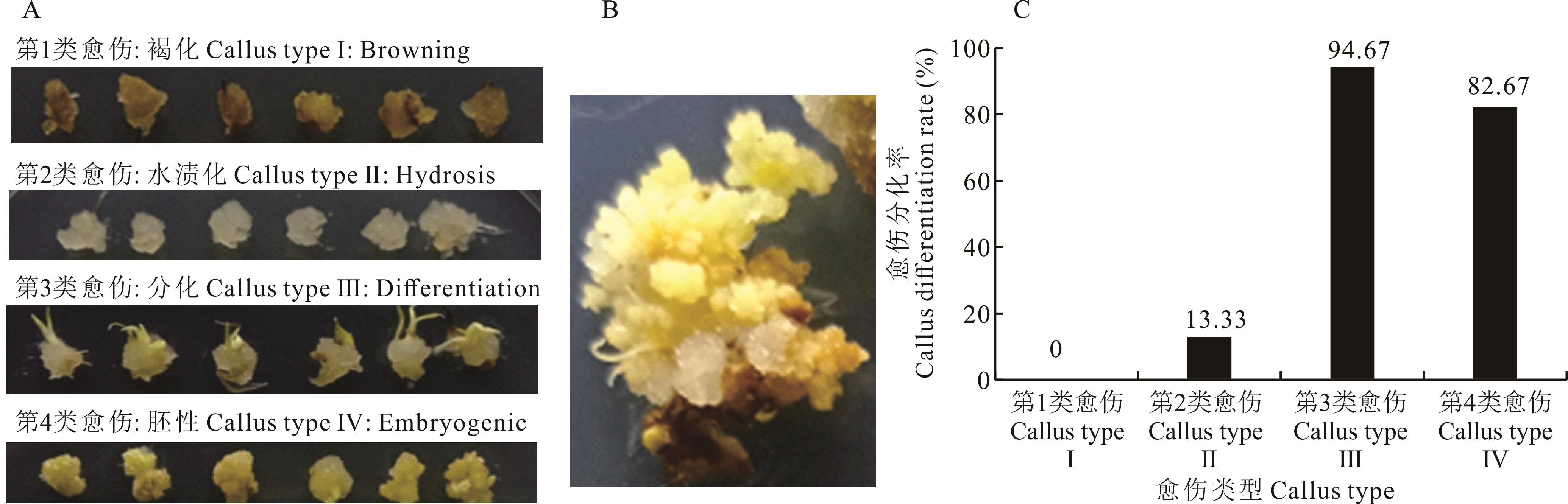
图1 日本结缕草‘Zenith’4种类型愈伤组织的分化率比较A:4类结缕草愈伤组织;B:结缕草胚性愈伤局部细节。A: Four types of Z. japonica callus; B: Partial details of embryogenic callus in Z. japonica.
Fig. 1 Comparison of callus differentiation rates in four types of Z. japonica cv. ‘Zenith’
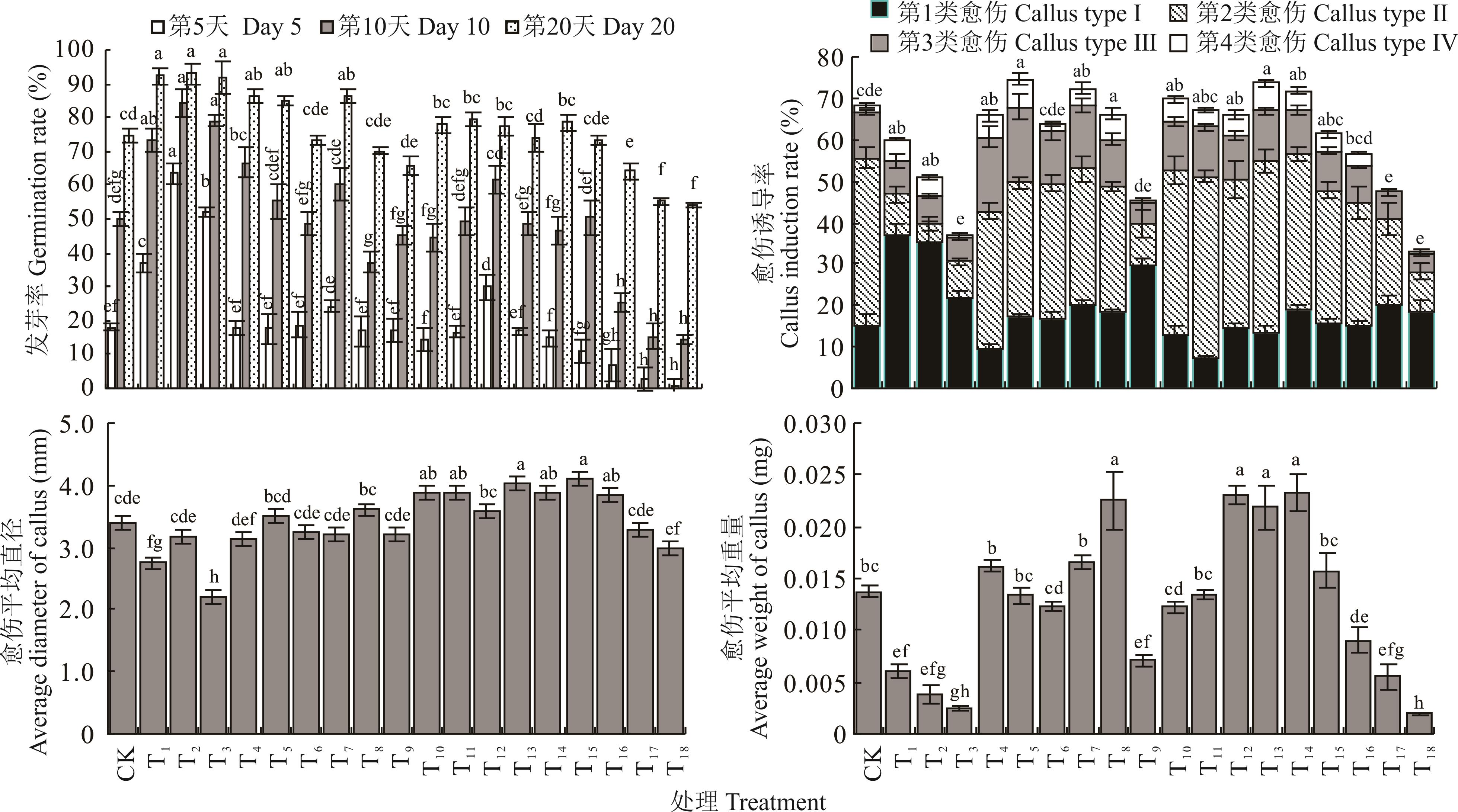
图2 第1轮单因素试验:不同添加物对日本结缕草‘Zenith’种子发芽及愈伤诱导和生长的影响不同小写字母表示不同处理间结缕草种子平均发芽率(A)、第4类愈伤平均诱导率(B)、愈伤平均直径(C)以及愈伤平均重量(D)存在显著性差异(P<0.05),下同。Different lowercase letters indicate significant differences (P<0.05) among different treatments in the mean Z. japonica seed germination rate (A), mean type Ⅳ callus induction rate of type Ⅳ (B), mean callus diameter (C), and mean callus weight (D). The same below.
Fig. 2 Single-factor experiment 1: Effects of different additives on germination rate, callus induction and growth of Z. japonica cv. ‘Zenith’ seeds
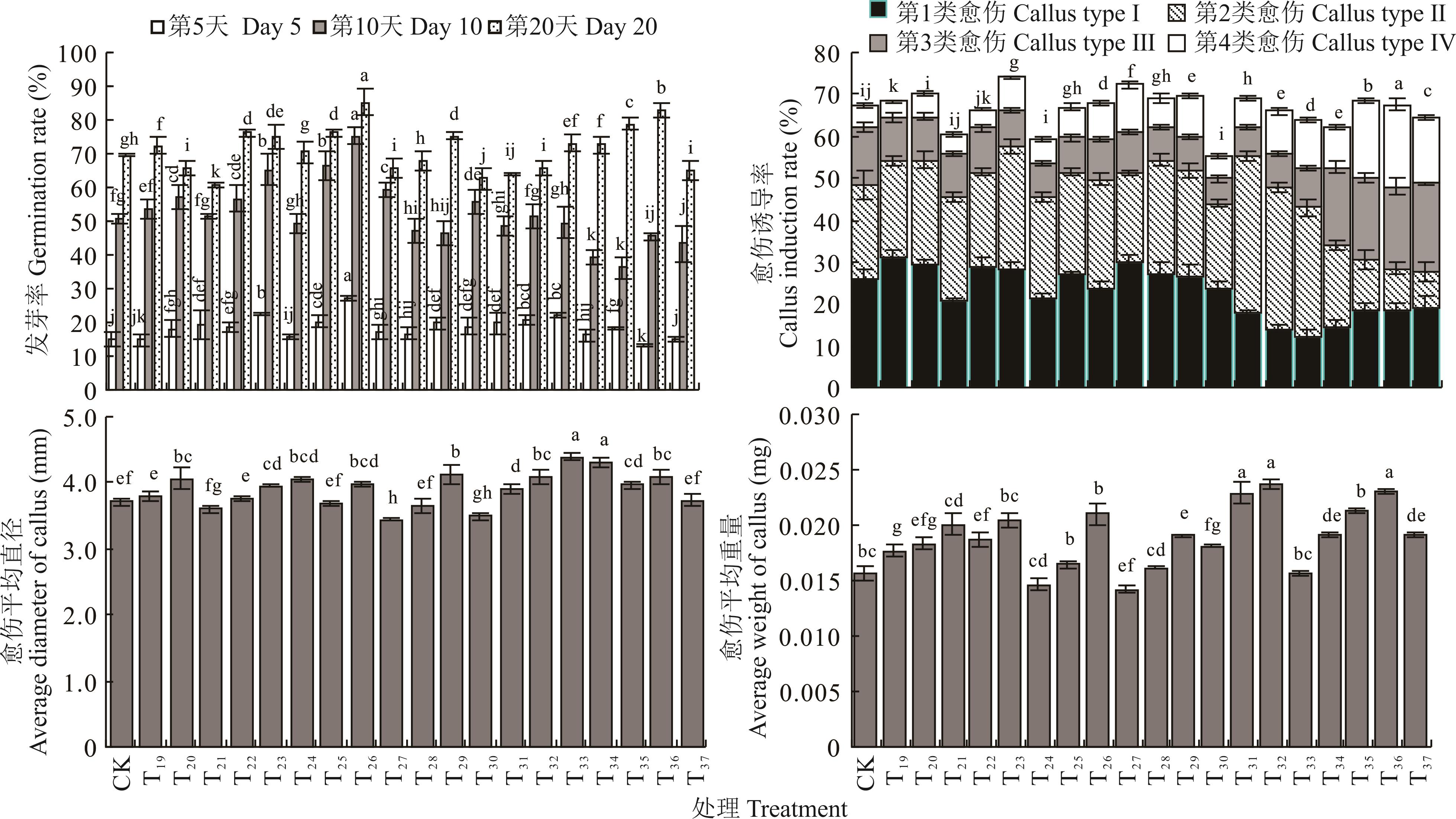
图3 第2轮单因素试验:不同添加物对日本结缕草‘Zenith’种子发芽及愈伤诱导和生长的影响
Fig. 3 Single-factor experiment 2: Effects of different additives on germination rate, callus induction and growth of Z. japonica cv. ‘Zenith’ seeds
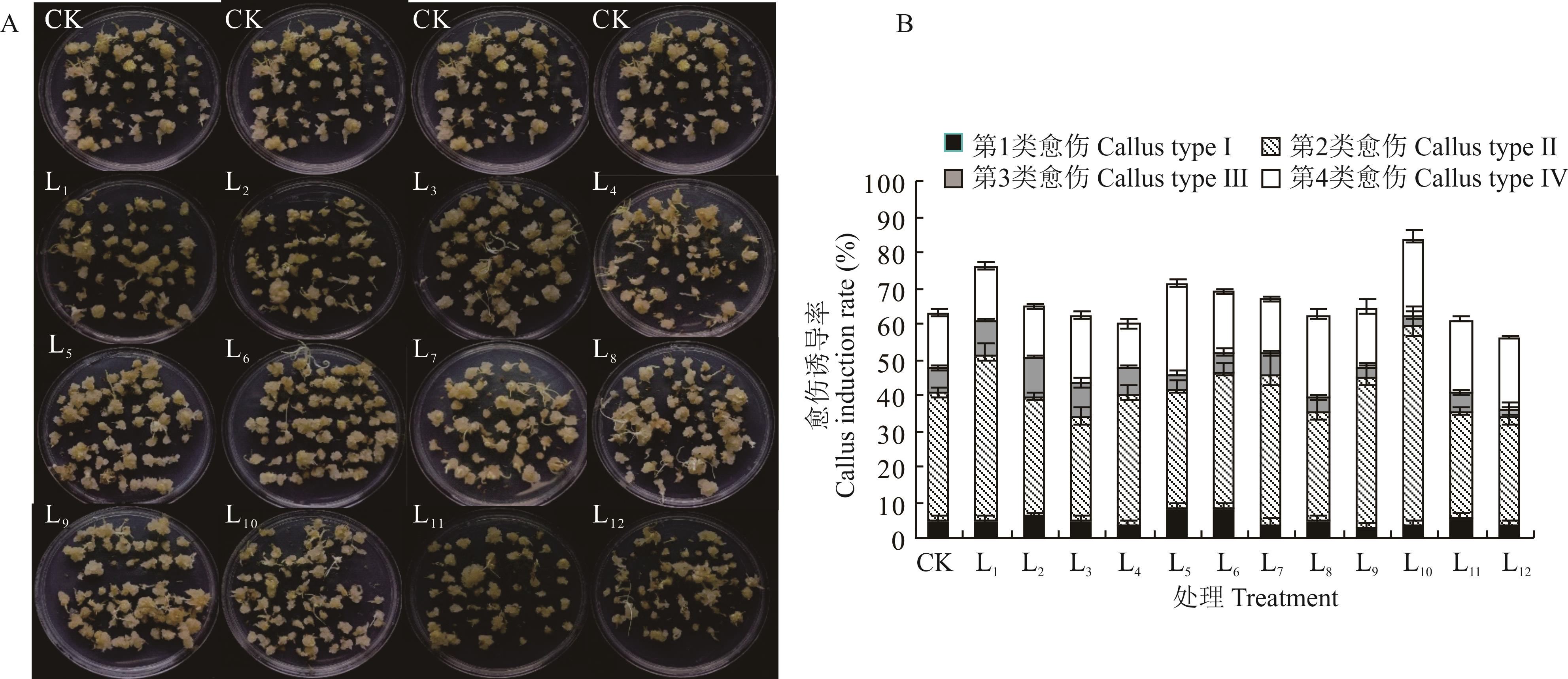
图4 第3轮单因素试验:不同添加物对日本结缕草‘Zenith’种子愈伤诱导的影响A:不同处理下的愈伤状况;B:不同处理对4类愈伤诱导率的影响。A: Callus status under different treatments; B: The effect of different treatments on the induction rates of 4 types of callus.
Fig. 4 Single-factor experiment 3: Effects of different additives on callus induction in Z. japonica cv. ‘Zenith’ seeds
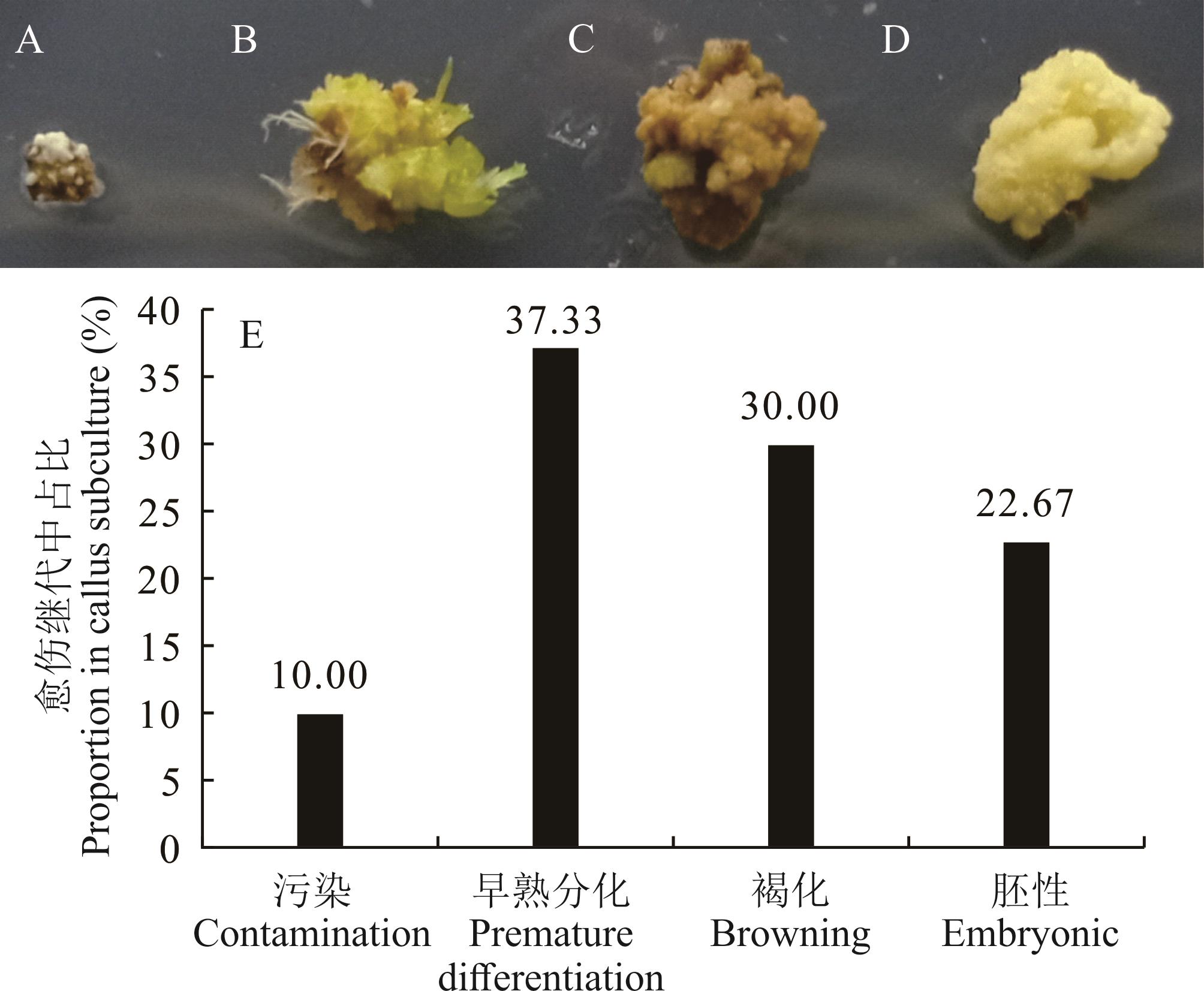
图5 日本结缕草‘Zenith’愈伤继代培养中的早熟分化、褐化及污染问题A:污染;B:早熟分化;C:褐化;D:保持胚性的愈伤;E:愈伤继代中4类愈伤的占比情况。A: Contamination; B: Premature differentiation; C: Browning; D: Embryonic callus; E: Proportion of four types of callus during the callus subculture.
Fig. 5 Incidence of premature differentiation, browning and contamination in callus subculture of Z. japonica cv. ‘Zenith’
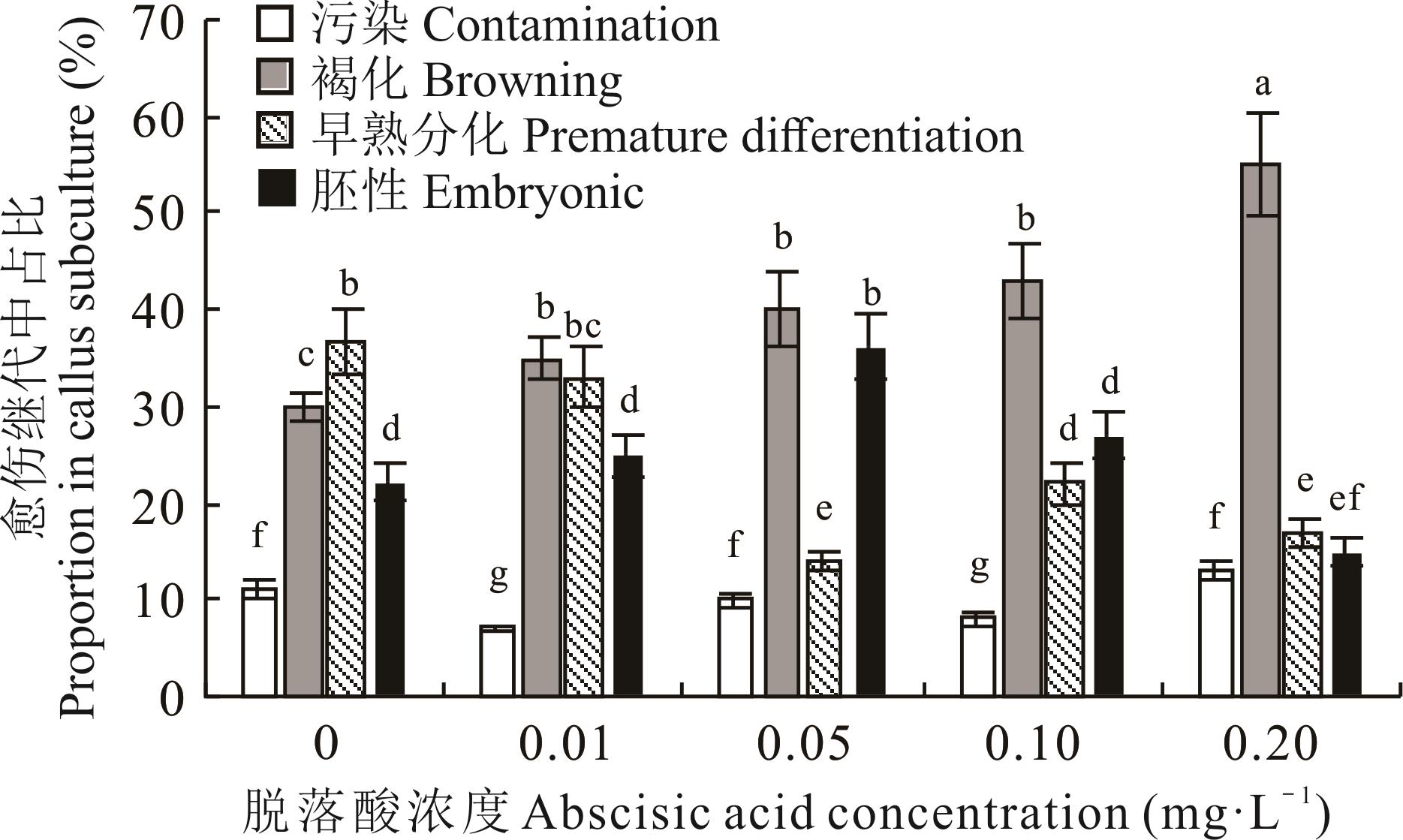
图6 不同浓度脱落酸对结缕草愈伤组织生长的影响不同小写字母表示添加不同浓度脱落酸后4种愈伤在愈伤继代过程中的占比之间差异显著(P<0.05)。Different lowercase letters indicate significant differences (P<0.05) in the proportions of the four callus types during subculture after adding different concentrations of abscisic acid.
Fig. 6 Effects of different concentrations of abscisic acid on callus growth in Z. japonica
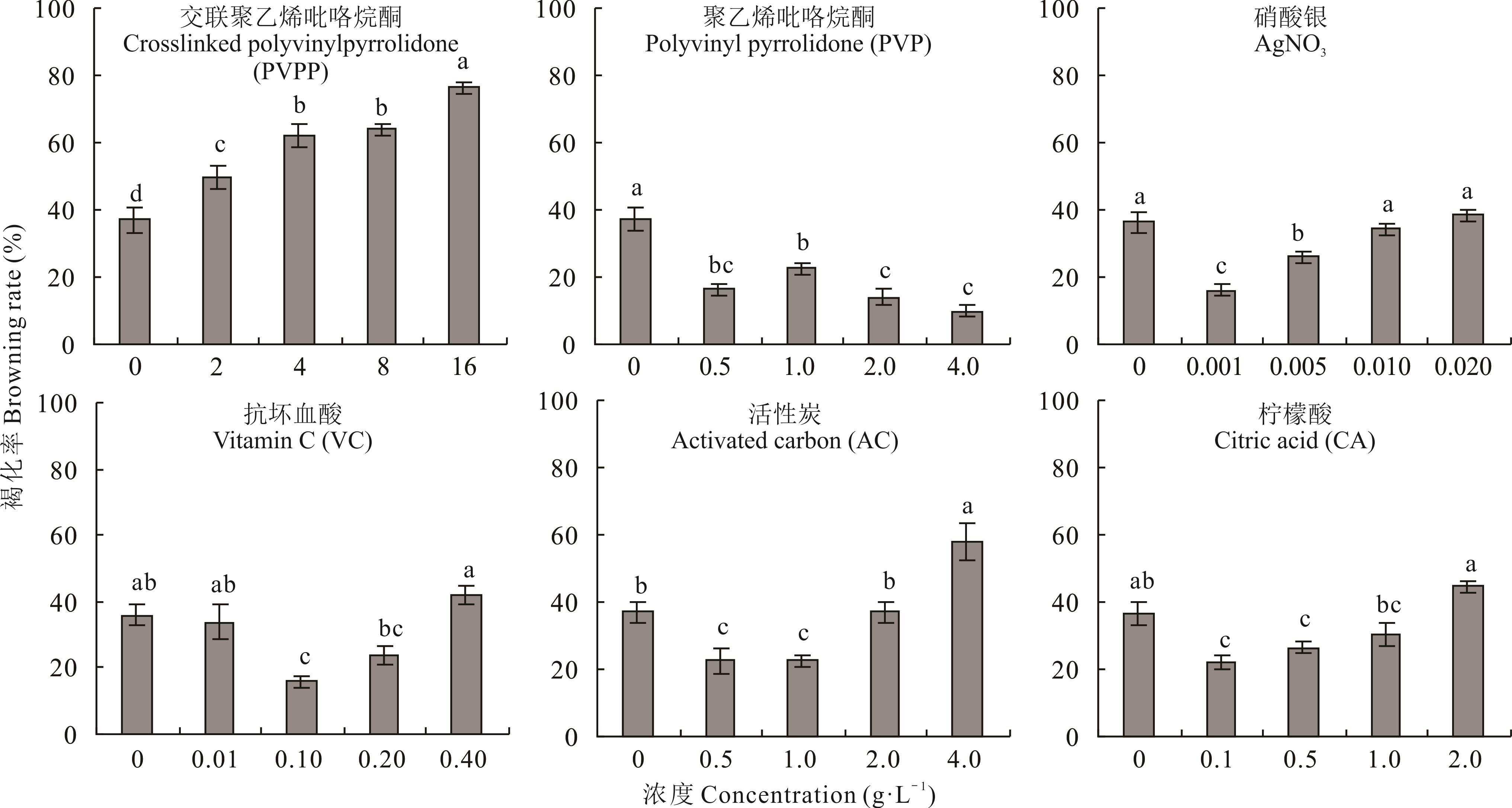
图7 6种抗褐化剂对日本结缕草‘Zenith’继代愈伤褐化率的抑制效果比较不同小写字母表示各浓度间差异显著(P<0.05)。Different lowercase letters meant significant differences among different concentrations at the 0.05 level.
Fig. 7 Comparison of inhibitory effects of six anti-browning agents on browning rate of subcultured callus in Z. japonica cv. ‘Zenith’

图8 日本结缕草‘Zenith’胚性愈伤组织诱导和植株再生体系A:愈伤诱导;B:愈伤继代;C:愈伤分化;D:植株生根;E:植株移栽。A: Callus induction; B: Callus subculture; C: Callus differentiation; D: Plant rooting; E: Plant transplantation.
Fig. 8 Embryogenic callus induction and plant regeneration system in Z. japonica cv. ‘Zenith’
| [1] | Wu C F, Ma X M. Present situation and development of turf grass industry in the 21st century in China. Tianjin Agricultural Sciences, 2009, 15(3): 74-77. |
| 吴朝峰, 马雪梅. 21世纪中国草坪业的现状与发展. 天津农业科学, 2009, 15(3): 74-77. | |
| [2] | Ma L X, Zhao L P. Study on callus induction and plant regeneration of Zoysia macrostachya Franch et. Sav. Heilongjiang Agricultural Sciences, 2016, 38(9): 15-18. |
| 马龙雪, 赵丽萍. 大穗结缕草愈伤组织诱导及植株再生研究. 黑龙江农业科学, 2016, 38(9): 15-18. | |
| [3] | He J. Study on culture and regeneration of Zoysia japonica Steud. and its genetic transformation. Hainkou: Hainan University, 2005. |
| 贺杰. 结缕草组织培养再生体系建立及转基因研究. 海口:海南大学, 2005. | |
| [4] | Du M H, Liang Z A, Zhang N Q, et al. Tissue culture and rapid propagation technique of Zoysia sinica Hance meristem. Acta Agriculturae Universitatis Jiangxiensis, 2007, 29(4): 533-538. |
| 杜敏华, 梁子安, 张乃群, 等. 中华结缕草茎尖的组织培养和快繁技术研究.江西农业大学学报, 2007, 29(4): 533-538. | |
| [5] | Inokuma C, Sugiura K, Cho C, et al. Plant regeneration from protoplasts of Japanese lawngrass. Plant Cell Reports, 1996, 15: 737-741. |
| [6] | Dhandapani M, Hong S B, Aswath C R, et al. Regeneration of zoysia grass (Zoysia matrella L. Merr.) cv. Konhee from young inflorescences and stem nodes. In Vitro Cellular & Developmental Biology-Plant, 2008, 44: 8-13. |
| [7] | Zhao J X, Chen G, Xia G X, et al. High efficient system establishment of plant regengation in Zoysia japonica. Journal of Shanxi Agricultural Sciences, 2019, 47(6): 970-972. |
| 赵俊侠, 陈耕, 夏桂先, 等. 结缕草高效再生体系的建立. 山西农业科学, 2019, 47(6): 970-972. | |
| [8] | Zhu X H. The establishment of regeneration system and mutants selection of turf grass (Zoysia spp). Lanzhou: Gansu Agricultural University, 2009. |
| 朱晓花. 结缕草再生体系的建立及诱导突变体筛选. 兰州:甘肃农业大学, 2009. | |
| [9] | Zhang J W, Tang Q, Bao M Z. Studies on plant regeneration system of Zoysia japonica from mature seed. Acta Prataculturae Sinica, 2005, 14(2): 48-51. |
| 张俊卫, 唐蜻, 包满珠. 日本结缕草植株再生体系的研究. 草业学报, 2005, 14(2): 48-51. | |
| [10] | Fan X L. Optimization of plant regeneration system and primary studies on Agrobacterium-mediated transformation of Zoysia japonica. Wuhan: Huazhong Agricultural University, 2005. |
| 樊晓莉. 日本结缕草植株再生体系优化及根癌农杆菌介导的遗传转化的初步研究. 武汉: 华中农业大学, 2005. | |
| [11] | Tian L, Tan H J. Recent review of production and development on dicamba. World Pesticide, 2010, 32(6): 18-20. |
| 田琳, 谭海军. 麦草畏的生产及发展概述. 世界农药, 2010, 32(6): 18-20. | |
| [12] | Mendoza M G, Kaeppler H F. Auxin and sugar effects on callus induction and plant regeneration frequencies from mature embryos of wheat (Triticum aestivum L.). In Vitro Cellular & Developmental Biology-Plant, 2002, 38(1): 39-45. |
| [13] | Yoshito A, Hiroshi K, Chie I, et al. Cytokinin and thiamine requirements and stimulative effects of riboflavin and α-ketoglutaric acid on embryogenic callus induction from the seeds of Zoysia japonica Steud. Journal of Plant Physiology, 1996, 149(314):413-417. |
| [14] | Shao L D, Wu Y G, Bi B, et al. The responses of callus growth and plant regeneration of Zoysia matrella to copper stress. Journal of Nuclear Agricultural Sciences, 2015, 29(1): 161-168. |
| 邵丽达, 吴艳歌, 毕波, 等. 沟叶结缕草愈伤组织生长及再生对铜胁迫的响应. 核农学报, 2015, 29(1): 161-168. | |
| [15] | Guo Y, Yang H L. Advances in studies on browning in plant tissue culture. Journal of Shanxi Agricultural Sciences, 2009, 37(7): 14-16. |
| 郭艳, 杨海玲. 植物组织培养中的褐化现象及解决途径. 山西农业科学, 2009, 37(7): 14-16. | |
| [16] | Li J, Wang S T, Zhou Q, et al. Preliminary analysis on browning mechanism of Juglans mandshurica stem in tissue culture. Molecular Plant Breeding, 2021, 19(24): 8239-8244. |
| 李佳, 王斯彤, 周强, 等. 胡桃楸组培过程中茎段褐化机理初步分析. 分子植物育种, 2021, 19(24): 8239-8244. | |
| [17] | Dai Y, Yang S H, Zhao H Z, et al. Research progress on browning phenomenon in tissue culture of medicinal plants. Chinese Traditional and Herbal Drugs, 2016, 47(2): 344-351. |
| 戴莹, 杨世海, 赵鸿峥, 等. 药用植物组织培养中褐化现象的研究进展. 中草药, 2016, 47(2): 344-351. | |
| [18] | Rao H Y. Effect of browning inhibitors on callus subculture of phenolic compounds enzyme and gene expression of grape. Plant Physiology Journal, 2015, 51(8): 1322-1330. |
| 饶慧云. 抗褐化剂对葡萄愈伤组织继代培养过程中酚类物质相关酶及其基因表达的影响.植物生理学报, 2015, 51(8): 1322-1330. | |
| [19] | Chen A P, Feng W W, Liu Y K. Anti-browning agents affecting callus subculture of three legume forage species. Chinese Agricultural Science Bulletin, 2017, 33(22): 138-144. |
| 陈爱萍, 冯维卫, 刘允康. 3种豆科牧草愈伤组织继代培养抗褐化的研究. 中国农学通报, 2017, 33(22): 138-144. | |
| [20] | Guo C Z. Optimization of callus induction conditions and anti-browning of Syringa oblata by response surface methodology. Seed, 2021, 40(8):141-145. |
| 郭彩珍. 响应面法优化紫丁香愈伤组织诱导条件及防褐化研究. 种子, 2021, 40(8): 141-145. |
| [1] | 左志芳, 李永龙, 魏雨佳, 周生辉, 李岩, 杨国锋. 结缕草DREB基因家族的鉴定及非生物胁迫下的表达模式分析[J]. 草业学报, 2025, 34(5): 74-88. |
| [2] | 林心怡, 王旎, 陈拓, 宋一岚, 陆耀东, 董朝霞. 3种植物生长调节剂对结缕草耐荫性的影响[J]. 草业学报, 2025, 34(3): 224-232. |
| [3] | 李永龙, 周生辉, 薛梦瑶, 高远, 巨乐, 陈奕冰, 付松林, 郝建昊, 李恒, 张昆, 左志芳. 结缕草ZjWRKY63基因的克隆及转基因拟南芥的耐盐性分析[J]. 草业学报, 2025, 34(12): 157-169. |
| [4] | 管瑾, 郭一荻, 刘凌云, 尹淑霞, 滕珂. 结缕草叶肉细胞原生质体瞬时基因表达系统的构建[J]. 草业学报, 2023, 32(7): 61-71. |
| [5] | 李春杰, 郎鸣晓, 陈振江, 王正凤, 陈泰祥. 禾草-内生真菌人工接种技术研究进展[J]. 草业学报, 2021, 30(7): 179-189. |
| [6] | 汪智宇, 李莹, 刘金平, 伍德, 苟蓉. 高温冲击对受丝茅入侵的细叶结缕草现实和潜在竞争力的影响[J]. 草业学报, 2019, 28(8): 106-118. |
| [7] | 杨轲, 陈一酉, 汪军成, 姚立蓉, 孟亚雄, 马小乐, 李葆春, 司二静, 王化俊. 啤酒花不同外植体筛选及再生体系构建[J]. 草业学报, 2019, 28(8): 209-217. |
| [8] | 滕珂, 张蕊, 檀鹏辉, 岳跃森, 范希峰, 武菊英. 日本结缕草ZjERF1的克隆、转录激活活性、亚细胞定位及表达分析[J]. 草业学报, 2019, 28(6): 56-65. |
| [9] | 姜红岩, 滕珂, 檀鹏辉, 尹淑霞. 日本结缕草ZjZFN1基因对拟南芥的转化及其耐旱性分析[J]. 草业学报, 2019, 28(4): 129-138. |
| [10] | 曾晓琳, 李莹, 刘金平, 游明鸿, 黄曦叶, 黄柳. 干旱对细叶结缕草和入侵杂草丝茅的竞争、生长及抗旱性的影响[J]. 草业学报, 2019, 28(11): 46-59. |
| [11] | 汪智宇, 李莹, 刘金平, 杨小琴, 何林江. 不同修剪频次和丝茅入侵量对细叶结缕草竞争力和草坪质量的影响[J]. 草业学报, 2019, 28(10): 53-65. |
| [12] | 史经昂, 张兵, 肖晓琳, 马晶晶, 杨向阳, 刘建秀. 结缕草肉桂醇脱氢酶基因家族全基因组序列鉴定和表达分析[J]. 草业学报, 2017, 26(6): 111-119. |
| [13] | 柳福智, 杨秀艳. 无机盐对甘草愈伤组织生长及总黄酮含量的影响[J]. 草业学报, 2017, 26(5): 118-126. |
| [14] | 檀鹏辉, 袁丽丽, 樊波, 于安东, 董笛, 滕珂, 晁跃辉. 日本结缕草滞绿基因 ZjSGR 对烟草的转化及功能分析[J]. 草业学报, 2017, 26(5): 155-162. |
| [15] | 张雪, 孙鑫博, 樊波, 张胤冰, 韩烈保, 许立新. 结缕草ZjCSD基因的克隆及表达分析[J]. 草业学报, 2017, 26(2): 102-110. |
| 阅读次数 | ||||||
|
全文 |
|
|||||
|
摘要 |
|
|||||
