
ISSN 1004-5759 CN 62-1105/S
Acta Prataculturae Sinica ›› 2025, Vol. 34 ›› Issue (6): 85-98.DOI: 10.11686/cyxb2024274
Previous Articles Next Articles
Yao-bo LIU1,2( ), Lu PEI1,2, Chen-zhuo LIU1,2, Xiao-xia LI1,2(), Bo-kun ZOU1,2()
Received:2024-07-16
Revised:2024-09-05
Online:2025-06-20
Published:2025-04-03
Contact:
Xiao-xia LI,Bo-kun ZOU
Yao-bo LIU, Lu PEI, Chen-zhuo LIU, Xiao-xia LI, Bo-kun ZOU. A meta-analysis of fertilizer response of seed yield and seed yield components in Elymus sibiricus[J]. Acta Prataculturae Sinica, 2025, 34(6): 85-98.
组别 Groups | 年平均降水量Average annual precipitation | 土壤类型Soil type | |||||||||
|---|---|---|---|---|---|---|---|---|---|---|---|
| P1 | P2 | P3 | P4 | T1 | T2 | T3 | T4 | T5 | T6 | T7 | |
| 样本数Sample size | 14 | 148 | 67 | 0 | 2 | 79 | 4 | 40 | 18 | 14 | 72 |
Table 1 Data grouping and sample size distribution 1
组别 Groups | 年平均降水量Average annual precipitation | 土壤类型Soil type | |||||||||
|---|---|---|---|---|---|---|---|---|---|---|---|
| P1 | P2 | P3 | P4 | T1 | T2 | T3 | T4 | T5 | T6 | T7 | |
| 样本数Sample size | 14 | 148 | 67 | 0 | 2 | 79 | 4 | 40 | 18 | 14 | 72 |
组别 Groups | 种植年限Planting year (yr) | 种植行距Planting row spacing (cm) | ||||||||||||
|---|---|---|---|---|---|---|---|---|---|---|---|---|---|---|
| 1 | 2 | 3 | 4 | 7 | 8 | 15 | 20 | 25 | 30 | 40 | 45 | 50 | 60 | |
| 样本数Sample size | 50 | 77 | 73 | 23 | 12 | 21 | 33 | 5 | 21 | 72 | 4 | 8 | 14 | 18 |
Table 2 Data grouping and sample size distribution 2
组别 Groups | 种植年限Planting year (yr) | 种植行距Planting row spacing (cm) | ||||||||||||
|---|---|---|---|---|---|---|---|---|---|---|---|---|---|---|
| 1 | 2 | 3 | 4 | 7 | 8 | 15 | 20 | 25 | 30 | 40 | 45 | 50 | 60 | |
| 样本数Sample size | 50 | 77 | 73 | 23 | 12 | 21 | 33 | 5 | 21 | 72 | 4 | 8 | 14 | 18 |
| 序号No. | 试验地点 Test site | 经纬度 Longitude and latitude | 施肥类型 Fertilizer type |
|---|---|---|---|
| 1 | 青海省海南藏族自治州同德县Tongde County, Hainan Tibetan Autonomous Prefecture, Qinghai Province | E 100°20′;N 35°9′ | NP、NPK |
| 2 | 青海省牧草良种繁殖场Pasture Seed Breeding Farm, Qinghai Province | E 100°20′;N 35°20′ | NPK |
| 3 | 青海省海南州共和县江西沟乡上社村Xiangshangshe Village, Jiangxigou Township, Republican County, Hainan Prefecture, Qinghai Province | E 100°22′25″;N 36°35′32″ | N、P、NP、M |
| 4 | 青海省同德县尕巴松多镇Gabasongduo Township, Tongde County, Qinghai Province | E 100°35′31″;N 35°14′48″ | N |
| 5 | 青海省海北藏族自治州海晏县Haiyan County, Haibei Tibetan Autonomous Prefecture, Qinghai Province | E 100°52′;N 36°59′ | N |
| 6 | 宁夏回族自治区固原市Guyuan City, Ningxia Hui Autonomous Region | E 106°9′39″;N 36°5′24″ | NP、NPK |
| 7 | 内蒙古农业大学牧草试验地Inner Mongolia Agricultural University Pasture Experimental Site | E 111°42′38″;N 40°48′45″ | B、Mn、Zn、Mo |
| 8 | 河北省张家口塞北管理区Zhangjiakou Saibei Management Area, Hebei Province | E 115°39′-115°52′; N 41°45′-41°58′ | N、P |
| 9 | 河北省沽源县Guyuan County, Hebei Province | E 115°51′;N 41°52′ | N、P |
| 10 | 内蒙古锡林郭勒盟多伦县Duolun County, Xilin Gol League, Inner Mongolia | E 115°55′-116°54′; N 41°46′-42°39′ | N、P、K、NP、NK、PK、NPK、B、Mn、Zn、Mo |
| 11 | 河北省丰宁坝上鱼儿山牧场Yu’er Mountain Ranch, Fengning Dam, Hebei Province, China | E 116°9′;N 41°44′ | N |
| 12 | 河北省承德市中国农业大学科技攻关实验站Experimental Station for Science and Technology Research, China Agricultural University, Chengde City, Hebei Province, China | E 140°16′;N 41°44′ | N |
| 13 | 新疆乌鲁木齐市头屯河区Toutunhe District, Urumqi, Xinjiang | E 87°35′;N 43°56′ | N |
| 14 | 甘肃省酒泉市大业草种公司上坝基地Gansu Jiuquan Daye Grass Seed Company Shangba Base | E 98°30′;N 39°37′ | N |
Table 3 Test site and fertilizer type
| 序号No. | 试验地点 Test site | 经纬度 Longitude and latitude | 施肥类型 Fertilizer type |
|---|---|---|---|
| 1 | 青海省海南藏族自治州同德县Tongde County, Hainan Tibetan Autonomous Prefecture, Qinghai Province | E 100°20′;N 35°9′ | NP、NPK |
| 2 | 青海省牧草良种繁殖场Pasture Seed Breeding Farm, Qinghai Province | E 100°20′;N 35°20′ | NPK |
| 3 | 青海省海南州共和县江西沟乡上社村Xiangshangshe Village, Jiangxigou Township, Republican County, Hainan Prefecture, Qinghai Province | E 100°22′25″;N 36°35′32″ | N、P、NP、M |
| 4 | 青海省同德县尕巴松多镇Gabasongduo Township, Tongde County, Qinghai Province | E 100°35′31″;N 35°14′48″ | N |
| 5 | 青海省海北藏族自治州海晏县Haiyan County, Haibei Tibetan Autonomous Prefecture, Qinghai Province | E 100°52′;N 36°59′ | N |
| 6 | 宁夏回族自治区固原市Guyuan City, Ningxia Hui Autonomous Region | E 106°9′39″;N 36°5′24″ | NP、NPK |
| 7 | 内蒙古农业大学牧草试验地Inner Mongolia Agricultural University Pasture Experimental Site | E 111°42′38″;N 40°48′45″ | B、Mn、Zn、Mo |
| 8 | 河北省张家口塞北管理区Zhangjiakou Saibei Management Area, Hebei Province | E 115°39′-115°52′; N 41°45′-41°58′ | N、P |
| 9 | 河北省沽源县Guyuan County, Hebei Province | E 115°51′;N 41°52′ | N、P |
| 10 | 内蒙古锡林郭勒盟多伦县Duolun County, Xilin Gol League, Inner Mongolia | E 115°55′-116°54′; N 41°46′-42°39′ | N、P、K、NP、NK、PK、NPK、B、Mn、Zn、Mo |
| 11 | 河北省丰宁坝上鱼儿山牧场Yu’er Mountain Ranch, Fengning Dam, Hebei Province, China | E 116°9′;N 41°44′ | N |
| 12 | 河北省承德市中国农业大学科技攻关实验站Experimental Station for Science and Technology Research, China Agricultural University, Chengde City, Hebei Province, China | E 140°16′;N 41°44′ | N |
| 13 | 新疆乌鲁木齐市头屯河区Toutunhe District, Urumqi, Xinjiang | E 87°35′;N 43°56′ | N |
| 14 | 甘肃省酒泉市大业草种公司上坝基地Gansu Jiuquan Daye Grass Seed Company Shangba Base | E 98°30′;N 39°37′ | N |

Fig.1 Frequency distribution of effect size for seed yield components and seed yield of E. sibiricus

Fig.2 Effect of planting year on fertilisation effect of seed yield components and seed yield of E. sibiricus

Fig.3 Effect of planting row spacing on fertilisation effect of seed yield components and seed yield of E. sibiricus
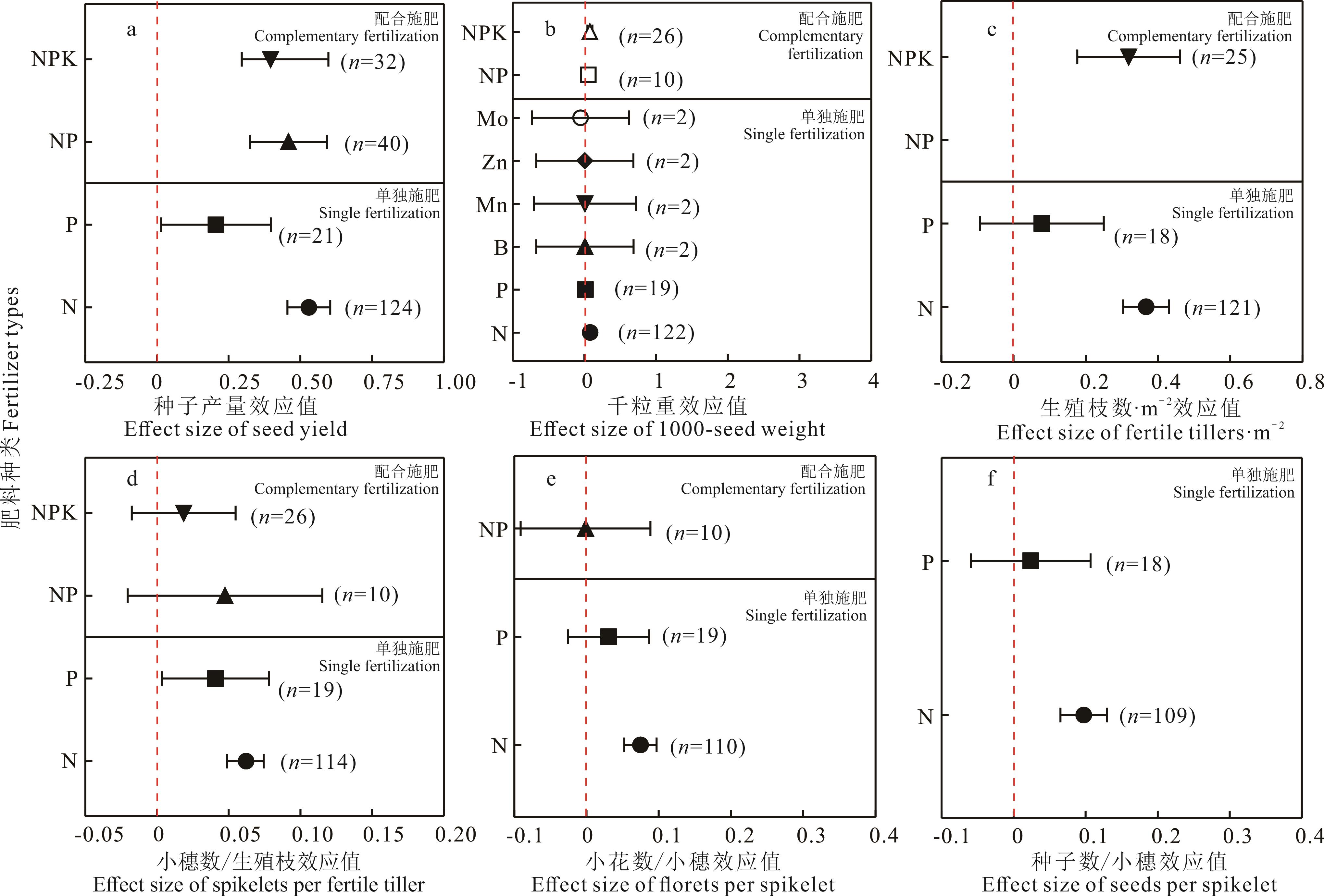
Fig.4 Effect of fertilizer types on fertilisation effect of seed yield components and seed yield of E. sibiricus

Fig.5 Effect of annual precipitation on fertilisation effect of seed yield components and seed yield of E. sibiricus

Fig.6 Effect of annual average temperature on fertilisation effect of seed yield components and seed yield of E. sibiricus

Fig.7 Effect of soil type on fertilisation effect of seed yield components and seed yield of E. sibiricus
| 1 | Wang C Q, Wang H M, Zhou Q P, et al. Bibliometric analysis of Elymus sibiricus L. research literature. Journal of Grassland and Forage Science, 2020, 35(5): 72-81, 86. |
| 王传旗, 王红梅, 周青平, 等. 老芒麦研究文献计量分析. 草学, 2020, 35(5): 72-81, 86. | |
| 2 | Li L H. Responses of nitrogen use efficiency and dry matter distribution to nitrogen application level in seed production of Elymus sibiricus. Urumqi: Xinjiang Agricultural University, 2023. |
| 李露红. 制种老芒麦氮素利用效率及干物质分配对施氮水平的响应. 乌鲁木齐: 新疆农业大学, 2023. | |
| 3 | Chen M J, Jia S X. Forage flora of China. Beijing: China Agriculture Press, 2002. |
| 陈默君, 贾慎修.中国饲用植物. 北京: 中国农业出版社, 2002. | |
| 4 | Wu B, He L J, Luo R, et al. Study on the response of carbon and nitrogen partitioning to nitrogen addition in Elymus sibiricus. Grassland and Turf, 2019, 39(6): 19-25. |
| 武蓓, 何丽娟, 罗瑞, 等. 老芒麦体内碳氮分配对氮素添加的响应研究. 草原与草坪, 2019, 39(6): 19-25. | |
| 5 | Wang M Y. Roles of nitrogen application on seed yield and yield components in siberian wildrye. Beijing: China Agricultural University, 2018. |
| 王明亚. 施氮对老芒麦种子产量及产量因子的作用. 北京: 中国农业大学, 2018. | |
| 6 | Mao P S, Han J G, Wang Y, et al. Effects of fertilization on seed yield and seed quality of Elymus sibiricus. Pratacultural Science, 2001, 18(4): 7-13. |
| 毛培胜, 韩建国, 王颖, 等. 施肥处理对老芒麦种子质量和产量的影响. 草业科学, 2001, 18(4): 7-13. | |
| 7 | Zhang J H, Li Q F, Li X L. Studies on the seed yield components of Elymus sibiricus without irrigation. Chinese Journal of Grassland, 2000, 22(6): 35-38. |
| 张锦华, 李青丰, 李显利. 旱作老芒麦种子产量构成因子的研究. 中国草地学报, 2000, 22(6): 35-38. | |
| 8 | Gao P, Li C, Chen B J, et al. Effects of nitrogen fertilizer on seed yield, seed constitutive factors and seed vigor of Elymus sibiricus L. Journal of Northeast Normal University (Natural Science Edition), 2010, 42(2): 126-131. |
| 高朋, 李聪, 陈本建, 等. 施氮对老芒麦种子产量及其构成因子和种子活力的影响. 东北师大学报(自然科学版), 2010, 42(2): 126-131. | |
| 9 | Luo J, Zhang S Z, Tang F, et al. Effect of nitrogen application on seed yield of Elymus sibiricus under different densities. Grass-Feeding Livestock, 2020, 41(3): 28-34. |
| 罗金, 张树振, 唐凤, 等. 不同密度条件下施氮对老芒麦种子产量的影响. 草食家畜, 2020, 41(3): 28-34. | |
| 10 | Li L H, Xu W N, Chen W G, et al. Effects of density and nitrogen level on agronomic traits and seed yield of Elymus sibiricus. Grass-Feeding Livestock, 2022, 43(4): 45-52. |
| 李露红, 徐婉宁, 陈卫国, 等. 建植密度和施氮水平互作对老芒麦农艺性状和种子产量的影响. 草食家畜, 2022, 43(4): 45-52. | |
| 11 | Zhao L, Wang M Y, Mao P S, et al. Selceted nitrogen and phosphorus fertilizer applications affect seed yield, seed yield components and roots of Elymus sibiricus. Acta Agrestia Sinica, 2012, 20(4): 662-668. |
| 赵利, 王明亚, 毛培胜, 等. 不同氮磷处理对老芒麦种子产量、产量组分及根系的影响. 草地学报, 2012, 20(4): 662-668. | |
| 12 | Tang F. Effects of nitrogen application on dry matter accumulation and seed yield of Elymus sibiricus L. Urumqi: Xinjiang Agricultural University, 2022. |
| 唐凤. 不同施氮条件对老芒麦干物质积累和种子产量的影响. 乌鲁木齐: 新疆农业大学, 2022. | |
| 13 | You M H, Liu J P, Zhang C B, et al. Effect of row space, sowing rate and fertilizing amount on yield of Elymus sibiricus L. Hubei Agricultural Sciences, 2011, 50(24): 5196-5199, 5205. |
| 游明鸿, 刘金平, 张昌兵, 等. 行距、播种量和施肥量正交对老芒麦产量影响的分析. 湖北农业科学, 2011, 50(24): 5196-5199, 5205. | |
| 14 | Luo Y Q, Hui D F, Zhang D Q. Elevated CO2 stimulates net accumulations of carbon and nitrogen in land ecosystems: A meta analysis. Ecology, 2006, 87(1): 53-63. |
| 15 | Cai L, Wang L L, Luo Z Z, et al. Meta-analysis of yield effects of fertilization on alfalfa in China. Arid Land Geography, 2021, 44(3): 838-848. |
| 才璐, 王林林, 罗珠珠, 等. 中国苜蓿施肥产量效应的Meta分析. 干旱区地理, 2021, 44(3): 838-848. | |
| 16 | Qi G P, Kang Y X, Yin M H, et al. Yield responses of wheat to crop residue returning in China: A meta-analysis. Crop Science, 2019, 59(5): 2185-2200. |
| 17 | Wang L L, Coulter J A, Palta J A. Mulching-induced changes in tuber yield and nitrogen use efficiency in potato in China: A meta-analysis. Agronomy, 2019, 9(12): 793-808. |
| 18 | Geng J, He T F, Li H K. Meta-analysis on impact of conservation tillage on winter wheat yield and yield composition in the north China plain. Journal of Sichuan Agricultural University, 2023, 41(1): 158-165. |
| 耿晶, 贺亭峰, 李海康. 保护性耕作对华北平原冬小麦产量组成影响的Meta分析. 四川农业大学学报, 2023, 41(1): 158-165. | |
| 19 | Wang X Y, Yu X, Shen Y Y, et al. Fertilization increased alfalfa yield and nutritive value in northern China: A meta-analysis. Pratacultural Science, 2023, 40(1): 208-217. |
| 王晓雨, 于鑫, 沈禹颖, 等. 整合分析施肥类型对中国北方紫花苜蓿产量和营养品质的影响. 草业科学, 2023, 40(1): 208-217. | |
| 20 | Song J H, Hu T M, Wang Q Z, et al. Correlation analysis of nitrogen application rate and Tibetan wild Elymus nutans seed yield and its yield factors. Journal of Northwest A&F University (Natural Science Edition), 2008, 36(5): 22-26. |
| 宋江湖, 呼天明, 王佺珍, 等. 施N量对西藏野生垂穗披碱草种子产量及产量因子的相关性分析.西北农林科技大学学报(自然科学版), 2008, 36(5): 22-26. | |
| 21 | Zhang J H, Li Q F, Li X L. Studies on the effects of nitrogen and phosphate on Elymus sibiricus without irrigation. Chinese Journal of Grassland, 2001, 23(2): 38-41. |
| 张锦华, 李青丰, 李显利. 氮、磷肥对旱作老芒麦种子生产性能作用的研究.中国草地学报, 2001, 23(2): 38-41. | |
| 22 | Chen L J, Zou B J, Shi Y, et al. Effect of fertilization on root development, root metabolism of spring wheat and the mechanism of fertilization on soil water utilization. Journal of Plant Nutrition and Fertilizers, 1995, 1(2): 26-32. |
| 陈利军, 邹邦基, 史奕, 等.旱地施肥对春小麦根系生长、代谢的影响及促进水分有效利用的机理.植物营养与肥料学报, 1995, 1(2): 26-32. | |
| 23 | He X, Li Q F, Suo Q Y. Effects of fertilizer applications on seed production and seed yield components of grasses in rain-fed cultivation practice I. Journal of Arid Land Resources and Environment, 2001, 15(5): 79-83. |
| 贺晓, 李青丰, 索全义. 旱作条件下施肥对老芒麦和冰草种子产量及构成的影响I-氮、磷、钾对牧草种子产量及构成的影响. 干旱区资源与环境, 2001, 15(5): 79-83. | |
| 24 | Xu Z M, Zhou Q P, Liu Y F, et al. Effects of fertilization on the seed yield of Elymus sibiricus. Journal of Gansu Agricultural University, 2004, 46(6): 639-643. |
| 徐智明, 周青平, 刘云芬, 等. 平衡施肥对老龄多叶老芒麦种子产量的影响. 甘肃农业大学学报, 2004, 46(6): 639-643. | |
| 25 | You M H. Study on key technologies of seed production of Elymus sibiricus L. in the Sichuan northwestern plateau. Chengdu: Sichuan Agricultural University, 2012. |
| 游明鸿. 川西北高原老芒麦种子丰产关键技术研究. 成都: 四川农业大学, 2012. | |
| 26 | Chen L K, Shen M. The effect of different fertilization and row spacing on seed production of Elymus sibiricus L. cv. chuancao No.2. Journal of Grassland and Forage Science, 2007, 28(9): 21-27. |
| 陈立坤, 沈敏. 不同行距、不同施肥量处理对“川草2号”老芒麦种子生产的影响. 草业与畜牧, 2007, 28(9): 21-27. | |
| 27 | Zhang W Y, Zhou Q P, Xu C T. Effect of fertilizer on procreative performance of Elymus sibiricu cv. Duo Ye in Gonghe area. Qinghai Prataculture, 2005, 14(2): 2-6. |
| 张维云, 周青平, 徐成体. 共和地区施肥对多叶老芒麦生产性能的影响. 青海草业, 2005, 14(2): 2-6. | |
| 28 | Zou H, Gao G Y, Zhu B, et al. Modeling of the response of soil moisture to precipitation in the restored grasslands of the Loess Plateau. Arid Zone Research, 2020, 37(4): 890-898. |
| 邹慧, 高光耀, 朱斌, 等. 黄土高原恢复草地土壤水分对降水响应及模拟. 干旱区研究, 2020, 37(4): 890-898. | |
| 29 | Li C R, The effect of ridge-furrow collecting water planting on the growth and development and yield of Elymus sibiricus L. in semi-arid region. Beijing: Beijing Forestry University, 2010. |
| 李春荣. 半干旱地区垄沟集雨种植对老芒麦(Elymus sibiricus L.)生长和产量的影响. 北京: 北京林业大学, 2010. | |
| 30 | Han M L, Bai S Q, Sun S N, et al. Simulation of Elymus sibiricus L. distribution in Tibetan Plateau based on MaxEnt model. Acta Agrestia Sinica, 2021, 29(2): 374-382. |
| 韩梦丽, 白史且, 孙盛楠, 等. 基于MaxEnt模型青藏高原老芒麦适生区模拟预测. 草地学报, 2021, 29(2): 374-382. | |
| 31 | Yin M H, Ma Y L, Kang Y X, et al. Effects of nitrogen application on alfalfa yield and quality in China-A meta analysis. Acta Prataculturae Sinica, 2022, 31(9): 36-49. |
| 银敏华, 马彦麟, 康燕霞, 等. 氮素添加对中国苜蓿产量与品质效应的Meta分析. 草业学报, 2022, 31(9): 36-49. | |
| 32 | Yi X S, Li G S, Yin Y Y, et al. Preliminary study for the influences of grassland degradation on soil water retention in the source region of the Yellow River. Journal of Natural Resources, 2012, 27(10): 1708-1719. |
| 易湘生, 李国胜, 尹衍雨, 等. 黄河源区草地退化对土壤持水性影响的初步研究. 自然资源学报, 2012, 27(10): 1708-1719. | |
| 33 | Li X, Gou M M, Qu Z Y, et al. Effect of biochar on moisture characteristics of sandy loam soils. Jiangsu Agricultural Sciences, 2018, 46(12): 280-283. |
| 李兴, 勾芒芒, 屈忠义, 等. 生物炭对沙壤土水分特征的影响. 江苏农业科学, 2018, 46(12): 280-283. | |
| 34 | Gao R P, Zhao P Y, Liu X Y, et al. Effects of long-term fertilization on soil physicochemical and biological properties of chestnut calcareous soil in agro-pastoral ecotone. Chinese Journal of Ecology, 2023, 42(3): 552-560. |
| 高日平, 赵沛义, 刘小月, 等. 长期施肥对农牧交错带栗钙土土壤理化性质及生物学特性的影响. 生态学杂志, 2023, 42(3): 552-560. | |
| 35 | Zhang X Y, Wang C Y, Li J X, et al. Effects of different fertilization treatments on soil physical and chemical properties in semi-arid area. Journal of Jilin Agricultural University, 1-6[2022-07-14]. https://doi.org/10.13327/j.jjla. |
| 张欣宇, 王呈玉, 李锦秀, 等. 不同施肥处理对黑钙土理化性质及产量的影响. 吉林农业大学学报, 1-6[2022-07-14]. https://doi.org/10.13327/j.jjla. | |
| 36 | Yu X N, Zhu P, Mao P S. Effects of nitrogenous fertilizer and phosphorus fertilizer applications on roots and seed yield of Elymus sibiricus. Acta Agrestia Sinica, 2011, 19(4): 637-643. |
| 于晓娜, 朱萍, 毛培胜. 氮磷处理对老芒麦根系及种子产量的影响. 草地学报, 2011, 19(4): 637-643. | |
| 37 | Wang M Y, Mao P S. Effects of nitrogen and phosphorus fertilizer on seed yield, seed yield components and canopy NDVI of Elymus sibiricus. Pratacultural Science, 2014, 31(4): 683-688. |
| 王明亚, 毛培胜. 施氮、磷肥对老芒麦种子产量、产量组分及成熟期冠层NDVI值的影响. 草业科学,2014, 31(4): 683-688. |
| [1] | Xue HA, Jin-qing ZHANG, Fang-xu BAI, Xiang-rong MA, An-qi WANG, Hui-ling MA. Analysis of traits related to seed yield and nutrient utilization in the Kentucky bluegrass germplasm in Gansu [J]. Acta Prataculturae Sinica, 2023, 32(4): 54-67. |
| [2] | Tong-yao LI, Qing-ping ZHOU, You-jun CHEN, Yuan ZHAN, Hui WANG. Effects of nitrogen application rate on seed yield and nitrogen use efficiency of Elymus [J]. Acta Prataculturae Sinica, 2023, 32(3): 80-90. |
| [3] | Xing WANG, Wei HUANG, Shu-yan YU, Xiao-yun LI, Xue-qin GAO, Bing-zhe FU. Effect of water and fertilizer coupling on seed yield and composition of alfalfa grown with underground drip irrigation in Ningxia [J]. Acta Prataculturae Sinica, 2022, 31(9): 76-85. |
| [4] | Yu-xia WANG, Jin-long CHAI, Yang-yang ZHOU, Chang-lin XU, Lin WANG, Xiao-jun YU. Effects of planting method on seed yield and its components in Medicago ruthenica in an arid area of Longzhong [J]. Acta Prataculturae Sinica, 2021, 30(8): 60-72. |
| [5] | LIU Jiang, LV Tao, ZHANG Li-xin, YE Li-na, LIU Xiang-yang, DAI Xiang-rong, WANG Wei-wei, DING Ru. Soil quality assessment by principal component analysis in Glycyrrhiza uralensis stands of differing ages [J]. Acta Prataculturae Sinica, 2020, 29(6): 162-171. |
| [6] | FU Bing-zhe, ZHOU Yan-fei, LI Xue, NI Biao, GAO Xue-qin. Effect of water and fertilizer coupling on Leymus chinensis in the Ningxia irrigation area [J]. Acta Prataculturae Sinica, 2020, 29(5): 98-108. |
| [7] | ZHANG Meng, LI Ben-yin, LIU Chun-zeng, LÜ Yu-hu, ZHANG Cheng-lan, CHEN Xue-qing, CAO Wei-dong. A study of stratified maturity characteristics of Chinese milk vetch (Astragalus sinicus) pods and their seed yield [J]. Acta Prataculturae Sinica, 2020, 29(2): 64-72. |
| [8] | LIU Kai-qiang, LIU Wen-hui, WEI Xiao-xing, JIA Zhi-feng, SHI Zheng-hai. Effect of different sowing rates and row spacings on seed yield of Avena sativa cv. Qingyan No.1 [J]. Acta Prataculturae Sinica, 2020, 29(2): 82-91. |
| [9] | ZHANG Xu, NIE Gang, HUANG Lin-kai, TANG Lu, ZHOU Zhou, LIU Fu, ZHOU Jie, ZOU Jing, REN Si-yan, ZHANG Xin-quan. Effect of plant growth regulator on seed yield of Dactylis glomerata [J]. Acta Prataculturae Sinica, 2019, 28(6): 93-100. |
| [10] | LIU Hui, NZABANITA Clement, LI Yan-zhong. A study of the date of occurrence of Bruchophagus roddi boring damage in Astragalus adsurgens seeds [J]. Acta Prataculturae Sinica, 2019, 28(4): 146-156. |
| [11] | LUO Kai, ZHANG Ji-yu, WANG Yan-rong. Effect of planting density and phosphorus fertiliser on seed yield of Melilotus officinalis [J]. Acta Prataculturae Sinica, 2018, 27(7): 112-119. |
| [12] | ZHANG Mei-yan, XUE Shi-ming, NAN Zhi-biao. Advances in seed breeding and production of Setaria sphacelata cv. Narok [J]. Acta Prataculturae Sinica, 2018, 27(1): 195-203. |
| [13] | CHEN Ling-Ling, REN Wei, MAO Pei-Sheng, WU Ren-Tu-Ya, WANG Sheng-Nan, LIANG Qing-Wei. Effects of nitrogen application on seed yield and nitrogen accumulation in alfalfa (Medicago sativa) [J]. Acta Prataculturae Sinica, 2017, 26(6): 98-104. |
| [14] | ZHANG Jing, WANG Qian, XIAO Yu, PANG Xiao-Pan, JIA Ting-Ting, SONG Rui, LIU Hui-Xia. Effects of alternate furrow irrigation on the biomass allocation and water use efficiency of alfalfa [J]. Acta Prataculturae Sinica, 2016, 25(3): 164-171. |
| [15] | CHEN Dong-Dong, WANG Yan-Rong, HAN Yun-Hua. Effects of irrigation frequency and fertilizer rate on alfalfa seed yields in the Yellow River irrigated region [J]. Acta Prataculturae Sinica, 2016, 25(3): 154-163. |
| Viewed | ||||||
|
Full text |
|
|||||
|
Abstract |
|
|||||
