
ISSN 1004-5759 CN 62-1105/S
Acta Prataculturae Sinica ›› 2025, Vol. 34 ›› Issue (7): 41-53.DOI: 10.11686/cyxb2024312
Previous Articles Next Articles
Yu-xia WANG1,2,3( ), Ling-tong DU2,3(), Zhi-yuan YI2,3, Xiao LUO2,3, Li SU4, Cheng-long QIAO1,2,3, Bin XUE2,3
Received:2024-08-08
Revised:2024-09-30
Online:2025-07-20
Published:2025-05-12
Contact:
Ling-tong DU
Yu-xia WANG, Ling-tong DU, Zhi-yuan YI, Xiao LUO, Li SU, Cheng-long QIAO, Bin XUE. Spatial variation and factors influencing the soil organic carbon pool in grape-producing areas at the eastern foothills of Helan Mountain in Ningxia[J]. Acta Prataculturae Sinica, 2025, 34(7): 41-53.
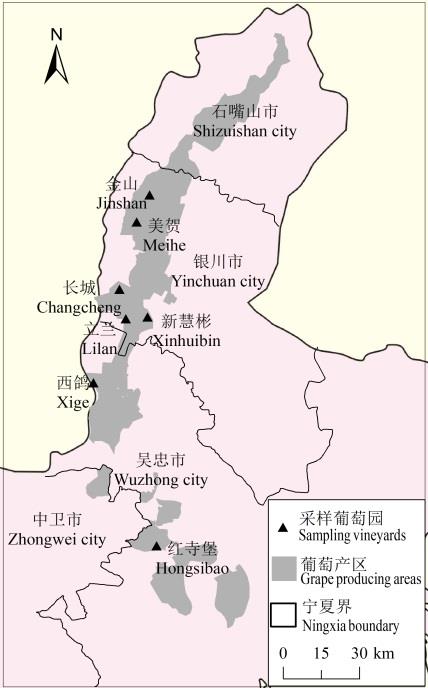
Fig.1 Overview map of the study area and distribution of sampled vineyards
项目 Items | 土壤有机质含量Soil organic matter content | |||||
|---|---|---|---|---|---|---|
| ≤6 g·kg-1 | 6~10 g·kg-1 | 10~20 g·kg-1 | 20~30 g·kg-1 | 30~40 g·kg-1 | >40 g·kg-1 | |
| 土壤养分等级Soil nutrient level | Ⅵ | Ⅴ | Ⅳ | Ⅲ | Ⅱ | Ⅰ |
| 养分丰富情况Nutrient abundance situation | 极度缺乏 Extremely lacking | 缺乏 Lack | 较缺乏 Relatively lacking | 中等 Moderate | 较丰富 Relatively rich | 丰富 Rich |
Table 1 Gradation of soil nutrient level
项目 Items | 土壤有机质含量Soil organic matter content | |||||
|---|---|---|---|---|---|---|
| ≤6 g·kg-1 | 6~10 g·kg-1 | 10~20 g·kg-1 | 20~30 g·kg-1 | 30~40 g·kg-1 | >40 g·kg-1 | |
| 土壤养分等级Soil nutrient level | Ⅵ | Ⅴ | Ⅳ | Ⅲ | Ⅱ | Ⅰ |
| 养分丰富情况Nutrient abundance situation | 极度缺乏 Extremely lacking | 缺乏 Lack | 较缺乏 Relatively lacking | 中等 Moderate | 较丰富 Relatively rich | 丰富 Rich |
葡萄园 Vineyards | SOC含量 SOC content (g·kg-1) | 养分等级 Nutrient level | SOC最大值 Maximum SOC content (g·kg-1) | 最大养分等级 Maximum nutrient level | SOC最小值 Minimum SOC content (g·kg-1) | 最小养分等级 Minimum nutrient level | 变异系数 CV (%) |
|---|---|---|---|---|---|---|---|
| 金山Jinshan | 10.54±0.68a | Ⅳ | 14.69 | Ⅲ | 6.74 | Ⅳ | 22.3 |
| 美贺Meihe | 11.11±0.71a | Ⅳ | 16.55 | Ⅲ | 7.38 | Ⅳ | 25.4 |
| 长城Changcheng | 7.28±0.60b | Ⅳ | 11.05 | Ⅳ | 4.93 | Ⅴ | 24.8 |
| 新慧彬Xinhuibin | 4.65±0.27c | Ⅴ | 6.38 | Ⅳ | 2.92 | Ⅵ | 21.6 |
| 立兰Lilan | 7.33±0.60b | Ⅳ | 10.26 | Ⅳ | 5.49 | Ⅴ | 24.5 |
| 西鸽Xige | 3.50±0.28cd | Ⅴ | 5.75 | Ⅳ | 1.98 | Ⅵ | 32.4 |
| 红寺堡Hongsibao | 3.00±0.20d | Ⅵ | 4.98 | Ⅴ | 1.83 | Ⅵ | 27.1 |
| 全产区Whole area | 6.54 | Ⅳ | 9.95 | Ⅳ | 4.47 | Ⅴ | 55.8 |
Table 2 Soil organic carbon content status in grape vineyards at the eastern foothills of the Helan Mountains in Ningxia
葡萄园 Vineyards | SOC含量 SOC content (g·kg-1) | 养分等级 Nutrient level | SOC最大值 Maximum SOC content (g·kg-1) | 最大养分等级 Maximum nutrient level | SOC最小值 Minimum SOC content (g·kg-1) | 最小养分等级 Minimum nutrient level | 变异系数 CV (%) |
|---|---|---|---|---|---|---|---|
| 金山Jinshan | 10.54±0.68a | Ⅳ | 14.69 | Ⅲ | 6.74 | Ⅳ | 22.3 |
| 美贺Meihe | 11.11±0.71a | Ⅳ | 16.55 | Ⅲ | 7.38 | Ⅳ | 25.4 |
| 长城Changcheng | 7.28±0.60b | Ⅳ | 11.05 | Ⅳ | 4.93 | Ⅴ | 24.8 |
| 新慧彬Xinhuibin | 4.65±0.27c | Ⅴ | 6.38 | Ⅳ | 2.92 | Ⅵ | 21.6 |
| 立兰Lilan | 7.33±0.60b | Ⅳ | 10.26 | Ⅳ | 5.49 | Ⅴ | 24.5 |
| 西鸽Xige | 3.50±0.28cd | Ⅴ | 5.75 | Ⅳ | 1.98 | Ⅵ | 32.4 |
| 红寺堡Hongsibao | 3.00±0.20d | Ⅵ | 4.98 | Ⅴ | 1.83 | Ⅵ | 27.1 |
| 全产区Whole area | 6.54 | Ⅳ | 9.95 | Ⅳ | 4.47 | Ⅴ | 55.8 |
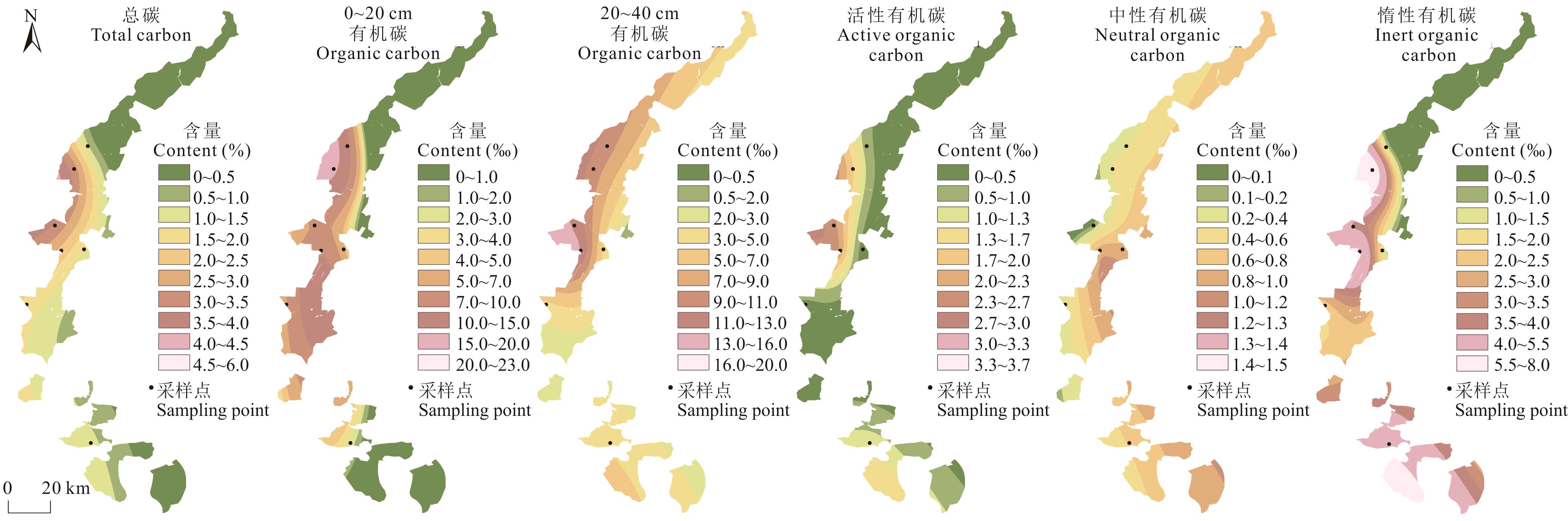
Fig.2 Spatial distribution of soil organic carbon and its components in grape producing areas at the eastern foot of Helan Mountain
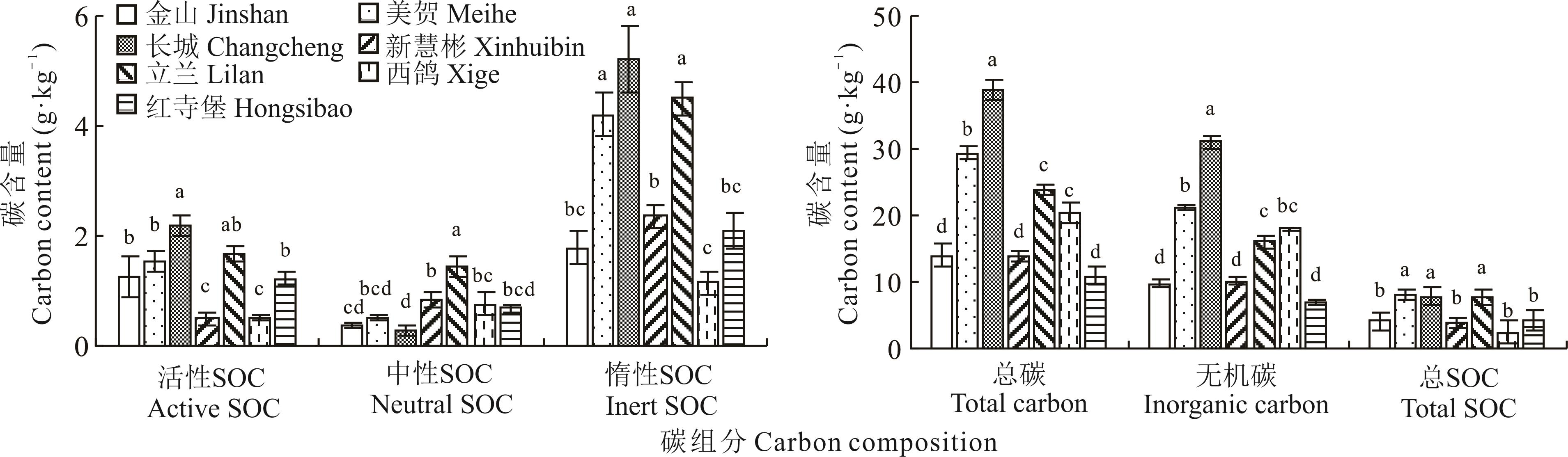
Fig.3 Soil total carbon and carbon components in different vineyards

Fig.4 Soil organic carbon content of different vineyards in all soil layers
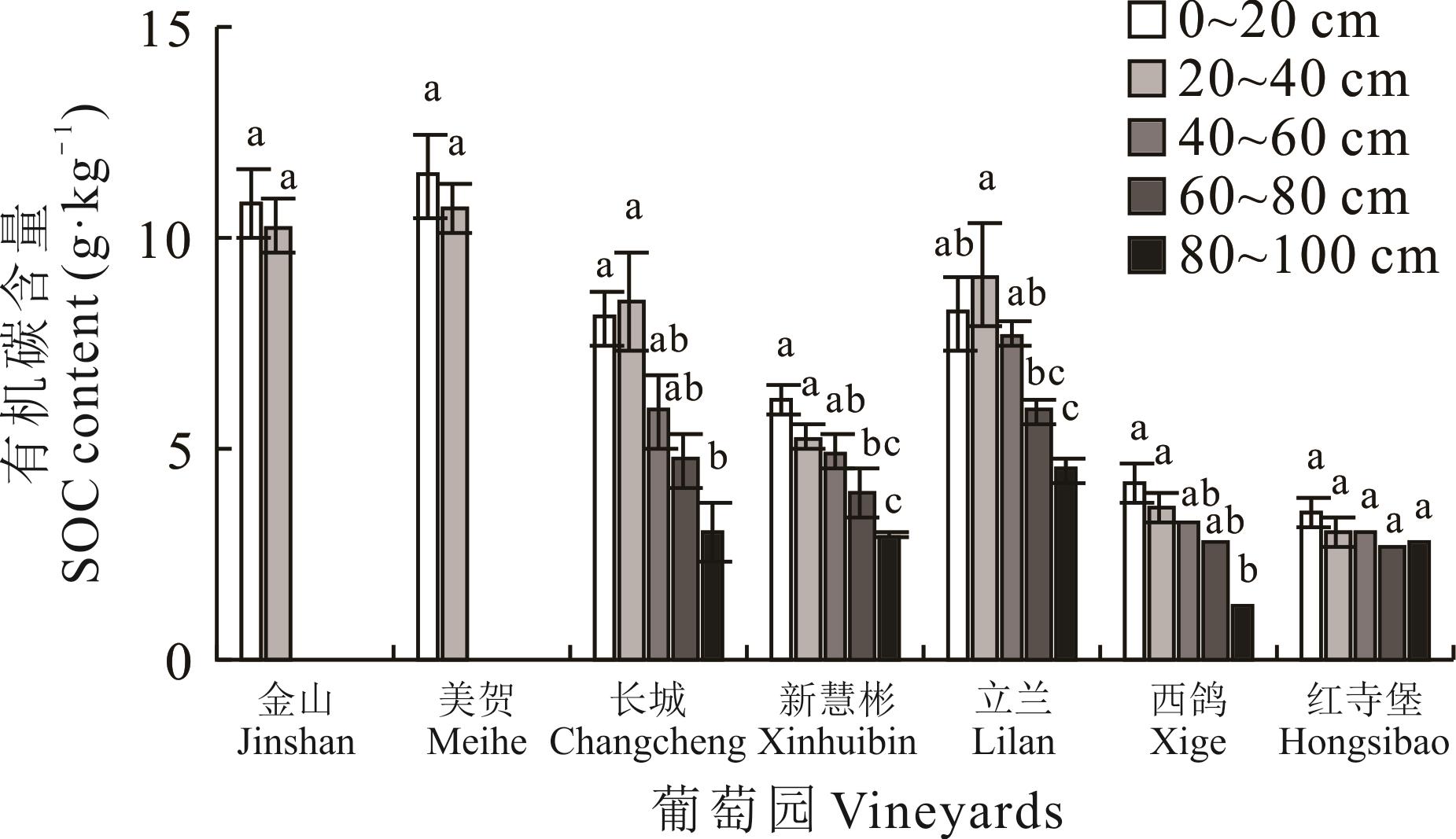
Fig.5 Comparison of soil organic carbon content in different soil layers of different vineyards
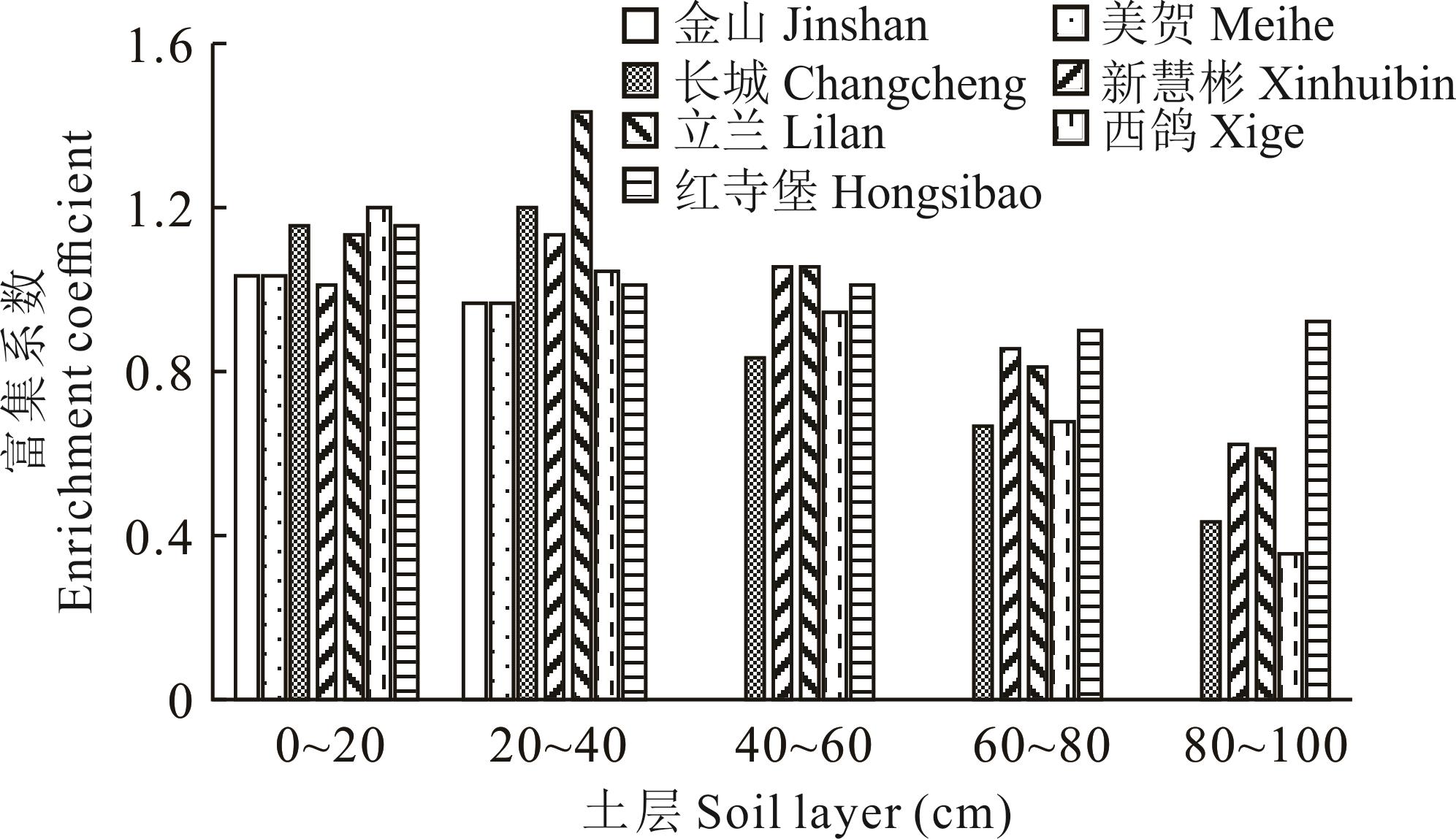
Fig.6 Soil organic carbon enrichment coefficient of different vineyards in all soil layers

Fig.7 Soil carbon components and total carbon content of different soil types
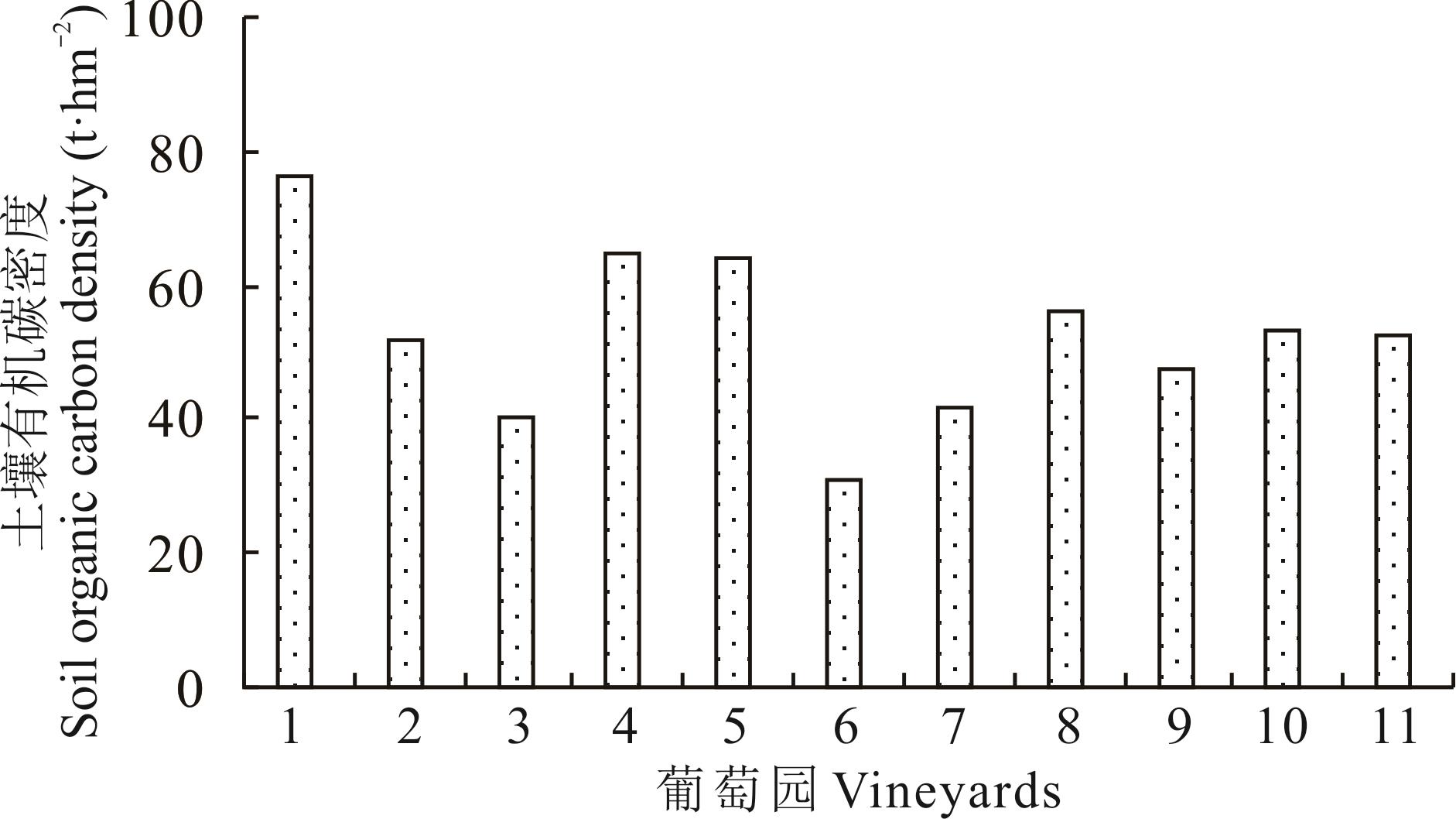
Fig.8 Soil organic carbon density
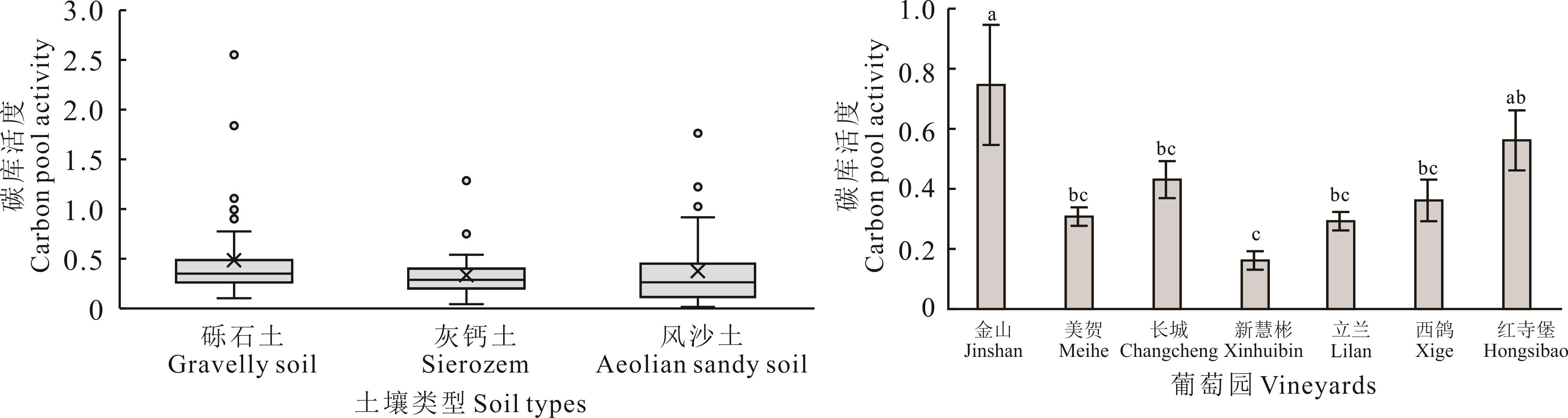
Fig.9 Lability of soil carbon pool
项目 Items | 敏感性指标 Sensitivity index | SOC及其组分敏感值 SOC and its component sensitive values | SOC组分分配比例 Distribution ratio of SOC components (%) | |||||
|---|---|---|---|---|---|---|---|---|
| SOC | 活性SOC Active SOC | 中性SOC Neutral SOC | 惰性SOC Inert SOC | 活性SOC Active SOC | 中性SOC Neutral SOC | 惰性SOC Inert SOC | ||
葡萄园 Vineyards | 金山Jinshan | 1.14 | 5.12 | 10.60 | 1.81 | 38.4 | 10.8 | 50.8 |
| 美贺Meihe | 0.92 | 2.56 | 47.09 | 0.45 | 25.0 | 8.1 | 66.9 | |
| 长城Changcheng | 1.55 | 1.52 | 16.89 | 0.56 | 28.3 | 3.7 | 68.0 | |
| 新慧彬Xinhuibin | 0.57 | 16.81 | 49.84 | 0.87 | 21.5 | 19.6 | 58.9 | |
| 立兰Lilan | 1.10 | 1.20 | 2.36 | 0.28 | 12.1 | 25.9 | 62.0 | |
| 西鸽Xige | 0.76 | 12.59 | 25.14 | 9.11 | 21.4 | 29.6 | 49.1 | |
| 红寺堡Hongsibao | 0.66 | 6.80 | 5.21 | 5.05 | 29.6 | 16.4 | 53.9 | |
| 均值Average value | 0.96 | 6.66 | 22.45 | 2.59 | 25.2 | 14.0 | 60.8 | |
土壤类型 Soil types | 砾石土Gravelly soil | 1.21 | 3.06 | 24.86 | 0.94 | 29.0 | 6.5 | 64.5 |
| 灰钙土Sierozem | 0.93 | 6.89 | 13.75 | 4.69 | 21.4 | 22.1 | 56.5 | |
| 风沙土Aeolian sandy soil | 0.61 | 11.81 | 27.52 | 2.96 | 21.3 | 20.9 | 57.8 | |
| 均值Average value | 0.92 | 7.25 | 22.04 | 2.86 | 24.4 | 15.5 | 60.1 | |
Table 3 Soil organic carbon sensitivity and distribution ratio in grape producing areas at the eastern foothills of Helan Mountain
项目 Items | 敏感性指标 Sensitivity index | SOC及其组分敏感值 SOC and its component sensitive values | SOC组分分配比例 Distribution ratio of SOC components (%) | |||||
|---|---|---|---|---|---|---|---|---|
| SOC | 活性SOC Active SOC | 中性SOC Neutral SOC | 惰性SOC Inert SOC | 活性SOC Active SOC | 中性SOC Neutral SOC | 惰性SOC Inert SOC | ||
葡萄园 Vineyards | 金山Jinshan | 1.14 | 5.12 | 10.60 | 1.81 | 38.4 | 10.8 | 50.8 |
| 美贺Meihe | 0.92 | 2.56 | 47.09 | 0.45 | 25.0 | 8.1 | 66.9 | |
| 长城Changcheng | 1.55 | 1.52 | 16.89 | 0.56 | 28.3 | 3.7 | 68.0 | |
| 新慧彬Xinhuibin | 0.57 | 16.81 | 49.84 | 0.87 | 21.5 | 19.6 | 58.9 | |
| 立兰Lilan | 1.10 | 1.20 | 2.36 | 0.28 | 12.1 | 25.9 | 62.0 | |
| 西鸽Xige | 0.76 | 12.59 | 25.14 | 9.11 | 21.4 | 29.6 | 49.1 | |
| 红寺堡Hongsibao | 0.66 | 6.80 | 5.21 | 5.05 | 29.6 | 16.4 | 53.9 | |
| 均值Average value | 0.96 | 6.66 | 22.45 | 2.59 | 25.2 | 14.0 | 60.8 | |
土壤类型 Soil types | 砾石土Gravelly soil | 1.21 | 3.06 | 24.86 | 0.94 | 29.0 | 6.5 | 64.5 |
| 灰钙土Sierozem | 0.93 | 6.89 | 13.75 | 4.69 | 21.4 | 22.1 | 56.5 | |
| 风沙土Aeolian sandy soil | 0.61 | 11.81 | 27.52 | 2.96 | 21.3 | 20.9 | 57.8 | |
| 均值Average value | 0.92 | 7.25 | 22.04 | 2.86 | 24.4 | 15.5 | 60.1 | |
| 1 | Zeng N, Jiang K, Han P F, et al. The Chinese carbon-neutral goal: challenges and prospects. Advances in Atmospheric Sciences, 2022, 39(8): 1229-1238. |
| 2 | Zhou G S, Zhou M Z, Zhou L, et al. Prospect of research on the sink enhancement potential of terrestrial ecosystems in China. Chinese Science Bulletin, 2022, 67(31): 3625-3632. |
| 周广胜, 周梦子, 周莉, 等. 中国陆地生态系统增汇潜力研究展望. 科学通报, 2022, 67(31): 3625-3632. | |
| 3 | Jobbágy E G, Jackson R B. The vertical distribution of soil organic carbon and its relation to climate and vegetation. Ecological Applications, 2000, 10(2): 423-436. |
| 4 | Lal R. Soil carbon sequestration impacts on global climate change and food security. Science, 2004, 304(5677): 1623-1627. |
| 5 | Guillaume T, Bragazza L, Levasseur C, et al. Long-term soil organic carbon dynamics in temperate cropland-grassland systems. Agriculture, Ecosystems & Environment, 2021, 305: 107184. |
| 6 | Yang Y H, Shi Y, Sun W J, et al. Terrestrial carbon sinks in China and around the world and their contribution to carbon neutrality. Scientia Sinica (Vitae), 2022, 52(4): 534-574. |
| 杨元合, 石岳, 孙文娟, 等. 中国及全球陆地生态系统碳源汇特征及其对碳中和的贡献. 中国科学: 生命科学, 2022, 52(4): 534-574. | |
| 7 | Zhang L, Xue T T, Gao F F, et al. Carbon storage distribution characteristics of vineyard ecosystems in Hongsibu, Ningxia. Plants, 2021, 10(6): 1199. |
| 8 | Williams J N, Morandé J A, Vaghti M G, et al. Ecosystem services in vineyard landscapes: a focus on aboveground carbon storage and accumulation. Carbon Balance and Management, 2020, 15(1): 1-10. |
| 9 | Callesen T O, Gonzalez C V, Bastos Campos F, et al. Understanding carbon sequestration, allocation, and ecosystem storage in a grassed vineyard. Geoderma Regional, 2023, 34: e00674. |
| 10 | Brunori E, Farina R, Biasi R. Sustainable viticulture: The carbon-sink function of the vineyard agro-ecosystem. Agriculture, Ecosystems & Environment, 2016, 223: 10-21. |
| 11 | Tezza L, Vendrame N, Pitacco A. Disentangling the carbon budget of a vineyard: the role of soil management. Agriculture, Ecosystems & Environment, 2019, 272: 52-62. |
| 12 | Hu B, Lin L, Fang Y J, et al. Application of chitosan-lignosulfonate composite coating film in grape preservation and study on the difference in metabolites in fruit wine. Coatings, 2022, 12(4): 494. |
| 13 | Du H J, Zhao S W, Wei Y E, et al. Evaluation of the suitability of meteorological conditions for wine grapes at the eastern foot of Helan Mountains during the whole reproductive period. Journal of Ningxia University (Natural Science Edition), (2024-09-11)[2024-11-16]. https://doi.org/10.20176/j.cnki.nxdz.000038. |
| 杜宏娟, 赵斯文, 魏月娥, 等. 贺兰山东麓酿酒葡萄全生育期气象条件适宜度评价. 宁夏大学学报(自然科学版), (2024-09-11) [2024-11-16]. https://doi.org/10.20176/j.cnki.nxdz.000038. | |
| 14 | Ma L W, Li J P, Han Y J, et al. Meteorological conditions and rating method of quality formation of ‘Cabernet Sauvignon’ grape in eastern foothills of Helan Mountain. Chinese Journal of Eco-Agriculture, 2018, 26(3): 453-466. |
| 马力文, 李剑萍, 韩颖娟, 等. 贺兰山东麓‘赤霞珠’品质形成气象条件与评级方法研究. 中国生态农业学报, 2018, 26(3): 453-466. | |
| 15 | Geng K Q, Zhang Y X, LYU D, et al. Effects of water stress on the sugar accumulation and organic acid changes in Cabernet Sauvignon grape berries. Horticultural Science, 2022, 49(3): 164-178. |
| 16 | Li Y S, Xiao J N, Yan Y F, et al. Multivariate analysis and optimization of the relationship between soil nutrients and berry quality of Vitis vinifera cv. cabernet franc vineyards in the eastern foothills of the Helan Mountains, China. Horticulturae, 2024, 10(1): 61. |
| 17 | Ren J Z. Research methods in pratacultural science. Beijing: China Agriculture Press, 1998. |
| 任继周. 草业科学研究方法. 北京: 中国农业出版社, 1998. | |
| 18 | Liu S Y, Zhan X H, Lin K F. Procedural regulations regarding the enviroment quality monitoring of soil, NY/T 395-2012. Beijing: China Agriculture Press, 2012. |
| 刘素云, 战新华, 林匡飞. 农田土壤环境质量监测技术规范, NY/T 395-2012. 北京: 中国农业出版社, 2012. | |
| 19 | Bao S D. Soil agrochemical analysis (The Third Edition). Beijing: China Agriculture Press, 2000. |
| 鲍士旦. 土壤农化分析(第3版). 北京: 中国农业出版社, 2000. | |
| 20 | LYU J L, Yan M J, Song B L, et al. Ecological stoichiometry characteristics of soil carbon, nitrogen, and phosphorus in an oak forest and a black locust plantation in the Loess hilly region. Acta Ecologica Sinica, 2017, 37(10): 3385-3393. |
| 吕金林, 闫美杰, 宋变兰, 等. 黄土丘陵区刺槐、辽东栎林地土壤碳、氮、磷生态化学计量特征. 生态学报, 2017, 37(10): 3385-3393. | |
| 21 | Rovira P, Vallejo V R. Labile and recalcitrant pools of carbon and nitrogen in organic matter decomposing at different depths in soil: an acid hydrolysis approach. Geoderma, 2002, 107(1/2): 109-141. |
| 22 | Guo L J, Li Y, Li M, et al. Spatial variability of soil water repellency and soil physical-chemical properties in saline-alkaline field. Acta Pedologica Sinica, 2011, 48(2): 277-285. |
| 郭丽俊, 李毅, 李敏, 等. 盐渍化农田土壤斥水性与理化性质的空间变异性. 土壤学报, 2011, 48(2): 277-285. | |
| 23 | Liu X M, Rao H L, Ding X X, et al. Effects of different mixed forest types on soil organic carbon and soil respiration in Phyllostachys edulis J. Houz forest. Chinese Journal of Applied & Environmental Biology, 2021, 27(1): 71-80. |
| 刘鑫铭, 饶惠玲, 丁新新, 等. 不同混交类型对毛竹林土壤有机碳和土壤呼吸的影响. 应用与环境生物学报, 2021, 27(1): 71-80. | |
| 24 | Xie X, Lu Y H, Liao Y L, et al. Effects of returning Astragalus sinicus and rice straw to replace partial fertilizers on double season rice yield and soil labile organic carbon. Scientia Agricultura Sinica, 2023, 56(18): 3585-3598. |
| 谢雪, 鲁艳红, 廖育林, 等. 紫云英与稻草还田替代部分化肥对双季稻产量和土壤活性有机碳的影响. 中国农业科学, 2023, 56(18): 3585-3598. | |
| 25 | Bremer E, Janzen H H, Johnston A M. Sensitivity of total, light fraction and mineralizable organic matter to management practices in a Lethbridge soil. Canadian Journal of Soil Science, 1994, 74(2): 131-138. |
| 26 | National Soil Census Office. Provisional technical regulations for the second national soil census. Beijing: Agriculture Press, 1979. |
| 全国土壤普查办公室. 全国第二次土壤普查暂行技术规程. 北京: 农业出版社, 1979. | |
| 27 | Yang F, Xu Y, Cui Y, et al. Variation of soil organic matter content in croplands of China over the last three decades. Acta Pedologica Sinica, 2017, 54(5): 1047-1056. |
| 杨帆, 徐洋, 崔勇, 等. 近30年中国农田耕层土壤有机质含量变化. 土壤学报, 2017, 54(5): 1047-1056. | |
| 28 | Zhang Z R, Zhao Z M, Deng Z W, et al. Soil organic carbon stocks and spatial distribution characteristics of forest land in Meizhou city. Forestry and Environmental Science, 2022, 38(2): 153-158. |
| 张中瑞, 赵志明, 邓智文, 等. 梅州市林地土壤有机碳储量及空间分布特征. 林业与环境科学, 2022, 38(2): 153-158. | |
| 29 | Zhao M Y, Liu Y X, Zhang X Y. A review of research advances on carbon sinks in farmland ecosystems. Acta Ecologica Sinica, 2022, 42(23): 9405-9416. |
| 赵明月, 刘源鑫, 张雪艳. 农田生态系统碳汇研究进展. 生态学报, 2022, 42(23): 9405-9416. | |
| 30 | Wang Z X. Characteristics of soil organic carbon of grape land in different years in eastern piedmont of Helan Mountains. Yinchuan: Ningxia University, 2020. |
| 王志秀. 贺兰山东麓不同年限葡萄地土壤有机碳变化特征研究. 银川: 宁夏大学, 2020. | |
| 31 | Liang Q, Chen H Q, Gong Y S, et al. Effects of 15 years of manure and inorganic fertilizers on soil organic carbon fractions in a wheat-maize system in the north China Plain. Nutrient Cycling in Agroecosystems, 2012, 92(1): 21-33. |
| 32 | Li J, Wen Y C, Li X H, et al. Soil labile organic carbon fractions and soil organic carbon stocks as affected by long-term organic and mineral fertilization regimes in the north China Plain. Soil and Tillage Research, 2018, 175: 281-290. |
| 33 | Brar B S, Singh K, Dheri G S. Carbon sequestration and soil carbon pools in a rice-wheat cropping system: effect of long-term use of inorganic fertilizers and organic manure. Soil and Tillage Research, 2013, 128: 30-36. |
| 34 | Poirier V, Angers D A, Rochette P, et al. Initial soil organic carbon concentration influences the short-term retention of crop-residue carbon in the fine fraction of a heavy clay soil. Biology and Fertility of Soils, 2013, 49(5): 527-535. |
| 35 | Whalen J K, Gul S, Poirier V, et al. Transforming plant carbon into soil carbon: process-level controls on carbon sequestration. Canadian Journal of Plant Science, 2014, 94(6): 1065-1073. |
| 36 | Zhang S, Wang L C, Huang Z C, et al. Effects of conservation tillage on active soil organic carbon composition. Journal of Soil and Water Conservation, 2015, 29(2): 226-231, 252. |
| 张赛, 王龙昌, 黄召存, 等. 土壤活性有机碳不同组分对保护性耕作的响应. 水土保持学报, 2015, 29(2): 226-231, 252. | |
| 37 | Zhang M M, Liu T X, Duan L M, et al. Carbon isotope characteristics of atmosphere-leaf-litter-soil continuum in typical vegetation types of semi-arid sand dune and meadow. Acta Ecologica Sinica, 2022, 42(18): 7663-7675. |
| 张苗苗, 刘廷玺, 段利民, 等. 半干旱沙丘与草甸典型植被类型区大气-叶片-凋落物-土壤连续体碳同位素特征. 生态学报, 2022, 42(18): 7663-7675. | |
| 38 | Gross C D, Harrison Z B. The case for digging deeper: soil organic carbon storage, dynamics, and controls in our changing world. Soil Systems, 2019, 3(2): 28. |
| 39 | Zhang Y A, Gao M, Yu C Y, et al. Soil nutrients, enzyme activities, and microbial communities differ among biocrust types and soil layers in a degraded Karst ecosystem. Catena, 2022, 212: 106057. |
| 40 | Fierer N, Schimel J P, Holden P A. Variations in microbial community composition through two soil depth profiles. Soil Biology and Biochemistry, 2003, 35(1): 167-176. |
| 41 | von Lützow M, Kögel-Knabner I, Ekschmitt K, et al. SOM fractionation methods: relevance to functional pools and to stabilization mechanisms. Soil Biology and Biochemistry, 2007, 39(9): 2183-2207. |
| 42 | Cressey E L, Dungait J A J, Jones D L, et al. Soil microbial populations in deep floodplain soils are adapted to infrequent but regular carbon substrate addition. Soil Biology and Biochemistry, 2018, 122: 60-70. |
| 43 | Witzgall K, Vidal A, Schubert D I, et al. Particulate organic matter as a functional soil component for persistent soil organic carbon. Nature Communications, 2021, 12(1): 1-10. |
| 44 | Yang S Q, Tang F, Yang H, et al. Effects of peach tree planting patters on soil organic carbon fractions and carbon pool management index in southern Yunnan. Acta Ecologica Sinica, 2023, 43(1): 290-303. |
| 杨淑琪, 唐芬, 杨桦, 等. 滇南地区桃树种植模式对土壤有机碳组分及碳库管理指数的影响. 生态学报, 2023, 43(1): 290-303. | |
| 45 | Pang D, Cui M, Liu Y, et al. Responses of soil labile organic carbon fractions and stocks to different vegetation restoration strategies in degraded karst ecosystems of southwest China. Ecological Engineering, 2019, 138: 391-402. |
| 46 | Zhang F, Wang X J, Guo T W, et al. Soil organic and inorganic carbon in the loess profiles of Lanzhou area: implications of deep soils. Catena, 2015, 126: 68-74. |
| 47 | Huang Y, Song X, Wang Y, et al. Size distribution and vulnerability of the global soil inorganic carbon. Science, 2024, 384(6692): 233-239. |
| 48 | Zhang P, Chen X L, Wei T, et al. Effects of straw incorporation on the soil nutrient contents, enzyme activities, and crop yield in a semiarid region of China. Soil and Tillage Research, 2016, 160: 65-72. |
| 49 | Ding X L, Han X Z, Liang Y, et al. Changes in soil organic carbon pools after 10 years of continuous manuring combined with chemical fertilizer in a Mollisol in China. Soil and Tillage Research, 2012, 122: 36-41. |
| [1] | Wen-li QIN, Jing ZHANG, Guang-min XIAO, Su-qian CUI, Jian-xun YE, Jian-fei ZHI, Li-feng ZHANG, Nan XIE, Wei FENG, Zhen-yu LIU, Xuan PAN, Yun-xia DAI, Zhong-kuan LIU. Effects of partial replacement of chemical nitrogen fertilizers with green manure on soil physical properties and maize (Zea mays) yield [J]. Acta Prataculturae Sinica, 2025, 34(6): 27-45. |
| [2] | Kong-qin WEI, Jun-wei ZHAO, Qian-bing ZHANG. Effects of phosphorus application on soil respiration rate and active organic carbon components of alfalfa [J]. Acta Prataculturae Sinica, 2024, 33(2): 80-92. |
| [3] | Si-yuan LI, Yu-xuan CUI, Zong-jiu SUN, Hui-xia LIU, Hua-wei YE. Effect of grazing exclusion on soil organic carbon and stoichiometry characteristics of soil microbial biomass in sagebrush desert [J]. Acta Prataculturae Sinica, 2023, 32(6): 58-70. |
| [4] | Xin GUO, Huan LUO, Xue-mei XU, Ai-xia MA, Zhen-yan SHANG, Tian-hu HAN, De-cao NIU, Hai-yan WEN, Xu-dong LI. Effects of litter decomposition with different qualities on soil organic carbon content and its stability in grassland on the Loess Plateau [J]. Acta Prataculturae Sinica, 2023, 32(5): 83-93. |
| [5] | Xiao-yu HAN, Ning GUO, Dong-dong LI, Ming-yang XIE, Feng JIAO. Effects of nitrogen addition on soil carbon and nitrogen and biomass change in different grassland types in Inner Mongolia [J]. Acta Prataculturae Sinica, 2022, 31(1): 13-25. |
| [6] | Xing WANG, Shuang YU, Dong-mei XU, Ke-chen SONG. Effects of different restorative measures on soil carbon and nitrogen and their component fractions in a degraded desert steppe [J]. Acta Prataculturae Sinica, 2022, 31(1): 26-35. |
| [7] | Hui-xia LIU, Yi-qiang DONG, Yu-xuan CUI, Xing-hong LIU, Pan-xing HE, Qiang SUN, Zong-jiu SUN. Environmental factors influencing soil organic carbon and its characteristics in desert grassland in Altay, Xinjiang [J]. Acta Prataculturae Sinica, 2021, 30(10): 41-52. |
| [8] | Bo JI, Jian-long HE, Xu-dong WU, Zhan-jun WANG, Ying-zhong XIE, Qi JIANG. Characteristics of soil organic carbon and active organic carbon in typical natural grassland in Ningxia [J]. Acta Prataculturae Sinica, 2021, 30(1): 24-35. |
| [9] | WANG Xiao-jiao, QI Peng, CAI Li-qun, CHEN Xiao-long, XIE Jun-hong, GAN Hui-jiong, ZHANG Ren-zhi. Effects of alternative fertilization practices on components of the soil organic carbon pool and yield stability in rain-fed maize production on the Loess Plateau [J]. Acta Prataculturae Sinica, 2020, 29(10): 58-69. |
| [10] | LI Lin, ZHAO Wei. Carbon sequestration characteristics of a warm shrub tussock grassland ecosystem in northwestern Henan [J]. Acta Prataculturae Sinica, 2019, 28(5): 26-35. |
| [11] | YU Shuang, XU Dong-mei, XU Ai-yun, LIU Jin-long, TAO Li-bo. Effects of different restoration measures on the soil organic carbon and nitrogen reserves in a desert steppe grassland ecosystem in Ningxia [J]. Acta Prataculturae Sinica, 2019, 28(3): 12-19. |
| [12] | ZHANG Miao-miao, CHEN Wei, LIN Li, ZHANG De-gang, WU Yu-xin, XIAO Hai-long. A study of soil nutrient characteristics and soil soluble organic carbon levels in different types of alpine grassland in Qinghai Province [J]. Acta Prataculturae Sinica, 2019, 28(3): 20-28. |
| [13] | WANG Xu-yang, LI Yu-qiang, LIAN Jie, LUO Yong-qing, NIU Ya-yi, GONG Xiang-wen. Progress in application of the CENTURY model for prediction of soil carbon levels in different ecosystems [J]. Acta Prataculturae Sinica, 2019, 28(2): 179-189. |
| [14] | YU Shuang, TAO Li-bo, XÜ Dong-mei, XÜ Ai-yun, LIU Jin-long. Effects of enclosure on the soil organic carbon and its active components in desert steppe grassland [J]. Acta Prataculturae Sinica, 2019, 28(2): 190-196. |
| [15] | WANG Duo-bin, JI Chang-ting, LIN Hui-long. A ‘denitrification-decomposition’ (DNDC) model evaluation of alpine meadow soil carbon response to climate change [J]. Acta Prataculturae Sinica, 2019, 28(12): 197-204. |
| Viewed | ||||||
|
Full text |
|
|||||
|
Abstract |
|
|||||
