
ISSN 1004-5759 CN 62-1105/S
Acta Prataculturae Sinica ›› 2025, Vol. 34 ›› Issue (9): 162-172.DOI: 10.11686/cyxb2024416
Ran XIAN1( ), Yu DENG1, Qiu-yue FU1, Jing-xia JIANG1, Jia-li TAO1,2, Tao XU1(), Hui-sen ZHU1(), Hui-fang CEN1
Received:2024-10-24
Revised:2024-12-25
Online:2025-09-20
Published:2025-07-02
Contact:
Tao XU,Hui-sen ZHU
Ran XIAN, Yu DENG, Qiu-yue FU, Jing-xia JIANG, Jia-li TAO, Tao XU, Hui-sen ZHU, Hui-fang CEN. Cloning of alfalfa MsMYB86 and analysis of its transcriptional response to abiotic stress[J]. Acta Prataculturae Sinica, 2025, 34(9): 162-172.
| 名称Name | 上游引物序列Primer-forward sequence (5′-3′) | 下游引物序列Primer-reverse sequence (5′-3′) |
|---|---|---|
| MsMYB86 | ATGGGAAGACATTCTTGCTGCT | CTACATAGTTTGTCCAAAAGCCAC |
| q-MsMYB86 | GCAGCACAATTACCAGGAAGAACAG | CAGAGAGTGGTTTGTGAGTGTTTGG |
| Actin | CAAAAGATGGCAGATGCTGAGGAT | CATGACACCAGTATGACGAGGTCG |
Table 1 Primers list
| 名称Name | 上游引物序列Primer-forward sequence (5′-3′) | 下游引物序列Primer-reverse sequence (5′-3′) |
|---|---|---|
| MsMYB86 | ATGGGAAGACATTCTTGCTGCT | CTACATAGTTTGTCCAAAAGCCAC |
| q-MsMYB86 | GCAGCACAATTACCAGGAAGAACAG | CAGAGAGTGGTTTGTGAGTGTTTGG |
| Actin | CAAAAGATGGCAGATGCTGAGGAT | CATGACACCAGTATGACGAGGTCG |
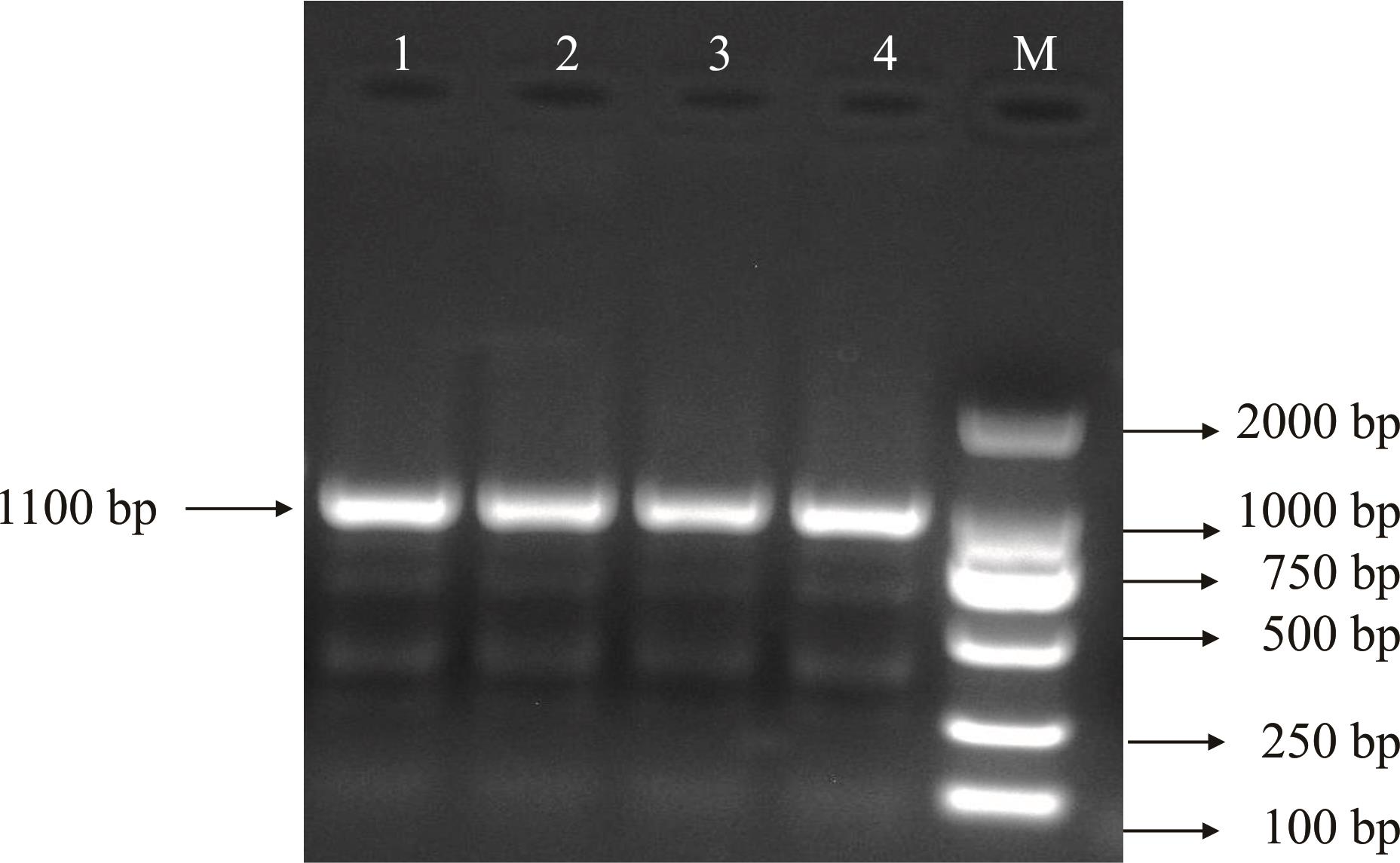
Fig.1 Electrophoresis results of MsMYB86 gene amplification

Fig.2 Alfalfa MsMYB86 CDS full length and coding amino acid sequence

Fig.3 Prediction of structural domain positions of alfalfa MsMYB86 protein (A), MsMYB86 protein phosphorylation site (B), MsMYB86 protein hydrophilicity/hydrophobicity (C), MsMYB86 protein glycosylation site (D)
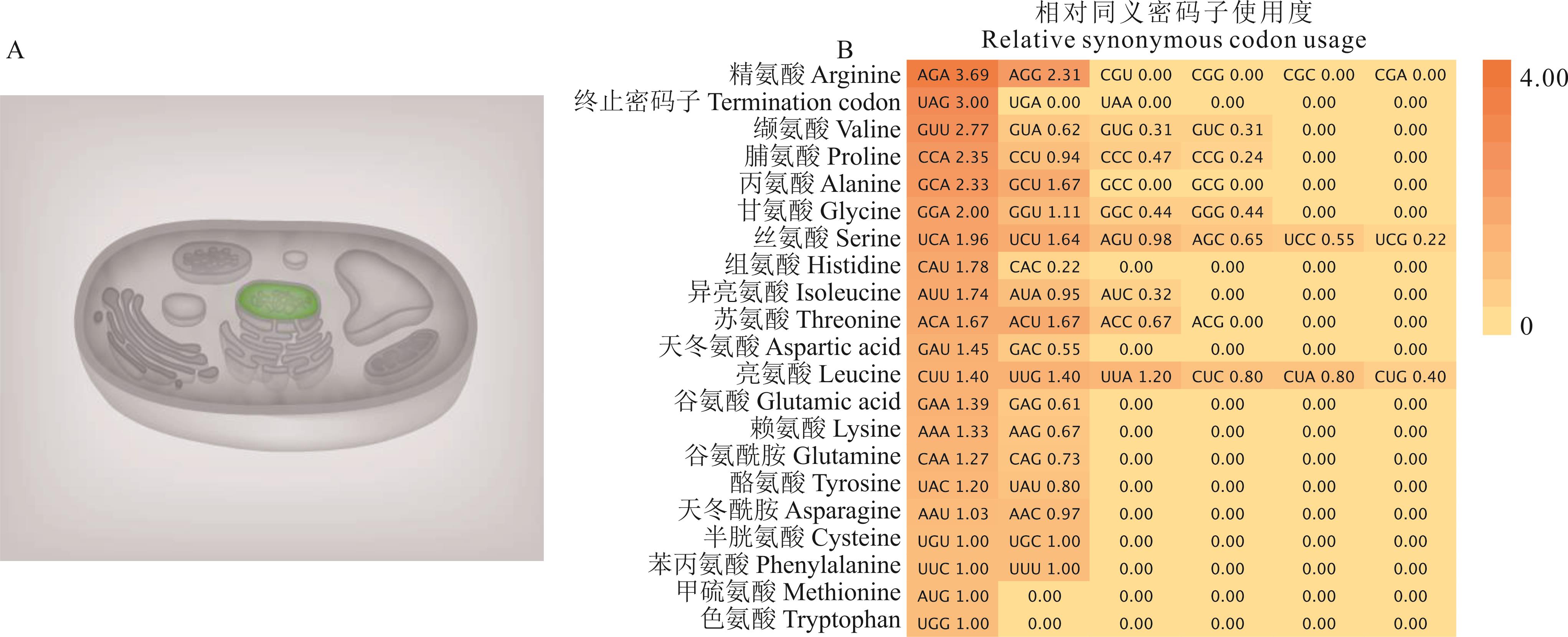
Fig.4 Subcellular localisation prediction (A) and codon preference analysis (B)

Fig.5 Homologous sequence comparison of MsMYB86 protein in different species

Fig.6 Phylogenetic tree of MYB86 amino acid sequences of different species
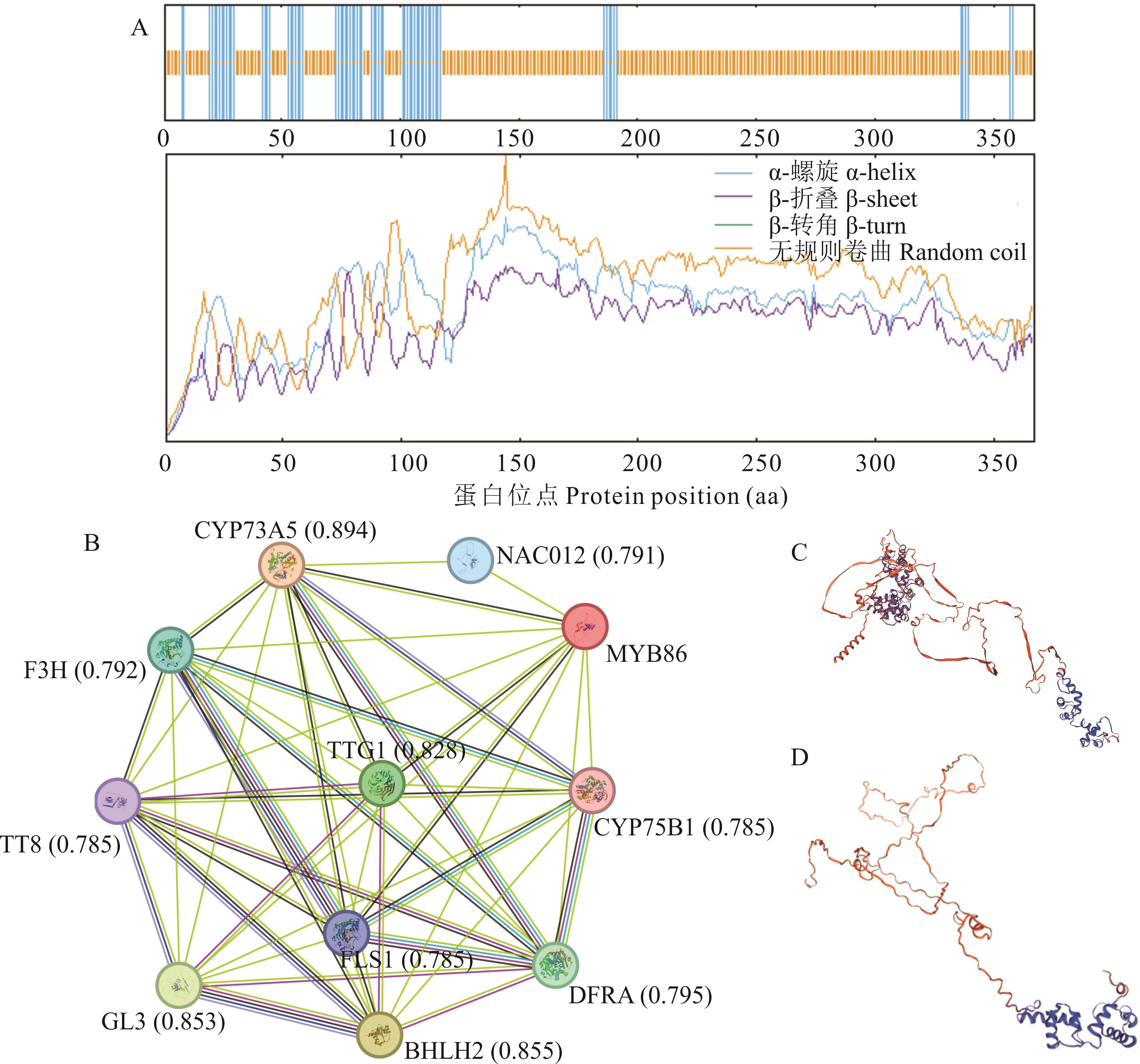
Fig.7 Prediction of amino acid secondary structure of alfalfa MsMYB86 (A), protein interaction network analysis (B), tertiary structure of alfalfa MsMYB86 protein (C) and tertiary structure of soybean MYB/HD-like transcription factor protein(D)
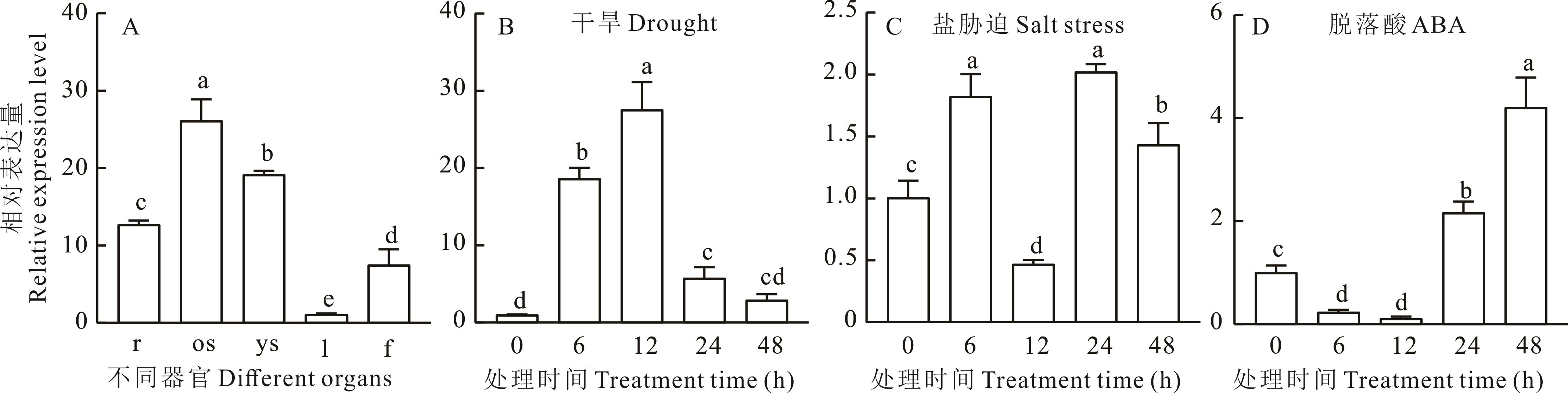
Fig.8 Plant organs specificity and expression pattern of MsMYB86 gene under abiotic stresses
| [1] | Pabo C O, Sauer R T. Transcription factors: structural families and principles of DNA recognition. Annual Review of Biochemistry, 1992, 61(1): 1053-1095. |
| [2] | Xu W J, Huang Y H, Han R R, et al. Systematic analysis of MYB transcription factors related to the geniposide biosynthesis in Gardenia jasminoides Ellis based on whole genome. Acta Pharmaceutica Sinica, 2023, 58(8): 2522-2531. |
| 许文杰, 黄远浩, 韩蓉蓉, 等. 基于全基因组的栀子苷生物合成相关MYB转录因子系统分析. 药学学报, 2023, 58(8): 2522-2531. | |
| [3] | Abe H, Urao T, Ito T, et al. Arabidopsis AtMYC2 (bHLH) and AtMYB2 (MYB) function as transcriptional activators in abscisic acid signaling. The Plant Cell, 2003, 15(1): 63-78. |
| [4] | Lv K, Wei H, Liu G F. A R2R3-MYB transcription factor gene, BpMYB123, regulates BpLEA14 to improve drought tolerance in Betula platyphylla. Frontiers in Plant Science, 2021, 22(12): 1-9. |
| [5] | Chen N, Zhan W W, Shao Q, et al. Cloning, expression, and functional analysis of the MYB transcription factor SlMYB86-like in tomato. Plants, 2024, 13(4): 488. |
| [6] | Jiang S H, Sun Q G, Zhang T L, et al. MdMYB114 regulates anthocyanin biosynthesis and functions downstream of MdbZIP4-like in apple fruit. Journal of Plant Physiology, 2021, 257(12): 153353. |
| [7] | Zhang Y, Hu Y F, Wang S M, et al. Bioinformatic analysis of MYB tanscription factors involved in catechins biosynthesis in tea plant (Camellia sinensis). Journal of Tea Science, 2018, 38(2): 162-173. |
| 张玥, 胡雲飞, 王树茂, 等. 茶树儿茶素合成相关MYB转录因子生物信息学分析. 茶叶科学, 2018, 38(2): 162-173. | |
| [8] | Chen C J, Bao M F, Wang W H, et al. Current situation and prospects for drought-resistance breeding in Medicago sativa. Acta Prataculturae Sinica, 2025, 34(3): 204-223. |
| 陈彩锦, 包明芳, 王文虎, 等. 紫花苜蓿抗旱育种研究现状及展望. 草业学报, 2025, 34(3): 204-223. | |
| [9] | Shen C, Du H, Chen Z, et al. The chromosome-level genome sequence of the autotetraploid alfalfa and resequencing of core germplasms provide genomic resources for alfalfa research. The Molecular Plant, 2020, 13(9): 1250-1261. |
| [10] | Cen H F, Huang J Q, Shen W H, et al. Cloning of the MsUGT87A1 gene inalfalfa and analysis of its expression in the response to abiotic stress. Acta Agrestia Sinica, 2023, 31(6): 1682-1692. |
| 岑慧芳, 黄洁琼, 申王晖, 等. 紫花苜蓿MsUGT87A1基因克隆及其对非生物胁迫的响应分析. 草地学报, 2023, 31(6): 1682-1692. | |
| [11] | Livak K J, Schmittgen T D. Analysis of relative gene expression data using real-time quantitative PCR and the 2-∆∆Ct method. Methods, 2001, 25(4): 402-408. |
| [12] | Kumar S M, Babu R P, Rao V K, et al. Organization and classification of cytochrome P450 genes in castor (Ricinus communis L.).Proceedings of the National Academy of Sciences, India Section B: Biological Sciences, 2014, 84(1): 131-143. |
| [13] | Feller A, Machemer K, Braun E L, et al. Evolutionary and comparative analysis of MYB and bHLH plant transcription factors. Plant Journal for Cell & Molecular Biology, 2011, 66(1): 94-116. |
| [14] | Payne C T, Zhang F, Lloyd A M. GL3 encodes a bHLH protein that regulates trichome development in Arabidopsis through interaction with GL1 and TTG1. Genetics, 2000, 156(3): 1349-1362. |
| [15] | Shan T L, Hong Y T, Du L P, et al. Development and characterization of TaMYB86-overexpressing transgenic wheat lines with resistance to common root rot. Acta Agronomica Sinica, 2016, 42(10): 1429-1436. |
| 单天雷, 洪彦涛, 杜丽璞, 等. 抗根腐病的TaMYB86过表达转基因小麦的创制与分子功能鉴定. 作物学报, 2016, 42(10): 1429-1436. | |
| [16] | Li L Z, Li S H, Ge H Y, et al. A light-responsive transcription factor SmMYB35 enhances anthocyanin biosynthesis in eggplant (Solanum melongena L.). Planta, 2021, 255(1): 12. |
| [17] | Chen Z H. Genetic regulatory network of MAPK-MYB86-CAD2 controls the leaf morphogenesis in rice. Beijing: Chinese Academy of Agricultural Sciences, 2022. |
| 陈振华. 控制水稻叶片形态MAPK-MYB86-CAD2遗传调控网络解析. 北京: 中国农业科学院, 2022. | |
| [18] | Zhou P N, Li Y, Pu T Z, et al. Cloning and bioinformatics analysis of the β-1,4-xylosyltransferase IRX9 gene from Dendrobium huoshanense. Chinese Traditional and Herbal Drugs, 2019, 50(5): 1212-1219. |
| 周佩娜, 李阳, 蒲天珍, 等. 霍山石斛β-1,4-木糖基转移酶(IRX9)基因克隆及生物信息学分析. 中草药, 2019, 50(5): 1212-1219. | |
| [19] | Jiang R P, Zhao C H, Li W J, et al. Codon bias of IPI gene in leguminous plants. Acta Agriculturae Zhejiangensis, 2022, 34(6): 1114-1123. |
| 蒋瑞平, 赵辰晖, 李文杰, 等. 豆科植物IPI基因密码子偏好性. 浙江农业学报, 2022, 34(6): 1114-1123. | |
| [20] | Yang G F, Su K L, Zhao Y R, et al. Analysis of codon usage in the chloroplast genome of Medicago truncatula. Acta Prataculturae Sinica, 2015, 24(12): 171-179. |
| 杨国锋, 苏昆龙, 赵怡然, 等. 蒺藜苜蓿叶绿体密码子偏好性分析. 草业学报, 2015, 24(12): 171-179. | |
| [21] | Li P H, Xia E H, Fu J M, et al. Diverse roles of MYB transcription factors in regulating secondary metabolite biosynthesis, shoot development, and stress responses in tea plants (Camellia sinensis). The Plant Journal, 2022(4): 110. |
| [22] | Wang S, Jia X Q, He L, et al. Research progress on the response mechanisms of crops to drought stress and regulatory measures to improve crop drought resistance. Chinese Agricultural Science Bulletin, 2022, 38(29): 31-44. |
| 王硕, 贾潇倩, 何璐, 等. 作物对干旱胁迫的响应机制及提高作物抗旱能力的调控措施研究进展. 中国农学通报, 2022, 38(29): 31-44. | |
| [23] | Li R X, Sun R J, Wang T C, et al. Research progress on identification and evaluation methods, and mechanism of drought resistance in plants. Biotechnology Bulletin, 2017, 33(7): 40-48. |
| 李瑞雪, 孙任洁, 汪泰初, 等. 植物抗旱性鉴定评价方法及抗旱机制研究进展. 生物技术通报, 2017, 33(7): 40-48. |
| [1] | Wei-peng ZOU, Yi LIU, Jia-xing ZHAI, Si-yi ZHOU, Zhi-yi GONG, Hui-fang CEN, Hui-sen ZHU, Tao XU. Cloning of MsNAC053 from alfalfa and analysis of its transcript profile in response to abiotic stresses [J]. Acta Prataculturae Sinica, 2025, 34(9): 121-133. |
| [2] | Hua-ying DU, Yu-zhou ZHANG, Nan ZHAO, Yan HU, Yi-dong WANG, Teng-da LIU, Pei-wen GU, Ze-yang YU. Trichoderma asperellum bai5 inhibits root rot pathogens of alfalfa (Medicago sativa) and promotes alfalfa plant growth [J]. Acta Prataculturae Sinica, 2025, 34(8): 179-190. |
| [3] | Yi-yin ZHANG, Bin WANG, Teng-fei WANG, Jian LAN, Hai-ying HU. Effects of intercropping triticale with alfalfa on system yield, resource utilization, and alfalfa seed yield [J]. Acta Prataculturae Sinica, 2025, 34(8): 43-53. |
| [4] | Wen-xiu LI, Tuo YAO, Chang-ning LI, Qian-min JIA, Ao-lei HE, Yang ZHOU. Screening of the best ratio of ‘attapulgite-organic matrix’ bacterial fertilizer carrier and its growth-promotion effect on alfalfa [J]. Acta Prataculturae Sinica, 2025, 34(8): 88-98. |
| [5] | Xue-qian JIANG, Qing-chuan YANG, Jun-mei KANG. Research progress on yield loss under drought stress and drought resistance genetics of alfalfa (Medicago sativa) [J]. Acta Prataculturae Sinica, 2025, 34(7): 219-234. |
| [6] | Xiao-Yue WEN, Ying ZHAO, Bao-qiang WANG, Xian WANG, Xiao-lin ZHU, Yi-zhen WANG, Xiao-hong WEI. Expression analysis of AP2/ERFs genes in alfalfa regulated by exogenous NO under drought stress [J]. Acta Prataculturae Sinica, 2025, 34(6): 154-167. |
| [7] | Ying-hao ZHANG, Chu-bo LIU, Kun ZHOU, Jia-cun GUO, Shi-peng LIU, Luan-zi SUN. Effects of jujube tree on the growth of alfalfa and orchardgrass in different positions within an orchard [J]. Acta Prataculturae Sinica, 2025, 34(6): 203-212. |
| [8] | Yan-xia ZENG, Zhi-long CHEN, Ji-hong SHANG, Xiao-di SHA, Juan WU, Cai-jin CHEN. Effects of space mutagenesis on the growth of alfalfa (Medicago sativa) seedlings under PEG-6000 simulated drought stress [J]. Acta Prataculturae Sinica, 2025, 34(6): 59-69. |
| [9] | Kong-qin WEI, Ying-ying ZHANG, Jin-feng HUI, Chun-hui MA, Qian-bing ZHANG. Effect of phosphate-solubilizing bacteria and phosphorus on non-structural carbohydrate content and the carbon∶nitrogen∶phosphorus stoichiometry of alfalfa roots [J]. Acta Prataculturae Sinica, 2025, 34(5): 40-50. |
| [10] | Zhi-fang ZUO, Yong-long LI, Yu-jia WEI, Sheng-hui ZHOU, Yan LI, Guo-feng YANG. Identification of DREB genes from Zoysia japonica and their transcript profiles in response to abiotic stress [J]. Acta Prataculturae Sinica, 2025, 34(5): 74-88. |
| [11] | Xin-yue ZHOU, Li-ping WANG, Qing-xue JIANG, Xiao-ran MA, Deng-xia YI, Xue-min WANG. Isolation of the low-temperature induced proteinMsLTI65 from alfalfa and its response to different stresses [J]. Acta Prataculturae Sinica, 2025, 34(5): 89-104. |
| [12] | Tian-rong LUO, Jian-zhi MA, Ming-yang DU, Jie-cuo DUO, Hui-yan XIONG, Rui-jun DUAN. Identification and expression analysis of LACS gene family members in Medicago sativa [J]. Acta Prataculturae Sinica, 2025, 34(4): 124-136. |
| [13] | Ya-qi FENG, Jia-hui CHEN, Jing-ni ZHANG, Chao SUI, Ji-wei CHEN, Zhi-peng LIU, Qiang ZHOU, Wen-xian LIU. Development of high-protein and high-yield associated InDel molecular markers based on re-sequencing in alfalfa [J]. Acta Prataculturae Sinica, 2025, 34(4): 137-149. |
| [14] | Cai-jin CHEN, Ming-fang BAO, Wen-hu WANG, Ji-hong SHANG, Yan-xia ZENG, Xiao-di SHA, Xin-zhong ZHU, Xue-min WANG, Wen-hui LIU. Current situation and prospects for drought-resistance breeding in Medicago sativa [J]. Acta Prataculturae Sinica, 2025, 34(3): 204-223. |
| [15] | Peng-fei HU, Yu-nong YE, Tong-rui WANG, Jing WANG, Xing WANG, Bing-zhe FU, Xue-qin GAO. Analysis of genetic variation in agronomic of half-sib families of Medicago sativa [J]. Acta Prataculturae Sinica, 2025, 34(3): 85-96. |
| Viewed | ||||||
|
Full text |
|
|||||
|
Abstract |
|
|||||
