
ISSN 1004-5759 CN 62-1105/S
Acta Prataculturae Sinica ›› 2026, Vol. 35 ›› Issue (7): 15-31.DOI: 10.11686/cyxb2025234
Previous Articles Next Articles
Shu-chao LIU1,2,3( ), Quan-qin SHAO2,3,4(), Jiang-wen FAN2,3, Hai-bo HUANG2
Received:2025-06-10
Revised:2025-10-09
Online:2026-07-20
Published:2026-05-21
Contact:
Quan-qin SHAO
Shu-chao LIU, Quan-qin SHAO, Jiang-wen FAN, Hai-bo HUANG. Spatiotemporal dynamics of edible forage and its climatic driving mechanisms in the Three-River Headwaters Region from 1981 to 2020[J]. Acta Prataculturae Sinica, 2026, 35(7): 15-31.
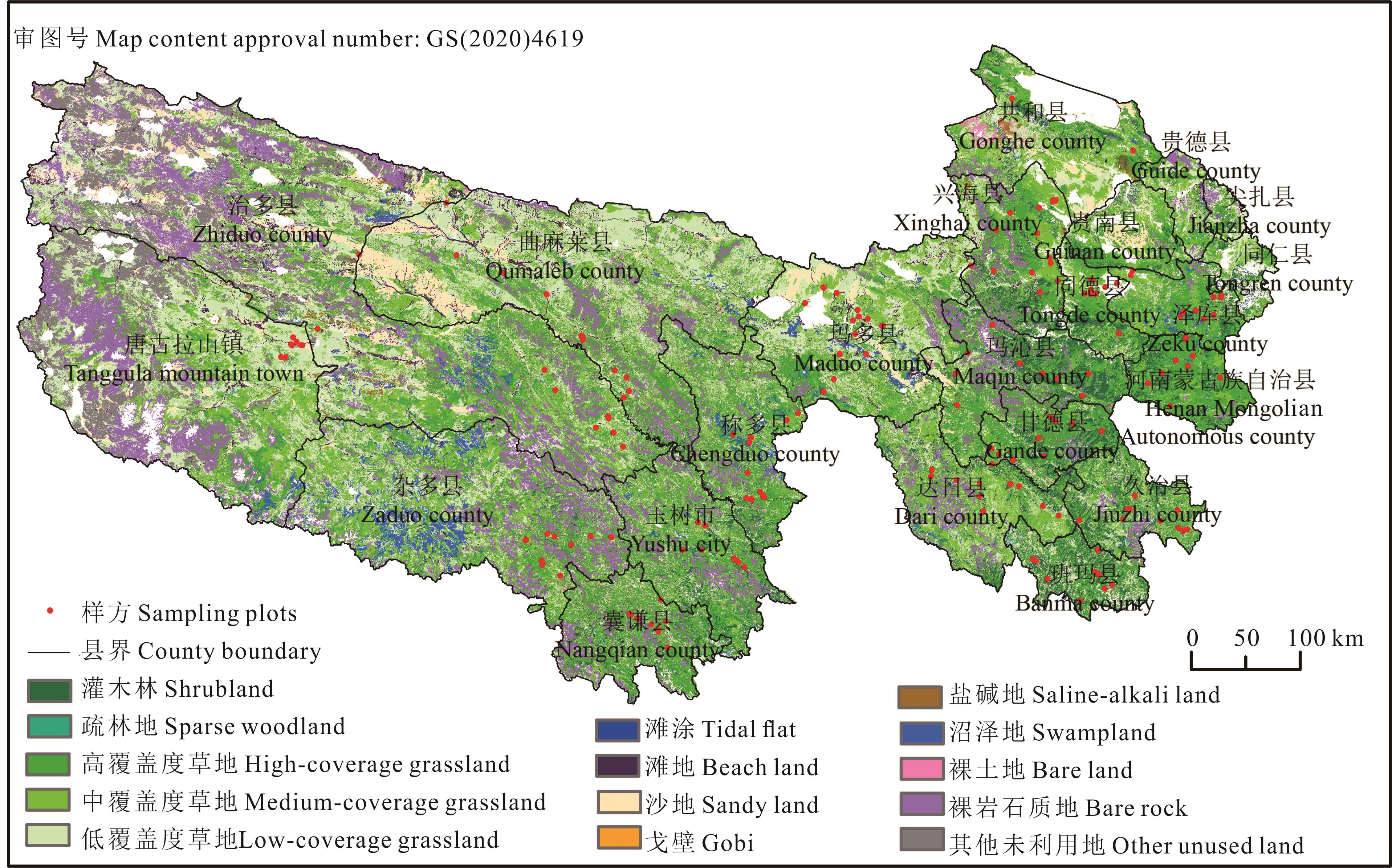
Fig.1 Grassland spatial distribution of the Three-River Headwaters Region
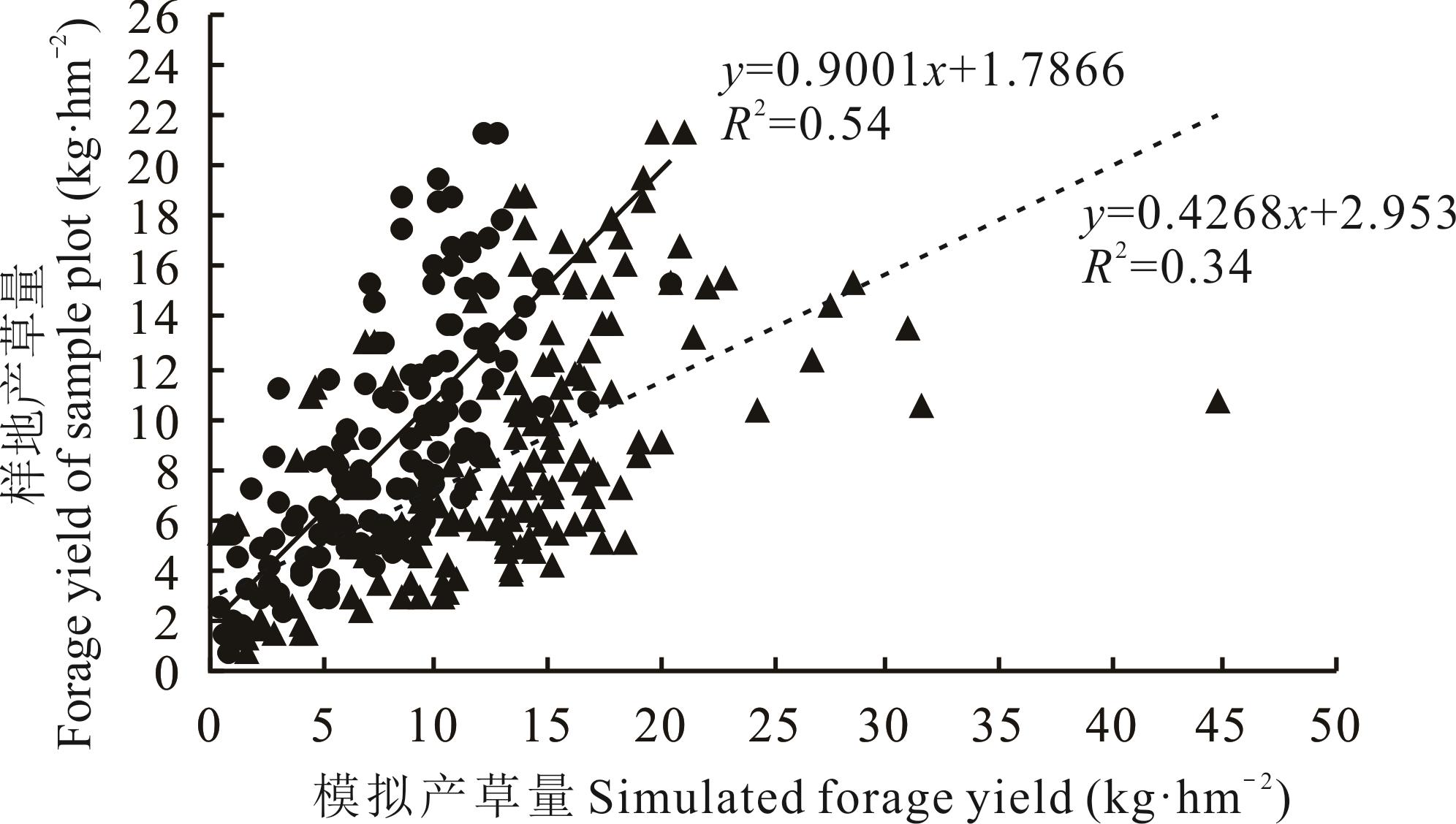
Fig.2 Validation of simulated forage yield accuracy from different NPP datasets
草地类、亚类、组和型 Grassland class, subclass, group, and type | 植被覆盖度 Vegetation coverage | 产草量干重Dry weight of grass yield (kg·hm-2) | 可食牧草比例Proportion of edible forage |
|---|---|---|---|
| 1.温性草原类 Temperate steppe | - | - | - |
| 1.1 山地草原亚类Mountain grassland subclass | 0.35(0.20~0.60) | 665 | - |
| 1.1.1中禾草组Medium grass group | - | - | - |
| 克氏针茅Stipa krylovii、羊茅Festuca ovina | 0.40 | 301 | - |
| 青海固沙草Orinus kokonorica、杂类草Herbarum variarum | 0.30~0.50 | 532 | - |
| 2.高寒草原类Alpine steppe | 0.20~0.60 | - | - |
| 2.1矮禾草组Dwarf grass group | - | - | - |
| 紫花针茅Stipa purpurea | 0.30~0.50 | 255 | - |
| 紫花针茅S. purpurea、杂类草Herbarum variarum | 0.30~0.50 | 255 | - |
| 3.高寒草甸类 Alpine meadow | - | - | - |
| 3.1高寒草甸亚类Alpine meadow subclass | 0.80~0.90 | - | - |
| 3.1.1小莎草组Small sedge group | - | - | - |
| 矮生嵩草Kobresia humilis | 0.80~0.90 | 831 | 0.93 |
| 高山嵩草Kobresia pygmaea | 0.80~0.90 | 562 | 0.85 |
| 禾叶嵩草Kobresia graminifolia | 0.70~0.90 | 968 | - |
| 线叶嵩草Kobresia capillifolia | 0.70~0.90 | 1212 | 0.85 |
| 线叶嵩草K. capillifolia、杂类草Herbarum variarum | 0.60~0.90 | 1610 | 0.83 |
| 3.2沼泽化高寒草甸亚类Swampy alpine meadow subclass | 0.70~0.95 | - | - |
| 3.2.1大莎草组Large sedge group | - | - | - |
| 西藏嵩草Kobresia tibetica | >0.90 | 980 | 0.93 |
Table 1 Statistical of grassland resources in the Three-River Headwaters Region in the 1980s
草地类、亚类、组和型 Grassland class, subclass, group, and type | 植被覆盖度 Vegetation coverage | 产草量干重Dry weight of grass yield (kg·hm-2) | 可食牧草比例Proportion of edible forage |
|---|---|---|---|
| 1.温性草原类 Temperate steppe | - | - | - |
| 1.1 山地草原亚类Mountain grassland subclass | 0.35(0.20~0.60) | 665 | - |
| 1.1.1中禾草组Medium grass group | - | - | - |
| 克氏针茅Stipa krylovii、羊茅Festuca ovina | 0.40 | 301 | - |
| 青海固沙草Orinus kokonorica、杂类草Herbarum variarum | 0.30~0.50 | 532 | - |
| 2.高寒草原类Alpine steppe | 0.20~0.60 | - | - |
| 2.1矮禾草组Dwarf grass group | - | - | - |
| 紫花针茅Stipa purpurea | 0.30~0.50 | 255 | - |
| 紫花针茅S. purpurea、杂类草Herbarum variarum | 0.30~0.50 | 255 | - |
| 3.高寒草甸类 Alpine meadow | - | - | - |
| 3.1高寒草甸亚类Alpine meadow subclass | 0.80~0.90 | - | - |
| 3.1.1小莎草组Small sedge group | - | - | - |
| 矮生嵩草Kobresia humilis | 0.80~0.90 | 831 | 0.93 |
| 高山嵩草Kobresia pygmaea | 0.80~0.90 | 562 | 0.85 |
| 禾叶嵩草Kobresia graminifolia | 0.70~0.90 | 968 | - |
| 线叶嵩草Kobresia capillifolia | 0.70~0.90 | 1212 | 0.85 |
| 线叶嵩草K. capillifolia、杂类草Herbarum variarum | 0.60~0.90 | 1610 | 0.83 |
| 3.2沼泽化高寒草甸亚类Swampy alpine meadow subclass | 0.70~0.95 | - | - |
| 3.2.1大莎草组Large sedge group | - | - | - |
| 西藏嵩草Kobresia tibetica | >0.90 | 980 | 0.93 |
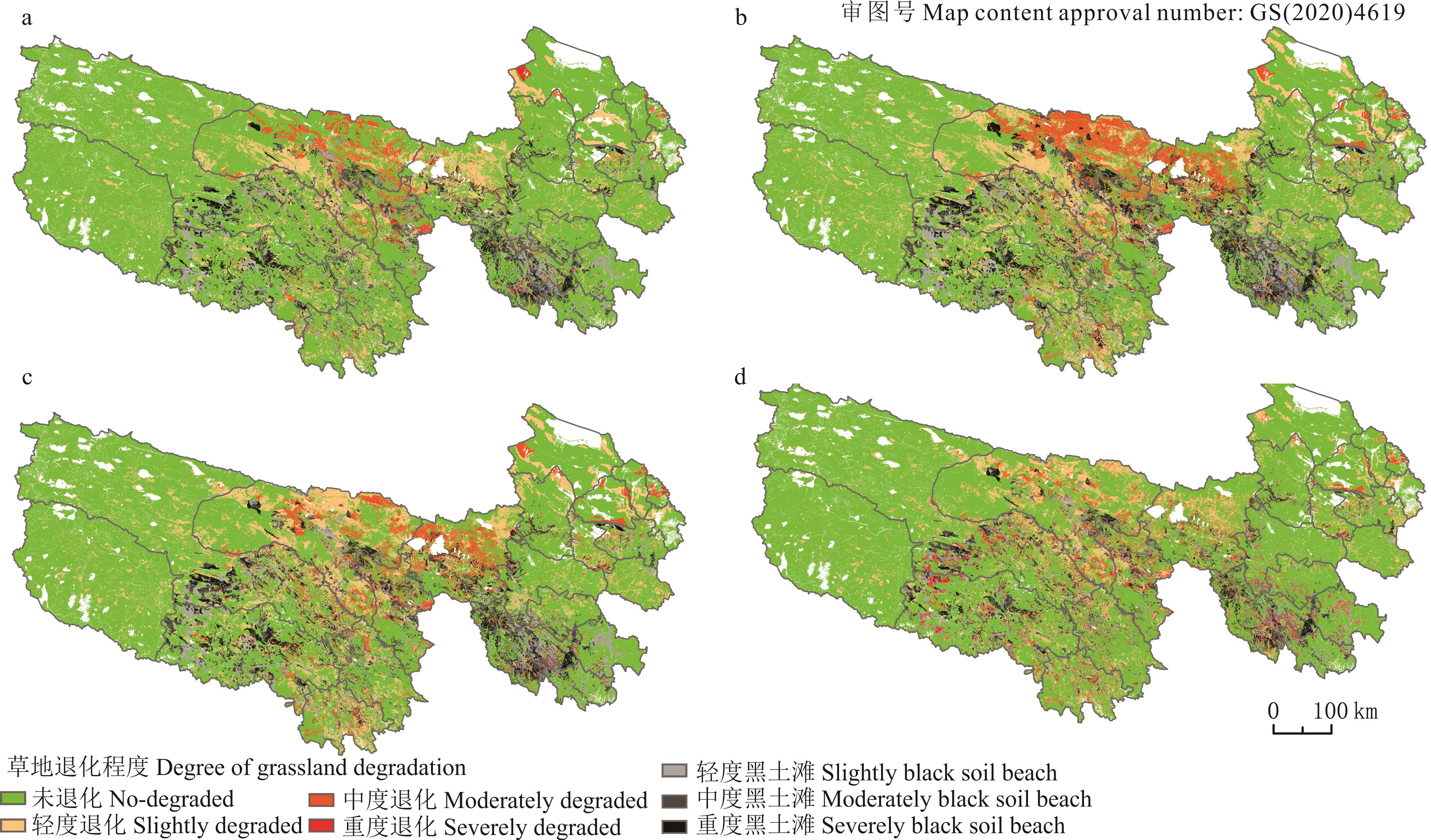
Fig.3 Spatial distribution of natural grassland degradation at different time in the Three-River Headwaters Region
草地类、亚类、组和型 Grassland class, subclass, group, and type | 年份Year | |||
|---|---|---|---|---|
| 1990 | 2004 | 2012 | 2019 | |
| 1.温性草原类Temperate steppe | 0.95 | 0.95 | 0.89 | 0.94 |
| 1.1 山地草原亚类Mountain grassland subclass | 0.95 | 0.95 | 0.89 | 0.94 |
| 1.1.1中禾草组Medium grass group | 0.95 | 0.95 | 0.89 | 0.94 |
| 克氏针茅S. krylovii、羊茅F. ovina | 0.99 | 0.99 | 0.93 | 0.98 |
| 青海固沙草O. kokonorica、杂类草Herbarum variarum | 0.91 | 0.91 | 0.90 | 0.97 |
| 2.高寒草原类Alpine steppe | 0.83 | 0.83 | 0.78 | 0.82 |
| 2.1矮禾草组Dwarf grass group | 0.83 | 0.83 | 0.78 | 0.82 |
| 紫花针茅S. purpurea | 0.87 | 0.86 | 0.81 | 0.85 |
| 紫花针茅S. purpurea、杂类草Herbarum variarum | 0.80 | 0.79 | 0.75 | 0.79 |
| 3.高寒草甸类Alpine meadow | 0.82 | 0.80 | 0.75 | 0.79 |
| 3.1高寒草甸亚类Alpine meadow subclass | 0.79 | 0.77 | 0.75 | 0.76 |
| 3.1.1小莎草组Small sedge group | 0.79 | 0.77 | 0.75 | 0.76 |
| 矮生嵩草K. humilis | 0.93 | 0.90 | 0.85 | 0.89 |
| 高山嵩草K. pygmaea | 0.85 | 0.82 | 0.77 | 0.75 |
| 高山嵩草K. pygmaea、矮生嵩草K. humilis | 0.97 | 0.96 | 0.90 | 0.95 |
| 高山嵩草K. pygmaea、异针茅Stipa aliena | 0.81 | 0.79 | 0.75 | 0.78 |
| 高山嵩草K. pygmaea、圆穗蓼Polygonum macrophyllum | 0.88 | 0.86 | 0.80 | 0.84 |
| 高山嵩草K. pygmaea、杂类草Herbarum variarum | 0.79 | 0.76 | 0.75 | 0.76 |
| 线叶嵩草K. capillifolia、珠芽蓼Polygonum viviparum | 0.87 | 0.85 | 0.80 | 0.84 |
| 黑褐苔草Carex atrofusca、杂类草Herbarum variarum | 0.95 | 0.93 | 0.87 | 0.91 |
| 具金露梅的矮生嵩草K. humilis | 0.88 | 0.86 | 0.81 | 0.85 |
| 线叶嵩草K. capillifolia、高山早熟禾Poa alpigena | 0.81 | 0.79 | 0.75 | 0.78 |
| 禾叶嵩草K. graminifolia | 0.80 | 0.78 | 0.75 | 0.77 |
| 线叶嵩草K. capillifolia | 0.78 | 0.76 | 0.75 | 0.75 |
| 线叶嵩草K. capillifolia、杂类草Herbarum variarum | 0.83 | 0.79 | 0.75 | 0.79 |
| 3.2沼泽化高寒草甸亚类Swampy alpine meadow subclass | 0.93 | 0.97 | 0.91 | 0.96 |
| 3.2.1大莎草组Large sedge group | 0.93 | 0.97 | 0.91 | 0.96 |
| 西藏嵩草K. tibetica | 0.93 | 0.97 | 0.91 | 0.96 |
| 4.沼泽类Swamp | 0.76 | 0.76 | 0.75 | 0.75 |
| 4.1.1大莎草组Large sedge group | 0.76 | 0.76 | 0.75 | 0.75 |
| 木里苔草Carex muliensis | 0.76 | 0.76 | 0.75 | 0.75 |
| 5.高寒荒漠类Alpine desert | 0.76 | 0.75 | 0.75 | 0.75 |
| 5.1.1半灌木组Semi-shrub group | 0.76 | 0.75 | 0.75 | 0.75 |
| 垫状驼绒藜Krascheninnikovia compacta | 0.76 | 0.75 | 0.75 | 0.75 |
Table 2 Statistical of the proportion of edible forage in non-degraded natural grassland in the Three-River Headwaters Region
草地类、亚类、组和型 Grassland class, subclass, group, and type | 年份Year | |||
|---|---|---|---|---|
| 1990 | 2004 | 2012 | 2019 | |
| 1.温性草原类Temperate steppe | 0.95 | 0.95 | 0.89 | 0.94 |
| 1.1 山地草原亚类Mountain grassland subclass | 0.95 | 0.95 | 0.89 | 0.94 |
| 1.1.1中禾草组Medium grass group | 0.95 | 0.95 | 0.89 | 0.94 |
| 克氏针茅S. krylovii、羊茅F. ovina | 0.99 | 0.99 | 0.93 | 0.98 |
| 青海固沙草O. kokonorica、杂类草Herbarum variarum | 0.91 | 0.91 | 0.90 | 0.97 |
| 2.高寒草原类Alpine steppe | 0.83 | 0.83 | 0.78 | 0.82 |
| 2.1矮禾草组Dwarf grass group | 0.83 | 0.83 | 0.78 | 0.82 |
| 紫花针茅S. purpurea | 0.87 | 0.86 | 0.81 | 0.85 |
| 紫花针茅S. purpurea、杂类草Herbarum variarum | 0.80 | 0.79 | 0.75 | 0.79 |
| 3.高寒草甸类Alpine meadow | 0.82 | 0.80 | 0.75 | 0.79 |
| 3.1高寒草甸亚类Alpine meadow subclass | 0.79 | 0.77 | 0.75 | 0.76 |
| 3.1.1小莎草组Small sedge group | 0.79 | 0.77 | 0.75 | 0.76 |
| 矮生嵩草K. humilis | 0.93 | 0.90 | 0.85 | 0.89 |
| 高山嵩草K. pygmaea | 0.85 | 0.82 | 0.77 | 0.75 |
| 高山嵩草K. pygmaea、矮生嵩草K. humilis | 0.97 | 0.96 | 0.90 | 0.95 |
| 高山嵩草K. pygmaea、异针茅Stipa aliena | 0.81 | 0.79 | 0.75 | 0.78 |
| 高山嵩草K. pygmaea、圆穗蓼Polygonum macrophyllum | 0.88 | 0.86 | 0.80 | 0.84 |
| 高山嵩草K. pygmaea、杂类草Herbarum variarum | 0.79 | 0.76 | 0.75 | 0.76 |
| 线叶嵩草K. capillifolia、珠芽蓼Polygonum viviparum | 0.87 | 0.85 | 0.80 | 0.84 |
| 黑褐苔草Carex atrofusca、杂类草Herbarum variarum | 0.95 | 0.93 | 0.87 | 0.91 |
| 具金露梅的矮生嵩草K. humilis | 0.88 | 0.86 | 0.81 | 0.85 |
| 线叶嵩草K. capillifolia、高山早熟禾Poa alpigena | 0.81 | 0.79 | 0.75 | 0.78 |
| 禾叶嵩草K. graminifolia | 0.80 | 0.78 | 0.75 | 0.77 |
| 线叶嵩草K. capillifolia | 0.78 | 0.76 | 0.75 | 0.75 |
| 线叶嵩草K. capillifolia、杂类草Herbarum variarum | 0.83 | 0.79 | 0.75 | 0.79 |
| 3.2沼泽化高寒草甸亚类Swampy alpine meadow subclass | 0.93 | 0.97 | 0.91 | 0.96 |
| 3.2.1大莎草组Large sedge group | 0.93 | 0.97 | 0.91 | 0.96 |
| 西藏嵩草K. tibetica | 0.93 | 0.97 | 0.91 | 0.96 |
| 4.沼泽类Swamp | 0.76 | 0.76 | 0.75 | 0.75 |
| 4.1.1大莎草组Large sedge group | 0.76 | 0.76 | 0.75 | 0.75 |
| 木里苔草Carex muliensis | 0.76 | 0.76 | 0.75 | 0.75 |
| 5.高寒荒漠类Alpine desert | 0.76 | 0.75 | 0.75 | 0.75 |
| 5.1.1半灌木组Semi-shrub group | 0.76 | 0.75 | 0.75 | 0.75 |
| 垫状驼绒藜Krascheninnikovia compacta | 0.76 | 0.75 | 0.75 | 0.75 |

Fig.4 Spatial distribution of the proportion of edible forage in the Three-River Headwaters Region
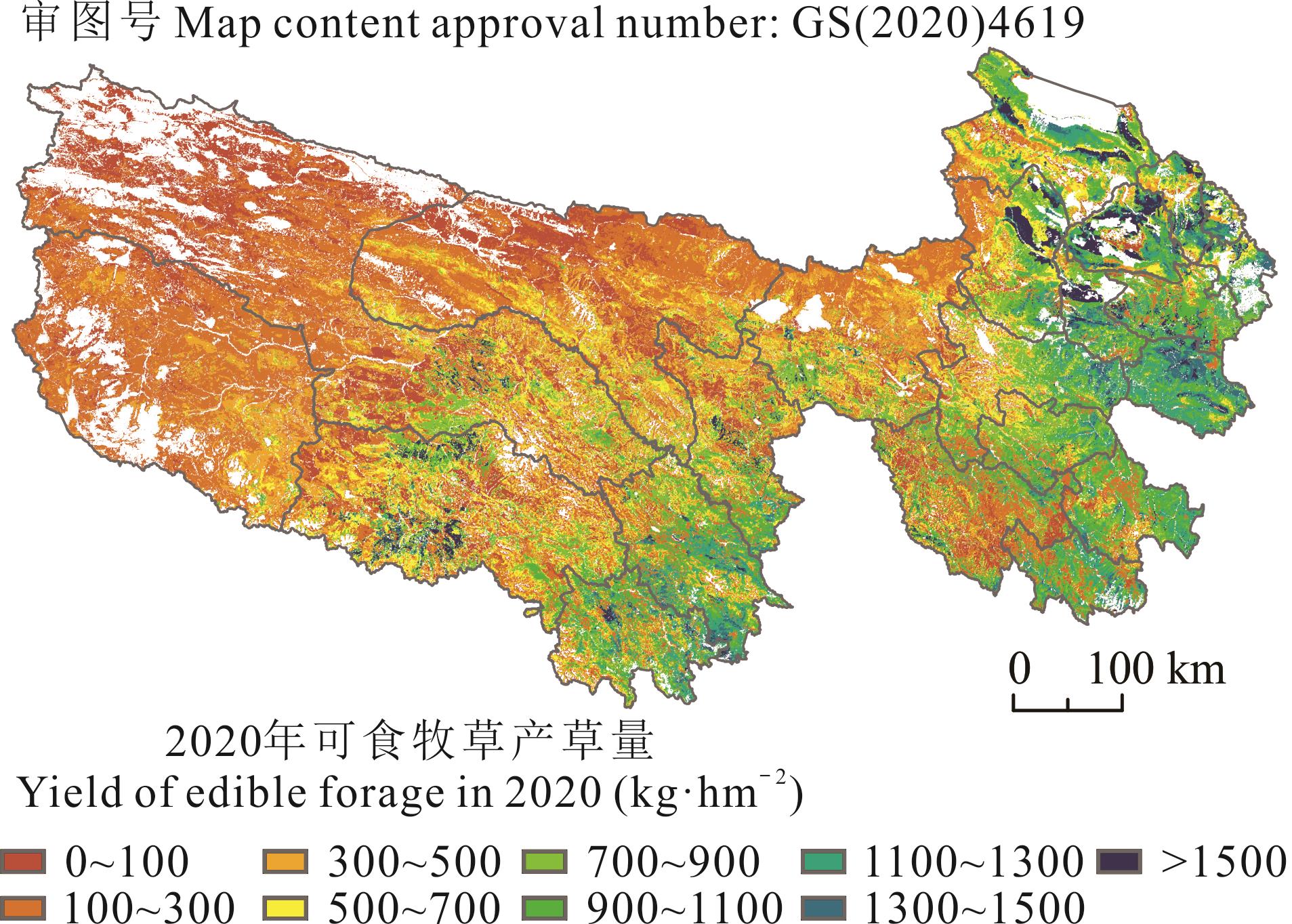
Fig.5 Spatial distribution of edible forage yield of natural grassland in the Three-River Headwaters Region in 2020

Fig.6 Spatial distribution of average edible forage yield of natural grassland in the Three-River Headwaters Region from 1981 to 2020
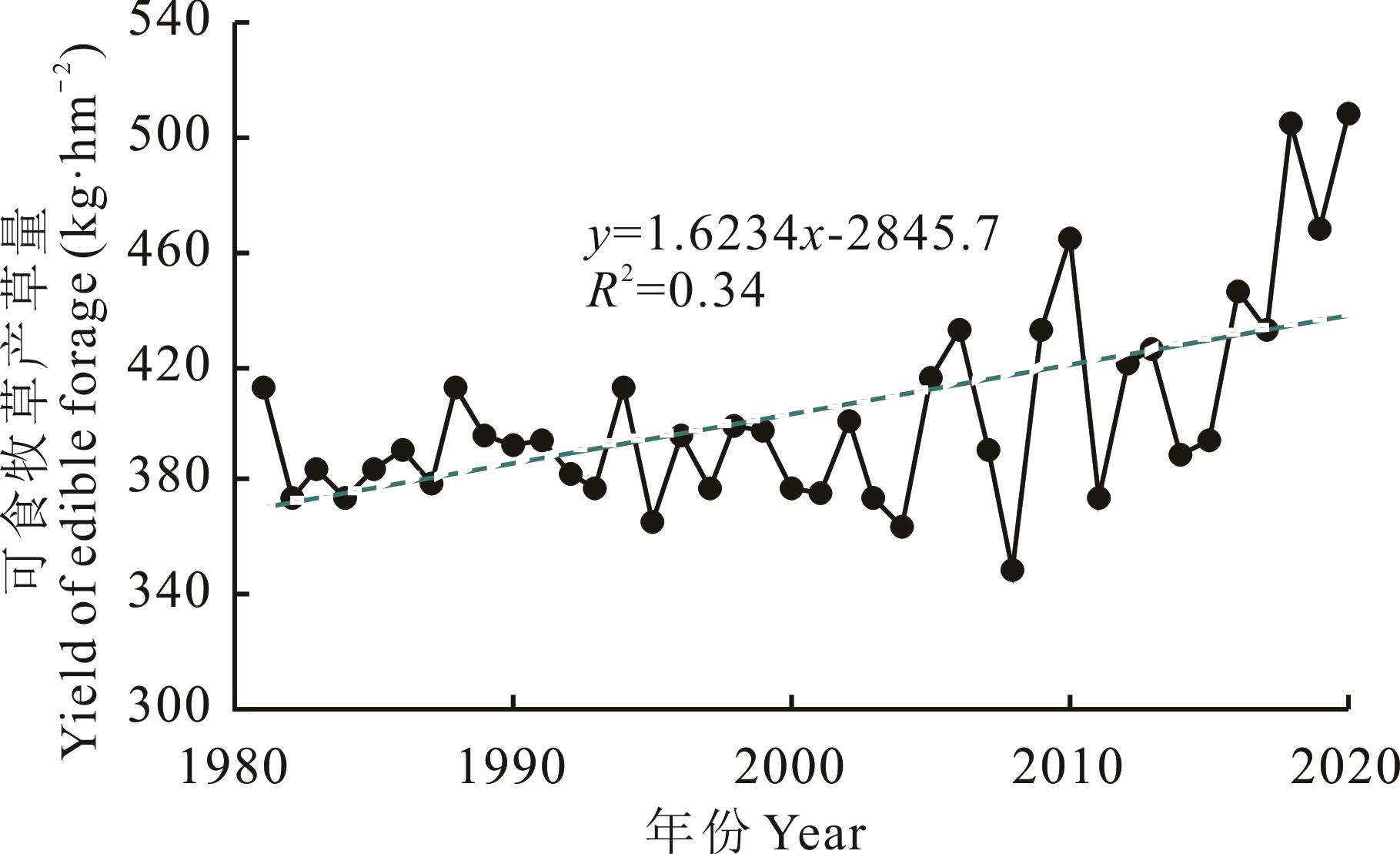
Fig.7 Interannual variation of edible forage yield in natural grassland in the Three-River Headwaters Region from 1981 to 2020
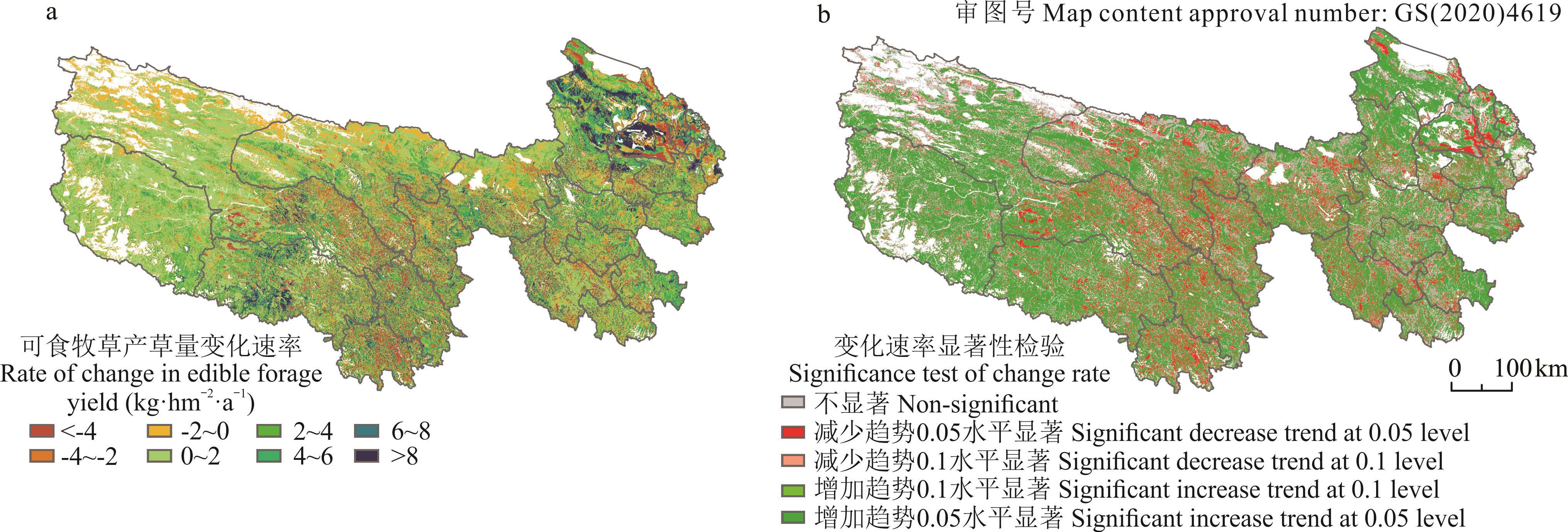
Fig.8 Annual change rate (a) and significance test (b) of edible forage yield in the Three-River Headwaters Region from 1981 to 2020
县、镇名称 County and town names | 可食牧草产草量 Edible forage yield (kg·hm-2) | 可食牧草产草总量 Total yield of edible forage (×104 t) | 可食牧草比例 Proportion of edible forage | 年变化速率 Annual rate of change (kg·hm-2·a-1) |
|---|---|---|---|---|
| 班玛县Banma county | 666.53 | 38.50 | 0.61 | 1.11 |
| 久治县Jiuzhi county | 717.78 | 56.11 | 0.67 | 1.40 |
| 甘德县Gande county | 657.17 | 44.72 | 0.70 | 1.38 |
| 玛沁县Maqin county | 612.34 | 72.76 | 0.76 | 1.89 |
| 玛多县Maduo county | 278.62 | 60.56 | 0.64 | 1.18 |
| 达日县Dari county | 367.88 | 51.37 | 0.46 | 0.52 |
| 同德县Tongde county | 953.84 | 36.28 | 0.75 | 1.59 |
| 贵德县Guide county | 772.37 | 23.62 | 0.84 | 1.24 |
| 共和县Gonghe county | 599.44 | 73.09 | 0.85 | 3.73 |
| 兴海县Xinghai county | 618.10 | 66.81 | 0.79 | 2.61 |
| 贵南县Guinan county | 868.33 | 45.72 | 0.82 | 2.30 |
| 泽库县Zeku county | 848.91 | 51.74 | 0.67 | 1.55 |
| 河南蒙古族自治县Henan Mongolian Autonomous county | 1088.47 | 69.13 | 0.79 | 1.75 |
| 同仁县Tongren county | 916.98 | 17.21 | 0.81 | 2.83 |
| 尖扎县Jianzha county | 900.68 | 10.69 | 0.79 | 1.59 |
| 囊谦县Nangqian county | 644.49 | 69.98 | 0.66 | 0.41 |
| 玉树市Yushu City | 636.85 | 92.94 | 0.69 | 1.35 |
| 杂多县Zaduo county | 367.91 | 117.48 | 0.65 | 2.02 |
| 称多县Chenduo county | 438.60 | 61.36 | 0.64 | 0.96 |
| 曲麻莱县Qumarlêb county | 208.90 | 87.80 | 0.65 | 0.88 |
| 治多县Zhiduo county | 192.36 | 113.03 | 0.66 | 0.75 |
| 唐古拉山镇Tanggula mountain town | 166.73 | 61.73 | 0.81 | 1.42 |
Table 3 Statistics of edible forge yield in counties and towns of the Three-River Headwaters Region from 1981 to 2020
县、镇名称 County and town names | 可食牧草产草量 Edible forage yield (kg·hm-2) | 可食牧草产草总量 Total yield of edible forage (×104 t) | 可食牧草比例 Proportion of edible forage | 年变化速率 Annual rate of change (kg·hm-2·a-1) |
|---|---|---|---|---|
| 班玛县Banma county | 666.53 | 38.50 | 0.61 | 1.11 |
| 久治县Jiuzhi county | 717.78 | 56.11 | 0.67 | 1.40 |
| 甘德县Gande county | 657.17 | 44.72 | 0.70 | 1.38 |
| 玛沁县Maqin county | 612.34 | 72.76 | 0.76 | 1.89 |
| 玛多县Maduo county | 278.62 | 60.56 | 0.64 | 1.18 |
| 达日县Dari county | 367.88 | 51.37 | 0.46 | 0.52 |
| 同德县Tongde county | 953.84 | 36.28 | 0.75 | 1.59 |
| 贵德县Guide county | 772.37 | 23.62 | 0.84 | 1.24 |
| 共和县Gonghe county | 599.44 | 73.09 | 0.85 | 3.73 |
| 兴海县Xinghai county | 618.10 | 66.81 | 0.79 | 2.61 |
| 贵南县Guinan county | 868.33 | 45.72 | 0.82 | 2.30 |
| 泽库县Zeku county | 848.91 | 51.74 | 0.67 | 1.55 |
| 河南蒙古族自治县Henan Mongolian Autonomous county | 1088.47 | 69.13 | 0.79 | 1.75 |
| 同仁县Tongren county | 916.98 | 17.21 | 0.81 | 2.83 |
| 尖扎县Jianzha county | 900.68 | 10.69 | 0.79 | 1.59 |
| 囊谦县Nangqian county | 644.49 | 69.98 | 0.66 | 0.41 |
| 玉树市Yushu City | 636.85 | 92.94 | 0.69 | 1.35 |
| 杂多县Zaduo county | 367.91 | 117.48 | 0.65 | 2.02 |
| 称多县Chenduo county | 438.60 | 61.36 | 0.64 | 0.96 |
| 曲麻莱县Qumarlêb county | 208.90 | 87.80 | 0.65 | 0.88 |
| 治多县Zhiduo county | 192.36 | 113.03 | 0.66 | 0.75 |
| 唐古拉山镇Tanggula mountain town | 166.73 | 61.73 | 0.81 | 1.42 |

Fig.9 Spatial distribution of average edible forage yield at different time periods in natural grassland in the Three-River Headwaters Region

Fig.10 Spatial distribution of change rate of edible forage yield in natural grassland at different periods in the Three-River Headwaters Region

Fig.11 Correlation between edible forage yield and annual precipitation (a) and annual average temperature (b)
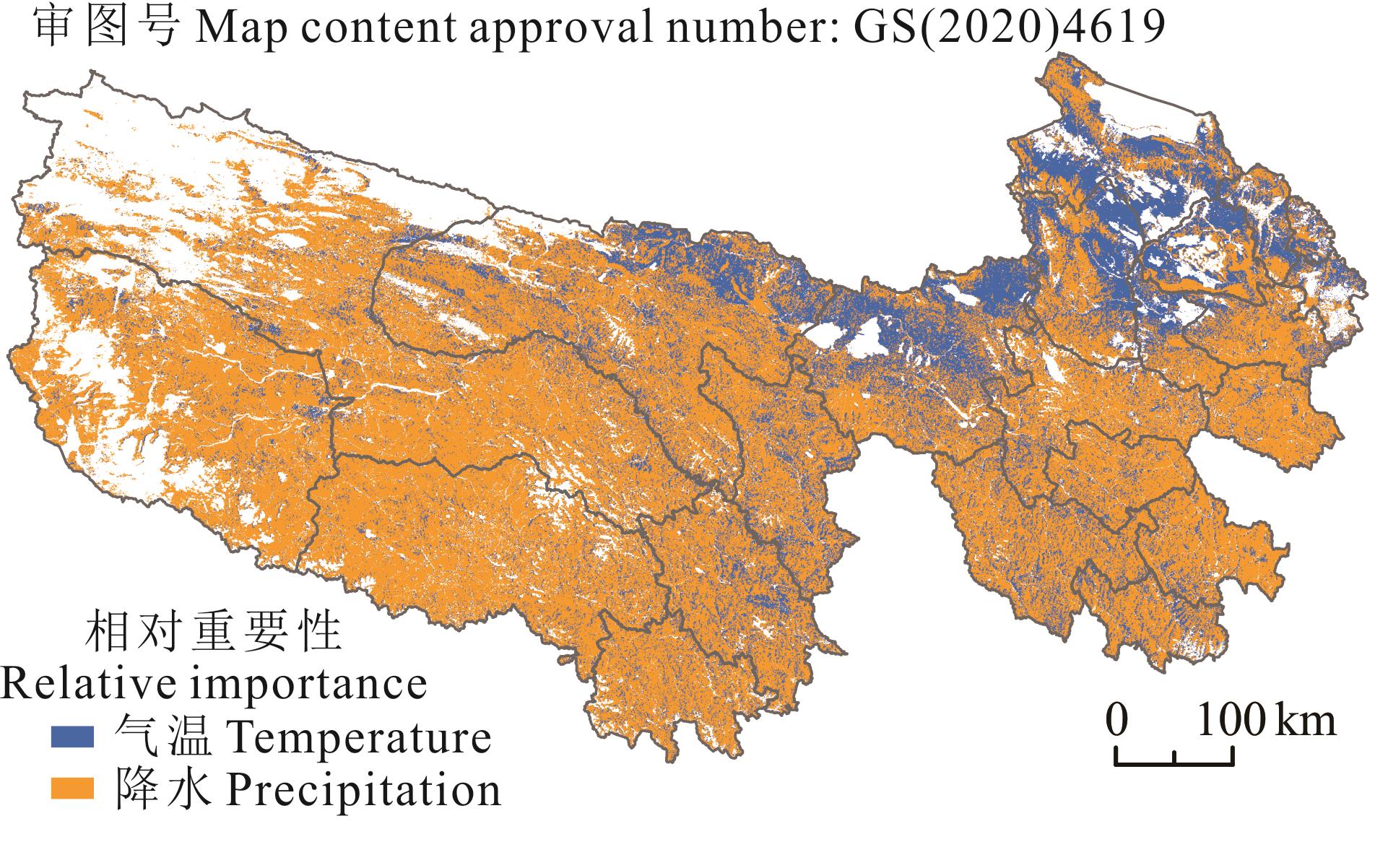
Fig.12 Spatial distribution of the relative importance of precipitation and temperature on the yield of edible forage
| [1] | Zhao X Q, Zhou H K. Eco-environmental degradation, vegetation regeneration and sustainable development in the Headwaters of Three Rivers on Tibetan Plateau. Bulletin of Chinese Academy of Sciences, 2005, 20(6): 37-42. |
| 赵新全, 周华坤. 三江源区生态环境退化、恢复治理及其可持续发展. 中国科学院院刊, 2005, 20(6): 37-42. | |
| [2] | Liu J Y, Xu X L, Shao Q Q. The spatial and temporal characteristics of grassland degradation in the Three-River Headwaters Region in Qinghai Province. Journal of Geographical Sciences, 2008, 63(4): 364-376. |
| 刘纪远, 徐新良, 邵全琴. 近30年来青海三江源地区草地退化的时空特征. 地理学报, 2008, 63(4): 364-376. | |
| [3] | Shao Q Q, Fan J W. Monitoring and evaluation of ecological benefits of Sanjiangyuan ecological protection and construction projects. Beijing: Science Press, 2018. |
| 邵全琴, 樊江文. 三江源生态保护和建设工程生态效益监测评估. 北京: 科学出版社, 2018. | |
| [4] | Zhou H K, Zhao X Q, Zhou L, et al. A study on correlations between vegetation degradation and soil degradation in the ‘Alpine Meadow’ of the Qinghai-Tibetan Plateau. Acta Prataculturae Sinica, 2005, 14(3): 31-40. |
| 周华坤, 赵新全, 周立, 等. 青藏高原高寒草甸的植被退化与土壤退化特征研究.草业学报, 2005, 14(3): 31-40. | |
| [5] | Greyerz V K, Ericsson N, Jardstedt M, et al. Feeding straw to suckler cows spared land but did not decrease the climate impact of beef. Renewable Agriculture and Food Systems, 2024, 39: e36. |
| [6] | Zira S, Salomon E, Akerfeldt M, et al. Environmental consequences of pig production scenarios using biomass from rotational grass-clover leys as feed. Environmental Technology & Innovation, 2023, 30: 103068. |
| [7] | Moorby J M, Fraser M D. Review: New feeds and new feeding systems in intensive and semi-intensive forage-fed ruminant livestock systems. Animal, 2021, 15: 100297. |
| [8] | Wiangkham N, Prapagdee B. Potential of Napier grass with cadmium-resistant bacterial inoculation on cadmium phytoremediation and its possibility to use as biomass fuel. Chemosphere, 2018, 201: 511-518. |
| [9] | Mirshad P P, Chandran S, Puthur J T. Characteristics of bioenergy grasses important for enhanced NaCl tolerance potential. Russian Journal of Plant Physiology, 2014, 61(5): 639-645. |
| [10] | Vázquez de Aldana B R, Arellano J B, Cuesta M J, et al. Screening fungal endophytes from a wild grass for growth promotion in tritordeum, an agricultural cereal. Plant Science, 2021, 303: 110762. |
| [11] | Xu T W, Zhao X Q, Zhang X L, et al. Sustainable development of ecological grass-based livestock husbandry in Qinghai-Tibet Plateau alpine area: principle, technology and practice. Acta Ecologica Sinica, 2020, 40(18): 6324-6337. |
| 徐田伟, 赵新全, 张晓玲, 等. 青藏高原高寒地区生态草牧业可持续发展: 原理、技术与实践. 生态学报, 2020, 40(18): 6324-6337. | |
| [12] | He F Q, Chen D D, Li Q, et al. Temporal and spatial distribution of herbage nutrition in alpine grassland of Sanjiangyuan. Acta Ecologica Sinica, 2020, 40(18): 6304-6313. |
| 贺福全, 陈懂懂, 李奇, 等. 三江源高寒草地牧草营养时空分布. 生态学报, 2020, 40(18): 6304-6313. | |
| [13] | Chen D D, Li Q, Huo L L, et al. Nutritional condition, theoretical carrying capacity and feed value of alpine grasslands in the headwater regions of the Yangtze River and Yellow River. Acta Agrestia Sinica, 2023, 31(7): 2186-2192. |
| 陈懂懂, 李奇, 霍莉莉, 等. 长江源和黄河源区草地牧草养分、理论承载力及饲用价值. 草地学报, 2023, 31(7): 2186-2192. | |
| [14] | Cai Z Y, Wang J B, Song P F, et al. The analysis of grazing pressure of ungulates on grassland in Lancang River Source Park, Sanjiangyuan National Park. Acta Ecologica Sinica, 2025, 45(4): 1844-1853. |
| 蔡振媛, 王军邦, 宋鹏飞, 等. 三江源国家公园澜沧江源园区草地有蹄类动物承载力评估. 生态学报, 2025, 45(4): 1844-1853. | |
| [15] | Zhang F F, Yang K H, Yu L, et al. Dynamic research on the edible forage production of main grassland types in Shaertao Mountain, Xinjiang. Xinjiang Agricultural Sciences, 2018, 55(9): 1737-1746. |
| 张凡凡, 杨开虎, 于磊, 等. 新疆沙尔套山主要草地类型可食牧草产量动态变化规律. 新疆农业学报, 2018, 55(9): 1737-1746. | |
| [16] | Li W L, Xue Z Z, Guo S M, et al. Vegetation coverage changes and analysis of the driving forces in Maqu County based on 3S technology. Journal of Lanzhou University (Natural Sciences), 2010, 46(1): 85-90, 95. |
| 李文龙, 薛中正, 郭述茂, 等. 基于3S技术的玛曲县草地植被覆盖度变化及其驱动力. 兰州大学学报(自然科学版), 2010, 46(1): 85-90, 95. | |
| [17] | Wang H, Li W L, Du G Z, et al. Research on the change of grassland vegetation coverage using 3S technology in Gannan. Acta Prataculturae Sinica, 2012, 21(3): 26-37. |
| 王浩, 李文龙, 杜国祯, 等. 基于3S技术的甘南草地覆盖度动态变化研究. 草业学报, 2012, 21(3): 26-37. | |
| [18] | Liu X Y, Feng Q S, Liang T G, et al. Spatial-temporal dynamic balance between livestock carrying capacity and productivity of rangeland in Gannan of Gansu Province, China. Chinese Journal of Grassland, 2010, 32(1): 99-106. |
| 刘兴元, 冯琦胜, 梁天刚, 等. 甘南牧区草地生产力与载畜量时空动态平衡研究. 中国草地学报, 2010, 32(1): 99-106. | |
| [19] | Du X C, Li Y, Yu H Y, et al. Dynamic analysis of vegetation coverage, yield and nutrient content of edible forage in alpine meadow during growth period in Hezuo. China Herbivore Science, 2019, 39(4): 41-47. |
| 杜笑村, 李昀, 俞慧云, 等. 合作市高寒草甸牧草生长期植被盖度、可食牧草产量及养分含量动态分析. 中国草食动物科学, 2019, 39(4): 41-47. | |
| [20] | Yu H Y, Yu L P, Yang L P, et al. Analysis on the change of the yield and nutrient content of the edible forage and the grassland grazing capacity in the alpine grassland of Maqu County. China Herbivore Science, 2020, 40(3): 40-46. |
| 俞慧云, 俞联平, 杨林平, 等. 玛曲县高寒草地可食牧草产量和养分含量变化及草地承载力分析. 中国草食动物科学, 2020, 40(3): 40-46. | |
| [21] | Tao W G, Xu B, Yang X C. Advances and factors affecting the estimation of grass production using remote sensing. Acta Prataculturae Sinica, 2007, 16(2): 1-8. |
| 陶伟国, 徐斌, 杨秀春. 草原产草量遥感估算方法发展趋势及影响因素. 草业学报, 2007, 16(2): 1-8. | |
| [22] | Xu X L, Wang L, Li J, et al. Analysis of the grassland restoration trend and degradation situation in the “Three-River Headwaters” region since the implementation of the ecological project. Journal of Geo-information Science, 2017, 19(1): 50-58. |
| 徐新良, 王靓, 李静, 等. 三江源生态工程实施以来草地恢复态势及现状分析. 地球信息科学学报, 2017, 19(1): 50-58. | |
| [23] | Liang S L, Zhao X, Yuan W, et al. A long-term global land surface satellite (GLASS) dataset for environmental studies. International Journal of Digital Earth, 2013, 6: 5-33. |
| [24] | Liang S L, Zhang X, Xiao Z, et al. Global Land Surface Satellite (GLASS) products: Algorithms, validation and analysis. Berlin: Springer, 2013. |
| [25] | Wang J B, Liu J Y, Shao Q Q, et al. Spatial-temporal patterns of net primary productivity for 1988-2004 based on Glopem-Cevsa model in the “Three-River Headwaters” region of Qinghai Province, China. Chinese Journal of Plant Ecology, 2009, 33(2): 254-269. |
| 王军邦, 刘纪远, 邵全琴, 等. 基于遥感-过程耦合模型的1988-2004年青海三江源区净初级生产力模拟. 植物生态学报, 2009, 33(2): 254-269. | |
| [26] | Xu X L, Liu J Y, Zhang S W, et al. China multi-period land use and land cover remote sensing monitoring dataset (CNLUCC). Data registration and publishing system of resource and environment science data center, Chinese Academy of Sciences (http://www.resdc.cn/), 2018, DOI: 10.12078/2018070201. |
| 徐新良, 刘纪远, 张树文, 等. 中国多时期土地利用土地覆被遥感监测数据集(CNLUCC). 中国科学院资源环境科学数据中心数据注册与出版系统(http://www.resdc.cn/), 2018, DOI: 10.12078/2018070201. | |
| [27] | Dong Q M, Ma Y S, Xu C J, et al. Study of classification and gradation, restoration of black-soil beach degraded grassland in the Headwaters of Three Rivers. Acta Agrestia Sinica, 2015, 23(3): 441-447. |
| 董全民, 马玉寿, 许长军, 等. 三江源区黑土滩退化草地分类分级体系及分类恢复研究. 草地学报, 2015, 23(3): 441-447. | |
| [28] | Fan J W, Shao Q Q, Liu J Y, et al. Assessment of effects of climate change and grazing activity on grassland yield in the Three Rivers Headwaters Region of Qinghai-Tibet Plateau, China. Environment Monitoring and Assessment, 2010, 170(1/4): 571-584. |
| [29] | Wang C Y, Wang J B, Zhang F W, et al. Climate resource utilization rate and livestock-carrying capacity of grasslands in the Three River Headwaters region over the past 40 years. Pratacultural Science, 2022, 39(4): 672-687. |
| 王春雨, 王军邦, 张法伟, 等. 近40年三江源区高寒草地气候资源利用率及载畜量. 草业科学, 2022, 39(4): 672-687. | |
| [30] | Zhou X M.Chinese Kobresia meadow. Beijing: Science Press, 2001. |
| 周兴民. 中国嵩草草甸. 北京: 科学出版社, 2001. | |
| [31] | Department of Animal Husbandry and Veterinary Medicine, Ministry of Agriculture of the People’s Republic of China, National General Station of Animal and Veterinary Service. Rangeland resources of China. Beijing: China Science and Technology Press, 1996. |
| 中华人民共和国农业部畜牧兽医司, 全国畜牧兽医总站. 中国草地资源. 北京: 中国科学技术出版社, 1996. | |
| [32] | Xie C W, Qi S H. Analysis of runoff change and its response to weather fluctuation at source regions of the Yangtze and Yellow Rivers. Resources and Environment in the Yangtze Basin, 2007, 16(2): 251-255. |
| 谢昌卫, 齐三红. 长江-黄河源寒区径流量波动变化的气候因素分析.长江流域资源与环境, 2007, 16(2): 251-255. | |
| [33] | Chen Q, Zhou Q, Zhang H F, et al. Spatial disparity of NDVl response in vegetation growing season to climate change in the Three-River Headwaters Region. Ecology and Environmental Sciences, 2010, 19(6): 1284-1289. |
| 陈琼, 周强, 张海峰, 等. 三江源地区基于植被生长季的NDVI对气候因子响应的差异性研究. 生态环境学报, 2010, 19(6): 1284-1289. | |
| [34] | Liu S C, Shao Q Q, Ning J, et al. Remote-sensing-based assessment of the ecological restoration degree and restoration potential of ecosystems in the upper Yellow River over the past 20 years. Remote Sensing, 2022, 14(15): 3550. |
| [35] | Zhao X Q, Zhou Q P, Ma Y S, et al. Innovation and application of grassland ecological restoration and sustainable management technologies in Sanjiangyuan District. Qinghai Science and Technology, 2017, 24(1): 13-19. |
| 赵新全, 周青平, 马玉寿, 等. 三江源区草地生态恢复及可持续管理技术创新和应用.青海科技, 2017, 24(1): 13-19. |
| [1] | Jia-yi ZANG, Ming-jie XU, Ji-cheng XIE, Yu-ying SHEN, Xing-fa LAI. Effects of replacing chemical fertilizers with organic fertilizer at equivalent nitrogen levels on forage yield and water use efficiency in a silage maize/forage soybean intercropping system in dryland areas [J]. Acta Prataculturae Sinica, 2026, 35(3): 83-95. |
| [2] | Lin-xing ZHAO, Yan-he WANG, Zi-chao WANG, Ma-qiang XU, Ze-yu LI, Chang-xian QI, Bao-zu CUI, Zong-bao WANG. Dynamic monitoring of land degradation in the Three-River Headwaters Region over the past 30 years using unoccupied aerial vehicle imagery and Landsat data [J]. Acta Prataculturae Sinica, 2026, 35(2): 1-14. |
| [3] | Qi-lin LIU, Xiao-jun WANG, Jin-lan WANG, Wen-hui LIU, Qiao-ling MA, Jian-hui LI, Sheng-yuan ZHANG, Wen-xia CAO, Wen LI. Effect of nitrogen and phosphorus combined application on forage yield of Elymus sibiricus in an alpine region [J]. Acta Prataculturae Sinica, 2025, 34(6): 193-202. |
| [4] | Di-cheng WANG, Qiang CHAI, Zhi-long FAN, Wen YIN, Hong FAN, Wei HE, Ya-li SUN, Hui-zhe SANG, Fa-long HU. Effects of mixed cropping of leguminous forage and reduced nitrogen fertilizer on soil physicochemical properties and forage yield in a silage maize production system [J]. Acta Prataculturae Sinica, 2025, 34(12): 97-110. |
| [5] | Yong-liang ZHANG, Ze TENG, Feng HAO, Tie-feng YU, Yu-xia ZHANG. Effects of different mixed sowing patterns and sowing ratios of alfalfa on grassland productivity and community stability in grass-legume mixtures [J]. Acta Prataculturae Sinica, 2024, 33(2): 185-197. |
| [6] | Hui-hui ZHANG, Shang-li SHI, Bei WU, Zi-li LI, Xiao-long LI. A study of yield interactions in mixed sowings of alfalfa and three perennial grasses [J]. Acta Prataculturae Sinica, 2022, 31(2): 159-170. |
| [7] | Chuan-qi WANG, Wen-hui LIU, Yong-chao ZHANG, Qing-ping ZHOU. Drought tolerance of wild Elymus nutans during germination and seedling establishment [J]. Acta Prataculturae Sinica, 2021, 30(9): 76-85. |
| [8] | Jing-dong ZHAO, Yan-tao SONG, Xin-lei XU, Wuyunna. Effects of nitrogen application and mowing on yield and quality of forage in degraded grassland in northwest Liaoning Province [J]. Acta Prataculturae Sinica, 2021, 30(8): 36-48. |
| [9] | Hui-xin JIANG, Shan-shan BAI, Bo WU, Jing-yi SONG, Guo-liang WANG. A multivariate evaluation of agronomic straits and forage quality of 22 oat varieties in the Huang-Huai-Hai area of China [J]. Acta Prataculturae Sinica, 2021, 30(1): 140-149. |
| [10] | ZHANG Yong-liang, YU Tie-feng, HAO Feng, GAO Kai. Effects of fertilization and legume-grass ratio on forage yield and NPK utilization efficiency [J]. Acta Prataculturae Sinica, 2020, 29(11): 91-101. |
| [11] | WANG Qian, LI Zhi-jian, LI Jing, ZHOU Bang-wei. Evaluation of agronomic and forage quality traits of a range of oat cultivars [J]. Acta Prataculturae Sinica, 2019, 28(12): 149-158. |
| [12] | WU Ting-mei, WU Yuan, WANG Duo-bin, LIN Hui-long. Influence of herders’ livelihood capital on livelihood strategies in the Three-River Headwaters region [J]. Acta Prataculturae Sinica, 2019, 28(11): 12-21. |
| [13] | CAO Wei, LIU Lu-lu, WU Dan. Soil erosion changes and driving factors in the Three-River Headwaters region [J]. Acta Prataculturae Sinica, 2018, 27(6): 10-22. |
| [14] | WANG Xue-Chun, WANG Hong-Ni, HUANG Jing, YANG Guo-Tao, HU Yun-Gao. Simulation of soil moisture dynamics and ryegrass growth in the hilly region of Sichuan Province using the environmental policy integrated climate model [J]. Acta Prataculturae Sinica, 2017, 26(9): 1-13. |
| [15] | DUAN Qian-Wen, CHENG Hui, HOU Fu-Jiang. Using maturity to predict forage yield and nutritional quality of forage cereals in the Jingtai Oasis [J]. Acta Prataculturae Sinica, 2017, 26(6): 185-194. |
| Viewed | ||||||
|
Full text |
|
|||||
|
Abstract |
|
|||||
