
ISSN 1004-5759 CN 62-1105/S
Acta Prataculturae Sinica ›› 2026, Vol. 35 ›› Issue (7): 217-227.DOI: 10.11686/cyxb2025293
Previous Articles Next Articles
Feng GAO( )
)
Received:2025-07-15
Revised:2025-09-01
Online:2026-07-20
Published:2026-05-21
Contact:
Feng GAO
Feng GAO. A study of sources of powdery mildew on kushen[J]. Acta Prataculturae Sinica, 2026, 35(7): 217-227.
| 植物种类Plant species | 病原 Pathogen | 病征 Sign | 有性态 Sexual stage * | 无性态 Asexual stage | 重寄生菌形态 Morphological characteristics of hyperparasite fungus |
|---|---|---|---|---|---|
苦参 S. flavescens | 粉孢属未定种Oidium sp. | 霉层放射状稀疏。Mold layer sparse, radial. | 无Absent | 粉孢子圆柱形或长卵圆形,大小为(14~18) μm×(5~7) μm。Conidia cylindrical or long ovoid, measuring (14-18) μm×(5-7) μm. | 分生孢子器长圆筒形,(42~72) μm×(11~21) μm,孢子圆球形、圆柱形,11 μm×(6~7) μm,分生孢子器多,但孢子极少。Pycnidia long cylindrical, (42-72) μm×(11-21) μm; spores spherical or cylindrical, 11 μm×(6-7) μm. Pycnidia numerous but spores very scarce. |
白三叶 T. repens | 豌豆白粉菌E. pisi | 霉层稀疏白色。Mold layer sparse, white. | 无Absent | 粉孢子圆筒状,(11~15) μm×(5~8) μm。Conidia cylindrical, (11-15) μm×(5-8) μm. | 无重寄生菌。No hyperparasites found. |
辣椒 C. annuum | 鞑靼内丝白粉菌Leveillula taurica | 黑斑上稀疏白色霉层。Sparse white mold layer on black spots. | 无Absent | 粉孢子圆柱状,22 μm×6 μm;长卵圆形(子弹状)27 μm×5 μm,或卵圆形,16 μm×8 μm。Conidia cylindrical, 22 μm×6 μm; long ovoid (bullet-shaped) 27 μm×5 μm, or ovoid, 16 μm×8 μm. | 形状同苦参白粉寄生菌,极少。Morphology identical to that hyperparasitizing S. flavescens, very scarce. |
番茄 L. esculentum | 鞑靼内丝白粉菌L. taurica | 霉层灰暗稀疏。Mold layer gray, sparse. | 无Absent | 粉孢子圆筒状,16 μm ×5 μm。Conidia cylindrical, 16 μm×5 μm. | 分生孢子器圆柱状,顶端有突起,101 μm×27 μm;孢子圆形或卵圆形,11 μm×(6~7) μm。Pycnidia cylindrical with apical protrusion, 101 μm×27 μm; spores spherical or ovoid, 11 μm×(6-7) μm. |
豇豆 V. unguiculata | 蓼白粉菌 E. polygoni | 霉层灰色致密。Mold layer gray, dense. | 闭囊壳的附属丝短杆状,3~5根,宽9~12 μm,闭囊壳圆球形、黄褐色,直径74 μm,1个子囊,近圆球形,5~7 μm。Cleistothecial appendages short, rod-like, 3-5, width 9-12 μm. Cleistothecia spherical, yellowish-brown, diameter 74 μm. 1 ascus, nearly spherical, 5-7 μm. | 粉孢子圆球形,(9~12) μm×(5~6) μm,褐色。Conidia spherical, (9-12) μm×(5-6) μm, brown. | 无重寄生菌。No hyperparasites found. |
沙打旺 A. adsurgens | 豌豆白粉菌E. pisi | 霉层稀疏灰色。Mold layer sparse, gray. | 闭囊壳圆球形、黄褐色,无附属丝,闭囊壳直径50 μm,8个子囊,蠕虫状,14 μm×27 μm。Cleistothecia spherical, yellowish-brown, lacking appendages, diameter 50 μm, 8 asci, vermiform, 14 μm×27 μm. | 粉孢子正多面体,壁薄,质脆,直径11 μm。Conidia regular polyhedron, thin-walled, fragile, diameter 11 μm. | 无重寄生菌。No hyperparasites found. |
田旋花 C. arvensis | 双叉旋花白粉菌E. convolvuli var. dichotoma | 霉层灰色致密,有颗粒物。Mold layer gray, dense, with granular matter. | 闭囊壳的附属丝丝状,有分隔;闭囊壳圆球形、黄褐色,直径80 μm;子囊4~7个,(60~82) μm×(34~50) μm,子囊孢子卵圆形,24 μm×15 μm。Cleistothecial appendages filamentous, septate; cleistothecia spherical, yellowish-brown, diameter 80 μm; asci 4-7, (60-82) μm×(34-50) μm; ascospores ovoid, 24 μm×15 μm. | 粉孢子卵圆形,11 μm×8 μm。Conidia ovoid, 11 μm×8 μm. | 分生孢子器长圆柱形,90 μm×53 μm。Pycnidia long cylindrical, 90 μm×53 μm. |
蒲公英 T. mongolicum | 棕丝单囊壳S. fusca | 霉层白色至黄褐色,有颗粒。Mold layer white to yellowish-brown, with granules. | 闭囊壳的附属丝丝状,细长;闭囊壳圆球形,黄褐色,174 μm;子囊10个左右,每个子囊8个圆球形的子囊孢子。Cleistothecial appendages filamentous, slender; cleistothecia spherical, yellowish-brown, 174 μm; approximately 10 asci, each ascus containing 8 spherical ascospores. | 粉孢子圆柱状,两端平截,9 μm×5 μm,或多面体,直径11 μm,褐色。Conidia cylindrical with truncate ends, 9 μm×5 μm, or polyhedral, diameter 11 μm, brown. | 无重寄生菌。No hyperparasites found. |
臭椿 A. altissima | 臭椿球针壳P. corylea | 霉层白色致密,有大量颗粒。Mold layer white, dense, with abundant granules. | 闭囊壳的附属丝短锥状;闭囊壳圆球形、黄褐色,直径208~253 μm,子囊8个,23 μm×8 μm。Cleistothecial appendages short, conical; cleistothecia spherical, yellowish-brown, diameter 208-253 μm; 8 asci, 23 μm×8 μm. | 粉孢子卵圆形,17 μm×9 μm。Conidia ovoid, 17 μm×9 μm. | 无重寄生菌。No hyperparasites found. |
Table 1 Symptom, pathogen, morphological characteristics and hyperparasite fungus of powdery mildew of 9 species plants
| 植物种类Plant species | 病原 Pathogen | 病征 Sign | 有性态 Sexual stage * | 无性态 Asexual stage | 重寄生菌形态 Morphological characteristics of hyperparasite fungus |
|---|---|---|---|---|---|
苦参 S. flavescens | 粉孢属未定种Oidium sp. | 霉层放射状稀疏。Mold layer sparse, radial. | 无Absent | 粉孢子圆柱形或长卵圆形,大小为(14~18) μm×(5~7) μm。Conidia cylindrical or long ovoid, measuring (14-18) μm×(5-7) μm. | 分生孢子器长圆筒形,(42~72) μm×(11~21) μm,孢子圆球形、圆柱形,11 μm×(6~7) μm,分生孢子器多,但孢子极少。Pycnidia long cylindrical, (42-72) μm×(11-21) μm; spores spherical or cylindrical, 11 μm×(6-7) μm. Pycnidia numerous but spores very scarce. |
白三叶 T. repens | 豌豆白粉菌E. pisi | 霉层稀疏白色。Mold layer sparse, white. | 无Absent | 粉孢子圆筒状,(11~15) μm×(5~8) μm。Conidia cylindrical, (11-15) μm×(5-8) μm. | 无重寄生菌。No hyperparasites found. |
辣椒 C. annuum | 鞑靼内丝白粉菌Leveillula taurica | 黑斑上稀疏白色霉层。Sparse white mold layer on black spots. | 无Absent | 粉孢子圆柱状,22 μm×6 μm;长卵圆形(子弹状)27 μm×5 μm,或卵圆形,16 μm×8 μm。Conidia cylindrical, 22 μm×6 μm; long ovoid (bullet-shaped) 27 μm×5 μm, or ovoid, 16 μm×8 μm. | 形状同苦参白粉寄生菌,极少。Morphology identical to that hyperparasitizing S. flavescens, very scarce. |
番茄 L. esculentum | 鞑靼内丝白粉菌L. taurica | 霉层灰暗稀疏。Mold layer gray, sparse. | 无Absent | 粉孢子圆筒状,16 μm ×5 μm。Conidia cylindrical, 16 μm×5 μm. | 分生孢子器圆柱状,顶端有突起,101 μm×27 μm;孢子圆形或卵圆形,11 μm×(6~7) μm。Pycnidia cylindrical with apical protrusion, 101 μm×27 μm; spores spherical or ovoid, 11 μm×(6-7) μm. |
豇豆 V. unguiculata | 蓼白粉菌 E. polygoni | 霉层灰色致密。Mold layer gray, dense. | 闭囊壳的附属丝短杆状,3~5根,宽9~12 μm,闭囊壳圆球形、黄褐色,直径74 μm,1个子囊,近圆球形,5~7 μm。Cleistothecial appendages short, rod-like, 3-5, width 9-12 μm. Cleistothecia spherical, yellowish-brown, diameter 74 μm. 1 ascus, nearly spherical, 5-7 μm. | 粉孢子圆球形,(9~12) μm×(5~6) μm,褐色。Conidia spherical, (9-12) μm×(5-6) μm, brown. | 无重寄生菌。No hyperparasites found. |
沙打旺 A. adsurgens | 豌豆白粉菌E. pisi | 霉层稀疏灰色。Mold layer sparse, gray. | 闭囊壳圆球形、黄褐色,无附属丝,闭囊壳直径50 μm,8个子囊,蠕虫状,14 μm×27 μm。Cleistothecia spherical, yellowish-brown, lacking appendages, diameter 50 μm, 8 asci, vermiform, 14 μm×27 μm. | 粉孢子正多面体,壁薄,质脆,直径11 μm。Conidia regular polyhedron, thin-walled, fragile, diameter 11 μm. | 无重寄生菌。No hyperparasites found. |
田旋花 C. arvensis | 双叉旋花白粉菌E. convolvuli var. dichotoma | 霉层灰色致密,有颗粒物。Mold layer gray, dense, with granular matter. | 闭囊壳的附属丝丝状,有分隔;闭囊壳圆球形、黄褐色,直径80 μm;子囊4~7个,(60~82) μm×(34~50) μm,子囊孢子卵圆形,24 μm×15 μm。Cleistothecial appendages filamentous, septate; cleistothecia spherical, yellowish-brown, diameter 80 μm; asci 4-7, (60-82) μm×(34-50) μm; ascospores ovoid, 24 μm×15 μm. | 粉孢子卵圆形,11 μm×8 μm。Conidia ovoid, 11 μm×8 μm. | 分生孢子器长圆柱形,90 μm×53 μm。Pycnidia long cylindrical, 90 μm×53 μm. |
蒲公英 T. mongolicum | 棕丝单囊壳S. fusca | 霉层白色至黄褐色,有颗粒。Mold layer white to yellowish-brown, with granules. | 闭囊壳的附属丝丝状,细长;闭囊壳圆球形,黄褐色,174 μm;子囊10个左右,每个子囊8个圆球形的子囊孢子。Cleistothecial appendages filamentous, slender; cleistothecia spherical, yellowish-brown, 174 μm; approximately 10 asci, each ascus containing 8 spherical ascospores. | 粉孢子圆柱状,两端平截,9 μm×5 μm,或多面体,直径11 μm,褐色。Conidia cylindrical with truncate ends, 9 μm×5 μm, or polyhedral, diameter 11 μm, brown. | 无重寄生菌。No hyperparasites found. |
臭椿 A. altissima | 臭椿球针壳P. corylea | 霉层白色致密,有大量颗粒。Mold layer white, dense, with abundant granules. | 闭囊壳的附属丝短锥状;闭囊壳圆球形、黄褐色,直径208~253 μm,子囊8个,23 μm×8 μm。Cleistothecial appendages short, conical; cleistothecia spherical, yellowish-brown, diameter 208-253 μm; 8 asci, 23 μm×8 μm. | 粉孢子卵圆形,17 μm×9 μm。Conidia ovoid, 17 μm×9 μm. | 无重寄生菌。No hyperparasites found. |

Fig.1 Symptom of powdery mildew on S. flavescens and other 8 plants growing around
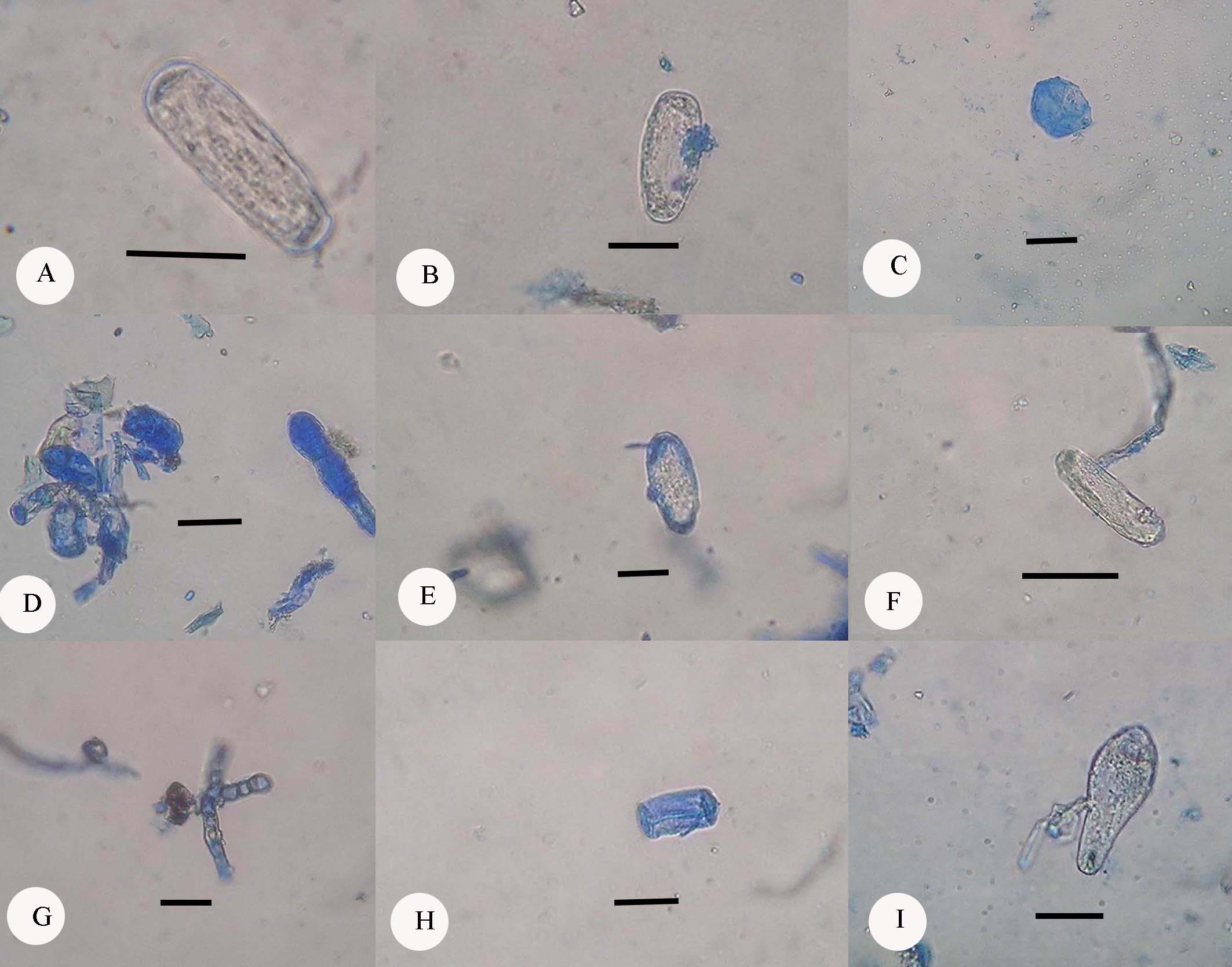
Fig.2 Asexual stage of powdery mildew fungi on 9 species plants
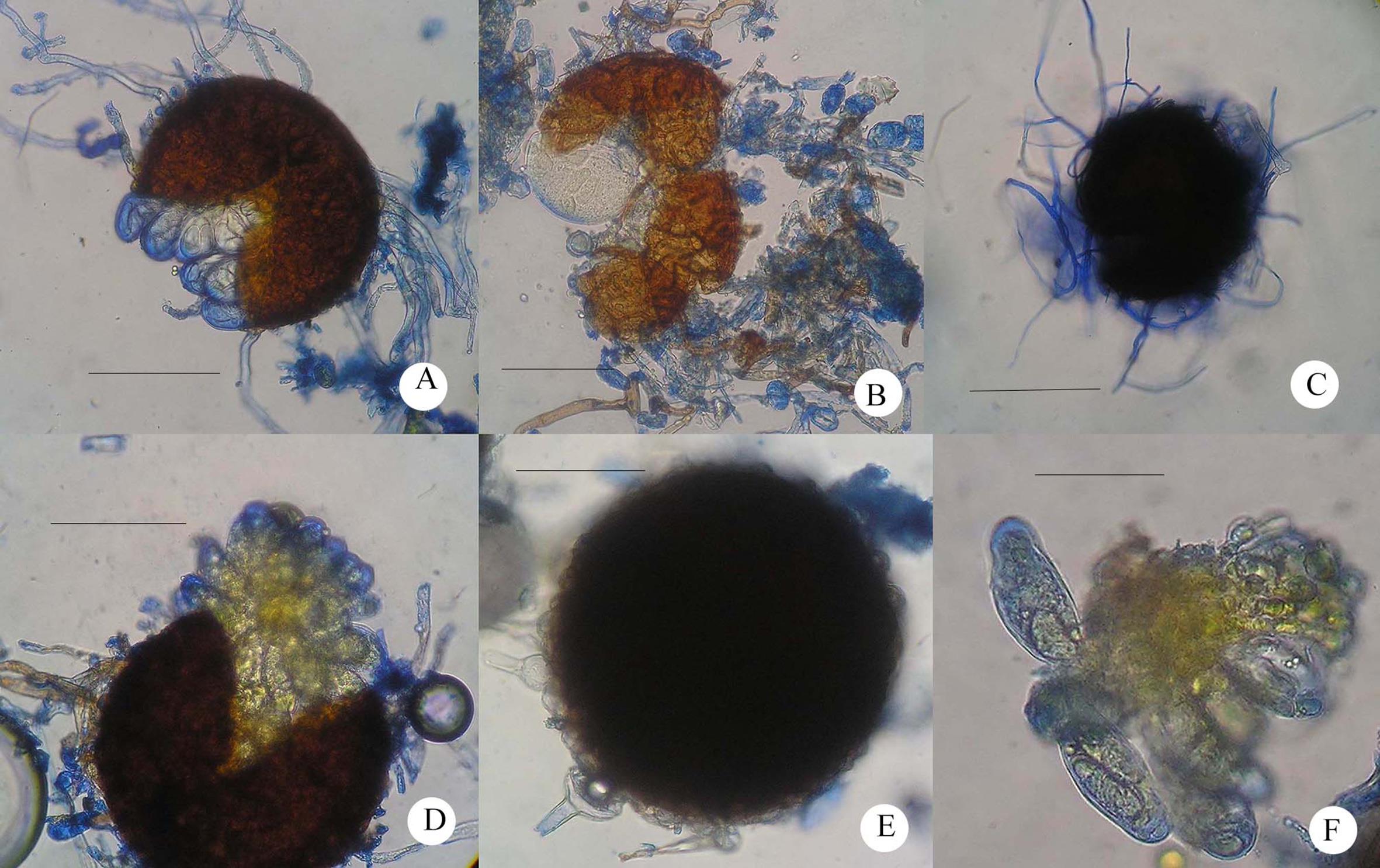
Fig.3 Teleomorph of powdery mildew fungi on 6 species plants (cleistothecium, appendages, asci and ascospores)
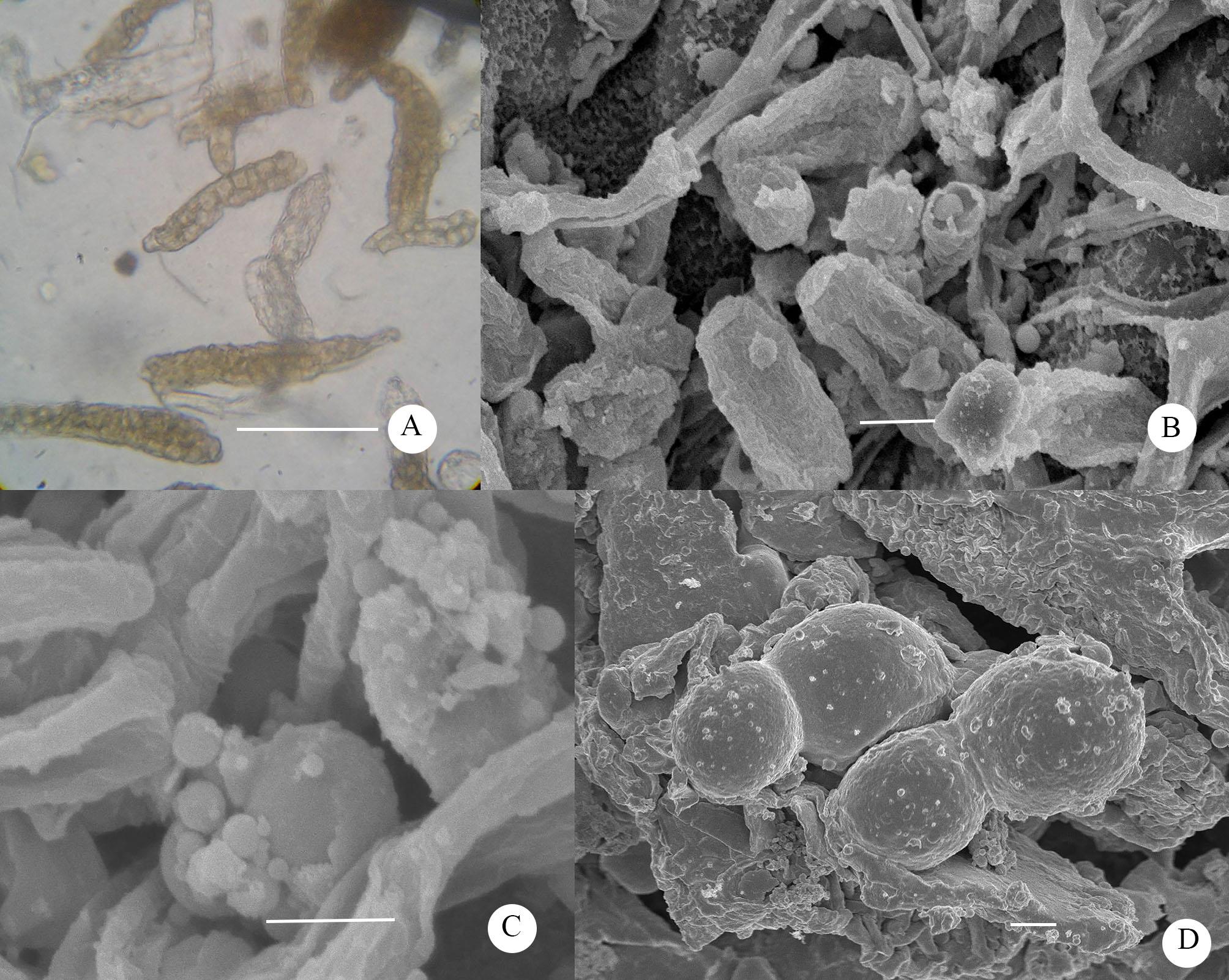
Fig.4 Morphological characteristics of hyperparasite fungus, A. quisqualis, on S. flavescens powdery mildew fungus
| [1] | Editorial Committee of Flora of China, Chinese Academy of Sciences. Flora of China: Volume 40 Fabaceae (II)-Subfamily Papilionoideae. Beijing: Science Press, 1994. |
| 中国科学院植物志编辑委员会. 中国植物志: 第四十卷 豆科(二)蝶形花亚科. 北京: 科学出版社, 1994. | |
| [2] | Lei H Y, Hou Q W, Bai F L, et al. Chromosome number and karyotype analysis of Sophora flavescens Ait. from eight different habitats. Plant Physiology Journal, 2019, 55(7): 967-974. |
| 雷海英, 侯沁文, 白凤麟, 等. 八种不同产地苦参的染色体数目及核型分析. 植物生理学报, 2019, 55(7): 967-974. | |
| [3] | Zhang T, Hu W, Jia T J, et al. Prediction of potential distribution of Sophora flavescens in China under climate change. Guihaia, 2022, 42(3): 349-362. |
| 张涛, 胡菀, 贾天娇, 等. 气候变化条件下苦参在我国潜在分布区的预测分析. 广西植物, 2022, 42(3): 349-362. | |
| [4] | Li Z R G T, Sa R G R L, Bai C L, et al. Research on the cultivation techniques of authentic Mongolian medicinal material Sophora flavescens. Journal of Medicine and Pharmacy of Chinese Minorities, 2017, 23(6): 48-49. |
| 李昭日格图, 萨仁格日乐, 白翠兰, 等. 道地蒙药材苦参种植技术研究. 中国民族医药杂志, 2017, 23(6): 48-49. | |
| [5] | Liu X Q, Cai J Z, Yang T X. Study on seed quality and classification standard of Sophora flavescens planted in Hebei area. Seed, 2020, 39(7): 147-150. |
| 刘晓清, 蔡景竹, 杨太新. 河北地区种植的苦参种子质量及分级标准研究. 种子, 2020, 39(7): 147-150. | |
| [6] | Nan Q C, Xiao X Y. Cultivation techniques of Sophora flavescens in dryland. Agricultural Science-Technology and Information, 2023(4): 9-12. |
| 南庆春, 肖新颖. 旱地苦参种植技术. 农业科技与信息, 2023(4): 9-12. | |
| [7] | Li X J, Jiang Z J. Standardized cultivation and management techniques of Sophora flavescens in semi-arid regions of northwest Liaoning. Chinese Science and Technology Journal Database (Full-text Edition) Natural Sciences, 2021(3): 88-89. |
| 李秀菊, 姜宗军. 辽西北半干旱地区苦参规范化栽培管理技术. 中文科技期刊数据库(全文版)自然科学, 2021(3): 88-89. | |
| [8] | Huang L Q, Zhao R H, Miao J H. Report on the development of Chinese medicinal material seed industry (2022). Beijing: China Medical Beijing Science Press, 2023. |
| 黄璐琦, 赵润怀, 缪剑华. 中国中药材种业发展报告(2022). 北京: 中国医药科技出版社, 2023. | |
| [9] | Chen S L. Development report on China’s traditional Chinese medicine industry (2024): Medicinal materials and decoction pieces. Beijing: Social Sciences Academic Press (China), Ecological Civilization Branch, 2024. |
| 陈士林. 中国中药产业发展报告(2024):药材饮片. 北京: 社会科学文献出版社, 生态文明分社, 2024. | |
| [10] | National Pharmacopoeia Commission. Pharmacopoeia of the People’s Republic of China: Volume I, Traditional Chinese medicine (2005 edition). Beijing: Chemical Industry Press, 2005. |
| 国家药典委员会. 中华人民共和国药典: 第一部(中药类). 北京: 化学工业出版社, 2005. | |
| [11] | Liu D P. Progress on pharmacology of oxymatrine. Journal of Anhui TCM College, 2005, 24(4): 63-64. |
| 刘东平. 苦参素药理作用研究进展. 安徽中医学院学报, 2005, 24(4): 63-64. | |
| [12] | Zhang X L, Shen Q G, Huang Y Q, et al. Effect of Sophora flavescens in treating yellow and white diarrhea in piglets. Jiangxi Journal of Animal Husbandry & Veterinary Medicine, 2005(5): 13. |
| 张学良, 沈秋姑, 黄印权, 等. 苦参治疗仔猪黄白痢的效果. 江西畜牧兽医杂志, 2005(5): 13. | |
| [13] | Hartmann T, Schoofa G, Wink M. A chloroplast localized lysine decarboxylase of Lupinus polyphyllus-The first enzyme in the biosynthetic pathway of quinolizidine alkaloids. FEBS Letters, 1980, 115(1): 35-38. |
| [14] | Wink M, Hartmann T, Witte L. Enzymatic synthesis of quinolizidine alkaloids in lupin chloroplasts. Zeitschrift für Naturforschungc, 1980, 35(1/2): 93-97. |
| [15] | Wink M, Witte L. Turnover and transport of quinolizidine alkaloids. Diurnal fluctuations of lupanine in the phloem sap, leaves and fruits of Lupinus albus L. Planta, 1984, 161(6): 519-524. |
| [16] | Zu Y G, Tan G Z, Yu J H. Camptothecin and 10-hydroxycamptothecin accumulate differentially under specific developmental control in Camptotheca acuminata. Acta Botanica Sinica, 2003, 45(4): 494-499. |
| [17] | Zhang S R, Ji Y, Lin H M. Changes of oxymatrine and matrine in the development of Sophora flavescens Ait. Pratacultural Science, 2008, 25(7): 41-45. |
| 张守润, 纪瑛, 蔺海明. 氧化苦参碱和苦参碱含量在苦参生长发育过程中的动态变化. 草业科学, 2008, 25(7): 41-45. | |
| [18] | Long G Q, Wang D D, Hu G S, et al. Chemical constituents of Sophora flavescens and its antitumor activities in vitro. Chinese Traditional and Herbal Drugs, 2022, 53(4): 978-984. |
| 龙国清, 王东东, 胡高升, 等. 苦参根中化学成分及其体外抗肿瘤活性研究. 中草药, 2022, 53(4): 978-984. | |
| [19] | Fu Y, Wang C B, Ye F. The application of Sophora flavescens Ait. alkaloids in China. Pesticide Science and Administration, 2005, 26(12): 30-33. |
| 付颖, 王常波, 叶非. 我国苦参碱农药研究应用概况. 农药科学与管理, 2005, 26(12): 30-33. | |
| [20] | Gao Z Q, Song Z R, He J H, et al. Control effect of oxymatrine AS on cabbage worm in cabbage field. Pesticide Science and Administration, 2007, 25(2): 18-20. |
| 高志强, 宋仲容, 何家洪, 等. 0.1%氧化苦参碱水剂防治菜青虫田间药效试验. 农药科学与管理, 2007, 25(2): 18-20. | |
| [21] | Shi J Q, Li M S, Ma C W, et al. Field efficacy trials of 0.3% matrine against citrus red mite. Guangxi Horticulture, 2006, 17(3): 36. |
| 石健泉, 黎明盛, 马承文,等. 0.3%苦参碱防治柑橘红蜘蛛的田间药效试验. 广西园艺, 2006, 17(3): 36. | |
| [22] | Gao F, Qiang F Y, Ji Y, et al. Preliminary report on diseases and insects occurrence of artificially planted Sophora flavescens in Lanzhou. Pratacultural Science, 2010, 27(10): 142-148. |
| 高峰, 强芳英, 纪瑛, 等. 兰州地区人工栽培苦参病虫害发生初报. 草业科学, 2010, 27(10): 142-148. | |
| [23] | Bai J K. Flora fungorum sinicorum: Volume 17 Sphaeropsidales, Ascochyta, Septoria. Beijing: Science Press, 1998. |
| 白金铠. 中国真菌志: 第十七卷 球壳孢目 壳二孢属 壳针孢属. 北京: 科学出版社, 1998. | |
| [24] | Guo Y L. Flora fungorum sinicorum: Volume 24 Cercospora. Beijing: Science Press, 2005. |
| 郭英兰. 中国真菌志: 第二十四卷 尾孢菌属. 北京: 科学出版社, 2005. | |
| [25] | Ge Q X, Chen Y X, Xu T. Flora fungorum sinicorum: Volume 38 Pestalotiopsis. Beijing: Science Press, 2009. |
| 葛起新, 陈育新, 徐同. 中国真菌志 第三十八卷 拟盘多毛孢属. 北京: 科学出版社, 2009. | |
| [26] | Zhang W L, Du F Q, Huang X L, et al. The outbreak regularity and control methods of the main diseases and insect pests for artificially planted Sophora flavescens in Guizhou. Lishizhen Medicineand Materia Medica Research, 2018, 29(9): 2241-2243. |
| 张文龙, 杜富强, 黄旭龙, 等. 贵州特色药材苦参人工栽培常见病虫害发生规律及防治措施. 时珍国医国药, 2018, 29(9): 2241-2243. | |
| [27] | Zheng R Y. Flora fungorum sinicorum: Volume 1 Erysiphales. Beijing: Science Press, 1987. |
| 郑儒永. 中国真菌志: 第一卷 白粉菌目. 北京: 科学出版社, 1987. | |
| [28] | New York State Museum, State Cabinet of Natural History (N.Y.), and University of the State of New York. Annual report of the regents of the university on the condition of the state cabinet of natural history, with catalogues of the same (volume 23): Albany. New York: New York University, 1847. |
| [29] | Braun U, Takamatsu S. Phylogeny of Erysiphe, Microsphaera, Uncinula (Erysipheae) and Cystotheca, Podosphaera, Sphaerotheca (Cystotheceae) inferred from rDNA ITS sequences-some taxonomic consequences. Schlechtendalia, 2000, 4: 1-33. |
| [30] | Kelly L A, Ahmad A, Dahanayaka B A, et al. Glycine tabacina, native to Australia, is an alternate host of Erysiphe diffusa causing powdery mildew on soybean. Plant Pathology, 2024, 73(9): 2528-2536. |
| [31] | Luz J, Barreto R W, Macedo D M. Erysiphe diffusa causing powdery mildew on Mimosa caesalpiniifolia in Brazil: a soya bean pathogen found on an important native Brazilian tree. Forest Pathology, 2019, 49(3): DOI: 10.1111/efp.12500. |
| [32] | Leitao S T, Almeida N F, Moral A, et al. Identification of resistance to rust (Uromyces appendiculatus) and powdery mildew (Erysiphe diffusa) in Portuguese common bean germplasm. Plant Breeding, 2013, 132(6): 654-657. |
| [33] | Liu T Z. Studies on taxonomy and flora of powdery mildews (Erysiphaceae) in Inner Mongolia, China. Hohhot: Inner Mongolia University, 2007. |
| 刘铁志. 内蒙古白粉菌分类及区系研究. 呼和浩特: 内蒙古大学, 2007. | |
| [34] | Liu J, Jiang W T, An B N, et al. The identification of soybean powdery mildew fungus. Acta Phytopathologica Sinica, 2015, 45(5): 548-551. |
| 柳建, 姜文涛, 安保宁, 等. 大豆白粉病病原菌鉴定. 植物病理学报, 2015, 45(5): 548-551. | |
| [35] | Tan L T, Chen Y, Shi Y M, et al. First report of powdery mildew on Sophora flavescens caused by Erysiphe diffusa in China. Plant Disease, 2024, 108(7): 2240. |
| [36] | Hofstein R, Daoust R A, Aeschlimann J P. Constraints to the development of biofungicides: The example of “AQ10”, a new product for controlling powdery mildews. Entomophaga, 1996, 41(3/4): 455-460. |
| [37] | Shishkoff N, McGrath M T. AQ10 biofungicide combined with chemical fungicides or AddQ spray adjuvant for control of cucurbit powdery mildew in detached leaf culture. Plant Disease, 2002, 86(8): 915-918. |
| [38] | McGrath M T, Shishkoff N. Evaluation of biocompatible products for managing cucurbit powdery mildew. Crop Protection, 1999, 18(7): 471-478. |
| [39] | Wei J C. Handbook of fungal identification. Shanghai: Science and Technology Press, 1979. |
| 魏景超. 真菌鉴定手册. 上海: 科学技术出版社, 1979. | |
| [40] | Liang C. Population diversity, biological characteristics and biocontrol potential of Ampelomyces quisqualis//Peng Y L. Proceedings of the 2005 annual conference of the Chinese society for plant pathology & the 50th anniversary of Acta Phytopathologica Sinica. Beijing: China Agricultural Science and Technology Press, 2005. |
| 梁晨. 白粉寄生孢种群多样性、生物学特性及生防潜力研究//彭友良. 中国植物病理学会2005年学术年会暨植物病理学报创刊50周年纪念会论文集. 北京: 中国农业科学技术出版社, 2005. | |
| [41] | Liang C, Zhao H H, Lv G Z, et al. Studies on pathogenicity of Ampelomyces mycoparasites. Acta Phytopathologica Sinica, 2008, 38(5): 514-520. |
| 梁晨, 赵洪海, 吕国忠, 等. 重寄生菌白粉寄生孢的致病性研究. 植物病理学报, 2008, 38(5): 514-520. | |
| [42] | Bundhun D, Jones E B G, Jayawardena R S, et al. Taxonomic novelty in Pleomonodictydaceae and new reports for Ampelomyces quisqualis (Phaeosphaeriaceae), Melomastia maolanensis and M. oleae (Pleurotremataceae). MycoKeys, 2024, 111: 147-180. |
| [43] | Wang J X, Zhang S R, Wang S R. Identification and morphological observation of hyperparasite on powdery mildews. Journal of Gansu Agricultural University, 2005, 40(4): 498-500. |
| 王吉霞, 张舒容, 王生荣. 白粉菌寄生菌鉴定及形态学观察. 甘肃农业大学学报, 2005, 40(4): 498-500. | |
| [44] | Liang C, Lv G Z, Li B D. Advances in research on Ampelomyces quisqualis as a hyperparasite of powdery mildew fungi. Journal of Laiyang Agricultural College (National Science), 2006, 23(4): 317-322. |
| 梁晨, 吕国忠, 李宝笃. 重寄生菌白粉寄生孢的研究进展. 莱阳农学院学报(自然科学版), 2006, 23(4): 317-322. | |
| [45] | Liang C, Zhao H H, Li B D, et al. Biological characteristics of Ampelomyces quisqualis hyperparasite on tickseed powdery mildew. Journal of Yunnan Agricultural University, 2004, 19(6): 648-652. |
| 梁晨, 赵洪海, 李宝笃, 等. 大花金鸡菊白粉菌重寄生菌-宿白粉菌的生物学特性研究. 云南农业大学学报, 2004, 19(6): 648-652. | |
| [46] | Zhang Y H, Liang C, Li B D, et al. Study on biological characteristics of the Laiyang isolate of Ampelomyces quisqualis parasitizing cucumber powdery mildew. Journal of Laiyang Agricultural College (National Science), 2004, 21(4): 278-281. |
| 张英昊, 梁晨, 李宝笃, 等. 黄瓜白粉菌寄生孢莱阳分离株系生物学特性研究. 莱阳农学院学报(自然科学版), 2004, 21(4): 278-281. |
| [1] | Kai YANG, Juan SHI, Yu-tao YUAN, Li-ting WANG. Pathogen identification and cell physiological changes of Trifolium repens leaves infected with powdery mildew [J]. Acta Prataculturae Sinica, 2021, 30(10): 92-104. |
| [2] | PU Xiao-jian, TIAN Jiu-sheng, TIAN Xin-hui, DU Wen-hua. Construction of the AFLP linkage map and QTL analysis of powdery mildew resistance in red clover [J]. Acta Prataculturae Sinica, 2018, 27(4): 79-88. |
| [3] | ZHAO Fu-Qiang, ZHANG Hai-Qin, SUN Zong-Hua, JIAO Zhen-Fei, LIU Xiao-Yan, CHEN Wei-Huan, CHEN Guo-Yue, ZHOU Yong-Hong. Resistance of Roegneria kamoji (Poaceae: Triticeae) populations to stripe rust and powdery mildew [J]. Acta Prataculturae Sinica, 2016, 25(4): 149-158. |
| [4] | LIU Li, GUO Chang-Hui, LV Hui, GU Li-Jun, LI Chun-Jie. Effects of the Epichloё gansuensis endophyte on the disease resistance of drunken horse grass to powdery mildew [J]. Acta Prataculturae Sinica, 2015, 24(11): 65-71. |
| [5] | LIN Hai-ming, JI Ying, WANG Bin, DU Yan-bin. Effects of nitrogen and phosphorus on seedling growth and total alkaloids of Sophora flavescens [J]. Acta Prataculturae Sinica, 2010, 19(3): 102-109. |
| [6] | JI Ying, ZHANG Qing-xia, LIN Hai-ming, CAI Wei. Effect of nitrogen on growth and total alkaloids of Sophora flavescens [J]. Acta Prataculturae Sinica, 2009, 18(3): 159-164. |
| Viewed | ||||||
|
Full text |
|
|||||
|
Abstract |
|
|||||
