
ISSN 1004-5759 CN 62-1105/S
Acta Prataculturae Sinica ›› 2026, Vol. 35 ›› Issue (8): 123-133.DOI: 10.11686/cyxb2025315
Ping-dong LIN1( ), Fu-rong MIAO1, Jing LIU1, Wen YUE1, Xin-zhu CHEN1,2()
Received:2025-08-05
Revised:2025-09-19
Online:2026-08-20
Published:2026-06-22
Contact:
Xin-zhu CHEN
Ping-dong LIN, Fu-rong MIAO, Jing LIU, Wen YUE, Xin-zhu CHEN. Effects of additives on the quality and microbial diversity of tea residue silage[J]. Acta Prataculturae Sinica, 2026, 35(8): 123-133.
| 项目Item | 含量Content (%) | 项目Item | 含量Content (%) | 项目Item | 含量Content |
|---|---|---|---|---|---|
| 氨基酸Amino acid | 13.36 | 干物质Dry matter | 97.40 | 钙Ca (%) | 0.53 |
| 粗蛋白质Crude protein | 16.64 | 粗灰分Crude ash | 3.80 | 铅Pb (mg·kg-1) | 1.64 |
| 粗纤维Crude fiber | 36.40 | 总磷Total phosphorus | 0.14 | 砷As (mg·kg-1) | 0.07 |
| 粗脂肪Crude fat | 2.90 | 氯化物Chloride | 0.61 | 汞Hg (mg·kg-1) | 未检测到No detected |
Table 1 Main nutritional components of tea residue raw materials
| 项目Item | 含量Content (%) | 项目Item | 含量Content (%) | 项目Item | 含量Content |
|---|---|---|---|---|---|
| 氨基酸Amino acid | 13.36 | 干物质Dry matter | 97.40 | 钙Ca (%) | 0.53 |
| 粗蛋白质Crude protein | 16.64 | 粗灰分Crude ash | 3.80 | 铅Pb (mg·kg-1) | 1.64 |
| 粗纤维Crude fiber | 36.40 | 总磷Total phosphorus | 0.14 | 砷As (mg·kg-1) | 0.07 |
| 粗脂肪Crude fat | 2.90 | 氯化物Chloride | 0.61 | 汞Hg (mg·kg-1) | 未检测到No detected |
组别 Group | 干物质 DM (%) | 可溶性蛋白 SP (mg·g-1) | 可溶性糖 SS (mg·g-1) | 总糖 TS (mg·g-1) | 中性洗涤纤维 NDF (%DM) | 酸性洗涤纤维 ADF (%DM) | 半纤维素 HC (%DM) | 氨基酸总量 TAAC (%) |
|---|---|---|---|---|---|---|---|---|
| CK | 21.20±0.10b | 29.60±1.57b | 3.94±0.24c | 25.05±1.62c | 51.32±1.45d | 29.33±1.58c | 22.00±0.13a | 20.92±1.30ab |
| T1 | 21.27±0.21b | 35.03±0.56a | 4.56±0.20c | 26.81±2.06bc | 55.87±2.04abc | 36.19±1.76ab | 19.68±0.41b | 18.17±3.96b |
| T2 | 21.70±0.40bc | 35.38±0.74a | 5.32±0.29b | 27.60±1.40bc | 57.66±1.66a | 36.99±1.28a | 21.22±0.83ab | 22.17±0.69ab |
| T3 | 21.50±0.36bc | 34.88±2.67a | 4.46±0.43c | 26.07±0.74bc | 53.46±1.33bcd | 32.24±1.81bc | 20.66±1.44ab | 19.42±3.70ab |
| T4 | 22.25±0.35a | 36.48±0.84a | 6.03±1.02ab | 32.42±2.50a | 53.44±0.27bcd | 32.57±1.46bc | 20.88±1.20ab | 22.78±0.24a |
| T5 | 22.30±0.10a | 34.70±0.60a | 5.56±0.43b | 34.11±2.16a | 56.67±3.10ab | 35.57±3.96ab | 21.10±0.92ab | 21.77±0.37ab |
| T6 | 21.97±0.2ab | 34.42±1.74a | 6.67±0.18a | 28.92±1.73b | 52.30±0.46cd | 32.24±1.25bc | 20.06±1.07ab | 18.07±0.89b |
Table 2 Effects of various additive on nutritional composition of tea residue silage
组别 Group | 干物质 DM (%) | 可溶性蛋白 SP (mg·g-1) | 可溶性糖 SS (mg·g-1) | 总糖 TS (mg·g-1) | 中性洗涤纤维 NDF (%DM) | 酸性洗涤纤维 ADF (%DM) | 半纤维素 HC (%DM) | 氨基酸总量 TAAC (%) |
|---|---|---|---|---|---|---|---|---|
| CK | 21.20±0.10b | 29.60±1.57b | 3.94±0.24c | 25.05±1.62c | 51.32±1.45d | 29.33±1.58c | 22.00±0.13a | 20.92±1.30ab |
| T1 | 21.27±0.21b | 35.03±0.56a | 4.56±0.20c | 26.81±2.06bc | 55.87±2.04abc | 36.19±1.76ab | 19.68±0.41b | 18.17±3.96b |
| T2 | 21.70±0.40bc | 35.38±0.74a | 5.32±0.29b | 27.60±1.40bc | 57.66±1.66a | 36.99±1.28a | 21.22±0.83ab | 22.17±0.69ab |
| T3 | 21.50±0.36bc | 34.88±2.67a | 4.46±0.43c | 26.07±0.74bc | 53.46±1.33bcd | 32.24±1.81bc | 20.66±1.44ab | 19.42±3.70ab |
| T4 | 22.25±0.35a | 36.48±0.84a | 6.03±1.02ab | 32.42±2.50a | 53.44±0.27bcd | 32.57±1.46bc | 20.88±1.20ab | 22.78±0.24a |
| T5 | 22.30±0.10a | 34.70±0.60a | 5.56±0.43b | 34.11±2.16a | 56.67±3.10ab | 35.57±3.96ab | 21.10±0.92ab | 21.77±0.37ab |
| T6 | 21.97±0.2ab | 34.42±1.74a | 6.67±0.18a | 28.92±1.73b | 52.30±0.46cd | 32.24±1.25bc | 20.06±1.07ab | 18.07±0.89b |
| 组别Group | pH | AN (%DM) | LA (%DM) | AA (%DM) | PA (%DM) | BA (%DM) | VFA (%DM) | LA/VFA |
|---|---|---|---|---|---|---|---|---|
| CK | 4.29±0.02a | 0.14±0.00a | 0.47±0.06c | 1.65±0.21a | 0.59±0.11b | 0.53±0.08a | 3.24±0.36c | 17.70±2.75c |
| T1 | 4.27±0.03a | 0.16±0.03a | 0.53±0.15c | 1.81±0.05a | 0.82±0.06a | 0.55±0.02a | 3.71±0.16bc | 18.30±4.21c |
| T2 | 3.96±0.03d | 0.13±0.05a | 2.73±0.06a | 1.50±0.24a | 0.22±0.05c | 0.00±0.00c | 4.45±0.25ab | 64.67±3.92a |
| T3 | 4.26±0.01a | 0.17±0.02a | 0.50±0.10c | 1.91±0.34a | 0.83±0.23a | 0.32±0.28b | 3.64±0.58bc | 18.17±5.60c |
| T4 | 4.02±0.01c | 0.13±0.00a | 2.70±0.28a | 1.40±0.08a | 0.14±0.01c | 0.00±0.00c | 4.23±0.21ab | 65.85±3.61a |
| T5 | 4.19±0.01b | 0.15±0.03a | 1.13±0.06b | 1.64±0.20a | 0.19±0.03c | 0.00±0.00c | 3.01±0.23c | 40.27±2.77b |
| T6 | 3.90±0.03e | 0.12±0.02a | 3.00±0.26a | 1.39±0.14a | 0.19±0.02c | 0.00±0.00c | 4.58±0.26a | 68.27±3.52a |
Table 3 Effects of various additive on fermentation quality of tea residue silage
| 组别Group | pH | AN (%DM) | LA (%DM) | AA (%DM) | PA (%DM) | BA (%DM) | VFA (%DM) | LA/VFA |
|---|---|---|---|---|---|---|---|---|
| CK | 4.29±0.02a | 0.14±0.00a | 0.47±0.06c | 1.65±0.21a | 0.59±0.11b | 0.53±0.08a | 3.24±0.36c | 17.70±2.75c |
| T1 | 4.27±0.03a | 0.16±0.03a | 0.53±0.15c | 1.81±0.05a | 0.82±0.06a | 0.55±0.02a | 3.71±0.16bc | 18.30±4.21c |
| T2 | 3.96±0.03d | 0.13±0.05a | 2.73±0.06a | 1.50±0.24a | 0.22±0.05c | 0.00±0.00c | 4.45±0.25ab | 64.67±3.92a |
| T3 | 4.26±0.01a | 0.17±0.02a | 0.50±0.10c | 1.91±0.34a | 0.83±0.23a | 0.32±0.28b | 3.64±0.58bc | 18.17±5.60c |
| T4 | 4.02±0.01c | 0.13±0.00a | 2.70±0.28a | 1.40±0.08a | 0.14±0.01c | 0.00±0.00c | 4.23±0.21ab | 65.85±3.61a |
| T5 | 4.19±0.01b | 0.15±0.03a | 1.13±0.06b | 1.64±0.20a | 0.19±0.03c | 0.00±0.00c | 3.01±0.23c | 40.27±2.77b |
| T6 | 3.90±0.03e | 0.12±0.02a | 3.00±0.26a | 1.39±0.14a | 0.19±0.02c | 0.00±0.00c | 4.58±0.26a | 68.27±3.52a |
组别 Group | CLa (μg·min-1·g-1) | TANa (μmol·min-1·g-1) | PAP (nmol·min-1·g-1) |
|---|---|---|---|
| CK | 1222.32±24.79a | 23.07±2.24c | 12.27±1.55e |
| T1 | 1196.37±97.98ab | 24.07±3.10c | 15.88±1.90de |
| T2 | 1229.03±29.78a | 27.52±1.67bc | 30.41±3.63b |
| T3 | 1149.60±28.31ab | 33.80±4.28a | 24.53±3.00bc |
| T4 | 1180.84±15.58ab | 25.66±0.49bc | 43.02±8.12a |
| T5 | 1119.13±42.30b | 30.88±3.95ab | 18.99±2.35cd |
| T6 | 1133.69±43.26ab | 29.35±3.75abc | 22.81±2.82c |
Table 4 Effects of various additive on hydrolase activity in tea residue silage
组别 Group | CLa (μg·min-1·g-1) | TANa (μmol·min-1·g-1) | PAP (nmol·min-1·g-1) |
|---|---|---|---|
| CK | 1222.32±24.79a | 23.07±2.24c | 12.27±1.55e |
| T1 | 1196.37±97.98ab | 24.07±3.10c | 15.88±1.90de |
| T2 | 1229.03±29.78a | 27.52±1.67bc | 30.41±3.63b |
| T3 | 1149.60±28.31ab | 33.80±4.28a | 24.53±3.00bc |
| T4 | 1180.84±15.58ab | 25.66±0.49bc | 43.02±8.12a |
| T5 | 1119.13±42.30b | 30.88±3.95ab | 18.99±2.35cd |
| T6 | 1133.69±43.26ab | 29.35±3.75abc | 22.81±2.82c |
| 组别Group | 单宁Tannins | 植酸Phytic acid | 总酚Total phenol |
|---|---|---|---|
| CK | 3.50±0.03ab | 10.58±0.84a | 60.31±2.31a |
| T1 | 3.50±0.06ab | 8.35±0.37bc | 55.20±3.13ab |
| T2 | 3.43±0.05b | 9.58±0.45ab | 56.56±2.96ab |
| T3 | 3.54±0.03a | 8.44±0.84bc | 53.68±3.20bc |
| T4 | 3.50±0.04ab | 8.88±1.88bc | 55.86±3.90ab |
| T5 | 3.43±0.02b | 9.57±0.36ab | 59.43±0.57ab |
| T6 | 3.41±0.07b | 7.93±0.34c | 49.21±4.20c |
Table 5 Effects of various additive on anti-nutritional factors and total phenol content in tea residue silage(mg·g-1)
| 组别Group | 单宁Tannins | 植酸Phytic acid | 总酚Total phenol |
|---|---|---|---|
| CK | 3.50±0.03ab | 10.58±0.84a | 60.31±2.31a |
| T1 | 3.50±0.06ab | 8.35±0.37bc | 55.20±3.13ab |
| T2 | 3.43±0.05b | 9.58±0.45ab | 56.56±2.96ab |
| T3 | 3.54±0.03a | 8.44±0.84bc | 53.68±3.20bc |
| T4 | 3.50±0.04ab | 8.88±1.88bc | 55.86±3.90ab |
| T5 | 3.43±0.02b | 9.57±0.36ab | 59.43±0.57ab |
| T6 | 3.41±0.07b | 7.93±0.34c | 49.21±4.20c |
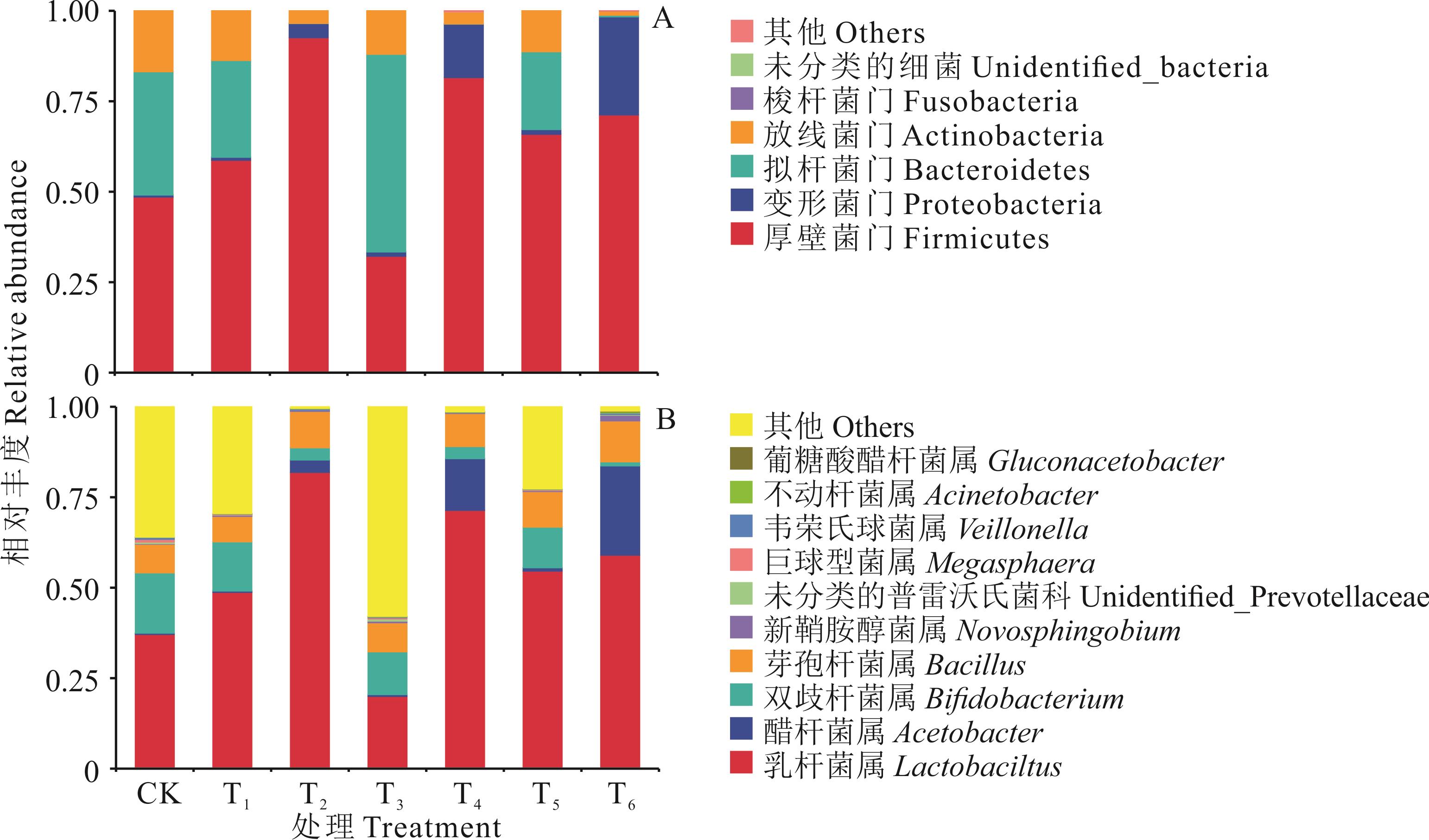
Fig.1 Relative abundance of tea residue silage bacterial communities at the phylum (A) and genus levels (B)
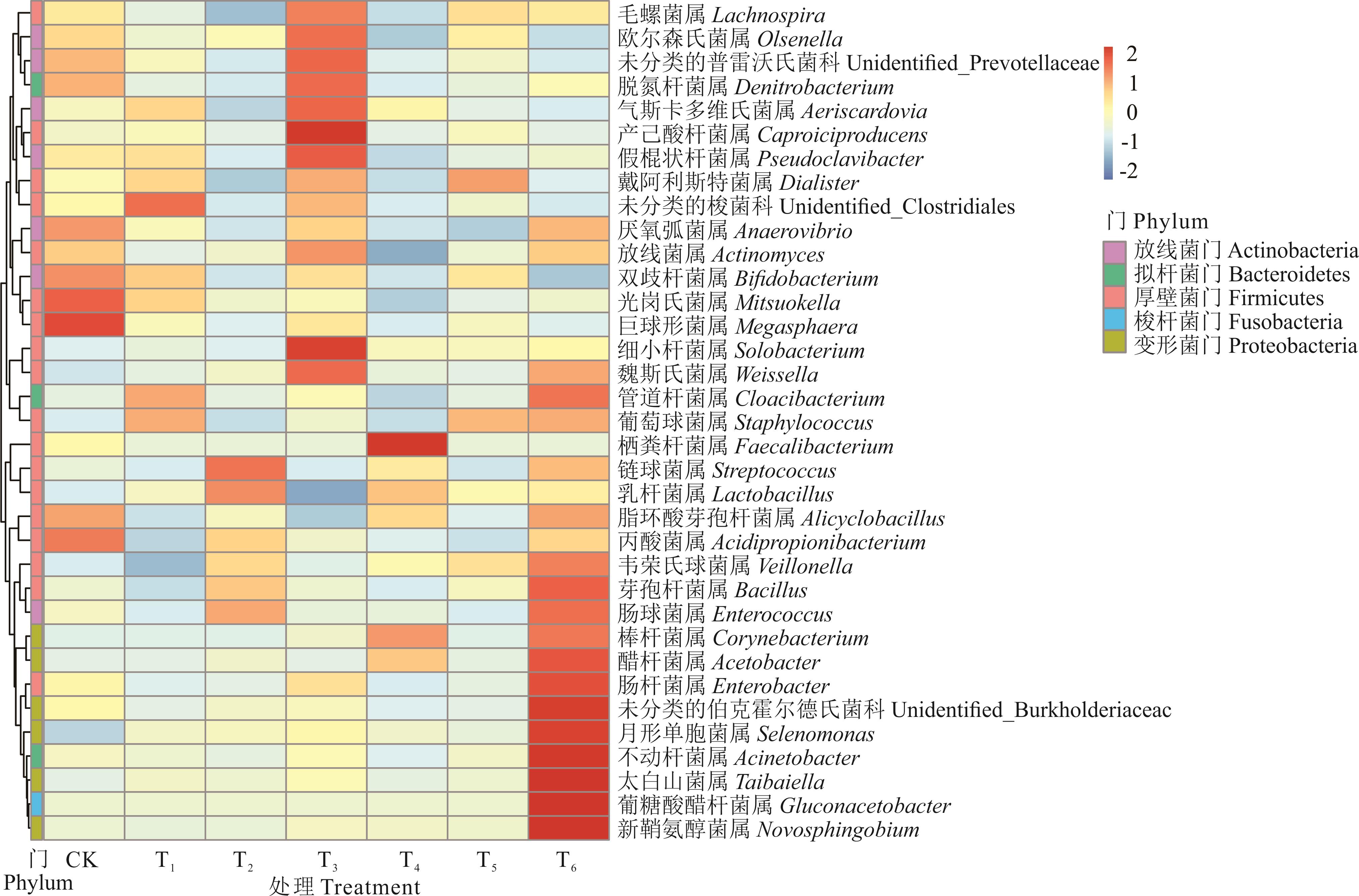
Fig.2 Species clustering heat map of the tea residue silage bacterial community at the genus level
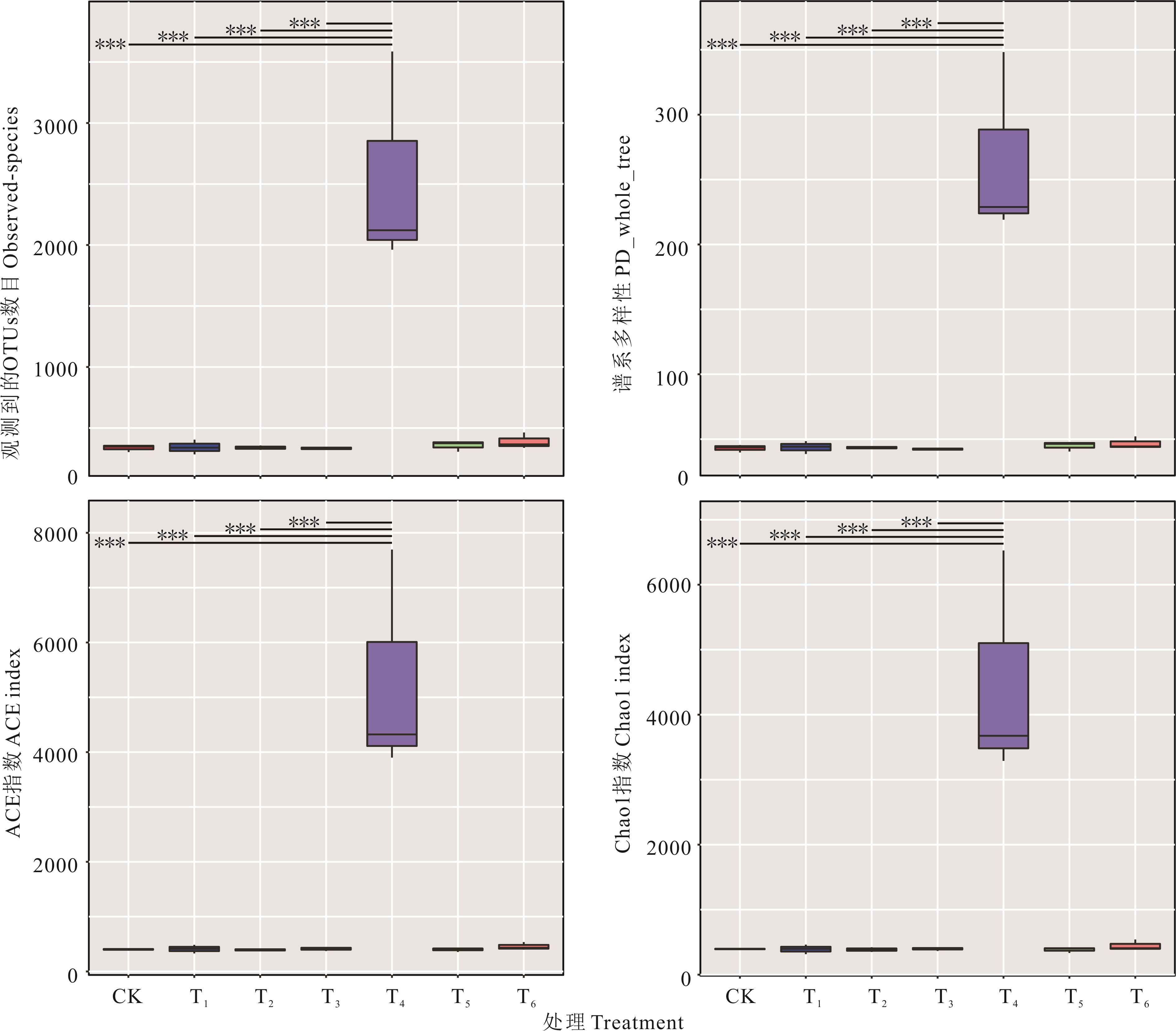
Fig.3 Differences in the Alpha diversity index of the tea residue silage bacterial community
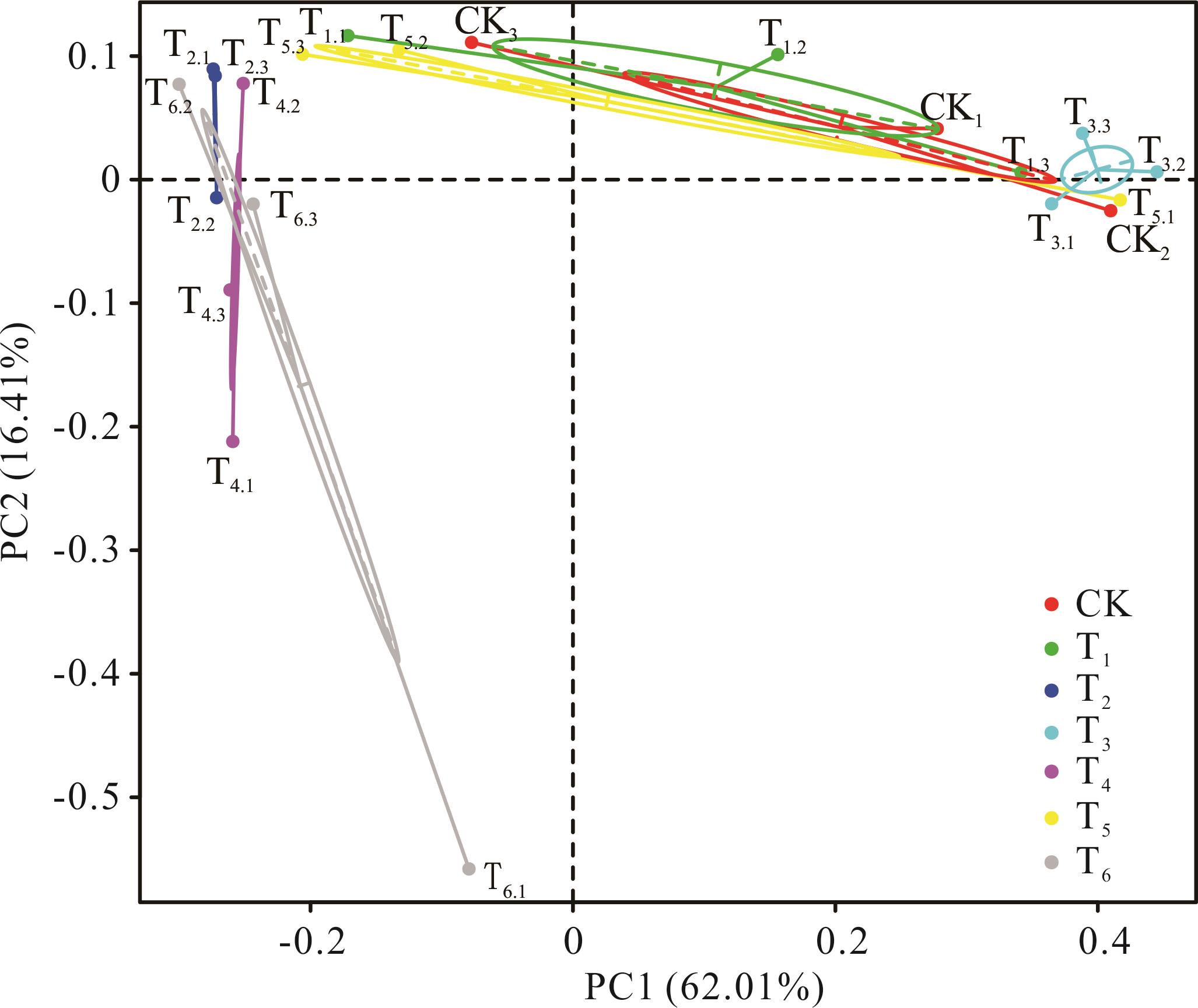
Fig.4 Principal coordinates analysis (PCoA) of bacterial community in the tea residue silage
| [1] | Nasehi M, Torbatineja N M, Rezaie M, et al. Effects of partial substitution of alfalfa hay with green tea waste on growth performance and in vitro methane emission of fat-tailed lambs. Small Ruminant Research, 2018, 168: 52-59. |
| [2] | Kondo M, Kondo Y, Kita K, et al. Nutritive evaluation of spent green and black tea leaf silages by in vitro gas production characteristics, ruminal degradability and post-ruminal digestibility assessed with inhibitory activity of their tannins. Animal Science Journal, 2018, 89(12): 1656-1662. |
| [3] | Bai W F, Guo X Y, Ma L Q, et al. Chemical composition and sensory evaluation of fermented tea with medicinal mushrooms. Indian of Journal Microbiology, 2013, 53(1): 70-76. |
| [4] | Sui W J, Xiao Y, Liu R, et al. Steam explosion modification on tea waste to enhance bioactive compounds’ extractability and antioxidant capacity of extracts. Journal of Food Engineering, 2019, 261: 51-59. |
| [5] | Xu Q, Zhang Y L, Sun J J, et al. The application and thinking of tea dregs in livestock and poultry feed. Guangdong Feed, 2021, 30(6): 33-36. |
| 许晴, 张永亮, 孙加节, 等. 茶渣在畜禽饲料中的应用及思考. 广东饲料, 2021, 30(6): 33-36. | |
| [6] | Xia G H, Sun W T, Wu C R, et al. Research progress on the effect of plant tannins on silage quality and rumen fermentation. Feed Industry, 2023, 44(17): 63-69. |
| 夏光浩, 孙文涛, 吴长荣, 等. 植物单宁对青贮饲料品质及瘤胃发酵影响的研究进展. 饲料工业, 2023, 44(17): 63-69. | |
| [7] | Nascimento T V C, Bezerra L R, Menezes D R, et al. Condensed tannin-amended cassava silage: Fermentation characteristics, degradation kinetics and in-vitro gas production with rumen liquor. The Journal of Agricultural Science, 2018, 156(1): 83-91. |
| [8] | Huang X W, Fan X, Tang M H, et al. Research progress of effects of additives on the quality of forage grass silage. Feed Industry, 2023, 44(17): 81-85. |
| 黄秀文, 范雪, 唐明欢, 等. 青贮添加剂对牧草青贮品质影响的研究进展. 饲料工业, 2023, 44(17): 81-85. | |
| [9] | Zhu F, Ran L, Su D, et al. Effect of bran and lactic acid bacteria preparation on silage quality and nutrient content of a tea residue. Pratacultural Science, 2019, 36(1): 234-242. |
| 朱飞, 冉雷, 苏娣, 等. 麦麸与乳酸菌制剂对茶渣青贮品质和养分含量的影响. 草业科学, 2019, 36(1): 234-242. | |
| [10] | Chen Y Y, Zhu N, Liang Y, et al. Effect of additives on quality of herbal tea residue fermentation. Journal of Domestic Animal Ecology, 2020, 41(2): 55-59. |
| 陈奕业, 朱妮, 梁瑶, 等. 不同添加剂对凉茶渣发酵品质的影响. 家畜生态学报, 2020, 41(2): 55-59. | |
| [11] | Yu Q, Zhou Y T, Aibibula·Yimamu, et al. Effects of different silage additives on quality and microbial composition of extruded corn straw microage. Feed Research, 2025, 48(5): 126-132. |
| 于琴, 周宇婷, 艾比布拉·伊马木, 等. 不同青贮添加剂对膨化玉米秸秆微贮饲料品质及微生物组成的影响. 饲料研究, 2025, 48(5): 126-132. | |
| [12] | Yirule, Gegentu, Jia Y S, et al. Study on nutrient composition and fermentation quality of mixed silage with different proportions of corn straw and potato starch residue. Feed Research, 2023, 46(24): 94-99. |
| 意如乐, 格根图, 贾玉山, 等. 不同比例玉米秸秆与马铃薯淀粉渣混合青贮营养成分及发酵品质的研究. 饲料研究, 2023, 46(24): 94-99. | |
| [13] | Chen X Z, Lin P D, Yue W, et al. Effects of various additives on the quality and microbial diversity of broad bean straw silage. Acta Prataculturae Sinica, 2025, 34(4): 164-174. |
| 陈鑫珠, 林平冬, 岳稳, 等. 不同添加剂对蚕豆秸秆青贮品质及微生物多样性的影响. 草业学报, 2025, 34(4): 164-174. | |
| [14] | Wang H R, Gao F Q, Xue Y L, et al. Effects of different lactic acid bacteria additives on the quality and microbial diversity of oat silage. Chinese Journal of Grassland, 2024, 46(11): 82-90. |
| 王昊然, 高凤芹, 薛艳林, 等. 不同乳酸菌添加剂对燕麦青贮品质和微生物多样性的影响. 中国草地学报, 2024, 46(11): 82-90. | |
| [15] | Van Ranst G, Vandewalle M, Gadeyne F, et al. Lipid metabolism in mixtures of red clover (Trifolium repens) and perennial ryegrass (Lolium perenne) in lab scale silages and in vitro rumen incubations. Animal, 2013, 7(9): 1454-1463. |
| [16] | Yang S. Feed analysis and feed quality testing technology. Beijing: China Agricultural University Press, 1993: 19-33. |
| 杨胜. 饲料分析及饲料质量检测技术. 北京: 中国农业大学出版社, 1993: 19-33. | |
| [17] | Li B, Zhang X X, Guo F, et al. Characterization of tetracycline resistant bacterial community in saline activated sludge using batch stress incubation with high-throughput sequencing analysis. Water Research, 2013, 47(13): 4207-4216. |
| [18] | Minchin P R. An evaluation of the relative robustness of techniques for ecological ordination. Vegetatio, 1987, 69(1/2/3): 89-107. |
| [19] | Lei L L, Shen S B, Zhang S F, et al. The nutritional value of plant extract residues and its application in monogastric animals. Feed Research, 2021, 44(21): 133-136. |
| 雷丽莉, 沈水宝, 张淑芳, 等. 植物提取剩余物的营养价值及其在单胃动物上的应用研究进展. 饲料研究, 2021, 44(21): 133-136. | |
| [20] | Wang T S, Zhang J Y, Luo Y Q, et al. Application of tea residue in livestock and poultry breeding. Feed Review, 2023, 2: 19-23. |
| 王天松, 张晋源, 罗远琴, 等. 茶渣在畜禽养殖中的应用. 饲料博览, 2023, 2: 19-23. | |
| [21] | Cui Y Y, Li J Z, Deng D, et al. Solid-state fermentation by Aspergillus niger and Trichoderma koningii improves the quality of tea dregs for use as feed additives. PLoS One, 2021, 16(11): e260045. |
| [22] | Muck R E, Nadeau E M G, Mcallister T A, et al. Silage review: Recent advances and future uses of silage additives. Journal of Dairy Science, 2018, 101(5): 3980-4000. |
| [23] | Zhong S, Zhang X N, Yang Y G, et al. Effects of lactic acid bacteria and cellulase on alfalfa silage quality with different moisture. Chinese Journal of Animal Nutrition, 2017, 29(5): 1821-1830. |
| 钟书, 张晓娜, 杨云贵, 等. 乳酸菌和纤维素酶对不同含水量紫花苜蓿青贮品质的影响. 动物营养学报, 2017, 29(5): 1821-1830. | |
| [24] | Li W Y, Zhu Q, Chen B, et al. Effects of different enzyme-microbe combinations on silage quality of Pennisetum giganteum. Feed Research, 2025, 48(14): 125-130. |
| 李文优, 朱芹, 陈斌, 等. 添加不同复合菌酶对巨菌草青贮品质的影响. 饲料研究, 2025, 48(14): 125-130. | |
| [25] | Landete J M, Plaza-Vinuesa L, Montenegro C, et al. The use of Lactobacillus plantarum esterase genes: A biotechnological strategy to increase the bioavailability of dietary phenolic compounds in lactic acid bacteria. International Journal of Food Sciences and Nutrition, 2021, 72(8): 1035-1045. |
| [26] | Kim J H, Block D E, Shoemaker S P, et al. Conversion of rice straw to bio-based chemicals: An integrated process using Lactobacillus brevis. Applied Microbiology and Biotechnology, 2010, 86(5): 1375-1385. |
| [27] | Wang M, Lu X F. Exploring the synergy between cellobiose dehydrogenase from Phanerochaete chrysosporium and cellulase from Trichoderma reesei. Frontiers in Microbiology, 2016, 7: 620. |
| [28] | Wei J, Ding D D, Zhang G P. Effects of different silage additives on nutrient composition, fermentation quality, and CNCPS components of grain and grass silage. Feed Research, 2025, 48(11): 123-127. |
| 魏杰, 丁丹丹, 张广平. 不同青贮添加剂对谷草青贮营养成分、发酵品质及CNCPS组分的影响. 饲料研究, 2025, 48(11): 123-127. | |
| [29] | Rehman J U, Joe E N, Yoon H Y, et al. Lignin metabolism by selected fungi and microbial consortia for plant stimulation: Implications for biologically active humus genesis. Microbiology Spectrum, 2022, 10(6): e263722. |
| [30] | Xu D M, Zhang P, Ke W C, et al. Research process in silage microorganism and its effects on silage quality. Acta Agrestia Sinica, 2017, 25(3): 460-465. |
| 许冬梅, 张萍, 柯文灿, 等. 青贮微生物及其对青贮饲料发酵品质影响的研究进展. 草地学报, 2017, 25(3): 460-465. | |
| [31] | Zhang N J, Liu J L, Lin B, et al. Research progress on composition characteristics of epiphytic microorganisms of green forage and their effects on silage quality. Chinese Journal of Animal Nutrition, 2023, 35(5): 2828-2835. |
| 张男吉, 刘江莉, 林波, 等. 青绿饲料附生微生物组成特点及其对青贮品质影响的研究进展. 动物营养学报, 2023, 35(5): 2828-2835. | |
| [32] | Klang J, Szewzyk U, Bock D, et al. Nexus between the microbial diversity level and the stress tolerance within the biogas process. Anaerobe, 2019, 56: 8-16. |
| [1] | Tian-ci KONG, Xue-qing MA, Chen-bang HE, Tai-yan FAN, Guang-xin LU, He-xing QI. Effects of fungal diseases of silage maize on microbial diversity of silage fermentation [J]. Acta Prataculturae Sinica, 2025, 34(7): 95-106. |
| [2] | Si-ran WANG, Cheng-long DING, Ji-peng TIAN, Yun-hui CHENG, Neng-xiang XU, Wen-jie ZHANG, Xin WANG, Bei-yi LIU. Effects of biological and antifungal additives on ensiling characteristics, in vitro digestibility, gas production, and aerobic stability of fermented total mixed ration including wet brewers’ grains [J]. Acta Prataculturae Sinica, 2025, 34(6): 213-226. |
| [3] | Xin-zhu CHEN, Ping-dong LIN, Wen YUE, Ya-ni YANG, Shui-ling QIU, Xiang-li ZHENG. Effects of various additives on the quality and microbial diversity of broad bean straw silage [J]. Acta Prataculturae Sinica, 2025, 34(4): 164-174. |
| [4] | Hui-yun TAO, Run-yan YANG, Yan-can LI, Ya-peng LIU, He-xing QI. Diversity of microorganisms in the rhizosphere soil of Kobresia humilis and their responses to environmental factors in the source region of the Yellow River [J]. Acta Prataculturae Sinica, 2025, 34(12): 16-32. |
| [5] | Di SHEN, Zi-ming ZENG, Kai-yue PANG, Sha-tuo CHAI, Hong-xin NIE, Yu-min LI, Yang LIAO, Xun WANG, Wei-hua HUANG, Shu-jie LIU, Ying-kui YANG, Shu-xiang WANG. Effects of low-concentrate and high-concentrate diets on yak growth performance and rumen microbiota structure [J]. Acta Prataculturae Sinica, 2024, 33(5): 155-165. |
| [6] | Pei-shan HUANG, Mei-qi ZANG, Wei-ling ZHANG, Jun-jian CHEN, Li-xuan LIU, Qing ZHANG. Optimization of extraction process of Neolamarckia cadamba leaf polyphenols and its effect on Stylosanthes guianensis silage [J]. Acta Prataculturae Sinica, 2024, 33(10): 159-170. |
| [7] | Meng-qi LIANG, Qi-feng WU, Tao SHAO, Ai-li WU, Qin-hua LIU. Effects of additives on the fermentation quality and α-tocopherol and β-carotene contents in Italian ryegrass silage [J]. Acta Prataculturae Sinica, 2023, 32(5): 180-189. |
| [8] | Jian-zhen GE, Wen-hui FU, Lu ZHANG, Bao-jun LIN, Shuai ZHAO, Ma-ga-weng BAI, Jian-cun KOU. Degradation of carbendazim in orchard white clover silage and its effect on the microbial fermentative community [J]. Acta Prataculturae Sinica, 2022, 31(7): 64-75. |
| [9] | Di ZHOU, Shuai YANG, Xin-xin ZHANG, Jing YUAN, Yan-xia GAO, Jian-guo LI, Bo WANG, Guang-sheng ZHOU, Ting-dong FU, Jun YE, Li-guo YANG, Guo-hua HUA. Effects of additive types and combinations on silage quality of whole-plant rape after harvesting and air-drying [J]. Acta Prataculturae Sinica, 2022, 31(4): 124-135. |
| [10] | Huan ZHANG, Yi-xiao MU, Gui-jie ZHANG. Effects of Lycium barbarum by-products on fermentation quality and microbial diversity of alfalfa silage [J]. Acta Prataculturae Sinica, 2022, 31(4): 136-144. |
| [11] | Juan-shan ZHENG, KAO Ren-qing DING, Xin-pu LI, Ze-yi LIANG, Jian-bo ZHANG, Mei DU, Xue-zhi DING. Research progress on rumen microorganisms in the utilization of lignocellulose as an energy resource [J]. Acta Prataculturae Sinica, 2021, 30(9): 182-192. |
| [12] | Shi-yu ZOU, Si-kui CHEN, Qi-yuan TANG, Dong CHEN, Yuan-wei CHEN, Pan DENG, Xu-lai HUANG, Fu-qiang LI. Effects of silage additives on quality and in vitro rumen fermentation characteristics of first season ratoon rice whole silage [J]. Acta Prataculturae Sinica, 2021, 30(7): 122-132. |
| [13] | Jie YUAN, Ran-ran MA, Wen-jie ZHANG, Neng-xiang XU, Ran-ran ZHAO, Hong-ru GU, Cheng-long DING. Screening of superior lactic acid bacteria from natural Lolium multiflorum silage and their effects on silage quality [J]. Acta Prataculturae Sinica, 2021, 30(11): 132-143. |
| [14] | Chang-rong WU, Sheng DAI, Long-fei LIANG, Wen-tao SUN, Chao PENG, Chao CHEN, Jun HAO. Effects of different additives on fermentation quality and protein degradation of Broussonetia papyrifera silage [J]. Acta Prataculturae Sinica, 2021, 30(10): 169-179. |
| [15] | YU Hao-ran, GE Gen-tu, WANG Zhi-jun, JIA Yu-shan, LIAN Zhi, JIA Peng-fei. Effects of formic acid additives and ensiling time on the quality of alfalfa silage [J]. Acta Prataculturae Sinica, 2020, 29(3): 89-95. |
| Viewed | ||||||
|
Full text |
|
|||||
|
Abstract |
|
|||||
