
ISSN 1004-5759 CN 62-1105/S
Acta Prataculturae Sinica ›› 2025, Vol. 34 ›› Issue (7): 95-106.DOI: 10.11686/cyxb2024317
Previous Articles Next Articles
Tian-ci KONG1( ), Xue-qing MA1, Chen-bang HE2, Tai-yan FAN1, Guang-xin LU1, He-xing QI1()
Received:2024-08-09
Revised:2024-10-08
Online:2025-07-20
Published:2025-05-12
Contact:
He-xing QI
Tian-ci KONG, Xue-qing MA, Chen-bang HE, Tai-yan FAN, Guang-xin LU, He-xing QI. Effects of fungal diseases of silage maize on microbial diversity of silage fermentation[J]. Acta Prataculturae Sinica, 2025, 34(7): 95-106.

Fig.1 The Venn diagram of fungi and bacteria in different diseased silage maize
处理 Treatment | 覆盖率 Coverage | 序列指数 Sequence index | ACE指数 ACE index | Chao1指数 Chao1 index | 香农指数 Shannon index | 辛普森指数 Simpson index |
|---|---|---|---|---|---|---|
| CK | 0.9999ab | 69587c | 76.6465a | 76.9000a | 1.1931b | 0.5950a |
| YLG | 0.9998c | 78248a | 75.7685a | 73.7417a | 0.7702b | 0.6046a |
| YL | 0.9999b | 74877ab | 75.3835a | 73.8287a | 1.0058b | 0.5712a |
| YM | 0.9999ab | 73034bc | 84.9548a | 84.6667a | 2.5355a | 0.1519b |
| YX | 1.0000a | 72049bc | 93.4416a | 93.1111a | 2.8101a | 0.1267b |
Table 1 Fungal diversity index of different samples
处理 Treatment | 覆盖率 Coverage | 序列指数 Sequence index | ACE指数 ACE index | Chao1指数 Chao1 index | 香农指数 Shannon index | 辛普森指数 Simpson index |
|---|---|---|---|---|---|---|
| CK | 0.9999ab | 69587c | 76.6465a | 76.9000a | 1.1931b | 0.5950a |
| YLG | 0.9998c | 78248a | 75.7685a | 73.7417a | 0.7702b | 0.6046a |
| YL | 0.9999b | 74877ab | 75.3835a | 73.8287a | 1.0058b | 0.5712a |
| YM | 0.9999ab | 73034bc | 84.9548a | 84.6667a | 2.5355a | 0.1519b |
| YX | 1.0000a | 72049bc | 93.4416a | 93.1111a | 2.8101a | 0.1267b |
处理 Treatment | 覆盖率 Coverage | 序列指数 Sequence index | ACE指数 ACE index | Chao1指数 Chao1 index | 香农指数 Shannon index | 辛普森指数 Simpson index |
|---|---|---|---|---|---|---|
| CK | 0.9998a | 63961a | 56.9626b | 54.8030b | 0.6553ab | 0.7405a |
| YLG | 0.9996b | 64736a | 118.3162a | 113.3268a | 0.9392a | 0.5585b |
| YL | 0.9996b | 67705a | 101.0006a | 94.7643a | 0.4791ab | 0.8107a |
| YM | 0.9998a | 63455a | 56.4746b | 52.3095b | 0.4166b | 0.8225a |
| YX | 0.9998a | 66425a | 57.5407b | 52.5902b | 0.4767b | 0.7690a |
Table 2 Bacterial diversity index of different samples
处理 Treatment | 覆盖率 Coverage | 序列指数 Sequence index | ACE指数 ACE index | Chao1指数 Chao1 index | 香农指数 Shannon index | 辛普森指数 Simpson index |
|---|---|---|---|---|---|---|
| CK | 0.9998a | 63961a | 56.9626b | 54.8030b | 0.6553ab | 0.7405a |
| YLG | 0.9996b | 64736a | 118.3162a | 113.3268a | 0.9392a | 0.5585b |
| YL | 0.9996b | 67705a | 101.0006a | 94.7643a | 0.4791ab | 0.8107a |
| YM | 0.9998a | 63455a | 56.4746b | 52.3095b | 0.4166b | 0.8225a |
| YX | 0.9998a | 66425a | 57.5407b | 52.5902b | 0.4767b | 0.7690a |

Fig.2 The abundance distribution of fungal community at the level of phylum, order and genus

Fig.3 The abundance distribution of bacterial community at the level of phylum, order and genus
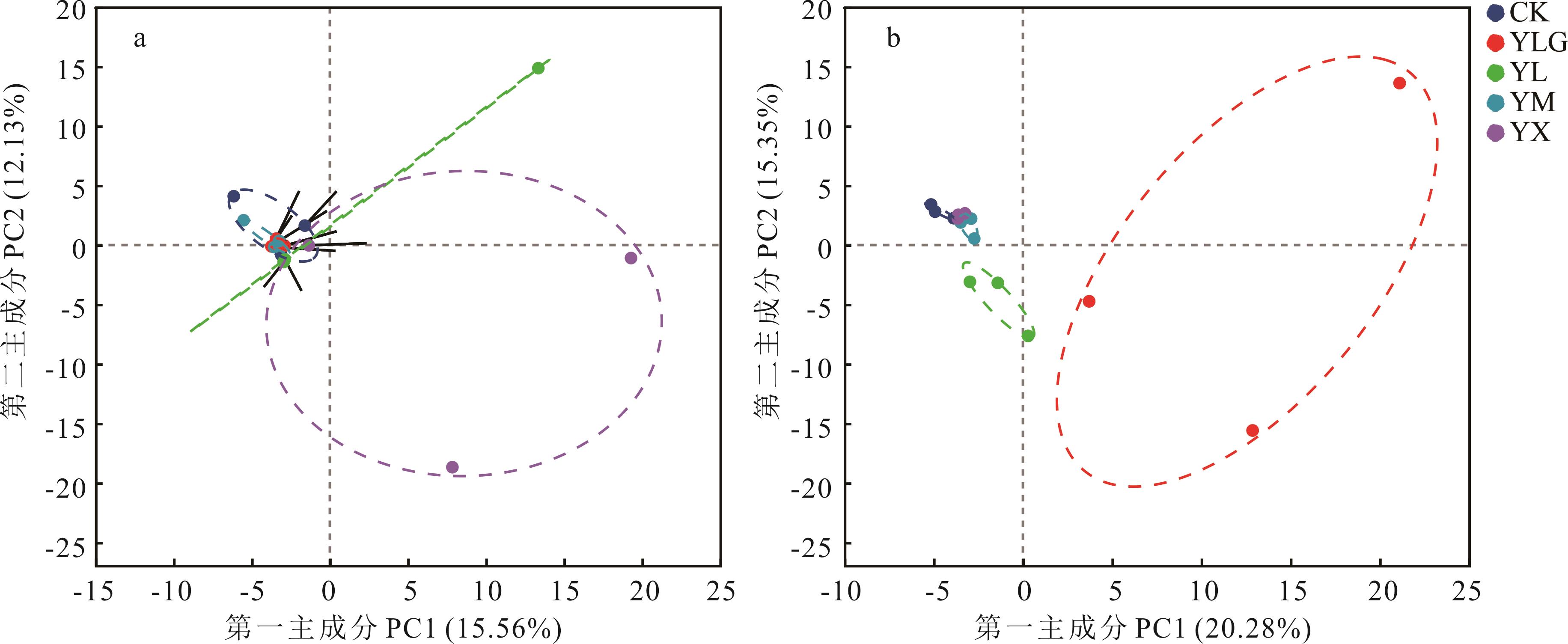
Fig.4 Scatter plot of microbial OTU distribution

Fig.5 Linear discriminant analysis results of fungi and bacteria
| 1 | Che L J, Hao W B. Quality of corn stover silage with cellulase and its effect on growth performance of beef cattle. Feed Research, 2022, 45(16): 18-22. |
| 车雷杰, 郝王宝. 纤维素酶青贮玉米秸秆的品质及其对肉牛生长性能的影响. 饲料研究, 2022, 45(16): 18-22. | |
| 2 | Dong S J. Analysis of influencing factors on nutritional characteristics of silage maize. Feed Research, 2021, 44(17): 158-160. |
| 董世界. 青贮玉米营养特性的影响因素分析. 饲料研究, 2021, 44(17): 158-160. | |
| 3 | Fan K L, Su Y J, Wu J P, et al. Effects of silage fermentation promoters and harvest time on nutritional quality of whole-plant silage maize. Pratacultural Science, 2022, 39(3): 586-596. |
| 范凯利, 苏亚军, 吴建平, 等. 青贮发酵促进剂和收获期对全株青贮玉米营养品质的影响. 草业科学, 2022, 39(3): 586-596. | |
| 4 | Wang J W, Luo Y G. Utilization status of silage maize in Hebei Province. Modern Rural Science and Technology, 2016(22): 14. |
| 王建文, 罗永刚. 河北省青贮玉米的利用现状. 现代农村科技, 2016(22): 14. | |
| 5 | Li J, Xiao Y L, Chang R F, et al. Research on current situation, specialties and development strategies of agriculture and stockbreeding in Qinghai Province. Research of Agricultural Modernization, 2011, 32(1): 15-18. |
| 李靖, 肖运来, 常瑞甫, 等. 青海省农牧业发展现状和特色及发展战略研究. 农业现代化研究, 2011, 32(1): 15-18. | |
| 6 | Yu Y, Yang X X, Dong Q M, et al. Research on the development of modern grassland animal husbandry in Qinghai Province under the structural reform of agricultural supply side. Qinghai Social Sciences, 2019(6): 123-129. |
| 俞旸, 杨晓霞, 董全民, 等. 农业供给侧结构性改革下的青海省现代草地畜牧业发展研究. 青海社会科学, 2019(6): 123-129. | |
| 7 | Ma X Q, Kong T C, Qi H X. Preliminary investigation of Zea mays L. disease species in the eastern agricultural region of Qinghai Province. Science and Technology of Qinghai Agriculture and Forestry, 2024(1): 26-31, 36. |
| 马学青, 孔天赐, 祁鹤兴. 青海省东部农业区青贮玉米病害种类初步调查. 青海农林科技, 2024(1): 26-31, 36. | |
| 8 | Qi H X, Lu G X, Li Z R, et al. Pathogen identification and pathogenicity analysis of Alternaria leaf blight of silage maize in Qinghai Province. Acta Prataculturae Sinica, 2021, 30(6): 94-105. |
| 祁鹤兴, 芦光新, 李宗仁, 等. 青海省青贮玉米链格孢叶枯病病原菌鉴定及其致病力分析. 草业学报, 2021, 30(6): 94-105. | |
| 9 | Qi H X, Li H F, Zou H T, et al. Identification and pathogenicity analysis of Fusarium pathogens from silage maize. Molecular Plant Breeding, (2023-10-17)[2024-04-01]. http://kns.cnki.net/kcms/detail/46.1068.S.20231016.1120.012.html. |
| 祁鹤兴, 李红芳, 邹海涛, 等. 青贮玉米来源镰刀菌的分离鉴定及其致病性分析. 分子植物育种, (2023-10-17)[2024-04-01]. http://kns.cnki.net/kcms/detail/46.1068.S.20231016.1120.012.html. | |
| 10 | Chang J P, Ni R Y, He C B, et al. Identification and pathogenicity analysis of subasperellate leaf spot pathogens from silage maize. Molecular Plant Breeding, (2023-10-19)[2024-04-01]. http://kns.cnki.net/kcms/detail/46.1068.S.20231019. 0919.002.html. |
| 常建萍, 倪如原, 贺晨邦, 等. 青贮玉米亚隔孢壳叶斑病菌的分离鉴定及其致病性分析. 分子植物育种, (2023-10-19)[2024-04-01]. http://kns.cnki.net/kcms/detail/46.1068.S.20231019.0919.002.html. | |
| 11 | Qi H X, Wang H C, Lu G X, et al. Identification and pathogenicity analysis of Parastagonospora leaf spot pathogens from silage maize. Acta Agrestia Sinica, 2023, 31(1): 40-49. |
| 祁鹤兴, 王海春, 芦光新, 等. 青贮玉米蠕形菌的分离鉴定及其致病性分析. 草地学报, 2023, 31(1): 40-49. | |
| 12 | Shang Z D, Tan Z K, Li J K, et al. Effects of different planting seasons on the fermentation quality and microbial diversity of corn silage in Tibet. Acta Agrestia Sinica, 2019, 27(2): 488-496. |
| 商振达, 谭占坤, 李家奎, 等. 种植时间对西藏地区青贮玉米发酵品质和微生物多样性的影响. 草地学报, 2019, 27(2): 488-496. | |
| 13 | Zhang S, Chang J, Hu Z F, et al. Harmful microorganisms in silage and their suppression measures. Chinese Journal of Animal Nutrition, 2017, 29(12): 4308-4314. |
| 张适, 常杰, 胡宗福, 等. 青贮饲料有害微生物及其抑制措施. 动物营养学报, 2017, 29(12): 4308-4314. | |
| 14 | Han Z Q, Song Y H, Wang Z F. Research progress which influence factors about quality of silage corn. Feed Research, 2020, 43(1): 106-109. |
| 韩战强, 宋艳画, 王志方. 影响青贮玉米品质因素的研究进展. 饲料研究, 2020, 43(1): 106-109. | |
| 15 | Liu B Y, Huan H L, Gu H R, et al. Changes of silage quality and microbial diversity in barley during different fermentation periods. Jiangsu Journal of Agricultural Sciences, 2019, 35(3): 653-660. |
| 刘蓓一, 宦海琳, 顾洪如, 等. 不同发酵时期大麦青贮品质和微生物多样性变化. 江苏农业学报, 2019, 35(3): 653-660. | |
| 16 | Kung L, Taylor C C, Lynch M P, et al. The effect of treating alfalfa with Lactobacillus buchneri 40788 on silage fermentation, aerobic stability, and nutritive value for lactating dairy cows. Journal of Dairy Science, 2003(1): 86. |
| 17 | Cao X, Wu K L, Wen L Y, et al. Effects of rice straw, wheat bran and glucose addition on the silage quality of Myriophyllum elatinoides. Acta Agrestia Sinica, 2022, 30(12): 3447-3454. |
| 曹欣, 吴康乐, 文乐元, 等. 水稻秸秆、麦麸、葡萄糖添加对绿狐尾藻青贮质量影响研究. 草地学报, 2022, 30(12): 3447-3454. | |
| 18 | Hou R R, Zhang M H. Damage of mycotoxins on animals and advances in study on methods of prevention. China Animal Husbandry & Veterinary Medicine, 2007(1): 13-16. |
| 侯然然, 张敏红. 霉菌毒素对畜禽的危害及其防控方法的研究进展. 中国畜牧兽医, 2007(1): 13-16. | |
| 19 | Zhang X F. Forage processing and storage. Beijing: China Agriculture Press, 2004: 10. |
| 张秀芬. 饲草饲料加工与贮藏. 北京: 中国农业出版社, 2004: 10. | |
| 20 | Pérez-Pazos J V, Romero-Ferrer J L, Berdugo-Cely J A. Selection of a CTAB protocol for high-quality DNA extraction in Oryza sativa L. validated for application in genotyping process based on Illumina sequencing. Journal of Crop Science and Biotechnology, 2022, 26(4): 433-446. |
| 21 | Liu S Y, Shen D C, Liu Z, et al. Microbial diversity in leaves of different Fraxinus mandshurica brown spot disease stages. Forestry Engineering, 2024, 40(1): 1-8. |
| 刘思远, 申东晨, 刘峥, 等. 不同水曲柳褐斑病病级叶片的微生物多样性. 森林工程, 2024, 40(1): 1-8. | |
| 22 | Chen S, Zhou Y, Chen Y, et al. FASTP: an ultra-fast all-in-one FASTQ preprocessor. Bioinformatics, 2018, 34(17): i884-i890. |
| 23 | Magoč T, Salzberg S L. FLASH: fast length adjustment of short reads to improve genome assemblies. Bioinformatics, 2011, 27(21): 2957-2963. |
| 24 | Edgar R C. UPARSE: highly accurate OTU sequences from microbial amplicon reads. Nature Methods, 2013, 10(10): 996-998. |
| 25 | Stackebrandt E, Goebel B M. Taxonomic note: A place for DNA-DNA reassociation and 16S rRNA sequence analysis in the present species definition in bacteriology. International Journal of Systematic Bacteriology, 1994, 44(4): 846-849. |
| 26 | Wang Q, Garrity G M, Tiedje J M, et al. Naive Bayesian classifier for rapid assignment of rRNA sequences into the new bacterial taxonomy. Applied and Environmental Microbiology, 2007, 73(16): 5261-5267. |
| 27 | Huang X L, Chen J P, Mo X F, et al. Microbial diversity and chemical characteristics of rhizosphere soil associated with understory Cardiocrinum giganteum. Journal of Forest and Environment, 2023, 43(6): 596-605. |
| 黄晓露, 陈江平, 莫小锋, 等. 林下大百合根际土壤微生物及化学特征分析. 森林与环境学报, 2023, 43(6): 596-605. | |
| 28 | Yao W, Wang E, Zhou Y, et al. Effects of garcinol supplementation on the performance, egg quality, and intestinal health of laying hens in the late laying period. Poultry Science, 2023, 102(10): 1-12. |
| 29 | Chen Y Y, Zhou B, Li J L, et al. Blister blight lesions of tea (Camellia sinensis L. Kuntze) leaves: microbial diversity analysis and identification of the disease fungi. Chinese Agricultural Science Bulletin, 2023, 39(6): 116-123. |
| 陈义勇, 周波, 黎健龙, 等. 茶饼病病叶表面微生物多样性及病害真菌的分离鉴定. 中国农学通报, 2023, 39(6): 116-123. | |
| 30 | Tu M, Cai H B, Peng Y L, et al. Structures and biodiversity of microbial communities in rhizosphere soil of red root rot disease and healthy of Hevea brasiliensis. Chinese Journal of Tropical Crops, 2021, 42(12): 3639-3645. |
| 涂敏, 蔡海滨, 彭延麟, 等. 橡胶树红根病患病与健康植株根际土壤微生物结构及多样性分析. 热带作物学报, 2021, 42(12): 3639-3645. | |
| 31 | Hu Z X. Characteristics of microbial community composition and diversity in rhizospheric soil of Edgeworthia chrysantha root-rot. Hefei: Anhui Agricultural University, 2024. |
| 胡子贤. 结香根腐病根际土壤微生物群落组成与多样性特点. 合肥: 安徽农业大学, 2024. | |
| 32 | Chen S D, Gong H Q, Yin G L, et al. Nutrient quality and bacterial community diversity of silage corn during aerobic exposure. Acta Agrestia Sinica, 2023, 31(2): 388-395. |
| 陈三冬, 巩海强, 尹国丽, 等. 青贮玉米有氧暴露过程中营养品质及细菌群落多样性. 草地学报, 2023, 31(2): 388-395. | |
| 33 | Li D L, Xu L, Ruan X L, et al. Analysis of main microbial groups in different types of soil in banana Fusarium wilt field// Proceedings of the 2011 annual academic conference of the Chinese Society of Plant Pathology. Guangzhou: College of Natural Resources and Environment, South China Agricultural University, 2011: 576. |
| 李冬丽, 许乐, 阮小蕾, 等. 香蕉枯萎病田间不同类型土壤中微生物主要类群的分析//中国植物病理学会2011年学术年会论文集. 广州: 华南农业大学资源环境学院, 2011: 576. | |
| 34 | Labuda R, Parich A, Berthiller F, et al. Incidence of trichothecenes and zearalenone in poultry feed mixtures from Slovakia. International Journal of Food Microbiology, 2005, 105(1): 19-25. |
| 35 | Wang X Z. Effect of compaction and harvest stage on quality and mycotoxin of whole-plant corn silage. Shihezi: Shihezi University, 2020. |
| 王旭哲. 紧实度及收获期对全株玉米青贮品质及霉菌毒素的影响研究. 石河子: 石河子大学, 2020. | |
| 36 | Tian J P. The accumulation and control technology of aflatoxin in whole crop silage. Beijing: China Agricultural University, 2017. |
| 田吉鹏. 全株玉米青贮饲料中黄曲霉毒素积累规律及调控技术研究. 北京: 中国农业大学, 2017. | |
| 37 | Liu B C, Elad D. Clinical mastitis caused by Candida krusei contamination of feed in dairy cows. Animal Science Abroad (Feed), 1996(5): 24-26. |
| 刘伯淳, Elad D. 克柔氏念珠菌污染饲料引起的乳牛霉菌性乳房炎. 国外畜牧学(饲料), 1996(5): 24-26. | |
| 38 | Lan H B E. Research on the biocontrol efficacy of Wickerhamomyces anomalus on diseases of tomatoes and the mechanisms involved. Zhenjiang: Jiangsu University, 2023. |
| 蓝黄博恩. 异常威克汉姆酵母对番茄病害的生物防治及其机制研究. 镇江: 江苏大学, 2023. | |
| 39 | Zhu M, Yang Q, Godana E A, et al. Efficacy of Wickerhamomyces anomalus in the biocontrol of black spot decay in tomatoes and investigation of the mechanisms involved. Biological Control, 2023, 186: 1-11. |
| 40 | Ma X, Sun M G, Nie C X, et al. A feeding Wickhamomyces anomalus and its application: China, CN109609393B. 2019-04-12. |
| 马曦, 孙美鸽, 聂存喜, 等. 一种饲用异常威克汉姆酵母及其应用: 中国, CN109609393B. 2019-04-12. | |
| 41 | Zhang D D, Zhao J F, Xie S Y, et al. Analysis of microbial diversity in maize based on high throughput sequencing. Journal of Chinese Institute of Food Science and Technology, 2023, 23(10): 305-314. |
| 张咚咚, 赵金凤, 谢思源, 等. 基于高通量测序的玉米中微生物多样性分析. 中国食品学报, 2023, 23(10): 305-314. | |
| 42 | Yang Y G, Gao J N, Tian R H. Screening and identification of excellent lactic acid bacteria in naturally fermented corn stalks and mixed bacteria fermentation experiments. Heilongjiang Animal Science and Veterinary Medicine, 2018(7): 145-148. |
| 杨耀刚, 郜晋楠, 田瑞华. 自然发酵玉米秸秆中优良乳酸菌的筛选鉴定及混菌发酵试验. 黑龙江畜牧兽医, 2018(7): 145-148. | |
| 43 | Wang H R. Effect of lactic acid bacteria and three Chinese herbal medicine additives on oat silage quality, microbial community structure and metabolites. Beijing: Chinese Academy of Agricultural Sciences, 2023. |
| 王昊然. 乳酸菌和三种中药添加剂对燕麦青贮品质、微生物群落结构及代谢物的影响. 北京: 中国农业科学院, 2023. |
| [1] | Xin-zhu CHEN, Ping-dong LIN, Wen YUE, Ya-ni YANG, Shui-ling QIU, Xiang-li ZHENG. Effects of various additives on the quality and microbial diversity of broad bean straw silage [J]. Acta Prataculturae Sinica, 2025, 34(4): 164-174. |
| [2] | Di SHEN, Zi-ming ZENG, Kai-yue PANG, Sha-tuo CHAI, Hong-xin NIE, Yu-min LI, Yang LIAO, Xun WANG, Wei-hua HUANG, Shu-jie LIU, Ying-kui YANG, Shu-xiang WANG. Effects of low-concentrate and high-concentrate diets on yak growth performance and rumen microbiota structure [J]. Acta Prataculturae Sinica, 2024, 33(5): 155-165. |
| [3] | Dong-qing FU, Chun-ying JIA, Li ZHANG, Fan-fan ZHANG, Chun-hui MA. Agronomic traits and fermentation quality of maize silage harvested at different grain-development stages in irrigated drought areas of southern Xinjiang [J]. Acta Prataculturae Sinica, 2022, 31(8): 111-125. |
| [4] | Zi-wei JIANG, Gui-yu LIU, Hao-yun AN, Wei SHI, Sheng-hua CHANG, Cheng ZHANG, Qian-min JIA, Fu-jiang HOU. Effects of planting density and nitrogen application on forage yield, quality and nitrogen use efficiency in a maize/forage soybean intercropping system [J]. Acta Prataculturae Sinica, 2022, 31(7): 157-171. |
| [5] | Chen-qin LI, Jun-qiao LI, Xin-ci WANG, Yong-kun NIU, Jun-ru QU. Isolation, identification, and biological characteristics of Fusarium perseae isolated from Potentilla anserina roots [J]. Acta Prataculturae Sinica, 2022, 31(4): 113-123. |
| [6] | Huan ZHANG, Yi-xiao MU, Gui-jie ZHANG. Effects of Lycium barbarum by-products on fermentation quality and microbial diversity of alfalfa silage [J]. Acta Prataculturae Sinica, 2022, 31(4): 136-144. |
| [7] | LOU Fen, LI Xiao-dong, SHANG Yi-shun, WU Jia-hai, ZHANG Rong, GAN Xiao-bo, XIONG Jun, CHEN Guang-ji, LI Shi-ge, PEI Cheng-jiang. Selection of suitable silage maize varieties in the Bijie region based on yield, agronomic and nutritional evaluation [J]. Acta Prataculturae Sinica, 2020, 29(6): 214-224. |
| [8] | ZHAO Na, YANG Xue-Hai, CHEN Fang, GUO Wan-zheng, LI Xiao-feng, WEI Jin-tao, CHEN Ming-xin, ZHOU Guang-sheng, FU Ting-dong, TAN Zhi-ping. Effect of silage feeding rape on the rumen fermentation parameters and microbial diversity of goats [J]. Acta Prataculturae Sinica, 2019, 28(9): 146-154. |
| [9] | LIU Xiao, WANG Bo, ZHU Xiao-yan, GUO Xiao-jie, WANG Cheng-zhang, LI De-feng. A comparison of 21 varieties of silage maize in Henan Province [J]. Acta Prataculturae Sinica, 2019, 28(8): 49-60. |
| [10] | SHANG Zhen-da, TAN Zhan-kun, LI Jia-kui, ZHUO Ga, WANG Hong-hui, BA Sang, XIE Guo-ping, LIU Suo-zhu. Effects of variation in proportion of maize on the fermentation quality and microbial diversity of mixed buckwheat and maize silage in Tibet [J]. Acta Prataculturae Sinica, 2019, 28(4): 95-105. |
| [11] | WU Wen-xian, ZHANG Lei, HUANG Xiao-qin, YANG Xiao-xiang, XUE Long-hai, LIU Yong. Difference in soil microbial diversity in artificial grasslands of the Northwest Plateau of Sichuan Province [J]. Acta Prataculturae Sinica, 2019, 28(3): 29-41. |
| [12] | SUN Xue-li, LI Qiu-feng, LIU Ying-cai, CAO Yu-feng, WANG Zeng-lin, LI Yi, ZHAO Yang-yang, GE Han-cong, LIU Tao-tao, ZHAO Li-xin. Effects of whole-plant corn silage on performance, digestibility and blood biochemical parameters in Simmental crossbred bulls [J]. Acta Prataculturae Sinica, 2018, 27(9): 201-209. |
| [13] | HU Jin-Ling, WANG Zhi-Gang, XU Na, DANG Shu-Zhong, LI Yan-Zhong. Screening of inhibitory bacteria for prevention and treatment of fungal diseases of Medicago sativa [J]. Acta Prataculturae Sinica, 2017, 26(6): 145-152. |
| [14] | CAO Quan, SHEN Yu-Ying, WANG Zi-Kui, ZHANG Xiao-Ming, YANG Xuan. Effects of living mulch on soil physical and chemical properties in orchards: a review [J]. Acta Prataculturae Sinica, 2016, 25(8): 180-188. |
| [15] | GOU Yan-Ni, NAN Zhi-Biao. The impacts of grazing on the soil microorganism population of grassland [J]. Acta Prataculturae Sinica, 2015, 24(10): 194-205. |
| Viewed | ||||||
|
Full text |
|
|||||
|
Abstract |
|
|||||
