
ISSN 1004-5759 CN 62-1105/S
Acta Prataculturae Sinica ›› 2026, Vol. 35 ›› Issue (10): 207-221.DOI: 10.11686/cyxb2025419
Pei WU1( ), Cong-ze JIANG2, Kai-quan WEI2, Rui-bin TIAN1, Hui-ting LI2, Xian-long YANG2, Yong-li LU1()
Received:2025-10-17
Revised:2025-12-15
Online:2026-10-20
Published:2026-09-09
Contact:
Yong-li LU
Pei WU, Cong-ze JIANG, Kai-quan WEI, Rui-bin TIAN, Hui-ting LI, Xian-long YANG, Yong-li LU. Effects of alfalfa/maize intercropping ratio on crop yield and quality, and water and nitrogen use in the semi-arid area of Longzhong[J]. Acta Prataculturae Sinica, 2026, 35(10): 207-221.
土层深度 Soil depth (cm) | 容重 Bulk density (g·cm-3) | 有机质 Organic matter (g·kg-1) | 全氮 Total nitrogen (g·kg-1) | 硝态氮 Nitrate nitrogen (mg·kg-1) | 速效钾 Available potassium (mg·kg-1) | 速效磷 Available phosphorus (mg·kg-1) | 田间持水量 Field moisture capacity (%) | pH |
|---|---|---|---|---|---|---|---|---|
| 0~20 | 1.6 | 7.4 | 0.5 | 8.6 | 79.3 | 19.3 | 14.6 | 7.9 |
Table 1 Physicochemical properties of 0-20 cm soil layer in the test plot
土层深度 Soil depth (cm) | 容重 Bulk density (g·cm-3) | 有机质 Organic matter (g·kg-1) | 全氮 Total nitrogen (g·kg-1) | 硝态氮 Nitrate nitrogen (mg·kg-1) | 速效钾 Available potassium (mg·kg-1) | 速效磷 Available phosphorus (mg·kg-1) | 田间持水量 Field moisture capacity (%) | pH |
|---|---|---|---|---|---|---|---|---|
| 0~20 | 1.6 | 7.4 | 0.5 | 8.6 | 79.3 | 19.3 | 14.6 | 7.9 |
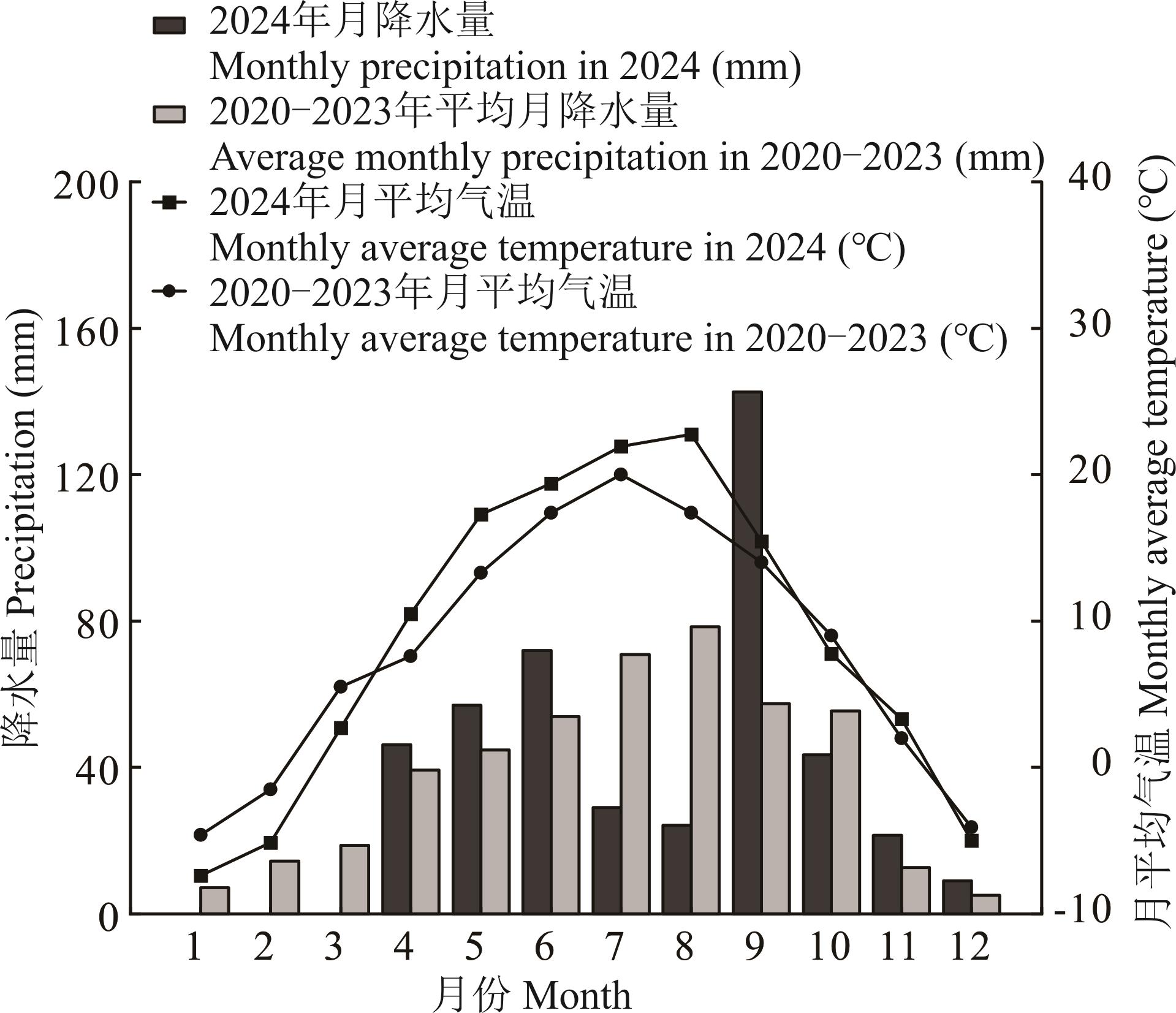
Fig.1 Monthly precipitation and monthly average temperature in the test area in 2024 and multiple years (2020-2023)
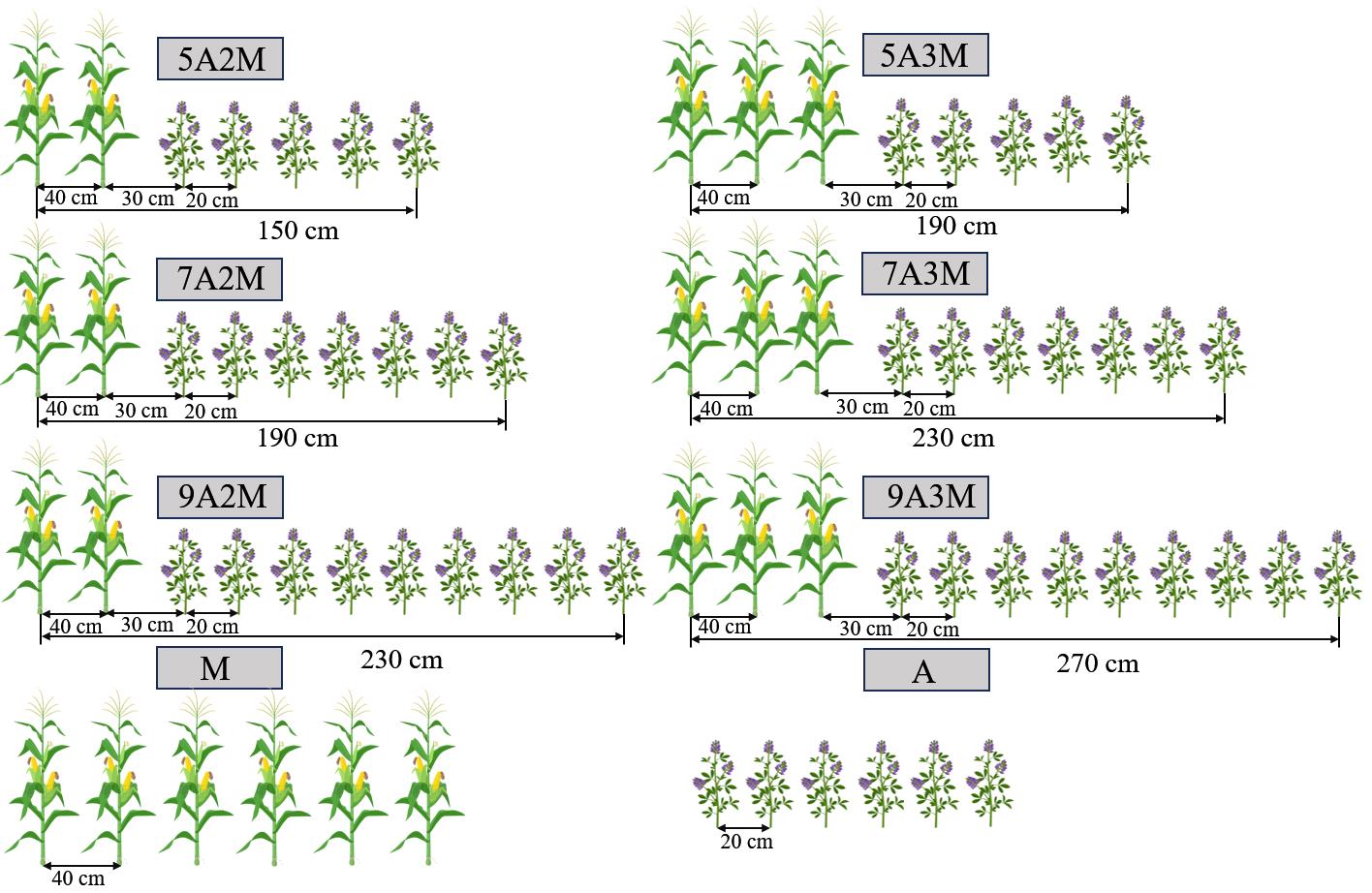
Fig.2 Planting patterns of maize/alfalfa under different intercropping ratio
处理 Treatments | 苜蓿行数 Number of alfalfa rows | 玉米行数 Number of maize rows | 玉米株距 Maize plant spacing (cm) | 小区面积 Plot area (m2) | 带宽 Bandwidth (cm) |
|---|---|---|---|---|---|
| 5A2M | 5 | 2 | 19 | 30 | 180 |
| 5A3M | 5 | 3 | 23 | 30 | 220 |
| 7A2M | 7 | 2 | 15 | 30 | 220 |
| 7A3M | 7 | 3 | 19 | 30 | 260 |
| 9A2M | 9 | 2 | 13 | 30 | 260 |
| 9A3M | 9 | 3 | 17 | 36 | 300 |
| A | 24 | ||||
| M | 42 | 30 |
Table 2 Experimental treatments, plant spacing, bandwidth and plot area
处理 Treatments | 苜蓿行数 Number of alfalfa rows | 玉米行数 Number of maize rows | 玉米株距 Maize plant spacing (cm) | 小区面积 Plot area (m2) | 带宽 Bandwidth (cm) |
|---|---|---|---|---|---|
| 5A2M | 5 | 2 | 19 | 30 | 180 |
| 5A3M | 5 | 3 | 23 | 30 | 220 |
| 7A2M | 7 | 2 | 15 | 30 | 220 |
| 7A3M | 7 | 3 | 19 | 30 | 260 |
| 9A2M | 9 | 2 | 13 | 30 | 260 |
| 9A3M | 9 | 3 | 17 | 36 | 300 |
| A | 24 | ||||
| M | 42 | 30 |
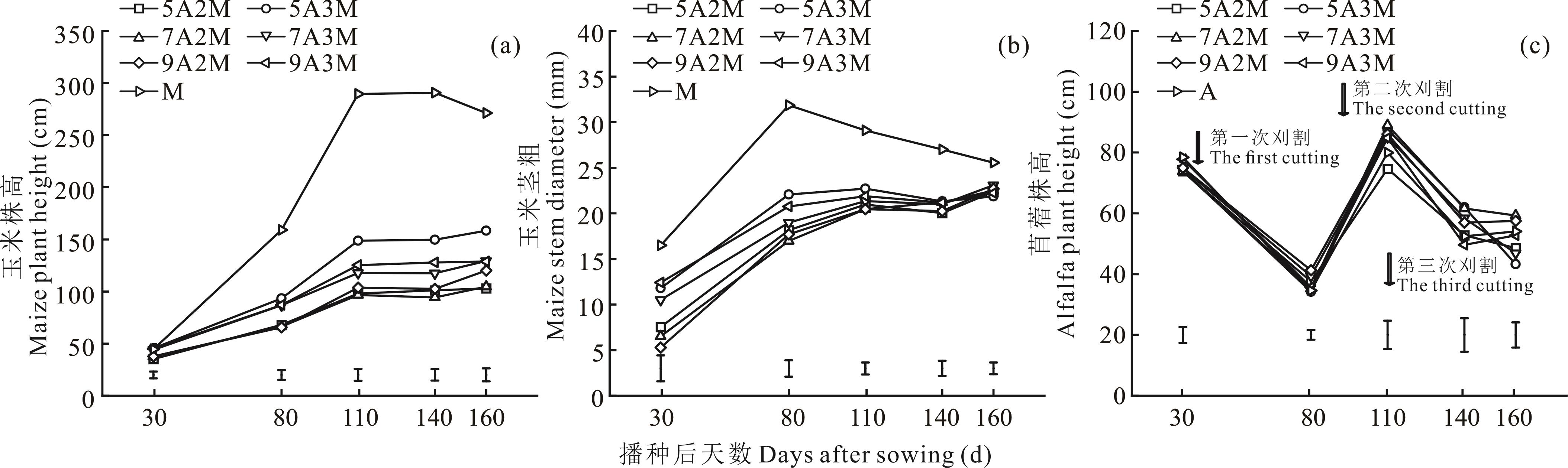
Fig.3 Effects of different intercropping row ratios on agronomic traits of crops
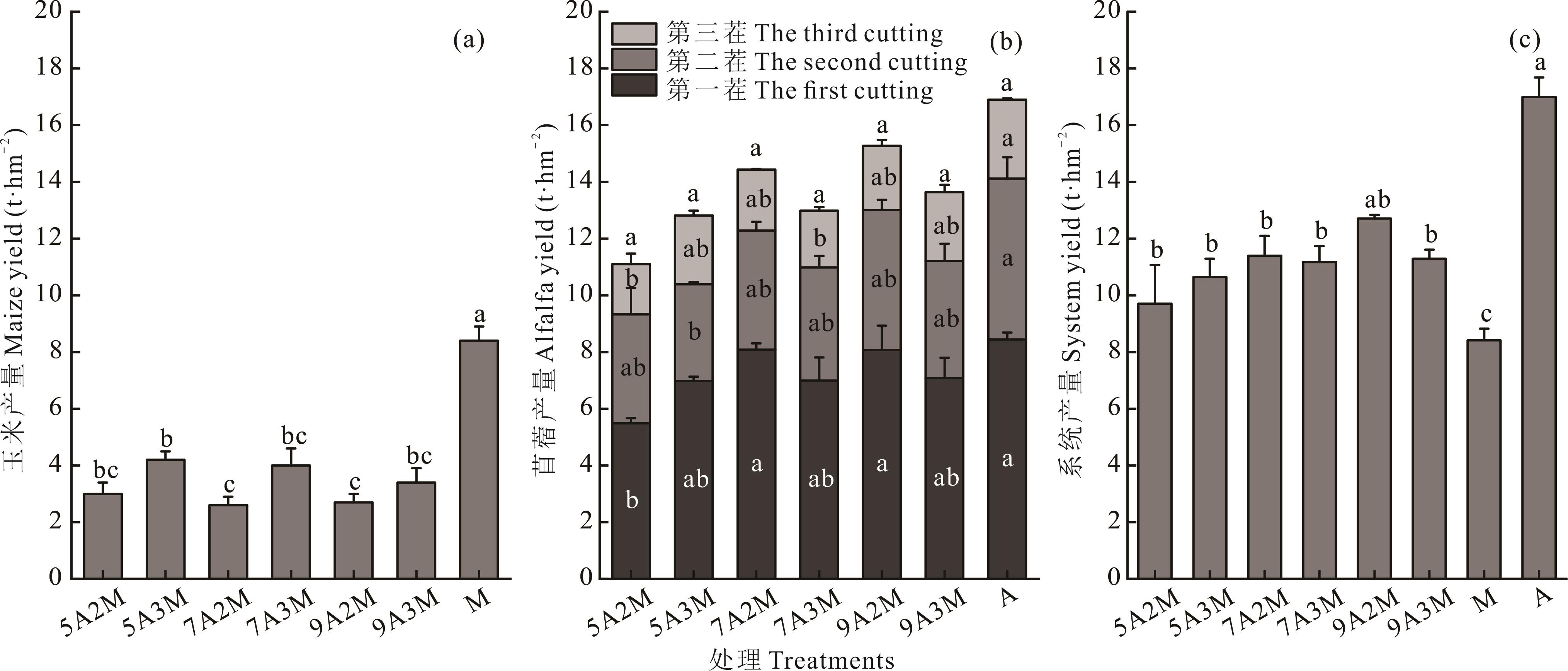
Fig.4 Effect of different intercropping row ratios on crop yield
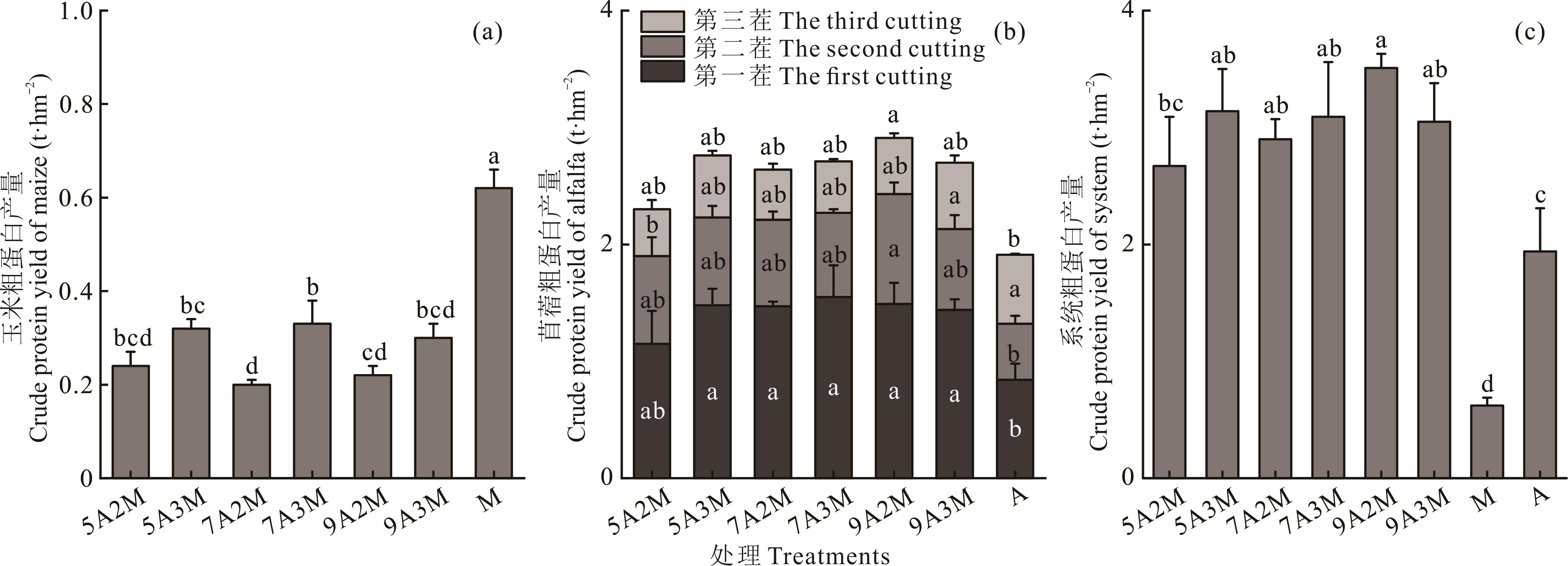
Fig.5 Effect of different intercropping row ratios on crude protein yield of crops
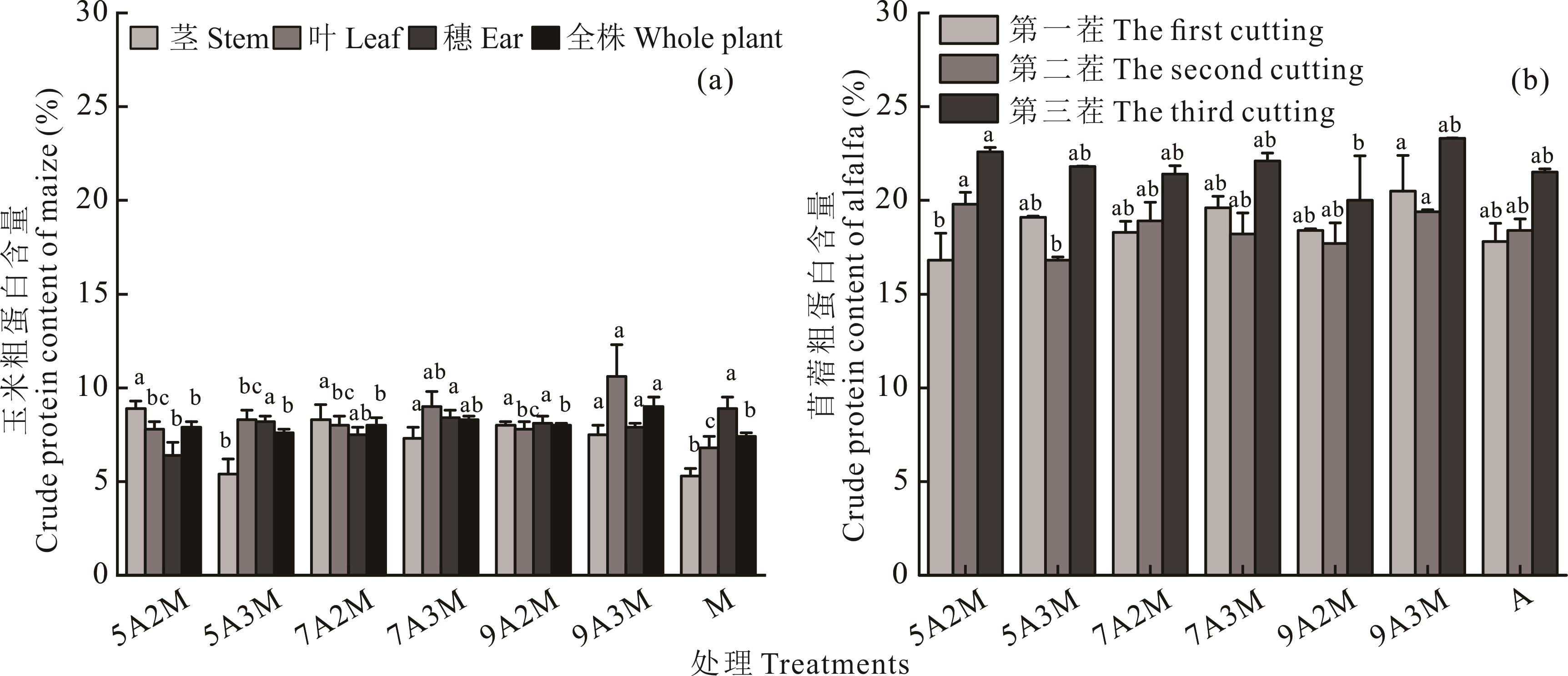
Fig.6 Effect of different intercropping row ratios on crude protein content of crops
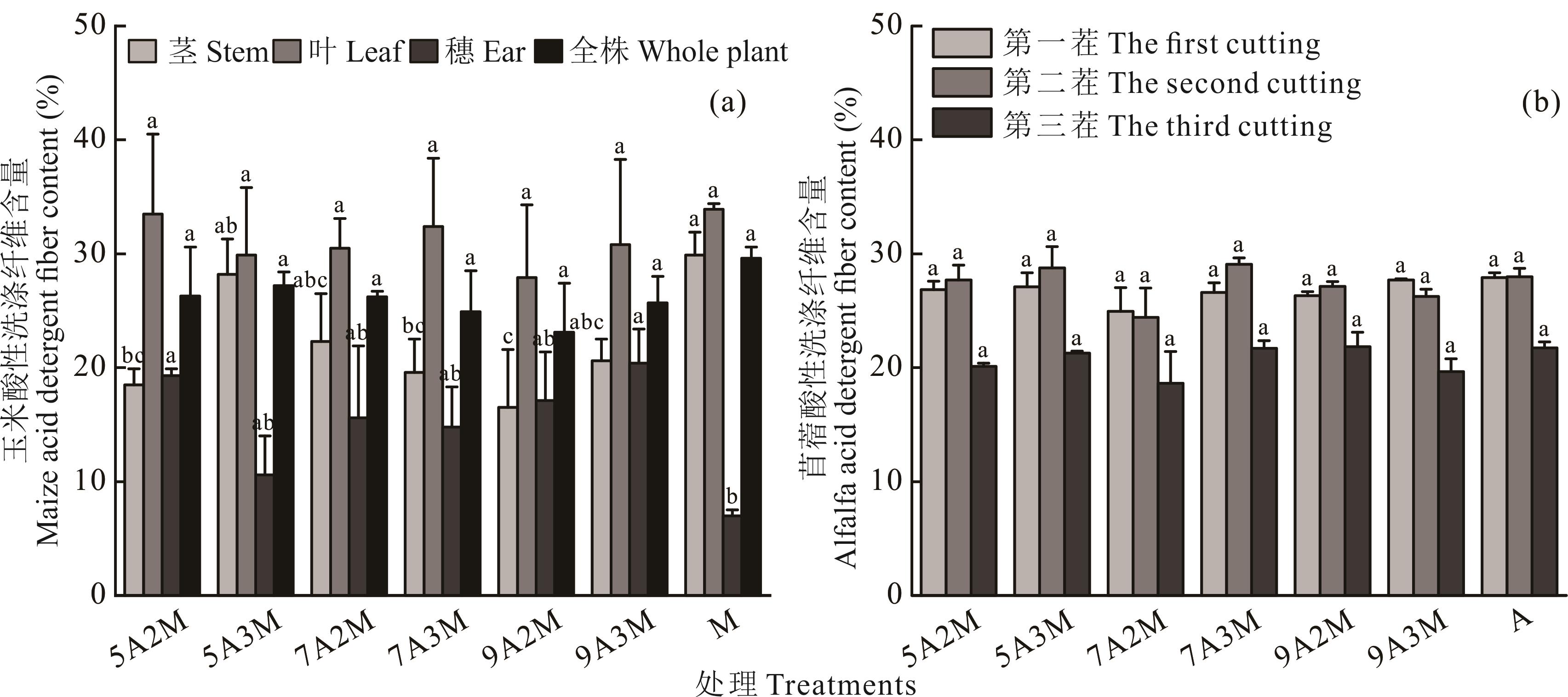
Fig.7 Effect of different intercropping row ratios on acid detergent fibers of crops
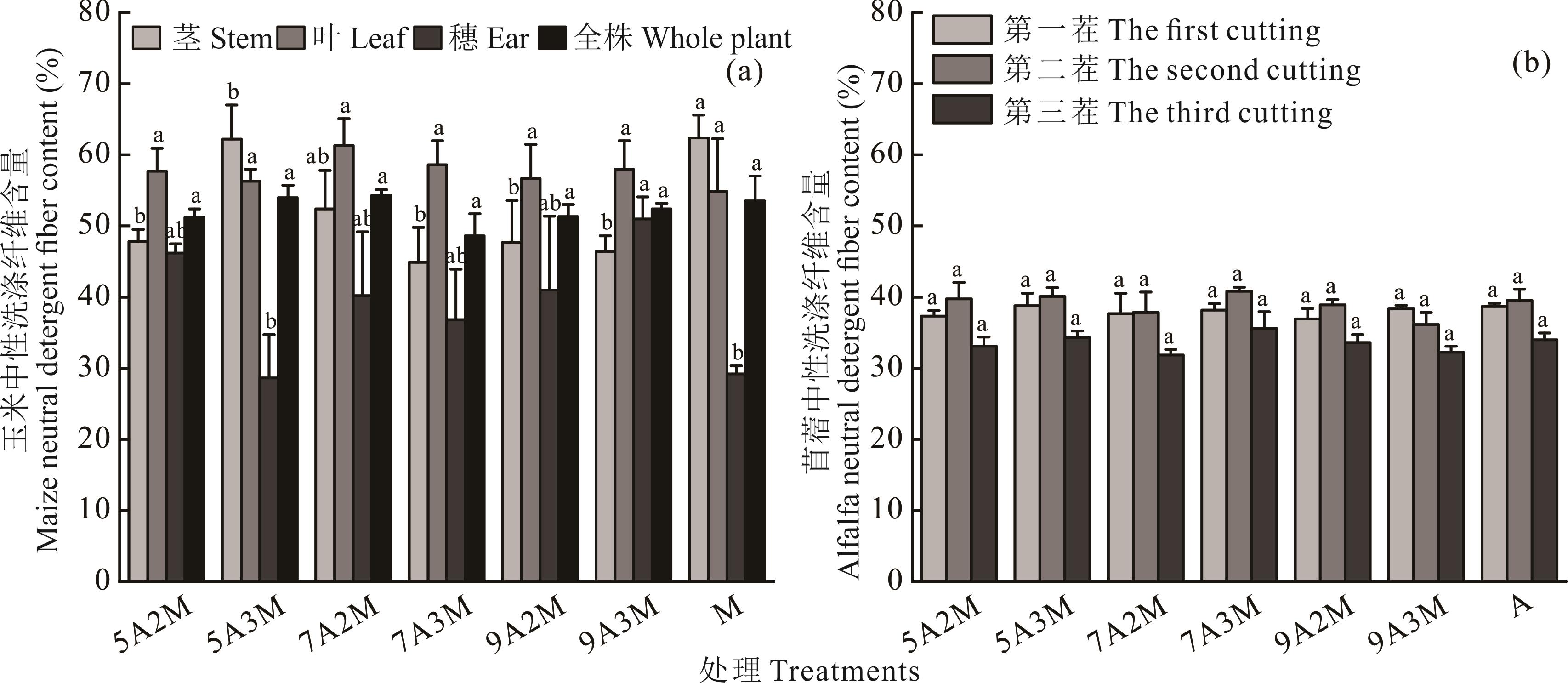
Fig.8 Effect of different intercropping row ratios on neutral detergent fiber of crops
作物 Crop | 处理 Treatments | 干物质采食量 Dry matter intake (DMI, %) | 可消化干物质 Digestible dry matter (DDM, %) | 总可消化养分 Total digestible nutrients (TDN, %) | 相对饲用价值 Relative feed value (RFV) | 相对饲用品质 Relative feed quality (RFQ) |
|---|---|---|---|---|---|---|
| 玉米Maize | 5A2M | 2.4±0.1a | 71.0±1.6a | 66.5±1.6a | 135.8±1.7a | 200.5±2.8c |
| 5A3M | 3.5±0.4a | 71.9±0.5a | 67.3±0.4a | 218.7±31.7a | 321.0±10.0a | |
| 7A2M | 2.8±0.6a | 71.7±2.1a | 67.3±2.1a | 171.5±46.1a | 186.2±10.0cd | |
| 7A3M | 3.0±0.2a | 72.1±1.7a | 67.7±1.6a | 176.7±13.7a | 233.9±4.9b | |
| 9A2M | 3.0±0.6a | 73.4±3.2a | 68.9±3.2a | 177.9±46.7a | 160.3±15.4e | |
| 9A3M | 2.5±0.1a | 70.6±0.5a | 66.4±0.4a | 132.6±1.2a | 193.9±1.9cd | |
| M | 3.1±0.1a | 71.7±0.6a | 67.1±0.6a | 197.5±6.7a | 339.3±18.1a | |
| 苜蓿Alfalfa | 5A2M | 3.3±0.2a | 69.5±1.7b | 69.3±2.2ab | 178.3±14.5ab | 280.6±28.2ab |
| 5A3M | 3.2±0.2a | 68.9±1.8b | 68.5±2.1b | 171.6±13.0ab | 267.6±25.3ab | |
| 7A2M | 3.4±0.3a | 71.2±2.2a | 71.0±2.2a | 188.8±18.3a | 301.2±35.7a | |
| 7A3M | 3.2±0.2a | 68.8±1.5b | 68.7±1.9b | 169.2±12.7b | 262.9±24.7b | |
| 9A2M | 3.3±0.2a | 69.4±1.2b | 68.8±1.4b | 178.3±11.5ab | 280.7±22.4ab | |
| 9A3M | 3.4±0.2a | 69.8±1.7ab | 70.1±2.1ab | 184.5±14.2ab | 292.7±27.6ab | |
| A | 3.2±0.2a | 68.7±1.4b | 68.4±1.8b | 172.4±11.9ab | 269.2±23.1ab |
Table 3 Effects of different intercropping row ratios on quality of crops
作物 Crop | 处理 Treatments | 干物质采食量 Dry matter intake (DMI, %) | 可消化干物质 Digestible dry matter (DDM, %) | 总可消化养分 Total digestible nutrients (TDN, %) | 相对饲用价值 Relative feed value (RFV) | 相对饲用品质 Relative feed quality (RFQ) |
|---|---|---|---|---|---|---|
| 玉米Maize | 5A2M | 2.4±0.1a | 71.0±1.6a | 66.5±1.6a | 135.8±1.7a | 200.5±2.8c |
| 5A3M | 3.5±0.4a | 71.9±0.5a | 67.3±0.4a | 218.7±31.7a | 321.0±10.0a | |
| 7A2M | 2.8±0.6a | 71.7±2.1a | 67.3±2.1a | 171.5±46.1a | 186.2±10.0cd | |
| 7A3M | 3.0±0.2a | 72.1±1.7a | 67.7±1.6a | 176.7±13.7a | 233.9±4.9b | |
| 9A2M | 3.0±0.6a | 73.4±3.2a | 68.9±3.2a | 177.9±46.7a | 160.3±15.4e | |
| 9A3M | 2.5±0.1a | 70.6±0.5a | 66.4±0.4a | 132.6±1.2a | 193.9±1.9cd | |
| M | 3.1±0.1a | 71.7±0.6a | 67.1±0.6a | 197.5±6.7a | 339.3±18.1a | |
| 苜蓿Alfalfa | 5A2M | 3.3±0.2a | 69.5±1.7b | 69.3±2.2ab | 178.3±14.5ab | 280.6±28.2ab |
| 5A3M | 3.2±0.2a | 68.9±1.8b | 68.5±2.1b | 171.6±13.0ab | 267.6±25.3ab | |
| 7A2M | 3.4±0.3a | 71.2±2.2a | 71.0±2.2a | 188.8±18.3a | 301.2±35.7a | |
| 7A3M | 3.2±0.2a | 68.8±1.5b | 68.7±1.9b | 169.2±12.7b | 262.9±24.7b | |
| 9A2M | 3.3±0.2a | 69.4±1.2b | 68.8±1.4b | 178.3±11.5ab | 280.7±22.4ab | |
| 9A3M | 3.4±0.2a | 69.8±1.7ab | 70.1±2.1ab | 184.5±14.2ab | 292.7±27.6ab | |
| A | 3.2±0.2a | 68.7±1.4b | 68.4±1.8b | 172.4±11.9ab | 269.2±23.1ab |
处理 Treatments | 生育季降水量 Precipitation during the growth period (mm) | 播前贮水量 Pre-sowing soil water storage capacity (mm) | 收获后贮水量 Post-harvest soil water storage capacity (mm) | 土壤贮水量变化量 Change in soil water storage capacity (mm) | 蒸散量 Evapotran- spiration (mm) | 水分利用效率 Water use efficiency (kg·hm-2·mm-1) | 氮肥偏生产力 Nitrogen partial factor productivity (kg·kg-1) |
|---|---|---|---|---|---|---|---|
| 5A2M | 371.0 | 259.3 | 198.4 | 60.9 | 431.9±23.9a | 29.1±7.2abc | 96.3±16.7d |
| 5A3M | 371.0 | 248.5 | 217.2 | 31.3 | 402.3±24.8a | 36.1±5.8ab | 92.6±6.9d |
| 7A2M | 371.0 | 259.3 | 188.5 | 71.3 | 441.8±29.8a | 32.7±1.4abc | 137.3±9.5bc |
| 7A3M | 371.0 | 228.2 | 185.8 | 42.4 | 413.4±7.4a | 33.7±4.4ab | 106.8±6.6cd |
| 9A2M | 371.0 | 267.2 | 195.9 | 70.8 | 442.3±11.3a | 38.5±3.2a | 149.3±1.8b |
| 9A3M | 371.0 | 222.9 | 174.1 | 48.7 | 419.7±8.7a | 31.1±2.7abc | 115.1±4.0cd |
| A | 371.0 | 245.8 | 178.0 | 67.8 | 438.8±14.0a | 23.0±2.5bc | 200.8±16.8a |
| M | 371.0 | 242.7 | 195.2 | 47.5 | 418.5±9.4a | 20.1±0.9c | 46.7±2.8e |
Table 4 Water consumption, water use efficiency and partial productivity of nitrogen fertilizer for crops under different intercropping row ratios
处理 Treatments | 生育季降水量 Precipitation during the growth period (mm) | 播前贮水量 Pre-sowing soil water storage capacity (mm) | 收获后贮水量 Post-harvest soil water storage capacity (mm) | 土壤贮水量变化量 Change in soil water storage capacity (mm) | 蒸散量 Evapotran- spiration (mm) | 水分利用效率 Water use efficiency (kg·hm-2·mm-1) | 氮肥偏生产力 Nitrogen partial factor productivity (kg·kg-1) |
|---|---|---|---|---|---|---|---|
| 5A2M | 371.0 | 259.3 | 198.4 | 60.9 | 431.9±23.9a | 29.1±7.2abc | 96.3±16.7d |
| 5A3M | 371.0 | 248.5 | 217.2 | 31.3 | 402.3±24.8a | 36.1±5.8ab | 92.6±6.9d |
| 7A2M | 371.0 | 259.3 | 188.5 | 71.3 | 441.8±29.8a | 32.7±1.4abc | 137.3±9.5bc |
| 7A3M | 371.0 | 228.2 | 185.8 | 42.4 | 413.4±7.4a | 33.7±4.4ab | 106.8±6.6cd |
| 9A2M | 371.0 | 267.2 | 195.9 | 70.8 | 442.3±11.3a | 38.5±3.2a | 149.3±1.8b |
| 9A3M | 371.0 | 222.9 | 174.1 | 48.7 | 419.7±8.7a | 31.1±2.7abc | 115.1±4.0cd |
| A | 371.0 | 245.8 | 178.0 | 67.8 | 438.8±14.0a | 23.0±2.5bc | 200.8±16.8a |
| M | 371.0 | 242.7 | 195.2 | 47.5 | 418.5±9.4a | 20.1±0.9c | 46.7±2.8e |
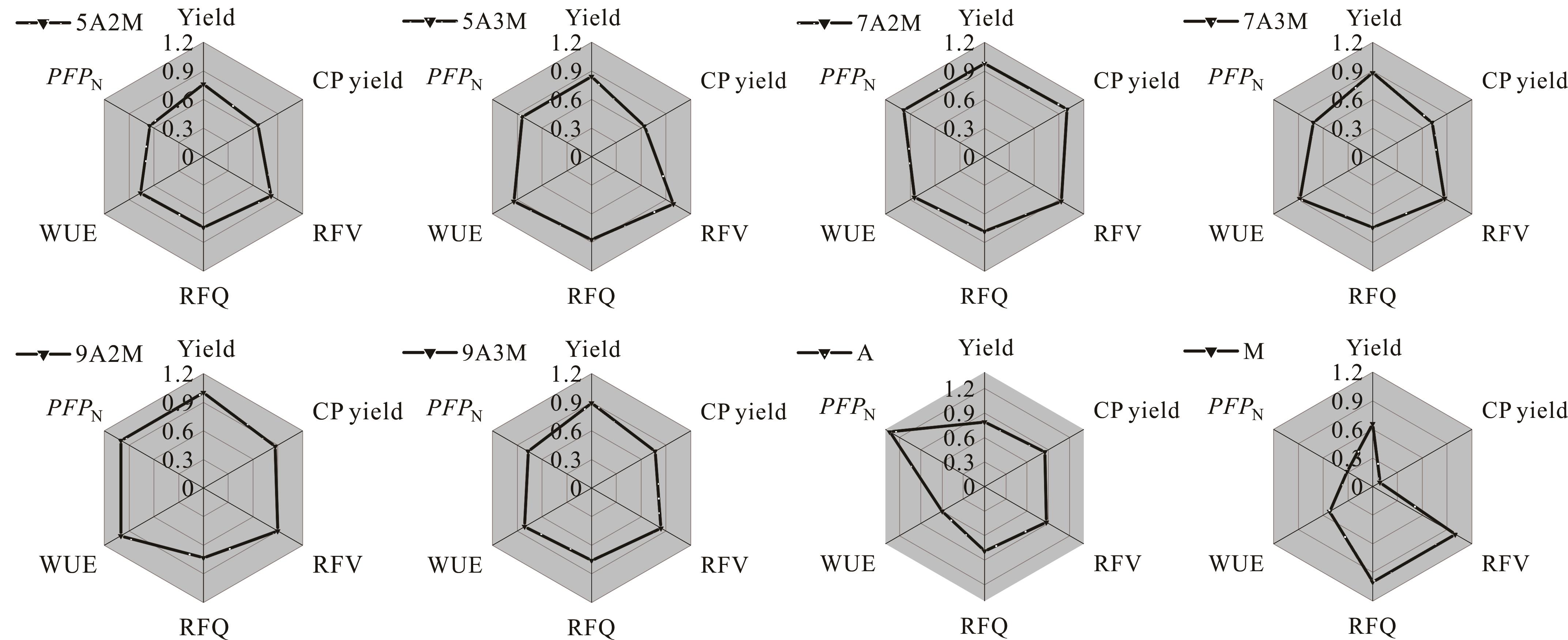
Fig.9 Radar plot of crops in different intercropping rows compared to intercropping systems
处理 Treatments | 周长 Perimeter | 面积 Area | 面积评价值 Area evaluation value (Vi1) | 周长评价值 Perimeter evaluation value (Vi2) | 评价函数 Evaluation function (Y) | 综合排序 Comprehensive rank |
|---|---|---|---|---|---|---|
| 5A2M | 4.5 | 1.4 | 0.6 | 0.90 | 0.73 | 5 |
| 5A3M | 5.1 | 1.8 | 0.7 | 0.86 | 0.80 | 4 |
| 7A2M | 5.5 | 2.2 | 0.9 | 0.90 | 0.90 | 2 |
| 7A3M | 5.0 | 1.7 | 0.7 | 0.88 | 0.80 | 4 |
| 9A2M | 5.9 | 2.4 | 1.0 | 0.88 | 0.94 | 1 |
| 9A3M | 5.0 | 1.8 | 0.7 | 0.90 | 0.81 | 3 |
| A | 5.7 | 2.0 | 0.8 | 0.77 | 0.80 | 4 |
| M | 4.5 | 0.9 | 0.4 | 0.56 | 0.46 | 6 |
Table 5 Comprehensive evaluation results of radar charts with different treatments of crops
处理 Treatments | 周长 Perimeter | 面积 Area | 面积评价值 Area evaluation value (Vi1) | 周长评价值 Perimeter evaluation value (Vi2) | 评价函数 Evaluation function (Y) | 综合排序 Comprehensive rank |
|---|---|---|---|---|---|---|
| 5A2M | 4.5 | 1.4 | 0.6 | 0.90 | 0.73 | 5 |
| 5A3M | 5.1 | 1.8 | 0.7 | 0.86 | 0.80 | 4 |
| 7A2M | 5.5 | 2.2 | 0.9 | 0.90 | 0.90 | 2 |
| 7A3M | 5.0 | 1.7 | 0.7 | 0.88 | 0.80 | 4 |
| 9A2M | 5.9 | 2.4 | 1.0 | 0.88 | 0.94 | 1 |
| 9A3M | 5.0 | 1.8 | 0.7 | 0.90 | 0.81 | 3 |
| A | 5.7 | 2.0 | 0.8 | 0.77 | 0.80 | 4 |
| M | 4.5 | 0.9 | 0.4 | 0.56 | 0.46 | 6 |
| [1] | Jing H C, Hu W J, Jin J B, et al. Accelerate innovation of forage intelligent breeding technology: Reflection and suggestions. Bulletin of Chinese Academy of Sciences, 2025, 40(2): 310-319. |
| 景海春, 胡伟娟, 金京波, 等. 加快饲草智能育种科技创新的思考与建议. 中国科学院院刊, 2025, 40(2): 310-319. | |
| [2] | Liu J T, Yang S Y, Yang T T, et al. Analysis of agronomic traits and nutritional components of 20 oats and silage forages. Territory & Natural Resources Study, 2024(4): 87-92. |
| 刘建涛, 杨尚谕, 杨天天, 等. 20种燕麦及青贮饲草农艺性状及营养成分分析. 国土与自然资源研究, 2024 (4): 87-92. | |
| [3] | Qu Y H, Yu C Q, Sun W, et al. Use of the stochastic frontier production function in a technical efficiency analysis of grass production: An example from the “One River and Two Tributaries” region of Tibet. Acta Prataculturae Sinica, 2015, 24(10): 70-79. |
| 曲云鹤, 余成群, 孙维, 等. 基于随机前沿生产函数法的饲草生产技术效率测算及影响因素分析-以西藏“一江两河”地区为例. 草业学报, 2015, 24(10): 70-79. | |
| [4] | Dang H Y, Wang Z H. Organic fertilizer application in wheat fields in China: research history, bottlenecks and solutions. Journal of Plant Nutrition and Fertilizers, 2025, 31(1): 12-31. |
| 党海燕, 王朝辉. 我国麦田有机肥施用: 研究历史、瓶颈与解决策略. 植物营养与肥料学报, 2025, 31(1): 12-31. | |
| [5] | Cao Q, Wei K T, Zhou Z, et al. Research on synergistic effects of productivity and nutritional quality in oat forage mixed cropping grassland systems in alpine regions. Acta Agrestia Sinica, 2025, 33(11): 3810-3819. |
| 曹铨, 魏孔涛, 周泽, 等. 高寒区燕麦饲草混播草地系统生产力与营养品质协同效应研究. 草地学报, 2025, 33(11): 3810-3819. | |
| [6] | Liu J J, Yan X B, Zhang M Y, et al. Analysis of yield distribution and utilization of crop straw resources in China. Journal of Agricultural Resources and Environment, 2025, 42(3): 751-760. |
| 刘俊杰, 严晓斌, 张美怡, 等. 中国农作物秸秆资源产量分布及利用分析. 农业资源与环境学报, 2025, 42(3): 751-760. | |
| [7] | Li C X, Ye R R, Du Y G, et al. Research on production performance of silage maize in alpine meadow region. Acta Agrestia Sinica, 2013, 21(6): 1214-1217. |
| 李春喜, 叶润蓉, 杜岩功, 等. 高寒牧区青贮玉米生产性能初步研究. 草地学报, 2013, 21(6): 1214-1217. | |
| [8] | Sun T, Li Z Z, Wu Q, et al. Effects of alfalfa intercropping on crop yield, water use efficiency, and overall economic benefit in the Corn Belt of Northeast China. Field Crops Research, 2018, 216: 109-119. |
| [9] | Duan J Z, Zhao H D, Zhang J W, et al. Effects of different alfalfa varieties on soil physical and chemical properties. Chinese Journal of Grassland, 2025, 47(2): 104-114. |
| 段景章, 赵海东, 张建伟, 等. 不同紫花苜蓿品种对土壤理化性质的影响. 中国草地学报, 2025, 47(2): 104-114. | |
| [10] | Wu Y H, Wang Z K, Liu Y N, et al. Effects of row configuration on characteristics of the light environment and light use efficiency in maize/alfalfa intercropping. Acta Prataculturae Sinica, 2022, 31(3): 144-155. |
| 吴玉环, 王自奎, 刘亚男, 等. 带幅设计对玉米/苜蓿间作群体光环境特征及光能利用效率的影响. 草业学报, 2022, 31(3): 144-155. | |
| [11] | Zhang D L, Chai Q, Yin W, et al. Response of maize agronomic traits, yield, water and fertilizer use efficiency to intercropping green manure under reduced irrigation levels in arid irrigation areas. Agricultural Research in the Arid Areas, 2024, 42(5): 85-96. |
| 张刁亮, 柴强, 殷文, 等. 干旱灌区减量灌水下玉米农艺性状、产量及水肥利用效率对间作绿肥的响应. 干旱地区农业研究, 2024, 42(5): 85-96. | |
| [12] | Wang B, Yang Y J, Dong X, et al. Effects of reseeding grass on production performance and forage quality of degraded alfalfa grassland. Acta Agrestia Sinica, 2021, 29(3): 618-624. |
| 王斌, 杨彦军, 董秀, 等. 补播禾草对退化苜蓿草地生产性能及牧草品质的影响. 草地学报, 2021, 29(3): 618-624. | |
| [13] | Liu J H, Zeng Z H, Jiao L X, et al. Intercropping of different silage maize cultivars and alfalfa. Acta Agronomica Sinica, 2006, 32(1): 125-130. |
| 刘景辉, 曾昭海, 焦立新, 等. 不同青贮玉米品种与紫花苜蓿的间作效应. 作物学报, 2006, 32(1): 125-130. | |
| [14] | Li E H, Mu Y Y, He Y N, et al. Effects of wheat/alfalfa intercropping systems on soil moisture and water utilization efficiency. Research of Soil and Water Conservation, 2020, 27(1): 54-58, 65. |
| 李恩慧, 穆阳阳, 何亚男, 等. 小麦和苜蓿套作种植对土壤水分及作物水分利用效率的影响. 水土保持研究, 2020, 27(1): 54-58, 65. | |
| [15] | Zhang G G, Dong S T, Yang Z B. Production performance of alfalfa+maize intercropping systems and evaluation of interspecies conpetiton. Acta Prataculturae Sinica, 2011, 20(1): 22-30. |
| 张桂国, 董树亭, 杨在宾. 苜蓿+玉米间作系统产量表现及其种间竞争力的评定. 草业学报, 2011, 20(1): 22-30. | |
| [16] | Li B Z, Zhou M, Dong Z X, et al. Effects of different straw zonation on soil water and heat status and yield of winter wheat in dryland areas of northwest China. Acta Agriculturae Boreali-Sinica, 2025, 40(3): 68-78. |
| 李宝占, 周萌, 董志香, 等. 不同麦秆带状覆盖对西北旱作区冬小麦土壤水热状况及产量的影响. 华北农学报, 2025, 40(3): 68-78. | |
| [17] | Yang H, Zhou Y, Chen P, et al. Effects of nutrient uptake and utilization on yield of maize-legume strip inter cropping system. Acta Agronomica Sinica, 2022, 48(6): 1476-1487. |
| 杨欢, 周颖, 陈平, 等. 玉米-豆科作物带状间套作对养分吸收利用及产量优势的影响. 作物学报, 2022, 48(6): 1476-1487. | |
| [18] | Tian Y X, Ma P J, Li Y J, et al. Effects of silage maize and Dolichos lablab intercropping on quality and yield of silage maize. Pratacultural Science, 2019, 36(5): 1457-1465. |
| 田应学, 马培杰, 李亚娇, 等. 青贮玉米与拉巴豆套种对青贮玉米品质及产量的影响. 草业科学, 2019, 36(5): 1457-1465. | |
| [19] | Zhang S X, Wang X, Ma L, et al. Comprehensive evaluation of performance and forage quality of silage maize in farming-pastoral ecotone. Acta Agrestia Sinica, 2022, 30(6): 1517-1524. |
| 张书兴, 王筱, 马琳, 等. 农牧交错带青贮玉米生产性能和饲草品质综合评价. 草地学报, 2022, 30(6): 1517-1524. | |
| [20] | Wang L R, Wang W, Pu X J, et al. Comprehensive evaluation of production performance and forage quality of 19 alfalfa varieties in Qaidam Basin. Acta Agrestia Sinica, 2023, 31(10): 3136-3144. |
| 王龙然, 王伟, 蒲小剑, 等. 柴达木盆地19个苜蓿品种生产性能和饲用品质综合评价. 草地学报, 2023, 31(10): 3136-3144. | |
| [21] | Zhao Y J, Liu X J, Lin F. Effects of different intercropping forage combinations on nutrition and feeding quality in Lanzhou. Acta Agrestia Sinica, 2024, 32(10): 3241-3251. |
| 赵雅姣, 刘晓静, 蔺芳. 兰州地区不同间套作饲草组合对其营养和饲用品质的影响. 草地学报, 2024, 32(10): 3241-3251. | |
| [22] | Zhang X L, Hu Z Q, Chu S L. Advances in determination of soil water content. Chinese Journal of Soil Science, 2005, 36(1): 118-123. |
| 张学礼, 胡振琪, 初士立. 土壤含水量测定方法研究进展. 土壤通报, 2005, 36(1): 118-123. | |
| [23] | Yang W, Jia Z K, Ren X L, et al. Effects of ridge and furrow rainwater harvesting system combined with irrigation on improving water use efficiency of maize (Zea mays L.) in semi-humid area of China. Agricultural Water Management, 2015, 158(8): 1-9. |
| [24] | Oweis T Y, Farahani H J, Hachum A Y. Evapotranspiration and water use of full and deficit irrigated cotton in the Mediterranean environment in northern Syria. Agricultural Water Management, 2011, 98(8): 1239-1248. |
| [25] | Huang Y L, Chen L D, Fu B J, et al. The wheat yields and water-use efficiency in the Loess Plateau: straw mulch and irrigation effects. Agricultural Water Management, 2004, 72(3): 209-222. |
| [26] | Li Z, Liu R J, Li X H, et al. Evaluation of the ecological service values of maize intercropping with different plant. Journal of Plant Protection, 2023, 50(4): 1062-1071. |
| 李卓, 刘茹捷, 李新华, 等. 玉米与不同植物间作模式的生态服务价值评估. 植物保护学报, 2023, 50(4): 1062-1071. | |
| [27] | Han X Q, Deng H S, Pu T L, et al. The study agronomic of silage maize varieties in dry-hot valley region of Jinsha River. Acta Agrestia Sinica, 2021, 29(6): 1327-1335. |
| 韩学琴, 邓红山, 普天磊, 等. 金沙江干热河谷区青贮玉米品种农艺性状分析. 草地学报, 2021, 29(6): 1327-1335. | |
| [28] | Dong Z X, He R H, Kuang J Y, et al. Effects of intercropping Dolichos lablab with silage maize on the yield and quality of mixed forage in the Chengdu Plain, China. Pratacultural Science, 2021, 38(8): 1587-1595. |
| 董志晓, 何润濠, 况鉴洋, 等. 成都平原青贮玉米间作拉巴豆对混合饲草产量及品质的影响. 草业科学, 2021, 38(8): 1587-1595. | |
| [29] | Yang S, Bai W, Cai Q, et al. Characteristics of light distribution in maize||alfalfa intercropping systems and their effects on plant traits and yield. Acta Agronomica Sinica, 2025, 51(9): 2514-2526. |
| 杨姝, 白伟, 蔡倩, 等. 玉米||紫花苜蓿间作群体光分布特征及对植物性状和产量的影响. 作物学报, 2025, 51(9): 2514-2526. | |
| [30] | Zhang P P, Hu J Y, Wang J X, et al. Effects of maize-soybean intercropping pattern on photosynthetic physiological characteristics and yield of soybean. Acta Agriculturae Boreali-Occidentalis Sinica, 2025, 34(5): 797-807. |
| 张盼盼, 胡静一, 王佳芯, 等. 膜际玉米大豆间作模式对大豆光合生理特性及产量的影响. 西北农业学报, 2025, 34(5): 797-807. | |
| [31] | Lv M Y, Wang J, Hu N, et al. Effects of different maize // wheat intercropping systems on crop yield and water use efficiency in Jilin maize belt. Maize Science, 2019, 27(2): 106-112. |
| 吕明洋, 王俊, 胡宁, 等. 吉林玉米带不同玉米//小麦间作模式对作物产量及水分利用率的影响. 玉米科学, 2019, 27(2): 106-112. | |
| [32] | Ma X, Xiao A P, Wang B, et al. Study on production performance and nutritional value of 10 Triticale varieties (lines) in rainfed area of Ningxia. Acta Agrestia Sinica, 2023, 31(12): 3687-3696. |
| 马霞, 肖爱萍, 王斌, 等. 宁夏雨养区10个小黑麦品种(系)生产性能及其营养价值研究. 草地学报, 2023, 31(12): 3687-3696. | |
| [33] | Zhao Y J, Liu X J, Lin F. Selection of intercropping combinations suitable for alfalfa and Poaceae forages in semi-arid areas of the Loess Plateau. Acta Prataculturae Sinica, 2025, 34(3): 97-110. |
| 赵雅姣, 刘晓静, 蔺芳. 适宜于黄土高原半干旱区豆禾饲草间套作组合的筛选. 草业学报, 2025, 34(3): 97-110. | |
| [34] | Wang B, Shi J M, Wang T F, et al. Effect of nitrogen application on production performance and nitrogen fertilizer contribution of forage sorghum/lablab mixed cropping. Acta Prataculturae Sinica, 2025, 34(4): 53-63. |
| 王斌, 史佳梅, 王腾飞, 等. 施氮对饲用高粱/拉巴豆混播草地生产性能和氮肥贡献率的影响. 草业学报, 2025, 34(4): 53-63. | |
| [35] | Jiang C Z, Shou N, Gao W, et al. A multivariate evaluation of production performance and nutritional quality of different varieties of silage maize in the dry plateau area of Longdong. Acta Prataculturae Sinica, 2023, 32(7): 216-228. |
| 蒋丛泽, 受娜, 高玮, 等. 陇东旱塬区不同青贮玉米品种生产性能和营养品质综合评价. 草业学报, 2023, 32(7): 216-228. | |
| [36] | Zheng L W, Tian J F, Yang W, et al. Effect of cultivar and growth stage on fermentation quality of maize silage. Pratacultural Science, 2023, 40(4): 1105-1114. |
| 郑立文, 田健帆, 杨蔚, 等. 品种和生育期对玉米青贮发酵品质的影响. 草业科学, 2023, 40(4): 1105-1114. | |
| [37] | Gu M C, Shu Z B, Pu T, et al. Effects and evaluation of planting density on population yield and mixed silage quality of silage maize soybean strip intercropping in the irrigation area of northern Xinjiang, China. Pratacultural Science, 2025, 42(5): 1267-1277. |
| 顾米嫦, 舒泽兵, 蒲甜, 等. 北疆灌区种植密度对青贮玉米||大豆带状间作群体产量和混合青贮品质的影响. 草业科学, 2025, 42(5): 1267-1277. | |
| [38] | Chen Q, Zheng C X, Yan M, et al. Effects of water-nitrogen coupling on root growth, yield and water and nitrogen use efficiency of intercropped soybean. Agricultural Research in the Arid Areas, 2025, 43(2): 160-172. |
| 陈茜, 郑彩霞, 闫敏, 等. 水氮耦合对间作大豆根系生长、产量及水氮利用效率的影响. 干旱地区农业研究, 2025, 43(2): 160-172. | |
| [39] | Niu Y N, Liu D M, Luo Z Z, et al. Characteristics of crop water consumption under maize/pea intercropping systems with different irrigation levels. Agricultural Research in the Arid Areas, 2018, 36(1): 83-88, 101. |
| 牛伊宁, 刘冬梅, 罗珠珠, 等. 不同供水水平对玉米/豌豆间作系统作物耗水特征的影响. 干旱地区农业研究, 2018, 36(1): 83-88, 101. | |
| [40] | Feng C, Huang B, Feng L S, et al. Effects of different configurations on nitrogen uptake and utilization characteristics of maize-peanut intercropping system in west Liaoning. Scientia Agricultura Sinica, 2022, 55(1): 61-73. |
| 冯晨, 黄波, 冯良山, 等. 不同配置对辽西玉米||花生间作系统氮素吸收利用的影响. 中国农业科学, 2022, 55(1): 61-73. | |
| [41] | Zhang Y T, Zang J R, Zhang Z X, et al. Effects of biochar on nitrogen uptake in alfalfa/maize intercropping system. Acta Agrestia Sinica, 2024, 32(4): 1217-1223. |
| 张钰婷, 臧军蕊, 张志新, 等. 生物炭对紫花苜蓿/玉米间作系统氮吸收的影响. 草地学报, 2024, 32(4): 1217-1223. |
| [1] | Shi-yu PENG, Qi-shun MO, Qiong-bo LIU, Yan-lin RAN, Feng YANG, Li-li NIU, Ting-tao YANG, Zhi-hong CHEN, Sheng-jiang HE, Chao CHEN, Zhou LI. Comprehensive evaluation and screening of silage maize varieties in multiple ecological regions of Guizhou Province based on grey relational analysis and a DTOPSIS framework [J]. Acta Prataculturae Sinica, 2026, 35(9): 113-128. |
| [2] | Hui-ting LI, Zhong-li LI, Qing-ming SHUI, Cong-ze JIANG, Kai-quan WEI, Xian-long YANG. Effects of grass-legume sowing ratio and nitrogen application mode on yield and water and nitrogen use efficiency of alfalfa-Bromus inermis mixed stands on the Loess Plateau [J]. Acta Prataculturae Sinica, 2026, 35(9): 180-197. |
| [3] | Qi-lin ZHANG, Xiao-jun WANG, Jing LI, Chong-qing CHENG, Guo-ling LIANG, Wen-hui LIU, Ze-liang JU, Zhi-feng JIA, Xiang MA, Wen LI. Mixed sowing with different combinations of oat and annual leguminous forages in the Qinghai Lake area [J]. Acta Prataculturae Sinica, 2026, 35(9): 198-210. |
| [4] | Jian-jian LI, Xi-wen XU, Yuan ZHANG, Huan WANG, Hao-ran WANG, Xiao-hui LI, Hui-quan SHEN, Shao-bin SHEN, Jun-qin ZONG, Hai-lin GUO. Evaluation of major agronomic traits and nutritional quality of forage barley varieties in the Nanjing region [J]. Acta Prataculturae Sinica, 2026, 35(3): 114-127. |
| [5] | Jian-min DU, Zhan-jun WANG, Wei WANG, Xue-peng MA, Dong-ning LI, Ji-xiang LI. Response of drying rate and nutrient content changes to the main environmental factors during alfalfa natural drying in irrigation areas [J]. Acta Prataculturae Sinica, 2026, 35(2): 131-142. |
| [6] | Xin-ying LIU, Jing-jing JIAN, Wan-lu ZHAO, Can CUI, Fan YANG, Jun-xin YAN, Mu HE. Effects of salicylic acid and complex chitin on the growth and nutritional quality of spearmint [J]. Acta Prataculturae Sinica, 2026, 35(10): 180-191. |
| [7] | Ying ZHANG, Shan-mu HE, Ao-lei HE, Chang-ning LI, Tuo YAO. Effects of microbial inoculants combined with organic calcium protein on alfalfa growth and soil enzyme activity [J]. Acta Prataculturae Sinica, 2026, 35(1): 25-39. |
| [8] | Yi-yin ZHANG, Bin WANG, Teng-fei WANG, Jian LAN, Hai-ying HU. Effects of intercropping triticale with alfalfa on system yield, resource utilization, and alfalfa seed yield [J]. Acta Prataculturae Sinica, 2025, 34(8): 43-53. |
| [9] | Ling-fei XIANG, Feng-ju ZHANG, Dong-mei MA, Jin-long LIU, Jian LAN, Jian-qiang DENG, Hai-ying HU, Bin WANG, Chun-jiang CAI, Qiao-li MA. Effects of nitrogen, phosphorus and potassium rationing on production performance and nutritional quality of Echinochloa frumentacea in saline soil [J]. Acta Prataculturae Sinica, 2025, 34(7): 185-195. |
| [10] | Teng-fei WANG, Xia MA, Jin-long LIU, Bin WANG, Yi-yin ZHANG, Jia-wang LI, Jiang-ping MA, Xiao-bing WANG, Jian LAN. Analysis of the yield, quality and economic benefits from multiple cropping of fodder oats in the Yellow River irrigation area [J]. Acta Prataculturae Sinica, 2025, 34(4): 27-37. |
| [11] | Bin WANG, Jia-mei SHI, Teng-fei WANG, Yi-yin ZHANG, Jiang-ping MA, Jia-wang LI, Xiao-bing WANG, Jian-qiang DENG, Jian LAN. Effect of nitrogen application on production performance and nitrogen fertilizer contribution of forage sorghum/lablab mixed cropping [J]. Acta Prataculturae Sinica, 2025, 34(4): 53-63. |
| [12] | Wen-yan MA, Jie-dong LI, Zhen-lei ZHOU, Dong CAO, Bao-long LIU, Huai-gang ZHANG, Dong-xia WANG. Effects of interactions among fertilizer, water retention agent, and seeding rate on the yield production performance of oat (Avena sativa) [J]. Acta Prataculturae Sinica, 2025, 34(10): 107-119. |
| [13] | Jin-feng HUI, Kong-qin WEI, Yan-liang SUN, Chun-hui MA, Qian-bing ZHANG. Response of alfalfa hay yield and nutritional quality to altitude in the Yili River basin [J]. Acta Prataculturae Sinica, 2025, 34(10): 41-50. |
| [14] | Hong-fei LI, Bang-wei ZHOU, Miao ZHANG, Shu-nan SHI, Zhi-jian LI. Adaptability evaluation of different oat varieties introduced in the Hulunbuir region [J]. Acta Prataculturae Sinica, 2024, 33(4): 60-72. |
| [15] | Xing-fa GAO, Ying-ying NIE, Li-jun XU, Min YANG, Shu-hua XU, Meng ZHU. Adaptability evaluation of oat introduction in winter fallow field of Wumeng Mountain area under drought condition [J]. Acta Prataculturae Sinica, 2024, 33(11): 215-227. |
| Viewed | ||||||
|
Full text |
|
|||||
|
Abstract |
|
|||||
