
ISSN 1004-5759 CN 62-1105/S
Acta Prataculturae Sinica ›› 2025, Vol. 34 ›› Issue (9): 134-146.DOI: 10.11686/cyxb2024403
Yuan-yuan LIU( ), Xu WANG, Qi WEI, Li-juan CHE, Meng YUAN, Bo WANG()
Received:2024-10-17
Revised:2024-12-05
Online:2025-09-20
Published:2025-07-02
Contact:
Bo WANG
Yuan-yuan LIU, Xu WANG, Qi WEI, Li-juan CHE, Meng YUAN, Bo WANG. The role of HaFT-9, a 14-3-3 protein from Haloxylon ammodendron, in the cross regulation of high temperature and drought stress[J]. Acta Prataculturae Sinica, 2025, 34(9): 134-146.
| 基因 Gene | 正向引物Forward primer (5′→3′) | 反向引物 Reverse primer (5′→3′) |
|---|---|---|
| Ha18SrRNA | CTCTGCCCGTTGCTCTGATGAT | CCTTGGATGTGGTAGCCGTTTC |
| HaFT-9 | TACTTTGGGTGAAGAGTCCTACA | TTTGATCCTGCATGTCTGATGT |
| P5CS1 | GATACGGATATGGCAAAGCG | CCAAGTCCAAATCGGAAACC |
| P5CS2 | GTTAAGCGTATCGTCGTCAAGGTT | CCTAAACGTCCAAGAGCCAATCT |
| CAT2 | ACATTCGTTGACCCTTTTCAC | GGCCACACACGATAACAAC |
| CDS1 | CTGCATCTCTACTGGACCTC | CCACATCCAACTCTCGAGC |
| CHLI1 | TGTTGATGGGTTGAGAGGAG | AACGGTTGCAACATCATCTG |
| DREB2a | CAACAGCAGGATTCGCTATCTG | ACATCGTCGCCATTTAGGTCA |
| HSP21 | TGGACGTCTCTCCTTTCGGATTGT | TGCACGAATCTCTGACACTCCACT |
| HsfA2 | GAGATTTTCCGGCGTGATTT | ACATCGGACCTGAAAGAGAG |
| BI-1 | ACATTCGTTGACCCTTTTCAC | GGCCACACACGATAACAAC |
| At18SrRNA | AAACGGCTACCACATCCAAG | CCTCCAATGGATCCTCGTTA |
Table 1 Primers used in this study
| 基因 Gene | 正向引物Forward primer (5′→3′) | 反向引物 Reverse primer (5′→3′) |
|---|---|---|
| Ha18SrRNA | CTCTGCCCGTTGCTCTGATGAT | CCTTGGATGTGGTAGCCGTTTC |
| HaFT-9 | TACTTTGGGTGAAGAGTCCTACA | TTTGATCCTGCATGTCTGATGT |
| P5CS1 | GATACGGATATGGCAAAGCG | CCAAGTCCAAATCGGAAACC |
| P5CS2 | GTTAAGCGTATCGTCGTCAAGGTT | CCTAAACGTCCAAGAGCCAATCT |
| CAT2 | ACATTCGTTGACCCTTTTCAC | GGCCACACACGATAACAAC |
| CDS1 | CTGCATCTCTACTGGACCTC | CCACATCCAACTCTCGAGC |
| CHLI1 | TGTTGATGGGTTGAGAGGAG | AACGGTTGCAACATCATCTG |
| DREB2a | CAACAGCAGGATTCGCTATCTG | ACATCGTCGCCATTTAGGTCA |
| HSP21 | TGGACGTCTCTCCTTTCGGATTGT | TGCACGAATCTCTGACACTCCACT |
| HsfA2 | GAGATTTTCCGGCGTGATTT | ACATCGGACCTGAAAGAGAG |
| BI-1 | ACATTCGTTGACCCTTTTCAC | GGCCACACACGATAACAAC |
| At18SrRNA | AAACGGCTACCACATCCAAG | CCTCCAATGGATCCTCGTTA |

Fig.1 The expression of the HaFT-9 gene under the heat stress priming-the secondary drought stress treatment

Fig.2 The effects of the heat stress priming-the secondary drought stress treatment on the growth of Arabidopsis
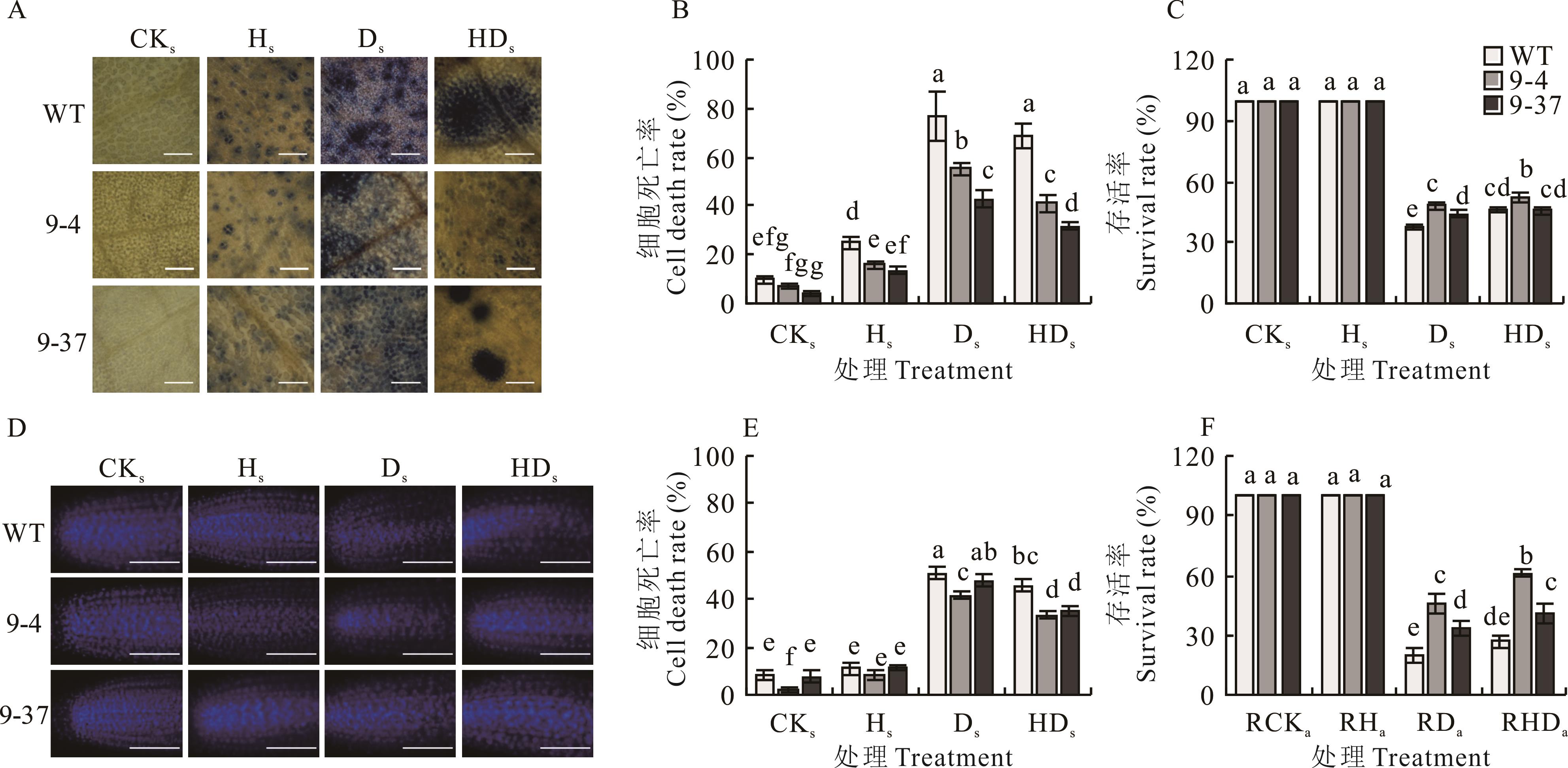
Fig.3 The effects of the heat stress priming-the secondary drought stress treatment on the survival rate and cell death rate in Arabidopsis
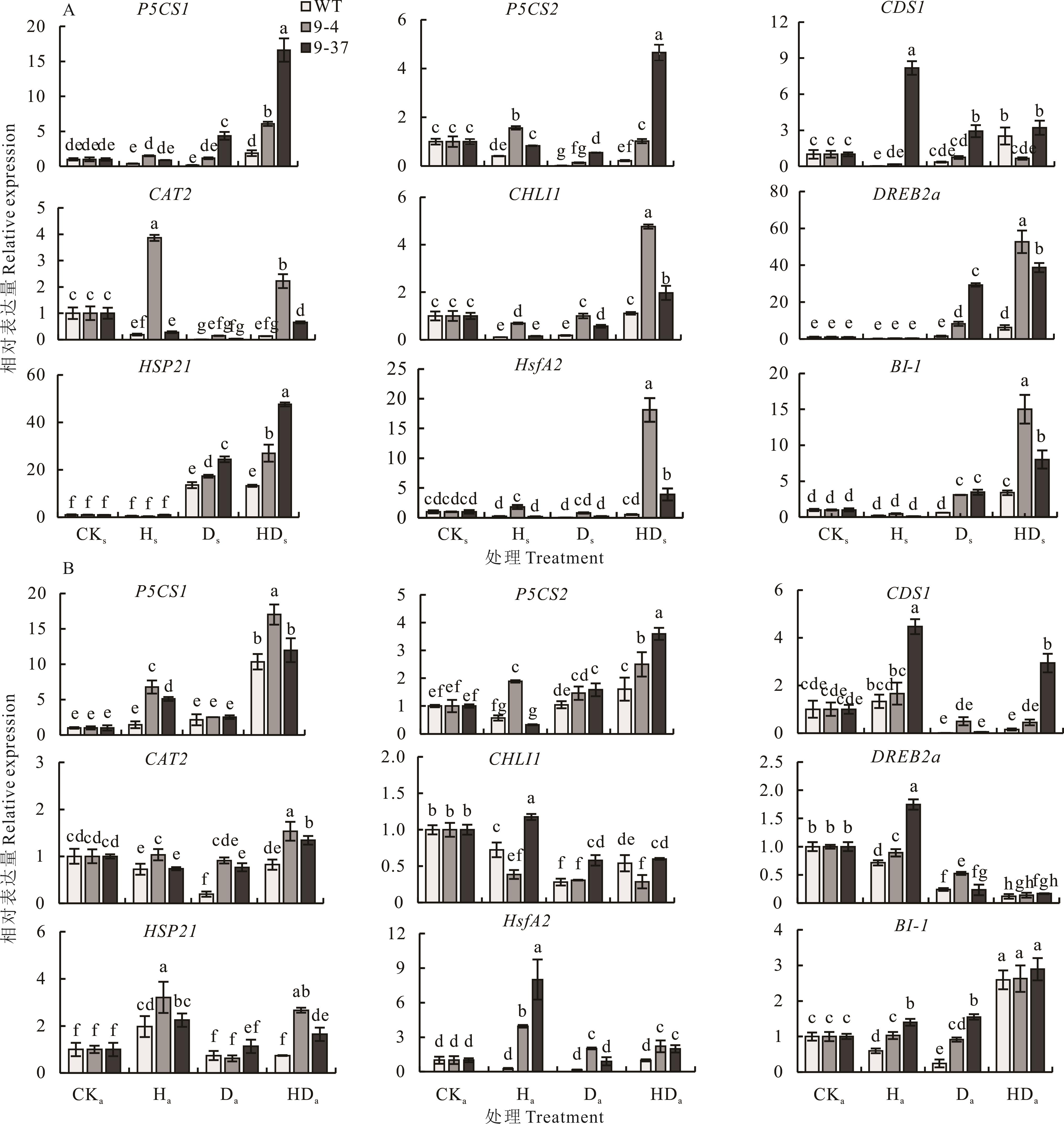
Fig.4 The expression of relevant genes under the heat stress priming-the secondary drought stress treatment in Arabidopsis

Fig.5 Diaminobenzidine (DAB) and nitroblue tetrazolium (NBT) staining of Arabidopsis under the heat stress priming-the secondary drought stress treatment
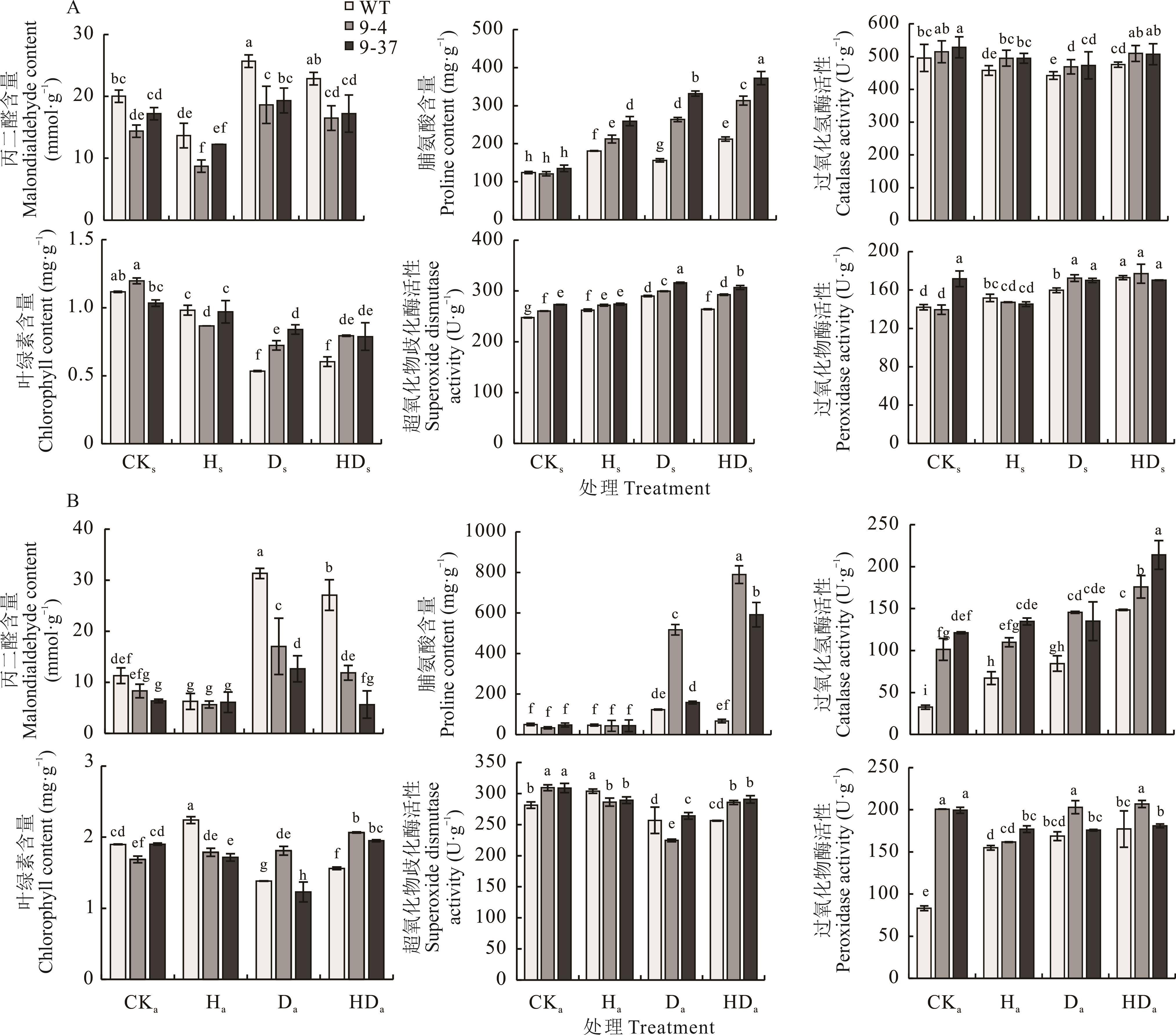
Fig.6 Antioxidant enzyme activity, proline content, and chlorophyll content under the heat stress priming-the secondary drought stress treatment in Arabidopsis
| [1] | Paul A L, Denison F C, Schultz E R, et al. 14-3-3 phosphoprotein interaction networks-does isoform diversity present functional interaction specification? Frontiers in Plant Science, 2012, 3: 190. |
| [2] | Li X D, Wu J H, Sun F, et al. Enhanced tolerance of Arabidopsis over expressing Fa14-3-3C from tall fescue (Festuca arundinacea) to low-nitrogen stress. Acta Prataculturae Sinica, 2017, 26(9): 104-112. |
| 李小冬, 吴佳海, 孙方, 等. 过量表达Fa14-3-3C促进拟南芥对低氮胁迫耐受性的研究. 草业学报, 2017, 26(9): 104-112. | |
| [3] | Zhou H P, Lin H X, Chen S, et al. Inhibition of the Arabidopsis salt overly sensitive pathway by 14-3-3 proteins. Plant Cell, 2014, 26(3): 1166-1182. |
| [4] | Hilker M, Schmülling T. Stress priming, memory, and signalling in plants. Plant Cell and Environment, 2019, 42(3): 753-761. |
| [5] | Liang X H, Ai F F, Zhong T X, et al. Cross adaptation under drought and low temperature stress in perennial ryegrass. Acta Prataculturae Sinica, 2016, 25(1): 163-170. |
| 梁小红, 艾非凡, 钟天秀, 等. 多年生黑麦草对干旱-低温交叉适应的生理响应. 草业学报, 2016, 25(1): 163-170. | |
| [6] | Liu H P, Able A J, Able J A. Priming crops for the future: rewiring stress memory. Trends in Plant Science, 2022, 27(7): 699-716. |
| [7] | Gallusci P, Agius D R, Moschou P N, et al. Deep inside the epigenetic memories of stressed plants. Trends in Plant Science, 2023, 28(2): 142-153. |
| [8] | Lu Y, Lei J Q, Zeng F J, et al. Effects of salt treatments on the growth and ecophysiological characteristics of Haloxylon ammodendron. Acta Prataculturae Sinica, 2014, 23(3): 152-159. |
| 鲁艳, 雷加强, 曾凡江, 等. NaCl处理对梭梭生长及生理生态特征的影响. 草业学报, 2014, 23(3): 152-159. | |
| [9] | Ma H, Zhang H, Ma L, et al. None-watering and tube-protecting planting technique for Haloxylon ammodendron under desert and its extension. Scientia Sinica (Vitae), 2014, 44(3): 248-256. |
| 麻浩, 张桦, 马林, 等. 无灌溉管件防护梭梭荒漠造林新技术及其示范推广. 中国科学(生命科学), 2014, 44(3): 248-256. | |
| [10] | Pan R, Ren W J, Liu S S, et al. Ectopic over-expression of HaFT-1, a 14-3-3 protein from Haloxylon ammodendron, enhances acquired thermotolerance in transgenic Arabidopsis. Plant Molecular Biology, 2023, 112(4/5): 261-277. |
| [11] | Cao Y H, Ren W, Gao H J, et al. HaASR2 from Haloxylon ammodendron confers drought and salt tolerance in plants. Plant Science, 2023, 328: 111572. |
| [12] | Wang J. Expression patterns and functional analysis of 14-3-3 genes related to stress resistance of Haloxylon ammodendron. Urumqi: Xinjiang Agricultural University, 2017. |
| 王娇. 与抗逆相关的梭梭14-3-3蛋白基因的表达模式和功能分析. 乌鲁木齐: 新疆农业大学, 2017. | |
| [13] | Liu S S, Wang B, Zong X F, et al. Cloning and characterization analysis of HaFT-9 gene in 14-3-3 protein in Haloxylon ammodendron. Xinjiang Agricultural Sciences, 2019, 56(6): 1083-1094. |
| 刘栓栓, 王波, 宗兴风, 等. 梭梭14-3-3蛋白基因HaFT-9的克隆及特性分析. 新疆农业科学, 2019, 56(6): 1083-1094. | |
| [14] | Wei Q. Functional analysis of heat stress memory key genes HaHsfA2a and HaFT-9 under abiotic stress in Haloxylon ammodendron. Urumqi: Xinjiang Agricultural University, 2023. |
| 魏琪. 梭梭高温胁迫记忆关键基因HaHsfA2a与HaFT-9在非生物胁迫下的功能分析. 乌鲁木齐: 新疆农业大学, 2023. | |
| [15] | Montero-Barrientos M, Hermosa R, Cardoza R E, et al. Transgenic expression of the Trichoderma harzianum hsp70 gene increases Arabidopsis resistance to heat and other abiotic stresses. Journal of Plant Physiology, 2010, 167(8): 659-665. |
| [16] | Livak K J, Schmittgen T D. Analysis of relative gene expression data using real-time quantitative PCR and the 2-∆∆CT method. Methods, 2001, 25(4): 402-408. |
| [17] | Xu M, Liu J, Ayiguli A. Comparative methods on chlorophyll extraction in plant physiology experiment teaching. Experiment Science and Technology, 2018, 16(4): 129-133. |
| 徐敏, 刘君, 阿衣古力·阿布都瓦依提. 植物生理实验教学中叶绿素提取方法比较. 实验科学与技术, 2018, 16(4): 129-133. | |
| [18] | Li W Y, Chen Y F, He H, et al. Effects of high temperature exercise on growth and physiological and biochemical characters of Taxus wallichiana var. mairei under drought stress. Shandong Agricultural Sciences, 2023, 55(9): 57-63. |
| 李文杨, 陈亚飞, 何辉, 等. 高温锻炼对干旱胁迫下南方红豆杉生长和生理生化指标的影响. 山东农业科学, 2023, 55(9): 57-63. | |
| [19] | Fan Z H, Zhu Y Q, Kuang W, et al. The 14-3-3 protein GRF8 modulates salt stress tolerance in apple via the WRKY18-SOS pathway. Plant Physiology, 2024, 194(3): 1906-1922. |
| [20] | Ren Y R, Yang Y Y, Zhang R, et al. MdGRF11, an apple 14-3-3 protein, acts as a positive regulator of drought and salt tolerance. Plant Science, 2019, 288: 110219. |
| [21] | Sirichandra C, Davanture M, Turk B E, et al. The Arabidopsis ABA-activated kinase OST1 phosphorylates the bZIP transcription factor ABF3 and creates a 14-3-3 binding site involved in its turnover. PLoS One, 2010, 5(11): e13935. |
| [22] | Jiang W, Tong T, Li W, et al. Molecular evolution of plant 14-3-3 proteins and function of Hv14-3-3A in stomatal regulation and drought tolerance. Plant Cell Physiology, 2023, 63(12): 1857-1872. |
| [23] | Wiese A J, Steinbachová L, Timofejeva L, et al. Arabidopsis bZIP18 and bZIP52 accumulate in nuclei following heat stress where they regulate the expression of a similar set of genes. International Journal of Molecular Sciences, 2021, 22(2): 530. |
| [24] | Liu J Z, Feng L L, Gu X T, et al. An H3K27me3 demethylase-HSFA2 regulatory loop orchestrates transgenerational thermomemory in Arabidopsis. Cell Research, 2019, 29(5): 379-390. |
| [25] | Kim J M, To T K, Seki M. An epigenetic integrator: new insights into genome regulation, environmental stress responses and developmental controls by histone deacetylase 6. Plant and Cell Physiology, 2012, 53(5): 794-800. |
| [26] | Liu M Y, Guo L Z, Yue Y S, et al. Physiological and antioxidant enzyme gene expression differences between female and male Buchloe dactyloides plants under drought stress. Acta Prataculturae Sinica, 2023, 32(10): 93-103. |
| 刘牧野, 郭丽珠, 岳跃森, 等. 干旱胁迫下不同性别野牛草生理及抗氧化酶基因表达差异. 草业学报, 2023, 32(10): 93-103. | |
| [27] | Zhang J, Cheng K, Wang Y C. Analysis of the calcium-dependent protein kinase RtCDPK16 response to abiotic stress in Reaumuria trigyna. Acta Prataculturae Sinica, 2023, 32(2): 97-109. |
| 张洁, 程凯, 王迎春. 长叶红砂钙依赖蛋白激酶RtCDPK16的非生物胁迫应答分析. 草业学报, 2023, 32(2): 97-109. | |
| [28] | Liu J P, Sun X J, Liao W C, et al. Involvement of OsGF14b adaptation in the drought resistance of rice plants. Rice, 2019, 12(1): 82. |
| [29] | Lukaszewicz M, Matysiak-Kata I, Aksamit A, et al. 14-3-3 protein regulation of the antioxidant capacity of transgenic potato tubers. Plant Science, 2002, 163(1): 125-130. |
| [30] | Wang L Y, Tian Y C, Shi W, et al. The miR396-GRFs module mediates the prevention of photo-oxidative damage by brassinosteroids during seedling de-etiolation in Arabidopsis. Plant Cell, 2020, 32(8): 2525-2542. |
| [31] | Liu X, Challabathula D K, Quan W L, et al. Transcriptional and metabolic changes in the desiccation tolerant plant Craterostigma plantagineum during recurrent exposures to dehydration. Planta, 2019, 249(4): 1017-1035. |
| [1] | Jia-yi YONG, Shuang MA, Feng-hua MA, Xiao-na ZHAO, Yi-yin ZHANG, Hai-ying HU. Effects of drought stress and rehydration on biomass allocation and osmotic regulation characteristics of Indigofera bungeana [J]. Acta Prataculturae Sinica, 2025, 34(7): 158-170. |
| [2] | Hui-ling LI, Yong-xing ZHU, Meng CHEN, Shu LIU, Jiao WANG, Yi-qing LIU, Xue-mei ZHANG, Hui-hui MA. Effects of drought stress and re-watering on the growth and physiological characteristics of Helianthus tuberosus seedlings [J]. Acta Prataculturae Sinica, 2025, 34(7): 171-184. |
| [3] | Xue-qian JIANG, Qing-chuan YANG, Jun-mei KANG. Research progress on yield loss under drought stress and drought resistance genetics of alfalfa (Medicago sativa) [J]. Acta Prataculturae Sinica, 2025, 34(7): 219-234. |
| [4] | Yuan-yuan ZHAO, Xiao-jian PU, Cheng-ti XU, Wei WANG, Yun-jie FU. Cloning of the MtBMI1 gene from Medicago truncatula and its role in drought tolerance [J]. Acta Prataculturae Sinica, 2025, 34(6): 139-153. |
| [5] | Xiao-Yue WEN, Ying ZHAO, Bao-qiang WANG, Xian WANG, Xiao-lin ZHU, Yi-zhen WANG, Xiao-hong WEI. Expression analysis of AP2/ERFs genes in alfalfa regulated by exogenous NO under drought stress [J]. Acta Prataculturae Sinica, 2025, 34(6): 154-167. |
| [6] | Yan-xia ZENG, Zhi-long CHEN, Ji-hong SHANG, Xiao-di SHA, Juan WU, Cai-jin CHEN. Effects of space mutagenesis on the growth of alfalfa (Medicago sativa) seedlings under PEG-6000 simulated drought stress [J]. Acta Prataculturae Sinica, 2025, 34(6): 59-69. |
| [7] | Xiao-feng WANG, Bu-dong MA, Hai-xia HUANG, Yong-zhong LUO, Jian-wei QI, Zhuo DENG. Effects of drought stress and rehydration on the physiological characteristics of Gymnocarpos przewalskii seedlings [J]. Acta Prataculturae Sinica, 2025, 34(4): 93-103. |
| [8] | Cai-jin CHEN, Ming-fang BAO, Wen-hu WANG, Ji-hong SHANG, Yan-xia ZENG, Xiao-di SHA, Xin-zhong ZHU, Xue-min WANG, Wen-hui LIU. Current situation and prospects for drought-resistance breeding in Medicago sativa [J]. Acta Prataculturae Sinica, 2025, 34(3): 204-223. |
| [9] | Xin-yao WANG, Ya-ping PENG, Li-rong YAO, Jun-cheng WANG, Er-jing SI, Hong ZHANG, Ke YANG, Xiao-le MA, Ya-xiong MENG, Hua-jun WANG, Bao-chun LI. Gene cloning and drought resistance identification of the gene HgS5 in Halogeton glomeratus [J]. Acta Prataculturae Sinica, 2025, 34(2): 184-195. |
| [10] | Long-yi HE, Meng-meng TAN, Hai-tao CHE, Hong-ying ZHANG, Yu-xin ZHU, Yan-ni ZHANG. Cloning and analysis of drought tolerance function of the LpDREB9 in Lilium pumilum [J]. Acta Prataculturae Sinica, 2025, 34(1): 161-173. |
| [11] | Bao WANG, Zhan-ling XIE, Jing GUO, Yong-peng TANG, Qing MENG, Qing-qing PENG, Jia-bao YANG, De-yu DONG, Hong-yan XU, Tai-zhen GAO, Fan ZHANG, Ying-zhu DUAN. Effects of seed soaking of Avena sativa in fungal fermentation broth on rhizosphere fungal community structure and drought resistance of oats [J]. Acta Prataculturae Sinica, 2024, 33(9): 126-139. |
| [12] | Ting-ting ZHANG, Yu-le LIU, Hong CHEN, Ling-xin XU, Xiang-wei CHEN, En-heng WANG, Jun-xin YAN. Effects of different exogenous substances on the seed germination, seedling growth, and physiology of Melilotus suaveolens under salt, alkali, and drought stress [J]. Acta Prataculturae Sinica, 2024, 33(8): 122-132. |
| [13] | Na WEI, Wen-mao JING, Er-wen XU, Rong-xin WANG, Jing-zhong ZHAO, Xue-e MA, Ji-yu ZHANG, Wen-xian LIU. Functional analysis of the MaERF058 gene in response to drought stress in Melilotus albus [J]. Acta Prataculturae Sinica, 2024, 33(8): 159-169. |
| [14] | Lu-jing ZENG, Guo-hua WANG. Effects of drought stress and rehydration on the growth and physiological characteristics of annual herbaceous plants from a desert-oasis ecotone [J]. Acta Prataculturae Sinica, 2024, 33(5): 41-57. |
| [15] | Zhong-yi YIN, Li-hua MA, Zhao-lei LI, Hua FENG, Xian-jun JIANG. Impact of high temperature on soil water, heat and salt in purple paddy fields under different tillage patterns [J]. Acta Prataculturae Sinica, 2024, 33(5): 80-91. |
| Viewed | ||||||
|
Full text |
|
|||||
|
Abstract |
|
|||||
