
ISSN 1004-5759 CN 62-1105/S
Acta Prataculturae Sinica ›› 2025, Vol. 34 ›› Issue (6): 139-153.DOI: 10.11686/cyxb2024303
Yuan-yuan ZHAO1,2( ), Xiao-jian PU1,2, Cheng-ti XU1,2, Wei WANG1,2, Yun-jie FU1,2
Received:2024-07-31
Revised:2024-09-20
Online:2025-06-20
Published:2025-04-03
Contact:
Yuan-yuan ZHAO
Yuan-yuan ZHAO, Xiao-jian PU, Cheng-ti XU, Wei WANG, Yun-jie FU. Cloning of the MtBMI1 gene from Medicago truncatula and its role in drought tolerance[J]. Acta Prataculturae Sinica, 2025, 34(6): 139-153.
| 引物Primer | 引物序列Primer sequence (5'-3') |
|---|---|
| Mt-Actin F | TACCCCATTGAGCACGGTAT |
| Mt-Actin R | ATACATGGCAGGCACATTGA |
| Mt-BMI1 F | AAGGATGGAAGCGTACCTGTCTCA |
| Mt-BMI1 R | TGAATCAGCCACAGCTCAACCAA |
| MtBMI1 F | ATGTCGAATGATGTTGTGAAAGTGA |
| MtBMI1 R | TCAAGGGCGTGGAGATTTCCG |
| MtBMI1 MF | TGACCATGGTATCGAATGATGTTGTGAAAGTGA |
| MtBMI1 MR | AGGGTGACCTCAAGGGCGTGGAGATTTCCG |
| pC3301-R | AGTAACATAGATGACACCGC |
| MtBMI1 promoter F | TGTATCGAGAGGTGTGTAATCAGTAC |
| MtBMI1 promoter R | CACTTTCACAACATCATTCGACAT |
| MtBMI1 promoter MF | TACCCGGGGATCCTCTAGAGTATCGAGAGGTGTGTAATC |
| MtBMI1 promoter MR | ACCCTCAGATCTACCATGGATATTCTTGATGATTTCTTGCT |
| MtBMI1 GFP F | TGGAGAGGACACGCTCGAGATGTCGAATGATGTTGTGAA |
| MtBMI1 GFP R | CCCTTGCTCACCATGAATTCAGGGCGTGGAGATTTCCG |
| Bar F | ATGAGCCCAGAACGACGCCC |
| Bar R | TCAAATCTCGGTGACGGGCA |
Table 1 Summary of primers used for MtBMI1 gene cloning, vector construction and qRT-PCR
| 引物Primer | 引物序列Primer sequence (5'-3') |
|---|---|
| Mt-Actin F | TACCCCATTGAGCACGGTAT |
| Mt-Actin R | ATACATGGCAGGCACATTGA |
| Mt-BMI1 F | AAGGATGGAAGCGTACCTGTCTCA |
| Mt-BMI1 R | TGAATCAGCCACAGCTCAACCAA |
| MtBMI1 F | ATGTCGAATGATGTTGTGAAAGTGA |
| MtBMI1 R | TCAAGGGCGTGGAGATTTCCG |
| MtBMI1 MF | TGACCATGGTATCGAATGATGTTGTGAAAGTGA |
| MtBMI1 MR | AGGGTGACCTCAAGGGCGTGGAGATTTCCG |
| pC3301-R | AGTAACATAGATGACACCGC |
| MtBMI1 promoter F | TGTATCGAGAGGTGTGTAATCAGTAC |
| MtBMI1 promoter R | CACTTTCACAACATCATTCGACAT |
| MtBMI1 promoter MF | TACCCGGGGATCCTCTAGAGTATCGAGAGGTGTGTAATC |
| MtBMI1 promoter MR | ACCCTCAGATCTACCATGGATATTCTTGATGATTTCTTGCT |
| MtBMI1 GFP F | TGGAGAGGACACGCTCGAGATGTCGAATGATGTTGTGAA |
| MtBMI1 GFP R | CCCTTGCTCACCATGAATTCAGGGCGTGGAGATTTCCG |
| Bar F | ATGAGCCCAGAACGACGCCC |
| Bar R | TCAAATCTCGGTGACGGGCA |

Fig.1 The characteristics of MtBMI1 gene

Fig.2 The full length of CDS and corresponding amino acid sequence of MtBMI1

Fig.3 Conserved domains, secondary and tertiary structures of MtBMI1 protein

Fig.4 Multiple sequence alignment of BMI1 protein

Fig.5 Phylogenetic tree construction of BMI1 gene

Fig.6 Expression profiles of MtBMI1 in different developmental stages and tissues of M. truncatula
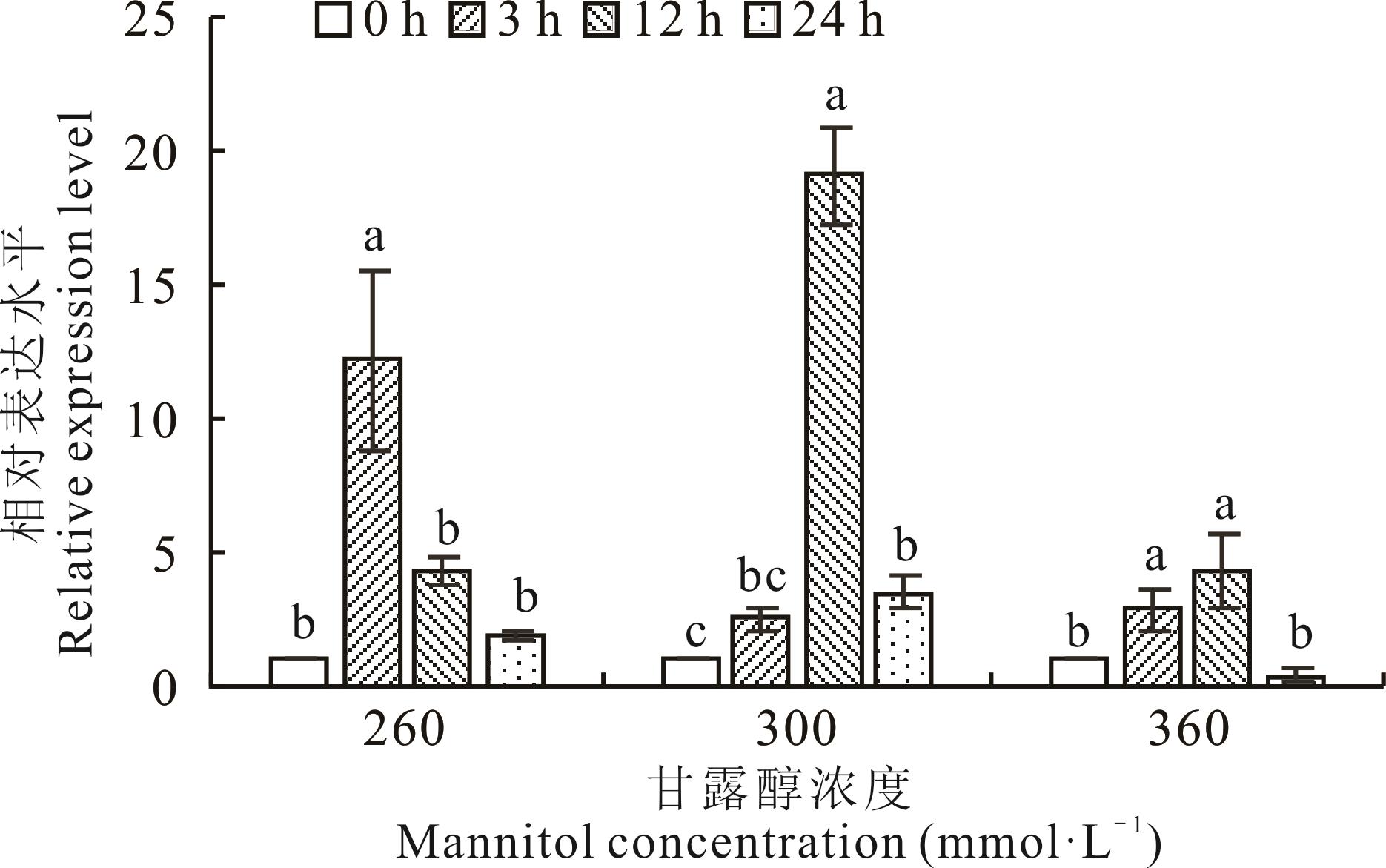
Fig.7 Expression profiles of MtBMI1 under different concentrations of mannitol

Fig.8 Subcellular localization of MtBMI1 gene in tobaccoleaf
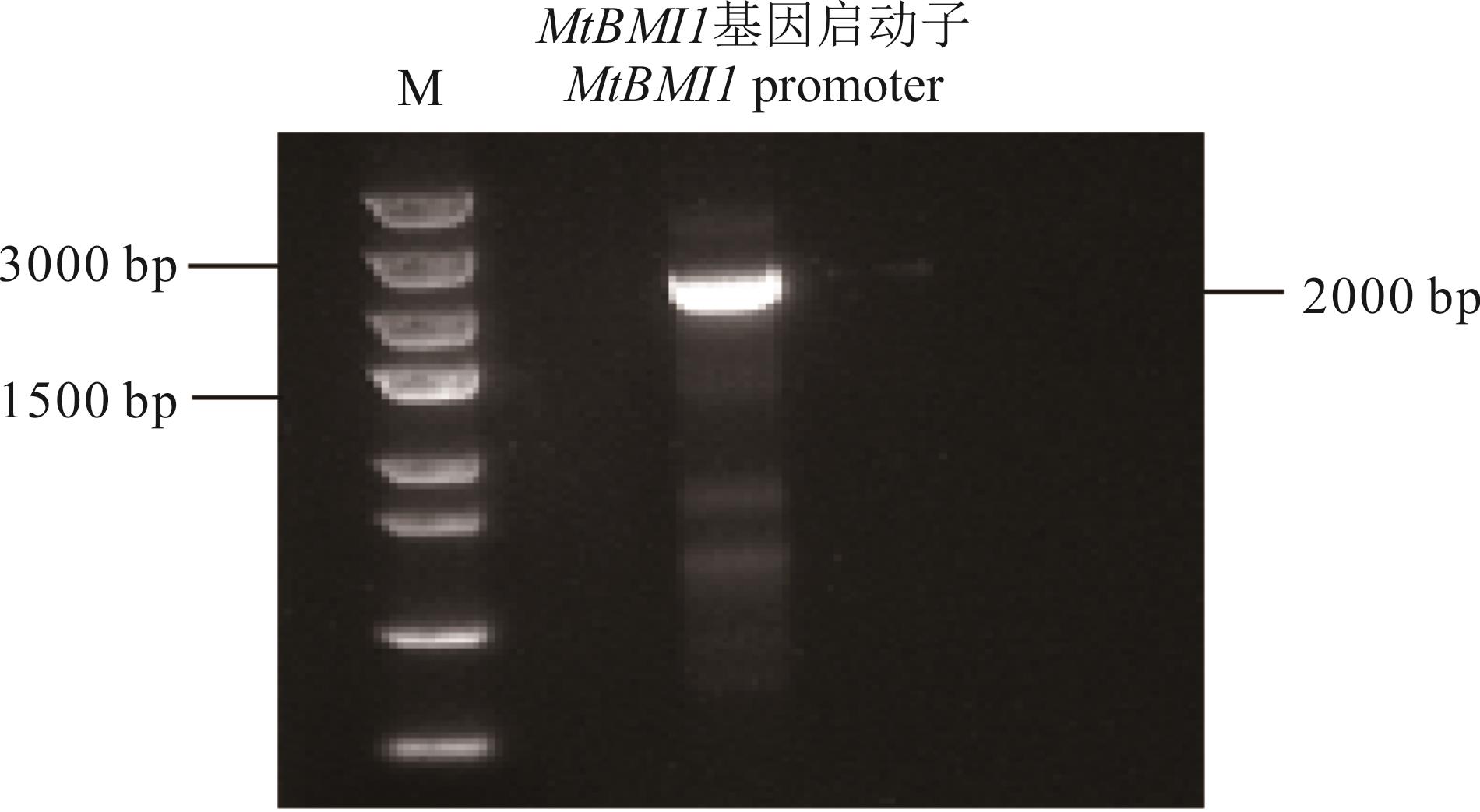
Fig.9 MtBMI1 promoter cloned by RT-PCR

Fig.10 GUS staining results of pCAMBIA3301-MtBMI1 promotertransgenic Arabidopsis
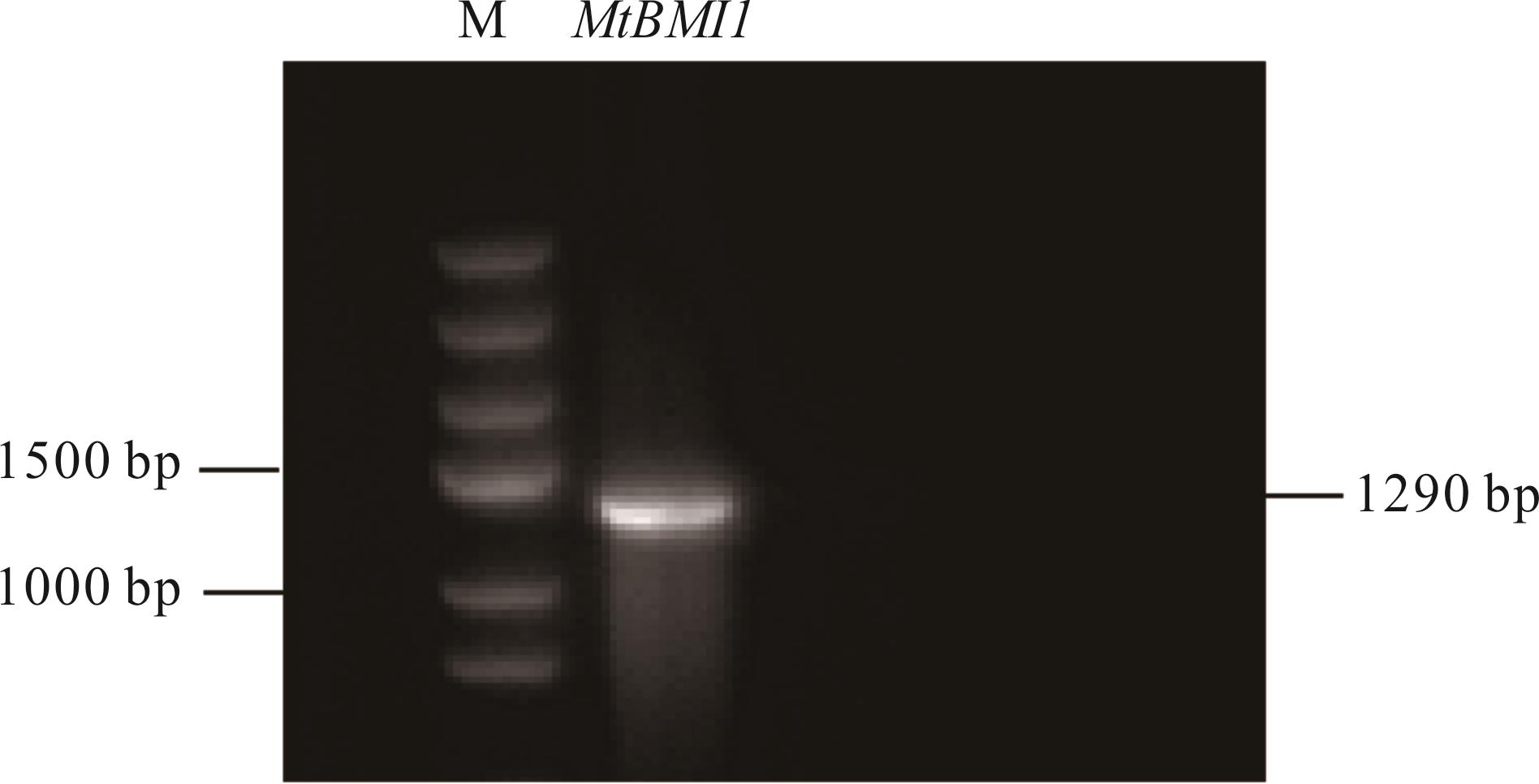
Fig.11 MtBMI1 gene cloned by RT-PCR
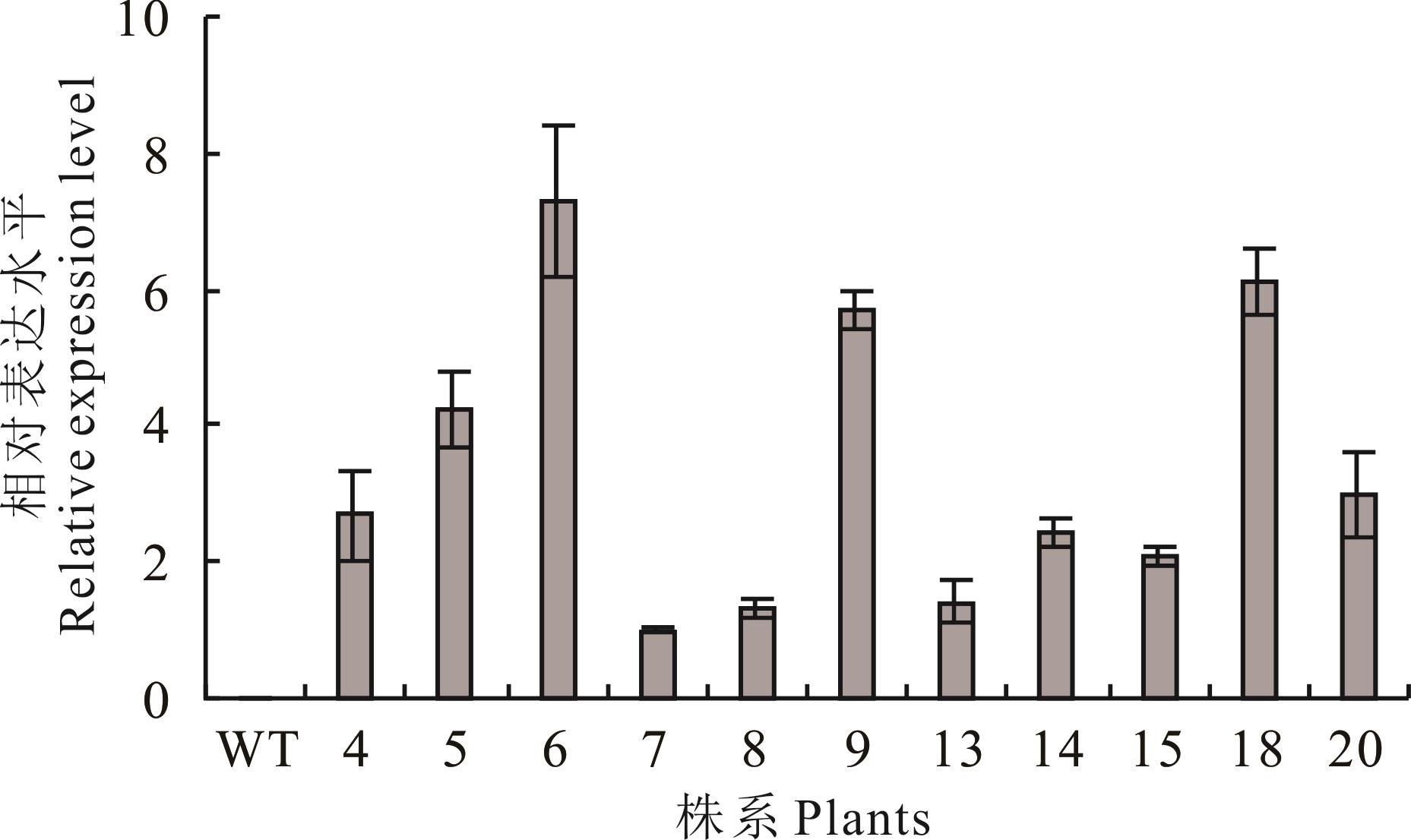
Fig.12 The relative expression levels of MtBMI1 in transgenic Arabidopsis lines

Fig.13 Phenotypic comparison of transgenic and wild-type Arabidopsis at seedling and bolting stages

Fig.14 Phenotypic comparison of transgenic and wild-type Arabidopsis under 300 mmol·L-1 mannitol treatment

Fig.15 Effects of mannitol treatment on the content of malondialdehyde and proline in transgenic and wild-type Arabidopsis

Fig.16 Evaluation of drought resistance in MtBMI1 transgenic Arabidopsis

Fig.17 Analysis of H2AK119ub histone content in MtBMI1 transgenic Arabidopsis

Fig.18 Expression levels of epigenetic modification related genes in transgenic Arabidopsis
| 1 | Li W, Wang Z, Li J, et al. Overexpression of AtBMI1C, a polycomb group protein gene, accelerates flowering in Arabidopsis. PLoS One, 2011, 6(6): e21364. |
| 2 | De Napoles M, Mermoud J E, Wakao R, et al. Polycomb group proteins Ring1A/B link ubiquitylation of histone H2A to heritable gene silencing and X inactivation. Developmental Cell, 2004, 7(5): 663-676. |
| 3 | Zhang K, Sridhar V V, Zhu J, et al. Distinctive core histone post-translational modification patterns in Arabidopsis thaliana. PLoS One, 2007, 2(11): e1210. |
| 4 | Ginjala V, Nacerddine K, Kulkarni A, et al. BMI1 is recruited to DNA breaks and contributes to DNA damage-induced H2A ubiquitination and repair. Molecular and Cellular Biology, 2011, 31(10): 1972-1982. |
| 5 | Bratzel F, López-Torrejón G, Koch M, et al. Keeping cell identity in Arabidopsis requires PRC1 RING-finger homologs that catalyze H2A monoubiquitination. Current Biology, 2010, 20(20): 1853-1859. |
| 6 | Yang C, Bratzel F, Hohmann N, et al. VAL- and AtBMI1-mediated H2Aub initiate the switch from embryonic to postgerminative growth in Arabidopsis. Current Biology, 2013, 23(14): 1324-1329. |
| 7 | Chen D, Molitor A, Liu C, et al. The Arabidopsis PRC1-like ring-finger proteins are necessary for repression of embryonic traits during vegetative growth. Cell Research, 2010, 20(12): 1332-1344. |
| 8 | Zhao Y, Zhang J, Sun Z, et al. Genome-wide identification and analysis of the polycomb group family in Medicago truncatula. International Journal of Molecular Sciences, 2021, 22(14): 7537. |
| 9 | Kong H M, Song J X, Yang J, et al. Identification and transcript profiling of the CAMTA gene family under abiotic stress in alfalfa. Acta Prataculturae Sinica, 2024, 33(5): 143-154. |
| 孔海明, 宋家兴, 杨静, 等. 紫花苜蓿CAMTA基因家族鉴定及其在非生物胁迫下的表达模式分析.草业学报, 2024, 33(5): 143-154. | |
| 10 | Hu S Q, Wang J C, Yao L R, et al. Cloning and preliminary functional analysis of the root gene HgAKR6C of Halogeton glomeratus. Acta Prataculturae Sinica, 2024, 33(1): 61-74. |
| 胡尚钦, 汪军成, 姚立蓉, 等. 盐生草根系基因HgAKR6C的克隆与初步功能分析. 草业学报, 2024, 33(1): 61-74. | |
| 11 | Qian C L, Ji Z J, Zhu Q, et al. Effects of 1-MCP on proline, polyamine, and nitric oxide metabolism in postharvest peach fruit under chilling stress. Horticultural Plant Journal, 2021, 7(3): 188-196. |
| 12 | Chen D, Molitor A M, Xu L, et al. Arabidopsis PRC1 core component AtRING1 regulates stem cell-determining carpel development mainly through repression of class I KNOX genes. BMC Biology, 2016, 14: 1-17. |
| 13 | Jiang L W, Huang L F, Jiang W. H3K27me3-mediated epigenetic regulation in pluripotency maintenance and lineage differentiation. Cell Insight, 2024, 3(4): 1-11. |
| 14 | Strejčková B, Čegan R, Pecinka A, et al. Identification of polycomb repressive complex 1 and 2 core components in hexaploid bread wheat. BMC Plant Biology, 2020, 20(1): 1-13. |
| 15 | Chen D, Huang Y, Ruan Y, et al. The evolutionary landscape of PRC1 core components in green lineage. Planta, 2016, 243(4): 825-846. |
| 16 | Merini W, Romero-Campero F J, Gomez-Zambrano A, et al. The Arabidopsis polycomb repressive complex 1 (PRC1) components AtBMI1A, B, and C impact gene networks throughout all stages of plant development. Plant Physiology, 2017, 173(1): 627-641. |
| 17 | Qin F, Sakuma Y, Tran L S P, et al. Arabidopsis DREB2A-interacting proteins function as RING E3 ligases and negatively regulate plant drought stress-responsive gene expression. The Plant Cell, 2008, 20(6): 1693-1707. |
| 18 | Bratzel F, Yang C, Angelova A, et al. Regulation of the new Arabidopsis imprinted gene AtBMI1C requires the interplay of different epigenetic mechanisms. Molecular Plant, 2012, 5(1): 260-269. |
| 19 | Xu L, Shen W H. Polycomb silencing of KNOX genes confines shoot stem cell niches in Arabidopsis. Current Biology, 2008, 18(24): 1966-1971. |
| [1] | Xin-yue ZHOU, Li-ping WANG, Qing-xue JIANG, Xiao-ran MA, Deng-xia YI, Xue-min WANG. Isolation of the low-temperature induced proteinMsLTI65 from alfalfa and its response to different stresses [J]. Acta Prataculturae Sinica, 2025, 34(5): 89-104. |
| [2] | Cai-jin CHEN, Ming-fang BAO, Wen-hu WANG, Ji-hong SHANG, Yan-xia ZENG, Xiao-di SHA, Xin-zhong ZHU, Xue-min WANG, Wen-hui LIU. Current situation and prospects for drought-resistance breeding in Medicago sativa [J]. Acta Prataculturae Sinica, 2025, 34(3): 204-223. |
| [3] | Xin-yao WANG, Ya-ping PENG, Li-rong YAO, Jun-cheng WANG, Er-jing SI, Hong ZHANG, Ke YANG, Xiao-le MA, Ya-xiong MENG, Hua-jun WANG, Bao-chun LI. Gene cloning and drought resistance identification of the gene HgS5 in Halogeton glomeratus [J]. Acta Prataculturae Sinica, 2025, 34(2): 184-195. |
| [4] | Long-yi HE, Meng-meng TAN, Hai-tao CHE, Hong-ying ZHANG, Yu-xin ZHU, Yan-ni ZHANG. Cloning and analysis of drought tolerance function of the LpDREB9 in Lilium pumilum [J]. Acta Prataculturae Sinica, 2025, 34(1): 161-173. |
| [5] | Hong-li CUI, Ming-zhe SUN, Bo-wei JIA, Xiao-li SUN. Genome-wide analysis and expression of the OSCA family genes from Medicago truncatula in response to low temperature stresses [J]. Acta Prataculturae Sinica, 2024, 33(9): 111-125. |
| [6] | Xin-yue ZHOU, Qing-xue JIANG, Hui-li JIA, Lin MA, Lu FAN, Xue-min WANG. Cloning and salt-tolerance functional analysis of alfalfa MsBBX20 gene [J]. Acta Prataculturae Sinica, 2024, 33(10): 55-73. |
| [7] | Shang-qin HU, Jun-cheng WANG, Li-rong YAO, Er-jing SI, Xiao-le MA, Ke YANG, Hong ZHANG, Ya-xiong MENG, Hua-jun WANG, Bao-chun LI. Cloning and preliminary functional analysis of the root gene HgAKR6C of Halogeton glomeratus [J]. Acta Prataculturae Sinica, 2024, 33(1): 61-74. |
| [8] | Shao-peng WANG, Jia LIU, Jun HONG, Ji-zhen LIN, Yi ZHANG, Kun SHI, Zan WANG. Cloning and function analysis of MsPPR1 in alfalfa under drought stress [J]. Acta Prataculturae Sinica, 2023, 32(7): 49-60. |
| [9] | Wen-juan WANG, Shang-li SHI, Long HE, Bei WU, Chan-chan LIU. Accumulation and functions of polyamines in plants under drought stress [J]. Acta Prataculturae Sinica, 2023, 32(6): 186-202. |
| [10] | Yuan WANG, Jing WANG, Shu-xia LI. Cloning of MsBBX24 from alfalfa (Medicago sativa) and determination of its role in salt tolerance [J]. Acta Prataculturae Sinica, 2023, 32(3): 107-117. |
| [11] | Fu LIU, Cheng CHEN, Kai-xuan ZHANG, Mei-liang ZHOU, Xin-quan ZHANG. Cloning and identification of drought tolerance function of the LjbHLH34 gene in Lotus japonicus [J]. Acta Prataculturae Sinica, 2023, 32(1): 178-191. |
| [12] | Jiao-yang TIAN, Qiu-xia WANG, Shu-wen ZHENG, Wen-xian LIU. Genome-wide identification and expression profile analysis of the CPP gene family in Medicago truncatula [J]. Acta Prataculturae Sinica, 2022, 31(7): 111-121. |
| [13] | Ya-nan LIU, Ren-jie YU, Yan-li GAO, Jun-mei KANG, Qing-chuan YANG, Zhi-hai WU, Zhen WANG. Expression pattern and biological functions of an annexin encoding gene MtANN2 in Medicago truncatula under salt stress [J]. Acta Prataculturae Sinica, 2022, 31(5): 124-134. |
| [14] | Tong WU, Yun-miao LIU, Jun JIN, Wei-feng DONG, Xiao-xi CAI, Ming-zhe SUN, Bo-wei JIA, Xiao-li SUN. Identification and expression characteristics of a cation/H+ exchanger gene family in Medicago truncatula [J]. Acta Prataculturae Sinica, 2022, 31(1): 181-194. |
| [15] | Zhi-peng CHANG, Ying-ying SUN, Jia-yang LI, Chun-mei GONG. Cloning and transformation of the CkCAD gene in Caragana korshinskii and analysis of its drought resistance function [J]. Acta Prataculturae Sinica, 2021, 30(3): 68-80. |
| Viewed | ||||||
|
Full text |
|
|||||
|
Abstract |
|
|||||
