
ISSN 1004-5759 CN 62-1105/S
Acta Prataculturae Sinica ›› 2026, Vol. 35 ›› Issue (11): 145-156.DOI: 10.11686/cyxb2025454
Qiu-cen GE( ), Hong-yin QI(), Zhou LI()
Received:2025-11-05
Revised:2026-01-22
Online:2026-11-20
Published:2026-10-12
Contact:
Zhou LI
Qiu-cen GE, Hong-yin QI, Zhou LI. Effects of short-term heat stress on the contents of soluble sugars and lipids in creeping bentgrass cultivars with different degrees of heat tolerance[J]. Acta Prataculturae Sinica, 2026, 35(11): 145-156.
名称 Name | 英文缩写 English abbreviation |
|---|---|
| 磺基奎诺糖基单酰基甘油Sulfoquinovosyl monoacylglycerol | SQMG |
| 磺基奎诺糖基二酰基甘油Sulfoquinovosyl diacylglycerol | SQDG |
| 单半乳糖基单酰基甘油Monogalactosyl monoacylglycerol | MGMG |
| 单半乳糖基二酰基甘油Monogalactosyl diacylglycerol | MGDG |
| 双半乳糖基单酰基甘油Digalactosyl monoacylglycerol | DGMG |
| 双半乳糖基二酰基甘油Digalactosyl diacylglycerol | DGDG |
| 磷脂酸Phosphatidic acid | PA |
| 磷脂酰丝氨酸Phosphatidylserine | PS |
| 磷脂酰甘油Phosphatidylglycerol | PG |
| 磷脂酰乙醇胺Phosphatidylethanolamine | PE |
| 卵磷脂Phosphatidylcholine | PC |
| 磷脂酰肌醇Phosphatidylinositol | PI |
| 磷脂酰肌醇磷酸酯Phosphatidylinositol phosphate | PIP |
| 磷脂酰肌醇二磷酸Phosphatidylinositol diphosphate | PIP2 |
| 磷脂酰肌醇三磷酸Phosphatidylinositol triphosphate | PIP3 |
| 溶血磷脂酰丝氨酸Lyso phosphatidylserine | LPS |
| 溶血磷脂酸Lyso phosphatidic acid | LPA |
| 溶血磷脂酰肌醇Lyso phosphatidylinositol | LPI |
| 溶血磷脂酰乙醇胺Lyso phosphatidylethanolamine | LPE |
| 溶血磷脂酰甘油Lyso phosphatidylglycerol | LPG |
| 溶血磷脂酰胆碱Lyso phosphatidylcholine | LPC |
| 心磷脂Cardiolipin | CL |
| 溶血素心磷脂Di-lyso cardiolipin | DLCL |
| 单溶血心磷脂Mono-lyso cardiolipin | MLCL |
| 神经酰胺Ceramide | Cer |
| 二己糖基 N-乙酰基己糖基神经酰胺Dihexosyl N-acetylhexosyl ceramide | CerG2GNAc1 |
| 磷酸神经酰胺Ceramide phosphate | CerP |
| 己糖神经酰胺Hexosyl ceramide | Hex1Cer |
| 二己糖神经酰胺Dihexosyl ceramide | Hex2Cer |
| 三己糖神经酰胺Trihexosyl ceramide | Hex3Cer |
Table 1 The identified lipid classes and their abbreviations
名称 Name | 英文缩写 English abbreviation |
|---|---|
| 磺基奎诺糖基单酰基甘油Sulfoquinovosyl monoacylglycerol | SQMG |
| 磺基奎诺糖基二酰基甘油Sulfoquinovosyl diacylglycerol | SQDG |
| 单半乳糖基单酰基甘油Monogalactosyl monoacylglycerol | MGMG |
| 单半乳糖基二酰基甘油Monogalactosyl diacylglycerol | MGDG |
| 双半乳糖基单酰基甘油Digalactosyl monoacylglycerol | DGMG |
| 双半乳糖基二酰基甘油Digalactosyl diacylglycerol | DGDG |
| 磷脂酸Phosphatidic acid | PA |
| 磷脂酰丝氨酸Phosphatidylserine | PS |
| 磷脂酰甘油Phosphatidylglycerol | PG |
| 磷脂酰乙醇胺Phosphatidylethanolamine | PE |
| 卵磷脂Phosphatidylcholine | PC |
| 磷脂酰肌醇Phosphatidylinositol | PI |
| 磷脂酰肌醇磷酸酯Phosphatidylinositol phosphate | PIP |
| 磷脂酰肌醇二磷酸Phosphatidylinositol diphosphate | PIP2 |
| 磷脂酰肌醇三磷酸Phosphatidylinositol triphosphate | PIP3 |
| 溶血磷脂酰丝氨酸Lyso phosphatidylserine | LPS |
| 溶血磷脂酸Lyso phosphatidic acid | LPA |
| 溶血磷脂酰肌醇Lyso phosphatidylinositol | LPI |
| 溶血磷脂酰乙醇胺Lyso phosphatidylethanolamine | LPE |
| 溶血磷脂酰甘油Lyso phosphatidylglycerol | LPG |
| 溶血磷脂酰胆碱Lyso phosphatidylcholine | LPC |
| 心磷脂Cardiolipin | CL |
| 溶血素心磷脂Di-lyso cardiolipin | DLCL |
| 单溶血心磷脂Mono-lyso cardiolipin | MLCL |
| 神经酰胺Ceramide | Cer |
| 二己糖基 N-乙酰基己糖基神经酰胺Dihexosyl N-acetylhexosyl ceramide | CerG2GNAc1 |
| 磷酸神经酰胺Ceramide phosphate | CerP |
| 己糖神经酰胺Hexosyl ceramide | Hex1Cer |
| 二己糖神经酰胺Dihexosyl ceramide | Hex2Cer |
| 三己糖神经酰胺Trihexosyl ceramide | Hex3Cer |

Fig.1 Effects of short-term high temperature on the contents of fructose, sucrose and glucose in leaves of 13M and SeasideⅡ
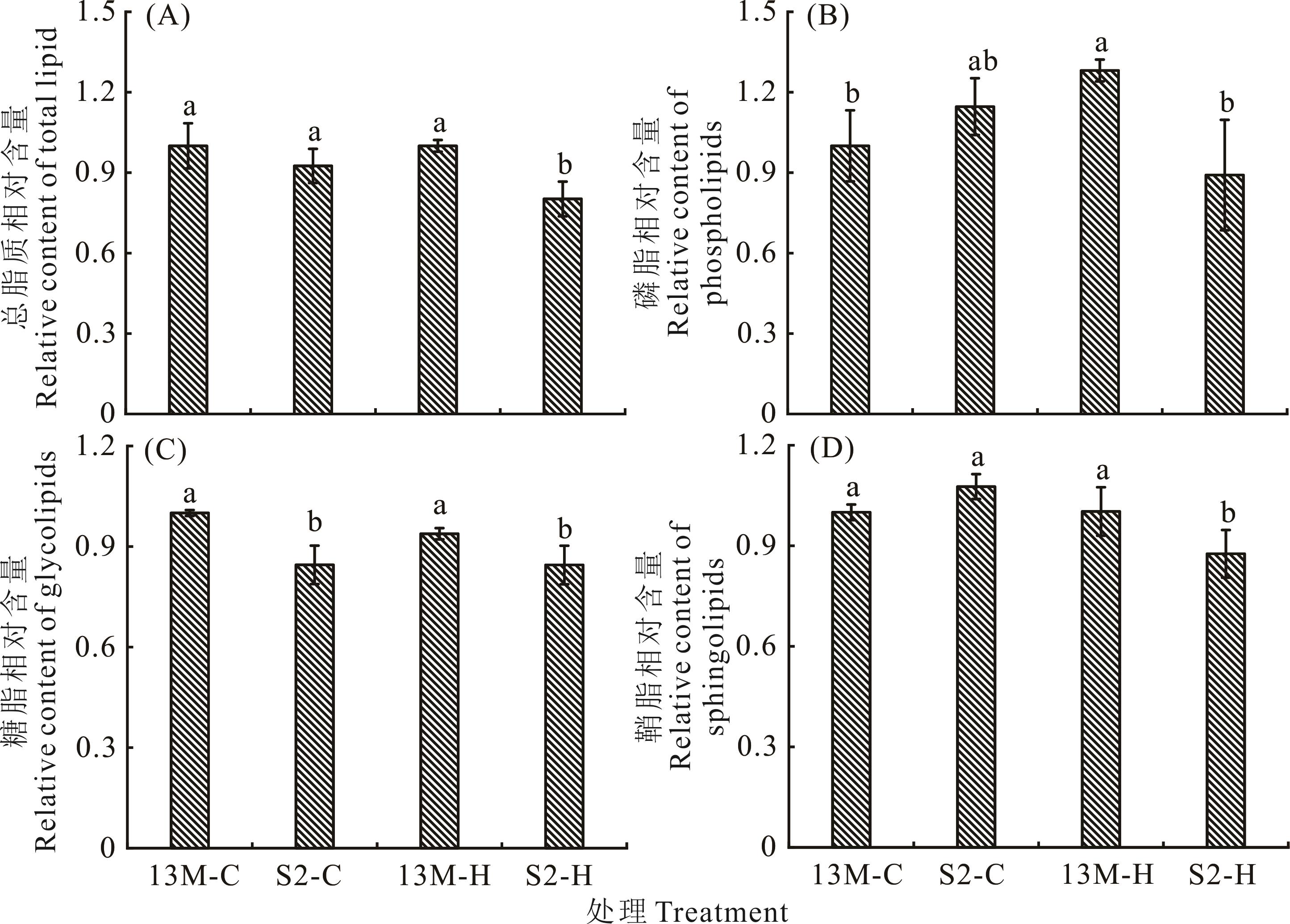
Fig.2 Effects of short-term high temperature on the contents of total lipids, phospholipids, glycolipids, and sphingolipids in leaves of 13M and SeasideⅡ
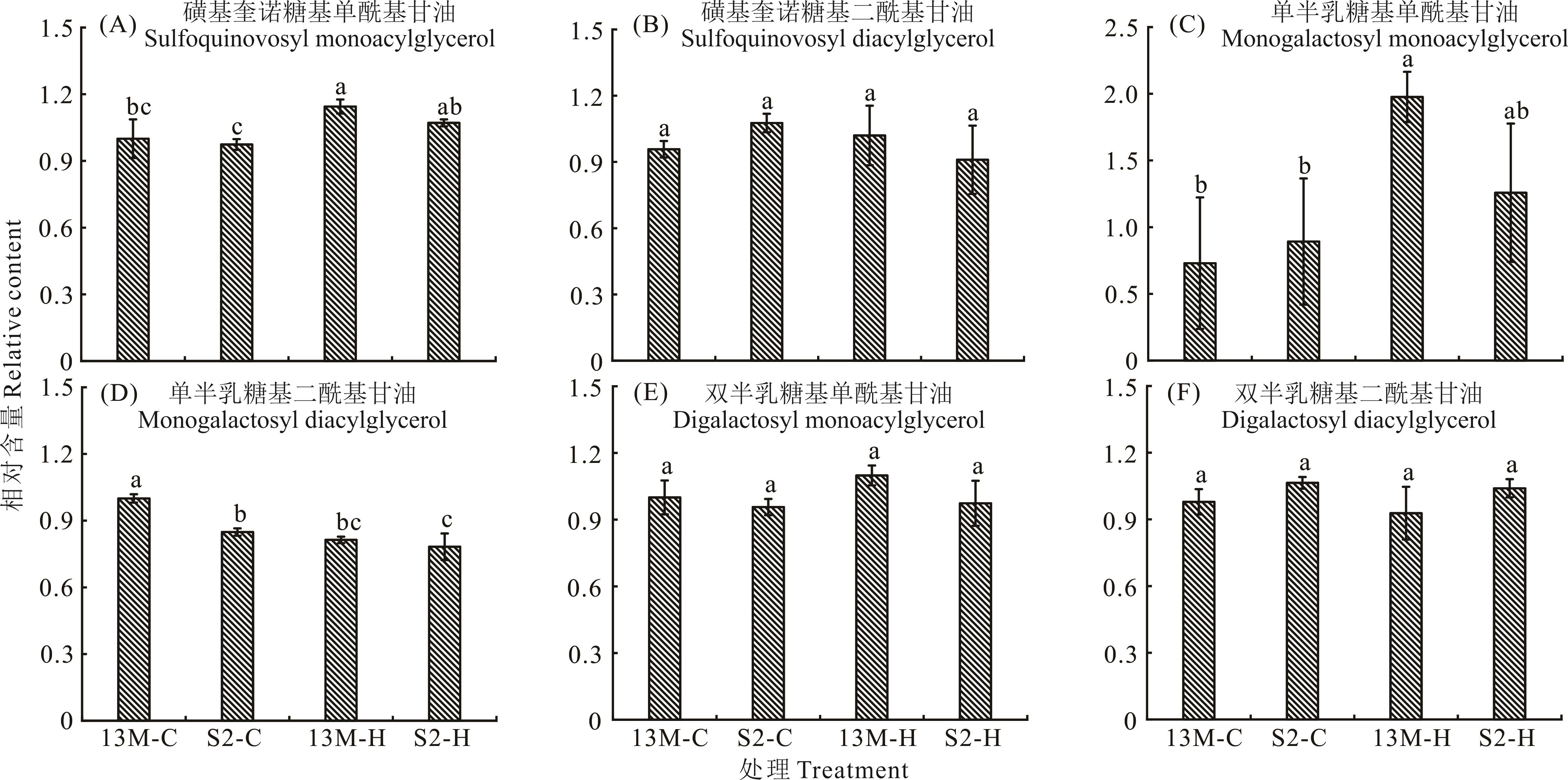
Fig.3 Effects of short-term high temperature on the contents of different glycolipids in leaves of 13M and Seaside Ⅱ

Fig.4 Effects of short-term high temperature on the contents of different common phospholipids in leaves of 13M and Seaside Ⅱ

Fig.5 Effects of short-term high temperature on the contents of different lysophospholipid and cardiolipin in leaves of 13M and Seaside Ⅱ

Fig.6 Effects of short-term high temperature on the contents of different sphingolipids in leaves of 13M and Seaside Il
| [1] | Tu X J, Wang Q M, Rao L Q. Effects of high temperature stress on physiology and biochemistry of plant. Hunan Agricultural Science, 2013, 43(13): 28-30. |
| 屠小菊, 汪启明, 饶力群. 高温胁迫对植物生理生化的影响. 湖南农业科学, 2013, 43(13): 28-30. | |
| [2] | Xie Y L. Research progress on the effects of high temperature stress on plant physiology. Jilin Agriculture, 2019, 19(8): 107-108. |
| 解玉玲. 高温胁迫对植物生理影响的研究进展. 吉林农业, 2019, 19(8): 107-108. | |
| [3] | Huang C, Tian Y L, Zhang B B, et al. Chitosan (CTS) alleviates heat-induced leaf senescence in creeping bentgrass by regulating chlorophyll metabolism, antioxidant defense, and the heat shock pathway. Molecules, 2021, 26(17): 5337. |
| [4] | Zeng W, Hassan M J, Kang D, et al. Photosynthetic maintenance and heat shock protein accumulation relating to γ-aminobutyric acid (GABA)-regulated heat tolerance in creeping bentgrass. South African Journal of Botany, 2021, 141(6): 405-413. |
| [5] | Li Z, Zeng W H, Cheng B Z, et al. Turf quality and physiological responses to summer stress in four creeping bentgrass cultivars in a subtropical zone. Plants, 2022, 11(5): 665. |
| [6] | Yao N. Advances in plant lipid biology. Plant Physiology Journal, 2018, 54(12): 1747. |
| 姚楠. 植物脂质生物学进展. 植物生理学报, 2018, 54(12): 1747. | |
| [7] | Higashi Y, Saito K. Lipidomic studies of membrane glycerolipids in plant leaves under heat stress. Progress in Lipid Research, 2019, 75(3): 100990. |
| [8] | Cowan A K. Phospholipids as plant growth regulators. Plant Growth Regulation, 2006, 48(2): 97-109. |
| [9] | Chen J P, Burke J J, Xin Z G, et al. Characterization of the Arabidopsis thermosensitive mutant atts02 reveals an important role for galactolipids in thermotolerance. Plant Cell & Environment, 2006, 29(7): 1437-1448. |
| [10] | Zhou Y, Zeng L T, Fu X M, et al. The sphingolipid biosynthetic enzyme Sphingolipid delta8 desaturase is important for chilling resistance of tomato. Scientific Reports, 2016, 6(1): 38742. |
| [11] | Asad M A U, Yan Z, Zhou L, et al. How abiotic stresses trigger sugar signaling to modulate leaf senescence? Plant Physiology and Biochemistry, 2024, 210(5): 108650. |
| [12] | Lembrechts R, Ceusters N, Dd Proft M P, et al. Sugar and starch dynamics in the medium-root-leaf system indicate possibilities to optimize plant tissue culture. Scientia Horticulturae, 2017, 224(11): 226-231. |
| [13] | Kumar S, Thakur M, Mitra R, et al. Sugar metabolism during pre- and post-fertilization events in plants under high temperature stress. Plant Cell Reports, 2021, 41(3): 655-673. |
| [14] | Li Z, Yu J J, Peng Y, et al. Metabolic pathways regulated by abscisic acid, salicylic acid and γ‐aminobutyric acid in association with improved drought tolerance in creeping bentgrass. Physiologia Plantarum, 2017, 159(1): 42. |
| [15] | Li Z, Li Z, Tang M Y, et al. Adaptability to high temperature and stay-green genotypes associated with variations in antioxidant, chlorophyll metabolism, and γ-aminobutyric acid accumulation in creeping bentgrass species. Frontiers in Plant Science, 2021, 12(1): 750728. |
| [16] | Hassan M J, Qi H Y, Cheng B Z, et al. Enhanced adaptability to limited water supply regulated by diethyl aminoethyl hexanoate (DA-6) associated with lipidomic reprogramming in two white clover genotypes. Frontiers in Plant Science, 2022, 13(1): 879331. |
| [17] | Hou Q, Ufer G, Bartels D. Lipid signalling in plant responses to abiotic stress. Plant, Cell & Environment, 2016, 39(5): 1029-1048. |
| [18] | Dawid P, Sylwia K, Aneta S, et al. Remodeling of leaf cellular glycerolipid composition under drought and re-hydration conditions in grasses from the Lolium-Festuca complex. Frontiers in Plant Science, 2016, 7(1): 01027. |
| [19] | Gao Y L, Li M N, Zhang X X, et al. Up-regulation of lipid metabolism and glycine betaine synthesis are associated with choline‐induced salt tolerance in halophytic seashore paspalum. Plant, Cell & Environment, 2020, 43(1): 159-173. |
| [20] | Zhang X X, Xu Y, Huang B R. Lipidomic reprogramming associated with drought stress priming-enhanced heat tolerance in tall fescue (Festuca arundinacea). Plant, Cell & Environment, 2019, 42(3): 947-958. |
| [21] | Nagano M, Ishikawa T, Ogama Y, et al. Arabidopsis Bax inhibitor-1 promotes sphingolipid synthesis during cold stress by interacting with ceramide-modifying enzymes. Planta, 2014, 240(1): 77-89. |
| [22] | Narayanan S, Zoong-lwe Z S, Gandhi N, et al. Comparative lipidomic analysis reveals heat stress responses of two soybean genotypes differing in temperature sensitivity. Plants, 2020, 9(4): 457. |
| [23] | Lin L, Lin J N, Zhou M, et al. Lipid remodelling and the conversion of lipids into sugars associated with tolerance to cadmium toxicity during white clover seed germination. Physiologia Plantarum, 2024, 176(4): e14433. |
| [24] | Testerink C, Munnik T. Phosphatidic acid: a multifunctional stress signaling lipid in plants. Trends in Plant Science, 2005, 10(8): 368-375. |
| [25] | Heilmann I. Phosphoinositide signaling in plant development. Development, 2016, 143(12): 2044-2055. |
| [26] | Li W Q, Li M Y, Zhang W H, et al. The plasma membrane-bound phospholipase Dδ enhances freezing tolerance in Arabidopsis thaliana. Nature Biotechnology, 2004, 22(4): 427-433. |
| [27] | Wang X Y, Huang B R. Lipid- and calcium-signaling regulation of HsfA2c-mediated heat tolerance in tall fescue. Environmental & Experimental Botany, 2017, 136(4): 59-67. |
| [28] | Xue H W, Chen X, Mei Y. Function and regulation of phospholipid signalling in plants. Biochemical Journal, 2009, 421(2): 145-156. |
| [29] | Liu Y N, Lu X X, Ren A, et al. Conversion of phosphatidylinositol (PI) to PI4-phosphate (PI4P) and then to PI (4, 5) P2 is essential for the cytosolic Ca2+ concentration under heat stress in Ganoderma lucidum. Environmental Microbiology, 2018, 20(7): 2456-2468. |
| [30] | Lee S, Suh S, Kim S, et al. Systemic elevation of phosphatidic acid and lysophospholipid levels in wounded plants. The Plant Journal, 1997, 12(3): 547-556. |
| [31] | Wi S J, Seo S Y, Cho K, et al. Lysophosphatidylcholine enhances susceptibility in signaling pathway against pathogen infection through biphasic production of reactive oxygen species and ethylene in tobacco plants. Phytochemistry, 2014, 104(8): 48-59. |
| [32] | Lee B H, Choi S H, Kim H J, et al. Plant lysophosphatidic acids: A rich source for bioactive lysophosphatidic acids and their pharmacological applications. Biologic and Pharmaceutical, 2016, 39(2): 156-162. |
| [33] | Michaelson L V, Napier J A, Molino D, et al. Plant sphingolipids: Their importance in cellular organization and adaption. Biochimica et Biophysica Acta (BBA)-Molecular and Cell Biology of Lipids, 2016, 1861(9): 1329-1335. |
| [34] | Liang H, Yao N, Song J T, et al. Ceramides modulate programmed cell death in plants. Genes & Development, 2003, 17(21): 2636-2641. |
| [35] | Coursol S, Fan L M, Stunff H L, et al. Sphingolipid signalling in Arabidopsis guard cells involves heterotrimeric G proteins. Nature, 2003, 423(6940): 651-654. |
| [36] | Pineau B, Bourge M, Marion J, et al. The importance of cardiolipin synthase for mitochondrial ultrastructure, respiratory function, plant development, and stress responses in Arabidopsis. The Plant Cell, 2013, 25(10): 4195-4208. |
| [37] | Berkey R, Bendigeri D, Xiao S Y. Sphingolipids and plant defense/disease: the “death” connection and beyond. Frontiers in Plant Science, 2012, 3(1): 68. |
| [38] | Lester R L, Dickson R C. Sphingolipids with inositolphosphate-containing head groups. Advances in Lipid Research, 1993, 26(1): 253-274. |
| [39] | Tafesse F G, Ternes P, Holthuis J C M. The multigenic sphingomyelin synthase family. Journal of Biological Chemistry, 2006, 281(40): 29421-29425. |
| [40] | Lynch D V, Steponkus P L. Plasma membrane lipid alterations associated with cold acclimation of winter rye seedlings (Secale cereale). Plant Physiology, 1987, 83(4): 761-767. |
| [41] | Uemura M, Steponkus P L. A contrast of the plasma membrane lipid composition of oat and rye leaves in relation to freezing tolerance. Plant Physiology, 1994, 104(2): 479-496. |
| [42] | Sperling P, Heinz E. Plant sphingolipids: structural diversity, biosynthesis, first genes and functions. Biochimica et Biophysica Acta (BBA)-Molecular and Cell Biology of Lipids, 2003, 1632(1/2/3): 1-15. |
| [43] | Li Z, Cheng B Z, Zhao Y, et al. Metabolic regulation and lipidomic remodeling in relation to spermidine-induced stress tolerance to high temperature in plants. International Journal of Molecular Sciences, 2022, 23(20): 12247. |
| [44] | Cheng B Z, Zhou M, Tang T, et al. A Trifolium repens flavodoxin-like quinone reductase 1 (TrFQR1) improves plant adaptability to high temperature associated with oxidative homeostasis and lipids remodeling. The Plant Journal, 2023, 115(2): 369-385. |
| [45] | Liu Y H, Offler C E, Ruan Y L. Regulation of fruit and seed response to heat and drought by sugars as nutrients and signals. Frontiers in Plant Science, 2013, 4(1): 282. |
| [46] | Sharma M, Banday Z Z, Shukla B N, et al. Glucose-regulated HLP1 acts as a key molecule in governing thermomemory. Plant Physiology, 2019, 180(2): 1081-1100. |
| [47] | Wang Z T, Guo J, Luo W X, et al. Salicylic acid cooperates with lignin and sucrose signals to alleviate waxy maize leaf senescence under heat stress. Plant, Cell & Environment, 2025, 48(6): 4341-4355. |
| [48] | Du Y, Zhao Y, Li Z. Different heat tolerance of two creeping bentgrass cultivars related to altered accumulation of organic metabolites. Agronomy, 2025, 15(7): 1544. |
| [49] | Li Z, Zhou M, Qi H Y, et al. Foliar application of diethyl aminoethyl hexanoate (DA‐6) alleviated summer bentgrass decline and heat damage to creeping bentgrass. Crop Science, 2024, 64(2): 1039-1050. |
| [50] | Li Z, Yu J J, Peng Y, et al. Metabolic pathways regulated by γ-aminobutyric acid (GABA) contributing to heat tolerance in creeping bentgrass (Agrostis stolonifera). Scientific Reports, 2016, 6(1): 30338. |
| [51] | Huang S X, Liu Z Q, Cao W H, et al. The plant ESCRT component FREE1 regulates peroxisome-mediated turnover of lipid droplets in germinating Arabidopsis seedlings. The Plant Cell, 2022, 34(11): 4255-4273. |
| [52] | Aznar-moreno J A, Mukherjee T, Morley S A, et al. Suppression of SDP1 improves soybean seed composition by increasing oil and reducing undigestible oligosaccharides. Frontiers in Plant Science, 2022, 13(1): 863254. |
| [53] | Quettier A L, Shaw E, Eastmond P J. SUGAR-DEPENDENT6 encodes a mitochondrial flavin adenine dinucleotide-dependent glycerol-3-P dehydrogenase, which is required for glycerol catabolism and postgerminative seedling growth in Arabidopsis. Plant Physiology, 2008, 148(1): 519-528. |
| [54] | Zhou W G, Chen F, Zhao S H, et al. DA-6 promotes germination and seedling establishment from aged soybean seeds by mediating fatty acid metabolism and glycometabolism. Journal of Experimental Botany, 2019, 70(1): 101-114. |
| [1] | Jin-di LIU, Shi-yong CHEN, Jin LI, Tao JIANG, Guo-ling LIANG, Qing-ping ZHOU. Identification of the sucrose transporter gene family in oats and its response to drought and saline-alkali conditions [J]. Acta Prataculturae Sinica, 2026, 35(8): 144-156. |
| [2] | Yi-lin DI, Si-tian LIU, Xin-ying LIU, Yong DU, Zhou LI. Effects of γ-aminobutyric acid on cadmium stress tolerance and cadmium uptake and transport in creeping bentgrass [J]. Acta Prataculturae Sinica, 2026, 35(2): 208-220. |
| [3] | Li-fen HAO, Xiao-yang XU, Yu JI, Rui WANG, De-bao WU, Yu-yu LI, Ke-jian LIN. Comparison of the dynamic morphological and physiological characteristics of twin seeds during the germination of field sandbur [J]. Acta Prataculturae Sinica, 2024, 33(9): 40-50. |
| [4] | Rui XU, Zheng WANG, Yi-ming WANG, Lian-tai SU, Li GAO, Peng ZHOU, Yuan AN. Effect of alfalfa on the yield and sucrose metabolism of rice in an alfalfa-rice rotation system [J]. Acta Prataculturae Sinica, 2023, 32(8): 129-140. |
| [5] | Hong-jian WEI, Wen-yuan HE, Yue WANG, Ming TANG, Hui CHEN. The effects of arbuscular mycorrhizal fungi and melatonin on the heat tolerance of perennial ryegrass [J]. Acta Prataculturae Sinica, 2023, 32(12): 126-138. |
| [6] | WANG Ri-ming, WANG Zhi-qiang, XIANG Zuo-xiang. Effect of γ-aminobutyric acid on photosynthetic characteristics and carbohydrate metabolism under high temperature stress in perennial ryegrass [J]. Acta Prataculturae Sinica, 2019, 28(2): 168-178. |
| [7] | XIONG Li-li, YAN Shuang, LI Ping, YANG Guo-zhu, YIN Wei, YAN Xiao-xia, ZHANG Han. Role of glucose-6-phosphate dehydrogenase in the drought tolerance of alfalfa [J]. Acta Prataculturae Sinica, 2018, 27(2): 48-56. |
| [8] | LUO Yan-wen, TIAN Ping, HUA Can-feng, TAO Shi-yu, NI Ying-dong. Effects of feeding high concentrate diets on glucose and lipid metabolism in the liver of lactating goats [J]. Acta Prataculturae Sinica, 2018, 27(1): 177-186. |
| [9] | LI Juan, LEI Xia, ZHONG Li, WANG Xiao-Li, YANG Chun-Yan, WU Jia-Hai. Physiological response of new strains of Festuca arundinacea mutated in space under high temperature stress and comprehensively evaluated [J]. Acta Prataculturae Sinica, 2017, 26(3): 121-131. |
| [10] | WANG Ri-Ming, XIONG Xing-Yao. Effect of temperature stress on growth and metabolism in perennial ryegrass [J]. Acta Prataculturae Sinica, 2016, 25(8): 81-90. |
| [11] | DONG Zhi-Hao, YUAN Xian-Jun, WEN Ai-You, WANG Jian, GUO Gang, LI Jun-Feng, BAI Xi, ZHOU Shun-Tao, SHAO Tao. Effect of lactic acid bacteria and fermentation substrates on the quality of Mulberry (Morus alba) leaf silage [J]. Acta Prataculturae Sinica, 2016, 25(6): 167-174. |
| [12] | DONG Hai-bo,WANG Shao-qing,JIA Yuan-yuan,DUANMU Yong-qian,TAO Shi-yu,NI Ying-dong,ZHANG Yuan-shu,ZHUANG Su,SHEN Xiang-zhen,ZHAO Ru-qian. Effect of long-term feeding of high concentrate diet on plasma biochemical parameters and expression of genes involved in glucose metabolism in lactating goats [J]. Acta Prataculturae Sinica, 2014, 23(5): 295-302. |
| [13] | WU Qiang-sheng,YUAN Fang-ying,FEI Yong-jun,LI Li,HUANG Yong-ming,LIU Chun-yan. Effects of arbuscular mycorrhizal fungi on root system architecture and sugar contents of white clover [J]. Acta Prataculturae Sinica, 2014, 23(1): 199-204. |
| [14] |
.
Effects of FJLB, LAB and glucose addition on fermentation quality of napier grass (Pennisetum purpureum) silage [J]. Acta Prataculturae Sinica, 2013, 22(3): 108-. |
| [15] | XU Na-ting, LIU Yu-min, LIU Ya-min, HE Bing-hui. Research of high temperature stress on the morphological and physiological changes in Scaevola albida ‘Mauve Clusters’ cutting seedlings [J]. Acta Prataculturae Sinica, 2012, 21(5): 257-263. |
| Viewed | ||||||
|
Full text |
|
|||||
|
Abstract |
|
|||||
