欢迎访问《草业学报》官方网站,今天是

草业学报 ›› 2026, Vol. 35 ›› Issue (9): 1-7.DOI: 10.11686/cyxb2026025

• 院士高层论坛 •    

挖掘土壤生物功能潜力、为耕地增碳沃土赋能

张佳宝()   

  1. 中国科学院南京土壤研究所,土壤与农业可持续发展全国重点实验室,江苏 南京 211135
  • 收稿日期:2026-01-19 修回日期:2026-01-26 出版日期:2026-09-20 发布日期:2026-07-27
  • 作者简介:张佳宝(1957-),男,江苏高邮人,研究员,中国工程院院士。E-mail: jbzhang@issas.ac.cn
  • 基金资助:
    中国工程院战略研究与咨询项目课题“农业资源高质量发展”(2023-JB-06)

Harnessing soil biotic potential to enrich soil carbon and ecological functionality of cultivated soil

Jia-bao ZHANG()   

  1. State Key Laboratory of Soil and Sustainable Agriculture,Institute of Soil Science,Chinese Academy of Sciences,Nanjing 211135,China
  • Received:2026-01-19 Revised:2026-01-26 Online:2026-09-20 Published:2026-07-27

摘要:

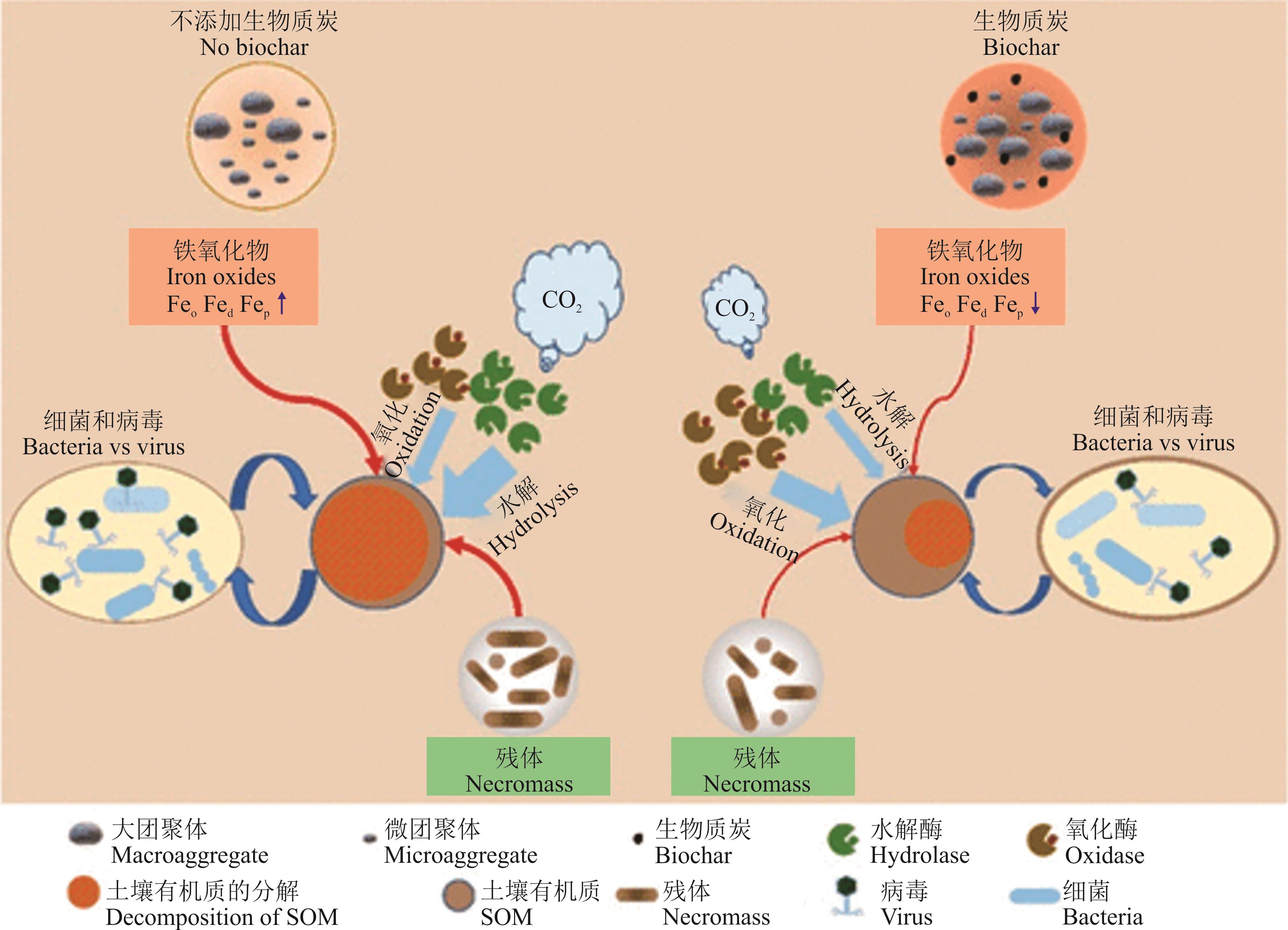
当前,耕地土壤在长期高强度农业利用下面临着土壤有机碳库损耗与地力衰退的双重挑战;阐释土壤生物的功能机制、挖掘其驱动的新型增碳沃土潜力,对保障粮食安全与应对气候变化具有重要现实意义。首先基于全球尺度土壤有机碳库评估中微生物残体碳换算系数的校正研究,强调了土壤生物途径在有机碳积累中的关键作用;进而基于宏基因组学技术,阐明土壤病毒(尤其是裂解性病毒)相较于溶原性病毒对土壤多功能性的突出贡献,其作用体现在调控微生物残体碳、植物源碳、微生物生物量碳及碳利用效率等碳循环关键环节。其次,结合农田管理实践案例,揭示了氮肥配施秸秆可通过调控病毒与细菌群落结构、调动辅助代谢基因,显著促进土壤有机碳积累;其中,以噬菌体为代表的生物调控策略显示出作为增碳新途径的潜力。此外,针对生物质炭施用效应,剖析其通过重塑“酶闩-铁门”效应间的权衡关系及病毒-细菌互作网络、进而增强土壤有机碳固定的机制。最后,基于上述证据,明确提出“病毒-细菌互作”是提升耕地地力和实现增碳沃土的关键生物学过程,可为通过生物途径推进耕地增碳与地力培育研究指明新方向,并为耕地可持续发展开拓广阔前景。

关键词: 内稳性地力, 土壤有机碳, 微生物残体碳, 病毒-细菌互作, 土壤健康, 土壤生物, 土壤病毒, 生物质炭

Abstract:

Currently, cropland soils face the dual challenges of soil organic carbon (SOC) pool depletion and fertility decline under long-term intensive agricultural utilization. Accordingly, elucidating the functional mechanisms of soil biota and harnessing their biota-driven potential for carbon sequestration and fertility enhancement are of considerable practical significance for safeguarding food security and mitigating climate change.This paper first underscores the pivotal role of soil biological pathways in organic carbon accumulation, drawing on calibration studies of microbial necromass carbon conversion factors used in global-scale SOC pool assessments. Building on this, metagenomic analyses reveal that soil viruses-particularly lytic viruses rather than lysogenic viruses-make a pronounced contribution to soil multifunctionality by regulating key components of carbon cycling, including microbial necromass carbon, plant-derived carbon, microbial biomass carbon, and carbon use efficiency. Moreover, evidence from farmland management case studies indicates that the combined application of nitrogen fertilizer and straw can substantially promote SOC accumulation by reshaping viral and bacterial community structures and activating auxiliary metabolic genes, with bacteriophage-based bioregulation strategies showing promise as a novel route for enhancing carbon sequestration. With respect to biochar application, the paper further elucidates how biochar strengthens SOC sequestration by reconfiguring the trade-off between the “enzyme latch” and “iron gate” effects and by restructuring virus-bacteria interaction networks. Finally, integrating the above evidence, the paper explicitly proposes that “virus-bacteria interactions” constitute a key biological process for improving cropland fertility and achieving carbon sequestration, thereby identifying new directions for research on biologically driven SOC enhancement and fertility cultivation and opening broader prospects for the sustainable development of cultivated land.

Key words: inherent soil productivity, soil organic carbon, microbial necromass carbon, virus-bacteria interactions, soil health, soil organisms, soil viruses, biochar