
ISSN 1004-5759 CN 62-1105/S
Acta Prataculturae Sinica ›› 2025, Vol. 34 ›› Issue (8): 191-198.DOI: 10.11686/cyxb2024350
Rong-rong LI1( ), Rui CAI2(), Xi XU1, Rui TIAN1
Received:2024-09-09
Revised:2024-10-21
Online:2025-08-20
Published:2025-06-16
Contact:
Rui CAI
Rong-rong LI, Rui CAI, Xi XU, Rui TIAN. Effects of lactic acid bacteria additives on citrus fruit and corn stalk fermentation characteristics and odor characteristics of mixed silage[J]. Acta Prataculturae Sinica, 2025, 34(8): 191-198.
处理 Treatment | 青贮pH Silage pH | 乳酸 Lactic acid | 乙酸 Acetic acid | 丙酸 Propionic acid | 丁酸 Butyrate acid | 氨态氮 Ammonia nitrogen | 干物质 Dry matter | 粗蛋白 Crude protein |
|---|---|---|---|---|---|---|---|---|
| CK | 4.23a | 54.18b | 27.54a | 3.22a | ND | 50.33a | 301.73b | 68.07 |
| LPA | 3.90b | 63.10a | 19.81b | 1.09b | ND | 37.97b | 322.28a | 66.81 |
| P值 P value | 0.008 | 0.012 | 0.030 | 0.005 | - | 0.018 | 0.005 | 0.116 |
Table 1 Effects of adding lactic acid bacteria on fermentation characteristics of mixed fermented feed of citrus bad fruit (g·kg-1)
处理 Treatment | 青贮pH Silage pH | 乳酸 Lactic acid | 乙酸 Acetic acid | 丙酸 Propionic acid | 丁酸 Butyrate acid | 氨态氮 Ammonia nitrogen | 干物质 Dry matter | 粗蛋白 Crude protein |
|---|---|---|---|---|---|---|---|---|
| CK | 4.23a | 54.18b | 27.54a | 3.22a | ND | 50.33a | 301.73b | 68.07 |
| LPA | 3.90b | 63.10a | 19.81b | 1.09b | ND | 37.97b | 322.28a | 66.81 |
| P值 P value | 0.008 | 0.012 | 0.030 | 0.005 | - | 0.018 | 0.005 | 0.116 |
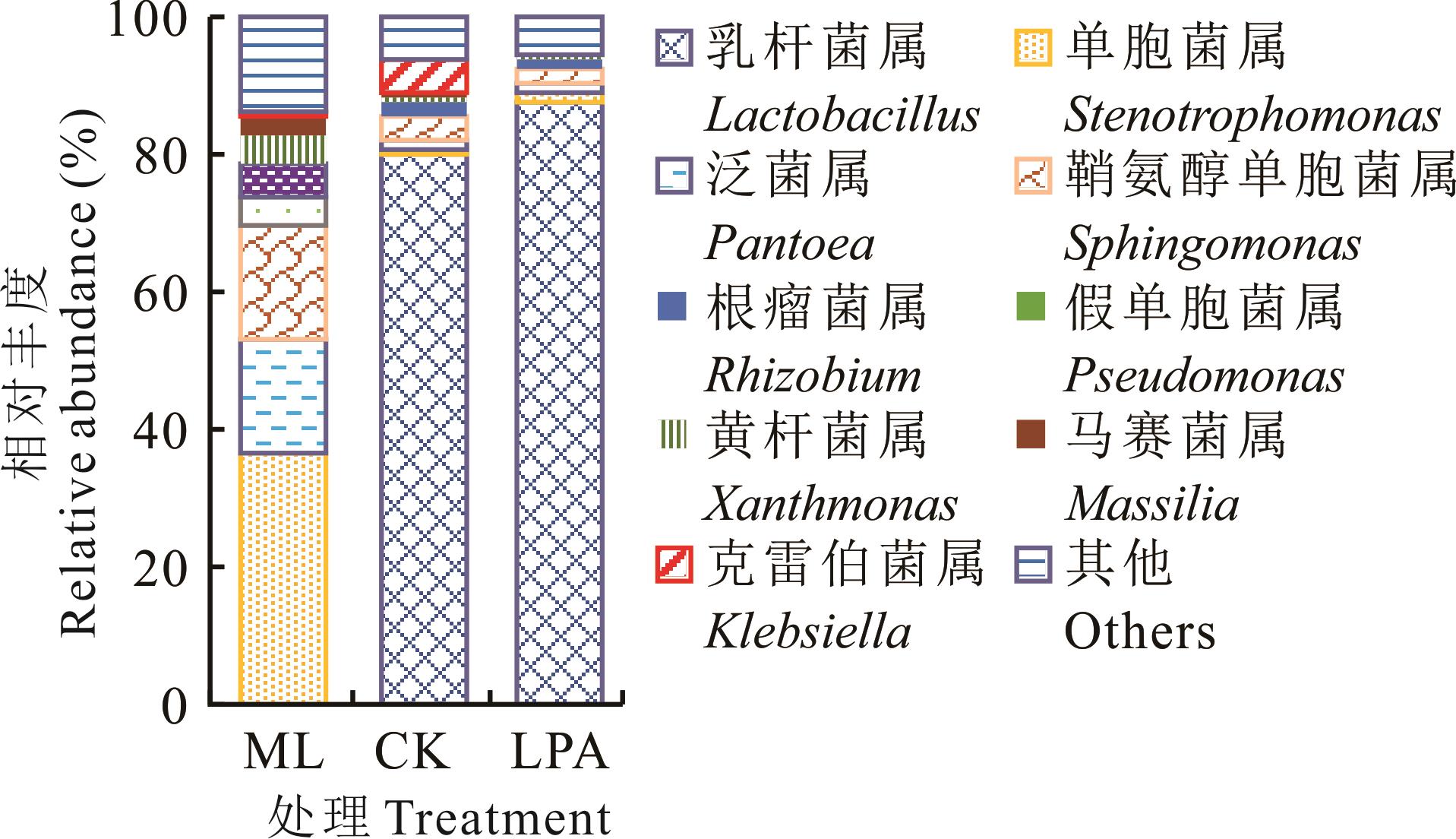
Fig.1 Effect of L. plantarum on the structure of bacterial flora in silage
功能注释 Function annotation | 注释分类 Annotation classification | 基因丰度 Gene abundance | ||
|---|---|---|---|---|
| ML | CK | LPA | ||
一级注释 First level annotation | 代谢类Metabolic class | 70.85 | 74.61 | 75.55 |
| 细胞转化类Cell transforming class | 8.28 | 4.70 | 4.72 | |
| 基因信息处理类Genetic information processing class | 3.34 | 4.41 | 4.33 | |
二级注释 Second level annotation | 碳水化合物代谢Carbohydrate metabolism | 9.06 | 12.68 | 13.73 |
| 辅助因子和维生素的代谢Cofactors and vitamin metabolism | 3.30 | 2.93 | 2.87 | |
| 核苷酸代谢Nucleotide metabolism | 1.89 | 2.55 | 2.51 | |
| 氨基酸代谢Amino acid metabolism | 7.23 | 6.40 | 6.28 | |
| 能量代谢Energetic metabolism | 3.28 | 3.23 | 3.26 | |
| 抗生素抗性Antibiotics resistance | 1.43 | 1.12 | 0.74 | |
三级注释 Third level annotation | 碳代谢Carbon metabolism | 2.30 | 2.44 | 2.46 |
| 代谢路径Metabolic pathway | 13.14 | 14.04 | 13.96 | |
| 次生代谢物生物合成Biosynthesis of secondary metabolites | 5.31 | 6.17 | 6.17 | |
| 果糖和甘露糖代谢Fructose and mannose metabolism | 0.53 | 1.02 | 1.27 | |
| 淀粉和蔗糖代谢Starch and sucrose metabolism | 0.56 | 2.12 | 2.24 | |
| 脂肪酸代谢Fatty acid metabolism | 1.15 | 0.95 | 0.97 | |
| 丙酮酸代谢Pyruvate metabolism | 1.07 | 1.62 | 1.63 | |
| 维生素B6代谢Vitamin B6 metabolism | 0.19 | 0.15 | 0.08 | |
| 氨基酸的生物合成Biosynthesis of amino acids | 2.06 | 2.85 | 2.76 | |
| 组氨酸代谢Histidine metabolism | 0.40 | 0.33 | 0.33 | |
| 磷酸转移酶系统Phosphotransferase system | 0.46 | 2.73 | 2.89 | |
| 抗生素的生物合成Biosynthesis of antibiotics | 3.33 | 2.06 | 1.64 | |
Table 2 Prediction of bacterial flora function based on KEGG database (%)
功能注释 Function annotation | 注释分类 Annotation classification | 基因丰度 Gene abundance | ||
|---|---|---|---|---|
| ML | CK | LPA | ||
一级注释 First level annotation | 代谢类Metabolic class | 70.85 | 74.61 | 75.55 |
| 细胞转化类Cell transforming class | 8.28 | 4.70 | 4.72 | |
| 基因信息处理类Genetic information processing class | 3.34 | 4.41 | 4.33 | |
二级注释 Second level annotation | 碳水化合物代谢Carbohydrate metabolism | 9.06 | 12.68 | 13.73 |
| 辅助因子和维生素的代谢Cofactors and vitamin metabolism | 3.30 | 2.93 | 2.87 | |
| 核苷酸代谢Nucleotide metabolism | 1.89 | 2.55 | 2.51 | |
| 氨基酸代谢Amino acid metabolism | 7.23 | 6.40 | 6.28 | |
| 能量代谢Energetic metabolism | 3.28 | 3.23 | 3.26 | |
| 抗生素抗性Antibiotics resistance | 1.43 | 1.12 | 0.74 | |
三级注释 Third level annotation | 碳代谢Carbon metabolism | 2.30 | 2.44 | 2.46 |
| 代谢路径Metabolic pathway | 13.14 | 14.04 | 13.96 | |
| 次生代谢物生物合成Biosynthesis of secondary metabolites | 5.31 | 6.17 | 6.17 | |
| 果糖和甘露糖代谢Fructose and mannose metabolism | 0.53 | 1.02 | 1.27 | |
| 淀粉和蔗糖代谢Starch and sucrose metabolism | 0.56 | 2.12 | 2.24 | |
| 脂肪酸代谢Fatty acid metabolism | 1.15 | 0.95 | 0.97 | |
| 丙酮酸代谢Pyruvate metabolism | 1.07 | 1.62 | 1.63 | |
| 维生素B6代谢Vitamin B6 metabolism | 0.19 | 0.15 | 0.08 | |
| 氨基酸的生物合成Biosynthesis of amino acids | 2.06 | 2.85 | 2.76 | |
| 组氨酸代谢Histidine metabolism | 0.40 | 0.33 | 0.33 | |
| 磷酸转移酶系统Phosphotransferase system | 0.46 | 2.73 | 2.89 | |
| 抗生素的生物合成Biosynthesis of antibiotics | 3.33 | 2.06 | 1.64 | |

Fig.2 Principal component analysis (a), species (b) and composition (c) of main volatile compounds in fermented feed
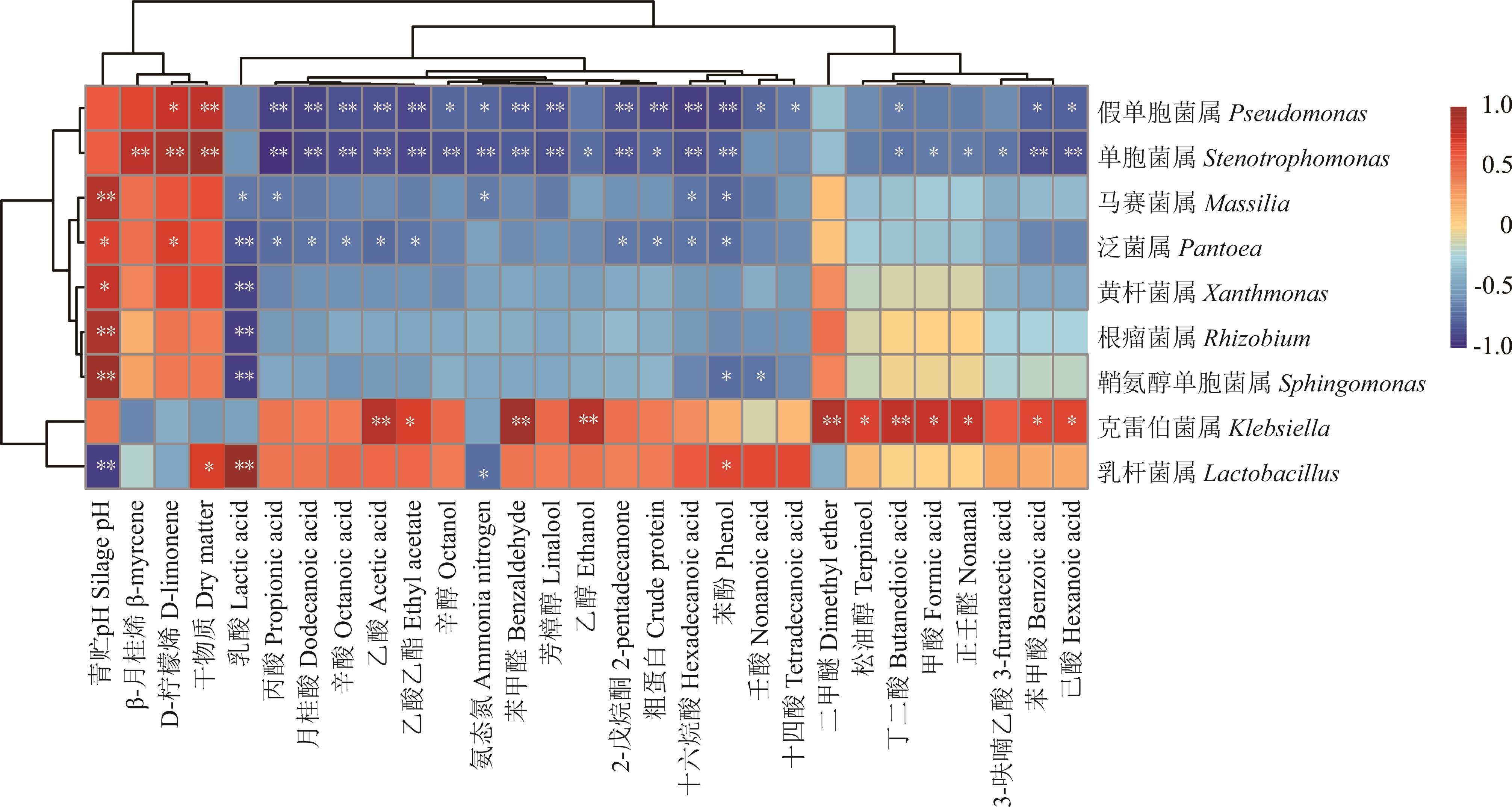
Fig.3 Correlation analysis of fermentation characteristics, volatile compounds and bacterial flora
| 1 | Che J X, Guo H Y, Chen K Q, et al. Research progress of citrus waste utilization. Food and Fermentation Industry, 2022, 48(20): 300-306. |
| 车金鑫, 郭虹雨, 陈珂琴, 等. 柑橘废弃物利用的研究进展. 食品与发酵工业, 2022, 48(20): 300-306. | |
| 2 | Scherer R, Gerlach K, Südekum K H. Decision-making of goats when exposed to choice feeding: triggered by taste or smell? Applied Animal Behavior Science, 2019, 210(3): 46-51. |
| 3 | Chen Y G, Zhang Y Q, Zheng N, et al. Research progress on odor characteristics and influencing factors of silage. Chinese Journal of Animal Nutrition, 2024, 36(8): 4835-4846. |
| 陈银阁, 张元庆, 郑楠, 等. 青贮饲料气味特征及其影响因素研究进展. 动物营养学报, 2024, 36(8): 4835-4846. | |
| 4 | Wang Y M, Yao Z L, Lin M, et al. Summary of research on citrus fruit aroma substances. Zhejiang Citrus, 2023, 40(4): 11-17. |
| 王玥, 姚周麟, 林媚, 等. 柑橘果实香味物质研究概述. 浙江柑橘, 2023, 40(4): 11-17. | |
| 5 | Zhou Y M, Liu W, Liu Y, et al. The promotion and inhibition of proteolysis in silages during ensiling of citrus waste. Animal Feed Science and Technology, 2024, 316(5): 116051. |
| 6 | Lee Y H, Ahmadi F, Kim Y I, et al. Co-ensiling garlic stalk with citrus pulp improves the fermentation quality and feed-nutritional value. Asian-Australasian Journal of Animal Sciences, 2020, 33(3): 436-445. |
| 7 | Feng C C, Chen C, Feng F, et al. Dietary citrus flavonoids improved growth performance and intestinal microbiota of weaned piglets via immune function mediated by TLR2/NF-κB signaling pathway. Journal of Agricultural and Food Chemistry, 2024, 72(30): 16761-16776. |
| 8 | Belloumi D, Calvet S, Roca M I, et al. Effect of providing citrus pulp-integrated diet on fecal microbiota and serum and fecal metabolome shifts in crossbred pigs. Scientific Reports, 2023, 13(5): 17596. |
| 9 | Zhou X H, Zhang H D, Li S Y, et al. The effects of fermented feedstuff derived from Citri Sarcodactylis Fructus by-products on growth performance, intestinal digestive enzyme activity, nutrient utilization, meat quality, gut microbiota, and metabolites of broiler chicken. Frontiers in Veterinary Science, 2023, 10(5): 1231996. |
| 10 | Yi L, Zhang Z, Li Z, et al. Effects of citrus pulp on the composition and diversity of broiler cecal microbes. Poultry Science, 2023, 102(3): 102454. |
| 11 | Ding Q, Yin Z Y, Zheng X X, et al. Silage experiment of citrus peel residue and its application in feeding small-tailed Han sheep. Journal of Yunnan Agricultural University, 2020, 35(2): 262-268. |
| 丁倩, 殷钟意, 郑旭煦, 等. 柑橘皮渣青贮试验及其在小尾寒羊饲喂中的应用研究. 云南农业大学学报, 2020, 35(2): 262-268. | |
| 12 | Williams S R O, Chaves A V, Deighton M H, et al. Influence of feeding supplements of almond hulls and ensiled citrus pulp on the milk production, milk composition, and methane emissions of dairy cows. Journal of Dairy Science, 2018, 101(3): 2072-2083. |
| 13 | Dai L, Yang L, Li Y, et al. Origin differentiation based on volatile constituents of genuine medicinal materials Quisqualis indica L. via HS-GC-MS, response surface methodology, and chemometrics. Phytochemical Analysis, 2024, 35(6): 567-578. |
| 14 | Han J, Fu C, Wan Y, et al. Characterizing the volatile profile and flavor of four kinds of hotpot seasonings in China using HS-GC-MS, HS-GC-IMS, and sensory evaluation. European Journal of Lipid Science and Technology, 2023, 125(8): 2200197. |
| 15 | Broderick G A, Kang J H. Automated simultaneous determination of ammonia and total amino acids in ruminal fluid and in vitro media. Journal of Dairy Science, 1980, 63(1): 64-75. |
| 16 | Tahir M, Li J, Wang T, et al. Response of fermentation quality and microbial community of oat silage to homofermentative lactic acid bacteria inoculation. Frontiers in Microbiology, 2023, 13(2): 1091394. |
| 17 | Bao J, Ge G, Wang Z, et al. Effect of isolated lactic acid bacteria on the quality and bacterial diversity of native grass silage. Frontiers in Plant Science, 2023, 14(6): 1160369. |
| 18 | Shi J, Zhang G, Ke W, et al. Effect of endogenous sodium and potassium ions in plants on the quality of alfalfa silage and bacterial community stability during fermentation. Frontiers in Plant Science, 2023, 14(5): 1295114. |
| 19 | Mu L, Wang Q, Wang Y, et al. Effects of cellulase and xylanase on fermentative profile, bacterial diversity, and in vitro degradation of mixed silage of agro-residue and alfalfa. Chemical and Biological Technologies in Agriculture, 2023, 40(10): 1-16. |
| 20 | Xu D, Wang N, Rinne M, et al. The bacterial community and metabolome dynamics and their interactions modulate fermentation process of whole crop corn silage prepared with or without inoculants. Microbial Biotechnology, 2021, 14(2): 561-576. |
| 21 | Li R R, Hu M, Wei R. Effect of sucrose addition on antibiotic resistance genes in high moisture alfalfa silage. Chinese Journal of Grassland, 2024, 46(7): 144-150. |
| 李荣荣, 胡明, 魏睿. 蔗糖添加剂对高水分苜蓿青贮中抗生素抗性基因的影响. 中国草地学报, 2024, 46(7): 144-150. | |
| 22 | Li R R, Hu M, Wei R, et al. Effects of sucrose addition on functional genes and microbial communities in the carbon cycle of alfalfa silage. Chinese Journal of Grassland, 2024, 46(6): 144-150. |
| 李荣荣, 胡明, 魏睿, 等. 添加蔗糖对苜蓿青贮碳循环中功能基因及菌群的影响. 中国草地学报, 2024, 46(6): 144-150. | |
| 23 | Weiss K, Kroschewski B, Auerbach H. Effects of air exposure, temperature and additives on fermentation charactgerists, yeast count, aerobic stability and volatile organic compounds in corn silage. Journal of Dairy Science, 2016, 99(10): 8053-8069. |
| 24 | Li F X, Zheng Y W, Zhao C W, et al. GC-IMS facilitates identification of carbapenem-resistant Klebsiella pneumoniae in simulated blood cultures. AMB Express, 2024, 40(14): 1-21. |
| 25 | Santiago B, Moreira M T, Feijoo G, et al. Identification of environmental aspects of citrus waste valorization into D-limonene from a biorefinery approach. Biomass and Bioenergy, 2020, 143(5): 105844. |
| [1] | Shi-yu ZOU, Si-kui CHEN, Qi-yuan TANG, Dong CHEN, Yuan-wei CHEN, Pan DENG, Xu-lai HUANG, Fu-qiang LI. Effects of silage additives on quality and in vitro rumen fermentation characteristics of first season ratoon rice whole silage [J]. Acta Prataculturae Sinica, 2021, 30(7): 122-132. |
| [2] | Xiong-xiong LI, Ting JIAO, Sheng-guo ZHAO, Wei-na QIN, Xue-mei GAO, Zheng-wen WANG, Jian-ping WU, Zhao-min LEI. Synergistic effect of oregano essential oil and organic cobalt on degradation characteristics of silage maize stalks and rumen fermentation of sheep [J]. Acta Prataculturae Sinica, 2021, 30(11): 191-202. |
| [3] | ZHOU En-guang, WANG Hu-cheng, SHANG Zhan-huan. Nutritional value of forage sweet sorghum and its gas production performance evaluated using incubation with sheep rumen fluid in vitro [J]. Acta Prataculturae Sinica, 2020, 29(5): 43-49. |
| [4] | WAN Xue-rui, DOU Si-yuan, LI Yu, HE Yi-qun, WANG Chuan, ZHANG Xiao-li, LEI Zhao-min. Effect of lactic acid bacteria preparations on microbial population counts and silage quality in maize silage during fermentation and on aerobic exposure [J]. Acta Prataculturae Sinica, 2020, 29(11): 83-90. |
| [5] | YANG Da-sheng, WANG Shui-ping, HAN Xue-feng, TANG Shao-xun, TAN Zhi-liang, YIN Meng-jie, LUO Dong-mei. Effects of lactic acid bacteria and alkyl polyglycoside on yellow corn stover silage quality and fermentation in vitro [J]. Acta Prataculturae Sinica, 2019, 28(5): 109-120. |
| [6] | ZHOU Rui, LIU Li-shan, WU Jian-ping, WEI Sheng, LANG Xia, WANG Cai-lian. Effects of oregano essential oil on nutrient degradability, rumen fermentation, and CH4 production in sheep [J]. Acta Prataculturae Sinica, 2019, 28(11): 168-176. |
| [7] | WANG Jian-fu, LEI Zhao-min, CHENG Shu-ru, JIAO Ting, LI Jie, WU Jian-ping. Effects of lactic acid bacteria preparation and bran on corn stover silage quality [J]. Acta Prataculturae Sinica, 2018, 27(4): 162-169. |
| [8] | WANG Jian-fu, LEI Zhao-min, WAN Xue-rui, JIANG Hui, LI Jie, WU Jian-ping. Effects on the quality of corn silage, of 5 strains of lactic acid bacteria with different combinations of added CaCO3, enzyme and urea [J]. Acta Prataculturae Sinica, 2018, 27(3): 90-97. |
| [9] | WANG Xu-Zhe, JIA Shu-An, ZHANG Fan-Fan, LU Wei-Hua, ZHANG Qian-Bing, MA Chun-Hui. Fermentation quality and microbial quantity during aerobic storage of corn silage [J]. Acta Prataculturae Sinica, 2017, 26(9): 156-166. |
| [10] | SHI Qing-Ping, XU Zhao-Hong, ZHANG Jian-Guo. Comparison of ten corn varieties as silage material in Guangzhou [J]. Acta Prataculturae Sinica, 2017, 26(3): 175-182. |
| [11] | WANG Xin-feng, MAO Sheng-yong, ZHU Wei-yun. Effects of gypenoside on in vitro ruminal microbial methane production and fermentation characteristics [J]. Acta Prataculturae Sinica, 2011, 20(2): 52-59. |
| Viewed | ||||||
|
Full text |
|
|||||
|
Abstract |
|
|||||
