
ISSN 1004-5759 CN 62-1105/S
Acta Prataculturae Sinica ›› 2025, Vol. 34 ›› Issue (12): 183-194.DOI: 10.11686/cyxb2025047
Yu-wan WANG1,2( ), Ling-yun LIU3, Yi-di GUO3, Xi-feng FAN3, Yue-sen YUE3, Na MU3, Guo-zeng XIAO1,2(), Ke TENG3()
Received:2025-02-18
Revised:2025-04-15
Online:2025-12-20
Published:2025-10-20
Contact:
Guo-zeng XIAO,Ke TENG
Yu-wan WANG, Ling-yun LIU, Yi-di GUO, Xi-feng FAN, Yue-sen YUE, Na MU, Guo-zeng XIAO, Ke TENG. Efficient transformation of Pennisetum alopecuroides using pollen transfected by DNA-coated magnetic nanoparticles[J]. Acta Prataculturae Sinica, 2025, 34(12): 183-194.

Fig.1 The flowering process of P. alopecuroides ‘Liqiu’
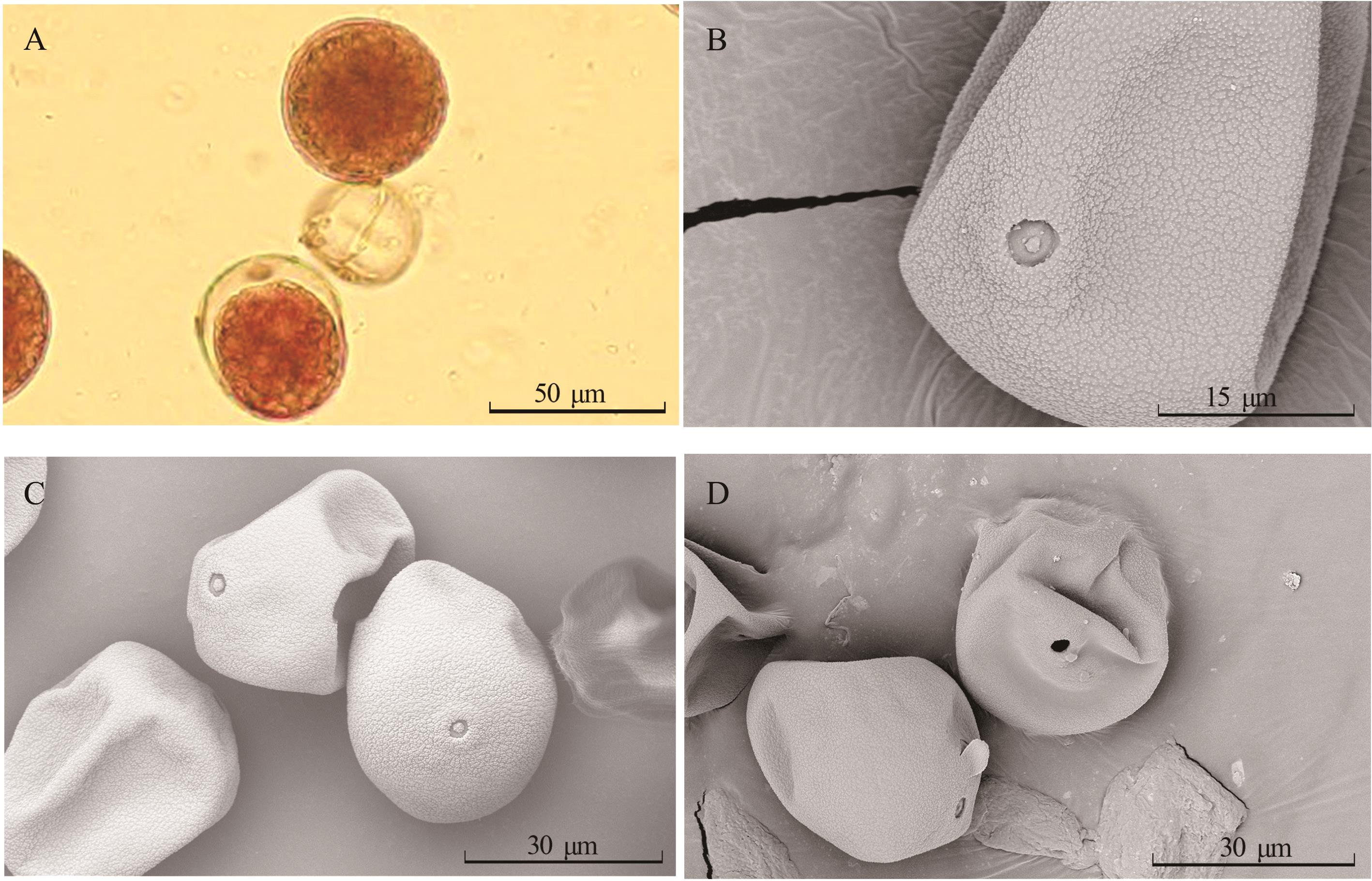
Fig.2 Pollen morphology observation of P. alopecuroides ‘Liqiu’
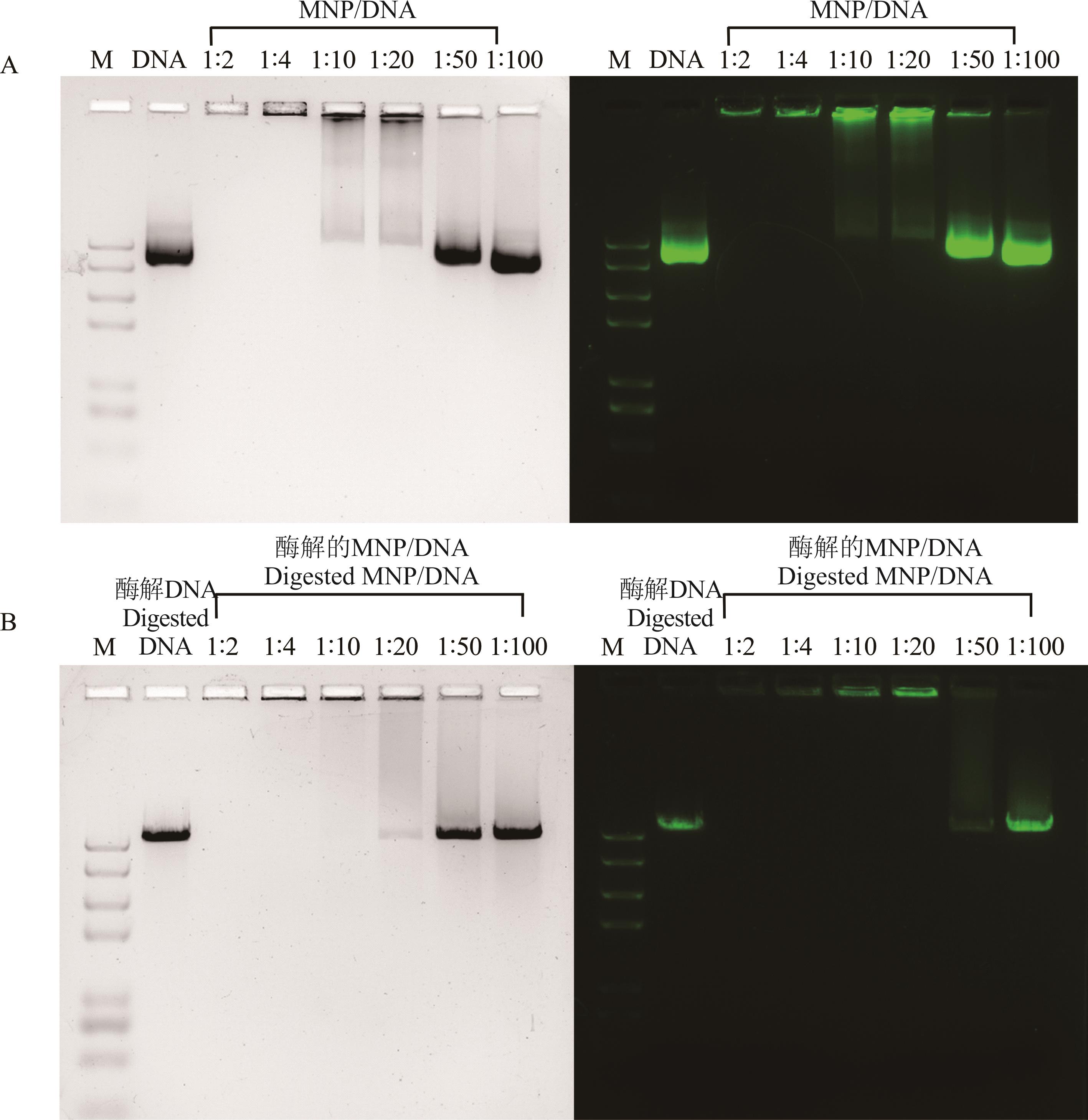
Fig.3 The loading and protective capabilities of magnetic nanoparticles for plasmid DNA
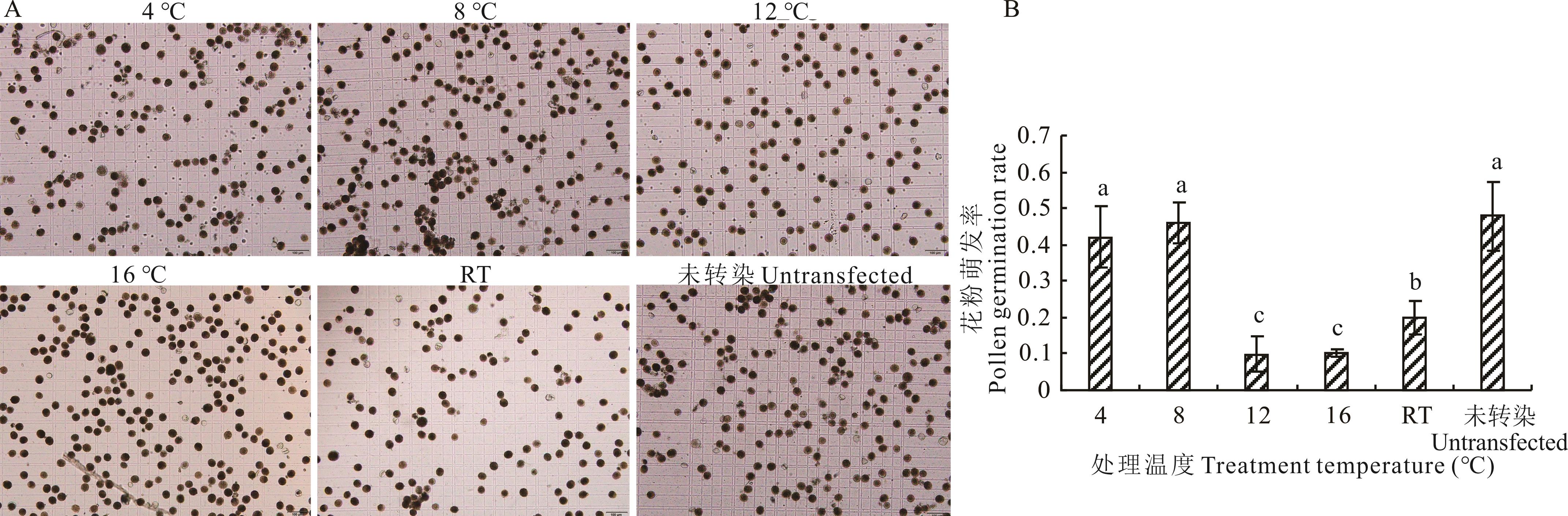
Fig.4 Optimal temperature for transfection of P. alopecuroides ‘Liqiu’

Fig.5 Optimal time for transfection of P. alopecuroides ‘Liqiu’

Fig.6 Verification of positive plants
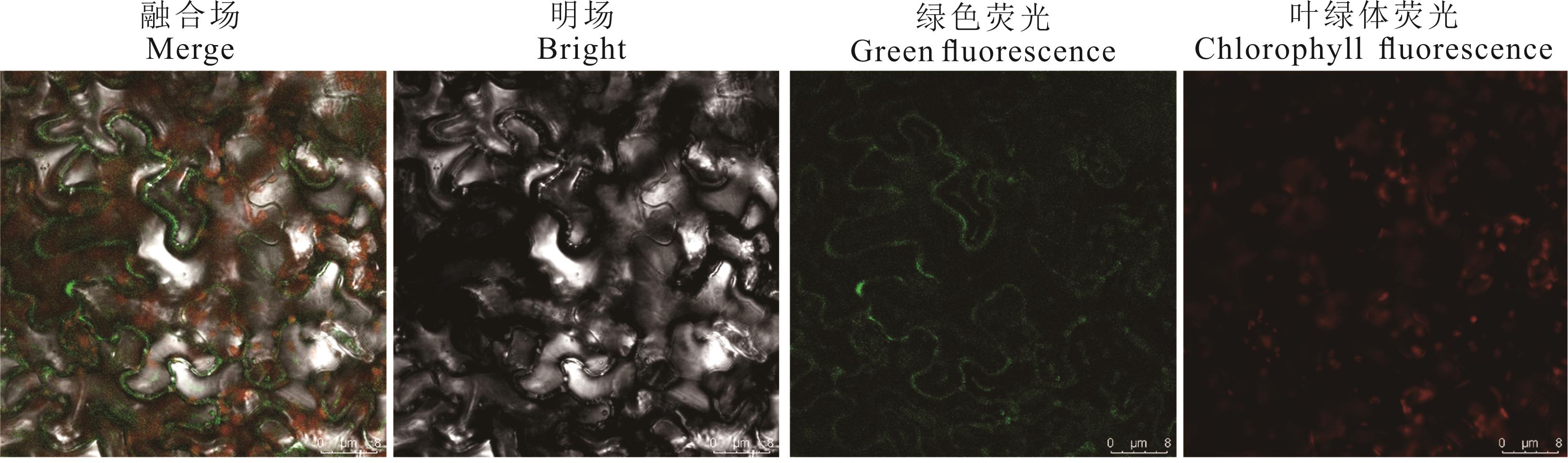
Fig.7 Subcellular localization of pMDC85-GFP
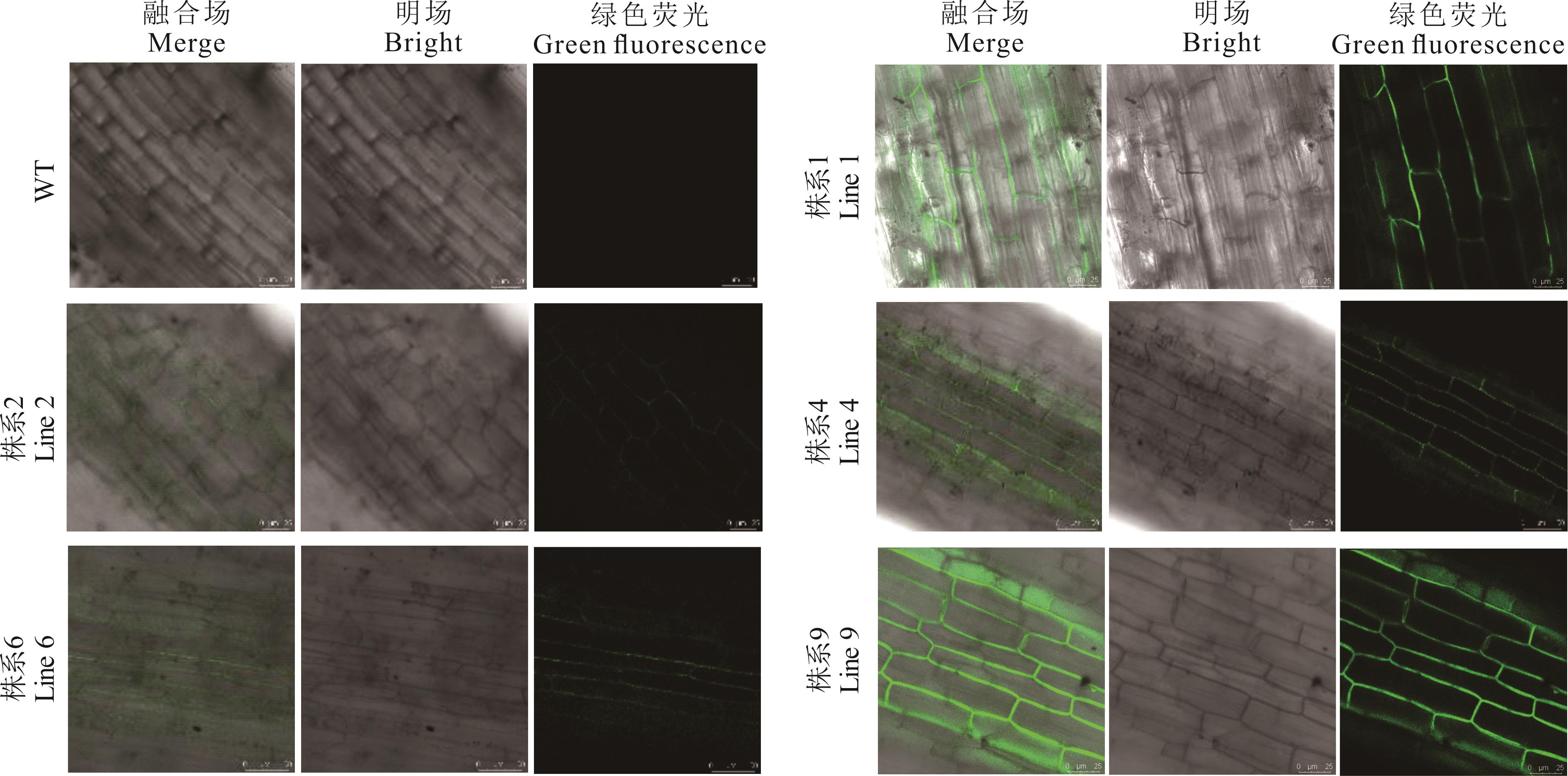
Fig.8 The roots of positive transgenic plants under confocal microscope

Fig.9 Steps in P. alopecuroides ‘Liqiu’ pollen transfection using DNA-coated magnetic nanoparticles
| [1] | Wu J Y, Teng W J, Wang Q H. Basic botanic characters, adaptabilities and applying in landscape architecture of Pennisetum alopecuroides. Chinese Landscape Architecture, 2005, 21(12): 57-59. |
| 武菊英, 滕文军, 王庆海. 狼尾草的生物学特性及在园林中的应用. 中国园林, 2005, 21(12): 57-59. | |
| [2] | Hou X C, Teng K, Guo Q, et al. Research advances in forage Pennisetum resource. Chinese Bulletin of Botany, 2022, 57(6): 814-825. |
| 侯新村, 滕珂, 郭强, 等. 狼尾草属牧草研究进展. 植物学报, 2022, 57(6): 814-825. | |
| [3] | Tang J, Zhou H L, Wang W Q, et al. Advances in breeding and molecular biology research of Pennisetum. Chinese Journal of Tropical Crops, 2018, 39(11): 2313-2320. |
| 唐军, 周汉林, 王文强, 等. 狼尾草属牧草育种及分子生物学研究进展. 热带作物学报, 2018, 39(11): 2313-2320. | |
| [4] | Liu Z P, Liu W X, Yang Q C, et al. Progress and existing problems of forage breeding in China. Bulletin of National Natural Science Foundation of China, 2023, 37(4): 528-536. |
| 刘志鹏, 刘文献, 杨青川, 等. 我国牧草育种进展及存在问题. 中国科学基金, 2023, 37(4): 528-536. | |
| [5] | Shahnam A D, Mahin P. Agrobacterium tumefaciens-mediated plant transformation: A review. Molecular Biotechnology, 2024, 66(7): 1563-1580. |
| [6] | Zou Z, Lu C M. An overview of plant factors influencing Agrobacterium-mediated transformation. Biotechnology Bulletin, 2008(1): 1-9. |
| 邹智, 卢长明. 影响农杆菌介导遗传转化的植物因子研究进展. 生物技术通报, 2008(1): 1-9. | |
| [7] | Yang S K, Lai K, Low L Y, et al. Transgenic plants: Gene constructs, vector and transformation method. Rijeka: Intech Open, 2018. |
| [8] | Wang M, Sun R, Zhang B, et al. Pollen tube pathway-mediated cotton transformation. Methods in Molecular Biology, 2019, 1902: 67-73. |
| [9] | Maram G, Maretha M O, Anika M, et al. Transgenic and herbicide resistant pearl millet (Pennisetum glaucum L.) R.Br. via microprojectile bombardment of scutellar tissue. Molecular Breeding, 2002, 10(4): 243-252. |
| [10] | Wang P Q, Duan C R, Wang B C, et al. Tissue culture with different organs of Pennisetum pureum. Journal of Chongqing University (Natural Science Edition), 2005, 28(6): 118-120. |
| 王凭青, 段传人, 王伯初, 等. 杂交狼尾草不同外植体材料组织培养实验. 重庆大学学报(自然科学版), 2005, 28(6): 118-120. | |
| [11] | Mu T, Zhang X Y, Wang J G, et al. The optimization of Pennisetum agrobacterium-mediated transformation system and obtaining of transgenic plants. Crops, 2013(1): 45-48. |
| 牟彤, 张晓莹, 王金刚, 等. 狼尾草农杆菌转化体系的优化和转基因植株的获得. 作物杂志, 2013(1): 45-48. | |
| [12] | Ozyigit I I, Kuaybe Y K. Particle bombardment technology and its applications in plants. Molecular Biology Reports, 2020, 47(12): 9831-9847. |
| [13] | Rahman S U, Khan M O, Ullah R, et al. Agrobacterium-mediated transformation for the development of transgenic crops; present and future prospects. Molecular Biotechnology, 2024, 66(8): 1836-1852. |
| [14] | Su W, Xu M, Radani Y, et al. Technological development and application of plant genetic transformation. International Journal of Molecular Sciences, 2023, 24(13): 10646. |
| [15] | Wu K, Xu C, Li T, et al. Application of nanotechnology in plant genetic engineering. International Journal of Molecular Sciences, 2023, 24(19): 14836. |
| [16] | Chang F P, Kuang L Y, Huang C A, et al. A simple plant gene delivery system using mesoporous silica nanoparticles as carriers. Journal of Materials Chemistry B, 2013, 1(39): 5279-5287. |
| [17] | Susana M O, Valenstein J S, Lin V S Y, et al. Gold functionalized mesoporous silica nanoparticle mediated protein and DNA codelivery to plant cells via the biolistic method. Advanced Functional Materials, 2012, 22(17): 3576-3582. |
| [18] | Mykhaylyk O, Antequera Y S, Vlaskou D, et al. Generation of magnetic nonviral gene transfer agents and magnetofection in vitro. Nature Protocols, 2007, 2(10): 2391-2411. |
| [19] | Wang Z, Zhang Z B, Zheng D Y, et al. Efficient and genotype independent maize transformation using pollen transfected by DNA-coated magnetic nanoparticles. Journal of Integrative Plant Biology, 2022, 64(6): 1145-1156. |
| [20] | Zhao X, Meng Z G, Wang Y, et al. Pollen magnetofection for genetic modification with magnetic nanoparticles as gene carriers. Nature Plants, 2017, 3(12): 956-964. |
| [21] | Zhang M F, Ma X, Jin G, et al. A modified method for transient transformation via pollen magnetofection in Lilium germplasm. International Journal of Molecular Sciences, 2023, 24(20): 15304. |
| [22] | Xu Y, Liu L, Jia M, et al. Transcriptomic and physiological analysis provide new insight into seed shattering mechanism in Pennisetum alopecuroides ‘Liqiu’. Theoretical and Applied Genetics, 2024, 137(7): 157. |
| [23] | Teng K, Guo Q, Liu L, et al. Chromosome-level reference genome assembly provides insights into the evolution of Pennisetum alopecuroides. Frontiers in Plant Science, 2023, 14(8): 1195479. |
| [24] | Kievit F M, Stephen Z R, Veiseh O, et al. Targeting of primary breast cancers and metastases in a transgenic mouse model using rationally designed multifunctional SPIONs. ACS Nano, 2012, 6(3): 2591-2601. |
| [25] | Park C W, Choi J Y, Son Y J, et al. Magnetofected pollen gene delivery system could generate genetically modified Cucumis sativus. Horticulture Research, 2024, 11(8): 179. |
| [26] | Zhang Y L, Zhang Q X, Xie S L. Pollen morphology of 8 species in Lilium from Qinba Mountain areas. Acta Agriculturae Boreali-Occidentalis Sinica, 2010, 19(1): 144-146. |
| 张延龙, 张启翔, 谢松林. 秦巴山及其毗邻地区8种野生百合孢粉学研究. 西北农业学报, 2010, 19(1): 144-146. | |
| [27] | Xu W J, Zhang C, Wu Y, et al. The pollen morphological characteristics from five closely related medicinal plants of the genus Ligusticum. Journal of Northeast Forestry University, 2024, 52(11): 56-63. |
| 徐皖菁, 张超, 吴宇, 等. 5种藁本属近缘药用植物花粉的形态特征. 东北林业大学学报, 2024, 52(11): 56-63. | |
| [28] | Furness C A, Rudall P J. Pollen aperture evolution: A crucial factor for eudicot success? Trends in Plant Science, 2004, 9(3): 154-158. |
| [29] | Vejlupkova Z, Warman C, Sharma R, et al. No evidence for transient transformation via pollen magnetofection in several monocot species. Nature Plants, 2020, 6(11): 1323-1324. |
| [30] | Wang J X, Chen L B. Changes of vigor and respiratory rate of three kinds of grasses pollen stored under different gas conditions. Plant Physiology Communications, 2001, 37(2): 113-116. |
| 王金祥, 陈良碧. 不同气体下贮藏的3种禾本科植物花粉活力和呼吸速率变化. 植物生理学通讯, 2001, 37(2): 113-116. | |
| [31] | Li Y M, Chen L B. Vigor change of several grasses pollen stored in different temperature and humidity conditions. Plant Physiology Communications, 1998, 34(1): 35-37. |
| 李要民, 陈良碧. 不同温湿条件下贮藏的3种禾本科植物花粉活力变化. 植物生理学通讯, 1998, 34(1): 35-37. | |
| [32] | Lu Y M. Progress of magnetic nanoparticles as gene vector. Letters in Biotechnology, 2013, 24(5): 736-740. |
| 卢艳敏. 磁性纳米颗粒作为载体在基因转染中的研究进展. 生物技术通讯, 2013, 24(5): 736-740. | |
| [33] | Peng Z A, Li D D, Xia A Y, et al. Study on magnetic nanoparticle loading plasmid DNA. Journal of South China Agricultural University, 2020, 41(1): 78-82. |
| 彭子艾, 李丹丹, 夏澳运, 等. 磁性纳米颗粒负载质粒DNA的研究. 华南农业大学学报, 2020, 41(1): 78-82. | |
| [34] | Hou X X, Zhang H, Zhang D S. Research progress of magnetic nanoparticles as gene vector. Journal of Medical Postgraduates, 2013, 26(2): 186-189. |
| 侯欣欣, 张皓, 张东生. 磁性纳米颗粒作为基因载体的研究进展. 医学研究生学报, 2013, 26(2): 186-189. | |
| [35] | Stephanie R, Hagen B, Helga R W, et al. Human serum albumin-polyethylenimine nanoparticles for gene delivery. Journal of Controlled Release, 2003, 92(1/2): 199-208. |
| [36] | He X, Wang K, Tan W, et al. Bioconjugated nanoparticles for DNA protection from cleavage. Journal of the American Chemical Society, 2003, 125(24): 7168-7169. |
| [37] | Sun H, Zhang J Y, Luo L J, et al. Development of transgenic hairy root induction and protoplast preparation systems for Stylosanthes leiocarpa. Acta Agrestia Sinica, 2024, 32(5): 1583-1591. |
| 孙昊, 张建禹, 罗丽娟, 等. 光果柱花草转基因毛状根及其原生质体制备体系的建立. 草地学报, 2024, 32(5): 1583-1591. | |
| [38] | Qin A G, Luo X F. Transformation of transcription factor DREB1C gene into the fast-growing black locust mediated with Agrobacterium tumefaciens. Journal of Beijing Forestry University, 2007, 29(6): 29-34. |
| 秦爱光, 罗晓芳. 农杆菌介导转录因子DREB1C基因转化速生型刺槐的研究. 北京林业大学学报, 2007, 29(6): 29-34. | |
| [39] | Elzen P J, Townsend J, Lee K Y, et al. A chimaeric hygromycin resistance gene as a selectable marker in plant cells. Plant Molecular Biology, 1985, 5(5): 299-302. |
| [40] | Oung H, Lin K, Wu T, et al. Hygromycin B-induced cell death is partly mediated by reactive oxygen species in rice (Oryza sativa L.). Plant Molecular Biology, 2015, 89(6): 577-588. |
| [41] | Ge X, Xu J, Yang Z, et al. Efficient genotype-independent cotton genetic transformation and genome editing. Journal of Integrative Plant Biology, 2023, 65(4): 907-917. |
| [42] | Nguyen T T, Hai-Vy V N, Hieu T V. Prokaryotic expression of chimeric GFP-hFc protein as a potential immune-based tool. Molecular Biology Research Communications, 2021, 10(3): 105-108. |
| Viewed | ||||||
|
Full text |
|
|||||
|
Abstract |
|
|||||
