
ISSN 1004-5759 CN 62-1105/S
Acta Prataculturae Sinica ›› 2026, Vol. 35 ›› Issue (8): 157-169.DOI: 10.11686/cyxb2025359
Qian LI( ), Wei DUAN(), Xue-li ZHANG, Li-jun LIU, Yu-xiang WANG
Received:2025-09-03
Revised:2025-10-20
Online:2026-08-20
Published:2026-06-22
Qian LI, Wei DUAN, Xue-li ZHANG, Li-jun LIU, Yu-xiang WANG. MfERF053 enhances drought resistance of Arabidopsis thaliana by improving reactive oxygen species scavenging capacity and promoting expression of stress-resistance-related genes[J]. Acta Prataculturae Sinica, 2026, 35(8): 157-169.
引物 Primer | 正向引物/反向引物 Forward primer/reverse primer (5′-3′) |
|---|---|
| qAtactin-F | CGCCATCCAAGCTGTTCTC |
| qAtactin-R | TCACGTCCAGCAAGGTCAAG |
| AtCAT1-F | GTCCTGGGATTCAGACAGGC |
| AtCAT1-R | GGCTCACGTTAAGACGAGT |
| AtPOD3-F | CCAATCCAGAAACGGAAGTG |
| AtPOD3-R | TCTGACGCTTCTGACGACAC |
| AtSOD4-F | GAAGAACCTTGCTCCTTCCAG |
| AtSOD4-R | GATTGGCAGTTGTGTCAACAAC |
| AtRD22-F | ACTTGGTAAATATCACGTCAGGCT |
| AtRD22-R | CTGAGGTGTTCTTGTGGCATACC |
| AtRD29A-F | GATATCGACAAGGATGTGCCG |
| AtRD29A-R | GTATCCAGGTCTTCCCTTCGC |
| AtCOR47-F | GCTTCGTCGTCGTTTCTCT |
| AtCOR47-R | CCAATGTATCTGCGGTTTGA |
| AtHAK5-F | TGCATCACTGGGACGGAGGCA |
| AtHAK5-R | GTACGCAGCCTGCCCGCAAT |
| AtABI5-F | AGAGGGATAGCGAACGAGTCTAGTC |
| AtABI5-R | GTTCGGTTTGGATTAGGTTTAGG |
Table 1 PCR primers
引物 Primer | 正向引物/反向引物 Forward primer/reverse primer (5′-3′) |
|---|---|
| qAtactin-F | CGCCATCCAAGCTGTTCTC |
| qAtactin-R | TCACGTCCAGCAAGGTCAAG |
| AtCAT1-F | GTCCTGGGATTCAGACAGGC |
| AtCAT1-R | GGCTCACGTTAAGACGAGT |
| AtPOD3-F | CCAATCCAGAAACGGAAGTG |
| AtPOD3-R | TCTGACGCTTCTGACGACAC |
| AtSOD4-F | GAAGAACCTTGCTCCTTCCAG |
| AtSOD4-R | GATTGGCAGTTGTGTCAACAAC |
| AtRD22-F | ACTTGGTAAATATCACGTCAGGCT |
| AtRD22-R | CTGAGGTGTTCTTGTGGCATACC |
| AtRD29A-F | GATATCGACAAGGATGTGCCG |
| AtRD29A-R | GTATCCAGGTCTTCCCTTCGC |
| AtCOR47-F | GCTTCGTCGTCGTTTCTCT |
| AtCOR47-R | CCAATGTATCTGCGGTTTGA |
| AtHAK5-F | TGCATCACTGGGACGGAGGCA |
| AtHAK5-R | GTACGCAGCCTGCCCGCAAT |
| AtABI5-F | AGAGGGATAGCGAACGAGTCTAGTC |
| AtABI5-R | GTTCGGTTTGGATTAGGTTTAGG |
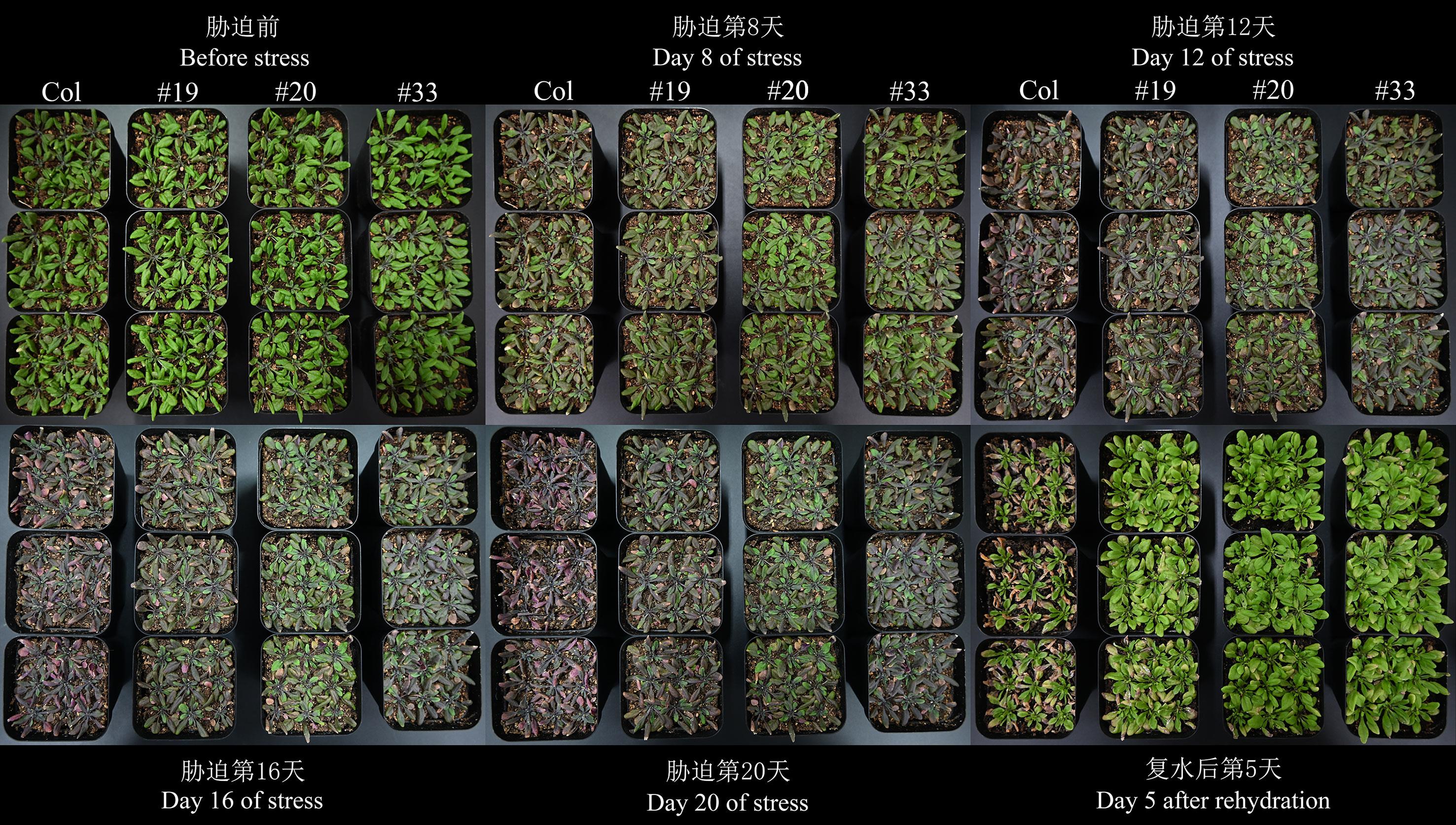
Fig.1 Phenotypes of wild-type and MfERF053-overexpressing A. thaliana under natural drought stress
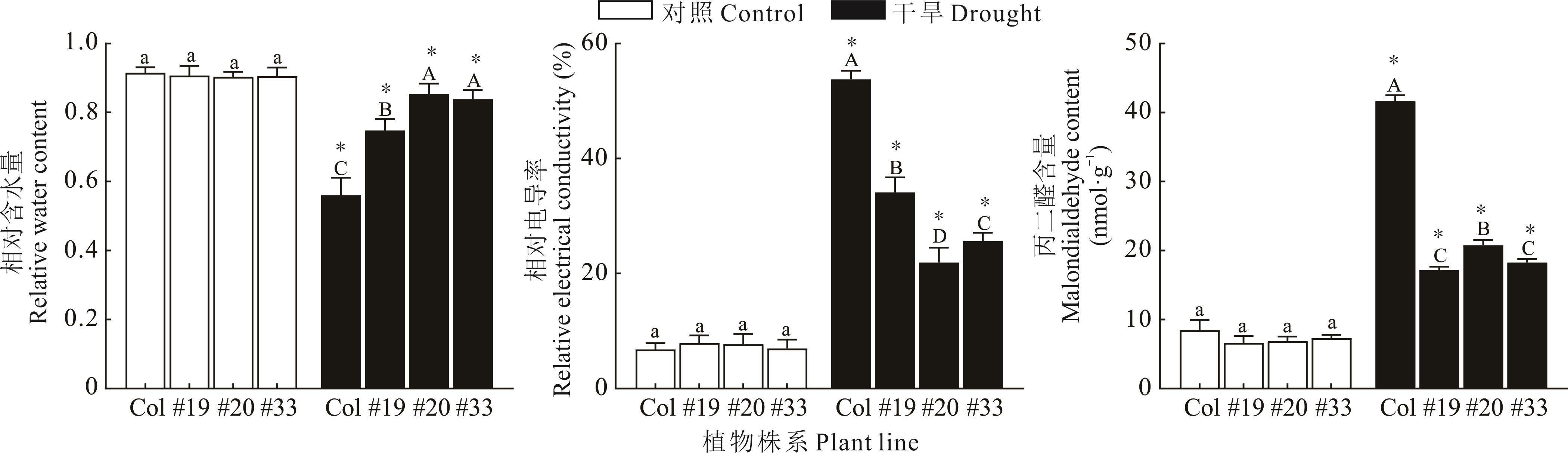
Fig.2 Comparison of relative water content, relative electrical conductivity, and malondialdehyde content between wild-type and MfERF053-overexpressing A. thaliana under drought stress
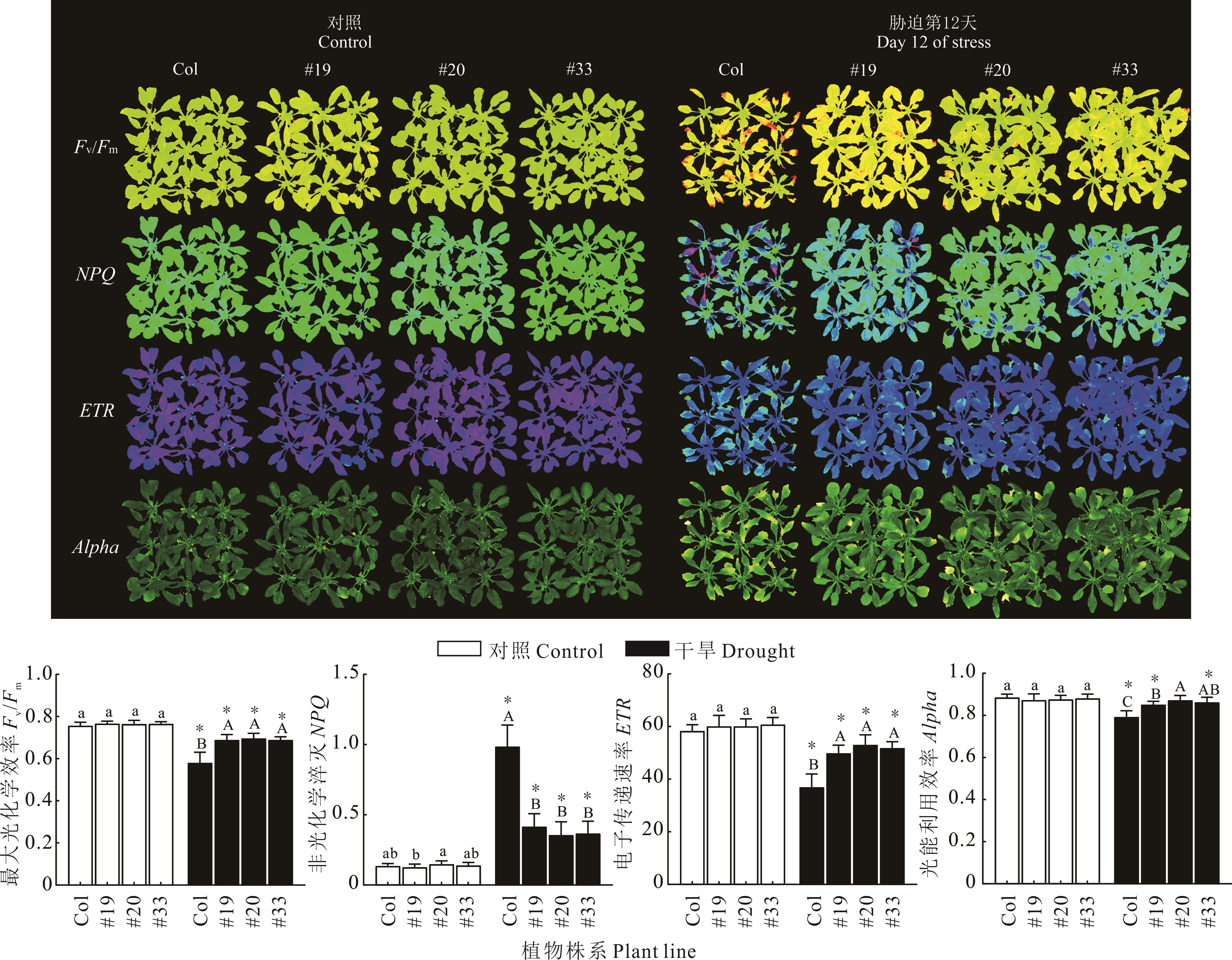
Fig.3 Comparison of chlorophyll fluorescence between wild-type and MfERF053-overexpressing A. thaliana under drought stress
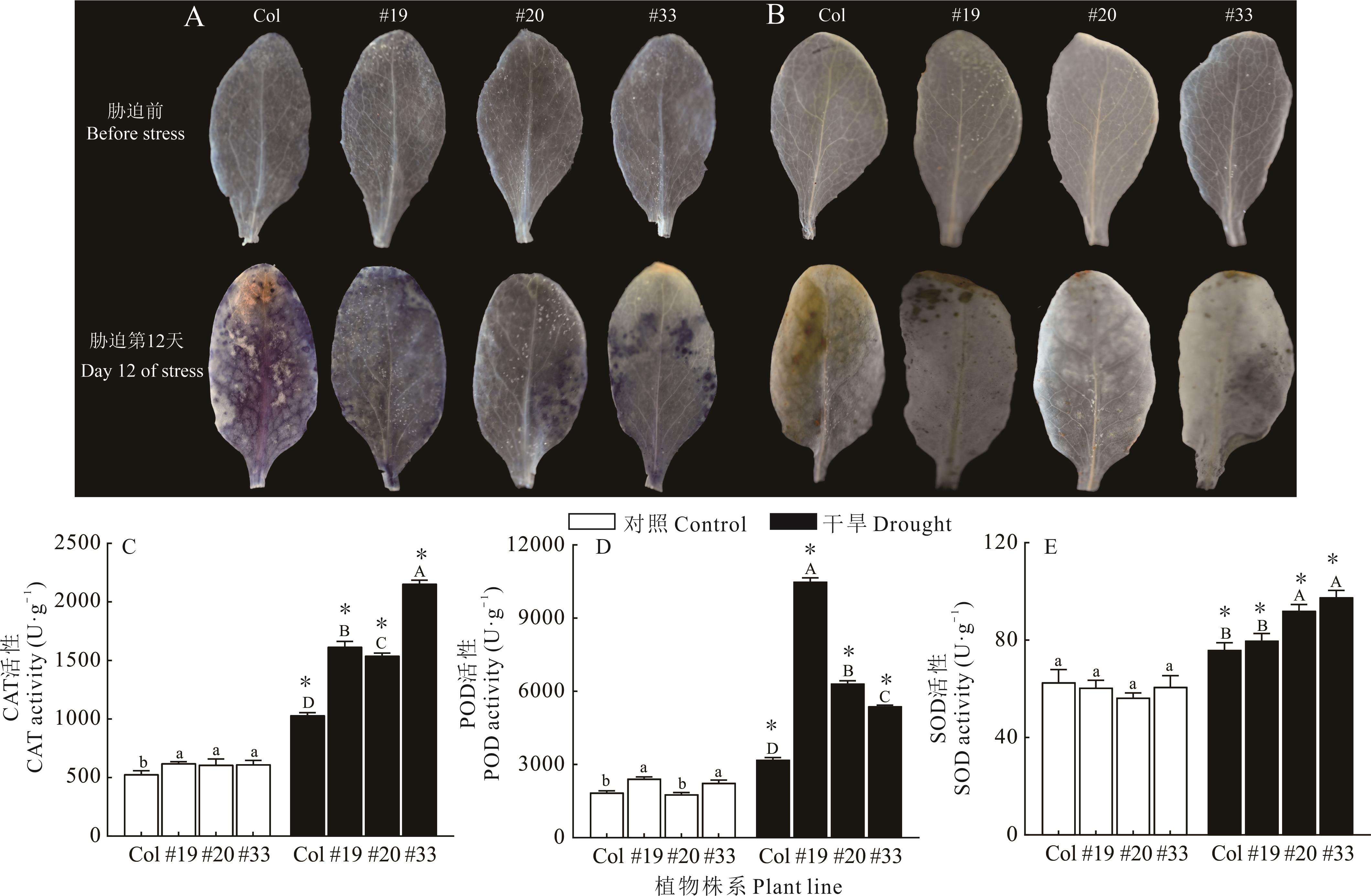
Fig.4 Comparison of reactive oxygen species content and antioxidant enzyme activities between wild-type and MfERF053-overexpressing A. thaliana under drought stress
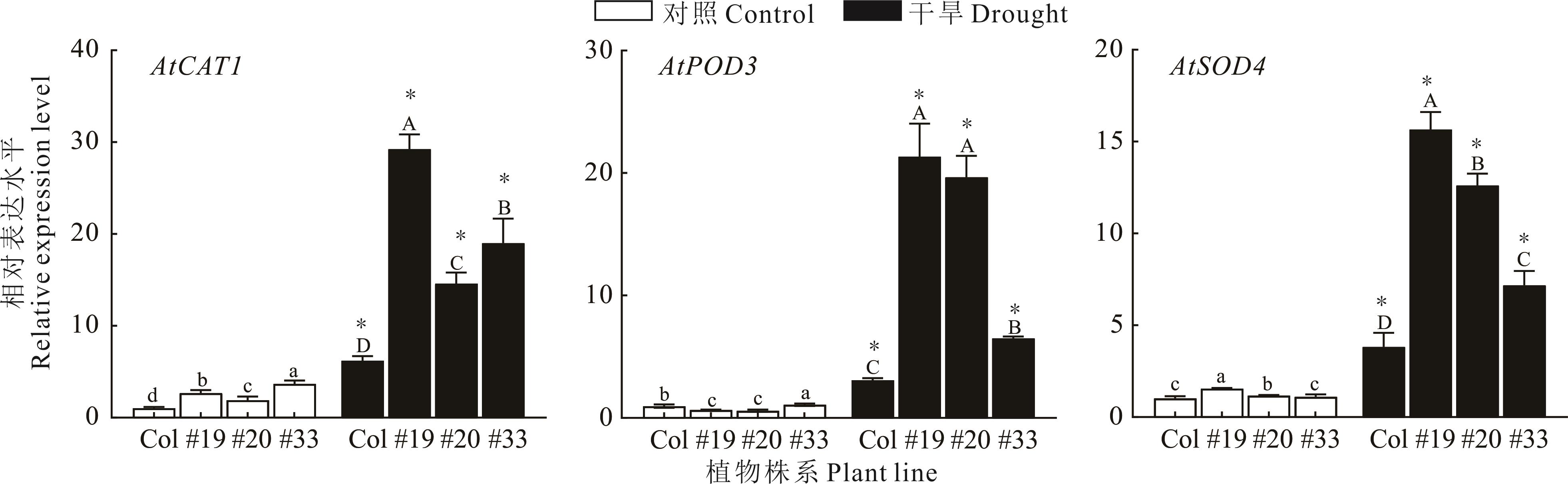
Fig.5 Comparison of antioxidant enzyme-related gene expression between wild-type and MfERF053-overexpressing A. thaliana under drought stress
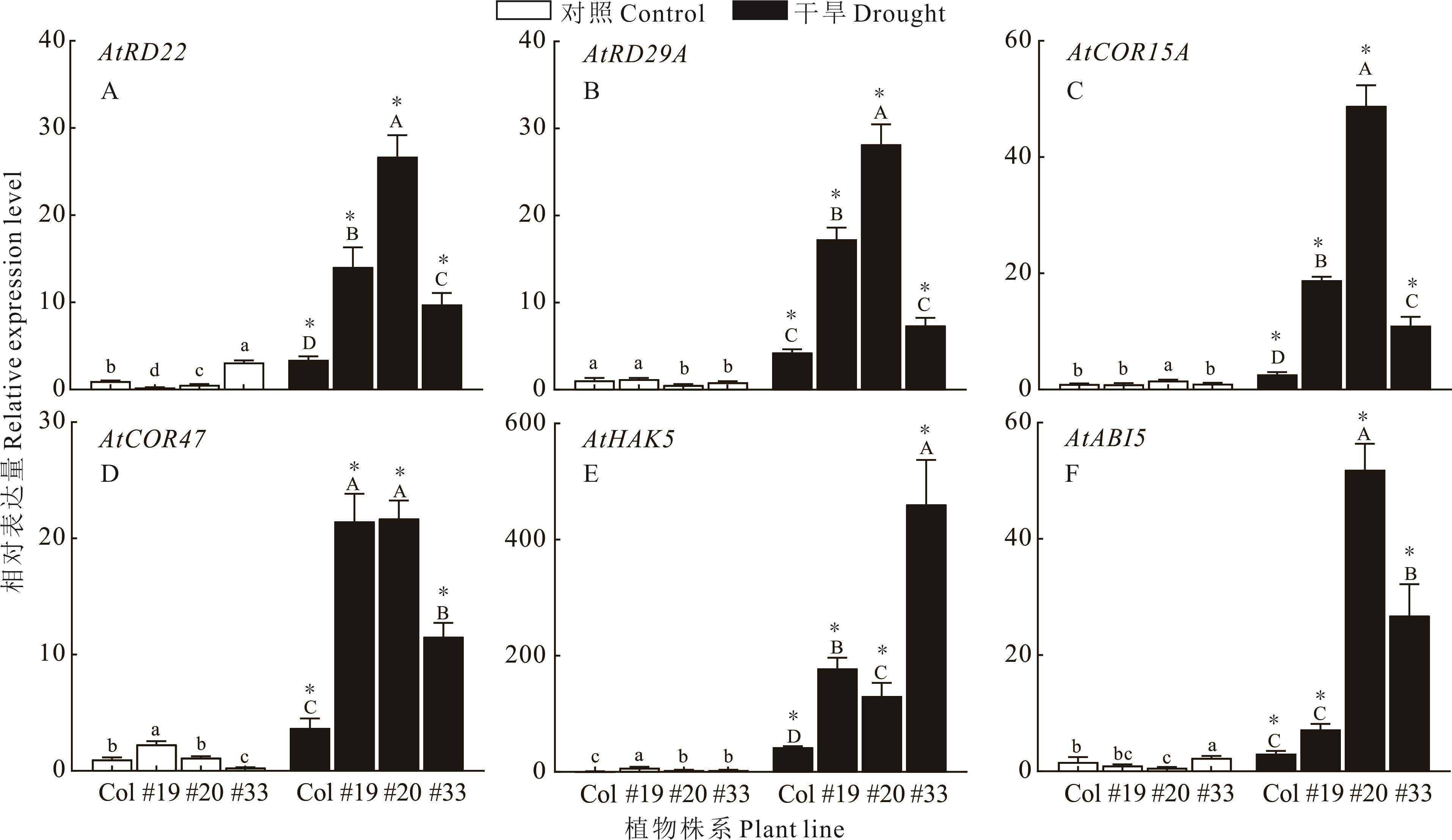
Fig.6 Relative expression of stress-resistant-related genes in wild-type and MfERF053-overexpressing A. thaliana under drought stress
| [1] | D’Odorico P, Schonbeck L, Vitali V, et al. Drone-based physiological index reveals long-term acclimation and drought stress responses in trees. Plant, Cell & Environment, 2021, 44(11): 3552-3570. |
| [2] | Bao A K, Du B Q, Touil L, et al. Coexpression of tonoplast cation/H+ antiporter and H+-pyrophosphatase from xerophyte Zygophyllum xanthoxylum improves alfalfa plant growth under salinity, drought and field conditions. Plant Biotechnology Journal, 2016, 14(3): 964-975. |
| [3] | Luo D, Wu Y G, Liu J, et al. Comparative transcriptomic and physiological analyses of Medicago sativa L. indicates that multiple regulatory networks are activated during continuous ABA treatment. International Journal of Molecular Sciences, 2019, 20(1): 47. |
| [4] | Ma Y T, Zhai Q Y, Liu Z P, et al. Genome-wide identification and characterization of alfalfa-specific genes in drought stress tolerance. Plant Physiology and Biochemistry, 2025, 220: 108945. |
| [5] | Luo D, Liu J, Wu Y G, et al. NUCLEAR TRANSPORT FACTOR 2-LIKE improves drought tolerance by modulating leaf water loss in alfalfa (Medicago sativa L.). The Plant Journal, 2022, 112(2): 429-450. |
| [6] | Zhang W Y, Wang J, Xu L, et al. Drought stress responses in maize are diminished by Piriformospora indica. Plant Signaling & Behavior, 2018, 13(1): e1414121. |
| [7] | Cosme M. Mycorrhizas drive the evolution of plant adaptation to drought. Communications Biology, 2023, 6(1): 346. |
| [8] | Nakano T, Suzuki K, Fujimura T, et al. Genome-wide analysis of the ERF gene family in Arabidopsis and rice. Plant Physiology, 2006, 140(2): 411-432. |
| [9] | Ohme-Takagi M, Shinshi H. Ethylene-inducible DNA binding proteins that interact with an ethylene-responsive element. The Plant Cell, 1995, 7(2): 173-182. |
| [10] | Xu Z S, Chen M, Li L C, et al. Functions of the ERF transcription factor family in plants. Botany, 2008, 86(10): 969-977. |
| [11] | Gasch P, Fundinger M, Müller J T, et al. Redundant ERF-Ⅶ transcription factors bind to an evolutionarily conserved cis-motif to regulate hypoxia-responsive gene expression in Arabidopsis. The Plant Cell, 2016, 28(1): 160-180. |
| [12] | Xie Z L, Nolan T, Jiang H, et al. The AP2/ERF transcription factor TINY modulates brassinosteroid regulated plant growth and drought responses in Arabidopsis. The Plant Cell, 2019, 31(8): 1788-1806. |
| [13] | Chen N N, Qin J J, Tong S F, et al. One AP2/ERF transcription factor positively regulates Pi uptake and drought tolerance in poplar. International Journal of Molecular Sciences, 2022, 23(9): 5241. |
| [14] | Jung H, Chung P J, Park S H, et al. Overexpression of OsERF48 causes regulation of OsCML16, a calmodulin-like protein gene that enhances root growth and drought tolerance. Plant Biotechnology Journal, 2017, 15(10): 1295-1308. |
| [15] | Zhu Y Q, Liu Y, Zhou K M, et al. Overexpression of ZmEREBP60 enhances drought tolerance in maize. Journal of Plant Physiology, 2022, 275: 153763. |
| [16] | Huan X H, Wang X Q, Zou S Q, et al. Transcription factor ERF194 modulates the stress-related physiology to enhance drought tolerance of poplar. International Journal of Molecular Sciences, 2023, 24(1): 788. |
| [17] | Zhang G Y, Chen M, Li L C, et al. Overexpression of the soybean GmERF3 gene, an AP2/ERF type transcription factor for increased tolerances to salt, drought, and diseases in transgenic tobacco. Journal of Experimental Botany, 2009, 60(13): 3781-3796. |
| [18] | An J P, Zhang X W, Bi S Q, et al. The ERF transcription factor MdERF38 promotes drought stress-induced anthocyanin biosynthesis in apple. The Plant Journal, 2020, 101(3): 573-589. |
| [19] | Jung S E, Bang S W, Kim S H, et al. Overexpression of OsERF83, a vascular tissue-specific transcription factor gene, confers drought tolerance in rice. International Journal of Molecular Sciences, 2021, 22(14): 7656. |
| [20] | Quan R D, Hu S J, Zhang Z L, et al. Overexpression of an ERF transcription factor TSRF1 improves rice drought tolerance. Plant Biotechnology Journal, 2010, 8(4): 476-488. |
| [21] | Li Z J, Tian Y S, Xu J, et al. A tomato ERF transcription factor, SlERF84, confers enhanced tolerance to drought and salt stress but negatively regulates immunity against Pseudomonas syringae pv. tomato DC3000. Plant Physiology and Biochemistry, 2018, 132: 683-695. |
| [22] | Yang S U, Kim H, Kim R J, et al. AP2/DREB transcription factor RAP2.4 activates cuticular wax biosynthesis in Arabidopsis leaves under drought. Frontiers in Plant Science, 2020, 11: 895. |
| [23] | Li Q, Jiang W B, Jiang Z H, et al. Transcriptome and functional analyses reveal ERF053 from Medicago falcata as key regulator in drought resistances. Frontiers in Plant Science, 2022, 13: 995754. |
| [24] | Li Q. Transcriptome analysis of Medicago falcata in response to drought stress and functional characterization of MfERF053 gene. Urumqi: Xinjiang Agricultural University, 2022. |
| 李倩. 黄花苜蓿干旱胁迫响应的转录组分析及MfERF053基因的功能研究. 乌鲁木齐: 新疆农业大学, 2022. | |
| [25] | Clough S J, Bent A F. Floral dip: A simplified method for Agrobacterium-mediated transformation of Arabidopsis thaliana. The Plant Journal, 1998, 16(6): 735-743. |
| [26] | Zhang Y G, Zhang Y, Wang C, et al. Enhancement of salt tolerance of alfalfa: physiological and molecular responses of transgenic alfalfa plants expressing Syntrichia caninervis-derived ScABI3. Plant Physiology and Biochemistry, 2024, 207: 108335. |
| [27] | Tao Q B, Sun J P, Nie Y T, et al. Evaluation of seed vigor and prediction of field seedling emergence of Chinese milk vetch (Astragalus sinicus L.) by conductivity method. Chinese Journal of Grassland, 2022, 44(4): 95-103. |
| 陶奇波, 孙继鹏, 聂宇婷, 等. 电导率法评价紫云英种子活力并预测田间出苗表现. 中国草地学报, 2022, 44(4): 95-103. | |
| [28] | Liu Y, Zhang L N, Liu X H, et al. Research progress from individual plant physiological response to ecological model prediction under drought stress. Acta Ecologica Sinica, 2023, 43(24): 10042-10053. |
| 刘燕, 张凌楠, 刘晓宏, 等. 干旱胁迫植物个体生理响应及其生态模型预测研究进展. 生态学报, 2023, 43(24): 10042-10053. | |
| [29] | Hao X R, Jiang Y, Wang Y Q, et al. Overexpression of poplar PtoXTH34 gene to enhance drought resistance of tobacco. Journal of Beijing Forestry University, 2025, 47(1): 63-71. |
| 郝玄瑞, 姜妍, 王宇倩, 等. 杨树PtoXTH34基因过表达提高烟草抗旱性. 北京林业大学学报, 2025, 47(1): 63-71. | |
| [30] | Kishor P B K, Hong Z, Miao G H, et al. Overexpression of Δ¹-pyrroline-5-carboxylate synthetase increases proline production and confers osmotolerance in transgenic plants. Plant Physiology, 1995, 108(4): 1387-1394. |
| [31] | Liu Y B, Qin L J, Han L Z, et al. Overexpression of maize SDD1 (ZmSDD1) improves drought resistance in Zea mays L. by reducing stomatal density. Plant Cell, Tissue and Organ Culture, 2015, 122(1): 147-159. |
| [32] | Talbi S, Rojas J A, Sahrawy M, et al. Effect of drought on growth, photosynthesis and total antioxidant capacity of the saharan plant Oudeneya africana. Environmental and Experimental Botany, 2020, 176: 104099. |
| [33] | Chen J H, Chen S T, He N Y, et al. Nuclear-encoded synthesis of the D1 subunit of photosystem Ⅱ increases photosynthetic efficiency and crop yield. Nature Plants, 2020, 6(5): 570-580. |
| [34] | Bassi R, Dall’Osto L. Dissipation of light energy absorbed in excess: The molecular mechanisms. Annual Review of Plant Biology, 2021, 72(1): 47-76. |
| [35] | Mittler R, Vanderauwera S, Gollery M, et al. Reactive oxygen gene network of plants. Trends in Plant Science, 2004, 9(10): 490-498. |
| [36] | Gill S S, Tuteja N. Reactive oxygen species and antioxidant machinery in abiotic stress tolerance in crop plants. Plant Physiology and Biochemistry, 2010, 48(12): 909-930. |
| [37] | Mizoi J, Shinozaki K, Yamaguchi-Shinozaki K. AP2/ERF family transcription factors in plant abiotic stress responses. Biochimica et Biophysica Acta (BBA)-Gene Regulatory Mechanisms, 2012, 1819(2): 86-96. |
| [38] | Shinozaki K, Yamaguchi-Shinozaki K. Molecular responses to dehydration and low temperature: Differences and cross-talk between two stress signaling pathways. Current Opinion in Plant Biology, 2000, 3(3): 217-223. |
| [39] | Thomashow M F. PLANT COLD ACCLIMATION: Freezing tolerance genes and regulatory mechanisms. Annual Review of Plant Physiology and Plant Molecular Biology, 1999, 50(1): 571-599. |
| [40] | Gierth M, Mäser P, Schroeder J I. The potassium transporter AtHAK5 functions in K(+) deprivation-induced high-affinity K(+) uptake and AKT1 K(+) channel contribution to K(+) uptake kinetics in Arabidopsis roots. Plant Physiology, 2005, 137(3): 1105-1114. |
| [41] | Hsu P K, Dubeaux G, Takahashi Y, et al. Signaling mechanisms in abscisic acid-mediated stomatal closure. The Plant Journal, 2021, 105(2): 307-321. |
| [42] | Bi C, Ma Y, Wu Z, et al. Arabidopsis ABI5 plays a role in regulating ROS homeostasis by activating CATALASE1 transcription in seed germination. Plant Molecular Biology, 2017, 94(1/2): 197-213. |
| [43] | Sakuma Y, Maruyama K, Osakabe Y, et al. Functional analysis of an Arabidopsis transcription factor, DREB2A, involved in drought-responsive gene expression. The Plant Cell, 2006, 18(5): 1292-1309. |
| [1] | Ji-yuan ZHANG, Hai-quan AN, Jing-yi PAN, Chang LIU, Si-si LONG, Li-li ZHAO. Drought resistance evaluation of seed germination and seedling growth of seven alfalfa cultivars [J]. Acta Prataculturae Sinica, 2026, 35(2): 68-82. |
| [2] | Bin CHEN, Yan-ting LIU, Sheng-yan CHEN, Qing XUE, Meng-yu LI, Ji-jia WANG, Ying SUN, Miao HE. Bioinformatics analysis of CiMYB4 in Chrysanthemum indicum var. aromaticum and functional characterization of its role in drought resistance [J]. Acta Prataculturae Sinica, 2026, 35(1): 179-191. |
| [3] | Xue-qian JIANG, Qing-chuan YANG, Jun-mei KANG. Research progress on yield loss under drought stress and drought resistance genetics of alfalfa (Medicago sativa) [J]. Acta Prataculturae Sinica, 2025, 34(7): 219-234. |
| [4] | Yuan-yuan ZHAO, Xiao-jian PU, Cheng-ti XU, Wei WANG, Yun-jie FU. Cloning of the MtBMI1 gene from Medicago truncatula and its role in drought tolerance [J]. Acta Prataculturae Sinica, 2025, 34(6): 139-153. |
| [5] | Cai-jin CHEN, Ming-fang BAO, Wen-hu WANG, Ji-hong SHANG, Yan-xia ZENG, Xiao-di SHA, Xin-zhong ZHU, Xue-min WANG, Wen-hui LIU. Current situation and prospects for drought-resistance breeding in Medicago sativa [J]. Acta Prataculturae Sinica, 2025, 34(3): 204-223. |
| [6] | Xin-yao WANG, Ya-ping PENG, Li-rong YAO, Jun-cheng WANG, Er-jing SI, Hong ZHANG, Ke YANG, Xiao-le MA, Ya-xiong MENG, Hua-jun WANG, Bao-chun LI. Gene cloning and drought resistance identification of the gene HgS5 in Halogeton glomeratus [J]. Acta Prataculturae Sinica, 2025, 34(2): 184-195. |
| [7] | Long-yi HE, Meng-meng TAN, Hai-tao CHE, Hong-ying ZHANG, Yu-xin ZHU, Yan-ni ZHANG. Cloning and analysis of drought tolerance function of the LpDREB9 in Lilium pumilum [J]. Acta Prataculturae Sinica, 2025, 34(1): 161-173. |
| [8] | Shao-peng WANG, Jia LIU, Jun HONG, Ji-zhen LIN, Yi ZHANG, Kun SHI, Zan WANG. Cloning and function analysis of MsPPR1 in alfalfa under drought stress [J]. Acta Prataculturae Sinica, 2023, 32(7): 49-60. |
| [9] | Wen-juan WANG, Shang-li SHI, Long HE, Bei WU, Chan-chan LIU. Accumulation and functions of polyamines in plants under drought stress [J]. Acta Prataculturae Sinica, 2023, 32(6): 186-202. |
| [10] | Chun-xue WEI, Fei HE, Lei XU, Xiao LI, Li-xia ZHANG, Ming-na LI, Lin CHEN, Jun-mei KANG, Qing-chuan YANG, Rui-cai LONG. Functional analysis of glycine decarboxylase H-protein gene MsGDC-H1 in Medicago sativa [J]. Acta Prataculturae Sinica, 2022, 31(12): 95-105. |
| [11] | Zhi-peng CHANG, Ying-ying SUN, Jia-yang LI, Chun-mei GONG. Cloning and transformation of the CkCAD gene in Caragana korshinskii and analysis of its drought resistance function [J]. Acta Prataculturae Sinica, 2021, 30(3): 68-80. |
| [12] | Dou-dou LIN, Gui-qin ZHAO, Ze-liang JU, Wen-long GONG. Comprehensive evaluation of drought resistance of 15 oat varieties at the seedling stage [J]. Acta Prataculturae Sinica, 2021, 30(11): 108-121. |
| [13] | Hai-feng HE, Cheng-hong YAN, Na WU, Ji-li LIU, Yu-han JIA. Effects of different nitrogen levels on photosynthetic characteristics and drought resistance of switchgrass (Panicum virgatum) [J]. Acta Prataculturae Sinica, 2021, 30(1): 107-115. |
| [14] | ZENG Ling-shuang, LI Pei-ying, SUN Xiao-fan, SUN Zong-jiu. A multi-trait evaluation of drought resistance of bermudagrass (Cynodon dactylon) germplasm from different habitats in Xinjiang province [J]. Acta Prataculturae Sinica, 2020, 29(8): 155-169. |
| [15] | ZHANG Xue-ting, WANG Xin-yong, YANG Wen-xiong, LIU Na, YANG Chang-gang. Evaluation of water-saving and drought-resistant maize varieties in the Hexi oasis irrigation corridor [J]. Acta Prataculturae Sinica, 2020, 29(2): 134-148. |
| Viewed | ||||||
|
Full text |
|
|||||
|
Abstract |
|
|||||
