
ISSN 1004-5759 CN 62-1105/S
Acta Prataculturae Sinica ›› 2025, Vol. 34 ›› Issue (10): 213-228.DOI: 10.11686/cyxb2024426
Peng-fei CAO1,2( ), Shui-ping WANG1(), Qiao-shen HUANG1, Shi-long ZHOU3, Zhuan LUO4, Ying REN3, Yong LIU2, Tie-jun LI2, Shao-xun TANG2,5()
Received:2024-10-28
Revised:2024-12-06
Online:2025-10-20
Published:2025-07-11
Contact:
Shui-ping WANG,Shao-xun TANG
Peng-fei CAO, Shui-ping WANG, Qiao-shen HUANG, Shi-long ZHOU, Zhuan LUO, Ying REN, Yong LIU, Tie-jun LI, Shao-xun TANG. Effects of substituting mulberry silage for soybean meal on blood indexes, rumen fermentation, and rumen bacteria of goats[J]. Acta Prataculturae Sinica, 2025, 34(10): 213-228.
项目 Items | 日粮处理 Diet treatment (干物质基础 Dry matter basis) | ||
|---|---|---|---|
| CK | S1 | S2 | |
| 日粮组成Diet composition | |||
| 玉米Corn (g·kg -1) | 258.6 | 244.8 | 194.8 |
| 麦麸Wheat bran (g·kg -1) | 44.0 | 128.9 | 251.9 |
| 青贮饲料桑Mulberry silage (g·kg -1) | 0.0 | 268.0 | 500.0 |
| 豆粕Soybean meal (g·kg -1) | 147.0 | 73.5 | 0.0 |
| 稻草Straw (g·kg -1) | 500.0 | 232.0 | 0.0 |
| 碳酸钙CaCO3 (g·kg -1) | 7.0 | 3.5 | 1.3 |
| 磷酸氢钙CaHPO3 (g·kg -1) | 18.5 | 24.2 | 26.9 |
| 食盐NaCl (g·kg -1) | 5.0 | 5.0 | 5.0 |
| 1)预混料Permix (g·kg -1) | 20.0 | 20.0 | 20.0 |
| 总计 Total (g·kg -1) | 1000.0 | 1000.0 | 1000.0 |
| 营养水平Nutritional levels | |||
| 2)代谢能 Metabolizable energy (ME, MJ·kg -1) | 8.68 | 8.75 | 8.70 |
| 粗蛋白Crude protein (CP, g·kg -1) | 116.0 | 116.0 | 116.0 |
| 中性洗涤纤维 Neutral detergent fibre (NDF, g·kg -1) | 415.8 | 380.4 | 356.5 |
| 酸性洗涤纤维 Acid detergent fibre (ADF, g·kg -1) | 267.5 | 253.7 | 243.9 |
| 钙 Ca (g·kg -1) | 10.0 | 14.0 | 17.2 |
| 磷 P (g·kg -1) | 6.4 | 9.0 | 11.0 |
| 钙磷比 Ca∶P | 1.56 | 1.56 | 1.56 |
Table 1 Experimental diet composition and nutrition level
项目 Items | 日粮处理 Diet treatment (干物质基础 Dry matter basis) | ||
|---|---|---|---|
| CK | S1 | S2 | |
| 日粮组成Diet composition | |||
| 玉米Corn (g·kg -1) | 258.6 | 244.8 | 194.8 |
| 麦麸Wheat bran (g·kg -1) | 44.0 | 128.9 | 251.9 |
| 青贮饲料桑Mulberry silage (g·kg -1) | 0.0 | 268.0 | 500.0 |
| 豆粕Soybean meal (g·kg -1) | 147.0 | 73.5 | 0.0 |
| 稻草Straw (g·kg -1) | 500.0 | 232.0 | 0.0 |
| 碳酸钙CaCO3 (g·kg -1) | 7.0 | 3.5 | 1.3 |
| 磷酸氢钙CaHPO3 (g·kg -1) | 18.5 | 24.2 | 26.9 |
| 食盐NaCl (g·kg -1) | 5.0 | 5.0 | 5.0 |
| 1)预混料Permix (g·kg -1) | 20.0 | 20.0 | 20.0 |
| 总计 Total (g·kg -1) | 1000.0 | 1000.0 | 1000.0 |
| 营养水平Nutritional levels | |||
| 2)代谢能 Metabolizable energy (ME, MJ·kg -1) | 8.68 | 8.75 | 8.70 |
| 粗蛋白Crude protein (CP, g·kg -1) | 116.0 | 116.0 | 116.0 |
| 中性洗涤纤维 Neutral detergent fibre (NDF, g·kg -1) | 415.8 | 380.4 | 356.5 |
| 酸性洗涤纤维 Acid detergent fibre (ADF, g·kg -1) | 267.5 | 253.7 | 243.9 |
| 钙 Ca (g·kg -1) | 10.0 | 14.0 | 17.2 |
| 磷 P (g·kg -1) | 6.4 | 9.0 | 11.0 |
| 钙磷比 Ca∶P | 1.56 | 1.56 | 1.56 |
项目 Items | 日粮处理 Diet treatment | 标准误 SEM | P值 P-value | ||
|---|---|---|---|---|---|
| CK | S1 | S2 | |||
| 初始重 Initial body weight (IBW, kg) | 18.3 | 18.0 | 18.5 | 0.43 | 0.643 |
| 终末重 Final body weight (FBW, kg) | 21.2b | 22.4ab | 22.5a | 0.28 | 0.002 |
| 平均日增重 Average daily gain (ADG, g·d-1) | 45.8b | 65.3a | 67.7a | 4.36 | 0.002 |
| 干物质采食量 Dry matter intake (DMI, g·d-1) | 607.0c | 788.0b | 893.0a | 137.41 | 0.002 |
| 料重比 Feed/gain (F/G) | 15.7a | 12.5b | 14.3a | 0.80 | 0.040 |
Table 2 Effects of silage mulberry replacing soybean meal with different proportions on growth performance of Xiangdong black goats
项目 Items | 日粮处理 Diet treatment | 标准误 SEM | P值 P-value | ||
|---|---|---|---|---|---|
| CK | S1 | S2 | |||
| 初始重 Initial body weight (IBW, kg) | 18.3 | 18.0 | 18.5 | 0.43 | 0.643 |
| 终末重 Final body weight (FBW, kg) | 21.2b | 22.4ab | 22.5a | 0.28 | 0.002 |
| 平均日增重 Average daily gain (ADG, g·d-1) | 45.8b | 65.3a | 67.7a | 4.36 | 0.002 |
| 干物质采食量 Dry matter intake (DMI, g·d-1) | 607.0c | 788.0b | 893.0a | 137.41 | 0.002 |
| 料重比 Feed/gain (F/G) | 15.7a | 12.5b | 14.3a | 0.80 | 0.040 |
项目 Items | 日粮处理 Diet treatment | 标准误 SEM | P值 P-value | ||
|---|---|---|---|---|---|
| CK | S1 | S2 | |||
| 葡萄糖 Glucose (GLU, mmol·L-1) | 3.71 | 3.89 | 4.31 | 0.186 | 0.081 |
| 胆固醇 Cholesterol (CHOL, mmol·L-1) | 2.35 | 2.34 | 2.12 | 0.121 | 0.297 |
| 甘油三酯 Triacylglycerol (TG, mmol·L-1) | 0.527 | 0.502 | 0.593 | 0.043 | 0.307 |
| 低密度脂蛋白 Low density lipoprotein cholesterol (LDL-C, μmol·L-1) | 0.827a | 0.825a | 0.552b | 0.060 | 0.002 |
| 高密度脂蛋白 High density lipoprotein cholesterol (HDL-C, μmol·L-1) | 1.48 | 1.52 | 1.51 | 0.082 | 0.919 |
| 脂肪酶 Lipase (LIP, U·L-1) | 16.0 | 14.6 | 16.4 | 0.843 | 0.280 |
| 总蛋白 Total protein (TP, g·L-1) | 89.6 | 90.8 | 91.1 | 3.052 | 0.936 |
| 白蛋白 Albumin (ALB, g·L-1) | 38.6b | 41.8ab | 44.1a | 1.261 | 0.012 |
| 血尿素氮 Blood urine nitrogen (BUN, mmol·L-1) | 7.42 | 7.42 | 8.00 | 0.225 | 0.488 |
| 血氨 Blood ammonia (BA, μmol·L-1) | 144.0a | 116.0b | 104.0b | 4.813 | 0.007 |
| 胆碱酯酶 Cholinesterase (CHE, U·L-1) | 186.0b | 200.0ab | 217.0a | 4.335 | 0.017 |
| 谷草转氨酶Aspartate transaminase (AST, U·L-1) | 96.4 | 118.3 | 108.1 | 10.715 | 0.362 |
| 谷丙转氨酶Alanine aminotransferase (ALT, U·L-1) | 28.5 | 28.5 | 28.7 | 1.320 | 0.992 |
Table 3 Effects of silage mulberry replacing soybean meal with different proportions on serum biochemical indexes of Xiangdong black goats
项目 Items | 日粮处理 Diet treatment | 标准误 SEM | P值 P-value | ||
|---|---|---|---|---|---|
| CK | S1 | S2 | |||
| 葡萄糖 Glucose (GLU, mmol·L-1) | 3.71 | 3.89 | 4.31 | 0.186 | 0.081 |
| 胆固醇 Cholesterol (CHOL, mmol·L-1) | 2.35 | 2.34 | 2.12 | 0.121 | 0.297 |
| 甘油三酯 Triacylglycerol (TG, mmol·L-1) | 0.527 | 0.502 | 0.593 | 0.043 | 0.307 |
| 低密度脂蛋白 Low density lipoprotein cholesterol (LDL-C, μmol·L-1) | 0.827a | 0.825a | 0.552b | 0.060 | 0.002 |
| 高密度脂蛋白 High density lipoprotein cholesterol (HDL-C, μmol·L-1) | 1.48 | 1.52 | 1.51 | 0.082 | 0.919 |
| 脂肪酶 Lipase (LIP, U·L-1) | 16.0 | 14.6 | 16.4 | 0.843 | 0.280 |
| 总蛋白 Total protein (TP, g·L-1) | 89.6 | 90.8 | 91.1 | 3.052 | 0.936 |
| 白蛋白 Albumin (ALB, g·L-1) | 38.6b | 41.8ab | 44.1a | 1.261 | 0.012 |
| 血尿素氮 Blood urine nitrogen (BUN, mmol·L-1) | 7.42 | 7.42 | 8.00 | 0.225 | 0.488 |
| 血氨 Blood ammonia (BA, μmol·L-1) | 144.0a | 116.0b | 104.0b | 4.813 | 0.007 |
| 胆碱酯酶 Cholinesterase (CHE, U·L-1) | 186.0b | 200.0ab | 217.0a | 4.335 | 0.017 |
| 谷草转氨酶Aspartate transaminase (AST, U·L-1) | 96.4 | 118.3 | 108.1 | 10.715 | 0.362 |
| 谷丙转氨酶Alanine aminotransferase (ALT, U·L-1) | 28.5 | 28.5 | 28.7 | 1.320 | 0.992 |
项目 Items | 日粮处理 Diet treatment | 标准误 SEM | P值 P-value | ||
|---|---|---|---|---|---|
| CK | S1 | S2 | |||
| 总抗氧化能力 Total antioxidant capacity (T-AOC, μmol·mL-1) | 17.54b | 28.03a | 28.05a | 1.08 | <0.01 |
| 超氧化物歧化酶 Superoxide dismutase (SOD, U·mL-1) | 28.00 | 41.18 | 35.46 | 2.31 | 0.07 |
| 丙二醛Malondialdehyde (MDA, nmol·mL-1) | 1.22b | 1.94ab | 2.56a | 0.22 | 0.03 |
| 谷胱甘肽过氧化物酶Glutathione peroxidase (GSH-Px, μg·mL-1) | 150.43 | 134.59 | 148.62 | 3.77 | 1.86 |
Table 4 Effects of silage mulberry replacing soybean meal with different proportions on serum antioxidant indexes of Xiangdong black goats
项目 Items | 日粮处理 Diet treatment | 标准误 SEM | P值 P-value | ||
|---|---|---|---|---|---|
| CK | S1 | S2 | |||
| 总抗氧化能力 Total antioxidant capacity (T-AOC, μmol·mL-1) | 17.54b | 28.03a | 28.05a | 1.08 | <0.01 |
| 超氧化物歧化酶 Superoxide dismutase (SOD, U·mL-1) | 28.00 | 41.18 | 35.46 | 2.31 | 0.07 |
| 丙二醛Malondialdehyde (MDA, nmol·mL-1) | 1.22b | 1.94ab | 2.56a | 0.22 | 0.03 |
| 谷胱甘肽过氧化物酶Glutathione peroxidase (GSH-Px, μg·mL-1) | 150.43 | 134.59 | 148.62 | 3.77 | 1.86 |
日粮处理 Diet treatment | 采集时间 Acquisition time | pH | 总挥发性脂肪酸 Total volatile fatty acid (TVFA, mmol·L-1) | 挥发性脂肪酸摩尔百分比 Molar percentage of volatile fatty acids (%) | 乙丙比 Acetate acid∶propionate acid (A∶P) | 氨态氮 NH3-N (mmol·L-1) | |||||
|---|---|---|---|---|---|---|---|---|---|---|---|
乙酸 Acetate acid | 丙酸 Propionate acid | 异丁酸 Isobutyrate acid | 丁酸 Butyrate acid | 异戊酸 Isovalerate acid | 戊酸 Valerate acid | ||||||
| CK | 0H | 7.58 | 34.0 | 66.4 | 16.1 | 2.28 | 11.4 | 2.94 | 0.89 | 4.18 | 9.59 |
| 3H | 6.88 | 56.5 | 65.5 | 17.7 | 1.23 | 12.8 | 1.61 | 1.18 | 3.72 | 10.72 | |
| S1 | 0H | 7.53 | 32.9 | 66.7 | 15.7 | 2.18 | 12.8 | 2.62 | 0.99 | 4.31 | 8.63 |
| 3H | 7.06 | 60.7 | 61.8 | 21.6 | 1.25 | 12.8 | 1.37 | 1.46 | 2.93 | 9.94 | |
| S2 | 0H | 7.63 | 32.9 | 68.2 | 13.8 | 1.93 | 12.9 | 2.18 | 0.92 | 5.00 | 5.94 |
| 3H | 6.88 | 63.2 | 56.9 | 26.3 | 0.92 | 12.9 | 1.37 | 1.63 | 2.19 | 12.01 | |
| 分析Analyse | 标准误 SEM | 0.038 | 2.000 | 0.492 | 0.543 | 0.068 | 0.221 | 0.081 | 0.040 | 0.114 | 0.325 |
| 主效应 Main effects | |||||||||||
| 日粮处理 Diet treatment | |||||||||||
| CK | 7.23 | 45.1 | 65.8A | 17.0B | 1.76A | 12.2 | 2.28A | 1.03B | 3.92 | 10.16 | |
| S1 | 7.30 | 46.8 | 64.2B | 18.2B | 1.78A | 12.6 | 2.04B | 1.20A | 3.71 | 9.22 | |
| S2 | 7.25 | 50.0 | 62.3C | 20.3A | 1.40B | 13.0 | 1.76C | 1.29A | 3.61 | 8.95 | |
| 采集时间 Acquisition time | |||||||||||
| 0H | 7.58A | 33.0B | 67. 0A | 15.1B | 2.17A | 12.25 | 2.62A | 0.90B | 4.53A | 8.04B | |
| 3H | 6.94B | 61.5A | 61.3B | 21.8A | 1.14B | 12.86 | 1.45B | 1.43A | 2.97B | 10.86A | |
P值 P-value | 日粮处理Diet treatment | 0.205 | 0.269 | <0.010 | <0.010 | <0.010 | 0.349 | <0.010 | 0.010 | 0.085 | 0.236 |
| 采集时间Acquisition time | <0.010 | <0.010 | <0.010 | <0.010 | <0.010 | 0.183 | <0.010 | <0.010 | <0.010 | <0.010 | |
| 日粮处理×采集时间Diet treatment×acquisition time | <0.010 | 0.155 | <0.010 | <0.010 | 0.877 | 0.458 | 0.007 | 0.017 | <0.010 | <0.010 | |
Table 5 Rumen fermentation indexes of Xiangdong black goats with different silage mulberry replacement ratios
日粮处理 Diet treatment | 采集时间 Acquisition time | pH | 总挥发性脂肪酸 Total volatile fatty acid (TVFA, mmol·L-1) | 挥发性脂肪酸摩尔百分比 Molar percentage of volatile fatty acids (%) | 乙丙比 Acetate acid∶propionate acid (A∶P) | 氨态氮 NH3-N (mmol·L-1) | |||||
|---|---|---|---|---|---|---|---|---|---|---|---|
乙酸 Acetate acid | 丙酸 Propionate acid | 异丁酸 Isobutyrate acid | 丁酸 Butyrate acid | 异戊酸 Isovalerate acid | 戊酸 Valerate acid | ||||||
| CK | 0H | 7.58 | 34.0 | 66.4 | 16.1 | 2.28 | 11.4 | 2.94 | 0.89 | 4.18 | 9.59 |
| 3H | 6.88 | 56.5 | 65.5 | 17.7 | 1.23 | 12.8 | 1.61 | 1.18 | 3.72 | 10.72 | |
| S1 | 0H | 7.53 | 32.9 | 66.7 | 15.7 | 2.18 | 12.8 | 2.62 | 0.99 | 4.31 | 8.63 |
| 3H | 7.06 | 60.7 | 61.8 | 21.6 | 1.25 | 12.8 | 1.37 | 1.46 | 2.93 | 9.94 | |
| S2 | 0H | 7.63 | 32.9 | 68.2 | 13.8 | 1.93 | 12.9 | 2.18 | 0.92 | 5.00 | 5.94 |
| 3H | 6.88 | 63.2 | 56.9 | 26.3 | 0.92 | 12.9 | 1.37 | 1.63 | 2.19 | 12.01 | |
| 分析Analyse | 标准误 SEM | 0.038 | 2.000 | 0.492 | 0.543 | 0.068 | 0.221 | 0.081 | 0.040 | 0.114 | 0.325 |
| 主效应 Main effects | |||||||||||
| 日粮处理 Diet treatment | |||||||||||
| CK | 7.23 | 45.1 | 65.8A | 17.0B | 1.76A | 12.2 | 2.28A | 1.03B | 3.92 | 10.16 | |
| S1 | 7.30 | 46.8 | 64.2B | 18.2B | 1.78A | 12.6 | 2.04B | 1.20A | 3.71 | 9.22 | |
| S2 | 7.25 | 50.0 | 62.3C | 20.3A | 1.40B | 13.0 | 1.76C | 1.29A | 3.61 | 8.95 | |
| 采集时间 Acquisition time | |||||||||||
| 0H | 7.58A | 33.0B | 67. 0A | 15.1B | 2.17A | 12.25 | 2.62A | 0.90B | 4.53A | 8.04B | |
| 3H | 6.94B | 61.5A | 61.3B | 21.8A | 1.14B | 12.86 | 1.45B | 1.43A | 2.97B | 10.86A | |
P值 P-value | 日粮处理Diet treatment | 0.205 | 0.269 | <0.010 | <0.010 | <0.010 | 0.349 | <0.010 | 0.010 | 0.085 | 0.236 |
| 采集时间Acquisition time | <0.010 | <0.010 | <0.010 | <0.010 | <0.010 | 0.183 | <0.010 | <0.010 | <0.010 | <0.010 | |
| 日粮处理×采集时间Diet treatment×acquisition time | <0.010 | 0.155 | <0.010 | <0.010 | 0.877 | 0.458 | 0.007 | 0.017 | <0.010 | <0.010 | |
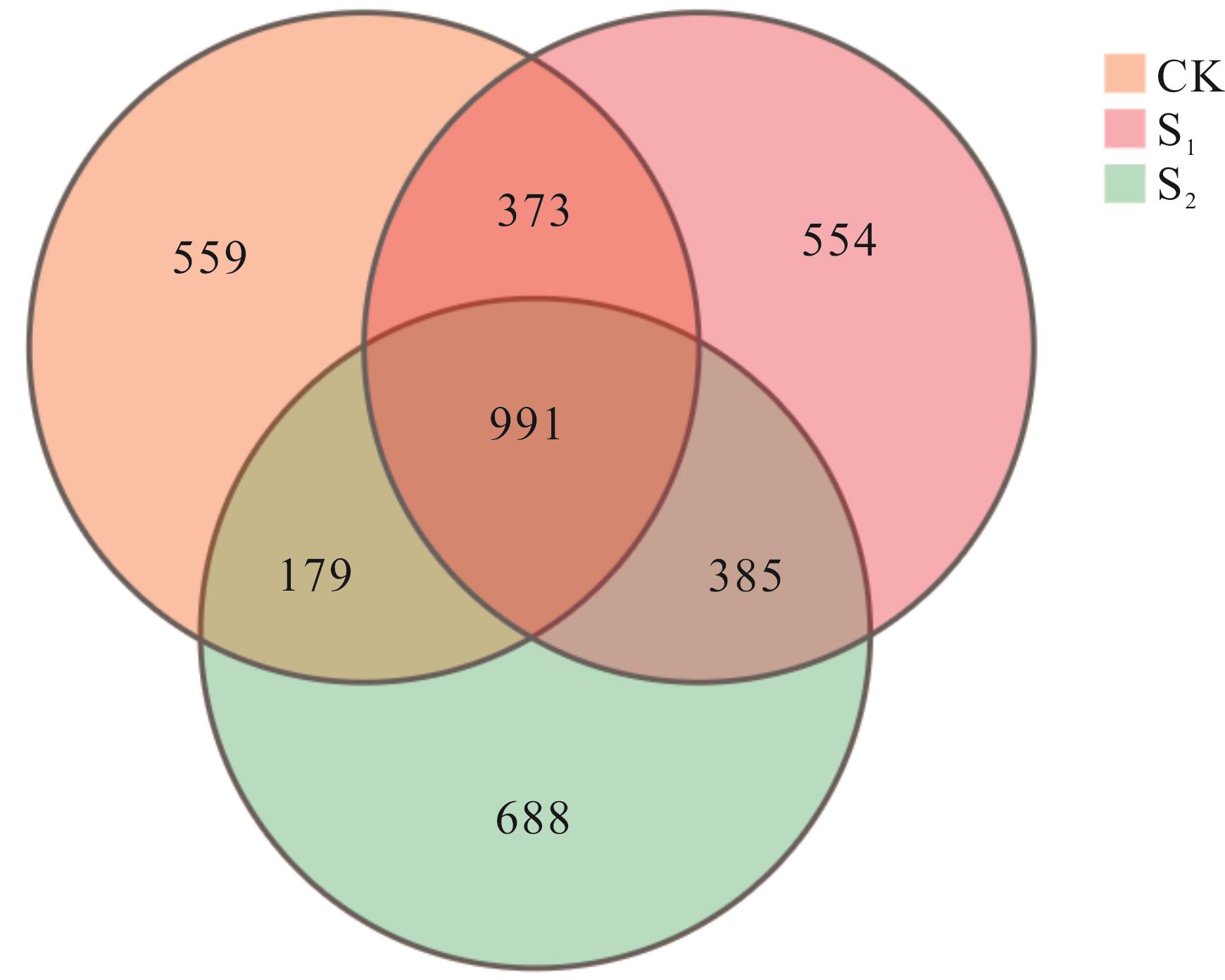
Fig.1 Venn graph of the amplicon sequence variants in three groups
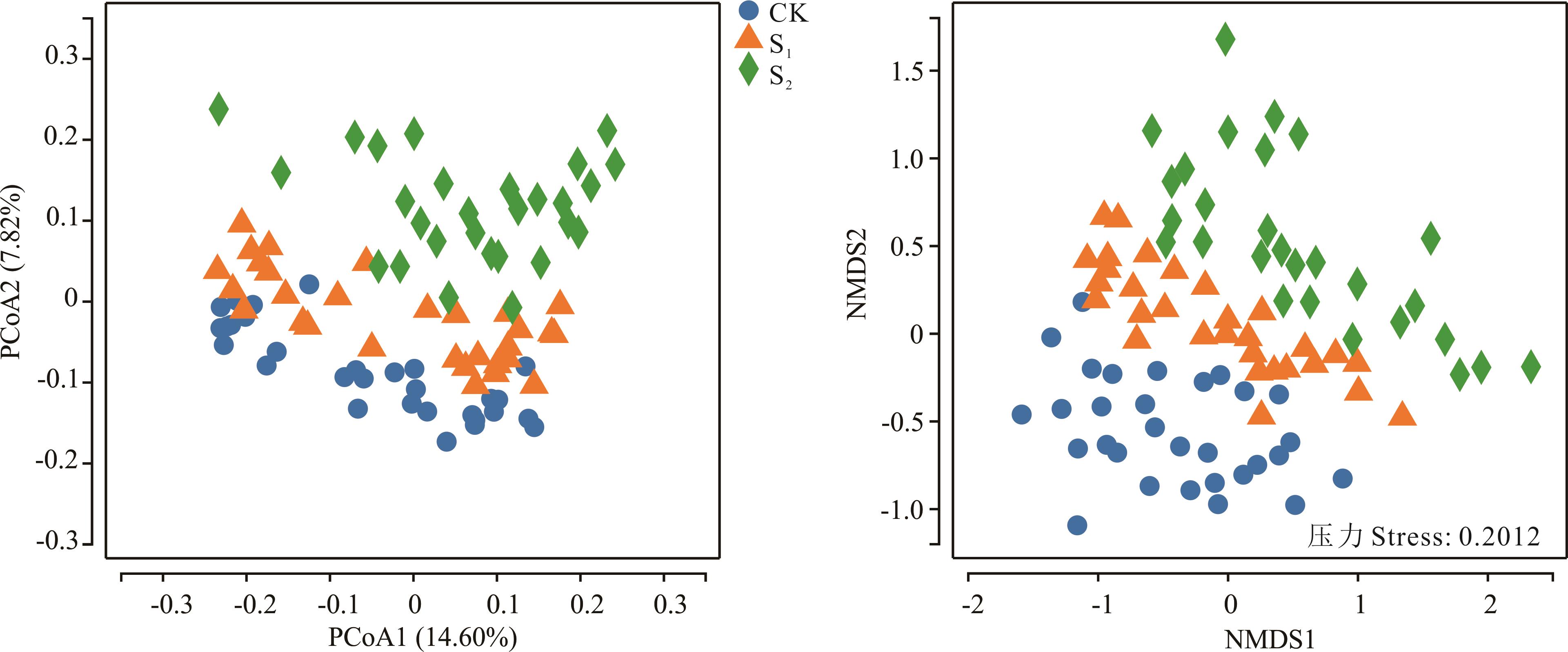
Fig.2 Principal coordinate analysis (PCoA) and non-metric multidimensional scaling (NMDS) analysis of rumen bacterial flora
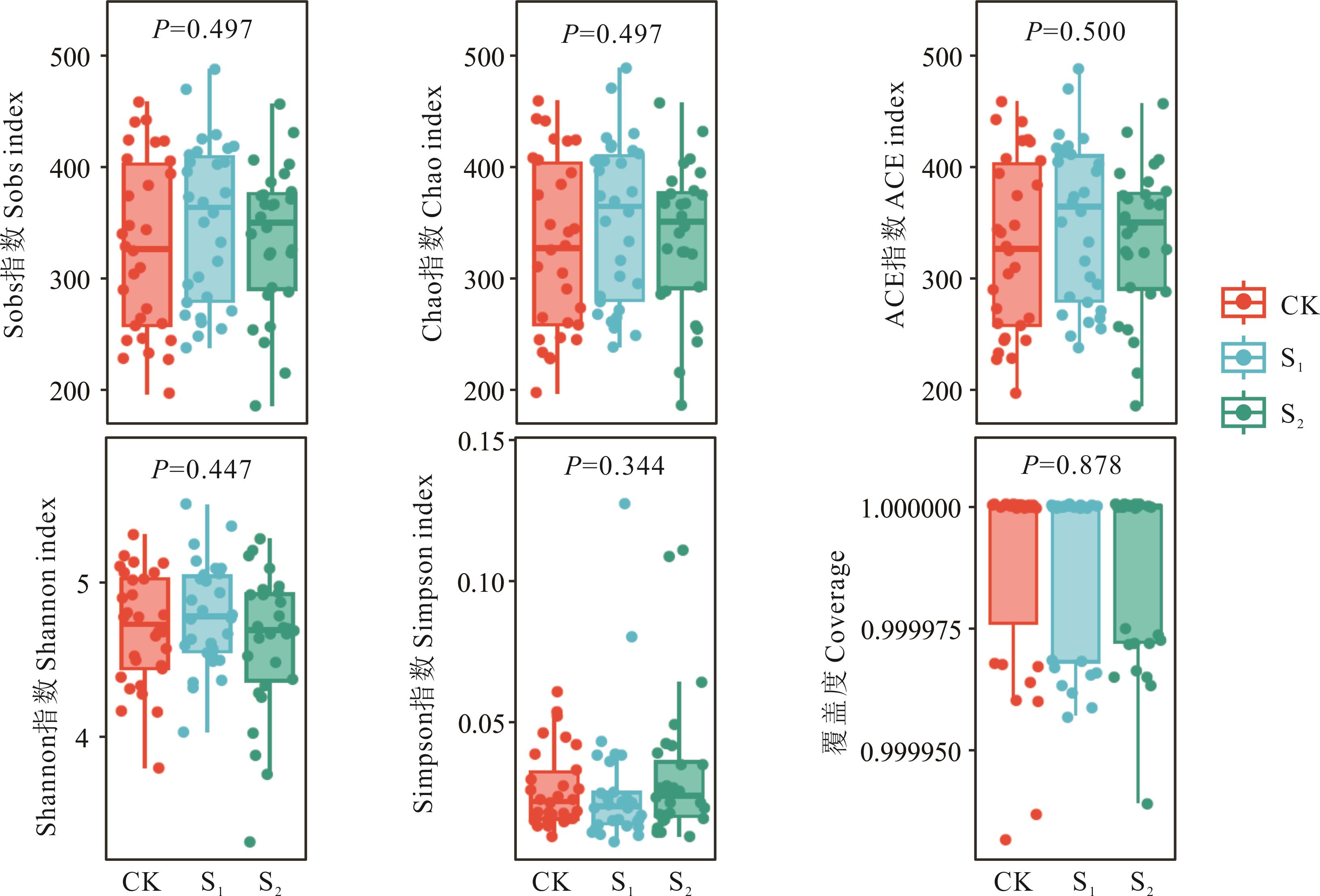
Fig.3 Effect of silage mulberry replacement ratio on rumen bacterial alpha diversity
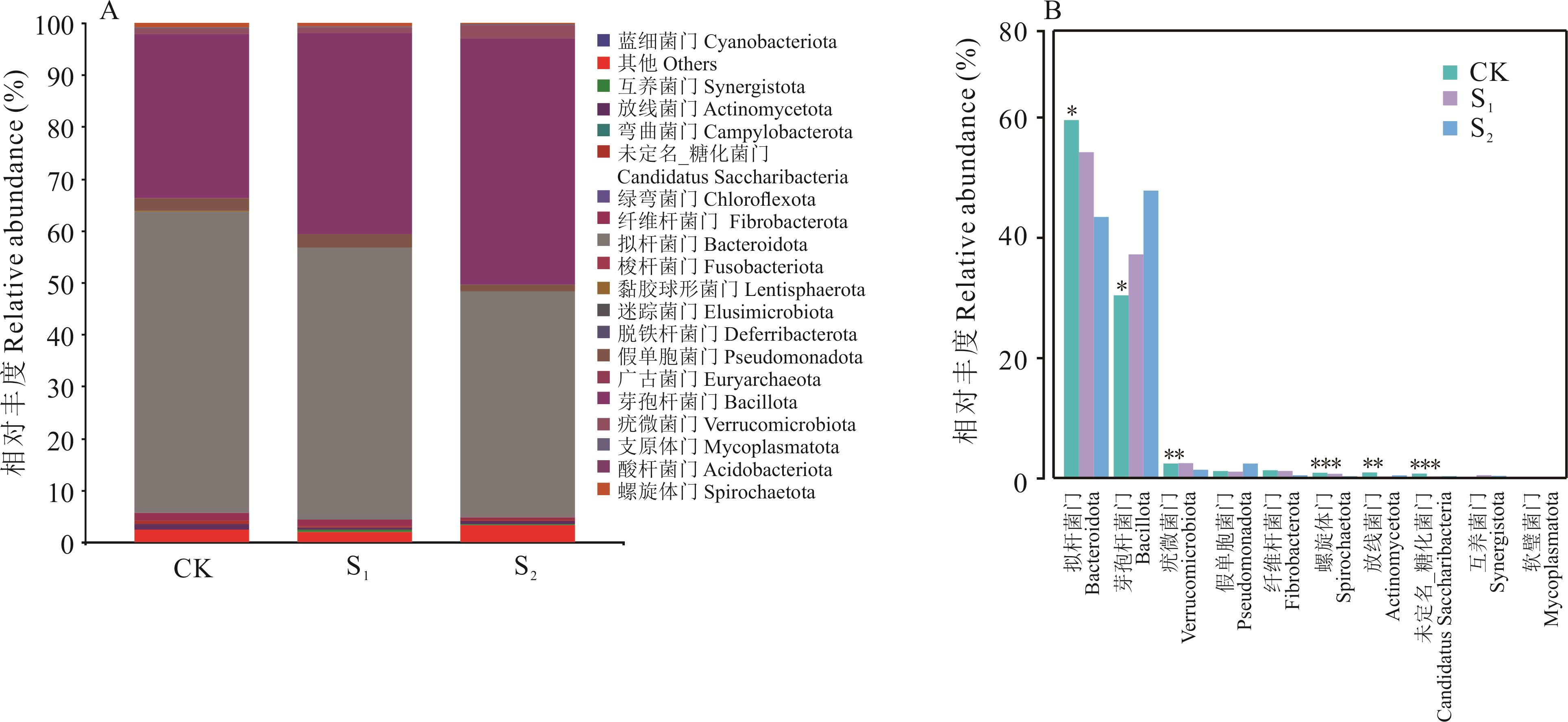
Fig.4 Phylum level bacterial composition and key species relative abundance difference
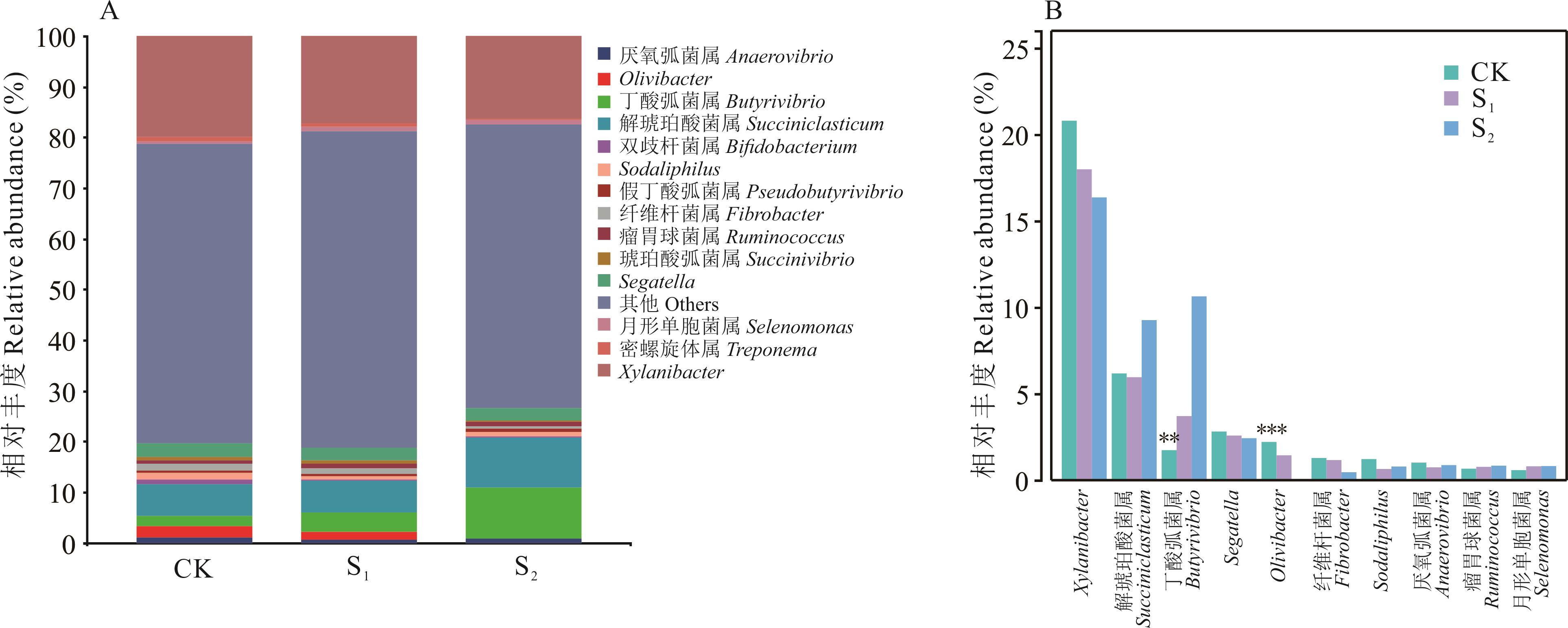
Fig.5 Genus level bacterial composition and key species relative abundance difference

Fig.6 KEGG function annotation of rumen bacteria
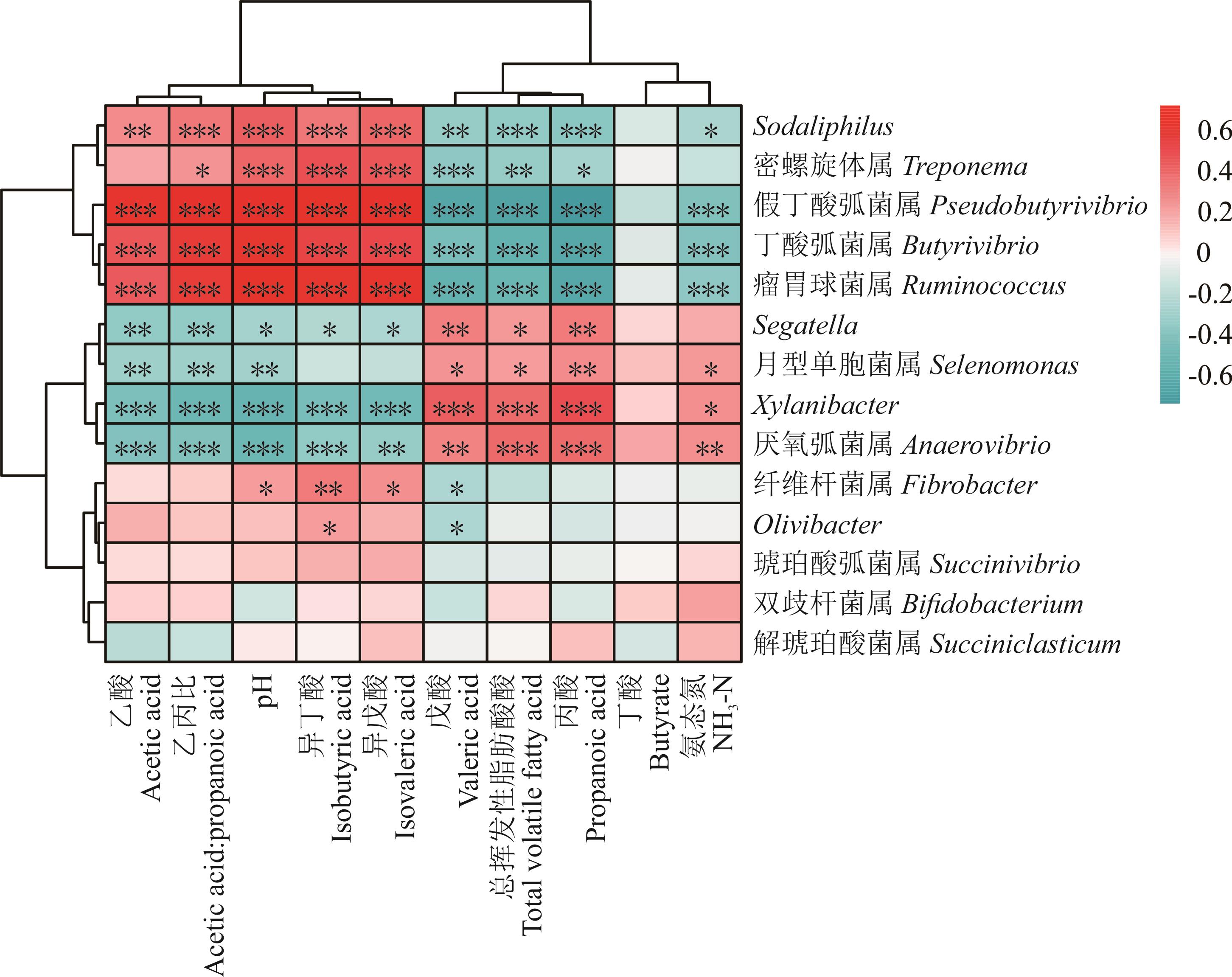
Fig.7 Correlation between rumen bacteria and rumen fermentation indexes
| [1] | National animal nutrition guidance committee. Work plan for reducing the use of corn and soybean meal in pig and chicken feed. http://www.moa.gov.cn/gk/nszd_1/2021/202104/t20210421_6366304.htm, 2021-04-21. |
| 全国动物营养指导委员会. 猪鸡饲料玉米豆粕减量替代工作方案. http://www.moa.gov.cn/gk/nszd_1/2021/202104/t20210421_6366304.htm, 2021-04-21. | |
| [2] | Wang Y C, Zhai S S, Li M M, et al. Analysis of nutritional components of mulberry twig leaves from different producing areas and the nutrient utilization efficiency in Sichuan while geese. China Feed, 2016(16): 18-22, 27. |
| 王永昌, 翟双双, 李孟孟, 等. 不同产地桑枝茎叶营养成分分析及四川白鹅对其养分利用率的测定. 中国饲料, 2016(16): 18-22, 27. | |
| [3] | Thaipitakwong T, Numhom S, Aramwit P. Mulberry leaves and their potential effects against cardiometabolic risks: a review of chemical compositions, biological properties and clinical efficacy. Pharmaceutical Biology, 2018, 56(1): 109-118. |
| [4] | Wang W Z. Nutritional characteristics and utilization status of forage mulberry. Feed China, 2017(12): 42-43. |
| 汪文忠. 饲料用桑的营养特性及其开发利用现状. 饲料广角, 2017(12): 42-43. | |
| [5] | Rodrigues E L, Marcelino G, Silva G T, et al. Nutraceutical and medicinal potential of the morus species in metabolic dysfunctions. International Journal of Molecular Sciences, 2019, 20(2): 301. |
| [6] | He X, Chen X, Ou X, et al. Evaluation of flavonoid and polyphenol constituents in mulberry leaves using HPLC fingerprint analysis. International Journal of Food Science & Technology, 2020, 55(2): 526-533. |
| [7] | Cui H, Lu T, Wang M, et al. Flavonoids from Morus alba L. leaves: Optimization of extraction by response surface methodology and comprehensive evaluation of their antioxidant, antimicrobial, and inhibition of α-amylase activities through analytical hierarchy process. Molecules, 2019, 24(13): 2398. |
| [8] | Wang H L, Zuo Y C, Zhou X K, et al.Influence of high planting density herbal cultivating on yield and quality of whole-plant mulberry (Morus alba). Pratacultural Science, 2020, 37(5): 952-962. |
| 王红林, 左艳春, 周晓康, 等. 高密度草本化栽培对饲料桑全株产量及品质的影响. 草业科学, 2020, 37(5): 952-962. | |
| [9] | Li J M, Huang L, Zhu J N, et al. Preliminary study on mechanization mode of annual mulberry harvesting in Guangxi. Guangxi Agricultural Mechanization, 2018(6): 30-32. |
| 李建茂, 黄僚, 朱剑楠, 等. 广西全年条桑收获机械化模式初探. 广西农业机械化, 2018(6): 30-32. | |
| [10] | Xu Q B, Li Y P, Tang S W, et al. Preliminary report on research and development of 4QZ-2200S type feed mulberry harvesting machinery. North Sericulture, 2018, 39(4): 48-50. |
| 徐清波, 李一平, 唐守伟, 等. 4QZ-2200S型饲料桑收获机械研发初报. 北方蚕业, 2018, 39(4): 48-50. | |
| [11] | Huang J, Zhao N, Guo W Z, et al. Effects of feed mulberry on production performance, egg quality and intestinal tissue morphology of laying hens. China Animal Husbandry & Veterinary Medicine, 2024, 51(2): 540-548. |
| 黄静, 赵娜, 郭万正, 等. 饲料桑对蛋鸡生产性能、蛋品质及肠道组织形态的影响. 中国畜牧兽医, 2024, 51(2): 540-548. | |
| [12] | Huang J P, Zhao W G, Yang Z J, et al. Effects of forage mulberry addition on performance, immune and antioxidant function and rumen microflora of perinatal holstein dairy cows. Chinese Journal of Animal Nutrition, 2023, 35(11): 7224-7234. |
| 黄军鹏, 赵卫国, 杨赵军, 等. 添加饲料桑对围产期奶牛生产性能、免疫和抗氧化功能及瘤胃微生物区系的影响. 动物营养学报, 2023, 35(11): 7224-7234. | |
| [13] | Fan Q W, Chen F, Du E C, et al. Effects of basal diet replaced by fermented feed mulberry with different proportions on rumen fermentation, rumen bacterial and fungal community structure of beef cattle. Chinese Journal of Animal Nutrition, 2024, 36(4): 2475-2486. |
| 樊启文, 陈芳, 杜恩存, 等. 不同比例发酵饲料桑替代基础饲粮对肉牛瘤胃发酵、瘤胃细菌与真菌菌群结构的影响. 动物营养学报, 2024, 36(4): 2475-2486. | |
| [14] | Agricultural industry standards of the People’s Republic of China-feeding standard of meat-producing sheep and goats (NY/T816-2004). Hunan Feed, 2006(6): 9-15. |
| 中华人民共和国农业行业标准——肉羊饲养标准(NY/T816-2004). 湖南饲料, 2006(6): 9-15. | |
| [15] | Feng Z C, Gao M. Improvement of method for determination of ammonia nitrogen content in rumen fluid by colorimetric method. Animal Husbandry and Feed Science, 2010, 31(Z1): 37. |
| 冯宗慈, 高民. 通过比色测定瘤胃液氨氮含量方法的改进. 畜牧与饲料科学, 2010, 31(Z1): 37. | |
| [16] | Hang Q. Effects of winter supplementary feeding of Leymus chinensis hay on fermentation performance and microbial diversity of rumen, liver metabolism for Hulunbuir ewes. Chongqing: Southwest University, 2023. |
| 黄棋. 冬季补饲羊草干草对呼伦贝尔母羊瘤胃发酵、微生物区系及肝脏代谢的影响. 重庆: 西南大学, 2023. | |
| [17] | Cai M. Study on evaluation of safety and feeding value of mulberry (Morus alba L.) leaves as animal feed. Lanzhou: Lanzhou University, 2019. |
| 蔡明. 桑叶作为动物饲料的安全性及饲用价值评价研究. 兰州: 兰州大学, 2019. | |
| [18] | Dong Z, Wang S, Zhao J, et al. Effects of additives on the fermentation quality, in vitro digestibility and aerobic stability of mulberry (Morus alba L.) leaves silage. Asian-Australasian Journal of Animal Sciences, 2019, 33(8): 1292-1300. |
| [19] | Ouyang Z L. Study on fattening test of mulberry leaf powder on binary hybrid pigs. Livestock and Poultry Industry, 2023, 34(10): 8-11. |
| 欧阳增理. 桑叶粉对二元杂交猪的育肥试验研究. 畜禽业, 2023, 34(10): 8-11. | |
| [20] | Li X, Ye T M, Liu G, et al. Effects of adding mulberry leaf powder into TMR granulated diets on growth performance, slaughter performance and economic benefits of Liuyang black goats. China Feed, 2023(11): 146-151. |
| 李霞, 叶添梅, 刘耕, 等. TMR颗粒饲粮中桑叶粉比例对浏阳黑山羊生长性能、屠宰性能及经济效益的影响. 中国饲料, 2023(11): 146-151. | |
| [21] | Kou Y F. Nutrition dynamics of mulberry and its effect on production performance of fattening Hu sheep. Lanzhou: Lanzhou University, 2021. |
| 寇宇斐. 饲料桑的营养动态及其对育肥湖羊生产性能的影响. 兰州: 兰州大学, 2021. | |
| [22] | Luo Y, Yi K L, He F, et al. Effects of different adding proportions of fermented mulberry leaves on growth performance, serum indexes, muscle amino acid and fatty acid contents of Xiangdong Black Goats. Chinese Journal of Animal Nutrition, 2022, 34(12): 7923-7934. |
| 罗阳, 易康乐, 何芳, 等. 不同添加比例发酵桑叶饲粮对湘东黑山羊生长性能、血清指标及肌肉氨基酸、脂肪酸含量的影响. 动物营养学报, 2022, 34(12): 7923-7934. | |
| [23] | Luo Y. Associative effects of mulberry leaves with Leymus chinensis and affects on rumen fermentation, growth performance, fat deposition in sheep fed with the combined forage diet. Yangzhou: Yangzhou University, 2019. |
| 罗阳. 桑树叶与羊草的组合效应及其对绵羊瘤胃发酵、生长性能、脂肪沉积和肉品质的影响. 扬州: 扬州大学, 2019. | |
| [24] | Ouyang J, Hou Q, Wang M, et al. Effects of dietary mulberry leaf powder on growth performance, blood metabolites, meat quality, and antioxidant enzyme-related gene expression of fattening Hu lambs. Canadian Journal of Animal Science, 2020, 100(3): 510-521. |
| [25] | Zhou G L, Tao Y, Ni L G, et al. Serum biochemistry and expression of carcass trait-related gene of Sujiang pigs as affected by dietary makeup at final growth stage. Fujian Journal of Agricultural Sciences, 2019, 34(6): 668-677. |
| 周根来, 陶勇, 倪黎纲, 等. 日粮营养水平对育肥苏姜猪血清生化指标和肉质相关基因的影响. 福建农业学报, 2019, 34(6): 668-677. | |
| [26] | Xu X D. Effect of mulberry leaf on growth performance, serum biochemical indexes and economic benefits of finishing pigs. Feed Research, 2023, 46(2): 46-50. |
| 许新迪. 蛋白桑对育肥猪生长性能、血清生化指标及养殖经济效益的影响. 饲料研究, 2023, 46(2): 46-50. | |
| [27] | Zhang S W, Wang X P, Zhang Z H, et al. Effects of Broussonetia papyrifera silage on growth performance, serum biochemical indexes and meat quality of Dorper×Hu crossbred sheep. Acta Prataculturae Sinica, 2021, 30(3): 89-99. |
| 张生伟, 王小平, 张展海, 等. 青贮杂交构树对杜湖杂交肉羊生长性能、血清生化指标和肉品质的影响. 草业学报, 2021, 30(3): 89-99. | |
| [28] | Yin L. Effects of gallnut tannic acid on the growth performance, meat quality, blood biochemistry and rumen fermentation of Liuyang black goat. Changsha: Hunan Agricultural University, 2024. |
| 殷磊. 五倍子单宁酸对浏阳黑山羊生长性能、肉品质、血液生化及瘤胃发酵的影响. 长沙: 湖南农业大学, 2024. | |
| [29] | Yan J S, Huan H L, Zhou W R, et al. Effect of biologics on growth performance, serum biochemical parameters and endocrine hormone in late fattening pigs of microbial fermentation bed system. China Animal Husbandry & Veterinary Medicine, 2014, 41(12): 126-130. |
| 闫俊书, 宦海琳, 周维仁, 等. 日粮中添加生物制剂对发酵床育肥后期猪生长性能、血清生化指标及内分泌激素的影响. 中国畜牧兽医, 2014, 41(12): 126-130. | |
| [30] | Wan R, Liu M G, Liang Q B, et al. Effects of fermented mulberry leaves on growth performance and serum biochemical, antioxidant and immune indexes of Holstein calves. Chinese Journal of Animal Nutrition, 2023, 35(6): 3754-3760. |
| 万荣, 刘明革, 梁奇兵, 等. 发酵桑叶对荷斯坦犊牛生长性能及血清生化、抗氧化和免疫指标的影响. 动物营养学报, 2023, 35(6): 3754-3760. | |
| [31] | Lu D X, Xie C W. Modern ruminant nutrition research methods and techniques. Beijing: Agriculture Press, 1991. |
| 卢德勋, 谢崇文. 现代反刍动物营养研究方法和技术. 北京: 农业出版社, 1991. | |
| [32] | Zhou Z, Zhou B, Ren L, et al. Effect of ensiled mulberry leaves and sun-dried mulberry fruit pomace on finishing steer growth performance, blood biochemical parameters, and carcass characteristics. PLoS One, 2014, 9(1): e85406. |
| [33] | Huang W Q, Lv X K, Wang S Q, et al. Effects of whole sugarcane on growth performance, nutrient apparent digestibility, serum indexes and rumen fermentation indexes of goats. Chinese Journal of Animal Nutrition, 2018, 30(12): 5182-5191. |
| 黄文琴, 吕小康, 王世琴, 等. 全株甘蔗对山羊生长性能、营养物质表观消化率、血清指标及瘤胃发酵参数的影响. 动物营养学报, 2018, 30(12): 5182-5191. | |
| [34] | Aschenbach J R, Kristensen N B, Donkin S S, et al. Gluconeogenesis in dairy cows: The secret of making sweet milk from sour dough. Iubmb Life, 2010, 62(12): 869-877. |
| [35] | Mizrahi I, Wallace R J, Morais S. The rumen microbiome: balancing food security and environmental impacts. Nature Reviews Microbiology, 2021, 19(9): 553-566. |
| [36] | Deusch S, Camarinha-silva A, Conrad J, et al. A structural and functional elucidation of the rumen microbiome influenced by various diets and microenvironments. Frontiers in Microbiology, 2017, 8(1): 1605. |
| [37] | Liu C, Wu H, Liu S, et al. Dynamic alterations in yak rumen bacteria community and metabolome characteristics in response to feed type. Frontiers in Microbiology, 2019, 10(1): 1116. |
| [38] | Snelling T J, Wallace R J. The rumen microbial metaproteome as revealed by SDS-PAGE. BMC Microbiology, 2017, 17(1): 9. |
| [39] | Hart E H, Creevey C J, Hitch T, et al. Meta-proteomics of rumen microbiota indicates niche compartmentalisation and functional dominance in a limited number of metabolic pathways between abundant bacteria. Scientific Reports, 2018, 8(1): 10504. |
| [40] | Golder H M, Denman S E, Mcsweeney C, et al. Effects of partial mixed rations and supplement amounts on milk production and composition, ruminal fermentation, bacterial communities, and ruminal acidosis. Journal of Dairy Science, 2014, 97(9): 5763-5785. |
| [41] | Murovec U, Accetto T. Transcriptomic analysis of polysaccharide utilization loci reveals substrate preferences in ruminal generalists Segatella bryantii TF1-3 and Xylanibacter ruminicola KHP1. BMC Genomics, 2024, 25(1): 495. |
| [42] | Accetto T, Avgustin G. Non-oral prevotella stepping into the spotlight. Anaerobe, 2021, 68(1): 102321. |
| [43] | Niu W J. Effects of whole wheat on nutrient digestion, rumen fermentation and microflora of Holstein bulls. Beijing: China Agricultural University, 2018. |
| 牛文静. 全株小麦对荷斯坦公牛养分消化、瘤胃发酵及微生物的影响. 北京: 中国农业大学, 2018. |
| [1] | Shuai QI, Yan-li ZHANG, Yong-jie WAN, Wei-qiang NIU, Ji-xin ZHANG, Xue GAO, Da-gan MAO. Effects of soybean straw co-fermented with a bacterium-enzyme mixture on the growth performance, serum indexes, and rumen microorganisms of Hu sheep [J]. Acta Prataculturae Sinica, 2025, 34(5): 189-201. |
| [2] | Hang-qi HAN, Zi-fan WANG, He DING, Yu-rong CHEN, Qi WANG, Xiao-qing ZHANG. Comparative analysis of effects of oat hay and oat cubes on rumen fermentation and microbial composition in sheep [J]. Acta Prataculturae Sinica, 2025, 34(5): 212-222. |
| [3] | Ming-ming GU, Xing-hui JIANG, Zhi-yi MA, Shui-ling QIU, Hao-yu LIU, Ming-rui ZHANG, Jia-ning LU, Yu-jun QIU, Ben-zhi WANG, Qian-fu GAN. Degradation characteristics of sweet potato and taro in the rumen of Mindong goats and changes in microbial community attached to the surface [J]. Acta Prataculturae Sinica, 2024, 33(9): 169-184. |
| [4] | Li-ping HONG, Xiao-dong LI, Er-ru YU, Cheng-jiang PEI, Yi-shun SHANG, Jin-hong LUO, Guang SUN, Yun-hao ZHOU, Shi-ge LI, Hang YANG, Feng-dan LIU. Effects of different perilla (Perilla frutescens) materials on serum antioxidant enzyme activity, rumen fermentation parameters and microflora of Guizhou black goats [J]. Acta Prataculturae Sinica, 2024, 33(9): 214-226. |
| [5] | Shang-lin YANG, Xuan WU, Qiao-hui LUO, Tai-hua HUANG, Zheng-fan ZHANG, Hai-tao SHI, Chun-hua GUO. A study of the protein requirements of 20-35 kg Chuanzhong black goats [J]. Acta Prataculturae Sinica, 2024, 33(7): 119-129. |
| [6] | Jie ZHAO, Heng-guang CHEN, Xiao-meng PEI, Hao YU, Yin-ying XU, Da-gan MAO. Effects of resveratrol supplementation in the perinatal diet on production performance, blood indexes, and transcript abundance of genes encoding inflammatory factors in goats [J]. Acta Prataculturae Sinica, 2024, 33(4): 210-220. |
| [7] | Yue CHEN, Pin SONG, Man-man HOU, Xiao-ran YANG, Li-ping LIU, Ying-dong NI. Effects of dietary supplementation with bile acid on ileal epithelial morphology, microflora composition, and relative transcript levels of IFN-γ in the ileal mucosa of goats with subacute ruminal acidosis [J]. Acta Prataculturae Sinica, 2024, 33(12): 188-200. |
| [8] | Juan-qing QIN, Hao-qian DANG, Hua-yun JIN, Yu-kang GUO, Fu ZHANG, Qing-hua LIU. Effects of different additives on the fermentation quality of bamboo shoot shells and on rumen microorganisms in Hu Sheep [J]. Acta Prataculturae Sinica, 2023, 32(11): 155-167. |
| [9] | Yan-xia GUO, Meng-wei LI, Zhen-hua TANG, Li-juan PENG, Kai-ping PENG, Fang XIE, Hua-de XIE, Cheng-jian YANG. Effects of different doses of sodium nitrate on fatty acid composition and microbial population in in vitro simulation of buffalo rumen fermentation with added linoleic acid [J]. Acta Prataculturae Sinica, 2021, 30(9): 159-167. |
| [10] | Juan-shan ZHENG, KAO Ren-qing DING, Xin-pu LI, Ze-yi LIANG, Jian-bo ZHANG, Mei DU, Xue-zhi DING. Research progress on rumen microorganisms in the utilization of lignocellulose as an energy resource [J]. Acta Prataculturae Sinica, 2021, 30(9): 182-192. |
| [11] | Jun-nian LI, Shao-hua KANG, Dong-mei YANG, Qian HE, Shuang LI, Shuang-lun TAO. Effects of substituting dietary alfalfa meal with kudzu vine (Pueraria lobata) meal on serum biochemical indexes, apparent nutrient digestibility and growth performance in Boer crossbred goats [J]. Acta Prataculturae Sinica, 2021, 30(8): 146-153. |
| [12] | Wang-bin SUN, Qi FU, Rui-lin XUE, Wei-ping WANG, Qian ZHANG, Ping FENG. Effects of different levels of jujube powder on slaughter characteristics and meat quality of Northern Shaanxi white cashmere goats [J]. Acta Prataculturae Sinica, 2021, 30(7): 111-121. |
| [13] | Li-qin HUANG, Song-qiao LI, Zhen-zhong YUAN, Jing TANG, Jing-cai YAN, Qi-yuan TANG. Effects of feeding co-fermented whole plant rice and spent mushroom (Pleurotus ostreatus) substrate on slaughter performance, meat quality and organ size indexes of Liuyang black goats [J]. Acta Prataculturae Sinica, 2021, 30(6): 133-140. |
| [14] | Jun-hong HUO, Kang ZHAN, Qiu-sheng HUANG, Xiao-jun ZHONG, Jin-shun ZHAN, Xue-bing YAN. Effects of different concentration∶roughage ratios on growth performance, serum biochemical indices and ruminal fermentation of Nubian goats [J]. Acta Prataculturae Sinica, 2021, 30(6): 151-161. |
| [15] | Mang-li XIONG, Xu-jin WU, Xiao-fu ZHU, Wen-juan ZHANG. Effects of different apple pomace levels on lactation performance, nutrient apparent digestibility, serum biochemical indices and the rumen pH of Guanzhong dairy goats [J]. Acta Prataculturae Sinica, 2021, 30(3): 81-88. |
| Viewed | ||||||
|
Full text |
|
|||||
|
Abstract |
|
|||||
