
ISSN 1004-5759 CN 62-1105/S
Acta Prataculturae Sinica ›› 2025, Vol. 34 ›› Issue (5): 212-222.DOI: 10.11686/cyxb2024294
Hang-qi HAN1,2( ), Zi-fan WANG1, He DING1,2, Yu-rong CHEN3, Qi WANG3, Xiao-qing ZHANG1,2()
Received:2024-07-23
Revised:2024-09-12
Online:2025-05-20
Published:2025-03-20
Contact:
Xiao-qing ZHANG
Hang-qi HAN, Zi-fan WANG, He DING, Yu-rong CHEN, Qi WANG, Xiao-qing ZHANG. Comparative analysis of effects of oat hay and oat cubes on rumen fermentation and microbial composition in sheep[J]. Acta Prataculturae Sinica, 2025, 34(5): 212-222.
采食量 Intake | 处理组Treatment | 均值标准误 Standard error of mean (SEM) | P值 P-value | |
|---|---|---|---|---|
| 干草组Oat hay (OH) | 草块组Oat cube (OC) | |||
| 干物质Dry matter (DM) | 0.95b | 1.22a | 0.01 | 0.001 |
| 粗蛋白质Crude protein (CP) | 0.08b | 0.10a | 0.01 | 0.001 |
| 中性洗涤纤维Neutral detergent fiber (NDF) | 0.50b | 0.69a | 0.01 | 0.001 |
| 酸性洗涤纤维Acid detergent fiber (ADF) | 0.30b | 0.39a | 0.01 | 0.001 |
Table 1 Effects of oat hay and oat cube on feed intake of sheep (dry matter basis, kg·d-1)
采食量 Intake | 处理组Treatment | 均值标准误 Standard error of mean (SEM) | P值 P-value | |
|---|---|---|---|---|
| 干草组Oat hay (OH) | 草块组Oat cube (OC) | |||
| 干物质Dry matter (DM) | 0.95b | 1.22a | 0.01 | 0.001 |
| 粗蛋白质Crude protein (CP) | 0.08b | 0.10a | 0.01 | 0.001 |
| 中性洗涤纤维Neutral detergent fiber (NDF) | 0.50b | 0.69a | 0.01 | 0.001 |
| 酸性洗涤纤维Acid detergent fiber (ADF) | 0.30b | 0.39a | 0.01 | 0.001 |
项目 Item | 处理组Treatment | 均值标准误Standard error of mean (SEM) | P值 P-value | |
|---|---|---|---|---|
| 干草组Oat hay (OH) | 草块组Oat cube (OC) | |||
| pH | 7.09a | 7.04a | 0.05 | 0.339 |
| 总挥发性脂肪酸Total volatile fatty acid (TVFA, mmol·L-1) | 23.44a | 23.33a | 4.50 | 0.981 |
| 乙酸Acetic acid (%) | 71.35a | 71.20a | 2.28 | 0.950 |
| 丙酸Propionic acid (%) | 18.70a | 19.45a | 2.10 | 0.728 |
| 乙酸/丙酸Acetic acid/propionic acid | 3.95a | 3.80a | 0.57 | 0.798 |
| 氨态氮Ammonium nitrogen (NH3-N, mg·dL-1) | 6.15a | 7.12a | 0.97 | 0.344 |
Table 2 Effects of oat hay and oat cube on rumen fermentation parameters
项目 Item | 处理组Treatment | 均值标准误Standard error of mean (SEM) | P值 P-value | |
|---|---|---|---|---|
| 干草组Oat hay (OH) | 草块组Oat cube (OC) | |||
| pH | 7.09a | 7.04a | 0.05 | 0.339 |
| 总挥发性脂肪酸Total volatile fatty acid (TVFA, mmol·L-1) | 23.44a | 23.33a | 4.50 | 0.981 |
| 乙酸Acetic acid (%) | 71.35a | 71.20a | 2.28 | 0.950 |
| 丙酸Propionic acid (%) | 18.70a | 19.45a | 2.10 | 0.728 |
| 乙酸/丙酸Acetic acid/propionic acid | 3.95a | 3.80a | 0.57 | 0.798 |
| 氨态氮Ammonium nitrogen (NH3-N, mg·dL-1) | 6.15a | 7.12a | 0.97 | 0.344 |
项目 Item | 处理组Treatment | 均值标准误 Standard error of mean (SEM) | P值 P-value | |
|---|---|---|---|---|
| 干草组Oat hay (OH) | 草块组Oat cube (OC) | |||
| OTU数OTU number | 11037.17a | 11184.33a | 445.21 | 0.773 |
| Chao1指数Chao1 index | 11414.80a | 11419.42a | 432.62 | 0.993 |
| Shannon指数Shannon index | 5.85b | 6.39a | 0.23 | 0.043 |
| Simpson指数Simpson index | 0.86b | 0.91a | 0.01 | 0.014 |
| 覆盖率Coverage (%) | 99.997 | 99.997 | - | - |
Table 3 Effects of oat hay and oat cube on rumen bacterial Alpha diversity
项目 Item | 处理组Treatment | 均值标准误 Standard error of mean (SEM) | P值 P-value | |
|---|---|---|---|---|
| 干草组Oat hay (OH) | 草块组Oat cube (OC) | |||
| OTU数OTU number | 11037.17a | 11184.33a | 445.21 | 0.773 |
| Chao1指数Chao1 index | 11414.80a | 11419.42a | 432.62 | 0.993 |
| Shannon指数Shannon index | 5.85b | 6.39a | 0.23 | 0.043 |
| Simpson指数Simpson index | 0.86b | 0.91a | 0.01 | 0.014 |
| 覆盖率Coverage (%) | 99.997 | 99.997 | - | - |

Fig.1 Principal component analysis and non-metric multidimensional scaling (NDMS) of rumen bacteria composition
项目 Item | 处理组Treatment | 均值标准误 Standard error of mean (SEM) | P值 P-value | |
|---|---|---|---|---|
| 干草组Oat hay (OH) | 草块组Oat cube (OC) | |||
| 未分类细菌门Bacteria_unclassified | 71.78a | 66.26b | 2.32 | 0.038 |
| 拟杆菌门Bacteroidetes | 18.16a | 21.23a | 1.55 | 0.075 |
| 厚壁菌门Firmicutes | 4.46a | 6.28a | 1.18 | 0.152 |
| 变形菌门Proteobacteria | 1.38a | 1.47a | 0.22 | 0.676 |
| 未命名细菌门Bacteria_noname | 0.95b | 1.53a | 0.16 | 0.004 |
| 丝状杆菌门Fibrobacteres | 1.53a | 0.53a | 0.54 | 0.096 |
| 黏胶球形菌门Lentisphaerae | 0.35b | 0.67a | 0.14 | 0.050 |
| 疣微菌门Verrucomicrobia | 0.24b | 0.41a | 0.05 | 0.010 |
| 放线菌门Actinobacteria | 0.17b | 0.22a | 0.02 | 0.050 |
| 螺旋体门Spirochaetes | 0.15a | 0.20a | 0.03 | 0.165 |
| 浮霉菌门Planctomycetes | 0.13b | 0.22a | 0.03 | 0.018 |
| 柔壁菌门Tenericutes | 0.09a | 0.19a | 0.06 | 0.122 |
| Candidatus Melainabacteria | 0.10a | 0.07a | 0.03 | 0.379 |
| Candidatus Saccharibacteria | 0.06a | 0.07a | 0.03 | 0.652 |
| 圣诞岛盐菌门Kiritimatiellaeota | 0.04b | 0.08a | 0.01 | 0.019 |
| 梭杆菌门Fusobacteria | 0.05a | 0.05a | 0.02 | 0.919 |
| 酸杆菌门Acidobacteria | 0.04b | 0.06a | 0.01 | 0.030 |
| 绿弯菌门Chloroflexi | 0.04b | 0.06a | 0.01 | 0.031 |
| 衣原体门Chlamydiae | 0.03a | 0.04a | 0.01 | 0.485 |
| 蓝藻Cyanobacteria | 0.03a | 0.03a | 0.01 | 0.360 |
| 其他Others | 0.22a | 0.33a | 0.05 | 0.057 |
Table 4 Effects of oat hay and oat cube on the relative abundance of rumen microflora at phylum level (%)
项目 Item | 处理组Treatment | 均值标准误 Standard error of mean (SEM) | P值 P-value | |
|---|---|---|---|---|
| 干草组Oat hay (OH) | 草块组Oat cube (OC) | |||
| 未分类细菌门Bacteria_unclassified | 71.78a | 66.26b | 2.32 | 0.038 |
| 拟杆菌门Bacteroidetes | 18.16a | 21.23a | 1.55 | 0.075 |
| 厚壁菌门Firmicutes | 4.46a | 6.28a | 1.18 | 0.152 |
| 变形菌门Proteobacteria | 1.38a | 1.47a | 0.22 | 0.676 |
| 未命名细菌门Bacteria_noname | 0.95b | 1.53a | 0.16 | 0.004 |
| 丝状杆菌门Fibrobacteres | 1.53a | 0.53a | 0.54 | 0.096 |
| 黏胶球形菌门Lentisphaerae | 0.35b | 0.67a | 0.14 | 0.050 |
| 疣微菌门Verrucomicrobia | 0.24b | 0.41a | 0.05 | 0.010 |
| 放线菌门Actinobacteria | 0.17b | 0.22a | 0.02 | 0.050 |
| 螺旋体门Spirochaetes | 0.15a | 0.20a | 0.03 | 0.165 |
| 浮霉菌门Planctomycetes | 0.13b | 0.22a | 0.03 | 0.018 |
| 柔壁菌门Tenericutes | 0.09a | 0.19a | 0.06 | 0.122 |
| Candidatus Melainabacteria | 0.10a | 0.07a | 0.03 | 0.379 |
| Candidatus Saccharibacteria | 0.06a | 0.07a | 0.03 | 0.652 |
| 圣诞岛盐菌门Kiritimatiellaeota | 0.04b | 0.08a | 0.01 | 0.019 |
| 梭杆菌门Fusobacteria | 0.05a | 0.05a | 0.02 | 0.919 |
| 酸杆菌门Acidobacteria | 0.04b | 0.06a | 0.01 | 0.030 |
| 绿弯菌门Chloroflexi | 0.04b | 0.06a | 0.01 | 0.031 |
| 衣原体门Chlamydiae | 0.03a | 0.04a | 0.01 | 0.485 |
| 蓝藻Cyanobacteria | 0.03a | 0.03a | 0.01 | 0.360 |
| 其他Others | 0.22a | 0.33a | 0.05 | 0.057 |
项目 Item | 处理组Treatment | 均值标准误 Standard error of mean (SEM) | P值 P-value | |
|---|---|---|---|---|
| 干草组Oat hay (OH) | 草块组Oat cube (OC) | |||
| 未分类细菌属Unclassified_Bacteria | 36.15a | 28.93b | 2.58 | 0.019 |
| 普雷沃氏菌属Prevotella | 28.92a | 31.03a | 2.82 | 0.472 |
| 拟杆菌属Bacteroides | 6.22a | 6.06a | 0.45 | 0.733 |
| 未命名细菌属Bacteria_noname | 2.95b | 4.85a | 0.76 | 0.031 |
| 未命名拟杆菌目Bacteroidales_noname | 2.42a | 2.43a | 0.77 | 0.988 |
| 未命名普雷沃氏菌科Prevotellaceae_noname | 1.75a | 2.01a | 0.25 | 0.315 |
| 丝状杆菌属Fibrobacter | 2.05a | 0.75a | 0.64 | 0.069 |
| 另枝菌属Alistipes | 1.44a | 1.28a | 0.22 | 0.461 |
| 未命名拟杆菌属Bacteroidetes_noname | 1.06a | 0.76a | 0.48 | 0.538 |
| 未命名黏胶球形菌属Lentisphaerae_noname | 0.64a | 1.08a | 0.21 | 0.071 |
| 未命名厚壁菌属Firmicutes_noname | 0.60a | 0.97a | 0.29 | 0.227 |
| 梭状芽孢杆菌属Clostridium | 0.62a | 0.85a | 0.15 | 0.172 |
| 副普雷沃氏菌属Paraprevotella | 0.66a | 0.67a | 0.21 | 0.963 |
| 副拟杆菌属Parabacteroides | 0.61a | 0.65a | 0.23 | 0.108 |
| 异普雷沃氏菌属Alloprevotella | 0.50a | 0.65a | 0.14 | 0.310 |
| 未命名毛螺菌科Lachnospiraceae_noname | 0.40a | 0.60a | 0.12 | 0.134 |
| 瘤胃球菌属Ruminococcus | 0.40a | 0.51a | 0.13 | 0.461 |
| 解琥珀酸菌属Succiniclasticum | 0.40a | 0.48a | 0.17 | 0.668 |
| 琥珀酸弧菌属Succinivibrio | 0.44a | 0.42a | 0.16 | 0.900 |
| 未命名瘤胃菌科Ruminococcaceae_noname | 0.32a | 0.52a | 0.16 | 0.208 |
| 其他Others | 11.44a | 14.50a | 0.16 | 0.078 |
Table 5 Effects of oat hay and oat cube on the relative abundance of rumen microflora at genus level (%)
项目 Item | 处理组Treatment | 均值标准误 Standard error of mean (SEM) | P值 P-value | |
|---|---|---|---|---|
| 干草组Oat hay (OH) | 草块组Oat cube (OC) | |||
| 未分类细菌属Unclassified_Bacteria | 36.15a | 28.93b | 2.58 | 0.019 |
| 普雷沃氏菌属Prevotella | 28.92a | 31.03a | 2.82 | 0.472 |
| 拟杆菌属Bacteroides | 6.22a | 6.06a | 0.45 | 0.733 |
| 未命名细菌属Bacteria_noname | 2.95b | 4.85a | 0.76 | 0.031 |
| 未命名拟杆菌目Bacteroidales_noname | 2.42a | 2.43a | 0.77 | 0.988 |
| 未命名普雷沃氏菌科Prevotellaceae_noname | 1.75a | 2.01a | 0.25 | 0.315 |
| 丝状杆菌属Fibrobacter | 2.05a | 0.75a | 0.64 | 0.069 |
| 另枝菌属Alistipes | 1.44a | 1.28a | 0.22 | 0.461 |
| 未命名拟杆菌属Bacteroidetes_noname | 1.06a | 0.76a | 0.48 | 0.538 |
| 未命名黏胶球形菌属Lentisphaerae_noname | 0.64a | 1.08a | 0.21 | 0.071 |
| 未命名厚壁菌属Firmicutes_noname | 0.60a | 0.97a | 0.29 | 0.227 |
| 梭状芽孢杆菌属Clostridium | 0.62a | 0.85a | 0.15 | 0.172 |
| 副普雷沃氏菌属Paraprevotella | 0.66a | 0.67a | 0.21 | 0.963 |
| 副拟杆菌属Parabacteroides | 0.61a | 0.65a | 0.23 | 0.108 |
| 异普雷沃氏菌属Alloprevotella | 0.50a | 0.65a | 0.14 | 0.310 |
| 未命名毛螺菌科Lachnospiraceae_noname | 0.40a | 0.60a | 0.12 | 0.134 |
| 瘤胃球菌属Ruminococcus | 0.40a | 0.51a | 0.13 | 0.461 |
| 解琥珀酸菌属Succiniclasticum | 0.40a | 0.48a | 0.17 | 0.668 |
| 琥珀酸弧菌属Succinivibrio | 0.44a | 0.42a | 0.16 | 0.900 |
| 未命名瘤胃菌科Ruminococcaceae_noname | 0.32a | 0.52a | 0.16 | 0.208 |
| 其他Others | 11.44a | 14.50a | 0.16 | 0.078 |
项目 Item | 处理组Treatment | 均值标准误 Standard error of mean (SEM) | P值 P-value | |
|---|---|---|---|---|
| 干草组Oat hay (OH) | 草块组Oat cube (OC) | |||
| 未分类细菌Unclassified_Bacteria | 31.58a | 24.56b | 2.44 | 0.017 |
| 栖瘤胃普雷沃氏菌Prevotella_ruminicola | 7.71a | 7.36a | 1.89 | 0.858 |
| 未分类普雷沃氏菌Prevotella_unclassified | 3.96a | 4.25a | 0.34 | 0.422 |
| 普雷沃氏菌_sp._ne3005 Prevotella_sp._ne3005 | 2.10a | 2.70a | 0.63 | 0.359 |
| 普雷沃氏菌_sp._tc2-28 Prevotella_sp._tc2-28 | 2.05a | 2.22a | 0.36 | 0.639 |
| 细菌_P3 Bacterium_P3 | 1.34a | 2.77a | 0.86 | 0.124 |
| 普雷沃氏菌_sp._tf2-5 Prevotella_sp._tf2-5 | 1.35a | 2.03a | 0.48 | 0.191 |
| Bacteroidales_bacterium_WCE2004 | 1.32a | 1.21a | 0.74 | 0.880 |
| Prevotellaceae_bacterium_MN60 | 1.12a | 1.15a | 0.19 | 0.839 |
| 普雷沃氏菌_sp._MA2016 Prevotella_sp._MA2016 | 1.02a | 1.00a | 0.18 | 0.934 |
| Prevotellaceae_bacterium_HUN156 | 0.89a | 1.05a | 0.12 | 0.218 |
| 未分类拟杆菌Bacteroides_unclassified | 0.96a | 0.96a | 0.09 | 0.958 |
| 普雷沃氏菌_brevis Prevotella_brevis | 0.90a | 1.01a | 0.10 | 0.287 |
| 普雷沃氏菌_sp._BP1-148 Prevotella_sp._BP1-148 | 0.87a | 0.82a | 0.11 | 0.671 |
| 普雷沃氏菌_sp._P6B4 Prevotella_sp._P6B4 | 0.73a | 0.82a | 0.23 | 0.703 |
| 普雷沃氏菌_sp._P6B1 Prevotella_sp._P6B1 | 0.72a | 0.73a | 0.20 | 0.955 |
| Bacterium_P201 | 0.66a | 0.74a | 0.11 | 0.464 |
| 普雷沃氏菌_sp._BP1-145 Prevotella_sp._BP1-145 | 0.74a | 0.64a | 0.10 | 0.314 |
| Bacteroidales_bacterium_WCE2008 | 0.67a | 0.64a | 0.16 | 0.845 |
| 普雷沃氏菌_sp._lc2012 Prevotella_sp._lc2012 | 0.50a | 0.74a | 0.11 | 0.065 |
| 其他Others | 38.82a | 42.59a | 2.87 | 0.218 |
Table 6 Effects of oat hay and oat cube on the relative abundance of rumen microflora at species level (%)
项目 Item | 处理组Treatment | 均值标准误 Standard error of mean (SEM) | P值 P-value | |
|---|---|---|---|---|
| 干草组Oat hay (OH) | 草块组Oat cube (OC) | |||
| 未分类细菌Unclassified_Bacteria | 31.58a | 24.56b | 2.44 | 0.017 |
| 栖瘤胃普雷沃氏菌Prevotella_ruminicola | 7.71a | 7.36a | 1.89 | 0.858 |
| 未分类普雷沃氏菌Prevotella_unclassified | 3.96a | 4.25a | 0.34 | 0.422 |
| 普雷沃氏菌_sp._ne3005 Prevotella_sp._ne3005 | 2.10a | 2.70a | 0.63 | 0.359 |
| 普雷沃氏菌_sp._tc2-28 Prevotella_sp._tc2-28 | 2.05a | 2.22a | 0.36 | 0.639 |
| 细菌_P3 Bacterium_P3 | 1.34a | 2.77a | 0.86 | 0.124 |
| 普雷沃氏菌_sp._tf2-5 Prevotella_sp._tf2-5 | 1.35a | 2.03a | 0.48 | 0.191 |
| Bacteroidales_bacterium_WCE2004 | 1.32a | 1.21a | 0.74 | 0.880 |
| Prevotellaceae_bacterium_MN60 | 1.12a | 1.15a | 0.19 | 0.839 |
| 普雷沃氏菌_sp._MA2016 Prevotella_sp._MA2016 | 1.02a | 1.00a | 0.18 | 0.934 |
| Prevotellaceae_bacterium_HUN156 | 0.89a | 1.05a | 0.12 | 0.218 |
| 未分类拟杆菌Bacteroides_unclassified | 0.96a | 0.96a | 0.09 | 0.958 |
| 普雷沃氏菌_brevis Prevotella_brevis | 0.90a | 1.01a | 0.10 | 0.287 |
| 普雷沃氏菌_sp._BP1-148 Prevotella_sp._BP1-148 | 0.87a | 0.82a | 0.11 | 0.671 |
| 普雷沃氏菌_sp._P6B4 Prevotella_sp._P6B4 | 0.73a | 0.82a | 0.23 | 0.703 |
| 普雷沃氏菌_sp._P6B1 Prevotella_sp._P6B1 | 0.72a | 0.73a | 0.20 | 0.955 |
| Bacterium_P201 | 0.66a | 0.74a | 0.11 | 0.464 |
| 普雷沃氏菌_sp._BP1-145 Prevotella_sp._BP1-145 | 0.74a | 0.64a | 0.10 | 0.314 |
| Bacteroidales_bacterium_WCE2008 | 0.67a | 0.64a | 0.16 | 0.845 |
| 普雷沃氏菌_sp._lc2012 Prevotella_sp._lc2012 | 0.50a | 0.74a | 0.11 | 0.065 |
| 其他Others | 38.82a | 42.59a | 2.87 | 0.218 |
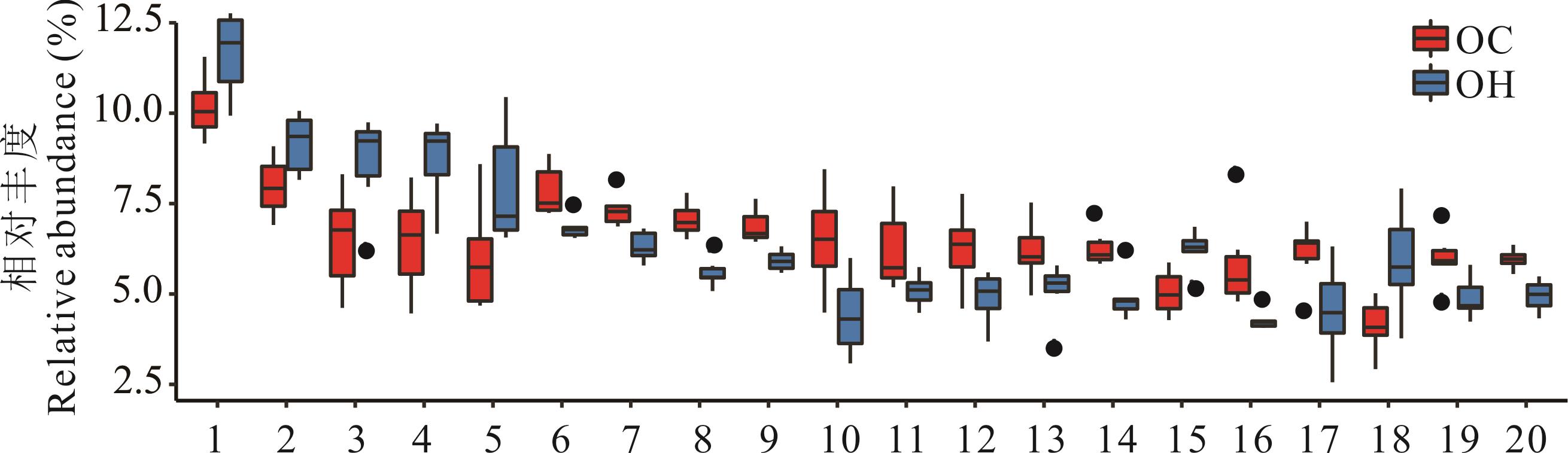
Fig.2 Differential analysis of top 10% highly abundance of rumen microflora at species level

Fig.3 Correlation between rumen fermentation parameters and top 10 highly relative abundances of bacterial community at genus and species levels
| 1 | Yang H P. Species and retrieval of oats in China. Beijing: Agricultural Press, 1989. |
| 杨海鹏. 我国燕麦属内的种及其检索. 北京: 农业出版社, 1989. | |
| 2 | Jing F, Nan M, Liu Y M, et al. Effects of variety and planting density on yield, quality and disease of forage oat. Acta Agrestia Sinica, 2023, 31(10): 3174-3184. |
| 景芳, 南铭, 刘彦明, 等. 品种和种植密度对燕麦饲草产量、品质和病害的影响. 草地学报, 2023, 31(10): 3174-3184. | |
| 3 | Zhou Q P, Hu X W, Wang H, et al. The important role of oat in reinforcing the foundation of food security. Acta Prataculturae Sinica, 2024, 33(10): 171-182. |
| 周青平, 胡晓炜, 汪辉, 等. 燕麦在维护国家粮食安全中的重要作用. 草业学报, 2024, 33(10): 171-182. | |
| 4 | Zhou Y L, Du S, Liu H, et al. Effect of pellet feeding system on growth performance, carcass characteristics and meat quality in Wuzhumuqin lamb. Chinese Journal of Grassland, 2019, 41(3): 173-178. |
| 周玉雷, 都帅, 刘昊, 等. 天然牧草干草和草颗粒对乌珠穆沁羔羊生产性能、屠宰性能和肉品质的影响. 中国草地学报, 2019, 41(3): 173-178. | |
| 5 | Ishaq S L, Lachman M M, Wenner B A, et al. Pelleted-hay alfalfa feed increases sheep wether weight gain and rumen bacterial richness over loose-hay alfalfa feed. PLoS One, 2019, 14(6): e0215797. |
| 6 | Zhang X Q, Jin Y M, Yin F X, et al. Effects of nettle cube diet on rumen bacterial community structure, fermentation parameters and growth performance of Tibetan sheep. Chinese Journal of Animal Nutrition, 2022, 34(3): 1683-1693. |
| 张晓庆, 金艳梅, 尹凤旭, 等. 荨麻草块饲粮对藏系绵羊瘤胃细菌群落结构、发酵参数及生长性能的影响. 动物营养学报, 2022, 34(3): 1683-1693. | |
| 7 | Tang X L. Effectiveness of feeding alfalfa cubes to dairy cows. China Dairy Cattle, 2005(6): 30-31. |
| 汤孝禄. 奶牛饲喂苜蓿草块的效果. 中国奶牛, 2005(6): 30-31. | |
| 8 | Wang Z F, Zhang X Q, Zhong Z M, et al. Effects of oat hay and oat cubes on feeding behavior and production performance of Pengbo semi-fine wool sheep. Acta Prataculturae Sinica, 2023, 32(5): 171-179. |
| 王梓凡, 张晓庆, 钟志明, 等. 燕麦草捆和草块对彭波半细毛羊采食行为及生产性能的影响. 草业学报, 2023, 32(5): 171-179. | |
| 9 | Feng Z C, Gao M. Improvement of the method for determining ammonia nitrogen content in rumen fluid by colorimetry. Animal Husbandry and Feed Science, 2010, 31(Z1): 37. |
| 冯宗慈, 高民. 通过比色测定瘤胃液氨氮含量方法的改进. 畜牧与饲料科学, 2010, 31(Z1): 37. | |
| 10 | Zhang L Y. Feed analysis and quality inspection technology. Beijing: Beiing Kasetsart University Press, 2022. |
| 张丽英. 饲料分析及饲料质量检测技术. 北京: 中国农业大学出版社, 2022. | |
| 11 | Trabi E B, Seddik H, Xie F, et al. Comparison of the rumen bacterial community, rumen fermentation and growth performance of fattening lambs fed low-grain, pelleted or non-pelleted high grain total mixed ration. Animal Feed Science and Technology, 2019, 253(5): 1-12. |
| 12 | Zeng Y, He M, Cao Z J, et al. Effects of roughage particle size of TMR on chewing activity and rumen fermentation in dairy cows. Chinese Journal of Animal Nutrition, 2010, 22(6): 1571-1578. |
| 曾银, 贺鸣, 曹志军, 等. 全混合日粮中粗饲料长度对奶牛咀嚼行为和瘤胃发酵的影响. 动物营养学报, 2010, 22(6): 1571-1578. | |
| 13 | Shen Z F, Wang J, Xu J F, et al. Effects of different particle size alfalfa hay on in vitro fermentation characteristics and microbial population of lambs. China Feed, 2024, 21(9): 136-142. |
| 沈振峰, 王静, 徐建风, 等. 不同苜蓿干草粒度饲料对羔羊体外发酵特征和微生物数量的影响. 中国饲料, 2024, 21(9): 136-142. | |
| 14 | Ortega M E, Stern M D, Satter L D. The effect of rumen ammonia concentration on dry matter disappearance in situ. Journal of Dairy Science, 1979, 62(1): 76. |
| 15 | Einarson M S, Plaizier J C, Wittenberg K M. Effects of barley silage chop length on productivity and rumen conditions of lactating dairy cows fed a total mixed ration. Journal of Dairy Science, 2004, 87(9): 2987-2996. |
| 16 | Newbold C J, Ramos-Morales E. Ruminal microbiome and microbial metabolome: effects of diet and ruminant host. Animal, 2020, 14(S1): 78-86. |
| 17 | Liu C, Wu H, Liu S, et al. Dynamic alterations in yak rumen bacteria community and metabolome characteristics in response to feed type. Frontiers in Microbiology, 2019, 10(5): 1116. |
| 18 | Li J W, Zhou L, Ma B Y, et al. Effects of dietary non fibrous carbohydrate/neutral detergent fiber on rumen fermentation parameters and flora structure of Tibetan sheep. Journal of Sichuan Agricultural University, 2022, 40(2): 253-259, 275. |
| 李蒋伟, 周力, 马博研, 等. 饲粮非纤维性碳水化合物/中性洗涤纤维对藏羊瘤胃发酵参数及菌群结构的影响. 四川农业大学学报, 2022, 40(2): 253-259, 275. | |
| 19 | Feng Y L. Nutrition of ruminants. Beijing: Science Press, 2004: 5. |
| 冯仰廉. 反刍动物营养学. 北京: 科学出版社, 2004: 5. | |
| 20 | Cho J C, Vergin K L, Morris R M, et al. Lentisphaera araneosa gen. nov, sp. nov, a transparent exopolymer producing marine bacterium, and the description of a novel bacterial phylum, Lentisphaerae. Environmental Microbiology, 2004, 6(6): 611-621. |
| 21 | Martinez-Garcia M, Brazel D M, Swan B K, et al. Capturing single cell genomes of active polysaccharide degraders: an unexpected contribution of Verrucomicrobia. PLoS One, 2012, 7(4): e35314. |
| 22 | Ma X H, Gui R Q, Jiao N, et al. Effect of mannan oligosaccharides on rumen bacterial flora structure of Tan sheep under buckwheat straw diet condition. Chinese Journal of Animal Nutrition, 2021, 33(4): 2365-2377. |
| 马秀花, 桂瑞麒, 焦娜, 等. 荞麦秸秆饲粮条件下甘露寡糖对滩羊瘤胃菌群结构的影响. 动物营养学报, 2021, 33(4): 2365-2377. | |
| 23 | Wang S N, Yang W G, Yin F Q. Effects of fucoidan on rumen microflora and metabolomics of weaned lambs. Chinese Journal of Animal Nutrition, 2023, 35(3): 1827-1840. |
| 王胜男, 杨伟光, 尹福泉. 岩藻多糖对断奶羔羊瘤胃微生物区系及代谢组学的影响. 动物营养学报, 2023, 35(3): 1827-1840. | |
| 24 | Ransom-Jones E, Jones D L, Edwards A, et al. Distribution and diversity of members of the bacterial phylum Fibrobacteres in environments where cellulose degradation occurs. Systematic and Applied Microbiology, 2014, 37(7): 502-509. |
| 25 | Prajapati V S, Purohit H J, Raje D V, et al. The effect of a high-roughage diet on the metabolism of aromatic compounds by rumen microbes: a metagenomic study using Mehsani buffalo (Bubalus bubalis). Applied Microbiology and Biotechnology, 2016, 100(3): 1319-1331. |
| 26 | Gharechahi J, Vahidi M F, Ding X Z, et al. Temporal changes in microbial communities attached to forages with different lignocellulosic compositions in cattle rumen. FEMS Microbiology Ecology, 2020, 96(6): 6. |
| 27 | Bao H X, Sagues W J, Wang Y G, et al. Depolymerization of lignin into monophenolics by ferrous/persulfate reagent under mild conditions. ChemSusChem, 2020, 13(24): 6582-6593. |
| 28 | Wang C, Dong D, Wang H S, et al. Metagenomic analysis of microbial consortia enriched from compost: new insights into the role of Actinobacteria in lignocellulose decomposition. Biotechnology for Biofuels, 2016, 9(1): 22. |
| [1] | Shuai QI, Yan-li ZHANG, Yong-jie WAN, Wei-qiang NIU, Ji-xin ZHANG, Xue GAO, Da-gan MAO. Effects of soybean straw co-fermented with a bacterium-enzyme mixture on the growth performance, serum indexes, and rumen microorganisms of Hu sheep [J]. Acta Prataculturae Sinica, 2025, 34(5): 189-201. |
| [2] | Nan GUO, Wu-chen DU, Shou-kun JI, Jian LIU, Su-qian CUI, Hui YUAN, Xu HAN, Ji-shuang LIU, Li-jie GAO. Effects of different fertilization and reseeding rates on the nutrient content of forage in a mountain meadow and its rumen fermentation parameters [J]. Acta Prataculturae Sinica, 2025, 34(4): 150-163. |
| [3] | Pan-ping YANG, Hui-xia LI, Ya-mei HU. Exploration of meat quality characteristics of Yanchi Tan sheep and the potential regulatory mechanisms [J]. Acta Prataculturae Sinica, 2025, 34(4): 223-232. |
| [4] | Ming-ming GU, Xing-hui JIANG, Zhi-yi MA, Shui-ling QIU, Hao-yu LIU, Ming-rui ZHANG, Jia-ning LU, Yu-jun QIU, Ben-zhi WANG, Qian-fu GAN. Degradation characteristics of sweet potato and taro in the rumen of Mindong goats and changes in microbial community attached to the surface [J]. Acta Prataculturae Sinica, 2024, 33(9): 169-184. |
| [5] | Hao GUAN, Duo XU, Hai-ping LI, Zhi-feng JIA, Xiang MA, Wen-hui LIU, You-jun CHEN, Xin-yang LI, Yan-ling HUANG, Qing-ping ZHOU, Shi-yong CHEN. A study of nutritional quality and rumen degradation characteristics of 17 oat varieties in high cold regions [J]. Acta Prataculturae Sinica, 2024, 33(9): 185-198. |
| [6] | Rong GUO, Hai-fei JING, Yi YANG, Guo-sheng XIN, Ting YANG. Effects of nano selenium on growth performance, blood biochemistry and metabolome of Tan sheep [J]. Acta Prataculturae Sinica, 2024, 33(9): 199-213. |
| [7] | Li-ping HONG, Xiao-dong LI, Er-ru YU, Cheng-jiang PEI, Yi-shun SHANG, Jin-hong LUO, Guang SUN, Yun-hao ZHOU, Shi-ge LI, Hang YANG, Feng-dan LIU. Effects of different perilla (Perilla frutescens) materials on serum antioxidant enzyme activity, rumen fermentation parameters and microflora of Guizhou black goats [J]. Acta Prataculturae Sinica, 2024, 33(9): 214-226. |
| [8] | Chun-jiao MI, Liu HONG, Wen MA, Pei-sheng MAO. Effects of glutathione priming on the mitochondrial antioxidant characteristics of aged oat seed embryos [J]. Acta Prataculturae Sinica, 2024, 33(9): 51-59. |
| [9] | Yuan MA, Huan LIU, Gui-qin ZHAO, Jing-long WANG, Ran ZHANG, Rui-rui YAO. Identification of the oat sHSP gene family and its transcript profiles in response to high temperature and aging [J]. Acta Prataculturae Sinica, 2024, 33(8): 145-158. |
| [10] | Wen-pan DU, Gui-qin ZHAO, Ji-kuan CHAI, Li YANG, Jian-gui ZHANG, Yi-chao SHI, Guan-lu ZHANG. Effects of root separation on aboveground biomass, soil nutrient contents, and root characters of intercropped oat and pea [J]. Acta Prataculturae Sinica, 2024, 33(8): 25-36. |
| [11] | Rui-juan SANG, Chao-jie CUI, Yun HE, Xiao-xia ZHANG, Jin YAO, Chun-yang DONG, Hao SUN, Ying-hua SHI, Xiao-yan ZHU, De-feng LI. Lodging resistance and production performance of 18 autumn-sown forage oat varieties in northern Henan Province [J]. Acta Prataculturae Sinica, 2024, 33(8): 74-85. |
| [12] | Shang-lin YANG, Xuan WU, Qiao-hui LUO, Tai-hua HUANG, Zheng-fan ZHANG, Hai-tao SHI, Chun-hua GUO. A study of the protein requirements of 20-35 kg Chuanzhong black goats [J]. Acta Prataculturae Sinica, 2024, 33(7): 119-129. |
| [13] | Shu-zhen SONG, Cai-ye ZHU, Li-shan LIU, Xu-ying GONG, Rui-rui LUO. The effect of tail-docking on adipocyte structure and lipid metabolism-related gene expression in Lanzhou fat-tailed sheep [J]. Acta Prataculturae Sinica, 2024, 33(7): 94-104. |
| [14] | Zhao ZHANG, Ying-ying FU, Hao-wen SUN, Feng-xue SUN, Hui-fang YAN. Identification of seed vigor and evaluation of seed storability in different varieties of oat [J]. Acta Prataculturae Sinica, 2024, 33(6): 165-174. |
| [15] | Jie ZHAO, Heng-guang CHEN, Xiao-meng PEI, Hao YU, Yin-ying XU, Da-gan MAO. Effects of resveratrol supplementation in the perinatal diet on production performance, blood indexes, and transcript abundance of genes encoding inflammatory factors in goats [J]. Acta Prataculturae Sinica, 2024, 33(4): 210-220. |
| Viewed | ||||||
|
Full text |
|
|||||
|
Abstract |
|
|||||
