
ISSN 1004-5759 CN 62-1105/S
Acta Prataculturae Sinica ›› 2025, Vol. 34 ›› Issue (8): 79-87.DOI: 10.11686/cyxb2024356
Previous Articles Next Articles
Yu-gang GENG1( ), Hong-mei YANG1, Wen-wu WANG2(), Rui-jie LUO1, Bao-guo ZHAO2, Jiang-hong CHEN1, Chang-sheng QIN3, Rui-yin CHEN1
Received:2024-09-23
Revised:2024-11-20
Online:2025-08-20
Published:2025-06-16
Contact:
Wen-wu WANG
Yu-gang GENG, Hong-mei YANG, Wen-wu WANG, Rui-jie LUO, Bao-guo ZHAO, Jiang-hong CHEN, Chang-sheng QIN, Rui-yin CHEN. Effects of stockpiling methods on root activity in stripped alpine meadows of the Qinghai-Tibet Plateau[J]. Acta Prataculturae Sinica, 2025, 34(8): 79-87.
堆存方式 Stockpiling method | 编号Number | 层 Layer | 描述 Description | 优缺点 Advantage and disadvantage |
|---|---|---|---|---|
平铺法 Flat-laying method | PP1 | 1 | 将草甸单层平铺在指定位置。Lay the turf flat in a single layer at the designated location. | 优点:根系活性保持较好,回铺后恢复快;缺点:占地面积较大。Advantages: The root system maintains good activity and recovers quickly after re-laying; Disadvantages: It occupies a relatively large area. |
镂空法 Hollow method | LK3 | 3 | 利用自身刚度使重叠堆放的草甸保持镂空。Utilize its own rigidity to keep the overlapped turf stacked with ventilation gaps. | 优点:堆存容量较大,通风好;缺点:对草甸自身刚性有要求,且保水效果一般。Advantages: The stockpiling capacity is relatively large and the ventilation is good; Disadvantages: There are requirements for the rigidity of the turf itself, and the water retention effect is average. |
支架法 Scaffold method | ZJ3 | 3 | 采用铝合金支架摆放草甸,形成3层堆存结构。Arrange the turf using aluminum alloy brackets to form a 3-layer stockpiling structure. | 优点:外观整洁,通风好;缺点:保水效果较差。Advantages: Neat appearance and good ventilation; Disadvantages: Poor water retention. |
三层重叠法 Three-layer overlapping method | CD3 | 3 | 将草甸重叠3层堆放。Stack the turf in three overlapping layers. | 优点:占地较少,保水性能好;缺点:通风效果差。Advantages: Requires less space and has good water retention; Disadvantages: Poor ventilation. |
五层重叠法 Five-layer overlapping method | CD5 | 5 | 将草甸重叠5层堆放。Stack the turf in five overlapping layers. | 优点:占地较少,堆存容量较大,保水性能好;缺点:通风效果差,底层承重大。Advantages: Takes up less space, has a large stockpiling capacity, and offers good water retention; Disadvantages: Poor ventilation and high load-bearing on the bottom layer. |
水保支架法 Conservation scaffold method | SZ3 | 3 | 利用钢管支架支撑草甸,形成3层堆存结构,下垫面铺设三维网。Support the turf with steel pipe brackets to form a 3-layer stockpiling structure, with a three-dimensional mesh laid underneath. | 优点:堆存后景观效果较整洁,通风和保水效果好;缺点:成本较高。Advantages: The landscape effect after stockpiling is neat, with good ventilation and water retention; Disadvantages: The cost is relatively high. |
Table 1 Information of meadow stockpiling methods
堆存方式 Stockpiling method | 编号Number | 层 Layer | 描述 Description | 优缺点 Advantage and disadvantage |
|---|---|---|---|---|
平铺法 Flat-laying method | PP1 | 1 | 将草甸单层平铺在指定位置。Lay the turf flat in a single layer at the designated location. | 优点:根系活性保持较好,回铺后恢复快;缺点:占地面积较大。Advantages: The root system maintains good activity and recovers quickly after re-laying; Disadvantages: It occupies a relatively large area. |
镂空法 Hollow method | LK3 | 3 | 利用自身刚度使重叠堆放的草甸保持镂空。Utilize its own rigidity to keep the overlapped turf stacked with ventilation gaps. | 优点:堆存容量较大,通风好;缺点:对草甸自身刚性有要求,且保水效果一般。Advantages: The stockpiling capacity is relatively large and the ventilation is good; Disadvantages: There are requirements for the rigidity of the turf itself, and the water retention effect is average. |
支架法 Scaffold method | ZJ3 | 3 | 采用铝合金支架摆放草甸,形成3层堆存结构。Arrange the turf using aluminum alloy brackets to form a 3-layer stockpiling structure. | 优点:外观整洁,通风好;缺点:保水效果较差。Advantages: Neat appearance and good ventilation; Disadvantages: Poor water retention. |
三层重叠法 Three-layer overlapping method | CD3 | 3 | 将草甸重叠3层堆放。Stack the turf in three overlapping layers. | 优点:占地较少,保水性能好;缺点:通风效果差。Advantages: Requires less space and has good water retention; Disadvantages: Poor ventilation. |
五层重叠法 Five-layer overlapping method | CD5 | 5 | 将草甸重叠5层堆放。Stack the turf in five overlapping layers. | 优点:占地较少,堆存容量较大,保水性能好;缺点:通风效果差,底层承重大。Advantages: Takes up less space, has a large stockpiling capacity, and offers good water retention; Disadvantages: Poor ventilation and high load-bearing on the bottom layer. |
水保支架法 Conservation scaffold method | SZ3 | 3 | 利用钢管支架支撑草甸,形成3层堆存结构,下垫面铺设三维网。Support the turf with steel pipe brackets to form a 3-layer stockpiling structure, with a three-dimensional mesh laid underneath. | 优点:堆存后景观效果较整洁,通风和保水效果好;缺点:成本较高。Advantages: The landscape effect after stockpiling is neat, with good ventilation and water retention; Disadvantages: The cost is relatively high. |
| 指标Indicator | PP1 | LK3 | ZJ3 | CD3 | CD5 | SZ3 | P值P value |
|---|---|---|---|---|---|---|---|
| pH | 4.99 | 4.90 | 5.09 | 5.11 | 4.98 | 4.96 | >0.05 |
| 有机碳Organic carbon (%) | 5.30 | 4.64 | 5.88 | 4.57 | 4.48 | 5.66 | >0.05 |
| 全氮Total nitrogen (%) | 0.36 | 0.32 | 0.41 | 0.31 | 0.31 | 0.39 | >0.05 |
| 全钾Total potassium (%) | 1.33 | 1.29 | 1.25 | 1.27 | 1.21 | 1.22 | >0.05 |
| 全磷Total phosphorus (mg·kg-1) | 836.85 | 761.71 | 872.27 | 724.88 | 681.63 | 864.74 | >0.05 |
| 有效磷Available phosphorus (mg·kg-1) | 2.31 | 1.97 | 1.86 | 1.72 | 2.16 | 1.57 | >0.05 |
| 速效钾Available potassium (mg·kg-1) | 179.35 | 123.74 | 216.24 | 163.56 | 161.09 | 193.74 | >0.05 |
| 碱解氮Alkaline hydrolyzable nitrogen (mg·kg-1) | 329.27 | 316.13 | 395.31 | 296.79 | 294.37 | 381.45 | >0.05 |
Table 2 Soil physicochemical properties
| 指标Indicator | PP1 | LK3 | ZJ3 | CD3 | CD5 | SZ3 | P值P value |
|---|---|---|---|---|---|---|---|
| pH | 4.99 | 4.90 | 5.09 | 5.11 | 4.98 | 4.96 | >0.05 |
| 有机碳Organic carbon (%) | 5.30 | 4.64 | 5.88 | 4.57 | 4.48 | 5.66 | >0.05 |
| 全氮Total nitrogen (%) | 0.36 | 0.32 | 0.41 | 0.31 | 0.31 | 0.39 | >0.05 |
| 全钾Total potassium (%) | 1.33 | 1.29 | 1.25 | 1.27 | 1.21 | 1.22 | >0.05 |
| 全磷Total phosphorus (mg·kg-1) | 836.85 | 761.71 | 872.27 | 724.88 | 681.63 | 864.74 | >0.05 |
| 有效磷Available phosphorus (mg·kg-1) | 2.31 | 1.97 | 1.86 | 1.72 | 2.16 | 1.57 | >0.05 |
| 速效钾Available potassium (mg·kg-1) | 179.35 | 123.74 | 216.24 | 163.56 | 161.09 | 193.74 | >0.05 |
| 碱解氮Alkaline hydrolyzable nitrogen (mg·kg-1) | 329.27 | 316.13 | 395.31 | 296.79 | 294.37 | 381.45 | >0.05 |

Fig.1 Root activity of vegetation under different stockpiling methods
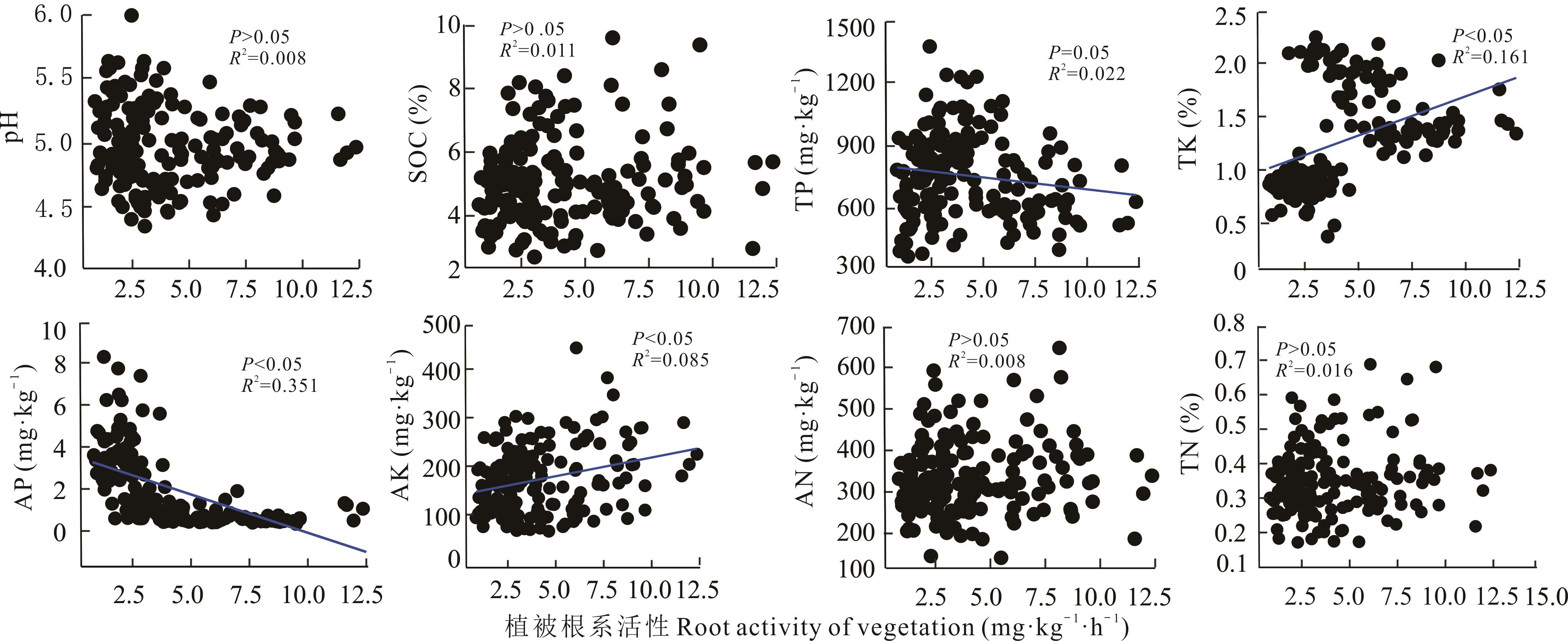
Fig.2 Regression analysis of root activity and potential influencing factors
| 1 | Yang X Y, Xia T Y, Wu T. Potassium nutrient stress in plants: A review. Chinese Agricultural Science Bulletin, 2023, 39(18): 101-106. |
| 杨晓燕, 夏体渊, 吴甜. 植物钾营养胁迫研究进展. 中国农学通报, 2023, 39(18): 101-106. | |
| 2 | Du Q, Zhao X H, Jiang C J, et al. Effect of potassium deficiency on root growth and nutrient uptake in maize (Zea mays L.). Agricultural Sciences, 2017, 8(11): 1263-1277. |
| 3 | Liu C E, Yang Y X, Yang Y. Distribution, accumulation and dynamics of kalium of wetland plants in upper shoal of the Jiuduansha, Shanghai. Wetland Science, 2008, 6(2): 185-191. |
| 刘长娥, 杨永兴, 杨杨. 九段沙上沙湿地植物钾元素的分布、积累与动态. 湿地科学, 2008, 6(2): 185-191. | |
| 4 | Luo T, Yin X D, Qu S M, et al. Effects of photovoltaic panels on quantitative characteristics of plant functional groups in meadow steppe. Grassland and Turf, 2023, 43(6): 32-37. |
| 罗厅, 尹晓冬, 曲善民, 等. 光伏电板对草甸草原植物功能群数量特征的影响. 草原与草坪, 2023, 43(6): 32-37. | |
| 5 | Tian Z Q, Zhang Y, Liu X, et al. Effects of photovoltaic power station construction on terrestrial environment: Retrospect and prospect. Environmental Science, 2024, 45(1): 239-247. |
| 田政卿, 张勇, 刘向, 等. 光伏电站建设对陆地生态环境的影响: 研究进展与展望. 环境科学, 2024, 45(1): 239-247. | |
| 6 | Liu L J. Study on spatial heterogeneity of soil water and soil total carbon of alpine area in eastern Qinghai-Tibetan Plateau. Chengdu: Sichuan Normal University, 2008. |
| 柳领君. 青藏高原东缘高寒地区土壤水分与土壤全碳空间异质性研究. 成都: 四川师范大学, 2008. | |
| 7 | Zhou Z Y, Cui B L, Chen K L, et al. Effects of simulated changes in precipitation on soil respiration in alpine lakeshore wetlands. Research of Soil and Water Conservation, 2023, 30(5): 130-137. |
| 周祉蕴, 崔博亮, 陈克龙, 等. 模拟降雨量变化对高寒湖滨湿地土壤呼吸的影响. 水土保持研究, 2023, 30(5): 130-137. | |
| 8 | Bao S D. Soil agricultural and chemical analysis (3rd edition). Beijing: China Agricultural Press, 1999. |
| 鲍士旦. 土壤农化分析(第3版). 北京: 中国农业出版社,1999. | |
| 9 | Ye B X, Mao D C, Liu X C. Study on the correlation of root activity and photosynthetic rate in the later growth duration of super-wheat. Shandong Agricultural Sciences, 2005(4): 4-16. |
| 叶宝兴, 毛达超, 刘学春. 超级小麦生育后期根系活力与净光合速率相关性的研究. 山东农业科学, 2005(4): 4-16. | |
| 10 | Mareri L, Parrotta L, Cai G. Environmental stress and plants. International Journal of Molecular Sciences, 2022, 23(10): 16-29. |
| 11 | Caboň M, Galvánek D, Etheredge A P, et al. Mulching has negative impact on fungal and plant diversity in Slovak oligotrophic grasslands. Basic and Applied Ecology, 2021, 52(2): 24-37. |
| 12 | Han X, Li Y H, Du X F, et al. Effect of grassland degradation on soil quality and soil biotic community in a semi-arid temperate steppe. Ecological Processes, 2020, 63(9): 1-11. |
| 13 | Li C X, Wu X B, Jin Y Z. Advances on plant-microbe interaction mediated by root metabolites. Acta Microbiologica Sinica, 2022, 62(9): 3318-3328. |
| 李春霞, 吴兴彪, 靳亚忠. 根系代谢物介导的植物-微生物互作的研究进展. 微生物学报, 2022, 62(9): 3318-3328. | |
| 14 | Wu J Q, Ma W W, Li G, et al. Effects of four vegetation types on soil physical characteristics and permeability in Loess Plateau. Journal of Soil and Water Conservation, 2018, 32(4): 133-138. |
| 吴江琪, 马维伟, 李广, 等. 黄土高原4种植被类型对土壤物理特征及渗透性的影响. 水土保持学报, 2018, 32(4): 133-138. | |
| 15 | You Y, Jiang W, Yi L, et al. Seeding alpine grasses in low altitude region increases global warming potential during early seedling growth. Journal of Environmental Management, 2024, 356(4): 120-138. |
| 16 | Jiang X Y, Yang S Q, Feng F, et al. Experimental study on the influence of vegetation roots on soil permeability. Journal of Hefei University of Technology (Natural Science), 2022, 45(3): 370-375. |
| 蒋希雁, 杨尚青, 冯峰, 等. 植被根系对土体渗透特性影响的试验研究.合肥工业大学学报(自然科学版), 2022, 45(3): 370-375. | |
| 17 | Papdi E, Veres A, Kovács F, et al. How different mulch materials regulate soil moisture and microbiological activity? Journal of Central European Green Innovation, 2022, 10(9): 26-38. |
| 18 | Wang T. The impact of photovoltaic power construction on soil and vegetation in Jingbian County. Yangling: Northwest A&F University, 2015. |
| 王涛. 光伏电站建设对靖边县土壤、植被的影响研究. 杨凌: 西北农林科技大学, 2015. | |
| 19 | Li L Z, Liu H, Shi X F, et al. A brief analysis of the impact of photovoltaic power stations on the environment. Science & Technology Information, 2012, 41(12): 91. |
| 李丽珍, 刘辉, 史学峰, 等. 浅析光伏电站对环境的影响. 科技信息, 2012, 41(12): 91. | |
| 20 | Geng X D, Xu R, Liu Y W. Responses of ecosystem carbon exchange to multi-level water addition in an alpine meadow in Namtso of Qinghai-Xizang Plateau, China.Chinese Journal of Plant Ecology, 2018, 42(3): 397-405. |
| 耿晓东, 旭日, 刘永稳. 青藏高原纳木错高寒草甸生态系统碳交换对多梯度增水的响应. 植物生态学报, 2018, 42(3): 397-405. | |
| 21 | Zhang J, Yuan M S, Zhang J, et al. Responses of the NDVI of alpine grasslands on the Qinghai-Tibetan Plateau to climate change and human activities over the last 30 years. Acta Ecologica Sinica, 2020, 40(18): 6269-6281. |
| 张江, 袁旻舒, 张婧, 等. 近30年来青藏高原高寒草地NDVI动态变化对自然及人为因子的响应. 生态学报, 2020, 40(18): 6269-6281. | |
| 22 | Rondina A B L, Tonon B C, Lescano L E A M, et al. Plants of distinct successional stages have different strategies for nutrient acquisition in an Atlantic rain forest ecosystem. International Journal of Plant Sciences, 2019, 180(3): 186-199. |
| 23 | Zheng Z, Wu X, Gong L, et al. Studies on the correlation between δ13C and nutrient elements in two desert plants. Forests, 2023, 14(12): 23-38. |
| 24 | Tang K, Zhu W W, Zhou W X, et al. Research progress on effects of soil pH on plant growth and development. Crop Research, 2013, 27(2): 207-212. |
| 唐琨, 朱伟文, 周文新, 等. 土壤pH对植物生长发育影响的研究进展. 作物研究, 2013, 27(2): 207-212. | |
| 25 | Lian M H, Sun L N, Hu X M, et al. Effect of pH on cadmium speciation in rhizosphere soil solutions of different cadmium accumulating plants. Chinese Journal of Ecology, 2015, 34(1): 130-137. |
| 廉梅花, 孙丽娜, 胡筱敏, 等. pH 对不同富集能力植物根际土壤溶液中镉形态的影响. 生态学杂志, 2015, 34(1): 130-137. | |
| 26 | Ni H J, Su W H, Fan S H, et al. Responses of forest soil nutrient cycling to nutrient input modes: A review. Chinese Journal of Ecology, 2019, 38(3): 863-872. |
| 倪惠菁, 苏文会, 范少辉, 等. 养分输入方式对森林生态系统土壤养分循环的影响研究进展. 生态学杂志, 2019, 38(3): 863-872. | |
| 27 | Centenaro G, Hudek C, Zanella A, et al. Root-soil physical and biotic interactions with a focus on tree root systems: A review. Applied Soil Ecology, 2018, 123(2): 318-327. |
| 28 | Yang J X, Yin W J, Yang X R. Application of turf stripping and re-laying technology in the Sichuan-Tibet power grid interconnection project. Technology Innovation and Appllication, 2014(19): 24-25. |
| 杨建霞, 尹武君, 杨晓瑞. 草皮剥离回铺技术在川藏联网工程中的应用. 科技创新与应用, 2014(19): 24-25. | |
| 29 | Kong Y Y, Luo Q Y, Chen Z. Study on the characteristics of vegetation composition and community succession of alpine meadow under three management modes. Journal of Yunnan Agricultural University (Natural Sciences), 2020, 35(6): 1046-1053. |
| 孔杨云, 罗巧玉, 陈志. 3种管理模式下高寒草甸植物群落构成及稳定性研究. 云南农业大学学报(自然科学), 2020, 35(6): 1046-1053. | |
| 30 | Xian G. Huadian Changdu New Energy Company: Top-level design draws a green blueprint, harmonious coexistence guards the third pole. (2024-06-06)[2025-01-03]. https://k.sina.com.cn/article_7517400647_1c0126e4705905939s.html. |
| 鲜敢. 华电昌都新能源公司: 顶层设计绘就绿蓝图, 和谐共生守护第三极. (2024-06-06)[2025-01-03]. https://k.sina.com.cn/article_7517400647_1c0126e4705905939s.html. |
| [1] | Ying WANG, Ming-yuan LI, Mairiyangu·Yasheng, Ji-lian WANG. Comparative study of rhizosphere soil fungal community structure among different plants in Tomur Peak, Xinjiang [J]. Acta Prataculturae Sinica, 2025, 34(7): 83-94. |
| [2] | Wen-jin LIU, Fu-zhen JIANG, Kai-bin QI, Ming-dan SONG, Zheng-peng LI. Effects of different fertilization and sowing amounts on vegetation restoration and soil quality in alpine mining areas and comprehensive evaluation [J]. Acta Prataculturae Sinica, 2025, 34(5): 27-39. |
| [3] | Rui LIU, Dan-na CHANG, Guo-peng ZHOU, Song-juan GAO, Qiang CHAI, Wei-dong CAO. Techniques of N2O emission reduction in farmland and their synergistic application with green manure [J]. Acta Prataculturae Sinica, 2025, 34(2): 196-210. |
| [4] | Abudilimu YUERENSA·, Wei ZHAO, Xiao-wei WANG, Yan HUANG, Ai-qin ZHNAG. Ovule development before and after fertilization and seed formation dynamics of Medicago sativa cv. Xinmu No.4 [J]. Acta Prataculturae Sinica, 2024, 33(12): 111-121. |
| [5] | Huan LIU, Kai DONG, Zeng-wangdui REN, Jing-long WANG, Yun-fei LIU, Gui-qin ZHAO. Effects of co-sowing of Artemisia wellbyi and perennial grasses on the characteristics of vegetation and soil fungal communities in desertified grasslands in Tibet [J]. Acta Prataculturae Sinica, 2023, 32(6): 45-57. |
| [6] | Yuan MA, Xiao-li WANG, Yan-long WANG, Yu-shou MA, Hai-peng CUI. Review of grass seed pelletizing in ecological restoration [J]. Acta Prataculturae Sinica, 2023, 32(4): 197-207. |
| [7] | Xiao-hong YAN, Jian-ming NIU, Yuan-heng LI, Feng-yan YI, Shi-xian SUN, Ke JIN, Xi-liang LI. Priority effects on plant community assembly and ecological restoration significance [J]. Acta Prataculturae Sinica, 2022, 31(10): 217-225. |
| [8] | Jun REN, Yao SHI, Fang LIU, Rong TIAN, Xing LIU. An assessment of heavy metal absorption patterns in herbaceous plants and pollution risks in manganese mining areas in Guizhou Province [J]. Acta Prataculturae Sinica, 2021, 30(8): 86-97. |
| [9] | Xiang JIANG, Jian-xia MA. The impact of different factors on the outcomes of grassland ecological restoration to in China: A Meta-analysis [J]. Acta Prataculturae Sinica, 2021, 30(2): 14-31. |
| [10] | LUO Nan, SHU Ying-ge, CHEN Meng-jun, XIAO Sheng-yang. Soil structure and fractal characteristics of different land categories in a karst rocky desertification area [J]. Acta Prataculturae Sinica, 2020, 29(7): 11-22. |
| [11] | CHANG Hai-tao, ZHAO Juan, LIU Jia-nan, LIU Ren-tao, LUO Ya-xi, ZHANG Jing. Changes in soil physico-chemical properties and related fractal features during conversion of cropland into agroforestry and grassland: A case study of desertified steppe in Ningxia [J]. Acta Prataculturae Sinica, 2019, 28(7): 14-25. |
| [12] | WANG Rou-yi, SHENG Jun, JIA Jun-qi, LI Hai-yan, YANG Yun-fei. Age structure of Calamagrostis macrolepis var. rigidula populations during vegetation restoration in coal ash storage pools [J]. Acta Prataculturae Sinica, 2019, 28(1): 180-187. |
| [13] | MI Yong-wei, WANG Guo-xiang, GONG Cheng-wen, CAI Zi-ping, WU Wei-guo. Effects of salt stress on growth and physiology of Isatis indigotica seedlings [J]. Acta Prataculturae Sinica, 2018, 27(6): 43-51. |
| [14] | JIA Xi-yang, MA Hong-bin, ZHOU Yao, ZHANG Rui, SU Ting-ting, ZHANG Shuang-qiao, ZHANG Jun. Floristic quantitative classification and successional characteristics of typical grassland under different ecological restoration methods in the Loess Hilly Region of Ningxia [J]. Acta Prataculturae Sinica, 2018, 27(2): 15-25. |
| [15] | FANG Zhao, ZHANG Shao-kang, LIU Hai-wei, JIAO Feng, ZHANG Jun. Distribution of herbaceous community biomass and its relationship with influencing factors in the Loess Hilly Region [J]. Acta Prataculturae Sinica, 2018, 27(2): 26-35. |
| Viewed | ||||||
|
Full text |
|
|||||
|
Abstract |
|
|||||
