
ISSN 1004-5759 CN 62-1105/S
Acta Prataculturae Sinica ›› 2025, Vol. 34 ›› Issue (7): 83-94.DOI: 10.11686/cyxb2024417
Previous Articles Next Articles
Ying WANG1,2( ), Ming-yuan LI1,2, Mairiyangu·Yasheng1,2, Ji-lian WANG1,2()
Received:2024-10-24
Revised:2024-12-05
Online:2025-07-20
Published:2025-05-12
Contact:
Ji-lian WANG
Ying WANG, Ming-yuan LI, Mairiyangu·Yasheng, Ji-lian WANG. Comparative study of rhizosphere soil fungal community structure among different plants in Tomur Peak, Xinjiang[J]. Acta Prataculturae Sinica, 2025, 34(7): 83-94.
植被类型 Vegetation type | pH | TN (mg·kg-1) | AN (mg·kg-1) | AP (mg·kg-1) | TP (g·kg-1) | TK (g·kg-1) | AK (mg·kg-1) | SOM (g·kg-1) |
|---|---|---|---|---|---|---|---|---|
野党参 C. javanica | 8.05±0.23ab | 3.00±0.16a | 172.38±9.85a | 5.94±0.19c | 0.88±0.07a | 15.94±0.38a | 219.26±9.77b | 44.04±1.65c |
早熟禾 P. annua | 8.40±0.15a | 3.05±0.16a | 170.76±10.43a | 22.66±1.57b | 0.88±0.07a | 14.47±0.80ab | 773.66±13.13a | 62.18±3.03b |
老鹳草 G. wilfordii | 7.71±0.22b | 3.56±0.22a | 209.41±3.54a | 48.08±2.66a | 1.00±0.08a | 13.40±0.76bc | 246.26±7.38b | 86.16±1.89a |
紫花苜蓿 M. sativa | 7.69±0.17b | 2.93±1.07a | 162.96±44.79a | 16.08±6.73b | 0.96±0.18a | 12.72±0.25c | 236.50±12.31b | 47.99±13.08bc |
Table 1 Physicochemical properties of rhizosphere soil among four plant species
植被类型 Vegetation type | pH | TN (mg·kg-1) | AN (mg·kg-1) | AP (mg·kg-1) | TP (g·kg-1) | TK (g·kg-1) | AK (mg·kg-1) | SOM (g·kg-1) |
|---|---|---|---|---|---|---|---|---|
野党参 C. javanica | 8.05±0.23ab | 3.00±0.16a | 172.38±9.85a | 5.94±0.19c | 0.88±0.07a | 15.94±0.38a | 219.26±9.77b | 44.04±1.65c |
早熟禾 P. annua | 8.40±0.15a | 3.05±0.16a | 170.76±10.43a | 22.66±1.57b | 0.88±0.07a | 14.47±0.80ab | 773.66±13.13a | 62.18±3.03b |
老鹳草 G. wilfordii | 7.71±0.22b | 3.56±0.22a | 209.41±3.54a | 48.08±2.66a | 1.00±0.08a | 13.40±0.76bc | 246.26±7.38b | 86.16±1.89a |
紫花苜蓿 M. sativa | 7.69±0.17b | 2.93±1.07a | 162.96±44.79a | 16.08±6.73b | 0.96±0.18a | 12.72±0.25c | 236.50±12.31b | 47.99±13.08bc |
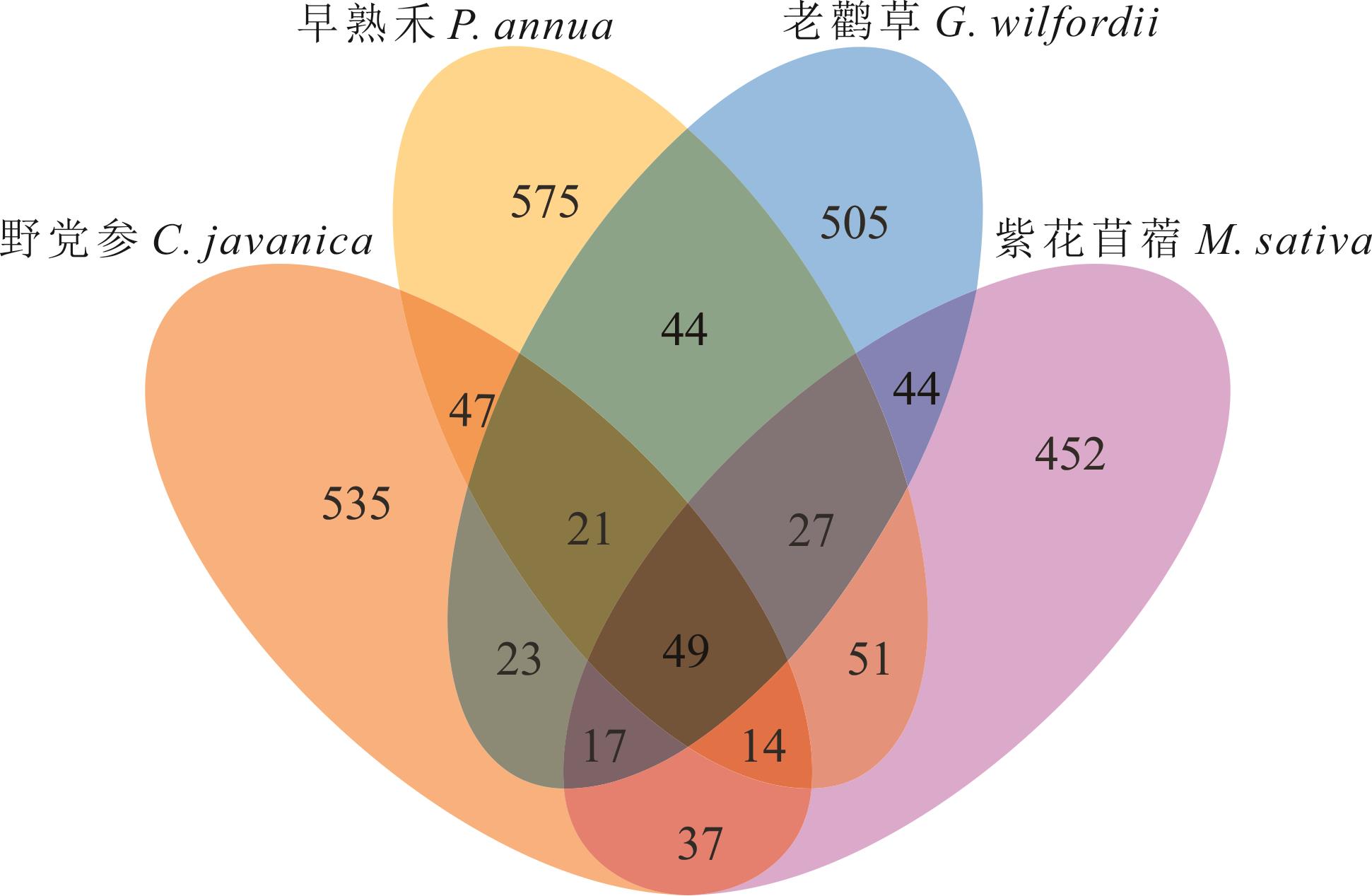
Fig.1 The analysis of fungi amplicon sequence variants (ASVs) among different plant species
| 植被类型Vegetation type | Chao1指数Chao1 index | 均匀度指数Pielou_e index | 香农指数Shannon index | 辛普森指数Simpson index |
|---|---|---|---|---|
| 野党参C. javanica | 285.31±30.91a | 0.78±0.04a | 6.36±0.30a | 0.97±0.01a |
| 早熟禾P. annua | 357.66±85.01a | 0.74±0.02a | 6.29±0.18a | 0.97±0.01ab |
| 老鹳草G. wilfordii | 262.02±42.78a | 0.72±0.02a | 5.71±0.24b | 0.94±0.01b |
| 紫花苜蓿M. sativa | 232.00±140.34a | 0.77±0.05a | 5.84±0.32ab | 0.96±0.01ab |
Table 2 The α-diversity indexes of rhizosphere soil fungi among four plant species
| 植被类型Vegetation type | Chao1指数Chao1 index | 均匀度指数Pielou_e index | 香农指数Shannon index | 辛普森指数Simpson index |
|---|---|---|---|---|
| 野党参C. javanica | 285.31±30.91a | 0.78±0.04a | 6.36±0.30a | 0.97±0.01a |
| 早熟禾P. annua | 357.66±85.01a | 0.74±0.02a | 6.29±0.18a | 0.97±0.01ab |
| 老鹳草G. wilfordii | 262.02±42.78a | 0.72±0.02a | 5.71±0.24b | 0.94±0.01b |
| 紫花苜蓿M. sativa | 232.00±140.34a | 0.77±0.05a | 5.84±0.32ab | 0.96±0.01ab |
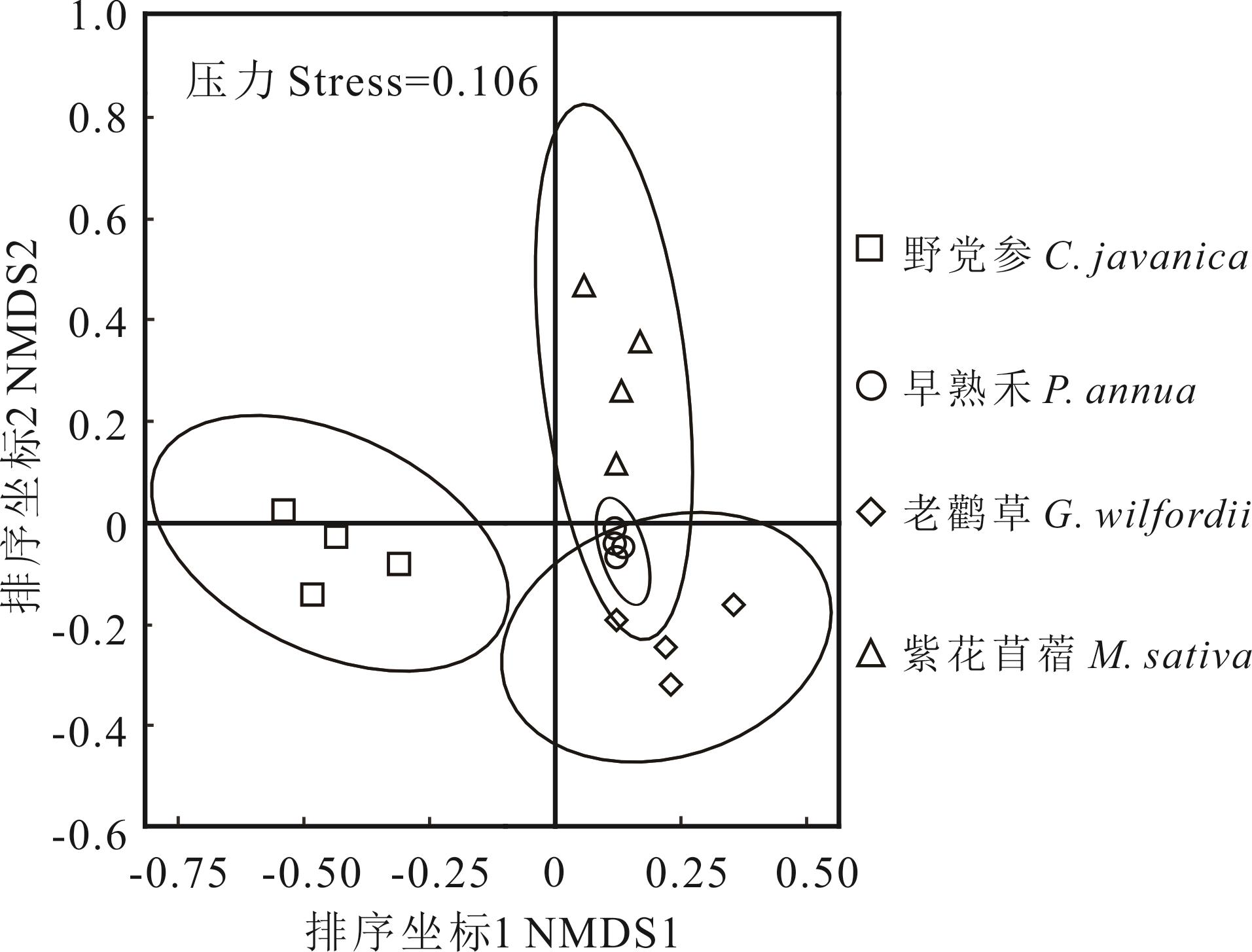
Fig.2 Non-metric multidimensional scaling (NMDS) analysis of rhizosphere soil fungal communities among four plant species

Fig.3 Relative abundance of rhizosphere soil fungal communities among different plant species

Fig.4 The linear discriminant analysis (LDA) values of fungi in rhizosphere soil among four plant species
| 营养型Trophic type | 野党参C. javanica | 早熟禾P. annua | 老鹳草G. wilfordii | 紫花苜蓿M. sativa |
|---|---|---|---|---|
| 腐生营养型Saprotroph | 0.337±0.069b | 0.515±0.023a | 0.379±0.067b | 0.321±0.049b |
| 病理营养型Pathotroph | 0.033±0.010c | 0.083±0.011b | 0.014±0.004c | 0.158±0.054a |
| 共生营养型Symbiotroph | 0.093±0.022a | 0.041±0.005b | 0.005±0.000c | 0.014±0.004bc |
病理腐生共生过渡型 Pathotroph-saprotroph-symbiotroph | 0.018±0.003abc | 0.056±0.029ab | 0.011±0.005c | 0.064±0.036a |
病理腐生过渡型 Pathotroph-saprotroph | 0.007±0.006b | 0.018±0.007ab | 0.041±0.010a | 0.035±0.026ab |
病理共生过渡型 Pathotroph-symbiotroph | 0.024±0.009a | 0.021±0.011a | 0.007±0.003a | 0.023±0.011a |
腐生共生过渡型 Saprotroph-symbiotroph | 0.002±0.001a | 0.002±0.001a | 0.003±0.001a | 0.002±0.001a |
病原体腐生共生过渡型 Pathogen-saprotroph-symbiotroph | - | - | - | 0.000±0.000 |
Table 3 Relative abundance of trophic types in rhizosphere soil fungal communities among different plants
| 营养型Trophic type | 野党参C. javanica | 早熟禾P. annua | 老鹳草G. wilfordii | 紫花苜蓿M. sativa |
|---|---|---|---|---|
| 腐生营养型Saprotroph | 0.337±0.069b | 0.515±0.023a | 0.379±0.067b | 0.321±0.049b |
| 病理营养型Pathotroph | 0.033±0.010c | 0.083±0.011b | 0.014±0.004c | 0.158±0.054a |
| 共生营养型Symbiotroph | 0.093±0.022a | 0.041±0.005b | 0.005±0.000c | 0.014±0.004bc |
病理腐生共生过渡型 Pathotroph-saprotroph-symbiotroph | 0.018±0.003abc | 0.056±0.029ab | 0.011±0.005c | 0.064±0.036a |
病理腐生过渡型 Pathotroph-saprotroph | 0.007±0.006b | 0.018±0.007ab | 0.041±0.010a | 0.035±0.026ab |
病理共生过渡型 Pathotroph-symbiotroph | 0.024±0.009a | 0.021±0.011a | 0.007±0.003a | 0.023±0.011a |
腐生共生过渡型 Saprotroph-symbiotroph | 0.002±0.001a | 0.002±0.001a | 0.003±0.001a | 0.002±0.001a |
病原体腐生共生过渡型 Pathogen-saprotroph-symbiotroph | - | - | - | 0.000±0.000 |
| 功能类群Guild groups | 野党参C. javanica | 早熟禾P. annua | 老鹳草G. wilfordii | 紫花苜蓿M. sativa |
|---|---|---|---|---|
| 未定义腐生真菌Undefined-saprotroph | 0.304±0.067b | 0.442±0.022a | 0.355±0.056ab | 0.286±0.052b |
| 植物病原菌Plant-pathogen | 0.032±0.011c | 0.075±0.010b | 0.014±0.004c | 0.156±0.055a |
动物病原体-内生真菌-植物病原体-木材腐生真菌 Animal pathogen-endophyte-plant pathogen-wood saprotroph | 0.008±0.006b | 0.042±0.023a | 0.007±0.006b | 0.047±0.035a |
| 粪便腐生真菌Dung-saprotroph | 0.018±0.010b | 0.065±0.011a | 0.019±0.012b | 0.007±0.004b |
| 丛枝菌根真菌Arbuscular-mycorrhizal | 0.049±0.008a | 0.029±0.008b | 0.003±0.002c | 0.011±0.014bc |
植物病原体-土壤腐生物-木材腐生真菌 Plant pathogen-soil saprotroph-wood saprotroph | 0.002±0.001c | 0.003±0.001bc | 0.021±0.016a | 0.019±0.008ab |
| 外生菌根真菌Ectomycorrhizal | 0.027±0.014a | 0.000±0.000b | 0.003±0.001b | 0.002±0.001b |
| 内生真菌-植物-病原菌Endophyte-plant-pathogen | 0.024±0.009a | 0.021±0.011a | 0.008±0.002a | 0.024±0.011a |
粪便腐生真菌-未定义腐生菌-木材腐生真菌 Dung saprotroph-undefined saprotroph-wood saprotroph | - | - | - | 0.016±0.010 |
Table 4 Relative abundance of dominant functional groups in rhizosphere soil fungal communities among different plant species
| 功能类群Guild groups | 野党参C. javanica | 早熟禾P. annua | 老鹳草G. wilfordii | 紫花苜蓿M. sativa |
|---|---|---|---|---|
| 未定义腐生真菌Undefined-saprotroph | 0.304±0.067b | 0.442±0.022a | 0.355±0.056ab | 0.286±0.052b |
| 植物病原菌Plant-pathogen | 0.032±0.011c | 0.075±0.010b | 0.014±0.004c | 0.156±0.055a |
动物病原体-内生真菌-植物病原体-木材腐生真菌 Animal pathogen-endophyte-plant pathogen-wood saprotroph | 0.008±0.006b | 0.042±0.023a | 0.007±0.006b | 0.047±0.035a |
| 粪便腐生真菌Dung-saprotroph | 0.018±0.010b | 0.065±0.011a | 0.019±0.012b | 0.007±0.004b |
| 丛枝菌根真菌Arbuscular-mycorrhizal | 0.049±0.008a | 0.029±0.008b | 0.003±0.002c | 0.011±0.014bc |
植物病原体-土壤腐生物-木材腐生真菌 Plant pathogen-soil saprotroph-wood saprotroph | 0.002±0.001c | 0.003±0.001bc | 0.021±0.016a | 0.019±0.008ab |
| 外生菌根真菌Ectomycorrhizal | 0.027±0.014a | 0.000±0.000b | 0.003±0.001b | 0.002±0.001b |
| 内生真菌-植物-病原菌Endophyte-plant-pathogen | 0.024±0.009a | 0.021±0.011a | 0.008±0.002a | 0.024±0.011a |
粪便腐生真菌-未定义腐生菌-木材腐生真菌 Dung saprotroph-undefined saprotroph-wood saprotroph | - | - | - | 0.016±0.010 |
| 项目Items | pH | TN | AN | AP | TP | TK | AK | SOM |
|---|---|---|---|---|---|---|---|---|
| Chao1指数Chao1 index | 0.296 | 0.083 | 0.049 | -0.028 | 0.443 | 0.163 | 0.490 | 0.119 |
| 均匀度指数Pielou_e index | 0.323 | -0.377 | -0.394 | -0.627** | -0.496 | 0.314 | -0.132 | -0.611* |
| 香农指数Shannon index | 0.591* | -0.094 | -0.145 | -0.515* | 0.048 | 0.558* | 0.352 | -0.322 |
| 辛普森指数Simpson index | 0.521* | -0.394 | -0.438 | -0.703** | -0.185 | 0.397 | 0.205 | -0.589* |
Table 5 Correlation analysis of fungal α-diversity indices and soil ecological factors
| 项目Items | pH | TN | AN | AP | TP | TK | AK | SOM |
|---|---|---|---|---|---|---|---|---|
| Chao1指数Chao1 index | 0.296 | 0.083 | 0.049 | -0.028 | 0.443 | 0.163 | 0.490 | 0.119 |
| 均匀度指数Pielou_e index | 0.323 | -0.377 | -0.394 | -0.627** | -0.496 | 0.314 | -0.132 | -0.611* |
| 香农指数Shannon index | 0.591* | -0.094 | -0.145 | -0.515* | 0.048 | 0.558* | 0.352 | -0.322 |
| 辛普森指数Simpson index | 0.521* | -0.394 | -0.438 | -0.703** | -0.185 | 0.397 | 0.205 | -0.589* |

Fig.5 Redundancy analysis of environmental factors and fungal communities
| 1 | Chu Q Q. Characteristics of fungi community in rhizosphere soil of navel orange in southern Jiangxi Province. Shanghai: East China University of Science and Technology, 2023. |
| 褚奇奇. 赣南脐橙根际土壤真菌群落特征研究. 上海: 东华理工大学, 2023. | |
| 2 | Ding Z J, Tang M, Chen X, et al. Measuring rhizosphere effects of two tree species in a temperate forest: A comprehensive method comparison. Rhizosphere, 2019, 10(6): 100153. |
| 3 | Wu W W, Han X, Wang J P, et al. Alterations with plantation years of Fructus aurantii on rhizosphere microbiome and soil properties. Acta Pedologica Sinica, 2024, 61(6): 1729-1740. |
| 吴微微, 韩雪, 王继朋, 等. 种植年限对枳壳根际微生物群落和土壤性质的影响. 土壤学报, 2024, 61(6): 1729-1740. | |
| 4 | Chen J, Nan J, Xu D L, et al. Response differences between soil fungal and bacterial communities under opencast coal mining disturbance conditions. Catena, 2020, 194: 104779. |
| 5 | Ji C, Huang J, Yu H, et al. Do the reclaimed fungal communities succeed toward the original structure in eco-fragile regions of coal mining disturbances? A case study in North China loess-aeolian sand area. Frontiers in Microbiology, 2022, 13: 770715. |
| 6 | Jiang C, Dong Y H, Meng L Q, et al. Research progress on soybean root rot caused by Fusarium and its biological control. Soybean Science, 2024, 43(5): 656-662. |
| 姜超, 董禹含, 孟利强, 等. 镰孢菌引发的大豆根腐病及其生物防治研究进展. 大豆科学, 2024, 43(5): 656-662. | |
| 7 | Dong Z Y, Rao M P N, Liao T J, et al. Diversity and function of rhizosphere microorganisms between wild and cultivated medicinal plant Glycyrrhiza uralensis Fisch under different soil conditions. Archives of Microbiology, 2021, 203(6): 3657-3665. |
| 8 | Turhong·Nurdong, Yang C, Maimaitimin·Sulaiman. Bryophytes in the Tomur Peak National Nature Reserve. Forestry of Xinjiang, 2023(6): 30-33. |
| 吐尔洪·努尔东, 杨纯, 买买提明·苏来曼. 托木尔峰国家级自然保护区的苔藓植物. 新疆林业, 2023(6): 30-33. | |
| 9 | Dolathan·Tohsun, Turhong·Nurdong, Reyimu·Mamuti, et al. Study on microlichen species diversity in Tuomuer Peak National Nature Reserve, Xinjiang. Journal of Anhui Agricultural Sciences, 2024, 52(9): 87-91. |
| 杜来提罕·托合荪, 吐尔洪·努尔东, 热衣木·马木提, 等. 新疆托木尔峰国家级自然保护区微型地衣多样性研究. 安徽农业科学, 2024, 52(9): 87-91. | |
| 10 | Yong H Y, Turhong·Nurdong, Reyimu·Mamuti, et al. Macrolichen flora and diversity in Tuomuer Peak National Nature Reserve, Xinjiang, China. Journal of Arid Land Resources and Environment, 2024, 38(4): 147-154. |
| 雍海英, 吐尔洪·努尔东, 热衣木·马木提, 等. 新疆托木尔峰国家级自然保护区大型地衣多样性及区系研究. 干旱区资源与环境, 2024, 38(4): 147-154. | |
| 11 | Liu F F, Yang J, Wang G Q, et al. Effects of disturbances on vegetation diversity and soil physicochemical properties of Tomur national nature reserve. Science Technology and Engineering, 2023, 23(7): 2787-2793. |
| 刘霏霏, 杨静, 王国庆, 等. 扰动对托木尔峰国家自然保护区植被多样性和土壤理化性质的影响. 科学技术与工程, 2023, 23(7): 2787-2793. | |
| 12 | Zhao Z X. Diversity of macrofungi in Tomur National Nature Reserve and molecular systematics of important taxa. Alaer: Tarim University, 2022. |
| 赵振西. 托木尔峰国家级自然保护区大型真菌多样性及重要类群分子系统学研究. 阿拉尔: 塔里木大学, 2022. | |
| 13 | Bai Y X, Liu R H, Su J H, et al. Effects of tree species mixing on bulk and rhizosphere soil microbial resource limitation in stands of Pinus massoniana and Castanopsis hystrix. Acta Ecologica Sinica, 2024, 44(23): 10770-10781. |
| 白昱欣, 刘润洪, 苏洁桦, 等. 树种混交对马尾松和红锥根际与非根际土壤微生物资源限制的影响. 生态学报, 2024, 44(23): 10770-10781. | |
| 14 | Bao S D. Soil agrochemical analysis (The Third Edition). Beijing: China Agriculture Press, 2000. |
| 鲍士旦. 土壤农化分析(第三版). 北京: 中国农业出版社, 2000. | |
| 15 | Li M Y, Wang J L, Zhou Q, et al. Analysis on the rhizosphere fungal community structure of four halophytes in Southern Xinjiang. Acta Ecologica Sinica, 2021, 41(21): 8484-8495. |
| 李明源, 王继莲, 周茜, 等. 南疆四种盐生植物根际土壤真菌群落结构特征. 生态学报, 2021, 41(21): 8484-8495. | |
| 16 | Ma D X, Wang J Q, Lan W L, et al. Response of fungal communities in container seedling substrates of Cunninghamia lanceolata to exponential fertilization. Journal of Sichuan Agricultural University, 2024, 42(2): 388-396. |
| 马东旭, 王佳琪, 蓝伟立, 等. 指数施肥对杉木容器育苗基质真菌群落及功能类群的影响. 四川农业大学学报, 2024, 42(2): 388-396. | |
| 17 | Zhu W Y, Lin M T, Wu Z Y, et al. Diversity and function analysis of endophytic bacteria in Phyllostachys edulis stems at different ages. Journal of Sichuan Agricultural University, 2022, 40(5): 766-774. |
| 朱伟垚, 林梦婷, 吴仲义, 等. 不同竹龄毛竹茎干内生细菌多样性与功能预测. 四川农业大学学报, 2022, 40(5): 766-774. | |
| 18 | Wang L Y, Sun H Z, Yang X. Structure and functional diversity of bacterial community in rhizospere soil of typical vegetation in the riparian zone along the downstream of Songhua River. Environmental Science, 2022, 43(4): 2182-2191. |
| 王露莹, 孙慧珍, 杨雪. 松花江下游滨岸带典型植被根际土壤细菌群落结构与功能多样性. 环境科学, 2022, 43(4): 2182-2191. | |
| 19 | Guo C Q, Yang C, Fu J S, et al. Effects of crop rotation on sugar beet growth through improving soil physicochemical properties and microbiome. Industrial Crops and Products, 2024, 212: 118331. |
| 20 | Zhang X S, Guo P J, Zhang Y L, et al. Community composition and diversity of fungi in reclaimed soil in mining areas under different vegetation restoration types. Mycosystema, 2022, 41(11): 1831-1844. |
| 张旭升, 郭鹏杰, 张瀛澜, 等. 不同植被恢复模式下矿区复垦土壤真菌群落组成及多样性. 菌物学报, 2022, 41(11): 1831-1844. | |
| 21 | Masse J, Hamel C, Bainard L D, et al. Diversification of crops and intensification of canola impact the diversity, community structure, and productivity in successive crop systems: A study on arbuscular mycorrhizal fungal communities in roots and rhizosphere. Agriculture, Ecosystems and Environment, 2025, 377: 109256. |
| 22 | Liu A L, Li Y X, Wang Q Q, et al. Analysis of microbial diversity and community structure of rhizosphere soil of Cistanche salsa from different host plants. Frontiers in Microbiology, 2022, 13: 971228. |
| 23 | Yao T, Hu X L, Jia Y H, et al. Effects of corn stalk biochar on soil physicochemical properties and fungal community structure in the rhizosphere of Gaillardia pulchella Foug. Journal of Southern Agriculture, 2021, 52(4): 942-950. |
| 姚彤, 胡晓龙, 贾永红, 等. 玉米秸秆生物炭对天人菊土壤理化性质及根际土壤真菌群落结构的影响. 南方农业学报, 2021, 52(4): 942-950. | |
| 24 | Li S, Wang D L, Xu S T, et al. Correlation analysis of rhizosphere soil fungal community structure and physicochemical in Aquilaria sinensis (Lour.) Spreng before and after agarwood induction in different planting areas. Chinese Journal of Tropical Crops, 2024, 45(5): 1061-1071. |
| 李思, 王德立, 徐诗涛, 等. 不同种植区白木香结香前后根际土壤真菌群落结构与理化因子相关性分析. 热带作物学报, 2024, 45(5): 1061-1071. | |
| 25 | Li H, Su M D, Huang L P, et al. Effects of nitrogen, phosphorus and potassium application on available nutrients and fungal diversity in tobacco-growing soil. Crops, 2023(3): 238-245. |
| 李航, 苏梦迪, 黄浪平, 等. 氮磷钾配施对植烟土壤速效养分和真菌多样性的影响. 作物杂志, 2023(3): 238-245. | |
| 26 | Koechli C, Campbell A N, Pepe-Ranney C, et al. Assessing fungal contributions to cellulose degradation in soil by using high-throughput stable isotope probing. Soil Biology and Biochemistry, 2019, 130(2019): 150-158. |
| 27 | Qiu Z J, Suo M, Wang Z B, et al. Research progress on the application of Mortierella in sustainable agricul-tural production. Jiangsu Journal of Agricultural Sciences, 2024, 40(4): 762-768. |
| 裘智杰, 索萌, 王照贝, 等. 被孢霉在可持续农业生产中的应用研究进展. 江苏农业学报, 2024, 40(4): 762-768. | |
| 28 | Xi S H, Ming A G, Tan L, et al. Comparison of soil fungal community diversity and functional groups between native tree species and Eucalyptus plantations in south subtropical China. Guihaia, 2024, 44(7): 1232-1244. |
| 席守鸿, 明安刚, 谭玲, 等. 南亚热带乡土树种与桉树人工林土壤真菌群落多样性和功能类群的比较. 广西植物, 2024, 44(7): 1232-1244. | |
| 29 | Liu H Y. Big data analysis of soil microorganisms and evaluation of soil quality in cotton region in Xinjiang. Shihezi: Shihezi University, 2021. |
| 刘海燕. 新疆土壤微生物大数据分析及棉区土壤质量评价. 石河子: 石河子大学, 2021. | |
| 30 | Man B Y, Xiang X, Luo Y, et al. Characteristics and influencing factors of soil fungal community of typical vegetation types in Mount Huangshan, East China. Mycosystema, 2021, 40(10): 2735-2751. |
| 满百膺, 向兴, 罗洋, 等. 黄山典型植被类型土壤真菌群落特征及其影响因素. 菌物学报, 2021, 40(10): 2735-2751. | |
| 31 | Chen W, Wang J, Meng Z, et al. Fertility-related interplay between fungal guilds underlies plant richness-productivity relationships in natural grasslands. New Phytologist, 2020, 226(4): 1129-1143. |
| 32 | Xiong D, Ou J, Li L P, et al. Community composition and ecological function analysis of endophytic fungi in the roots of Rhododendron sismsii in Pinus massoniana forest in central Guizhou. Acta Ecologica Sinica, 2020, 40(4): 1228-1239. |
| 熊丹, 欧静, 李林盼, 等. 黔中地区马尾松林下杜鹃根部内生真菌群落组成及其生态功能. 生态学报, 2020, 40(4): 1228-1239. | |
| 33 | Yang P, Zhai Y P, Zhao X, et al. Effect of arbuscular mycorrhizal fungi and rhizobium inoculation on soil fungal community structure and function in the rhizosphere of Medicago sativa. Pratacultural Science, 2020, 37(9): 1669-1680. |
| 杨盼, 翟亚萍, 赵祥, 等. AM真菌和根瘤菌互作对苜蓿根际土壤真菌群落结构的影响及功能预测. 草业科学, 2020, 37(9): 1669-1680. | |
| 34 | Che Y Y. Study on the growth-promoting and disease-resistant effects of arbuscular mycorrhizal fungi inoculation on Quercus variabilis seedlings. Qufu: Qufu Normal University, 2024. |
| 车钰莹. 接种丛枝菌根真菌对栓皮栎幼苗的促生和抗病作用研究. 曲阜: 曲阜师范大学, 2024. | |
| 35 | Wang F, Dong C X, Zhang Y H. Effects of inoculation with arbuscular mycorrhizal fungial on physiological and secondary metabolite of Oenothera biennis under salt stress. Journal of Northeast Forestry University, 2024, 52(10): 110-118. |
| 王非, 董晨肖, 张玉红. 接种丛枝菌根真菌对盐胁迫下月见草生理及次生代谢产物的影响. 东北林业大学学报, 2024, 52(10): 110-118. | |
| 36 | Zhao Y H, Sun J Q, Sun J S, et al. Community composition of ectomycorrhizal fungi associated with Quercus mongolica in Beijing, China. Acta Agriculturae Boreali-Occidentalis Sinica, 2024, 33(7): 1364-1374. |
| 赵誉涵, 孙佳琦, 孙静双, 等. 北京地区蒙古栎(Quercus mongolica)外生菌根真菌群落特征. 西北农业学报, 2024, 33(7): 1364-1374. |
| [1] | Shun-hua LUO, Xin-yu LIU, Bao-ping MENG, Xuan-li CHEN, Ren-jie HU, Hong-yan YU, Xian-ying WANG, Bo ZHANG, Yu QIN. A study of functional group diversity and productivity of alpine grassland in Qilian Mountain National Park [J]. Acta Prataculturae Sinica, 2025, 34(6): 14-26. |
| [2] | Wen-hui DENG, Ke-chen SONG, Hao ZHANG, Si-yu GUAN, Jia-yi YONG, Hai-ying HU. Structure and diversity characteristics of the rhizosphere microbial community of dominant plants on the desert steppe under changing precipitation [J]. Acta Prataculturae Sinica, 2025, 34(5): 12-26. |
| [3] | Wen-jin LIU, Fu-zhen JIANG, Kai-bin QI, Ming-dan SONG, Zheng-peng LI. Effects of different fertilization and sowing amounts on vegetation restoration and soil quality in alpine mining areas and comprehensive evaluation [J]. Acta Prataculturae Sinica, 2025, 34(5): 27-39. |
| [4] | Shou-xing WANG, Hua-kun ZHOU, Li-peng OU, Cheng-xian LI, Yan-he WANG, Xiao-chun NING, Qiang GU, Dai-jun WEI, Ming-xin YANG. Vegetation and soil microbial diversity and their relationships with soil factors in different grassland types of the three river headwaters region [J]. Acta Prataculturae Sinica, 2025, 34(4): 16-26. |
| [5] | Na LYU, Ji-xi GAO, Zheng-hai LI, Chun-he YOU, Xiao-man LIU, Biao ZHANG, Yu MO, Sa-ning ZHU, Yang PENG, Xue YANG. Effects of fertilizer application during mid-growing season on vegetation community biomass and species diversity in meadow grasslands [J]. Acta Prataculturae Sinica, 2025, 34(2): 109-122. |
| [6] | Rong-chun ZHENG, Zhi-biao NAN, Ting-yu DUAN. Diversity of seed-borne fungi on four Trifolium pratense cultivars [J]. Acta Prataculturae Sinica, 2024, 33(8): 170-180. |
| [7] | Zhen-fen ZHANG, Rong HUANG, Xiang-yang LI, Bo YAO, Gui-qin ZHAO. Seed-borne bacterial diversity of oat and functional analysis based on Illumina MiSeq high-throughput sequencing [J]. Acta Prataculturae Sinica, 2023, 32(7): 96-108. |
| [8] | Huan LIU, Kai DONG, Zeng-wangdui REN, Jing-long WANG, Yun-fei LIU, Gui-qin ZHAO. Effects of co-sowing of Artemisia wellbyi and perennial grasses on the characteristics of vegetation and soil fungal communities in desertified grasslands in Tibet [J]. Acta Prataculturae Sinica, 2023, 32(6): 45-57. |
| [9] | Yuan MA, Xiao-li WANG, Yan-long WANG, Yu-shou MA, Hai-peng CUI. Review of grass seed pelletizing in ecological restoration [J]. Acta Prataculturae Sinica, 2023, 32(4): 197-207. |
| [10] | Jiang-wen LI, Jing-hong PEI, Guo-dong HAN, Bang-yin HE, Cai LI. Effect of abnormal precipitation on the diversity of plant functional groups on the desert steppe under different stocking rates [J]. Acta Prataculturae Sinica, 2023, 32(11): 212-222. |
| [11] | Xu-dong WU, Qi JIANG, Zhan-jun WANG, Bo JI, Xiao-bin REN. Effects of precipitation on the stability of aboveground biomass in desert steppe [J]. Acta Prataculturae Sinica, 2023, 32(11): 30-39. |
| [12] | Ying TIAN, Zhe XU, Li-zhen ZHU, Jun WANG, Xue-fei WEN. Effect of cutting time during the growing season on the soil bacterial community under an artificial Caragana intermedia plantation [J]. Acta Prataculturae Sinica, 2022, 31(5): 40-50. |
| [13] | Jun-yan LU, Mei HONG, Bayinnamula ZHAO, Wuyingga ZHAO, Wen-dong WANG, Shang-fei MA, Dian-lin YANG. Response of plant community structure and biomass to long-term nutrient addition in a Stipa baicalensis steppe [J]. Acta Prataculturae Sinica, 2022, 31(4): 22-31. |
| [14] | Xiao-hong YAN, Jian-ming NIU, Yuan-heng LI, Feng-yan YI, Shi-xian SUN, Ke JIN, Xi-liang LI. Priority effects on plant community assembly and ecological restoration significance [J]. Acta Prataculturae Sinica, 2022, 31(10): 217-225. |
| [15] | Xu-mei JIN, Ying-ying WANG, Chong-yi LIU, Xin-yi CHEN, Ming-xiu LONG, Shu-bin HE. Effects on soil nutrients and bacterial communities of different cover crops in an organic kiwifruit orchard in the Guanzhong region of China [J]. Acta Prataculturae Sinica, 2022, 31(10): 53-63. |
| Viewed | ||||||
|
Full text |
|
|||||
|
Abstract |
|
|||||
