
ISSN 1004-5759 CN 62-1105/S
Acta Prataculturae Sinica ›› 2025, Vol. 34 ›› Issue (9): 206-214.DOI: 10.11686/cyxb2024400
Yi-xin LIU( ), Xiao-qing SUI(), Xin-yao WANG, Meng-qing LANG, Ling-zi-yin SUN, Er-ge JIER
Received:2024-10-16
Revised:2024-12-02
Online:2025-09-20
Published:2025-07-02
Contact:
Xiao-qing SUI
Yi-xin LIU, Xiao-qing SUI, Xin-yao WANG, Meng-qing LANG, Ling-zi-yin SUN, Er-ge JIER. Mitigating effects of exogenous melatonin on alfalfa under salt stress[J]. Acta Prataculturae Sinica, 2025, 34(9): 206-214.
处理 Treatment | 霍格兰营养液 Hoagland’s nutrient solution (g·L-1) | NaCl (mmol·L-1) | 褪黑素 Melatonin (MT, μmol·L-1) | 处理 Treatment | 霍格兰营养液 Hoagland’s nutrient solution (g·L-1) | NaCl (mmol·L-1) | 褪黑素 Melatonin (MT, μmol·L-1) |
|---|---|---|---|---|---|---|---|
| CK | 1.96 | 0 | 0 | N | 1.96 | 150 | 0 |
| MT1 | 1.96 | 0 | 50 | NM1 | 1.96 | 150 | 50 |
| MT2 | 1.96 | 0 | 100 | NM2 | 1.96 | 150 | 100 |
| MT3 | 1.96 | 0 | 150 | NM3 | 1.96 | 150 | 150 |
| MT4 | 1.96 | 0 | 200 | NM4 | 1.96 | 150 | 200 |
Table 1 Treatment components and concentrations
处理 Treatment | 霍格兰营养液 Hoagland’s nutrient solution (g·L-1) | NaCl (mmol·L-1) | 褪黑素 Melatonin (MT, μmol·L-1) | 处理 Treatment | 霍格兰营养液 Hoagland’s nutrient solution (g·L-1) | NaCl (mmol·L-1) | 褪黑素 Melatonin (MT, μmol·L-1) |
|---|---|---|---|---|---|---|---|
| CK | 1.96 | 0 | 0 | N | 1.96 | 150 | 0 |
| MT1 | 1.96 | 0 | 50 | NM1 | 1.96 | 150 | 50 |
| MT2 | 1.96 | 0 | 100 | NM2 | 1.96 | 150 | 100 |
| MT3 | 1.96 | 0 | 150 | NM3 | 1.96 | 150 | 150 |
| MT4 | 1.96 | 0 | 200 | NM4 | 1.96 | 150 | 200 |

Fig.1 Mitigating effects of exogenous melatonin on osmoregulatory substances in alfalfa leaves under salt stress

Fig.2 Mitigating effects of exogenous melatonin on oxidative damage and cell membrane stability in alfalfa leaves under salt stress

Fig.3 Mitigating effects of exogenous melatonin on antioxidant enzyme activities of alfalfa leaves under salt stress
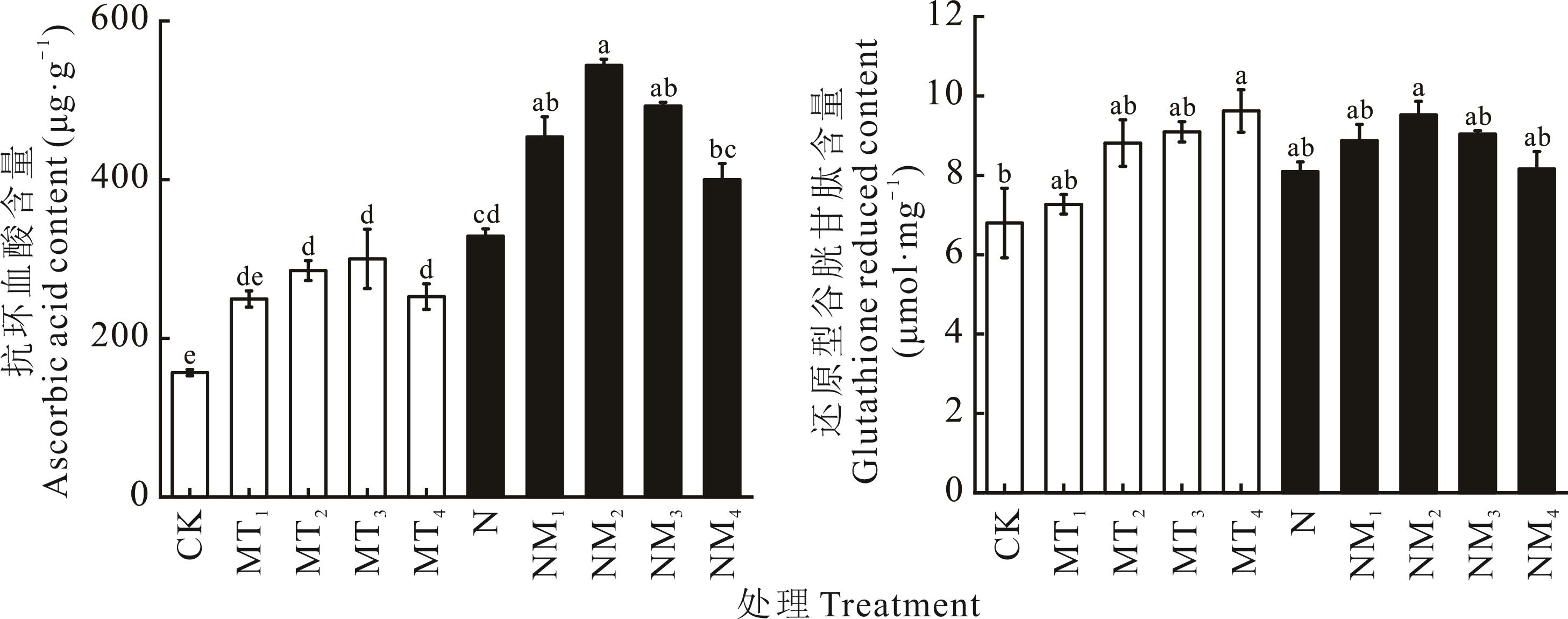
Fig.4 Mitigating effects of exogenous melatonin on antioxidant content of alfalfa leaves under salt stress
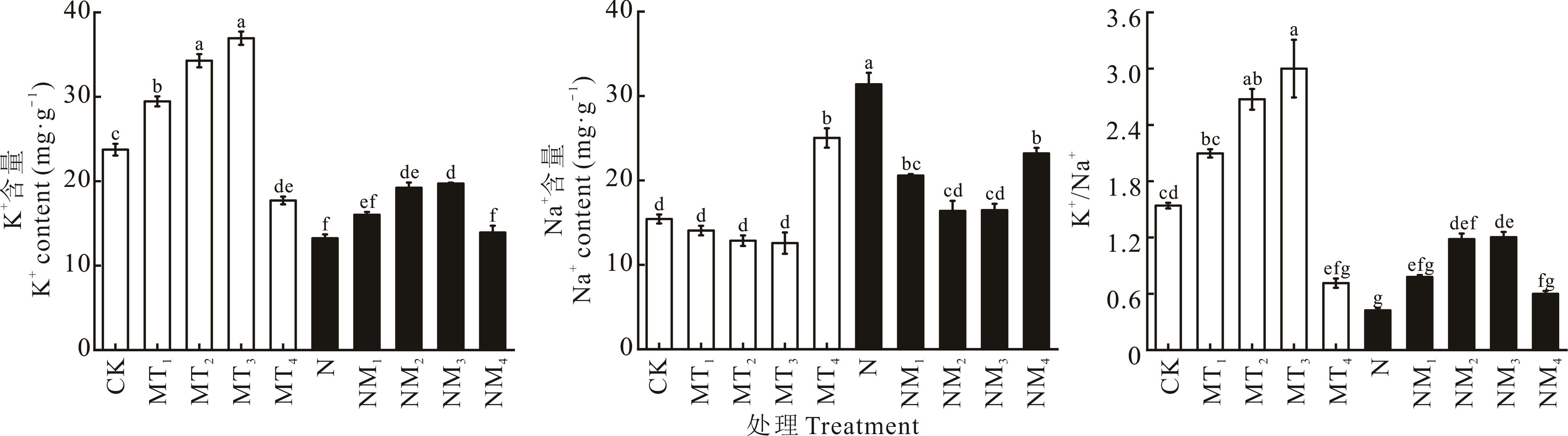
Fig.5 Mitigating effects of exogenous melatonin on ionic homeostasis in alfalfa under salt stress
生理指标 Physiological index | 主成分1 PC1 | 主成分2 PC2 | 主成分3 PC3 |
|---|---|---|---|
| 过氧化氢酶Catalase | 0.93 | 0.07 | -0.14 |
| 丙二醛Malondialdehyde | 0.92 | 0.19 | -0.07 |
| 过氧化物酶Peroxidase | 0.88 | 0.28 | -0.17 |
| 可溶性糖Soluble sugar | 0.86 | 0.14 | -0.32 |
| 游离脯氨酸Free proline | 0.78 | 0.46 | -0.11 |
| 可溶性蛋白Soluble protein | 0.76 | -0.59 | 0.00 |
| 相对电导率Relative conductivity | 0.62 | 0.61 | -0.13 |
| 超氧化物歧化酶Superoxide dismutase | 0.57 | 0.41 | 0.43 |
| 谷胱甘肽S-转移酶Glutathione S-transferase | 0.52 | 0.33 | 0.28 |
| 还原型谷胱甘肽Glutathione reduced | 0.43 | -0.81 | 0.15 |
| 过氧化氢Hydrogen peroxide | -0.62 | 0.75 | 0.07 |
| 谷胱甘肽还原酶Glutathione reductase | 0.49 | 0.73 | 0.00 |
| 抗坏血酸Ascorbic acid | 0.57 | -0.71 | 0.17 |
| 羟自由基清除率Hydroxyl free radical clearance rate | -0.66 | 0.71 | 0.10 |
| 钾离子K+ | 0.54 | -0.70 | 0.24 |
| 钠离子Na+ | 0.55 | 0.64 | 0.09 |
| K+/Na+ | 0.20 | 0.23 | 0.84 |
| 贡献率Contribution rate (%) | 44.69 | 29.74 | 7.57 |
| 累计贡献率Cumulative contribution rate (%) | 44.69 | 74.43 | 82.00 |
Table 2 Principal component analysis
生理指标 Physiological index | 主成分1 PC1 | 主成分2 PC2 | 主成分3 PC3 |
|---|---|---|---|
| 过氧化氢酶Catalase | 0.93 | 0.07 | -0.14 |
| 丙二醛Malondialdehyde | 0.92 | 0.19 | -0.07 |
| 过氧化物酶Peroxidase | 0.88 | 0.28 | -0.17 |
| 可溶性糖Soluble sugar | 0.86 | 0.14 | -0.32 |
| 游离脯氨酸Free proline | 0.78 | 0.46 | -0.11 |
| 可溶性蛋白Soluble protein | 0.76 | -0.59 | 0.00 |
| 相对电导率Relative conductivity | 0.62 | 0.61 | -0.13 |
| 超氧化物歧化酶Superoxide dismutase | 0.57 | 0.41 | 0.43 |
| 谷胱甘肽S-转移酶Glutathione S-transferase | 0.52 | 0.33 | 0.28 |
| 还原型谷胱甘肽Glutathione reduced | 0.43 | -0.81 | 0.15 |
| 过氧化氢Hydrogen peroxide | -0.62 | 0.75 | 0.07 |
| 谷胱甘肽还原酶Glutathione reductase | 0.49 | 0.73 | 0.00 |
| 抗坏血酸Ascorbic acid | 0.57 | -0.71 | 0.17 |
| 羟自由基清除率Hydroxyl free radical clearance rate | -0.66 | 0.71 | 0.10 |
| 钾离子K+ | 0.54 | -0.70 | 0.24 |
| 钠离子Na+ | 0.55 | 0.64 | 0.09 |
| K+/Na+ | 0.20 | 0.23 | 0.84 |
| 贡献率Contribution rate (%) | 44.69 | 29.74 | 7.57 |
| 累计贡献率Cumulative contribution rate (%) | 44.69 | 74.43 | 82.00 |
| 指标Index | CK | MT1 | MT2 | MT3 | MT4 | N | NM1 | NM2 | NM3 | NM4 |
|---|---|---|---|---|---|---|---|---|---|---|
| 过氧化氢酶Catalase | 0.00 | 0.21 | 0.41 | 0.49 | 0.08 | 0.16 | 0.59 | 0.87 | 1.00 | 0.35 |
| 丙二醛Malondialdehyde | 0.10 | 0.07 | 0.00 | 0.03 | 0.89 | 1.00 | 0.68 | 0.48 | 0.31 | 0.98 |
| 过氧化物酶Peroxidase | 0.09 | 0.00 | 0.50 | 0.88 | 0.27 | 0.25 | 0.50 | 1.00 | 1.00 | 0.34 |
| 可溶性糖Soluble sugar | 0.00 | 0.47 | 0.78 | 1.00 | 0.27 | 0.55 | 0.66 | 1.00 | 0.91 | 0.46 |
| 游离脯氨酸Free proline | 0.00 | 0.12 | 0.47 | 0.66 | 0.24 | 0.59 | 0.78 | 1.00 | 0.93 | 0.33 |
| 可溶性蛋白Soluble protein | 0.01 | 0.04 | 0.10 | 0.23 | 0.00 | 0.65 | 0.75 | 0.90 | 1.00 | 0.48 |
| 相对电导率Relative conductivity | 0.06 | 0.06 | 0.04 | 0.00 | 0.57 | 1.00 | 0.64 | 0.57 | 0.50 | 0.74 |
| 超氧化物歧化酶Superoxide dismutase | 0.03 | 0.00 | 0.61 | 0.97 | 0.90 | 0.31 | 0.10 | 0.26 | 1.00 | 0.61 |
| 谷胱甘肽S-转移酶Glutathione S-transferase | 0.00 | 0.28 | 0.58 | 0.71 | 0.67 | 0.21 | 0.69 | 0.65 | 1.00 | 0.68 |
| 还原型谷胱甘肽Glutathione reduced | 0.00 | 0.17 | 0.71 | 0.81 | 1.00 | 0.46 | 0.74 | 0.97 | 0.79 | 0.48 |
| 过氧化氢Hydrogen peroxide | 0.22 | 0.20 | 0.04 | 0.00 | 1.00 | 0.93 | 0.78 | 0.53 | 0.46 | 0.68 |
| 谷胱甘肽还原酶Glutathione reductase | 0.00 | 0.02 | 0.23 | 0.34 | 0.41 | 0.50 | 0.74 | 0.89 | 1.00 | 0.52 |
| 抗坏血酸Ascorbic acid | 0.00 | 0.24 | 0.33 | 0.37 | 0.25 | 0.44 | 0.77 | 1.00 | 0.87 | 0.63 |
| 羟自由基清除率Hydroxyl free radical clearance rate | 0.00 | 0.02 | 0.06 | 0.12 | 0.39 | 0.44 | 0.75 | 1.00 | 0.89 | 0.45 |
| 钾离子K+ | 0.44 | 0.68 | 0.89 | 1.00 | 0.19 | 0.00 | 0.12 | 0.25 | 0.27 | 0.03 |
| 钠离子Na+ | 0.15 | 0.08 | 0.02 | 0.00 | 0.66 | 1.00 | 0.43 | 0.20 | 0.21 | 0.56 |
| K+/Na+ | 0.43 | 0.65 | 0.87 | 1.00 | 0.11 | 0.00 | 0.14 | 0.29 | 0.30 | 0.07 |
| D值D value | 0.09 | 0.19 | 0.39 | 0.51 | 0.47 | 0.50 | 0.58 | 0.70 | 0.73 | 0.49 |
| 排名Ranking | 10 | 9 | 8 | 4 | 7 | 5 | 3 | 2 | 1 | 6 |
Table 3 Comprehensive evaluation of membership functions
| 指标Index | CK | MT1 | MT2 | MT3 | MT4 | N | NM1 | NM2 | NM3 | NM4 |
|---|---|---|---|---|---|---|---|---|---|---|
| 过氧化氢酶Catalase | 0.00 | 0.21 | 0.41 | 0.49 | 0.08 | 0.16 | 0.59 | 0.87 | 1.00 | 0.35 |
| 丙二醛Malondialdehyde | 0.10 | 0.07 | 0.00 | 0.03 | 0.89 | 1.00 | 0.68 | 0.48 | 0.31 | 0.98 |
| 过氧化物酶Peroxidase | 0.09 | 0.00 | 0.50 | 0.88 | 0.27 | 0.25 | 0.50 | 1.00 | 1.00 | 0.34 |
| 可溶性糖Soluble sugar | 0.00 | 0.47 | 0.78 | 1.00 | 0.27 | 0.55 | 0.66 | 1.00 | 0.91 | 0.46 |
| 游离脯氨酸Free proline | 0.00 | 0.12 | 0.47 | 0.66 | 0.24 | 0.59 | 0.78 | 1.00 | 0.93 | 0.33 |
| 可溶性蛋白Soluble protein | 0.01 | 0.04 | 0.10 | 0.23 | 0.00 | 0.65 | 0.75 | 0.90 | 1.00 | 0.48 |
| 相对电导率Relative conductivity | 0.06 | 0.06 | 0.04 | 0.00 | 0.57 | 1.00 | 0.64 | 0.57 | 0.50 | 0.74 |
| 超氧化物歧化酶Superoxide dismutase | 0.03 | 0.00 | 0.61 | 0.97 | 0.90 | 0.31 | 0.10 | 0.26 | 1.00 | 0.61 |
| 谷胱甘肽S-转移酶Glutathione S-transferase | 0.00 | 0.28 | 0.58 | 0.71 | 0.67 | 0.21 | 0.69 | 0.65 | 1.00 | 0.68 |
| 还原型谷胱甘肽Glutathione reduced | 0.00 | 0.17 | 0.71 | 0.81 | 1.00 | 0.46 | 0.74 | 0.97 | 0.79 | 0.48 |
| 过氧化氢Hydrogen peroxide | 0.22 | 0.20 | 0.04 | 0.00 | 1.00 | 0.93 | 0.78 | 0.53 | 0.46 | 0.68 |
| 谷胱甘肽还原酶Glutathione reductase | 0.00 | 0.02 | 0.23 | 0.34 | 0.41 | 0.50 | 0.74 | 0.89 | 1.00 | 0.52 |
| 抗坏血酸Ascorbic acid | 0.00 | 0.24 | 0.33 | 0.37 | 0.25 | 0.44 | 0.77 | 1.00 | 0.87 | 0.63 |
| 羟自由基清除率Hydroxyl free radical clearance rate | 0.00 | 0.02 | 0.06 | 0.12 | 0.39 | 0.44 | 0.75 | 1.00 | 0.89 | 0.45 |
| 钾离子K+ | 0.44 | 0.68 | 0.89 | 1.00 | 0.19 | 0.00 | 0.12 | 0.25 | 0.27 | 0.03 |
| 钠离子Na+ | 0.15 | 0.08 | 0.02 | 0.00 | 0.66 | 1.00 | 0.43 | 0.20 | 0.21 | 0.56 |
| K+/Na+ | 0.43 | 0.65 | 0.87 | 1.00 | 0.11 | 0.00 | 0.14 | 0.29 | 0.30 | 0.07 |
| D值D value | 0.09 | 0.19 | 0.39 | 0.51 | 0.47 | 0.50 | 0.58 | 0.70 | 0.73 | 0.49 |
| 排名Ranking | 10 | 9 | 8 | 4 | 7 | 5 | 3 | 2 | 1 | 6 |
| [1] | Wang J J, Lv P H, Yan D, et al. Exogenous melatonin improves seed germination of wheat (Triticum aestivum L.) under salt stress. International Journal of Molecular Sciences, 2022, 23(15): 8436. |
| [2] | Li X Y, Xie L N. Research progress in Na+ regulation mechanism of plants under salt stress. Biotechnology Bulletin, 2019, 35(7): 148-155. |
| 李晓院, 解莉楠. 盐胁迫下植物Na+调节机制的研究进展. 生物技术通报, 2019, 35(7): 148-155. | |
| [3] | Zhao L J, Ma D M, Wang W J, et al. Effect of exogenous melatonin on antioxidant capacity and photosynthetic efficiency of alfalfa seedling under salt stress. Acta Botanica Boreali-Occidentalia Sinica, 2021, 41(8): 1355-1363. |
| 赵丽娟, 麻冬梅, 王文静, 等. 外源褪黑素对盐胁迫下紫花苜蓿幼苗抗氧化能力以及光合作用效率的影响. 西北植物学报, 2021, 41(8): 1355-1363. | |
| [4] | Zhao L X, Wang L, Wen L, et al. Adaptation mechanism and cultivation strategy of alfalfa in saline soil. Grassland and Turf, 2022, 42(1): 142-149. |
| 赵力兴, 王琳, 温丽, 等. 盐碱地紫花苜蓿的适应机制与栽培策略. 草原与草坪, 2022, 42(1): 142-149. | |
| [5] | Gao F, Wang T M, Lu X S. Analysis of production situation of commercial forage in China in 2021 and trend outlook in 2022. Animal Agriculture, 2022(3): 32-37. |
| 高菲, 王铁梅, 卢欣石. 2021年我国商品饲草生产形势分析与2022年趋势展望. 畜牧产业, 2022(3): 32-37. | |
| [6] | Shi J H, Lu Q, Zhang G J, et al. Research progress on the effects of salt stress on growth, development, and nutritional quality of alfalfa. Grassland and Prataculture, 2024, 36(1): 1-7. |
| 史金红, 卢强, 张桂杰, 等. 盐胁迫对紫花苜蓿生长发育及营养品质影响的研究进展. 草原与草业, 2024, 36(1): 1-7. | |
| [7] | Wang Q Q, Xie J H, Yu L Q, et al. Research progress and prospect of alfalfa breeding in China. Journal of Grassland and Forage Science, 2023(4): 1-7. |
| 王旗旗, 解继红, 于林清, 等. 我国苜蓿育种研究进展及展望. 草学, 2023(4): 1-7. | |
| [8] | Zhang T G, Shi Z F, Zhang X H, et al. Alleviating effects of exogenous melatonin on salt stress in cucumber. Scientia Horticulturae, 2020, 262: 109070. |
| [9] | Ren J H, Ye J, Yin L N, et al. Exogenous melatonin improves salt tolerance by mitigating osmotic, ion, and oxidative stresses in maize seedlings. Agronomy, 2020, 10(5): 663. |
| [10] | Chen Y E, Mao J J, Sun L Q, et al. Exogenous melatonin enhances salt stress tolerance in maize seedlings by improving antioxidant and photosynthetic capacity. Physiologia Plantarum, 2018, 164(3): 349-363. |
| [11] | Cui Q L. Effect of water stress on membrane permeability and malondialdehyde content in seabuckthorn cells. Modern Agricultural Science and Technology, 2017(11): 139, 145. |
| 崔庆利. 水分胁迫对沙棘细胞膜透性及丙二醛含量的影响. 现代农业科技, 2017(11): 139, 145. | |
| [12] | Wang M C. Effect of pea aphid hazard on soluble protein and tannin content changes of four alfalfa cultivars (lines). Modern Agriculture, 2020(8): 24-25. |
| 王明春. 豌豆蚜危害对四种苜蓿品种(系)可溶性蛋白和单宁含量变化的影响. 现代农业, 2020(8): 24-25. | |
| [13] | Thompson D I, Edwards T J, Van Staden J. A novel dual-phase culture medium promotes germination and seedling establishment from immature embryos in South African Disa (Orchidaceae) species. Plant Growth Regulation, 2007, 53: 163-171. |
| [14] | Hu X R, Tao M, Lu X X, et al. Study on the genetic integrity of ultra-dried seed of rice with isozyme of α-Amy and SOD. Journal of Plant Genetic Resources, 2007, 8(2): 228-230. |
| 胡小荣, 陶梅, 卢新雄, 等. α-淀粉酶和超氧化物歧化酶等位酶与水稻种子超干燥保存遗传完整性的研究. 植物遗传资源学报, 2007, 8(2): 228-230. | |
| [15] | Munns R. Comparative physiology of salt and water stress. Plant, Cell & Environment, 2002, 25(2): 239-250. |
| [16] | Zhu Y, Zhong W, Zhao X M, et al. Comparison of hydroxyl free radical-scavenging activity of polysaccharide from Paeonia suffruticosa leaves. Jiangsu Agricultural Sciences, 2016, 44(11): 341-342. |
| 朱月, 钟尉, 赵雪梅, 等. 紫斑牡丹叶片多糖对羟自由基清除能力的比较. 江苏农业科学, 2016, 44(11): 341-342. | |
| [17] | Wang H, Lin X, Cao S, et al. Alkali tolerance in rice (Oryza sativa L.): growth, photosynthesis, nitrogen metabolism, and ion homeostasis. Photosynthetica, 2015, 53: 55-65. |
| [18] | Tian L H, Zhou Q P, Lu S J, et al. Comprehensive evaluation of drought resistance of different species of Poa L. grass at seedling stage. Acta Agrestia Sinica, 2017, 25(3): 561-566. |
| 田莉华, 周青平, 卢素锦, 等. 不同种类早熟禾苗期抗旱性综合评价. 草地学报, 2017, 25(3): 561-566. | |
| [19] | Helal N M, Saudy H S, Hamada M M A, et al. Potentiality of melatonin for reinforcing salinity tolerance in sorghum seedlings via boosting photosynthetic pigments, ionic and osmotic homeostasis and reducing the carbonyl/oxidative stress markers. Journal of Soil Science and Plant Nutrition, 2024, 24: 4243-4260. |
| [20] | Liao L Z, Yang B, Fan J, et al. Effects of exogenous melatonin on the growth and physiological characteristics of Rhus chinensis seedlings under salt stress. Biological Resources, 2024, 46(4): 324-333. |
| 廖聆孜, 杨冰, 樊静, 等. 外源褪黑素对盐胁迫下盐肤木幼苗生长和生理特性的影响. 生物资源, 2024, 46(4): 324-333. | |
| [21] | Kesawat M S, Satheesh N, Kherawat B S, et al. Regulation of reactive oxygen species during salt stress in plants and their crosstalk with other signaling molecules-Current perspectives and future directions. Plants, 2023, 12(4): 864. |
| [22] | Wang W W, Shen F, Wu Y C, et al. Summary of melatonin biosynthesis and its role in plant stress. Jiangsu Agricultural Sciences, 2022, 50(1): 1-6. |
| 王薇薇, 沈峰, 吴永成, 等. 褪黑素生物合成及其在植物逆境胁迫中的作用综述. 江苏农业科学, 2022, 50(1): 1-6. | |
| [23] | Jiang C Q, Cui Q R, Feng K, et al. Melatonin improves antioxidant capacity and ion homeostasis and enhances salt tolerance in maize seedlings. Acta Physiologiae Plantarum, 2016, 38(4): 1-9. |
| [24] | Zhao H L, Ye L, Wang Y P, et al. Melatonin increases the chilling tolerance of chloroplast in cucumber seedlings by regulating photosynthetic electron flux and the ascorbate-glutathione cycle. Frontiers in Plant Science, 2016, 7: 01814. |
| [25] | Liu Z Y, Sun L, Liu Z W, et al. Effect of exogenous melatonin on growth and antioxidant system of pumpkin seedlings under waterlogging stress. PeerJ, 2024, 12(1): e17927. |
| [26] | Zhao D H. Effects of exogenous abscisic acid and melatonin on physiological characteristics of alfalfa under salt stress. Yangling: Northwest A & F University, 2023. |
| 赵东豪. 外源脱落酸和褪黑素对盐胁迫下紫花苜蓿生理特性的影响. 杨凌: 西北农林科技大学, 2023. | |
| [27] | Liu L Y. Physiological characteristics of Medicago sativa in response to salt stress and analysis of root metabolites. Yangzhou: Yangzhou University, 2021. |
| 刘隆阳. 紫花苜蓿响应盐胁迫的生理特性及根代谢产物分析. 扬州: 扬州大学, 2021. | |
| [28] | Zhu J K. Regulation of ion homeostasis under salt stress. Current Opinion in Plant Biology, 2003, 6(5): 441-445. |
| [29] | Chen Z, Cao X L, Niu J P. Effects of melatonin on morphological characteristics, mineral nutrition, nitrogen metabolism, and energy status in alfalfa under high-nitrate stress. Frontiers in Plant Science, 2021, 12: 694179. |
| [30] | Zhou D. Effects of salt stress on photosynthesis and water in plants. Botanical Research, 2021, 10(3): 231-238. |
| 周丹. 盐胁迫对植物光合-水分关系的影响研究. 植物学研究, 2021, 10(3): 231-238. | |
| [31] | Ou C, Zhang M, Yao X M, et al. Effect of melatonin on growth, ion absorption and photosynthesis of Toona sinensis seedlings under salt stress. Acta Botanica Boreali-Occidentalia Sinica, 2019, 39(12): 2226-2234. |
| 偶春, 张敏, 姚侠妹, 等. 褪黑素对盐胁迫下香椿幼苗生长及离子吸收和光合作用的影响. 西北植物学报, 2019, 39(12): 2226-2234. | |
| [32] | Gao Q H, Guo Y Y, Wu Y, et al. Alleviation effects of melatonin and Ca2+ on melon seedlings under salt stress. Chinese Journal of Applied Ecology, 2017, 28(6): 1925-1931. |
| 高青海, 郭远远, 吴燕, 等. 盐胁迫下外源褪黑素和Ca2+对甜瓜幼苗的缓解效应. 应用生态学报, 2017, 28(6): 1925-1931. |
| [1] | Wei-peng ZOU, Yi LIU, Jia-xing ZHAI, Si-yi ZHOU, Zhi-yi GONG, Hui-fang CEN, Hui-sen ZHU, Tao XU. Cloning of MsNAC053 from alfalfa and analysis of its transcript profile in response to abiotic stresses [J]. Acta Prataculturae Sinica, 2025, 34(9): 121-133. |
| [2] | Ran XIAN, Yu DENG, Qiu-yue FU, Jing-xia JIANG, Jia-li TAO, Tao XU, Hui-sen ZHU, Hui-fang CEN. Cloning of alfalfa MsMYB86 and analysis of its transcriptional response to abiotic stress [J]. Acta Prataculturae Sinica, 2025, 34(9): 162-172. |
| [3] | Hua-ying DU, Yu-zhou ZHANG, Nan ZHAO, Yan HU, Yi-dong WANG, Teng-da LIU, Pei-wen GU, Ze-yang YU. Trichoderma asperellum bai5 inhibits root rot pathogens of alfalfa (Medicago sativa) and promotes alfalfa plant growth [J]. Acta Prataculturae Sinica, 2025, 34(8): 179-190. |
| [4] | Yi-yin ZHANG, Bin WANG, Teng-fei WANG, Jian LAN, Hai-ying HU. Effects of intercropping triticale with alfalfa on system yield, resource utilization, and alfalfa seed yield [J]. Acta Prataculturae Sinica, 2025, 34(8): 43-53. |
| [5] | Wen-xiu LI, Tuo YAO, Chang-ning LI, Qian-min JIA, Ao-lei HE, Yang ZHOU. Screening of the best ratio of ‘attapulgite-organic matrix’ bacterial fertilizer carrier and its growth-promotion effect on alfalfa [J]. Acta Prataculturae Sinica, 2025, 34(8): 88-98. |
| [6] | Xiao-hong BAI, Wen-yan CHEN, Qin LI, Yi-xuan WANG, Xue ZHANG, Lei WANG, Wen-jie QU, Lin ZHU. Seed germination and seedling growth characteristics of Glycyrrhiza uralensis from different provenances [J]. Acta Prataculturae Sinica, 2025, 34(7): 196-209. |
| [7] | Xue-qian JIANG, Qing-chuan YANG, Jun-mei KANG. Research progress on yield loss under drought stress and drought resistance genetics of alfalfa (Medicago sativa) [J]. Acta Prataculturae Sinica, 2025, 34(7): 219-234. |
| [8] | Xiao-Yue WEN, Ying ZHAO, Bao-qiang WANG, Xian WANG, Xiao-lin ZHU, Yi-zhen WANG, Xiao-hong WEI. Expression analysis of AP2/ERFs genes in alfalfa regulated by exogenous NO under drought stress [J]. Acta Prataculturae Sinica, 2025, 34(6): 154-167. |
| [9] | Qing-qing ZHANG, Xing-yu MA, Yan LU, Guang-Xing ZHAO, Fan-jiang ZENG, Cai-bian HUANG. A study of salt tolerance differences in Cyperus esculentus at different growth stages in a sandy saline soil [J]. Acta Prataculturae Sinica, 2025, 34(6): 168-180. |
| [10] | Ying-hao ZHANG, Chu-bo LIU, Kun ZHOU, Jia-cun GUO, Shi-peng LIU, Luan-zi SUN. Effects of jujube tree on the growth of alfalfa and orchardgrass in different positions within an orchard [J]. Acta Prataculturae Sinica, 2025, 34(6): 203-212. |
| [11] | Yan-xia ZENG, Zhi-long CHEN, Ji-hong SHANG, Xiao-di SHA, Juan WU, Cai-jin CHEN. Effects of space mutagenesis on the growth of alfalfa (Medicago sativa) seedlings under PEG-6000 simulated drought stress [J]. Acta Prataculturae Sinica, 2025, 34(6): 59-69. |
| [12] | Kong-qin WEI, Ying-ying ZHANG, Jin-feng HUI, Chun-hui MA, Qian-bing ZHANG. Effect of phosphate-solubilizing bacteria and phosphorus on non-structural carbohydrate content and the carbon∶nitrogen∶phosphorus stoichiometry of alfalfa roots [J]. Acta Prataculturae Sinica, 2025, 34(5): 40-50. |
| [13] | Ya-qi FENG, Jia-hui CHEN, Jing-ni ZHANG, Chao SUI, Ji-wei CHEN, Zhi-peng LIU, Qiang ZHOU, Wen-xian LIU. Development of high-protein and high-yield associated InDel molecular markers based on re-sequencing in alfalfa [J]. Acta Prataculturae Sinica, 2025, 34(4): 137-149. |
| [14] | Cai-jin CHEN, Ming-fang BAO, Wen-hu WANG, Ji-hong SHANG, Yan-xia ZENG, Xiao-di SHA, Xin-zhong ZHU, Xue-min WANG, Wen-hui LIU. Current situation and prospects for drought-resistance breeding in Medicago sativa [J]. Acta Prataculturae Sinica, 2025, 34(3): 204-223. |
| [15] | Li-li MA, Fu-zhen JIANG, Yu-shou MA, Kai-bin QI, Shun-bin JIA, Zheng-peng LI. Effect of particle size ratio, fertilizer application amount, and seeding rate combinations coal gangue matrix properties in restoration of a mining area [J]. Acta Prataculturae Sinica, 2025, 34(3): 71-84. |
| Viewed | ||||||
|
Full text |
|
|||||
|
Abstract |
|
|||||
