
ISSN 1004-5759 CN 62-1105/S
Acta Prataculturae Sinica ›› 2026, Vol. 35 ›› Issue (10): 156-166.DOI: 10.11686/cyxb2025434
Ci REN1( ), Yi-hua WANG1, Long-long MA1, Cui-ling LIU1, Jie-yi LI1, Chao LIU1, Liang-liang HE1, Shu CHEN1,2,3()
Received:2025-10-21
Revised:2025-12-15
Online:2026-10-20
Published:2026-09-09
Contact:
Shu CHEN
Ci REN, Yi-hua WANG, Long-long MA, Cui-ling LIU, Jie-yi LI, Chao LIU, Liang-liang HE, Shu CHEN. Optimization of an embryonic callus induction and subculture system for Zoysia japonica cv. ‘Zenith’[J]. Acta Prataculturae Sinica, 2026, 35(10): 156-166.
| 项目Item | Murashige & Skoog (MS, g·L-1) | 蔗糖 Sucrose (g·L-1) | 脯氨酸 Proline (g·L-1) | 2,4-二氯苯氧乙酸 2,4-dichlorophenoxyacetic acid (2, 4-D, mg·L-1) | 6-苄氨基嘌呤 6-benzylaminopurine (6-BA, mg·L-1) | α-萘乙酸 α-naphthalene acetic acid (NAA, mg·L-1) | 琼脂 Agar (g·L-1) | pH |
|---|---|---|---|---|---|---|---|---|
| FH | 4.43 | 30 | 1.15 | 0 | 2 | 0.1 | 7 | 5.8 |
| SG | 4.43 | 30 | 1.15 | 0 | 0 | 1.0 | 7 | 5.8 |
Table 1 Formulations of callus differentiation and rooting medium for Z. japonica cv. ‘Zenith’
| 项目Item | Murashige & Skoog (MS, g·L-1) | 蔗糖 Sucrose (g·L-1) | 脯氨酸 Proline (g·L-1) | 2,4-二氯苯氧乙酸 2,4-dichlorophenoxyacetic acid (2, 4-D, mg·L-1) | 6-苄氨基嘌呤 6-benzylaminopurine (6-BA, mg·L-1) | α-萘乙酸 α-naphthalene acetic acid (NAA, mg·L-1) | 琼脂 Agar (g·L-1) | pH |
|---|---|---|---|---|---|---|---|---|
| FH | 4.43 | 30 | 1.15 | 0 | 2 | 0.1 | 7 | 5.8 |
| SG | 4.43 | 30 | 1.15 | 0 | 0 | 1.0 | 7 | 5.8 |
种子 来源 Source of seeds | 供试种子数Number of tested seeds | 发芽种子数Germinated seeds | 产生愈伤的种子数Seeds of producing callus | 发芽率 Germination rate (%) | 愈伤诱导率 Callus induction rate (%) |
|---|---|---|---|---|---|
| YN-022 | 300 | 0 | 0 | 0 | 0 |
| YN-040 | 300 | 3 | 1 | 1.00 | 0.33 |
| YN-037 | 300 | 0 | 0 | 0 | 0 |
| YN-010 | 300 | 0 | 0 | 0 | 0 |
| YN-082 | 300 | 72 | 51 | 24.00 | 17.00 |
| Zenith | 300 | 256 | 239 | 85.33 | 79.60 |
Table 2 Comparison of germination rate and callus induction rate among different Z. japonica germplasms
种子 来源 Source of seeds | 供试种子数Number of tested seeds | 发芽种子数Germinated seeds | 产生愈伤的种子数Seeds of producing callus | 发芽率 Germination rate (%) | 愈伤诱导率 Callus induction rate (%) |
|---|---|---|---|---|---|
| YN-022 | 300 | 0 | 0 | 0 | 0 |
| YN-040 | 300 | 3 | 1 | 1.00 | 0.33 |
| YN-037 | 300 | 0 | 0 | 0 | 0 |
| YN-010 | 300 | 0 | 0 | 0 | 0 |
| YN-082 | 300 | 72 | 51 | 24.00 | 17.00 |
| Zenith | 300 | 256 | 239 | 85.33 | 79.60 |
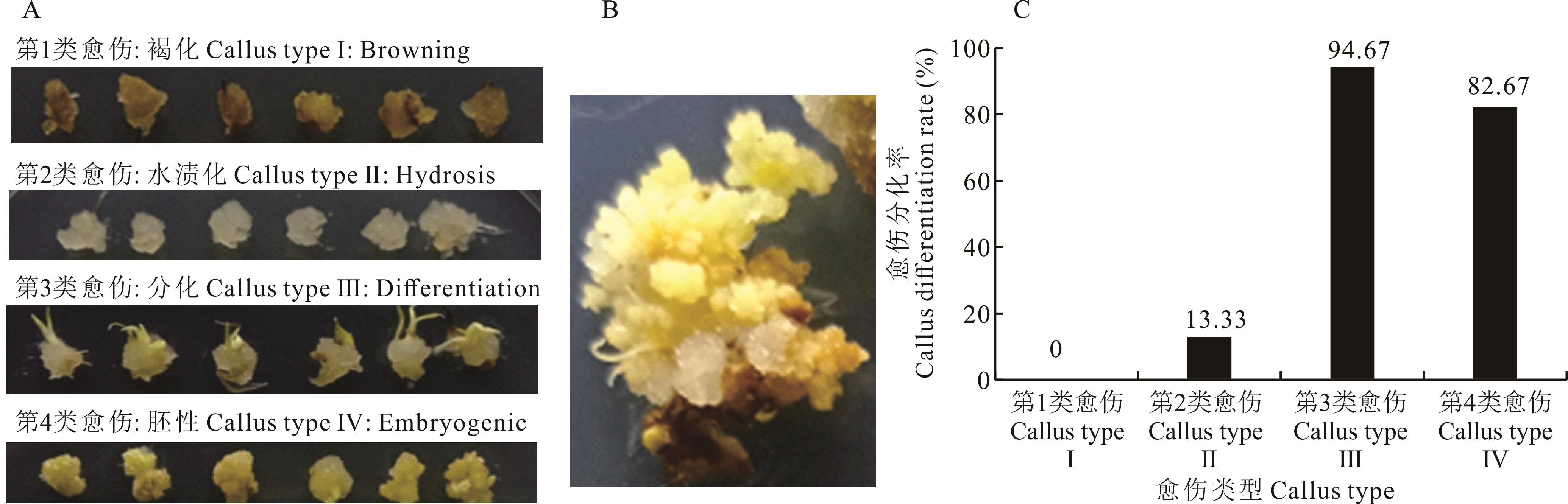
Fig. 1 Comparison of callus differentiation rates in four types of Z. japonica cv. ‘Zenith’
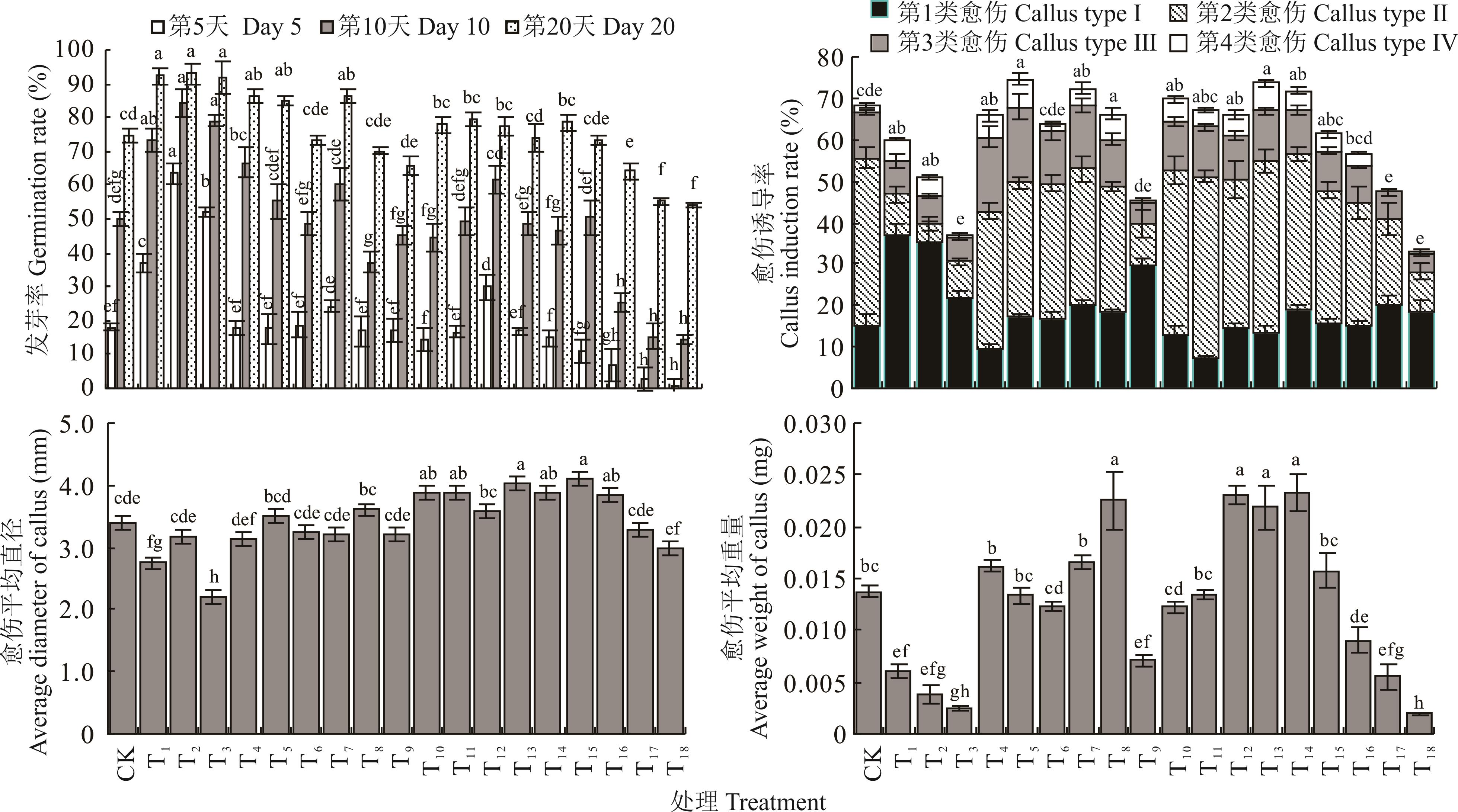
Fig. 2 Single-factor experiment 1: Effects of different additives on germination rate, callus induction and growth of Z. japonica cv. ‘Zenith’ seeds
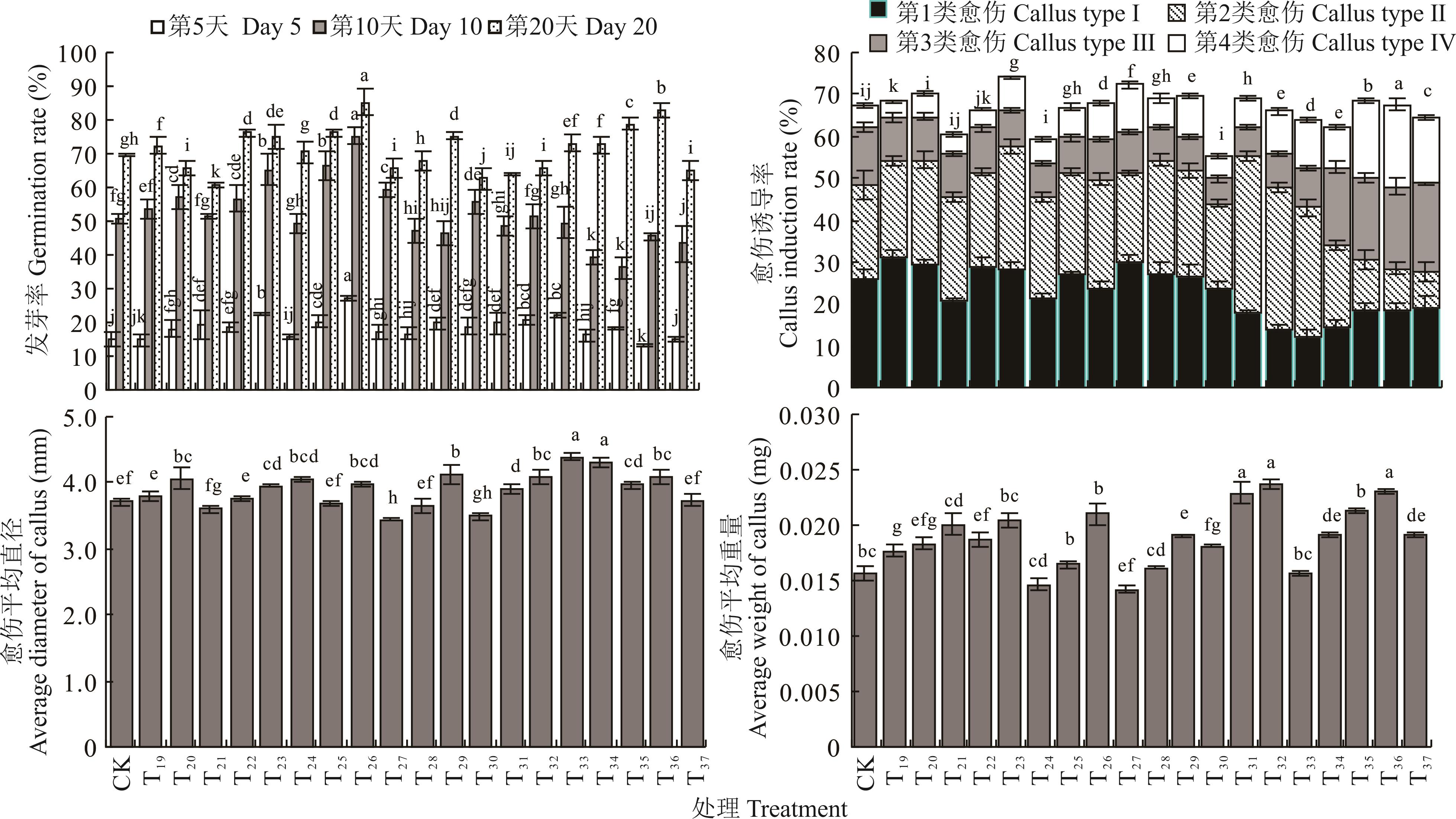
Fig. 3 Single-factor experiment 2: Effects of different additives on germination rate, callus induction and growth of Z. japonica cv. ‘Zenith’ seeds
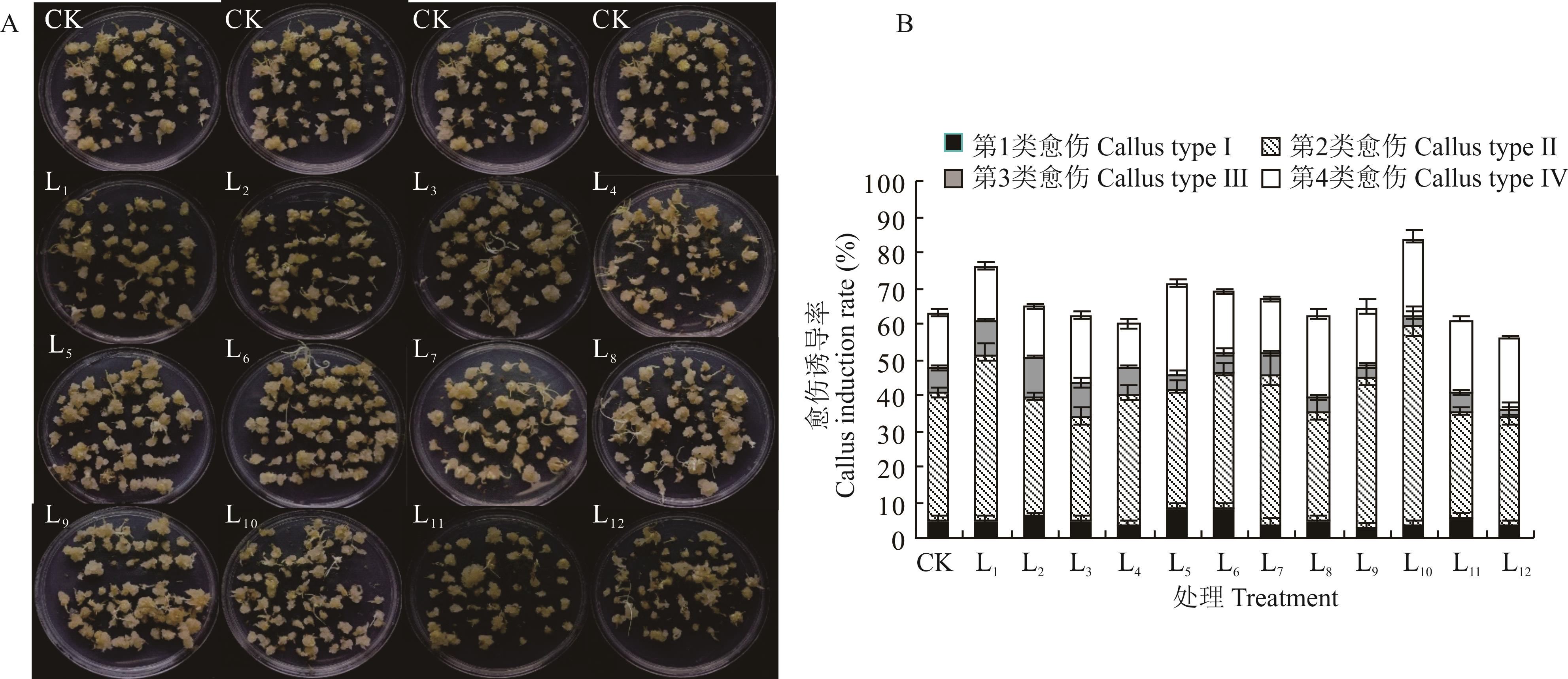
Fig. 4 Single-factor experiment 3: Effects of different additives on callus induction in Z. japonica cv. ‘Zenith’ seeds
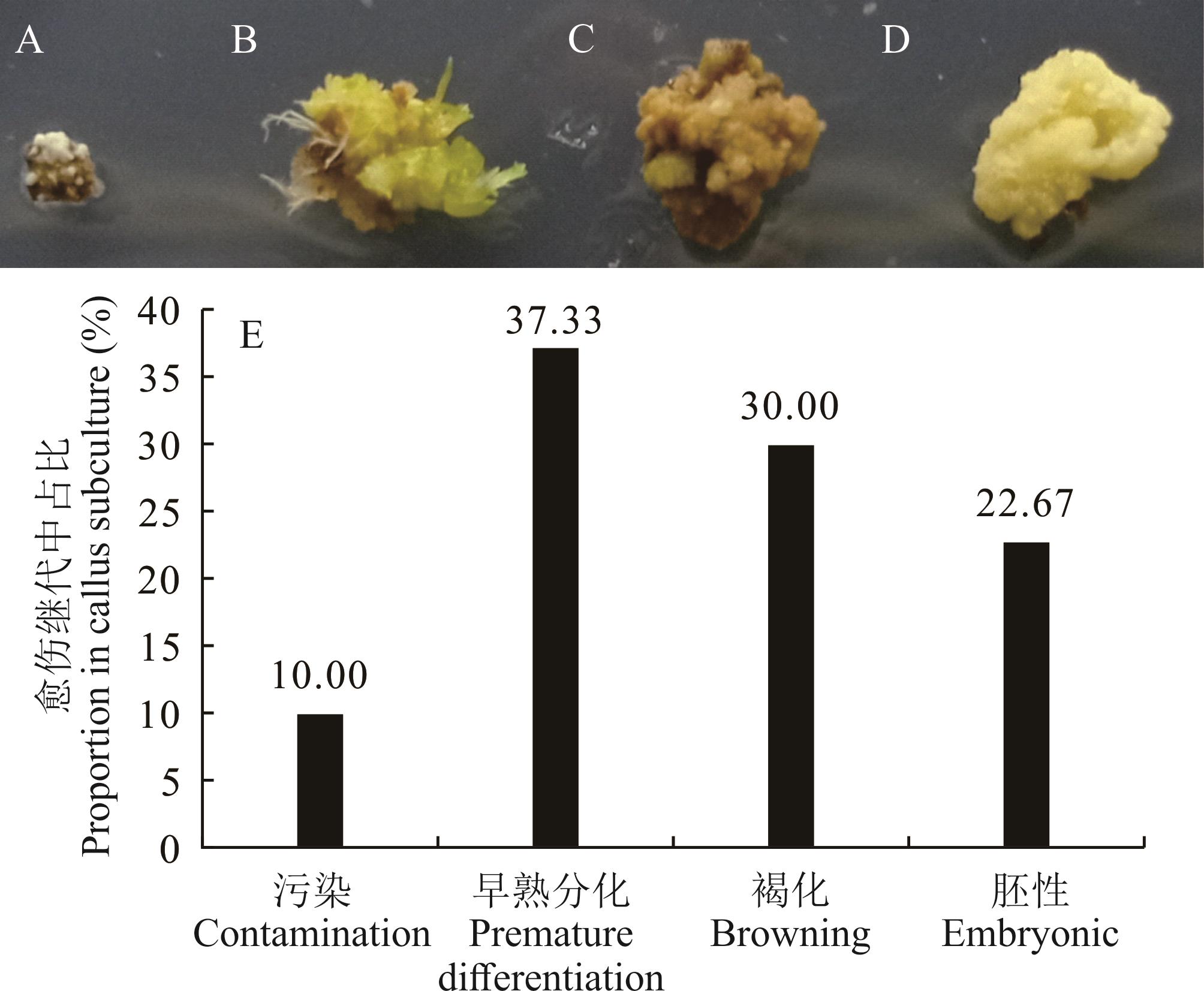
Fig. 5 Incidence of premature differentiation, browning and contamination in callus subculture of Z. japonica cv. ‘Zenith’
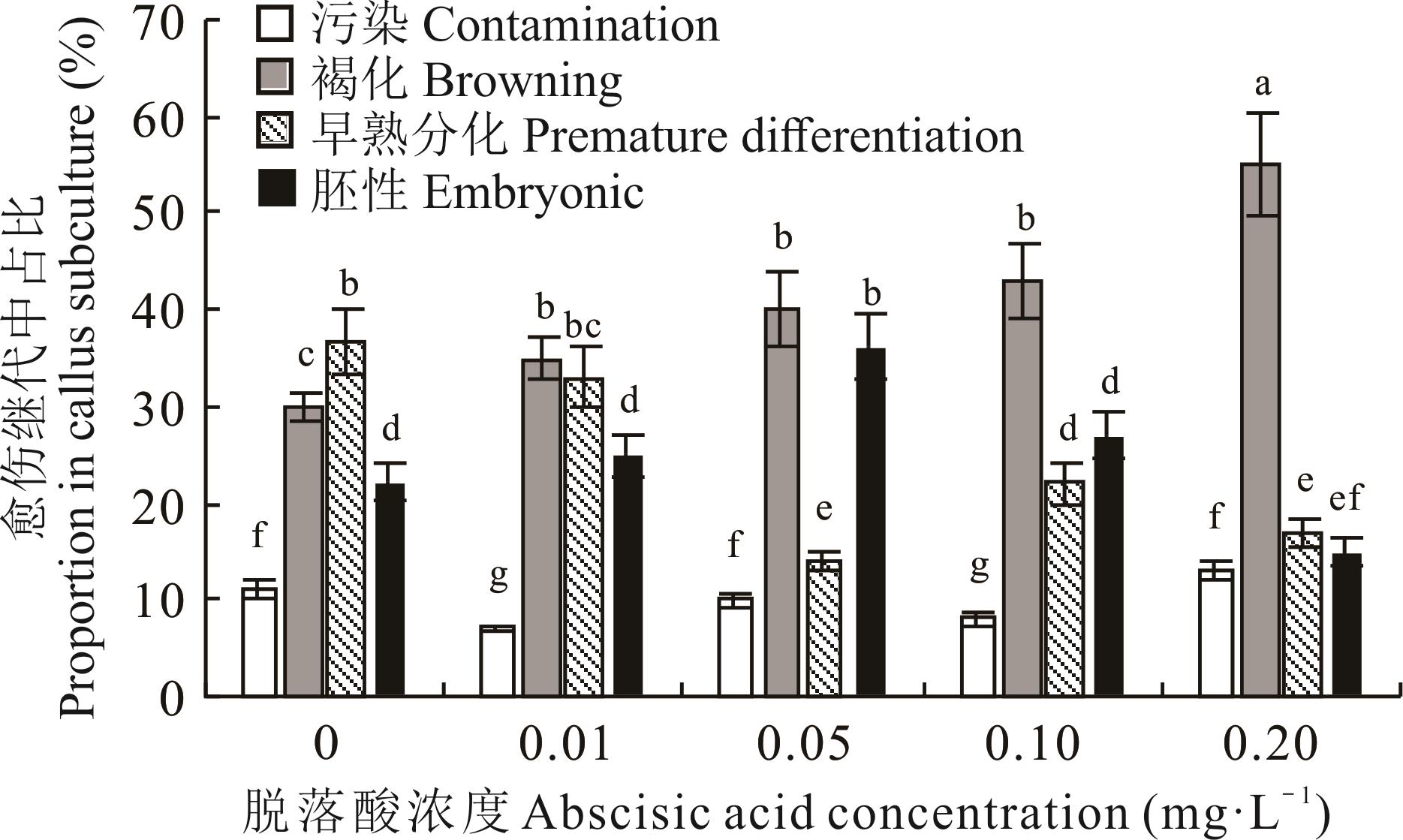
Fig. 6 Effects of different concentrations of abscisic acid on callus growth in Z. japonica
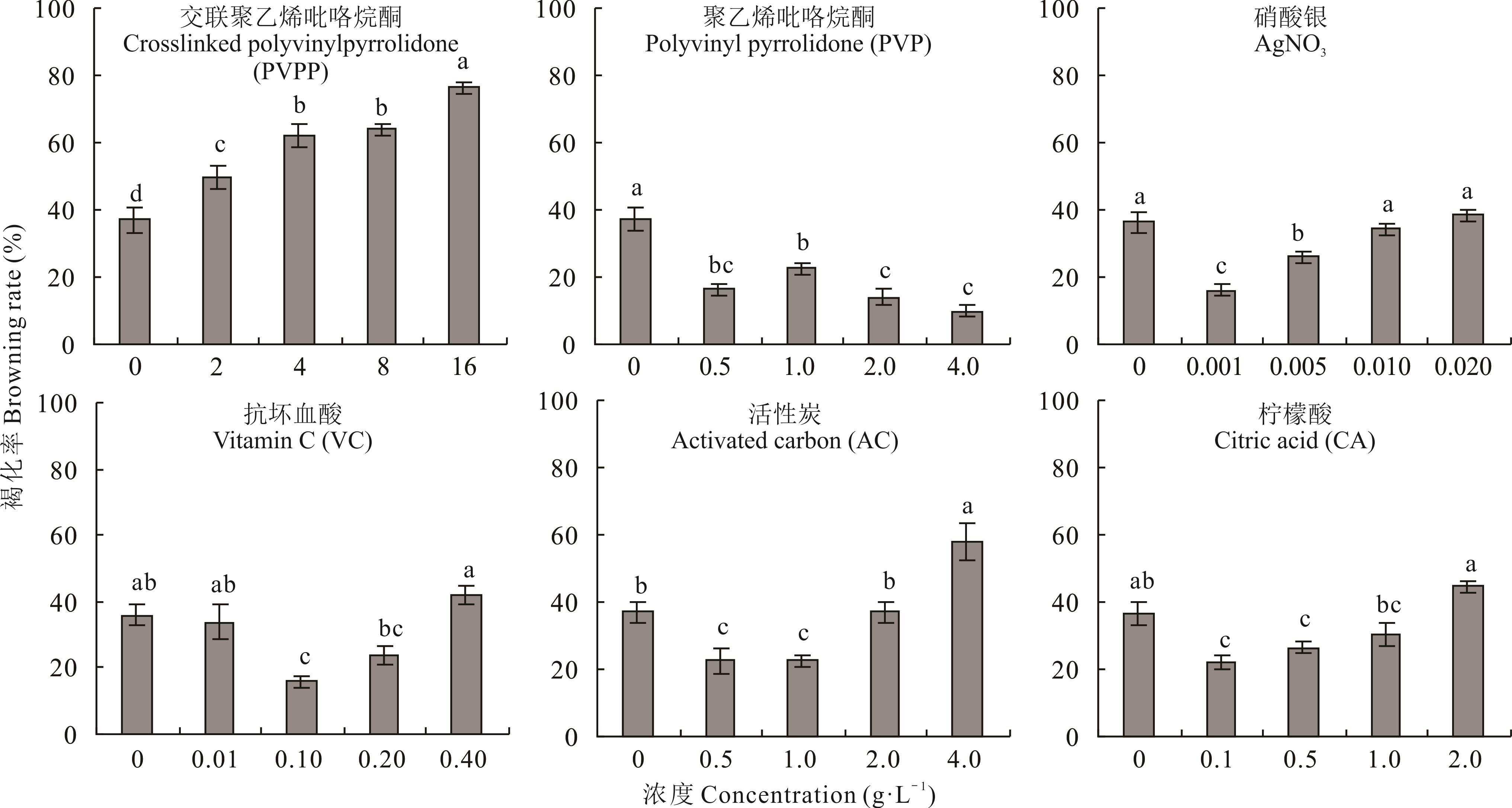
Fig. 7 Comparison of inhibitory effects of six anti-browning agents on browning rate of subcultured callus in Z. japonica cv. ‘Zenith’

Fig. 8 Embryogenic callus induction and plant regeneration system in Z. japonica cv. ‘Zenith’
| [1] | Wu C F, Ma X M. Present situation and development of turf grass industry in the 21st century in China. Tianjin Agricultural Sciences, 2009, 15(3): 74-77. |
| 吴朝峰, 马雪梅. 21世纪中国草坪业的现状与发展. 天津农业科学, 2009, 15(3): 74-77. | |
| [2] | Ma L X, Zhao L P. Study on callus induction and plant regeneration of Zoysia macrostachya Franch et. Sav. Heilongjiang Agricultural Sciences, 2016, 38(9): 15-18. |
| 马龙雪, 赵丽萍. 大穗结缕草愈伤组织诱导及植株再生研究. 黑龙江农业科学, 2016, 38(9): 15-18. | |
| [3] | He J. Study on culture and regeneration of Zoysia japonica Steud. and its genetic transformation. Hainkou: Hainan University, 2005. |
| 贺杰. 结缕草组织培养再生体系建立及转基因研究. 海口:海南大学, 2005. | |
| [4] | Du M H, Liang Z A, Zhang N Q, et al. Tissue culture and rapid propagation technique of Zoysia sinica Hance meristem. Acta Agriculturae Universitatis Jiangxiensis, 2007, 29(4): 533-538. |
| 杜敏华, 梁子安, 张乃群, 等. 中华结缕草茎尖的组织培养和快繁技术研究.江西农业大学学报, 2007, 29(4): 533-538. | |
| [5] | Inokuma C, Sugiura K, Cho C, et al. Plant regeneration from protoplasts of Japanese lawngrass. Plant Cell Reports, 1996, 15: 737-741. |
| [6] | Dhandapani M, Hong S B, Aswath C R, et al. Regeneration of zoysia grass (Zoysia matrella L. Merr.) cv. Konhee from young inflorescences and stem nodes. In Vitro Cellular & Developmental Biology-Plant, 2008, 44: 8-13. |
| [7] | Zhao J X, Chen G, Xia G X, et al. High efficient system establishment of plant regengation in Zoysia japonica. Journal of Shanxi Agricultural Sciences, 2019, 47(6): 970-972. |
| 赵俊侠, 陈耕, 夏桂先, 等. 结缕草高效再生体系的建立. 山西农业科学, 2019, 47(6): 970-972. | |
| [8] | Zhu X H. The establishment of regeneration system and mutants selection of turf grass (Zoysia spp). Lanzhou: Gansu Agricultural University, 2009. |
| 朱晓花. 结缕草再生体系的建立及诱导突变体筛选. 兰州:甘肃农业大学, 2009. | |
| [9] | Zhang J W, Tang Q, Bao M Z. Studies on plant regeneration system of Zoysia japonica from mature seed. Acta Prataculturae Sinica, 2005, 14(2): 48-51. |
| 张俊卫, 唐蜻, 包满珠. 日本结缕草植株再生体系的研究. 草业学报, 2005, 14(2): 48-51. | |
| [10] | Fan X L. Optimization of plant regeneration system and primary studies on Agrobacterium-mediated transformation of Zoysia japonica. Wuhan: Huazhong Agricultural University, 2005. |
| 樊晓莉. 日本结缕草植株再生体系优化及根癌农杆菌介导的遗传转化的初步研究. 武汉: 华中农业大学, 2005. | |
| [11] | Tian L, Tan H J. Recent review of production and development on dicamba. World Pesticide, 2010, 32(6): 18-20. |
| 田琳, 谭海军. 麦草畏的生产及发展概述. 世界农药, 2010, 32(6): 18-20. | |
| [12] | Mendoza M G, Kaeppler H F. Auxin and sugar effects on callus induction and plant regeneration frequencies from mature embryos of wheat (Triticum aestivum L.). In Vitro Cellular & Developmental Biology-Plant, 2002, 38(1): 39-45. |
| [13] | Yoshito A, Hiroshi K, Chie I, et al. Cytokinin and thiamine requirements and stimulative effects of riboflavin and α-ketoglutaric acid on embryogenic callus induction from the seeds of Zoysia japonica Steud. Journal of Plant Physiology, 1996, 149(314):413-417. |
| [14] | Shao L D, Wu Y G, Bi B, et al. The responses of callus growth and plant regeneration of Zoysia matrella to copper stress. Journal of Nuclear Agricultural Sciences, 2015, 29(1): 161-168. |
| 邵丽达, 吴艳歌, 毕波, 等. 沟叶结缕草愈伤组织生长及再生对铜胁迫的响应. 核农学报, 2015, 29(1): 161-168. | |
| [15] | Guo Y, Yang H L. Advances in studies on browning in plant tissue culture. Journal of Shanxi Agricultural Sciences, 2009, 37(7): 14-16. |
| 郭艳, 杨海玲. 植物组织培养中的褐化现象及解决途径. 山西农业科学, 2009, 37(7): 14-16. | |
| [16] | Li J, Wang S T, Zhou Q, et al. Preliminary analysis on browning mechanism of Juglans mandshurica stem in tissue culture. Molecular Plant Breeding, 2021, 19(24): 8239-8244. |
| 李佳, 王斯彤, 周强, 等. 胡桃楸组培过程中茎段褐化机理初步分析. 分子植物育种, 2021, 19(24): 8239-8244. | |
| [17] | Dai Y, Yang S H, Zhao H Z, et al. Research progress on browning phenomenon in tissue culture of medicinal plants. Chinese Traditional and Herbal Drugs, 2016, 47(2): 344-351. |
| 戴莹, 杨世海, 赵鸿峥, 等. 药用植物组织培养中褐化现象的研究进展. 中草药, 2016, 47(2): 344-351. | |
| [18] | Rao H Y. Effect of browning inhibitors on callus subculture of phenolic compounds enzyme and gene expression of grape. Plant Physiology Journal, 2015, 51(8): 1322-1330. |
| 饶慧云. 抗褐化剂对葡萄愈伤组织继代培养过程中酚类物质相关酶及其基因表达的影响.植物生理学报, 2015, 51(8): 1322-1330. | |
| [19] | Chen A P, Feng W W, Liu Y K. Anti-browning agents affecting callus subculture of three legume forage species. Chinese Agricultural Science Bulletin, 2017, 33(22): 138-144. |
| 陈爱萍, 冯维卫, 刘允康. 3种豆科牧草愈伤组织继代培养抗褐化的研究. 中国农学通报, 2017, 33(22): 138-144. | |
| [20] | Guo C Z. Optimization of callus induction conditions and anti-browning of Syringa oblata by response surface methodology. Seed, 2021, 40(8):141-145. |
| 郭彩珍. 响应面法优化紫丁香愈伤组织诱导条件及防褐化研究. 种子, 2021, 40(8): 141-145. |
| [1] | Shi-chao ZHANG, Guo-wen CUI, De-peng ZHANG, Fu-ying HAN, Ding DING, Xiang-li LYU, Shuo LIN, Le-ran CHEN, Ji-ru LI, Hua CAI. Establishment of a tissue culture-free genetic transformation system for alfalfa and its applications in salt-tolerance gene functional characterization and gene editing [J]. Acta Prataculturae Sinica, 2026, 35(3): 223-234. |
| [2] | Chun-jie LI, Ming-xiao LANG, Zhen-jiang CHEN, Zheng-feng WANG, Tai-xiang CHEN. Advances in artificial inoculation technology for grass-endophytic fungi [J]. Acta Prataculturae Sinica, 2021, 30(7): 179-189. |
| [3] | YANG Ke, CHEN Yi-you, WANG Jun-cheng, YAO Li-rong, MENG Ya-xiong, MA Xiao-le, LI Bao-chun, SI Er-jing, WANG Hua-jun. Selection of different explants from hops and establishment of a regeneration system [J]. Acta Prataculturae Sinica, 2019, 28(8): 209-217. |
| [4] | LIU Fu-Zhi, YANG Xiu-Yan. Effects of inorganic salts on the growth and total flavonoid content of Glycyrrhiza uralensis callus [J]. Acta Prataculturae Sinica, 2017, 26(5): 118-126. |
| [5] | LI Xiao-Dong, CAI Lu, LI Shi-Ge, MO Ben-Tian, HAN Yong-Fen, WANG Xiao-Li. An effective transformation method mediated by Agrobacterium in chicory (Cichorium intybus) [J]. Acta Prataculturae Sinica, 2016, 25(10): 124-131. |
| [6] | FANG Juan-Juan, WU Yu-Ling, LIU Yun, GONG Hui-Fang, MA Rong-Gang, Hu Ling-Zhi, CHEN Hui. Effects of NaCl on seed germination and seedling growth of Halocnemum strobilaceum [J]. Acta Prataculturae Sinica, 2015, 24(12): 196-203. |
| [7] | WANG Xue-fang,WANG Chun-mei,ZHANG Jin-lin,DUAN Li-jie,WANG Suo-min. Development of a plant regeneration system via tissue culture in Puccinellia tenuiflora [J]. Acta Prataculturae Sinica, 2014, 23(6): 355-360. |
| [8] | ZHANG Xiao-hong, ZHAO Xue-jing, LI Bo, LI Fei-fei, MIN Dong-hong. Optimization of a regeneration system for mature embryo culture of wheat [J]. Acta Prataculturae Sinica, 2013, 22(4): 334-339. |
| [9] | MANSUR Nasir, TAN Dun-yan, LIAO Kang. The relevant factors of callus induction of early spring ephemeral Lachnoloma lehmannii (Brassicaceae) [J]. Acta Prataculturae Sinica, 2012, 21(2): 116-122. |
| [10] | GENG Xiao-li, WEI Zhen-wu, YAO Xi-hong. Genetic variation of Medicago sativa callus revealed by the ploidy analyser [J]. Acta Prataculturae Sinica, 2011, 20(3): 156-161. |
| [11] | LV Zong-you, SU Yan-jing, ZHAO Guo-qi, WU Cai-xia. Effects of anti-browning agents on the induction of sudangrass callus [J]. Acta Prataculturae Sinica, 2011, 20(3): 174-181. |
| [12] | YAN Jun-hui, ZHAO Zhi-yan, HE Ya-li. Tissue culture and plant regeneration from mature seed of two cultivars of tall fescue [J]. Acta Prataculturae Sinica, 2011, 20(2): 210-218. |
| [13] |
QIAO Ding-jun, MAO Ping, MA Xin-rong, YANG Hong.
The effects of mannitol and AgNO3 for perennial ryegrass transformation mediated by Agrobacterium tumefaciens [J]. Acta Prataculturae Sinica, 2011, 20(1): 102-110. |
| [14] | YUN Lan, YUN Jin-feng, LI Jun-qin, ZHENG Li-na, ZHAO Wei, QI Li-na. Callus polyploidy induction and identification of Russian wild ryegrass [J]. Acta Prataculturae Sinica, 2010, 19(6): 126-131. |
| [15] | FENG Bo, DUAN Jiao-jiao, WU Guo-qiang, WANG Suo-min. Establishment of a high frequency regeneration system for the succulent xerophyte Zygophyllum xanthoxylum [J]. Acta Prataculturae Sinica, 2010, 19(6): 140-146. |
| Viewed | ||||||
|
Full text |
|
|||||
|
Abstract |
|
|||||
