
ISSN 1004-5759 CN 62-1105/S
Acta Prataculturae Sinica ›› 2025, Vol. 34 ›› Issue (4): 175-188.DOI: 10.11686/cyxb2024194
Zhao MA1( ), Xiao-fan LI2, Li-qiong SUN1, Zhi HUANG3, Lei XU2, Ting LU2, Xiao-qing TANG1(), Kang-cai WANG1
Received:2024-05-21
Revised:2024-06-20
Online:2025-04-20
Published:2025-02-19
Contact:
Xiao-qing TANG
Zhao MA, Xiao-fan LI, Li-qiong SUN, Zhi HUANG, Lei XU, Ting LU, Xiao-qing TANG, Kang-cai WANG. Effects of three endophytic bacteria in the roots of Salvia miltiorrhiza on host growth and medicinal quality[J]. Acta Prataculturae Sinica, 2025, 34(4): 175-188.
时间 Time (min) | 流速Flow (mL·min-1) | 流动相Mobile phase (%) | 时间 Time (min) | 流速Flow (mL·min-1) | 流动相Mobile phase (%) | ||
|---|---|---|---|---|---|---|---|
| A | B | A | B | ||||
| 0 | 0.8 | 90 | 10 | 24 | 0.8 | 50 | 50 |
| 10 | 0.8 | 90 | 10 | 26 | 0.8 | 15 | 85 |
| 13 | 0.8 | 80 | 20 | 27 | 0.8 | 0 | 100 |
| 18 | 0.8 | 70 | 30 | 29 | 0.8 | 0 | 100 |
| 21 | 0.8 | 60 | 40 | 30 | 0.8 | 90 | 10 |
Table 1 Plant hormone determination UPLC elution procedure
时间 Time (min) | 流速Flow (mL·min-1) | 流动相Mobile phase (%) | 时间 Time (min) | 流速Flow (mL·min-1) | 流动相Mobile phase (%) | ||
|---|---|---|---|---|---|---|---|
| A | B | A | B | ||||
| 0 | 0.8 | 90 | 10 | 24 | 0.8 | 50 | 50 |
| 10 | 0.8 | 90 | 10 | 26 | 0.8 | 15 | 85 |
| 13 | 0.8 | 80 | 20 | 27 | 0.8 | 0 | 100 |
| 18 | 0.8 | 70 | 30 | 29 | 0.8 | 0 | 100 |
| 21 | 0.8 | 60 | 40 | 30 | 0.8 | 90 | 10 |
| 序号Number | 标准物质Standard substances | 回归方程Regression equation | R2 | 线性范围Linear range (μg·mL-1) |
|---|---|---|---|---|
| 1 | 玉米素ZT | Y1=24714X1-1175 | 0.9994 | 0.0596~1.7880 |
| 2 | 赤霉素GA3 | Y2=2775X2-1197 | 0.9991 | 0.6760~20.2800 |
| 3 | 6-苄氨基嘌呤6-BA | Y3=17304X3-3298 | 0.9994 | 0.1016~21.3360 |
| 4 | 吲哚乙酸IAA | Y4=11956X4-382 | 0.9995 | 0.1448~21.7200 |
| 5 | 脱落酸ABA | Y5=56222X5-332 | 0.9995 | 0.0367~1.8630 |
Table 2 Regression equation, correlation coefficient, and linear range of five plant hormones in S. miltiorrhiza (n=3)
| 序号Number | 标准物质Standard substances | 回归方程Regression equation | R2 | 线性范围Linear range (μg·mL-1) |
|---|---|---|---|---|
| 1 | 玉米素ZT | Y1=24714X1-1175 | 0.9994 | 0.0596~1.7880 |
| 2 | 赤霉素GA3 | Y2=2775X2-1197 | 0.9991 | 0.6760~20.2800 |
| 3 | 6-苄氨基嘌呤6-BA | Y3=17304X3-3298 | 0.9994 | 0.1016~21.3360 |
| 4 | 吲哚乙酸IAA | Y4=11956X4-382 | 0.9995 | 0.1448~21.7200 |
| 5 | 脱落酸ABA | Y5=56222X5-332 | 0.9995 | 0.0367~1.8630 |
时间 Time (min) | 流速 Flow (mL·min-1) | 流动相 Mobile phase (%) | 时间 Time (min) | 流速 Flow (mL·min-1) | 流动相 Mobile phase (%) | ||
|---|---|---|---|---|---|---|---|
| A | B | A | B | ||||
| 0 | 0.8 | 90 | 10 | 39 | 0.8 | 30 | 70 |
| 10 | 0.8 | 90 | 10 | 46 | 0.8 | 20 | 80 |
| 11 | 0.8 | 80 | 20 | 47 | 0.8 | 0 | 100 |
| 17 | 0.8 | 70 | 30 | 49 | 0.8 | 0 | 100 |
| 19 | 0.8 | 40 | 60 | 50 | 0.8 | 90 | 10 |
Table 3 Active ingredient determination UPLC elution procedure
时间 Time (min) | 流速 Flow (mL·min-1) | 流动相 Mobile phase (%) | 时间 Time (min) | 流速 Flow (mL·min-1) | 流动相 Mobile phase (%) | ||
|---|---|---|---|---|---|---|---|
| A | B | A | B | ||||
| 0 | 0.8 | 90 | 10 | 39 | 0.8 | 30 | 70 |
| 10 | 0.8 | 90 | 10 | 46 | 0.8 | 20 | 80 |
| 11 | 0.8 | 80 | 20 | 47 | 0.8 | 0 | 100 |
| 17 | 0.8 | 70 | 30 | 49 | 0.8 | 0 | 100 |
| 19 | 0.8 | 40 | 60 | 50 | 0.8 | 90 | 10 |
序号 Number | 标准物质 Standard substances | 检测波长 Detection wavelength (nm) | 回归方程 Regression equation | R2 | 线性范围 Linear range (mg·mL-1) |
|---|---|---|---|---|---|
| 1 | 丹参素钠Salvianic acid A sodium | 281 | Y1=6338856X1-3710 | 0.9992 | 0.0003~0.0509 |
| 2 | 迷迭香酸Rosmarinic acid | 330 | Y2=38426711X2+837 | 0.9997 | 0.0005~0.0720 |
| 3 | 丹酚酸B Salvianolic acid B | 286 | Y3=3451508X3-24513 | 0.9996 | 0.0066~0.9936 |
| 4 | 二氢丹参酮Ⅰ Dihydrotanshinone Ⅰ | 244 | Y4=59176600X4+6524 | 0.9994 | 0.0007~0.1008 |
| 5 | 隐丹参酮Cryptotanshinone | 268 | Y5=56680173X5+28410 | 0.9995 | 0.0006~0.0960 |
| 6 | 丹参酮Ⅰ Tanshinone Ⅰ | 270 | Y6=476643443X6-21867 | 0.9998 | 0.0008~0.1200 |
| 7 | 鼠尾草酸Carnosic acid | 284 | Y7=3038604X7-7162 | 0.9991 | 0.0046~0.0958 |
| 8 | 丹参酮ⅡA Tanshinone ⅡA | 270 | Y8=138353815X8+64080 | 0.9993 | 0.0006~0.0900 |
Table 4 Regression equations, correlation coefficients, and linear range of 8 active ingredients in S. miltiorrhiza (n=3)
序号 Number | 标准物质 Standard substances | 检测波长 Detection wavelength (nm) | 回归方程 Regression equation | R2 | 线性范围 Linear range (mg·mL-1) |
|---|---|---|---|---|---|
| 1 | 丹参素钠Salvianic acid A sodium | 281 | Y1=6338856X1-3710 | 0.9992 | 0.0003~0.0509 |
| 2 | 迷迭香酸Rosmarinic acid | 330 | Y2=38426711X2+837 | 0.9997 | 0.0005~0.0720 |
| 3 | 丹酚酸B Salvianolic acid B | 286 | Y3=3451508X3-24513 | 0.9996 | 0.0066~0.9936 |
| 4 | 二氢丹参酮Ⅰ Dihydrotanshinone Ⅰ | 244 | Y4=59176600X4+6524 | 0.9994 | 0.0007~0.1008 |
| 5 | 隐丹参酮Cryptotanshinone | 268 | Y5=56680173X5+28410 | 0.9995 | 0.0006~0.0960 |
| 6 | 丹参酮Ⅰ Tanshinone Ⅰ | 270 | Y6=476643443X6-21867 | 0.9998 | 0.0008~0.1200 |
| 7 | 鼠尾草酸Carnosic acid | 284 | Y7=3038604X7-7162 | 0.9991 | 0.0046~0.0958 |
| 8 | 丹参酮ⅡA Tanshinone ⅡA | 270 | Y8=138353815X8+64080 | 0.9993 | 0.0006~0.0900 |

Fig.1 The effect of endophytic bacteria on the length and diameter of the main root of S. miltiorrhiza (n=10)

Fig.2 The effect of endophytic bacteria on the dry and fresh weight of S. miltiorrhiza (n=10)

Fig.3 The effect of endophytic bacteria on the content of soluble sugars and soluble proteins in S. miltiorrhiza (n=3)
处理 Treatment | 时间 Time | 光合色素含量Photosynthetic pigment content (mg·g-1) | |||
|---|---|---|---|---|---|
| 叶绿素a Chlorophyll a | 叶绿素b Chlorophyll b | 类胡萝卜素Carotenoids | 总叶绿素Total chlorophyll | ||
| CK | 7 d | 0.5779±0.0158ab | 0.3382±0.0099ab | 0.0568±0.0120c | 0.9161±0.0060a |
| 14 d | 0.4655±0.0462b | 0.2401±0.0303b | 0.0635±0.0074a | 0.7056±0.0752b | |
| 28 d | 0.3029±0.0192c | 0.1562±0.0097b | 0.0453±0.0026b | 0.4591±0.0288b | |
| 42 d | 0.4004±0.0213d | 0.2210±0.0107d | 0.0527±0.0033d | 0.6214±0.0319d | |
| 56 d | 0.3730±0.0158c | 0.2263±0.0093d | 0.0401±0.0021b | 0.5993±0.0250c | |
| M. amorphae B546 | 7 d | 0.4365±0.0866c | 0.2489±0.0586bc | 0.0666±0.0180b | 0.6854±0.1418b |
| 14 d | 0.6662±0.0411a | 0.3473±0.0268a | 0.0899±0.0270a | 1.0136±0.0675a | |
| 28 d | 0.4199±0.0019a | 0.2103±0.0020a | 0.0669±0.0005a | 0.6302±0.0031a | |
| 42 d | 0.5882±0.0042b | 0.2953±0.0021b | 0.0887±0.0006b | 0.8835±0.0063b | |
| 56 d | 0.5437±0.0123a | 0.2981±0.0092a | 0.0711±0.0046a | 0.8418±0.0182a | |
| B. thuringiensis NB49 | 7 d | 0.4752±0.0508bc | 0.2418±0.0172c | 0.0621±0.0058b | 0.7171±0.0675b |
| 14 d | 0.5546±0.0808b | 0.2717±0.0157b | 0.0697±0.0297a | 0.8263±0.0958b | |
| 28 d | 0.2949±0.0058c | 0.1502±0.0045b | 0.0455±0.0016b | 0.4451±0.0092b | |
| 42 d | 0.5013±0.0042c | 0.2684±0.0027c | 0.0701±0.0008c | 0.7697±0.0069c | |
| 56 d | 0.4673±0.0043b | 0.2468±0.0010c | 0.0507±0.0041b | 0.7141±0.0054b | |
| B. thuringiensis Bt12 | 7 d | 0.6346±0.0539a | 0.3642±0.0725a | 0.0699±0.0144a | 0.9988±0.1086a |
| 14 d | 0.7457±0.0227a | 0.3789±0.0287a | 0.0956±0.0247a | 1.1067±0.0575a | |
| 28 d | 0.3957±0.0031b | 0.2012±0.0232a | 0.0628±0.0047a | 0.5969±0.0263a | |
| 42 d | 0.6304±0.0005a | 0.3155±0.0150a | 0.0966±0.0038a | 0.9460±0.0152a | |
| 56 d | 0.4400±0.0372b | 0.2702±0.0163b | 0.0742±0.0134a | 0.7101±0.0209b | |
Table 5 Effects of endophytic bacteria on photosynthetic pigment content of S. miltiorrhiza (n=3)
处理 Treatment | 时间 Time | 光合色素含量Photosynthetic pigment content (mg·g-1) | |||
|---|---|---|---|---|---|
| 叶绿素a Chlorophyll a | 叶绿素b Chlorophyll b | 类胡萝卜素Carotenoids | 总叶绿素Total chlorophyll | ||
| CK | 7 d | 0.5779±0.0158ab | 0.3382±0.0099ab | 0.0568±0.0120c | 0.9161±0.0060a |
| 14 d | 0.4655±0.0462b | 0.2401±0.0303b | 0.0635±0.0074a | 0.7056±0.0752b | |
| 28 d | 0.3029±0.0192c | 0.1562±0.0097b | 0.0453±0.0026b | 0.4591±0.0288b | |
| 42 d | 0.4004±0.0213d | 0.2210±0.0107d | 0.0527±0.0033d | 0.6214±0.0319d | |
| 56 d | 0.3730±0.0158c | 0.2263±0.0093d | 0.0401±0.0021b | 0.5993±0.0250c | |
| M. amorphae B546 | 7 d | 0.4365±0.0866c | 0.2489±0.0586bc | 0.0666±0.0180b | 0.6854±0.1418b |
| 14 d | 0.6662±0.0411a | 0.3473±0.0268a | 0.0899±0.0270a | 1.0136±0.0675a | |
| 28 d | 0.4199±0.0019a | 0.2103±0.0020a | 0.0669±0.0005a | 0.6302±0.0031a | |
| 42 d | 0.5882±0.0042b | 0.2953±0.0021b | 0.0887±0.0006b | 0.8835±0.0063b | |
| 56 d | 0.5437±0.0123a | 0.2981±0.0092a | 0.0711±0.0046a | 0.8418±0.0182a | |
| B. thuringiensis NB49 | 7 d | 0.4752±0.0508bc | 0.2418±0.0172c | 0.0621±0.0058b | 0.7171±0.0675b |
| 14 d | 0.5546±0.0808b | 0.2717±0.0157b | 0.0697±0.0297a | 0.8263±0.0958b | |
| 28 d | 0.2949±0.0058c | 0.1502±0.0045b | 0.0455±0.0016b | 0.4451±0.0092b | |
| 42 d | 0.5013±0.0042c | 0.2684±0.0027c | 0.0701±0.0008c | 0.7697±0.0069c | |
| 56 d | 0.4673±0.0043b | 0.2468±0.0010c | 0.0507±0.0041b | 0.7141±0.0054b | |
| B. thuringiensis Bt12 | 7 d | 0.6346±0.0539a | 0.3642±0.0725a | 0.0699±0.0144a | 0.9988±0.1086a |
| 14 d | 0.7457±0.0227a | 0.3789±0.0287a | 0.0956±0.0247a | 1.1067±0.0575a | |
| 28 d | 0.3957±0.0031b | 0.2012±0.0232a | 0.0628±0.0047a | 0.5969±0.0263a | |
| 42 d | 0.6304±0.0005a | 0.3155±0.0150a | 0.0966±0.0038a | 0.9460±0.0152a | |
| 56 d | 0.4400±0.0372b | 0.2702±0.0163b | 0.0742±0.0134a | 0.7101±0.0209b | |

Fig.4 The effect of endophytic bacteria on the content of five endogenous hormones in S. miltiorrhiza (n=3)
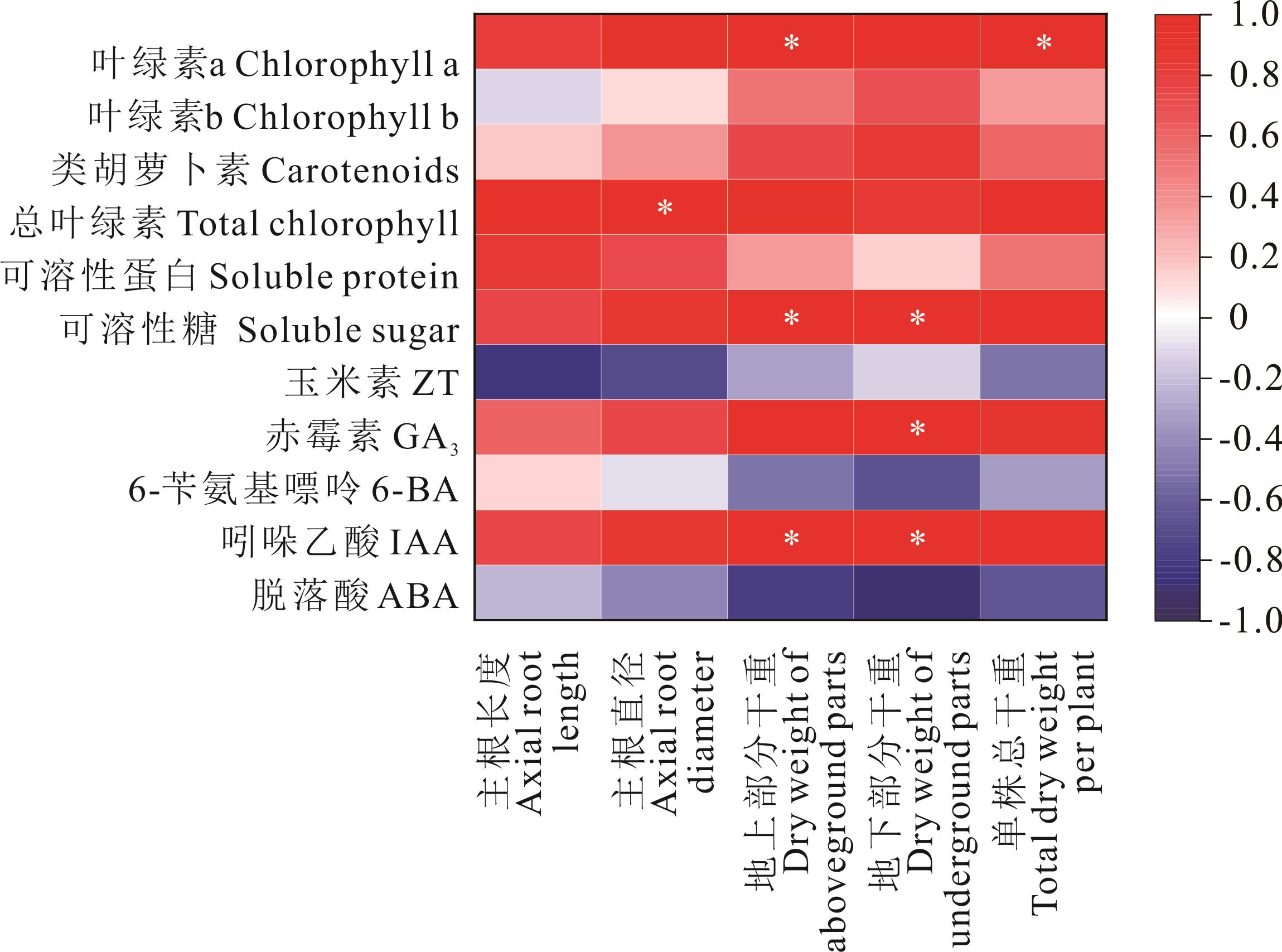
Fig.5 Correlation analysis between physiological indexes and growth indexes of S. miltiorrhiza
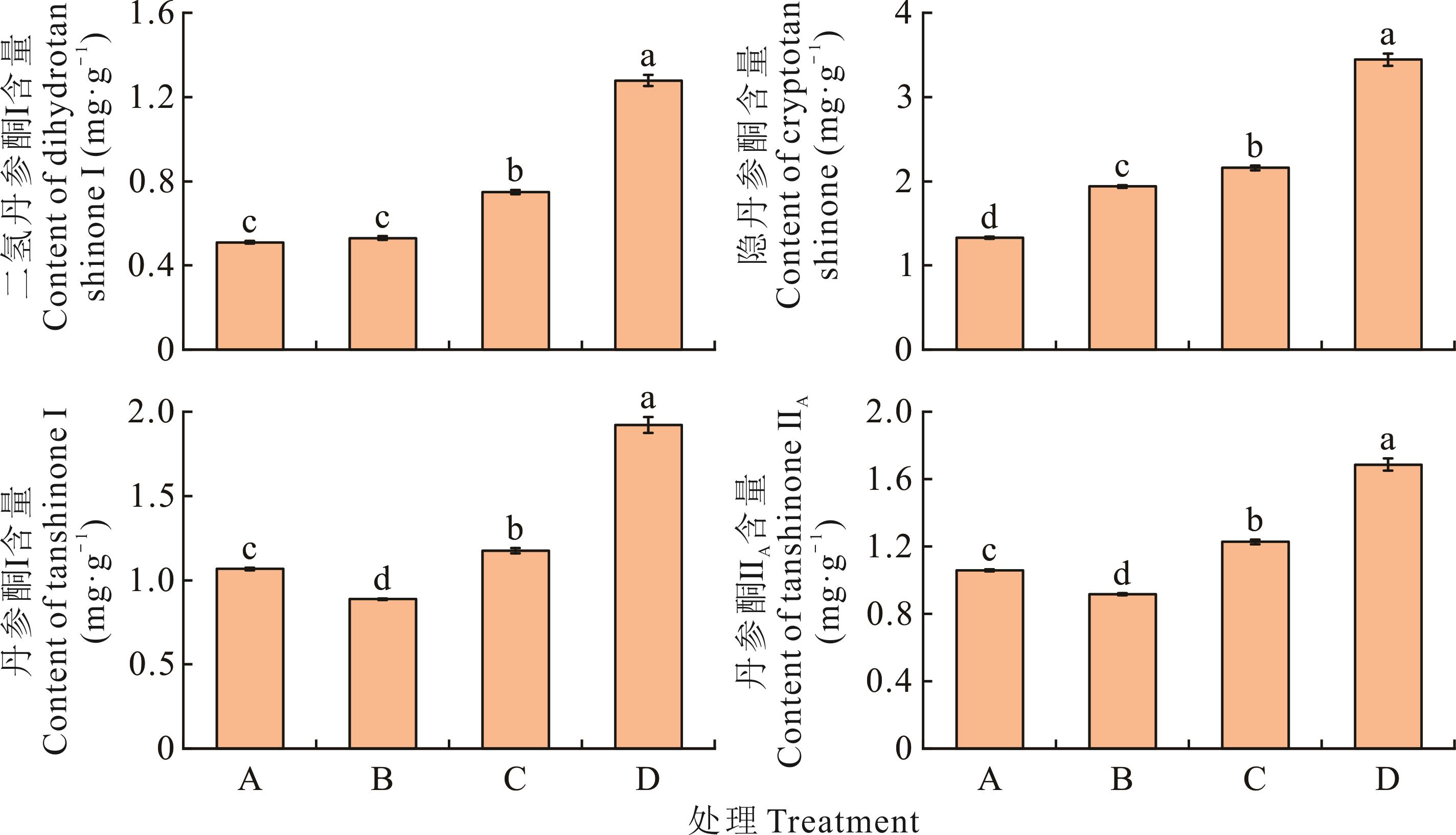
Fig.6 The effect of endophytic bacteria on the content of tanshinone in the root of S. miltiorrhiza (n=3)

Fig.7 The effect of endophytic bacteria on the content of phenolic acids in the root of S. miltiorrhiza (n=3)
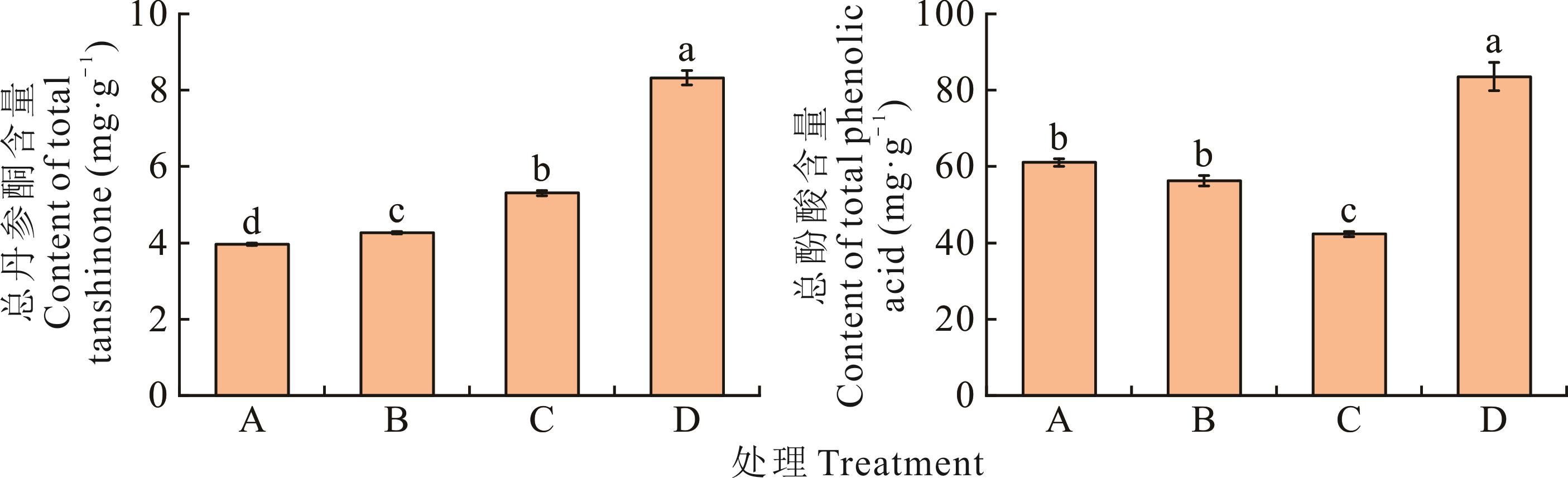
Fig.8 The effect of endophytic bacteria on the content of total phenolic acids and total tanshinone in S. miltiorrhiza (n=3)
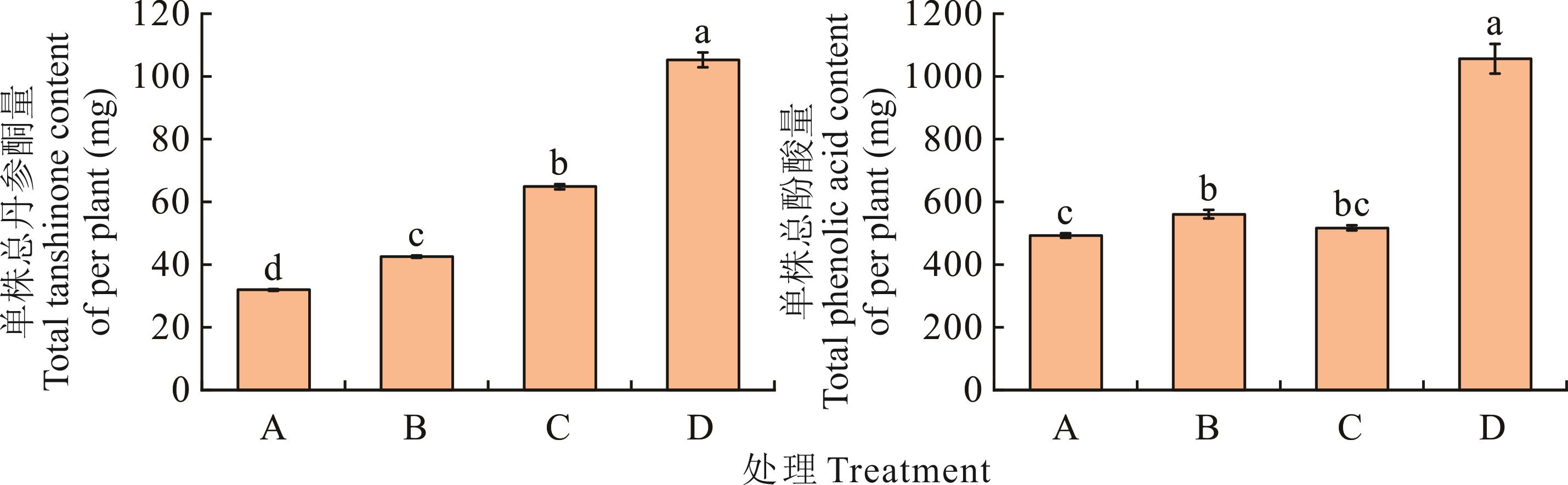
Fig.9 The effect of endophytic bacteria on total phenolic acids content and total tanshinone content of single plant of S. miltiorrhiza (n=3)
| 1 | Wang H Y, Kang C Z, Zhang W J, et al. Land use strategy of ecological agriculture of Chinese materia medic in future development. China Journal of Chinese Materia Medica, 2020, 45(9): 1990-1995. |
| 王红阳, 康传志, 张文晋, 等. 中药生态农业发展的土地利用策略. 中国中药杂志, 2020, 45(9): 1990-1995. | |
| 2 | Wang H Y, Kang C Z, Wang Y F, et al. Medicinal plant microbiome: advances and prospects. China Journal of Chinese Materia Medica, 2022, 47(20): 5397-5405. |
| 王红阳, 康传志, 王月枫, 等. 药用植物微生物组的研究现状及展望. 中国中药杂志, 2022, 47(20): 5397-5405. | |
| 3 | Shi Y L, Li M, Yang Z G. A brief discussion on the development status and prospect prediction of microbial ecological fertilizer. Inner Mongolia Science Technology and Economy, 2021(19): 21-22. |
| 石元亮, 李铭, 杨志阁. 浅论微生物生态肥料发展现状及前景预测. 内蒙古科技与经济, 2021(19): 21-22. | |
| 4 | Zhang R F, Shen Q R. Mechanisms of the microbial fertilizer’s novel functions and the strategies to enhance its root colonization. Journal of Microbiology, 2024, 44(1): 1-11. |
| 张瑞福, 沈其荣. 微生物肥料新型功能作用机理与根际定殖增强策略. 微生物学杂志, 2024, 44(1): 1-11. | |
| 5 | Wu G Q, Yu Z L, Wei M. The mechanism of PGPR regulating plant response to abiotic stress. Acta Prataculturae Sinica, 2024, 33(6): 203-218. |
| 伍国强, 于祖隆, 魏明. PGPR调控植物响应逆境胁迫的作用机制. 草业学报, 2024, 33(6): 203-218. | |
| 6 | Huang Q, Wei G F, Chang R X, et al. Developmental situation of microbial fertilizer and its application in Chinese medicinal herbs cultivation. Modern Chinese Medicine, 2022, 24(1): 153-159. |
| 黄钦, 尉广飞, 常瑞雪, 等. 微生物肥料发展现状及其在中药材种植中的应用. 中国现代中药, 2022, 24(1): 153-159. | |
| 7 | National Pharmacopoeia Commission. Pharmacopoeia of the People’s Republic of China (one). Beijing: China Medical Technology Press, 2020: 77. |
| 国家药典委员会. 中华人民共和国药典(一部). 北京: 中国医药科技出版社, 2020: 77. | |
| 8 | Hu T T, Li J Y, Zhai J J, et al. Textual research on Salvia miltiorrhiza. Journal of Liaoning University of Traditional Chinese Medicine, 2023, 25(10): 173-177. |
| 胡婷婷, 李金洋, 翟俊杰, 等. 丹参本草考证. 辽宁中医药大学学报, 2023, 25(10): 173-177. | |
| 9 | Chen Y M, Li Q, Liu W H, et al. Research progress on pharmacological action, clinical application and side effects of Salvia miltiorrhiza in the treatment of cardiovascular diseases. Pharmaceutical Research, 2023, 42(12): 1028-1034. |
| 陈雨萌, 李倩, 刘维海, 等. 丹参活性成分治疗心血管疾病的药理作用、临床应用及不良反应研究进展. 药学研究, 2023, 42(12): 1028-1034. | |
| 10 | Liu S, Pu C J, Luo Y Z, et al. Effects of temperature and humidity on infection of Fusarium oxysporum in seedlings of Salvia miltiorrhiza. China Journal of Chinese Materia Medica, 2023, 48(1): 39-44. |
| 刘莎, 濮春娟, 罗钰枝, 等. 环境温度和湿度对尖孢镰刀菌侵染丹参幼苗的影响. 中国中药杂志, 2023, 48(1): 39-44. | |
| 11 | Wang Z. Study on cultivation problems and related technologies of Salvia miltiorrhiza. Agricultural Technology and Equipment, 2022(3): 100-102. |
| 王准. 丹参栽培问题及相关技术现状研究. 农业技术与装备, 2022(3): 100-102. | |
| 12 | Chen Z R, Liu X Y, Zhao X D, et al. Research progress on community composition and function of endophytes in plants. Chinese Bulletin of Life Sciences, 2023, 35(2): 132-139. |
| 陈招荣, 刘新悦, 赵欣迪, 等. 植物内生菌群落组成及其功能研究进展. 生命科学, 2023, 35(2): 132-139. | |
| 13 | Wang G K, Yang J S, Huang Y F, et al. Culture separation, identification and unique anti-pathogenic fungi capacity of endophytic fungi from Gucheng Salvia miltiorrhiza. In Vivo, 2021, 35(1): 325-332. |
| 14 | Bi J T, Ma P, Yang Z W, et al. Isolation of endophytic fungi from the medicinal plant Tamarix chinensis and their microbial inhibition activity. Acta Prataculturae Sinica, 2013, 22(3): 132-138. |
| 毕江涛, 马萍, 杨志伟, 等. 药用植物柽柳内生真菌分离及其抑菌活性初步研究. 草业学报, 2013, 22(3): 132-138. | |
| 15 | Duan J L, Li X J, Gao J M, et al. Isolation and identification of endophytic bacteria from root tissues of Salvia miltiorrhiza Bge and determination of their bioactivities. Annals of Microbiology, 2013, 63(4): 1501-1512. |
| 16 | Kong M M, Yan W, Wang Z Q, et al. The influence of six different drying and processing methods on the content of main components in Salvia miltiorrhiza. Journal of Chinese Medicinal Materials, 2020, 43(4): 847-852. |
| 孔明明, 燕蔚, 王志强, 等. 六种不同干燥加工方法对丹参主要成分含量的影响. 中药材, 2020, 43(4): 847-852. | |
| 17 | Jia H M, Fang Q, Zhang S H, et al. Effects of AM fungi on growth and rhizosphere soil enzyme activities of Salvia miltiorrhiza. Acta Prataculturae Sinica, 2020, 29(6): 83-92. |
| 贾红梅, 方千, 张秫华, 等. AM真菌对丹参生长及根际土壤酶活性的影响. 草业学报, 2020, 29(6): 83-92. | |
| 18 | Wang X K. Principles and techniques of plant physiology and biochemistry experiments. Beijing: Higher Education Press, 2006. |
| 王学奎. 植物生理生化实验原理和技术. 北京: 高等教育出版社, 2006. | |
| 19 | Zhou X T, Kang L P, Li P Y, et al. Determination of abscisic acid in arbuscular mycorrhizal fungi infected Salvia miltiorrhiza plants by UPLC/MS/MS. Chinese Agricultural Science Bulletin, 2016, 32(12): 92-97. |
| 周修腾, 康利平, 李鹏英, 等. UPLC-MS/MS测定AM真菌侵染丹参植物脱落酸含量. 中国农学通报, 2016, 32(12): 92-97. | |
| 20 | Pan X Q, Welti R, Wang X M, et al. Quantitative analysis of major plant hormones in crude plant extracts by high-performance liquid chromatography-mass spectrometry. Nature Protocols, 2010, 5(6): 986-992. |
| 21 | Chen Y P, Yang W Y. Determination of GA3, IAA, ABA and ZT in dormant buds of Allium ovalifolium by HPLC. Journal of Sichuan Agricultural University, 2005, 23(4): 498-500. |
| 陈远平, 杨文钰. 卵叶韭休眠芽中GA3、IAA、ABA和ZT的高效液相色谱法测定. 四川农业大学学报, 2005, 23(4): 498-500. | |
| 22 | Huang X Z, Zhao L F. Mechanism of endophytes of medicinal plants in promoting the growth of host plants. Microbiology China, 2023, 50(4): 1653-1665. |
| 黄雪珍, 赵龙飞. 药用植物内生菌对宿主植物促生作用机制研究进展. 微生物学通报, 2023, 50(4): 1653-1665. | |
| 23 | You H, Pu Q, Wen F, et al. Isolation and screening of bacteria strain with ACC deaminase activity and its effect on hairy root of Salvia miltiorrhiza. Journal of Zhejiang Sci-Tech University (Natural Sciences), 2017, 37(5): 720-726. |
| 尤红, 普倩, 文芳, 等. ACC脱氨酶菌株的分离筛选及对丹参毛状根的影响. 浙江理工大学学报 (自然科学版), 2017, 37(5): 720-726. | |
| 24 | Zheng L L, Chen M L, Kang L P, et al. Effect of Rhizophagus intraradices on growth of Salvia miltiorrhiza. China Journal of Chinese Materia Medica, 2023, 48(2): 349-355. |
| 郑玲玲, 陈美兰, 康利平, 等. 根内根孢囊霉Rhizophagus intraradices对丹参生长作用的研究. 中国中药杂志, 2023, 48(2): 349-355. | |
| 25 | Song H, Liu J, Song P, et al. Effects of inoculation with endophytic fungi and endophytic bacteria on growth and accumulation of secondary metabolites in Tripterygium wilfordii. Journal of Tropical and Subtropical Botany, 2020, 28(4): 347-355. |
| 宋欢, 刘洁, 宋萍, 等. 内生真菌和内生细菌接种对雷公藤生长和次生代谢产物积累的影响. 热带亚热带植物学报, 2020, 28(4): 347-355. | |
| 26 | Pinski A, Betekhtin A, Hupert-kocurek K, et al. Defining the genetic basis of plant-endophytic bacteria interactions. International Journal of Molecular Science, 2019, 20(8): 1947. |
| 27 | Omoarelojie L O, Van Staden J. Plant-endophytic fungi interactions: A strigolactone perspective. South African Journal of Botany, 2020, 134(S1): 280-284. |
| 28 | Lebeis S L, Paredes S H, Lundberg D S, et al. Salicylic acid modulates colonization of the root microbiome by specific bacterial taxa. Science, 2015, 349 (6250): 860-864. |
| 29 | Carvalhais L C, Dennis P G, Badri D V, et al. Activation of the jasmonic acid plant defence pathway alters the composition of rhizosphere bacterial communities. PLoS One, 2013, 8(2): 56457. |
| 30 | Xu L, Wu C, Oelmüller R, et al. Role of phytohormones in Piriformospora indica-induced growth promotion and stress tolerance in plants: More questions than answers. Frontiers in Microbiology, 2018, 9: 1646. |
| 31 | Waqas M, Khan A L, Shahzad R, et al. Mutualistic fungal endophytes produce phytohormones and organic acids that promote japonica rice plant growth under prolonged heat stress. Journal of Zhejiang University-Science B, 2015, 16(12): 1011-1018. |
| 32 | Araújo F F, Henning A, Hungria M, et al. Phytohormones and antibiotics produced by Bacillus subtilis and their effects on seed pathogenic fungi and on soybean root development. World Journal of Microbiology Biotechnology, 2005, 21(8/9): 1639-1645. |
| 33 | Kang H Y, Wang W, Liu J L, et al. Isolation and identification of two plant-growth promoting endophytes from alfalfa. Microbiology China, 2015, 42(2): 280-288. |
| 康慧颖, 王伟, 刘佳莉, 等. 两株具促生作用的苜蓿内生菌的分离纯化与鉴定. 微生物学通报, 2015, 42(2): 280-288. | |
| 34 | Liu R J, Li M, Meng X X, et al. Effects of AM fungi on endogenous hormones in corn and cotton plants. Mycosystema, 2000, 19(1): 91-96. |
| 刘润进, 李敏, 孟祥霞, 等. 丛枝菌根真菌对玉米和棉花内源激素的影响. 菌物系统, 2000, 19(1): 91-96. | |
| 35 | Yu J X, Li H, Guo S X, et al. Influence of arbuscular mycorrhizal fungi on endogenous hormone levels in tomato plants. Journal of Qingdao Agricultural University (Natural Science), 2010, 27(2): 100-104. |
| 于建新, 李辉, 郭绍霞, 等. 丛枝菌根真菌对番茄植株内源激素含量的影响. 青岛农业大学学报(自然科学版), 2010, 27(2): 100-104. | |
| 36 | Zhou X T, Wang X, Yang G, et al. Effects of arbuscular mycorrhizal fungi on endogenous hormones in Salvia miltiorrhiza. China Journal of Chinese Materia Medica, 2016, 41(20): 3761-3766. |
| 周修腾, 王雪, 杨光, 等. 丛枝菌根真菌对丹参内源激素的影响. 中国中药杂志, 2016, 41(20): 3761-3766. | |
| 37 | Taleski M, Chapman K, Novak O, et al. CEP peptide and cytokinin pathways converge on CEPD glutaredoxins to inhibit root growth. Nature Communications, 2023, 14(1): 1683. |
| 38 | Kurepa J, Smalle J A. Auxin/cytokinin antagonistic control of the shoot/root growth ratio and its relevance for adaptation to drought and nutrient deficiency stresses. International Journal of Molecular Science, 2022, 23(4): 1933. |
| 39 | Duan N, Jia Y K, Xu J, et al. Research progress on plant endogenous hormones. Chinese Agricultural Science Bulletin, 2015, 31(2): 159-165. |
| 段娜, 贾玉奎, 徐军, 等. 植物内源激素研究进展. 中国农学通报, 2015, 31(2): 159-165. | |
| 40 | Aroca R, Ruiz-Lozano J M, Zamarreño A M, et al. Arbuscular mycorrhizal symbiosis influences strigolactone production under salinity and alleviates salt stress in lettuce plants. Journal of Plant Physiology, 2013, 170(1): 47-55. |
| 41 | Zhang Y L, Yu Q K, Li W, et al. Aboveground and belowground phenotypic characteristics of Cynodon dactylon lines differing in drought resistance and endogenous hormone response to drought stress. Acta Prataculturae Sinica, 2023, 32(3): 163-178. |
| 张一龙, 喻启坤, 李雯, 等. 不同抗旱性狗牙根地上地下表型特征及内源激素对干旱胁迫的响应. 草业学报, 2023, 32(3): 163-178. | |
| 42 | Hu X, Bai Y, Chen J W, et al. The effect of Trichoderma atroviride on the growth and active ingredient content of the host plant Epimedium koreanum Nakai. Journal of Chinese Medicinal Materials, 2023, 46(9): 2142-2148. |
| 胡星, 白洋, 陈佳雯, 等. 深绿木霉对宿主植物朝鲜淫羊藿生长及药效成分含量的影响. 中药材, 2023, 46(9): 2142-2148. | |
| 43 | Li H L, Guo D Q, Yang M, et al. Effect of different combinations of arbuscular mycorrhiza on Paris polyphylla var. yunnanensis and chemical components. Chinese Journal of Experimental Traditional Medical Formulae, 2021, 27(7): 134-143. |
| 黎海灵, 郭冬琴, 杨敏, 等. 不同丛枝菌根真菌组合对滇重楼光合生理和化学成分的影响. 中国实验方剂学杂志, 2021, 27(7): 134-143. | |
| 44 | Liu L F, Di Y N, He L L, et al. Study on the growth promotion effect and IAA production capacity of Bacillus subtilis B9. Journal of Yunnan Agricultural University (Natural Science), 2020, 35(2): 227-234. |
| 刘鲁峰, 狄义宁, 何丽莲, 等. 内生枯草芽孢杆菌B9促生长效果及产吲哚乙酸(IAA)能力研究. 云南农业大学学报(自然科学), 2020, 35(2): 227-234. | |
| 45 | Dai X X, Yan C C, Zulihumaer M, et al. Screening and identification of biocontrol bacteria for cotton Verticillium wilt and effect of Rhizobium DG3-1 on cotton growth. Shandong Agricultural Sciences, 2024, 56(5): 138-144. |
| 代先兴, 闫成才, 祖丽胡玛尔·麦提喀迪尔, 等. 棉花黄萎病生防菌筛选鉴定及根瘤菌DG3-1对棉花生长的影响. 山东农业科学, 2024, 56(5): 138-144. | |
| 46 | Shan Y, Ren X N, Yao Y X, et al. Effect of Suaeda salsa endophyte EF0801 on antioxidant enzymes and chlorophyll fluorescence in rice seedlings infected with rice blast. Southwest China Journal of Agricultural Sciences, 2021, 34(12): 2646-2652. |
| 单羽, 任晓宁, 姚禹希, 等. 碱蓬内生菌EF0801对感染稻瘟病水稻幼苗抗氧化酶及叶绿素荧光的影响. 西南农业学报, 2021, 34(12): 2646-2652. | |
| 47 | Chen H M, Chen J L, Qi Y, et al. Endophytic fungus Cladosporium tenuissimum DF11, an efficient inducer of tanshinone biosynthesis in Salvia miltiorrhiza roots. Phytochemistry, 2022, 194: 113021. |
| 48 | Ming Q L, Su C Y, Zheng C J, et al. Elicitors from the endophytic fungus Trichoderma atroviride promote Salvia miltiorrhiza hairy root growth and tanshinone biosynthesis. Journal of Experimental Botany, 2013, 64(18): 5687-5694. |
| 49 | Zhao J L, Lou J F, Mou Y, et al. Diterpenoid tanshinones and phenolic acids from cultured hairy roots of Salvia miltiorrhiza Bunge and their antimicrobial activities. Molecules, 2011, 16(3): 2259-2267. |
| 50 | Li X Y, Lin Y L, Qin Y, et al. Beneficial endophytic fungi improve the yield and quality of Salvia miltiorrhiza by performing different ecological functions. PeerJ, 2024, 12: 16959. |
| 51 | Yan Y, Zhang S C, Zhang J Y, et al. Effect and mechanism of endophytic bacteria on growth and secondary metabolite synthesis in Salvia miltiorrhiza hairy roots. Acta Physiologiae Plantarum, 2014, 36(5): 1095-1105. |
| [1] | Xiao-lu ZOU, Wen-jing ZHANG, Hong LYU, Nan QIN, Xiao-jun ZHAO, Hui YIN, Lu REN. Biological characteristics and plant growth-promoting and biocontrol properties of endophytic bacterium ZJ1 from Buddleja lindleyana [J]. Acta Prataculturae Sinica, 2024, 33(5): 106-114. |
| [2] | Yang-yang MIAO, Yan-rui ZHANG, Biao SONG, Xu-tong LIU, An-qi ZHANG, Jin-ze LV, Hao ZHANG, Xiao-hua ZHANG, Jia-hui OUYANG, Wang LI, Shan-min QU. Effects of Suaeda glauca rhizobacteria and endophytic bacterial strains on alfalfa growth under salt-alkaline stress [J]. Acta Prataculturae Sinica, 2022, 31(9): 107-117. |
| [3] | Xin-tong ZHAO, Xiao-dong CHEN, Zi-ji LI, Ju-ming ZHANG, Tian-zeng LIU. An evaluation of the effects of the plant endophyte Enterobacter on the salt tolerance of bermudagrass [J]. Acta Prataculturae Sinica, 2021, 30(9): 127-136. |
| [4] | JING Zhuo-qiong, GUO Zhi-jie, XU Sheng-jun, HE Su-qin. Screening, identification as Bacillus amyloliquefaciens strain HZ-6-3 and evaluation of inhibitory activity against tomato gray mold, of a bacterial isolate [J]. Acta Prataculturae Sinica, 2020, 29(2): 31-41. |
| [5] | YANG Cheng-de, CUI Yue-zhen, FENG Zhong-hong, XUE Li, JIN Meng-jun. Effects of endophytic Bacillus subtilis 265ZY4 on physiological and biochemical characteristics of Stipa purpurea under abiotic stress [J]. Acta Prataculturae Sinica, 2019, 28(6): 101-108. |
| [6] | JIANG Xu-wen, LI He-qin, TAN Yong. Identification, tolerance to abiotic stress and host plant effects of endophytic bacteria HX-2 from Agastache rugosa [J]. Acta Prataculturae Sinica, 2018, 27(1): 161-168. |
| [7] | BAI Yu-Jing, YAO Yu-Ling, ZHANG Zhen-Fen, YANG Cheng-De, XUE Li. Identification of alfalfa root rot caused by Fusarium chlamydosporum and screening of antagonistic bacterial strains [J]. Acta Prataculturae Sinica, 2017, 26(2): 78-87. |
| [8] | YANG Cheng-De, WANG Yu-Qin, CHEN Xiu-Rong, ZHANG Zhen-Fen, XUE Li, WANG Ying, YAO Yu-Ling. Diversity of endophytic bacteria isolated from Kobresia during winter dormancy [J]. Acta Prataculturae Sinica, 2016, 25(8): 136-144. |
| [9] | YANG Cheng-De, CHANG Tao, XUE Li, FENG Zhong-Hong, YAO Yu-Ling, LI Ting, CHEN Xiu-Rong. Optimizing the culture conditions and determining the stability of antibiotic secretion by Polygonum viviparum of the endophytic bacteria Bacillus mojavensis [J]. Acta Prataculturae Sinica, 2015, 24(9): 104-112. |
| [10] | FENG Zhong-Hong, WANG Yu-Qin, YANG Cheng-De*, XUE Li, CHEN Xiu-Rong. Screening, identification and assessment of endophytic bacteria antagonistic totomato bacterial spot [J]. Acta Prataculturae Sinica, 2015, 24(8): 166-173. |
| [11] | WANG Ying,WANG Yu-qin,YANG Cheng-de,YAO Yu-ling,CHEN Xiu-rong,XUE Li. Screening, identification and biological function evaluation of endophytic bacteria against potato storage disease [J]. Acta Prataculturae Sinica, 2014, 23(3): 269-275. |
| [12] | CHANG Tao,WANG Han-qi,YANG Cheng-de,WANG Ying,YANG Xiao-li,XUE Li,CHEN Xiu-rong,XU Chang-lin. Identification and evaluation of biological control potential of B-401 endophytic bacteria in grasses on alpine grasslands [J]. Acta Prataculturae Sinica, 2014, 23(3): 282-289. |
| [13] |
GAO Xiao-xing, MAN Bai-ying, CHEN Xiu-rong, YANG Cheng-de.
Identification and determination of biological characteristics of Kobresia capillifolia endophytic bacteria X4 in the East Qilian Mountain Alpine grasslands [J]. Acta Prataculturae Sinica, 2013, 22(4): 137-146. |
| [14] | ZHANG Li-wen, ZHONG Guo-cheng, ZHANG Li, YANG Rui-wu, DING Chun-bang, ZHOU Yong-hong. A study on photosynthesis and photo-response characteristics of three Salvia species [J]. Acta Prataculturae Sinica, 2012, 21(2): 70-76. |
| [15] | ZHONG Guo-cheng, ZHANG Li-wen, ZHANG Li, YANG Rui-wu, DING Chun-bang. A study on photosynthetic characteristics of different Salvia miltiorrhiza varieties [J]. Acta Prataculturae Sinica, 2011, 20(4): 116-122. |
| Viewed | ||||||
|
Full text |
|
|||||
|
Abstract |
|
|||||
