
ISSN 1004-5759 CN 62-1105/S
Acta Prataculturae Sinica ›› 2025, Vol. 34 ›› Issue (9): 185-193.DOI: 10.11686/cyxb2024385
Dan-dan CHEN( ), Yao WANG, Tian-xin GUO, Qiu-yu LIANG, Qing ZHANG, Rui-qi PIAN()
Received:2024-10-10
Revised:2024-11-28
Online:2025-09-20
Published:2025-07-02
Contact:
Rui-qi PIAN
Dan-dan CHEN, Yao WANG, Tian-xin GUO, Qiu-yu LIANG, Qing ZHANG, Rui-qi PIAN. Screening of cellulose-degrading bacteria involved in metabolic utilization of rice straw[J]. Acta Prataculturae Sinica, 2025, 34(9): 185-193.
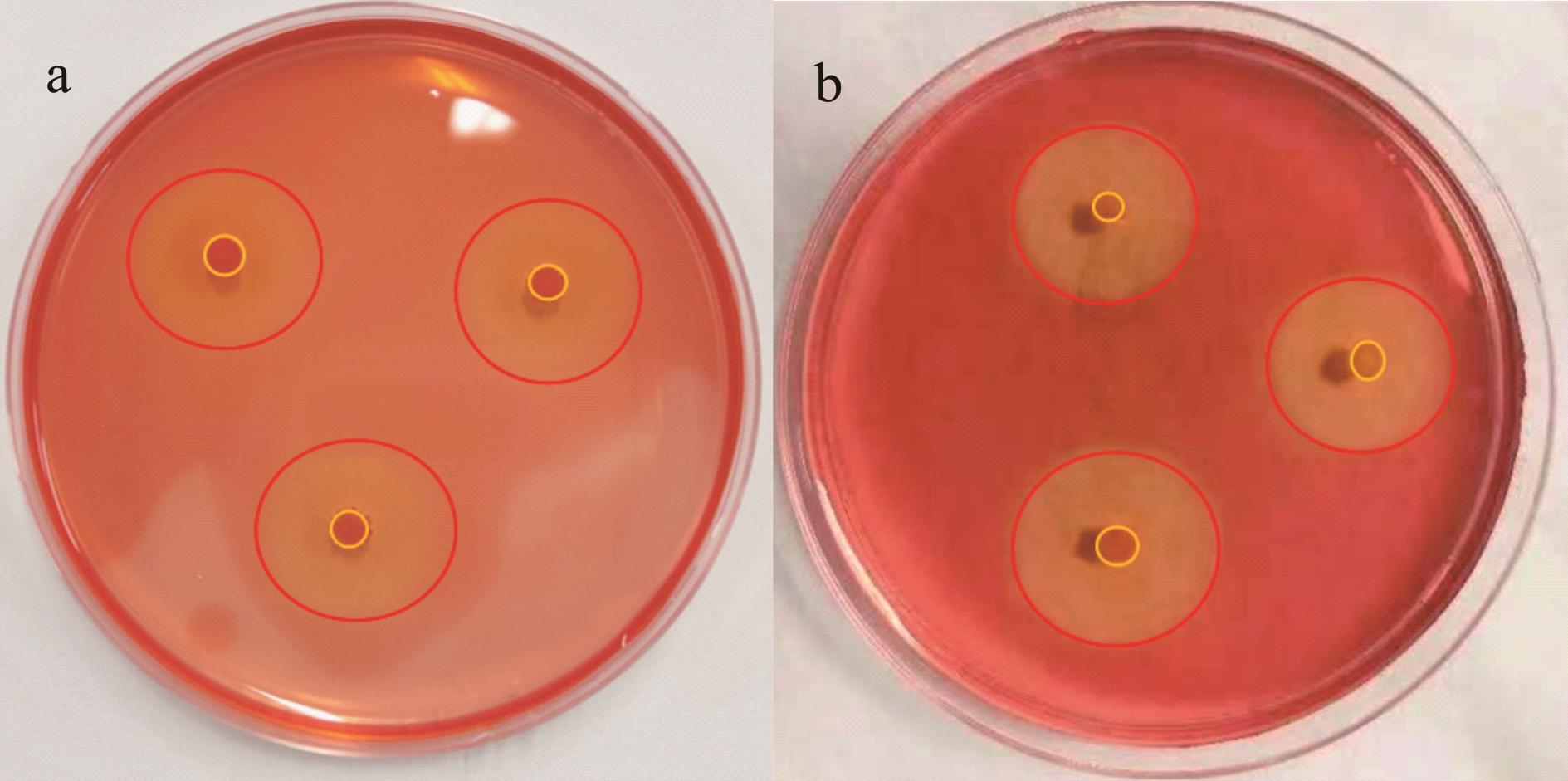
Fig.1 Congo red staining results of cellulose-degrading bacteria

Fig.2 Filter paper degradation of cellulose-degrading bacteria after 2 days of cultivation

Fig.3 Gram staining results of B. safensis and C. iranensis
项目 Item | 沙福芽孢杆菌 B. safensis | 伊朗纤维单胞菌 C. iranensis | 项目 Item | 沙福芽孢杆菌 B. safensis | 伊朗纤维单胞菌 C. iranensis |
|---|---|---|---|---|---|
| 革兰氏Gram | + | + | D-水杨苷D-salicylic acid glycoside | + | - |
| 过氧化氢酶Catalase | + | + | 纤维二糖Cellobiose | + | + |
| 运动性Motile | + | + | 柠檬酸盐Citrate | + | - |
| 淀粉Starch | - | - | 麦芽糖Maltose | + | + |
| 甲基红试验Methylred test | + | + | 山梨醇Sorbitol | + | + |
| 明胶化Gelatinization | - | - | 海藻糖Trehalose | + | + |
| 硝酸盐还原Nitrate reduction | - | - | 葡萄糖Glucose | + | + |
| 棉子糖Raffinose | + | + | D-果糖D-fructose | + | - |
| 蔗糖Sucrose | + | + | L-鼠李糖L-rhamnose | - | + |
| 木聚糖Xylan | + | + | 松三糖Melezitose | + | + |
| 乳糖Lactose | + | + | 密二糖Melibiose | + | + |
| 菊糖Inulin | + | + | 壳聚糖Chitosan | - | - |
| 阿拉伯糖Arabinose | + | - | V-P试验V-P test | - | - |
Table 1 Physiological and biochemical results of B. safensis and C. iranensis
项目 Item | 沙福芽孢杆菌 B. safensis | 伊朗纤维单胞菌 C. iranensis | 项目 Item | 沙福芽孢杆菌 B. safensis | 伊朗纤维单胞菌 C. iranensis |
|---|---|---|---|---|---|
| 革兰氏Gram | + | + | D-水杨苷D-salicylic acid glycoside | + | - |
| 过氧化氢酶Catalase | + | + | 纤维二糖Cellobiose | + | + |
| 运动性Motile | + | + | 柠檬酸盐Citrate | + | - |
| 淀粉Starch | - | - | 麦芽糖Maltose | + | + |
| 甲基红试验Methylred test | + | + | 山梨醇Sorbitol | + | + |
| 明胶化Gelatinization | - | - | 海藻糖Trehalose | + | + |
| 硝酸盐还原Nitrate reduction | - | - | 葡萄糖Glucose | + | + |
| 棉子糖Raffinose | + | + | D-果糖D-fructose | + | - |
| 蔗糖Sucrose | + | + | L-鼠李糖L-rhamnose | - | + |
| 木聚糖Xylan | + | + | 松三糖Melezitose | + | + |
| 乳糖Lactose | + | + | 密二糖Melibiose | + | + |
| 菊糖Inulin | + | + | 壳聚糖Chitosan | - | - |
| 阿拉伯糖Arabinose | + | - | V-P试验V-P test | - | - |

Fig.4 Glucose standard curve
编号 Number | 菌种 Strains | 内切葡聚糖酶 Endoglucanase | 外切葡聚糖酶 Exoglucanase | β-葡萄糖苷酶 β-glucosidase |
|---|---|---|---|---|
| 1 | 沙福芽孢杆菌B. safensis | 0.102±0.003 | 0.321±0.002 | 0.112±0.004 |
| 2 | 伊朗纤维单胞菌C. iranensis | 0.202±0.003 | 0.434±0.001 | 0.131±0.002 |
Table 2 Enzyme activities of cellulases from B. safensis and C. iranensis (n=3, U·mL-1)
编号 Number | 菌种 Strains | 内切葡聚糖酶 Endoglucanase | 外切葡聚糖酶 Exoglucanase | β-葡萄糖苷酶 β-glucosidase |
|---|---|---|---|---|
| 1 | 沙福芽孢杆菌B. safensis | 0.102±0.003 | 0.321±0.002 | 0.112±0.004 |
| 2 | 伊朗纤维单胞菌C. iranensis | 0.202±0.003 | 0.434±0.001 | 0.131±0.002 |

Fig.5 Differential metabolites between B. safensis and C. iranensis

Fig.6 Thermogram of significant differences in important metabolites after degradation of filter paper by B. safensis and C. iranensis

Fig.7 Enrichment analysis of metabolites after degradation of filter paper by B. safensis and C. iranensis
处理 Treatment | 失重率 Weight loss rate | 粗纤维 Crude fibre | 中性洗涤纤维 Neutral detergent fibre | 酸性洗涤纤维 Acid detergent fibre | 半纤维素 Hemicellulose | 可溶性碳水化合物 Water soluble carbohydrate |
|---|---|---|---|---|---|---|
| 对照Control | 29.18±0.91b | 45.34±0.84a | 69.50±0.45a | 51.41±0.43a | 26.81±0.03a | 0.99±0.01a |
| 沙福芽孢杆菌B. safensis | 32.30±0.52b | 45.68±0.79a | 70.91±0.31a | 48.80±0.30b | 19.90±0.52b | 0.11±0.03b |
| 伊朗纤维单胞菌C. iranensis | 43.12±0.19a | 36.72±0.65b | 52.95±0.45b | 35.43±0.34b | 17.53±0.49b | 0.18±0.01b |
| P值P value | <0.01 | 0.03 | 0.02 | <0.01 | <0.01 | <0.01 |
Table 3 Changes in fiber content of straw after 14 days of liquid fermentation(n=3, % DM)
处理 Treatment | 失重率 Weight loss rate | 粗纤维 Crude fibre | 中性洗涤纤维 Neutral detergent fibre | 酸性洗涤纤维 Acid detergent fibre | 半纤维素 Hemicellulose | 可溶性碳水化合物 Water soluble carbohydrate |
|---|---|---|---|---|---|---|
| 对照Control | 29.18±0.91b | 45.34±0.84a | 69.50±0.45a | 51.41±0.43a | 26.81±0.03a | 0.99±0.01a |
| 沙福芽孢杆菌B. safensis | 32.30±0.52b | 45.68±0.79a | 70.91±0.31a | 48.80±0.30b | 19.90±0.52b | 0.11±0.03b |
| 伊朗纤维单胞菌C. iranensis | 43.12±0.19a | 36.72±0.65b | 52.95±0.45b | 35.43±0.34b | 17.53±0.49b | 0.18±0.01b |
| P值P value | <0.01 | 0.03 | 0.02 | <0.01 | <0.01 | <0.01 |
| [1] | Zhang X, Borjigin Q, Gao J L, et al. Community succession and straw degradation characteristics using a microbial decomposer at low temperature. PLoS One, 2022, 17(7): e270162. |
| [2] | Chen D Y, Cheng S, Guo Y F, et al. Advances in utilization of rice straw as feed. Chinese Animal Industry, 2024(15): 43-44. |
| 陈东颖, 程尚, 郭炎峰, 等. 水稻秸秆饲料化利用研究进展. 中国畜牧业, 2024(15): 43-44. | |
| [3] | Kou J T, Zhang J X. Effects of adding homo- and hetero-fermentative lactic acid bacteria on nutritional value of rice straw silage feed. Acta Agrestia Sinica, 2024, 32(12): 3980-3987. |
| 寇江涛, 张甲雄. 同/异型乳酸菌添加对水稻秸秆青贮饲料营养价值的影响. 草地学报, 2024, 32(12): 3980-3987. | |
| [4] | Wei X, Li W, Song Z, et al. Straw incorporation with exogenous degrading bacteria (ZJW-6): An integrated greener approach to enhance straw degradation and improve rice growth. International Journal of Molecular Sciences, 2024, 25(14): 7835. |
| [5] | Gong W B, Zeng Y Y, Li X R, et al. Molecular profiling of rice straw degradability discrepancy in Stropharia rugosoannulata core germplasm. Journal of Agricultural and Food Chemistry, 2024, 72(45): 25379-25390. |
| [6] | Kumar A, Pandit S, Sharma K, et al. Microbial degradation of cellulose extracted from wheat bran for bioelectricity production using microbial fuel cell. Process Safety and Environmental Protection, 2024, 190(11): 574-585. |
| [7] | Ma Y N, Mongkolthanaruk W, Riddech N. Enhancing soil amendment for salt stress using pretreated rice straw and cellulolytic fungi. Scientific Reports, 2024, 14(1): 13903. |
| [8] | Chen X, Liang X, Shi N, et al. New wheat straw fermentation feed: recombinant Schizosaccharomyces pombe efficient degradation of lignocellulose and increase feed protein. Preparative Biochemistry & Biotechnology, 2024, 55(1): 36-44. |
| [9] | Gaizauskaite Z, Zvirdauskiene R, Svazas M, et al. Optimised degradation of lignocelluloses by edible filamentous fungi for the efficient biorefinery of sugar beet pulp. Polymers, 2024, 16(9): 1178. |
| [10] | Akhlaq M, Uroos M. Evaluating the impact of cellulose extraction via traditional and ionosolv pretreatments from domestic matchstick waste on the properties of carboxymethyl cellulose. ACS Omega, 2023, 8(9): 8722-8731. |
| [11] | Wilson D B. Microbial diversity of cellulose hydrolysis. Current Opinion in Microbiology, 2011, 14(3): 259-263. |
| [12] | Chen H, Shi Z H, Wu C H, et al. Screening, identification and comparison of enzyme production capacity of cellulose-degrading bacteria from different sources. Acta Agrestia Sinica, 2024, 32(4): 1252-1258. |
| 陈欢, 史子浩, 吴春会, 等. 不同来源纤维素降解菌的筛选、鉴定及产酶能力的比较. 草地学报, 2024, 32(4): 1252-1258. | |
| [13] | Niu D Z, Zhu P, Pan T T, et al. Ensiling improved the colonization and degradation ability of Irpex lacteus in wheat straw. International Journal of Environmental Research and Public Health, 2022, 19(20): 13668. |
| [14] | Tachaapaikoon C, Kosugi A, Pason P, et al. Isolation and characterization of a new cellulosome-producing Clostridium thermocellum strain. Biodegradation, 2012, 23(1): 57-68. |
| [15] | Song K L, Zhou Z C, Leng J H, et al. Effects of rumen microorganisms on the decomposition of recycled straw residue. Journal of Zhejiang University-Science Biomedicine Biotechnology, 2023, 24(4): 336-344. |
| [16] | Padhan K, Patra R K, Sethi D, et al. Exploitation of cellulose degrading bacteria in bioconversion of agro-wastes. Chemosphere, 2024, 347(1): 140654. |
| [17] | Qu F, Cheng H, Han Z, et al. Identification of driving factors of lignocellulose degrading enzyme genes in different microbial communities during rice straw composting. Bioresource Technology, 2023, 381(1): 129109. |
| [18] | Dar M A, Xie R, Pandit R S, et al. Exploring the region-wise diversity and functions of symbiotic bacteria in the gut system of wood-feeding termite, Coptotermes formosanus, toward the degradation of cellulose, hemicellulose, and organic dyes. Insect Science, 2022, 29(5): 1414-1432. |
| [19] | Thayer D W. Carboxymethylcellulase produced by facultative bacteria from the hind-gut of the termite Reticulitermes hesperus. Journal of General and Applied Microbiology, 1978, 106(1): 13-18. |
| [20] | Dröge S, Fröhlich J, Radek R, et al. Spirochaeta coccoides sp. nov., a novel coccoid spirochete from the hindgut of the termite Neotermes castaneus. Applied and Environmental Microbiology, 2006, 72(1): 392-397. |
| [21] | Cho M J, Kim Y H, Shin K, et al. Symbiotic adaptation of bacteria in the gut of Reticulitermes speratus: low endo-beta-1,4-glucanase activity. Biochemical and Biophysical Research Communications, 2010, 395(3): 432-435. |
| [22] | Azhar S, Aihetasham A, Chaudhary A, et al. Cellulolytic and ethanologenic evaluation of Heterotermes indicola’s gut-associated bacterial isolates. ACS Omega, 2024, 9(10): 12084-12100. |
| [23] | Xiao Y, Li J, Wu P, et al. An alkaline thermostable laccase from termite gut associated strain of Bacillus stratosphericus. International Journal of Biological Macromolecules, 2021, 179(5): 270-278. |
| [24] | Javaheri-Kermani M, Asoodeh A. A novel beta-1,4 glucanase produced by symbiotic Bacillus sp. CF96 isolated from termite (Anacanthotermes). International Journal of Biological Macromolecules, 2019, 131(6): 752-759. |
| [25] | Li H, Zhang M, Zhang Y, et al. Characterization of cellulose-degrading bacteria isolated from silkworm excrement and optimization of its cellulase production. Polymers (Basel), 2023, 15(20): 4142. |
| [26] | Zhang T, Wei S, Liu Y, et al. Screening and genome-wide analysis of lignocellulose-degrading bacteria from humic soil. Frontiers in Microbiology, 2023, 14(23): 1167293. |
| [27] | Li J F, Zhao J, Tang X Y, et al. Effect of a rumen cellulolytic microbial consortium on the degradation of structural carbohydrate in sterile rice straw silage. Acta Prataculturae Sinica, 2022, 31(7): 85-95. |
| 李君风, 赵杰, 唐小月, 等. 瘤胃纤维素降解菌系对灭菌水稻秸秆结构性碳水化合物降解的影响. 草业学报, 2022, 31(7): 85-95. | |
| [28] | Li J, Tang X, Zhao J, et al. Improvement of fermentation quality and cellulose convertibility of napier grass silage by inoculation of cellulolytic bacteria from Tibetan yak (Bos grunniens). Journal of Applied Microbiology, 2021, 130(6): 1857-1867. |
| [29] | Khosravi F, Khaleghi M, Naghavi H. Screening and identification of cellulose-degrading bacteria from soil and leaves at Kerman province, Iran. Archives of Microbiology, 2021, 204(1): 88. |
| [30] | Rettenmaier R, Gerbaulet M, Liebl W, et al. Hungateiclostridium mesophilum sp. nov., a mesophilic, cellulolytic and spore-forming bacterium isolated from a biogas fermenter fed with maize silage. International Journal of Systematic and Evolutionary Microbiology, 2019, 69(11): 3567-3573. |
| [31] | Lai J, Li C, Zhang Y, et al. Integrated transcriptomic and metabolomic analyses reveal the molecular and metabolic basis of flavonoids in Areca catechu L. Journal of Agricultural and Food Chemistry, 2023, 71(12): 4851-4862. |
| [32] | Sun L, Xue Y, Xiao Y, et al. Community synergy of lactic acid bacteria and cleaner fermentation of oat silage prepared with a multispecies microbial inoculant. Microbiology Spectrum, 2023, 11(3): 2165. |
| [33] | Hou D Y, Li T C, Diao Q P, et al. Analysis of flavor components in Anshan Laojiao liquor. Journal of Anshan Normal University, 2019, 21(6): 32-38. |
| 侯冬岩, 李铁纯, 刁全平, 等. 腾鳌老窖白酒风味成分组成的分析. 鞍山师范学院学报, 2019, 21(6): 32-38. | |
| [34] | Yuan M M, Zhang J, Sun Y X, et al. The influence of four different yeast strains on volatile aroma composition in hamimelon brandy. The Food Industry, 2017, 38(5): 309-314. |
| 原苗苗, 张将, 孙玉霞, 等. 4种商业酵母对哈密瓜白兰地挥发性香气成分的影响. 食品工业, 2017, 38(5): 309-314. | |
| [35] | Wang B D, Li W D, Yang K, et al. GC-MS analysis of volatile flavor components in Monascus purpureus Went fermentation broth. Light Industry Science and Technology, 2020, 36(10): 18-20. |
| 汪帮东, 李文达, 杨康, 等. 红曲霉发酵液可挥发性风味成分的GC-MS分析. 轻工科技, 2020, 36(10): 18-20. | |
| [36] | Zhu Y W, Lai P L, Wu X X, et al. Fluorescence spectroscopy was used to study the interaction of methylene blue with three aromatic amino acids. Chemical Research and Applications, 2015, 27(6): 815-821. |
| 朱燕舞, 赖彭亮, 吴笑笑, 等. 荧光光谱法研究亚甲蓝与三种芳香族氨基酸的相互作用. 化学研究与应用, 2015, 27(6): 815-821. | |
| [37] | Chen L, Hong F, Yang X X, et al. Biotransformation of wheat straw to bacterial cellulose and its mechanism. Bioresource Technology, 2013, 135(5): 464-468. |
| [1] | Yong-jie WU, Hao DING, Tao SHAO, Jie ZHAO, Dong DONG, Tong-tong DAI, Xue-jing YIN, Cheng ZONG, Jun-feng LI. Effects of enzyme additives on fermentation quality and in vitro digestion characteristics of rice straw silage [J]. Acta Prataculturae Sinica, 2022, 31(8): 167-177. |
| [2] | Jun-feng LI, Jie ZHAO, Xiao-yue TANG, Tong-tong DAI, Dong DONG, Cheng ZONG, Tao SHAO. Effect of a rumen cellulolytic microbial consortium on the degradation of structural carbohydrate in sterile rice straw silage [J]. Acta Prataculturae Sinica, 2022, 31(7): 85-95. |
| [3] | Yuan-yuan WEN, Mei-qi ZHANG, Tao-tao LIU, Yi-zhao SHEN, Yan-xia GAO, Qiu-feng LI, Yu-feng CAO, Jian-guo LI. Associative effects between whole crop maize silage and mixed silage made from raw potato crisp processing by-product and rice straw as determined using an in vitro gas production technique [J]. Acta Prataculturae Sinica, 2021, 30(8): 154-163. |
| [4] | Fei WANG, Cai-ling LIU, Chun-mei HE, Qing-hua LI, Yu-jie LIU, Yi-bin HUANG. Appropriate ratios of phosphate and potassium fertilizers and 50% return of rice straw enhanced yield and nutrient capture of Chinese milk vetch [J]. Acta Prataculturae Sinica, 2021, 30(12): 81-89. |
| [5] | Fan ZHANG, Qian YANG. Effects of co-utilization of Chinese milk vetch and rice straw on the potassium cycle and potassium balance in a paddy soil [J]. Acta Prataculturae Sinica, 2021, 30(1): 72-80. |
| [6] | FU Jin-tao, WANG Xue-kai, NI Kui-kui, YANG Fu-yu. The effects of adding lactic acid bacteria and molasses on fermentation of Broussonetia papyrifera and rice straw mixed silage [J]. Acta Prataculturae Sinica, 2020, 29(4): 121-128. |
| [7] | LUO Ying-jie, CHEN Gui-hua, MU Lin, HU Long-xing, ZHANG Zhi-fei, GAO Shuai, WEI Zhong-shan. Effects on silage quality of mixing different ratios of rice straw with alfalfa and wheat bran [J]. Acta Prataculturae Sinica, 2019, 28(5): 178-184. |
| [8] | LI Jun-Feng, YUAN Xian-Jun, DONG Zhi-Hao, Seare Tajebe Desta, CHEN Lei, BAI Xi, BAI Yun-Feng, SHAO Tao. Isolation and identification of facultatively anaerobic cellulolytic bacterium in the rumen of Tibetan yaks (Bos grunniens) [J]. Acta Prataculturae Sinica, 2017, 26(6): 176-184. |
| [9] | GUO Hai-Ming, XIA Tian-Chan, ZHU Wen, ZHANG Yong, YE Jun-An. Effect of additives on the quality and aerobic stability of rice straw silage [J]. Acta Prataculturae Sinica, 2017, 26(2): 190-196. |
| [10] | DONG Chen-Fei, GU Hong-Ru, DING Cheng-Long, XU Neng-Xiang, ZHANG Wen-Jie. Effects of gibberellic acid on forage quality of rice (Oryza sativa) straw [J]. Acta Prataculturae Sinica, 2016, 25(11): 94-102. |
| [11] | DONG Chen-Fei, GU Hong-Ru, XU Neng-Xiang, CHENG Yun-Hui, ZHANG Wen-Jie, DING Cheng-Long. Effects of gibberellic acid on nonstructural carbohydrates content in rice (Oryza sativa) straw harvested at different times [J]. Acta Prataculturae Sinica, 2015, 24(8): 53-64. |
| [12] | XU Neng-Xiang, DONG Chen-Fei, GU Hong-Ru, CHENG Yun-Hui, ZHANG Wen-Jie, DING Cheng-Long. Effects of α-amylase on fermentation of rice (Oryza sativa) straw [J]. Acta Prataculturae Sinica, 2015, 24(11): 146-154. |
| [13] | WANG Hong-ze,WANG Zhi-sheng,KANG Kun,ZOU Hua-wei,SHEN Jun-hua,HU Rui. Effects of corn flour and lactic acid bacteria on quality of mixed silage made from sweet potato vines, distiller’s grains and rice straw [J]. Acta Prataculturae Sinica, 2014, 23(6): 103-110. |
| [14] | MA Yan-yan,LI Yuan-fei,CHENG Yan-fen,ZHU Wei-yun. Effects of different chemical treatments on fermentation characteristics of rice straw in vitro [J]. Acta Prataculturae Sinica, 2014, 23(3): 350-355. |
| [15] | DONG Chen-fei, DING Cheng-long, XU Neng-xiang, CHENG Yun-hui, SHEN Yi-xin, GU Hong-ru. Research on the feeding quality and related stem morphological traits of rice (Oryza sativa) straw [J]. Acta Prataculturae Sinica, 2013, 22(4): 83-88. |
| Viewed | ||||||
|
Full text |
|
|||||
|
Abstract |
|
|||||
