
ISSN 1004-5759 CN 62-1105/S
Acta Prataculturae Sinica ›› 2025, Vol. 34 ›› Issue (11): 40-52.DOI: 10.11686/cyxb2024514
Previous Articles Next Articles
Sheng-hui ZHANG1,2( ), Ping-zong ZHU1,2, Fu-lin LUO1,2, Ding-bin WANG1,2, Xiao-yan CHEN1,2()
Received:2024-12-26
Revised:2025-03-10
Online:2025-11-20
Published:2025-10-09
Contact:
Xiao-yan CHEN
Sheng-hui ZHANG, Ping-zong ZHU, Fu-lin LUO, Ding-bin WANG, Xiao-yan CHEN. Effects of typical surface cover types on the soil erodibility of terrace risers in the hilly regions of southwestern China[J]. Acta Prataculturae Sinica, 2025, 34(11): 40-52.
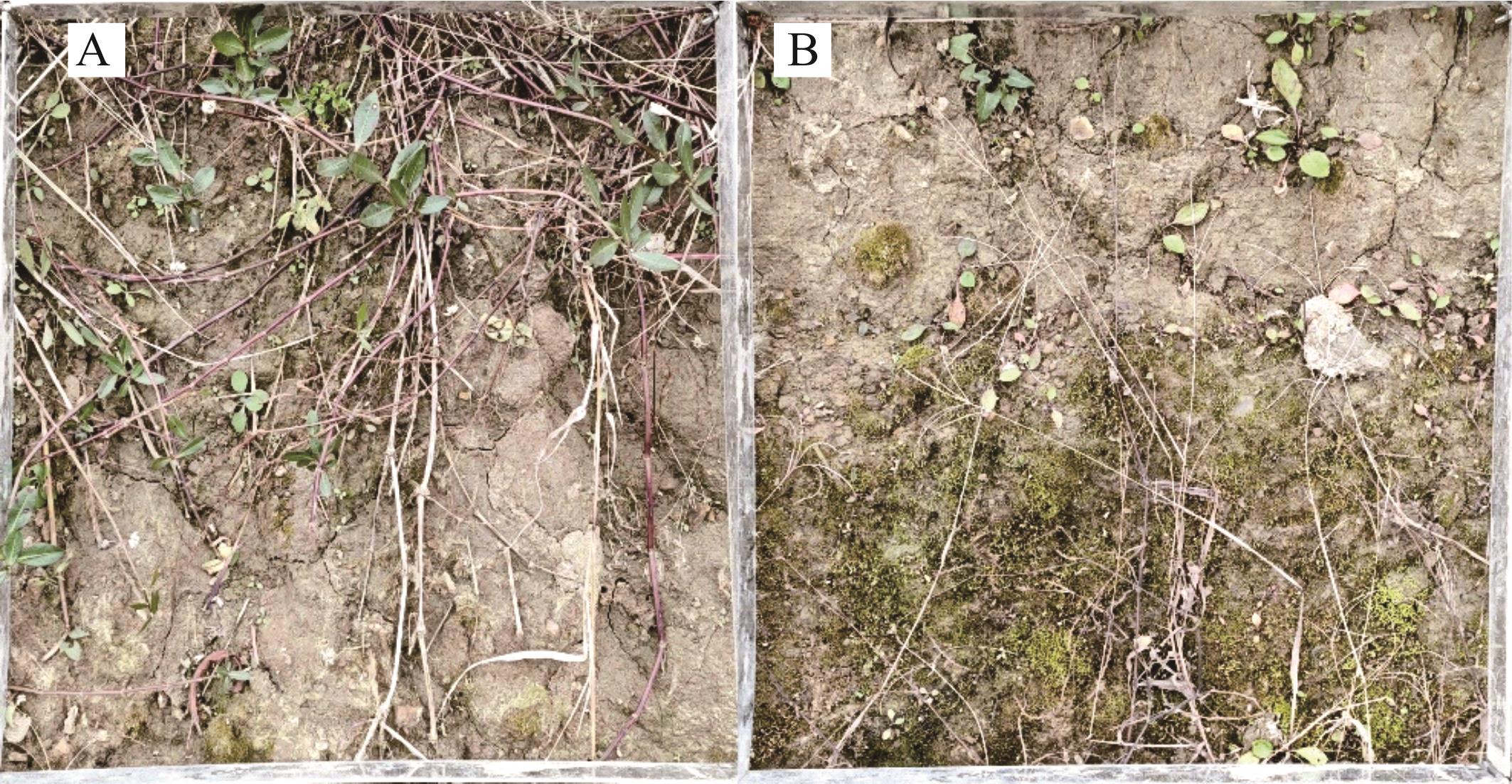
Fig.1 Vegetation-covered site (A) and biological crust-covered site (B)
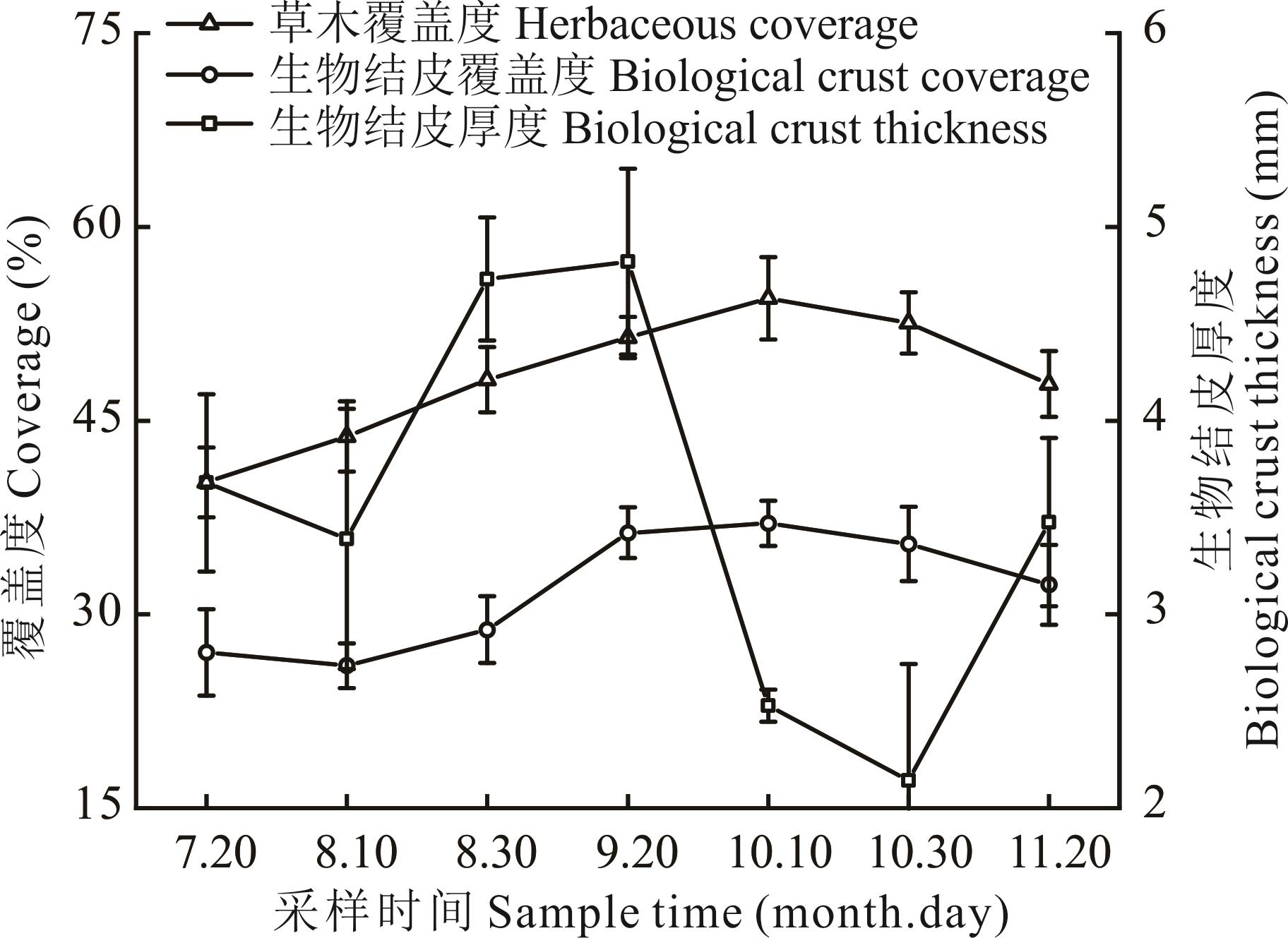
Fig.2 Growth characteristics of herbaceous vegetation and biological crusts
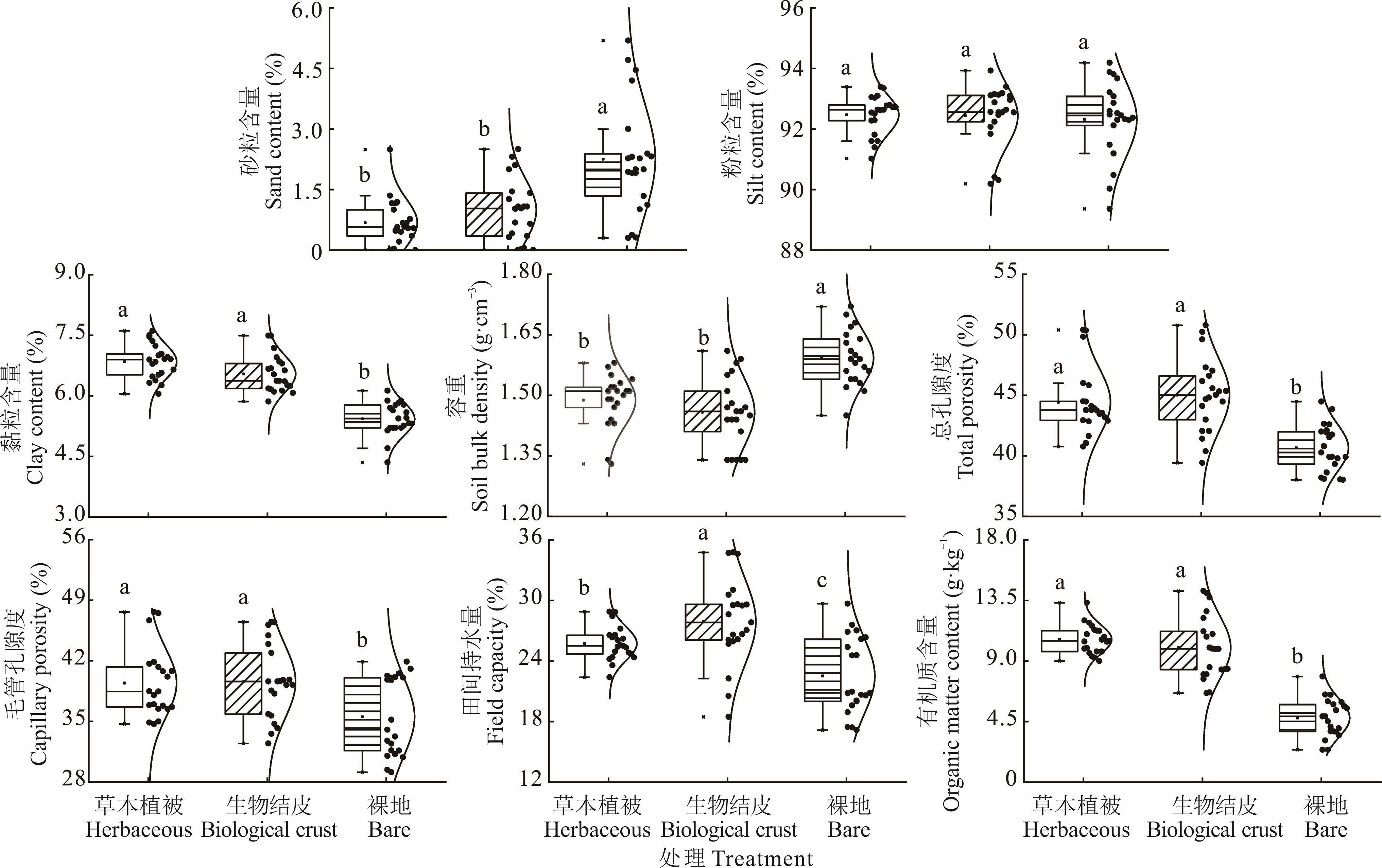
Fig.3 Differences in near-surface soil properties of terrace embankments under different surface cover types
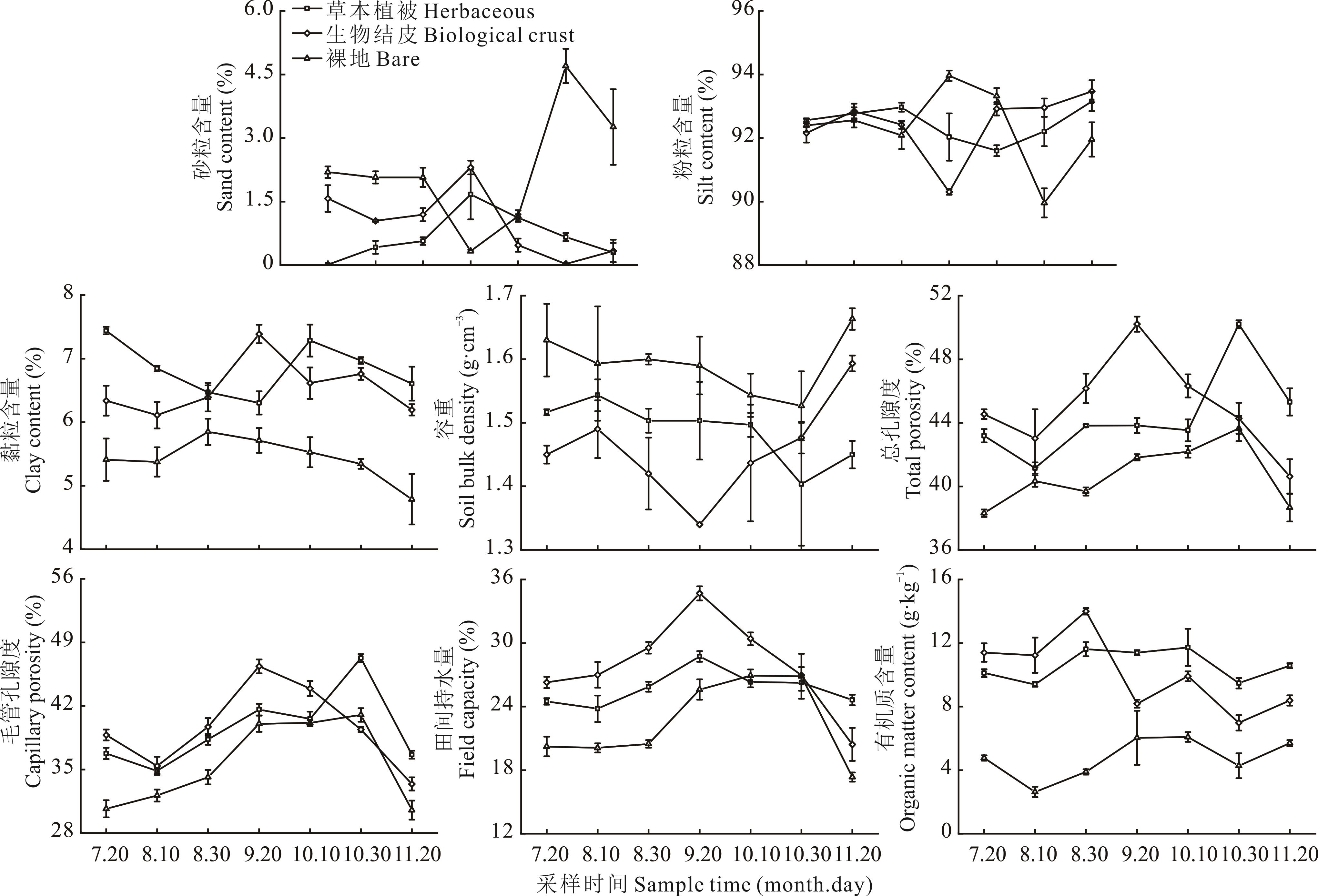
Fig.4 Variation characteristics of near-surface soil in terrace embankments under different surface cover types
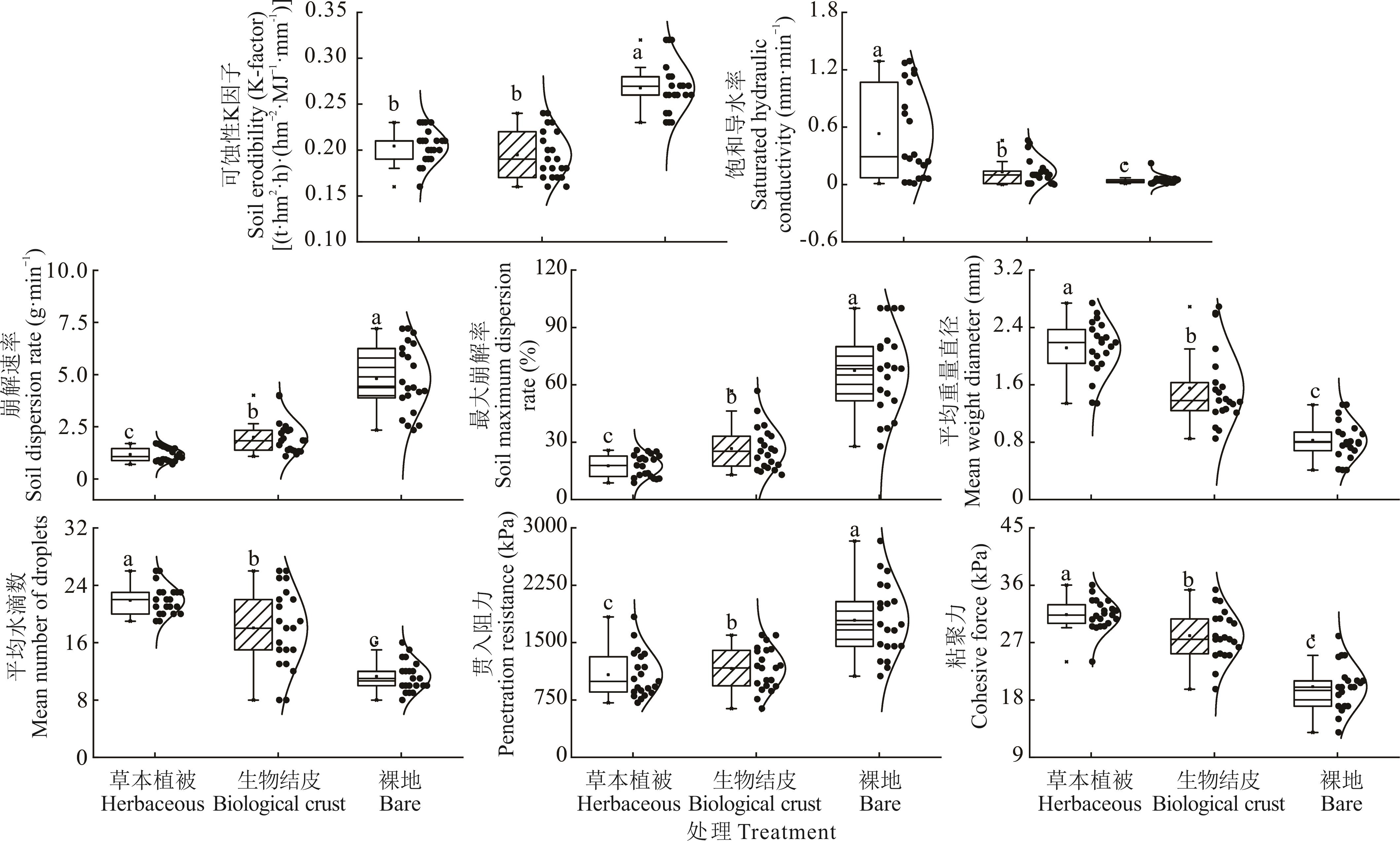
Fig.5 Differences in soil erodibility indicators of terrace embankments under different cover types
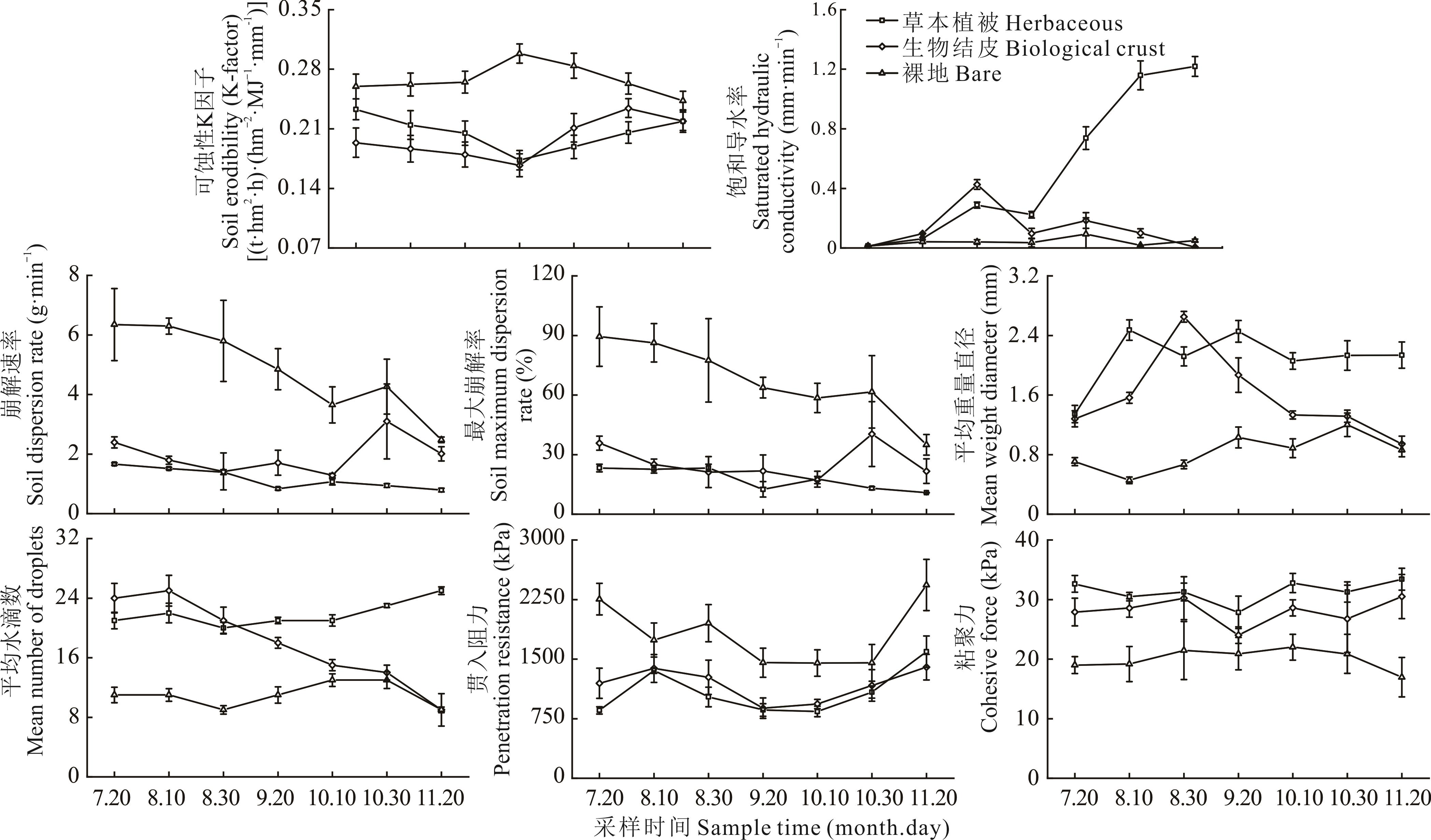
Fig.6 Variation in soil erodibility indicators of edge ridges with different vegetation cover types
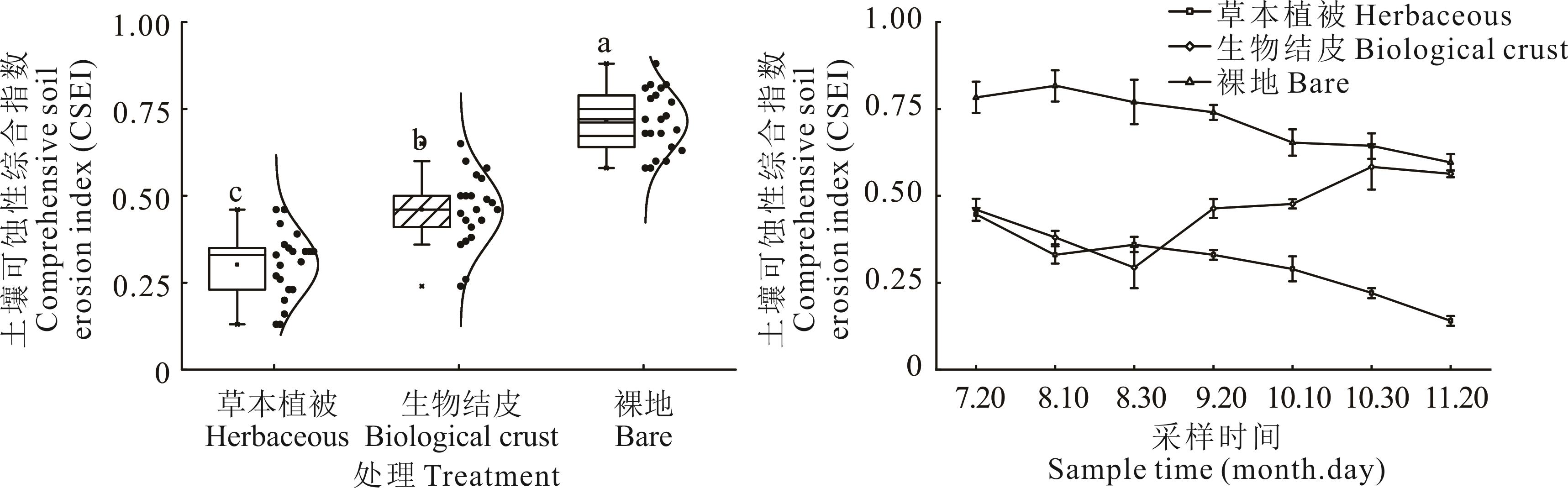
Fig.7 Differences and variation in soil erodibility index for different vegetation cover types of edge ridges
边坎类型 Edge type | 地表覆 盖度 Coverage | 结皮厚度 Biological crust thickness | 砂粒含量Sand content | 粉粒含量Silt content | 黏粒含量Clay content | 容重 Bulk density | 总孔隙度 Total porosity | 毛管孔隙度 Capillary porosity | 田间持水量Field capacity | 有机质含量Organic matter content |
|---|---|---|---|---|---|---|---|---|---|---|
| 草本植被Herbaceous | -0.53** | - | 0.10 | -0.12 | 0.04 | 0.51** | -0.51** | -0.06* | -0.21 | -0.15 |
| 生物结皮Biological crust | 0.51** | -0.64** | 0.38** | -0.38** | -0.14 | 0.29* | -0.29* | -0.17* | -0.17 | -0.69** |
| 裸地Bare | - | - | -0.18 | 0.23 | -0.35** | 0.35** | -0.35** | -0.15* | -0.22 | -0.80** |
Table 1 The result of Pearson correlation between comprehensive soil erodibility index and near surface characteristics
边坎类型 Edge type | 地表覆 盖度 Coverage | 结皮厚度 Biological crust thickness | 砂粒含量Sand content | 粉粒含量Silt content | 黏粒含量Clay content | 容重 Bulk density | 总孔隙度 Total porosity | 毛管孔隙度 Capillary porosity | 田间持水量Field capacity | 有机质含量Organic matter content |
|---|---|---|---|---|---|---|---|---|---|---|
| 草本植被Herbaceous | -0.53** | - | 0.10 | -0.12 | 0.04 | 0.51** | -0.51** | -0.06* | -0.21 | -0.15 |
| 生物结皮Biological crust | 0.51** | -0.64** | 0.38** | -0.38** | -0.14 | 0.29* | -0.29* | -0.17* | -0.17 | -0.69** |
| 裸地Bare | - | - | -0.18 | 0.23 | -0.35** | 0.35** | -0.35** | -0.15* | -0.22 | -0.80** |
自变量 Argument | 直接通径系数 Direct path coefficient | 间接通径系数Indirect path coefficient | 总通径系数 Total path coefficient | |||
|---|---|---|---|---|---|---|
植被覆盖度 Vegetation coverage | 总孔隙度 Total porosity | 毛管孔隙度 Capillary porosity | 合计 Total | |||
| 植被覆盖度Vegetation coverage | -0.436 | - | -0.153 | -0.126 | -0.279 | -0.715 |
| 总孔隙度Total porosity | -0.519 | -0.182 | - | -0.257 | -0.439 | -0.958 |
| 毛管孔隙度Capillary porosity | -0.320 | -0.107 | -0.230 | - | -0.337 | -0.658 |
Table 2 The path analysis result for seasonal variation in comprehensive soil erodibility index of herbaceous covered terraced edge
自变量 Argument | 直接通径系数 Direct path coefficient | 间接通径系数Indirect path coefficient | 总通径系数 Total path coefficient | |||
|---|---|---|---|---|---|---|
植被覆盖度 Vegetation coverage | 总孔隙度 Total porosity | 毛管孔隙度 Capillary porosity | 合计 Total | |||
| 植被覆盖度Vegetation coverage | -0.436 | - | -0.153 | -0.126 | -0.279 | -0.715 |
| 总孔隙度Total porosity | -0.519 | -0.182 | - | -0.257 | -0.439 | -0.958 |
| 毛管孔隙度Capillary porosity | -0.320 | -0.107 | -0.230 | - | -0.337 | -0.658 |
自变量 Argument | 直接通径系数 Direct path coefficient | 间接通径系数Indirect path coefficient | 总通径系数Total path coefficient | ||||
|---|---|---|---|---|---|---|---|
| 有机质Organic matter content | 结皮厚度Biological crust thickness | 毛管孔隙度 Capillary porosity | 砂粒含量Sand content | 合计Total | |||
| 有机质含量Organic matter content | -0.299 | - | -0.194 | 0.009 | 0.064 | -0.121 | -0.420 |
| 结皮厚度Biological crust thickness | -0.528 | -0.343 | - | 0.155 | -0.147 | -0.335 | -0.863 |
| 毛管孔隙度Capillary porosity | -0.271 | 0.008 | 0.134 | - | 0.060 | 0.203 | -0.068 |
| 砂粒含量Sand content | 0.260 | -0.056 | 0.002 | -0.058 | - | -0.111 | 0.149 |
Table 3 The path analysis result for seasonal variation in comprehensive soil erodibility index of biocrust covered terraced edge
自变量 Argument | 直接通径系数 Direct path coefficient | 间接通径系数Indirect path coefficient | 总通径系数Total path coefficient | ||||
|---|---|---|---|---|---|---|---|
| 有机质Organic matter content | 结皮厚度Biological crust thickness | 毛管孔隙度 Capillary porosity | 砂粒含量Sand content | 合计Total | |||
| 有机质含量Organic matter content | -0.299 | - | -0.194 | 0.009 | 0.064 | -0.121 | -0.420 |
| 结皮厚度Biological crust thickness | -0.528 | -0.343 | - | 0.155 | -0.147 | -0.335 | -0.863 |
| 毛管孔隙度Capillary porosity | -0.271 | 0.008 | 0.134 | - | 0.060 | 0.203 | -0.068 |
| 砂粒含量Sand content | 0.260 | -0.056 | 0.002 | -0.058 | - | -0.111 | 0.149 |
自变量 Argument | 直接通径系数 Direct path coefficient | 间接通径系数Indirect path coefficient | 总通径系数Total path coefficient | ||
|---|---|---|---|---|---|
| 有机质Organic matter content | 粉粒含量Silt content | 合计Total | |||
| 有机质含量Organic matter content | -0.790 | - | 0.030 | 0.030 | -0.760 |
| 粉粒含量Silt content | 0.197 | -0.007 | - | -0.007 | 0.190 |
Table 4 The path analysis result for seasonal variation in comprehensive soil erodibility index of bare terraced edge
自变量 Argument | 直接通径系数 Direct path coefficient | 间接通径系数Indirect path coefficient | 总通径系数Total path coefficient | ||
|---|---|---|---|---|---|
| 有机质Organic matter content | 粉粒含量Silt content | 合计Total | |||
| 有机质含量Organic matter content | -0.790 | - | 0.030 | 0.030 | -0.760 |
| 粉粒含量Silt content | 0.197 | -0.007 | - | -0.007 | 0.190 |
| [1] | Wang B, Zhang G H, Shi Y Y, et al. Effect of natural restoration time of abandoned farmland on soil detachment by overland flow in the Loess Plateau of China. Earth Surface Processes and Landforms, 2013, 38(14): 1725-1734. |
| [2] | Sun L, Zhang G H, Luan L L, et al. Temporal variation in soil resistance to flowing water erosion for soil incorporated with plant litters in the Loess Plateau of China. Catena, 2016, 145: 239-245. |
| [3] | China State Council. The state council’s approval of the national land consolidation plan (2016-2020). The State Council Gazette of the People’s Republic of China, 2017(2): 96-97. |
| 国务院. 国务院关于全国土地整治规划(2016-2020年)的批复. 中华人民共和国国务院公报, 2017(2): 96-97. | |
| [4] | Stoof C R, Ferreira A J D, Mol W, et al. Soil surface changes increase runoff and erosion risk after a low-moderate severity fire. Geoderma, 2015, 239/240: 58-67. |
| [5] | Zhang B J, Zhang G H, Zhu P Z, et al. Temporal variations in soil erodibility indicators of vegetation-restored steep gully slopes on the Loess Plateau of China. Agriculture, Ecosystems and Environment, 2019, 286: 106661. |
| [6] | Yang F, Zhang K D, Yang M Y, et al. Experimental study on hydraulic characteristics of flow under vegetation stem. Journal of Sediment Research, 2016(4): 22-27. |
| 杨帆, 张宽地, 杨明义, 等. 植物茎秆影响坡面径流水动力学特性研究. 泥沙研究, 2016(4): 22-27. | |
| [7] | Wang B, Zhang G H. Quantifying the binding and bonding effects of plant roots on soil detachment by overland flow in 10 typical grasslands on the Loess Plateau. Soil Science Society of America Journal, 2017, 81(6): 1567-1576. |
| [8] | Wang B, Zhang G H, Yang Y F, et al. Response of soil detachment capacity to plant root and soil properties in typical grasslands on the Loess Plateau. Agriculture, Ecosystems and Environment, 2018, 266: 68-75. |
| [9] | Wang D D, Xu H C, Shan Z J, et al. Effects of Robinia pseudoacacia litter cover and roots on soil erosion in the Loess Plateau, China. Journal of Soil and Water Conservation, 2023, 37(2): 83-89. |
| 王丹丹, 许海超, 单志杰, 等. 黄土高原刺槐林地根系与枯落物对土壤侵蚀的影响. 水土保持学报, 2023, 37(2): 83-89. | |
| [10] | Davis D D, Horton R, Heitman J L, et al. Wettability and hysteresis effects on water sorption in relatively dry soil. Soil Science Society of America Journal, 2009, 73(6): 1947-1951. |
| [11] | Wang H, Zhang G H, Li N N, et al. Soil erodibility influenced by natural restoration time of abandoned farmland on the Loess Plateau of China. Geoderma, 2018, 325(4): 18-27. |
| [12] | Lan S, Wu L, Adessi A, et al. Cyanobacterial persistence and influence on microbial community dynamics over 15 years in induced biocrusts. Environment Microbiology, 2022, 24(1): 66-81. |
| [13] | Liu F, Zhang G H, Sun F, et al. Quantifying the surface covering, binding and bonding effects of biological soil crusts on soil detachment by overland flow. Earth Surface Processes and Landforms, 2017, 42(15): 2640-2648. |
| [14] | Wang H, Zhang G H, Li N N, et al. Variation in soil erodibility under five typical land uses in a small watershed on the Loess Plateau, China. Catena, 2019, 174(3): 24-35. |
| [15] | Zhu P Z, Feng T, Yang L, et al. Biological soil crusts decrease soil erodibility of economic fruit forests land through its consolidation effect in the Three Gorges Reservoir area. Catena, 2024, 243: 108200. |
| [16] | Zhang C H, Xiao B, Li S L, et al. Characteristics of biocrusts in croplands and their effects on surface soil disintegration in the black soil region of northeast China. Chinese Journal of Applied Ecology, 2022, 33(7): 1773-1782. |
| 张晨晖, 肖波, 李胜龙, 等. 东北黑土区农田生物结皮的特征及其对表层土壤崩解的影响. 应用生态学报, 2022, 33(7): 1773-1782. | |
| [17] | Zuo X F, Wang L, Zheng F L, et al. Effects of freeze-thaw cycles and soil properties on mollisol shear strength in Chinese black soil region. Journal of Soil and Water Conservation, 2020, 34(2): 30-35, 42. |
| 左小锋, 王磊, 郑粉莉, 等. 冻融循环和土壤性质对东北黑土抗剪强度的影响. 水土保持学报, 2020, 34(2): 30-35, 42. | |
| [18] | Zhang K L, Peng W Y, Yang H L. Soil erodibility and its estimation for agricultural soil in china. Acta Pedologica Sinica, 2007, 44(1): 7-13. |
| 张科利, 彭文英, 杨红丽. 中国土壤可蚀性值及其估算. 土壤学报, 2007, 44(1): 7-13. | |
| [19] | Cui X W, Zhang X F, Liang S M. Correlation between comprehensive soil erodibility index and environmental factors in the Qilian Mountains, China. Mountain Research, 2024, 42(1): 14-26. |
| 崔晓薇, 张喜风, 梁水明. 祁连山综合土壤可蚀性指数与环境因子的关联性. 山地学报, 2024, 42(1): 14-26. | |
| [20] | Liu G, Xu M, Ritsema C. A study of soil surface characteristics in a small watershed in the hilly, gullied area on the Chinese Loess Plateau. Catena, 2003, 54(1): 31-44. |
| [21] | Ping Y, Tan T H, Li Y C, et al. Soil properties change and soil detachment response driven by biocrusts in typical small watershed of Danjiangkou Reservoir Area. Journal of Soil and Water Conservation, 2023, 37(3): 87-94. |
| 平原, 澹腾辉, 李雨晨, 等. 丹江口库区典型小流域生物结皮驱动土壤性质变化及分离响应. 水土保持学报, 2023, 37(3): 87-94. | |
| [22] | Zhang G H, Yi L, Ding W F, et al. Effects of moss biocrust on soil water infiltration in the Three Gorges Reservoir Area, China. Chinese Journal of Applied Ecology, 2022, 33(7): 1835-1842. |
| 张冠华, 易亮, 丁文峰, 等. 三峡库区苔藓生物结皮对土壤水分入渗的影响. 应用生态学报, 2022, 33(7): 1835-1842. | |
| [23] | Baets S D, Poesen J, Gyssels G, et al. Effects of grass roots on the erodibility of topsoils during concentrated flow. Geomorphology, 2006, 76(1/2): 54-67. |
| [24] | Gyssels G. Impact of plant roots on the resistance of soils to erosion by water: a review. Progress in Physical Geography, 2005, 29(2): 189-217. |
| [25] | Yang K, Zhao Y G, Ma X X. Water stability of biological soil crusts in hilly regions of Loess Plateau, northwest China. Chinese Journal of Applied Ecology, 2012, 23(1): 173-177. |
| 杨凯, 赵允格, 马昕昕. 黄土丘陵区生物土壤结皮层水稳性. 应用生态学报, 2012, 23(1): 173-177. | |
| [26] | Wang H, Zhang G H, Liu F, et al. Temporal variations in infiltration properties of biological crusts covered soils on the Loess Plateau of China. Catena, 2017, 159: 115-125. |
| [27] | Mi G Y, Ping Y, Zhao Y J, et al. Seasonal variation of soil detachment capacity induced by moss crusts in red soil hilly area. Acta Ecologica Sinica, 2024, 44(22): 10391-10400. |
| 宓桂音, 平原, 赵娅君, 等. 红壤丘陵区苔藓结皮土壤分离能力季节变化特征.生态学报, 2024, 44(22): 10391-10400. | |
| [28] | Wang Y N, Ma J M, Liang Y M, et al. Variations of microbial communities and enzyme activities in rhizosphere and non-rhizosphere soils of aged Loropetalum chinense forests on Karst rocky mountains during dry and rainy seasons. Guihaia, 2024, 44(10): 1848-1863. |
| 王雅楠, 马姜明, 梁月明, 等. 喀斯特石山老龄林檵木根际和非根际土壤微生物群落及酶活性的旱、雨季节变化. 广西植物, 2024, 44(10): 1848-1863. | |
| [29] | Zha X, Tang K L, Zhang K L, et al. Study on the influence of vegetation on soil characteristics and soil erosion. Journal of Soil and Water Conservation, 1992(2): 52-58. |
| 查轩, 唐克丽, 张科利, 等. 植被对土壤特性及土壤侵蚀的影响研究. 水土保持学报, 1992(2): 52-58. | |
| [30] | Gao L Q, Bowker M A, Xu M X, et al. Biological soil crusts decrease erodibility by modifying inherent soil properties on the Loess Plateau, China. Soil Biology and Biochemistry, 2017, 105(4): 49-58. |
| [31] | Gong J, Chen L D, Fu B J, et al. Effect of land use on soil nutrients in the loess hilly area of the Loess Plateau China. Land Degradation and Development, 2006, 5(17): 453-465. |
| [1] | Yan WEI, You-bin LIU, Xiao-hong LIU, Yun CHEN, Zhe-hao YAN, Yi-zhi DU. Study on shear strength of root-soil composite of Dolichos lablab and Medicago sativa in purple soil region [J]. Acta Prataculturae Sinica, 2023, 32(8): 82-90. |
| [2] | Rui-jie YANG, Shu-qin HE, Shu-feng ZHOU, Jing-yue YANG, Yu-xian JIN, Zi-cheng ZHENG. Root regulation of soil scourability in hybrid sorghum grass during the growing period [J]. Acta Prataculturae Sinica, 2023, 32(7): 149-159. |
| [3] | Hong LI, Yun CHEN, Xiao-hong LIU, You-bin LIU, Yi-zhi DU. Factors affecting the soil erosion and scouring resistance of bank hedgerows in purple soil sloping cropland [J]. Acta Prataculturae Sinica, 2023, 32(11): 40-52. |
| [4] | CAO Wei, LIU Lu-lu, WU Dan. Soil erosion changes and driving factors in the Three-River Headwaters region [J]. Acta Prataculturae Sinica, 2018, 27(6): 10-22. |
| [5] | LIN Hui-Long, ZHENG Shu-Ting, WANG Xue-Lu. Soil erosion assessment based on the RUSLE model in the Three-Rivers Headwaters area, Qinghai-Tibetan Plateau, China [J]. Acta Prataculturae Sinica, 2017, 26(7): 11-22. |
| [6] | ZHANG Xuefeng, NIU Jianming, ZHANG Qing, DONG Jianjun, ZHANG Jing. Soil conservation function and its spatial distribution of grassland ecosystems in Xilin River Basin, Inner Mongolia [J]. Acta Prataculturae Sinica, 2015, 24(1): 12-20. |
| [7] | JIAO Ju-ying, WANG Ning, DU Hua-dong, WANG Dong-li. Research on effects of soil erosion on vegetation development and succession of plant resistance to erosion [J]. Acta Prataculturae Sinica, 2012, 21(5): 311-318. |
| [8] | LIN Hui-long,WANG Miao-miao, LI Xue-ling, WANG Zhao-qi. A study on soil erodibility in a combined experimental trampling and simulated rainfall experiment on a Stipa bungeana steppe in Huanxian County, Gansu Province, China [J]. Acta Prataculturae Sinica, 2010, 19(3): 76-87. |
| Viewed | ||||||
|
Full text |
|
|||||
|
Abstract |
|
|||||
