
ISSN 1004-5759 CN 62-1105/S
Acta Prataculturae Sinica ›› 2026, Vol. 35 ›› Issue (12): 150-164.DOI: 10.11686/cyxb2025504
Xiao-hua NIU1,2( ), Ya-ming HU1,2, Yan LI1,2, Wen ZHANG1,2, Qin-zhe SUN1,2, Lei LIU1,2, Li-wen SONG1,2, Xing XIANG1,2, Huan LIU1,2(), Sen-shan WANG1,2()
Received:2025-12-10
Revised:2026-03-23
Online:2026-12-20
Published:2026-11-02
Contact:
Huan LIU,Sen-shan WANG
Xiao-hua NIU, Ya-ming HU, Yan LI, Wen ZHANG, Qin-zhe SUN, Lei LIU, Li-wen SONG, Xing XIANG, Huan LIU, Sen-shan WANG. Effects of six leguminous flavonoids on the survival and detoxifing enzyme activity of the pea aphid (Acyrthosiphon pisum)[J]. Acta Prataculturae Sinica, 2026, 35(12): 150-164.
化合物及试剂名称 Names of compounds and reagents | CAS号/试剂盒型号 CAS number/kit model number | 生产厂家 Manufacturer |
|---|---|---|
| 木犀草素 Luteolin | 491-70-3 | 上海源叶生物科技有限公司Shanghai Yuanye Bio-Technology Co., Ltd. |
| 染料木素 Genistein | 446-72-0 | |
| 芹菜素 Apigenin | 520-36-5 | |
| 芦丁 Rutin | 153-18-4 | |
| 槲皮素 Quercitrin | 117-39-5 | |
| 大豆苷元 Daidzein | 486-66-8 | |
| 二甲基亚砜 Dimethyl sulfoxide (DMSO) | 67-68-5 | |
| 羧酸酯酶 Carboxylesterase (CarE) | BC0840 | 北京索莱宝科技有限公司Beijing Solarbio Science & Technology Co., Ltd. |
| 谷胱甘肽S-转移酶 Glutathione S-transferases (GST) | BC0350 | |
| 细胞色素P450酶 Cytochrome P450 enzyme (CYP450) | YX-0325161 | 上海优选生物科技有限公司Shanghai Sinobest Biotechnology Co., Ltd. |
| UDP-葡萄糖醛酸转移酶 UDP-glucuronosyl transferases (UGT) | YX-20136I |
Table 1 Main reagents and kits
化合物及试剂名称 Names of compounds and reagents | CAS号/试剂盒型号 CAS number/kit model number | 生产厂家 Manufacturer |
|---|---|---|
| 木犀草素 Luteolin | 491-70-3 | 上海源叶生物科技有限公司Shanghai Yuanye Bio-Technology Co., Ltd. |
| 染料木素 Genistein | 446-72-0 | |
| 芹菜素 Apigenin | 520-36-5 | |
| 芦丁 Rutin | 153-18-4 | |
| 槲皮素 Quercitrin | 117-39-5 | |
| 大豆苷元 Daidzein | 486-66-8 | |
| 二甲基亚砜 Dimethyl sulfoxide (DMSO) | 67-68-5 | |
| 羧酸酯酶 Carboxylesterase (CarE) | BC0840 | 北京索莱宝科技有限公司Beijing Solarbio Science & Technology Co., Ltd. |
| 谷胱甘肽S-转移酶 Glutathione S-transferases (GST) | BC0350 | |
| 细胞色素P450酶 Cytochrome P450 enzyme (CYP450) | YX-0325161 | 上海优选生物科技有限公司Shanghai Sinobest Biotechnology Co., Ltd. |
| UDP-葡萄糖醛酸转移酶 UDP-glucuronosyl transferases (UGT) | YX-20136I |
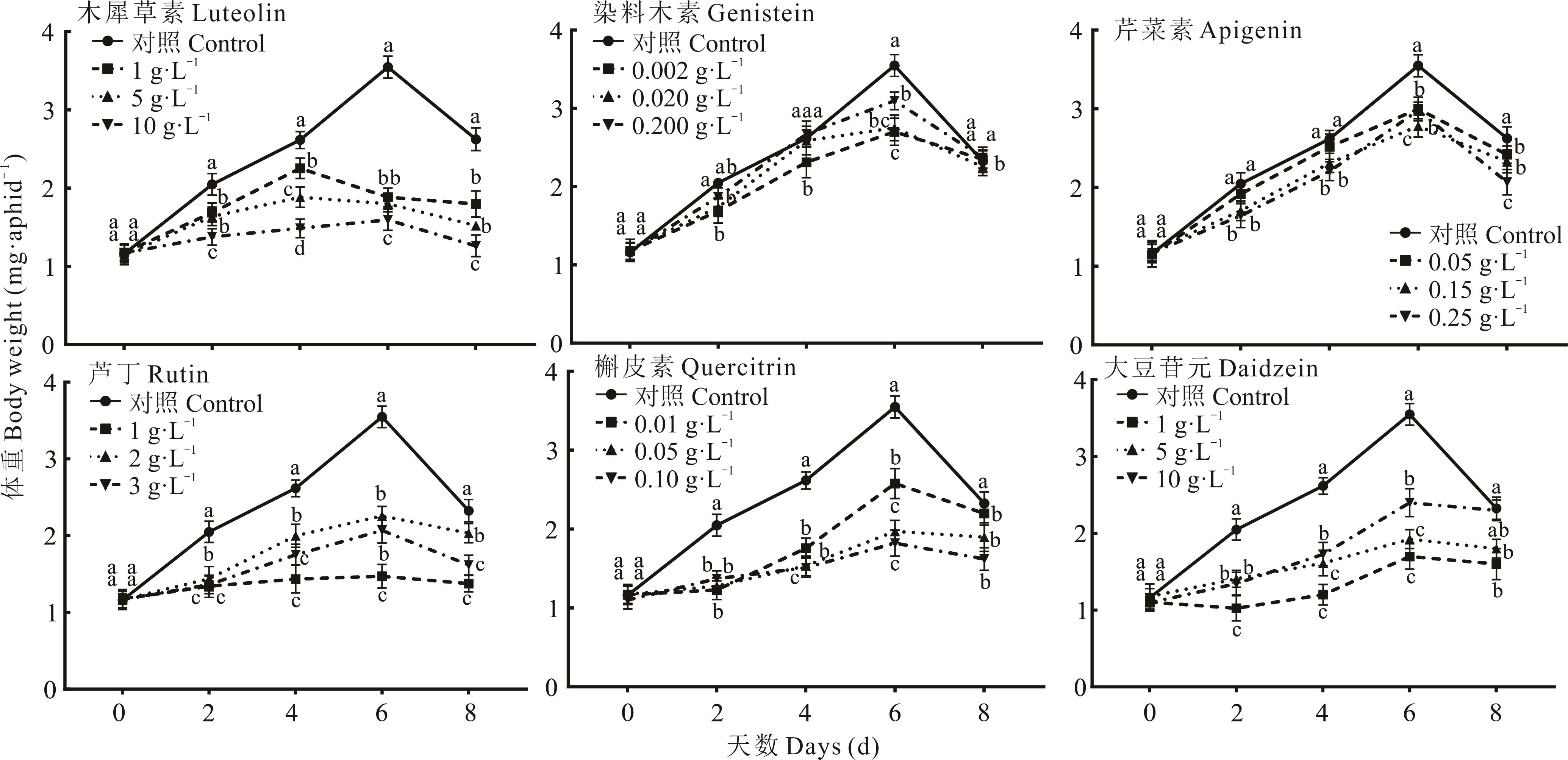
Fig.1 Body weight changes of A. pisum after feeding on V. faba leaves treated with different concentrations of flavonoids
| 参数Parameters | 来源Source | 木犀草素Luteolin | 染料木素Genistein | 芹菜素Apigenin | 芦丁Rutin | 槲皮素Quercitrin | 大豆苷元Daidzein | ||||||||||||
|---|---|---|---|---|---|---|---|---|---|---|---|---|---|---|---|---|---|---|---|
| df | F | P | df | F | P | df | F | P | df | F | P | df | F | P | df | F | P | ||
| 体重Body weight | C | 4 | 50.34 | <0.0001 | 4 | 615.20 | <0.0001 | 4 | 684.50 | <0.0001 | 4 | 254.40 | <0.0001 | 4 | 337.30 | <0.0001 | 4 | 274.20 | <0.0001 |
| T | 3 | 255.40 | <0.0001 | 3 | 26.97 | <0.0001 | 3 | 50.28 | <0.0001 | 3 | 289.80 | <0.0001 | 3 | 241.70 | <0.0001 | 3 | 269.20 | <0.0001 | |
| C×T | 12 | 380.60 | <0.0001 | 12 | 9.26 | <0.0001 | 12 | 7.05 | <0.0001 | 12 | 35.83 | <0.0001 | 12 | 32.07 | <0.0001 | 12 | 30.77 | <0.0001 | |
| Error | 100 | 100 | 100 | 100 | 100 | 100 | |||||||||||||
| 死亡率Mortality | C | 3 | 310.90 | <0.0001 | 3 | 169.40 | <0.0001 | 3 | 252.40 | <0.0001 | 3 | 158.90 | <0.0001 | 3 | 158.90 | <0.0001 | 3 | 156.10 | <0.0001 |
| T | 3 | 68.82 | <0.0001 | 3 | 24.02 | <0.0001 | 3 | 84.64 | <0.0001 | 3 | 109.30 | <0.0001 | 3 | 109.30 | <0.0001 | 3 | 136.10 | <0.0001 | |
| C×T | 9 | 27.46 | <0.0001 | 9 | 8.69 | <0.0001 | 9 | 17.78 | <0.0001 | 9 | 8.42 | <0.0001 | 9 | 8.42 | <0.0001 | 9 | 9.49 | <0.0001 | |
| Error | 64 | 64 | 64 | 64 | 64 | 64 | |||||||||||||
单雌产蚜量 Average fecundity per aphid | C | 3 | 378.80 | <0.0001 | 3 | 362.30 | <0.0001 | 3 | 289.20 | <0.0001 | 3 | 239.50 | <0.0001 | 3 | 166.90 | <0.0001 | 3 | 247.00 | <0.0001 |
| T | 3 | 182.50 | <0.0001 | 3 | 82.70 | <0.0001 | 3 | 80.45 | <0.0001 | 3 | 144.00 | <0.0001 | 3 | 190.90 | <0.0001 | 3 | 353.70 | <0.0001 | |
| C×T | 9 | 58.28 | <0.0001 | 9 | 25.61 | <0.0001 | 9 | 27.15 | <0.0001 | 9 | 44.63 | <0.0001 | 9 | 60.31 | <0.0001 | 9 | 113.60 | <0.0001 | |
| Error | 64 | 64 | 64 | 64 | 64 | 64 | |||||||||||||
谷胱甘肽S-转移酶活性 GSTs activity | C | 1 | 0.11 | 0.7526 | 1 | 15.14 | 0.0013 | 1 | 5.30 | 0.0350 | 1 | 21.58 | 0.0003 | 1 | 15.70 | 0.0011 | 1 | 0.39 | 0.5422 |
| T | 3 | 29.77 | <0.0001 | 3 | 213.80 | <0.0001 | 3 | 16.35 | <0.0001 | 3 | 16.09 | <0.0001 | 3 | 7.86 | 0.0019 | 3 | 11.36 | 0.0003 | |
| C×T | 3 | 2.53 | 0.0937 | 3 | 19.14 | <0.0001 | 3 | 13.66 | 0.0001 | 3 | 1.01 | 0.4176 | 3 | 0.94 | 0.4449 | 3 | 8.79 | 0.0011 | |
| Error | 16 | 16 | 16 | 16 | 16 | 16 | |||||||||||||
羧酸酯酶活性 CarE activity | C | 1 | 15.89 | 0.0011 | 1 | 35.44 | <0.0001 | 1 | 6.45 | 0.0219 | 1 | 102.80 | <0.0001 | 1 | 186.50 | <0.0001 | 1 | 67.21 | <0.0001 |
| T | 3 | 21.75 | <0.0001 | 3 | 39.04 | <0.0001 | 3 | 20.92 | <0.0001 | 3 | 39.71 | <0.0001 | 3 | 13.96 | <0.0001 | 3 | 36.16 | <0.0001 | |
| C×T | 3 | 35.52 | <0.0001 | 3 | 23.84 | <0.0001 | 3 | 30.60 | <0.0001 | 3 | 8.92 | 0.0011 | 3 | 3.96 | 0.0274 | 3 | 11.97 | 0.0002 | |
| Error | 16 | 16 | 16 | 16 | 16 | 16 | |||||||||||||
细胞色素P450酶活性 CYP450 activity | C | 1 | 21.32 | 0.0275 | 1 | 46.31 | <0.0001 | 1 | 64.18 | <0.0001 | 1 | 36.32 | <0.0001 | 1 | 109.50 | <0.0001 | 1 | 5.61 | 0.0308 |
| T | 3 | 47.63 | <0.0001 | 3 | 25.96 | <0.0001 | 3 | 10.33 | 0.0005 | 3 | 33.61 | <0.0001 | 3 | 18.12 | <0.0001 | 3 | 8.05 | 0.0017 | |
| C×T | 3 | 24.57 | <0.0001 | 3 | 4.16 | 0.0234 | 3 | 53.13 | <0.0001 | 3 | 4.64 | 0.0161 | 3 | 2.23 | 0.1241 | 3 | 22.15 | <0.0001 | |
| Error | 16 | 16 | 16 | 16 | 16 | 16 | |||||||||||||
UDP-葡萄糖醛酸转移酶活性 UGTs activity | C | 1 | 51.73 | <0.0001 | 1 | 281.50 | <0.0001 | 1 | 6.68 | 0.0200 | 1 | 118.20 | <0.0001 | 1 | 290.80 | <0.0001 | 1 | 159.90 | <0.0001 |
| T | 3 | 6.69 | 0.0039 | 3 | 6.88 | 0.0034 | 3 | 13.87 | 0.0001 | 3 | 46.07 | <0.0001 | 3 | 16.43 | <0.0001 | 3 | 27.86 | <0.0001 | |
| C×T | 3 | 18.19 | <0.0001 | 3 | 0.73 | 0.5464 | 3 | 25.06 | <0.0001 | 3 | 12.90 | 0.0002 | 3 | 2.70 | 0.0806 | 3 | 5.43 | 0.0091 | |
| Error | 16 | 16 | 16 | 16 | 16 | 16 | |||||||||||||
Table 2 Interactive effects of compound concentration and treatment time on the biological parameters and detoxification enzyme activity in A. pisum
| 参数Parameters | 来源Source | 木犀草素Luteolin | 染料木素Genistein | 芹菜素Apigenin | 芦丁Rutin | 槲皮素Quercitrin | 大豆苷元Daidzein | ||||||||||||
|---|---|---|---|---|---|---|---|---|---|---|---|---|---|---|---|---|---|---|---|
| df | F | P | df | F | P | df | F | P | df | F | P | df | F | P | df | F | P | ||
| 体重Body weight | C | 4 | 50.34 | <0.0001 | 4 | 615.20 | <0.0001 | 4 | 684.50 | <0.0001 | 4 | 254.40 | <0.0001 | 4 | 337.30 | <0.0001 | 4 | 274.20 | <0.0001 |
| T | 3 | 255.40 | <0.0001 | 3 | 26.97 | <0.0001 | 3 | 50.28 | <0.0001 | 3 | 289.80 | <0.0001 | 3 | 241.70 | <0.0001 | 3 | 269.20 | <0.0001 | |
| C×T | 12 | 380.60 | <0.0001 | 12 | 9.26 | <0.0001 | 12 | 7.05 | <0.0001 | 12 | 35.83 | <0.0001 | 12 | 32.07 | <0.0001 | 12 | 30.77 | <0.0001 | |
| Error | 100 | 100 | 100 | 100 | 100 | 100 | |||||||||||||
| 死亡率Mortality | C | 3 | 310.90 | <0.0001 | 3 | 169.40 | <0.0001 | 3 | 252.40 | <0.0001 | 3 | 158.90 | <0.0001 | 3 | 158.90 | <0.0001 | 3 | 156.10 | <0.0001 |
| T | 3 | 68.82 | <0.0001 | 3 | 24.02 | <0.0001 | 3 | 84.64 | <0.0001 | 3 | 109.30 | <0.0001 | 3 | 109.30 | <0.0001 | 3 | 136.10 | <0.0001 | |
| C×T | 9 | 27.46 | <0.0001 | 9 | 8.69 | <0.0001 | 9 | 17.78 | <0.0001 | 9 | 8.42 | <0.0001 | 9 | 8.42 | <0.0001 | 9 | 9.49 | <0.0001 | |
| Error | 64 | 64 | 64 | 64 | 64 | 64 | |||||||||||||
单雌产蚜量 Average fecundity per aphid | C | 3 | 378.80 | <0.0001 | 3 | 362.30 | <0.0001 | 3 | 289.20 | <0.0001 | 3 | 239.50 | <0.0001 | 3 | 166.90 | <0.0001 | 3 | 247.00 | <0.0001 |
| T | 3 | 182.50 | <0.0001 | 3 | 82.70 | <0.0001 | 3 | 80.45 | <0.0001 | 3 | 144.00 | <0.0001 | 3 | 190.90 | <0.0001 | 3 | 353.70 | <0.0001 | |
| C×T | 9 | 58.28 | <0.0001 | 9 | 25.61 | <0.0001 | 9 | 27.15 | <0.0001 | 9 | 44.63 | <0.0001 | 9 | 60.31 | <0.0001 | 9 | 113.60 | <0.0001 | |
| Error | 64 | 64 | 64 | 64 | 64 | 64 | |||||||||||||
谷胱甘肽S-转移酶活性 GSTs activity | C | 1 | 0.11 | 0.7526 | 1 | 15.14 | 0.0013 | 1 | 5.30 | 0.0350 | 1 | 21.58 | 0.0003 | 1 | 15.70 | 0.0011 | 1 | 0.39 | 0.5422 |
| T | 3 | 29.77 | <0.0001 | 3 | 213.80 | <0.0001 | 3 | 16.35 | <0.0001 | 3 | 16.09 | <0.0001 | 3 | 7.86 | 0.0019 | 3 | 11.36 | 0.0003 | |
| C×T | 3 | 2.53 | 0.0937 | 3 | 19.14 | <0.0001 | 3 | 13.66 | 0.0001 | 3 | 1.01 | 0.4176 | 3 | 0.94 | 0.4449 | 3 | 8.79 | 0.0011 | |
| Error | 16 | 16 | 16 | 16 | 16 | 16 | |||||||||||||
羧酸酯酶活性 CarE activity | C | 1 | 15.89 | 0.0011 | 1 | 35.44 | <0.0001 | 1 | 6.45 | 0.0219 | 1 | 102.80 | <0.0001 | 1 | 186.50 | <0.0001 | 1 | 67.21 | <0.0001 |
| T | 3 | 21.75 | <0.0001 | 3 | 39.04 | <0.0001 | 3 | 20.92 | <0.0001 | 3 | 39.71 | <0.0001 | 3 | 13.96 | <0.0001 | 3 | 36.16 | <0.0001 | |
| C×T | 3 | 35.52 | <0.0001 | 3 | 23.84 | <0.0001 | 3 | 30.60 | <0.0001 | 3 | 8.92 | 0.0011 | 3 | 3.96 | 0.0274 | 3 | 11.97 | 0.0002 | |
| Error | 16 | 16 | 16 | 16 | 16 | 16 | |||||||||||||
细胞色素P450酶活性 CYP450 activity | C | 1 | 21.32 | 0.0275 | 1 | 46.31 | <0.0001 | 1 | 64.18 | <0.0001 | 1 | 36.32 | <0.0001 | 1 | 109.50 | <0.0001 | 1 | 5.61 | 0.0308 |
| T | 3 | 47.63 | <0.0001 | 3 | 25.96 | <0.0001 | 3 | 10.33 | 0.0005 | 3 | 33.61 | <0.0001 | 3 | 18.12 | <0.0001 | 3 | 8.05 | 0.0017 | |
| C×T | 3 | 24.57 | <0.0001 | 3 | 4.16 | 0.0234 | 3 | 53.13 | <0.0001 | 3 | 4.64 | 0.0161 | 3 | 2.23 | 0.1241 | 3 | 22.15 | <0.0001 | |
| Error | 16 | 16 | 16 | 16 | 16 | 16 | |||||||||||||
UDP-葡萄糖醛酸转移酶活性 UGTs activity | C | 1 | 51.73 | <0.0001 | 1 | 281.50 | <0.0001 | 1 | 6.68 | 0.0200 | 1 | 118.20 | <0.0001 | 1 | 290.80 | <0.0001 | 1 | 159.90 | <0.0001 |
| T | 3 | 6.69 | 0.0039 | 3 | 6.88 | 0.0034 | 3 | 13.87 | 0.0001 | 3 | 46.07 | <0.0001 | 3 | 16.43 | <0.0001 | 3 | 27.86 | <0.0001 | |
| C×T | 3 | 18.19 | <0.0001 | 3 | 0.73 | 0.5464 | 3 | 25.06 | <0.0001 | 3 | 12.90 | 0.0002 | 3 | 2.70 | 0.0806 | 3 | 5.43 | 0.0091 | |
| Error | 16 | 16 | 16 | 16 | 16 | 16 | |||||||||||||
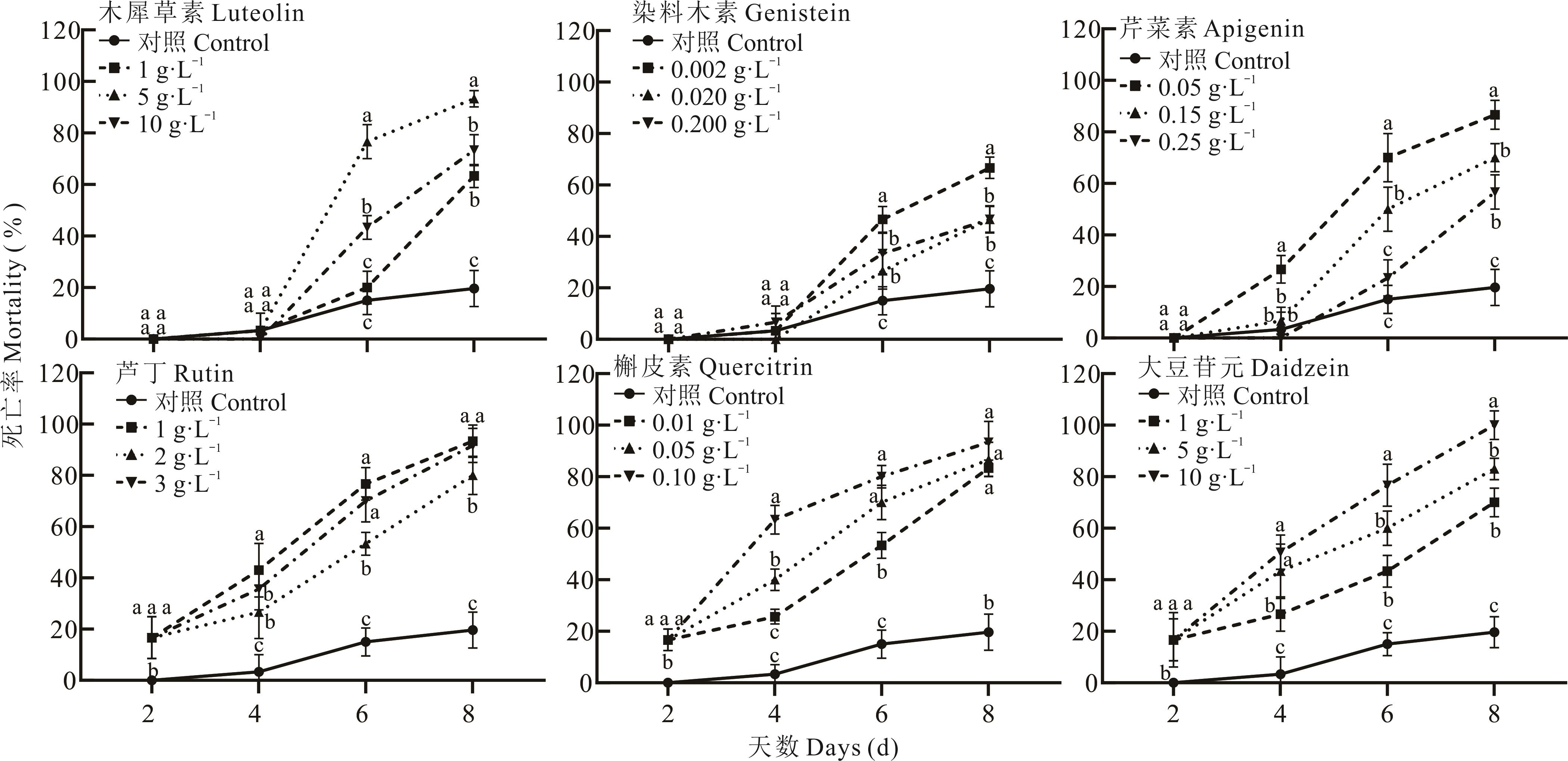
Fig.2 The mortality of A. pisum after feeding on V. faba leaves treated with different concentrations of flavonoids
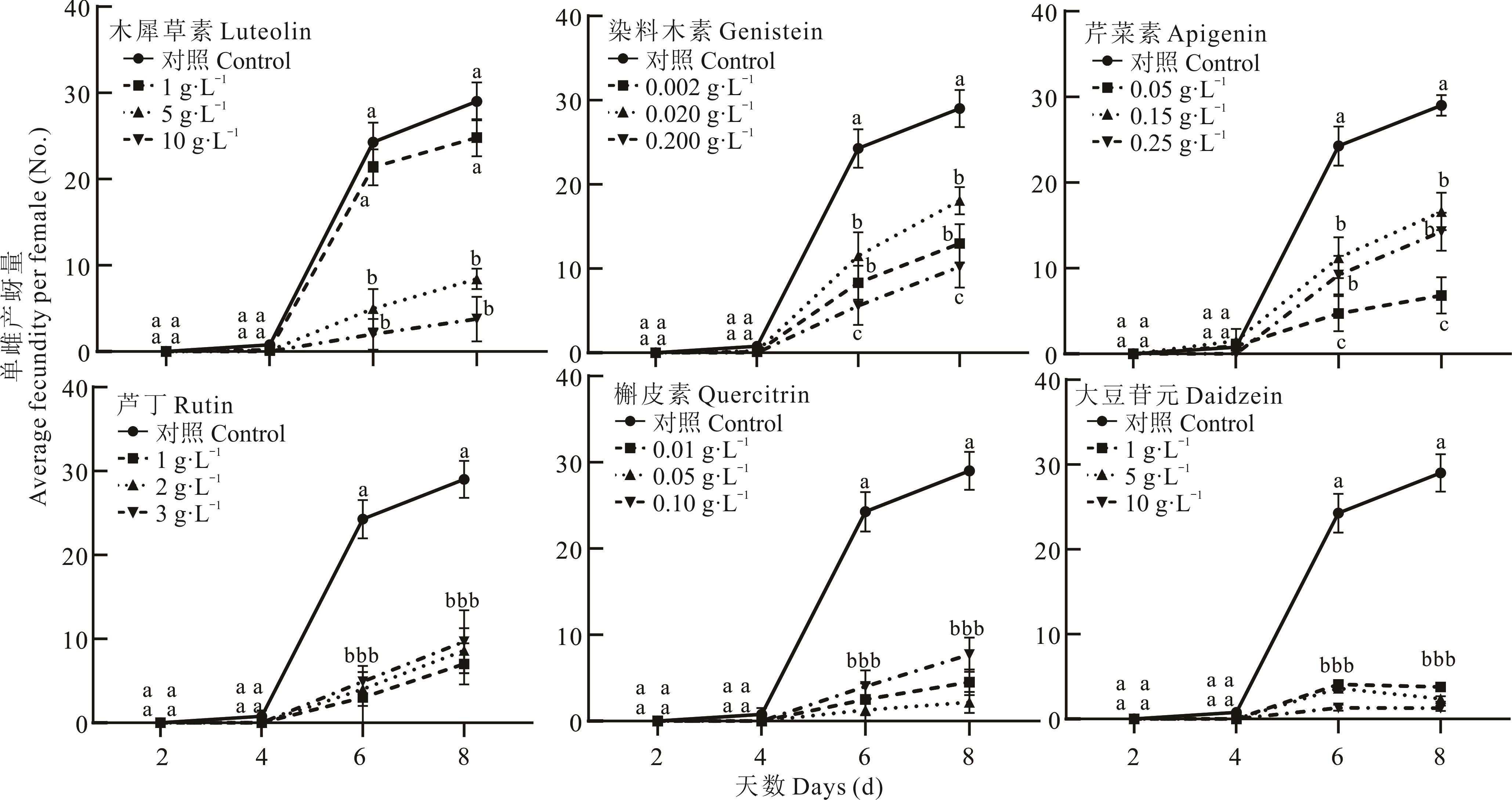
Fig.3 The average fecundity per female of A. pisum after feeding on V. faba leaves treated with different concentrations of flavonoids

Fig.4 The changes in the activity of glutathione S-transferase(GST)of A. pisum after feeding on V. faba leaves treated with different concentrations of flavonoids

Fig.5 The changes in carboxylesterase(CarE)activity of A. pisum after feeding on V. faba leaves treated with different concentrations of flavonoids

Fig.6 The changes in the activity of cytochrome P450 enzymes (CYP450) of A. pisum after feeding on V. faba leaves treated with different concentrations of flavonoids

Fig.7 The changes in UDP-glucuronosyl transferase(UGT)activity of A. pisum after feeding on V. faba leaves treated with different concentrations of flavonoid
| [1] | Tesfaye A, Wale M, Azerefegne F. Acyrthosiphon pisum (Harris) (Homoptera: Aphididae) feeding preference and performance on cool-season food legumes in northwestern Ethiopia. International Journal of Pest Management, 2013, 59(4): 319-328. |
| [2] | Bhandari K B, Rusch H L, Heuschele D J. Alfalfa stem cell wall digestibility: current knowledge and future research directions. Agronomy, 2023, 13(12): 2875. |
| [3] | Brault V, Uzest M, Monsion B, et al. Aphids as transport devices for plant viruses. Comptes Rendus Biologies, 2010, 333(6/7): 524-538. |
| [4] | Ma Y L, Liu C Z. Review on ecological characteristics and control of aphids. Pratacultural Science, 2014, 31(3): 519-525. |
| 马亚玲, 刘长仲. 蚜虫的生态学特性及其防治. 草业科学, 2014, 31(3): 519-525. | |
| [5] | Sandhi R K, Reddy G V P. Biology, ecology, and management strategies for pea aphid (Hemiptera: Aphididae) in pulse crops. Journal of Integrated Pest Management, 2020, 11(1): 18. |
| [6] | Pan F, Zhu K H, Tu X B, et al. Effects of plant secondary metabolite DIMBOA on Therioaphis trifolii Monel (Homptera: Aphididae). Chinese Journal of Biological Control, 2023, 39(5): 1143-1147. |
| 潘凡, 朱凯辉, 涂雄兵, 等. 植物次生代谢物丁布对苜蓿斑蚜的控制作用. 中国生物防治学报, 2023, 39(5): 1143-1147. | |
| [7] | Shi B M, Liu Y, Bai G D, et al. Research progress on toxicity of pesticide residues in feed to animals and its elimination technology. Chinese Journal of Animal Nutrition, 2020, 32(10): 4785-4792. |
| 石宝明, 刘洋, 白广栋, 等. 饲料中农药残留对动物的毒性作用及其消除技术研究进展. 动物营养学报, 2020, 32(10): 4785-4792. | |
| [8] | Tamborindeguy C, Monsion B, Brault V, et al. A genomic analysis of transcytosis in the pea aphid, Acyrthosiphon pisum, a mechanism involved in virus transmission. Insect Molecular Biology, 2010, 19(2): 259-272. |
| [9] | Ollivier M, Legeai F, Rispe C. Comparative analysis of the Acyrthosiphon pisum genome and expressed sequence tag-based gene sets from other aphid species. Insect Molecular Biology, 2010, 19(2): 33-45. |
| [10] | Woźniak A, Bednarski W, Dancewicz K, et al. Oxidative stress links response to lead and Acyrthosiphon pisum in Pisum sativum L. Journal of Plant Physiology, 2019, 240: 152996. |
| [11] | Goławska S, Łukasik I. Antifeedant activity of luteolin and genistein against the pea aphid, Acyrthosiphon pisum. Journal of Pest Science, 2012, 85(4): 443-450. |
| [12] | Zhang Q, Wang Q Q, Wyckhuys K A G, et al. Flavonoids mediate systemic defenses induced by root feeding in cotton. Entomologia Generalis, 2024, 44(3): 591. |
| [13] | Hu R, Ma Y Z, Liu S S, et al. Effects of Sapindus saponin on the growth, development and reproduction of Spodoptera exigua and analysis of its chemical composition. Plant Protection, 2023, 49(2): 201-205, 226. |
| 胡榕, 马英姿, 刘思思, 等. 无患子皂苷对甜菜夜蛾的影响及其化学成分分析. 植物保护, 2023, 49(2): 201-205, 226. | |
| [14] | Aboshi T, Ishiguri S, Shiono Y, et al. Flavonoid glycosides in Malabar spinach Basella alba inhibit the growth of Spodoptera litura larvae. Bioscience, Biotechnology, and Biochemistry, 2018, 82(1): 9-14. |
| [15] | Peng B, Cui X N, Zhang B, et al. Toxicity of 10 insecticides to alfalfa aphid Therioaphis trifolii and thrip Odontothrips loti and assessment of their field efficacy. Acta Prataculturae Sinica, 2024, 33(12): 201-213. |
| 彭斌, 崔晓宁, 张勃, 等. 10种杀虫剂对苜蓿斑蚜和牛角花齿蓟马的毒力测定及田间药效评价. 草业学报, 2024, 33(12): 201-213. | |
| [16] | Brown D E, Rashotte A M, Murphy A S, et al. Flavonoids act as negative regulators of auxin transport in vivo in Arabidopsis. Plant Physiology, 2001, 126(2): 524-535. |
| [17] | Mithöfer A, Boland W. Plant defense against herbivores: chemical aspects. Annual Review of Plant Biology, 2012, 63(1): 431-450. |
| [18] | Gautam H, Sharma A, Trivedi P K. The role of flavonols in insect resistance and stress response. Current Opinion in Plant Biology, 2023, 73: 102353. |
| [19] | Zhang Y, Wang X H, Bian Z P, et al. Application of flavonoid compounds suppresses the cotton aphid, Aphis gossypii. Frontiers in Plant Science, 2025, 16: 1545499. |
| [20] | Zhang Z, Cui B, Yan S, et al. Evaluation of tricin, a stylet probing stimulant of brown planthopper, in infested and non-infested rice plants. Journal of Applied Entomology, 2017, 141(5): 393-401. |
| [21] | Zhang Z F, Cui B Y, Zhang Y. Electrical penetration graphs indicate that tricin is a key secondary metabolite of rice, inhibiting phloem feeding of brown planthopper, Nilaparvata lugens. Entomologia Experimentalis et Applicata, 2015, 156(1): 14-27. |
| [22] | Romanelli G P, Virla E G, Duchowicz P R, et al. Sustainable synthesis of flavonoid derivatives, QSAR study and insecticidal activity against the fall armyworm, Spodoptera frugiperda (Lep.: Noctuidae). Journal of Agricultural and Food Chemistry, 2010, 58(10): 6290-6295. |
| [23] | Shi Y, Liu Q Q, Lu W J, et al. Divergent amplifications of CYP9A cytochrome P450 genes provide two noctuid pests with differential protection against xenobiotics. Proceedings of the National Academy of Sciences, 2023, 120(37): e2308685120. |
| [24] | Diaz N G N, Palacios S M. Bioinsecticidal effect of the flavonoids pinocembrin and quercetin against Spodoptera frugiperda. Journal of Pest Science, 2015, 88(3): 629-635. |
| [25] | Bentivenha J P F, Canassa V F, Baldin E L L, et al. Role of the rutin and genistein flavonoids in soybean resistance to Piezodorus guildinii (Hemiptera: Pentatomidae). Arthropod-Plant Interactions, 2018, 12(2): 311-320. |
| [26] | Goławska S, Łukasik I, Czerniewicz P. Genistein and naringenin as defense molecules. Molecules, 2024, 29(23): 5505. |
| [27] | Fiteni E, Durand K, Gimenez S, et al. Host-plant adaptation as a driver of incipient speciation in the fall armyworm (Spodoptera frugiperda). BMC Ecology and Evolution, 2022, 22(1): 133. |
| [28] | Després L, David J P, Gallet C. The evolutionary ecology of insect resistance to plant chemicals. Trends in Ecology & Evolution, 2007, 22(6): 298-307. |
| [29] | Kazana E, Pope T W, Tibbles L, et al. The cabbage aphid: a walking mustard oil bomb. Proceedings of the Royal Society B: Biological Sciences, 2007, 274(1623): 2271-2277. |
| [30] | Kansman J, Nalam V, Nachappa P, et al. Plant water stress intensity mediates aphid host choice and feeding behaviour. Ecological Entomology, 2020, 45(6): 1437-1444. |
| [31] | Kant M R, Jonckheere W, Knegt B, et al. Mechanisms and ecological consequences of plant defence induction and suppression in herbivore communities. Annals of Botany, 2015, 115(7): 1015-1051. |
| [32] | Li S Y, Li H, Guo J Y, et al. Role of cytochrome P450 in the adaptation of Pagiophloeus tsushimanus (Coleoptera: Curculionidae) to the stress of terpenoids from its host. Acta Entomologica Sinica, 2025, 68(11): 1534-1546. |
| 李寿银, 李慧, 郭金燕, 等. 细胞色素P450在香樟齿喙象适应寄主萜类化合物胁迫中的作用. 昆虫学报, 2025, 68(11): 1534-1546. | |
| [33] | Wang H D, Shi Y, Wang L, et al. CYP6AE gene cluster knockout in Helicoverpa armigera reveals role in detoxification of phytochemicals and insecticides. Nature Communications, 2018, 9(1): 4820. |
| [34] | Shi Y, Qu Q, Wang C Y, et al. Involvement of CYP2 and mitochondrial clan P450s of Helicoverpa armigera in xenobiotic metabolism. Insect Biochemistry and Molecular Biology, 2022, 140: 103696. |
| [35] | Wang R L, He Y N, Staehelin C, et al. Identification of two cytochrome monooxygenase P450 genes, CYP321A7 and CYP321A9, from the tobacco cutworm moth (Spodoptera litura) and their expression in response to plant allelochemicals. International Journal of Molecular Sciences, 2017, 18(11): 2278. |
| [36] | Zhao P, Xue H, Zhu X Z, et al. Silencing of cytochrome P450 gene CYP321A1 effects tannin detoxification and metabolism in Spodoptera litura. International Journal of Biological Macromolecules, 2022, 194: 895-902. |
| [37] | Xiao T X, Wang W X, Deng M Q, et al. CYP321A subfamily P450s contribute to the detoxification of phytochemicals and pyrethroids in Spodoptera litura. Journal of Agricultural and Food Chemistry, 2023, 71(41): 14989-15002. |
| [38] | Hafeez M, Liu S S, Jan S, et al. Knock-down of gossypol-inducing cytochrome P450 genes reduced deltamethrin sensitivity in Spodoptera exigua (Hübner). International Journal of Molecular Sciences, 2019, 20(9): 2248. |
| [39] | Chen J L, Ni H X, Sun J R, et al. Effects of major secondary chemicals of wheat plants on enzyme activity in Sitobion avenae. Acta Entomologica Sinica, 2003(2): 144-149. |
| 陈巨莲, 倪汉祥, 孙京瑞, 等. 小麦几种主要次生物质对麦长管蚜几种酶活力的影响. 昆虫学报, 2003(2): 144-149. | |
| [40] | Ruttanaphan T, Songoen W, Pluempanupat W, et al. Potential insecticidal extracts from Artocarpus lacucha against Spodoptera litura (Lepidoptera: Noctuidae) larvae. Journal of Economic Entomology, 2023, 116(4): 1205-1210. |
| [41] | Heidel-Fischer H M, Vogel H. Molecular mechanisms of insect adaptation to plant secondary compounds. Current Opinion in Insect Science, 2015, 8: 8-14. |
| [42] | Silva A X, Bacigalupe L D, Luna-Rudloff M, et al. Insecticide resistance mechanisms in the green peach aphid Myzus persicae (Hemiptera: Aphididae) Ⅱ: costs and benefits. PLoS One, 2012, 7(6): e36810. |
| [43] | Bass C, Puinean A M, Zimmer C T, et al. The evolution of insecticide resistance in the peach potato aphid, Myzus persicae. Insect Biochemistry and Molecular Biology, 2014, 51: 41-51. |
| [44] | Ye C, Jiang Y D, An X, et al. Effects of RNAi-based silencing of chitin synthase gene on moulting and fecundity in pea aphids (Acyrthosiphon pisum). Scientific Reports, 2019, 9(1): 3694. |
| [45] | Zhang K X. Response of Myzus persicae to salicylic acid-induced potato defense and its physiological mechanism. Lanzhou: Gansu Agricultural University, 2025. |
| 张克信. 桃蚜对水杨酸诱导马铃薯防御的响应及生理机制. 兰州: 甘肃农业大学, 2025. | |
| [46] | Liu Q, Gao H H, Zhai Y F, et al. Toxicities of six pesticides and their effects on detoxification enzymes in the adults of two Drosophila species in the laboratory. Journal of Plant Protection, 2018, 45(6): 1342-1348. |
| 刘倩, 高欢欢, 翟一凡, 等. 六种农药对两种果蝇成虫室内毒力和主要解毒酶活性的影响. 植物保护学报, 2018, 45(6): 1342-1348. | |
| [47] | Maag D, Erb M, Köllner T G, et al. Defensive weapons and defense signals in plants: Some metabolites serve both roles. BioEssays, 2015, 37(2): 167-174. |
| [48] | Divekar P A, Narayana S, Divekar B A, et al. Plant secondary metabolites as defense tools against herbivores for sustainable crop protection. International Journal of Molecular Sciences, 2022, 23(5): 2690. |
| [49] | Lai C L, Zhang J, Shentu X P, et al. Review of how secondary metabolites defend plants against herbivorous insects. Chinese Journal of Applied Entomology, 2022, 59(5): 969-978. |
| 赖城玲, 张珺, 申屠旭萍, 等. 植物次生代谢物对植食性昆虫防御作用的研究进展. 应用昆虫学报, 2022, 59(5): 969-978. | |
| [50] | Pereira V, Figueira O, Castilho P C. Flavonoids as insecticides in crop protection-A review of current research and future prospects. Plants, 2024, 13(6): 776. |
| [51] | Brattsten L B, Holyoke C W, Leeper J R, et al. Insecticide resistance: challenge to pest management and basic research. Science, 1986, 231(4743): 1255-1260. |
| [52] | Cui J R, Yao X J, Ni Z H, et al. Identification of salivary proteins in the rice leaf folder Cnaphalocrocis medinalis by transcriptome and LC-MS/MS analyses. Insect Biochemistry and Molecular Biology, 2024, 174: 104191. |
| [53] | Huber M, Roder T, Irmisch S, et al. A beta-glucosidase of an insect herbivore determines both toxicity and deterrence of a dandelion defense metabolite. eLife, 2021, 10: e68642. |
| [54] | Farhan M, Pan J L, Hussain H, et al. Aphid-resistant plant secondary metabolites: types, insecticidal mechanisms, and prospects for utilization. Plants, 2024, 13(16): 2332. |
| [55] | Wang W Q, Zheng Y Q, Chen B, et al. Effects of different host plants on the growth, development and fecundity of potato tuber moth Phthorimaea operculella based on the age-stage two-sex life table. Journal of Plant Protection, 2020, 47(3): 488-496. |
| 王文倩, 郑亚强, 陈斌, 等. 基于年龄-阶段两性生命表的不同寄主对马铃薯块茎蛾生长发育和繁殖力的影响. 植物保护学报, 2020, 47(3): 488-496. | |
| [56] | War A R, Paulraj M G, Hussain B, et al. Effect of plant secondary metabolites on legume pod borer, Helicoverpa armigera. Journal of Pest Science, 2013, 86(3): 399-408. |
| [57] | Ayyanath M M. Effect of sublethal concentrations of imidacloprid and precocene on green peach aphid, Myzus persicae (Sulzer) (Hemiptera: Aphididae): a study of hormesis at the gene, individual and population level. Ontario: The University of Guelph, 2013. |
| [58] | Goławska S, Łukasik I, Chojnacki A A. Luteolin and quercetin affect aphid feeding behavior. The European Zoological Journal, 2024, 91(1): 318-331. |
| [59] | Ma T, Yan H, Shi X L, et al. Comprehensive evaluation of effective constituents in total alkaloids from Sophora alopecuroides L. and their joint action against aphids by laboratory toxicity and field efficacy. Industrial Crops and Products, 2018, 111: 149-157. |
| [60] | Hao N, Zhang S A, Wang Y Y, et al. Obscuroside E: A novel alkaloid glycoside from Clematis obscura as an insecticide lead candidate against Acyrthosiphon pisum and Plutella xylostella. Journal of Agricultural and Food Chemistry, 2025, 73(20): 12184-12194. |
| [61] | Punia A, Chauhan N S. Effect of daidzein on growth, development and biochemical physiology of insect pest, Spodoptera litura (Fabricius). Comparative Biochemistry and Physiology Part C: Toxicology & Pharmacology, 2022, 262: 109465. |
| [62] | Hohenstein J D, Studham M E, Klein A, et al. Transcriptional and chemical changes in soybean leaves in response to long-term aphid colonization. Frontiers in Plant Science, 2019, 10: 310. |
| [63] | Kshatriya K, Gershenzon J. Disarming the defenses: Insect detoxification of plant defense-related specialized metabolites. Current Opinion in Plant Biology, 2024, 81: 102577. |
| [64] | Zhang Y D, Zhang X C, Tian Q H, et al. Toxicological and biochemical description of synergism of Beauveria bassiana and emamectin benzoate against Megalurothrips usitatus (Bagrall). Journal of Fungi, 2022, 8(9): 916. |
| [65] | Wang X X, Wang Y, Wang K Q, et al. Effects of sublethal concentrations of azadirachtin and celangulin on the activities of detoxification enzymes in Ostrinia furnacalis (Lepidoptera: Crambidae). Acta Entomologica Sinica, 2025, 68(9): 2-10. |
| 王晓曦, 王宇, 王克勤, 等. 亚致死浓度下印楝素和苦皮藤素对亚洲玉米螟解毒酶活性的影响. 昆虫学报, 2025, 68(9): 2-10. | |
| [66] | Giraudo M, Hilliou F, Fricaux T, et al. Cytochrome P450s from the fall armyworm (Spodoptera frugiperda): responses to plant allelochemicals and pesticides. Insect Molecular Biology, 2015, 24(1): 115-128. |
| [67] | Boušová I, Skálová L. Inhibition and induction of glutathione S-transferases by flavonoids: possible pharmacological and toxicological consequences. Drug Metabolism Reviews, 2012, 44(4): 267-286. |
| [68] | Lowry O, Rosebrough N J, Farr A L, et al. Protein measurement with the folin phenol reagent. Journal of Biological Chemistry, 1951, 193(1): 265-275. |
| [69] | Zhou X L, Song L W, Yang S Y, et al. Analysis of detoxification enzyme genes in the multiple pesticide-resistant strain of Tetranychus urticae. Scientia Agricultura Sinica, 2016, 49(9): 1696-1704. |
| 周兴隆, 宋丽雯, 杨顺义, 等. 二斑叶螨多重抗性品系解毒酶基因表达模式解析. 中国农业科学, 2016, 49(9): 1696-1704. |
| [1] | Tao WANG, Jing LI, Qiang LU, Wen-can KE, Shuai HUANG. Effects of flavonoids from Taraxacum mongolicum and of Bacillus subtilis addition on fermentation quality, antioxidant activity, and aerobic stability of Avena sativa silage [J]. Acta Prataculturae Sinica, 2026, 35(6): 108-121. |
| [2] | Rui MA, Yi-ting WU, Yan LI, Zhan-zi YU, Lei LIU, Sen-shan WANG. Identification and functional analysis of ApCtsk1 encoding cathepsin K in Acyrthosiphon pisum [J]. Acta Prataculturae Sinica, 2025, 34(2): 174-183. |
| [3] | Rui-juan SANG, Chao-jie CUI, Yun HE, Xiao-xia ZHANG, Jin YAO, Chun-yang DONG, Hao SUN, Ying-hua SHI, Xiao-yan ZHU, De-feng LI. Lodging resistance and production performance of 18 autumn-sown forage oat varieties in northern Henan Province [J]. Acta Prataculturae Sinica, 2024, 33(8): 74-85. |
| [4] | Xiao-long WANG, Zhao YANG, Yong-cai LAI, Hong LI, Peng ZHONG, Yan-xia XU, Hua CHAI, Sha-sha LI, Yue WU, Min-chao SONG, Jing-ming ZHOU. Effect of root traits of Medicago sativa lines with fall dormancy on overwintering [J]. Acta Prataculturae Sinica, 2023, 32(1): 144-153. |
| [5] | Jian-tao ZHAO, Ya-fei YUE, Qian-bing ZHANG, Chun-hui MA. Relationship between cold resistance of alfalfa, degree of fall-dormancy and snow cover thickness in Northern Xinjiang [J]. Acta Prataculturae Sinica, 2022, 31(8): 24-34. |
| [6] | MA Ya-ling, LIU Hui, LIU Yang, LI Chun-jie. Response of biological characteristics of two color morphs of pea aphid (Acyrthosiphon pisum) to different soybean varieties [J]. Acta Prataculturae Sinica, 2020, 29(3): 96-102. |
| [7] | QU Gen, LIU Jian-yu, GUO Zhi-peng, WANG Miao-li, GUAN Yong-zhuo, ZHANG Jing-xue, GUO Yu-xia, YAN Xue-bing, ZHANG Ming. Effects of alfalfa meal and alfalfa flavonoids on colon microflora of weaned piglets [J]. Acta Prataculturae Sinica, 2019, 28(6): 175-184. |
| [8] | ZHAO Gang, LI Shang-zhong, ZHANG Jian-jun, WANG Lei, DANG Yi, FAN Ting-lu, WANG Shu-ying*, CHENG Wan-li. Effects of sowing methods on sowing quality growth and development of maize planted under full-film mulching in double-ridge burrows in Loess Plateau East of Gansu [J]. Acta Prataculturae Sinica, 2018, 27(12): 145-155. |
| [9] | ZHAN Jin-shun, CHEN Xiao-lian, ZHAN Kang, SU Xiao-shuang, ZHAO Guo-qi. Effects of alfalfa flavonoids on apoptosis of bovine mammary epithelial cells induced by lipopolysaccharide [J]. Acta Prataculturae Sinica, 2018, 27(1): 187-194. |
| [10] | GE Li, YAO Yuan-Yuan, KANG Tian-Lan, LI Jing-Yao, HE Heng-Jun, YANG De-Long, LI Meng-Fei. Antioxidant capacity, bioactive compounds, and volatile constituents of flowers of Hypericum perforatum at different harvest stages [J]. Acta Prataculturae Sinica, 2017, 26(9): 66-74. |
| [11] | ZHAN Jin-Shun, WU Cai-Xia, LIU Ming-Mei, SU Xiao-Shuang, ZHAN Kang, ZHAO Guo-Qi. Effects of alfalfa flavonoids as dietary additives on bacterial flora in the rumen of dairy cows [J]. Acta Prataculturae Sinica, 2017, 26(7): 82-89. |
| [12] | DING Chun-Fa, WEI Xiao-Hong, WANG Fang-Lin. Effects of active allelochemicals from feral Gentiana straminea on the seed germination and seedling physiological properties of forages [J]. Acta Prataculturae Sinica, 2017, 26(4): 150-161. |
| [13] | ZHAN Jin-Shun, WEI Ming-Ji, SU Xiao-Shuang, ZHAN Kang, LIU Ming-Mei, ZHANG Chun-Gang, ZHAO Guo-Qi. Effect of alfalfa flavonoids on bovine mammary epithelial cell cultures in vitro under heat stress [J]. Acta Prataculturae Sinica, 2016, 25(4): 159-165. |
| [14] | SU Xiao-Shuang, ZHAN Jin-Shun, ZHAN Kang, LIU Ming-Mei, ZHAO Guo-Qi. Proliferation stimulus and antioxidant effect of alfalfa flavonoids on dairy cow mammary epithelial cells cultured in vitro [J]. Acta Prataculturae Sinica, 2015, 24(12): 139-145. |
| [15] | LI Qian, YUAN Ling, LUO Shi-Qiong, HUANG Jian-Guo. Artemisinin and flavonoids in wild Artemisia annua and surrounding soil and the influence on soil microbes [J]. Acta Prataculturae Sinica, 2015, 24(11): 29-37. |
| Viewed | ||||||
|
Full text |
|
|||||
|
Abstract |
|
|||||
