

ISSN 1004-5759 CN 62-1105/S
草业学报 ›› 2025, Vol. 34 ›› Issue (11): 161-173.DOI: 10.11686/cyxb2024452
• 研究论文 • 上一篇
鲍根生1,2,3( ), 李媛1,2,3, 冯晓云1,2,3, 赵倩1,2,3
收稿日期:2024-11-18
修回日期:2025-03-17
出版日期:2025-11-20
发布日期:2025-10-09
通讯作者:
鲍根生
作者简介:E-mail: baogensheng2008@hotmail.com基金资助:
Gen-sheng BAO1,2,3(), Yuan LI1,2,3, Xiao-yun FENG1,2,3, Qian ZHAO1,2,3
Received:2024-11-18
Revised:2025-03-17
Online:2025-11-20
Published:2025-10-09
Contact:
Gen-sheng BAO
摘要:
燕麦与饲用豌豆间作种植是高寒区人工草地生产力提升的主要途径,同时,氮添加也是人工草地饲草产量增加的关键栽培措施。然而,不同间作种植方式和氮添加对燕麦与豌豆间作体系产量增加及氮素吸收方面影响的研究较少。以青海高原人工草地建植主要饲草-燕麦和饲用豌豆为对象,研究种植方式(单播、同行混播和隔行间作)和氮添加(未添加、低氮和高氮)对燕麦和豌豆饲草产量和氮素吸收的影响。结果表明:1)隔行间作种植燕麦和单播豌豆生物量(茎叶和根系)最高,而同行混合间作燕麦和豌豆生物量最低。高氮添加能显著增加隔行和同行混合间作燕麦生物量,而高氮添加后单播和间作种植豌豆生物量显著降低。2)间作种植能显著增加燕麦茎叶、根系全氮和土壤速效氮含量,而单播种植豌豆根系的全氮和土壤速效氮含量最高。高氮添加的单播燕麦和豌豆根系全氮含量显著高于隔行间作燕麦,而氮添加处理的燕麦和豌豆同行混合间作土壤的硝态氮和铵态氮含量显著高于单播和隔行间作土壤。3)结构模型方程结果表明间作种植和氮添加对燕麦生物量积累、茎叶和土壤氮素增加具有促进作用,而对豌豆却呈抑制生物量生长、降低茎叶及土壤氮素含量的负效应。由此可见,燕麦与豌豆隔行间作种植并添加尿素50 kg·hm-2(低氮)能显著促进禾豆间作体系氮素吸收能力并实现人工草地产量增加目标,成为高寒区人工草地产量提升的关键栽培技术。
鲍根生, 李媛, 冯晓云, 赵倩. 施氮量和混播方式对燕麦/饲用豌豆间作系统氮素吸收和干物质产量的影响[J]. 草业学报, 2025, 34(11): 161-173.
Gen-sheng BAO, Yuan LI, Xiao-yun FENG, Qian ZHAO. Effects of intercropping planting patterns and nitrogen addition level on nitrogen absorption and biomass within oat-pea intercropping systems[J]. Acta Prataculturae Sinica, 2025, 34(11): 161-173.
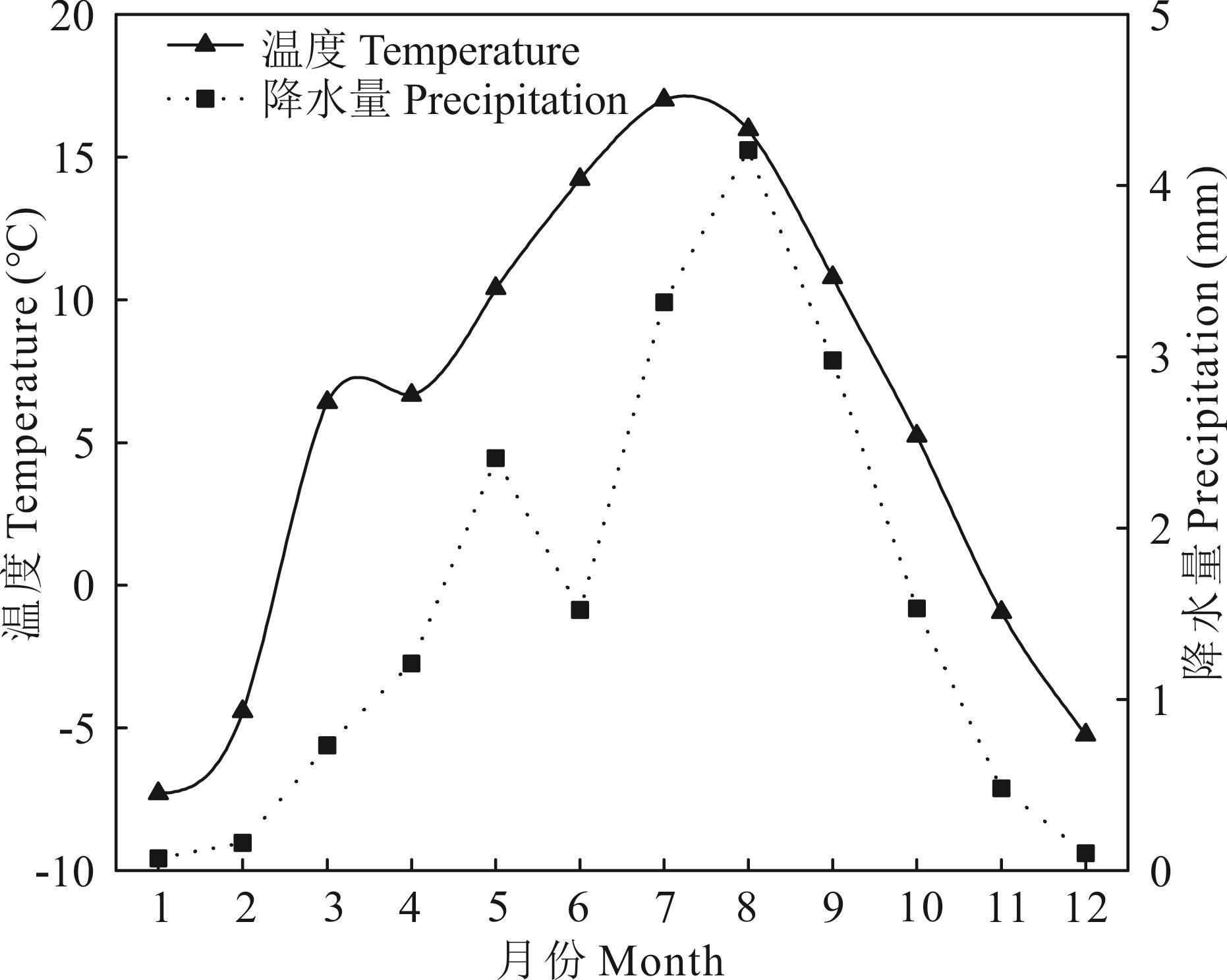
图1 2022年试验点月平均气温和降水分布
Fig.1 Average temperature and precipitation in different months of the pilot area in 2022
处理 Treatment | 自由度 Degree of freedom | 地上生物量Aboveground biomass | 地下生物量Belowground biomass | ||||||
|---|---|---|---|---|---|---|---|---|---|
| 燕麦Oat | 豌豆Pea | 燕麦Oat | 豌豆Pea | ||||||
| F | P | F | P | F | P | F | P | ||
| 间作种植模式Intercropping planting patterns (I) | 2 | 7.84 | <0.01 | 23.26 | <0.01 | 8.40 | <0.01 | 17.82 | <0.01 |
| 氮添加水平Nitrogen (N) | 2 | 17.46 | <0.01 | 21.21 | 0.01 | 106.94 | <0.01 | 1.89 | 0.17 |
| 间作种植模式×施氮水平 (I×N) | 4 | 3.63 | <0.01 | 8.43 | 0.01 | 3.63 | <0.01 | 1.23 | 0.32 |
表1 间作种植模式和氮添加对燕麦、豌豆生物量影响的双因素方差分析
Table 1 Results of two-way ANOVA of different intercropped planting patterns and nitrogen addition levels on aboveground and belowground biomass of oats and peas
处理 Treatment | 自由度 Degree of freedom | 地上生物量Aboveground biomass | 地下生物量Belowground biomass | ||||||
|---|---|---|---|---|---|---|---|---|---|
| 燕麦Oat | 豌豆Pea | 燕麦Oat | 豌豆Pea | ||||||
| F | P | F | P | F | P | F | P | ||
| 间作种植模式Intercropping planting patterns (I) | 2 | 7.84 | <0.01 | 23.26 | <0.01 | 8.40 | <0.01 | 17.82 | <0.01 |
| 氮添加水平Nitrogen (N) | 2 | 17.46 | <0.01 | 21.21 | 0.01 | 106.94 | <0.01 | 1.89 | 0.17 |
| 间作种植模式×施氮水平 (I×N) | 4 | 3.63 | <0.01 | 8.43 | 0.01 | 3.63 | <0.01 | 1.23 | 0.32 |
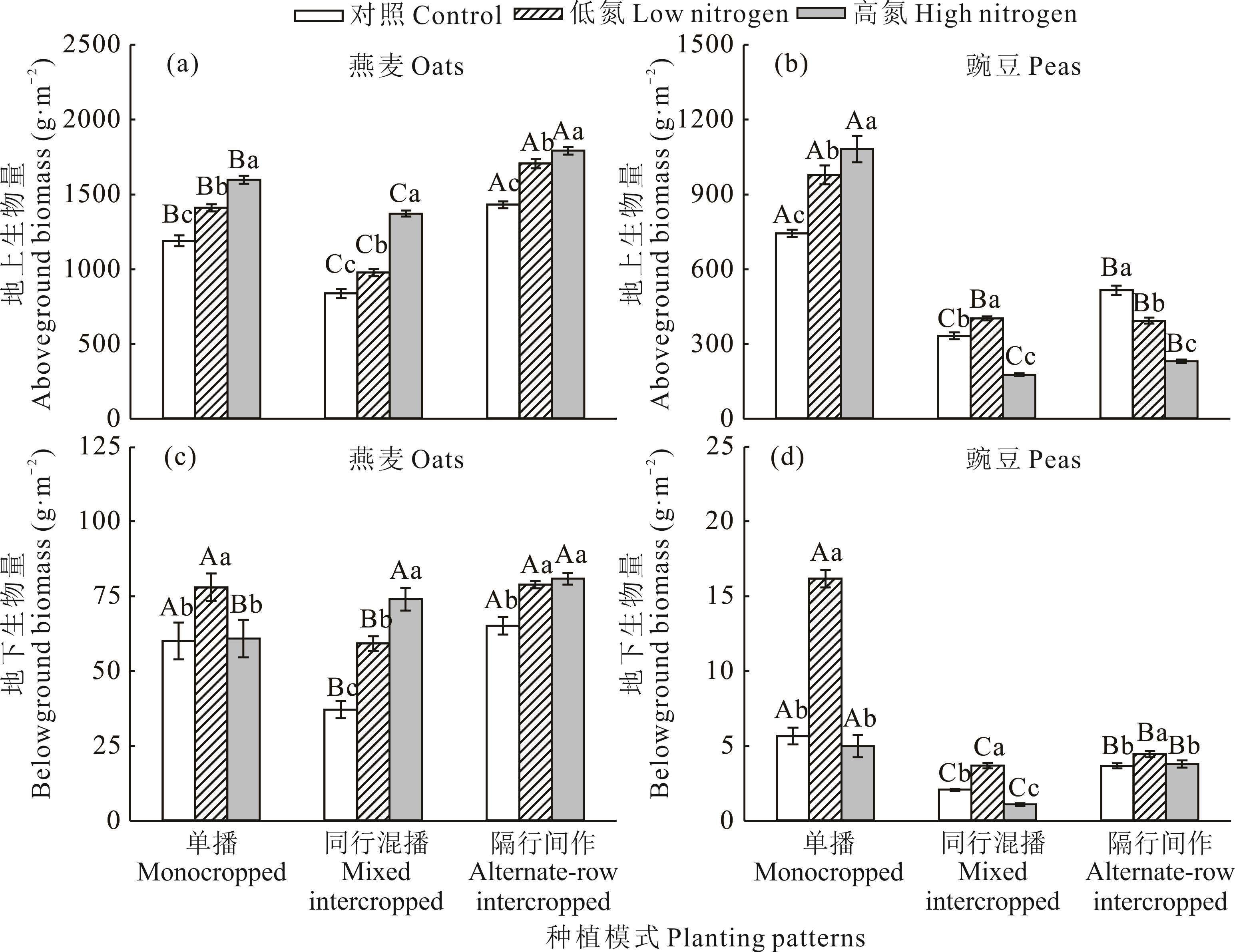
图2 氮添加对不同间作种植模式燕麦和豌豆生物量的影响不同大写字母表示不同种植模式在相同氮添加水平下差异显著(P<0.05),不同小写字母表示相同种植模式在不同氮添加水平下差异显著(P<0.05),下同。Different capital letters indicate significantly different among different intercropped planting patterns at 0.05 level under the same nitrogen addition level, and different lowercase letters for the same intercropped planting patterns indicate significant differences among different nitrogen addition levels, the same below.
Fig.2 Effects of nitrogen addition levels on aboveground and belowground biomass of oats and peas among different intercropped planting patterns
物种 Species | 处理 Treatment | 自由度 Degree of freedom | 茎叶全氮含量 Total nitrogen content of stems and leaves | 根系全氮含量 Total nitrogen content of roots | ||
|---|---|---|---|---|---|---|
| F | P | F | P | |||
| 豌豆Peas | 间作种植模式 Intercropping planting patterns (I) | 2 | 9.87 | <0.01 | 45.61 | <0.01 |
| 氮添加水平 Nitrogen (N) | 2 | 4.75 | <0.05 | 10.76 | <0.01 | |
| 间作种植模式×施氮水平 (I×N) | 4 | 28.44 | <0.01 | 18.96 | <0.01 | |
| 燕麦Oats | 间作种植模式 Intercropping planting patterns (I) | 2 | 37.23 | <0.01 | 5.37 | <0.01 |
| 氮添加水平 Nitrogen (N) | 2 | 4.00 | <0.05 | 36.00 | <0.01 | |
| 间作种植模式×施氮水平 (I×N) | 4 | 11.17 | <0.01 | 6.75 | <0.01 | |
表2 间作种植模式和氮添加水平对燕麦、豌豆茎叶和根系全氮含量影响的双因素方差分析
Table 2 Results of two-way ANOVA of total nitrogen content in stems and leaves, roots of oats and peas with combined effects of different intercropped planting patterns and nitrogen addition levels
物种 Species | 处理 Treatment | 自由度 Degree of freedom | 茎叶全氮含量 Total nitrogen content of stems and leaves | 根系全氮含量 Total nitrogen content of roots | ||
|---|---|---|---|---|---|---|
| F | P | F | P | |||
| 豌豆Peas | 间作种植模式 Intercropping planting patterns (I) | 2 | 9.87 | <0.01 | 45.61 | <0.01 |
| 氮添加水平 Nitrogen (N) | 2 | 4.75 | <0.05 | 10.76 | <0.01 | |
| 间作种植模式×施氮水平 (I×N) | 4 | 28.44 | <0.01 | 18.96 | <0.01 | |
| 燕麦Oats | 间作种植模式 Intercropping planting patterns (I) | 2 | 37.23 | <0.01 | 5.37 | <0.01 |
| 氮添加水平 Nitrogen (N) | 2 | 4.00 | <0.05 | 36.00 | <0.01 | |
| 间作种植模式×施氮水平 (I×N) | 4 | 11.17 | <0.01 | 6.75 | <0.01 | |
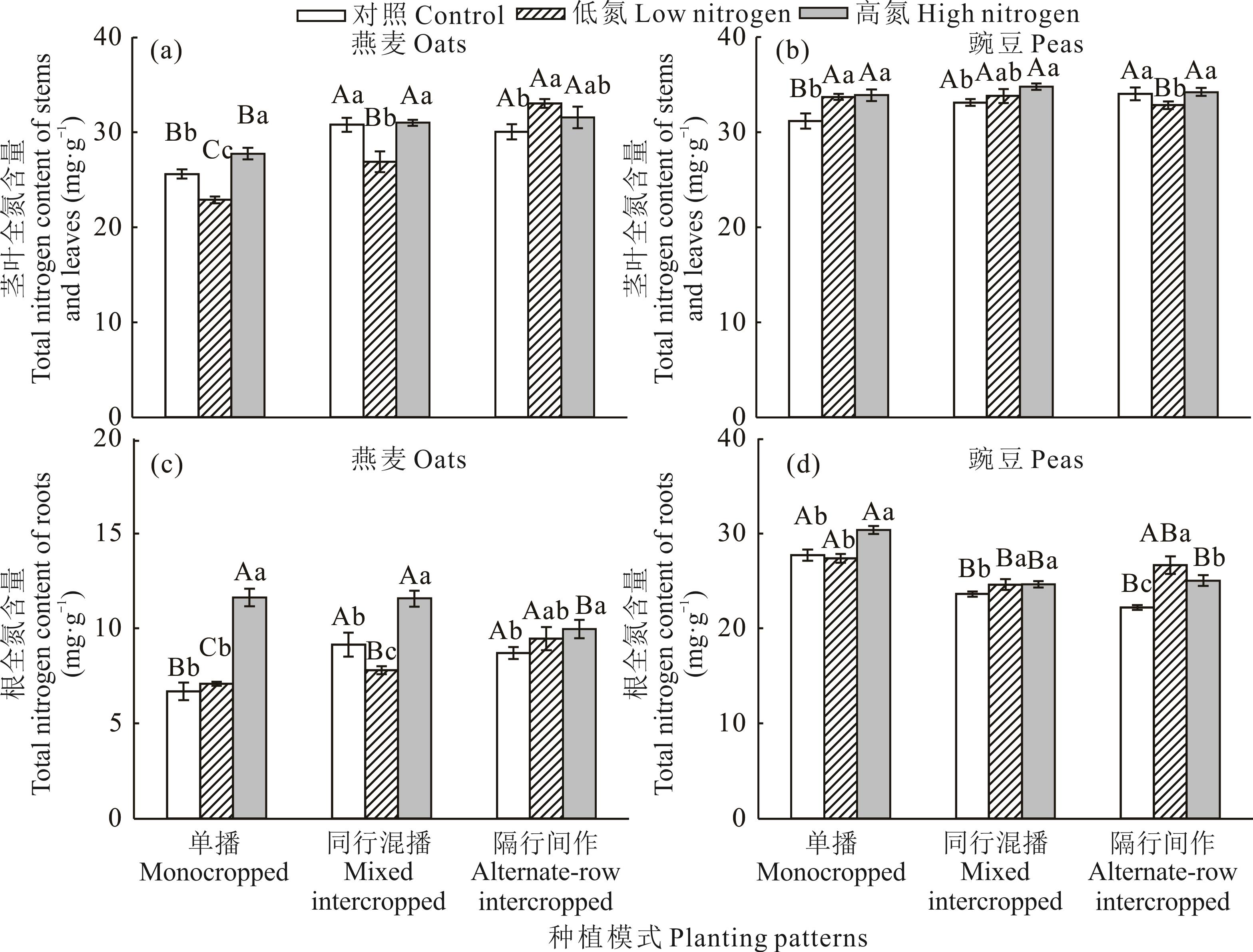
图3 氮添加对不同间作种植模式燕麦、豌豆茎叶和根系全氮含量的影响
Fig.3 Effects of nitrogen addition levels on total nitrogen contents in stems and leaves and roots of oats and peas among different intercropped planting patterns
处理 Treatment | 自由度 Degree of freedom | 土壤全氮含量 Total nitrogen content in soil | 土壤铵态氮含量 NH4+-N content in soil | 土壤硝态氮含量 NO3--N content in soil | |||
|---|---|---|---|---|---|---|---|
| F | P | F | P | F | P | ||
| 间作种植模式 Intercropping planting patterns (I) | 2 | 2.96 | <0.05 | 3.83 | <0.05 | 26.37 | <0.01 |
| 氮添加水平 Nitrogen (N) | 2 | 1.01 | 0.37 | 6.50 | <0.01 | 53.82 | <0.01 |
| 间作种植模式×施氮水平 (I×N) | 4 | 1.32 | 0.26 | 5.22 | <0.01 | 7.96 | <0.01 |
表3 燕麦、豌豆不同间作模式和氮素水平对土壤氮素含量影响的双因素方差分析
Table 3 Results of two-way ANOVA of soil nitrogen content under different intercropped planting patterns of oats and peas combined with nitrogen addition levels
处理 Treatment | 自由度 Degree of freedom | 土壤全氮含量 Total nitrogen content in soil | 土壤铵态氮含量 NH4+-N content in soil | 土壤硝态氮含量 NO3--N content in soil | |||
|---|---|---|---|---|---|---|---|
| F | P | F | P | F | P | ||
| 间作种植模式 Intercropping planting patterns (I) | 2 | 2.96 | <0.05 | 3.83 | <0.05 | 26.37 | <0.01 |
| 氮添加水平 Nitrogen (N) | 2 | 1.01 | 0.37 | 6.50 | <0.01 | 53.82 | <0.01 |
| 间作种植模式×施氮水平 (I×N) | 4 | 1.32 | 0.26 | 5.22 | <0.01 | 7.96 | <0.01 |

图4 氮添加对燕麦和豌豆不同间作种植模式土壤全氮含量、铵态氮及硝态氮含量的影响
Fig.4 Effects of nitrogen addition on total nitrogen, NO3--N and NH4+-N contents of soil in different intercropped patterns between oats and peas
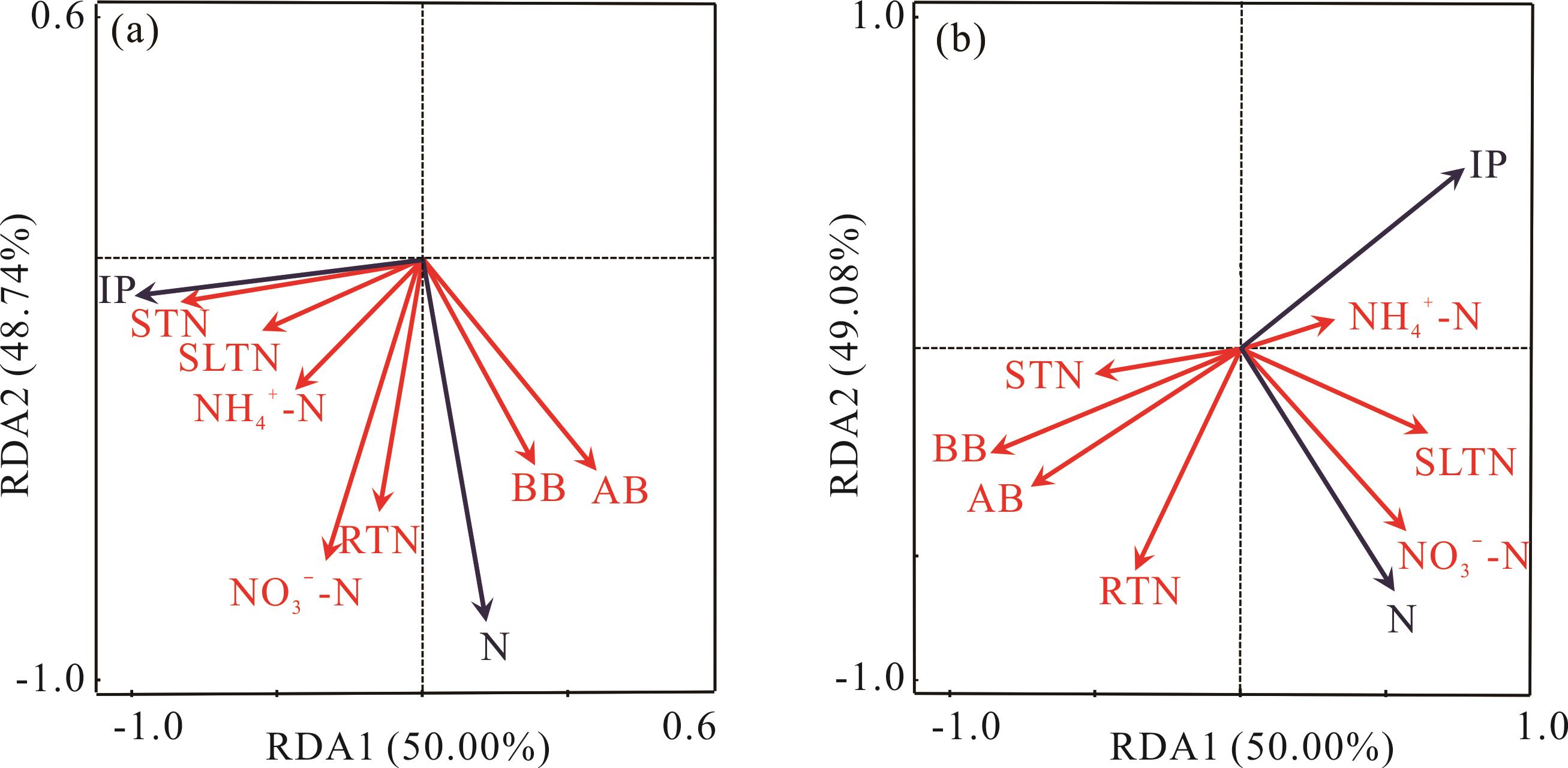
图5 不同间作种植模式和氮添加与燕麦(a)和豌豆(b)生物量及氮素含量间的冗余分析IP代表不同间作种植模式,N代表氮添加水平,STN代表土壤全氮含量,SLTN代表茎叶全氮含量,RTN代表根系全氮含量,NH4+-N代表土壤铵态氮含量,NO3--N代表土壤硝态氮含量,AB代表地上生物量,BB代表地下生物量。IP was the abbreviation of different intercropped patterns between oats and peas, N was the abbreviation of different nitrogen addition levels, STN was the abbreviation of soil total nitrogen content, SLTN was the abbreviation of stems and leaves total nitrogen content, RTN was the abbreviation of root total nitrogen content, NH4+-N indicated the soil ammonium nitrogen content, NO3--N indicated soil nitrate nitrogen content, AB was the abbreviation of aboveground biomass, BB was the abbreviation of belowground biomass. 下同The same below.
Fig.5 Redundancy analysis (RDA) of biomass and nitrogen contents in oats (a) and peas (b) with intercropping patterns and nitrogen addition
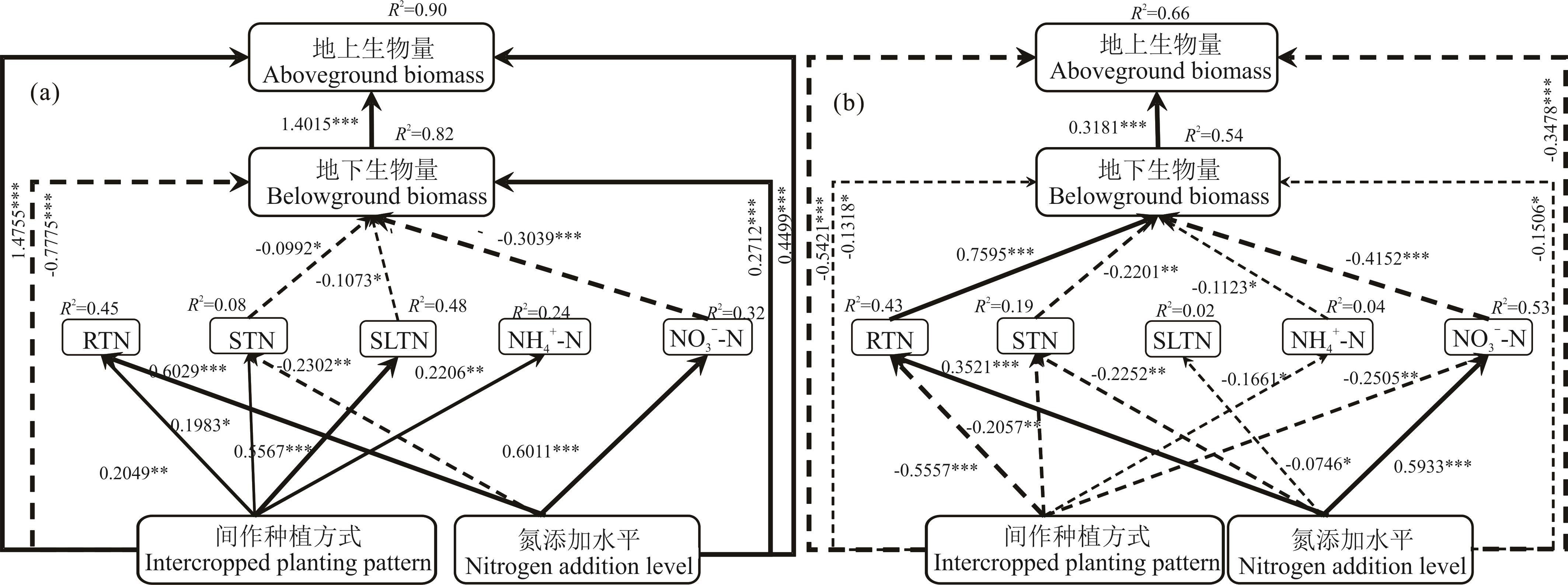
图6 氮添加水平和间作种植模式对燕麦和豌豆茎叶、根系和土壤氮素含量及生物量影响的结构模型方程图a和b分别表示氮添加和不同间作种植模式对燕麦和豌豆茎叶、根系土壤氮素含量及生物量影响的结构模型方程。选择R语言中偏最小二乘结构方程包进行模型构建,结构模型中的实线和虚线分别代表变量间的正、负相关性。虚线和实线上面的数值为标准化路径系数,数值上标记的星号及数量表示关系强度,*表示0.05水平上显著相关,**和***分别表示0.01和0.001水平上极显著相关。线条粗细与相关性强度呈正比,R2表示解释方差的比例。Figure a, b demonstrated the SEM based on effects of nitrogen addition levels and intercropped planting patterns on shoots and soil nitrogen contents and above- and belowground biomass of oats and peas, respectively. A piecewise SEM module package in R language was employed to evaluate and construct the piecewise structural equations. Solid and dotted lines in SEM indicated the positive or negative correlation between variables, respectively. The value above these solid or dotted lines indicated the normalized path coefficients of variables, * indicated significant correlation at 0.05 level, ** and *** indicated exermely significant correlation at 0.01 and 0.001 level, respectively. Width of the solid and dotted lines was proportional of the strength of positive or negative correlation. The value of R2 indicated the proportion of the interpreted variance.
Fig.6 Structural equation model (SEM) based on effects of nitrogen addition levels and intercropped planting patterns on shoots (including stems and leaves), root and soil nitrogen contents and above- and belowground biomass of oats and peas
| [1] | Mousavi S R, Eskandari H. A general overview on intercropping and its advantages in sustainable agriculture. Journal of Applied Environmental and Biological Sciences, 2011, 1(11): 482-486. |
| [2] | Brooker R W, Bennett A E, Cong W F, et al. Improving intercropping: a synthesis of research in agronomy, plant physiology and ecology. New Phytologist, 2015, 206(1): 107-117. |
| [3] | Li L, Tilman D, Lambers H, et al. Plant diversity and overyielding: insights from belowground facilitation of intercropping in agriculture. New Phytologist, 2014, 203(1): 63-69. |
| [4] | Maitra S, Hossain A, Brestic M, et al. Intercropping-A low input agricultural strategy for food and environmental security. Agronomy, 2021, 11(2): 343. |
| [5] | Li X F, Wang Z G, Bao X G, et al. Long-term increased grain yield and soil fertility from intercropping. Nature Sustainability, 2021, 4(11): 943-950. |
| [6] | Ryan M R. Crops better when grown together. Nature Sustainability, 2021, 4(11): 926-927. |
| [7] | Ma H Y, Zhou J, Ge J Y, et al. Intercropping improves soil ecosystem multifunctionality through enhanced available nutrients but depends on regional factors. Plant and Soil, 2022, 480(1/2): 71-84. |
| [8] | Zhang D, Lyu Y, Li H, et al. Neighbouring plants modify maize root foraging for phosphorus: coupling nutrients and neighbours for improved nutrient-use efficiency. New Phytologist, 2020, 226(1): 244-253. |
| [9] | Garland G, Edlinger A, Banerjee S, et al. Crop cover is more important than rotational diversity for soil multifunctionality and cereal yields in European cropping systems. Nature Food, 2021, 2(1): 28-37. |
| [10] | Yan H L, Gu S S, Li S Z, et al. Grass legume mixtures enhance forage production via the bacterial community. Agriculture, Ecosystems & Environment, 2022, 338: 108087. |
| [11] | Neugschwandtner R W, Kaul H P, Moitzi G, et al. A low nitrogen fertiliser rate in oat-pea intercrops does not impair N2 fixation. Acta Agriculturae Scandinavica, Section B-Soil & Plant Science, 2021, 71(3): 182-190. |
| [12] | Bao G S, Zhang P, Ma X, et al. Effect of nitrogen addition on forage and seed yields of intercropping system of Avena sativa and Pisum sativum in alpine regions. Acta Agrestia Sinica, 2023, 31(7): 2210-2219. |
| 鲍根生, 张鹏, 马祥, 等. 高寒区氮添加对禾豆间作系统牧草和种子产量的影响. 草地学报, 2023, 31(7): 2210-2219. | |
| [13] | Wang Z K, Zhang X M, Ma Q H. Seed mixture of oats and common vetch on fertilizer and water-use reduction in a semi-arid alpine region. Soil and Tillage Research, 2022, 219: 105329. |
| [14] | Wang X, Zeng Z H, Zhu B, et al. Effect of different intercropping and mixture modes on forage yield and quality of oat and common vetch. Acta Agronomica Sinica, 2007, 33(11): 1892-1895. |
| 王旭, 曾昭海, 朱波, 等. 箭筈豌豆与燕麦不同间作混播模式对产量和品质的影响. 作物学报, 2007, 33(11): 1892-1895. | |
| [15] | Liu M, Qiao N, Zhang Q, et al. Cropping regimes affect NO3 - versus NH4 + uptake by Zea mays and Glycine max. Plant and Soil, 2018, 426(1): 241-251. |
| [16] | Yu Y, Stomph T J, Makowski D, et al. Temporal niche differentiation increases the land equivalent ratio of annual intercrops: A meta-analysis. Field Crops Research, 2015, 184: 133-144. |
| [17] | Xu Z, Li C J, Zhang C C, et al. Intercropping maize and soybean increases efficiency of land and fertilizer nitrogen use; A meta-analysis. Field Crops Research, 2020, 246: 107661. |
| [18] | Taylor B N, Menge D N. Light regulates tropical symbiotic nitrogen fixation more strongly than soil nitrogen. Nature Plants, 2018, 4(9): 655-661. |
| [19] | Cui Z L, Zhang H Y, Chen X P, et al. Pursuing sustainable productivity with millions of smallholder farmers. Nature, 2018, 555(7696): 363-366. |
| [20] | Wang X Y, Gao Y Z. Advances in the mechanism of cereal/legume intercropping promotion of symbiotic nitrogen fixation. Chinese Science Bulletin, 2020, 65(2/3): 142-149. |
| 王新宇, 高英志. 禾本科/豆科间作促进豆科共生固氮机理研究进展. 科学通报, 2020, 65(2/3): 142-149. | |
| [21] | Feng X Y, Hou T L, Bao G S, et al. Effects of nitrogen addition on CNP stoichiometric traits of oat-pea intercropping system. Acta Agrestia Sinica, 2024, 32(2): 450-461. |
| 冯晓云, 侯统璐, 鲍根生, 等. 氮添加对燕麦/豌豆间作体系碳氮磷化学计量特征的影响. 草地学报, 2024, 32(2): 450-461. | |
| [22] | Duan L X, Ma X, Ju Z L, et al. Effects of nitrogen reduction combined with organic fertilizer on photosynthetic characteristics and yield of Avena sativa ‘Qinghai’. Acta Agrestia Sinica, 2022, 30(2): 471-478. |
| 段连学, 马祥, 琚泽亮, 等. 减氮配施有机肥对‘青海甜燕麦’光合特性和产量的影响. 草地学报, 2022, 30(2): 471-478. | |
| [23] | Bao G S, Li Y, Feng X Y, et al. Interactive effects of intercropping patterns and nitrogen addition on root architectural characteristics of oat and pea in an alpine region. Acta Prataculturae Sinica, 2024, 33(3): 73-84. |
| 鲍根生, 李媛, 冯晓云, 等. 高寒区氮添加和间作种植互作对燕麦和豌豆根系构型影响的研究. 草业学报, 2024, 33(3): 73-84. | |
| [24] | Wu X R, Ye X S, Zhao Z Q. Comparison of determining the soil total nitrogen concentration with a continuous flow injection analyzer and Kjeldahl method. Journal of Huazhong Agricultural University, 2009, 28(5): 560-563. |
| 吴晓荣, 叶祥盛, 赵竹青. 流动注射法与凯氏定氮法测定土壤全氮的比较. 华中农业大学学报, 2009, 28(5): 560-563. | |
| [25] | Lonati M, Moot D J, Aceto P, et al. Thermal time requirements for germination, emergence and seedling development of adventive legume and grass species. New Zealand Journal of Agricultural Research, 2009, 52(1): 17-29. |
| [26] | Xiao Y B, Li L, Zhang F S. Effect of root contact on interspecific competition and N transfer between wheat and fababean using direct and indirect 15N techniques. Plant and Soil, 2004, 262: 45-54. |
| [27] | Hauggaard-Nielsen H, Ambus P, Jensen E S. The comparison of nitrogen use and leaching in sole cropped versus intercropped pea and barley. Nutrient Cycling in Agroecosystems, 2003, 65: 289-300. |
| [28] | Li Y Y, Yu C B, Cheng X, et al. Intercropping alleviates the inhibitory effect of N fertilization on nodulation and symbiotic N2 fixation of faba bean. Plant and Soil, 2009, 323: 295-308. |
| [29] | Hichri I, Meilhoc E, Boscari A, et al. Nitric oxide: jack-of-all-trades of the nitrogen-fixing symbiosis? Advances in Botanical Research, 2016, 77: 193-218. |
| [30] | Zhu Y Q, Zheng W, Wang X, et al. Effects plant spacing pattern on root morphological and architectural characteristics of legume-grass mixtures. Acta Prataculturae Sinica, 2018, 27(1): 73-85. |
| 朱亚琼, 郑伟, 王祥, 等. 混播方式对豆禾混播草地植物根系构型特征的影响. 草业学报, 2018, 27(1): 73-85. | |
| [31] | Fan M S, Sun Y Q, Shao J W, et al. Influence of nitrogen forms on oat growth and phosphorus uptake. Acta Agronomica Sinica, 2005, 31(1): 114-118. |
| 樊明寿, 孙亚卿, 邵金旺, 等. 不同形态氮素对燕麦营养生长和磷素利用的影响. 作物学报, 2005, 31(1): 114-118. | |
| [32] | Xia X, Gong Z P. Research advance on the relationship between nitrogen and leguminous nitrogen fixation. Journal of Northeast Agricultural University, 2017, 48(1): 79-88. |
| 夏玄, 龚振平. 氮素与豆科作物固氮关系研究进展. 东北农业大学学报, 2017, 48(1): 79-88. | |
| [33] | Xu R X, Zhao H M, Liu G B, et al. Effects of nitrogen and maize plant density on forage yield and nitrogen uptake in an alfalfa-silage maize relay intercropping system in the north China Plain. Field Crops Research, 2021, 263: 108068. |
| [34] | Yu Y, Stomph T J, Makowski D, et al. A meta-analysis of relative crop yields in cereal/legume mixtures suggests options for management. Field Crops Research, 2016, 198: 269-279. |
| [35] | Hu F L, Zhao C, Feng F X, et al. Improving N management through intercropping alleviates the inhibitory effect of mineral N on nodulation in pea. Plant and Soil, 2017, 412: 235-251. |
| [36] | Li C J, Dong Y, Li H G, et al. The dynamic process of interspecific interactions of competitive nitrogen capture between intercropped wheat (Triticum aestivum L.) and faba bean (Vicia faba L.). PLoS One, 2014, 9(12): e115804. |
| [37] | Fan F L, Zhang F S, Song Y N, et al. Nitrogen fixation of faba bean (Vicia faba L.) interacting with a non-legume in two contrasting intercropping systems. Plant and Soil, 2006, 283: 275-286. |
| [38] | Xiao J X, Yin X H, Ren J B, et al. Complementation drives higher growth rate and yield of wheat and saves nitrogen fertilizer in wheat and faba bean intercropping. Field Crops Research, 2018, 221: 119-129. |
| [39] | Hauggaard-Nielsen H, Gooding M, Ambus P, et al. Pea-barley intercropping for efficient symbiotic N2-fixation, soil N acquisition and use of other nutrients in European organic cropping systems. Field Crops Research, 2009, 113(1): 64-71. |
| [40] | Feng X Y, Zhang P, Li Y, et al. Effects of nitrogen addition and intercropping patterns on agronomic traits of oats and peas in alpine regions. Pratacultural Science, 2024, 41(3): 718-730. |
| 冯晓云, 张鹏, 李媛, 等. 高寒区燕麦、豌豆农艺性状对氮添加和间作模式的响应. 草业科学, 2024, 41(3): 718-730. | |
| [41] | Li C J, Stomph T J, Makowski D, et al. The productive performance of intercropping. Proceedings of the National Academy of Sciences, 2023, 120(2): e2201886120. |
| [42] | Li C J, Hoffland E, Kuyper T W, et al. Syndromes of production in intercropping impact yield gains. Nature Plants, 2020, 6(6): 653-660. |
| [43] | Li C J, Li Y Y, Yu C B, et al. Crop nitrogen use and soil mineral nitrogen accumulation under different crop combinations and patterns of strip intercropping in northwest China. Plant and Soil, 2011, 342: 221-231. |
| [44] | Markham J H, Zekveld C. Nitrogen fixation makes biomass allocation to roots independent of soil nitrogen supply. Canadian Journal of Botany, 2007, 85(9): 787-793. |
| [1] | 张志鹏, 蒋庆雪, 周昕越, 苗童, 唐俊, 仪登霞, 王学敏, 马琳. 转录组和蛋白组联合筛选饲用燕麦株高性状候选基因[J]. 草业学报, 2025, 34(9): 147-161. |
| [2] | 张译尹, 王斌, 王腾飞, 兰剑, 胡海英. 苜蓿种子田间作小黑麦对饲草产量、水分利用及苜蓿种子产量的影响[J]. 草业学报, 2025, 34(8): 43-53. |
| [3] | 韩航琪, 王梓凡, 丁赫, 陈玉荣, 王琦, 张晓庆. 燕麦干草与燕麦草块对绵羊瘤胃发酵及微生物组成影响的比较分析[J]. 草业学报, 2025, 34(5): 212-222. |
| [4] | 马瑞, 吴宜亭, 李岩, 于展姿, 刘磊, 王森山. 豌豆蚜组织蛋白酶K基因(ApCtsk1)的鉴定及功能研究[J]. 草业学报, 2025, 34(2): 174-183. |
| [5] | 马文艳, 李杰东, 周镇磊, 曹东, 刘宝龙, 张怀刚, 王东霞. 肥料、保水剂和播种量互作对燕麦综合生产性能的影响[J]. 草业学报, 2025, 34(10): 107-119. |
| [6] | 明艳, 窦梓镱, 郑伟, 王宁欣, 陈雪. 紫花苜蓿与库尔勒香梨间作体系氮素转移途径的定量分析[J]. 草业学报, 2025, 34(10): 51-61. |
| [7] | 郭璟, 王越, 祁存英, 李静. 内生真菌浸种对燕麦生长和根部内生真菌群落的影响[J]. 草业学报, 2025, 34(1): 151-160. |
| [8] | 王宝, 谢占玲, 郭璟, 唐永鹏, 孟清, 彭清青, 杨家宝, 董德誉, 徐鸿雁, 高太侦, 张凡, 段迎珠. 真菌发酵液浸种燕麦对其抗旱性及根际真菌群落结构的影响[J]. 草业学报, 2024, 33(9): 126-139. |
| [9] | 关皓, 许多, 李海萍, 贾志锋, 马祥, 刘文辉, 陈有军, 李欣洋, 黄艳玲, 周青平, 陈仕勇. 高寒地区17个燕麦品种营养品质及瘤胃降解特性研究[J]. 草业学报, 2024, 33(9): 185-198. |
| [10] | 米春娇, 洪流, 马馼, 毛培胜. 谷胱甘肽引发对老化燕麦种胚线粒体抗氧化特性的影响[J]. 草业学报, 2024, 33(9): 51-59. |
| [11] | 马圆, 刘欢, 赵桂琴, 王敬龙, 张然, 姚瑞瑞. 燕麦sHSP基因家族的鉴定及其响应高温及老化的表达分析[J]. 草业学报, 2024, 33(8): 145-158. |
| [12] | 杜文盼, 赵桂琴, 柴继宽, 杨莉, 张建贵, 史怡超, 张官禄. 根系分隔方式对燕麦/豌豆间作地上生物量、土壤养分及根系性状的影响[J]. 草业学报, 2024, 33(8): 25-36. |
| [13] | 桑瑞娟, 崔超杰, 何云, 张晓霞, 姚晋, 董春阳, 孙浩, 史莹华, 朱晓艳, 李德锋. 豫北地区18个秋播饲用燕麦品种抗倒伏特性及生产性能评价[J]. 草业学报, 2024, 33(8): 74-85. |
| [14] | 张昭, 伏莹莹, 孙浩文, 孙逢雪, 闫慧芳. 不同品种燕麦种子活力鉴定与耐贮藏性评价[J]. 草业学报, 2024, 33(6): 165-174. |
| [15] | 何升然, 刘晓静, 赵雅姣, 汪雪, 王静. 紫花苜蓿/甜高粱间作对根际土壤特性及微生物群落特征的影响[J]. 草业学报, 2024, 33(5): 92-105. |
| 阅读次数 | ||||||
|
全文 |
|
|||||
|
摘要 |
|
|||||
