

ISSN 1004-5759 CN 62-1105/S
草业学报 ›› 2025, Vol. 34 ›› Issue (4): 201-211.DOI: 10.11686/cyxb2024157
• 研究论文 • 上一篇
董拓轩1,2( ), 陈训锋1,2, 梅大海1,2, 郭永莎1,2, 魏旭红1,2, 宋秋艳1,2()
收稿日期:2024-04-30
修回日期:2024-07-29
出版日期:2025-04-20
发布日期:2025-02-19
通讯作者:
宋秋艳
作者简介:Corresponding author. E-mail: sqy@lzu.edu.cn基金资助:
Tuo-xuan DONG1,2(), Xun-feng CHEN1,2, Da-hai MEI1,2, Yong-sha GUO1,2, Xu-hong WEI1,2, Qiu-yan SONG1,2()
Received:2024-04-30
Revised:2024-07-29
Online:2025-04-20
Published:2025-02-19
Contact:
Qiu-yan SONG
摘要:
紫花苜蓿是我国乃至世界上栽培面积最大的豆科牧草,由苜蓿壳二孢引致的春季黑茎病,是我国紫花苜蓿五大病害之一。纳米铜(Cu NPs)、纳米氢氧化铜[Cu(OH)2 NPs]、纳米铁(Fe NPs)和具有核壳结构的纳米铁(Core-shell Fe NPs)对苜蓿壳二孢显示不同程度的抑菌作用,其中Cu NPs的抑制效果显著(400 mg·L-1抑制率达到74.1%);Cu NPs对苜蓿春季黑茎病具有显著的防效(先接种Cu NPs和先接种孢子悬浮液再接种Cu NPs这两种处理方式的相对病斑面积分别为5.95%和8.75%);提前施加Cu NPs悬浮液紫花苜蓿叶片的相对电导率为18.11%,而接种苜蓿壳二孢处理之后叶片的相对电导率达到82.27%;Cu NPs处理的紫花苜蓿相较只接菌处理其超氧化物歧化酶(SOD)、苯丙氨酸解氨酶(PAL)活性显著下降,使多酚氧化酶(PPO)活性提高42.6%,过氧化氢酶(CAT)活性在先接种Cu NPs处理中下降45.8%;超微结构观察到Cu NPs处理的叶片中苜蓿壳二孢孢子细胞膜被刺穿破损,叶片叶绿体类囊体层次分明,细胞膜完整。本研究为Cu NPs防治苜蓿春季黑茎病提供理论依据。
董拓轩, 陈训锋, 梅大海, 郭永莎, 魏旭红, 宋秋艳. 纳米铁与铜对苜蓿壳二孢及其引致春季黑茎病的抑制与防治作用[J]. 草业学报, 2025, 34(4): 201-211.
Tuo-xuan DONG, Xun-feng CHEN, Da-hai MEI, Yong-sha GUO, Xu-hong WEI, Qiu-yan SONG. Inhibition and control effect of nano-iron and copper on Ascochyta medicaginicola and spring black stem disease[J]. Acta Prataculturae Sinica, 2025, 34(4): 201-211.
浓度 Concentration (mg·L-1) | 马铃薯 Potatoes (g) | 无水葡萄糖 Anhydrous glucose (g) | 琼脂 Agar (g) | 纳米材料悬浮液 Nanomaterial suspension (1000 mg·L-1, mL) | 无菌水 Sterile water (mL) |
|---|---|---|---|---|---|
| 0(空白CK) | 4.0 | 0.4 | 0.4 | 0 | 20.0 |
| 25 | 4.0 | 0.4 | 0.4 | 8.0 | 12.0 |
| 50 | 4.0 | 0.4 | 0.4 | 4.0 | 16.0 |
| 100 | 4.0 | 0.4 | 0.4 | 2.0 | 18.0 |
| 200 | 4.0 | 0.4 | 0.4 | 1.0 | 19.0 |
| 400 | 4.0 | 0.4 | 0.4 | 0.5 | 19.5 |
表2 不同浓度梯度Cu NPs培养基配方
Table 2 Formulations of Cu NPs medium with different concentration gradients
浓度 Concentration (mg·L-1) | 马铃薯 Potatoes (g) | 无水葡萄糖 Anhydrous glucose (g) | 琼脂 Agar (g) | 纳米材料悬浮液 Nanomaterial suspension (1000 mg·L-1, mL) | 无菌水 Sterile water (mL) |
|---|---|---|---|---|---|
| 0(空白CK) | 4.0 | 0.4 | 0.4 | 0 | 20.0 |
| 25 | 4.0 | 0.4 | 0.4 | 8.0 | 12.0 |
| 50 | 4.0 | 0.4 | 0.4 | 4.0 | 16.0 |
| 100 | 4.0 | 0.4 | 0.4 | 2.0 | 18.0 |
| 200 | 4.0 | 0.4 | 0.4 | 1.0 | 19.0 |
| 400 | 4.0 | 0.4 | 0.4 | 0.5 | 19.5 |
| 处理方式Treatment | 接种顺序Vaccination sequence |
|---|---|
| 空白CK | 无菌水Sterile water (5 mL)→无菌水Sterile water (5 mL) |
| 接菌Fungal inoculation | 孢子悬浮液Spore suspensions (5 mL)→无菌水Sterile water (5 mL) |
| 先注射菌→再注射纳米铜Inoculation of fungi→reinoculation with Cu NPs | 孢子悬浮液Spore suspensions (5 mL)→纳米铜悬浮液Cu NPs suspension (5 mL) |
| 先注射纳米铜→再注射菌Inoculation of Cu NPs→reinoculation with fungi | 纳米铜悬浮液Cu NPs suspension (5 mL)→孢子悬浮液Spore suspensions (5 mL) |
表3 叶片处理方式
Table 3 Blade treatment
| 处理方式Treatment | 接种顺序Vaccination sequence |
|---|---|
| 空白CK | 无菌水Sterile water (5 mL)→无菌水Sterile water (5 mL) |
| 接菌Fungal inoculation | 孢子悬浮液Spore suspensions (5 mL)→无菌水Sterile water (5 mL) |
| 先注射菌→再注射纳米铜Inoculation of fungi→reinoculation with Cu NPs | 孢子悬浮液Spore suspensions (5 mL)→纳米铜悬浮液Cu NPs suspension (5 mL) |
| 先注射纳米铜→再注射菌Inoculation of Cu NPs→reinoculation with fungi | 纳米铜悬浮液Cu NPs suspension (5 mL)→孢子悬浮液Spore suspensions (5 mL) |

图1 不同纳米材料处理后第9天菌丝生长情况a: 空白对照Blank control (CK); b: 纳米铁Fe NPs; c: 核壳纳米铁Core-shell Fe NPs; d: 纳米氢氧化铜Cu(OH)2 NPs; e:纳米铜Cu NPs.
Fig.1 Mycelial growth after treatment with different nanomaterials on 9th day

图2 不同纳米材料处理后菌丝生长直径不同小写字母表示在P<0.05水平差异显著,下同Different lowercase letters indicate significant differences at P<0.05level, the same below. T1: 空白对照Blank control (CK); T2: 纳米铜Cu NPs; T3: 纳米氢氧化铜Cu(OH)2 NPs; T4: 核壳纳米铁Core-shell Fe NPs; T5: 纳米铁Fe NPs.
Fig.2 Diameter of mycelium growth after treatment with different nanomaterials
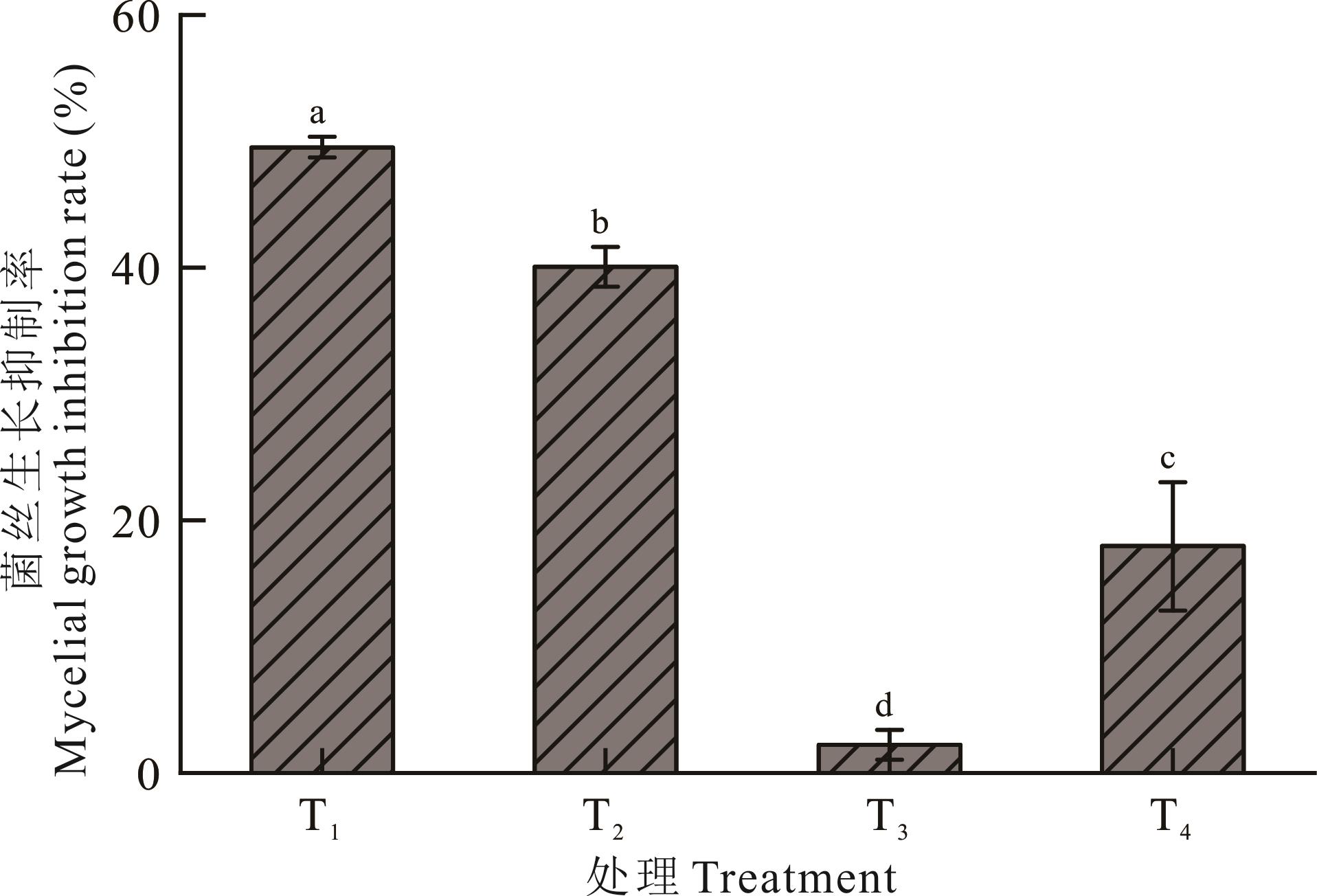
图3 第9天不同纳米材料菌丝生长抑制率T1: 纳米铜Cu NPs; T2: 纳米氢氧化铜Cu(OH)2 NPs; T3: 核壳纳米铁Core-shell Fe NPs; T4: 纳米铁Fe NPs.
Fig.3 Inhibition rate of mycelial growth of different nanomaterials on 9th day

图4 不同浓度Cu NPs处理后第9天菌丝生长情况a: 空白对照Blank control; b: 400 mg·L-1; c: 200 mg·L-1; d: 100 mg·L-1; e: 50 mg·L-1; f: 25 mg·L-1.
Fig.4 Mycelial growth after treatment with different concentrations of Cu NPs on 9th day

图5 不同浓度Cu NPs处理后菌丝生长直径
Fig.5 Diameter of mycelium after treatment with different concentrations of Cu NPs
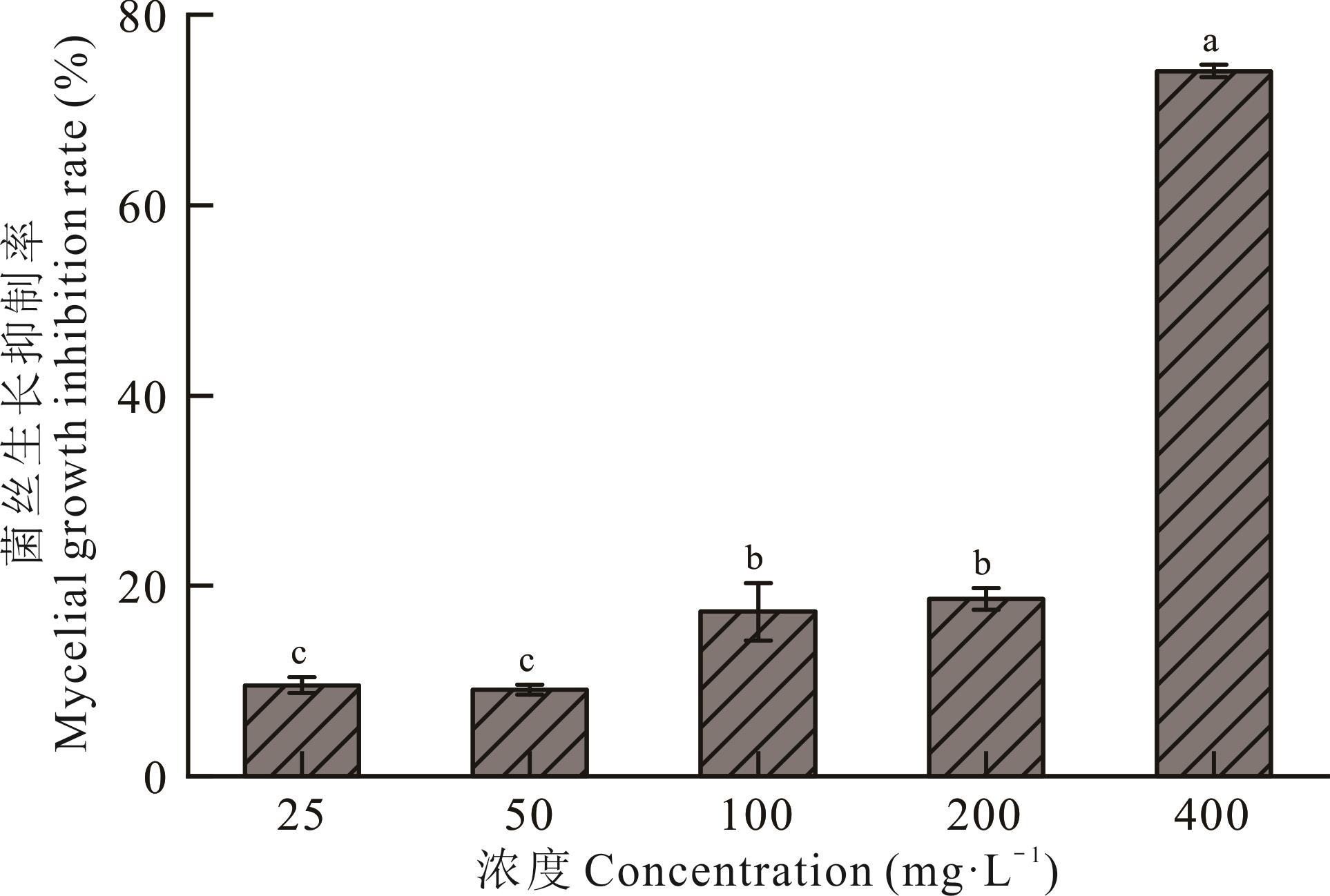
图6 第9天不同浓度Cu NPs菌丝生长抑制率
Fig.6 Inhibition rate of mycelial growth of Cu NPs at different concentrations on 9th day

图7 第9天不同浓度Cu NPs菌丝生长抑制率拟合曲线
Fig.7 Fitting curves of growth inhibition rate of Cu NPs hyphae at different concentrations on 9th day
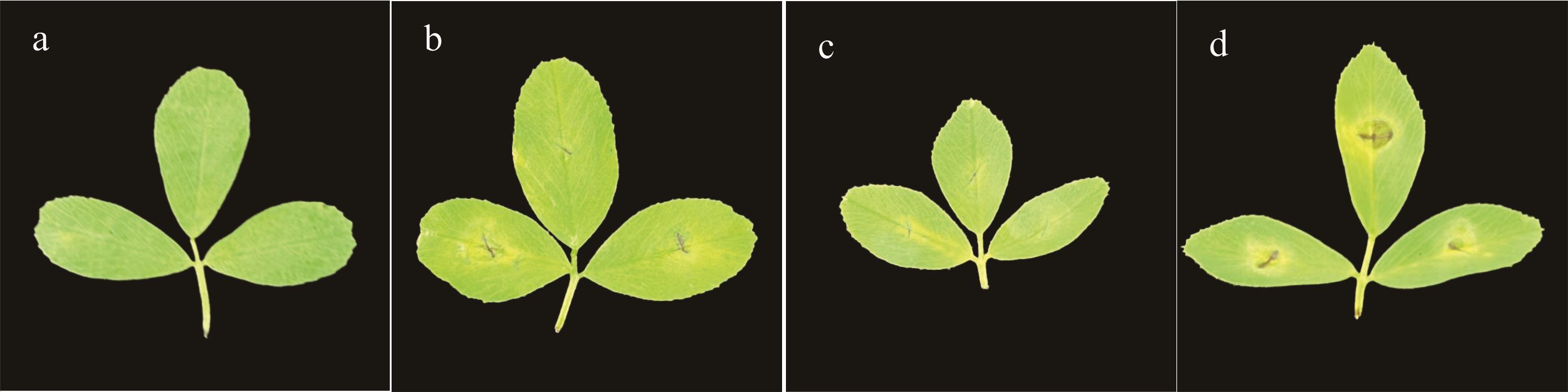
图8 不同处理下叶片病斑a: 空白对照Blank control; b: 先接菌→再接Cu NPs Inoculation of fungi→reinoculation with Cu NPs; c: 先接Cu NPs→再接菌Inoculation of Cu NPs→reinoculation with fungi; d: 只接种菌Fungal inoculation only.
Fig.8 Leaf lesions under different treatments
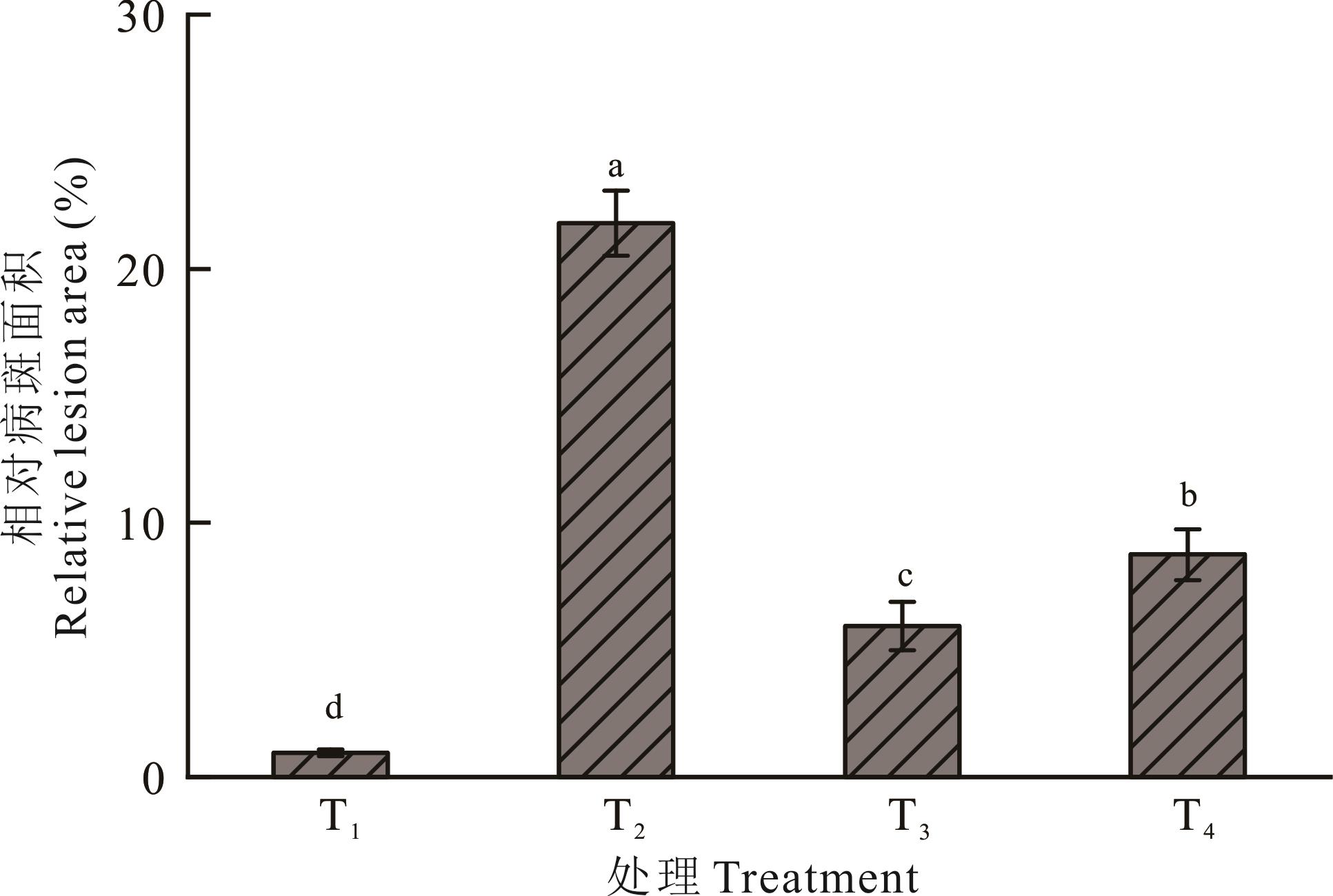
图9 不同处理下叶片相对病斑面积T1: 空白对照Blank control; T2: 只接种菌Fungal inoculation only; T3: 先注射Cu NPs→再注射菌Inoculation of Cu NPs→reinoculation with fungi; T4: 先注射菌→再注射Cu NPs Inoculation of fungi→reinoculation with Cu NPs. 下同The same below.
Fig.9 Relative lesion area of leaves under different treatments
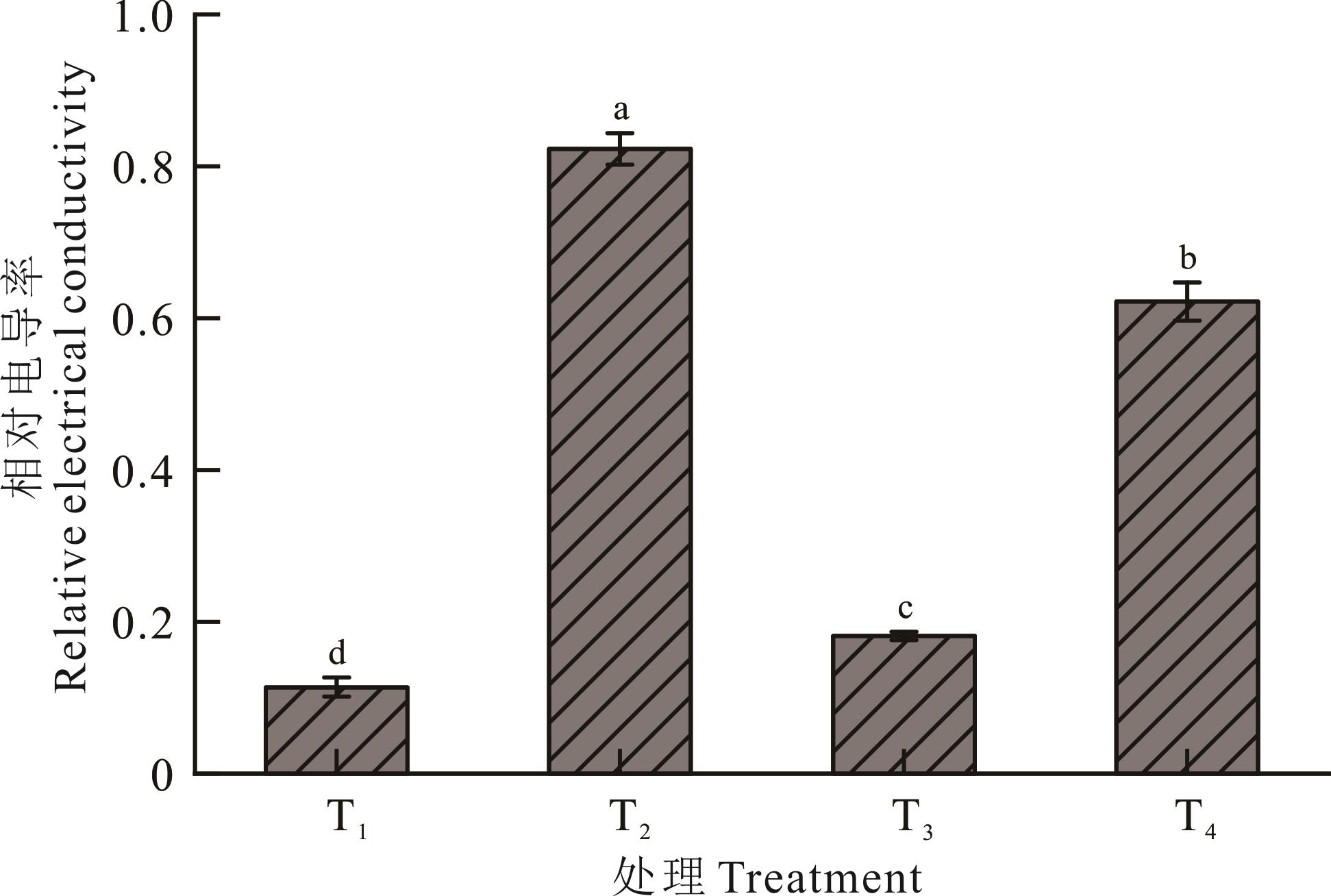
图10 不同处理下叶片相对电导率
Fig.10 Relative conductivity of blades under different treatments

图11 不同处理下叶片超氧化物歧化酶、苯丙氨酸解氨酶、过氧化氢酶、多酚氧化酶和过氧化物酶活性
Fig.11 Superoxide dismutase (SOD), L-phenylalanine ammonia-lyase (PAL), catalase (CAT), polyphenol oxidase (PPO), peroxidase (POD) enzyme activity in leaves under different treatments
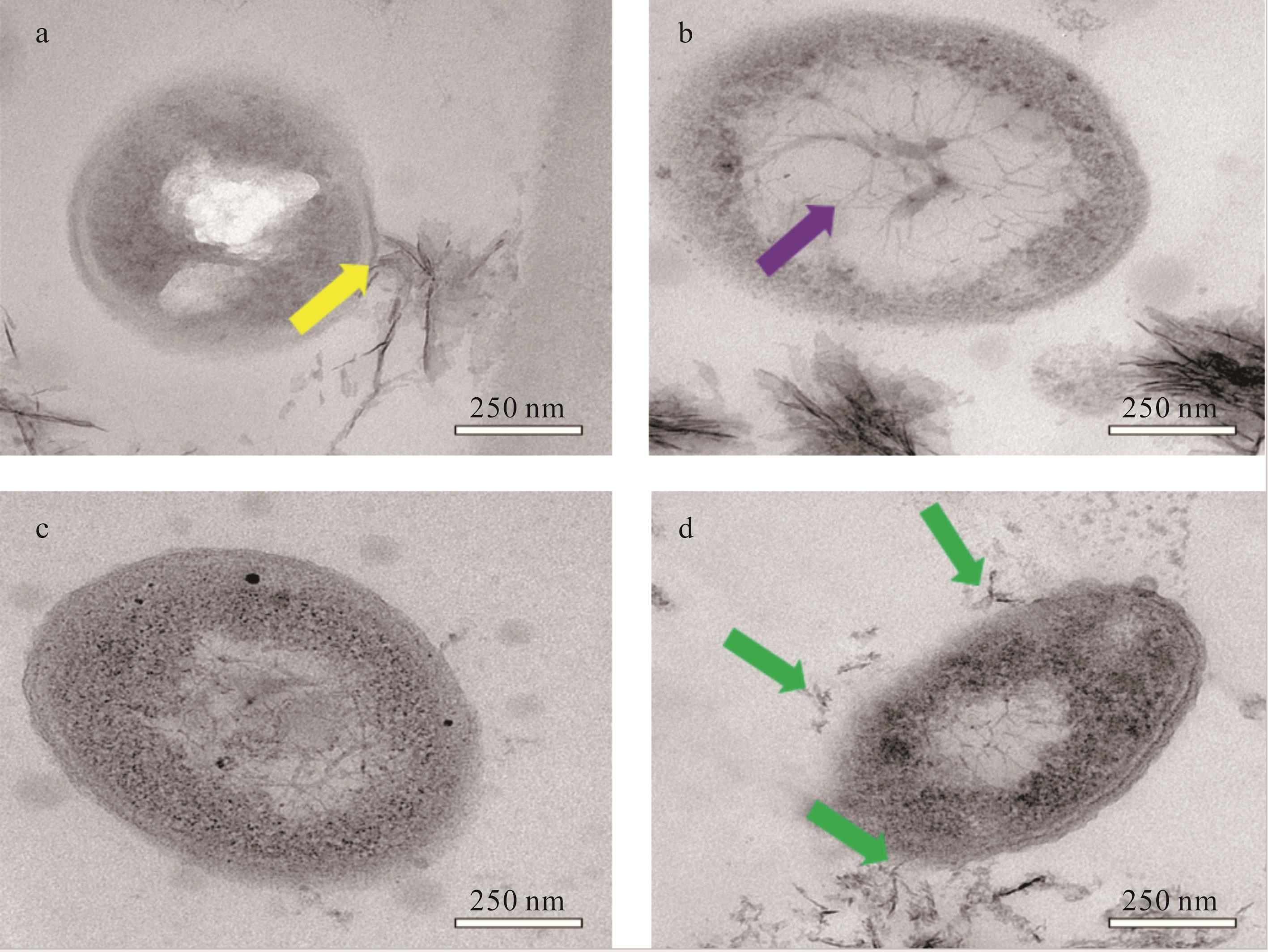
图12 不同处理方式下接种叶片的苜蓿壳二孢孢子透射电镜a: 先注射Cu NPs→再注射菌Inoculation of Cu NPs→reinoculation with fungi; b: 先注射Cu NPs→再注射菌Inoculation of Cu NPs→reinoculation with fungi; c: 只接种菌Fungal inoculation only; d: 先注射菌→再注射Cu NPs Inoculation of fungi→reinoculation with Cu NPs.
Fig.12 Transmission electron microscopy (TEM) images of A. medicaginicola spores of inoculated leaves under different treatments

图13 不同处理方式下接种叶片的叶绿体透射电镜a: 空白对照Blank control; b: 只接种菌Fungal inoculation only; c: 先注射菌→再注射Cu NPs Inoculation of fungi→reinoculation with Cu NPs; d: 先注射Cu NPs→再注射菌 Inoculation of Cu NPs→reinoculation with fungi.
Fig.13 Chloroplast transmission electron microscopy (TEM) images of inoculated leaves under different treatments
| 1 | Nan Z B. Alfalfa diseases and integrated disease prevention and control system in China. Animal Science and Veterinary Medicine, 2001, 18(4): 81-84. |
| 南志标. 我国的苜蓿病害及其综合防治体系. 动物科学与动物医学, 2001, 18(4): 81-84. | |
| 2 | Song Y Y. Evaluation of the resistance of forty varieties of alfalfa to stem and leaf fungal diseases. Lanzhou: Lanzhou University, 2016. |
| 宋雨阳. 紫花苜蓿40个品种对茎叶真菌病害的抗性评价. 兰州: 兰州大学, 2016. | |
| 3 | Fan Q. Study on pathogenic mechanism of Phoma medicaginis on alfalfa. Lanzhou: Lanzhou University, 2019. |
| 樊秦. 苜蓿茎点霉对苜蓿的致病机理研究. 兰州: 兰州大学, 2019. | |
| 4 | Chen C, Wu C. Research progress of green synthesis of nanoparticle and its application in agricultural science. China Vegetables, 2022(11): 32-43. |
| 陈城, 吴楚. 纳米颗粒的绿色合成及其在农业上的应用研究进展. 中国蔬菜, 2022(11): 32-43. | |
| 5 | Sun P B, Wang Z J, Ge G T, et al. Effects of nano-selenium spraying on yield, nutritional quality, and selenium content of alfalfa. Chinese Journal of Grassland, 2023, 45(8): 79-87. |
| 孙鹏波, 王志军, 格根图, 等. 喷施纳米硒对紫花苜蓿产量、营养品质和硒含量的影响. 中国草地学报, 2023, 45(8): 79-87. | |
| 6 | Shenashen M, Derbalah A, Hamza A, et al. Recent trend in controlling root rot disease of tomato caused by Fusarium solani using alumina silica nanoparticles. International Journal of Advanced Research in Biological Sciences, 2017, 4(6): 105-119. |
| 7 | Jothirethinam A, Prathiba S, Shanthi N, et al. Green synthesized silver nanoparticles prepared from the antimicrobial crude extracts of two brown seaweeds against plant pathogens. American Journal of Nanotechnology, 2015, 6(2): 31-39. |
| 8 | Bonjar G, Aghighi S, Khatami M, et al. In vitro and in vivo antifungal properties of silver nanoparticles against Rhizoctonia solani, a common agent of rice sheath blight disease. IET Nanobiotechnology, 2017, 11(3): 236-240. |
| 9 | Kaur P, Thakur R, Duhan S J, et al. Management of wilt disease of chickpea in vivo by silver nanoparticles biosynthesized by rhizospheric microflora of chickpea (Cicer arietinum). Journal of Chemical Technology & Biotechnology, 2018, 93(11): 3233-3243. |
| 10 | Hyunho K, Wade E, Yu S, et al. Silica nanoparticle dissolution rate controls the suppression of Fusarium wilt of watermelon (Citrullus lanatus). Environmental Science & Technology, 2021, 55(20): 13513-13522. |
| 11 | Barik T, Sahu B, Swain V. Nanosilica-from medicine to pest control. Parasitology Research, 2008, 103(2): 253-258. |
| 12 | Shivanand K I, Ahmad T S, Ahmad N B, et al. Copper nanoparticles: Green synthesis and managing fruit rot disease of chilli caused by Colletotrichum capsici. Saudi Journal of Biological Sciences, 2020, 28(2): 1477-1486. |
| 13 | Chen J N, Wu L T, Song K, et al. Nonphytotoxic copper oxide nanoparticles are powerful “nanoweapons”that trigger resistance in tobacco against the soil-borne fungal pathogen Phytophthora nicotianae. Journal of Integrative Agriculture, 2022, 21(11): 3245-3262. |
| 14 | Mazhar M W, Ishtiaq M, Hussain I, et al. Seed nano-priming with zinc oxide nanoparticles in rice mitigates drought and enhances agronomic profile. PLoS One, 2022, 17(3): e0264967. |
| 15 | Rosa-García S C D, Martínez-Torres P, Gómez-Cornelio S, et al. Antifungal activity of ZnO and MgO nanomaterials and their mixtures against Colletotrichum gloeosporioides strains from tropical fruit. Journal of Nanomaterials, 2018, 2018(1): 1-9. |
| 16 | Yuan Q H. Advances in alfalfa diseases in China. Plant Protection, 2007, 33(1): 6-10. |
| 袁庆华. 我国苜蓿病害研究进展. 植物保护, 2007, 33(1): 6-10. | |
| 17 | Mohammadi M, Kazemi H. Changes in peroxidase and polyphenol oxidase activities in susceptible and resistant wheat heads inoculated with Fusarium graminearum and induced resistance. Plant Science, 2002, 162(4): 491-498. |
| 18 | Ashraf H, Anjum T, Riaz S, et al. Inhibition mechanism of green-synthesized copper oxide nanoparticles from Cassia fistula towards Fusarium oxysporum by boosting growth and defense response in tomatoes. Environmental Science: Nano, 2021, 8(6): 1729-1748. |
| 19 | Baka Z A, Zahed M M. Antifungal activity of silver/silicon dioxide nanocomposite on the response of faba bean plants (Vicia faba L.) infected by Botrytis cinerea. Bioresources and Bioprocessing, 2022, 9(1): 102. |
| 20 | Yan P X, Zhu Y, Wu Z G, et al. Elementary substance nano powder material with core-shell structure, preparation method thereof and application thereof in agriculture: 2020110708074, 2021-02-02. |
| 闫鹏勋, 祝英, 吴志国, 等. 具有核壳结构的单质纳米粉体材料及其制备方法和在农业上的应用. 中国专利: 2020110708074, 2021-02-02. | |
| 21 | Jo Y K, Kim B H, Jung G. Antifungal activity of silver ions and nanoparticles on phytopathogenic fungi. Plant Disease, 2009, 93(10): 1037-1043. |
| 22 | Devipriya D, Roopan S M. Cissus quadrangularis mediated ecofriendly synthesis of copper oxide nanoparticles and its antifungal studies against Aspergillus niger, Aspergillus flavus. Materials Science and Engineering, 2017, 80(12): 38-44. |
| 23 | Djebali N, Mhadhbi H, Jacquet C, et al. Involvement of hydrogen peroxide, peroxidase and superoxide dismutase in response of Medicago truncatula lines differing in susceptibility to Phoma medicaginis infection. Journal of Phytopathology, 2007, 155(10): 633-640. |
| 24 | Arciniegas-Grijalba P, Patiño-Portela M, Mosquera-Sánchez L, et al. ZnO-based nanofungicides: Synthesis, characterization and their effect on the coffee fungi Mycena citricolor and Colletotrichum sp. Materials Science & Engineering C, 2019, 98(5): 808-825. |
| 25 | Wang H F, Gu L R, Li Y, et al. Unique aggregation of anthrax (Bacillus anthracis) spores by sugar-coated single-walled carbon nanotubes. Journal of the American Chemical Society, 2006, 128(41): 13364-13365. |
| 26 | Bamford C V, Nobbs A H, Barbour M E, et al. Functional regions of Candida albicans hyphal cell wall protein Als3 that determine interaction with the oral bacterium Streptococcus gordonii. Microbiology, 2015, 161(1): 18-29. |
| [1] | 罗天蓉, 马健芝, 杜明阳, 多杰措, 熊辉岩, 段瑞君. 紫花苜蓿LACS基因家族成员鉴定及表达分析[J]. 草业学报, 2025, 34(4): 124-136. |
| [2] | 冯雅琪, 陈嘉慧, 张静妮, 隋超, 陈基伟, 刘志鹏, 周强, 刘文献. 基于重测序紫花苜蓿高蛋白、高产关联InDel分子标记开发[J]. 草业学报, 2025, 34(4): 137-149. |
| [3] | 陈彩锦, 包明芳, 王文虎, 尚继红, 曾燕霞, 沙晓弟, 朱新忠, 王学敏, 刘文辉. 紫花苜蓿抗旱育种研究现状及展望[J]. 草业学报, 2025, 34(3): 204-223. |
| [4] | 胡鹏飞, 叶雨浓, 王通锐, 王晶, 王星, 伏兵哲, 高雪芹. 紫花苜蓿半同胞家系农艺性状的遗传变异分析[J]. 草业学报, 2025, 34(3): 85-96. |
| [5] | 马超, 孙熙婧, 冯雅岚, 周爽, 琚吉浩, 吴毅, 王添宁, 郭彬彬, 张均. 紫花苜蓿GLK基因家族鉴定及渗透胁迫下的表达分析[J]. 草业学报, 2025, 34(1): 174-190. |
| [6] | 蔡文祺, 李淑霞, 王晓彤, 宋文学, 麻旭霞, 马小梅, 李小红, 代昕瑶. 外源褪黑素与乙烯交互对盐胁迫下紫花苜蓿幼苗生长和生理特性的影响[J]. 草业学报, 2025, 34(1): 80-93. |
| [7] | 王晓彤, 李小红, 麻旭霞, 蔡文祺, 冯学丽, 李淑霞. 紫花苜蓿FBA基因家族成员的鉴定与分析[J]. 草业学报, 2024, 33(9): 81-93. |
| [8] | 张盈盈, 胡丹丹, 马春晖, 张前兵. 苜蓿叶片结构和光合特性对菌磷添加的响应[J]. 草业学报, 2024, 33(8): 133-144. |
| [9] | 王峥, 常伟, 李俊诚, 苏连泰, 高鲤, 周鹏, 安渊. 紫花苜蓿还田对饲料玉米产量和氮素吸收转运的影响[J]. 草业学报, 2024, 33(8): 63-73. |
| [10] | 高金柱, 赵东豪, 高乐, 苏喜浩, 何学青. 硝酸铈与脱落酸处理对紫花苜蓿种子萌发和幼苗生理特性的影响[J]. 草业学报, 2024, 33(6): 175-186. |
| [11] | 谭英, 尹豪. 盐胁迫下根施AMF和褪黑素对紫花苜蓿生长、光合特征以及抗氧化系统的影响[J]. 草业学报, 2024, 33(6): 64-75. |
| [12] | 王敏, 李莉, 贾蓉, 包爱科. 10种紫花苜蓿在低温胁迫下的生理特性及耐寒性评价[J]. 草业学报, 2024, 33(6): 76-88. |
| [13] | 邹晓璐, 张文静, 吕红, 秦楠, 赵晓军, 殷辉, 任璐. 醉鱼草内生细菌 ZJ1的生物学特性及防病促生效果[J]. 草业学报, 2024, 33(5): 106-114. |
| [14] | 孔海明, 宋家兴, 杨静, 李倩, 杨培志, 曹玉曼. 紫花苜蓿CAMTA基因家族鉴定及其在非生物胁迫下的表达模式分析[J]. 草业学报, 2024, 33(5): 143-154. |
| [15] | 何升然, 刘晓静, 赵雅姣, 汪雪, 王静. 紫花苜蓿/甜高粱间作对根际土壤特性及微生物群落特征的影响[J]. 草业学报, 2024, 33(5): 92-105. |
| 阅读次数 | ||||||
|
全文 |
|
|||||
|
摘要 |
|
|||||
