
ISSN 1004-5759 CN 62-1105/S
Acta Prataculturae Sinica ›› 2025, Vol. 34 ›› Issue (5): 118-129.DOI: 10.11686/cyxb2024255
Xue-ping LI1( ), Shi-yang XU2, Jian-jun LI1, Yong-hong QI1()
Received:2024-07-02
Revised:2024-09-05
Online:2025-05-20
Published:2025-03-20
Contact:
Yong-hong QI
Xue-ping LI, Shi-yang XU, Jian-jun LI, Yong-hong QI. Bacterial diversity and community structural changes in rhizosphere soil of naked barley disturbed by root rot[J]. Acta Prataculturae Sinica, 2025, 34(5): 118-129.
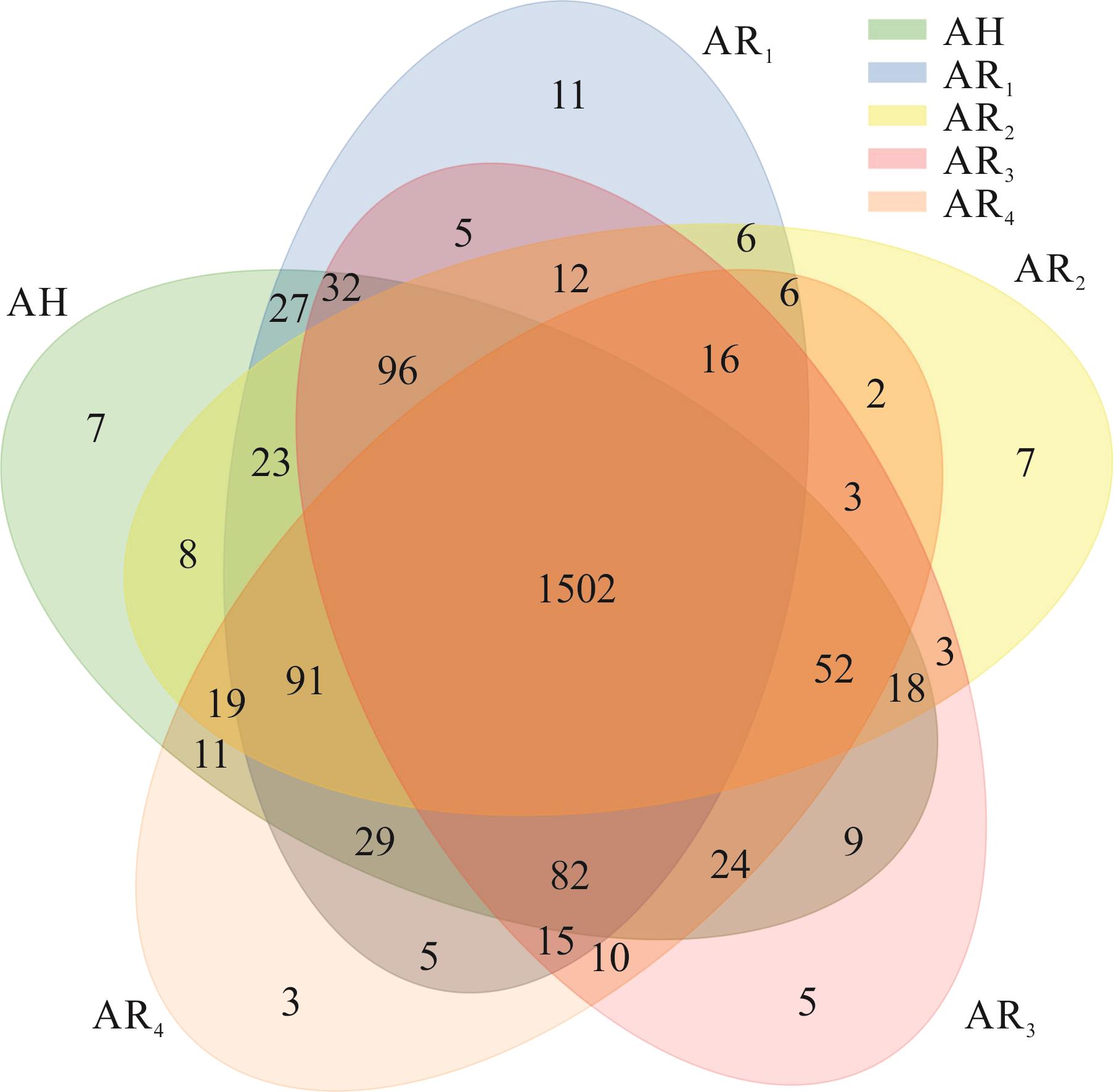
Fig.1 Bacterial OTUs in naked barley rhizosphere soil
样本 Samples | 谱系多样性 PD_whole_tree | 丰富度估计量指数 Chao1 | 测序深度指数Goods_coverage | 种类丰富度维度 Observed_species | 香浓指数 Shannon index | 辛普森指数 Simpson index |
|---|---|---|---|---|---|---|
| AH | 54.95 | 1975.18 | 0.96 | 1598.00 | 9.25 | 0.99 |
| AR1 | 54.70 | 1892.30 | 0.97 | 1598.60 | 9.32 | 0.99 |
| AR2 | 54.52 | 1889.42 | 0.97 | 1597.20 | 9.26 | 0.99 |
| AR3 | 55.62 | 1933.35 | 0.96 | 1607.00 | 9.32 | 0.99 |
| AR4 | 54.67 | 1926.21 | 0.97 | 1608.90 | 9.37 | 0.99 |
Table 1 Bacterial diversity indexes in rhizosphere soil of naked barley with different root rot incidences
样本 Samples | 谱系多样性 PD_whole_tree | 丰富度估计量指数 Chao1 | 测序深度指数Goods_coverage | 种类丰富度维度 Observed_species | 香浓指数 Shannon index | 辛普森指数 Simpson index |
|---|---|---|---|---|---|---|
| AH | 54.95 | 1975.18 | 0.96 | 1598.00 | 9.25 | 0.99 |
| AR1 | 54.70 | 1892.30 | 0.97 | 1598.60 | 9.32 | 0.99 |
| AR2 | 54.52 | 1889.42 | 0.97 | 1597.20 | 9.26 | 0.99 |
| AR3 | 55.62 | 1933.35 | 0.96 | 1607.00 | 9.32 | 0.99 |
| AR4 | 54.67 | 1926.21 | 0.97 | 1608.90 | 9.37 | 0.99 |

Fig.2 Bacterial species richness and evenness in rhizosphere soil of naked barley with different root rot incidences
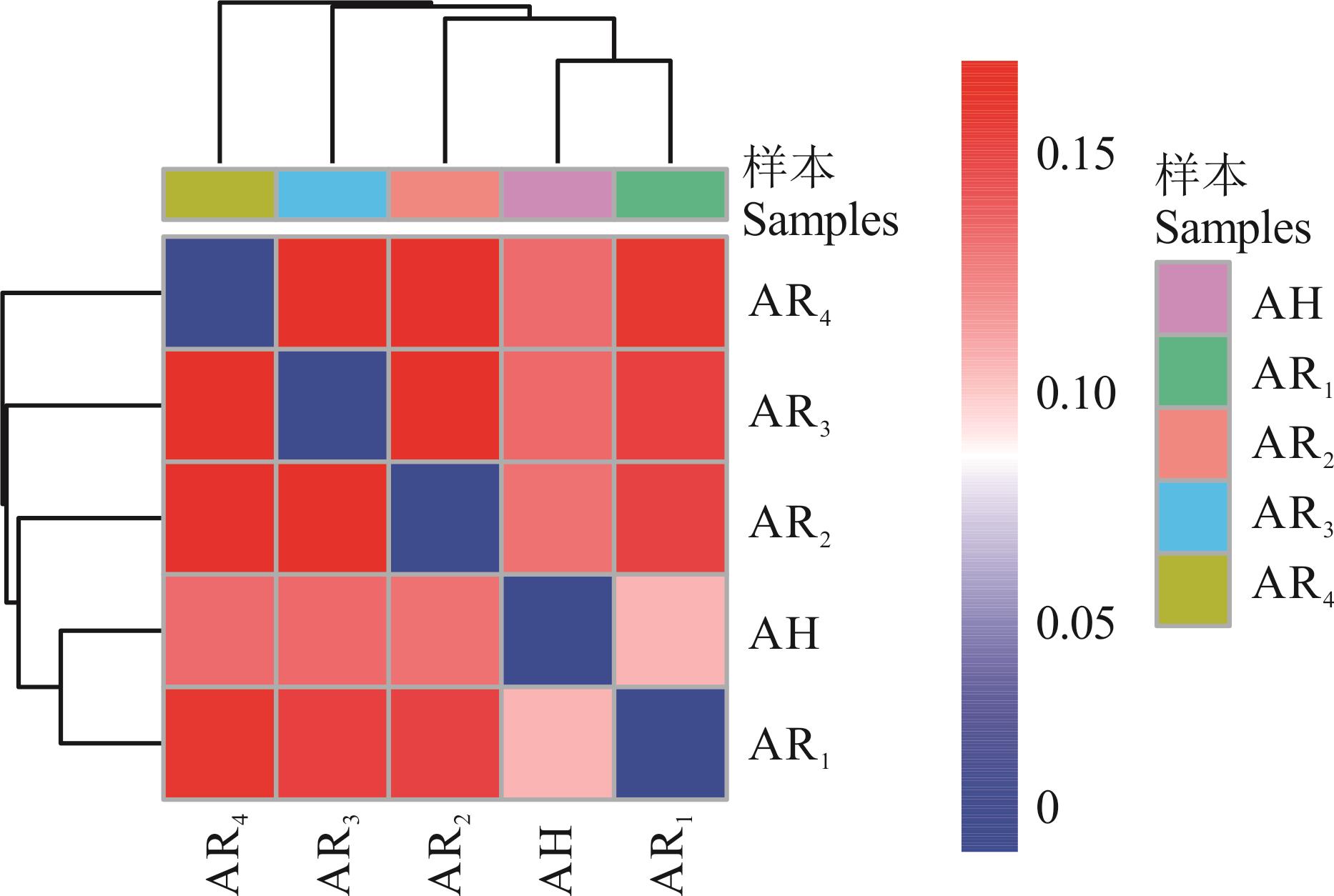
Fig. 3 Bacterial genetic cluster analysis in rhizosphere soil of naked barley with different root rot incidences

Fig.4 Bacterial community structure at phylum and class level in rhizosphere soil of naked barley with different root rot incidences

Fig.5 Community structure of bacteria at order and family level in rhizosphere soil of naked barley with different root rot incidences

Fig.6 Bacterial community structure and correlation analysis at genus level in rhizosphere soil of naked barley with different root rot incidences

Fig.7 Bacterial community structure at species level in rhizosphere soil of naked barley with different root rot incidences

Fig. 8 Functions of the annotated bacterial genes in rhizosphere soil of naked barley with different root rot incidences
| 1 | Li X P. Naked barley root rot diseases and influence on its rhizosphere microecology in Qinghai-tibet plateau, China. Lanzhou: Gansu Agricultural University, 2017: 1-3. |
| 李雪萍. 青藏高原青稞根腐类病害及其对根际土壤微生态的影响. 兰州: 甘肃农业大学, 2017: 1-3. | |
| 2 | Li M J, Shan L, Tong L T, et al. Effect of pearling on composition, microstructure, water migration and cooking quality of highland barley (Hordeum vulgare var. Coeleste linnaeus). Food Chemistry, 2022, 395: 133581. |
| 3 | Gong W F, Wei L P, Du J, et al. Structure and diversity of the bacterial community in the rhizosphere of highland barley in Xizang. Acta Microbiologica Sinica, 2023, 63(10): 4034-4050. |
| 巩文峰, 魏丽萍, 杜娟, 等. 西藏青稞根际细菌群落结构及多样性. 微生物学报, 2023, 63(10): 4034-4050. | |
| 4 | Li X P, Xu S Y, Wang X M, et al. Field survey and pathogen identification of naked barley root rot in Qinghai Province. Journal of Plant Protection, 2021, 48(4): 757-765. |
| 李雪萍, 许世洋, 汪学苗, 等. 青海省青稞根腐病调查及病原菌鉴定. 植物保护学报, 2021, 48(4): 757-765. | |
| 5 | Li X P, Liu M J, Xu S Y, et al. Investigation and pathogen identification of common root rot of Qingke barley (Hordeum vulgare var. nudum).Acta Prataculturae Sinica, 2021, 30(7): 190-198. |
| 李雪萍, 刘梅金, 许世洋, 等. 青稞普通根腐病的调查与病原鉴定. 草业学报, 2021, 30(7): 190-198. | |
| 6 | Li X P, Li M Q, Xu S Y, et al. Pathogens identification and pathogenicity analysis of Fusarium root rot on naked barley. Journal of Triticeae Crops, 2022, 42(9): 1149-1161. |
| 李雪萍, 李敏权, 许世洋, 等. 青稞镰孢根腐病病原鉴定及致病性分析. 麦类作物学报, 2022, 42(9): 1149-1161. | |
| 7 | Xu S Y, Li X P, Liu M J, et al. Study on the screening of disease prevention pesticides for naked barley root rot. Journal of Cold-Arid Agricultural Sciences, 2023, 2(5): 458-463. |
| 许世洋, 李雪萍, 刘梅金, 等. 青稞根腐病防治药剂筛选研究. 寒旱农业科学, 2023, 2(5): 458-463. | |
| 8 | Xu S Y, Li M Q, Liu M J, et al. Screening of highland barley root rot resistant varieties. Gansu Agricultural Science and Technology, 2022, 53(3): 25-30. |
| 许世洋, 李敏权, 刘梅金, 等. 青稞根腐病抗性品种筛选. 甘肃农业科技, 2022, 53(3): 25-30. | |
| 9 | Xu S Y, Li M Q, Liu M J, et al. Screening of bacteria with biocontrol effects against naked barley root rot accompany with plant growth-promoting properties and the biocontrol effects of the bacterial inoculant. Microbiology China, 2022, 49(7): 2575-2586. |
| 许世洋, 李敏权, 刘梅金, 等. 青稞根腐病防病促生细菌的筛选及其菌剂防效. 微生物学通报, 2022, 49(7): 2575-2586. | |
| 10 | Yang Z, Dai C C, Wang X X, et al. Advance in research on rhizosphere microbial mechanisms of crop soil-borne fungal diseases. Acta Pedologica Sinica, 2019, 56(1): 12-22. |
| 杨珍, 戴传超, 王兴祥, 等. 作物土传真菌病害发生的根际微生物机制研究进展. 土壤学报, 2019, 56(1): 12-22. | |
| 11 | Ling N, Wang T, Kuzyakov Y. Rhizosphere bacteriome structure and functions. Nature Communications, 2022, 13(1): 836. |
| 12 | De Corato U. Soil microbiota manipulation and its role in suppressing soil-borne plant pathogens in organic farming systems under the light of microbiome-assisted strategies. Chemical and Biological Technologies in Agriculture, 2020, 7(1): 17. |
| 13 | Liu J W, Li X Z, Yao M J. Research progress on assembly of plant rhizosphere microbial community. Acta Microbiologica Sinica, 2021, 61(2): 231-246. |
| 刘京伟, 李香真, 姚敏杰. 植物根际微生物群落构建的研究进展. 微生物学报, 2021, 61(2): 231-246. | |
| 14 | Xu S Y, Li X P, Li M Q, et al. Effects of root rot disease at seedling stage on bacterial community structure in the rhizosphere soil of naked barley. Grassland and Turf, 2023, 43(5): 120-128. |
| 许世洋, 李雪萍, 李敏权, 等. 青稞苗期根腐病对根际土壤细菌群落结构的影响. 草原与草坪, 2023, 43(5): 120-128. | |
| 15 | Shi X, Zhao Y, Xu M, et al. Insights into plant-microbe interactions in the rhizosphere to promote sustainable agriculture in the new crops era. New Crops, 2024, 1: 1-17. |
| 16 | Fang Z D. Research methods of plant pathology. Beijing: China Agriculture Press, 1998: 6-18. |
| 方中达. 植病研究方法. 北京: 中国农业出版社, 1998: 6-18. | |
| 17 | Bolger A M, Lohse M, Usadel B. Trimmomatic: a flexible trimmer for Illumina sequence data. Bioinformatics, 2014, 30(15): 2114-2120. |
| 18 | Magoč T, Salzberg S L. FLASH: fast length adjustment of short reads to improve genome assemblies. Bioinformatics, 2011, 27(21): 2957-2963. |
| 19 | Caporaso J G, Kuczynski J, Stombaugh J, et al. QIIME allows analysis of high-throughput community sequencing data. Nature Methods, 2010, 7(5): 335-336. |
| 20 | Edgar R C, Haas B J, Clemente J C, et al. UCHIME improves sensitivity and speed of chimera detection. Bioinformatics, 2011, 27(16): 2194-2200. |
| 21 | Rognes T, Flouri T, Nichols B, et al. VSEARCH: a versatile open source tool for metagenomics. PeerJ, 2016, 4: e2584. |
| 22 | Wang Q, Garrity G M, Tiedje J M, et al. Naive Bayesian classifier for rapid assignment of rRNA sequences into the new bacterial taxonomy. Applied & Environmental Microbiology, 2007, 73(16): 5261-5267. |
| 23 | Desantis T Z, Hugenholtz P, Larsen N, et al. Greengenes, a chimera-checked 16S rRNA gene database and workbench compatible with ARB. Applied & Environmental Microbiology, 2006, 72(7): 5069-5072. |
| 24 | Langille M G, Zaneveld J, Caporaso J G, et al. Predictive functional profiling of microbial communities using 16S rRNA marker gene sequences. Nature Biotechnology, 2013, 31(9): 814-821. |
| 25 | Zhang J, Wei Z, Chen J. A distance-based approach for testing the mediation effect of the human microbiome. Bioinformatics, 2018, 34(11): 1875-1883. |
| 26 | Santoyo G. How plants recruit their microbiome? New insights into beneficial interactions. Journal of Advanced Research, 2022, 40: 45-58. |
| 27 | Qi Y H, Cao S F, Li X P, et al. Study on the relationship between root rot disease and nutrient content, enzyme activity and microbial quantity in rhizosphere soil of naked barley in Lintan County, Gannan State. Acta Agrestia Sinica, 2018, 26(4): 877-884. |
| 漆永红, 曹素芳, 李雪萍, 等. 甘南州临潭县青稞根际土壤养分含量、酶活性和微生物数量与根腐病的关系研究. 草地学报, 2018, 26(4): 877-884. | |
| 28 | Liu H, Dong Y H, Shen M C, et al. Characteristics of rhizosphere microbial communities in a disease suppressive soil of tomato bacterial wilt and its disease-suppressive transmission mechanism. Acta Pedologica Sinica, 2022, 59(4): 1125-1135. |
| 刘洪, 董元华, 申民翀, 等. 番茄青枯病抑病土壤根际微生物群落特征及其抑制性传递机制. 土壤学报, 2022, 59(4): 1125-1135. | |
| 29 | Sharma V, Vashishtha A, Jos A L M, et al. Phylogenomics of the phylum Proteobacteria: Resolving the complex relationships. Current Microbiology, 2022, 79(8): 224. |
| 30 | Xian W D, Zhang X T, Li W J. Research status and prospect on bacterial phylum Chloroflexi. Acta Microbiologica Sinica, 2020, 60(9): 1801-1820. |
| 鲜文东, 张潇橦, 李文均. 绿弯菌的研究现状及展望. 微生物学报, 2020, 60(9): 1801-1820. | |
| 31 | Wang G H, Liu J J, Yu Z H, et al. Research progress of Acidobacteria ecology in soils. Biotechnology Bulletin, 2016, 32(2): 14-20. |
| 王光华, 刘俊杰, 于镇华, 等. 土壤酸杆菌门细菌生态学研究进展. 生物技术通报, 2016, 32(2): 14-20. | |
| 32 | Pan X, Raaijmakers J M, Carrión V J. Importance of bacteroidetes in host-microbe interactions and ecosystem functioning. Trends in Microbiology, 2023, 31(9): 959-971. |
| 33 | Yang Y, Li H L, Ma K L, et al. Actinomycetes and their metabolites: visual analysis based on CiteSpace. Acta Microbiologica Sinica, 2022, 62(10): 3825-3843. |
| 杨阳, 李海亮, 马凯丽, 等. 放线菌及其代谢产物研究进展-基于CiteSpace可视化分析. 微生物学报, 2022, 62(10): 3825-3843. | |
| 34 | Mujakić I, Piwosz K, Koblížek M. Phylum Gemmatimonadota and its role in the environment. Microorganisms, 2022, 10(1): 151. |
| 35 | Liu H, Wei L L, Zhu L F, et al. Research progress of Sphingomonas. Microbiology China, 2023, 50(6): 2738-2752. |
| 刘辉, 韦璐璐, 朱龙发, 等. 鞘氨醇单胞菌的研究进展. 微生物学通报, 2023, 50(6): 2738-2752. | |
| 36 | Liu G H, Liu B, Wang J P, et al. Advances in taxonomy and application of Bacillus. Microbiology China, 2017, 44(4): 949-958. |
| 刘国红, 刘波, 王阶平, 等. 芽胞杆菌分类与应用研究进展. 微生物学通报, 2017, 44(4): 949-958. | |
| 37 | Zhou Y F, Bai Y S, Yue T, et al. Research progress on the growth-promoting characteristics of plant growth-promoting rhizobacteria. Microbiology China, 2023, 50(2): 644-666. |
| 周益帆, 白寅霜, 岳童, 等. 植物根际促生菌促生特性研究进展. 微生物学通报, 2023, 50(2): 644-666. | |
| 38 | Wu H M, Sha B C, Zhang J Y, et al. Effects of bacterial root rot on photosynthetic characteristics in Panax notoginseng. Chinese Journal of Eco-Agriculture, 2020, 28(11): 1739-1752. |
| 武洪敏, 沙本才, 张金燕, 等. 细菌性根腐病对三七光合特性的影响. 中国生态农业学报, 2020, 28(11): 1739-1752. | |
| 39 | Boussageon R, Sportes A, Lemaitre J P, et al. A bacillaceae consortium positively impacts arbuscular mycorrhizal fungus colonisation, plant phosphate nutrition, and tuber yield in Solanum tuberosum cv. Jazzy. Symbiosis, 2023, 89(2): 235-250. |
| 40 | Daims H, Lebedeva E, Pjevac P, et al. Complete nitrification by Nitrospira bacteria. Nature, 2015(528): 504-509. |
| 41 | Sun Y, Wang M, Mur L A J, et al. Unravelling the roles of nitrogen nutrition in plant disease defences. International Journal of Molecular Sciences, 2020, 21(2): 572. |
| 42 | Huang C, Jiang L, Liang Y P, et al. Acinetobacter calcoaceticus promotes the seedling growth of Lespedeza daurica under saline-alkaline stress. ActaMicrobiologica Sinica, 2023, 63(8): 3264-3278. |
| 黄臣, 蒋霖, 梁银萍, 等. 醋酸钙不动杆菌对盐碱胁迫下达乌里胡枝子促生效应研究. 微生物学报, 2023, 63(8): 3264-3278. | |
| 43 | Wu W, Zhang P F, Zhang G P, et al. Screening, identification and growth promoting characteristics of high efficient organic phosphate-mineralizing bacterium from rhizosphere soils of Forsythia suspensa. Journal of Southwest Forestry University (Natural Sciences), 2018, 38(3): 93-100. |
| 吴伟, 张鹏飞, 张桂萍, 等. 连翘根际高效解有机磷细菌的筛选鉴定及促生长特性研究. 西南林业大学学报(自然科学), 2018, 38(3): 93-100. | |
| 44 | Song M, Yun H Y, Kim Y H. Antagonistic Bacillus species as a biological control of ginseng root rot caused by Fusarium cf. incarnatum. Journal of Ginseng Research, 2014, 38(2): 136-145. |
| [1] | Shou-xing WANG, Hua-kun ZHOU, Li-peng OU, Cheng-xian LI, Yan-he WANG, Xiao-chun NING, Qiang GU, Dai-jun WEI, Ming-xin YANG. Vegetation and soil microbial diversity and their relationships with soil factors in different grassland types of the three river headwaters region [J]. Acta Prataculturae Sinica, 2025, 34(4): 16-26. |
| [2] | Xin GONG, Xin-ru HUO, Wen LI, Yan-dong YANG, Chao LIU, Wei-chun QIN, Yan SHEN, Guo-hui WANG, Hong-bin MA. Vegetation community characteristics and spatial differentiation in mountain grassland in Luoshan, Ningxia [J]. Acta Prataculturae Sinica, 2025, 34(2): 1-15. |
| [3] | Jing GUO, Yue WANG, Cun-ying QI, Jing LI. Effects of endophytic fungi seed soaking on growth and root endophytic fungal communities of Avena sativa [J]. Acta Prataculturae Sinica, 2025, 34(1): 151-160. |
| [4] | Bao WANG, Zhan-ling XIE, Jing GUO, Yong-peng TANG, Qing MENG, Qing-qing PENG, Jia-bao YANG, De-yu DONG, Hong-yan XU, Tai-zhen GAO, Fan ZHANG, Ying-zhu DUAN. Effects of seed soaking of Avena sativa in fungal fermentation broth on rhizosphere fungal community structure and drought resistance of oats [J]. Acta Prataculturae Sinica, 2024, 33(9): 126-139. |
| [5] | Zheng-yan LI, Zhi-ming XU, Yan LI, Yang LI. Effects of short-term continuous cropping of alfalfa on the growth and soil microenvironment of subsequent sorghum-sudan grass hybrid crops in the Jianghuai area [J]. Acta Prataculturae Sinica, 2024, 33(9): 155-168. |
| [6] | Rong-chun ZHENG, Zhi-biao NAN, Ting-yu DUAN. Diversity of seed-borne fungi on four Trifolium pratense cultivars [J]. Acta Prataculturae Sinica, 2024, 33(8): 170-180. |
| [7] | Qian LIU, Yan-fen DING, Shan-shan SONG, Wen-jie XU, Wei YANG. Quantitative classification and ordination analysis of spontaneous vegetation communities in herb layer along the green belt of Nanjing Ming City Wall [J]. Acta Prataculturae Sinica, 2024, 33(5): 1-15. |
| [8] | An-lin WANG, Rui MA, Yan-jun MA, Teng LIU, Yong-sheng TIAN, Zheng-hu DONG, Qiao-di CHAI. Effects of compound sand control measures on soil bacterial community structure and function [J]. Acta Prataculturae Sinica, 2024, 33(3): 46-60. |
| [9] | Chen-yang ZHANG, Meng-jun JIN, Yong-feng XU, Cheng-de YANG. Effects of maize continuous cropping on soil microbial community structure based on metagenomic analysis [J]. Acta Prataculturae Sinica, 2024, 33(12): 160-174. |
| [10] | Xu-ke ZHANG, Hong-fei XIA, Guo-li CHEN, De-zhou LI, Xiao-wei ZHANG, Ke-mei LI, Li-li WANG. Identification and biological characterisation of Fusarium root rot pathogens of white clover [J]. Acta Prataculturae Sinica, 2024, 33(12): 175-187. |
| [11] | Hao SHI, Cai-hong YANG, Fei XIA, Jun-qiang WANG, Wei WEI, Jing-long WANG, Yun-yin XUE, Shai-kun ZHENG, Hao-yang WU, Lin-ling RAN, Shuang YAN, Xiao-min JIANG. Initial effects of short-term warming on the productivity of alpine degraded grassland in northern Tibet during the restoration process [J]. Acta Prataculturae Sinica, 2024, 33(11): 30-45. |
| [12] | Shi CAO, Hui-xia LI, Shou-rong CAO. Evaluation of resistance of different alfalfa varieties to Paraphoma root rot [J]. Acta Prataculturae Sinica, 2024, 33(10): 123-134. |
| [13] | Jing-jing JIANG, Ai-chang CHEN, Zhou-quan WEI, Xing-ming SUN, Mei-rong XU, Xue-ping LI, Hui DU, Yong-hong QI. Identification of Fusarium species from Scutellaria baicalensis root rot in Longxi, Gansu Province and effects on element contents of root [J]. Acta Prataculturae Sinica, 2023, 32(7): 109-121. |
| [14] | Zi-li LYU, Bin LIU, Feng CHANG, Zi-jing MA, Qiu-mei CAO. Species diversity and phylogenetic diversity in Bayinbrook alpine grasslands: elevation gradient distribution patterns and drivers [J]. Acta Prataculturae Sinica, 2023, 32(7): 12-22. |
| [15] | Zhen-fen ZHANG, Rong HUANG, Xiang-yang LI, Bo YAO, Gui-qin ZHAO. Seed-borne bacterial diversity of oat and functional analysis based on Illumina MiSeq high-throughput sequencing [J]. Acta Prataculturae Sinica, 2023, 32(7): 96-108. |
| Viewed | ||||||
|
Full text |
|
|||||
|
Abstract |
|
|||||
