
ISSN 1004-5759 CN 62-1105/S
Acta Prataculturae Sinica ›› 2025, Vol. 34 ›› Issue (10): 51-61.DOI: 10.11686/cyxb2024469
Previous Articles Next Articles
Yan MING1,2( ), Zi-yi DOU1,2(), Wei ZHENG1,2(), Ning-xin WANG1,2, Xue CHEN1,2
Received:2024-11-25
Revised:2025-01-16
Online:2025-10-20
Published:2025-07-11
Contact:
Wei ZHENG
Yan MING, Zi-yi DOU, Wei ZHENG, Ning-xin WANG, Xue CHEN. Quantitative analysis of nitrogen transfer pathways in intercropping systems between alfalfa and Korla pear[J]. Acta Prataculturae Sinica, 2025, 34(10): 51-61.
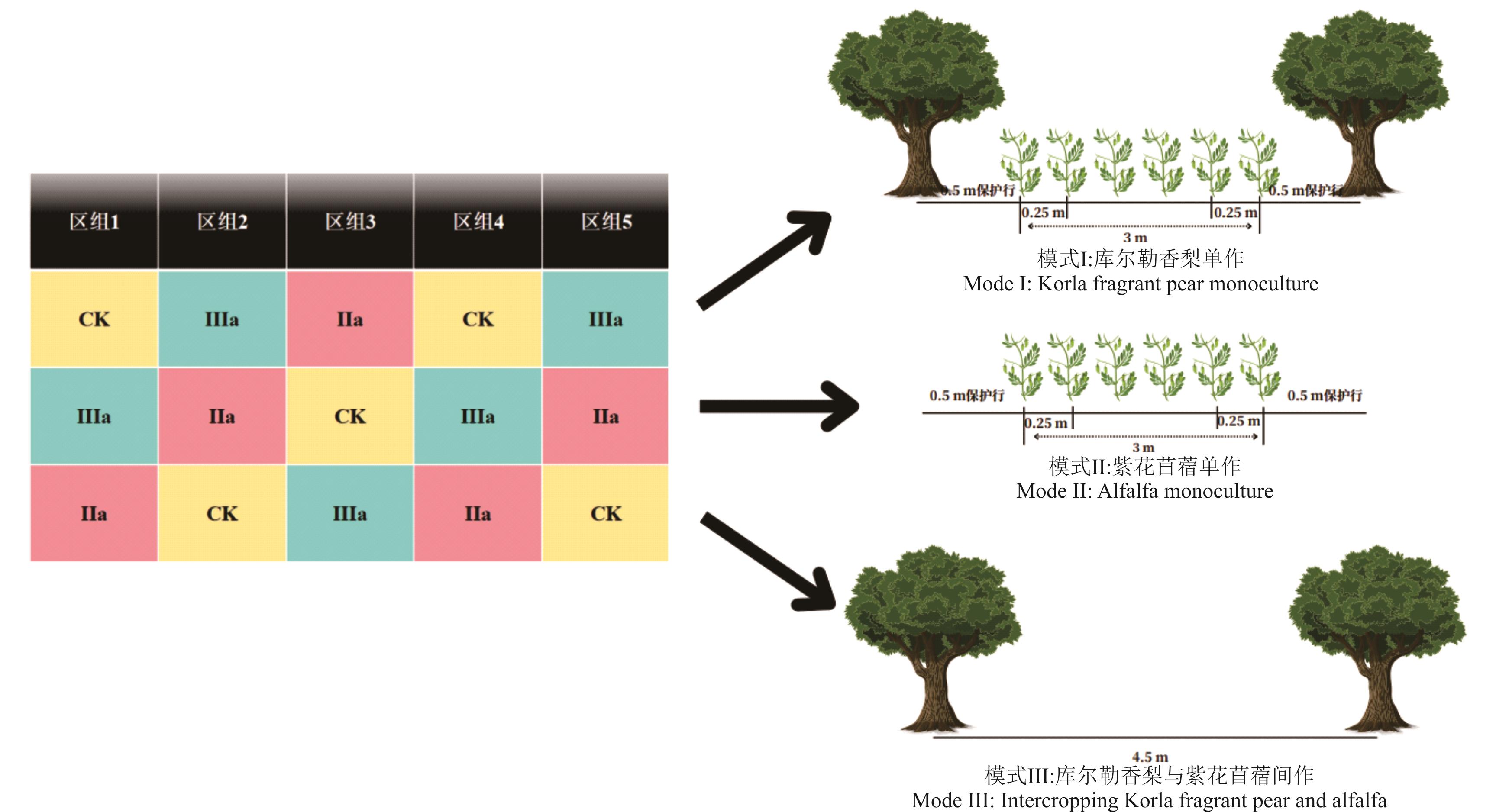
Fig.1 Field trial planting mode
间作模式 Intercropping mode | 氮素转移途径 Nitrogen transfer pathway | 播量 Sowing quantity |
|---|---|---|
| CK | - | 16棵 |
| IIa | - | 7.8×10⁻⁴ |
| IIIa | S | 16.0棵:7.8×10⁻⁴ |
| NS | ||
| J | ||
| PS |
Table 1 Nitrogen transfer pathway and seeding rate of forest-grass intercropping under different cropping patterns in each plot (g·m-2)
间作模式 Intercropping mode | 氮素转移途径 Nitrogen transfer pathway | 播量 Sowing quantity |
|---|---|---|
| CK | - | 16棵 |
| IIa | - | 7.8×10⁻⁴ |
| IIIa | S | 16.0棵:7.8×10⁻⁴ |
| NS | ||
| J | ||
| PS |
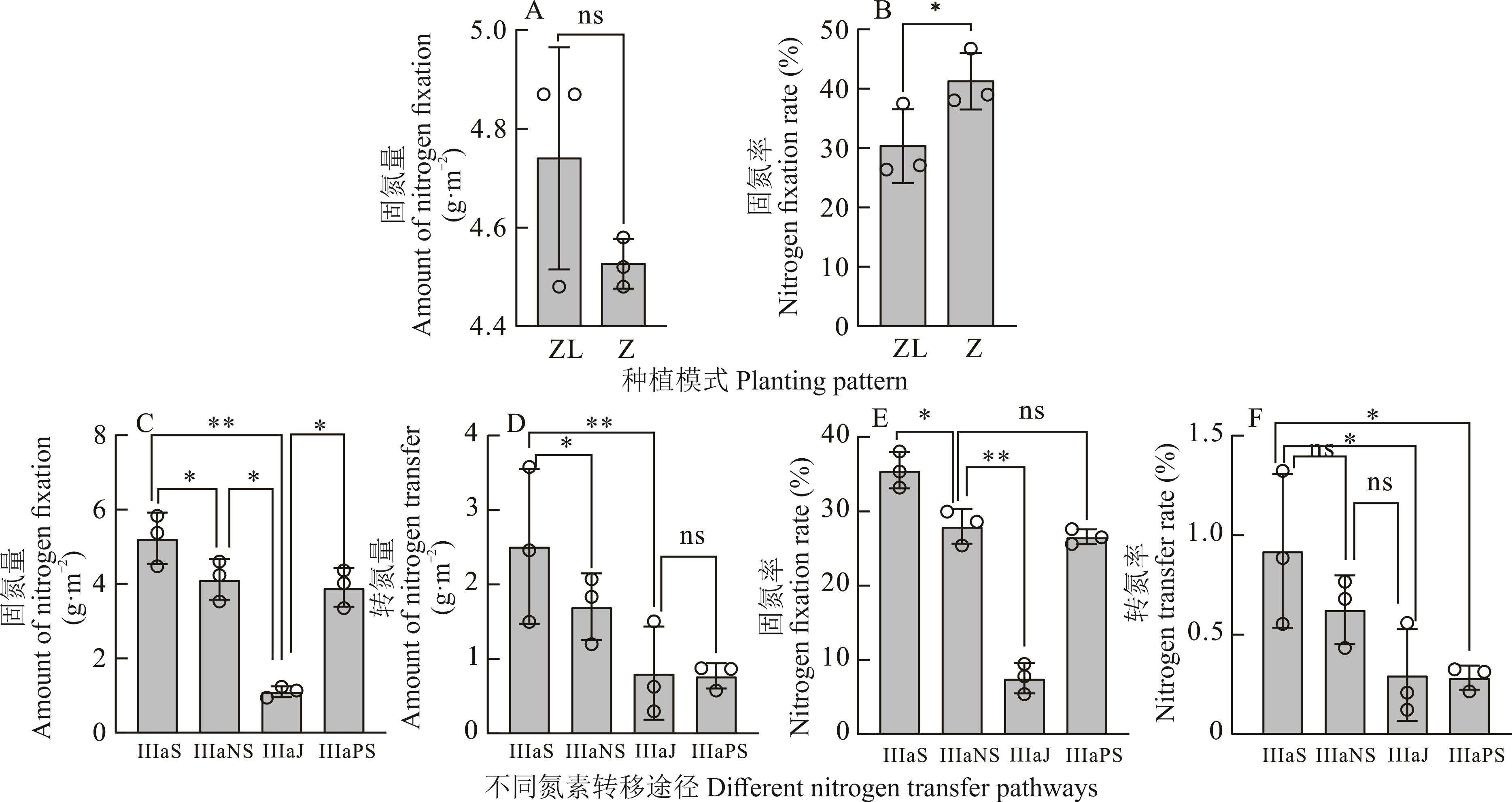
Fig.2 Comparison of nitrogen use efficiency between alfalfaand Korla pear intercropping under different nitrogen transfer pathways
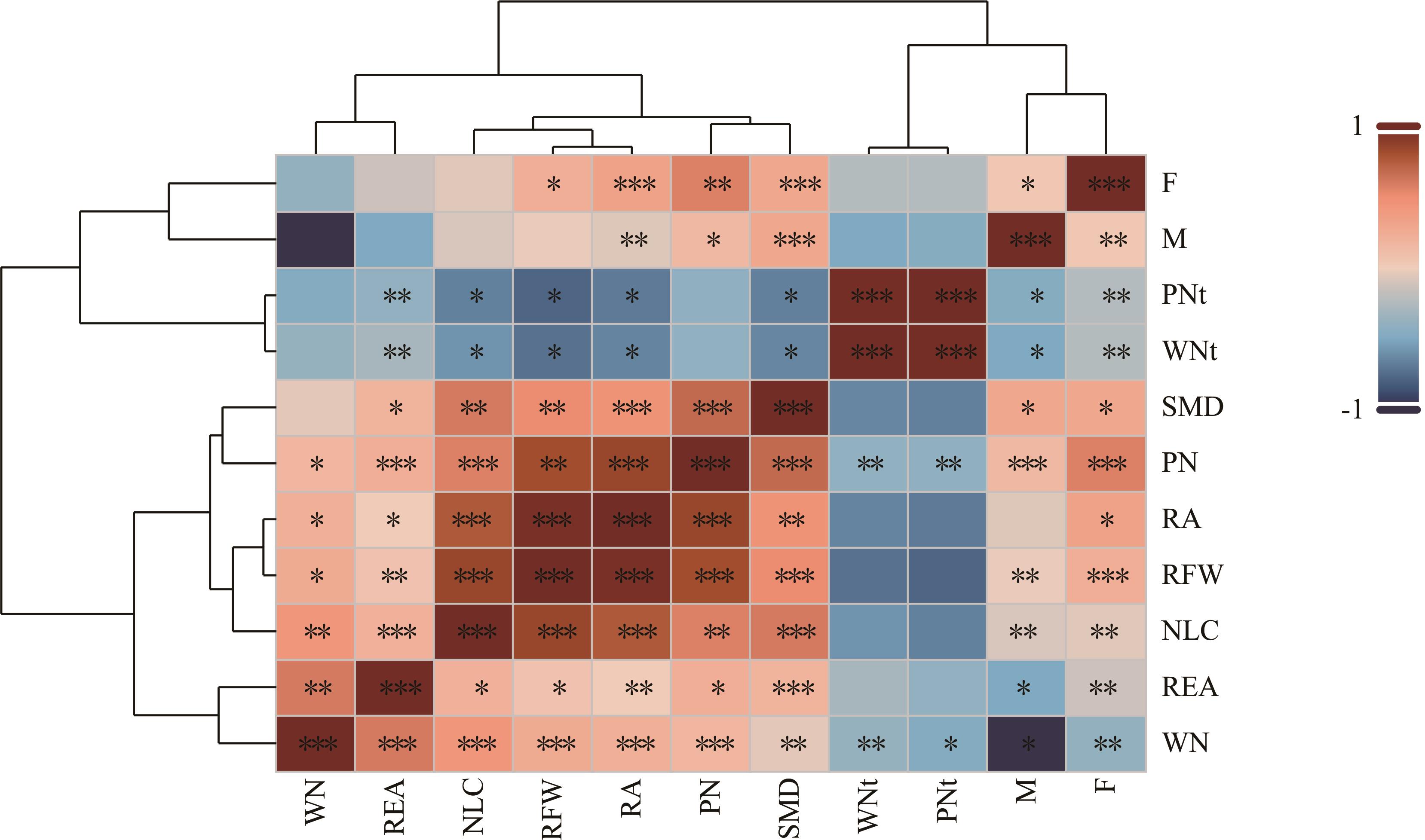
Fig.3 Correlation analysis of nitrogen transfer efficiency and influencing factors between alfalfaand Korla pear intercropping
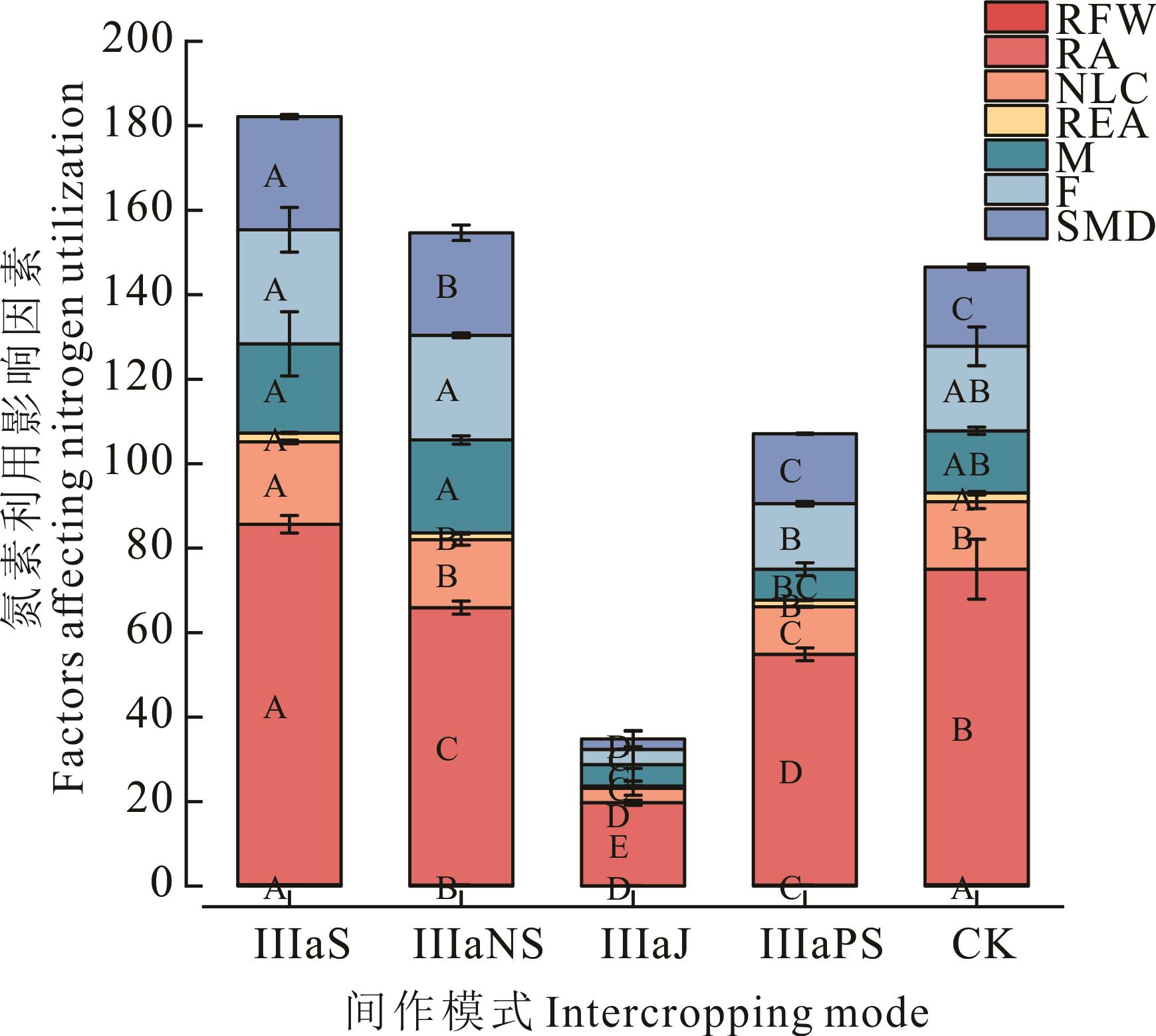
Fig.4 Comparisons of influencing factors between alfalfaand Korla pear intercropping under different nitrogen transfer pathways
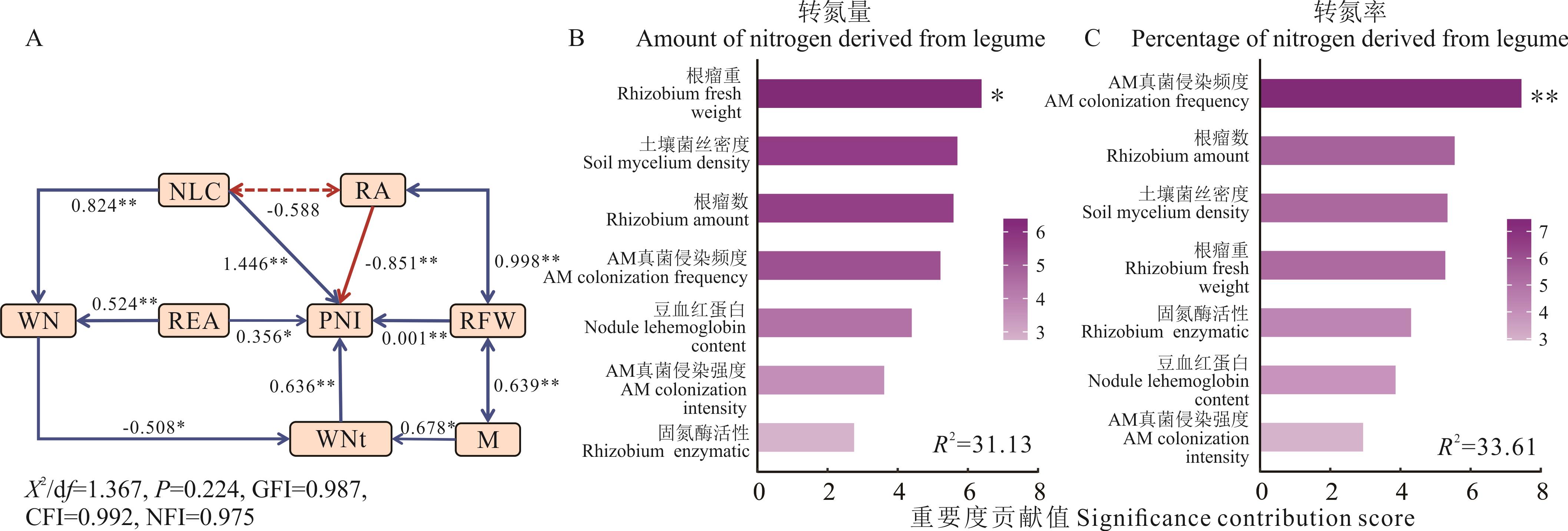
Fig.5 Structural equation model and random forest analysis model based on influencing factors for the importance of nitrogen transfer
| [1] | Li L. Research progress and application prospects of intercropping and relay cropping in strengthening the ecosystem services of farmland. Chinese Journal of Eco-Agriculture, 2016, 24(4): 403-415. |
| 李隆. 间套作强化农田生态系统服务功能的研究进展与应用展望. 中国生态农业学报, 2016, 24(4): 403-415. | |
| [2] | Yang H, Zhao Y J, Liu X J. Photosynthetic characteristics of alfalfa/oat intercropping and its regulatory effects on yield. Acta Agrestia Sinica, 2023, 31(1): 187-195. |
| 杨航, 赵雅姣, 刘晓静. 紫花苜蓿/燕麦间作的光合特征及其对产量的调控效应.草地学报, 2023, 31(1): 187-195. | |
| [3] | Tang L B, Wang J H, Wang L T, et al. Effects of maize-white clover intercropping on soil nutrients and crop production performance in Karst mountainous area. Chinese Journal of Grassland, 2022, 44(5): 31-39. |
| 唐柳办, 王家豪, 王雷挺, 等. 岩溶山区玉米白三叶间作对土壤养分及作物生产性能的影响. 中国草地学报, 2022, 44(5): 31-39. | |
| [4] | Wang Y. Research of intercropping benefit and nitrogen absorption mechanism of alfalfa//oat intercropping systems. Changchun: Northeast Normal University, 2019. |
| 王妍. 紫花苜蓿-燕麦间作效应及氮素吸收机理研究. 长春: 东北师范大学, 2019. | |
| [5] | Li Q, Huang Y X, Zhou D Y, et al. Influence of mycorrhizal fungi on growth and biological nitrogen fixation and phosphorus uptake in legume crops. Journal of Plant Ecology, 2021, 32(5): 1761-1767. |
| [6] | Zhang F S, Wang J Q, Zhang W F, et al. The current situation and ways to improve the fertilizer utilization efficiency of major grain crops in China. Journal of Soil Science, 2008, 45(5): 915-924. |
| 张福锁, 王激清, 张卫峰, 等. 中国主要粮食作物肥料利用率现状与提高途径. 土壤学报, 2008, 45(5): 915-924. | |
| [7] | Vandermeey J. The ecology of intercropping.New York: Cambridge University Press, 1989. |
| [8] | Li S S. Effect of mixed planting of Vicia sativa or fertilization on weight loss and efficiency enhancement of Avena sativa pastures. Urumqi: Xinjiang Agricultural University, 2021. |
| 黎松松. 混播箭筈豌豆或施肥对燕麦草地减肥增效的影响. 乌鲁木齐: 新疆农业大学, 2021. | |
| [9] | Zhang D S.Efficient capture and utilization of light energy in corn/peanut intercropping in wind sand semi arid areas. Beijing: China Agricultural University, 2018. |
| 张东升. 风沙半干旱区玉米/花生间作光能高效捕获和利用. 北京: 中国农业大学, 2018. | |
| [10] | Chen J, Arafat Y, Wu L, et al. Shifts in soil microbial community, soil enzymes and crop yield under peanut/maize intercropping with reduced nitrogen levels. Applied Soil Ecology, 2018, 124: 327-334. |
| [11] | Feng X M, Gao X, Zang H D, et al. The intercropping effect and nitrogen transfer characteristics between oats and mung beans. Acta Botanica Sinica, 2023, 58(1): 122-131. |
| 冯晓敏, 高翔, 臧华栋, 等. 燕麦-绿豆间作效应及氮素转移特性. 植物学报, 2023, 58(1): 122-131. | |
| [12] | Willey R W. Intercropping-its importance and research needs. Part 2. Agronomy and research approaches. Field Crop Abstracts, 1979, 32: 73-85. |
| [13] | Heap A J, Newman E I. Links between roots by hyphae of vesicular-arbuscular mycorrhizas. New Phytologist, 1980, 85(2): 169-171. |
| [14] | Zhao Y J, Liu X J, Tong C C, et al. Effect of alfalfa/maize intercropping on the nodulation and nitrogen fixation characteristics of alfalfa. Acta Prataculturae Sinica, 2020, 29(1): 95-105. |
| 赵雅姣, 刘晓静, 童长春, 等. 紫花苜蓿/玉米间作对紫花苜蓿结瘤固氮特性的影响. 草业学报, 2020, 29(1): 95-105. | |
| [15] | Wang Y F, Liu H Q, Zhao X N, et al. Effects of water and root separation on nitrogen uptake, utilization and transfer in a gramineae-legume intercropping system. Journal of Soil and Water Conservation, 2024, 38(4): 279-287. |
| 王一帆, 刘华清, 赵西宁, 等. 禾豆间作系统水分和根系分隔对牧草氮素吸收利用及转移的影响. 水土保持学报, 2024, 38(4): 279-287. | |
| [16] | Zhu Y Q, Li S S, Wang N X, et al. Effects of rhizobium-root system-arbuscular mycorrhizal fungi features on nitrogen fixation and transfer efficiency of mixed sowing meadow. Chinese Journal of Grassland, 2022, 44(11): 18-31. |
| 朱亚琼, 黎松松, 王宁欣, 等. 根瘤菌-根系构型-丛枝菌根真菌对混播草地氮素固定与转移效率的影响. 中国草地学报, 2022, 44(11): 18-31. | |
| [17] | Ren J, Liu X Y, Liu F, et al. Absorption, utilization and transfer efficiency of nitrogen in walnut-soybean intercropping pattern. Nonwood Forest Research, 2022, 40(1): 1-10. |
| 任静, 刘小勇, 刘芬, 等. 核桃/大豆间作对氮素吸收利用及转移的影响. 经济林研究, 2022, 40(1): 1-10. | |
| [18] | Fan F L, Zhang F S, Song Y N, et al. Nitrogen fixation of faba bean (Vicia faba L.) interacting with a non-legume in two contrasting intercropping systems. Plant & Soil, 2006, 283(1/2): 275-286. |
| [19] | Yoneyama T, Yamada N, Kojima H, et al. Variations of natural 15N abundances in leguminous plants and nodule fractions. Plant and Cell Physiology, 1984, 25(8): 1561-1565. |
| [20] | Fang L, Xu J, Yang C.Arbuscular mycorrhizal fungi alleviates salt-alkali stress demage on syneilesis aconitifolia. Phyton, (0031-9457), 2023, 92(12). |
| [21] | Jakobsen I, Abbott L K, Robson A D. External hyphae of vesicular-arbuscular mycorrhizal fungi associated with Trifolium subterraneum L: I. Spread of hyphae and phosphorus inflow into roots. New Phytologist, 1992, 120(3): 371-380. |
| [22] | Giovannett M, Mosse B. An evaluation of techniques for measuring vesicular arbuscular mycorrhizal infection in root. New Phytologist, 1980, 84: 489-500. |
| [23] | Lin B, Zheng X, Zheng S, et al. Metabolomics analysis of ammonia secretion during the fermentation of Klebsiella variicola GN02 with highly efficient endophytic nitrogen-fixing bacteria. Applied Biochemistry and Microbiology, 2020, 56(4): 400-411. |
| [24] | Lin B S, Fan J L, Song Z Z, et al. Endophytic diazotrophs composition of Pennisetum sp. at different growth stages. Microbiology China, 2018, 45(7): 1479-1490. |
| 林标声, 范锦琳, 宋昭昭, 等. 巨菌草不同生长时期的内生固氮菌群组成分析. 微生物学通报, 2018, 45(7): 1479-1490. | |
| [25] | Wang S Q, Han X Z, Qiao Y F, et al. Effects of low molecular organic acids on nitrogen accumulation,nodulation,and nitrogen fixation of soybean (Glycine max L.) under phosphorus deficiency stress. Chinese Journal of Applied Ecology, 2009, 20(5): 1079-1084. |
| 王树起, 韩晓增, 乔云发, 等. 缺磷条件下低分子量有机酸对大豆氮积累和结瘤固氮的影响. 应用生态学报, 2009, 20(5): 1079-1084. | |
| [26] | Zuo Y M, Liu Y X, Zhang F S. Effects of improvement of iron nutrition by mixed cropping with maize on nodule microstructure and leghaemoglobin content of peanut. Journal of Plant Physiology and Molecular Biology, 2003(1): 33-38. |
| 左元梅, 刘永秀, 张福锁. 与玉米混作改善花生铁营养对其根瘤形态结构及豆血红蛋白含量的影响. 植物生理与分子生物学学报, 2003(1): 33-38. | |
| [27] | Beijing Xinzhi Shudu Technology Limited Company. SPSSAU. (Version 28.0). [2024.10]. https://www.spssau.com/. |
| 北京心知数度科技有限公司. SPSSAU. (Version 28.0). [2024.10]. https://www.spssau.com/. | |
| [28] | Malézieux E, Crozat Y, Dupraz C, et al. Mixing plant species in cropping systems: concepts, tools and models. A review.Agronomy for Sustainable Development, 2009, 29(1): 329-353. |
| [29] | Vandermeer J, Van Noordwijk M, Anderson J, et al. Global chane and multi-species agroecosystems: concepts and issues. Agriculture, Ecosystems and Environment, 1998, 67: 1-22. |
| [30] | Li C, Hofand E, Kuyper T W, et al. Syndromes of production in intercropping impact yield gains. Nature Plants, 2020, 6(6): 653-660. |
| [31] | Yu Y, Stomph T J, Makowski D, et al. Temporal niche differentiation increases the land equivalent ratio of annual intercrops: a meta-analysis. Field Crops Research, 2015, 184: 133-144. |
| [32] | Li X F, Wang Z G, Bao X G, et al. Long-term increased grain yield and soil fertility from intercropping. Nature Sustainability, 2021, 4(11): 943-950. |
| [33] | Stomph T, Dordas C, Baranger A, et al. Designing intercrops for high yield, yield stability and effcient use of resources: are there principles. Advances in Agronomy, 2020, 160(1): 1-50. |
| [34] | Fan K K, Delgado-Baquerizo M, Guo X S, et al. Suppressed N fixation and diazotrophs after four decades of fertilization. Microbiome, 2019, 7(1): 143. |
| [35] | Chu G X, Shen Q R, Cao J L, et al. Biological nitrogen fixation and nitrogen export of groundnut intercropped with rice cultivated in aerobic soil and its effect on soil nitrogen fertility. Acta Pedologica Sinica, 2003(5): 717-723. |
| 褚贵新, 沈其荣, 曹金留, 等. 旱作水稻与花生间作系统中的氮素固定与转移及其对土壤肥力的影响. 土壤学报, 2003(5): 717-723. | |
| [36] | Li Y Y, Yu C B, Cheng X, et al. Intercropping alleviates the inhibitory effect of N fertilization on nodulation and symbiotic N2 fixation of faba bean. Plant and Soil, 2009, 323(1): 295-308. |
| [37] | Corre-Hellou G, Fustec J, Crozat Y. Interspecific competition for soil N and its interaction with N2 fixation, leaf expansion and crop growth in pea-barley intercrops. Plant and Soil, 2006, 282(1/2): 195-208. |
| [38] | Bedoussac L, Justes E. Dynamic analysis of competition and complementarity for light and N use to understand the yield and the protein content of a durum wheat-winter pea intercrop. Plant and Soil, 2010, 330(1/2): 37-54. |
| [39] | Hauggaard-Nielsen H, Ambus P, Jensen E S. The comparison of nitrogen use and leaching in sole cropped versus intercropped pea and barley. Nutrient Cycling in Agroecosystems, 2003, 65(3): 289-300. |
| [40] | Ding T T, Duan T Y. Research progress on the influence of orchard green manure on fruit tree soil microbial system. Journal of Fruit Science, 2021, 38(12): 2196-2208. |
| 丁婷婷, 段廷玉. 果园绿肥对果树-土壤-微生物系统影响研究进展. 果树学报, 2021, 38(12): 2196-2208. | |
| [41] | Jiang S, Jardinaud M F, Gao J, et al. NIN-like protein transcription factors regulate leghemoglobin genes in legume nodules. Science, 2021, 374(6567): 625-628. |
| [42] | Zang H D, Yang X C, Feng X M, et al. Rhizodeposition of nitrogen and carbon by mungbean (Vigna radiata L.) and its contribution to intercropped oats (Avena nuda L.). PLoS One, 2017, 10(3): e0121132. |
| [43] | Dong Z X, Sun B, Yin S X, et al. Impacts of climate and cropping on community diversity of diazotrophs in pachic udic argiboroll and fluventic ustochrept. Acta Pedologica Sinica, 2012, 49(1): 130-138. |
| 董志新, 孙波, 殷士学, 等.气候条件和作物对黑土和潮土固氮微生物群落多样性的影响. 土壤学报, 2012, 49(1): 130-138. |
| [1] | Da-liang ZHOU, Wei SHI, Zi-wei JIANG, Zheng-ye WEI, Huan-huan LIANG, Qian-min JIA. Effects of planting density and nitrogen application on leaf enzyme activity and water-nitrogen utilization of silage maize under ridge furrow rainwater harvesting in Loess Plateau [J]. Acta Prataculturae Sinica, 2022, 31(8): 126-143. |
| [2] | Wei-ling NIU, Hui CHEN, Hui-xin HOU, Chen-rui GUO, Jiao-lin MA, Jian-shuang WU. Ten-year livestock exclusion did not affect water and nitrogen use efficiency of alpine desert-steppe plants in Northwest Tibet [J]. Acta Prataculturae Sinica, 2022, 31(8): 35-48. |
| [3] | Zi-wei JIANG, Gui-yu LIU, Hao-yun AN, Wei SHI, Sheng-hua CHANG, Cheng ZHANG, Qian-min JIA, Fu-jiang HOU. Effects of planting density and nitrogen application on forage yield, quality and nitrogen use efficiency in a maize/forage soybean intercropping system [J]. Acta Prataculturae Sinica, 2022, 31(7): 157-171. |
| [4] | Bo-kun ZOU, Xin-ming WANG, Zhang-shan CHU, Xin-hui HUANG, Yu-feng CHEN, Yong-qiang QIAN. Effects of nitrogen forms on growth and nitrogen assimilation and utilization of Buchloe dactyloides [J]. Acta Prataculturae Sinica, 2022, 31(11): 118-127. |
| [5] | Jia-meng GUO, Ling-zhi HE, Dong-liang YAN, Zhuo LI, Yong-chao WANG, Rui-xin SHAO, Qing-hua YANG. Effects of controlled release nitrogen and urea ratio on nitrogen accumulation, transfer, and nitrogen-use efficiency of different summer maize varieties [J]. Acta Prataculturae Sinica, 2021, 30(1): 81-95. |
| [6] | ZHU Ya-qiong, YU Hui, ZHENG Wei, LI Song-song, Naerkezi, LIU Yue-han, HAO Shuai, Ailifeire. Effects of different planting configurations on yield of Avena sativa and Vicia sativa mixed plantings with soybean in alpine pastures [J]. Acta Prataculturae Sinica, 2020, 29(1): 74-85. |
| [7] | HU Wei, ZHANG Ya-hong, LI Peng, WANG Xiao-ju, ZHANG Peng, HE Yi, KANG Xin-yun. Effects of water and nitrogen supply under drip irrigation on the production performance rate and water and nitrogen use efficiency of alfalfa [J]. Acta Prataculturae Sinica, 2019, 28(2): 41-50. |
| [8] | ZHU Ya-qiong, GUAN Zheng-xuan, ZHENG Wei, WANG Xiang. Effects of species diversity and community structure on nitrogen use efficiency of mixed legume+grass pastures [J]. Acta Prataculturae Sinica, 2018, 27(10): 1-14. |
| [9] | WANG Qian, JI Shu-Ren, SHEN Yi-Xin. Interactive effects of soil moisture and nitrogen application rate on seedling growth of alfalfa [J]. Acta Prataculturae Sinica, 2017, 26(12): 48-55. |
| [10] | CHEN Ji-Kang, TAN Long-Tao, YU Chun-Ming, ZHU Ai-Guo, CHEN Ping, WANG Yan-Zhou, ZHU Tao-Tao, XIONG He-Ping. Effects of different nitrogen levels on key enzyme activities associated with nitrogen metabolism of feed ramie [J]. Acta Prataculturae Sinica, 2017, 26(10): 207-218. |
| Viewed | ||||||
|
Full text |
|
|||||
|
Abstract |
|
|||||
