
ISSN 1004-5759 CN 62-1105/S
Acta Prataculturae Sinica ›› 2025, Vol. 34 ›› Issue (12): 85-96.DOI: 10.11686/cyxb2025033
Previous Articles Next Articles
Ya-ting XIAO1,2( ), Yu-zhe TANG1,2, Lu WANG1,2, Yu-fei BAI1,2, Hai-bo YANG1,2, Fei LI1,2()
Received:2025-02-02
Revised:2025-03-10
Online:2025-12-20
Published:2025-10-20
Contact:
Fei LI
Ya-ting XIAO, Yu-zhe TANG, Lu WANG, Yu-fei BAI, Hai-bo YANG, Fei LI. Use of spectral index-assisted machine learning to improve the accuracy of maize leaf water content estimation[J]. Acta Prataculturae Sinica, 2025, 34(12): 85-96.
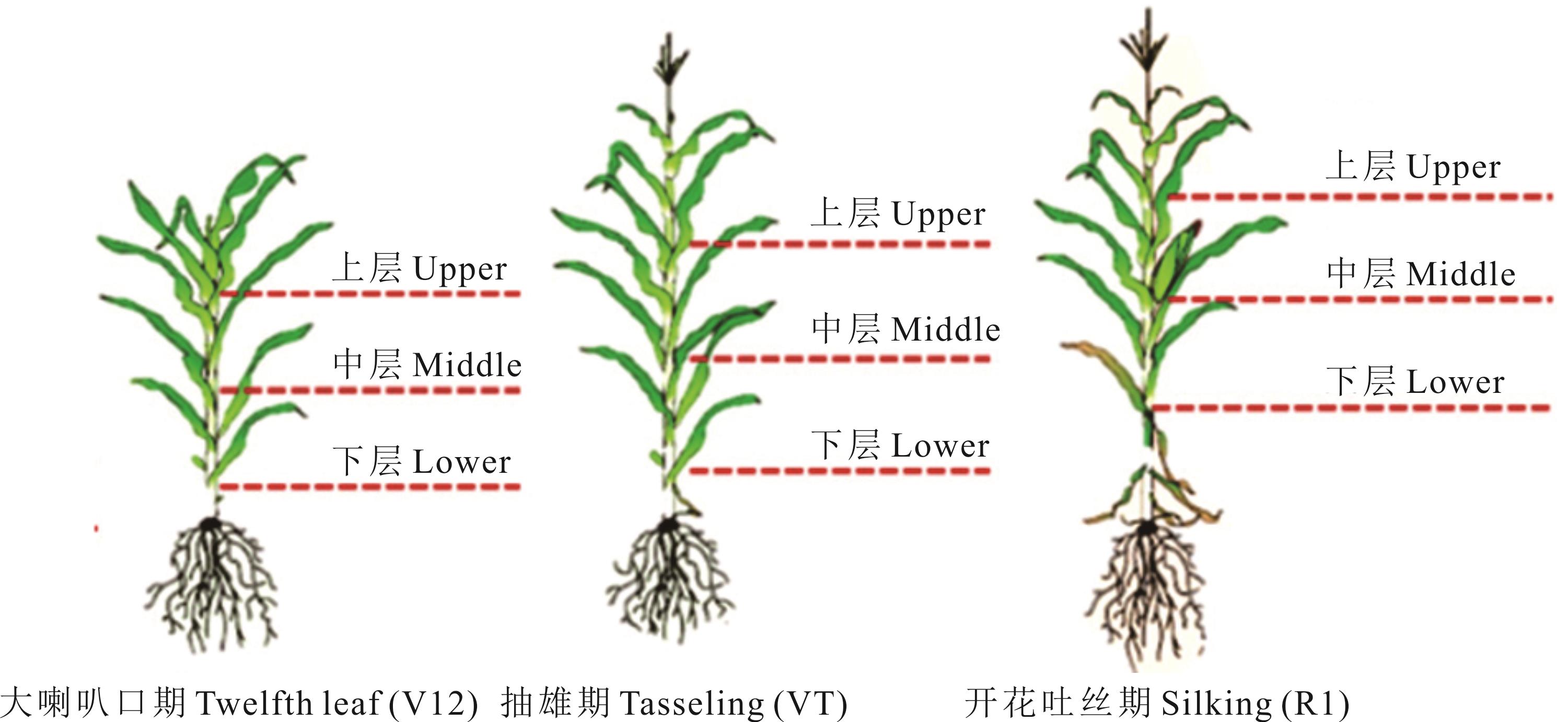
Fig.1 The vertical division of the spring maize leaf at the V12, VT, and R1 growth stage
光谱指数 Spectral index | 公式 Formula | 文献 References |
|---|---|---|
| 归一化差异水分指数Normalized difference water index (NDWI) | (R860-R1240)/(R860+R1240) | [ |
| 水分指数Water index (WI) | R900/R970 | [ |
| 水分胁迫指数Moisture stress index (MSI) | R1600/R820 | [ |
| 简单比值水分指数Simple ratio water index (SRWI) | R860/R1240 | [ |
| 植被水分指数Plant water index (PWI) | R970/R900 | [ |
| 生理反射指数Physiological reflectance index (PRI) | (R531-R570)/(R531+R570) | [ |
| 改良的DATT指数Modified DATT (MDATT) | (R1740-R2370)/(R1740-R1750) | [ |
| 水带指数Water band index (WBI) | R950/R900 | [ |
| 叶水指数Leaf water index (LWI) | R1300/R1450 | [ |
| 归一化差异水分胁迫指数Normalized different water stress index (NDWSI) | (R850-R970)/(R850+R970) | [ |
| 归一化多波段干旱指数Normalized multi-band drought index (NMDI) | R860-(R1640-R2130)/R860+(R1640-R2130) | [ |
| 全球植被水分指数Global vegetation moisture index (GVMI) | (R820+0.1) -(R1600+0.02)/(R820+0.1) +(R1600+0.02) | [ |
| 水分胁迫指数的倒数Reciprocal of moisture stress index (RMSI) | R860/R1650 | [ |
Table 1 Spectral indices used in this study
光谱指数 Spectral index | 公式 Formula | 文献 References |
|---|---|---|
| 归一化差异水分指数Normalized difference water index (NDWI) | (R860-R1240)/(R860+R1240) | [ |
| 水分指数Water index (WI) | R900/R970 | [ |
| 水分胁迫指数Moisture stress index (MSI) | R1600/R820 | [ |
| 简单比值水分指数Simple ratio water index (SRWI) | R860/R1240 | [ |
| 植被水分指数Plant water index (PWI) | R970/R900 | [ |
| 生理反射指数Physiological reflectance index (PRI) | (R531-R570)/(R531+R570) | [ |
| 改良的DATT指数Modified DATT (MDATT) | (R1740-R2370)/(R1740-R1750) | [ |
| 水带指数Water band index (WBI) | R950/R900 | [ |
| 叶水指数Leaf water index (LWI) | R1300/R1450 | [ |
| 归一化差异水分胁迫指数Normalized different water stress index (NDWSI) | (R850-R970)/(R850+R970) | [ |
| 归一化多波段干旱指数Normalized multi-band drought index (NMDI) | R860-(R1640-R2130)/R860+(R1640-R2130) | [ |
| 全球植被水分指数Global vegetation moisture index (GVMI) | (R820+0.1) -(R1600+0.02)/(R820+0.1) +(R1600+0.02) | [ |
| 水分胁迫指数的倒数Reciprocal of moisture stress index (RMSI) | R860/R1650 | [ |
生育时期及层位 Growth stage and canopy layer | 最大值 Maximum | 最小值 Minimum | 平均值 Mean | 标准差 Standard deviation | 变异系数 Coefficient of variation |
|---|---|---|---|---|---|
| 大喇叭口期Twelfth leaf (V12) | 84.50 | 70.50 | 77.72 | 3.68 | 5.64 |
| 抽雄期Tasseling (VT) | 89.94 | 80.91 | 85.07 | 2.10 | 2.58 |
| 开花吐丝期Silking (R1) | 83.66 | 61.45 | 73.24 | 7.05 | 10.21 |
| 上层叶片Upper layer | 89.71 | 61.45 | 74.58 | 8.70 | 12.15 |
| 中层叶片Middle layer | 86.63 | 71.62 | 78.47 | 4.19 | 5.17 |
| 下层叶片Lower layer | 89.94 | 74.52 | 82.99 | 3.27 | 4.62 |
| 全生育时期All | 89.94 | 61.45 | 78.66 | 6.84 | 9.53 |
Table 2 Descriptive statistics of maize leaf water content at different growth stages and canopy layers (%)
生育时期及层位 Growth stage and canopy layer | 最大值 Maximum | 最小值 Minimum | 平均值 Mean | 标准差 Standard deviation | 变异系数 Coefficient of variation |
|---|---|---|---|---|---|
| 大喇叭口期Twelfth leaf (V12) | 84.50 | 70.50 | 77.72 | 3.68 | 5.64 |
| 抽雄期Tasseling (VT) | 89.94 | 80.91 | 85.07 | 2.10 | 2.58 |
| 开花吐丝期Silking (R1) | 83.66 | 61.45 | 73.24 | 7.05 | 10.21 |
| 上层叶片Upper layer | 89.71 | 61.45 | 74.58 | 8.70 | 12.15 |
| 中层叶片Middle layer | 86.63 | 71.62 | 78.47 | 4.19 | 5.17 |
| 下层叶片Lower layer | 89.94 | 74.52 | 82.99 | 3.27 | 4.62 |
| 全生育时期All | 89.94 | 61.45 | 78.66 | 6.84 | 9.53 |
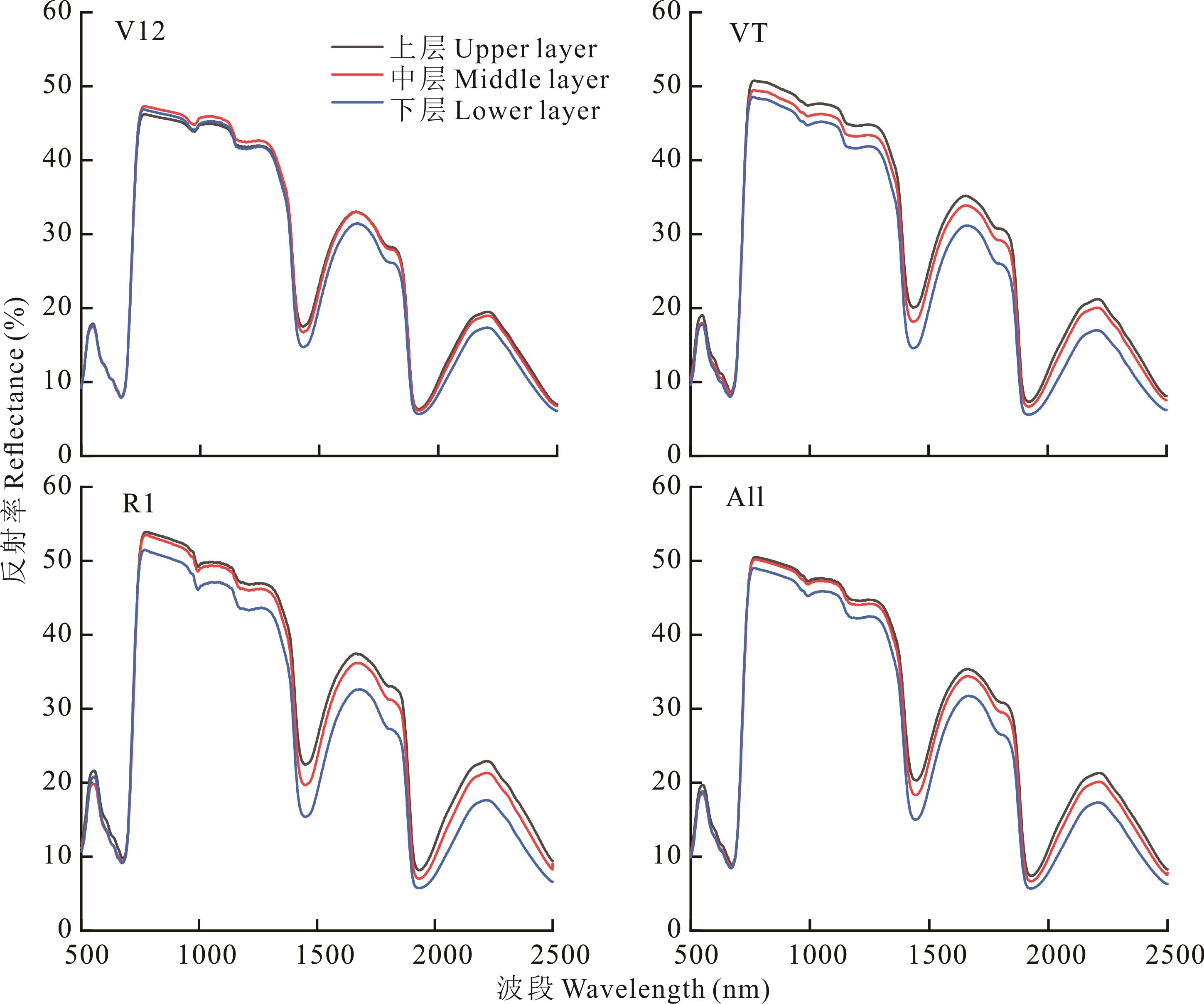
Fig.2 Hyperspectral reflectance of leaves at different growth stages and layers
| 光谱指数Spectral index | 大喇叭口期V12 | 抽雄期VT | 开花吐丝期R1 | 上层Upper | 中层Middle | 下层Lower | 全生育时期All |
|---|---|---|---|---|---|---|---|
| 水分指数WI | 0.57 | 0.22 | 0.65 | 0.17 | 0.08 | 0.12 | 0.36 |
| 归一化差异水分指数NDWI | 0.23 | 0.07 | 0.42 | 0.28 | 0.28 | 0.22 | 0.19 |
| 水分胁迫指数MSI | 0.15 | 0.03 | 0.75 | 0.07 | 0.13 | 0.07 | 0.06 |
| 简单比值水分指数SRWI | 0.57 | 0.22 | 0.65 | 0.17 | 0.08 | 0.12 | 0.36 |
| 植被水分指数PWI | 0.06 | 0.08 | 0.75 | 0.01 | 0.05 | 0.01 | 0.22 |
| 生理反射指数PRI | 0.06 | 0.05 | 0.15 | 0.67 | 0.51 | 0.38 | 0.29 |
| 改良的DATT指数MDATT | 0.64 | 0.18 | 0.76 | 0.38 | 0.20 | 0.32 | 0.52 |
| 水分胁迫指数的倒数RMSI | 0.58 | 0.06 | 0.72 | 0.02 | 0.02 | 0.01 | 0.18 |
| 水带指数WBI | 0.24 | 0.21 | 0.54 | 0.43 | 0.39 | 0.41 | 0.51 |
| 叶水指数LWI | 0.63 | 0.11 | 0.79 | 0.09 | 0.01 | 0.05 | 0.36 |
| 归一化差异水分胁迫指数NDWSI | 0.12 | 0.09 | 0.55 | 0.20 | 0.20 | 0.21 | 0.37 |
| 归一化多波段干旱指数NMDI | 0.11 | 0.04 | 0.60 | 0.01 | 0.02 | 0.01 | 0.13 |
| 全球植被水分指数GVMI | 0.60 | 0.06 | 0.75 | 0.04 | 0.04 | 0.01 | 0.15 |
Table 3 Coefficients of determination between leaf water content and spectral index at key growth stages and different canopy layers
| 光谱指数Spectral index | 大喇叭口期V12 | 抽雄期VT | 开花吐丝期R1 | 上层Upper | 中层Middle | 下层Lower | 全生育时期All |
|---|---|---|---|---|---|---|---|
| 水分指数WI | 0.57 | 0.22 | 0.65 | 0.17 | 0.08 | 0.12 | 0.36 |
| 归一化差异水分指数NDWI | 0.23 | 0.07 | 0.42 | 0.28 | 0.28 | 0.22 | 0.19 |
| 水分胁迫指数MSI | 0.15 | 0.03 | 0.75 | 0.07 | 0.13 | 0.07 | 0.06 |
| 简单比值水分指数SRWI | 0.57 | 0.22 | 0.65 | 0.17 | 0.08 | 0.12 | 0.36 |
| 植被水分指数PWI | 0.06 | 0.08 | 0.75 | 0.01 | 0.05 | 0.01 | 0.22 |
| 生理反射指数PRI | 0.06 | 0.05 | 0.15 | 0.67 | 0.51 | 0.38 | 0.29 |
| 改良的DATT指数MDATT | 0.64 | 0.18 | 0.76 | 0.38 | 0.20 | 0.32 | 0.52 |
| 水分胁迫指数的倒数RMSI | 0.58 | 0.06 | 0.72 | 0.02 | 0.02 | 0.01 | 0.18 |
| 水带指数WBI | 0.24 | 0.21 | 0.54 | 0.43 | 0.39 | 0.41 | 0.51 |
| 叶水指数LWI | 0.63 | 0.11 | 0.79 | 0.09 | 0.01 | 0.05 | 0.36 |
| 归一化差异水分胁迫指数NDWSI | 0.12 | 0.09 | 0.55 | 0.20 | 0.20 | 0.21 | 0.37 |
| 归一化多波段干旱指数NMDI | 0.11 | 0.04 | 0.60 | 0.01 | 0.02 | 0.01 | 0.13 |
| 全球植被水分指数GVMI | 0.60 | 0.06 | 0.75 | 0.04 | 0.04 | 0.01 | 0.15 |
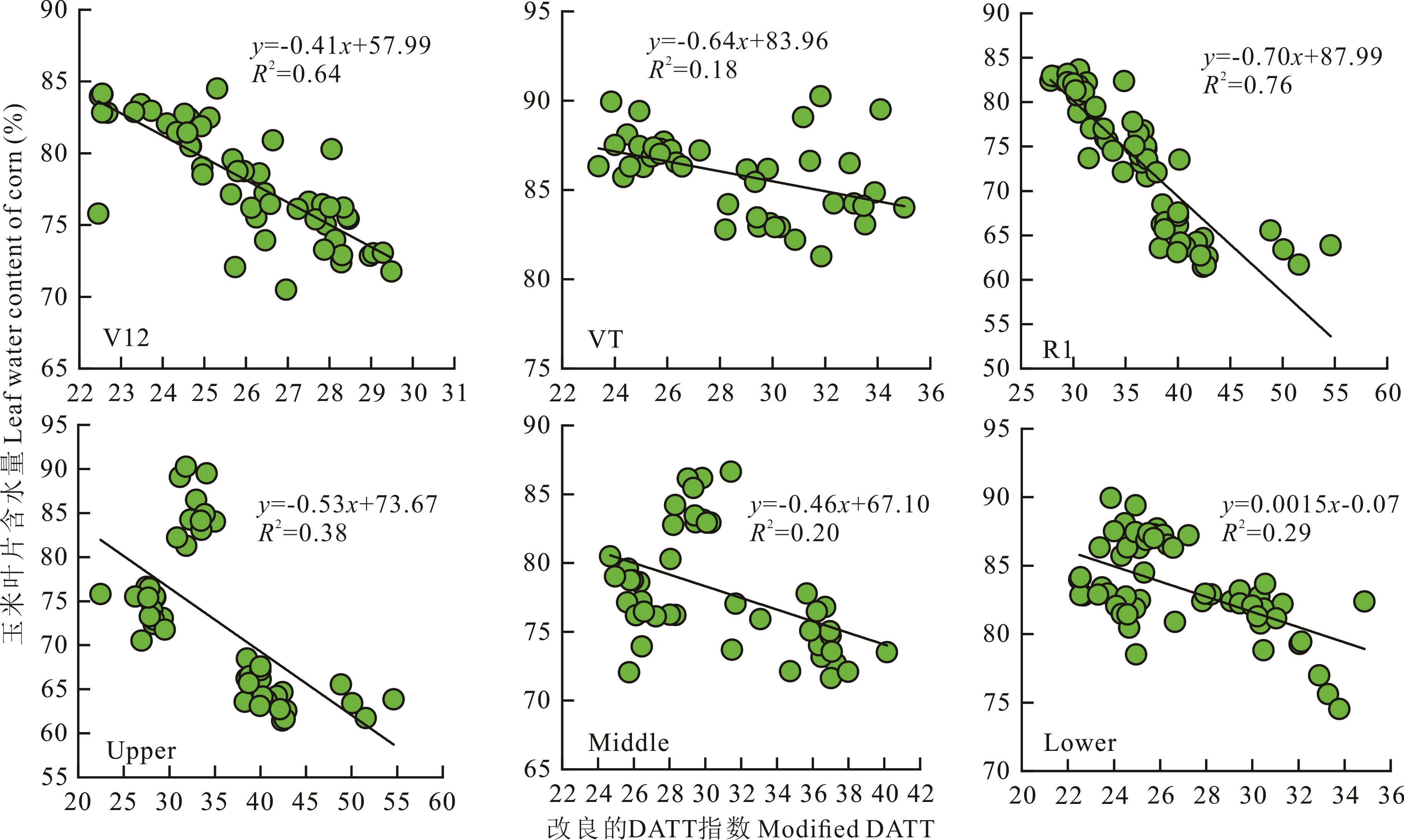
Fig.3 Linear correlation between modified DATT index and maize leaf water content at different growth stages and layers
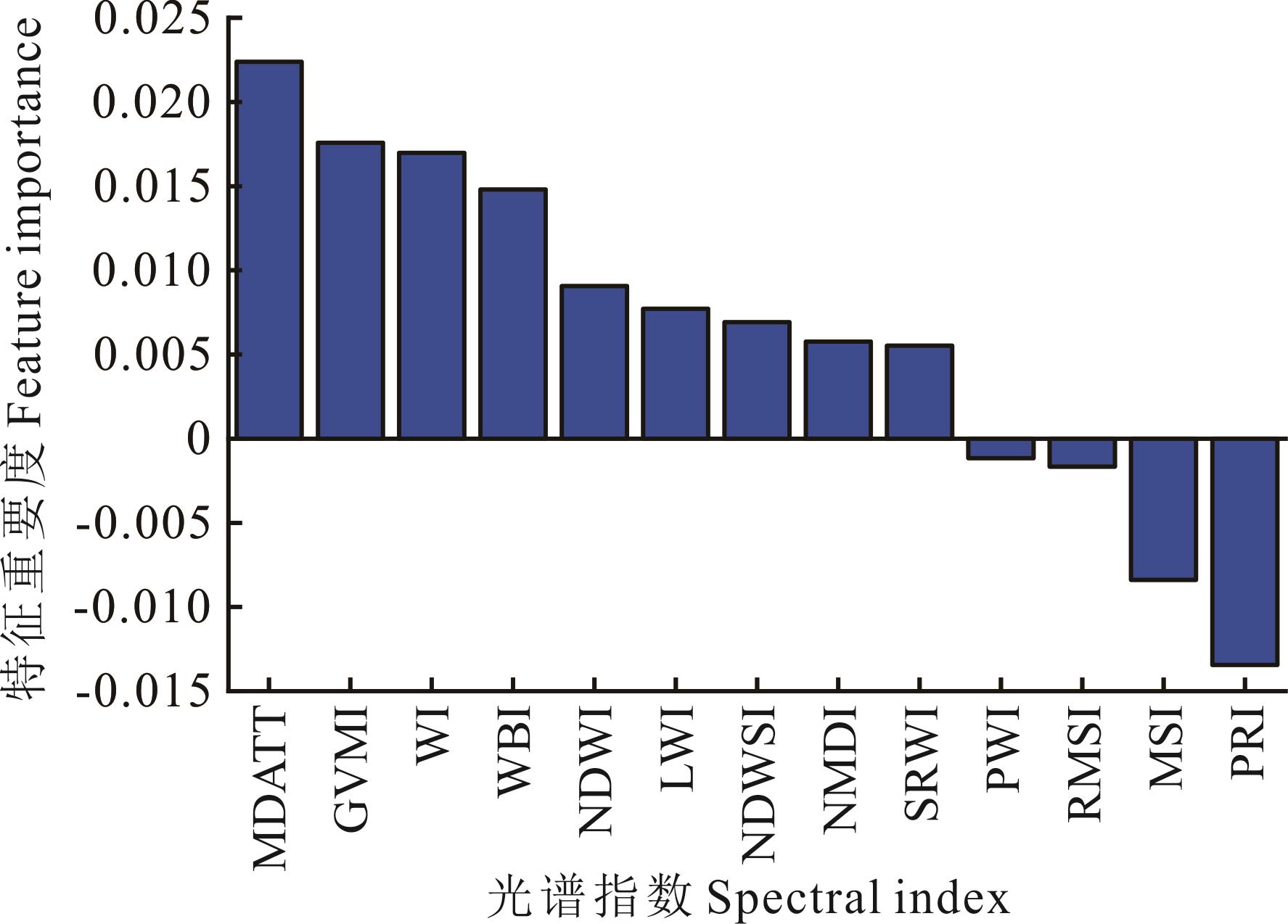
Fig.4 Sorting based on ReliefF feature importance
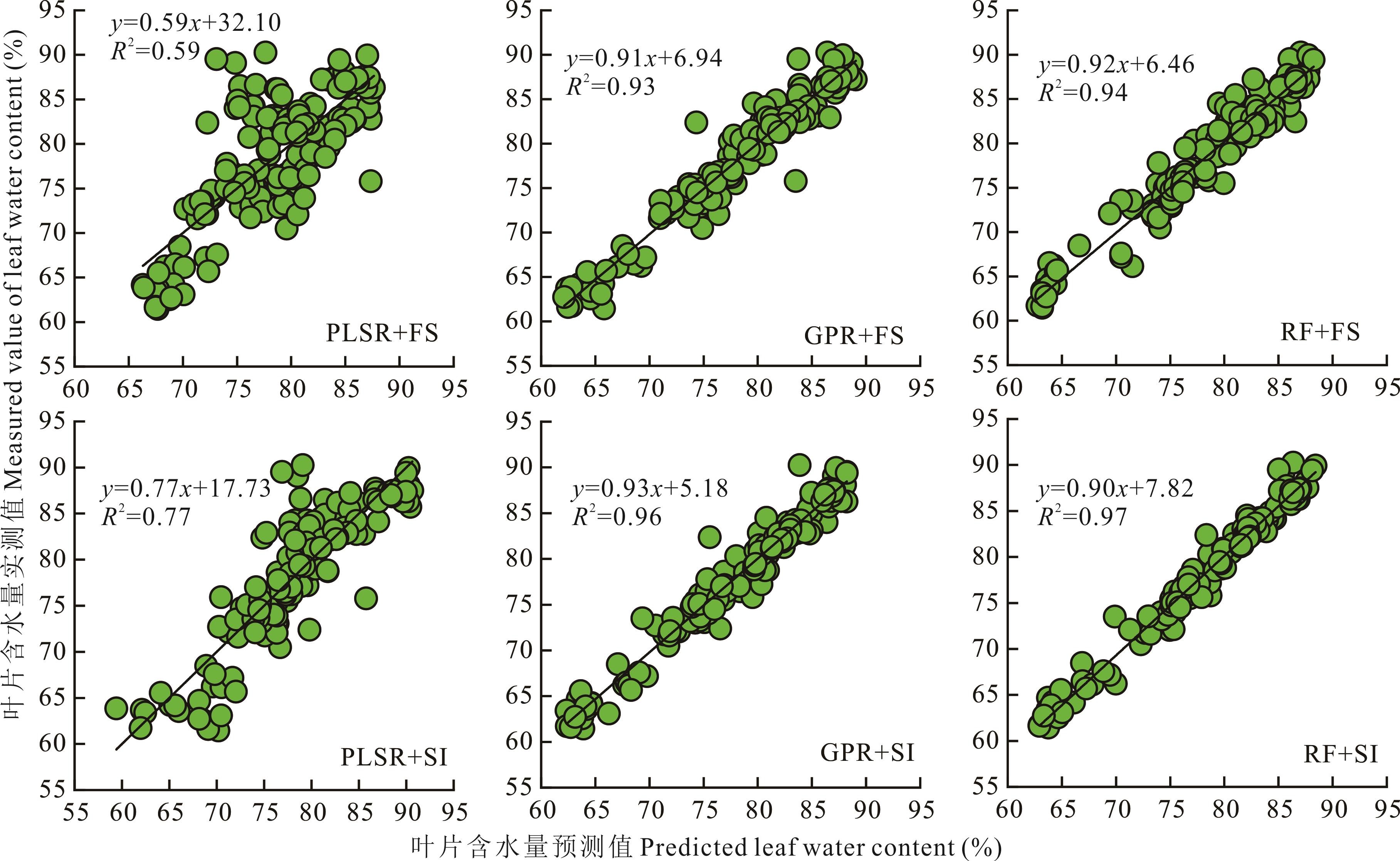
Fig.5 Construction of maize leaf moisture estimation model based on full-spectrum dataset and spectral index

Fig.6 Validation of the maize leaf moisture estimation model based on full-spectrum dataset and spectral index
| [1] | Ferraretto L F, Shaver R D, Luck B D. Silage review: Recent advances and future technologies for whole-plant and fractionated corn silage harvesting. Journal of Dairy Science, 2018, 101(5): 3937-3951. |
| [2] | Rouse Jr J W, Haas R H, Deering D W, et al. Monitoring the vernal advancement and retrogradation. TX, USA: Texas A & M University: College Station, 1974. |
| [3] | Inoue Y, Morinaga S, Shibayama M. Non-destructive estimation of water status of intact crop leaves based on spectral reflectance measurements. Japanese Journal of Crop Science, 1993, 62(3): 462-469. |
| [4] | Zhao S H, Wang Q, Yao Y J, et al. Estimating and validating wheat leaf water content with three MODIS spectral indexes: A case study in Ningxia Plain, China. Journal of Agricultural Science and Technology, 2016, 18(2): 387-398. |
| [5] | Rapaport T, Hochberg U, Cochavi A, et al. The potential of the spectral ‘water balance index’(WABI) for crop irrigation scheduling. New Phytologist, 2017, 216(3): 741-757. |
| [6] | Kunz K, Hu Y, Schmidhalter U. Carbon isotope discrimination as a key physiological trait to phenotype drought/heat resistance of future climate-resilient German winter wheat compared with relative leaf water content and canopy temperature. Frontiers in Plant Science, 2022, 13: 1043458. |
| [7] | Zhang J, Zhang W, Xiong S, et al. Comparison of new hyperspectral index and machine learning models for prediction of winter wheat leaf water content. Plant Methods, 2021, 17(1): 1-14. |
| [8] | Ndlovu H S, Odindi J, Sibanda M, et al. A comparative estimation of maize leaf water content using machine learning techniques and unmanned aerial vehicle (UAV)-based proximal and remotely sensed data. Remote Sensing, 2021, 13(20): 4091. |
| [9] | Guo F, Feng Q, Yang S, et al. Estimation of potato canopy leaf water content in various growth stages using UAV hyperspectral remote sensing and machine learning. Frontiers in Plant Science, 2024, 15: 1458589. |
| [10] | Yang C, Tan Y, Bruzzone L, et al. Discriminative feature metric learning in the affinity propagation model for band selection in hyperspectral images. Remote Sensing, 2017, 9(8): 782. |
| [11] | Gao B C. Normalized difference water index for remote sensing of vegetation liquid water from space.//Proceedings of the Imaging spectrometry Conference. SPIE, 1995, 2480: 225-236. |
| [12] | Peeñuuelas J, Pinol J, Ogaya R, et al. Estimation of plant water concentration by the reflectance water index WI (R900/R970). International Journal of Remote Sensing, 1997, 18(13): 2869-2875. |
| [13] | Helskanen J. Estimating aboveground tree biomass and leaf area index in a mountain birch forest using ASTER satellite data. International Journal of Remote Sensing, 2006, 27(6): 1135-1158. |
| [14] | Zarco-Tejada P J, Rueda C, Ustin S. Water content estimation in vegetation with MODIS reflectance data and model inversion method. Remote Sensing of Environment, 2003, 85(1): 109-124. |
| [15] | Apan A, Held A, Phinn S, et al. Formulation and assessment of narrow-band vegetation indices from EO-1 Hyperion imagery for discriminating sugarcane disease.// Proceedings of the Spatial Sciences Institute Biennial Conference (SSC 2003): Spatial Knowledge Without Boundaries, Canberra, Australia: Spatial Sciences Institute, 2003. |
| [16] | Gamon J, Penuelas J, Field C. A narrow-waveband spectral index that tracks diurnal changes in photosynthetic efficiency. Remote Sensing of Environment, 1992, 41(1): 35-44. |
| [17] | Wang Z, Sun Z, Lu S. Optimal vegetation index for assessing leaf water potential using reflectance factors from the adaxial and abaxial surfaces. Computers and Electronics in Agriculture, 2020, 172: 105337. |
| [18] | Peñuelas J, Filella I, Biel C, et al. The reflectance at the 950-970 nm region as an indicator of plant water status. International Journal of Remote Sensing, 1993, 14(10): 1887-1905. |
| [19] | Seelig H D, Hoehn A, Stodieck L S, et al. Plant water parameters and the remote sensing R1300/R1450 leaf water index: Controlled condition dynamics during the development of water deficit stress. Irrigation Science, 2009, 27(5): 357-365. |
| [20] | Hunt Jr E R, Daughtry C S T, Qu J J, et al. Comparison of hyperspectral retrievals with vegetation water indices for leaf and canopy water content.//Proceedings of the Remote Sensing and Modeling of Ecosystems for Sustainability Ⅷ. SPIE, 2011, 8156: 66-76. |
| [21] | Wang L, Qu J J. NMDI: A normalized multi-band drought index for monitoring soil and vegetation moisture with satellite remote sensing. Geophysical Research Letters, 2007, 34(20): 20405. |
| [22] | Ceccato P, Flasse S, Gregoire J M. Designing a spectral index to estimate vegetation water content from remote sensing data: Part 2. Validation and applications. Remote Sensing of Environment, 2002, 82(2/3): 198-207. |
| [23] | Hunt Jr E R, Rock B N. Detection of changes in leaf water content using near-and middle-infrared reflectances. Remote Sensing of Environment, 1989, 30(1): 43-54. |
| [24] | Zhang B S, Li Y Y, Chai Z. A novel random multi-subspace based ReliefF for feature selection. Knowledge-Based Systems, 2022, 252: 109400. |
| [25] | Cheng B, Wu X. A modified PLSR method in prediction. Journal of Data Science, 2006, 4(3): 257-274. |
| [26] | Belgiu M, Drăguţ L. Random forest in remote sensing: A review of applications and future directions. ISPRS Journal of Photogrammetry and Remote Sensing, 2016, 114: 24-31. |
| [27] | Nguyen-Tuong D, Seeger M, Peters J. Model learning with local Gaussian process regression. Advanced Robotics, 2009, 23(15): 2015-2034. |
| [28] | El-Hendawy S E, Al-Suhaibani N A, Elsayed S, et al. Potential of the existing and novel spectral reflectance indices for estimating the leaf water status and grain yield of spring wheat exposed to different irrigation rates. Agricultural Water Management, 2019, 217: 356-373. |
| [29] | Wang X, Zhao C, Guo N, et al. Determining the canopy water stress for spring wheat using canopy hyperspectral reflectance data in loess plateau semiarid regions. Spectroscopy Letters, 2015, 48(7): 492-498. |
| [30] | Wijewardana C, Alsajri F A, Irby J T, et al. Physiological assessment of water deficit in soybean using midday leaf water potential and spectral features. Journal of Plant Interactions, 2019, 14(1): 533-543. |
| [31] | Pasqualotto N, Delegido J, Van Wittenberghe S, et al. Retrieval of canopy water content of different crop types with two new hyperspectral indices: Water absorption area index and depth water index. International Journal of Applied Earth Observation and Geoinformation, 2018, 67: 69-78. |
| [32] | Liu X J, Chen G Q, Wang L, et al. Monitoring leaf relative water content of winter wheat based on hyperspectral index at different growth stages. Journal of Triticeae Crops, 2018, 47(7): 854-862. |
| 刘晓静, 陈国庆, 王良, 等. 不同生育时期冬小麦叶片相对含水量高光谱监测. 麦类作物学报, 2018, 47(7): 854-862. | |
| [33] | Zhang H W, Zhang F, Zhang X L, et al. Inversion of vegetation leaf water content based on spectral index. Spectroscopy and Spectral Analysis, 2018, 38(5): 1540-1546. |
| 张海威, 张飞, 张贤龙, 等. 光谱指数的植被叶片含水量反演. 光谱学与光谱分析, 2018, 38(5): 1540-1546. | |
| [34] | Liu R H, Zhou G S, Zhou L, et al. Remote sensing inversion of leaf and canopy water content in different growth stages of summer maize. Journal of Applied Meteorological Science, 2020, 31(1): 52-62. |
| 刘仁华, 周广胜, 周莉, 等. 夏玉米不同生育期叶片和冠层含水量的遥感反演. 应用气象学报, 2020, 31(1): 52-62. | |
| [35] | Jin X, Xu X, Song X, et al. Estimation of leaf water content in winter wheat using grey relational analysis-partial least squares modeling with hyperspectral data. Agronomy Journal, 2013, 105(5): 1385-1392. |
| [36] | Hasan U, Sawut M, Kasim N, et al. Hyperspectral estimation model of leaf water content in spring wheat based on grey relational analysis. Spectroscopy and Spectral Analysis, 2018, 38(12): 3905-3911. |
| [37] | Zhang J, Tian H Q, Zhao Z Y, et al. Moisture content dectection in silage maize raw material based on hyperspectrum and improved discrete particle swarm. Transactions of the Chinese Society of Agricultural Engineering, 2019, 35(1): 285-293. |
| 张珏, 田海清, 赵志宇, 等. 基于改进离散粒子群算法的青贮玉米原料含水率高光谱检测. 农业工程学报, 2019, 35(1): 285-293. | |
| [38] | Wang L, Zhou X, Zhu X, et al. Estimation of biomass in wheat using random forest regression algorithm and remote sensing data. The Crop Journal, 2016, 4(3): 212-219. |
| [1] | Jing-jing MAI, Qi-sheng FENG, Rui-jing WANG, Sen-yao FENG, Zhe-ren JIN, Zhong-xue ZHANG, Tian-gang LIANG, Jia-ming JIN. Construction of a high-precision cultivated land identification model based on machine learning-using Zhangye City, Gansu Province as an example [J]. Acta Prataculturae Sinica, 2025, 34(2): 149-162. |
| [2] | Zhong-yi YIN, Li-hua MA, Zhao-lei LI, Hua FENG, Xian-jun JIANG. Impact of high temperature on soil water, heat and salt in purple paddy fields under different tillage patterns [J]. Acta Prataculturae Sinica, 2024, 33(5): 80-91. |
| [3] | Qi-kun YU, Wen LI, Li-si TANG, Yu HAN, Pei-ying LI, Zong-jiu SUN. Estimation of relative water content in bermudagrass leaves based on hyperspectroscopy [J]. Acta Prataculturae Sinica, 2024, 33(12): 59-72. |
| [4] | Zhi-gui YANG, Jian-guo ZHANG, Jin-rong LI, Hong-yan YU, Li CHANG, Shu-hua YI, Yan-yan LYU, Yu-zhuo ZHANG, Bao-ping MENG. Spatiotemporal dynamic variation of temperate grassland classes in Inner Mongolia in the last 20 years [J]. Acta Prataculturae Sinica, 2023, 32(9): 1-16. |
| [5] | Rui GUO, Shuai FU, Meng-jing HOU, Jie LIU, Chun-li MIAO, Xin-yue MENG, Qi-sheng FENG, Jin-sheng HE, Da-wen QIAN, Tian-gang LIANG. Remote sensing retrieval of nature grassland biomass in Menyuan County, Qinghai Province experimental area based on Sentinel-2 data [J]. Acta Prataculturae Sinica, 2023, 32(4): 15-29. |
| [6] | Chun-li MIAO, Zhong-xian LI, Zhi-cheng ZHAO, Shuai FU, Jin-long GAO, Jie LIU, Qi-sheng FENG, Tian-gang LIANG. Real-time monitoring and analysis algorithm for key biophysical indicators of cultivated alfalfa in a grassland intelligent perception system [J]. Acta Prataculturae Sinica, 2023, 32(12): 90-103. |
| [7] | Wen-li QIN. Effects of interplanting with different species of cover grass on soil evaporation, air humidity, and soil water storage in apple orchards on the North China Plain in spring [J]. Acta Prataculturae Sinica, 2023, 32(1): 48-62. |
| [8] | Fang-zhen LI, Hua-ping ZHONG, Ke-hui OUYANG, Xiao-min ZHAO, Yu-zhe LI. Estimation and digital mapping of grassland belowground biomass in the Altay region, China, based on machine learning [J]. Acta Prataculturae Sinica, 2022, 31(8): 13-23. |
| [9] | Tong JI, Qi JIANG, Zhan-jun WANG, Bo JI. An evaluation of drought resistance of seven Poaceous forages [J]. Acta Prataculturae Sinica, 2022, 31(7): 144-156. |
| [10] | Lu-hua YAO, Cai QI, Jian-feng YANG, Yan-jun GUO. Effects of seed priming on cuticular wax and resistance of sweet sorghum [J]. Acta Prataculturae Sinica, 2022, 31(7): 185-196. |
| [11] | Feng-ling GAN, Jie WEI, Sha-sha LI. Response of root-soil friction characteristics of three common grasses to soil water content in purple soil bunds [J]. Acta Prataculturae Sinica, 2022, 31(7): 28-37. |
| [12] | Ge-xia QIN, Jing WU, Chun-bin LI, Zhen-xia JI, Zheng-chao QIU, Ying LI. Inversion of grassland aboveground biomass in Tianzhu Zangzu Autonomous County based on a machine learning algorithm [J]. Acta Prataculturae Sinica, 2022, 31(4): 177-188. |
| [13] | Zhe-ren JIN, Qi-sheng FENG, Rui-jing WANG, Tian-gang LIANG. A study of grassland aboveground biomass on the Tibetan Plateau using MODIS data and machine learning [J]. Acta Prataculturae Sinica, 2022, 31(10): 1-17. |
| [14] | Zuo-tian YIN, Yu-hui WANG, Guang-sheng ZHOU, Quan-hui MA, Xiao-di LIU, Bing-rui JIA, Yan-ling JIANG. Response and sensitivity of photosynthesis of Stipa tianschanica in desert steppe to developing soil drought process [J]. Acta Prataculturae Sinica, 2022, 31(1): 81-94. |
| [15] | Lei PENG, Li ZHANG, Xiao-long ZHOU, Yan-bo WAN, Qing-dong SHI. Effects of water stress on life history strategy of Salsola nitraria in Zhundong, Xinjiang [J]. Acta Prataculturae Sinica, 2021, 30(5): 65-74. |
| Viewed | ||||||
|
Full text |
|
|||||
|
Abstract |
|
|||||
