
ISSN 1004-5759 CN 62-1105/S
Acta Prataculturae Sinica ›› 2026, Vol. 35 ›› Issue (1): 65-78.DOI: 10.11686/cyxb2025073
Previous Articles Next Articles
Wen-hui DENG1( ), Ke-chen SONG1, Hao ZHANG1, Si-yu GUAN1, Jia-yi YONG1, Tie-na XIE2, Hai-ying HU1()
Received:2025-03-06
Revised:2025-04-21
Online:2026-01-20
Published:2025-11-13
Contact:
Hai-ying HU
Wen-hui DENG, Ke-chen SONG, Hao ZHANG, Si-yu GUAN, Jia-yi YONG, Tie-na XIE, Hai-ying HU. Effects of changes in precipitation on stomatal morphology and photosynthetic and physiological characteristics of major species in desert steppe plant communities[J]. Acta Prataculturae Sinica, 2026, 35(1): 65-78.

Fig.1 Geographic location of the test site
土层深度 Soil depth (cm) | 容重 Bulk density (g·cm-3) | 田间持水量 Field capacity (g·kg-1) | pH | 无机碳含量 Inorganic carbon content (g·kg-1) |
|---|---|---|---|---|
| 0~15 | 1.43 | 18.75 | 8.86 | 7.61 |
| 15~30 | 1.42 | 19.79 | 8.86 | 8.13 |
| 30~45 | 1.47 | 19.19 | 8.74 | 12.38 |
Table 1 Basic soil characteristics of the test site
土层深度 Soil depth (cm) | 容重 Bulk density (g·cm-3) | 田间持水量 Field capacity (g·kg-1) | pH | 无机碳含量 Inorganic carbon content (g·kg-1) |
|---|---|---|---|---|
| 0~15 | 1.43 | 18.75 | 8.86 | 7.61 |
| 15~30 | 1.42 | 19.79 | 8.86 | 8.13 |
| 30~45 | 1.47 | 19.19 | 8.74 | 12.38 |

Fig.2 Changes in monthly precipitation and temperature in the test site
物种 Species | 科 Family | 生活型 Life style | 根系类型 Root type | 重要值Important value | 生物量Biomass (g·m-2) | ||||
|---|---|---|---|---|---|---|---|---|---|
| PA | CK | PR | PA | CK | PR | ||||
| 短花针茅S.breviflora | 禾本科Gramineae | 多年生草本Perennial herb | 须根系Fibrous root system | 0.81 | 0.95 | 0.89 | 134.31 | 90.81 | 25.97 |
| 银灰旋花C. ammannii | 旋花科Convolvulaceae | 多年生草本Perennial herb | 直根系Straight root system | 0.10 | 0.27 | 0.28 | 10.66 | 17.20 | 5.21 |
| 牛枝子L. potaninii | 豆科Leguminosae | 半灌木Semi-shrubs | 须根系Fibrous root system | 0.36 | 0.18 | 0.11 | 8.37 | 3.63 | 0.22 |
| 赖草L. secalinus | 禾本科Gramineae | 多年生草本Perennial herb | 须根系Fibrous root system | 0.54 | 0.67 | 0.45 | 2.10 | 2.96 | 2.07 |
| 远志P. tenuifolia | 远志科Polygalaceae | 多年生草本Perennial herb | 直根系Straight root system | 0.18 | 0.12 | 0.20 | 2.36 | 1.06 | 0.32 |
| 猪毛菜Salsola collina | 苋科Amaranthaceae | 一年生草本Annual herb | 直根系Straight root system | 0.22 | 0.06 | 0.03 | 0.75 | 0.43 | 0.83 |
| 狭叶米口袋Gueldenstaedtia verna | 豆科Leguminosae | 多年生草本Perennial herb | 直根系Straight root system | 0.11 | 0.04 | 0.04 | 0.16 | 0.36 | 0.02 |
| 骆驼蒿Peganum nigellastrum | 白刺科Nitrariaceae | 多年生草本Perennial herb | 须根系Fibrous root system | 0.10 | 0.14 | 0.22 | 1.73 | 0.67 | 1.40 |
| 老瓜头Vincetoxicum mongolicum | 夹竹桃科Apocynaceae | 多年生草本Perennial herb | 须根系Fibrous root system | 0.18 | 0.04 | 0.00 | 0.43 | 0.43 | 0.00 |
| 阿尔泰狗娃花Aster altaicus | 菊科Compositae | 多年生草本Perennial herb | 须根系Fibrous root system | 0.00 | 0.08 | 0.07 | 0.00 | 0.00 | 0.00 |
| 二裂委陵菜Sibbaldianthe bifurca | 蔷薇科Rosaceae | 多年生草本Perennial herb | 直根系Straight root system | 0.08 | 0.08 | 0.20 | 0.22 | 0.02 | 0.00 |
| 砂针棘豆Oxytropis racemosa | 豆科Leguminosae | 多年生草本Perennial herb | 直根系Straight root system | 0.08 | 0.09 | 0.06 | 0.83 | 0.16 | 0.37 |
| 白草Pennisetum flaccidum | 禾本科Gramineae | 多年生草本Perennial herb | 须根系Fibrous root system | 0.00 | 0.12 | 0.00 | 0.00 | 0.00 | 0.00 |
| 猫头刺Oxytropis aciphylla | 豆科Leguminosae | 半灌木Semi-shrubs | 直根系Straight root system | 0.00 | 0.08 | 0.09 | 0.29 | 0.00 | 0.65 |
Table 2 Species composition characteristics and biomass of plant communities
物种 Species | 科 Family | 生活型 Life style | 根系类型 Root type | 重要值Important value | 生物量Biomass (g·m-2) | ||||
|---|---|---|---|---|---|---|---|---|---|
| PA | CK | PR | PA | CK | PR | ||||
| 短花针茅S.breviflora | 禾本科Gramineae | 多年生草本Perennial herb | 须根系Fibrous root system | 0.81 | 0.95 | 0.89 | 134.31 | 90.81 | 25.97 |
| 银灰旋花C. ammannii | 旋花科Convolvulaceae | 多年生草本Perennial herb | 直根系Straight root system | 0.10 | 0.27 | 0.28 | 10.66 | 17.20 | 5.21 |
| 牛枝子L. potaninii | 豆科Leguminosae | 半灌木Semi-shrubs | 须根系Fibrous root system | 0.36 | 0.18 | 0.11 | 8.37 | 3.63 | 0.22 |
| 赖草L. secalinus | 禾本科Gramineae | 多年生草本Perennial herb | 须根系Fibrous root system | 0.54 | 0.67 | 0.45 | 2.10 | 2.96 | 2.07 |
| 远志P. tenuifolia | 远志科Polygalaceae | 多年生草本Perennial herb | 直根系Straight root system | 0.18 | 0.12 | 0.20 | 2.36 | 1.06 | 0.32 |
| 猪毛菜Salsola collina | 苋科Amaranthaceae | 一年生草本Annual herb | 直根系Straight root system | 0.22 | 0.06 | 0.03 | 0.75 | 0.43 | 0.83 |
| 狭叶米口袋Gueldenstaedtia verna | 豆科Leguminosae | 多年生草本Perennial herb | 直根系Straight root system | 0.11 | 0.04 | 0.04 | 0.16 | 0.36 | 0.02 |
| 骆驼蒿Peganum nigellastrum | 白刺科Nitrariaceae | 多年生草本Perennial herb | 须根系Fibrous root system | 0.10 | 0.14 | 0.22 | 1.73 | 0.67 | 1.40 |
| 老瓜头Vincetoxicum mongolicum | 夹竹桃科Apocynaceae | 多年生草本Perennial herb | 须根系Fibrous root system | 0.18 | 0.04 | 0.00 | 0.43 | 0.43 | 0.00 |
| 阿尔泰狗娃花Aster altaicus | 菊科Compositae | 多年生草本Perennial herb | 须根系Fibrous root system | 0.00 | 0.08 | 0.07 | 0.00 | 0.00 | 0.00 |
| 二裂委陵菜Sibbaldianthe bifurca | 蔷薇科Rosaceae | 多年生草本Perennial herb | 直根系Straight root system | 0.08 | 0.08 | 0.20 | 0.22 | 0.02 | 0.00 |
| 砂针棘豆Oxytropis racemosa | 豆科Leguminosae | 多年生草本Perennial herb | 直根系Straight root system | 0.08 | 0.09 | 0.06 | 0.83 | 0.16 | 0.37 |
| 白草Pennisetum flaccidum | 禾本科Gramineae | 多年生草本Perennial herb | 须根系Fibrous root system | 0.00 | 0.12 | 0.00 | 0.00 | 0.00 | 0.00 |
| 猫头刺Oxytropis aciphylla | 豆科Leguminosae | 半灌木Semi-shrubs | 直根系Straight root system | 0.00 | 0.08 | 0.09 | 0.29 | 0.00 | 0.65 |

Fig.3 Effects of rainfall changes on the photosynthetic parameters of major plants in the community
物种 Species | 处理 Treatment | 气孔长宽比 Stomatal aspect ratio | 气孔密度 Stomatal density (No.·mm-2) | 气孔周长 Stomatal circumference (μm) | 气孔面积 Stomatal area (μm2) |
|---|---|---|---|---|---|
短花针茅 S. breviflora | PA | 1.23±0.03b | 160.67±0.62c | 271.27±6.59a | 4.38±0.11a |
| CK | 1.32±0.02b | 220.32±0.82b | 109.18±3.24b | 2.42±0.08b | |
| PR | 1.51±0.06a | 309.32±2.50a | 59.50±3.66c | 1.90±0.13c | |
赖草 L. secalinus | PA | 2.35±0.04a | 37.03±0.78b | 441.41±14.75a | 1.63±0.06a |
| CK | 1.87±0.03c | 89.24±1.00a | 160.02±3.32c | 1.43±0.04b | |
| PR | 1.98±0.03b | 90.45±0.74a | 188.09±4.27b | 1.70±0.04a | |
牛枝子 L. potaninii | PA | 2.34±0.05a | 146.58±1.56a | 88.14±2.32a | 1.30±0.04a |
| CK | 1.82±0.03c | 112.13±1.04b | 89.37±1.87a | 1.01±0.02b | |
| PR | 2.02±0.04b | 93.16±0.28c | 83.71±2.03a | 0.78±0.02c | |
远志 P. tenuifolia | PA | 1.62±0.03b | 70.70±0.86c | 393.83±8.26a | 2.78±0.07b |
| CK | 1.65±0.03b | 84.37±0.79b | 384.25±7.10a | 3.24±0.07a | |
| PR | 1.75±0.03a | 110.32±0.78a | 305.54±8.25b | 3.37±0.09a | |
银灰旋花 C. ammannii | PA | 1.63±0.06ab | 219.87±0.69a | 194.38±9.48a | 4.27±0.20a |
| CK | 1.69±0.06a | 196.97±1.20b | 179.72±11.18a | 3.53±0.21b | |
| PR | 1.50±0.04b | 152.69±2.12c | 62.64±3.97b | 0.96±0.07c |
Table 3 Effects of precipitation changes on leaf stomatal morphological parameters of major plants in the community
物种 Species | 处理 Treatment | 气孔长宽比 Stomatal aspect ratio | 气孔密度 Stomatal density (No.·mm-2) | 气孔周长 Stomatal circumference (μm) | 气孔面积 Stomatal area (μm2) |
|---|---|---|---|---|---|
短花针茅 S. breviflora | PA | 1.23±0.03b | 160.67±0.62c | 271.27±6.59a | 4.38±0.11a |
| CK | 1.32±0.02b | 220.32±0.82b | 109.18±3.24b | 2.42±0.08b | |
| PR | 1.51±0.06a | 309.32±2.50a | 59.50±3.66c | 1.90±0.13c | |
赖草 L. secalinus | PA | 2.35±0.04a | 37.03±0.78b | 441.41±14.75a | 1.63±0.06a |
| CK | 1.87±0.03c | 89.24±1.00a | 160.02±3.32c | 1.43±0.04b | |
| PR | 1.98±0.03b | 90.45±0.74a | 188.09±4.27b | 1.70±0.04a | |
牛枝子 L. potaninii | PA | 2.34±0.05a | 146.58±1.56a | 88.14±2.32a | 1.30±0.04a |
| CK | 1.82±0.03c | 112.13±1.04b | 89.37±1.87a | 1.01±0.02b | |
| PR | 2.02±0.04b | 93.16±0.28c | 83.71±2.03a | 0.78±0.02c | |
远志 P. tenuifolia | PA | 1.62±0.03b | 70.70±0.86c | 393.83±8.26a | 2.78±0.07b |
| CK | 1.65±0.03b | 84.37±0.79b | 384.25±7.10a | 3.24±0.07a | |
| PR | 1.75±0.03a | 110.32±0.78a | 305.54±8.25b | 3.37±0.09a | |
银灰旋花 C. ammannii | PA | 1.63±0.06ab | 219.87±0.69a | 194.38±9.48a | 4.27±0.20a |
| CK | 1.69±0.06a | 196.97±1.20b | 179.72±11.18a | 3.53±0.21b | |
| PR | 1.50±0.04b | 152.69±2.12c | 62.64±3.97b | 0.96±0.07c |
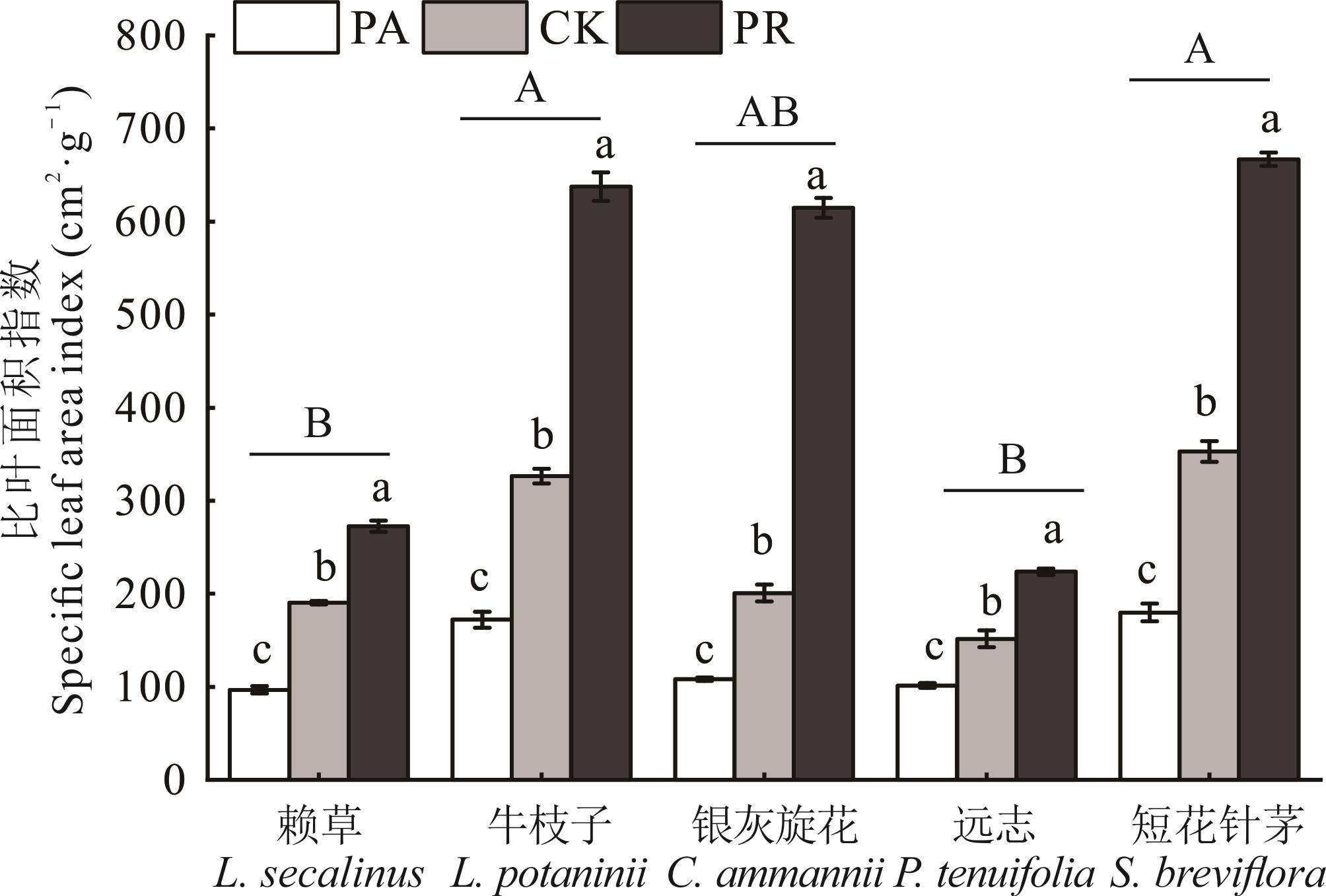
Fig.4 Effects of precipitation change on specific leaf area index of major plants in the community
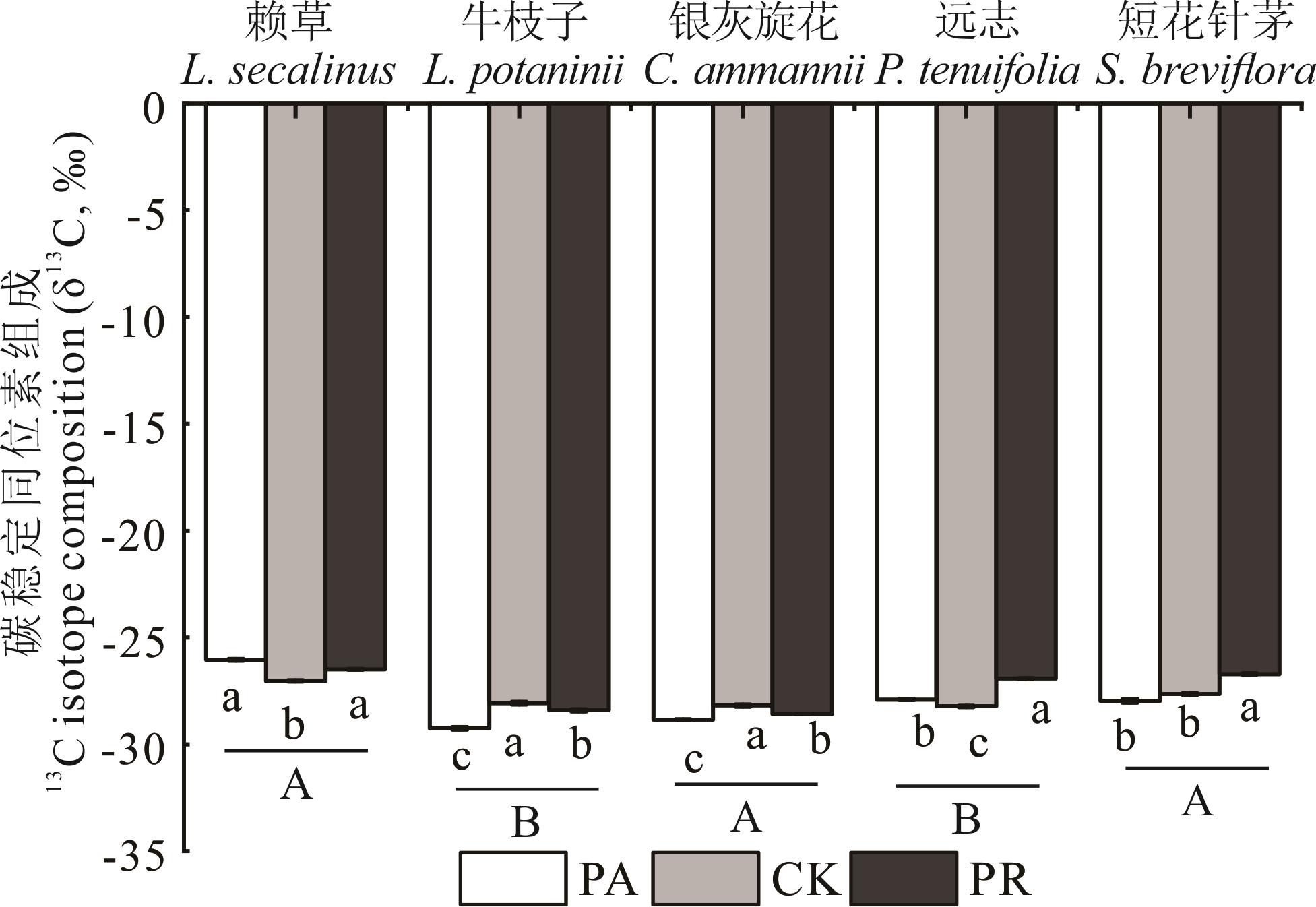
Fig.5 Effects of precipitation changes on δ13C of major plants in the community

Fig.6 Correlation analysis between the main plant indexes of the community
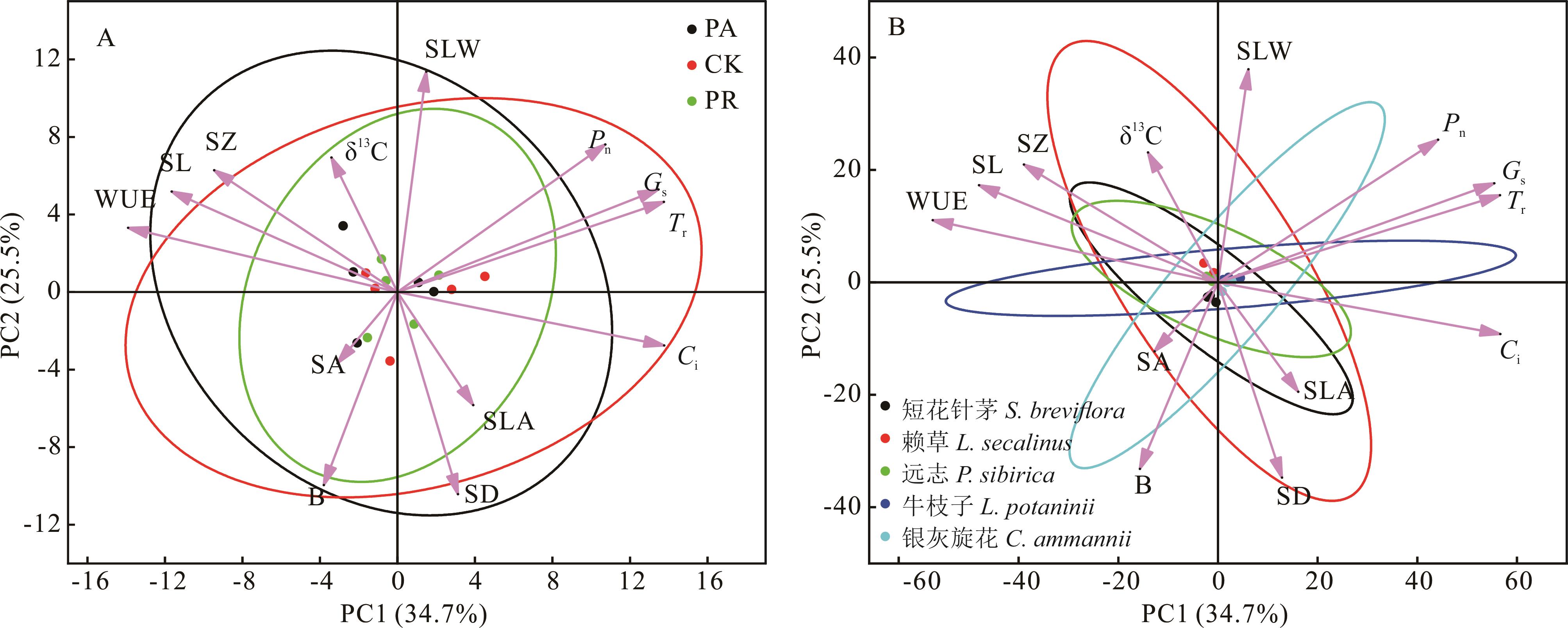
Fig.7 Principal component analysis of major plants in the community
| [1] | Qin D H, Thomas S. Highlights of the IPCC working group Ⅰ fifth assessment report. Climate Change Research, 2014, 10(1): 1-6. |
| 秦大河, Thomas Stocker. IPCC第五次评估报告第一工作组报告的亮点结论. 气候变化研究进展, 2014, 10(1): 1-6. | |
| [2] | Zhao Y N, Wang H M, Li Z L, et al. Responses of spatial pattern and driving factors for soil water deficit of desert grassland-shrubland transition sites. Acta Prataculturae Sinica, 2024, 33(4): 22-34. |
| 赵亚楠, 王红梅, 李志丽, 等. 荒漠草原灌丛转变过程土壤水分亏缺空间特征及影响因素. 草业学报, 2024, 33(4): 22-34. | |
| [3] | Shen H H, Zhu Y K, Zhao X, et al. Analysis of current grassland resources in China. Chinese Science Bulletin, 2016, 61(2): 139-154. |
| 沈海花, 朱言坤, 赵霞, 等. 中国草地资源的现状分析. 科学通报, 2016, 61(2): 139-154. | |
| [4] | Song K C, Wang X, Xu D M, et al.Effects of short-term nitrogen addition on soil biological properties in desert steppe. Journal of Soil and Water Conservation, 2022, 36(3): 303-310, 318. |
| 宋珂辰, 王星, 许冬梅, 等. 短期氮添加对荒漠草原土壤微生物特征的影响. 水土保持学报, 2022, 36(3): 303-310, 318. | |
| [5] | Zhu S Q, Sun X G. Effects of exogenous abscisic acid on photosynthetic characteristics of Malus ‘Royalty’ under lead stress. Shandong Agricultural Sciences, 2022, 54(6): 93-98. |
| 朱世琦, 孙晓刚. 外源脱落酸对铅胁迫下王族海棠光合特性的影响. 山东农业科学, 2022, 54(6): 93-98. | |
| [6] | Gong M G, Liu K Y, Wei Y N, et al. Effects of arbuscular mycorrhizal fungi on photosynthetic characteristics and mesophyll cell ultrastructure of cotton under arsenic stress. Cotton Science, 2022, 34(3): 256-266. |
| 龚明贵, 刘凯洋, 魏亚楠, 等. 砷胁迫下接种丛枝菌根真菌对棉花光合特性和叶肉细胞超微结构的影响. 棉花学报, 2022, 34(3): 256-266. | |
| [7] | Wu R N, Liu B Y, Bao Y H. Time lag and cumulative effect of drought on gross primary productivity in the grasslands of Northern China. Arid Zone Research, 2023, 40(10): 1644-1660. |
| 乌日娜, 刘步云, 包玉海. 干旱对中国北方草原总初级生产力影响的时滞和累积效应. 干旱区研究, 2023, 40(10): 1644-1660. | |
| [8] | Zhang X W, An H, Du Z Y, et al. Effects and mechanism of nitrogen addition on primary productivity in a desert grassland of Ningxia, China. Acta Ecologica Sinica, 2023, 43(6): 2476-2487. |
| 张馨文, 安慧, 杜忠毓, 等. 氮添加对宁夏荒漠草原植物初级生产力的影响机制. 生态学报, 2023, 43(6): 2476-2487. | |
| [9] | Chen L, Chen G L, Song N P, et al. Response of photosynthetic characteristics and water use efficiency of Artemisia scoparia to rainfall changes in Eastern Ningxia desert steppe. Acta Prataculturae Sinica, 2022, 31(10): 87-98. |
| 陈林, 陈高路, 宋乃平, 等. 宁夏东部荒漠草原猪毛蒿光合特征和水分利用效率对降水变化的响应. 草业学报, 2022, 31(10): 87-98. | |
| [10] | Yin Z T, Wang Y H, Zhou G S, et al. Response and sensitivity of photosynthesis of Stipa tianschanica in desert steppe to developing soil drought process. Acta Prataculturae Sinica, 2022, 31(1): 81-94. |
| 尹作天, 王玉辉, 周广胜, 等. 荒漠草原石生针茅光合特性对渐进式土壤干旱过程的响应及敏感性分析. 草业学报, 2022, 31(1): 81-94. | |
| [11] | Peng S L, You W H, Wang Q, et al. Characteristics of the leaf carbon isotope in the Castanopsis fargesii canopy and their relationship to photosyntheticparameters in the Tiantong Mountain. Research of Soil and Water Conservation, 2016, 23(3): 274-277. |
| 彭舜磊, 由文辉, 王强, 等. 天童栲树冠层叶片碳同位素组成特征及与光合参数关系. 水土保持研究, 2016, 23(3): 274-277. | |
| [12] | Liu H Y, Wang Z Y, Gao C P, et al. Effects of grazing on carbon, nitrogen, and their stable isotopes in soils of different grassland types. Chinese Journal of Grassland, 2024, 46(10): 14-22. |
| 刘海洋, 王占义, 高翠萍, 等. 放牧对不同类型草原土壤碳氮及其稳定同位素的影响. 中国草地学报, 2024, 46(10): 14-22. | |
| [13] | Wang C S, Wang S P. A review of research on responses of leaf traits to climate change. Chinese Journal of Plant Ecology, 2015, 39(2): 206-216. |
| 王常顺, 汪诗平. 植物叶片性状对气候变化的响应研究进展. 植物生态学报, 2015, 39(2): 206-216. | |
| [14] | Yan C R, Han X G, Chen L Z, et al. Foliar δ13C within temperate deciduous forest: its spatial change and interspecies variation. Journal of Integrative Plant Biology, 1998(9): 76-82. |
| 严昌荣, 韩兴国, 陈灵芝, 等. 暖温带落叶阔叶林主要植物叶片中δ13C值的种间差异及时空变化. 植物学报, 1998(9): 76-82. | |
| [15] | Hu H Y, Li H X, Ni B, et al. Characteristic of typical vegetation community and water use efficiency of dominant plants in desert steppe of Ningxia. Journal of Zhejiang University (Agriculture and Life Sciences), 2019, 45(4): 460-471. |
| 胡海英, 李惠霞, 倪彪, 等. 宁夏荒漠草原典型群落的植被特征及其优势植物的水分利用效率.浙江大学学报(农业与生命科学版), 2019, 45(4): 460-471. | |
| [16] | Zhang L, Luo T X. Advances in ecological research on plant leaf longevity and its related leaf traits. Chinese Journal of Plant Ecology, 2004(6): 844-852. |
| 张林, 罗天祥. 植物叶寿命及其相关叶性状的生态学研究进展. 植物生态学报, 2004(6): 844-852. | |
| [17] | Bao P A, Qiu K Y, Huang Y Y, et al. Leaf functional trait characteristics and plasticity of desert steppe plants under nitrogen and phosphorus addition. Acta Prataculturae Sinica, 2024, 33(3): 97-106. |
| 鲍平安, 邱开阳, 黄业芸, 等. 荒漠草原植物在氮磷添加下叶功能性状特征及其可塑性. 草业学报, 2024, 33(3): 97-106. | |
| [18] | Yue X Y, Zuo X A, Yu Q, et al. Effects of precipitation and short term extreme drought on leaf traits in Inner Mongolia typical steppe. Journal of Desert Research, 2018, 38(5): 1009-1016. |
| 岳喜元, 左小安, 庾强, 等. 降水量和短期极端干旱对典型草原植物群落及优势种羊草(Leymus chinensis)叶性状的影响. 中国沙漠, 2018, 38(5): 1009-1016. | |
| [19] | Chaerle L, Saibo N, van der Straeten D. Tuning the pores: Towards engineering plants for improved water use efficiency. Trends in Biotechnology, 2005, 23(6): 308-315. |
| [20] | Li L, Li D N, Yang Y Y, et al. Analysis of metabolomics and screening of stomatal regulating substances in alfalfa leaves under drought stress. Acta Agrestia Sinica, 2023, 31(9): 2671-2683. |
| 李乐, 李丹宁, 杨叶研, 等. 干旱胁迫下紫花苜蓿叶片代谢组分析及气孔调节物质的筛选. 草地学报, 2023, 31(9): 2671-2683. | |
| [21] | Hetherington A M, Woodward F I. The role of stomata in sensing and driving environmental change. Nature, 2003, 424(6951): 901-908. |
| [22] | Wang R L, Yu G R, He N P, et al. Altitudinal variation in the covariation of stomatal traits with leaf functional traits in Changbai Mountain. Acta Ecologica Sinica, 2016, 36(8): 2175-2184. |
| 王瑞丽, 于贵瑞, 何念鹏, 等. 气孔特征与叶片功能性状之间关联性沿海拔梯度的变化规律——以长白山为例. 生态学报, 2016, 36(8): 2175-2184. | |
| [23] | Xu Z Z, Zhou G S. Responses of leaf stomatal density to water status and its relationship with photosynthesis in a grass. Journal of Experimental Botany, 2008, 59(12): 3317-3325. |
| [24] | Yang X X, Yang Y, Ji C J, et al.Large-scale patterns of stomatal traits in Tibetan and Mongolian grassland species. Basic and Applied Ecology, 2014, 15(2): 122-132. |
| [25] | Zhang H, Song K C, Hu H Y, et al. Variability in precipitation influences the water sourcing and adaptive strategies of key plant species within the desert steppe ecosystem. Ecological Indicators, 2024, 158(1): 111333. |
| [26] | Zhu G L, Wei W S, Zhang S M, et al. An overview of methods of measuring underground-biomass and introduction of new technique. Chinese Journal of Grassland, 2008(3): 94-99. |
| 朱桂林, 韦文珊, 张淑敏, 等. 植物地下生物量测定方法概述及新技术介绍. 中国草地学报, 2008(3): 94-99. | |
| [27] | Cai G J, Yang L, Chai C S, et al. Plant diversity of different land utilization types in semiarid Loess Hilly area. Journal of Central South University of Forestry & Technology, 2020, 40(1): 95-104. |
| 蔡国军, 杨磊, 柴春山, 等. 半干旱黄土丘陵区不同土地利用类型植物物种多样性研究. 中南林业科技大学学报, 2020, 40(1): 95-104. | |
| [28] | Zhen Y P, Chang Z J, Han Y, et al. Effects of soil water deficit and elevated atmospheric CO2 concentration on leaf photosynthesis of winter wheat. Acta Agronomica Sinica, 2022, 48(11): 2920-2933. |
| 郑云普, 常志杰, 韩怡, 等. 土壤水分亏缺和大气CO2浓度升高对冬小麦光合特性的影响. 作物学报, 2022, 48(11): 2920-2933. | |
| [29] | Wang Q, Zhang X W, Huang Y J, et al.Synergistic effects of light environment and temperature on net photosynthetic rate, transpiration rate and instant water-use efficiency of Phytolacca americana. Plant Physiology Journal, 2021, 57(1): 187-194. |
| 王强, 张欣薇, 黄英金, 等. 光环境和温度对商陆净光合速率、蒸腾速率和瞬时水分利用效率的协同影响.植物生理学报, 2021, 57(1): 187-194. | |
| [30] | Gang H X, Wang J Q, Huang C Y, et al. Photosynthetic characteristics and leaf anatomical structure of eight tree species. Bulletin of Botanical Research, 2019, 39(1): 10-16. |
| 冮慧欣, 王嘉琪, 黄春岩, 等. 8种绿化树种光合特性及叶片解剖结构比较. 植物研究, 2019, 39(1): 10-16. | |
| [31] | Wang Q, Liu C C, He N P, et al.Spatial variations and adaptive mechanisms of plant stomatal traits on the Inner Mongolian Plateau. Acta Ecologica Sinica, 2023, 43(9): 3766-3777. |
| 王青, 刘聪聪, 何念鹏, 等. 内蒙古高原植物气孔性状的空间变异及其适应机制. 生态学报, 2023, 43(9): 3766-3777. | |
| [32] | Li X R, Liu Q J, Cai Z, et al.Specific leaf area and leaf area index of conifer plantations in Qianyanzhou of subtropical China. Chinese Journal of Plant Ecology, 2007(1): 93-101. |
| 李轩然, 刘琪璟, 蔡哲, 等. 千烟洲针叶林的比叶面积及叶面积指数. 植物生态学报, 2007(1): 93-101. | |
| [33] | Wen C, Shan Y M, Ye R H, et al. Effects of nitrogen and water addition on soil respiration in a Nei Mongol desert steppe with different intensities of grazing history. Chinese Journal of Plant Ecology, 2020, 44(1): 80-92. |
| 温超, 单玉梅, 晔薷罕, 等. 氮和水分添加对内蒙古荒漠草原放牧生态系统土壤呼吸的影响. 植物生态学报, 2020, 44(1): 80-92. | |
| [34] | Wang M M, Liu X P, He Y H, et al.Simulating the response of biomass accumulation process in semi-arid grassland to changes in precipitation. Acta Ecologica Sinica, 2020, 40(11): 3656-3665. |
| 王明明, 刘新平, 何玉惠, 等. 科尔沁沙质草地生物量积累过程对降水变化的响应模拟. 生态学报, 2020, 40(11): 3656-3665. | |
| [35] | Du H, Fang Q X, Li F. Effects of simulated precipitation on photosynthetic water physiology of Leymus chinensis. Journal of Green Science and Technology, 2024, 26(8): 1-9. |
| 杜华, 方庆旭, 李芳. 模拟降水对羊草光合水分生理的影响. 绿色科技, 2024, 26(8): 1-9. | |
| [36] | Zhang H, Hu H Y, Li H X, et al. Physiological response and transcriptome analysis of the desert steppe dominant plant Lespedeza potaninii to drought stress. Acta Prataculturae Sinica, 2023, 32(7): 188-205. |
| 张浩, 胡海英, 李惠霞, 等. 荒漠草原优势植物牛枝子对干旱胁迫的生理响应与转录组分析. 草业学报, 2023, 32(7): 188-205. | |
| [37] | Xin L, Song J W, Fu Y Y, et al.Effects of saline-fresh water rotation irrigation on photosynthetic characteristics and leaf ultrastructure of tomato plants in greenhouse. Scientia Agriculture Sinica, 2024, 57(19): 3784-3798. |
| 辛朗, 宋嘉雯, 付媛媛, 等. 咸淡水轮灌对设施番茄光合特性及叶片超微结构的影响. 中国农业科学, 2024, 57(19): 3784-3798. | |
| [38] | Su X G, Eer D, Cheng R R, et al. Effects of water and fertilization addition on leaf water use efficiency of winter wheat in alfalfa-wheat rotation system. Acta Agrestia Sinica, 2024, 23(9): 2891-2898. |
| 苏小港, 额尔德木图, 成蓉蓉, 等. 增水和施肥对苜蓿-小麦轮作系统冬小麦叶片水分利用效率的影响. 草地学报, 2024, 23(9): 2891-2898. | |
| [39] | Lei X F, Wang Y, Li Y, et al. Effects of long-term warming on photosynthesis daily dynamics of three main plants in Stipa breviflora desert steppe. Journal of Northern Agriculture, 2021, 49(1): 111-118. |
| 雷雪峰, 王妍, 李杨, 等. 长期增温对短花针茅荒漠草原3种主要植物光合日动态特性的影响. 北方农业学报, 2021, 49(1): 111-118. | |
| [40] | Zhang Q, Guo C W, Yao M M, et al. Effects of grazing intensities on functional traits of the dominant plant Leymus secalinus in semi-arid grassland. Acta Agrestia Sinica, 2022, 30(8): 2108-2117. |
| 张琦, 郭琛文, 姚蒙蒙, 等. 放牧强度对半干旱草地优势植物赖草功能性状的影响. 草地学报, 2022, 30(8): 2108-2117. | |
| [41] | Zhang Y M, Hu H Y, Bai X M, et al.The effects of extreme drought stress on growth and water content in pasture brome andperennial ryegrass. Acta Agrestia Sinica, 2024, 32(12): 3807-3818. |
| 张咏梅, 胡海英, 白小明, 等. 极干旱胁迫对雀麦、多年生黑麦草生长和体内水分的影响. 草地学报, 2024, 32(12): 3807-3818. | |
| [42] | Li S T, Chen S Q, Li Y, et al. Effects of three plant growth regulators on the photosynthetic indices of giant juncao under different drought stress conditions. Pratacultural Science, 2021, 38(12): 2406-2420. |
| 李苏涛, 陈思齐, 李妍, 等. 3种植物生长调节剂对不同干旱胁迫下巨菌草光合指标的影响. 草业科学, 2021, 38(12): 2406-2420. | |
| [43] | Zhu Y J, Gao Q, Liu J S, et al. Aggregation of plant functional types based on models of stomatal conductance and photosynthesis. Chinese Journal of Plant Ecology, 2007(5): 873-882. |
| 朱玉洁, 高琼, 刘峻杉, 等. 基于气孔导度和光合模型的植物功能类群合并问题. 植物生态学报, 2007(5): 873-882. | |
| [44] | Lu X Y, Zhao X, Xu L P, et al.Effects of nitrogen and phosphorus addition on functional traits of dominant plant species in abandoned grasslands of Loess Hilly region. Chinese Journal of Grassland, 2023, 45(3): 49-59. |
| 卢笑玥, 赵雪, 徐莉萍, 等. 氮磷添加对黄土丘陵区撂荒草地优势植物功能性状的影响. 中国草地学报, 2023, 45(3): 49-59. | |
| [45] | Sun S F, Huang J H, Lin G H, et al. Application of stable isotope technique in the study of plant water use. Acta Ecologica Sinica, 2005(9): 2362-2371. |
| 孙双峰, 黄建辉, 林光辉, 等. 稳定同位素技术在植物水分利用研究中的应用. 生态学报, 2005(9): 2362-2371. | |
| [46] | Chen P, Meng P, Zhang J S, et al. Effects of drought stress on growth and water use efficiency of two medicinal plants. Chinese Journal of Applied Ecology, 2014, 25(5): 1300-1306. |
| 陈平, 孟平, 张劲松, 等. 两种药用植物生长和水分利用效率对干旱胁迫的响应. 应用生态学报, 2014, 25(5): 1300-1306. | |
| [47] | Tan W B, Wang G A, Han J M, et al. δ13C and water-use efficiency indicated by δ13C of different plant functional groups on Changbai Mountains. Chinese Science Bulletin, 2009, 54(13): 1912-1916. |
| 檀文炳, 王国安, 韩家懋, 等. 长白山不同功能群植物碳同位素及其对水分利用效率的指示. 科学通报, 2009, 54(13): 1912-1916. | |
| [48] | Zhen S X, Shangguan Z P. Variation in the δ13C of typical paints of Loses Plateau over the last 70 years. Chinese Journal of Plant Ecology, 2005(2): 289-295. |
| 郑淑霞, 上官周平. 近70年来黄土高原典型植物δ13C值变化研究. 植物生态学报, 2005(2): 289-295. | |
| [49] | Liu X Z, Su Q, Li J Z, et al.Responses of carbon isotopic composition of C3 and C4 herbaceous plants to temperature under controlled temperature conditions. Acta Ecologica Sinica, 2015, 35(10): 3278-3287. |
| 刘贤赵, 宿庆, 李嘉竹, 等. 控温条件下C3、C4草本植物碳同位素组成对温度的响应. 生态学报, 2015, 35(10): 3278-3287. | |
| [50] | Guo L L, Hao L H, Jia H H, et al. Effects of NaCl stress on stomatal traits, leaf gas exchange parameters, and biomass of two tomato cultivars. Chinese Journal of Applied Ecology, 2018, 29(12): 3949-3958. |
| 郭丽丽, 郝立华, 贾慧慧, 等. NaCl胁迫对两种番茄气孔特征、气体交换参数和生物量的影响. 应用生态学报, 2018, 29(12): 3949-3958. | |
| [51] | Zhen Q Y, Liu Z X. Comparative study on the leave stoma of six turfgrasses. Journal of Gansu Agricultural University, 2003(2): 158-162. |
| 郑群英, 刘自学. 六种草坪草的叶片气孔形态和数量特征比较研究. 甘肃农业大学学报, 2003(2): 158-162. |
| [1] | Bin GUO, Wei-cheng LUO, Li-shan SHAN, Ning AN, Bing LIU. Effects of simulated warming on photosynthesis of typical desert shrubs in the Hexi Corridor [J]. Acta Prataculturae Sinica, 2025, 34(7): 145-157. |
| [2] | Wen-hui DENG, Ke-chen SONG, Hao ZHANG, Si-yu GUAN, Jia-yi YONG, Hai-ying HU. Structure and diversity characteristics of the rhizosphere microbial community of dominant plants on the desert steppe under changing precipitation [J]. Acta Prataculturae Sinica, 2025, 34(5): 12-26. |
| [3] | Rong MA, Jun-yao LI, Ping YUE, Xu-jun MA, Zhen BAI, Ling ZHUANG, Jing BAI, Xue-yong ZHAO, Shao-kun WANG. Regulatory mechanisms of biomass allocation governed by functional traits of dominant plants in desert steppe under precipitation changes [J]. Acta Prataculturae Sinica, 2025, 34(11): 31-39. |
| [4] | Zhen-hao ZHANG, Zi-yu JIA, Xin-yu LI, Yun-xiang CHENG. Grazing behavior traits of cattle and sheep on mixed pasture in desert steppe [J]. Acta Prataculturae Sinica, 2025, 34(1): 226-237. |
| [5] | Shi-long HE, He YE, Jing LI, Ya-ling ZHANG, Hai-shan DE, Mei HONG. Effects of nitrogen deposition and precipitation changes in different time spans on community structure and diversity of soil meso- and micro-fauna in Stipa breviflora desert steppe [J]. Acta Prataculturae Sinica, 2024, 33(9): 140-154. |
| [6] | Ying CAO, Ming-he NIE, Yan SHEN, Yan HU, Deng-bao MA, Dong LI, Teng-si HOU, Peng FANG, Xue-qin WANG. Changes in vegetation and soil characteristics and their correlations in grasslands at different stages of degradation on the desert steppe in an arid wind-sandy area of Ningxia [J]. Acta Prataculturae Sinica, 2024, 33(8): 1-14. |
| [7] | Teng-si HOU, Yan SHEN, Hong-bin MA, Peng FANG, Ying CAO. Effects of Caragana intermedia stubble on soil water characteristics and water balance on the desert steppe [J]. Acta Prataculturae Sinica, 2024, 33(8): 15-24. |
| [8] | Hai-xin JIANG, Yao ZHOU, Ke HU, Zhan-sheng DING, Hong-bin MA. Effects of different grazing times on soil particle composition and fractal dimension in the desert steppe [J]. Acta Prataculturae Sinica, 2024, 33(6): 17-28. |
| [9] | Ying TAN, Hao YIN. Effects of root application of an arbuscular mycorrhizal fungus and melatonin on the growth, photosynthetic characteristics, and antioxidant system of Medicago sativa under salt stresss [J]. Acta Prataculturae Sinica, 2024, 33(6): 64-75. |
| [10] | Ya-nan ZHAO, Hong-mei WANG, Zhi-li LI, Zhen-jie ZHANG, Yan-shuo CHEN, Rong-xia SU. Responses of spatial pattern and driving factors for soil water deficit of desert grassland-shrubland transition sites [J]. Acta Prataculturae Sinica, 2024, 33(4): 22-34. |
| [11] | Yi-yin ZHANG, Xue-ying LI, Bin WANG, Ke-chen SONG, Jian LAN, Hai-ying HU. Effects of salt stress on water use efficiency and osmotic adjustment of seedlings of different triticale strains [J]. Acta Prataculturae Sinica, 2024, 33(4): 87-98. |
| [12] | Jun-yao LI, Xing-chi JIANG, Jin-yu HU, Dong-guang WEI, Xue-yong ZHAO, Shao-kun WANG. The effect of microbial organic fertilizers application on vegetation-soil-microbe in desert steppe [J]. Acta Prataculturae Sinica, 2024, 33(3): 34-45. |
| [13] | Ping-an BAO, Kai-yang QIU, Ye-yun HUANG, Si-yao WANG, Lu-yao CUI, Xin-yi LUO, Yun-tao YANG, Ying-zhong XIE. Leaf functional trait characteristics and plasticity of desert steppe plants under nitrogen and phosphorus addition [J]. Acta Prataculturae Sinica, 2024, 33(3): 97-106. |
| [14] | Ping-an BAO, Bo JI, Guo SUN, Na ZHANG, Xu-dong WU, Jian-long HE, Zhan-jun WANG, Ying TIAN. Effects of photovoltaic power station construction on plant community and soil characteristics [J]. Acta Prataculturae Sinica, 2024, 33(12): 23-33. |
| [15] | Chang-zhuang LIU, Yu-zhao TAO, Ming LI, Xiao-ming ZHANG. Effect of manganese sulfate on photosynthesis and nitrogen metabolism of cultivated Indian barnyard grass seedlings under saline-alkali stress [J]. Acta Prataculturae Sinica, 2024, 33(12): 84-98. |
| Viewed | ||||||
|
Full text |
|
|||||
|
Abstract |
|
|||||
