
ISSN 1004-5759 CN 62-1105/S
Acta Prataculturae Sinica ›› 2026, Vol. 35 ›› Issue (3): 68-82.DOI: 10.11686/cyxb2025121
Previous Articles Next Articles
Lei LI1,2( ), Yong-kuan MA1(), Peng JIANG3, Zhi-ming ZHU4, Li-dong JI2, Long LI5, Xing XU1()
Received:2025-04-08
Revised:2025-05-16
Online:2026-03-20
Published:2026-01-19
Contact:
Xing XU
Lei LI, Yong-kuan MA, Peng JIANG, Zhi-ming ZHU, Li-dong JI, Long LI, Xing XU. Effects of a ‘six-aspect integrated’ pattern on dynamic changes in soil water and salt contents, quality of cultivated land, and silage maize productivity in saline-alkali land in the Ningxia irrigation area[J]. Acta Prataculturae Sinica, 2026, 35(3): 68-82.
土壤深度 Soil depth (cm) | 土壤机械组成Soil mechanical composition (%) | 土壤质地 Soil texture | 容重 Bulk density (g·cm-3) | 田间持水量 Field capacity (%) | ||
|---|---|---|---|---|---|---|
砂粒Sand (2.00~0.02 mm) | 粉粒Silt (0.020~0.002 mm) | 黏粒Clay (<0.002 mm) | ||||
| 0~30 | 21.97 | 45.54 | 32.51 | 粉(砂)质黏壤土Silty (sandy) clay loam | 1.44 | 28.54 |
Table 1 Soil physical properties
土壤深度 Soil depth (cm) | 土壤机械组成Soil mechanical composition (%) | 土壤质地 Soil texture | 容重 Bulk density (g·cm-3) | 田间持水量 Field capacity (%) | ||
|---|---|---|---|---|---|---|
砂粒Sand (2.00~0.02 mm) | 粉粒Silt (0.020~0.002 mm) | 黏粒Clay (<0.002 mm) | ||||
| 0~30 | 21.97 | 45.54 | 32.51 | 粉(砂)质黏壤土Silty (sandy) clay loam | 1.44 | 28.54 |
土壤深度 Soil depth (cm) | 全盐 Total salt (g·kg-1) | pH | 有机质 Organic matter (g·kg-1) | 速效氮 Available nitrogen (mg·kg-1) | 有效磷 Available phosphorus (mg·kg-1) | 速效钾 Available potassium (mg·kg-1) | 碱化度 Exchangeable sodium percentage (%) |
|---|---|---|---|---|---|---|---|
| 0~30 | 5.29 | 8.87 | 8.17 | 59.53 | 14.75 | 207.68 | 18.34 |
Table 2 Soil chemical properties
土壤深度 Soil depth (cm) | 全盐 Total salt (g·kg-1) | pH | 有机质 Organic matter (g·kg-1) | 速效氮 Available nitrogen (mg·kg-1) | 有效磷 Available phosphorus (mg·kg-1) | 速效钾 Available potassium (mg·kg-1) | 碱化度 Exchangeable sodium percentage (%) |
|---|---|---|---|---|---|---|---|
| 0~30 | 5.29 | 8.87 | 8.17 | 59.53 | 14.75 | 207.68 | 18.34 |
技术类型 Technical type | 技术要点 Technical essential | 管理措施 Management measure | 成本核算Cost accounting (Yuan·hm-2) | ||
|---|---|---|---|---|---|
常规模式 Conventional pattern | “六位一体”模式 “Six-aspect integrated” pattern | 常规模式 Conventional pattern | “六位一体”模式“Six-aspect integrated” pattern | ||
个性技术 Personality technology | “剂”:改良剂消减障碍 ‘Agent’: Improver to reduce obstacles | / | A: 4500 kg·hm-2(基施) A: 4500 kg·ha-1 (basal application) | 0 | 750 |
| “肥”:固碳培肥和营养施肥‘Fertilizer’: Carbon fixation, fertilization and nutrition application | 掺混肥: 15000 kg·hm-2(基追比1∶1)+尿素: 375 kg·hm-2(追肥) Mixed fertilizer: 15000 kg·ha-1 (base to topdressing ratio 1∶1)+urea: 375 kg·ha-1 (topdressing) | B: 11250 kg·hm-2(基施)+尿素: 375 kg·hm-2(基施)+C: 600 kg·hm-2(追肥)+叶面肥: 氨基酸水溶肥3.75 kg·hm-2+磷酸二氢钾1.5 kg·hm-2(500倍稀释喷施) B: 11250 kg·ha-1 (basal)+urea: 375 kg·ha-1 (basal)+C: 600 kg·ha-1 (topdressing)+foliar fertilizer: amino acid water-soluble fertilizer 3.75 kg·ha-1+potassium dihydrogen phosphate 1.5 kg·ha-1 (500 times diluted spraying) | 7500 | 7500 | |
| “种”:耐盐品种和高光效种植 ‘Species’: Salt-tolerant varieties and high light efficiency planting | 强盛30; 等行距60 cm Qiangsheng 30; equal row spacing was 60 cm | 先玉1225;宽窄行(宽行70 cm、窄行40 cm) Xianyu 1225; wide-narrow row (wide row 70 cm, narrow row 40 cm) | 1500 | 1500 | |
| “耕”:深翻破板及中耕蹲苗 ‘Tillage’: Deep plowing broken board and intertillage squat seedlings | 旋耕: 20 cm Rotary tillage: 20 cm | 深翻: 30 cm+旋耕: 20 cm+中耕: 10 cm Deep tillage: 30 cm+rotary tillage: 20 cm+intertillage: 10 cm | 1500 | 1800 | |
| “灌”:春灌后播种和精量灌溉 ‘Irrigation’: Sowing after spring irrigation and precision irrigation | 畦灌: 6300 m3·hm-2 Border irrigation: 6300 m3·ha-1 | 春耕播种畦灌: 5040 m3·hm-2 Spring plowing and sowing, border irrigation: 5040 m3·ha-1 | 750 | 600 | |
| “排”:暗管排水/盐和明沟强排 ‘Drainage’: Subsurface pipe drainage/salt and open ditch forced drainage | 暗管Subsurface pipe drainage | 暗管+明沟Subsurface pipe drainage+open ditch | 0 | 150 | |
共性技术 Generic technology | 病虫害防治Pest control | 播前封闭药、苗后除草、统筹统防Sealing medicine before sowing, weeding after seedling, and overall prevention | 750 | 750 | |
| 机械减损收获Mechanical damage reduction harvest | 适时收获Timely harvest | 750 | 750 | ||
| 单季总成本 Total cost per season (Yuan·hm-2) | 12750 | 14175 | |||
Table 3 Mode management measures and cost accounting
技术类型 Technical type | 技术要点 Technical essential | 管理措施 Management measure | 成本核算Cost accounting (Yuan·hm-2) | ||
|---|---|---|---|---|---|
常规模式 Conventional pattern | “六位一体”模式 “Six-aspect integrated” pattern | 常规模式 Conventional pattern | “六位一体”模式“Six-aspect integrated” pattern | ||
个性技术 Personality technology | “剂”:改良剂消减障碍 ‘Agent’: Improver to reduce obstacles | / | A: 4500 kg·hm-2(基施) A: 4500 kg·ha-1 (basal application) | 0 | 750 |
| “肥”:固碳培肥和营养施肥‘Fertilizer’: Carbon fixation, fertilization and nutrition application | 掺混肥: 15000 kg·hm-2(基追比1∶1)+尿素: 375 kg·hm-2(追肥) Mixed fertilizer: 15000 kg·ha-1 (base to topdressing ratio 1∶1)+urea: 375 kg·ha-1 (topdressing) | B: 11250 kg·hm-2(基施)+尿素: 375 kg·hm-2(基施)+C: 600 kg·hm-2(追肥)+叶面肥: 氨基酸水溶肥3.75 kg·hm-2+磷酸二氢钾1.5 kg·hm-2(500倍稀释喷施) B: 11250 kg·ha-1 (basal)+urea: 375 kg·ha-1 (basal)+C: 600 kg·ha-1 (topdressing)+foliar fertilizer: amino acid water-soluble fertilizer 3.75 kg·ha-1+potassium dihydrogen phosphate 1.5 kg·ha-1 (500 times diluted spraying) | 7500 | 7500 | |
| “种”:耐盐品种和高光效种植 ‘Species’: Salt-tolerant varieties and high light efficiency planting | 强盛30; 等行距60 cm Qiangsheng 30; equal row spacing was 60 cm | 先玉1225;宽窄行(宽行70 cm、窄行40 cm) Xianyu 1225; wide-narrow row (wide row 70 cm, narrow row 40 cm) | 1500 | 1500 | |
| “耕”:深翻破板及中耕蹲苗 ‘Tillage’: Deep plowing broken board and intertillage squat seedlings | 旋耕: 20 cm Rotary tillage: 20 cm | 深翻: 30 cm+旋耕: 20 cm+中耕: 10 cm Deep tillage: 30 cm+rotary tillage: 20 cm+intertillage: 10 cm | 1500 | 1800 | |
| “灌”:春灌后播种和精量灌溉 ‘Irrigation’: Sowing after spring irrigation and precision irrigation | 畦灌: 6300 m3·hm-2 Border irrigation: 6300 m3·ha-1 | 春耕播种畦灌: 5040 m3·hm-2 Spring plowing and sowing, border irrigation: 5040 m3·ha-1 | 750 | 600 | |
| “排”:暗管排水/盐和明沟强排 ‘Drainage’: Subsurface pipe drainage/salt and open ditch forced drainage | 暗管Subsurface pipe drainage | 暗管+明沟Subsurface pipe drainage+open ditch | 0 | 150 | |
共性技术 Generic technology | 病虫害防治Pest control | 播前封闭药、苗后除草、统筹统防Sealing medicine before sowing, weeding after seedling, and overall prevention | 750 | 750 | |
| 机械减损收获Mechanical damage reduction harvest | 适时收获Timely harvest | 750 | 750 | ||
| 单季总成本 Total cost per season (Yuan·hm-2) | 12750 | 14175 | |||
| 耕地质量等级Cultivated land quality grades | 耕地质量 综合指数 IQI | 耕地质量等级Cultivated land quality grades | 耕地质量 综合指数 IQI |
|---|---|---|---|
| 1 | ≥0.8401 | 6 | 0.7221~0.7461 |
| 2 | 0.8181~0.8401 | 7 | 0.6981~0.7221 |
| 3 | 0.7941~0.8181 | 8 | 0.6741~0.6981 |
| 4 | 0.7701~0.7941 | 9 | 0.6500~0.6741 |
| 5 | 0.7461~0.7701 | 10 | <0.6500 |
Table 4 Soil cultivated land grades quality classification
| 耕地质量等级Cultivated land quality grades | 耕地质量 综合指数 IQI | 耕地质量等级Cultivated land quality grades | 耕地质量 综合指数 IQI |
|---|---|---|---|
| 1 | ≥0.8401 | 6 | 0.7221~0.7461 |
| 2 | 0.8181~0.8401 | 7 | 0.6981~0.7221 |
| 3 | 0.7941~0.8181 | 8 | 0.6741~0.6981 |
| 4 | 0.7701~0.7941 | 9 | 0.6500~0.6741 |
| 5 | 0.7461~0.7701 | 10 | <0.6500 |

Fig.1 Effect of ‘six-aspect integrated’ pattern on the dynamic changes of soil volumetric moisture content in saline-alkali land

Fig.2 Effect of ‘six-aspect integrated’ pattern on the dynamic changes of soil total salt content in saline-alkali land

Fig.3 Effect of ‘six-aspect integrated’ pattern on groundwater depth and total dissolved solids
| 年份Year | 处理Treatments | 容重Bulk density (g·cm-3) | 有机质Organic matter (mg·kg-1) | 有效磷Available phosphorus (mg·kg-1) | 速效钾Available potassium (mg·kg-1) | 地下水埋深GWD (m) | 有效土层厚度EST (cm) |
|---|---|---|---|---|---|---|---|
| 2023 | CK | 1.42±0.02 | 8.55±0.44 | 20.49±2.83 | 188.78±6.25 | 1.76±0.06 | 80.66±20.33 |
| T | 1.34±0.01 | 8.72±0.40 | 25.29±2.76 | 200.08±5.78 | 1.85±0.09 | 80.66±20.33 | |
| 2024 | CK | 1.42±0.02 | 8.30±0.54 | 19.72±2.26 | 197.82±6.24 | 1.83±0.10 | 80.66±20.33 |
| T | 1.33±0.03 | 9.33±1.01 | 33.59±4.26 | 217.44±9.02 | 1.80±0.07 | 80.66±20.33 | |
| 处理Treatments | * | ns | * | ns | ns | ns | |
| 年限Year | ns | ns | ns | ns | ns | ns | |
| 交互Interaction | ns | ns | ns | ns | ns | ns | |
Table 5 Effect of ‘six-aspect integrated’ pattern on soil physico-chemical properties and groundwater depth
| 年份Year | 处理Treatments | 容重Bulk density (g·cm-3) | 有机质Organic matter (mg·kg-1) | 有效磷Available phosphorus (mg·kg-1) | 速效钾Available potassium (mg·kg-1) | 地下水埋深GWD (m) | 有效土层厚度EST (cm) |
|---|---|---|---|---|---|---|---|
| 2023 | CK | 1.42±0.02 | 8.55±0.44 | 20.49±2.83 | 188.78±6.25 | 1.76±0.06 | 80.66±20.33 |
| T | 1.34±0.01 | 8.72±0.40 | 25.29±2.76 | 200.08±5.78 | 1.85±0.09 | 80.66±20.33 | |
| 2024 | CK | 1.42±0.02 | 8.30±0.54 | 19.72±2.26 | 197.82±6.24 | 1.83±0.10 | 80.66±20.33 |
| T | 1.33±0.03 | 9.33±1.01 | 33.59±4.26 | 217.44±9.02 | 1.80±0.07 | 80.66±20.33 | |
| 处理Treatments | * | ns | * | ns | ns | ns | |
| 年限Year | ns | ns | ns | ns | ns | ns | |
| 交互Interaction | ns | ns | ns | ns | ns | ns | |
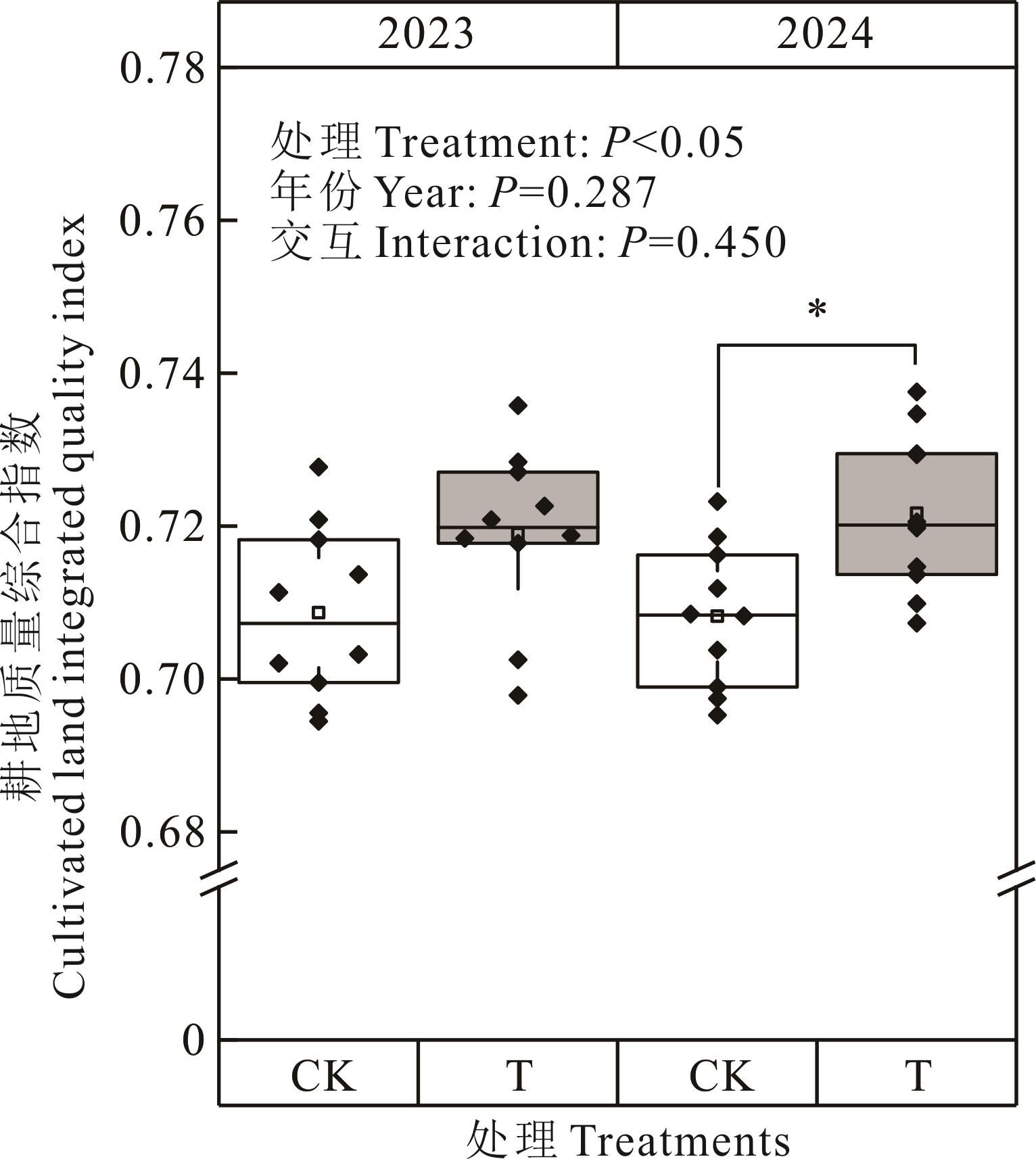
Fig.4 Effect of ‘six-aspect integrated’ pattern on cultivated land integrated quality index

Fig.5 Effect of ‘six-aspect integrated’ pattern on forage trait of silage maize in 2024

Fig.6 Effect of ‘six-aspect integrated’ pattern on quality of silage maize
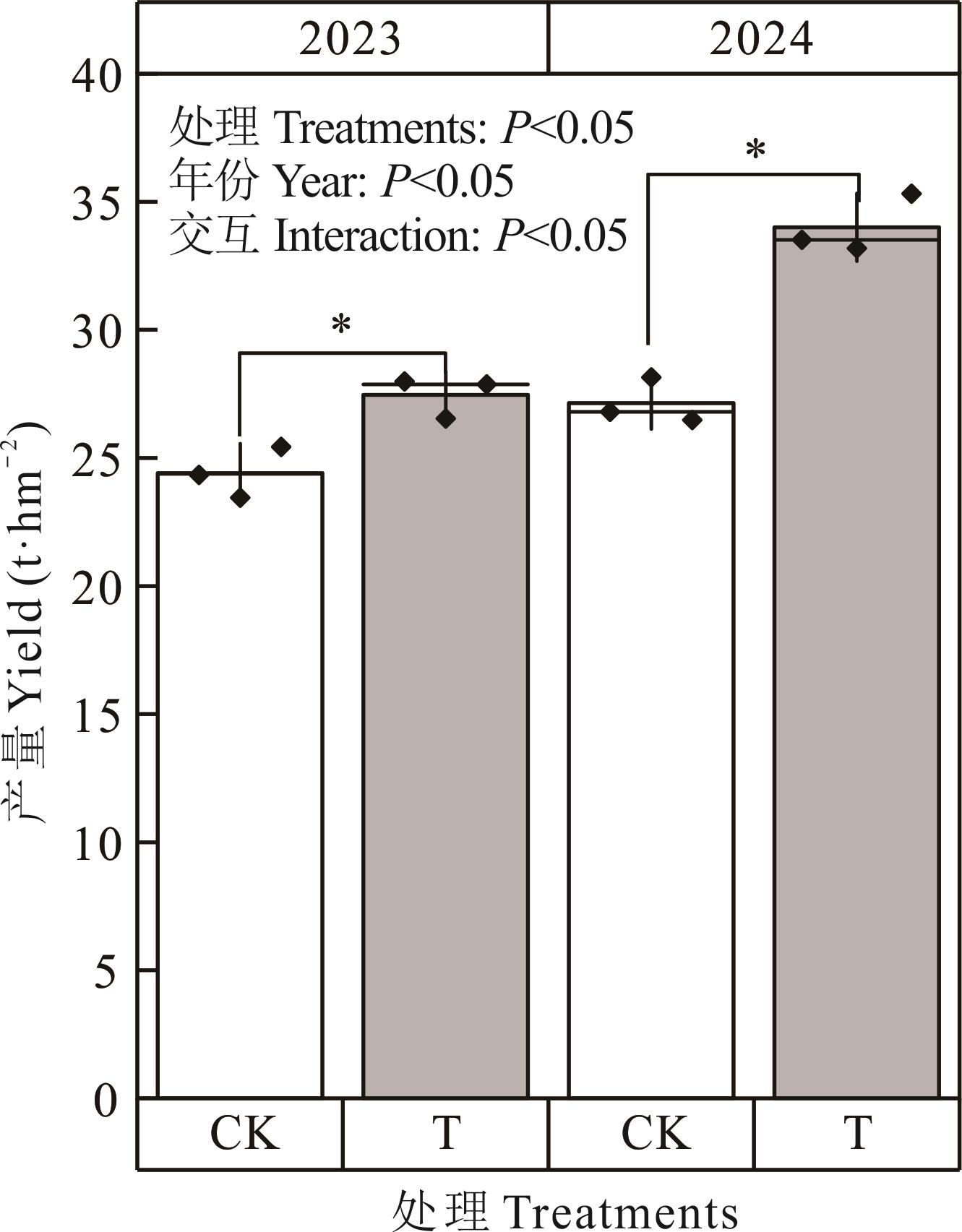
Fig.7 Effect of ‘six-aspect integrated’ pattern on yield of silage maize
年份 Year | 处理 Treatments | 经济产值 Economic output (yuan·hm-2) | 投入 Inputs (yuan·hm-2) | 净收益 Net profit (yuan·hm-2) | 产投比 Output-inputs ratio |
|---|---|---|---|---|---|
| 2023 | CK | 13179.6±309.18 | 12750 | 429.6±309.18 | 1.03±0.02 |
| T | 14830.2±249.89 | 14175 | 655.2±249.89 | 1.05±0.02 | |
| 2024 | CK | 14655.6±274.86 | 12750 | 1905.6±274.86 | 1.15±0.02 |
| T | 18360.0±357.42 | 14175 | 4185.0±357.42 | 1.30±0.03 | |
| 处理Treatments | * | ns | * | * | |
| 年限Year | * | ns | * | * | |
| 交互Interaction | * | ns | * | * | |
Table 6 Effect of ‘six-aspect integrated’ pattern on economic benefit
年份 Year | 处理 Treatments | 经济产值 Economic output (yuan·hm-2) | 投入 Inputs (yuan·hm-2) | 净收益 Net profit (yuan·hm-2) | 产投比 Output-inputs ratio |
|---|---|---|---|---|---|
| 2023 | CK | 13179.6±309.18 | 12750 | 429.6±309.18 | 1.03±0.02 |
| T | 14830.2±249.89 | 14175 | 655.2±249.89 | 1.05±0.02 | |
| 2024 | CK | 14655.6±274.86 | 12750 | 1905.6±274.86 | 1.15±0.02 |
| T | 18360.0±357.42 | 14175 | 4185.0±357.42 | 1.30±0.03 | |
| 处理Treatments | * | ns | * | * | |
| 年限Year | * | ns | * | * | |
| 交互Interaction | * | ns | * | * | |
| [1] | Yu G R, Hao T X, Yang M. Ecosystem principles and main issues in regional ecological restoration and environmental governance in China. Chinese Journal of Applied Ecology, 2023, 34(2): 289-304. |
| 于贵瑞, 郝天象, 杨萌. 中国区域生态恢复和环境治理的生态系统原理及若干学术问题. 应用生态学报, 2023, 34(2): 289-304. | |
| [2] | Yang J S. Development and prospect of the research on salt-affected soils in China. Acta Pedologica Sinica, 2008, 45(5): 837-845. |
| 杨劲松. 中国盐渍土研究的发展历程与展望. 土壤学报, 2008, 45(5): 837-845. | |
| [3] | Li L, Li X H, Fan L Q, et al. Effects of nitrogen regulation under straw returning on bacterial community diversity in maize rhizosphere soil in saline-alkali land. Jiangsu Agricultural Sciences, 2024, 52(2): 221-227. |
| 李磊, 李晓慧, 樊丽琴, 等. 秸秆还田下氮素调控对盐碱地玉米根际土壤细菌群落多样性的影响. 江苏农业科学, 2024, 52(2): 221-227. | |
| [4] | Huang H Y, Ding Q D, Zhang J H, et al. Ground-based hyperspectral inversion of salinization and alkalinization of different soil layers in farmland in Yinbei area, Ningxia, China. Chinese Journal of Applied Ecology, 2024, 35(11): 3073-3084. |
| 黄华雨, 丁启东, 张俊华, 等. 基于地面高光谱的宁夏银北地区农田不同土层盐碱化信息反演. 应用生态学报, 2024, 35(11): 3073-3084. | |
| [5] | Liu X J, Guo K, Feng X H, et al. Discussion on the agricultural efficient utilization of saline-alkali land resources. Chinese Journal of Eco-Agriculture, 2023, 31(3): 345-353. |
| 刘小京, 郭凯, 封晓辉, 等. 农业高效利用盐碱地资源探讨. 中国生态农业学报, 2023, 31(3): 345-353. | |
| [6] | Yang J S, Yao R J, Wang X P, et al. Research on ecological management and ecological industry development model of saline alkali land in the Hetao Plain, China. Acta Ecologica Sinica, 2016, 36(22): 7059-7063. |
| 杨劲松, 姚荣江, 王相平, 等. 河套平原盐碱地生态治理和生态产业发展模式. 生态学报, 2016, 36(22): 7059-7063. | |
| [7] | Lu C, Zhang H Y, Liu N, et al. Increasing soil organic carbon in aggregates and microflora diversity in moderate salt-affected soils through no till combined with plastic film mulching. Transactions of the Chinese Society of Agricultural Engineering, 2019, 35(21): 116-124. |
| 卢闯, 张宏媛, 刘娜, 等. 免耕覆膜增加中度盐碱土团聚体有机碳和微生物多样性. 农业工程学报, 2019, 35(21): 116-124. | |
| [8] | Sun S N, Yan X B, Yin F H. Current situation and prospect of improvement and comprehensive utilization for saline-alkali land of coastal tidal flats in China. Chinese Journal of Grassland, 2024, 46(2): 1-13. |
| 孙盛楠, 严学兵, 尹飞虎. 我国沿海滩涂盐碱地改良与综合利用现状与展望. 中国草地学报, 2024, 46(2): 1-13. | |
| [9] | Tian C Y, Mai W X, Zhao Z Y. Study on key technologies of ecological management of saline alkali land in arid area of Xinjiang. Acta Ecologica Sinica, 2016, 36(22): 7064-7068. |
| 田长彦, 买文选, 赵振勇. 新疆干旱区盐碱地生态治理关键技术研究. 生态学报, 2016, 36(22): 7064-7068. | |
| [10] | Wang F. A strategy of soil and water resource management based on double desalinization approach in saline-alkali land of arid areas. Bulletin of Soil and Water Conservation, 2019, 39(1): 317-321. |
| 王飞. 基于土盐-水盐双分离的旱区盐碱地水土资源管理模式. 水土保持通报, 2019, 39(1): 317-321. | |
| [11] | Tong S P, Liang Z W, Guan F C, et al. Biodiversity characteristies and biomass of artificial transplanting Leymus chinensis grassland in soda saline-alkali land of Songnen Plain. Acta Agrestia Sinica, 2019, 27(1): 22-27. |
| 仝淑萍, 梁正伟, 关法春, 等. 松嫩平原苏打盐碱地羊草人工移栽草地生物多样性特征和生物量. 草地学报, 2019, 27(1): 22-27. | |
| [12] | Li H W, Zheng Q, Wang J L, et al. Industrialization of tall wheatgrass for construction of “Coastal Grass Belt”. Bulletin of Chinese Academy of Sciences, 2023, 38(4): 622-631. |
| 李宏伟, 郑琪, 王建林, 等. 发展长穗偃麦草,建设“滨海草带”. 中国科学院院刊, 2023, 38(4): 622-631. | |
| [13] | Li H W, Zheng Q, Li B, et al. Progress in research on tall wheatgrass as a salt-alkali tolerant forage grass. Acta Prataculturae Sinica, 2022, 31(5): 190-199. |
| 李宏伟, 郑琪, 李滨, 等. 一种耐盐碱牧草-长穗偃麦草研究进展. 草业学报, 2022, 31(5): 190-199. | |
| [14] | Zhang Y J, Liang J Y, He J S, et al. Formation and regulation mechanisms of grassland productivity: A review. Chinese Science Bulletin, 2025, 70(11): 1477-1485. |
| 张英俊, 梁俊毅, 贺金生, 等. 草原生产力形成与调控机制研究展望. 科学通报, 2025, 70(11): 1477-1485. | |
| [15] | Dong S, Wang H, Jia Q M, et al. Effects of irrigation modes and planting patterns on the growth, yield and economic benefits of silage maize in Hexi Region. Acta Agrestia Sinica, 2020, 28(4): 1111-1120. |
| 董姗, 王皓, 贾倩民, 等. 灌溉模式与种植方式对河西地区青贮玉米生长、产量和经济效益的影响. 草地学报, 2020, 28(4): 1111-1120. | |
| [16] | Wu K N, Zhao R. Soil texture classification and its application in China. Acta Pedologica Sinica, 2019, 56(1): 227-241. |
| 吴克宁, 赵瑞. 土壤质地分类及其在我国应用探讨. 土壤学报, 2019, 56(1): 227-241. | |
| [17] | National Soil Survey Office. The second national soil survey tentative specifications. Beijing: China Agriculture Press, 1979. |
| 全国土壤普查办公室. 第二次全国土壤普查暂行技术规程. 北京: 中国农业出版社, 1979. | |
| [18] | Fan L Q, Li L, Wu X. Relationship between soil salinity and groundwater characteristics in saline-alkali land with high groundwater level of Yinbei Irrigation Area. Water Saving Irrigation, 2019(6): 55-59, 66. |
| 樊丽琴, 李磊, 吴霞. 银北高水位盐碱地土壤盐分与地下水特征关系分析. 节水灌溉, 2019(6): 55-59, 66. | |
| [19] | Bao S D. Pedagogical analysis of soils (Third Edition). Beijing: China Agriculture Press, 2000. |
| 鲍士旦. 土壤农化分析(第三版). 北京: 中国农业出版社, 2000. | |
| [20] | Wang X, Fan L Q, Li L, et al. Effects of planting patterns and irrigation quotas on alkalized solonchak and growth of amorpha. Transactions of the Chinese Society of Agricultural Engineering, 2020, 36(5): 88-95. |
| 王旭, 樊丽琴, 李磊, 等. 种植方式和灌溉定额对碱化盐土及紫穗槐生长的影响. 农业工程学报, 2020, 36(5): 88-95. | |
| [21] | Fan L Q, Wu X, Li L, et al. Portable simple water level measuring device: CN208606853. 2019-.Beijing: Intellectual Property Press of China, 2019. |
| 樊丽琴, 吴霞, 李磊, 等. 一种携带轻便的简易水位测定装置: CN208606853. 2019-.北京: 知识产权出版社, 2019. | |
| [22] | Zhao M Y, Feng Y P, Shi Y, et al. Yield and quality properties of silage maize and their influencing factors in China. Science China Life Sciences, 2022, 65(8): 1655-1666. |
| [23] | Zhou R H, Yang X L, Wang G Y, et al. Determination of conventional nutritional components of experimental animal and compound feed: GB/T 14924.9-2001. Beijing: Standards Press of China, 2001. |
| 周瑞华, 杨晓莉, 王光亚, 等. 实验动物、配合饲料常规营养成分的测定: GB/T 14924.9-2001. 北京: 中国标准出版社, 2001. | |
| [24] | Wang C Z, Ni X Y, Zhu W, et al. Seasonal changes of carbon, nitrogen, phosphorus and soluble sugar concentrations in plant of ‘Fengdan’ (Paeonia ostii) chronosequence. Scientia Silvae Sinicae, 2019, 55(12): 50-60. |
| 汪成忠, 倪雪艳, 朱玮, 等. ‘凤丹’牡丹不同器官C、N、P和可溶性糖的季节性变化特征. 林业科学, 2019, 55(12): 50-60. | |
| [25] | Ren Y, Zeng Y D, He C W, et al. Cultivated land quality grade, GB/T 33469-2016. Beijing: Standards Press of China, 2016. |
| 任意, 曾衍德, 何才文, 等. 耕地质量等级, GB/T 33469-2016. 北京: 中国标准出版社, 2016. | |
| [26] | Chen Z F, Gong A M, Zhang L D, et al. Construction of the quality regulation system for provincial scale slope farmland based on quality evaluation. Transactions of the Chinese Society of Agricultural Engineering, 2021, 37(20): 136-145. |
| 陈正发, 龚爱民, 张刘东, 等. 基于质量评价的省域尺度坡耕地质量调控体系构建. 农业工程学报, 2021, 37(20): 136-145. | |
| [27] | Amine B E, Mosseddaq F, Houssa A A, et al. Physiological and agronomic effects of regulated-deficit irrigation on soybean grown under arid climatic conditions. The Crop Journal, 2025, 13(1): 281-291. |
| [28] | Chen T Y, Zhang Y F, Fu J, et al. Effects of tillage methods on soil physical properties and maize growth in a saline-alkali soil. Crop Science, 2021, 61(5): 3702-3718. |
| [29] | Li W X, Yang J S, Tang C T, et al. The temporal-spatial dynamic distributions of soil water and salt under deep vertical rotary tillage on coastal saline soil. Water, 2022, 14(21): 3370. |
| [30] | Wang M J, Shi W, Chang S H, et al. Effects of irrigation modes on forage yield, quality and water use of corn-legume intercropping systems in the Hexi irrigation area. Acta Prataculturae Sinica, 2023, 32(3): 13-29. |
| 王茂鉴, 石薇, 常生华, 等. 灌溉模式对河西灌区禾-豆间作系统饲草产量、品质和水分利用的影响. 草业学报, 2023, 32(3): 13-29. | |
| [31] | Wang M H, Chen W F, Song X L, et al. Preliminary study on effect of straw mulching and incorporation on water and salt movement in salinized soil. Acta Pedologica Sinica, 2017, 54(6): 1395-1403. |
| 王曼华, 陈为峰, 宋希亮, 等. 秸秆双层覆盖对盐碱地水盐运动影响初步研究. 土壤学报, 2017, 54(6): 1395-1403. | |
| [32] | Du R Q, Chen J Y, Xiang Y Z, et al. Timely monitoring of soil water-salt dynamics within cropland by hybrid spectral unmixing and machine learning models. International Soil and Water Conservation Research, 2024, 12(3): 726-740. |
| [33] | He J M, Zhang Y Q, Liang P, et al. Growth, physiological characteristics, and yield of quinoa after application of desulfurized gypsum in saline-alkali land. Pratacultural Science, 2025, 42(1): 152-161. |
| 合佳敏, 张永清, 梁萍, 等. 盐碱地施用脱硫石膏后藜麦生长生理特性及产量分析. 草业科学, 2025, 42(1): 152-161. | |
| [34] | Wei B H, Shen Z Y, Zhou J, et al. Study on effect and mechanism of improving saline-alkali soil by fenlong tillage. Soil, 2020, 52(4): 699-703. |
| 韦本辉, 申章佑, 周佳, 等. 粉垄耕作改良盐碱地效果及机理. 土壤, 2020, 52(4): 699-703. | |
| [35] | Alghamdi S A, Alharby H F, Abdelfattah M A, et al. Spirulina platensis-inoculated humified compost boosts rhizosphere soil hydro-physico-chemical properties and Atriplex nummularia forage yield and quality in an arid saline calcareous soil. Journal of Soil Science and Plant Nutrition, 2023, 23(2): 2215-2236. |
| [36] | Zhang T T, Duan Y, Liang J M, et al. Effects of long-term fertilization on farmland fertilities and crop yields in farming-pastoral ecotone. Journal of Plant Nutrition and Fertilizers, 2023, 29(9): 1643-1653. |
| 张婷婷, 段玉, 梁俊梅, 等. 长期施肥对农牧交错区农田肥力因子及作物产量的影响.植物营养与肥料学报, 2023, 29(9): 1643-1653. | |
| [37] | Zhu W, Gu S G, Jiang R, et al. Saline-alkali soil reclamation contributes to soil health improvement in China. Agriculture, 2024, 14(8): 1210. |
| [38] | Ji L D, Li L, Wang R, et al. Effects of organic fertilizers on organic carbon accumulation in alkalized saline soil and silage maize yield. International Journal of Agricultural and Biological Engineering, 2024, 17(2): 159-168. |
| [39] | Wu C X, Yan B S, Jing H, et al. Application of organic and chemical fertilizers promoted the accumulation of soil organic carbon in farmland on the Loess Plateau. Plant and Soil, 2023, 483(1): 285-299. |
| [40] | Liu Z X, Gu H D, Liang A Z, et al. Conservation tillage regulates the assembly, network structure and ecological function of the soil bacterial community in black soils. Plant and Soil, 2022, 472(1): 207-223. |
| [41] | Hassan H H M, El-Sobky E S E A, Mansour E, et al. Influence of preceding crop and tillage system on forage yield and quality of selected summer grass and legume forage crops under arid conditions. Journal of Integrative Agriculture, 2022, 21(11): 3329-3344. |
| [42] | Zhao J D, Song Y T, Xu X L, et al. Effects of nitrogen application and mowing on yield and quality of forage in degraded grassland in northwest Liaoning Province. Acta Prataculturae Sinica, 2021, 30(8): 36-48. |
| 赵京东, 宋彦涛, 徐鑫磊, 等. 施氮和刈割对辽西北退化草地牧草产量和品质的影响.草业学报, 2021, 30(8): 36-48. | |
| [43] | Wang X, Zhang Y, Xu W, et al. Amino acid fertilizer strengthens its effect on crop yield and quality by recruiting beneficial rhizosphere microbes. Journal of the Science of Food and Agriculture, 2023, 103(12): 5970-5980. |
| [44] | Zhou D L, Shi W, Jiang Z W, et al. Effects of planting density and nitrogen application on leaf enzyme activity and water-nitrogen utilization of silage maize under ridge furrow rainwater harvesting in Loess Plateau. Acta Prataculturae Sinica, 2022, 31(8): 126-143. |
| 周大梁, 石薇, 蒋紫薇, 等. 沟垄集雨下密度和施氮对黄土高原青贮玉米叶片酶活性及水氮利用的影响. 草业学报, 2022, 31(8): 126-143. | |
| [45] | Moustafa Z R, Moustafa S N, Beshay M G, et al. Influence of nitrogen fertilizer on some quality, technological aspects, productivity and amino acids accumulation of sugar beet. Journal of Plant Production, 2000, 25(8): 4795-4806. |
| [1] | Jia-yi ZANG, Ming-jie XU, Ji-cheng XIE, Yu-ying SHEN, Xing-fa LAI. Effects of replacing chemical fertilizers with organic fertilizer at equivalent nitrogen levels on forage yield and water use efficiency in a silage maize/forage soybean intercropping system in dryland areas [J]. Acta Prataculturae Sinica, 2026, 35(3): 83-95. |
| [2] | Peng JIANG, Lei LI, Hao-jun XIE, De-jia XU, Rui WANG, Qiang HU, Quan SUN. Effect of purified biogas slurry drip irrigation on sandy loam soil quality, silage maize productivity and analysis of safe application rate [J]. Acta Prataculturae Sinica, 2025, 34(4): 64-81. |
| [3] | Di-cheng WANG, Qiang CHAI, Zhi-long FAN, Wen YIN, Hong FAN, Wei HE, Ya-li SUN, Hui-zhe SANG, Fa-long HU. Effects of mixed cropping of leguminous forage and reduced nitrogen fertilizer on soil physicochemical properties and forage yield in a silage maize production system [J]. Acta Prataculturae Sinica, 2025, 34(12): 97-110. |
| [4] | Xin-you WANG, Xiao-lan WANG, Wan-chang ZHANG, Ying LI, Yong-ling MA, Xiao-yin WANG, Jian-gang WANG, Hai-qing WANG, Bei-fan YUE, Yong-fu LIU, Yong-hong WANG, Shan LIU, Mei-ting BAI. Selection of optimal varieties of silage maize and methods for cultivation in mountainous forest-margin areas of southeast Gansu Province [J]. Acta Prataculturae Sinica, 2025, 34(1): 191-202. |
| [5] | Hai-wang YUE, Jian-wei WEI, Guang-cai WANG, Peng-cheng LIU, Shu-ping CHEN, Jun-zhou BU. Comprehensive evaluation of silage maize hybrids in the Huanghuaihai plain based on mega-environments delineated using envirotyping techniques [J]. Acta Prataculturae Sinica, 2024, 33(3): 120-138. |
| [6] | Chao-nan MENG, Yu-jie ZHAO, Jia-xin CHEN, Yi-lu ZHANG, Yan-jia WANG, Li-rong FENG, Yu-gang SUN, Chang-hong GUO. Screening and identification of two strains of nitrogen-fixing bacteria from the silage maize rhizosphere and their roles in plant growth promotion [J]. Acta Prataculturae Sinica, 2024, 33(3): 174-185. |
| [7] | Zhong-juan ZHANG, Xi-yu HAO, Xue WANG, Feng LI, Wen-long LI. Selection and multi-trait evaluation of silage maize varieties suitable for cultivation in the Qiqihar area [J]. Acta Prataculturae Sinica, 2024, 33(11): 228-240. |
| [8] | Cong-ze JIANG, Na SHOU, Wei GAO, Ren-shi MA, Yu-ying SHEN, Xian-long YANG. A multivariate evaluation of production performance and nutritional quality of different varieties of silage maize in the dry plateau area of Longdong [J]. Acta Prataculturae Sinica, 2023, 32(7): 216-228. |
| [9] | Li-li ZHU, Ye-meng ZHANG, Wan-cai LI, Ya-li ZHAO, Xiang LI, Zhi-guo CHEN. Adaption to the Plateau climate in Qinghai of 39 silage maize varieties cultivated in different ecological regions of China [J]. Acta Prataculturae Sinica, 2023, 32(4): 68-78. |
| [10] | Ya TAO, Li-jun XU, Feng LI, Wen-long LI, Qi-zhong SUN, Chang XU, Ke-jian LIN. The Leymus chinensis industry in China needs to be urgently revitalized [J]. Acta Prataculturae Sinica, 2023, 32(11): 188-198. |
| [11] | Ying-zheng LI, Yu-lin CHENG, Lu-lu XU, Wan-song LI, Xu YAN, Xiao-feng LI, Ru-yu HE, Yang ZHOU, Jun-jun ZHENG, Xing-yu WANG, De-long ZHANG, Ming-jun CHENG, Yun-hong XIA, Jian-mei HE, Qi-lin TANG. A comparative study of silage quality characteristics of whole-plant, whole-ear and whole-straw silage of different maize varieties (lines) [J]. Acta Prataculturae Sinica, 2022, 31(8): 144-156. |
| [12] | Meng ZHANG, Peng-fei SHI, Ben-yin LI, Chun-zeng LIU, Chun-feng ZHENG, Cheng-lan ZHANG, Xiao-yan GUO, Li-xia ZHANG, Yu-hu LV, Chun-mei HE, Wei-dong CAO. Phenotypic diversity and podding characteristics of 70 Chinese milk vetch (Astragalus sinicus) germplasm lines cultivated in Southern Henan [J]. Acta Prataculturae Sinica, 2022, 31(3): 168-180. |
| [13] | Xin-ming WU, Zhi-hong FANG, Hui-wu CHI, Hui-li JIA, Jian-ning LIU, Yong-hong SHI, Xue-min WANG. Comparison of 30 maize (Zea mays) varieties for food and feed in the Yanmenguan area [J]. Acta Prataculturae Sinica, 2022, 31(1): 205-216. |
| [14] | He-xing QI, Guang-xin LU, Zong-ren LI, Cheng-ti XU, Ke-jia DE, Xiao-juan ZHOU, Ying-cheng WANG, Gui-hua MA. Identification and pathogenicity of Alternaria leaf blight strains in silage maize in Qinghai Province [J]. Acta Prataculturae Sinica, 2021, 30(6): 94-105. |
| [15] | Xiong-xiong LI, Ting JIAO, Sheng-guo ZHAO, Wei-na QIN, Xue-mei GAO, Zheng-wen WANG, Jian-ping WU, Zhao-min LEI. Synergistic effect of oregano essential oil and organic cobalt on degradation characteristics of silage maize stalks and rumen fermentation of sheep [J]. Acta Prataculturae Sinica, 2021, 30(11): 191-202. |
| Viewed | ||||||
|
Full text |
|
|||||
|
Abstract |
|
|||||
