
ISSN 1004-5759 CN 62-1105/S
Acta Prataculturae Sinica ›› 2026, Vol. 35 ›› Issue (7): 32-45.DOI: 10.11686/cyxb2025285
Previous Articles Next Articles
Shi-lu HU1( ), Jin-yan FENG2, Hao LUO2, Ning RAO2, Sheng-chao CUI3, Ming-jie LI1, Tian-shan ZHA1,4, Wei FENG1,4,5()
Received:2025-07-09
Revised:2025-09-01
Online:2026-07-20
Published:2026-05-21
Contact:
Wei FENG
Shi-lu HU, Jin-yan FENG, Hao LUO, Ning RAO, Sheng-chao CUI, Ming-jie LI, Tian-shan ZHA, Wei FENG. Characteristics and driving factors of plant community changes under enclosure in the desert grassland ecosystem of Yanchi, Ningxia[J]. Acta Prataculturae Sinica, 2026, 35(7): 32-45.
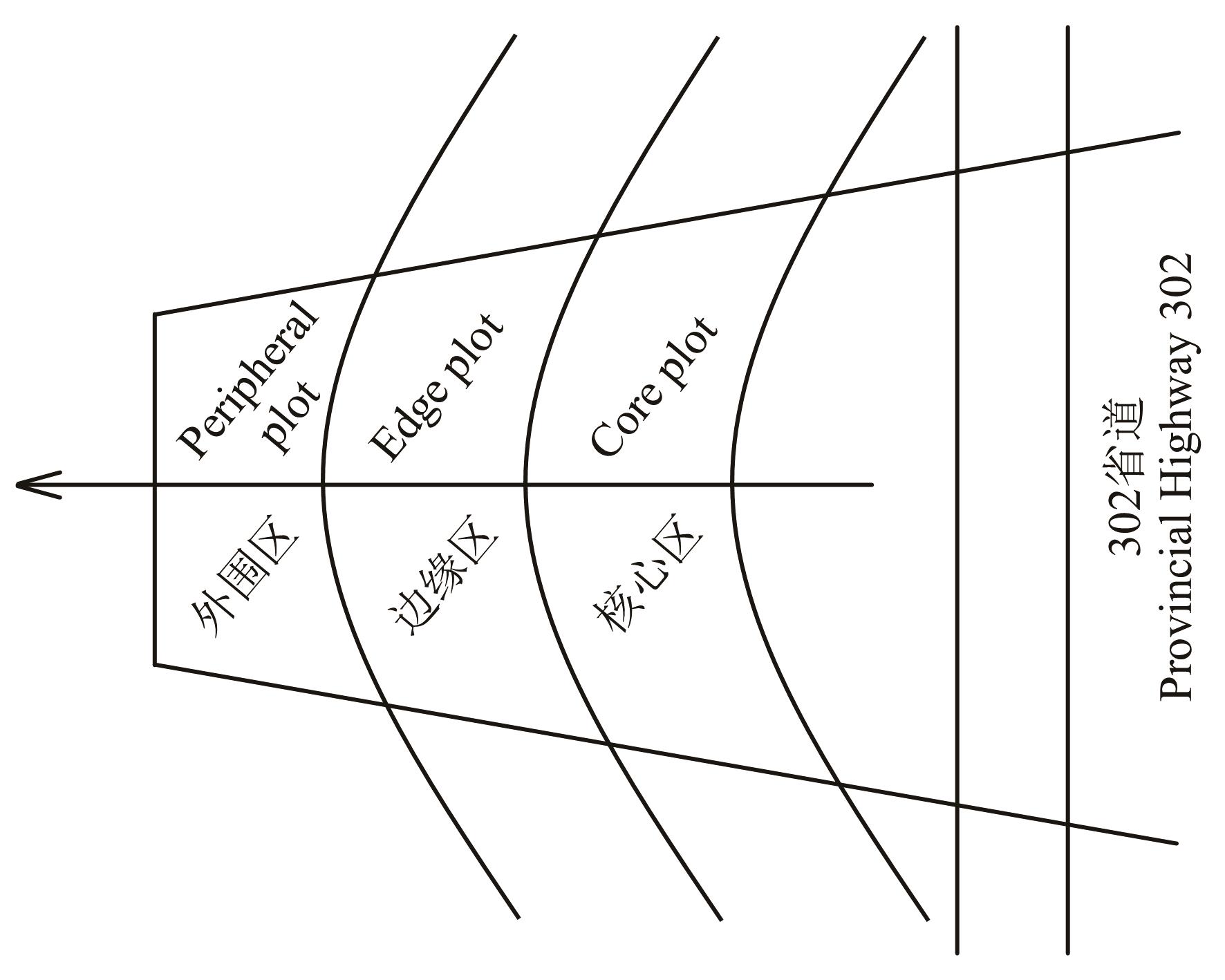
Fig.1 Distribution of plots[20]
项目 Items | 年份Year | |||||||
|---|---|---|---|---|---|---|---|---|
| 2009 | 2010 | 2014 | 2015 | 2019 | 2020 | 2021 | 2022 | |
| 年降水量Annual precipitation (mm) | 280.7 | 248.4 | 346.9 | 365.6 | 236.9 | 205.8 | 323.2 | 319.9 |
| 生长季降水量Precipitation during the growing season (mm) | 241.4 | 187.6 | 254.7 | 312.9 | 129.5 | 163.6 | 252.6 | 261.1 |
| 年均温Mean annual temperature (℃) | 8.59 | 8.78 | 9.27 | 9.43 | 9.32 | 9.06 | 10.15 | 9.83 |
Table 1 Annual precipitation, precipitation during the growing season and mean annual temperature in the study area
项目 Items | 年份Year | |||||||
|---|---|---|---|---|---|---|---|---|
| 2009 | 2010 | 2014 | 2015 | 2019 | 2020 | 2021 | 2022 | |
| 年降水量Annual precipitation (mm) | 280.7 | 248.4 | 346.9 | 365.6 | 236.9 | 205.8 | 323.2 | 319.9 |
| 生长季降水量Precipitation during the growing season (mm) | 241.4 | 187.6 | 254.7 | 312.9 | 129.5 | 163.6 | 252.6 | 261.1 |
| 年均温Mean annual temperature (℃) | 8.59 | 8.78 | 9.27 | 9.43 | 9.32 | 9.06 | 10.15 | 9.83 |
主要植物 Main plants | 核心区Core plot | 边缘区Edge plot | 外围区Peripheral plot | |||||||||
|---|---|---|---|---|---|---|---|---|---|---|---|---|
| 2010 | 2015 | 2020 | 2022 | 2010 | 2015 | 2020 | 2022 | 2010 | 2015 | 2020 | 2022 | |
| 阿尔泰狗娃花 A. altaicus | 46.98 | 6.13 | 5.46 | 9.26 | 4.54 | 7.64 | 5.21 | 6.01 | 2.11 | 16.81 | 6.46 | 7.35 |
| 达乌里胡枝子 Lespedeza davurica | 9.45 | 6.92 | 1.17 | 1.82 | — | — | 5.80 | — | — | 3.41 | — | 2.53 |
| 苦豆子 S. alopecuroides | 1.75 | 5.64 | 3.39 | 8.08 | 12.52 | 3.15 | 6.90 | 11.80 | 4.82 | 7.99 | 11.29 | 4.70 |
| 披针叶野决明 Thermopsis lanceolata | 1.81 | 2.56 | 1.55 | 1.53 | 1.55 | 5.00 | — | — | — | 4.89 | 4.98 | 1.43 |
| 刺沙蓬 S. ruthenica | 1.48 | 38.60 | 4.33 | — | 13.78 | 13.39 | 7.21 | — | 9.39 | 7.26 | 11.74 | — |
| 狗尾草 S. viridis | — | 3.54 | 19.15 | 17.36 | 17.05 | 4.14 | 6.23 | 24.43 | 5.91 | — | 8.08 | 13.12 |
| 叉枝鸦葱 S. divaricata | 6.85 | 1.00 | 12.31 | — | — | — | — | 6.71 | — | 1.21 | — | — |
| 丝叶山小苦荬 Ixeridium graminifolium | 4.05 | 2.71 | 4.97 | — | 9.05 | — | 3.19 | — | 13.52 | — | — | — |
| 草木樨状黄芪 A. melilotoides | 2.61 | 1.14 | 8.68 | — | — | 4.92 | 1.60 | — | 2.25 | 5.62 | 3.27 | — |
| 砂蓝刺头 Echinops gmelini | 2.46 | 2.96 | — | 3.33 | — | 1.51 | — | 1.19 | — | — | — | 3.23 |
| 老瓜头 C. komarovii | 3.47 | 1.90 | 3.96 | — | 1.04 | 1.19 | 1.94 | — | 1.50 | 7.44 | 5.83 | 5.80 |
| 沙生针茅 Stipa glareosa | — | 1.67 | 1.89 | 1.64 | — | — | 5.66 | 2.62 | — | — | — | — |
| 黑沙蒿 A. ordosica | 2.92 | 2.34 | — | 13.71 | 17.76 | 27.03 | 8.29 | 29.16 | 32.38 | 23.48 | 16.26 | 15.49 |
| 糙隐子草 Cleistogenes squarrosa | 7.59 | 6.30 | — | — | 3.68 | — | 3.92 | — | — | 3.91 | — | — |
| 茵陈蒿 Artemisia capillaris | — | 7.78 | 7.15 | — | — | — | 3.19 | — | — | — | 2.64 | — |
| 沙鞭 Psammochloa villosa | 3.10 | — | — | — | 1.97 | — | — | — | — | — | — | — |
| 蒙古冰草 Agropyron mongolicum | — | — | 6.41 | 1.10 | — | — | 5.30 | 2.14 | 5.17 | — | — | — |
| 蒙古岩黄芪 Hedysarum mongolicum | — | 3.56 | — | 4.19 | — | 10.97 | 5.62 | 12.41 | — | — | — | — |
| 乳浆大戟 Euphorbia esula | — | — | — | — | — | — | 5.45 | 1.70 | — | — | 4.29 | 1.58 |
| 远志 Polygala tenuifolia | — | — | — | — | — | 3.62 | — | 1.05 | — | — | — | 1.08 |
| 雾冰藜 Bassia dasyphylla | — | — | — | — | 1.59 | 4.40 | — | — | — | — | — | — |
| 花棒 Hedysarum scoparium | — | — | — | — | 3.39 | — | — | — | 7.30 | — | — | — |
| 鹅绒藤 Cynanchum chinense | — | — | — | — | — | 1.43 | — | — | — | — | — | — |
| 地锦草 Euphorbia humifusa | — | — | — | — | 1.39 | — | — | — | 2.07 | — | — | — |
| 飞廉 Carduus nutans | — | — | — | — | — | — | — | 1.94 | — | — | — | — |
| 二色补血草 Limonium bicolor | — | — | — | — | — | — | — | — | — | — | 3.94 | 2.44 |
| 尖头叶藜 Chenopodium acuminatum | — | — | — | — | — | — | — | — | — | — | 6.64 | — |
| 蒺藜 Tribulus terrestris | — | — | — | 5.21 | — | — | — | — | — | — | — | — |
| 牻牛儿苗 Erodium stephanianum | — | — | — | 2.73 | — | — | — | — | — | — | — | — |
| 猪毛菜 Kali collinum | — | — | — | 6.55 | — | — | — | 3.60 | — | — | — | 9.17 |
| 赖草 L. secalinus | 3.70 | — | — | — | 8.14 | 1.62 | — | — | 3.81 | 13.86 | — | — |
| 角蒿 Incarvillea sinensis | — | 3.65 | — | — | — | — | — | — | 2.82 | 3.09 | — | 5.67 |
| 羊草 Leymus chinensis | — | — | 3.11 | — | — | — | 5.32 | — | — | — | 4.63 | — |
| 乳苣 Mulgedium tataricum | — | — | — | 2.51 | — | — | — | — | — | — | — | 1.76 |
| 蒙古虫实 Corispermum mongolicum | — | — | 1.70 | — | — | 10.82 | — | 1.26 | — | — | 6.46 | — |
| 香青兰 Dracocephalum moldavica | — | — | — | 1.20 | — | — | — | — | — | — | — | — |
| 蒙古韭 Allium mongolicum | — | — | — | 1.01 | — | — | — | — | — | — | — | — |
| 柠条 C. korshinskii | — | — | — | — | — | — | — | — | — | — | 1.07 | — |
Table 2 Interannual changes in the importance values of major plant species in different enclosure areas
主要植物 Main plants | 核心区Core plot | 边缘区Edge plot | 外围区Peripheral plot | |||||||||
|---|---|---|---|---|---|---|---|---|---|---|---|---|
| 2010 | 2015 | 2020 | 2022 | 2010 | 2015 | 2020 | 2022 | 2010 | 2015 | 2020 | 2022 | |
| 阿尔泰狗娃花 A. altaicus | 46.98 | 6.13 | 5.46 | 9.26 | 4.54 | 7.64 | 5.21 | 6.01 | 2.11 | 16.81 | 6.46 | 7.35 |
| 达乌里胡枝子 Lespedeza davurica | 9.45 | 6.92 | 1.17 | 1.82 | — | — | 5.80 | — | — | 3.41 | — | 2.53 |
| 苦豆子 S. alopecuroides | 1.75 | 5.64 | 3.39 | 8.08 | 12.52 | 3.15 | 6.90 | 11.80 | 4.82 | 7.99 | 11.29 | 4.70 |
| 披针叶野决明 Thermopsis lanceolata | 1.81 | 2.56 | 1.55 | 1.53 | 1.55 | 5.00 | — | — | — | 4.89 | 4.98 | 1.43 |
| 刺沙蓬 S. ruthenica | 1.48 | 38.60 | 4.33 | — | 13.78 | 13.39 | 7.21 | — | 9.39 | 7.26 | 11.74 | — |
| 狗尾草 S. viridis | — | 3.54 | 19.15 | 17.36 | 17.05 | 4.14 | 6.23 | 24.43 | 5.91 | — | 8.08 | 13.12 |
| 叉枝鸦葱 S. divaricata | 6.85 | 1.00 | 12.31 | — | — | — | — | 6.71 | — | 1.21 | — | — |
| 丝叶山小苦荬 Ixeridium graminifolium | 4.05 | 2.71 | 4.97 | — | 9.05 | — | 3.19 | — | 13.52 | — | — | — |
| 草木樨状黄芪 A. melilotoides | 2.61 | 1.14 | 8.68 | — | — | 4.92 | 1.60 | — | 2.25 | 5.62 | 3.27 | — |
| 砂蓝刺头 Echinops gmelini | 2.46 | 2.96 | — | 3.33 | — | 1.51 | — | 1.19 | — | — | — | 3.23 |
| 老瓜头 C. komarovii | 3.47 | 1.90 | 3.96 | — | 1.04 | 1.19 | 1.94 | — | 1.50 | 7.44 | 5.83 | 5.80 |
| 沙生针茅 Stipa glareosa | — | 1.67 | 1.89 | 1.64 | — | — | 5.66 | 2.62 | — | — | — | — |
| 黑沙蒿 A. ordosica | 2.92 | 2.34 | — | 13.71 | 17.76 | 27.03 | 8.29 | 29.16 | 32.38 | 23.48 | 16.26 | 15.49 |
| 糙隐子草 Cleistogenes squarrosa | 7.59 | 6.30 | — | — | 3.68 | — | 3.92 | — | — | 3.91 | — | — |
| 茵陈蒿 Artemisia capillaris | — | 7.78 | 7.15 | — | — | — | 3.19 | — | — | — | 2.64 | — |
| 沙鞭 Psammochloa villosa | 3.10 | — | — | — | 1.97 | — | — | — | — | — | — | — |
| 蒙古冰草 Agropyron mongolicum | — | — | 6.41 | 1.10 | — | — | 5.30 | 2.14 | 5.17 | — | — | — |
| 蒙古岩黄芪 Hedysarum mongolicum | — | 3.56 | — | 4.19 | — | 10.97 | 5.62 | 12.41 | — | — | — | — |
| 乳浆大戟 Euphorbia esula | — | — | — | — | — | — | 5.45 | 1.70 | — | — | 4.29 | 1.58 |
| 远志 Polygala tenuifolia | — | — | — | — | — | 3.62 | — | 1.05 | — | — | — | 1.08 |
| 雾冰藜 Bassia dasyphylla | — | — | — | — | 1.59 | 4.40 | — | — | — | — | — | — |
| 花棒 Hedysarum scoparium | — | — | — | — | 3.39 | — | — | — | 7.30 | — | — | — |
| 鹅绒藤 Cynanchum chinense | — | — | — | — | — | 1.43 | — | — | — | — | — | — |
| 地锦草 Euphorbia humifusa | — | — | — | — | 1.39 | — | — | — | 2.07 | — | — | — |
| 飞廉 Carduus nutans | — | — | — | — | — | — | — | 1.94 | — | — | — | — |
| 二色补血草 Limonium bicolor | — | — | — | — | — | — | — | — | — | — | 3.94 | 2.44 |
| 尖头叶藜 Chenopodium acuminatum | — | — | — | — | — | — | — | — | — | — | 6.64 | — |
| 蒺藜 Tribulus terrestris | — | — | — | 5.21 | — | — | — | — | — | — | — | — |
| 牻牛儿苗 Erodium stephanianum | — | — | — | 2.73 | — | — | — | — | — | — | — | — |
| 猪毛菜 Kali collinum | — | — | — | 6.55 | — | — | — | 3.60 | — | — | — | 9.17 |
| 赖草 L. secalinus | 3.70 | — | — | — | 8.14 | 1.62 | — | — | 3.81 | 13.86 | — | — |
| 角蒿 Incarvillea sinensis | — | 3.65 | — | — | — | — | — | — | 2.82 | 3.09 | — | 5.67 |
| 羊草 Leymus chinensis | — | — | 3.11 | — | — | — | 5.32 | — | — | — | 4.63 | — |
| 乳苣 Mulgedium tataricum | — | — | — | 2.51 | — | — | — | — | — | — | — | 1.76 |
| 蒙古虫实 Corispermum mongolicum | — | — | 1.70 | — | — | 10.82 | — | 1.26 | — | — | 6.46 | — |
| 香青兰 Dracocephalum moldavica | — | — | — | 1.20 | — | — | — | — | — | — | — | — |
| 蒙古韭 Allium mongolicum | — | — | — | 1.01 | — | — | — | — | — | — | — | — |
| 柠条 C. korshinskii | — | — | — | — | — | — | — | — | — | — | 1.07 | — |
封育区 Fenced area | 优势种 Dominant species | 重要值变异系数Coefficient of variation (%) | 更替频率Turnover frequency |
|---|---|---|---|
| 核心区Core plot | 阿尔泰狗娃花 A. altaicus | 102.6 | 2 |
| 刺沙蓬 S. ruthenica | 143.7 | ||
| 狗尾草 S. viridis | 83.5 | ||
| 叉枝鸦葱 S. divaricata | 98.1 | ||
| 黑沙蒿 A. ordosica | 111.6 | ||
| 边缘区Edge plot | 黑沙蒿 A. ordosica | 40.3 | 0 |
| 刺沙蓬 S. ruthenica | 65.2 | ||
| 狗尾草 S. viridis | 63.5 | ||
| 外围区Peripheral plot | 黑沙蒿 A. ordosica | 31.1 | 0 |
| 阿尔泰狗娃花 A. altaicus | 65.5 | ||
| 刺沙蓬 S. ruthenica | 61.9 | ||
| 狗尾草 S. viridis | 69.4 |
Table 3 Coefficient of variation of important values and turnover frequency for dominant species in different enclosure areas
封育区 Fenced area | 优势种 Dominant species | 重要值变异系数Coefficient of variation (%) | 更替频率Turnover frequency |
|---|---|---|---|
| 核心区Core plot | 阿尔泰狗娃花 A. altaicus | 102.6 | 2 |
| 刺沙蓬 S. ruthenica | 143.7 | ||
| 狗尾草 S. viridis | 83.5 | ||
| 叉枝鸦葱 S. divaricata | 98.1 | ||
| 黑沙蒿 A. ordosica | 111.6 | ||
| 边缘区Edge plot | 黑沙蒿 A. ordosica | 40.3 | 0 |
| 刺沙蓬 S. ruthenica | 65.2 | ||
| 狗尾草 S. viridis | 63.5 | ||
| 外围区Peripheral plot | 黑沙蒿 A. ordosica | 31.1 | 0 |
| 阿尔泰狗娃花 A. altaicus | 65.5 | ||
| 刺沙蓬 S. ruthenica | 61.9 | ||
| 狗尾草 S. viridis | 69.4 |
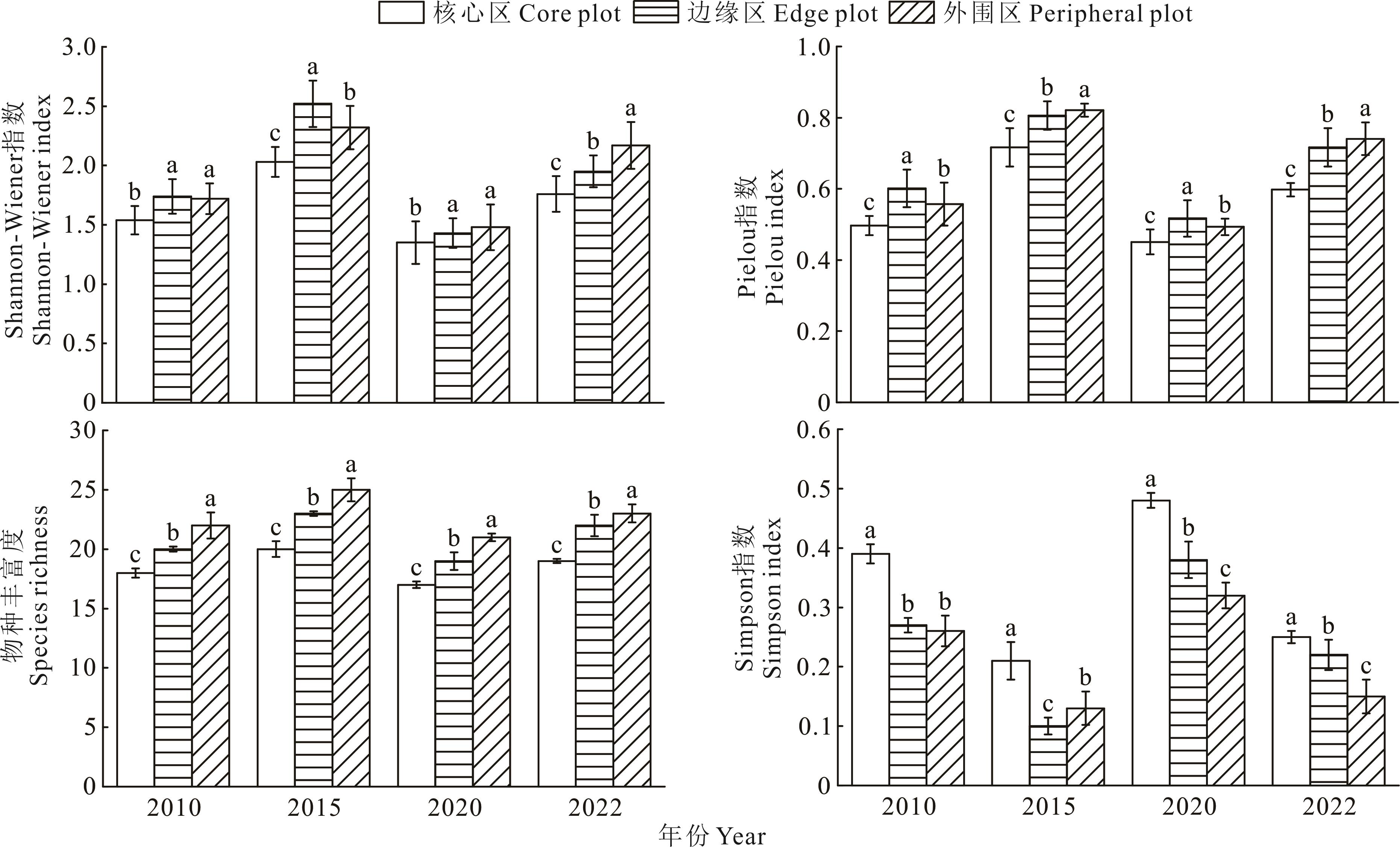
Fig.2 Interannual changes in species diversity indices in different enclosure areas
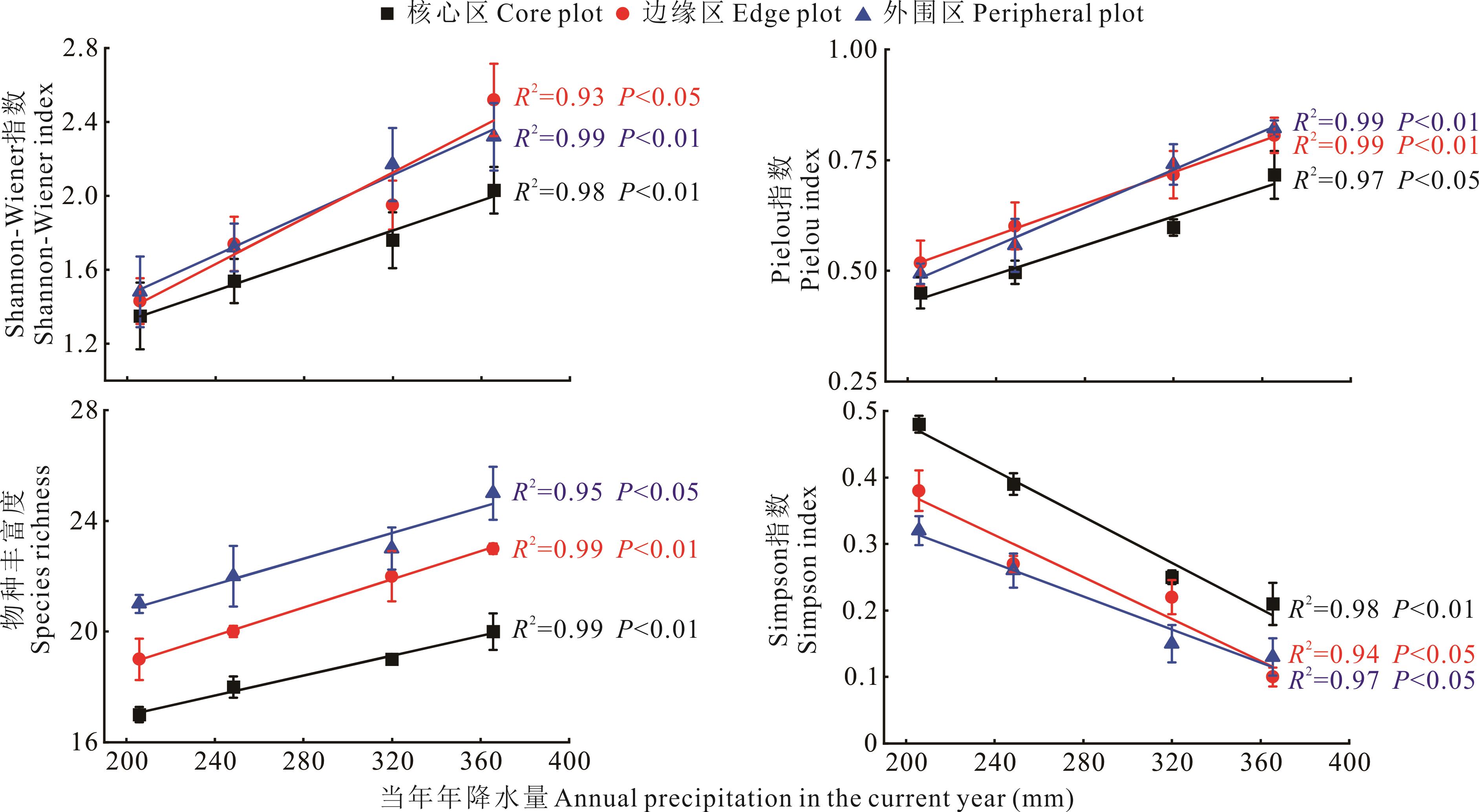
Fig.3 Relationship between species diversity and annual precipitation in the current year
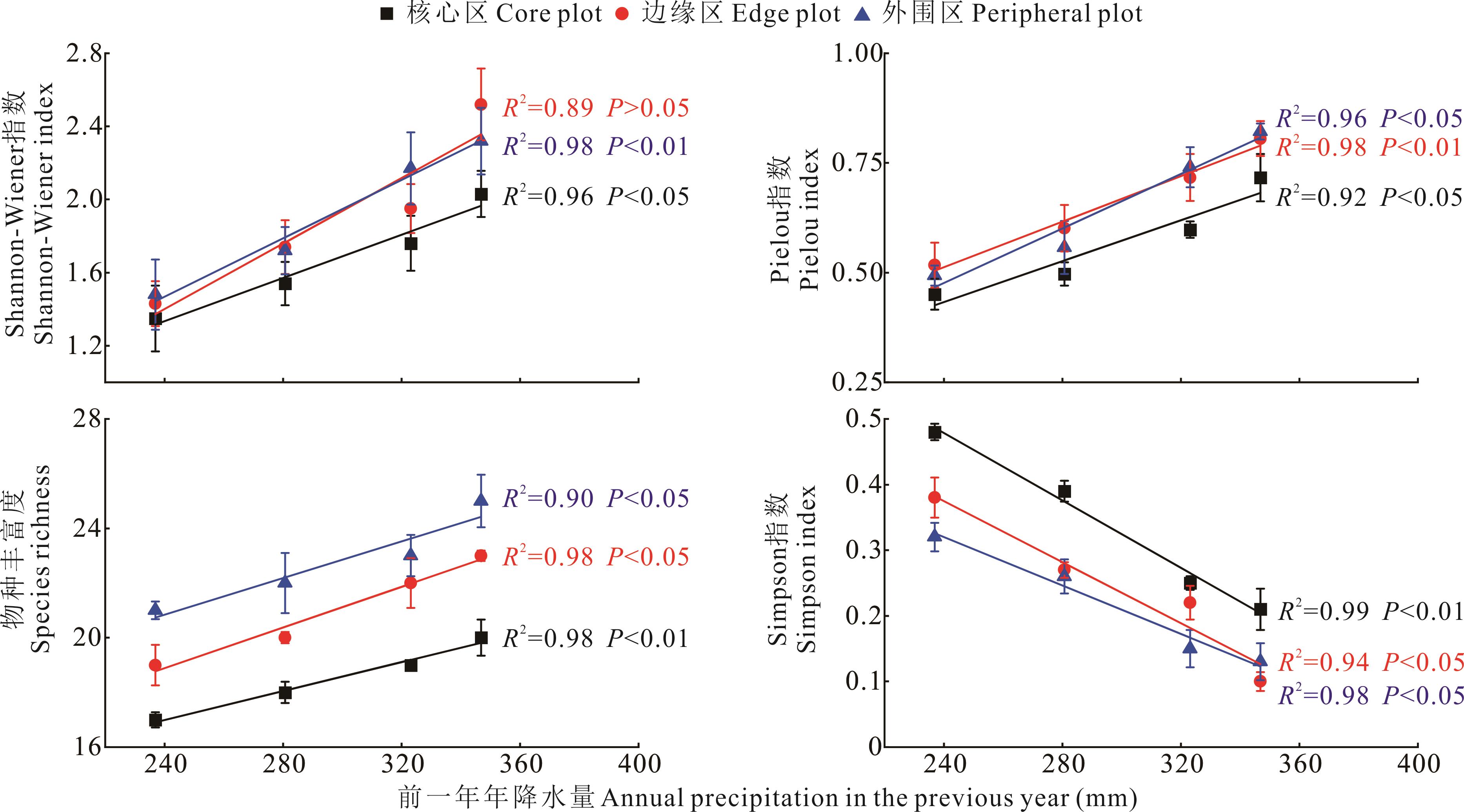
Fig.4 Relationship between species diversity and annual precipitation in the previous year
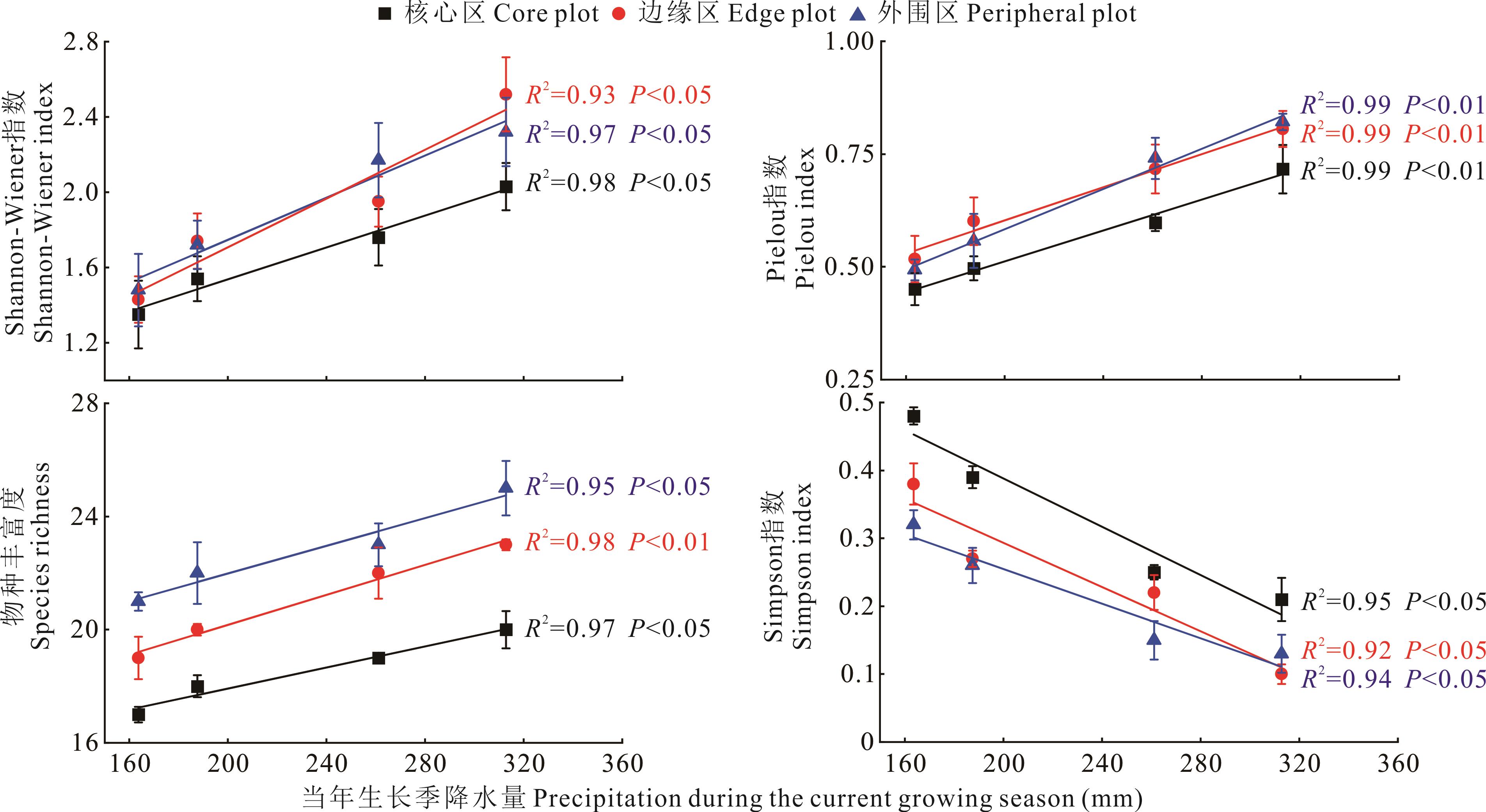
Fig.5 Relationship between species diversity and precipitation during the current growing season
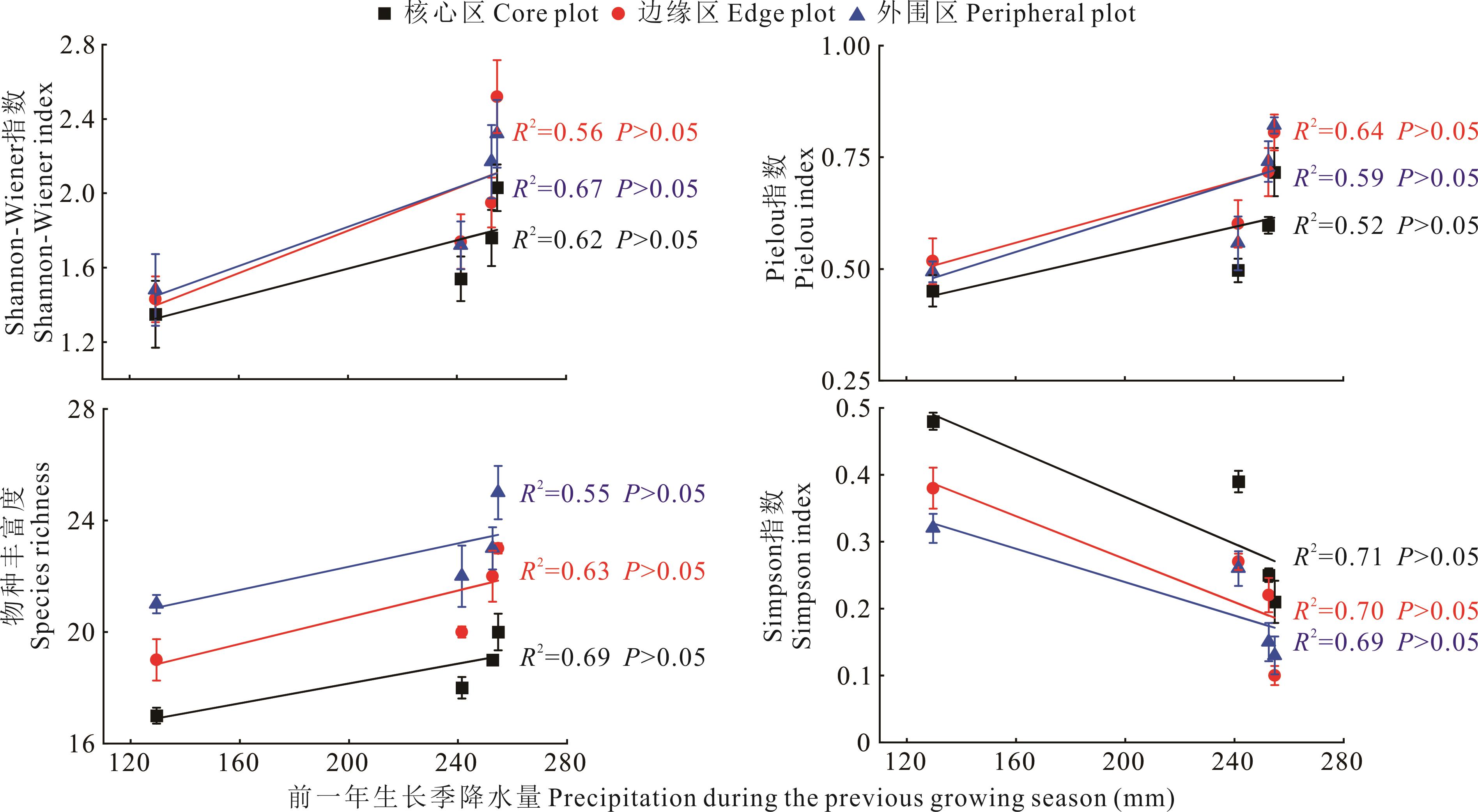
Fig.6 Relationship between species diversity and precipitation during the previous growing season
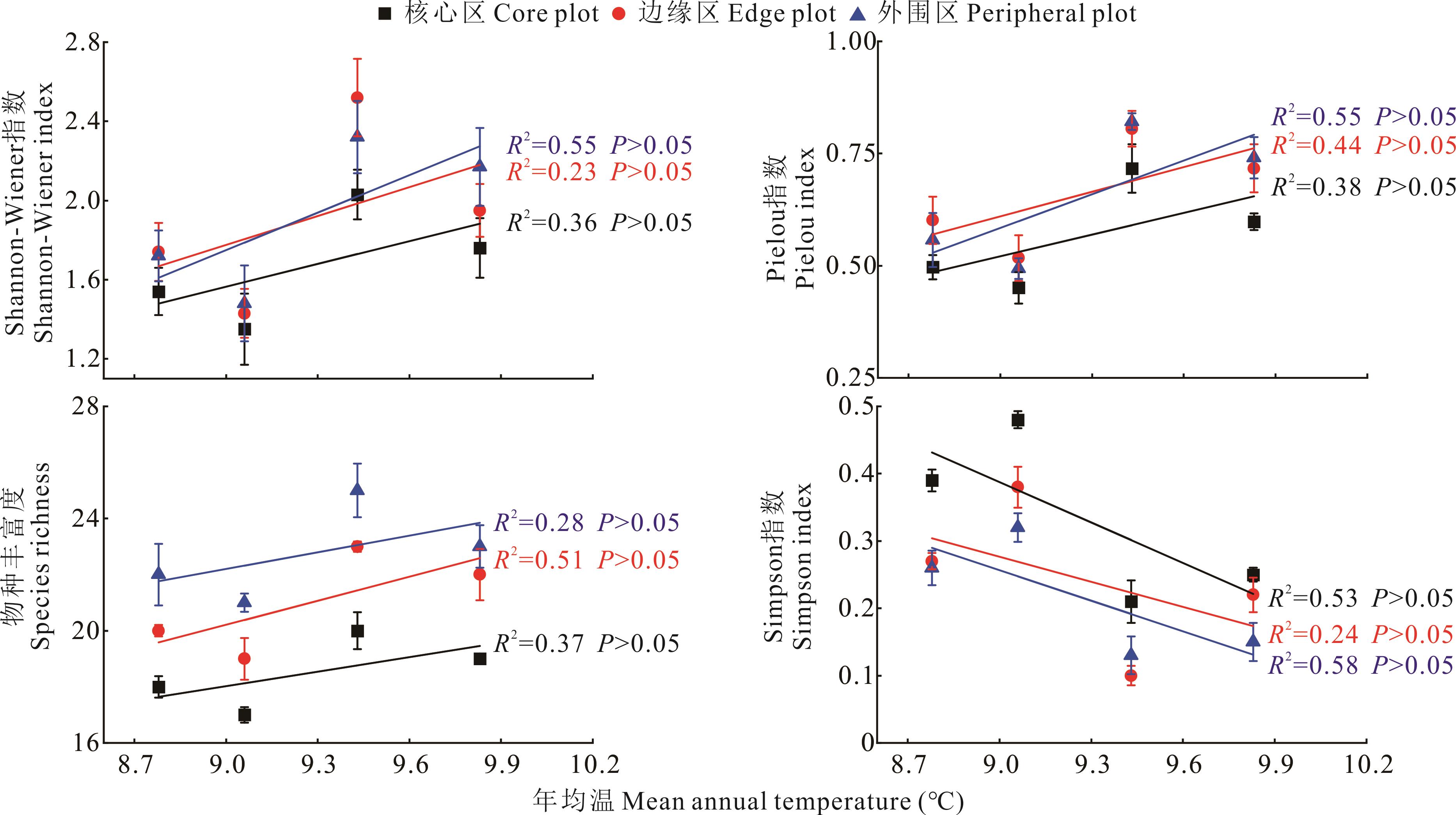
Fig.7 Relationship between species diversity and mean annual temperature
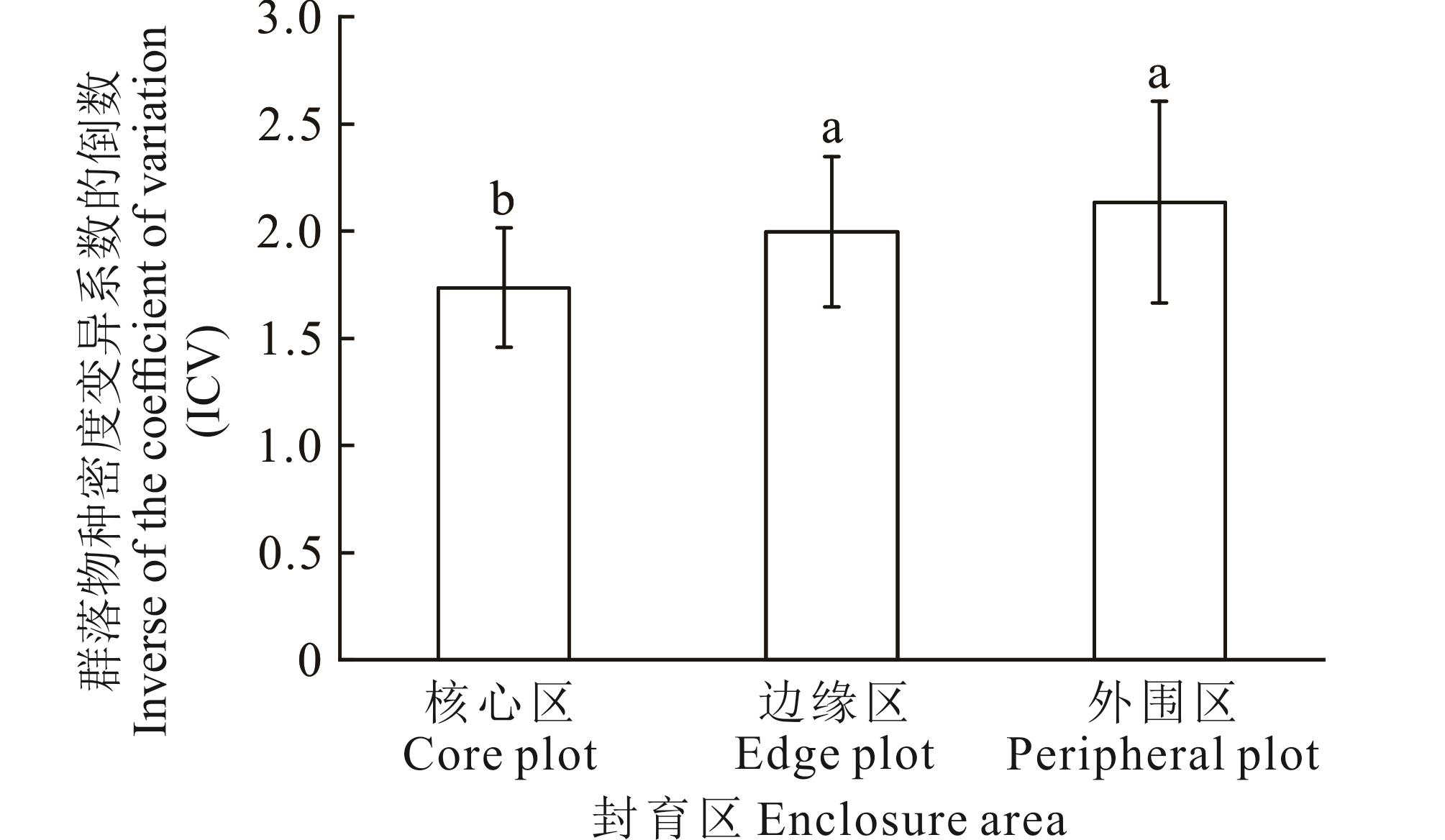
Fig.8 Plant community stability in different enclosure areas
| [1] | Dong S K. Views on distinguishing the concepts of rangeland and grassland and proposing proper use of their terminology. Chinese Journal of Ecology, 2022, 41(5): 992-1000. |
| 董世魁. 草原与草地的概念辨析及规范使用刍议. 生态学杂志, 2022, 41(5): 992-1000. | |
| [2] | Zhou Q Y, Dong Q M, Wang F C, et al. Effects of mixed grazing on aggregates and organic carbon in rhizosphere soil of Stellera chamaejasme in alpine grassland. Ecology and Environmental Sciences, 2023, 32(4): 660-667. |
| 周沁苑, 董全民, 王芳草, 等. 放牧方式对高寒草地瑞香狼毒根际土壤团聚体及有机碳特征的影响. 生态环境学报, 2023, 32(4): 660-667. | |
| [3] | Bai Y F, Zhao Y J, Wang Y, et al. Assessment of ecosystem services and ecological regionalization of grasslands support establishment of ecological security barriers in northern China. Bulletin of Chinese Academy of Sciences, 2020, 35(6): 675-689. |
| 白永飞, 赵玉金, 王扬, 等. 中国北方草地生态系统服务评估和功能区划助力生态安全屏障建设. 中国科学院院刊, 2020, 35(6): 675-689. | |
| [4] | Duan J G, Fang K, Chu J M, et al. Effect of degradation stage on the relationship between species diversity and soil nutrients in typical steppe. Acta Agrestia Sinica, 2025, 33(9): 2890-2899. |
| 段俊光, 房凯, 褚建民, 等. 退化程度对典型草原物种多样性和土壤养分关系的影响. 草地学报, 2025, 33(9): 2890-2899. | |
| [5] | Li Y F, Sun B, Nan Z B, et al. Classification system of inter-silva grasslands in northern China. Acta Prataculturae Sinica, 2025, 34(3): 175-188. |
| 李毅夫, 孙斌, 南志标, 等. 中国北方林间草地分类体系研究. 草业学报, 2025, 34(3): 175-188. | |
| [6] | Zhang Y X, Fan J W, Li Y Z, et al. Effects of grassland reuse after short-term grazing exclusion on plant community. Acta Ecologica Sinica, 2023, 43(8): 3295-3306. |
| 张雅娴, 樊江文, 李愈哲, 等. 短期围栏封育后再利用对草地植物群落的影响. 生态学报, 2023, 43(8): 3295-3306. | |
| [7] | Li Z W, Miao Y J, Zong N. Effects of grazing exclusion on plant diversity and ecosystem multifunctionality of alpine grasslands in northern Xizang. Acta Agrestia Sinica, 2025, 33(2): 596-608. |
| 李振威, 缪雨珏, 宗宁. 围栏封育对藏北高寒草地植物多样性与生态系统多功能性的影响. 草地学报, 2025, 33(2): 596-608. | |
| [8] | Zuo W Q, Wang Y H, Wang F Y, et al. Effects of enclosure on the community characteristics of Leymus chinensis in degenerated steppe. Acta Prataculturae Sinica, 2009, 18(3): 12-19. |
| 左万庆, 王玉辉, 王风玉, 等. 围栏封育措施对退化羊草草原植物群落特征影响研究. 草业学报, 2009, 18(3): 12-19. | |
| [9] | Liu X D, Li R, Zhang K B, et al. Diversity of plant species and communities complexity in artificial fencing region of semi-arid area─A case study of Yanchi County of Ningxia. Ecology and Environmental Sciences, 2014, 23(7): 1093-1101. |
| 刘小丹, 李瑞, 张克斌, 等. 半干旱区人工封育草场植物群落物种多样性与复杂性研究——以宁夏盐池为例. 生态环境学报, 2014, 23(7): 1093-1101. | |
| [10] | Nie Y Y, Xu L J, Xin X P, et al. Effects of fence enclosure on the plant community composition and niche characteristics in a temperate meadow steppe. Acta Prataculturae Sinica, 2020, 29(11): 11-22. |
| 聂莹莹, 徐丽君, 辛晓平, 等. 围栏封育对温性草甸草原植物群落构成及生态位特征的影响. 草业学报, 2020, 29(11): 11-22. | |
| [11] | Yan Y C, Tang H P. Effects of exclosure on typical steppe community properties in Inner Mongolia. Acta Botanica Boreali-Occidentalia Sinica, 2007, 27(6): 1225-1232. |
| 闫玉春, 唐海萍. 围栏禁牧对内蒙古典型草原群落特征的影响. 西北植物学报, 2007, 27(6): 1225-1232. | |
| [12] | Liu X Q, Zhang X, Zhang L F, et al. Effects of exclosure duration on the community structure and species diversity of an alpine meadow in the Qinghai-Tibet Plateau. Acta Ecologica Sinica, 2016, 36(16): 5150-5162. |
| 刘晓琴, 张翔, 张立锋, 等. 封育年限对高寒草甸群落组分和物种多样性的影响. 生态学报, 2016, 36(16): 5150-5162. | |
| [13] | Zhang Y, Cheng J, Su J S, et al. Diversity-productivity relationship of plant communities in typical grassland during the long-term grazing exclusion succession. Chinese Journal of Plant Ecology, 2022, 46(2): 176-187. |
| 张义, 程杰, 苏纪帅, 等. 长期封育演替下典型草原植物群落生产力与多样性关系. 植物生态学报, 2022, 46(2): 176-187. | |
| [14] | Chen X Y. Ecohydrological processes and adaptation of tree, shrub and herbs in desert steppe. Yinchuan: Ningxia University, 2024. |
| 陈晓莹. 荒漠草原乔灌草植被生态水文过程及适应性研究. 银川: 宁夏大学, 2024. | |
| [15] | Huang X M, Zhang Y, Li J P. Responses of vegetation characteristics of Mu Us Desert steppe to changes in precipitation. Acta Agrestia Sinica, 2022, 30(1): 178-187. |
| 黄绪梅, 张翼, 李建平. 毛乌素荒漠草原植被特征对降水变化的响应. 草地学报, 2022, 30(1): 178-187. | |
| [16] | Zhang Y F, Wang X, Pan H Z, et al. Long-term enclosure restoration effects and their environmental dependencies in desert steppes of northern China. Acta Ecologica Sinica, 2025, 45(17): 8529-8543. |
| 张艺斐, 王兴, 潘海珠, 等. 中国北方荒漠草原长期围栏封育恢复效应及其环境依赖性. 生态学报, 2025, 45(17): 8529-8543. | |
| [17] | Zhang C, Wei S T, Liu X Y, et al. Spatial-temporal evolution process of vegetation and influencing factors in the arid-hot valley of southwest China based on Google Earth Engine. Acta Ecologica Sinica, 2025, 45(11): 5398-5412. |
| 张成, 韦疏桐, 刘希宇, 等. 基于Google Earth Engine平台的西南干热河谷植被时空演变特征及其驱动要素研究. 生态学报, 2025, 45(11): 5398-5412. | |
| [18] | Zhang P, Kang J L, Yuan Z, et al. Similarities and differences of the plant communities on two vegetation-dunes and their responses to dune morphology. Acta Ecologica Sinica, 2017, 37(23): 7920-7927. |
| 张萍, 康经理, 袁瑱, 等. 两类植物型沙丘上植物群落的异同及其对沙丘形态的响应. 生态学报, 2017, 37(23): 7920-7927. | |
| [19] | Liu W S, Xie Y Z, Dai H J, et al. Study on community growth of Stipa bungeana population under different grazing intensities in desert steppe. Journal of Agricultural Sciences, 2008, 29(2): 50-53. |
| 刘王锁, 谢应忠, 代红军, 等. 荒漠草原不同放牧强度下长芒草种群补偿性生长的研究. 农业科学研究, 2008, 29(2): 50-53. | |
| [20] | Feng X, Liu B J, Liu J K, et al. Study on the dynamics of artificial fenced grassland vegetation, Ningxia Yanchi County, semi-arid regions of China. Ecology and Environmental Sciences, 2020, 29(10): 1961-1970. |
| 冯湘, 刘宝军, 刘建康, 等. 半干旱区人工封育草地植被动态研究—以宁夏盐池县为例. 生态环境学报, 2020, 29(10): 1961-1970. | |
| [21] | Yuan H Y, Du L T, Pan H Z, et al. Simulation of carbon and water fluxes of planted shrub ecosystem in desert steppe biome zone based on parameter optimization. Acta Ecologica Sinica, 2023, 43(13): 5546-5557. |
| 袁洪艺, 杜灵通, 潘海珠, 等. 基于参数优化的人工灌丛生态系统碳水通量模拟. 生态学报, 2023, 43(13): 5546-5557. | |
| [22] | Zhang J, Zuo X A, Lv P. Effects of changes in growing season precipitation regimes on plant community structure, function and aboveground biomass in typical habitats in the Horqin Sandy Land. Journal of Desert Research, 2024, 44(4): 1-13. |
| 张晶, 左小安, 吕朋. 生长季降水格局变化对科尔沁沙地典型生境植物群落结构、功能和地上生物量的影响. 中国沙漠, 2024, 44(4): 1-13. | |
| [23] | Wang J, Zhang D S, Xiao Y M, et al. Relationships between the characteristics of root exudate and environmental factors in the alpine steppe following long-term grazing exclusion. Chinese Journal of Plant Ecology, 2025, 49(4): 596-609. |
| 王娟, 张登山, 肖元明, 等. 长期围封后高寒草原植物根系分泌物特征与环境因子关系. 植物生态学报, 2025, 49(4): 596-609. | |
| [24] | Yuan Z Y, Zhang L, Liao L R, et al. Relationship between grassland plant diversity and community stability and its driving factors on the Loess Plateau. Acta Ecologica Sinica, 2023, 43(1): 60-69. |
| 袁梓裕, 张路, 廖李容, 等. 黄土高原草地植物多样性与群落稳定性的关系及其驱动因素. 生态学报, 2023, 43(1): 60-69. | |
| [25] | Luo L K, Yin M Y, Zhu L, et al. Herbaceous plant diversity and environmental interpretation in different habitats: A case study of the Anqing section of the Yangtze River. Acta Agrestia Sinica, 2025, 33(6): 1934-1946. |
| 罗来开, 尹明月, 朱玲, 等. 不同生境草本植物多样性及环境解释:以长江安庆段河岸带为例. 草地学报, 2025, 33(6): 1934-1946. | |
| [26] | Modrow T, Kuehne C, Saha S, et al. Photosynthetic performance, height growth, and dominance of naturally regenerated sessile oak (Quercus petraea [Mattuschka] Liebl.) seedlings in small-scale canopy openings of varying sizes. European Journal of Forest Research, 2020, 139(1): 41-52. |
| [27] | Wang M M, Liu X P, He Y H, et al. How enclosure influences restored plant community changes of different initial types in Horqin Sandy Land. Chinese Journal of Plant Ecology, 2019, 43(8): 672-684. |
| 王明明, 刘新平, 何玉惠, 等. 科尔沁沙地封育恢复过程中植物群落特征变化及影响因素. 植物生态学报, 2019, 43(8): 672-684. | |
| [28] | Yin F, Zheng J, Chen Y Y, et al. Characteristics of different plant community types, species diversity and biomass accumulation in wetlands of the Three Gorges Reservoir Area. Acta Ecologica Sinica, 2025, 45(14): 6923-6933. |
| 殷凡, 郑杰, 陈洋溢, 等. 三峡库区湿地植物群落类型、物种多样性与生物量变化特征. 生态学报, 2025, 45(14): 6923-6933. | |
| [29] | Kong C H, Wang P. Allelopathy and chemical communication among plants: Questions and reflections. Chinese Journal of Applied Ecology, 2025, 36(5): 1540-1552. |
| 孔垂华, 王朋. 植物化感作用和植物化学识别通讯:问题与思考. 应用生态学报, 2025, 36(5): 1540-1552. | |
| [30] | Li Y F, Chu X H, Li J Y, et al. Allelopathic effects of Euphorbia jolkinii on seed germination and seedling growth of alfalfa. Acta Agrestia Sinica, 2022, 30(2): 394-402. |
| 李彦飞, 初晓辉, 李嘉懿, 等. 大狼毒对紫花苜蓿种子萌发及幼苗生长的化感效应研究. 草地学报, 2022, 30(2): 394-402. | |
| [31] | Jiao C C, Zhao D Y, Zeng J. The assembly mechanisms of bacterial communities in lakes and their responses to eutrophication. Acta Ecologica Sinica, 2024, 44(14): 5925-5944. |
| 焦聪聪, 赵大勇, 曾巾. 湖泊细菌群落构建机制及其对富营养化的响应. 生态学报, 2024, 44(14): 5925-5944. | |
| [32] | Zhang S S, Guan P T, Yang J J, et al. Metacommunity theory and its application in community ecology of nematodes. Chinese Journal of Applied Ecology, 2025, 36(5): 1590-1598. |
| 张思思, 管平婷, 杨菁婧, 等. 集合群落理论及其在线虫群落生态学中的应用. 应用生态学报, 2025, 36(5): 1590-1598. | |
| [33] | Ma W J. Nitrogen and phosphorus utilization strategy in Leymus chinensis and Artemisia frigida. Beijing: Chinese Academy of Agricultural Sciences, 2019. |
| 马文静. 羊草和冷蒿的氮磷养分利用策略研究. 北京: 中国农业科学院, 2019. | |
| [34] | Tang H P, Chen J, Xue H L. Ecological thresholds: Concept, methods and research outlooks. Chinese Journal of Plant Ecology, 2015, 39(9): 932-940. |
| 唐海萍, 陈姣, 薛海丽. 生态阈值: 概念、方法与研究展望. 植物生态学报, 2015, 39(9): 932-940. | |
| [35] | Suding K N, Hobbs R J. Threshold models in restoration and conservation: a developing framework. Trends in Ecology & Evolution, 2008, 24(5): 271-279. |
| [36] | Connell J H. Diversity in tropical rain forests and coral reefs: high diversity of trees and corals is maintained only in non-equilibrium state. Science, 1978, 199(4335): 1302-1310. |
| [37] | Bai X H, Zhao W W, Yin C C. Change process and interaction mechanism of ecosystem services from the perspective of regime shift. Acta Ecologica Sinica, 2022, 42(15): 6054-6065. |
| 白晓航, 赵文武, 尹彩春. 稳态转换视角下生态系统服务变化过程与作用机制. 生态学报, 2022, 42(15): 6054-6065. | |
| [38] | Fei C, Dong Y Q, An S Z. Study on species diversity and influencing factors of desert community vegetation in northern Xinjiang. Chinese Journal of Grassland, 2023, 45(7): 49-59. |
| 费诚, 董乙强, 安沙舟. 新疆北疆荒漠群落植被的物种多样性及影响因素研究. 中国草地学报, 2023, 45(7): 49-59. | |
| [39] | Hua Y C, Sarula, Bao W X. Temporal lag of grassland vegetation growth response to precipitation in Inner Mongolia. Journal of Northeast Forestry University, 2021, 49(7): 47-55. |
| 滑永春, 萨如拉, 包文学. 降水对内蒙古草原植被生长的影响. 东北林业大学学报, 2021, 49(7): 47-55. | |
| [40] | Du Z Y, An H, Wang B, et al. Effects of nutrient addition and precipitation manipulation on plant species diversity and biomass of in a desert grassland. Acta Agrestia Sinica, 2020, 28(4): 1100-1110. |
| 杜忠毓, 安慧, 王波, 等. 养分添加和降水变化对荒漠草原植物群落物种多样性和生物量的影响. 草地学报, 2020, 28(4): 1100-1110. | |
| [41] | Wang Y H, Wang Z W, Pan Z L, et al. Effects of stocking rate and simulated precipitation on the plant diversity of desert steppe. Chinese Journal of Grassland, 2018, 40(2): 89-94. |
| 王悦骅, 王忠武, 潘占磊, 等. 载畜率和模拟降水对荒漠草原植物物种多样性的影响. 中国草地学报, 2018, 40(2): 89-94. | |
| [42] | Yang X Y, Zhang S X, Wen J, et al. Spatial pattern of herbaceous plant species diversity and its changes due to simulated warming in the forest community of the Luliang Mountains. Acta Ecologica Sinica, 2018, 38(18): 6642-6654. |
| 杨晓艳, 张世雄, 温静, 等. 吕梁山森林群落草本层植物物种多样性的空间格局及其对模拟增温的响应. 生态学报, 2018, 38(18): 6642-6654. | |
| [43] | Wang Q, Zheng J H, Zhao M L, et al. Effects of warming on early restoration of degraded grassland in desert steppe. Acta Agrestia Sinica, 2022, 30(5): 1077-1085. |
| 王琪, 郑佳华, 赵萌莉, 等. 增温对荒漠草原不同退化程度草地恢复初期影响的研究. 草地学报, 2022, 30(5): 1077-1085. | |
| [44] | Jiang F Y, Wei X T, Kang B Y, et al. Effects of warming on alpine meadow diversity and primary productivity. Acta Agrestia Sinica, 2019, 27(2): 298-305. |
| 姜风岩, 位晓婷, 康濒月, 等. 模拟增温对高寒草甸植物物种多样性与初级生产力的影响. 草地学报, 2019, 27(2): 298-305. | |
| [45] | Ma L, Zhang Q, Zhang Z H, et al. Effects of gradient warming on species diversity and biomass in alpine meadows. Acta Agrestia Sinica, 2020, 28(5): 1395-1402. |
| 马丽, 张骞, 张中华, 等. 梯度增温对高寒草甸物种多样性和生物量的影响. 草地学报, 2020, 28(5): 1395-1402. |
| [1] | Xue-qin YANG, Jian-ping LI, Jing CHEN, Jia-li LIAN, Cui HAN, Xu LUO, Ying ZHAO. The impact of precipitation changes on carbon and nitrogen storage and retention rates in desert steppe ecosystems [J]. Acta Prataculturae Sinica, 2026, 35(5): 48-60. |
| [2] | Jia-li LIAN, Jing CHEN, Xue-qing YANG, Ying ZHAO, Xu LUO, Cui HAN, Jian-ping LI. Effects of precipitation changes on the soil organic carbon distribution and stability of organic carbon pool in desert steppe [J]. Acta Prataculturae Sinica, 2026, 35(5): 85-98. |
| [3] | Shi-jie ZHOU, Yi-lian WANG, Pan SUN, Jing SHANG, Wen-yu YANG, Xue-gui WANG, Ji-zhi YANG. Analysis of weed species and community characteristics in soybean-maize fields with a banded compound planting pattern in Sichuan Province [J]. Acta Prataculturae Sinica, 2026, 35(2): 143-154. |
| [4] | Jia-qi HE, Lin WU, Zhi-min QIU, Xu-yong GAO, Lun-lun GAO, Shuang-bin FU, Yan-ping YANG, Pei-long WANG, Wan XU, Zhuang ZHOU. Species diversity and community characteristics of weeds on the banks of the Wenzhou expressway [J]. Acta Prataculturae Sinica, 2026, 35(2): 40-53. |
| [5] | Wen-hui DENG, Ke-chen SONG, Hao ZHANG, Si-yu GUAN, Jia-yi YONG, Tie-na XIE, Hai-ying HU. Effects of changes in precipitation on stomatal morphology and photosynthetic and physiological characteristics of major species in desert steppe plant communities [J]. Acta Prataculturae Sinica, 2026, 35(1): 65-78. |
| [6] | Han-xing YANG, Ning-ge LIU, Yu-lou TANG, Huan LI, Yi-ming ZHU, Jia-meng GUO, Hao WANG, Rui-xin SHAO, Yong-chao WANG, Qing-hua YANG. Effects of salicylic acid on antioxidant and photosynthetic capacity of maize under high temperature, drought and their combined stress [J]. Acta Prataculturae Sinica, 2026, 35(1): 79-92. |
| [7] | Yuan-yuan LIU, Xu WANG, Qi WEI, Li-juan CHE, Meng YUAN, Bo WANG. The role of HaFT-9, a 14-3-3 protein from Haloxylon ammodendron, in the cross regulation of high temperature and drought stress [J]. Acta Prataculturae Sinica, 2025, 34(9): 134-146. |
| [8] | Jun-ling CHEN, Sha-sha WANG, Jing YE, Yi LIN, Yi-xiang WANG. Soil carbon mineralization in an orchard with and without interplanted ground cover species and its temperature sensitivity under long-term conditions [J]. Acta Prataculturae Sinica, 2025, 34(9): 53-64. |
| [9] | Bin FENG, Xiao-xia YANG, Yu-zhen LIU, Wen-ting LIU, Wei-dong LYU, Yan-fen ZHANG, Quan-min DONG. Effects of different livestock classes on species diversity, niches, and interspecific associations in alpine grassland [J]. Acta Prataculturae Sinica, 2025, 34(8): 1-14. |
| [10] | Wen-hui DENG, Ke-chen SONG, Hao ZHANG, Si-yu GUAN, Jia-yi YONG, Hai-ying HU. Structure and diversity characteristics of the rhizosphere microbial community of dominant plants on the desert steppe under changing precipitation [J]. Acta Prataculturae Sinica, 2025, 34(5): 12-26. |
| [11] | Si-ran WANG, Bei-yi LIU, Ji-peng TIAN, Yun-hui CHENG, Neng-xiang XU, Wen-jie ZHANG, Xin WANG, Cheng-long DING. Improvement in the fermentation quality of Italian ryegrass silage by ensiling with combined lactic acid bacteria inoculants at low temperature [J]. Acta Prataculturae Sinica, 2025, 34(5): 159-170. |
| [12] | Xin GONG, Xin-ru HUO, Wen LI, Yan-dong YANG, Chao LIU, Wei-chun QIN, Yan SHEN, Guo-hui WANG, Hong-bin MA. Vegetation community characteristics and spatial differentiation in mountain grassland in Luoshan, Ningxia [J]. Acta Prataculturae Sinica, 2025, 34(2): 1-15. |
| [13] | Rong MA, Jun-yao LI, Ping YUE, Xu-jun MA, Zhen BAI, Ling ZHUANG, Jing BAI, Xue-yong ZHAO, Shao-kun WANG. Regulatory mechanisms of biomass allocation governed by functional traits of dominant plants in desert steppe under precipitation changes [J]. Acta Prataculturae Sinica, 2025, 34(11): 31-39. |
| [14] | Ping-an BAO, Zhi-lin WEN, Yan WANG, Yan-hu CHEN, Bo JI, Zhan-jun WANG, Xu-dong WU, Qi JIANG. Effects of different forage reseeding patterns on plant community structure and soil characteristics in desert steppe [J]. Acta Prataculturae Sinica, 2025, 34(10): 62-73. |
| [15] | ASITAIKEN·Julihaiti, Zong-jiu SUN, Bing-jie YU, DIDAER·Bisulidan, Mei-sha LI, Yi-sheng JING. Effects of enclosure on soil microbial carbon source utilization characteristics of sagebrush desert grassland [J]. Acta Prataculturae Sinica, 2025, 34(1): 29-40. |
| Viewed | ||||||
|
Full text |
|
|||||
|
Abstract |
|
|||||
