
ISSN 1004-5759 CN 62-1105/S
Acta Prataculturae Sinica ›› 2026, Vol. 35 ›› Issue (8): 1-13.DOI: 10.11686/cyxb2025329
Wen-jie SHI1,2,3,4( ), Xiao-wei LI1,2,3,4(), Zhen-qiang REN5, Ji-de LIU5, Ling LIU5, Shu-xiang HAO5, Yun-xia LI5
Received:2025-08-14
Revised:2025-09-20
Online:2026-08-20
Published:2026-06-22
Contact:
Xiao-wei LI
Wen-jie SHI, Xiao-wei LI, Zhen-qiang REN, Ji-de LIU, Ling LIU, Shu-xiang HAO, Yun-xia LI. Characteristics of understory herbaceous soil seed banks in Caragana korshinskii sand-fixation thickets of different ages in the Mu Us Sandy Land[J]. Acta Prataculturae Sinica, 2026, 35(8): 1-13.
物种 Species | 科 Family | 属 Genus | LF | 占比Percentage (%) | |||
|---|---|---|---|---|---|---|---|
| 10 a | 30 a | 50 a | 70 a | ||||
| 短花针茅Stipa breviflora | 禾本科Poaceae | 针茅属Stipa | P | - | 1.34±1.61 | - | 2.46±3.72 |
| 画眉草Eragrostis pilosa | 禾本科Poaceae | 画眉草属Eragrostis | A | - | 4.75±0.10 | 29.70±3.29 | 15.65±11.35 |
| 三芒草Aristida adscensionis | 禾本科Poaceae | 三芒草属Aristida | A | - | 3.31±2.91 | - | 4.79±1.45 |
| 狗尾草Setaria viridis | 禾本科Poaceae | 狗尾草属Setaria | A | - | 4.99±0.56 | 8.56±8.04 | 11.62±10.46 |
| 锋芒草Tragus mongolorum | 禾本科Poaceae | 锋芒草属Tragus | A | - | - | - | 2.06±1.33 |
| 无芒隐子草Cleistogenes songorica | 禾本科Poaceae | 隐子草属Cleistogenes | P | - | - | - | 0.75±0.13 |
| 赖草Leymus secalinus | 禾本科Poaceae | 赖草属Leymus | P | - | - | - | 2.25±1.89 |
| 白沙蒿Artemisia blepharolepis | 菊科Asteraceae | 蒿属Artemisia | A | 44.44±9.62 | - | 3.49±2.07 | 6.15±5.06 |
| 猪毛蒿A. scoparia | 菊科Asteraceae | 蒿属Artemisia | A | - | 1.60±1.42 | 27.70±13.26 | 18.32±8.08 |
| 圆头蒿Artemisia sphaerocephala | 菊科Asteraceae | 蒿属Artemisia | S | - | - | - | 0.53±0.72 |
| 黑沙蒿A. ordosica | 菊科Asteraceae | 蒿属Artemisia | S | - | - | 4.01±3.67 | 1.77±1.06 |
| 栉叶蒿Neopallasia pectinata | 菊科Asteraceae | 栉叶蒿属Neopallasia | A | 16.67±28.87 | - | - | 0.82±0.43 |
| 中华苦荬菜Ixeris chinensis | 菊科Asteraceae | 苦荬菜属Ixeris | P | - | 0.35±0.20 | 0.64±0.11 | 0.50±0.47 |
| 砂蓝刺头Echinops gmelinii | 菊科Asteraceae | 蓝刺头属Echinops | A | - | 0.30±0.12 | - | - |
| 花花柴Karelinia caspia | 菊科Asteraceae | 花花柴属Karelinia | P | - | - | - | 0.62±0.11 |
| 蒙古虫实Corispermum mongolicum | 苋科Amaranthaceae | 虫实属Corispermum | A | 55.56±9.62 | 4.29±3.66 | 1.60±2.77 | - |
| 藜Chenopodium album | 苋科Amaranthaceae | 藜属Chenopodium | A | - | 67.56±9.75 | 5.74±5.16 | 23.38±10.34 |
| 猪毛菜Salsola collina | 苋科Amaranthaceae | 猪毛菜属Salsola | A | - | 1.50±2.60 | - | - |
| 刺沙蓬S. tragus | 苋科Amaranthaceae | 猪毛菜属Salsola | A | - | 6.14±2.24 | 8.13±2.20 | 2.16±2.02 |
| 雾冰藜Grubovia dasyphylla | 苋科Amaranthaceae | 雾冰藜属Grubovia | A | - | - | 5.26±5.02 | 1.12±1.05 |
| 华北白前Vincetoxicum mongolicum | 夹竹桃科Apocynaceae | 白前属Vincetoxicum | P | - | 0.35±0.60 | - | - |
| 地梢瓜Cynanchum thesioides | 夹竹桃科Apocynaceae | 鹅绒藤属Cynanchum | P | - | - | - | 2.00±0.55 |
| 蒙古葱Allium mongolicum | 石蒜科Amaryllidaceae | 葱属Allium | P | - | 2.14±2.13 | 4.23±2.47 | 0.91±0.88 |
| 细叶韭Allium tenuissimum | 石蒜科Amaryllidaceae | 葱属Allium | P | - | - | 1.60±1.56 | 0.43±0.73 |
| 远志Polygala tenuifolia | 远志科Polygalaceae | 远志属Polygala | P | - | 1.09±1.88 | - | - |
| 地锦草Euphorbia humifusa | 大戟科Euphorbiaceae | 大戟属Euphorbia | A | - | 0.30±0.12 | - | 0.53±0.62 |
| 沙生大戟Euphorbia kozlovi | 大戟科Euphorbiaceae | 大戟属Euphorbia | P | - | - | - | 0.94±0.62 |
| 沙木蓼Atraphaxis bracteata | 廖科Polygonaceae | 木蓼属Atraphaxi | S | - | - | - | 0.24±0.41 |
Table 1 Species composition and quantitative proportions of soil seed banks in C. korshinskii sand-fixation forests with different sand-fixation durations
物种 Species | 科 Family | 属 Genus | LF | 占比Percentage (%) | |||
|---|---|---|---|---|---|---|---|
| 10 a | 30 a | 50 a | 70 a | ||||
| 短花针茅Stipa breviflora | 禾本科Poaceae | 针茅属Stipa | P | - | 1.34±1.61 | - | 2.46±3.72 |
| 画眉草Eragrostis pilosa | 禾本科Poaceae | 画眉草属Eragrostis | A | - | 4.75±0.10 | 29.70±3.29 | 15.65±11.35 |
| 三芒草Aristida adscensionis | 禾本科Poaceae | 三芒草属Aristida | A | - | 3.31±2.91 | - | 4.79±1.45 |
| 狗尾草Setaria viridis | 禾本科Poaceae | 狗尾草属Setaria | A | - | 4.99±0.56 | 8.56±8.04 | 11.62±10.46 |
| 锋芒草Tragus mongolorum | 禾本科Poaceae | 锋芒草属Tragus | A | - | - | - | 2.06±1.33 |
| 无芒隐子草Cleistogenes songorica | 禾本科Poaceae | 隐子草属Cleistogenes | P | - | - | - | 0.75±0.13 |
| 赖草Leymus secalinus | 禾本科Poaceae | 赖草属Leymus | P | - | - | - | 2.25±1.89 |
| 白沙蒿Artemisia blepharolepis | 菊科Asteraceae | 蒿属Artemisia | A | 44.44±9.62 | - | 3.49±2.07 | 6.15±5.06 |
| 猪毛蒿A. scoparia | 菊科Asteraceae | 蒿属Artemisia | A | - | 1.60±1.42 | 27.70±13.26 | 18.32±8.08 |
| 圆头蒿Artemisia sphaerocephala | 菊科Asteraceae | 蒿属Artemisia | S | - | - | - | 0.53±0.72 |
| 黑沙蒿A. ordosica | 菊科Asteraceae | 蒿属Artemisia | S | - | - | 4.01±3.67 | 1.77±1.06 |
| 栉叶蒿Neopallasia pectinata | 菊科Asteraceae | 栉叶蒿属Neopallasia | A | 16.67±28.87 | - | - | 0.82±0.43 |
| 中华苦荬菜Ixeris chinensis | 菊科Asteraceae | 苦荬菜属Ixeris | P | - | 0.35±0.20 | 0.64±0.11 | 0.50±0.47 |
| 砂蓝刺头Echinops gmelinii | 菊科Asteraceae | 蓝刺头属Echinops | A | - | 0.30±0.12 | - | - |
| 花花柴Karelinia caspia | 菊科Asteraceae | 花花柴属Karelinia | P | - | - | - | 0.62±0.11 |
| 蒙古虫实Corispermum mongolicum | 苋科Amaranthaceae | 虫实属Corispermum | A | 55.56±9.62 | 4.29±3.66 | 1.60±2.77 | - |
| 藜Chenopodium album | 苋科Amaranthaceae | 藜属Chenopodium | A | - | 67.56±9.75 | 5.74±5.16 | 23.38±10.34 |
| 猪毛菜Salsola collina | 苋科Amaranthaceae | 猪毛菜属Salsola | A | - | 1.50±2.60 | - | - |
| 刺沙蓬S. tragus | 苋科Amaranthaceae | 猪毛菜属Salsola | A | - | 6.14±2.24 | 8.13±2.20 | 2.16±2.02 |
| 雾冰藜Grubovia dasyphylla | 苋科Amaranthaceae | 雾冰藜属Grubovia | A | - | - | 5.26±5.02 | 1.12±1.05 |
| 华北白前Vincetoxicum mongolicum | 夹竹桃科Apocynaceae | 白前属Vincetoxicum | P | - | 0.35±0.60 | - | - |
| 地梢瓜Cynanchum thesioides | 夹竹桃科Apocynaceae | 鹅绒藤属Cynanchum | P | - | - | - | 2.00±0.55 |
| 蒙古葱Allium mongolicum | 石蒜科Amaryllidaceae | 葱属Allium | P | - | 2.14±2.13 | 4.23±2.47 | 0.91±0.88 |
| 细叶韭Allium tenuissimum | 石蒜科Amaryllidaceae | 葱属Allium | P | - | - | 1.60±1.56 | 0.43±0.73 |
| 远志Polygala tenuifolia | 远志科Polygalaceae | 远志属Polygala | P | - | 1.09±1.88 | - | - |
| 地锦草Euphorbia humifusa | 大戟科Euphorbiaceae | 大戟属Euphorbia | A | - | 0.30±0.12 | - | 0.53±0.62 |
| 沙生大戟Euphorbia kozlovi | 大戟科Euphorbiaceae | 大戟属Euphorbia | P | - | - | - | 0.94±0.62 |
| 沙木蓼Atraphaxis bracteata | 廖科Polygonaceae | 木蓼属Atraphaxi | S | - | - | - | 0.24±0.41 |
生活型 Life form | 固沙年限Sand-fixation durations | |||
|---|---|---|---|---|
| 10 a | 30 a | 50 a | 70 a | |
| 一年生草本Annual herb | 100.00 | 94.65 | 90.45 | 86.91 |
| 多年生草本Perennial herb | - | 5.02 | 6.27 | 8.57 |
| 灌木Shrub | - | - | 3.28 | 1.97 |
| 藤本Liane | - | 0.33 | - | 2.55 |
Table 2 Life-form proportions in soil seed banks of C. korshinskii sand-fixation forests with different sand-fixation durations (%)
生活型 Life form | 固沙年限Sand-fixation durations | |||
|---|---|---|---|---|
| 10 a | 30 a | 50 a | 70 a | |
| 一年生草本Annual herb | 100.00 | 94.65 | 90.45 | 86.91 |
| 多年生草本Perennial herb | - | 5.02 | 6.27 | 8.57 |
| 灌木Shrub | - | - | 3.28 | 1.97 |
| 藤本Liane | - | 0.33 | - | 2.55 |
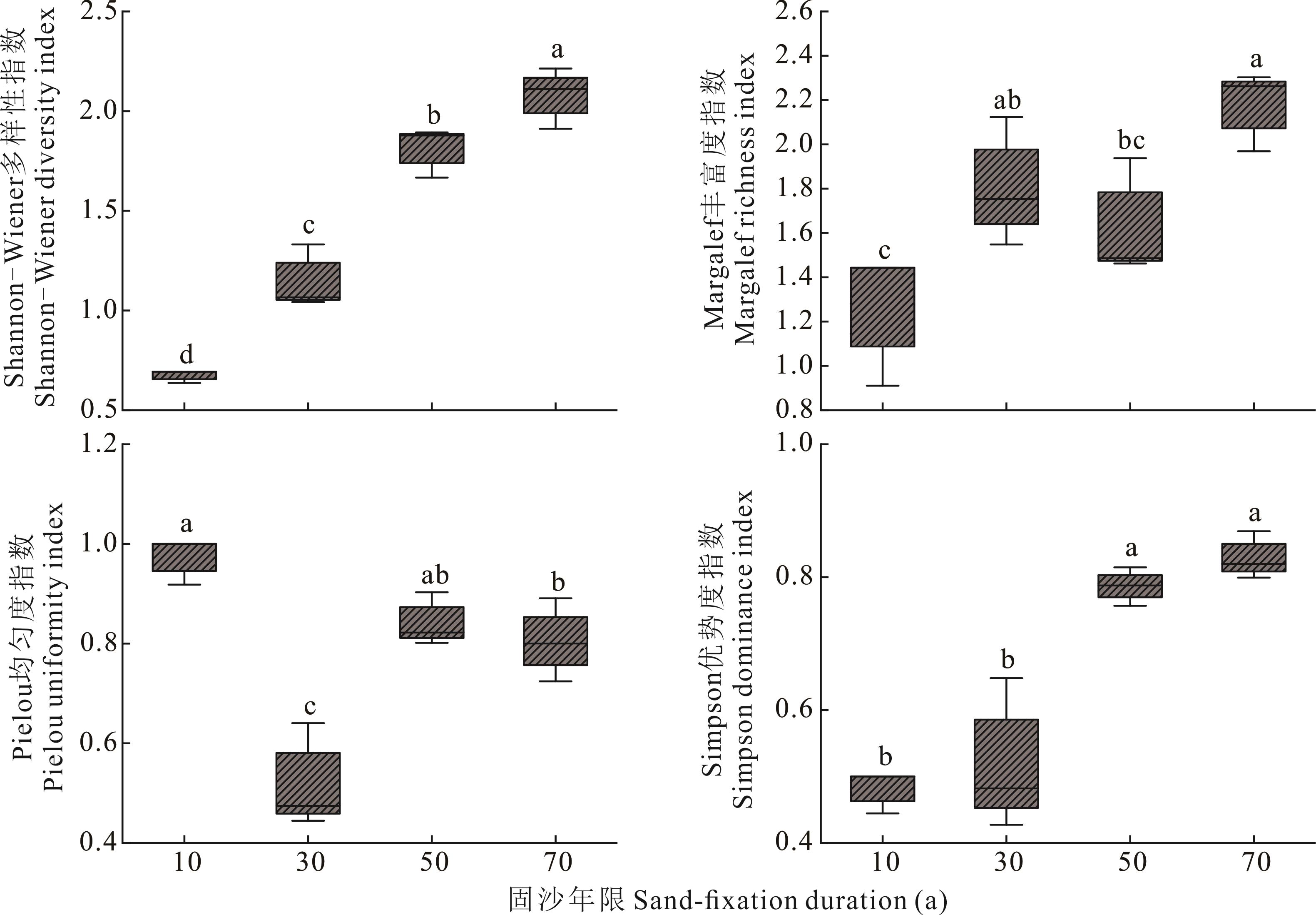
Fig.1 Diversity attributes of soil seed banks in C. korshinskii sand-fixation forests with sand-fixation durations
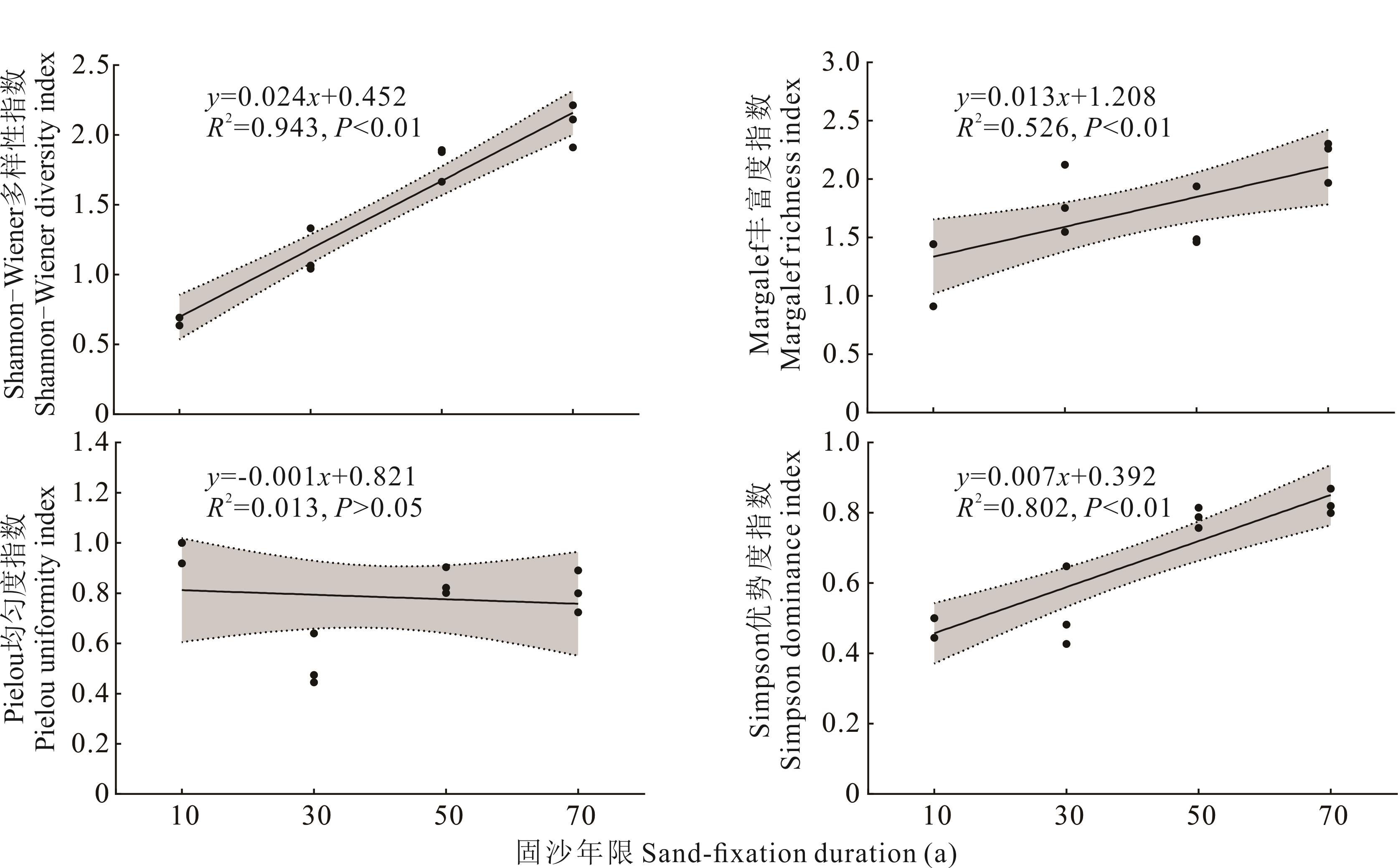
Fig.2 Regression analysis between soil seed banks diversity and sand-fixation durations
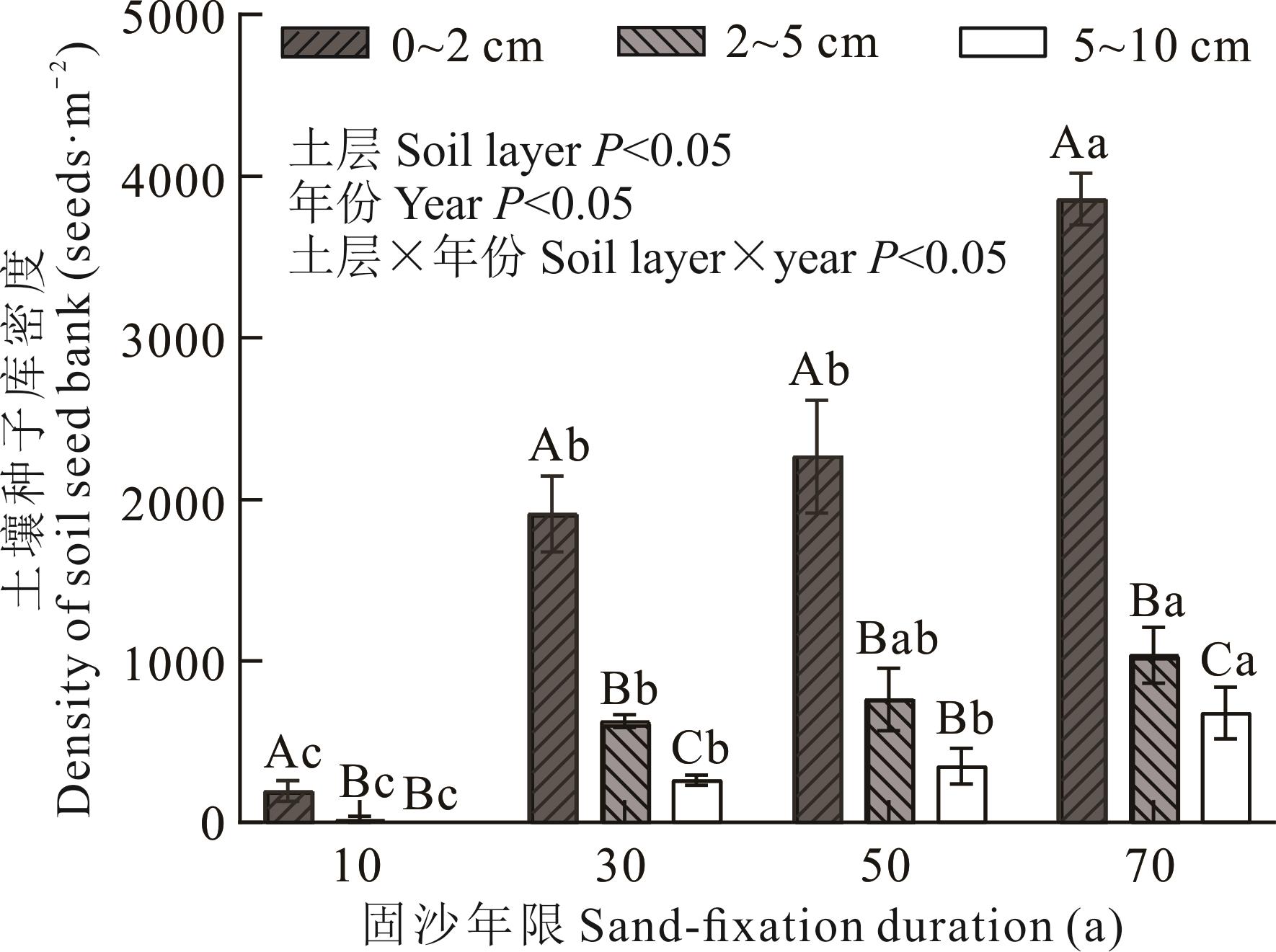
Fig.3 Characteristics of soil seed bank density in C. korshinskii sand-fixation forests with different sand-fixation durations
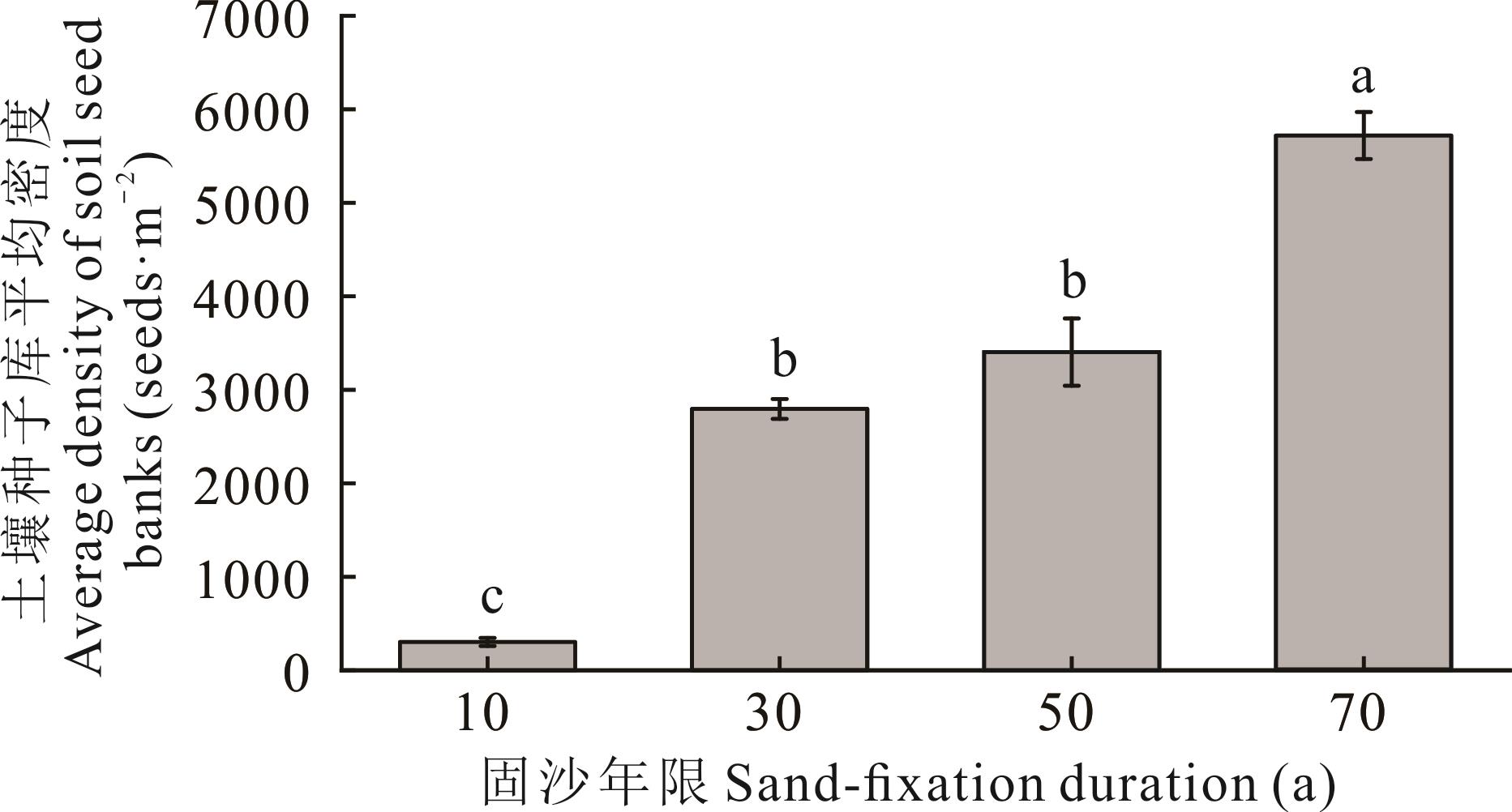
Fig.4 Mean density of soil seed banks in C. korshinskii sand-fixation forests with different sand-fixation durations
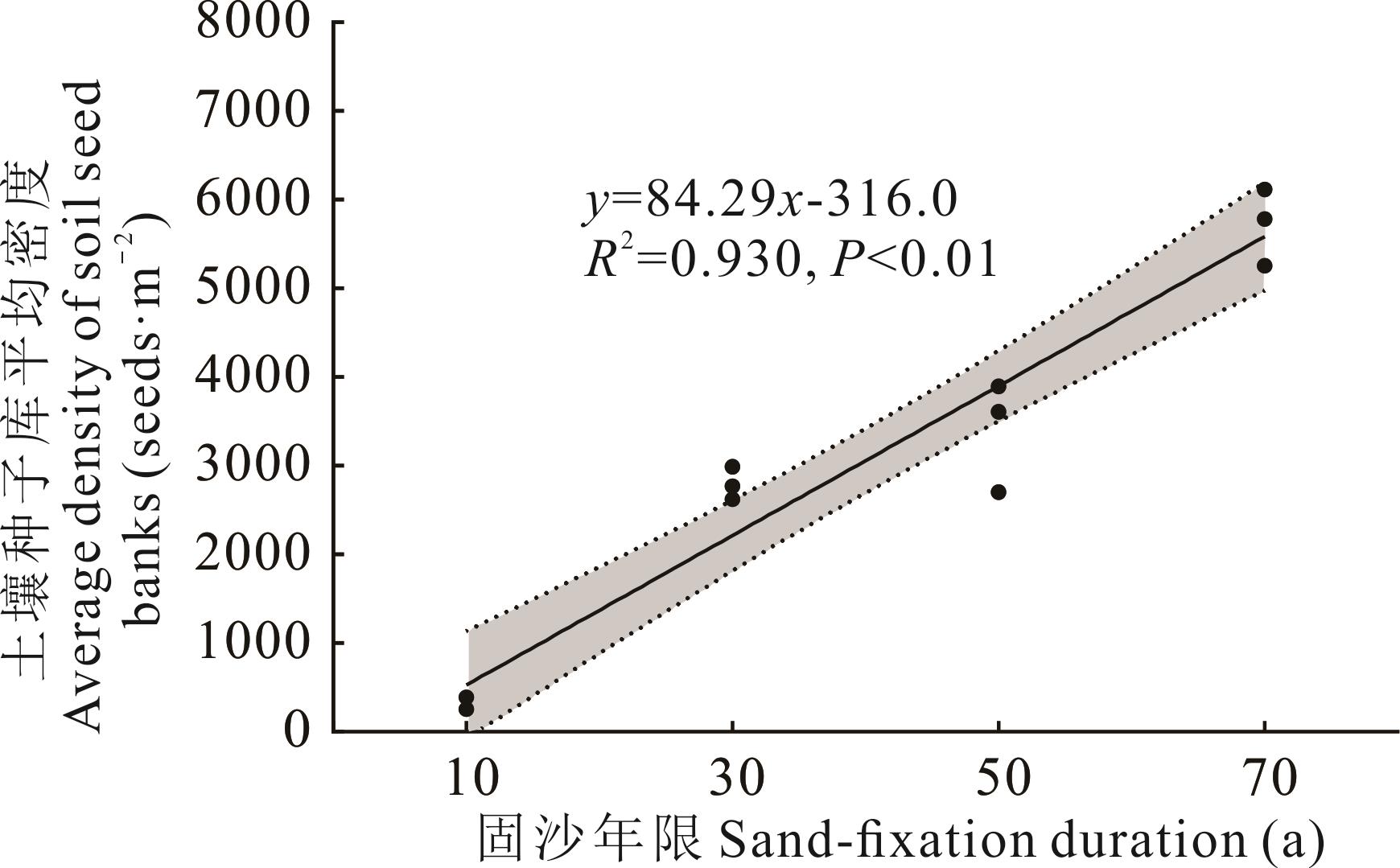
Fig.5 Regression analysis between the average soil seed bank density and sand-fixation durations
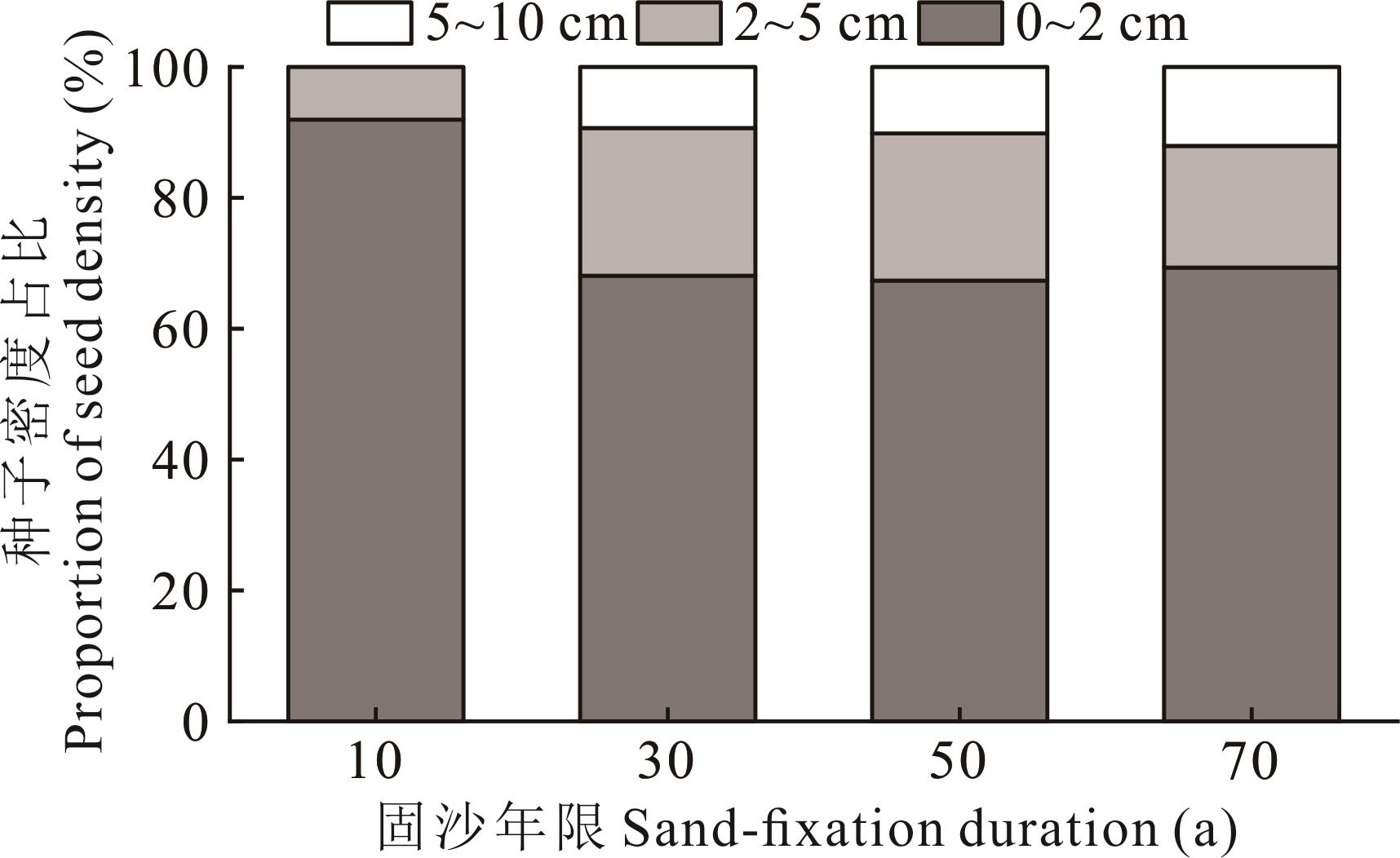
Fig.6 Proportion of seed density across different soil layers in soil seed banks of C. korshinskii sand-fixation forests with different sand-fixation durations
年限 Year (a) | 物种数Species | Sc | ||
|---|---|---|---|---|
地上植被 AV | 土壤种子库 SSB | 共有 Common | ||
| 10 | 1 | 3 | 1 | 0.50 |
| 30 | 14 | 15 | 7 | 0.48 |
| 50 | 18 | 12 | 8 | 0.53 |
| 70 | 26 | 23 | 16 | 0.65 |
Table 3 Similarity between soil seed banks (SSB) and aboveground vegetation (AV) in C. korshinskii sand-binding forests with different sand-fixation durations
年限 Year (a) | 物种数Species | Sc | ||
|---|---|---|---|---|
地上植被 AV | 土壤种子库 SSB | 共有 Common | ||
| 10 | 1 | 3 | 1 | 0.50 |
| 30 | 14 | 15 | 7 | 0.48 |
| 50 | 18 | 12 | 8 | 0.53 |
| 70 | 26 | 23 | 16 | 0.65 |
项目 Item | 环境因子 Environmental factors | 解释量 Explains (%) | 贡献率Contribution (%) | F | P |
|---|---|---|---|---|---|
地上植被 Aboveground vegetation | 均匀度指数Pielou index (E) | 12.9 | 13.3 | 4.0 | 0.016* |
| 多样性指数Shannon-Wiener index (H) | 7.3 | 7.5 | 2.7 | 0.086 | |
| 丰富度指数Margalef index (R) | 2.6 | 2.7 | 1.2 | 0.356 | |
| 优势度指数Simpson index (D) | 2.5 | 2.6 | 1.2 | 0.382 | |
土壤因子 Soil factors | 土壤速效氮Soil available nitrogen (SAN) | 57.8 | 59.3 | 13.7 | 0.002** |
| 土壤酸碱度Soil pH | 4.5 | 4.6 | 1.8 | 0.188 | |
| 土壤速效磷Soil available phosphorus (SAP) | 4.0 | 4.1 | 1.8 | 0.172 | |
| 土壤容重Soil bulk density (SBD) | 1.9 | 2.0 | 0.9 | 0.492 | |
| 土壤含水量Soil water content (SWC) | 1.9 | 2.0 | 0.9 | 0.500 | |
| 土壤有机质Soil organic matter (SOM) | 2.0 | 2.0 | 0.8 | 0.558 | |
| 特征参数Characteristic parameter | 轴1 Axis1 | 轴2 Axis2 | 轴3 Axis3 | 轴4 Axis4 | |
| 特征值Eigenvalues | 0.6337 | 0.2462 | 0.0558 | 0.0361 | |
| 累计解释变异Cumulative explained variation | 63.37 | 87.99 | 93.56 | 97.17 | |
| 多样性-环境因子相关系数Correlation coefficient between diversity and environmental factor | 0.9984 | 0.9576 | 0.9957 | 0.9860 | |
Table 4 Redundancy analysis (RDA) ordination and results of Monte Carlo permutation tests
项目 Item | 环境因子 Environmental factors | 解释量 Explains (%) | 贡献率Contribution (%) | F | P |
|---|---|---|---|---|---|
地上植被 Aboveground vegetation | 均匀度指数Pielou index (E) | 12.9 | 13.3 | 4.0 | 0.016* |
| 多样性指数Shannon-Wiener index (H) | 7.3 | 7.5 | 2.7 | 0.086 | |
| 丰富度指数Margalef index (R) | 2.6 | 2.7 | 1.2 | 0.356 | |
| 优势度指数Simpson index (D) | 2.5 | 2.6 | 1.2 | 0.382 | |
土壤因子 Soil factors | 土壤速效氮Soil available nitrogen (SAN) | 57.8 | 59.3 | 13.7 | 0.002** |
| 土壤酸碱度Soil pH | 4.5 | 4.6 | 1.8 | 0.188 | |
| 土壤速效磷Soil available phosphorus (SAP) | 4.0 | 4.1 | 1.8 | 0.172 | |
| 土壤容重Soil bulk density (SBD) | 1.9 | 2.0 | 0.9 | 0.492 | |
| 土壤含水量Soil water content (SWC) | 1.9 | 2.0 | 0.9 | 0.500 | |
| 土壤有机质Soil organic matter (SOM) | 2.0 | 2.0 | 0.8 | 0.558 | |
| 特征参数Characteristic parameter | 轴1 Axis1 | 轴2 Axis2 | 轴3 Axis3 | 轴4 Axis4 | |
| 特征值Eigenvalues | 0.6337 | 0.2462 | 0.0558 | 0.0361 | |
| 累计解释变异Cumulative explained variation | 63.37 | 87.99 | 93.56 | 97.17 | |
| 多样性-环境因子相关系数Correlation coefficient between diversity and environmental factor | 0.9984 | 0.9576 | 0.9957 | 0.9860 | |
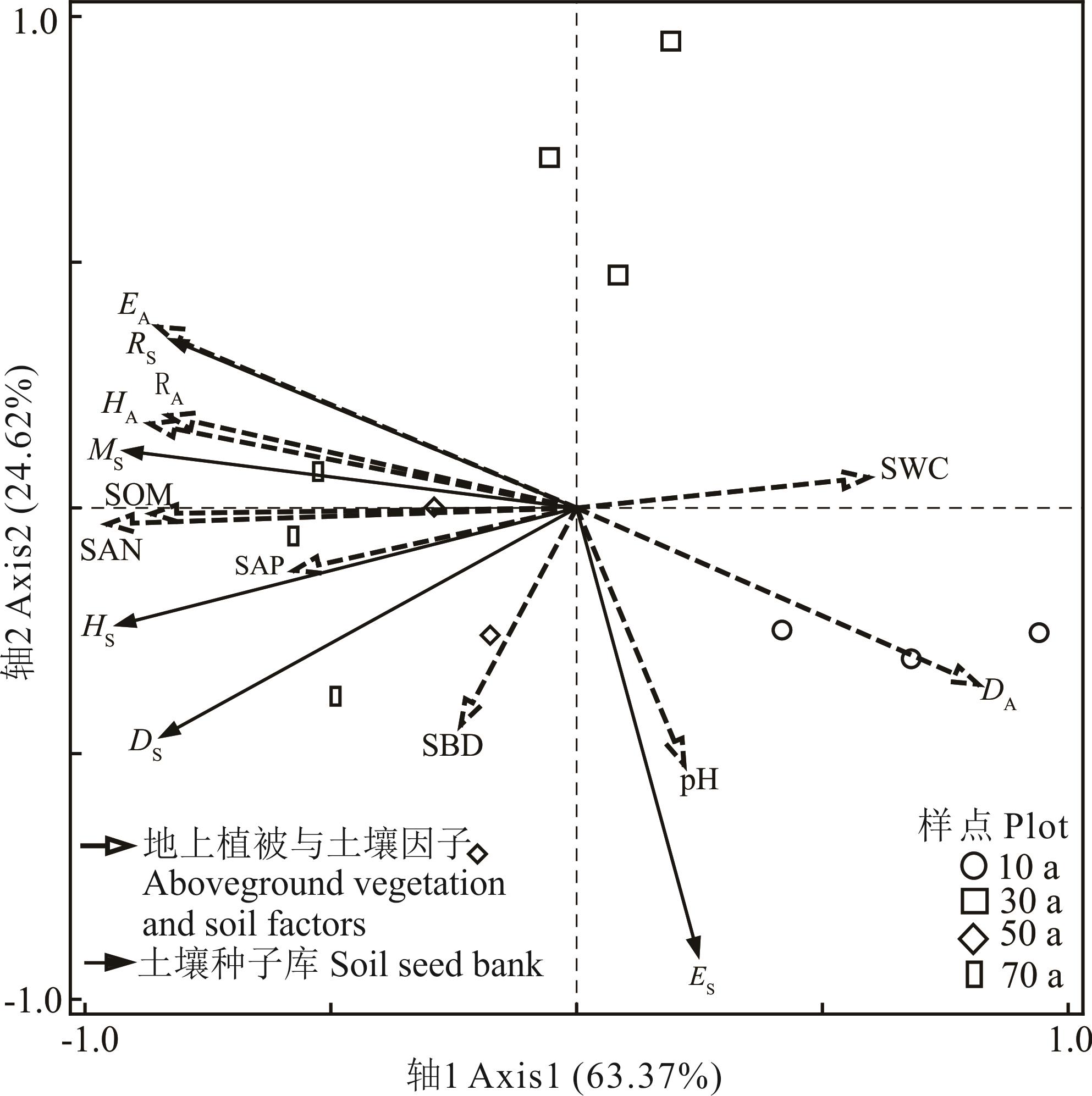
Fig.7 Redundancy analysis (RDA) of aboveground vegetation, soil factors, and soil seed bank metrics
| [1] | Tian M, Sun Z J, Li Y, et al. Response to increasing precipitation in Artemisia desert grassland of soil seed bank composition and species diversity of germinating plants. Acta Prataculturae Sinica, 2019, 28(12): 17-28. |
| 田梦, 孙宗玖, 李莹, 等. 蒿类荒漠草地土壤种子库特征及其萌发植物多样性对降水增加的响应. 草业学报, 2019, 28(12): 17-28. | |
| [2] | Zhao P P, Li G Q, Shao W S, et al. Influence of herbivore exclusion on the soil seed bank and the aboveground vegetation characteristics of Agropyron mongolicum dominant desert steppe grassland. Acta Prataculturae Sinica, 2018, 27(1): 42-52. |
| 赵盼盼, 李国旗, 邵文山, 等. 围封对荒漠草原区沙芦草群落土壤种子库及地上植被的影响. 草业学报, 2018, 27(1): 42-52. | |
| [3] | Shi W J, Ma Q, Yang J L, et al. Characteristics of soil seed banks and their influencing factors in Ephedra rhytidosperma communities at different altitudes on the eastern foothills of Helan Mountain, China. Chinese Journal of Applied Ecology, 2025, 36(5): 1361-1370. |
| 石文杰, 马琴, 杨君珑, 等. 贺兰山东麓不同海拔斑子麻黄群落土壤种子库特征及其影响因子. 应用生态学报, 2025, 36(5): 1361-1370. | |
| [4] | Auffret A G, Ladouceur E, Haussmann N S, et al. A global database of soil seed bank richness, density, and abundance. Ecology, 2024, 105(11): e4438. |
| [5] | Oliveira V B, Jardim M A G, Barros M F, et al. The role of the soil seed bank in the recovery and restoration of a burned Amazonian terra firme forest. Forests, 2024, 15(9): 1513. |
| [6] | Qu W J, Wang L, Kang W Y, et al. Seed supply and regeneration potential of sand-fixing vegetation with different establishment years in the southeastern edge of the Tengger Desert. Biodiversity Science, 2025, 33(1): 5-17. |
| 曲文杰, 王磊, 康文岩, 等. 腾格里沙漠东南缘不同年限固沙植被区种子雨和土壤种子库动态与植被更新潜力. 生物多样性, 2025, 33(1): 5-17. | |
| [7] | Wang Y C, Chu L, Daryanto S, et al. Sand dune stabilization changes the vegetation characteristics and soil seed bank and their correlations with environmental factors. Science of the Total Environment, 2019, 648: 500-507. |
| [8] | Li G Q, Shao W S, Zhao P P, et al. Analysis of soil seed bank characteristics and soil physical and chemical properties of four plant communities in a desert steppe region. Acta Ecologica Sinica, 2019, 39(17): 6282-6292. |
| 李国旗, 邵文山, 赵盼盼, 等. 荒漠草原区4种植物群落土壤种子库特征及其土壤理化性质. 生态学报, 2019, 39(17): 6282-6292. | |
| [9] | Liu J Y, Niu Y D, Guo K J, et al. Characteristics of soil seed bank and their correlations with soil factors in the early restoration period of Populus deltoides cutting slash in Lake South Dongting, China. Chinese Journal of Applied Ecology, 2020, 31(12): 4042-4050. |
| 刘静逸, 牛艳东, 郭克疾, 等. 南洞庭湖杨树清理迹地恢复初期土壤种子库特征及其与土壤因子的关系. 应用生态学报, 2020, 31(12): 4042-4050. | |
| [10] | Sun Y S, Chang X X, Zhang X, et al. Diversity of soil seed banks under different vegetation types in the southeastern margin of the Tengger Desert, China. Chinese Journal of Applied Ecology, 2022, 33(9): 2356-2362. |
| 孙瑜硕, 常选选, 张雪, 等. 腾格里沙漠东南缘不同植被类型土壤种子库多样性. 应用生态学报, 2022, 33(9): 2356-2362. | |
| [11] | Kůrová J. The impact of soil properties and forest stand age on the soil seed bank. Folia Geobotanica, 2016, 51(1): 27-37. |
| [12] | Yu S, Li X W, Wang R X, et al. Succession mechanism and dynamics in artificial Caragana korshinskii sand-fixing forests of different ages in Baijitan of Lingwu. Acta Prataculturae Sinica, 2024, 33(3): 13-23. |
| 于双, 李小伟, 王瑞霞, 等. 灵武白芨滩不同年限柠条固沙林林下草本群落演替规律及机制. 草业学报, 2024, 33(3): 13-23. | |
| [13] | Liu Y P, Ma C, Mo B R, et al. Relationship between herbaceous vegetation characteristics and soil characteristics under caragana plantation. Acta Agrestia Sinica, 2020, 28(2): 468-473. |
| 刘燕萍, 马驰, 莫保儒, 等. 柠条人工林下草本植被特征与土壤特性相关性研究. 草地学报, 2020, 28(2): 468-473. | |
| [14] | Yu S, Li X W, Yang X X, et al. Characteristics of herbaceous plant diversity in the understory of Caragana korshinskii sand-fixing forest of Baijitan in Lingwu. Pratacultural Science, 2024, 41(9): 2084-2093. |
| 于双, 李小伟, 杨学霞, 等. 灵武白芨滩柠条固沙林演替过程中林下草本植物多样性特征. 草业科学, 2024, 41(9): 2084-2093. | |
| [15] | Ma L, Yang J, Yang J L, et al. Response of leaf anatomical structure strategy spectrum of Caragana korshinskii to the planting years in southwestern margin of Maowusu sandy land. Acta Agrestia Sinica, 2023, 31(5): 1378-1385. |
| 马龙, 杨钧, 杨君珑, 等. 毛乌素沙地西南缘柠条锦鸡儿叶解剖结构策略轴对年限的响应. 草地学报, 2023, 31(5): 1378-1385. | |
| [16] | Kalamees R, Püssa K, Zobel K, et al. Restoration potential of the persistent soil seed bank in successional calcareous (alvar) grasslands in Estonia. Applied Vegetation Science, 2012, 15(2): 208-218. |
| [17] | Yang J, Wang R X, Wang J, et al. Microbial community characteristics and their influencing factors in Caragana korshinskii sand-fixing forests of different restoration years in the Mu Us Desert, China. Chinese Journal of Applied Ecology, 2024, 35(7): 1807-1814. |
| 杨钧, 王瑞霞, 王俊, 等. 毛乌素沙地不同恢复年限柠条固沙林微生物群落特征及其影响因素. 应用生态学报, 2024, 35(7): 1807-1814. | |
| [18] | Ma M J, Dalling J W, Ma Z, et al. Soil environmental factors drive seed density across vegetation types on the Tibetan Plateau. Plant and Soil, 2017, 419(1): 349-361. |
| [19] | Bao S D. Soil agricultural chemical analysis. Beijing: China Agriculture Press, 2000: 10-29. |
| 鲍士旦. 土壤农化分析. 北京: 中国农业出版社, 2000: 10-29. | |
| [20] | Li G Q, Shao W S, Zhao P P, et al. Effects of enclosure on the soil seed bank of two plant communities on the desert steppe. Acta Prataculturae Sinica, 2018, 27(6): 52-61. |
| 李国旗, 邵文山, 赵盼盼, 等. 封育对荒漠草原两种植物群落土壤种子库的影响. 草业学报, 2018, 27(6): 52-61. | |
| [21] | Hu F X, Ma D Z, Liu H L. Flora of Ningxia. Yinchuan: Ningxia people’s Publishing House, 2007. |
| 胡福秀, 马德滋, 刘惠兰. 宁夏植物志. 银川: 宁夏人民出版社, 2007. | |
| [22] | Du Z Y, Wang J, An H, et al. Responses of soil seed banks to drought on a global scale. Science of the Total Environment, 2023, 864: 161142. |
| [23] | Zeng Y J, Wang Y R, Nan Z B, et al. Soil seed banks of different grassland types of Alashan arid desert region, Inner Mongolia. Chinese Journal of Applied Ecology, 2003, 14(9): 1457-1463. |
| 曾彦军, 王彦荣, 南志标, 等. 阿拉善干旱荒漠区不同植被类型土壤种子库研究. 应用生态学报, 2003, 14(9): 1457-1463. | |
| [24] | Zhan Y F, Ma L, Teng Y F, et al. Analysis of soil seed bank characteristics of artificial revegetated desert area in Hexi Corridor. Acta Ecologica Sinica, 2022, 42(3): 922-934. |
| 占玉芳, 马力, 滕玉风, 等. 河西走廊沙漠人工植被区土壤种子库特征. 生态学报, 2022, 42(3): 922-934. | |
| [25] | Jia F Q, Tiyip T, Wu N, et al. Characteristics of soil seed banks at different geomorphic positions within the longitudinal sand dunes of the Gurbantunggut Desert, China. Journal of Arid Land, 2017, 9(3): 355-367. |
| [26] | Ortega M, Levassor C, Peco B. Seasonal dynamics of Mediterranean pasture seed banks along environmental gradients. Journal of Biogeography, 1997, 24(2): 177-195. |
| [27] | Yu L, Zhou Y R, Zhao Y N, et al. Responses of the soil seed bank to simulated rainfall levels and anthropogenically introduced shrub encroachment in the desert steppe. Acta Prataculturae Sinica, 2020, 29(4): 41-50. |
| 于露, 周玉蓉, 赵亚楠, 等. 荒漠草原土壤种子库对灌丛引入和降水梯度的响应特征. 草业学报, 2020, 29(4): 41-50. | |
| [28] | Wu K J, He L, Li H L, et al. Characteristics of soil seed banks in different degrees of desertified grass-lands in the alpine region of Northwest Sichuan. Acta Agrestia Sinica, 2025, 33(6): 1817-1825. |
| 吴科君, 贺丽, 李红霖, 等. 川西北高寒区不同程度沙化草地土壤种子库特征. 草地学报, 2025, 33(6): 1817-1825. | |
| [29] | Wellstein C, Tonin R, Peratoner G, et al. The role of the soil seed bank for the restoration potential of eroded alpine grassland. Restoration Ecology, 2024, 32(1): e14035. |
| [30] | Zhang M, Chen F Q, Wu Y, et al. Characteristics of the soil seed bank of planted and natural restored draw-down zones in the Three Gorges Reservoir Region. Ecological Engineering, 2017, 103: 127-133. |
| [31] | Wang Z J, Jiang Q, Pan Z B, et al. Changes of productivity and species diversity in resume succession on the degraded steppe of Maowusu sands in Ningxia. Pratacultural Science, 2005, 22(4): 5-8. |
| 王占军, 蒋齐,潘占兵, 等. 宁夏毛乌素沙地退化草原恢复演替过程中物种多样性与生产力的变化. 草业科学, 2005, 22(4): 5-8. | |
| [32] | Yang L, Wang Y R, Yu J D. Review of research on seed banks of desert regions. Acta Prataculturae Sinica, 2010, 19(2): 227-234. |
| 杨磊, 王彦荣, 余进德. 干旱荒漠区土壤种子库研究进展. 草业学报, 2010, 19(2): 227-234. | |
| [33] | Bakker J P, Bakker E S, Rosén E, et al. Soil seed bank composition along a gradient from dry alvar grassland to Juniperus shrubland. Journal of Vegetation Science, 1996, 7(2): 165-176. |
| [34] | Plue J, van Calster H, Auestad I, et al. Buffering effects of soil seed banks on plant community composition in response to land use and climate. Global Ecology and Biogeography, 2021, 30(1): 128-139. |
| [35] | Bekker R M, Bakker J P, Grandin U, et al. Seed size, shape and vertical distribution in the soil: Indicators of seed longevity. Functional Ecology, 1998, 12(5): 834-842. |
| [36] | Chen M C, Zhang J G, Feng L, et al. The composition and vertical distribution characteristics of soil seed banks in soil coverage with biocrusts in the Shapotou Region. Acta Ecologica Sinica, 2017, 37(22): 7614-7623. |
| 陈孟晨, 张景光, 冯丽, 等. 沙坡头地区生物结皮覆盖区土壤种子库组成及垂直分布特征. 生态学报, 2017, 37(22): 7614-7623. | |
| [37] | Hopfensperger K N. A review of similarity between seed bank and standing vegetation across ecosystems. Oikos, 2007, 116(9): 1438-1448. |
| [38] | Yu J, Gao L, Yan Z J, et al. Characteristics of soil seed bank of sand dune in different succession stages in the eastern Kubuqi Desert. Chinese Journal of Grassland, 2015, 37(4): 80-85. |
| 于洁, 高丽, 闫志坚, 等. 库布齐沙漠东段不同演替阶段沙丘土壤种子库变化特征. 中国草地学报, 2015, 37(4): 80-85. | |
| [39] | Zhao L Y, Li Y Z, Chen H B, et al. Relationship between soil seed banks characteristics and aboveground colonization community along natural restoration gradients in Horqin sandy land. Ecology and Environmental Sciences, 2018, 27(2): 199-208. |
| 赵丽娅, 李元哲, 陈红兵, 等. 科尔沁沙地恢复过程中地上定植群落与土壤种子库特征及其关系研究. 生态环境学报, 2018, 27(2): 199-208. | |
| [40] | Bekker R M, Verweij G L, Bakker J P, et al. Soil seed bank dynamics in hayfield succession. Journal of Ecology, 2000, 88(4): 594-607. |
| [41] | Shi C H, Li Q, Luo Q H, et al. Relationship between damaged soil seed bank and aboveground vegetation and soil properties in post-flooding forests in Nanping City, Fujian Province, China. Mountain Research, 2024, 42(5): 648-661. |
| 石成华, 李奇, 罗清虎, 等. 福建南平市洪涝灾害致损森林土壤种子库与地上植被及土壤性质的关系. 山地学报, 2024, 42(5): 648-661. | |
| [42] | Luo C, Guo X P, Feng C D, et al. The characteristics of the soil seed bank in Wuhai and surrounding areas and the relationship with vegetation and soil factors. Acta Prataculturae Sinica, 2021, 30(11): 13-28. |
| 罗超, 郭小平, 冯昶栋, 等. 乌海周边土壤种子库特征及其与地上植被和土壤因子的关系. 草业学报, 2021, 30(11): 13-28. | |
| [43] | Skuodienė R, Matyžiūtė V, Šiaudinis G. Soil seed banks and their relation to soil properties in hilly landscapes. Plants, 2023, 13(1): 104. |
| [44] | Lu Y F, Ma L, Zhan Y F, et al. Characteristics of soil seed banks in an artificial desert vegetation in the Hexi Corridor. Pratacultural Science, 2019, 36(9): 2334-2341. |
| 鲁延芳, 马力, 占玉芳, 等. 河西走廊中部沙漠人工植被中土壤种子库特征. 草业科学, 2019, 36(9): 2334-2341. | |
| [45] | Yang J Y, Zhao W Z, Luo W C, et al. Characteristics of soil seed bank in typical coal mine restoration areas at different altitudes in the Qilian Mountains Nature Reserve. Chinese Journal of Ecology, 2024, 43(6): 1891-1900. |
| 杨竟艺, 赵文智, 罗维成, 等. 祁连山自然保护区不同海拔典型煤矿修复区土壤种子库特征. 生态学杂志, 2024, 43(6): 1891-1900. |
| [1] | Yu-long MA, Kai-yang QIU, Xin-yi LUO, Jing-jing ZHANG, Yu-hang WANG, Guo-hui WANG, Xiang ZHENG, Xu-ying HAI, Bin XUE, Ying-zhong XIE. Effects of different sand-fixing vegetation restoration modes on soil physicochemical properties, enzyme activities, and herbaceous plant diversity [J]. Acta Prataculturae Sinica, 2026, 35(6): 1-12. |
| [2] | Yu-yue LI, Hao-nan WEI, Xing-zhong MA, Hai-xin JIANG, Ming-he NIE, Yao ZHOU, Cheng-jiang DAI, Xiao-wu TIAN, Guo-hui WANG, Hong-bin MA. Effects of rotational grazing on characteristics of the soil seed bank in desert steppe [J]. Acta Prataculturae Sinica, 2026, 35(4): 1-13. |
| [3] | Yu-gang GENG, Hong-mei YANG, Wen-wu WANG, Rui-jie LUO, Bao-guo ZHAO, Jiang-hong CHEN, Chang-sheng QIN, Rui-yin CHEN. Effects of stockpiling methods on root activity in stripped alpine meadows of the Qinghai-Tibet Plateau [J]. Acta Prataculturae Sinica, 2025, 34(8): 79-87. |
| [4] | Ying WANG, Ming-yuan LI, Mairiyangu·Yasheng, Ji-lian WANG. Comparative study of rhizosphere soil fungal community structure among different plants in Tomur Peak, Xinjiang [J]. Acta Prataculturae Sinica, 2025, 34(7): 83-94. |
| [5] | Wen-jin LIU, Fu-zhen JIANG, Kai-bin QI, Ming-dan SONG, Zheng-peng LI. Effects of different fertilization and sowing amounts on vegetation restoration and soil quality in alpine mining areas and comprehensive evaluation [J]. Acta Prataculturae Sinica, 2025, 34(5): 27-39. |
| [6] | Huan LIU, Kai DONG, Zeng-wangdui REN, Jing-long WANG, Yun-fei LIU, Gui-qin ZHAO. Effects of co-sowing of Artemisia wellbyi and perennial grasses on the characteristics of vegetation and soil fungal communities in desertified grasslands in Tibet [J]. Acta Prataculturae Sinica, 2023, 32(6): 45-57. |
| [7] | Yuan MA, Xiao-li WANG, Yan-long WANG, Yu-shou MA, Hai-peng CUI. Review of grass seed pelletizing in ecological restoration [J]. Acta Prataculturae Sinica, 2023, 32(4): 197-207. |
| [8] | Wen-jie QU, Wen-zhi ZHAO, Lei WANG, Jian-jun QU, Xin-guo YANG. Response of germination and seedling survival of two shrubs to simulated dry-wet treatments [J]. Acta Prataculturae Sinica, 2023, 32(11): 179-187. |
| [9] | Zhi-hao ZHU, Chen MENG, Xing WANG, Nai-ping SONG, Li WANG, Miao-miao XU, Ling-tong DU. Geometric distribution, formation, and topological structure of soil aggregates after introduction of Caragana korshinskii on the desert steppe [J]. Acta Prataculturae Sinica, 2023, 32(11): 53-64. |
| [10] | Xiao-hong YAN, Jian-ming NIU, Yuan-heng LI, Feng-yan YI, Shi-xian SUN, Ke JIN, Xi-liang LI. Priority effects on plant community assembly and ecological restoration significance [J]. Acta Prataculturae Sinica, 2022, 31(10): 217-225. |
| [11] | Jun REN, Yao SHI, Fang LIU, Rong TIAN, Xing LIU. An assessment of heavy metal absorption patterns in herbaceous plants and pollution risks in manganese mining areas in Guizhou Province [J]. Acta Prataculturae Sinica, 2021, 30(8): 86-97. |
| [12] | Jin-wei HOU, Tao CHEN, Zhi-biao NAN. Effects of fungicide and sowing treatments on seed survival of three plant species on the Loess Plateau [J]. Acta Prataculturae Sinica, 2021, 30(3): 129-136. |
| [13] | Zhi-peng CHANG, Ying-ying SUN, Jia-yang LI, Chun-mei GONG. Cloning and transformation of the CkCAD gene in Caragana korshinskii and analysis of its drought resistance function [J]. Acta Prataculturae Sinica, 2021, 30(3): 68-80. |
| [14] | Xiang JIANG, Jian-xia MA. The impact of different factors on the outcomes of grassland ecological restoration to in China: A Meta-analysis [J]. Acta Prataculturae Sinica, 2021, 30(2): 14-31. |
| [15] | Chao LUO, Xiao-ping GUO, Chang-dong FENG, Jin-peng YE, Dong-ming XUE. The characteristics of the soil seed bank in Wuhai and surrounding areas and the relationship with vegetation and soil factors [J]. Acta Prataculturae Sinica, 2021, 30(11): 13-28. |
| Viewed | ||||||
|
Full text |
|
|||||
|
Abstract |
|
|||||
