
ISSN 1004-5759 CN 62-1105/S
Acta Prataculturae Sinica ›› 2026, Vol. 35 ›› Issue (7): 165-174.DOI: 10.11686/cyxb2025373
Na CHEN1( ), Ying-bo QIN1, De-li PENG1,2()
Received:2025-09-15
Revised:2025-10-16
Online:2026-07-20
Published:2026-05-21
Contact:
De-li PENG
Na CHEN, Ying-bo QIN, De-li PENG. Ecological adaptation strategies of seed germination in Primula alpicola, an endemic alpine species in the southeastern Xizang Plateau[J]. Acta Prataculturae Sinica, 2026, 35(7): 165-174.
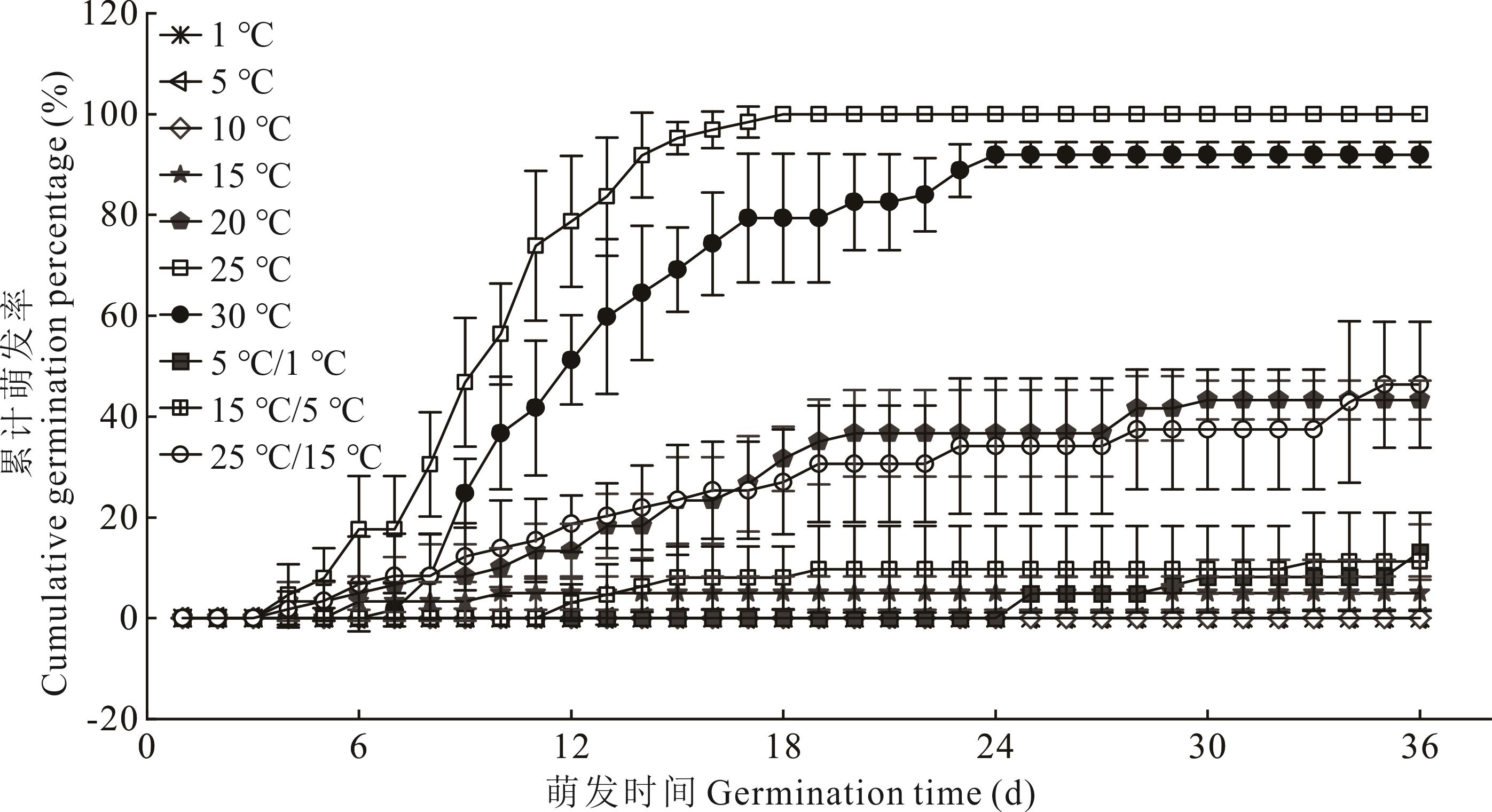
Fig.1 Effect of temperatures on cumulative germination percentage for fresh seeds of P. alpicola under light conditions
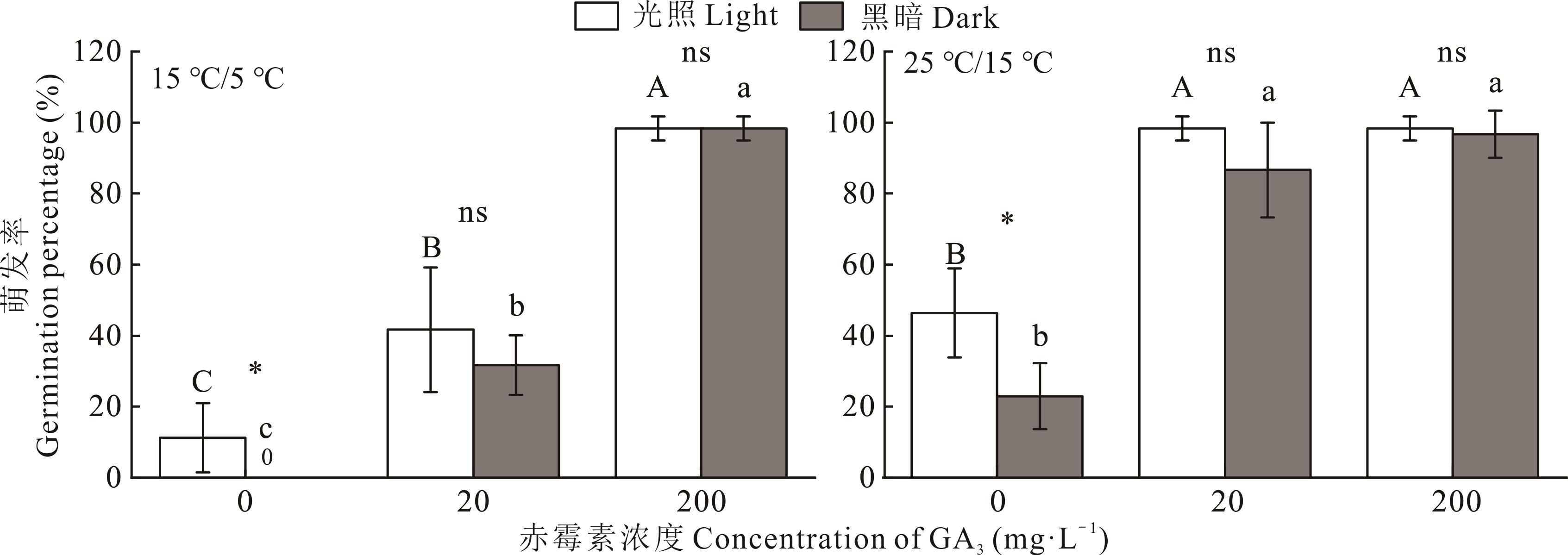
Fig.2 Effect of gibberellin (GA3) and light condition on final germination percentage of fresh seeds
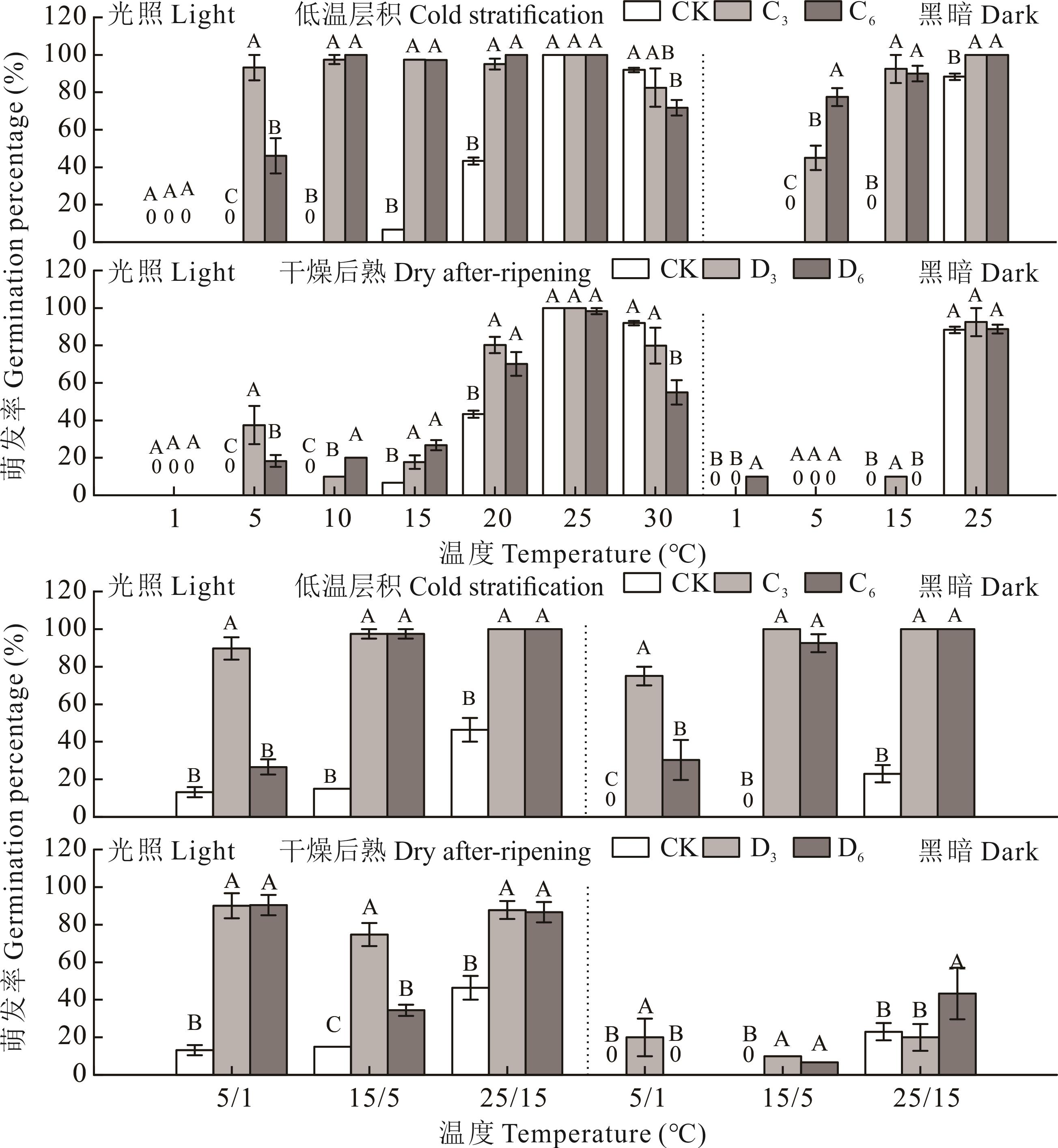
Fig.3 Effects of dry after-ripening (DAR) and cold stratification (CS) on final germination percentage under constant/alternating temperatures and light/dark conditions
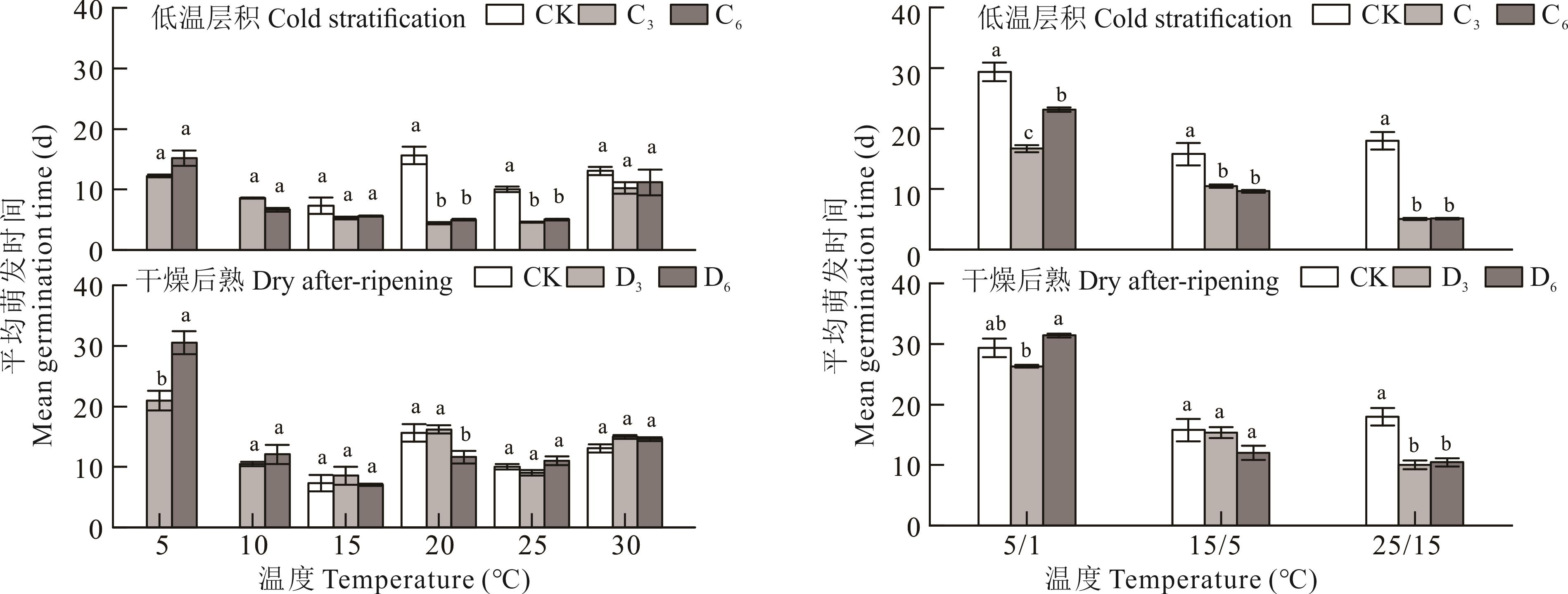
Fig.4 Effects of dry after-ripening (DAR) and cold stratification (CS) on mean germination time (MGT) under constant/alternating temperatures (light conditions)
变异来源 Source of variation | 恒温Constant temperature | 变温Alternating temperature | ||
|---|---|---|---|---|
| df | P | df | P | |
| 光照条件Light condition | 1 | <0.000 | 1 | <0.000 |
| 低温层积Cold stratification | 2 | <0.000 | 2 | <0.000 |
| 干燥后熟Dry after-ripening | 2 | <0.000 | 2 | <0.000 |
| 光照条件×干燥后熟Light condition×dry after-ripening | 2 | 0.001 | 2 | <0.000 |
| 光照条件×低温层积Light condition×cold stratification | 2 | <0.000 | 2 | 0.001 |
Table 1 Generalized linear model analysis of the effects of light condition, dormancy-breaking treatments, and their interactions on the final germination percentage of P. alpicola under constant and alternating temperature regimes
变异来源 Source of variation | 恒温Constant temperature | 变温Alternating temperature | ||
|---|---|---|---|---|
| df | P | df | P | |
| 光照条件Light condition | 1 | <0.000 | 1 | <0.000 |
| 低温层积Cold stratification | 2 | <0.000 | 2 | <0.000 |
| 干燥后熟Dry after-ripening | 2 | <0.000 | 2 | <0.000 |
| 光照条件×干燥后熟Light condition×dry after-ripening | 2 | 0.001 | 2 | <0.000 |
| 光照条件×低温层积Light condition×cold stratification | 2 | <0.000 | 2 | 0.001 |
变异来源 Source of variation | 恒温Constant temperature | 变温Alternating temperature | ||
|---|---|---|---|---|
| df | P | df | P | |
| 低温层积Cold stratification | 2 | <0.000 | 2 | <0.000 |
| 干燥后熟Dry after-ripening | 2 | 0.118 | 2 | <0.000 |
Table 2 Generalized linear model analysis of the effects of dry after-ripening and cold stratification on the mean germination time of P. alpicola under constant and alternating temperature regimes (in light)
变异来源 Source of variation | 恒温Constant temperature | 变温Alternating temperature | ||
|---|---|---|---|---|
| df | P | df | P | |
| 低温层积Cold stratification | 2 | <0.000 | 2 | <0.000 |
| 干燥后熟Dry after-ripening | 2 | 0.118 | 2 | <0.000 |
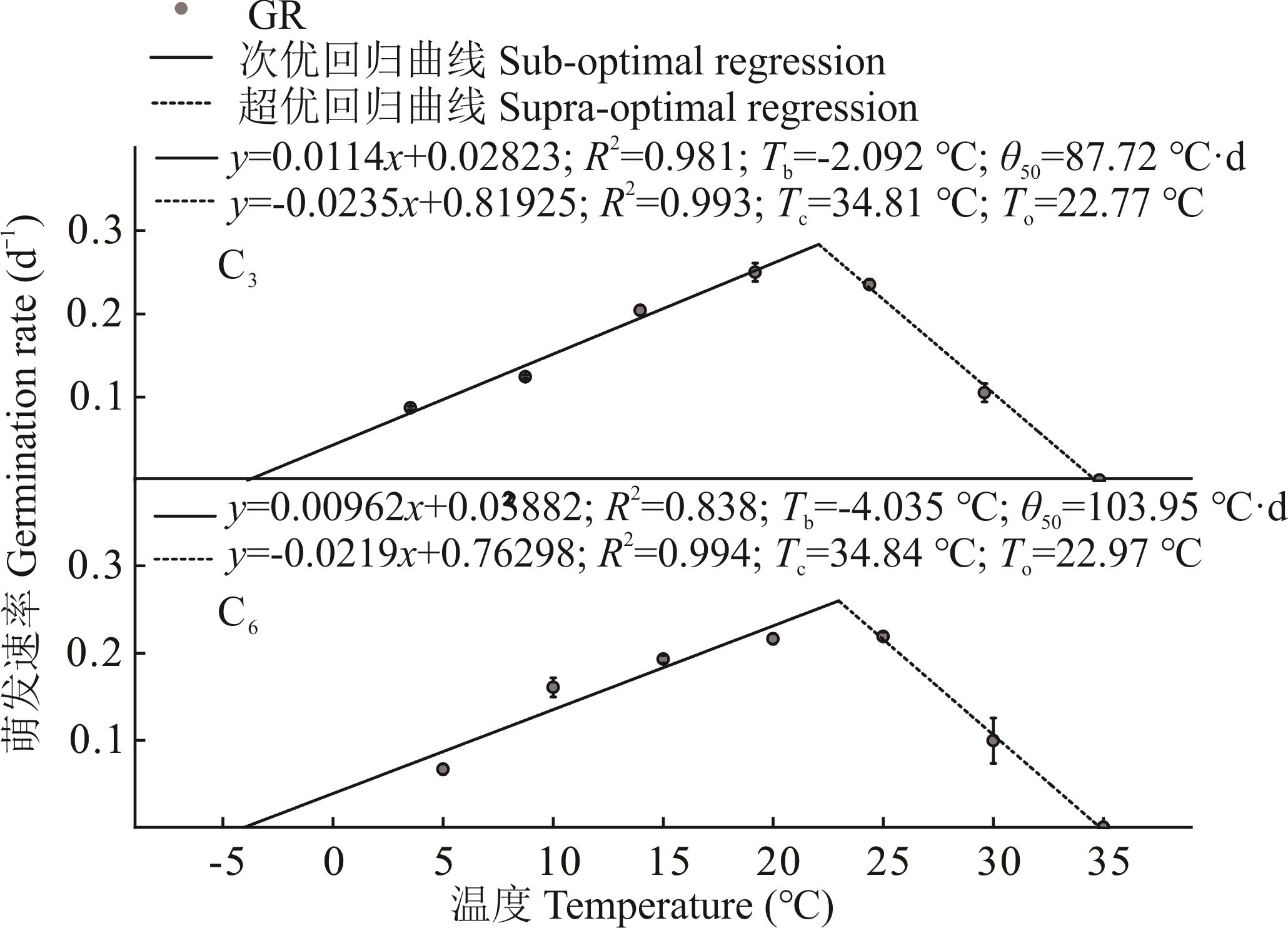
Fig.5 Linear relationship between temperature and germination rate
| [1] | Tang A J, Yan G R, Zhang Q Z, et al. Research on introduction and domestication of subalpine wild ornamental Primula mallophylla Balf. f. Chinese Wild Plant Resources, 2023, 42(S1): 108-112. |
| 唐安军, 严光荣, 张琪梓, 等. 亚高山野生花卉川东灯台报春的引种驯化研究. 中国野生植物资源, 2023, 42(S1): 108-112. | |
| [2] | Baskin J M, Baskin C C. A classification system for seed dormancy. Seed Science Research, 2004, 14(1): 1-16. |
| [3] | Baskin C C, Baskin J M. Seeds: ecology, biogeography, and evolution of dormancy and germination (The Second Edition). San Diego: Elsevier Academic Press Incorporated, 2014. |
| [4] | Baskin C C, Baskin J M. Physiological dormancy in seeds of tropical montane woody species in Hawai`i. Plant Species Biology, 2020, 36(1): 60-71. |
| [5] | Schwienbacher E, Navarro-Cano J A, Neuner G, et al. Seed dormancy in alpine species. Flora, 2011, 206(10): 845-856. |
| [6] | Yang G L, Zhang J J, Mei L, et al. A dataset of the diversity and geographical distributions of wild Primula L. in China. China Scientific Data, 2023, 8(4): 394-402. |
| 杨桂丽, 张佳佳, 梅丽, 等. 中国野生报春花属物种多样性与地理分布数据集. 中国科学数据, 2023, 8(4): 394-402. | |
| [7] | Hu Q M. On the geographical distribution of the Primulaceae. Journal of Tropical and Subtropical Botany, 1994, 2(4): 1-14, 115-116. |
| 胡启明. 报春花科植物的地理分布. 热带亚热带植物学报, 1994, 2(4): 1-14, 115-116. | |
| [8] | Song J S, Lee J S. Dormancy and germination characteristics of seed and plant of Primula sieboldii. Horticulture Environment and Biotechnology, 2002, 43(1): 91-94. |
| [9] | Marin M, Blandino C, Laverack G, et al. Responses of Primula vulgaris to light quality in the maternal and germination environments. Plant Biology, 2018, 21(3): 439-448. |
| [10] | Peng D L, Hu X J, Sun H, et al. Dry after-ripening, light, cold stratification and temperature effects on seed germination of Primula poissonii from Yunnan, China. Seed Science and Technology, 2019, 47(3): 301-306. |
| [11] | Lu J J, Tan D Y, Baskin C C, et al. Effects of germination season on life history traits and on transgenerational plasticity in seed dormancy in a cold desert annual. Scientific Reports, 2016, 6(1): 25076. |
| [12] | Shimono A, Washitani I. Seedling emergence patterns and dormancy/germination physiology of Primula modesta in a subalpine region. Ecological Research, 2004, 19(5): 541-551. |
| [13] | Rayburn A P, Davidson J B, Schupp E W. Effect of storage time, site and floral morph on seed germination of the threatened distylous primrose Primula cusickiana var. maguirei. Plant Species Biology, 2013, 28(2): 101-108. |
| [14] | Tian M H, Tang A J. Effects of storage temperature and pre-treatments on seed germination of Primula mallophylla and P. sertulum (Primulaceae), two narrowly-distributed endemic species from southwest China. Seed Science and Technology, 2023, 51(3): 371-377. |
| [15] | Wang G Y, Baskin C C, Baskin J M, et al. Timing of seed germination in two alpine herbs on the southeastern Tibetan plateau: the role of seed dormancy and annual dormancy cycling in soil. Plant and Soil, 2017, 421(1/2): 465-476. |
| [16] | Mondoni A, Daws M I, Belotti J, et al. Germination requirements of the alpine endemic Silene elisabethae Jan: effects of cold stratification, light and GA3. Seed Science and Technology, 2009, 37(1): 79-87. |
| [17] | Cerabolini B, Andreis R D, Ceriani R M, et al. Seed germination and conservation of endangered species from the Italian Alps: Physoplexis comosa and Primula glaucescens. Biological Conservation, 2003, 117(3): 351-356. |
| [18] | Hitchmough J, Innes S, Mitschunas N. The effect of seed treatment and depth of sowing on seedling emergence in Primula species. Seed Science and Technology, 2011, 39(3): 539-551. |
| [19] | Qin Y B, Geng B Y, Yang L E, et al. Non-deep physiological dormancy and germination characteristics of Primula florindae (Primulaceae), a rare alpine plant in the Hengduan Mountains of southwest China. PeerJ, 2023, 11: e15234. |
| [20] | Peng D L, Yang L E, Yang J, et al. Seed dormancy and soil seed bank of the two alpine Primula species in the Hengduan Mountains of southwest China. Frontiers in Plant Science, 2021, 12: 582536. |
| [21] | Yang L E, Peng D L, Li Z M, et al. Cold stratification, temperature, light, GA3, and KNO3 effects on seed germination of Primula beesiana from Yunnan, China. Plant Diversity, 2020, 42: 168-173. |
| [22] | Editorial Committee of Flora of China. Flora of China. Beijing: Science Press, 1990. |
| 中国植物志编委会. 中国植物志. 北京: 科学出版社, 1990. | |
| [23] | Chen F H, Hu Q M. Systematic taxonomic study on the Primulaceae of China. Bulletin of Chinese Academy of Sciences, 1996, 11(6): 445-446. |
| 陈封怀, 胡启明. 中国报春花科植物系统分类研究. 中国科学院院刊, 1996, 11(6): 445-446. | |
| [24] | Qin Y B. Study on seed dormancy and germination strategies of three Primula species in the Hengduan Mountain area. Kunming: Yunnan Normal University, 2024. |
| 覃滢卜. 横断山区三种报春花属植物种子休眠与萌发策略研究. 昆明: 云南师范大学, 2024. | |
| [25] | Zhang J, Jiang X F, Chen L L, et al. Altitudinal variations of the reproductive strategies of Primula florindae. Acta Botanica Boreali-Occidentalia Sinica, 2017, 37(7): 1404-1413. |
| 张杰, 蒋显锋, 陈玲玲, 等. 巨伞钟报春繁殖策略随海拔梯度的变异. 西北植物学报, 2017, 37(7): 1404-1413. | |
| [26] | Wang G Y. Responses of environmental changes in early life stages of four alpine herbs on the southeastern Tibetan Plateau. Beijing: University of Chinese Academy of Sciences, 2018. |
| 王国严. 藏东南四种高山草本植物的生活史早期阶段对环境变化的响应. 北京: 中国科学院大学, 2018. | |
| [27] | Porceddu M, Mattana E, Pritchard H W, et al. Thermal niche for in situ seed germination by Mediterranean mountain streams: model prediction and validation for Rhamnus persicifolia seeds. Annals of Botany, 2013, 112(9): 1887-1897. |
| [28] | Brown R F, Mayer D G. Representing cumulative germination: 2. The use of the weibull function and other empirically derived curves. Annals of Botany, 1988, 61(2): 127-138. |
| [29] | Geng S B, Wei Y S, Liang Z S. The color of Salvia miltiorrhiza Bunge seed coat and requirements of moisture and heat for germination. Acta Agriculturae Boreali-Occidentalis Sinica, 2014, 23(10): 163-169. |
| 耿守保, 魏永胜, 梁宗锁. 丹参种子的种皮颜色与萌发的水分和热量需求. 西北农业学报, 2014, 23(10): 163-169. | |
| [30] | Hu X W, Wu Y P, Wang Y R, et al. Primary study of release method for Legume seed dormancy. Acta Botanica Boreali-Occidentalia Sinica, 2009, 29(3): 568-573. |
| 胡小文, 武艳培, 王彦荣, 等. 豆科种子休眠破除方法初探. 西北植物学报, 2009, 29(3): 568-573. | |
| [31] | Yao L J, Zhang K L, Xiong Z M, et al. Research advances in seed morphophysiological dormancy. Chinese Journal of Ecology, 2019, 38(1): 247-255. |
| 姚林君, 张克亮, 熊作明, 等. 种子形态生理休眠研究进展. 生态学杂志, 2019, 38(1): 247-255. | |
| [32] | Nishii K, Nagata T, Wang C N, et al. Light as environmental regulator for germination and macrocotyledon development in Streptocarpus rexii (Gesneriaceae). South African Journal of Botany, 2012, 81: 50-60. |
| [33] | Tang W, Guo H P, Baskin C C, et al. Effect of light intensity on morphology, photosynthesis and carbon metabolism of alfalfa (Medicago sativa) seedlings. Plant, 2022, 11(13): 1688. |
| [34] | Koutsovoulou K, Daws M I, Thanos C A. Campanulaceae: a family with small seeds that require light for germination. Annals of Botany, 2014, 113(1): 135-143. |
| [35] | Liu U, Cossu T A, Dickie J. Royal Botanic Gardens, Kew’s Seed Information Database (SID): A compilation of taxon-based biological seed characteristics or traits. Biodiversity Information Science and Standards, 2019, 3: e37030. |
| [36] | Milberg P, Andersson L, Thompson K A. Large-seeded spices are less dependent on light for germination than small-seeded ones. Seed Science Research, 2000, 10(1): 99-104. |
| [37] | Müller F, Masemola L, Britz E, et al. Seed germination and early seedling growth responses to drought stress in annual Medicago L. and Trifolium L. forages. Agronomy, 2022, 12(12): 2960. |
| [38] | Liao D Q, Chen Y L, Qi J J, et al. Temporal transcriptomics reveal the molecular mechanism of dormancy and germination regulated by temperature in Paris polyphylla seed. Horticultural Plant Journal, 2023, 9(4): 848-866. |
| [39] | Luo Y, Liu Q Y, Lv Y B, et al. Photothermal sensitivity of phytochrome mutants during seed germination in Arabidopsis thaliana. Chinese Bulletin of Botany, 2024, 59(5): 752-762. |
| 罗燕, 刘奇源, 吕元兵, 等. 拟南芥光敏色素突变体种子萌发的光温敏感性. 植物学报, 2024, 59(5): 752-762. | |
| [40] | Liu K, Baskin J M, Baskin C C, et al. Effect of storage conditions on germination of seed of 489 species from high elevation grasslands of the eastern Tibet Plateau and some implications for climate change. American Journal of Botany, 2011, 98(1): 12-19. |
| [41] | Shimono Y, Kudo G. Comparisons of germination traits of alpine plants between fellfield and snowbed habitats. Ecological Research, 2005, 20(2): 189-197. |
| [42] | Zhang T, Sun Y, Tian C Y, et al. Ecological and biological differences between spring and autumn plants of two desert ephemerals. Journal of Plant Ecology, 2007, 31(6): 1174-1180. |
| 张涛, 孙羽, 田长彦, 等. 两种短命植物春萌秋萌个体生态生物学特征比较. 植物生态学报, 2007, 31(6): 1174-1180. | |
| [43] | Tudela-Isanta M, Ladouceur E, Wijayasinghe M, et al. The seed germination niche limits the distribution of some plant species in calcareous or siliceous alpine bedrocks. Alpine Botany, 2018, 128(1): 83-95. |
| [44] | Mondoni A, Rossi G, Orsenigo S, et al. Climate warming could shift the timing of seed germination in alpine plants. Annals of Botany, 2012, 110(1): 155-164. |
| [45] | Hirst M J, Vázquez-Ramírez J, Rendall A R, et al. Thermal germination niche: implications for seed-based restoration in climate-sensitive alpine environments. Restoration Ecology, 2025, 33(4): e70031. |
| [1] | Zi-xin YU, Wei-zheng SHEN, Gao PAN, Wen-yin WANG, Wen-sheng LIU. Screening of manganese-tolerant endophytic fungi from seeds and their ability to promote seed germination and seedling growth under manganese stress [J]. Acta Prataculturae Sinica, 2026, 35(6): 145-154. |
| [2] | Yu-hua TONG, Xiao-tong WANG, Yong-long MA, Jin-hui YANG, Dong-wen YU, Shu-xia LI. Effects of a chitosan seed soaking treatment on seed germination and growth of alfalfa under saline alkali stress [J]. Acta Prataculturae Sinica, 2026, 35(3): 245-256. |
| [3] | Ji-yuan ZHANG, Hai-quan AN, Jing-yi PAN, Chang LIU, Si-si LONG, Li-li ZHAO. Drought resistance evaluation of seed germination and seedling growth of seven alfalfa cultivars [J]. Acta Prataculturae Sinica, 2026, 35(2): 68-82. |
| [4] | Xiao-hong BAI, Wen-yan CHEN, Qin LI, Yi-xuan WANG, Xue ZHANG, Lei WANG, Wen-jie QU, Lin ZHU. Seed germination and seedling growth characteristics of Glycyrrhiza uralensis from different provenances [J]. Acta Prataculturae Sinica, 2025, 34(7): 196-209. |
| [5] | Xiao-jing NING, Qiu-jie REN, Li-juan WANG, Xiao-lin JIA, Xiao-jun SHI, Jie WANG. Effects of different pelleted seed coating formulations on seed germination and seedling growth of three brewing sorghum (Sorghum bicolor) cultivars [J]. Acta Prataculturae Sinica, 2025, 34(6): 70-84. |
| [6] | Yu-qi ZHENG, Jia-yue YAN, Bo-yuan LI, Yan WEI. Dispersal unit morphology, and effects of burial depth on seed germination and emergence of Stipa sareptana [J]. Acta Prataculturae Sinica, 2025, 34(5): 64-73. |
| [7] | Qin-lin SUN, Tian-xing WEI, Hao LI, Xiao-man YE, Ling ZHU. Allelopathic effects of Hippophae rhamnoides leaf and root extracts on five plant species [J]. Acta Prataculturae Sinica, 2025, 34(11): 174-183. |
| [8] | Shou-jiang SUN, Hao-zhen LIU, Shu-han XU, Jing-hong ZHANG, Shu-xia LI, Jin-qing ZHANG, Xue-qin GAO, Bing-zhe FU. Germination characteristics and antioxidant responses of alfalfa seeds to aging treatment [J]. Acta Prataculturae Sinica, 2025, 34(11): 195-204. |
| [9] | Li-fen HAO, Xiao-yang XU, Yu JI, Rui WANG, De-bao WU, Yu-yu LI, Ke-jian LIN. Comparison of the dynamic morphological and physiological characteristics of twin seeds during the germination of field sandbur [J]. Acta Prataculturae Sinica, 2024, 33(9): 40-50. |
| [10] | Qi-rong SHEN, Jun YAN, Xiao-xin YE, Yu-ying SANG, Qi-ling SHAN, Qi-teng ZHANG. A broomrape seed germination recognition method based on convolutional neural networks [J]. Acta Prataculturae Sinica, 2024, 33(8): 112-121. |
| [11] | Ting-ting ZHANG, Yu-le LIU, Hong CHEN, Ling-xin XU, Xiang-wei CHEN, En-heng WANG, Jun-xin YAN. Effects of different exogenous substances on the seed germination, seedling growth, and physiology of Melilotus suaveolens under salt, alkali, and drought stress [J]. Acta Prataculturae Sinica, 2024, 33(8): 122-132. |
| [12] | Bang-yin HE, Jing-hong PEI, Qi-rui YE, Jia-jia HU, Cai-xue ZHENG, Jiang-wen LI. Allelopathic effects of different artificial economic forest litter extracts on Fabaceae and Poaceae species [J]. Acta Prataculturae Sinica, 2024, 33(8): 199-208. |
| [13] | Kun-fei RUAN, Tian-qi WANG, Ning-ning BI, Shao-tong SHI, Sen LI, Zhong-hua LIU. Allelopathic effects of aqueous extracts of fallen leaves of Acer truncatum on three medicinal plants [J]. Acta Prataculturae Sinica, 2024, 33(7): 151-159. |
| [14] | Jin-zhu GAO, Dong-hao ZHAO, Le GAO, Xi-hao SU, Xue-qing HE. Effects of cerium nitrate and abscisic acid treatment on alfalfa seed germination and seedling physiological characteristics [J]. Acta Prataculturae Sinica, 2024, 33(6): 175-186. |
| [15] | Meng WANG, Xue-li LU, Ju-ying WANG, Meng-chao ZHANG, Yi-ru SONG, Chen MENG, Li ZHANG, Zong-chang XU. Evaluation and screening of the salt tolerance of triticale germplasm at the germination and seedling stages [J]. Acta Prataculturae Sinica, 2024, 33(5): 58-68. |
| Viewed | ||||||
|
Full text |
|
|||||
|
Abstract |
|
|||||
