
ISSN 1004-5759 CN 62-1105/S
Acta Prataculturae Sinica ›› 2026, Vol. 35 ›› Issue (11): 88-105.DOI: 10.11686/cyxb2025455
Previous Articles Next Articles
Qing-bing LI1( ), Xiao-dong CHEN1, Wen-can KE2,3, Gui-jie ZHANG1()
Received:2025-11-10
Revised:2025-12-12
Online:2026-11-20
Published:2026-10-12
Contact:
Gui-jie ZHANG
Qing-bing LI, Xiao-dong CHEN, Wen-can KE, Gui-jie ZHANG. Optimization of an aerobic solid-state fermentation process for improving the nutritional quality and in vitro digestibility of Caragana korshinskii[J]. Acta Prataculturae Sinica, 2026, 35(11): 88-105.
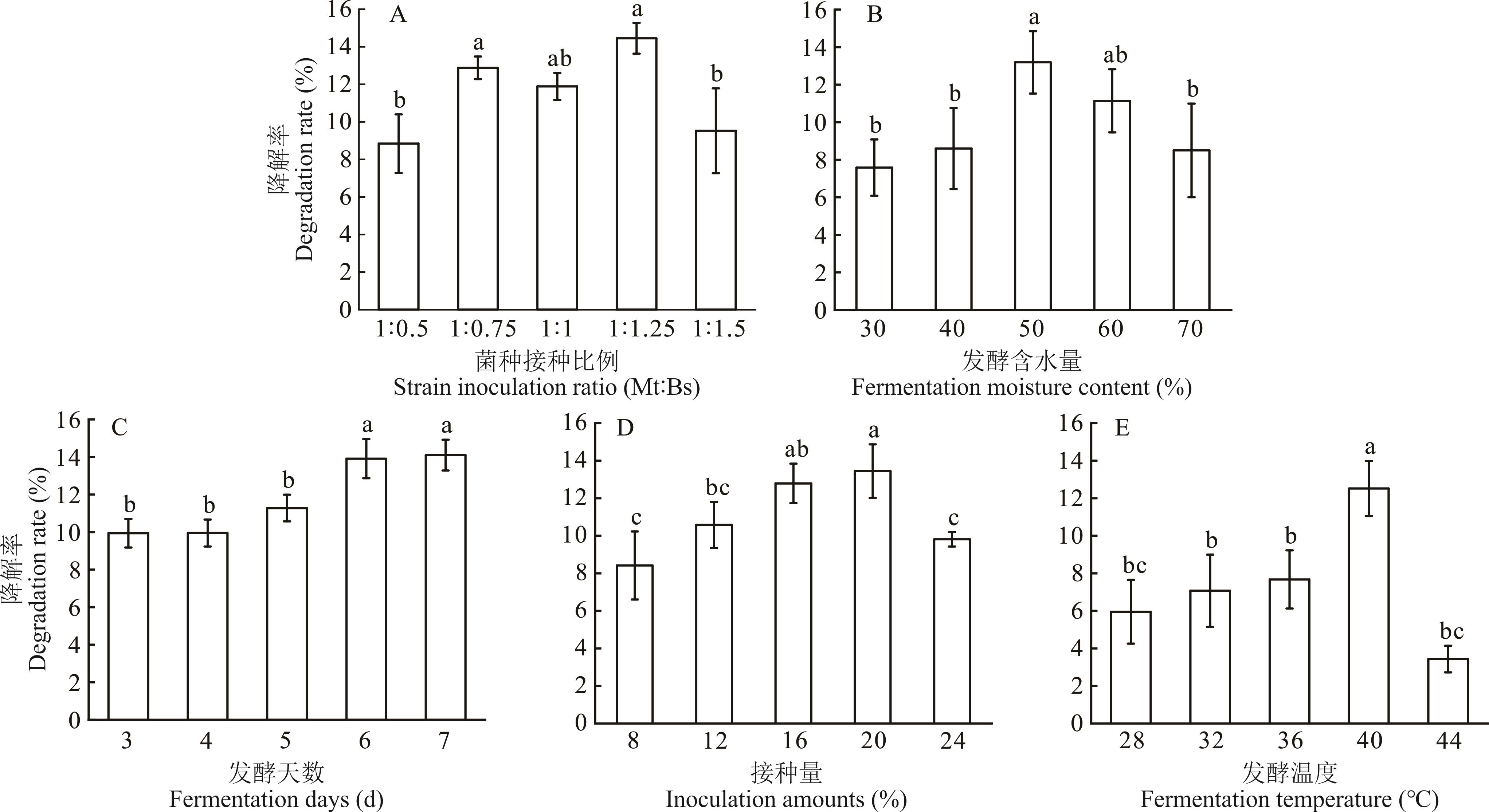
Fig.1 Effect of different factors on the lignocellulose degradation rate of C. korshinskii
编码值 Code | 因素Factor | ||
|---|---|---|---|
| 温度Temperature (℃, A) | 含水量Moisture content (%, B) | 接种比Inoculation ratio (Mt∶Bs, C) | |
| -1 | 36 | 40 | 1∶1 |
| 0 | 40 | 50 | 1∶1.25 |
| 1 | 44 | 60 | 1∶1.5 |
Table 1 Response surface factors and codes
编码值 Code | 因素Factor | ||
|---|---|---|---|
| 温度Temperature (℃, A) | 含水量Moisture content (%, B) | 接种比Inoculation ratio (Mt∶Bs, C) | |
| -1 | 36 | 40 | 1∶1 |
| 0 | 40 | 50 | 1∶1.25 |
| 1 | 44 | 60 | 1∶1.5 |
试验序号 Test sequence number | 温度 Temperature (℃, A) | 含水量 Moisture content (%, B) | 接种比 Inoculation ratio (Mt∶Bs, C) | 木质纤维素降解率 Degradation rate of lignocellulosic biomass (%) | 试验序号 Test sequence number | 温度 Temperature (℃, A) | 含水量 Moisture content (%, B) | 接种比 Inoculation ratio (Mt∶Bs, C) | 木质纤维素降解率 Degradation rate of lignocellulosic biomass (%) |
|---|---|---|---|---|---|---|---|---|---|
| 1 | 40 | 50 | 1∶1.25 | 14.57 | 10 | 36 | 50 | 1∶1 | 7.56 |
| 2 | 36 | 40 | 1∶1.25 | 8.85 | 11 | 36 | 50 | 1∶1.5 | 9.91 |
| 3 | 40 | 60 | 1∶1.5 | 7.99 | 12 | 40 | 50 | 1∶1.25 | 13.95 |
| 4 | 36 | 60 | 1∶1.25 | 8.91 | 13 | 44 | 50 | 1∶1.5 | 6.97 |
| 5 | 40 | 50 | 1∶1.25 | 13.52 | 14 | 40 | 60 | 1∶1 | 8.73 |
| 6 | 44 | 40 | 1∶1.25 | 7.82 | 15 | 44 | 50 | 1∶1 | 7.82 |
| 7 | 44 | 60 | 1∶1.25 | 8.47 | 16 | 40 | 40 | 1∶1 | 7.17 |
| 8 | 40 | 50 | 1∶1.25 | 13.67 | 17 | 40 | 40 | 1∶1.5 | 9.86 |
| 9 | 40 | 50 | 1∶1.25 | 14.69 |
Table 2 Response surface experimental design and results
试验序号 Test sequence number | 温度 Temperature (℃, A) | 含水量 Moisture content (%, B) | 接种比 Inoculation ratio (Mt∶Bs, C) | 木质纤维素降解率 Degradation rate of lignocellulosic biomass (%) | 试验序号 Test sequence number | 温度 Temperature (℃, A) | 含水量 Moisture content (%, B) | 接种比 Inoculation ratio (Mt∶Bs, C) | 木质纤维素降解率 Degradation rate of lignocellulosic biomass (%) |
|---|---|---|---|---|---|---|---|---|---|
| 1 | 40 | 50 | 1∶1.25 | 14.57 | 10 | 36 | 50 | 1∶1 | 7.56 |
| 2 | 36 | 40 | 1∶1.25 | 8.85 | 11 | 36 | 50 | 1∶1.5 | 9.91 |
| 3 | 40 | 60 | 1∶1.5 | 7.99 | 12 | 40 | 50 | 1∶1.25 | 13.95 |
| 4 | 36 | 60 | 1∶1.25 | 8.91 | 13 | 44 | 50 | 1∶1.5 | 6.97 |
| 5 | 40 | 50 | 1∶1.25 | 13.52 | 14 | 40 | 60 | 1∶1 | 8.73 |
| 6 | 44 | 40 | 1∶1.25 | 7.82 | 15 | 44 | 50 | 1∶1 | 7.82 |
| 7 | 44 | 60 | 1∶1.25 | 8.47 | 16 | 40 | 40 | 1∶1 | 7.17 |
| 8 | 40 | 50 | 1∶1.25 | 13.67 | 17 | 40 | 40 | 1∶1.5 | 9.86 |
| 9 | 40 | 50 | 1∶1.25 | 14.69 |
方差来源 Source of variance | 平方和 Sum of squares | 自由度 Degree of freedom | 均方 Mean square | F值 F-value | P值 P-value | 显著性 Significance |
|---|---|---|---|---|---|---|
| 模型Model | 126.14 | 9 | 14.02 | 67.79 | <0.0001 | *** |
| A | 2.15 | 1 | 2.15 | 10.41 | 0.0145 | * |
| B | 0.02 | 1 | 0.02 | 0.10 | 0.7658 | |
| C | 1.49 | 1 | 1.49 | 7.21 | 0.0313 | * |
| AB | 0.09 | 1 | 0.09 | 0.43 | 0.5309 | |
| AC | 2.56 | 1 | 2.56 | 12.37 | 0.0098 | ** |
| BC | 2.94 | 1 | 2.94 | 14.21 | 0.0070 | ** |
| A2 | 37.15 | 1 | 37.15 | 179.67 | <0.0001 | *** |
| B2 | 28.43 | 1 | 28.43 | 137.51 | <0.0001 | *** |
| C2 | 39.08 | 1 | 39.08 | 189.01 | <0.0001 | *** |
| 残差Residual error | 1.45 | 7 | 0.21 | |||
| 失拟项Lack of fit | 0.34 | 3 | 0.11 | 0.41 | 0.7574 | |
| 纯误差Pure error | 1.11 | 4 | 0.28 | |||
| 校正总平方和Corrected total sum of squares | 127.59 | 16 | ||||
| 决定系数Coefficient of determination (R2) | 0.9887 | |||||
| 调整决定系数Adjusted R-squared (R2Adj) | 0.9741 | |||||
| 变异系数Coefficient of variation (CV, %) | 4.53 |
Table 3 Analysis of variance of response surface experimental results
方差来源 Source of variance | 平方和 Sum of squares | 自由度 Degree of freedom | 均方 Mean square | F值 F-value | P值 P-value | 显著性 Significance |
|---|---|---|---|---|---|---|
| 模型Model | 126.14 | 9 | 14.02 | 67.79 | <0.0001 | *** |
| A | 2.15 | 1 | 2.15 | 10.41 | 0.0145 | * |
| B | 0.02 | 1 | 0.02 | 0.10 | 0.7658 | |
| C | 1.49 | 1 | 1.49 | 7.21 | 0.0313 | * |
| AB | 0.09 | 1 | 0.09 | 0.43 | 0.5309 | |
| AC | 2.56 | 1 | 2.56 | 12.37 | 0.0098 | ** |
| BC | 2.94 | 1 | 2.94 | 14.21 | 0.0070 | ** |
| A2 | 37.15 | 1 | 37.15 | 179.67 | <0.0001 | *** |
| B2 | 28.43 | 1 | 28.43 | 137.51 | <0.0001 | *** |
| C2 | 39.08 | 1 | 39.08 | 189.01 | <0.0001 | *** |
| 残差Residual error | 1.45 | 7 | 0.21 | |||
| 失拟项Lack of fit | 0.34 | 3 | 0.11 | 0.41 | 0.7574 | |
| 纯误差Pure error | 1.11 | 4 | 0.28 | |||
| 校正总平方和Corrected total sum of squares | 127.59 | 16 | ||||
| 决定系数Coefficient of determination (R2) | 0.9887 | |||||
| 调整决定系数Adjusted R-squared (R2Adj) | 0.9741 | |||||
| 变异系数Coefficient of variation (CV, %) | 4.53 |

Fig.2 Response surface and contour plots of C. korshinskii lignocellulosic biomass degradation rate as affected by temperature, moisture content, and inoculation ratio
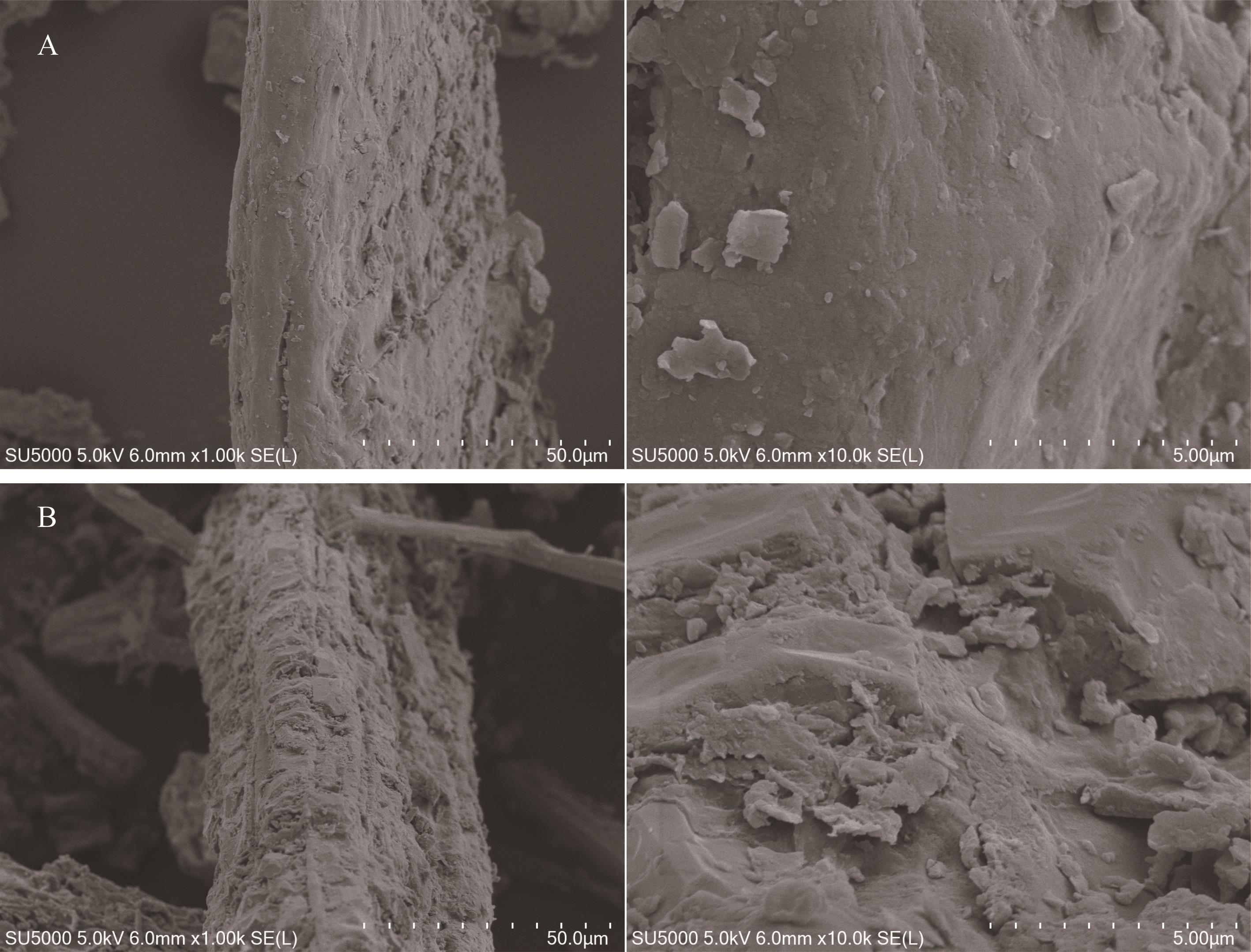
Fig.3 Surface tissue structure of C. korshinskii before/after degradation
| 项目Item | CK | Bs-Mt | P值P-value |
|---|---|---|---|
| 粗灰分Crude ash | 3.91±0.09 | 3.97±0.15 | 0.60 |
| 粗脂肪Ether extract (EE) | 1.15±0.06 | 1.48±0.07 | <0.05 |
| 粗蛋白Crude protein (CP) | 9.94±0.71 | 10.85±0.12 | 0.09 |
| 淀粉Starch | 1.10±0.06 | 0.62±0.10 | <0.05 |
| 可溶性碳水化合物Water soluble carbohydrates (WSC) | 3.12±0.19 | 3.40±0.09 | 0.09 |
| 中性洗涤纤维Neutral detergent fiber (NDF) | 72.32±2.35 | 61.25±0.30 | <0.01 |
| 酸性洗涤纤维Acid detergent fiber (ADF) | 57.08±2.96 | 50.60±1.66 | <0.05 |
| 酸性洗涤木质素Acid detergent lignin (ADL) | 10.05±0.14 | 9.25±0.06 | <0.01 |
Table 4 Nutrient composition of C. korshinskii before and after degradation (dry matter basis,%)
| 项目Item | CK | Bs-Mt | P值P-value |
|---|---|---|---|
| 粗灰分Crude ash | 3.91±0.09 | 3.97±0.15 | 0.60 |
| 粗脂肪Ether extract (EE) | 1.15±0.06 | 1.48±0.07 | <0.05 |
| 粗蛋白Crude protein (CP) | 9.94±0.71 | 10.85±0.12 | 0.09 |
| 淀粉Starch | 1.10±0.06 | 0.62±0.10 | <0.05 |
| 可溶性碳水化合物Water soluble carbohydrates (WSC) | 3.12±0.19 | 3.40±0.09 | 0.09 |
| 中性洗涤纤维Neutral detergent fiber (NDF) | 72.32±2.35 | 61.25±0.30 | <0.01 |
| 酸性洗涤纤维Acid detergent fiber (ADF) | 57.08±2.96 | 50.60±1.66 | <0.05 |
| 酸性洗涤木质素Acid detergent lignin (ADL) | 10.05±0.14 | 9.25±0.06 | <0.01 |
| 项目Item | CK | Bs-Mt | P值P-value |
|---|---|---|---|
| pH | 6.83±0.04 | 6.85±0.02 | 0.21 |
| 氨态氮Ammonia nitrogen (NH3-N, mg·dL-1) | 10.90±0.36 | 14.67±0.06 | <0.01 |
| 微生物蛋白Microbial protein (MCP, mg·mL-1) | 5.82±0.42 | 9.64±1.67 | <0.05 |
| 乙酸Acetic acid (AA, mmol·L-1) | 18.60±0.73 | 25.53±0.95 | <0.01 |
| 丙酸Propionic acid (PA, mmol·L-1) | 6.18±0.22 | 8.40±0.14 | <0.01 |
| 异丁酸Isobutyric acid (IBA, mmol·L-1) | 0.89±0.03 | 1.07±0.04 | <0.05 |
| 丁酸Butyric acid (BA, mmol·L-1) | 2.94±0.14 | 5.17±0.12 | <0.01 |
| 异戊酸Isovaleric acid (IVA, mmol·L-1) | 0.71±0.03 | 0.94±0.05 | <0.05 |
| 戊酸Valeric acid (VA, mmol·L-1) | 0.94±0.05 | 0.87±0.02 | 0.62 |
| 总挥发性脂肪酸Total volatile fatty acids (TVFA, mmol·L-1) | 30.94±0.73 | 41.97±1.20 | <0.01 |
| 乙丙比Acetate acid/propionate acid (A/P) | 3.13±0.14 | 3.04±0.06 | 0.12 |
| 体外干物质消化率In vitro dry matter digestibility (IVDMD, %) | 28.28±2.40 | 39.45±1.32 | <0.01 |
| 体外中性洗涤纤维消化率In vitro neutral detergent fiber digestibility (IVNDFD, %) | 9.70±1.13 | 12.21±0.85 | <0.01 |
Table 5 Effects of fermented C. korshinskii on in vitro ruminal fermentation parameters and digestibility rate
| 项目Item | CK | Bs-Mt | P值P-value |
|---|---|---|---|
| pH | 6.83±0.04 | 6.85±0.02 | 0.21 |
| 氨态氮Ammonia nitrogen (NH3-N, mg·dL-1) | 10.90±0.36 | 14.67±0.06 | <0.01 |
| 微生物蛋白Microbial protein (MCP, mg·mL-1) | 5.82±0.42 | 9.64±1.67 | <0.05 |
| 乙酸Acetic acid (AA, mmol·L-1) | 18.60±0.73 | 25.53±0.95 | <0.01 |
| 丙酸Propionic acid (PA, mmol·L-1) | 6.18±0.22 | 8.40±0.14 | <0.01 |
| 异丁酸Isobutyric acid (IBA, mmol·L-1) | 0.89±0.03 | 1.07±0.04 | <0.05 |
| 丁酸Butyric acid (BA, mmol·L-1) | 2.94±0.14 | 5.17±0.12 | <0.01 |
| 异戊酸Isovaleric acid (IVA, mmol·L-1) | 0.71±0.03 | 0.94±0.05 | <0.05 |
| 戊酸Valeric acid (VA, mmol·L-1) | 0.94±0.05 | 0.87±0.02 | 0.62 |
| 总挥发性脂肪酸Total volatile fatty acids (TVFA, mmol·L-1) | 30.94±0.73 | 41.97±1.20 | <0.01 |
| 乙丙比Acetate acid/propionate acid (A/P) | 3.13±0.14 | 3.04±0.06 | 0.12 |
| 体外干物质消化率In vitro dry matter digestibility (IVDMD, %) | 28.28±2.40 | 39.45±1.32 | <0.01 |
| 体外中性洗涤纤维消化率In vitro neutral detergent fiber digestibility (IVNDFD, %) | 9.70±1.13 | 12.21±0.85 | <0.01 |
| 项目Item | CK | Bs-Mt | P值P-value |
|---|---|---|---|
| 有机物消化率Organic matter digestibility (OMD, %) | 45.19±1.36 | 80.12±6.65 | <0.01 |
| 代谢能Metabolizable energy (ME, MJ·kg-1) | 5.72±0.23 | 11.52±1.10 | <0.01 |
| 理论最大产气量Theoretical maximum gas production (C1, mL·h-1) | 32.73±1.47 | 71.72±6.35 | <0.01 |
| 产气速率Gas production rate (C2, mL·h-1) | 1.87±0.30 | 0.93±0.01 | <0.01 |
| 产气延滞时间Lag time of gas production (C3, h) | 0.29±0.02 | 0.14±0.01 | <0.01 |
Table 6 Effects of fermented C. korshinskii on the digestibility of organic matter, metabolic energy, and gas production model parameters
| 项目Item | CK | Bs-Mt | P值P-value |
|---|---|---|---|
| 有机物消化率Organic matter digestibility (OMD, %) | 45.19±1.36 | 80.12±6.65 | <0.01 |
| 代谢能Metabolizable energy (ME, MJ·kg-1) | 5.72±0.23 | 11.52±1.10 | <0.01 |
| 理论最大产气量Theoretical maximum gas production (C1, mL·h-1) | 32.73±1.47 | 71.72±6.35 | <0.01 |
| 产气速率Gas production rate (C2, mL·h-1) | 1.87±0.30 | 0.93±0.01 | <0.01 |
| 产气延滞时间Lag time of gas production (C3, h) | 0.29±0.02 | 0.14±0.01 | <0.01 |
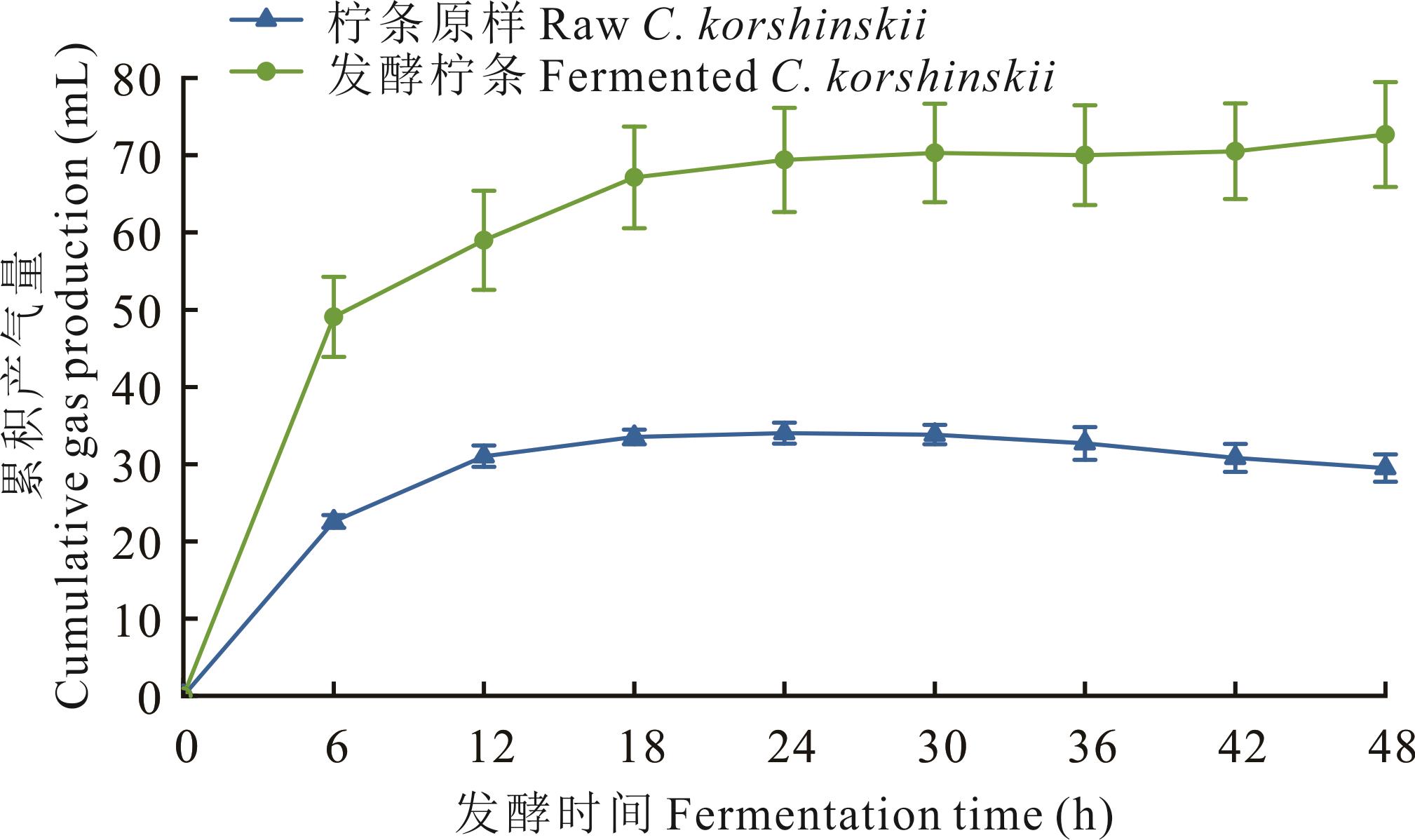
Fig.4 Gas production kinetics of fermented versus raw C. korshinskiiin vitro system
项目 Item | 组别Group | P值 P-value | |
|---|---|---|---|
| CK | Bs-Mt | ||
| 覆盖度Coverage | 0.99±0.00 | 0.99±0.00 | 0.733 |
| Sobs指数Sobs index | 1157.67±69.33 | 1058.67±41.10 | 0.100 |
| Ace指数Ace index | 1167.20±76.25 | 1069.33±39.73 | 0.119 |
| Chao指数Chao index | 1160.63±71.29 | 1061.87±39.58 | 0.104 |
Shannon指数 Shannon index | 6.40±0.01 | 6.01±0.05 | <0.010 |
Simpson指数 Simpson index | 0.003 | 0.007 | <0.050 |
Table 7 Effects of fermented C. korshinskii on the Alpha diversity of the rumen microbial community in in vitro fermentation
项目 Item | 组别Group | P值 P-value | |
|---|---|---|---|
| CK | Bs-Mt | ||
| 覆盖度Coverage | 0.99±0.00 | 0.99±0.00 | 0.733 |
| Sobs指数Sobs index | 1157.67±69.33 | 1058.67±41.10 | 0.100 |
| Ace指数Ace index | 1167.20±76.25 | 1069.33±39.73 | 0.119 |
| Chao指数Chao index | 1160.63±71.29 | 1061.87±39.58 | 0.104 |
Shannon指数 Shannon index | 6.40±0.01 | 6.01±0.05 | <0.010 |
Simpson指数 Simpson index | 0.003 | 0.007 | <0.050 |
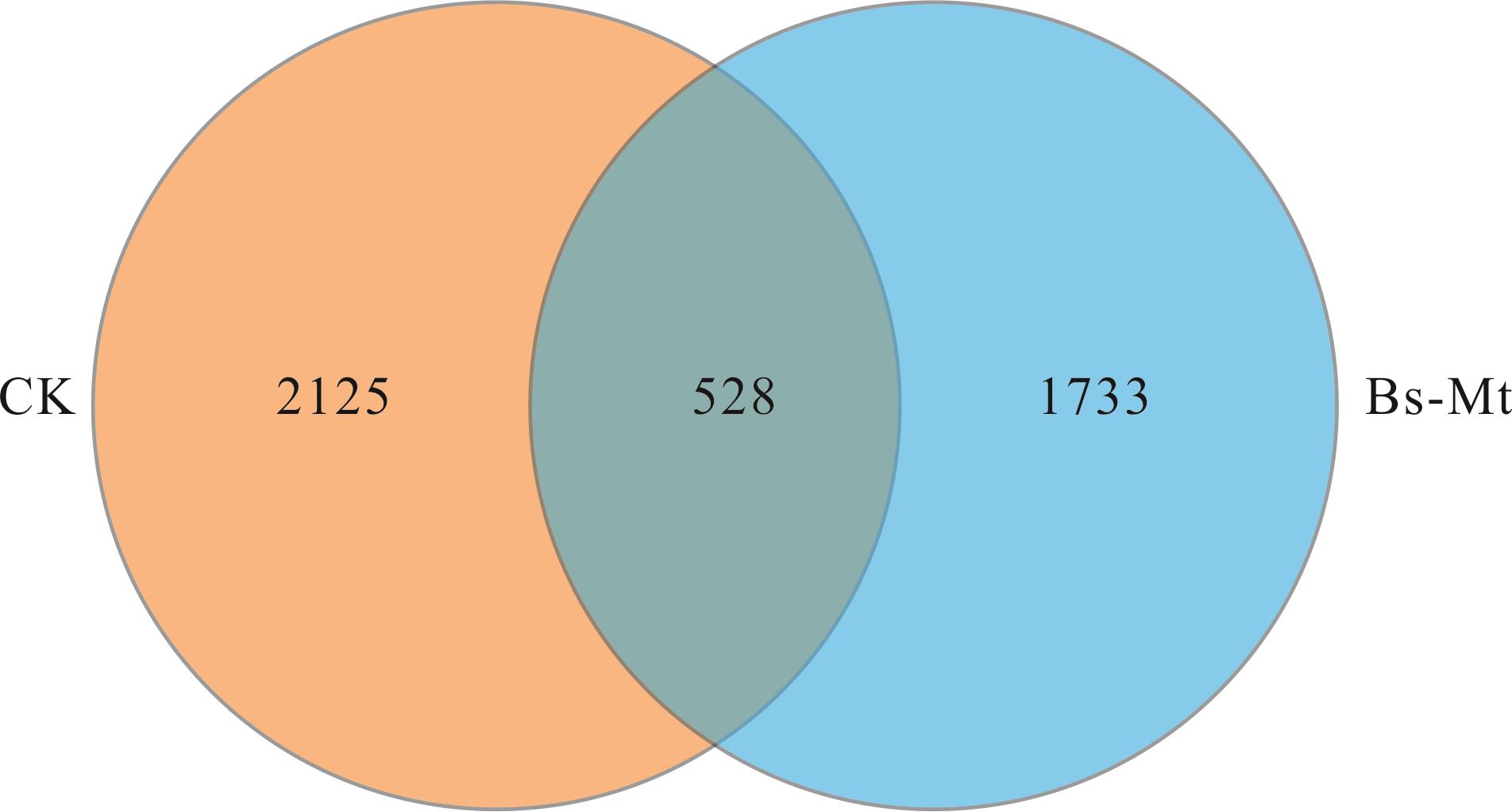
Fig.5 Venn diagram showing the number of amplicon sequence variants (ASVs) in the rumen microbiota
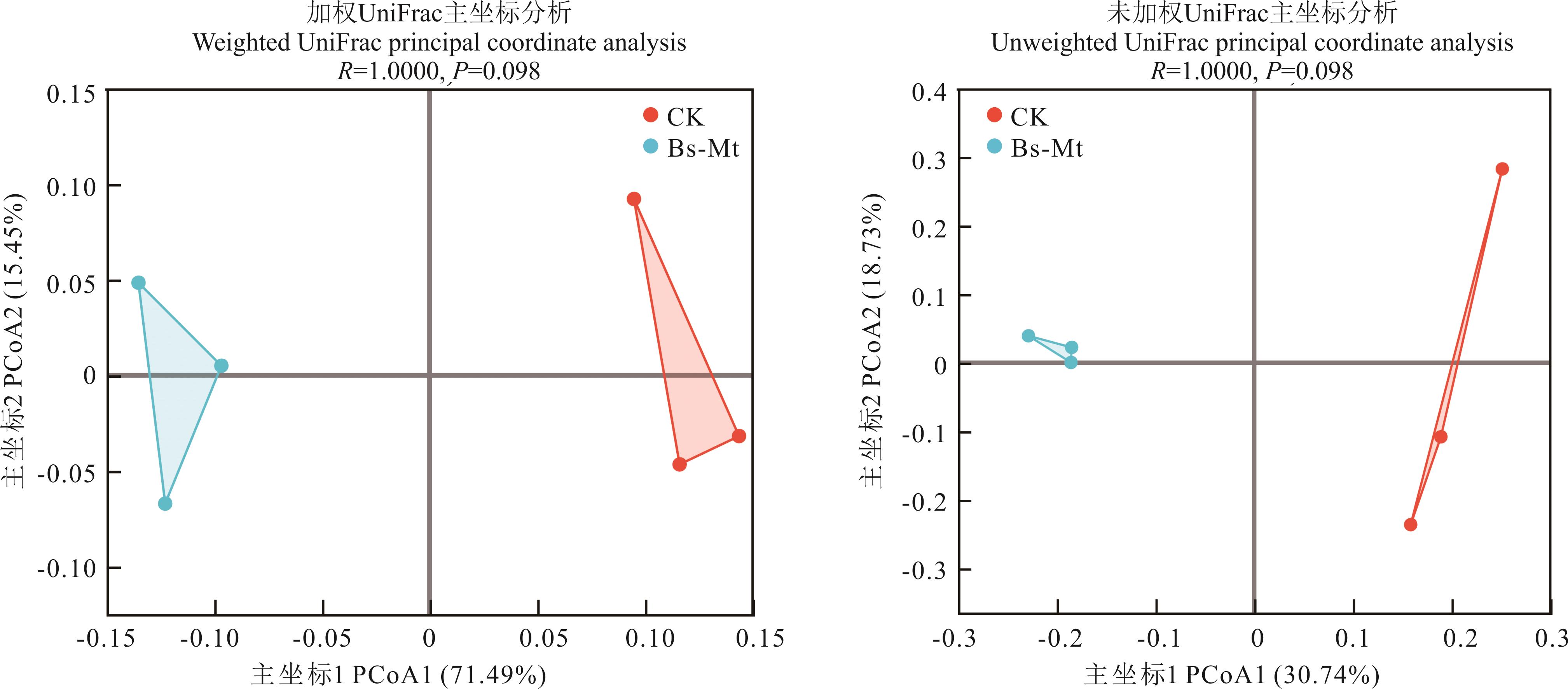
Fig.6 Principal coordinate analysis (PCoA) of the rumen microbial community from the in vitro fermentation of fermented C. korshinskii

Fig.7 Microbial community composition of raw and fermented C. korshinskii during in vitro rumen fermentation at the phylum and genus levels
| [1] | Bai B C, Qiu R, Sun L, et al. Effect isolated lactic acid bacteria inoculation on the quality, bacterial composition and metabolic characterization of C. korshinskii silage. Chemical and Biological Technologies in Agriculture, 2024, 11(1): 67. |
| [2] | Huang F, Liu J, Wang B, et al. The impacts of shrub branch covering on soil respiration in a desert steppe of Ningxia. Acta Ecologica Sinica, 2025, 45(7): 3218-3228. |
| 黄飞, 刘静, 王博, 等. 灌枝覆盖对宁夏荒漠草地土壤呼吸的影响. 生态学报, 2025, 45(7): 3218-3228. | |
| [3] | Li Z L, Ma F, Hu M M, et al. Study on the nutritional value of peashrub at different growth periods. China Feed, 2021(15): 121-123. |
| 李占丽, 马飞, 胡美美, 等. 柠条不同生长时期营养价值的研究. 中国饲料, 2021(15): 121-123. | |
| [4] | Yang F Y, Wu M X, Wang X K. Research progress in woody forage. Feed Industry, 2025, 46(6): 1-7. |
| 杨富裕, 吴铭鑫, 王学凯. 木本饲料研究进展. 饲料工业, 2025, 46(6): 1-7. | |
| [5] | Shi J H. Construction of complex fermentation flora and its effect on lignocellulose degradation of Caragana. Yinchuan: Ningxia University, 2024. |
| 史金红. 复合发酵菌群对柠条青贮饲料品质及木质纤维素降解的影响. 银川: 宁夏大学, 2024. | |
| [6] | Wu Z Y, Peng K, Zhang Y, et al. Lignocellulose dissociation with biological pretreatment towards the biochemical platform: A review. Materials Today Bio, 2022, 16: 100445. |
| [7] | Wu Q, Zhang Y X, Zhao L, et al. Strategies for efficient degradation of lignocellulose from straw: Synergistic effects of acid-base pretreatment and functional microbial agents in composting. Chemical Engineering Journal, 2025, 508: 161048. |
| [8] | Casciatori F P, Mafra N S C, Rodrigues N A, et al. Flow configuration and packing density of sugarcane bagasse and wheat bran affecting enzymes production by solid-state fermentation. BioEnergy Research, 2024, 17(1): 187-197. |
| [9] | Beijing Kelimeishi Biotechnology Co., Ltd. A novel Myceliophthora thermophila strain and its application: China, CN102352320A. 2012-02-15. |
| 北京可力美施生物科技有限公司. 一种嗜热毁丝霉新菌株及其应用: 中国, CN102352320A. 2012-02-15. | |
| [10] | Liu Q, Li J G, Zhang C Y, et al. Research progress of genome editing technologies for industrial filamentous fungi. Synthetic Biology Journal, 2021, 2(2): 256-273. |
| 刘倩, 李金根, 张晨阳, 等. 工业丝状真菌基因组编辑技术研究进展. 合成生物学, 2021, 2(2): 256-273. | |
| [11] | Dahiya S, Kumar A, Singh B. Enhanced endoxylanase production by Myceliophthora thermophila using rice straw and its synergism with phytase in improving nutrition. Process Biochemistry, 2020, 94: 235-242. |
| [12] | Liu G W, Gong H X, Tang H R, et al. Enhanced lignocellulose degradation in Bacillus subtilis RLI2019 through CRISPR/Cas9-mediated chromosomal integration of ternary cellulase genes. International Journal of Biological Macromolecules, 2025, 306(Pt 3): 141727. |
| [13] | Wang S C, Long H C, Hu X R, et al. The co-inoculation of Trichoderma viridis and Bacillus subtilis improved the aerobic composting efficiency and degradation of lignocellulose. Bioresource Technology, 2024, 394: 130285. |
| [14] | Chen Y L. Study on the factors and mechanism affecting the stability of structure and function of lignocellulosic degradation complex strains. Yichang: China Three Gorges University, 2022. |
| 陈永伦. 影响木质纤维素降解复合菌系结构和功能稳定性的因素及机理研究. 宜昌: 三峡大学, 2022. | |
| [15] | Liu X F, Hou Y, Ma J Q, et al. Efficient degradation and optimization of fermentation conditions of actinomycetes from corn cob. Transactions of the Chinese Society for Agricultural Machinery, 2020, 51(11): 329-337. |
| 刘晓飞, 侯艳, 马京求, 等. 降解玉米芯木质纤维素放线菌的筛选与发酵条件优化. 农业机械学报, 2020, 51(11): 329-337. | |
| [16] | State Administration for Market Regulation, Standardization Administration of the People’s Republic of China. Animal feeding stuffs-Determination of crude ash: GB/T 6438-2007. Beijing: Standards Press of China, 2007. |
| 国家市场监督管理总局, 中国国家标准化管理委员会. 饲料中粗灰分的测定: GB/T 6438-2007. 北京: 中国标准出版社, 2007. | |
| [17] | State Administration for Market Regulation, Standardization Administration of the People’s Republic of China. Determination of crude protein in feeds-Kjeldahl method: GB/T 6432-2018. Beijing: Standards Press of China, 2018. |
| 国家市场监督管理总局, 中国国家标准化管理委员会. 饲料中粗蛋白的测定 凯氏定氮法: GB/T 6432-2018. 北京: 中国标准出版社, 2018. | |
| [18] | State Administration for Market Regulation, Standardization Administration of the People’s Republic of China. Determination of crude fat in feeds: GB/T 6433-2006. Beijing: Standards Press of China, 2006. |
| 国家市场监督管理总局, 中国国家标准化管理委员会. 饲料中粗脂肪的测定: GB/T 6433-2006. 北京: 中国标准出版社, 2006. | |
| [19] | Van Soest P J, Robertson J B, Lewis B A. Methods for dietary fiber, neutral detergent fiber, and nonstarch polysaccharides in relation to animal nutrition. Journal of Dairy Science, 1991, 74(10): 3583-3597. |
| [20] | State Administration for Market Regulation, Standardization Administration of the People’s Republic of China. Determination of acid detergent lignin in feedstuffs: GB/T 20805-2006. Beijing: Standards Press of China, 2006. |
| 国家市场监督管理总局, 中国国家标准化管理委员会. 饲料中酸性洗涤木质素(ADL)的测定: GB/T 20805-2006. 北京: 中国标准出版社, 2006. | |
| [21] | Murphy R P. A method for the extraction of plant samples and the determination of total soluble carbohydrates. Journal of the Science of Food and Agriculture, 1958, 9(11): 714-717. |
| [22] | Liu R F, Wang Y W. Optimization of conditions for determination of organic acids in corn silage by HPLC. Feed Research, 2023, 46(2): 113-116. |
| 刘瑞芳, 王艺伟. 优化高效液相色谱测定玉米青贮饲料中有机酸条件的研究. 饲料研究, 2023, 46(2): 113-116. | |
| [23] | Feng Z C, Gao M. Improvement of method for determining ammonia nitrogen concentration in rumen fluid by colorimetry. Animal Husbandry and Feed Science, 2010, 31(Z1): 37. |
| 冯宗慈, 高民. 通过比色测定瘤胃液氨氮含量方法的改进. 畜牧与饲料科学, 2010, 31(Z1): 37. | |
| [24] | Makkar H P, Sharma O P, Dawra R K, et al. Simple determination of microbial protein in rumen liquor. Journal of Dairy Science, 1982, 65(11): 2170-2173. |
| [25] | National Feed Industry Standardization Technical Committee (SAC/TC 76). Determination of total starch content in feed Enzymatic method: GB/T 42491-2023. Beijing: Standards Press of China, 2023. |
| 全国饲料工业标准化技术委员会 (SAC/TC 76). 饲料中淀粉总含量的测定 酶法: GB/T 42491-2023. 北京: 中国标准出版社, 2023. | |
| [26] | Menke K H, Raab L, Salewski A, et al. The estimation of the digestibility and metabolizable energy content of ruminant feedingstuffs from the gas production when they are incubated with rumen liquor in vitro. The Journal of Agricultural Science, 1979, 93(1): 217-222. |
| [27] | Sundarraj A A, Thottiam V R, Sriramulu G. Optimized extraction and characterization of pectin from jackfruit (Artocarpus integer) wastes using response surface methodology. International Journal of Biological Macromolecules, 2018, 106: 698-703. |
| [28] | Zhou Y C, Wei X B, Li Z Z, et al. Optimization of new ultrasound-assisted extraction process for mulberry leaf protein and investigation of its antioxidant activity. Chinese Journal of Animal Nutrition, 2025, 37(4): 2716-2727. |
| 周一晨, 卫旭彪, 李震震, 等. 桑叶蛋白超声辅助提取新工艺优化及其抗氧化活性研究. 动物营养学报, 2025, 37(4): 2716-2727. | |
| [29] | Huang Q Y, Yan H B, Liu Y H, et al. Effects of microalgae-bacteria inoculation ratio on biogas slurry treatment and microorganism interactions in the symbiosis system. Journal of Cleaner Production, 2022, 362: 132271. |
| [30] | Qiu W Y, Li M, Chen S Y, et al. Constructing Escherichia coli synthetic microbial communities for simultaneously utilizing mixed sugars to product L-lactic acid. Journal of Chinese Institute of Food Science and Technology, 2024, 24(7): 208-218. |
| 邱炜玥, 李敏, 陈思宇, 等. 构建大肠杆菌合成生物群落利用混合糖同步发酵生产L-乳酸. 中国食品学报, 2024, 24(7): 208-218. | |
| [31] | Zhu L B, Han Q N, Shen N N, et al. Study on degradation of cellulose from steam-blasted reed straw by solid-state fermentation with mixed bacteria. Feed Research, 2024, 47(23): 134-139. |
| 朱龙博, 韩倩男, 申娜娜, 等. 混菌固态发酵降解蒸汽爆破芦苇秸秆纤维素的研究. 饲料研究, 2024, 47(23): 134-139. | |
| [32] | Kashyap P, Sabu A, Pandey A, et al. Extra-cellular L-glutaminase production by Zygosaccharomyces rouxii under solid-state fermentation. Process Biochemistry, 2002, 38(3): 307-312. |
| [33] | Jin G, Zhu Y, Rinzema A, et al. Water dynamics during solid-state fermentation by Aspergillus oryzae YH6. Bioresource Technology, 2019, 277: 68-76. |
| [34] | Jiao Y H, Gao T Y, Gong J G, et al. Study on optimization of solid-state fermentation with mixed bacteria to improve nutritional value of seabuckthorn fruit residue. Feed Research, 2024, 47(24): 75-79. |
| 焦奕豪, 高腾雨, 龚建刚, 等. 混菌固态发酵对改善沙棘果渣营养价值工艺优化的研究. 饲料研究, 2024, 47(24): 75-79. | |
| [35] | Ding X Q, Yao L, Hou Y, et al. Optimization of culture conditions during the solid-state fermentation of tea residue using mixed strains. Waste and Biomass Valorization, 2020, 11(12): 6667-6675. |
| [36] | Yang Y. Research on fermentation of mixed probiotics to improve feed quality of palm meal. Huai’an: Huaiyin Institute of Technology, 2023. |
| 杨阳. 混菌发酵改善棕榈粕品质的研究. 淮安: 淮阴工学院, 2023. | |
| [37] | Zhao J. Optimization of cellulose production conditions and transcriptome analysis of Myceliophthora thermophlia. Xinyang: Xinyang Normal University, 2023. |
| 赵佳. 嗜热毁丝霉产纤维素酶条件优化及转录组分析. 信阳: 信阳师范学院, 2023. | |
| [38] | Gauvry E, Mathot A, Couvert O, et al. Effects of temperature, pH and water activity on the growth and the sporulation abilities of Bacillus subtilis BSB1. International Journal of Food Microbiology, 2021, 337: 108915. |
| [39] | Yao K Y, Zhang T Z, Wang H F, et al. Upgrading of by-product from beverage industry through solid-state fermentation with Candida utilis and Bacillus subtilis. Letters in Applied Microbiology, 2018, 67(6): 557-563. |
| [40] | Han Q N, Li N, Zheng Z, et al. Screen and process optimization of compound enzymes for fiber component degradation of steam explosion bamboo powder. Chinese Journal of Animal Nutrition, 2025, 37(7): 4863-4875. |
| 韩倩男, 李宁, 郑梓, 等. 蒸汽爆破竹粉纤维组分降解复合酶筛选及工艺优化. 动物营养学报, 2025, 37(7): 4863-4875. | |
| [41] | Zhou J, Huang W M, Qin L J, et al. Construction of mixed fermentation system of four PGPR strains and evaluation of its promoting effect. Biotechnology Bulletin, 2021, 37(4): 116-126. |
| 周静, 黄文茂, 秦利军, 等. 四株PGPR菌株混菌发酵体系的构建及促生效应评价. 生物技术通报, 2021, 37(4): 116-126. | |
| [42] | Islam S, Miah M A S, Islam M F, et al. Exploring the effects of spontaneous and solid-state fermentation on the physicochemical, functional and structural properties of whole wheat flour (Triticum aestivum L.). Innovative Food Science & Emerging Technologies, 2024, 97: 103798. |
| [43] | Wang J W, Zhang W Q, Liu Y X. Thermochemical treatment of lignocellulosic biomass Ceratophyllum demersum at temperatures below 100 ℃ to prepare the carbon adsorbent. ACS Sustainable Chemistry & Engineering, 2025, 13(14): 5394-5402. |
| [44] | Chen J M, Cai Y F, Wang Z, et al. Construction of a synthetic microbial community based on multiomics linkage technology and analysis of the mechanism of lignocellulose degradation. Bioresource Technology, 2023, 389: 129799. |
| [45] | Lara E C, Basso F C, de Assis F B, et al. Changes in the nutritive value and aerobic stability of corn silages inoculated with Bacillus subtilis alone or combined with Lactobacillus plantarum. Animal Production Science, 2016, 56(11): 1867-1874. |
| [46] | Zou J H. Enzymatic mechanism of cellulose degradation by Myceliophthora thermophile. Beijing: Chinese Academy of Agricultural Sciences, 2023. |
| 邹佳欢. 嗜热毁丝霉高效降解纤维素的酶学机制研究. 北京: 中国农业科学院, 2023. | |
| [47] | Wang S M, Wang Z, Wang N, et al. Efficient conversion of corn straw to feed protein through solid-state fermentation using a thermophilic microbial consortium. Waste Management, 2025, 194: 298-308. |
| [48] | Cheng Z Z, Aibibula·Yimamu, Li F M, et al. Evaluation of feeding effect of pepper straw and its silage with different treatments on lambs. Chinese Journal of Animal Nutrition, 2024, 36(1): 387-396. |
| 程志泽, 艾比布拉·伊马木, 李凤鸣, 等. 辣椒秸秆及其不同处理的青贮对羔羊饲喂效果评价. 动物营养学报, 2024, 36(1): 387-396. | |
| [49] | Chen J M, Cai Y F, Wang Z, et al. Solid-state fermentation of corn straw using synthetic microbiome to produce fermented feed: the feed quality and conversion mechanism. Science of the Total Environment, 2024, 920: 171034. |
| [50] | Huang W Q, Hu X, Zeng J R, et al. Changing the nutrient composition and enhancing the hydrolytic enzyme activity of citrus pulp residue by cofermentation with Candida utilis and Bacillus subtilis. Process Biochemistry, 2021, 107: 83-90. |
| [51] | Xia T, Nie Y, Chen Y, et al. Structural and physicochemical properties and changes in vitro digestion and fermentation of soluble dietary fiber from tea residues modified by fermentation. Food Chemistry, 2025, 473: 142926. |
| [52] | Zhuang Q Y, Zhao L W, Luo C L, et al. Effects of yeast culture on in vitro rumen methane emission, fermentation parameters and microbiota of dairy cows. Chinese Journal of Animal Nutrition, 2025, 37(2): 1059-1070. |
| 庄巧越, 赵丽伟, 雒诚龙, 等. 酵母培养物对奶牛体外瘤胃甲烷排放、发酵参数及微生物区系的影响. 动物营养学报, 2025, 37(2): 1059-1070. | |
| [53] | Niu D Z, Zuo S S, Jiang D, et al. Treatment using white rot fungi changed the chemical composition of wheat straw and enhanced digestion by rumen microbiota in vitro. Animal Feed Science and Technology, 2018, 237: 46-54. |
| [54] | Zheng M H, Zuo S S, Niu D G, et al. Effect of four species of white rot fungi on the chemical composition and in vitro rumen degradability of naked oat straw. Waste and Biomass Valorization, 2021, 12(1): 435-443. |
| [55] | Qu J J, Pu X X, Huo J B, et al. Effects of steam explosion and steam explosion+fermentation on nutritional components, in vitro rumen fermentation characteristics and methane production of bagasse. Chinese Journal of Animal Nutrition, 2024, 36(6): 4003-4013. |
| 曲佳静, 普宣宣, 霍家斌, 等. 蒸汽爆破和蒸汽爆破+发酵处理对甘蔗渣营养成分、体外瘤胃发酵特征和甲烷产量的影响. 动物营养学报, 2024, 36(6): 4003-4013. | |
| [56] | He Y, Wang H B, Yu Z T, et al. Effects of the gender differences in cattle rumen fermentation on anaerobic fermentation of wheat straw. Journal of Cleaner Production, 2018, 205: 845-853. |
| [57] | Lorenzana-Moreno A V, Leal L H, Corona L, et al. Production of 17 strains of edible mushroom grown on corn stover and its effect on the chemical composition and ruminal in vitro digestibility of the residual substrate. PLoS One, 2023, 18(5): e286514. |
| [58] | Esen S. Optimizing ruminant nutrition: insights from a comprehensive analysis of silage composition and in vitro gas production dynamics using nonlinear models. BioSystems, 2023, 234: 105062. |
| [59] | Zhang M M, Liang G G, Zhang X L, et al. The gas production, ruminal fermentation parameters, and microbiota in response to Clostridium butyricum supplementation on in vitro varying with media pH levels. Frontiers in Microbiology, 2022, 13: 960623. |
| [60] | Su H P, Shen N, Ding C G, et al. Effects of selenium nanoparticles on growth performance, serum indexes, rumen fermentation parameters and microflora structure of Shaanbei white cashmere goats. Chinese Journal of Animal Nutrition, 2025, 37(9): 6072-6083. |
| 苏红萍, 沈娜, 丁常根, 等. 纳米硒对陕北白绒山羊生长性能、血清指标、瘤胃发酵参数和菌群结构的影响. 动物营养学报, 2025, 37(9): 6072-6083. | |
| [61] | Ransom-Jones E, Jones D L, McCarthy A J, et al. The fibrobacteres: an important phylum of cellulose-degrading bacteria. Microbial Ecology, 2012, 63(2): 267-281. |
| [62] | Yang G Y, Zhu Y N, Xie X J, et al. Advances in termite-symbiotic microbe system in degradation of lignocelluloses. Acta Microbiologica Sinica, 2020, 60(12): 2621-2634. |
| 羊桂英, 朱娅宁, 谢晓俊, 等. 白蚁-共生微生物系统降解木质纤维素研究进展. 微生物学报, 2020, 60(12): 2621-2634. | |
| [63] | Zhang K M, Li C Y, Liu Y W, et al. The association between vegetable and red meat consumption and gut microbiota in subjects with high risk of colorectal cancer. Acta Nutrimenta Sinica, 2023, 45(4): 371-377. |
| 张克明, 李春燕, 刘奕玮, 等. 结直肠癌高危人群蔬菜和红肉摄入频率与肠道菌群关系的研究. 营养学报, 2023, 45(4): 371-377. | |
| [64] | Mao S Y, Long L M, Zhu W Y. Effect of Selenomonas ruminantium alone, or in combination with yeast cultures, on in vitro rumen bacterial fermentation. Acta Prataculturae Sinica, 2010, 19(4): 176-186. |
| 毛胜勇, 龙黎明, 朱伟云. 体外研究反刍兽新月形单胞菌及与酵母联用对瘤胃微生物发酵的影响. 草业学报, 2010, 19(4): 176-186. | |
| [65] | Wang S S, Zhang Z Q, Lyu Q X, et al. Research advances in the application of Bacillus probiotics in rabbit production. Chinese Journal of Rabbit Farming, 2025, 44(1): 30-34. |
| 王帅帅, 张自强, 吕琼霞, 等. 芽孢杆菌属益生菌在家兔生产中的应用研究进展. 中国养兔杂志, 2025, 44(1): 30-34. | |
| [66] | Fuerniss L K, Kreikemeier K K, Reed L D, et al. Cecal microbiota of feedlot cattle fed a four-species Bacillus supplement. Journal of Animal Science, 2022, 100(10): skac258. |
| [1] | Wen-jie SHI, Xiao-wei LI, Zhen-qiang REN, Ji-de LIU, Ling LIU, Shu-xiang HAO, Yun-xia LI. Characteristics of understory herbaceous soil seed banks in Caragana korshinskii sand-fixation thickets of different ages in the Mu Us Sandy Land [J]. Acta Prataculturae Sinica, 2026, 35(8): 1-13. |
| [2] | Wen-jie QU, Wen-zhi ZHAO, Lei WANG, Jian-jun QU, Xin-guo YANG. Response of germination and seedling survival of two shrubs to simulated dry-wet treatments [J]. Acta Prataculturae Sinica, 2023, 32(11): 179-187. |
| [3] | Zhi-hao ZHU, Chen MENG, Xing WANG, Nai-ping SONG, Li WANG, Miao-miao XU, Ling-tong DU. Geometric distribution, formation, and topological structure of soil aggregates after introduction of Caragana korshinskii on the desert steppe [J]. Acta Prataculturae Sinica, 2023, 32(11): 53-64. |
| [4] | Yi-yan CUI, Jia-zhou LI, Zhi-mei TIAN, Dun DENG, Hui-jie LU, Zhi-chang LIU, Ting RONG, Xian-yong MA. Solid-state fermentation with Trichoderma koningii improves nutritional value of tea dregs [J]. Acta Prataculturae Sinica, 2022, 31(7): 96-110. |
| [5] | Shi-yu ZOU, Si-kui CHEN, Qi-yuan TANG, Dong CHEN, Yuan-wei CHEN, Pan DENG, Xu-lai HUANG, Fu-qiang LI. Effects of silage additives on quality and in vitro rumen fermentation characteristics of first season ratoon rice whole silage [J]. Acta Prataculturae Sinica, 2021, 30(7): 122-132. |
| [6] | Zhi-peng CHANG, Ying-ying SUN, Jia-yang LI, Chun-mei GONG. Cloning and transformation of the CkCAD gene in Caragana korshinskii and analysis of its drought resistance function [J]. Acta Prataculturae Sinica, 2021, 30(3): 68-80. |
| [7] | Hai-tao CHANG, Ren-tao LIU, Wei CHEN, An-ning ZHANG, Xiao-an ZUO. Distribution of ground-active arthropod community structure after introduction of Caragana korshinskii into Reaumuria soongorica shrubland on the Urat desert steppe, Inner Mongolia [J]. Acta Prataculturae Sinica, 2020, 29(12): 188-197. |
| [8] | YANG Qiaoli, YAO Tuo, WANG Dewu, GUN Shuangbao. Screening of lignocellulose degrading microbial communities for their ability to deodorize livestock and poultry wastes [J]. Acta Prataculturae Sinica, 2015, 24(1): 196-203. |
| [9] | WANG Dong-sheng, HUANG Jiang-li, ZHANG Zhi-hong, TIAN Xiao-juan, HUANG Huang, YIN Yu-long, DING Jian-nan. Effects of plant solid powder and ethanol extract of Impatiens balsamina on microbial metabolic parameters during in vitro rumen fermentation [J]. Acta Prataculturae Sinica, 2013, 22(2): 87-93. |
| [10] | REN Ai-qin, YI Jin, GAO Hong-wen, LI Jun, WANG Xue-min. Cloning and expression analysis of the promoter of Caragana korshinskii gene [J]. Acta Prataculturae Sinica, 2013, 22(2): 165-170. |
| [11] | FENG Yan, WANG Yan-rong, HU Xiao-wen. Effects of soil water stress on seedling growth and water use efficiency of two desert shrubs [J]. Acta Prataculturae Sinica, 2011, 20(4): 293-298. |
| Viewed | ||||||
|
Full text |
|
|||||
|
Abstract |
|
|||||
