
ISSN 1004-5759 CN 62-1105/S
Acta Prataculturae Sinica ›› 2026, Vol. 35 ›› Issue (12): 113-123.DOI: 10.11686/cyxb2025498
Ke-er CUI1( ), Yan-yan WANG1, Tian-yu ZHOU1, Guo-dong LI2, Jian-guo ZHANG1, Jing TIAN1()
Received:2025-12-09
Revised:2026-03-02
Online:2026-12-20
Published:2026-11-02
Contact:
Jing TIAN
Ke-er CUI, Yan-yan WANG, Tian-yu ZHOU, Guo-dong LI, Jian-guo ZHANG, Jing TIAN. An evaluation of the impact on dairy cow fermented total mixed ration nutritional value of substitution of king grass with stevia residue and molasses addition[J]. Acta Prataculturae Sinica, 2026, 35(12): 113-123.
项目 Item | 甜叶菊渣 Stevia residue | 王草 King grass |
|---|---|---|
| 干物质 Dry matter (%FM) | 37.22±0.30 | 18.02±0.51 |
| 粗蛋白Crude protein (%DM) | 16.30±0.40 | 5.41±0.57 |
| 粗灰分Crude ash (%DM) | 6.99±1.09 | 10.32±0.32 |
| pH | 5.86±0.04 | 5.84±0.05 |
| 缓冲能BC (mEq·kg-1 DM) | 73.13±11.79 | 302.81±25.52 |
| 中性洗涤纤维NDF (%DM) | 66.08±3.02 | 75.03±0.85 |
| 酸性洗涤纤维ADF (%DM) | 49.50±1.34 | 49.35±1.54 |
| 水溶性碳水化合物WSC (%DM) | 1.36±0.01 | 7.42±0.02 |
| 总黄酮TF (mg RE·g-1 DM) | 10.41±0.85 | 8.64±0.60 |
| DPPH (mg TE·g-1 DM) | 2.59±0.05 | 1.74±0.06 |
| ABTS (mg TE·g-1 DM) | 7.24±0.22 | 3.62±0.38 |
| FRAP (mg TE·g-1 DM) | 3.00±0.31 | 1.88±0.17 |
Table 1 Nutritional and active components of stevia residue and king grass
项目 Item | 甜叶菊渣 Stevia residue | 王草 King grass |
|---|---|---|
| 干物质 Dry matter (%FM) | 37.22±0.30 | 18.02±0.51 |
| 粗蛋白Crude protein (%DM) | 16.30±0.40 | 5.41±0.57 |
| 粗灰分Crude ash (%DM) | 6.99±1.09 | 10.32±0.32 |
| pH | 5.86±0.04 | 5.84±0.05 |
| 缓冲能BC (mEq·kg-1 DM) | 73.13±11.79 | 302.81±25.52 |
| 中性洗涤纤维NDF (%DM) | 66.08±3.02 | 75.03±0.85 |
| 酸性洗涤纤维ADF (%DM) | 49.50±1.34 | 49.35±1.54 |
| 水溶性碳水化合物WSC (%DM) | 1.36±0.01 | 7.42±0.02 |
| 总黄酮TF (mg RE·g-1 DM) | 10.41±0.85 | 8.64±0.60 |
| DPPH (mg TE·g-1 DM) | 2.59±0.05 | 1.74±0.06 |
| ABTS (mg TE·g-1 DM) | 7.24±0.22 | 3.62±0.38 |
| FRAP (mg TE·g-1 DM) | 3.00±0.31 | 1.88±0.17 |
项目 Item | 替代比例 Replacement ratio | 标准误 SEM | 显著性 Significance | ||
|---|---|---|---|---|---|
| 0 | 25% | 50% | |||
| 干物质 Dry matter (%FM) | 45.32b | 48.52ab | 52.97a | 1.30 | * |
| 粗蛋白Crude protein (%DM) | 18.77b | 20.11ab | 21.35a | 0.42 | ** |
| 粗灰分Crude ash (%DM) | 7.22a | 6.98a | 6.83a | 0.09 | NS |
| pH | 6.03a | 5.92b | 5.83c | 0.03 | ** |
| 缓冲能BC (mEq·kg-1 DM) | 292.53a | 277.60a | 243.98b | 7.54 | ** |
| 中性洗涤纤维NDF (%DM) | 37.93b | 39.72ab | 41.17a | 0.56 | * |
| 酸性洗涤纤维ADF (%DM) | 21.59a | 22.71a | 25.29a | 0.79 | NS |
| 水溶性碳水化合物WSC (%DM) | 10.29a | 9.39a | 10.78a | 0.85 | NS |
| 乳酸菌LAB (lg cfu·g-1 FM) | 5.64c | 6.01b | 6.75a | 0.16 | ** |
| 好氧细菌AB (lg cfu·g-1 FM) | 6.75b | 6.87b | 7.55a | 0.13 | ** |
| 酵母菌Yeast (lg cfu·g-1 FM) | 4.28a | 4.49a | 4.46a | 0.06 | NS |
| 霉菌Mold (lg cfu·g-1 FM) | 3.00b | 3.46a | 3.10b | 0.08 | * |
Table 2 Nutritional composition and microbial counts of total mixed ration formulated with stevia residue in place of king grass
项目 Item | 替代比例 Replacement ratio | 标准误 SEM | 显著性 Significance | ||
|---|---|---|---|---|---|
| 0 | 25% | 50% | |||
| 干物质 Dry matter (%FM) | 45.32b | 48.52ab | 52.97a | 1.30 | * |
| 粗蛋白Crude protein (%DM) | 18.77b | 20.11ab | 21.35a | 0.42 | ** |
| 粗灰分Crude ash (%DM) | 7.22a | 6.98a | 6.83a | 0.09 | NS |
| pH | 6.03a | 5.92b | 5.83c | 0.03 | ** |
| 缓冲能BC (mEq·kg-1 DM) | 292.53a | 277.60a | 243.98b | 7.54 | ** |
| 中性洗涤纤维NDF (%DM) | 37.93b | 39.72ab | 41.17a | 0.56 | * |
| 酸性洗涤纤维ADF (%DM) | 21.59a | 22.71a | 25.29a | 0.79 | NS |
| 水溶性碳水化合物WSC (%DM) | 10.29a | 9.39a | 10.78a | 0.85 | NS |
| 乳酸菌LAB (lg cfu·g-1 FM) | 5.64c | 6.01b | 6.75a | 0.16 | ** |
| 好氧细菌AB (lg cfu·g-1 FM) | 6.75b | 6.87b | 7.55a | 0.13 | ** |
| 酵母菌Yeast (lg cfu·g-1 FM) | 4.28a | 4.49a | 4.46a | 0.06 | NS |
| 霉菌Mold (lg cfu·g-1 FM) | 3.00b | 3.46a | 3.10b | 0.08 | * |
添加剂 Additive | 替代比例 R | pH | 有机酸Organic acid (g·kg-1 DM) | NH3-N (g·kg-1 TN) | 微生物Microorganism (lg cfu·g-1 FM) | |||||
|---|---|---|---|---|---|---|---|---|---|---|
乳酸 LA | 乙酸 AA | 丙酸PA | 丁酸BA | 好氧细菌 AB | 酵母菌 Yeast | 霉菌Mold | ||||
| CK | 0 | 4.15±0.02a | 54.59±2.76a | 9.75±0.59c | ND | ND | 24.24±0.59ab | 4.20±0.04a | 2.28±0.49b | <2.00 |
| 25% | 4.11±0.01ab | 54.10±1.31a | 12.52±0.13b | ND | ND | 21.30±0.14d | 4.13±0.17a | <2.00 | <2.00 | |
| 50% | 4.10±0.06ab | 49.13±0.32b | 12.85±1.79b | ND | ND | 22.23±1.43cd | 4.14±0.14a | <2.00 | <2.00 | |
| TM | 0 | 4.14±0.03ab | 51.05±1.39ab | 13.79±1.10b | ND | ND | 25.19±0.80a | 4.25±0.14a | 3.06±0.12a | <2.00 |
| 25% | 4.08±0.01b | 52.12±3.18ab | 16.28±0.68a | ND | ND | 24.16±1.12ab | 3.99±0.19a | <2.00 | <2.00 | |
| 50% | 4.13±0.03ab | 52.95±1.80ab | 16.81±1.48a | ND | ND | 23.15±0.73b | 4.22±0.10a | <2.00 | <2.00 | |
显著性 Significance | A | NS | NS | ** | NS | NS | ** | NS | * | NS |
| R | * | NS | ** | NS | NS | ** | NS | ** | NS | |
| I | NS | * | NS | NS | NS | NS | NS | ** | NS | |
Table 3 Fermentation quality of fermented total mixed ration formulated with stevia residue in place of king grass
添加剂 Additive | 替代比例 R | pH | 有机酸Organic acid (g·kg-1 DM) | NH3-N (g·kg-1 TN) | 微生物Microorganism (lg cfu·g-1 FM) | |||||
|---|---|---|---|---|---|---|---|---|---|---|
乳酸 LA | 乙酸 AA | 丙酸PA | 丁酸BA | 好氧细菌 AB | 酵母菌 Yeast | 霉菌Mold | ||||
| CK | 0 | 4.15±0.02a | 54.59±2.76a | 9.75±0.59c | ND | ND | 24.24±0.59ab | 4.20±0.04a | 2.28±0.49b | <2.00 |
| 25% | 4.11±0.01ab | 54.10±1.31a | 12.52±0.13b | ND | ND | 21.30±0.14d | 4.13±0.17a | <2.00 | <2.00 | |
| 50% | 4.10±0.06ab | 49.13±0.32b | 12.85±1.79b | ND | ND | 22.23±1.43cd | 4.14±0.14a | <2.00 | <2.00 | |
| TM | 0 | 4.14±0.03ab | 51.05±1.39ab | 13.79±1.10b | ND | ND | 25.19±0.80a | 4.25±0.14a | 3.06±0.12a | <2.00 |
| 25% | 4.08±0.01b | 52.12±3.18ab | 16.28±0.68a | ND | ND | 24.16±1.12ab | 3.99±0.19a | <2.00 | <2.00 | |
| 50% | 4.13±0.03ab | 52.95±1.80ab | 16.81±1.48a | ND | ND | 23.15±0.73b | 4.22±0.10a | <2.00 | <2.00 | |
显著性 Significance | A | NS | NS | ** | NS | NS | ** | NS | * | NS |
| R | * | NS | ** | NS | NS | ** | NS | ** | NS | |
| I | NS | * | NS | NS | NS | NS | NS | ** | NS | |
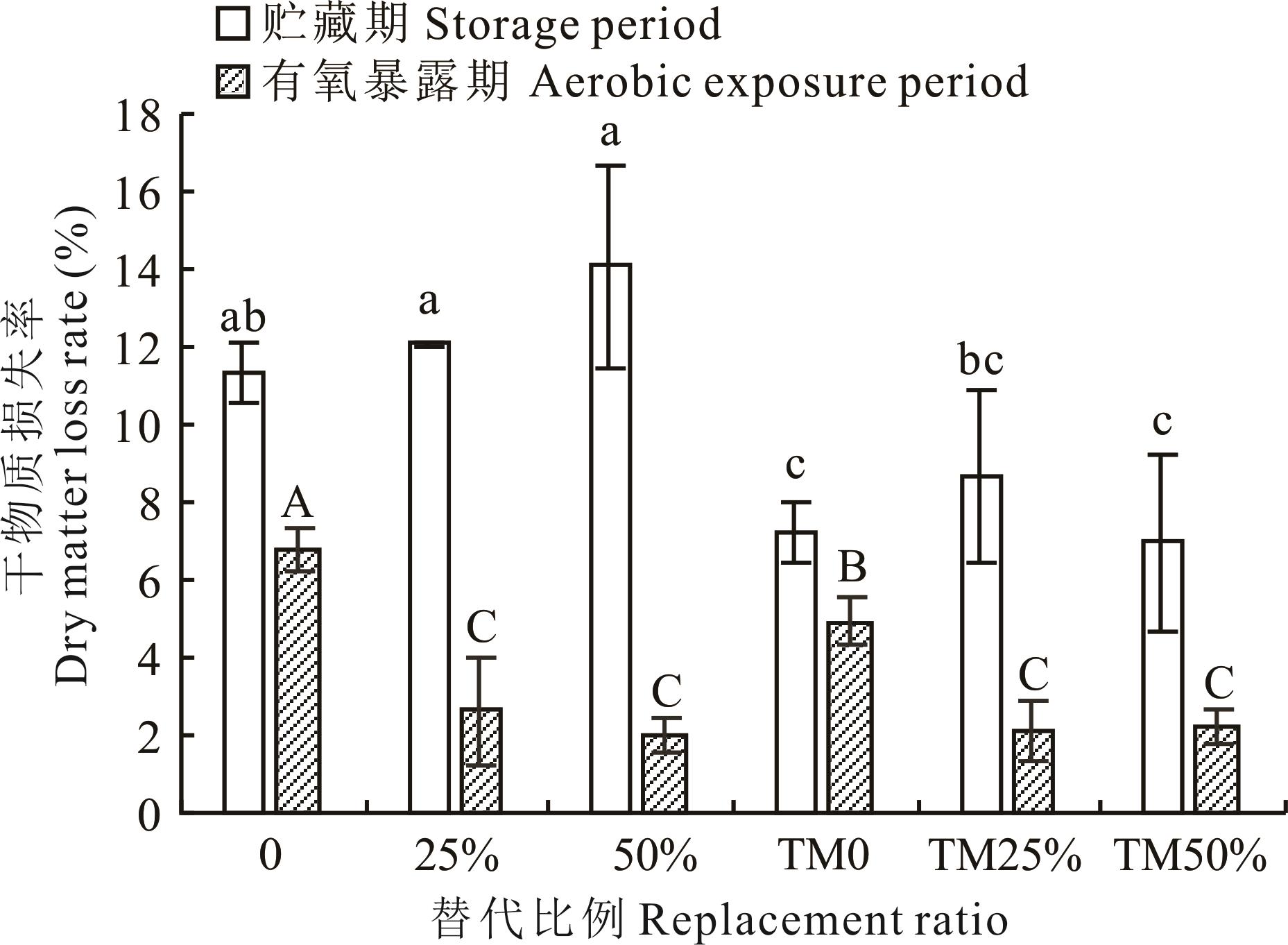
Fig.1 The dry matter loss rate of fermented total mixed ration formulated with stevia residue in place of king grass
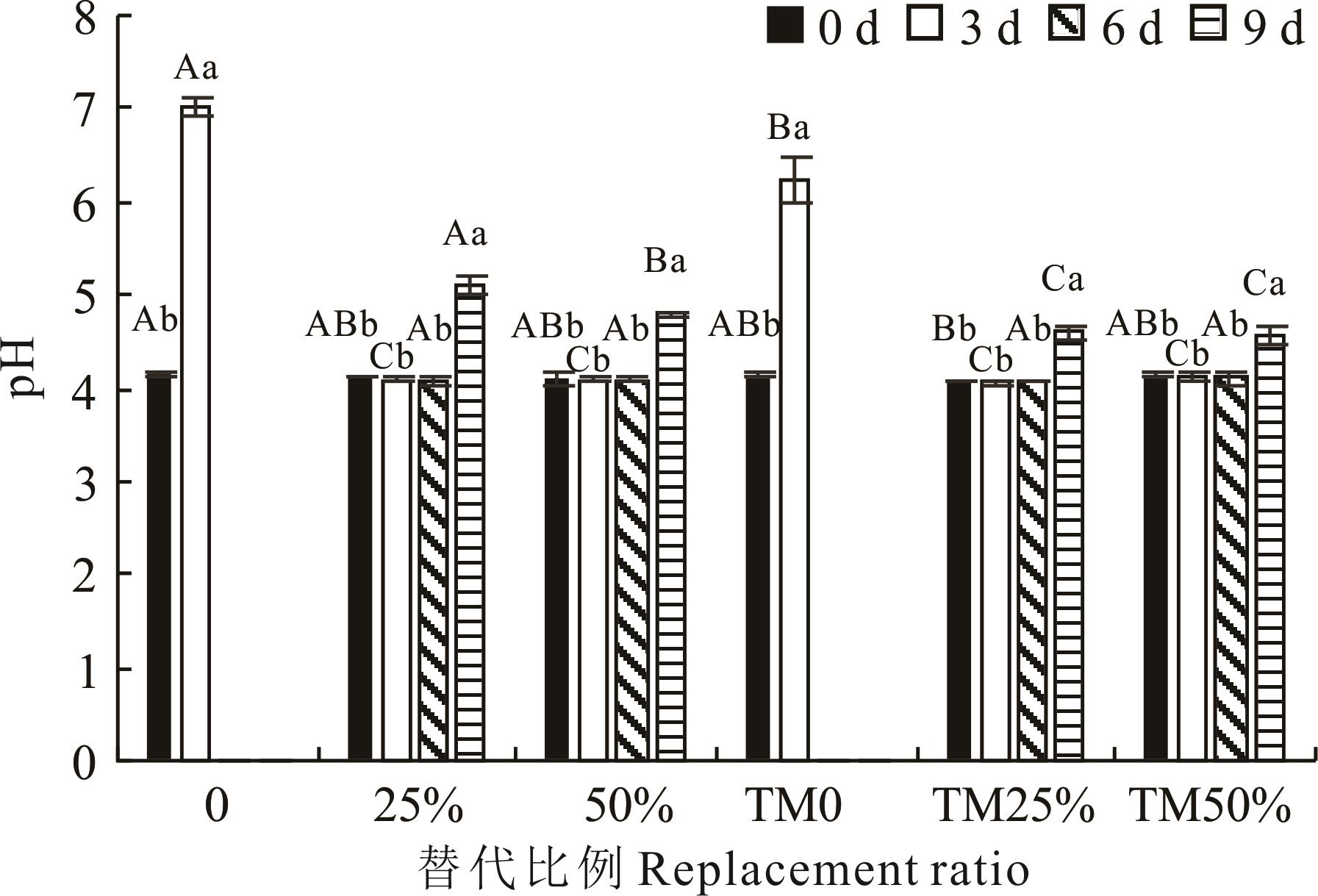
Fig. 2 The pH changes of fermented total mixed ration formulated with stevia residue in place of king grass
项目 Item | 添加剂 A | 替代比例 R | 有氧暴露天数Duration of aerobic exposure | 显著性Significance | |||||||||
|---|---|---|---|---|---|---|---|---|---|---|---|---|---|
| 0 d | 3 d | 6 d | 9 d | A | R | D | A×R | A×D | R×D | I | |||
好氧 细菌 AB | CK | 0 | 4.20±0.04aB | 8.85±0.07aA | - | - | ** | ** | ** | ** | ** | ** | ** |
| 25% | 4.13±0.17aB | 4.13±0.12cB | 5.02±0.24aA | - | |||||||||
| 50% | 4.14±0.14aB | 4.26±0.11cB | 4.80±0.13aA | - | |||||||||
| TM | 0 | 4.25±0.14aB | 8.29±0.12bA | - | - | ||||||||
| 25% | 3.99±0.19aB | 4.21±0.08cB | 4.17±0.16bB | 6.98±1.22aA | |||||||||
| 50% | 4.22±0.10aB | 4.29±0.07cB | 4.39±0.17bB | 6.93±1.02aA | |||||||||
酵母菌 Yeast | CK | 0 | 2.28±0.49bB | 8.69±0.13aA | - | - | NS | * | ** | NS | ** | ** | ** |
| 25% | ND | 1.70±1.57bB | 6.64±0.07aA | - | |||||||||
| 50% | ND | 1.53±1.46bB | 6.51±0.06aA | - | |||||||||
| TM | 0 | 3.06±0.12aB | 7.94±0.09aA | - | - | ||||||||
| 25% | ND | 2.29±0.55bB | 2.84±0.26bB | 4.92±1.60aA | |||||||||
| 50% | ND | 1.74±1.54bBC | 2.84±0.18bAB | 4.44±2.15aA | |||||||||
Table 4 Microbial counts of fermented total mixed ration formulated with stevia residue in place of king grass during aerobic exposure (lg cfu·g-1 FM)
项目 Item | 添加剂 A | 替代比例 R | 有氧暴露天数Duration of aerobic exposure | 显著性Significance | |||||||||
|---|---|---|---|---|---|---|---|---|---|---|---|---|---|
| 0 d | 3 d | 6 d | 9 d | A | R | D | A×R | A×D | R×D | I | |||
好氧 细菌 AB | CK | 0 | 4.20±0.04aB | 8.85±0.07aA | - | - | ** | ** | ** | ** | ** | ** | ** |
| 25% | 4.13±0.17aB | 4.13±0.12cB | 5.02±0.24aA | - | |||||||||
| 50% | 4.14±0.14aB | 4.26±0.11cB | 4.80±0.13aA | - | |||||||||
| TM | 0 | 4.25±0.14aB | 8.29±0.12bA | - | - | ||||||||
| 25% | 3.99±0.19aB | 4.21±0.08cB | 4.17±0.16bB | 6.98±1.22aA | |||||||||
| 50% | 4.22±0.10aB | 4.29±0.07cB | 4.39±0.17bB | 6.93±1.02aA | |||||||||
酵母菌 Yeast | CK | 0 | 2.28±0.49bB | 8.69±0.13aA | - | - | NS | * | ** | NS | ** | ** | ** |
| 25% | ND | 1.70±1.57bB | 6.64±0.07aA | - | |||||||||
| 50% | ND | 1.53±1.46bB | 6.51±0.06aA | - | |||||||||
| TM | 0 | 3.06±0.12aB | 7.94±0.09aA | - | - | ||||||||
| 25% | ND | 2.29±0.55bB | 2.84±0.26bB | 4.92±1.60aA | |||||||||
| 50% | ND | 1.74±1.54bBC | 2.84±0.18bAB | 4.44±2.15aA | |||||||||

Fig.3 Bacterial diversity of the fermented total mixed ration with stevia residue replacing king grass at the phylum (a), genus (b) and species (c) levels
添加剂 Additive | 替代比例 Replacement ratio | 自由基清除能力Free radical scavenging capacity (mg TE·g -1 DM) | 总黄酮TF (mg RE·g-1 DM) | ||
|---|---|---|---|---|---|
| DPPH | ABTS | FRAP | |||
| F | 0 | 1.34±0.10d | 2.98±0.12e | 1.24±0.07e | 6.02±0.21c |
| 25% | 1.54±0.04d | 3.50±0.15d | 1.50±0.05de | 6.40±0.68c | |
| 50% | 1.85±0.15c | 3.78±0.54bcd | 1.56±0.20d | 7.12±0.53c | |
| CK | 0 | 2.25±0.20b | 3.32±0.18e | 2.36±0.34c | 12.55±0.43ab |
| 25% | 2.37±0.06ab | 4.21±0.15ab | 2.76±0.04ab | 11.51±1.11ab | |
| 50% | 2.24±0.03b | 4.13±0.05abc | 2.33±0.11c | 10.30±0.44b | |
| TM | 0 | 2.33±0.14b | 3.68±0.12cd | 2.42±0.03cd | 11.92±0.15ab |
| 25% | 2.66±0.34a | 4.44±0.33a | 2.52±0.07bc | 12.97±3.22a | |
| 50% | 2.54±0.24ab | 4.48±0.43a | 2.86±0.25a | 12.08±0.84ab | |
显著性 Significance | A | ** | ** | ** | ** |
| R | * | ** | ** | NS | |
| I | NS | NS | * | NS | |
Table 5 Free radical scavenging capacity and total flavonoid content of fermented total mixed ration formulated with stevia residue in place of king grass
添加剂 Additive | 替代比例 Replacement ratio | 自由基清除能力Free radical scavenging capacity (mg TE·g -1 DM) | 总黄酮TF (mg RE·g-1 DM) | ||
|---|---|---|---|---|---|
| DPPH | ABTS | FRAP | |||
| F | 0 | 1.34±0.10d | 2.98±0.12e | 1.24±0.07e | 6.02±0.21c |
| 25% | 1.54±0.04d | 3.50±0.15d | 1.50±0.05de | 6.40±0.68c | |
| 50% | 1.85±0.15c | 3.78±0.54bcd | 1.56±0.20d | 7.12±0.53c | |
| CK | 0 | 2.25±0.20b | 3.32±0.18e | 2.36±0.34c | 12.55±0.43ab |
| 25% | 2.37±0.06ab | 4.21±0.15ab | 2.76±0.04ab | 11.51±1.11ab | |
| 50% | 2.24±0.03b | 4.13±0.05abc | 2.33±0.11c | 10.30±0.44b | |
| TM | 0 | 2.33±0.14b | 3.68±0.12cd | 2.42±0.03cd | 11.92±0.15ab |
| 25% | 2.66±0.34a | 4.44±0.33a | 2.52±0.07bc | 12.97±3.22a | |
| 50% | 2.54±0.24ab | 4.48±0.43a | 2.86±0.25a | 12.08±0.84ab | |
显著性 Significance | A | ** | ** | ** | ** |
| R | * | ** | ** | NS | |
| I | NS | NS | * | NS | |
| [1] | Lemus-Mondaca R, Vega-Gálvez A, Zura-Bravo L, et al. Stevia rebaudiana Bertoni, source of a high-potency natural sweetener: A comprehensive review on the biochemical, nutritional and functional aspects. Food Chemistry, 2012, 132(3): 1121-1132. |
| [2] | Ding H R, Hong L Z, Zhao B Q, et al. The main uses and the problems of Stevia in current production. Sugar Crops of China, 2016, 38(6): 77-78. |
| 丁海荣, 洪立洲, 赵宝泉, 等. 甜叶菊主要用途及当前生产中存在的问题. 中国糖料, 2016, 38(6): 77-78. | |
| [3] | Molina-Calle M, Priego-Capote F, Luque D C M. Characterization of Stevia leaves by LC-QTOF MS/MS analysis of polar and non-polar extracts. Food Chemistry, 2017, 219: 329-338. |
| [4] | Wu L J, Ou X, Cao X H, et al. The effect of the mixing ratio of mulberry and sweet leaf chrysanthemum residue on the quality and microbial diversity of silage feed. Chinese Journal of Animal Science, 2024, 60(12): 276-281. |
| 吴丽娟, 欧翔, 操贤洪, 等. 饲料桑与甜叶菊渣混合比例对青贮饲料品质及微生物多样性的影响. 中国畜牧杂志, 2024, 60(12): 276-281. | |
| [5] | Long S H, Li X F, Pan J X, et al. Study on silage quality and microbial community diversity of ‘Reyan No.4’ king grass harvested at different growth days. Acta Agrestia Sinica, 2022, 30(7): 1900-1908. |
| 龙仕和, 李雪枫, 潘俊歆, 等. 不同生长天数‘热研4号’王草青贮品质和微生物群落多样性研究. 草地学报, 2022, 30(7): 1900-1908. | |
| [6] | Li M, Zi X J, Bai C J, et al. Effect of different temperatures on fermentation quality of king grass silage. China Animal Husbandry and Veterinary Medicine, 2014, 41(10): 91-94. |
| 李茂, 字学娟, 白昌军, 等. 不同贮藏温度对王草青贮发酵品质的影响. 中国畜牧兽医, 2014, 41(10): 91-94. | |
| [7] | Jiang F G, Cheng H J, Wei C, et al. Effects of addition amount of molasses on the fermentation quality and microbial diversity of hybrid Broussonetia papyrifera L. Vent silage. Biotechnology Bulletin, 2021, 37(9): 68-76. |
| 姜富贵, 成海建, 魏晨, 等. 糖蜜添加量对杂交构树青贮发酵品质和微生物多样性的影响. 生物技术通报, 2021, 37(9): 68-76. | |
| [8] | Li X B, Cheng Y Z, Yang F F, et al. Improving total mixed ration silage: effects of lactic acid bacteria inoculants and antimicrobial additives on fermentation quality and aerobic stability. Agronomy, 2024, 14(8): 1602. |
| [9] | Li Y M, Duan X H, Zhang W H, et al.Research progress of TMR for beef cattle. China Feed, 2024(14): 5-9. |
| 李艳梅, 段新慧, 张旺宏, 等. 肉牛全混合日粮(TMR)应用的研究进展. 中国饲料, 2024(14): 5-9. | |
| [10] | Wang S R, Ding C L, Tian J P, et al. Effects of biological and antifungal additives on ensiling characteristics, in vitro digestibility, gas production, and aerobic stability of fermented total mixed ration including wet brewers’ grains. Acta Prataculturae Sinica, 2025, 34(6): 213-226. |
| 王思然, 丁成龙, 田吉鹏, 等. 乳酸菌和抗真菌添加剂对湿啤酒糟全混合日粮青贮发酵品质、体外消化率及有氧稳定性的影响. 草业学报, 2025, 34(6): 213-226. | |
| [11] | Ji H Q, Meng L N, Yu M, et al. Effect of TMR particles on growth performance, digestion and metabolism, and serum indicators of Liaoning cashmere goats. Feed Research, 2025, 48(18): 19-23. |
| 冀红芹, 孟令楠, 于明, 等. TMR颗粒对辽宁绒山羊生长性能、消化代谢和血清指标的影响. 饲料研究, 2025, 48(18): 19-23. | |
| [12] | Wang L, Jin S, Wang P, et al. Fermented total mixed ration enhances nutrient digestibility and modulates the milk components and fecal microbial community in lactating holstein dairy cows. Frontiers in Veterinary Science, 2024, 11: 1408348. |
| [13] | Yang X L, Wang Z L, Yu Z, et al. Effect of various roughage compositions on the fermentation quality of total mixed ration (TMR). Pratacultural Science, 2010, 27(2): 139-143. |
| 杨晓亮, 王宗礼, 玉柱, 等. 不同的粗饲料搭配对TMR饲料发酵品质的影响. 草业科学, 2010, 27(2): 139-143. | |
| [14] | Playne M J, Mcdonald P. The buffering constituents of herbage and of silage. Journal of the Science of Food and Agriculture, 1966, 17(6): 264-265. |
| [15] | Zhang L Y. Feed analysis and feed quality detection technology. Beijing: China Agricultural Science and Technology Press, 2003: 46-75. |
| 张丽英. 饲料分析及饲料质量检测技术. 北京: 中国农业科技出版社, 2003: 46-75. | |
| [16] | Han Y S. Food chemistry experiment guide. Beijing: Beijing Agricultural University Press, 1996: 19-22. |
| 韩雅珊. 食品化学实验指导. 北京: 北京农业大学出版社, 1996: 19-22. | |
| [17] | Murphy R P. A method for the extraction of plant samples and the determination of total soluble carbohydrates. Journal of the Science of Food and Agriculture, 1958, 9(11): 714-717. |
| [18] | Van Soest P J, Robertson J B, Lewis B A. Methods for dietary fiber, neutral detergent fiber, and nonstarch polysaccharides in relation to animal nutrition. Journal of Dairy Science, 1991, 74(10): 3583-3597. |
| [19] | Huang X L. Microbiological test guidance. Beijing: Higher Education Press, 2000. |
| 黄秀梨. 微生物学试验指导. 北京: 高等教育出版社, 2000. | |
| [20] | Broderick G A, Kang J H. Automated simultaneous determination of ammonia and total amino acids in ruminal fluid and in vitro media. Journal of Dairy Science, 1980, 63(1): 64-75. |
| [21] | Xie J H, Shen M Y, Xie M Y, et al. Ultrasonic-assisted extraction, antimicrobial and antioxidant activities of Cyclocarya paliurus (Batal.) Iljinskaja polysaccharides. Carbohydrate Polymers, 2012, 89(1): 177-184. |
| [22] | Abdennacer B, Karim M, Yassine M, et al. Determination of phytochemicals and antioxidant activity of methanol extracts obtained from the fruit and leaves of Tunisian Lycium intricatum Boiss. Food Chemistry, 2015, 174: 577-584. |
| [23] | Singh R S G, Negi P S, Radha C. Phenolic composition, antioxidant and antimicrobial activities of free and bound phenolic extracts of Moringa oleifera seed flour. Journal of Functional Foods, 2013, 5(4): 1883-1891. |
| [24] | Wang J. Study on the mixed silage of rice straw or corn stover and agricultural by-products. Nanjing: Nanjing Agricultural University, 2017. |
| 王坚. 水稻、玉米秸秆与农副产品混合青贮研究. 南京: 南京农业大学, 2017. | |
| [25] | Mcdonald P, Henderson A R, Heron S J E. The biochemistry of silage. Marlow, Bucks, UK: Chalcombe Publications, 1991. |
| [26] | Kondo M, Naoki N, Kazumi K, et al. Enhanced lactic acid fermentation of silage by the addition of green tea waste. Journal of the Science of Food and Agriculture, 2004, 84(7): 728-734. |
| [27] | Teng D M, Hao M J. Effects of herbage silage on fermentation quality. China Feed, 2020(22): 122-125. |
| 滕道明, 郝明静. 不同牧草青贮对发酵品质的影响. 中国饲料, 2020(22): 122-125. | |
| [28] | Zhang G N, Fang X P, Feng G Z, et al. Silage fermentation, bacterial community, and aerobic stability of total mixed ration containing wet corn gluten feed and corn stover prepared with different additives. Animals, 2020, 10(10): 1775. |
| [29] | Myint K Z, Zhou Z, Shi Q, et al. Stevia polyphenols, their antimicrobial and anti-inflammatory properties, and inhibitory effect on digestive enzymes. Molecules, 2023, 28(22): 7572. |
| [30] | Nishino N, Hattori H, Wada H, et al. Biogenic amine production in grass, maize and total mixed ration silages inoculated with Lactobacillus casei or Lactobacillus buchneri. Journal of Applied Microbiology, 2007, 103(2): 325-332. |
| [31] | Xiao S H, Yuan X J, Dong Z H, et al. Effects of inoculant and molasses additives on fermentation quality of mixed silages of tall fescue (Festuca arundinacea Schreb) and common vetch (Vicia sativa L). Journal of Nanjing Agricultural University, 2016, 39(6): 1017-1022. |
| 肖慎华, 原现军, 董志浩, 等. 添加乳酸菌制剂和糖蜜对箭筈豌豆和苇状羊茅混合青贮发酵品质的影响. 南京农业大学学报, 2016, 39(6): 1017-1022. | |
| [32] | Borreani G, Piano S, Tabacco E. Aerobic stability of maize silage stored under plastic films with different oxygen permeability. Journal of the Science of Food and Agriculture, 2014, 94(13): 2684-2690. |
| [33] | Pang H L, Qin G Y, Tan Z F, et al. Natural populations of lactic acid bacteria associated with silage fermentation as determined by phenotype, 16S ribosomal RNA and recA gene analysis. Systematic and Applied Microbiology, 2011, 34(3): 235-241. |
| [34] | Zhang L, Zhou X K, Gu Q C, et al. Analysis of the correlation between bacteria and fungi in sugarcane tops silage prior to and after aerobic exposure. Bioresource Technology, 2019, 291: 121835. |
| [35] | Guo X, Chen D D, Huang P S, et al. Effects of tannin-tolerant lactic acid bacteria in combination with tannic acid on the fermentation quality, protease activity and bacterial community of stylo silage. Journal of the Science of Food and Agriculture, 2025, 105(4): 2540-2551. |
| [36] | Li J Z, Li G M, Zhang H S, et al. The fermentation quality, antioxidant activity, and bacterial community of mulberry leaf silage with Pediococcus, Bacillus, and wheat bran. Fermentation-Basel, 2024, 10(4): 214. |
| [37] | He L W, Lv H J, Chen N, et al. Improving fermentation, protein preservation and antioxidant activity of Moringa oleifera leaves silage with gallic acid and tannin acid. Bioresource Technology, 2020, 297: 122390. |
| [38] | Iqbal S, Younas U, Sirajuddin, et al. Proximate composition and antioxidant potential of leaves from three varieties of mulberry (Morus sp.): A comparative study. International Journal of Molecular Sciences, 2012, 13(6): 6651-6664. |
| [1] | Kai-yue PANG, Yan-long FENG, He-yun LIU, Shao-feng SU, Jia-hua DU, Jia-hai WU, Bing ZENG. Research progress on fermented total mixed ration and its application to ruminant feeding [J]. Acta Prataculturae Sinica, 2026, 35(9): 211-235. |
| [2] | Tao WANG, Jing LI, Qiang LU, Wen-can KE, Shuai HUANG. Effects of flavonoids from Taraxacum mongolicum and of Bacillus subtilis addition on fermentation quality, antioxidant activity, and aerobic stability of Avena sativa silage [J]. Acta Prataculturae Sinica, 2026, 35(6): 108-121. |
| [3] | Zhi-hao LIU, Wen-long LI, Chen ZHANG, Mei-ying LIU, Ya TAO. Effects of silage additives on the quality of whole crop maize silage produced from plants irrigated with livestock wastewater [J]. Acta Prataculturae Sinica, 2026, 35(6): 60-72. |
| [4] | Shu-yan CHEN, Si-yin TAO, Jin-yu DU, Yao-kun LI, Guang-bin LIU, Bao-li SUN, Yong-qing GUO, De-wu LIU, Ming DENG. Effects of different microorganisms in synergy with Aspergillus niger on the fermentation quality and microbial diversity of cassava residue [J]. Acta Prataculturae Sinica, 2026, 35(12): 103-112. |
| [5] | Xiang OU, Qiang ZHANG, Xian-hong CAO, Rong-qiang CHEN, Hai LIAN, Zhi-wen HUANG, Mei-ru KANG, Zheng LIU, Xiao-wen LEI. Effects of different exogenous selenium application on the growth, nutritional quality and enrichment of cadmium and selenium of king grass in cadmium contaminated land [J]. Acta Prataculturae Sinica, 2026, 35(11): 184-200. |
| [6] | Ya-ling MA. Research status and industry trends for silage utilization of natural northern grassland forage [J]. Acta Prataculturae Sinica, 2026, 35(11): 227-240. |
| [7] | Juan-yan WU, Jing TIAN, Xiang GUO, Li-ying HUANG, Jian-guo ZHANG. Progress in research and utilization of grain silage [J]. Acta Prataculturae Sinica, 2025, 34(8): 211-220. |
| [8] | Si-ran WANG, Cheng-long DING, Ji-peng TIAN, Yun-hui CHENG, Neng-xiang XU, Wen-jie ZHANG, Xin WANG, Bei-yi LIU. Effects of biological and antifungal additives on ensiling characteristics, in vitro digestibility, gas production, and aerobic stability of fermented total mixed ration including wet brewers’ grains [J]. Acta Prataculturae Sinica, 2025, 34(6): 213-226. |
| [9] | Kai MAO, Yi XU, Xue-mei WANG, Huan CHAI, Shuai HUANG, Jian WANG, Shu-qian HUAN, Zhu YU, Mu-sen WANG. Effect of Lactiplantibacillus plantarum and molasses on the fermentation quality, biogenic amines contents and bacterial community of peanut vine silage [J]. Acta Prataculturae Sinica, 2025, 34(5): 146-158. |
| [10] | Si-ran WANG, Bei-yi LIU, Ji-peng TIAN, Yun-hui CHENG, Neng-xiang XU, Wen-jie ZHANG, Xin WANG, Cheng-long DING. Improvement in the fermentation quality of Italian ryegrass silage by ensiling with combined lactic acid bacteria inoculants at low temperature [J]. Acta Prataculturae Sinica, 2025, 34(5): 159-170. |
| [11] | Yu-cheng LIANG, Xiao-wen ZHANG, Tao SHAO, Wen-bo WANG, Xian-jun YUAN. Effects of different lactic acid bacteria strains on fermentation quality and mycotoxin contents of whole-plant corn silage [J]. Acta Prataculturae Sinica, 2025, 34(3): 123-133. |
| [12] | Xiang OU, Hai LIAN, Rong-qiang CHEN, Jing-yun QIU, Li-juan WU, Xian-hong CAO, Qiang ZHANG, Xiao-wen LEI. Effects of different fertilization treatments on soil physical and chemical properties and enzyme activity of rare earth mine tailings after planting king grass [J]. Acta Prataculturae Sinica, 2025, 34(2): 94-108. |
| [13] | Jun-ling WEI, Xiao-qi LIU, Wan-qing WANG, Ming DENG, Bao-li SUN, Yong-qing GUO. Effect of the mix-ratio of corn stalk and edamame stems/leaves and added cellulase on the fermentation quality and microbial community of silage [J]. Acta Prataculturae Sinica, 2025, 34(12): 111-120. |
| [14] | Qing-yuan DENG, Dong-qing FU, Rong-zheng HUANG, Fan-fan ZHANG, Guo-jun SUN. Effects of pine needle essential oil on the quality and aerobic stability of Broussonetia papyrifera silage [J]. Acta Prataculturae Sinica, 2025, 34(10): 85-94. |
| [15] | Tian-xin GUO, Shi-shi RUAN, Xiang GUO, Jia-qi ZHAN, Qiu-yu LIANG, Xiao-yang CHEN, Wei ZHOU, Qing ZHANG. Effect of bacterial enzyme complexes on the quality of silage made from Chinese medicine crop residues [J]. Acta Prataculturae Sinica, 2024, 33(10): 194-202. |
| Viewed | ||||||
|
Full text |
|
|||||
|
Abstract |
|
|||||
