
ISSN 1004-5759 CN 62-1105/S
Acta Prataculturae Sinica ›› 2026, Vol. 35 ›› Issue (12): 103-112.DOI: 10.11686/cyxb2025496
Shu-yan CHEN( ), Si-yin TAO, Jin-yu DU, Yao-kun LI, Guang-bin LIU, Bao-li SUN, Yong-qing GUO, De-wu LIU, Ming DENG()
Received:2025-12-03
Revised:2026-02-04
Online:2026-12-20
Published:2026-11-02
Contact:
Ming DENG
Shu-yan CHEN, Si-yin TAO, Jin-yu DU, Yao-kun LI, Guang-bin LIU, Bao-li SUN, Yong-qing GUO, De-wu LIU, Ming DENG. Effects of different microorganisms in synergy with Aspergillus niger on the fermentation quality and microbial diversity of cassava residue[J]. Acta Prataculturae Sinica, 2026, 35(12): 103-112.
原料 Ingredient | 干物质 Dry matter (DM, %) | 粗蛋白 Crude protein (%DM) | 粗脂肪 Ether extract (%DM) | 中性洗涤纤维 Neutral detergent fiber (%DM) | 酸性洗涤纤维 Acid detergent fiber (%DM) |
|---|---|---|---|---|---|
| 木薯渣Cassava residue | 15.16±0.10 | 2.36±0.08 | 6.67±0.44 | 53.46±0.98 | 25.43±1.38 |
| 米糠Rice bran | 91.00±0.14 | 12.78±0.57 | 1.37±0.29 | 32.82±1.44 | 15.35±0.90 |
Table 1 Nutritional composition of cassava residue and rice bran
原料 Ingredient | 干物质 Dry matter (DM, %) | 粗蛋白 Crude protein (%DM) | 粗脂肪 Ether extract (%DM) | 中性洗涤纤维 Neutral detergent fiber (%DM) | 酸性洗涤纤维 Acid detergent fiber (%DM) |
|---|---|---|---|---|---|
| 木薯渣Cassava residue | 15.16±0.10 | 2.36±0.08 | 6.67±0.44 | 53.46±0.98 | 25.43±1.38 |
| 米糠Rice bran | 91.00±0.14 | 12.78±0.57 | 1.37±0.29 | 32.82±1.44 | 15.35±0.90 |
处理 Treatment | 气味 Scent | 结构 Structure | 色泽 Color | 综合评分 Score | 等级 Grade |
|---|---|---|---|---|---|
| CK | 13 | 2 | 1 | 16 | HQ |
| LB | 12 | 2 | 2 | 16 | HQ |
| LP | 13 | 3 | 1 | 17 | HQ |
| LR | 12 | 2 | 2 | 16 | HQ |
| BS | 13 | 3 | 2 | 18 | HQ |
| SC | 12 | 2 | 2 | 16 | HQ |
Table 2 Effects of different microorganisms synergized with A. niger on sensory evaluation of fermented cassava residue
处理 Treatment | 气味 Scent | 结构 Structure | 色泽 Color | 综合评分 Score | 等级 Grade |
|---|---|---|---|---|---|
| CK | 13 | 2 | 1 | 16 | HQ |
| LB | 12 | 2 | 2 | 16 | HQ |
| LP | 13 | 3 | 1 | 17 | HQ |
| LR | 12 | 2 | 2 | 16 | HQ |
| BS | 13 | 3 | 2 | 18 | HQ |
| SC | 12 | 2 | 2 | 16 | HQ |
处理 Treatments | pH | 乳酸Lactic acid (g·kg-1 DM) | 乙酸Acetic acid (g·kg-1 DM) | 丙酸Propionic acid (g·kg-1 DM) | 丁酸Butyric acid (g·kg-1 DM) | 氨态氮NH3-N (g·kg-1 DM) |
|---|---|---|---|---|---|---|
| CK | 3.73±0.01a | 27.34±1.94a | 19.83±0.74a | 25.42±1.23a | 15.26±3.37a | 0.81±0.22a |
| LB | 3.48±0.03b | 31.63±0.95a | 17.34±0.33a | 16.73±2.79bc | 9.23±0.93c | 0.19±0.02b |
| LP | 3.57±0.08ab | 30.34±0.91a | 17.46±0.99a | 14.37±2.00bc | 9.16±1.21c | 0.24±0.02b |
| LR | 3.63±0.12ab | 31.34±0.32a | 20.56±0.71a | 17.78±0.40b | 13.41±1.14b | 0.66±0.12ab |
| BS | 3.60±0.05ab | 30.28±1.21a | 21.64±0.33a | 12.77±4.41c | 5.94±3.29c | 0.28±0.05b |
| SC | 3.52±0.08b | 31.36±1.30a | 15.82±0.17a | 16.58±1.04bc | 14.66±2.14b | 0.38±0.03b |
| P值 P-value | 0.013 | 0.289 | 0.743 | <0.001 | 0.001 | <0.001 |
Table 3 Effects of different microorganisms synergized with A. niger on fermentation quality of cassava residue
处理 Treatments | pH | 乳酸Lactic acid (g·kg-1 DM) | 乙酸Acetic acid (g·kg-1 DM) | 丙酸Propionic acid (g·kg-1 DM) | 丁酸Butyric acid (g·kg-1 DM) | 氨态氮NH3-N (g·kg-1 DM) |
|---|---|---|---|---|---|---|
| CK | 3.73±0.01a | 27.34±1.94a | 19.83±0.74a | 25.42±1.23a | 15.26±3.37a | 0.81±0.22a |
| LB | 3.48±0.03b | 31.63±0.95a | 17.34±0.33a | 16.73±2.79bc | 9.23±0.93c | 0.19±0.02b |
| LP | 3.57±0.08ab | 30.34±0.91a | 17.46±0.99a | 14.37±2.00bc | 9.16±1.21c | 0.24±0.02b |
| LR | 3.63±0.12ab | 31.34±0.32a | 20.56±0.71a | 17.78±0.40b | 13.41±1.14b | 0.66±0.12ab |
| BS | 3.60±0.05ab | 30.28±1.21a | 21.64±0.33a | 12.77±4.41c | 5.94±3.29c | 0.28±0.05b |
| SC | 3.52±0.08b | 31.36±1.30a | 15.82±0.17a | 16.58±1.04bc | 14.66±2.14b | 0.38±0.03b |
| P值 P-value | 0.013 | 0.289 | 0.743 | <0.001 | 0.001 | <0.001 |
处理 Treatment | 干物质 Dry matter (DM,%) | 粗蛋白质 Crude protein (%DM) | 粗脂肪 Ether extract (%DM) | 粗灰分 Crude ash (%DM) | 中性洗涤纤维 Neutral detergent fiber (%DM) | 酸性洗涤纤维 Acid detergent fiber (%DM) |
|---|---|---|---|---|---|---|
| CK | 30.96±0.24a | 11.18±0.25c | 6.83±0.77bc | 0.24±0.19b | 51.47±0.54a | 20.83±0.87a |
| LB | 30.95±0.34a | 11.22±0.10bc | 8.45±0.41ab | 2.89±0.07a | 45.85±0.93c | 17.56±0.64b |
| LP | 31.21±0.28a | 11.58±0.22ab | 6.76±0.50bc | 2.84±0.05a | 45.72±0.73c | 17.61±0.15b |
| LR | 30.95±0.14a | 11.25±0.16bc | 8.74±1.21a | 2.88±0.05a | 46.28±0.25b | 16.46±0.49c |
| BS | 31.29±0.36a | 11.82±0.26a | 6.46±1.14c | 2.98±0.10a | 44.16±0.07c | 16.21±0.80bc |
| SC | 31.07±0.15a | 11.31±0.08bc | 7.46±1.12bc | 2.99±0.06a | 46.24±0.59b | 17.30±0.51bc |
| P值P-value | 0.473 | 0.009 | 0.044 | 0.001 | 0.001 | 0.001 |
Table 4 Effects of different microorganisms synergized with A. niger on nutritional components of fermented cassava residue
处理 Treatment | 干物质 Dry matter (DM,%) | 粗蛋白质 Crude protein (%DM) | 粗脂肪 Ether extract (%DM) | 粗灰分 Crude ash (%DM) | 中性洗涤纤维 Neutral detergent fiber (%DM) | 酸性洗涤纤维 Acid detergent fiber (%DM) |
|---|---|---|---|---|---|---|
| CK | 30.96±0.24a | 11.18±0.25c | 6.83±0.77bc | 0.24±0.19b | 51.47±0.54a | 20.83±0.87a |
| LB | 30.95±0.34a | 11.22±0.10bc | 8.45±0.41ab | 2.89±0.07a | 45.85±0.93c | 17.56±0.64b |
| LP | 31.21±0.28a | 11.58±0.22ab | 6.76±0.50bc | 2.84±0.05a | 45.72±0.73c | 17.61±0.15b |
| LR | 30.95±0.14a | 11.25±0.16bc | 8.74±1.21a | 2.88±0.05a | 46.28±0.25b | 16.46±0.49c |
| BS | 31.29±0.36a | 11.82±0.26a | 6.46±1.14c | 2.98±0.10a | 44.16±0.07c | 16.21±0.80bc |
| SC | 31.07±0.15a | 11.31±0.08bc | 7.46±1.12bc | 2.99±0.06a | 46.24±0.59b | 17.30±0.51bc |
| P值P-value | 0.473 | 0.009 | 0.044 | 0.001 | 0.001 | 0.001 |
| 项目Item | CK | LB | LP | LR | BS | SC | SEM | P值P-value |
|---|---|---|---|---|---|---|---|---|
| 覆盖率Coverage | 1.00 | 1.00 | 1.00 | 1.00 | 1.00 | 1.00 | 0.00 | <0.010 |
| Chao1指数Chao1 index | 206.62 | 228.42 | 201.62 | 212.05 | 228.62 | 229.72 | 7.11 | 0.833 |
| 香农指数Shannon index | 4.85 | 4.82 | 4.67 | 4.68 | 4.79 | 4.76 | 0.03 | 0.647 |
| 辛普森指数Simpson index | 0.94 | 0.93 | 0.92 | 0.93 | 0.93 | 0.93 | 0.02 | 0.547 |
Table 5 Effects of different microorganisms synergized with A. niger on microbial alpha diversity of fermented cassava residue
| 项目Item | CK | LB | LP | LR | BS | SC | SEM | P值P-value |
|---|---|---|---|---|---|---|---|---|
| 覆盖率Coverage | 1.00 | 1.00 | 1.00 | 1.00 | 1.00 | 1.00 | 0.00 | <0.010 |
| Chao1指数Chao1 index | 206.62 | 228.42 | 201.62 | 212.05 | 228.62 | 229.72 | 7.11 | 0.833 |
| 香农指数Shannon index | 4.85 | 4.82 | 4.67 | 4.68 | 4.79 | 4.76 | 0.03 | 0.647 |
| 辛普森指数Simpson index | 0.94 | 0.93 | 0.92 | 0.93 | 0.93 | 0.93 | 0.02 | 0.547 |
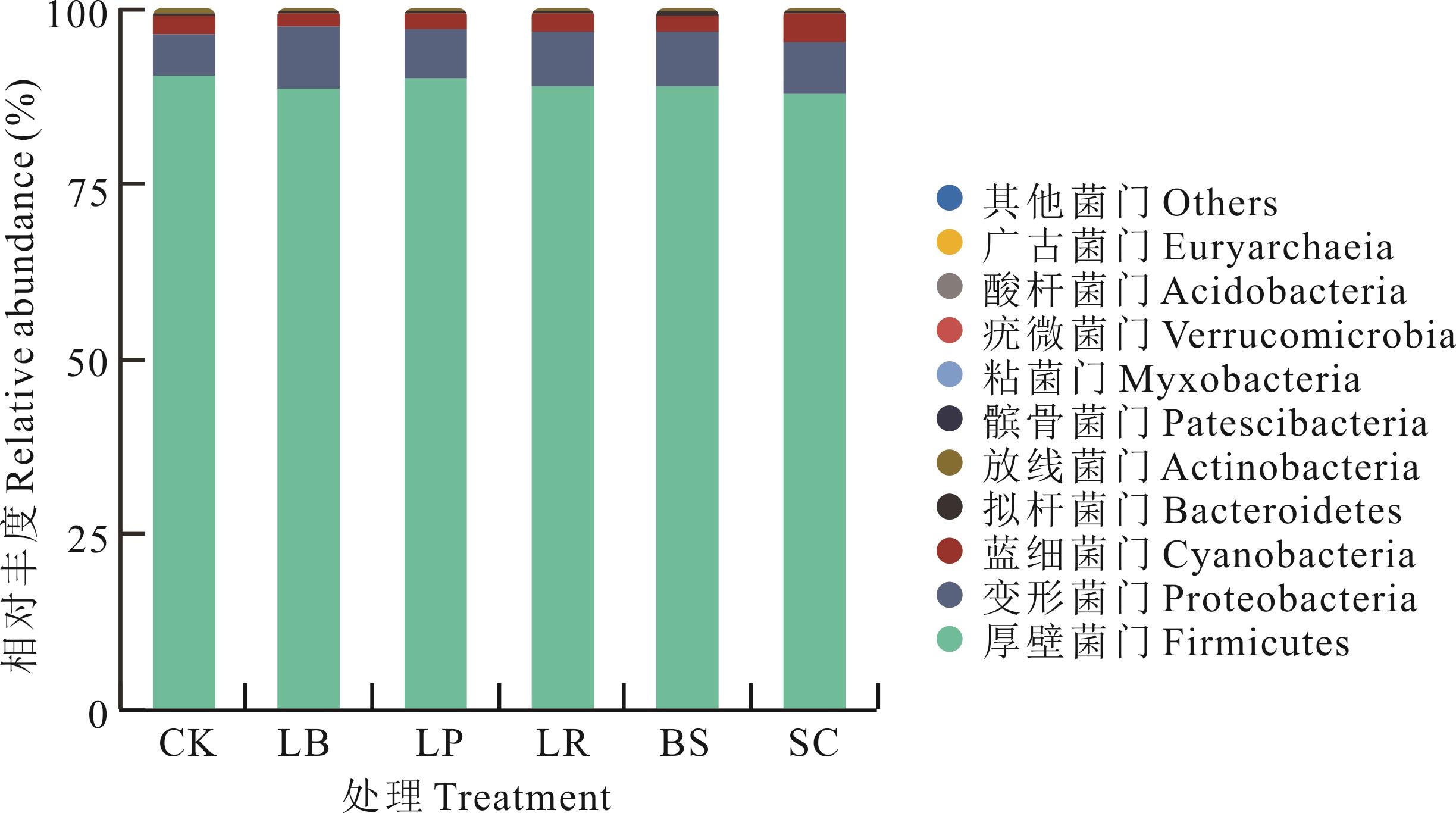
Fig.1 Analysis of the microbial community structure based on phylum level
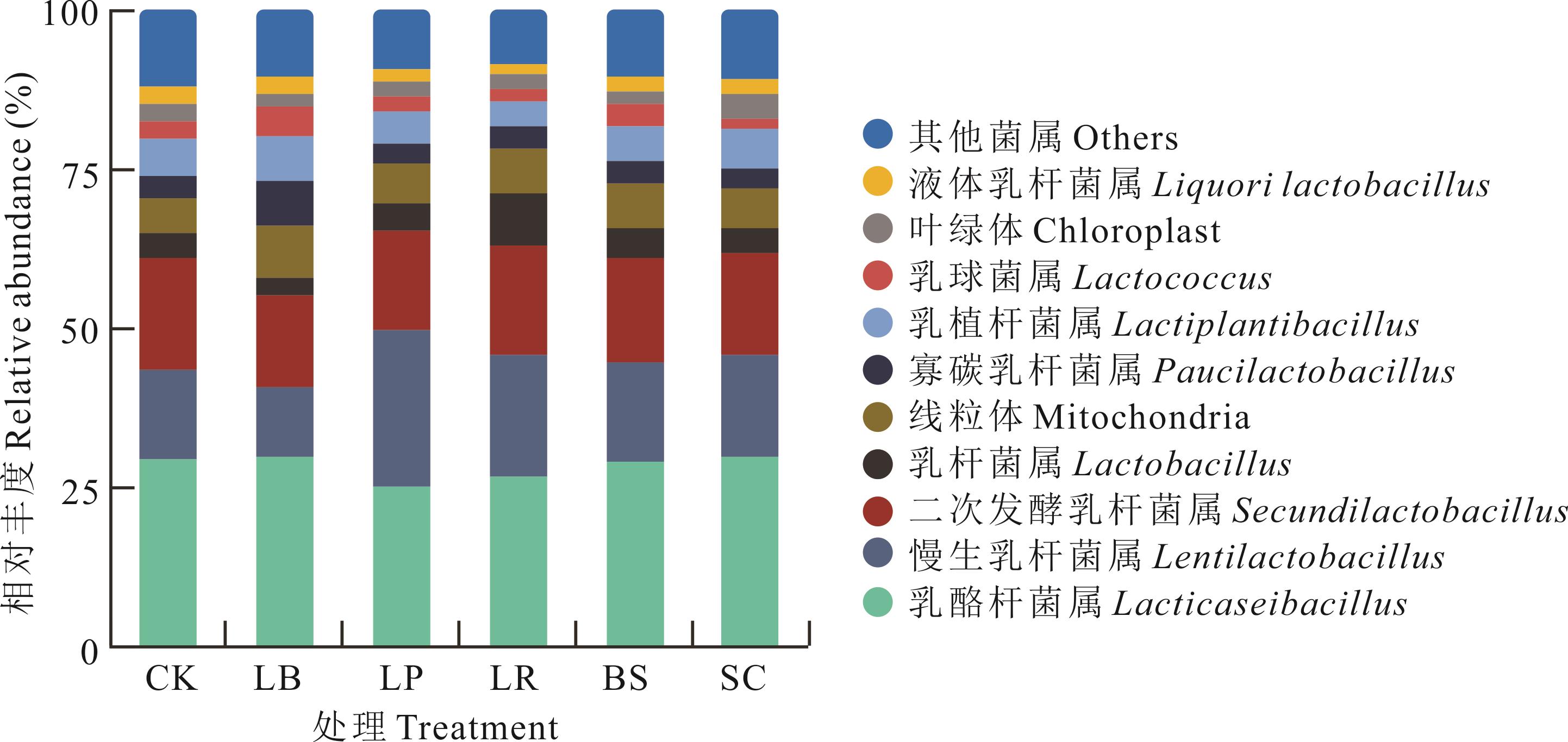
Fig.2 Analysis of microbial community structure based on genus level
| 项目Item | CK | LB | LP | LR | BS | SC | P值P-value |
|---|---|---|---|---|---|---|---|
| 乳酪杆菌属Lacticaseibacillus | 0.291±0.007a | 0.295±0.020a | 0.250±0.012bc | 0.266±0.003ab | 0.296±0.007a | 0.295±0.011a | <0.010 |
| 慢生乳杆菌属Lentilactobacillus | 0.141±0.018cd | 0.111±0.007d | 0.246±0.019a | 0.191±0.001b | 0.155±0.022bcd | 0.160±0.021bc | <0.010 |
| 二次发酵乳杆菌属Secundilactobacillus | 0.177±0.023a | 0.143±0.016a | 0.157±0.009a | 0.169±0.001a | 0.161±0.006a | 0.160±0.009a | 0.106 |
| 寡碳乳杆菌属Paucilactobacillus | 0.036±0.011a | 0.038±0.007a | 0.029±0.007a | 0.033±0.001a | 0.034±0.005a | 0.028±0.002a | 0.508a |
| 乳杆菌属Lactobacillus | 0.039±0.015a | 0.028±0.007a | 0.043±0.000a | 0.060±0.007a | 0.048±0.017a | 0.041±0.009a | 0.080 |
| 乳植杆菌属Lactiplantibacillus | 0.057±0.010ab | 0.069±0.006a | 0.051±0.001ab | 0.039±0.002b | 0.054±0.009ab | 0.063±0.006a | 0.004 |
| 乳球菌属Lactococcus | 0.028±0.003ab | 0.034±0.007a | 0.022±0.006ab | 0.019±0.005b | 0.034±0.011a | 0.016±0.003b | 0.027 |
| 液体乳杆菌属Liquorilactobacillus | 0.028±0.014a | 0.011±0.000a | 0.015±0.002a | 0.012±0.001a | 0.019±0.007a | 0.021±0.010a | 0.177 |
Table 6 Comparative analysis of fermenting cassava residue microbiota at the genus level
| 项目Item | CK | LB | LP | LR | BS | SC | P值P-value |
|---|---|---|---|---|---|---|---|
| 乳酪杆菌属Lacticaseibacillus | 0.291±0.007a | 0.295±0.020a | 0.250±0.012bc | 0.266±0.003ab | 0.296±0.007a | 0.295±0.011a | <0.010 |
| 慢生乳杆菌属Lentilactobacillus | 0.141±0.018cd | 0.111±0.007d | 0.246±0.019a | 0.191±0.001b | 0.155±0.022bcd | 0.160±0.021bc | <0.010 |
| 二次发酵乳杆菌属Secundilactobacillus | 0.177±0.023a | 0.143±0.016a | 0.157±0.009a | 0.169±0.001a | 0.161±0.006a | 0.160±0.009a | 0.106 |
| 寡碳乳杆菌属Paucilactobacillus | 0.036±0.011a | 0.038±0.007a | 0.029±0.007a | 0.033±0.001a | 0.034±0.005a | 0.028±0.002a | 0.508a |
| 乳杆菌属Lactobacillus | 0.039±0.015a | 0.028±0.007a | 0.043±0.000a | 0.060±0.007a | 0.048±0.017a | 0.041±0.009a | 0.080 |
| 乳植杆菌属Lactiplantibacillus | 0.057±0.010ab | 0.069±0.006a | 0.051±0.001ab | 0.039±0.002b | 0.054±0.009ab | 0.063±0.006a | 0.004 |
| 乳球菌属Lactococcus | 0.028±0.003ab | 0.034±0.007a | 0.022±0.006ab | 0.019±0.005b | 0.034±0.011a | 0.016±0.003b | 0.027 |
| 液体乳杆菌属Liquorilactobacillus | 0.028±0.014a | 0.011±0.000a | 0.015±0.002a | 0.012±0.001a | 0.019±0.007a | 0.021±0.010a | 0.177 |
| [1] | Wei Y X, Su B M, Huang J, et al. Effects of potassium application on yield, quality and absorption of macro-, meso-, and micro-nutrients of cassava. Journal of Northwest A&F University (Natural Science Edition), 2017, 45(9): 46-54. |
| 魏云霞, 苏必孟, 黄洁, 等. 施钾对木薯产量和品质及大中微量元素吸收的影响. 西北农林科技大学学报(自然科学版), 2017, 45(9): 46-54. | |
| [2] | Zuo Q Q, Ma X D, Chen X L, et al. Research progress on feeding value of cassava and its application in livestock and poultry production. Feed Research, 2025(17): 149-154. |
| 左清清, 马旭东, 陈秀龙, 等. 木薯的饲用价值及其在畜禽生产中的应用研究进展. 饲料研究, 2025(17): 149-154. | |
| [3] | Guangxi Zhuang Autonomous Region Bureau of Statistics, Guangxi Survey Corps of the National Bureau of Statistics. Guangxi statistical yearbook (2022). Beijing: China Statistics Press, 2022. |
| 广西壮族自治区统计局, 国家统计局广西调查总队. 2022年广西统计年鉴. 北京: 中国统计出版社, 2022. | |
| [4] | Guangdong Provincial Bureau of Statistics. 2024 production situation of major crops in Guangdong. https://stats.gd.gov.cn/zynzwcl/content/post_4701411.html, 2025/9/21. |
| 广东省统计局. 2024年广东主要农作物生产情况. https://stats.gd.gov.cn/zynzwcl/content/post_4701411.html, 2025/9/21. | |
| [5] | Tang C M, Wang Z S, Wan J H, et al. The influence of cassava residue diet on the production performance and blood biochemical indicators of fattening cattle in summer. Chinese Journal of Animal Science, 2011, 47(21): 38-40. |
| 唐春梅, 王之盛, 万江虹, 等. 木薯渣日粮在夏季对育肥牛生产性能和血液生化指标的影响. 中国畜牧杂志, 2011, 47(21): 38-40. | |
| [6] | Ji F J, Wang D F, Hou G Y, et al. Nutrition value analysis of cassava residue. China Feed, 2016(6): 37-40. |
| 冀凤杰, 王定发, 侯冠彧, 等. 木薯渣饲用价值分析. 中国饲料, 2016(6): 37-40. | |
| [7] | Oke O L. Problems in the use of cassava as animal feed. Animal Feed Science and Technology, 1978, 3(4): 345-380. |
| [8] | He L Y, Nie A, Yao Y L. The safe use of residue feed. Hunan Agriculture, 2025(5): 23-24. |
| 何凌云, 聂昂, 姚亚铃. 糟渣类饲料的安全使用. 湖南农业, 2025(5): 23-24. | |
| [9] | Bai X M, Fan Y, Wang D Y, et al. Cassava residue fermented feed and its fermentation technology and application. Swine Industry Science, 2021, 38(5): 86-89. |
| 白秀梅, 范彧, 王丹玉, 等. 木薯渣发酵饲料及其发酵工艺与应用. 猪业科学, 2021, 38(5): 86-89. | |
| [10] | Tang Q F, Peng K P, Wei S J, et al. Effects of solid-state fermentation with different combinations of mixed strains on quality of cassava residue. Chinese Journal of Animal Nutrition, 2016, 28(6): 1965-1974. |
| 唐庆凤, 彭开屏, 韦升菊, 等. 不同微生物添加剂组合固态发酵对木薯渣品质的影响. 动物营养学报, 2016, 28(6): 1965-1974. | |
| [11] | Shinya T Y, Elsner V H P, de Lima Júnior D S, et al. Bioprocess development with special yeasts for cassava bagasse enrichment nutritional to use in animal feed. Animal Feed Science and Technology, 2022, 290: 115338. |
| [12] | Huang J H, Wang S Z, Liang Z M, et al. Comparison of nutritional value of feeds for different treatments of cassava dregs. Journal of Southern Agriculture, 2009, 40(6): 768-771. |
| 黄金华, 王士长, 梁珠民, 等. 不同处理对木薯渣饲料营养价值的比较. 广西农业科学, 2009, 40(6): 768-771. | |
| [13] | Xiao L. Research progress on the feed utilization of fermented cassava residue. Guizhou Journal of Animal Husbandry & Veterinary Medicine, 2024, 48(1): 17-20. |
| 肖林. 发酵木薯渣饲料化利用研究进展. 贵州畜牧兽医, 2024, 48(1): 17-20. | |
| [14] | Zhou R H, Yang X L, Wang G Y, et al. Laboratory animals, formula feeds with determination of routine nutrients. Beijing: China Standards Press, 2001. |
| 周瑞华, 杨晓莉, 王光亚, 等. 实验动物、配合饲料及常规营养成分的测定. 北京: 中国标准出版社, 2001. | |
| [15] | Guo X J, Guo W, Yang M, et al. Effect of Bacillus additives on fermentation quality and bacterial community during the ensiling process of whole-plant corn silage. Processes, 2022, 10(5): https://doi.org/10.3390/pr10050978. |
| [16] | Liang Q, Lu M B, Lu Z D, et al. Determination of lactic acid in fermentation broth by p-hydroxybiphenol colorimetry. Food Science, 2008, 29(6): 357-360. |
| 梁琼, 鲁明波, 卢正东, 等. 对羟基联苯法定量测定发酵液中的乳酸. 食品科学, 2008, 29(6): 357-360. | |
| [17] | Feng Z C, Gao M. Improvement of the method for determining ammonia nitrogen content in rumen fluid by colorimetry. Animal Husbandry and Feed Science, 2010, 31(6/7): 37. |
| 冯宗慈, 高民. 通过比色测定瘤胃液氨氮含量方法的改进. 畜牧与饲料科学, 2010, 31(6/7): 37. | |
| [18] | Li Y F, Wang X S, Zhu X F. Data analysis of deoxynivalenol in wheat stuff in 2021. Feed Review, 2022(2): 47-50. |
| 李艳芬, 王晓珊, 朱晓凤. 2021年小麦原料呕吐毒素数据分析. 饲料博览, 2022(2): 47-50. | |
| [19] | Benjamim Da Silva É, Costa D M, Santos E M, et al. The effects of Lactobacillus hilgardii 4785 and Lactobacillus buchneri 40788 on the microbiome, fermentation, and aerobic stability of corn silage ensiled for various times. Journal of Dairy Science, 2021, 104(10): 10678-10698. |
| [20] | Li G Y, Chen Y X, Lian H X, et al. Review on quality evaluating index system and measuring methods for alfalfa silage. Pratacultural Science, 2010, 27(8): 151-154. |
| 李改英, 陈玉霞, 廉红霞, 等. 苜蓿青贮品质评定指标体系及测定方法的概述. 草业科学, 2010, 27(8): 151-154. | |
| [21] | Ma N N, Zhang X Q, Yang C L, et al. Optimization and application evaluation of mixed bacteria in fermented feed. Shandong Agricultural Sciences, 2020, 52(12): 112-117, 125. |
| 马娜娜, 张心青, 杨传伦, 等. 发酵饲料的混菌复配优化及应用评价. 山东农业科学, 2020, 52(12): 112-117, 125. | |
| [22] | Zhang T, Cui Z J, Li J P, et al. The effect of different fermentation type of silage inoculants bacteria on the fermentation of silage. Acta Prataculturae Sinica, 2005, 14(3): 67-71. |
| 张涛, 崔宗均, 李建平, 等. 不同发酵类型青贮菌制剂对青贮发酵的影响. 草业学报, 2005, 14(3): 67-71. | |
| [23] | Liang Y C, Zhang X W, Shao T, et al. Effects of different lactic acid bacteria strains on fermentation quality and mycotoxin contents of whole-plant corn silage. Acta Prataculturae Sinica, 2025, 34(3): 123-133. |
| 梁宇成, 张晓雯, 邵涛, 等. 乳酸菌对全株玉米青贮发酵品质和霉菌毒素含量的影响. 草业学报, 2025, 34(3): 123-133. | |
| [24] | Wei L M, Liu Q W, Liu H L, et al. The influence of Bacillus complex butyric acid on the fermentation quality of cassava residue. Guangdong Feed, 2016, 25(11): 22-24. |
| 魏立民, 刘圈炜, 刘海隆, 等. 复合酪酸芽孢杆菌对木薯渣发酵品质的影响. 广东饲料, 2016, 25(11): 22-24. | |
| [25] | Zhao M Q E, Bao J, Wang Z J, et al. Effects of different lactic acid bacteria additives on silage quality of natural pasture grass silage. Chinese Journal of Animal Nutrition, 2024, 36(5): 3352-3362. |
| 赵牧其尔, 包健, 王志军, 等. 不同乳酸菌添加剂对天然草地牧草青贮饲料青贮品质的影响. 动物营养学报, 2024, 36(5): 3352-3362. | |
| [26] | Si B W, Xu W C, Zhang X L, et al. Influence of different additives on fermentation quality of hybrid paper mulberry silage. Chinese Journal of Animal Nutrition, 2018, 30(11): 4670-4675. |
| 司丙文, 徐文财, 张小利, 等. 不同添加剂对杂交构树青贮发酵品质的影响. 动物营养学报, 2018, 30(11): 4670-4675. | |
| [27] | Zhang Y X. Effect of different microorganisms on nutrient composition and in vitro digestibility of fermented cassava residue. Feed Research, 2022, 45(21): 113-117. |
| 张云翔. 不同微生物对发酵木薯渣营养成分及体外消化率的影响. 饲料研究, 2022, 45(21): 113-117. | |
| [28] | Wang S N, Wang J L, Wu P X, et al. Effect of different stubble height on quality of Yayu Silage No. 8. Feed Research, 2023, 46(2): 100-104. |
| 王胜男, 王嘉麟, 吴鹏鑫, 等. 不同留茬高度对雅玉青贮8号品质的影响. 饲料研究, 2023, 46(2): 100-104. | |
| [29] | Chen J Y, Tian H C, Liu J Y, et al. Effects of malic acid and citric acid on silage quality and microbial diversity of Neolamarckia cadamba leaves. Chinese Journal of Animal Nutrition, 2025, 37(2): 1312-1324. |
| 陈金钰, 田汉晨, 刘金洋, 等. 苹果酸和柠檬酸对黄梁木叶青贮品质及微生物多样性的影响. 动物营养学报, 2025, 37(2): 1312-1324. | |
| [30] | Qiao J T, Guo R B, Yuan X Z, et al. Phylogenetic analysis of methanogenic corn stalk degrading microbial communities. Environmental Science, 2013, 34(4): 1531-1539. |
| 乔江涛, 郭荣波, 袁宪正, 等. 玉米秸秆厌氧降解复合菌系的微生物群落结构. 环境科学, 2013, 34(4): 1531-1539. |
| [1] | Kai-yue PANG, Yan-long FENG, He-yun LIU, Shao-feng SU, Jia-hua DU, Jia-hai WU, Bing ZENG. Research progress on fermented total mixed ration and its application to ruminant feeding [J]. Acta Prataculturae Sinica, 2026, 35(9): 211-235. |
| [2] | Ping-dong LIN, Fu-rong MIAO, Jing LIU, Wen YUE, Xin-zhu CHEN. Effects of additives on the quality and microbial diversity of tea residue silage [J]. Acta Prataculturae Sinica, 2026, 35(8): 123-133. |
| [3] | Xiao-xi ZHANG, Qian-yi LIANG, Ze-qiang ZHANG, Yuan-yuan LUO, Li-ping LI, Ruo-xuan LI, Xin LIU, Bo HU. Mutual effects of fresh and semidecomposed litter from abandoned grasslands in the Loess Hilly Region during early mixed decomposition [J]. Acta Prataculturae Sinica, 2026, 35(7): 58-67. |
| [4] | Tao WANG, Jing LI, Qiang LU, Wen-can KE, Shuai HUANG. Effects of flavonoids from Taraxacum mongolicum and of Bacillus subtilis addition on fermentation quality, antioxidant activity, and aerobic stability of Avena sativa silage [J]. Acta Prataculturae Sinica, 2026, 35(6): 108-121. |
| [5] | Zhi-hao LIU, Wen-long LI, Chen ZHANG, Mei-ying LIU, Ya TAO. Effects of silage additives on the quality of whole crop maize silage produced from plants irrigated with livestock wastewater [J]. Acta Prataculturae Sinica, 2026, 35(6): 60-72. |
| [6] | Ya-ling MA. Research status and industry trends for silage utilization of natural northern grassland forage [J]. Acta Prataculturae Sinica, 2026, 35(11): 227-240. |
| [7] | Juan-yan WU, Jing TIAN, Xiang GUO, Li-ying HUANG, Jian-guo ZHANG. Progress in research and utilization of grain silage [J]. Acta Prataculturae Sinica, 2025, 34(8): 211-220. |
| [8] | Tian-ci KONG, Xue-qing MA, Chen-bang HE, Tai-yan FAN, Guang-xin LU, He-xing QI. Effects of fungal diseases of silage maize on microbial diversity of silage fermentation [J]. Acta Prataculturae Sinica, 2025, 34(7): 95-106. |
| [9] | Si-ran WANG, Cheng-long DING, Ji-peng TIAN, Yun-hui CHENG, Neng-xiang XU, Wen-jie ZHANG, Xin WANG, Bei-yi LIU. Effects of biological and antifungal additives on ensiling characteristics, in vitro digestibility, gas production, and aerobic stability of fermented total mixed ration including wet brewers’ grains [J]. Acta Prataculturae Sinica, 2025, 34(6): 213-226. |
| [10] | Kai MAO, Yi XU, Xue-mei WANG, Huan CHAI, Shuai HUANG, Jian WANG, Shu-qian HUAN, Zhu YU, Mu-sen WANG. Effect of Lactiplantibacillus plantarum and molasses on the fermentation quality, biogenic amines contents and bacterial community of peanut vine silage [J]. Acta Prataculturae Sinica, 2025, 34(5): 146-158. |
| [11] | Si-ran WANG, Bei-yi LIU, Ji-peng TIAN, Yun-hui CHENG, Neng-xiang XU, Wen-jie ZHANG, Xin WANG, Cheng-long DING. Improvement in the fermentation quality of Italian ryegrass silage by ensiling with combined lactic acid bacteria inoculants at low temperature [J]. Acta Prataculturae Sinica, 2025, 34(5): 159-170. |
| [12] | Xin-zhu CHEN, Ping-dong LIN, Wen YUE, Ya-ni YANG, Shui-ling QIU, Xiang-li ZHENG. Effects of various additives on the quality and microbial diversity of broad bean straw silage [J]. Acta Prataculturae Sinica, 2025, 34(4): 164-174. |
| [13] | Yu-cheng LIANG, Xiao-wen ZHANG, Tao SHAO, Wen-bo WANG, Xian-jun YUAN. Effects of different lactic acid bacteria strains on fermentation quality and mycotoxin contents of whole-plant corn silage [J]. Acta Prataculturae Sinica, 2025, 34(3): 123-133. |
| [14] | Jun-ling WEI, Xiao-qi LIU, Wan-qing WANG, Ming DENG, Bao-li SUN, Yong-qing GUO. Effect of the mix-ratio of corn stalk and edamame stems/leaves and added cellulase on the fermentation quality and microbial community of silage [J]. Acta Prataculturae Sinica, 2025, 34(12): 111-120. |
| [15] | Hui-yun TAO, Run-yan YANG, Yan-can LI, Ya-peng LIU, He-xing QI. Diversity of microorganisms in the rhizosphere soil of Kobresia humilis and their responses to environmental factors in the source region of the Yellow River [J]. Acta Prataculturae Sinica, 2025, 34(12): 16-32. |
| Viewed | ||||||
|
Full text |
|
|||||
|
Abstract |
|
|||||
