
ISSN 1004-5759 CN 62-1105/S
Acta Prataculturae Sinica ›› 2026, Vol. 35 ›› Issue (12): 16-29.DOI: 10.11686/cyxb2025502
Previous Articles Next Articles
Xin-xin CAO1,9( ), Jun DENG2, Meng-fei CHEN1,3, Kang-cheng ZHANG1, Tang-qing HE1, Yi ZHANG1, Wen-yan FENG4, Yi WANG5, Kai-yang QIU6, De-jun YANG7, Pei ZHANG8, Shui-jin HU9, Cheng-bao REN2(), Yun-peng QIU9()
Received:2025-12-10
Revised:2026-01-27
Online:2026-12-20
Published:2026-11-02
Contact:
Cheng-bao REN,Yun-peng QIU
Xin-xin CAO, Jun DENG, Meng-fei CHEN, Kang-cheng ZHANG, Tang-qing HE, Yi ZHANG, Wen-yan FENG, Yi WANG, Kai-yang QIU, De-jun YANG, Pei ZHANG, Shui-jin HU, Cheng-bao REN, Yun-peng QIU. An evaluation of interaction between warming and nitrogen deposition with respect to soil nitrogen transformation processes and microbial communities in a semi-arid grassland on the Loess Plateau[J]. Acta Prataculturae Sinica, 2026, 35(12): 16-29.
引物 Primer | 引物序列 Primer sequence (5′-3′) | 目标基因 Target gene | 反应条件 Thermal profile | 文献 Reference |
|---|---|---|---|---|
| amoA1F | GGGGHTTYTACTGGTGGT | AOB amoA | 95 ℃, 3 min; 95 ℃, 30 s, 56 ℃, 30 s, 35 cycles; 72 ℃, 10 min | [ |
| amoA2R | CCCCTCKGSAAAGCCTTCTTC | |||
| amo19F | ATGGTCTGGCTWAGACG | AOA amoA | 95 ℃, 3 min;95 ℃, 30 s, 60 ℃, 30 s, 35 cycles; 72 ℃, 10 min | [ |
| CrenamoA616r48x | GCCATCCABCKRTANGTCCA | |||
| nirK876 | ATYGGCGGVCAYGGCGA | nirK | 95 ℃, 3 min;95 ℃, 30 s, 58 ℃, 30 s, 40 cycles; 72 ℃, 10 min | [ |
| nirK1040 | GCCTCGATCAGRTTRTGG | |||
| nirSCd3aF | GTSAACGTSAAGGADACSGG | nirS | 95 ℃, 3 min;95 ℃, 30 s, 57 ℃, 30 s, 40 cycles; 72 ℃, 10 min | [ |
| nirSR3cd | GASTTCGGRTGSGTCTTSAYGAA | |||
| nosZ2F | CGCRACGGCAASAAGGTSMSSGT | nosZⅠ | 95 ℃, 10 min; 95 ℃, 30 s, 60~65 ℃, 30 s, 72 ℃, 30 s, 6 cycles; 98 ℃, 15 s, 60 ℃, 15 s, 40 cycles; 72 ℃, 10 min | [ |
| nosZ2R | CAKRTGCAKSGCRTGGCAGAA | |||
| nosZ-Ⅱ-F | CTIGGICCIYTKCAYAC | nosZⅡ | 95 ℃, 10 min; 95 ℃, 30 s, 54 ℃, 30 s; 72 ℃, 30 s, 80 ℃, 30 s, 40 cycles | [ |
| nosZ-Ⅱ-R | GCIGARCARAAITCBGTRC |
Table 1 Primers and conditions used in the qPCR
引物 Primer | 引物序列 Primer sequence (5′-3′) | 目标基因 Target gene | 反应条件 Thermal profile | 文献 Reference |
|---|---|---|---|---|
| amoA1F | GGGGHTTYTACTGGTGGT | AOB amoA | 95 ℃, 3 min; 95 ℃, 30 s, 56 ℃, 30 s, 35 cycles; 72 ℃, 10 min | [ |
| amoA2R | CCCCTCKGSAAAGCCTTCTTC | |||
| amo19F | ATGGTCTGGCTWAGACG | AOA amoA | 95 ℃, 3 min;95 ℃, 30 s, 60 ℃, 30 s, 35 cycles; 72 ℃, 10 min | [ |
| CrenamoA616r48x | GCCATCCABCKRTANGTCCA | |||
| nirK876 | ATYGGCGGVCAYGGCGA | nirK | 95 ℃, 3 min;95 ℃, 30 s, 58 ℃, 30 s, 40 cycles; 72 ℃, 10 min | [ |
| nirK1040 | GCCTCGATCAGRTTRTGG | |||
| nirSCd3aF | GTSAACGTSAAGGADACSGG | nirS | 95 ℃, 3 min;95 ℃, 30 s, 57 ℃, 30 s, 40 cycles; 72 ℃, 10 min | [ |
| nirSR3cd | GASTTCGGRTGSGTCTTSAYGAA | |||
| nosZ2F | CGCRACGGCAASAAGGTSMSSGT | nosZⅠ | 95 ℃, 10 min; 95 ℃, 30 s, 60~65 ℃, 30 s, 72 ℃, 30 s, 6 cycles; 98 ℃, 15 s, 60 ℃, 15 s, 40 cycles; 72 ℃, 10 min | [ |
| nosZ2R | CAKRTGCAKSGCRTGGCAGAA | |||
| nosZ-Ⅱ-F | CTIGGICCIYTKCAYAC | nosZⅡ | 95 ℃, 10 min; 95 ℃, 30 s, 54 ℃, 30 s; 72 ℃, 30 s, 80 ℃, 30 s, 40 cycles | [ |
| nosZ-Ⅱ-R | GCIGARCARAAITCBGTRC |
物质 Component | 体积 Volume (μL) | 反应条件 Reaction condition |
|---|---|---|
| 缓冲液Buffer | 5 | 37 ℃反应6 h; 4 ℃保存Incubate at 37 ℃ for 6 h; store at 4 ℃ |
胶纯化回收PCR产物 Gel-purified PCR product | 10 | |
| ddH2O | 4 | |
| 内切酶Restriction enzyme | 1 |
Table 2 MboⅠ digestion reaction components and conditions
物质 Component | 体积 Volume (μL) | 反应条件 Reaction condition |
|---|---|---|
| 缓冲液Buffer | 5 | 37 ℃反应6 h; 4 ℃保存Incubate at 37 ℃ for 6 h; store at 4 ℃ |
胶纯化回收PCR产物 Gel-purified PCR product | 10 | |
| ddH2O | 4 | |
| 内切酶Restriction enzyme | 1 |
| 项目Item | 对照Control (Con) | 增温W | 施氮N | 增温施氮交互NW |
|---|---|---|---|---|
| pH | 8.25±0.06a | 8.27±0.05a | 8.22±0.03a | 8.25±0.02a |
| 可溶性有机碳DOC (mg·kg-1) | 138.75±9.11a | 139.05±17.32a | 151.35±16.62a | 151.50±20.61a |
| 可溶性无机碳DIN (mg·kg-1) | 5.76±0.72b | 7.00±0.88b | 12.93±0.43ab | 15.96±3.51a |
| 硝态氮NO3--N (mg·kg-1) | 3.41±0.57b | 4.82±0.97b | 10.38±0.28ab | 13.64±3.64a |
| 铵态氮NH4+-N (mg·kg-1) | 2.35±0.24a | 2.17±0.26a | 2.55±0.28a | 2.31±0.43a |
| 微生物生物量碳MBC (mg·kg-1) | 481.54±18.26a | 444.48±25.67a | 454.85±17.85a | 491.65±30.67a |
| 微生物生物量氮MBN (mg·kg-1) | 92.64±2.33a | 94.91±2.37a | 77.84±2.50b | 95.45±5.16a |
| MBC/MBN | 5.20±0.16a | 4.70±0.34a | 5.85±0.23a | 5.21±0.51a |
Table 3 Effects of warming (W), nitrogen addition (N), and their interaction (NW) on soil physicochemical properties and microbial biomass
| 项目Item | 对照Control (Con) | 增温W | 施氮N | 增温施氮交互NW |
|---|---|---|---|---|
| pH | 8.25±0.06a | 8.27±0.05a | 8.22±0.03a | 8.25±0.02a |
| 可溶性有机碳DOC (mg·kg-1) | 138.75±9.11a | 139.05±17.32a | 151.35±16.62a | 151.50±20.61a |
| 可溶性无机碳DIN (mg·kg-1) | 5.76±0.72b | 7.00±0.88b | 12.93±0.43ab | 15.96±3.51a |
| 硝态氮NO3--N (mg·kg-1) | 3.41±0.57b | 4.82±0.97b | 10.38±0.28ab | 13.64±3.64a |
| 铵态氮NH4+-N (mg·kg-1) | 2.35±0.24a | 2.17±0.26a | 2.55±0.28a | 2.31±0.43a |
| 微生物生物量碳MBC (mg·kg-1) | 481.54±18.26a | 444.48±25.67a | 454.85±17.85a | 491.65±30.67a |
| 微生物生物量氮MBN (mg·kg-1) | 92.64±2.33a | 94.91±2.37a | 77.84±2.50b | 95.45±5.16a |
| MBC/MBN | 5.20±0.16a | 4.70±0.34a | 5.85±0.23a | 5.21±0.51a |
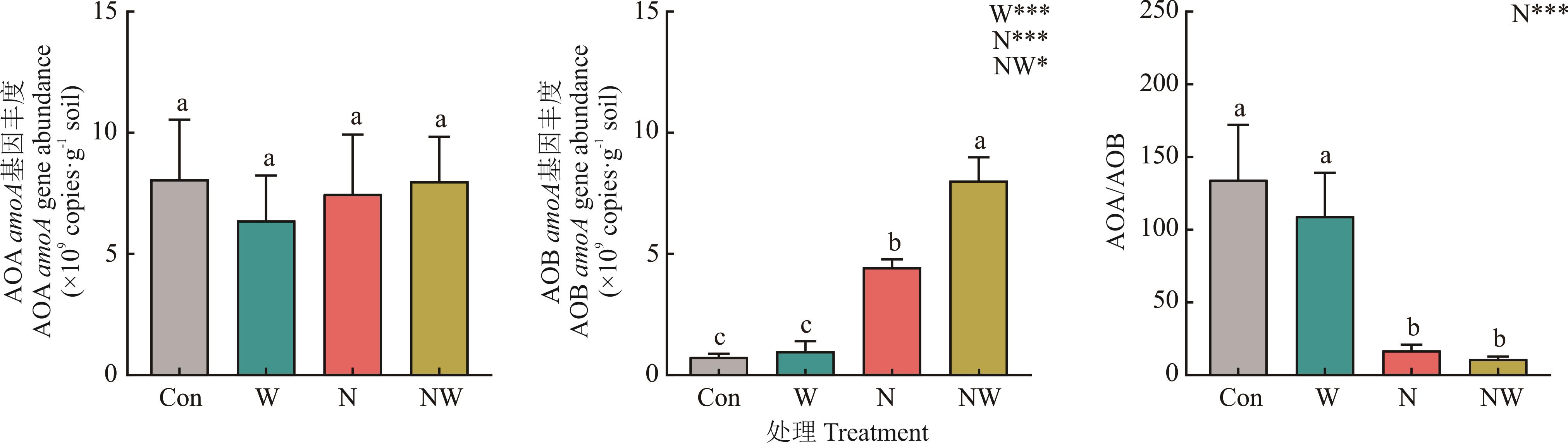
Fig.1 Effects of warming, nitrogen addition, and their interaction on amoA gene abundance of ammonia-oxidizing archaea (AOA), ammonia-oxidizing bacteria (AOB), and the AOA/AOB
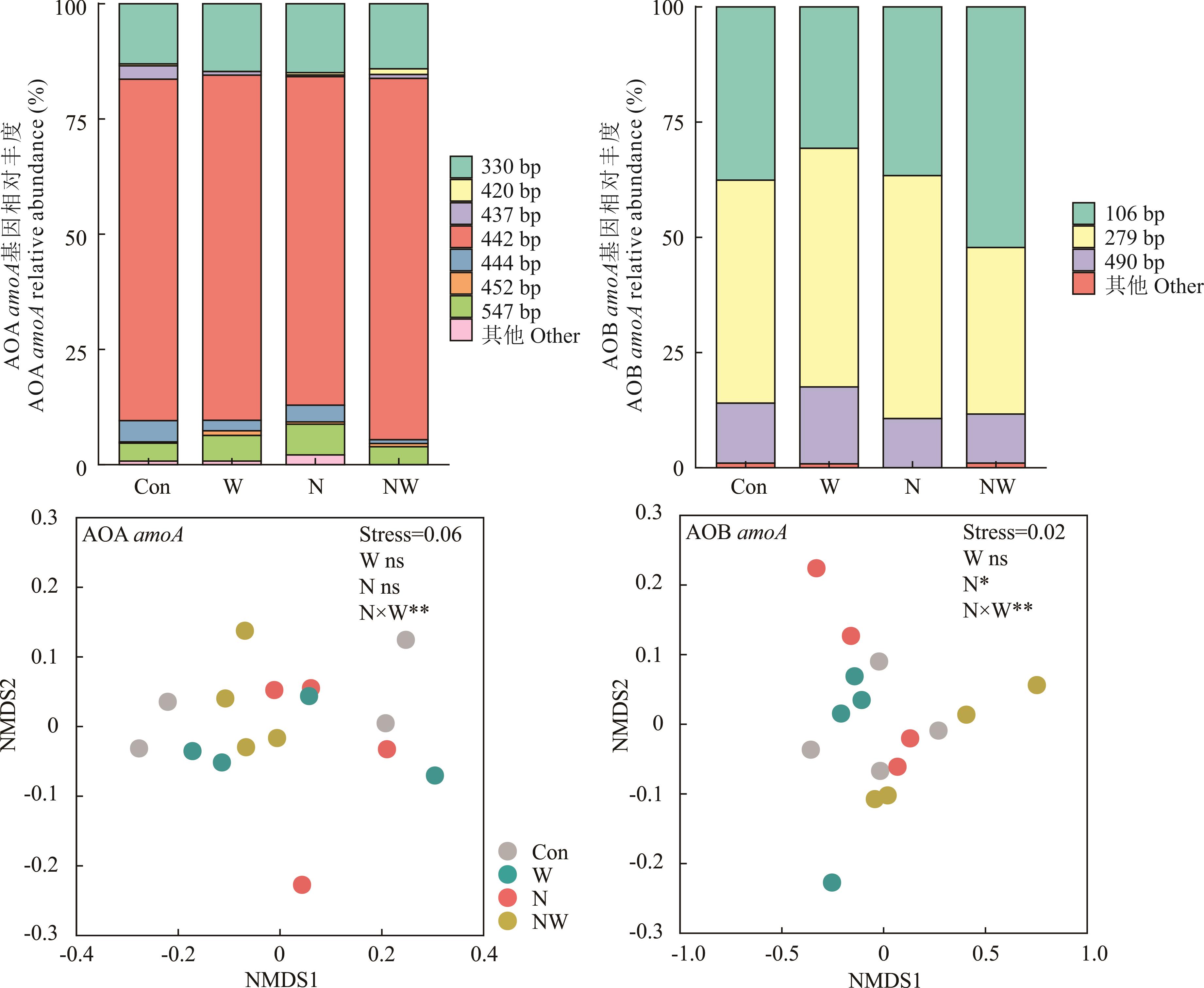
Fig.2 Effects of warming, nitrogen addition, and their interaction on relative abundance and community composition of AOA and AOB
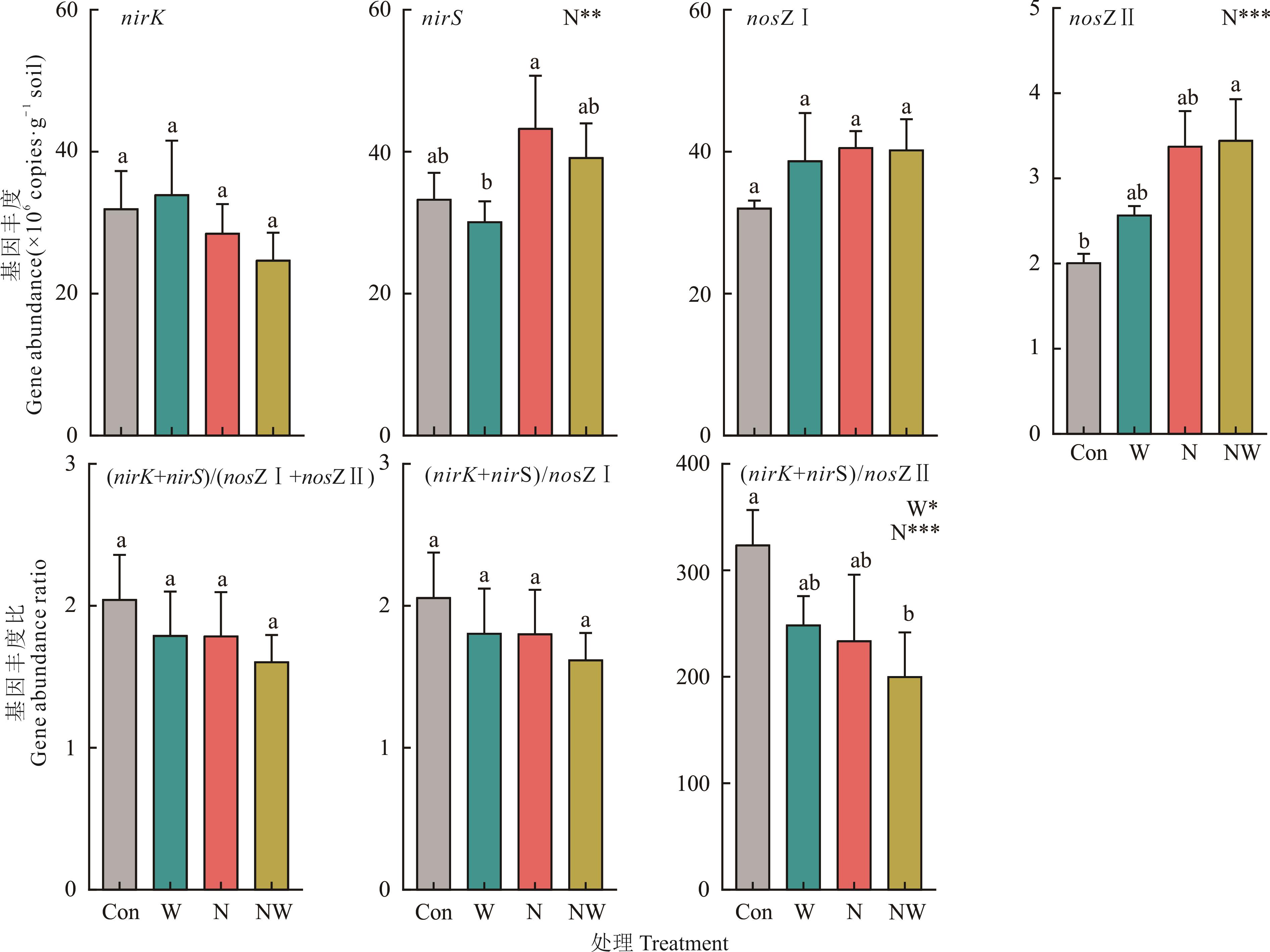
Fig.3 Influence of warming, nitrogen fertilization, and their interaction on the abundance of four key denitrification genes and ratio of gene abundance

Fig.4 Effects of warming, nitrogen addition, and their interaction on relative abundance and community composition of denitrification genes
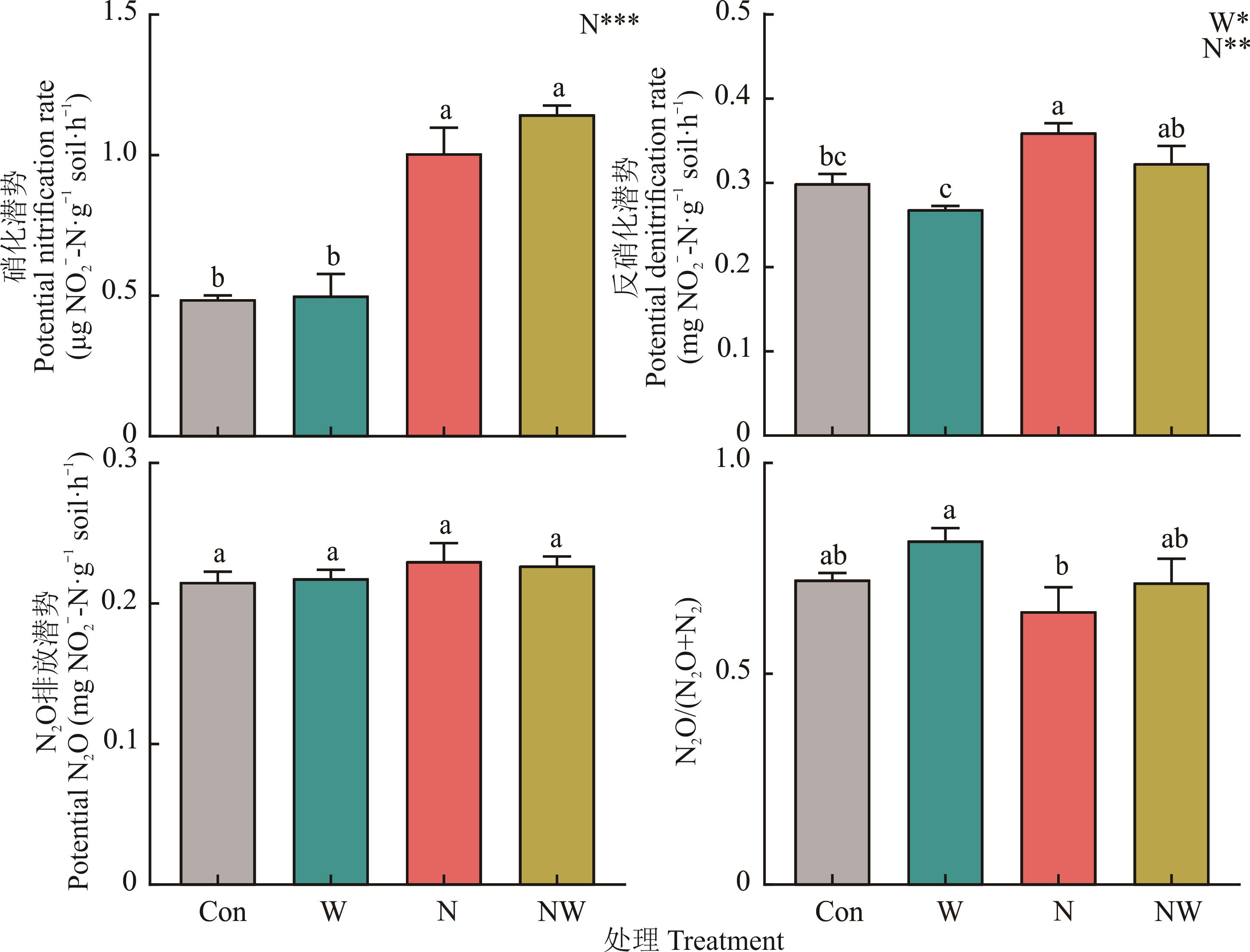
Fig.5 Soil potential nitrification rate, denitrification rate, potential N2O, and the proportion of N2O in total denitrification products as influenced by warming, nitrogen fertilization, and their interaction
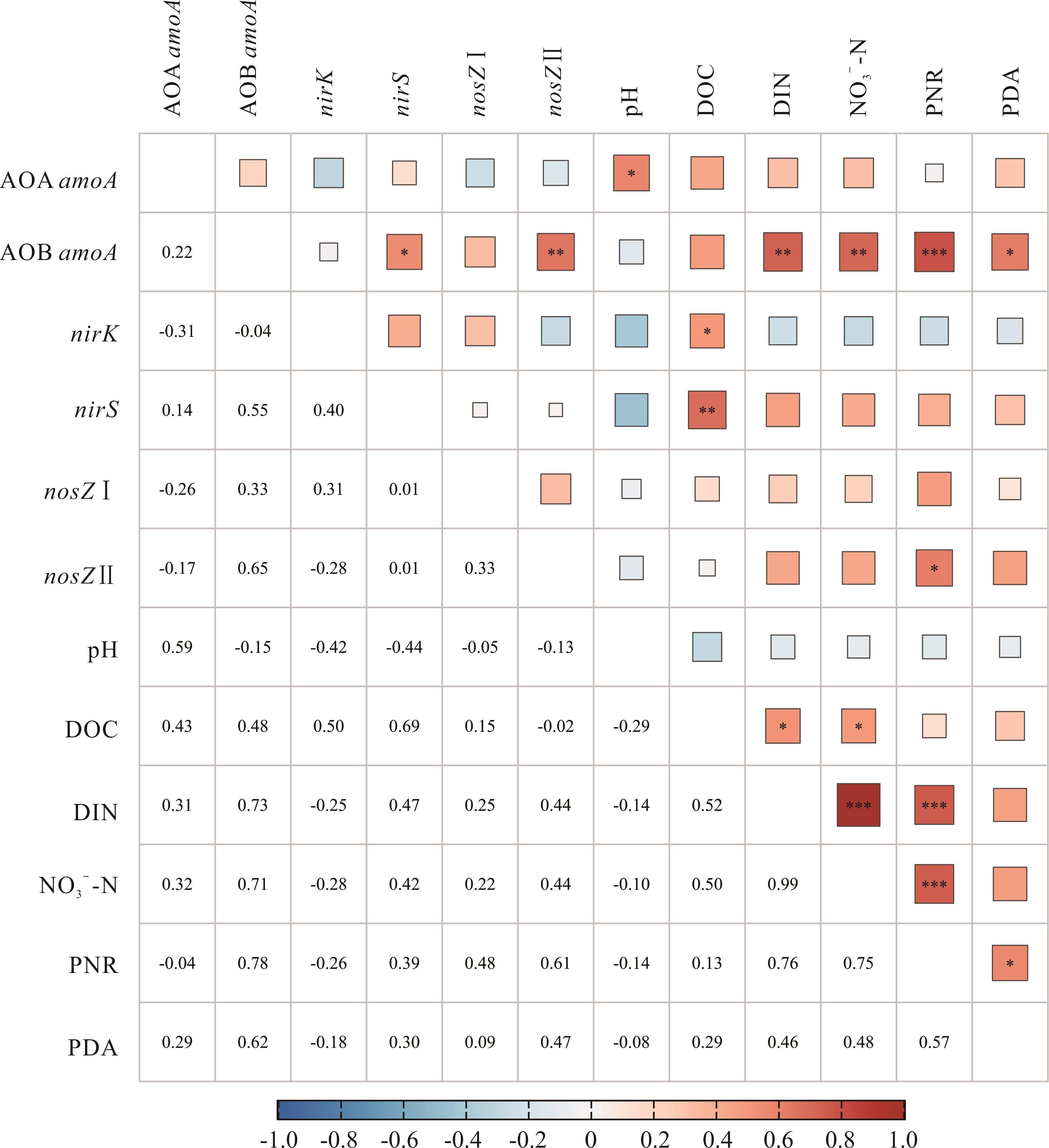
Fig.6 Pearson correlation analysis between soil physicochemical properties and the abundance of key functional genes involved in nitrogen cycling
| [1] | White R P, Murray S, Rohweder M. Introduction//Pilot analysis of global ecosystems: Grassland ecosystems. Washington, D.C.: World Resources Institute, 2000: 13. |
| [2] | Sala O E, Paruelo J M. Ecosystem services in grasslands//Daily G C, ed. Nature’s services: Societal dependence on natural ecosystems. Washington, D.C.: Island Press, 1997: 237-254. |
| [3] | Bai Y F, Huang J H, Zheng S X, et al. Drivers and regulating mechanisms of grassland and desert ecosystem services. Chinese Journal of Plant Ecology, 2014, 38(2): 93-102. |
| 白永飞, 黄建辉, 郑淑霞, 等. 草地和荒漠生态系统服务功能的形成与调控机制. 植物生态学报, 2014, 38(2): 93-102. | |
| [4] | Gao L, Ding Y. Progress in research and practice of restoration of degraded grassland around the world. Acta Prataculturae Sinica, 2022, 31(10): 189-205. |
| 高丽, 丁勇. 世界退化草地恢复研究和实践进展. 草业学报, 2022, 31(10): 189-205. | |
| [5] | Lu J L. Plant nutrition (Volume 1) (2nd ed). Beijing: China Agricultural University Press, 2003: 23-34. |
| 陆景陵. 植物营养学(上册) (第2版). 北京: 中国农业大学出版社, 2003: 23-34. | |
| [6] | Henneron L, Kardol P, Wardle D A, et al. Rhizosphere control of soil nitrogen cycling: A key component of plant economic strategies. New Phytologist, 2020, 228(4): 1269-1282. |
| [7] | Tian H Q, Xu R T, Canadell J G, et al. A comprehensive quantification of global nitrous oxide sources and sinks. Nature, 2020, 586: 248-256. |
| [8] | Montzka S A, Dlugokencky E J, Butler J H. Non-CO2 greenhouse gases and climate change. Nature, 2011, 476(7358): 43-50. |
| [9] | Weber J, Keeble J, Abraham N L, et al. Global agricultural N2O emission reduction strategies deliver climate benefits with minimal impact on stratospheric O3 recovery. npj Climate and Atmospheric Science, 2024, 7(1): 121. |
| [10] | IPCC. Climate Change 2023: Synthesis Report. Contribution of Working Groups I, Ⅱ and Ⅲ to the Sixth Assessment Report of the Intergovernmental Panel on Climate Change. Geneva, Switzerland: IPCC, 2023. |
| [11] | Ravishankara A R, Daniel J S, Portmann R W. Nitrous oxide (N2O): The dominant ozone-depleting substance emitted in the 21st century. Science, 2009, 326(5949): 123-125. |
| [12] | Prather M J, Hsu J, Deluca N M, et al. Measuring and modeling the lifetime of nitrous oxide including its variability. Journal of Geophysical Research: Atmospheres, 2015, 120(11): 5693-5705. |
| [13] | Hong S B, Li Z M, Tang M S, et al. Magnitude, distribution and temporal trend of nitrous oxide emissions from China’s natural soils over 1980-2022. Science China Earth Sciences, 2025, 34(1): 1-12. |
| [14] | Barnard R L, Leadley P, Hungate B. Global change, nitrification, and denitrification: A review. Global Biogeochemical Cycles, 2005, 19(1): GB1007. |
| [15] | Braker G, Conrad R. Diversity, structure, and size of N2O-producing microbial communities in soils-what matters for their functioning? Advances in Applied Microbiology, 2011, 75: 33-70. |
| [16] | Junier P, Molina V, Dorador C, et al. Phylogenetic and functional marker genes to study ammonia-oxidizing microorganisms (AOM) in the environment. Applied Microbiology and Biotechnology, 2010, 85(3): 425-440. |
| [17] | Taylor A E, Giguere A T, Zoebelein C M, et al. Modeling of soil nitrification responses to temperature reveals thermodynamic differences between ammonia-oxidizing activity of archaea and bacteria. The ISME Journal, 2017, 11(4): 896-908. |
| [18] | Kits K D, Sedlacek C J, Lebedeva E V, et al. Kinetic analysis of a complete nitrifier reveals an oligotrophic lifestyle. Nature, 2017, 549: 269-272. |
| [19] | Zumft W G. Cell biology and molecular basis of denitrification. Microbiology and Molecular Biology Reviews, 1997, 61(4): 533-616. |
| [20] | Richardson D, Felgate H, Watmough N, et al. Mitigating release of the potent greenhouse gas N2O from the nitrogen cycle-could enzymic regulation hold the key?Trends in Biotechnology, 2009, 27(7): 388-397. |
| [21] | Domeignoz-Horta L A, Putz M, Spor A, et al. Non-denitrifying nitrous oxide-reducing bacteria-An effective N2O sink in soil. Soil Biology and Biochemistry, 2016, 103: 376-379. |
| [22] | Sanford R A, Wagner D D, Wu Q, et al. Unexpected nondenitrifier nitrous oxide reductase gene diversity and abundance in soils. Proceedings of the National Academy of Sciences of the United States of America, 2012, 109(48): 19709-19714. |
| [23] | Jones C M, Graf D R H, Bru D, et al. The unaccounted yet abundant nitrous oxide-reducing microbial community: A potential nitrous oxide sink. The ISME Journal, 2013, 7(2): 417-426. |
| [24] | Jones C M, Spor A, Brennan F P, et al. Recently identified microbial guild mediates soil N2O sink capacity. Nature Climate Change, 2014, 4(9): 801-805. |
| [25] | Delgado-Baquerizo M, Grinyer J, Reich P B, et al. Relative importance of soil properties and microbial community for soil functionality: Insights from a microbial swap experiment. Functional Ecology, 2016, 30(11): 1862-1873. |
| [26] | Liu L L, Sayer E J, Deng M F, et al. The grassland carbon cycle: Mechanisms, responses to global changes, and potential contribution to carbon neutrality. Fundamental Research, 2023, 3(2): 209-218. |
| [27] | Ma X X, Gao Y Z. Impact of shrub encroachment on soil hydrological processes in grassland. Acta Prataculturae Sinica, 2025, 34(4): 212-222. |
| 马学喜, 高英志. 灌丛化对草地土壤水文过程影响的研究进展. 草业学报, 2025, 34(4): 212-222. | |
| [28] | Dijkstra F A, Blumenthal D, Morgan J A, et al. Contrasting effects of elevated CO2 and warming on nitrogen cycling in a semiarid grassland. New Phytologist, 2010, 187(2): 426-437. |
| [29] | Deng L, Peng C, Kim D G, et al. Drought effects on soil carbon and nitrogen dynamics in global natural ecosystems. Earth-Science Reviews, 2021, 214: 103501. |
| [30] | Weedon J T, Kowalchuk G A, Aerts R, et al. Summer warming accelerates sub-arctic peatland nitrogen cycling without changing enzyme pools or microbial community structure. Global Change Biology, 2012, 18(1): 138-150. |
| [31] | Qiu Y, Jiang Y, Guo L, et al. Shifts in the composition and activities of denitrifiers dominate CO2 stimulation of N2O emissions. Environmental Science & Technology, 2019, 53(19): 11204-11213. |
| [32] | Dai Z, Yu M, Chen H, et al. Elevated temperature shifts soil N cycling from microbial immobilization to enhanced mineralization, nitrification and denitrification across global terrestrial ecosystems. Global Change Biology, 2020, 26(9): 5267-5276. |
| [33] | Bai E, Li S, Xu W, et al. A Meta-analysis of experimental warming effects on terrestrial nitrogen pools and dynamics. New Phytologist, 2013, 199(2): 441-451. |
| [34] | Zhang M, Yu D, Yu Y, et al. Drought reduces nitrogen supply and N2O emission in coastal bays. Water Research, 2024, 266: 122362. |
| [35] | Clark C M, Tilman D. Loss of plant species after chronic low-level nitrogen deposition to prairie grasslands. Nature, 2008, 451(7179): 712-715. |
| [36] | Lan Z R, Bai Y F. Testing mechanisms of N-enrichment-induced species loss in a semiarid Inner Mongolia grassland: Critical thresholds and implications for long-term ecosystem responses. Philosophical Transactions of the Royal Society B: Biological Sciences, 2012, 367(1606): 3125-3134. |
| [37] | Qiu Y, Zhang Y, Zhang K, et al. Intermediate soil acidification induces highest nitrous oxide emissions. Nature Communications, 2024, 15(1): 2695. |
| [38] | Zong N, Shi P L. Effects of simulated warming on soil nitrogen supply potential in an alpine meadow on the Tibetan Plateau. Acta Ecologica Sinica, 2019, 39(12): 4356-4365. |
| 宗宁, 石培礼. 模拟增温对青藏高原高寒草甸土壤供氮潜力的影响. 生态学报, 2019, 39(12): 4356-4365. | |
| [39] | Zhang K, Qiu Y, Zhao Y, et al. Moderate precipitation reduction enhances nitrogen cycling and soil nitrous oxide emissions in a semi-arid grassland. Global Change Biology, 2023, 29(11): 3114-3129. |
| [40] | Leuzinger S, Luo Y Q, Beier C, et al. Do global change experiments overestimate impacts on terrestrial ecosystems? Trends in Ecology & Evolution, 2011, 26(5): 236-241. |
| [41] | Dieleman W I J, Vicca S, Dijkstra F A, et al. Simple additive effects are rare: A quantitative review of plant biomass and soil process responses to combined manipulations of CO2 and temperature. Global Change Biology, 2012, 18(9): 2681-2693. |
| [42] | Sun W, Mu X, Song X, et al. Changes in extreme temperature and precipitation events in the Loess Plateau (China) during 1960-2013 under global warming. Atmospheric Research, 2016, 168: 33-48. |
| [43] | Wang Q, Wang M, Fan X, et al. Trends of temperature and precipitation extremes in the Loess Plateau Region of China, 1961-2010. Theoretical and Applied Climatology, 2017, 129(3): 949-963. |
| [44] | Chen M F. Effects of warming, nitrogen addition and precipitation reduction on nitrifiers and denitrifiers in a semi-arid grassland on the Loess Plateau. Nanjing: Nanjing Agricultural University, 2021. |
| 陈梦菲. 增温、施氮及减雨对黄土高原半干旱草地硝化及反硝化微生物的影响. 南京: 南京农业大学, 2021. | |
| [45] | Cheng J M, Jing G H, Wei L, et al. Long-term grazing exclusion effects on vegetation characteristics, soil properties and bacterial communities in the semi-arid grasslands of China. Ecological Engineering, 2016, 97: 170-178. |
| [46] | Tao J J, Bai T S, Xiao R, et al. Vertical distribution of ammonia-oxidizing microorganisms across a soil profile of the Chinese Loess Plateau and their responses to nitrogen inputs. Science of the Total Environment, 2018, 635: 240-248. |
| [47] | Bai T S, Wang P, Hall S J, et al. Interactive global change factors mitigate soil aggregation and carbon change in a semi-arid grassland. Global Change Biology, 2020, 26(9): 5320-5332. |
| [48] | Wang F W. Effects of warming, nitrogen addition and precipitation reduction on nitrifiers and denitrifiers in a semi-arid grassland on the Loess Plateau. Nanjing: Nanjing Agricultural University, 2019. |
| 王伏伟. 黄土高原半干旱草地土壤微生物对全球变化因子的响应. 南京: 南京农业大学, 2019. | |
| [49] | Vance E D, Brookes P C, Jenkinson D S. An extraction method for measuring soil microbial biomass C. Soil Biology and Biochemistry, 1987, 19(6): 703-707. |
| [50] | Belser L W, Mays E L. Specific inhibition of nitrite oxidation by chlorate and its use in assessing nitrification in soils and sediments. Applied and Environmental Microbiology, 1980, 39(3): 505-510. |
| [51] | Smith M S, Tiedje J M. Phases of denitrification following oxygen depletion in soil. Soil Biology and Biochemistry, 1979, 11(3): 261-267. |
| [52] | Rotthauwe J H, Witzel K P, Liesack W. The ammonia monooxygenase structural gene amoA as a functional marker: Molecular fine-scale analysis of natural ammonia-oxidizing populations. Applied and Environmental Microbiology, 1997, 63(12): 4704-4712. |
| [53] | Leininger S, Urich T, Schloter M, et al. Archaea predominate among ammonia-oxidizing prokaryotes in soils. Nature, 2006, 442(7104): 806-809. |
| [54] | Bárta J, Melichová T, Vaneˇk D, et al. Effect of pH and dissolved organic matter on the abundance of nirK and nirS denitrifiers in spruce forest soil. Biogeochemistry, 2010, 101: 123-132. |
| [55] | Henry S, Bru D, Stres B, et al. Quantitative detection of the nosZ gene, encoding nitrous oxide reductase, and comparison of the abundances of 16S rRNA, narG, nirK, and nosZ genes in soils. Applied and Environmental Microbiology, 2006, 72(8): 5181-5189. |
| [56] | Yao H, Gao Y, Nicol G W, et al. Links between ammonia oxidizer community structure, abundance, and nitrification potential in acidic soils. Applied and Environmental Microbiology, 2011, 77(13): 4618-4625. |
| [57] | Li J, Wang G, Mayes M A, et al. Reduced carbon use efficiency and increased microbial turnover with soil warming. Global Change Biology, 2019, 25(3): 900-910. |
| [58] | Monson R K, Lipson D L, Burns S P, et al. Winter forest soil respiration controlled by climate and microbial community composition. Nature, 2006, 439: 711-714. |
| [59] | Shi C, Urbina-Malo C, Tian Y, et al. Does long-term soil warming affect microbial element limitation? A test by short-term assays of microbial growth responses to labile C, N and P additions. Global Change Biology, 2023, 29(8): 2188-2202. |
| [60] | Di H J, Cameron K C, Shen J P, et al. Ammonia-oxidizing bacteria and archaea grow under contrasting soil nitrogen conditions. FEMS Microbiology Ecology, 2010, 72(3): 386-394. |
| [61] | Hallin S, Philippot L, Löffler F E, et al. Genomics and ecology of novel N2O-reducing microorganisms. Trends in Microbiology, 2018, 26(1): 43-55. |
| [62] | Yuan Q, Liu P, Lu Y. Differential responses of nirK- and nirS-carrying bacteria to denitrifying conditions in the anoxic rice field soil. Environmental Microbiology Reports, 2012, 4(1): 113-122. |
| [63] | Firestone M K, Davidson E A. Microbiological basis of NO and N2O production and consumption in soil//Exchange of trace gases between terrestrial ecosystems and the atmosphere. New York: John Wiley, 1989: 7-21. |
| [64] | Bateman E J, Baggs E M. Contributions of nitrification and denitrification to N2O emissions from soils at different water-filled pore space. Biology and Fertility of Soils, 2005, 41(6): 379-388. |
| [65] | Rillig M C, Ryo M, Lehmann A, et al. The role of multiple global change factors in driving soil functions and microbial biodiversity. Science, 2019, 366(6467): 886-890. |
| [66] | Bi M H, Li H Y, Meidl P, et al. Number and dissimilarity of global change factors influences soil properties and functions. Nature Communications, 2024, 15(1): 8188. |
| [1] | Hui-ting LI, Zhong-li LI, Qing-ming SHUI, Cong-ze JIANG, Kai-quan WEI, Xian-long YANG. Effects of grass-legume sowing ratio and nitrogen application mode on yield and water and nitrogen use efficiency of alfalfa-Bromus inermis mixed stands on the Loess Plateau [J]. Acta Prataculturae Sinica, 2026, 35(9): 180-197. |
| [2] | Jun-yang LIU, Zheng-chao ZHOU, Xue-meng SU. Effects of typical herbaceous plant roots on electrochemical properties of the soil colloid surface on the Loess Plateau [J]. Acta Prataculturae Sinica, 2026, 35(7): 80-91. |
| [3] | Fan-xi KONG, Bang-jie TANG, A-li-mi-ri ALIMUJIANG, Ge-ge ADE, Mao-guo YUAN, Jun CHEN. Species spatial distribution patterns in grassland under restoration in ‘hill and gully’ regions of the Loess Plateau [J]. Acta Prataculturae Sinica, 2025, 34(9): 1-11. |
| [4] | Bin GUO, Wei-cheng LUO, Li-shan SHAN, Ning AN, Bing LIU. Effects of simulated warming on photosynthesis of typical desert shrubs in the Hexi Corridor [J]. Acta Prataculturae Sinica, 2025, 34(7): 145-157. |
| [5] | Ruo-xuan LI, Sheng-zhi-can LI, Yi-tong CHEN, Yu-hao SUN, Pei-zhi YANG, Yan-nong CUI, Ming-xiu LONG, Shu-bin HE. Effects of different planting ratios of broomcorn millet (Panicum miliaceum) on ammonia-oxidizing and denitrifying microorganisms in rhizosphere soil of alfalfa (Medicago sativa) [J]. Acta Prataculturae Sinica, 2025, 34(6): 110-121. |
| [6] | Rui LIU, Dan-na CHANG, Guo-peng ZHOU, Song-juan GAO, Qiang CHAI, Wei-dong CAO. Techniques of N2O emission reduction in farmland and their synergistic application with green manure [J]. Acta Prataculturae Sinica, 2025, 34(2): 196-210. |
| [7] | Yun-huan JIA, Wen-ying HU, Jian DENG, Xue ZHAO, Zi-yue CHEN, Ya-nan WANG, Jiang-wen LI, Xiao-xi ZHANG. Effects of nitrogen addition on soil microbial nutrient limitation characteristics in grassland in the Loess Hilly Region [J]. Acta Prataculturae Sinica, 2025, 34(2): 221-232. |
| [8] | Yu-du JING, Xiao-wei LIU, Ke LIANG, Jun-hao FENG, Qiang YU, Liang GUO. Impacts of shrub encroachment on the fraction and stability of soil organic carbon of grassland on the Loess Plateau, and the underlying microbial mechanisms [J]. Acta Prataculturae Sinica, 2025, 34(12): 1-15. |
| [9] | Shi-long HE, He YE, Jing LI, Ya-ling ZHANG, Hai-shan DE, Mei HONG. Effects of nitrogen deposition and precipitation changes in different time spans on community structure and diversity of soil meso- and micro-fauna in Stipa breviflora desert steppe [J]. Acta Prataculturae Sinica, 2024, 33(9): 140-154. |
| [10] | Shuang LIU, Jia-ni YAO, Jun-jie ZHANG, Jin-xia DAI. Functional gene abundance and community diversity of ammonia-oxidizing and denitrifying microorganisms in the rhizosphere soil of desert leguminous shrubs [J]. Acta Prataculturae Sinica, 2024, 33(5): 115-127. |
| [11] | Ya-si FENG, Wen-ting JIANG, Yi-hong LIU, Yan WANG, Yuan LI, You-chao CHEN, Yan-jiang CAI. Effects of plowing and plant residue mulching on soil nitrous oxide emissions in a black soil beach-type degraded grassland [J]. Acta Prataculturae Sinica, 2024, 33(11): 15-29. |
| [12] | Hao SHI, Cai-hong YANG, Fei XIA, Jun-qiang WANG, Wei WEI, Jing-long WANG, Yun-yin XUE, Shai-kun ZHENG, Hao-yang WU, Lin-ling RAN, Shuang YAN, Xiao-min JIANG. Initial effects of short-term warming on the productivity of alpine degraded grassland in northern Tibet during the restoration process [J]. Acta Prataculturae Sinica, 2024, 33(11): 30-45. |
| [13] | Fang LIU, Pei-pei WANG, Yu-ying CAO, Jun-e LIU, Zheng-chao ZHOU. Root distribution characteristics of typical herbaceous plants and their effects on soil physicochemical properties on the Loess Plateau [J]. Acta Prataculturae Sinica, 2024, 33(10): 1-13. |
| [14] | Li-jing LIU, Jing WU, Chun-bin LI, Xiu-hong CHANG. Spatial and temporal distributions of drought on the Loess Plateau during the growing seasons of 2001-2020 [J]. Acta Prataculturae Sinica, 2024, 33(10): 28-36. |
| [15] | Ke GONG, Gui-li JIN, Wen-hao LIU, Jian MA, Zhi-biao LIU, Jia-xin LI, Ying LI. Effects of simulated warming on growth characteristics of Bromus inermis [J]. Acta Prataculturae Sinica, 2023, 32(9): 93-103. |
| Viewed | ||||||
|
Full text |
|
|||||
|
Abstract |
|
|||||
